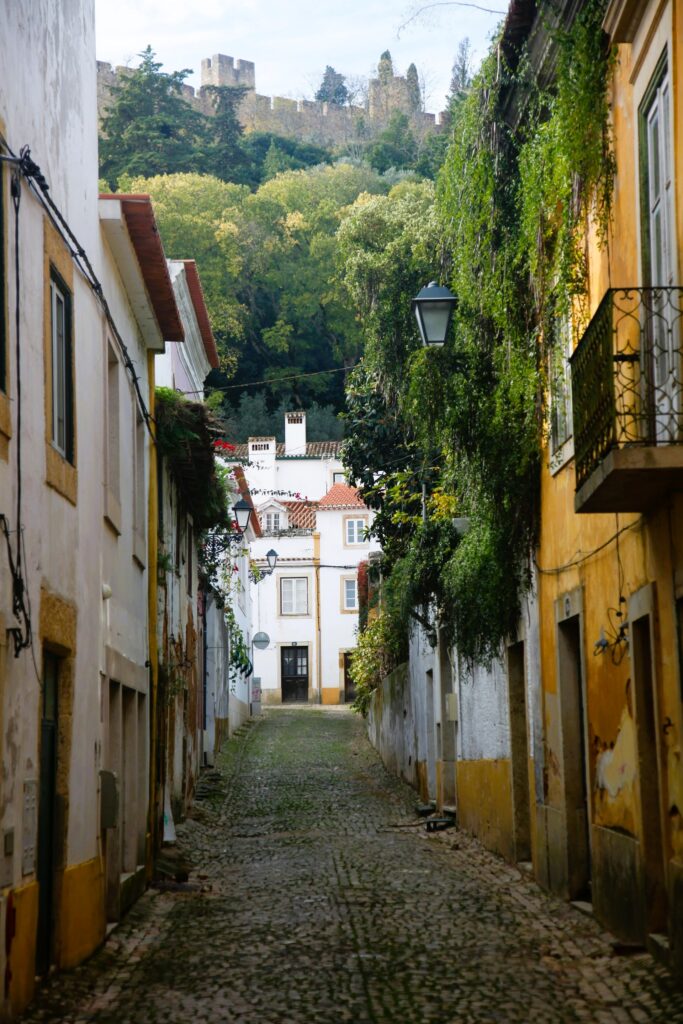
Tomar is one of the most beautiful inland cities in central Portugal. The city grew around a Templar fortress, and its history is closely tied to the famous crusading order. Expect charming narrow streets, traditional Portuguese stone-paved sidewalks, and buildings painted in a range of colors. The fortress is the highlight of any visit and an important heritage site for Portugal as a whole. It also stands apart from most fortresses on the Iberian Peninsula. Tomar can be visited as a day trip from Lisbon, about an hour and a half away by car, though it works even better as a stop between the capital and Porto or as part of a broader trip through central Portugal.
How many days should you spend in Tomar?
A visit to Tomar calls for a full day, with half the time devoted to the fortress and the other half to the city's additional sights. It can also be done as a day trip while staying in the seaside town of Nazaré, which is about a 50-minute drive from Tomar.
Tomar is certainly an option for a day trip from Lisbon, but it makes more sense as a stop on a road trip between Porto and Lisbon, or on another itinerary through central Portugal, in which case it is also worth staying overnight.
Click here to find a place to stay in Tomar…
5 sights and attractions you shouldn’t miss in Tomar
-
- Visit the Templar Convent of Christ complex — Tomar’s main attraction | Convento de Cristo
- The ancient synagogue | Sinagoga de Tomar
- Rua Serpa Pinto for shopping and atmosphere | Rua Serpa Pinto
- Drive along the long, impressive aqueduct | Aqueduto dos Pegões Altos
- Tomar’s “Trays” Festival (held once every four years) | Festa Dos Tabuleiros
How to get to Tomar
Getting around Tomar itself is easy on foot, with the main sights all within a short distance of one another. That means you can park anywhere near the old town and walk to the points of interest. Reaching the fortress, of course, involves an uphill walk and some stairs — about 7 minutes on foot — so it’s worth keeping that in mind if mobility is a concern.
Click here for a wonderful day trip from Lisbon to Tomar…
Flights to Tomar
The most convenient airport for Tomar is Lisbon International Airport (LIS), about an hour and 20 minutes away by car.
Getting to Tomar by car
The best way to reach Tomar is by car, since it lies inland and is surrounded by smaller towns and attractions that are easiest and quickest to explore by road.
From Lisbon, take the A1, then head east toward Entroncamento on the A23, and from there continue north on the A13 to Tomar. From Porto, begin on the A1 as well, drive to Coimbra, then connect to the A13 southbound to Tomar.
Parking — At the foot of the fortress near Praça da República, there is a large underground parking garage. From there, it’s just a few minutes uphill on foot to the fortress. Along the road leading up, there are also two small parking lots just a minute or two from the site, though they tend to fill up on busy days. You can always drive up to check and head back down to the larger garage if needed. There is also plenty of parking around the old town center. Near the train and bus stations, you’ll find a large free parking area by the river as well.
Click here for the driving guide to Portugal…
Public transportation to Tomar
Train — One of the main advantages of arriving by train is that Tomar’s station is right by the old town and close to the city’s main sights. If you’re traveling by public transportation, this is the best option, especially from Lisbon.
There are direct trains from Lisbon Santa Apolónia Station, and the ride takes about two hours. If there isn’t a direct service, the trip usually involves a short connection in Entroncamento, which true to its name is a major rail junction in the Tagus Valley. Trains from Porto also require a change in Entroncamento and take more than three hours.
Bus — The central bus station is in the same location as the train station, close to the city center and Tomar’s main sights. Throughout the day, there are many buses operated by the national company Rede Expressos to Lisbon’s Sete Rios station | Lisboa Sete Rios, and the trip takes an hour and 45 minutes.
Within town itself, there are three local lines as well as several more serving nearby villages and towns, operated by the local company Rodoviária do Tejo.
Click here to find a place to stay in Tomar and the surrounding area…
About Tomar
Tomar is a medieval town right in the heart of Portugal, shaped by the Convent of Christ, one of the country’s most important heritage sites. Today, about 40,000 people live in and around the town, which feels orderly, clean, and wonderfully green. It is closer to Lisbon than to Porto, and almost anyone taking a road trip from Lisbon toward central or northern Portugal is likely to pass through, even if only for a few hours.
Tomar sits above the fertile Tagus Valley and enjoys lovely weather in spring and summer, while winters are more overcast. Summer is naturally the best season for a visit, but winter has its own appeal too, when gray clouds create a dramatic backdrop for the medieval fortress towering above the town.
Many travelers visit Tomar on day trips from the nearby resort town of Nazaré, as well as from Lisbon. The drive from Lisbon takes about an hour and a half, so it’s worth planning accordingly. The Convent of Christ is the city’s main draw, but wandering through Tomar’s narrow, enchanting streets is rewarding in its own right.
A visit to the oldest synagogue in Portugal is another must in Tomar, especially since it is close to the rest of the town’s main sights.
Click here to find a place to stay in Tomar and the surrounding area…
Click here for a wonderful day trip from Lisbon to Tomar…
Click here for a walking tour of Tomar with a local guide…
The Templar Convent of Christ complex | Convento de Cristo
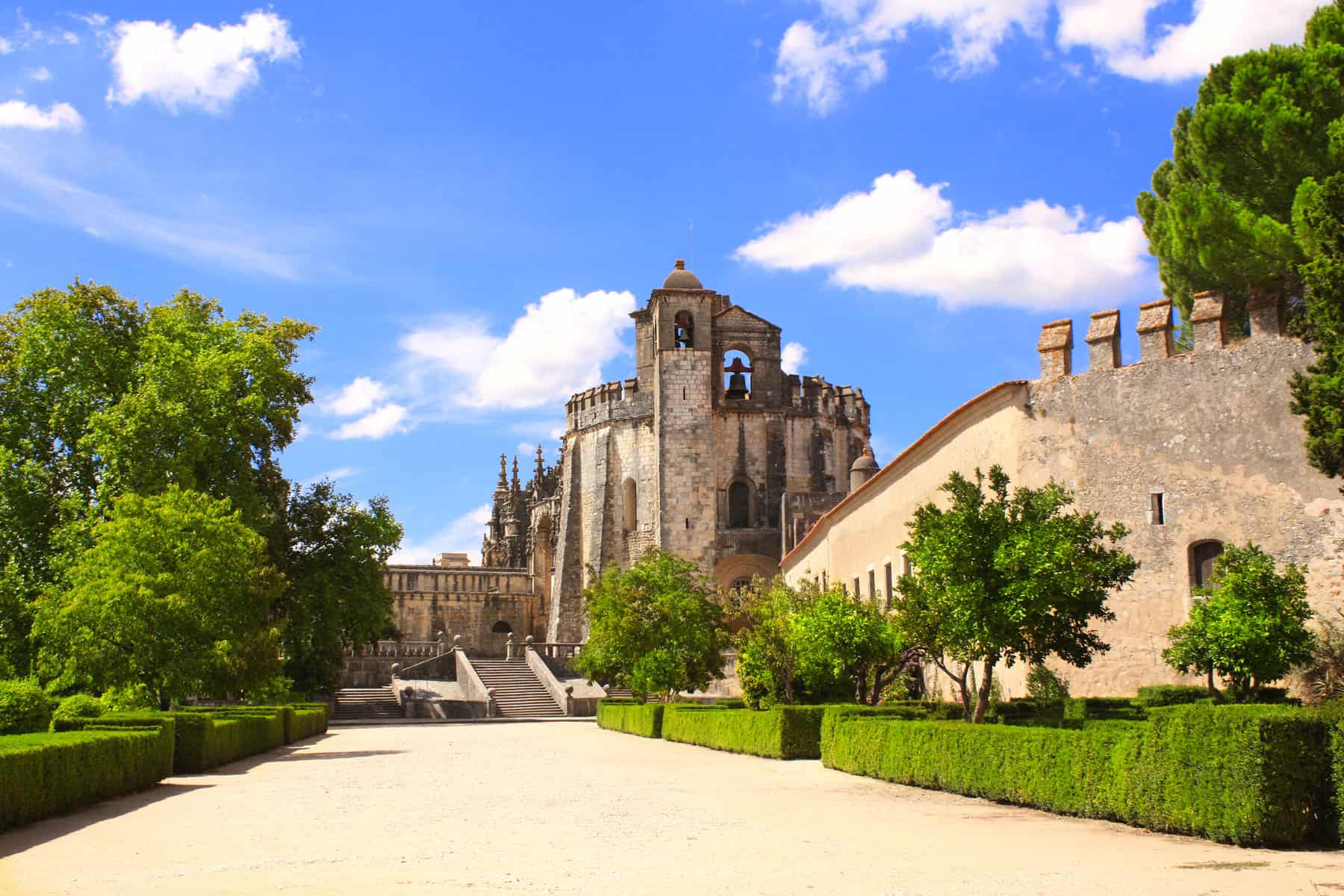
This is Tomar’s signature landmark and one of the largest and most important sites in central Portugal.
The Knights Templar were founded on Jerusalem’s Temple Mount in 1118 by European Crusaders, which is where the order took its name from — Temple, or Templar. During the Middle Ages, these crusader knights were revered in the West as protectors of the holy places in the Holy Land. The advanced military methods they developed in the Land of Israel under constant pressure from the Muslim world made them formidable warriors. In addition, the sophisticated fortification techniques developed by the Crusaders were exported to Europe, including Catholic Portugal, which was then in the midst of the Reconquista.
During the 12th and 13th centuries, the Templars played a major role in helping Portugal’s kings in their wars against the Moors. In return, they were granted vast lands and considerable political influence in the young kingdom. At the start of the 14th century, the Pope moved against the Templar Order across Europe because of internal conflicts within Catholic institutions.
Portugal’s King Dinis, however, remained grateful to the order and simply renamed it the Order of Christ (Ordem de Cristo), thereby sidestepping papal restrictions. That is why the fortress has since been associated with the name of the Order of Christ.
In 1356, the order and its leaders turned Tomar into their headquarters and expanded the fortress into what visitors see today. From the late 15th century, during the reign of King Manuel I, elaborate stone carvings were added throughout the complex in the form of human figures, plant motifs, and geometric designs, all in the exuberant Manueline style.
Click here to find a place to stay in Tomar and the surrounding area…
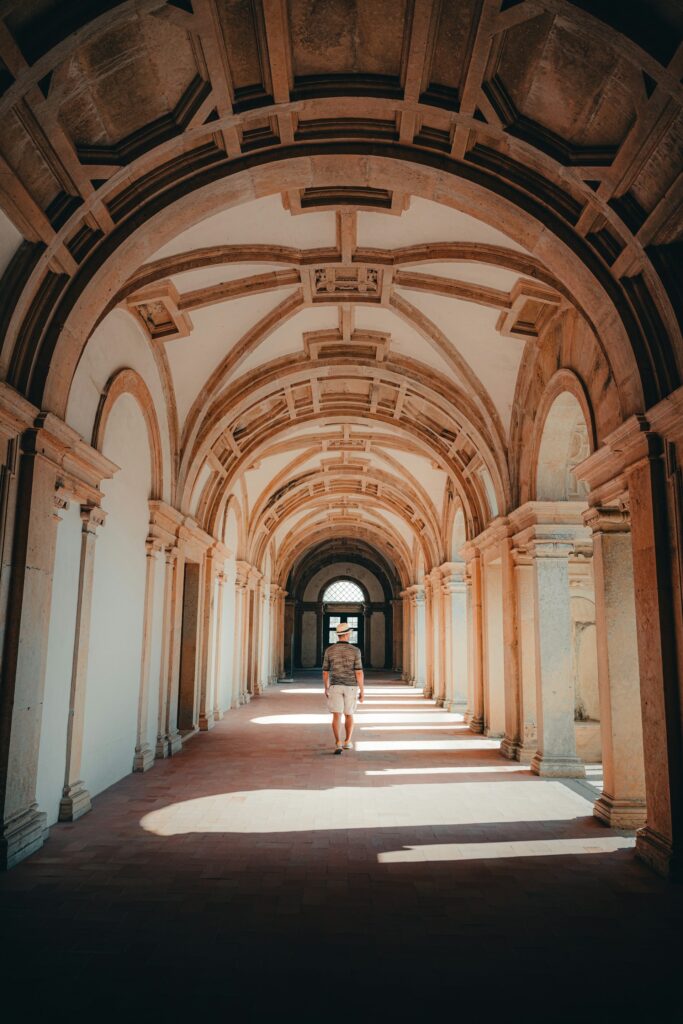
Chapel of Nossa Senhora da Conceição | Ermida de Nossa Senhora da Conceição
On the way up to the fortress, at its foot, stands this small and charming chapel. This Renaissance chapel was inaugurated in 1550 and served as a funerary chapel.
From the outside, it appears modest and fairly simple, with smooth, symmetrical stone walls. Inside, though, the attention to detail is unmistakable, from the decorated Corinthian columns that support it to the ornate ceiling carved with geometric patterns and plant motifs.
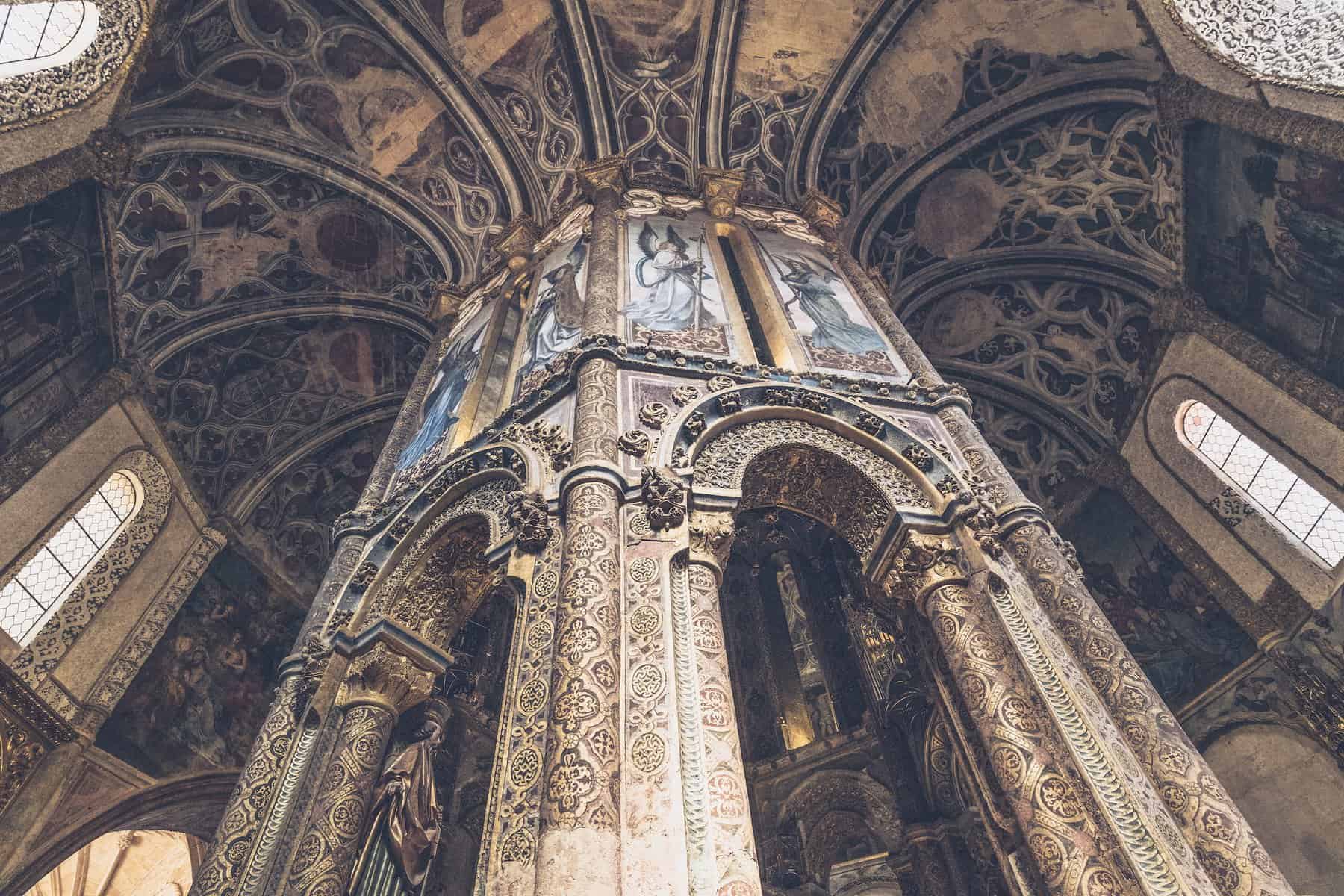
Parts of the fortress:
- The castle and walls (Castelo de Tomar) — construction began in 1160 on the hilltop overlooking the river. This was the original Templar fortress, inspired by Crusader strongholds in the Land of Israel. Its walls feature rounded watchtowers, a fortification method “imported” from the Holy Land to Europe as a stronger alternative to square towers.
- The rotunda — Charola — the monastery’s round church is the oldest religious structure in the complex, dating to the 12th century. Built as a 16-sided drum, the Charola served as the knights’ church, and some scholars believe it was inspired by the Church of the Holy Sepulchre in Jerusalem.
- The church nave (nave) — built as an extension of the Charola, it was thoroughly renovated starting in 1510 by order of King Manuel I, who added decorative elements in the style of the period — Manueline — a blend of late Gothic and Renaissance influences.
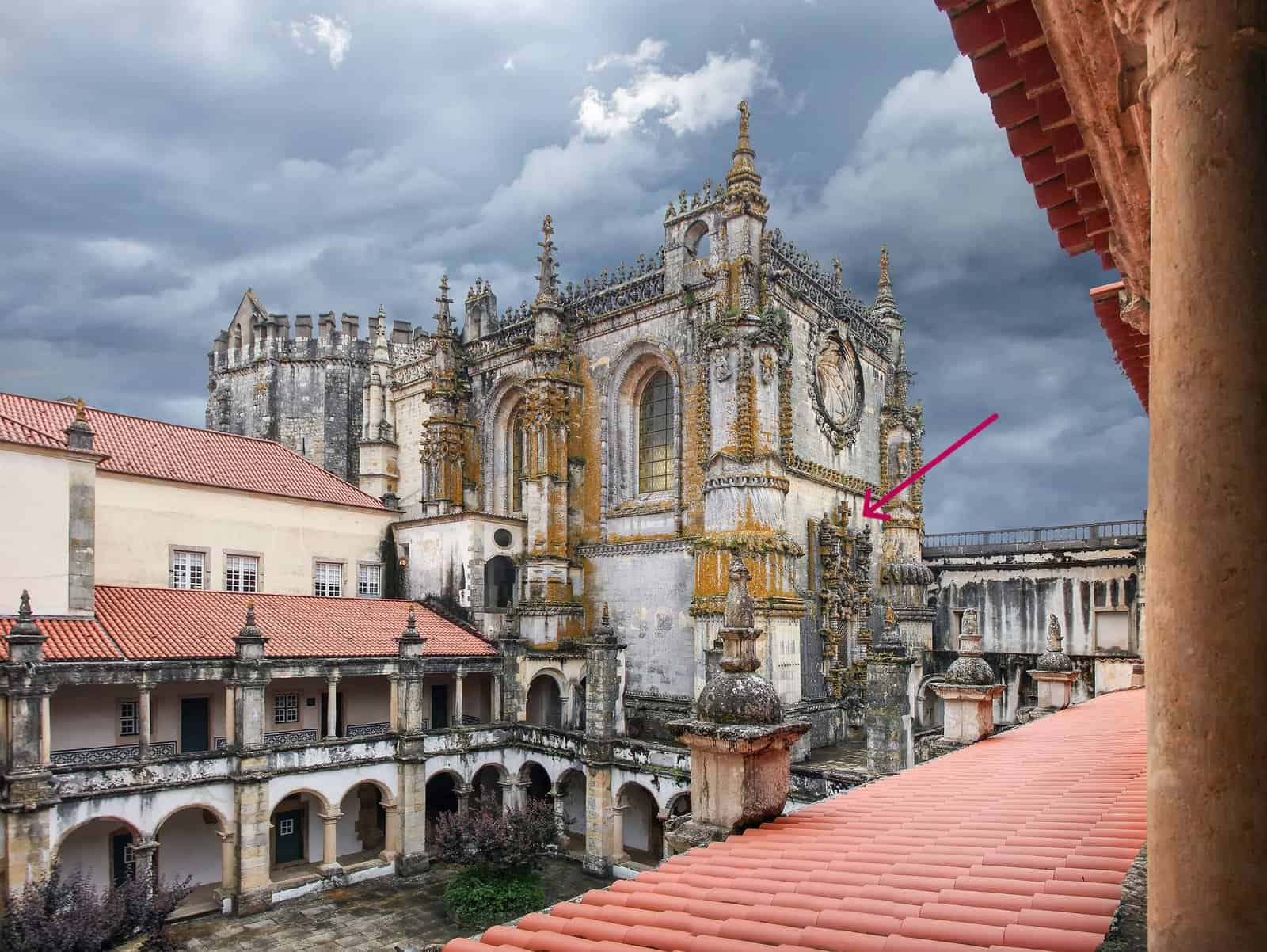
- The Manueline Window (Chapter House Window) — located at the end of the church nave facing the courtyards. Lavishly decorated and truly one of a kind, it is one of the most inspiring features for visitors to the complex.
- The large inner courtyard — also known as the Cloister of João III — construction began in 1550 under Diogo de Torralva in a distinctly Italian style. The courtyard looks sculpted rather than built, and it is the most impressive of them all. Be sure to notice the remarkable staircases in each of its four corners.
- The three additional courtyards (cloisters) were also built in the 15th and 16th centuries. These include the Cemetery Cloister, where the brother of explorer Vasco da Gama is buried — he was an important figure in the Order of Christ; the Washing Cloister, where the monks washed their clothes; and the Cloister of Santa Barbara, toward which the church’s famous Manueline Window faces.
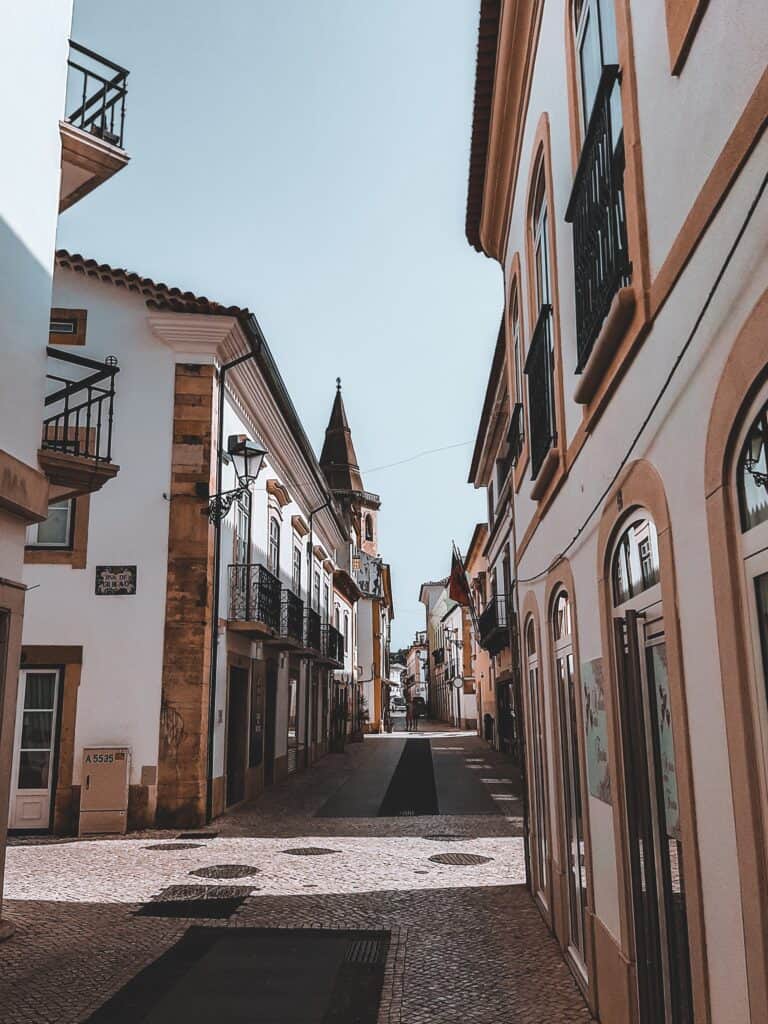
Other attractions and interesting places in Tomar
Praça da República | Praça da República
This is the city’s main square. Its broad paving is patterned with black-and-white diamonds, so characteristic of sidewalks and squares across Portugal.
The square is a very pleasant place to sit at one of its cafés or restaurants, and it also makes a great photo stop thanks to its historic buildings. At the center stands a statue of the city’s founder, the Templar knight Gualdim Pais, while on the western side you’ll find City Hall, with the fortress rising behind it.
Leading to and from the square is Rua Serpa Pinto, Tomar’s main shopping street.
Click here for a walking tour of Tomar and a visit to a few places only locals know…
Church of São João Baptista | Igreja de São João Baptista
The church stands on Praça da República, facing City Hall. It was first built in the 15th century, though the current structure in all its splendor was commissioned by Portugal’s King Manuel I (“the Fortunate”) and inaugurated in 1520.
The church was built in the Mendicant style, with a large bell tower on the left. The entrance portal, which projects from the wall, is especially impressive and catches the eye from anywhere in the square.
Inside, above the pulpit, is a group of paintings by the important Portuguese Renaissance painter Gregório Lopes. Several interior walls are also decorated with early geometric azulejos (painted ceramic tiles).
Click here to search for accommodations in Tomar and the surrounding area…
The Synagogue | Sinagoga de Tomar
The synagogue in Tomar is the oldest surviving synagogue in Portugal. It is no longer active and now serves as a small museum. Like the mountain town of Belmonte, this synagogue is a moving reminder of Portugal’s Jewish past.
The synagogue is just a two-minute walk from Praça da República, making it very easy to visit. Its address is Rua Dr. Joaquim Jacinto 71B.
The first thing you are likely to notice when stepping inside is the striking contrast between the modest, almost hidden exterior and the tall, carefully designed interior. Like other synagogues across the Catholic world of that period, it kept a low profile toward the street because of the persecution of Jews.
The synagogue in Tomar was active for only a few decades. After the 1496 decree expelling the Jews from Portugal, Jews in the kingdom were forced to convert, and religious life continued underground. The building was then put to other uses by Christians, which is probably why it survived and is considered the best-preserved synagogue in Portugal. From then until 1923, it changed hands and served various purposes, but it was no longer used as a Jewish synagogue and therefore was not destroyed like many others.
In 1923, the building was purchased by a Polish-born Jew named Samuel Schwarz, an engineer, historian, and archaeologist with a deep interest in Portuguese Jewry. He acquired it after Portuguese archaeologists had found evidence a few years earlier confirming that this was indeed Tomar’s original synagogue. Schwarz restored and reconstructed the building, and in 1939 donated it to the municipality so it could be preserved as a museum called the “Abraham Zacuto House” (Museu Luso-Hebraico de Abraham Zacuto), named after the 15th-century Jewish astronomer from Castile who served the King of Portugal.
Inside, the high ceiling is supported by four columns symbolizing the four matriarchs. From these four columns, twelve arches extend toward the walls, representing the twelve tribes. Part of the museum collection housed in the synagogue includes Jewish gravestones and inscriptions gathered from across Portugal. The most notable is a plaque from the ancient synagogue in Lisbon, which no longer exists, dated to 1307. In recent years, an ancient mikveh was also uncovered near the synagogue.
Click here to search for accommodations in Tomar and the surrounding area…
Click here for a walking tour of Tomar and a visit to a few places only locals know…
Matchbox Museum | Museu dos Fósforos
A local matchbox collector passed away, and his family did not know what to do with the enormous collection he left behind. By mutual decision, they donated it to the Municipality of Tomar, which gave it a fitting home near the city center. The result is a museum with close to 45,000 matchboxes from more than 100 countries.
For younger visitors, it is worth noting that back when smoking was far more common, businesses often printed their logos and names on matchboxes and handed them out as a form of advertising and customer retention. That explains the extraordinary variety on display here. It is an intriguing slice of modern history, and a wonderful refuge on a rainy day.
The museum building also includes a workshop where artists paint ceramics using traditional Portuguese techniques (Oficina da Olaria e da Azulejaria). You can watch them at work, and if you plan to buy a few tiles, this is the place to do it.
Click here for a wonderful day trip from Lisbon to Tomar…
Church of Santa Maria do Olival | Igreja de Santa Maria do Olival
On the eastern bank of the Nabão River (Rio Nabão), you’ll find this church and the broad square in front of it. It was built on the site of the city’s 12th-century Templar pantheon. This is where the founder of Tomar, Gualdim Pais, is buried, along with several other members of the order.
In keeping with the Christian tradition of building churches around the graves of holy figures, the present structure was built in the 13th century in an early Gothic style marked by simplicity, and it has served as a church ever since. The rose window above the entrance is the most striking feature of this otherwise modest building.
The church is surrounded by a lovely garden, and the large forecourt gives the area a sense of importance befitting the burial place of the city’s founding father. The bell tower, unusually detached from the church, was originally a watchtower. It was converted into the church’s bell tower in the 16th century.
The church and the entire complex underwent major restoration in the 20th century, which helps explain its beautiful, symmetrical appearance today.
Seven Hills Park | Mata Nacional dos Sete Montes
The park at the foot of the fortress is one of the most beautiful urban parks in Portugal. It combines formal gardens with a large wooded area and is ideal for a walk, though it also works well for a short visit before or after touring the fortress. In the past, this area served as vegetable gardens and fields for members of the order, with direct access from the fortress itself.
Today, the park entrance is at the western end of the main avenue, Av. Dr. Cândido Madureira, opposite the tourist information center. The entrance flows naturally from the avenue itself, leading through a handsome gate into a symmetrical garden of trimmed shrubs, small flower beds, and little squares. Beyond that, the woodland begins, with several marked walking trails.
On sunny weekends, the park fills with local families coming for picnics in the shade or on the lawns.
Click here to search for accommodations in Tomar and the surrounding area…
The Aqueduct | Aqueduto dos Pegões Altos
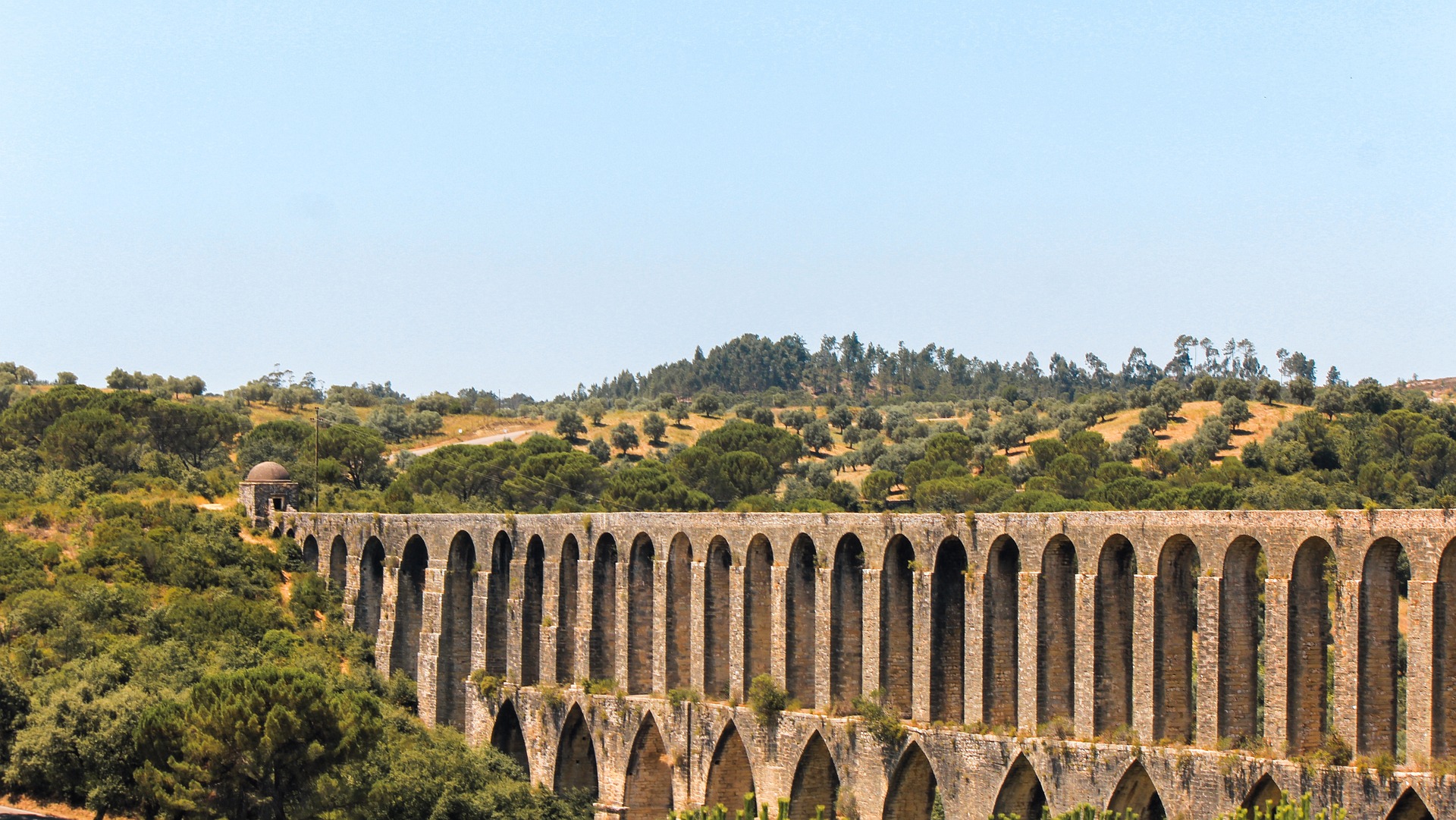
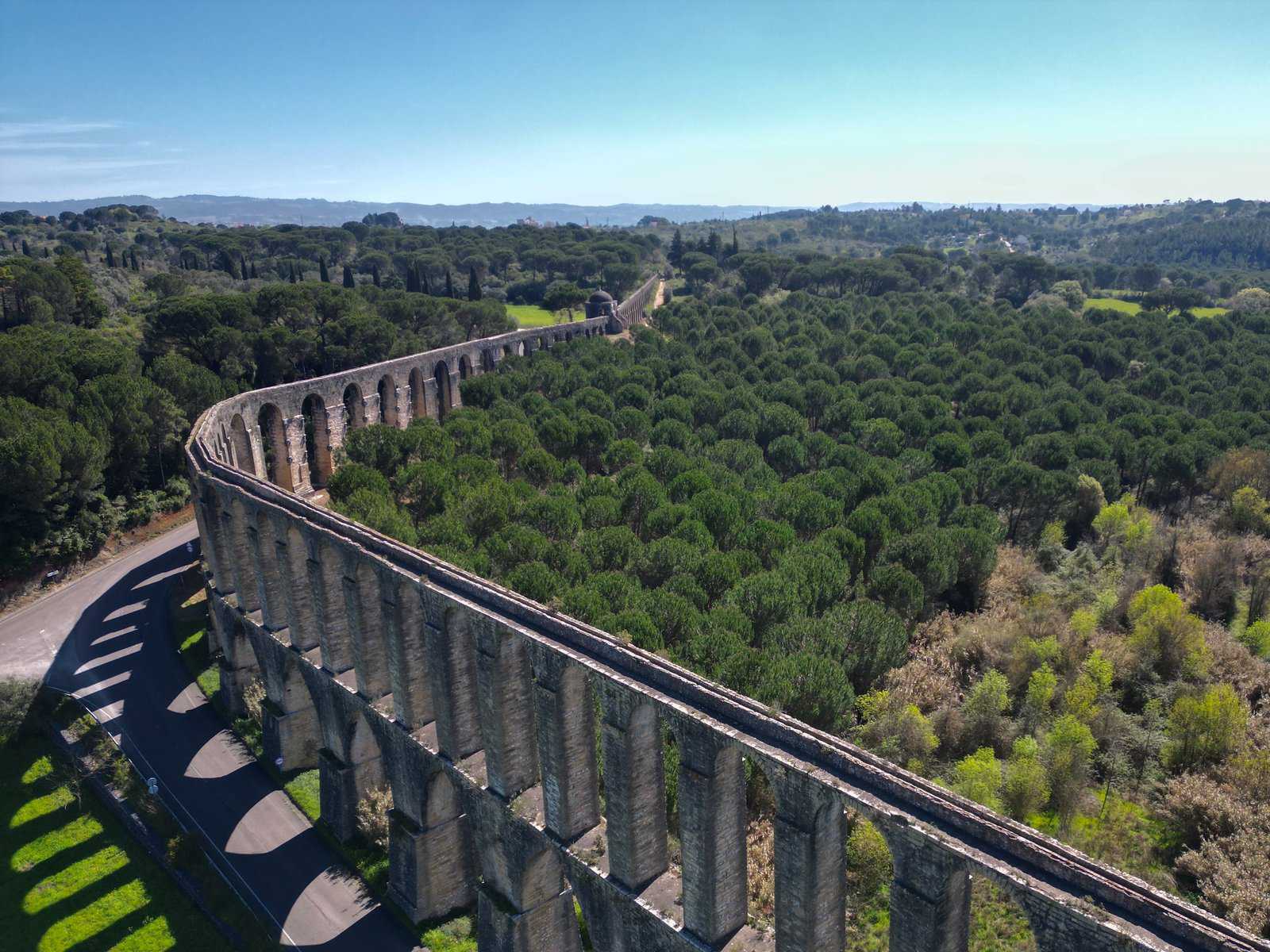
You can see the end of the aqueduct as it enters the fortress from within the complex itself, near the western courtyard. But if you want to see the longer section crossing the valley on its double arches, you’ll need to drive about 5 minutes out of town. A simple way is to enter the nearby village of Brasões into Waze. Most of the roughly 10-minute route runs alongside the aqueduct, with several viewpoints and places to stop beside it. It strongly recalls the aqueduct in Évora, capital of the Alentejo, except that here in Tomar you can admire it from much more flattering angles.
While the water stored in the original fortress complex was enough for the fortress itself, in the late 16th century King Philip II of Spain — who also became King of Portugal in 1580 — decided to expand the monastery’s water supply so the surrounding lands could be cultivated. As King of Portugal, Philip II also held the title of head of the Order of Christ, so it mattered to him to enlarge and embellish the fortress, which required an additional water supply.
The aqueduct to the fortress began to be built in the late 16th century, and construction was completed in 1619. Philip chose the Bologna-born architect Filippo Terzi to design the aqueduct along with other sections of the fortress, and the works began. The result was a six-kilometer water channel supported by hundreds of arches, carefully maintaining the correct gradient across several valleys until it reached the fortress hill.
To mark the completion of the project and its connection to the southern wall of the fortress, a fountain was erected in the central courtyard as a symbol of abundant water.
Click here for a wonderful day trip from Lisbon to Tomar…
Tomar Contemporary Art Museum | Núcleo De Arte Contemporânea
This small museum is located at the northern edge of the old town, near the bridge leading to Parque do Mouchão. In striking contrast to a city known for its many historic landmarks, the museum showcases modern and surrealist works by 20th-century Portuguese artists.
It was founded in 2004 after the art critic and professor José-Augusto França donated his private collection — including paintings, sculptures, photographs, and drawings — to the Municipality of Tomar so it could be properly housed.
The result is a colorful, distinctly contemporary experience and well worth a brief stop on the way to one of the city’s historic attractions.
Click here to find a place to stay in Tomar and the surrounding area…
The picturesque view from Ponte Velha | Ponte Velha
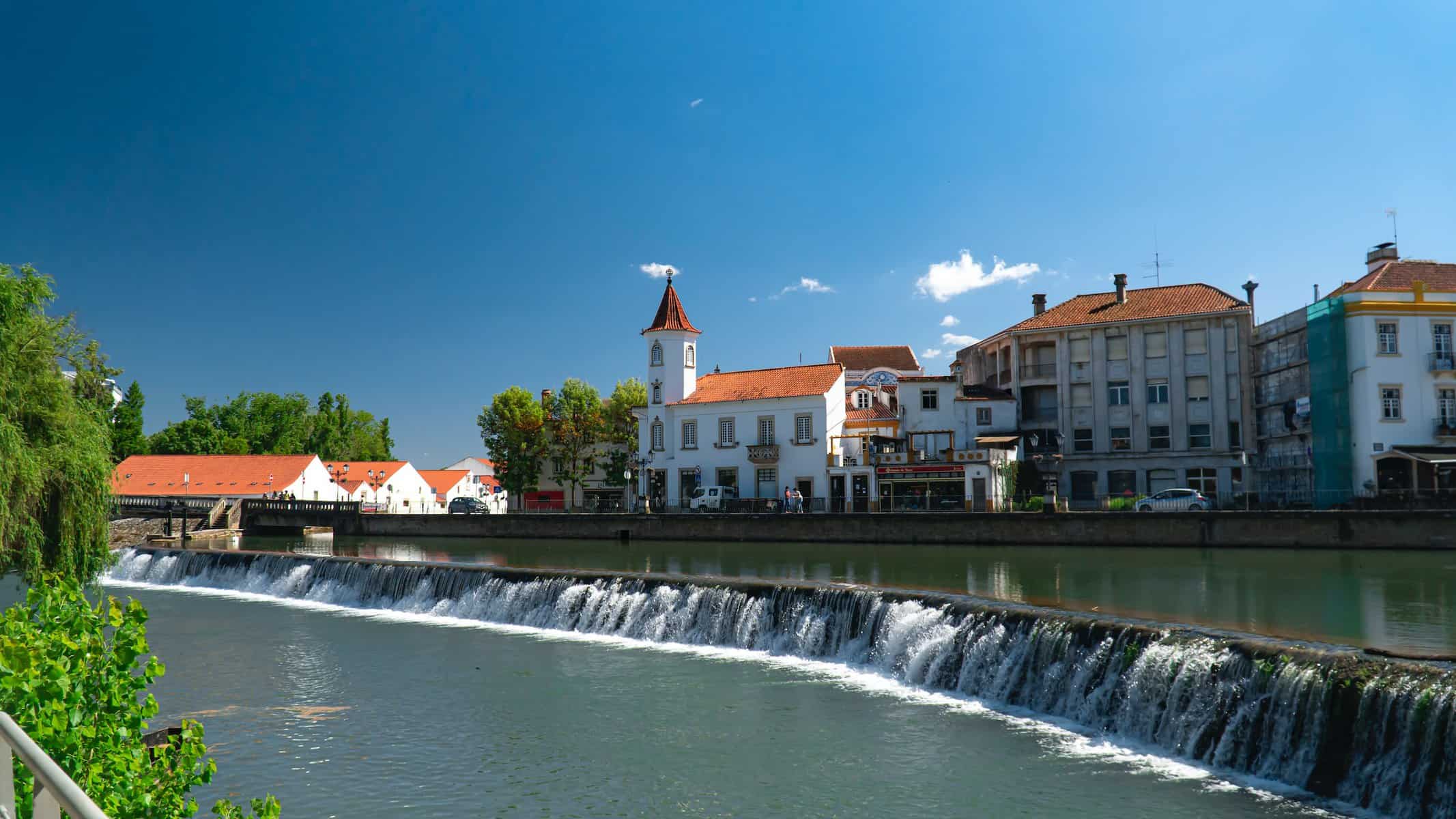
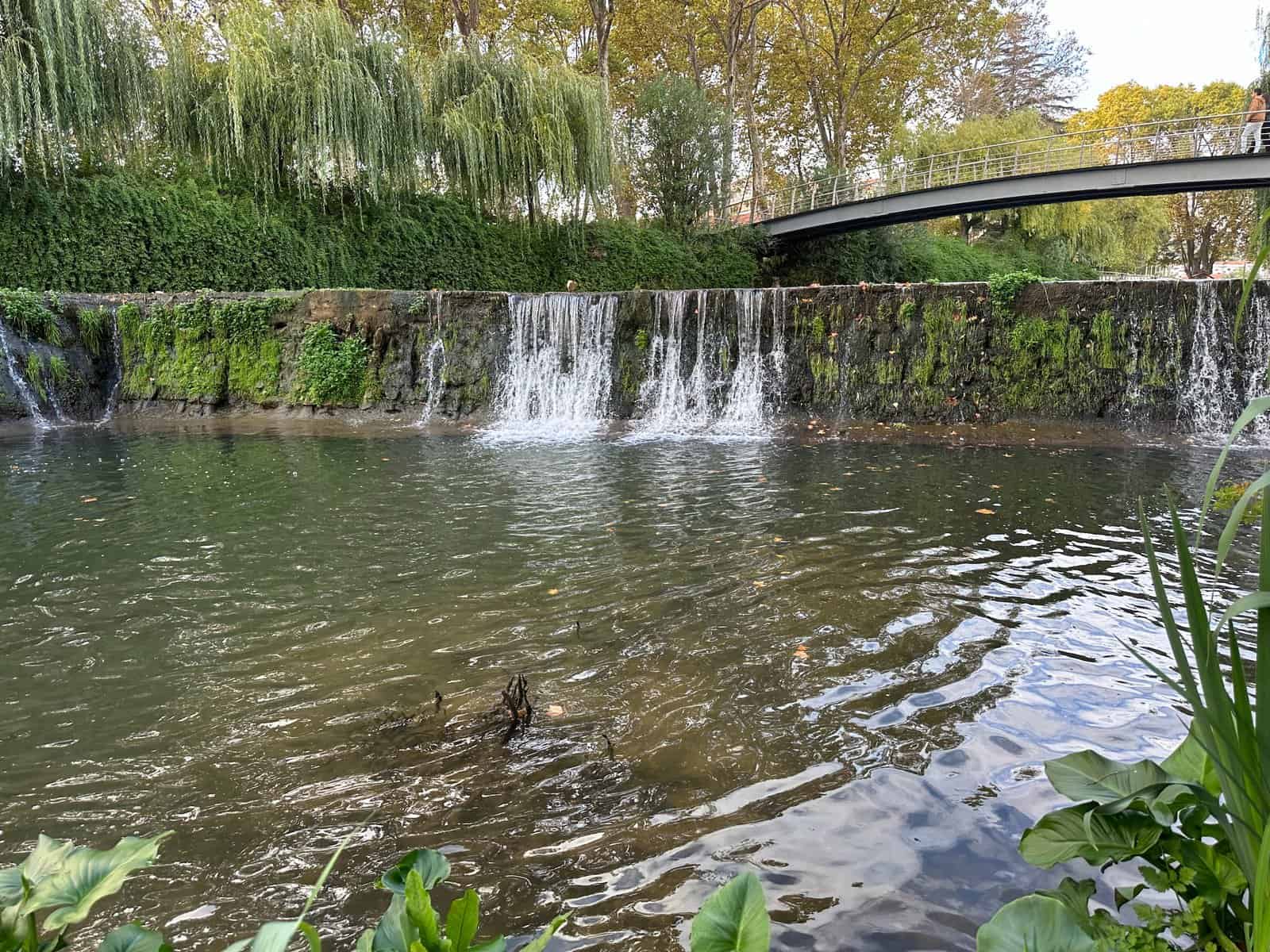
Not far from the contemporary art museum is the old bridge over the Nabão River. From the bridge — and especially from the other side — the view is stunning. At this point, the river reaches its widest stretch and looks almost like a small lake flowing between the city’s white buildings with their red roofs. It is absolutely worth crossing the bridge to capture that perfect image of beautiful, orderly Portuguese Tomar.
The same goes for the small bridge directly opposite the contemporary art museum that leads into Parque do Mouchão. From the park, you can enjoy the same scene from a different angle.
Click here to search for accommodations in Tomar and the surrounding area…
Events and festivals in Tomar
Festa Dos Tabuleiros — the “Trays” Festival | Festa Dos Tabuleiros
Festa Dos Tabuleiros takes place once every four years at the beginning of July and lasts for around ten days. The heart of the festival is Praça da República and the surrounding streets, all decorated for the occasion. Its high point is the parades, where girls dressed in white carry towering arrangements of bread loaves and flowers on their heads. The bread is arranged in tray-like tiers, which is where the festival gets its name — tabuleiros means trays in Portuguese.
This is a major event, and beyond the processions and the city’s floral decorations, there are performances and ceremonies held throughout the day and evening all across town.
The next festival will take place in July 2027. During the celebration, the whole town feels festive and the streets are covered in countless flowers. Hundreds of thousands of visitors come to Tomar during the festival, so it is highly advisable to plan your visit well in advance.
Click here to find a place to stay in Tomar and the surrounding area…