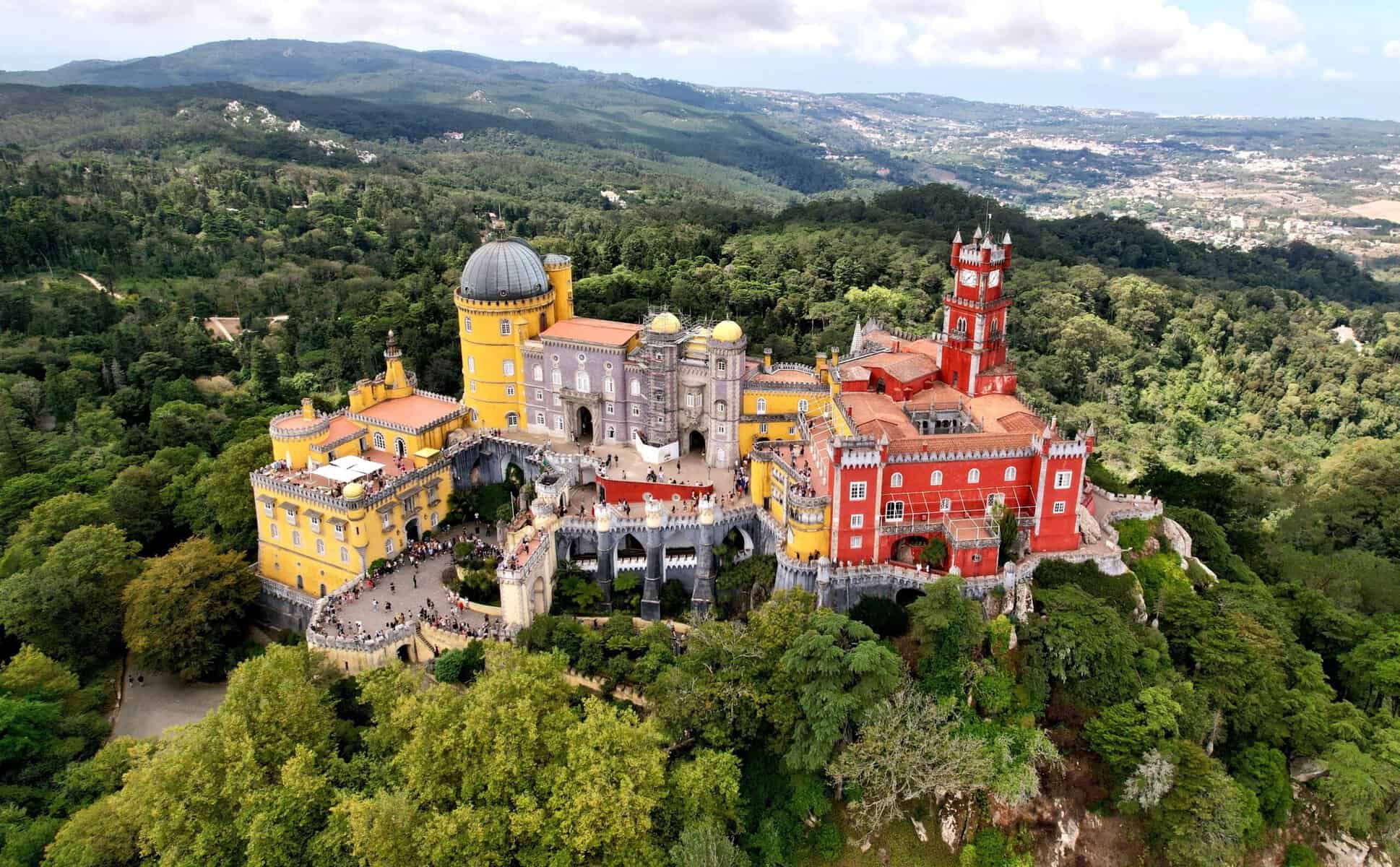
Sintra was the summer retreat of Portugal’s kings for generations, and it’s packed with impressive palaces and landmark buildings. Three stand out above the rest: Pena Palace, the Moorish Castle, and Quinta da Regaleira. Its proximity to the capital—about a half-hour drive—has made Sintra a stop almost everyone visiting Lisbon passes through. Sintra is the most popular day-trip destination from Lisbon. Despite the hills, the ups and downs, and the distance between the main sights, thousands of visitors pour in every day to see Portugal’s palace-studded hills and try to fit in as much as possible. Sintra offers the perfect blend of lush nature and monumental historic sites, and even the walks between them can feel like an attraction in their own right.
How many days should you spend in Sintra?
Sintra is the most popular day trip from Lisbon, but seeing all of its attractions in a single day is difficult. A day trip is enough for two or three of the main highlights—Pena Palace, the Moorish Castle, and Quinta da Regaleira—but with so many other attractions, you’ll need to choose carefully.
Check out our guide to the best day trips from Lisbon…
6 must-see sites and attractions in Sintra
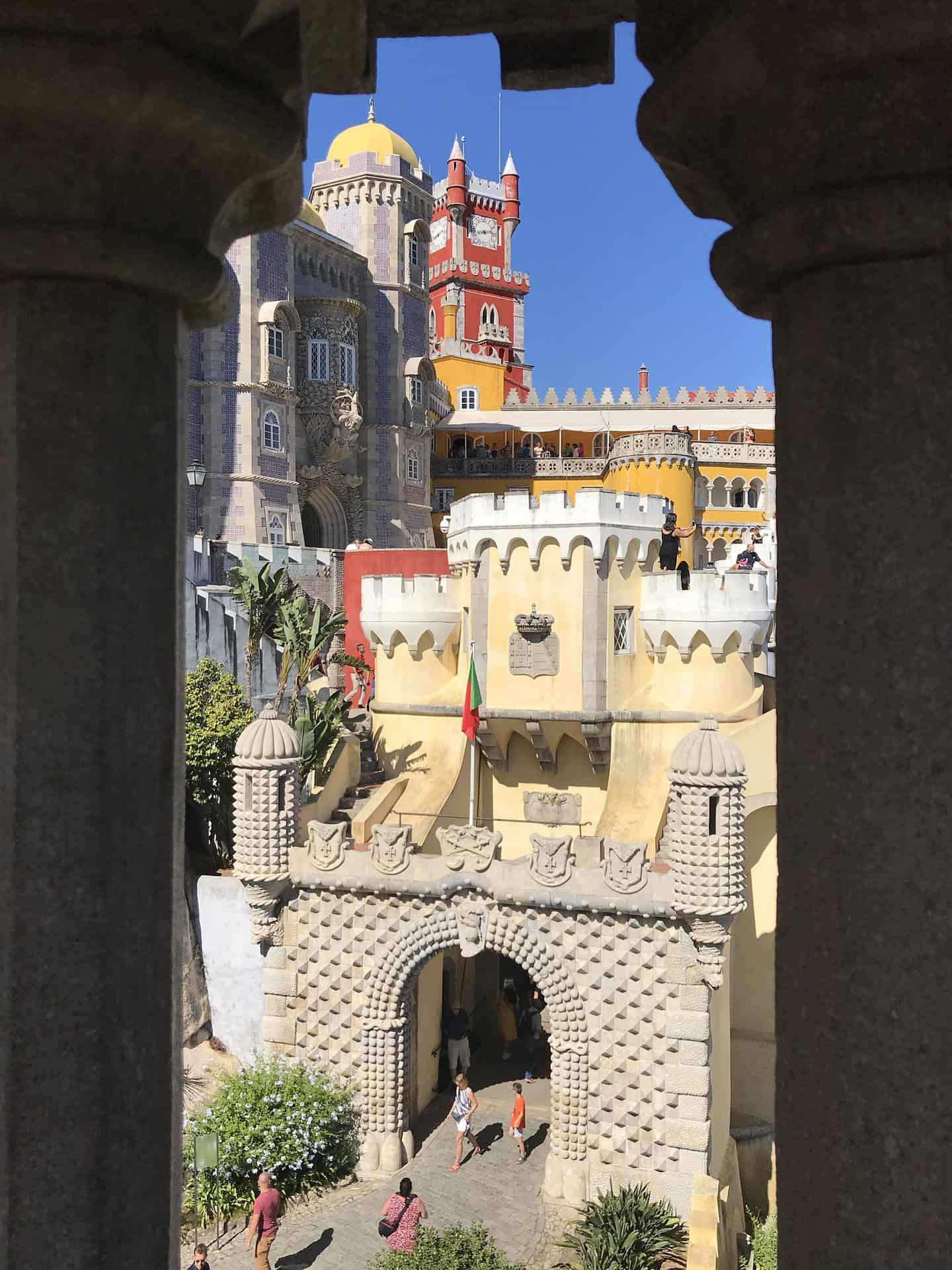
- The colorful, unforgettable Pena Palace | Palácio Nacional da Pena
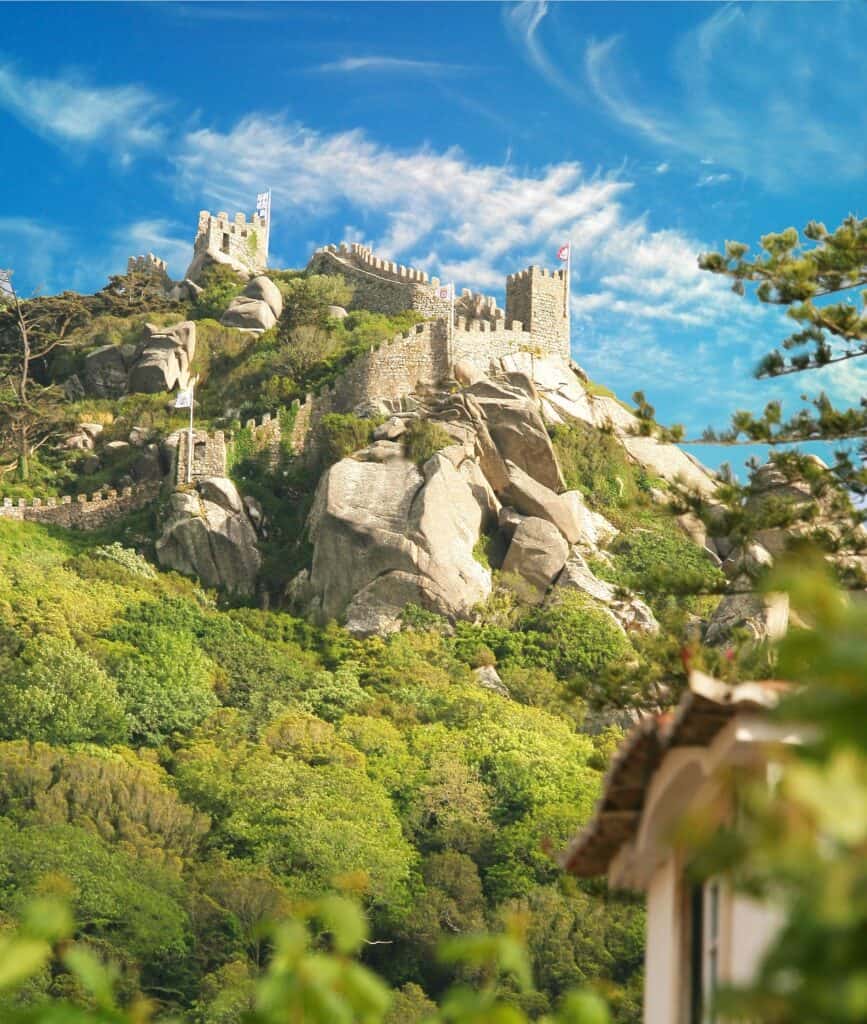
- The Moorish Castle and a walk along its hilltop walls | Castelo dos Mouros
- Quinta da Regaleira – the palace, the gardens, and the stairways
- The National Palace of Sintra | Palácio Nacional de Sintra
- Enjoy a fun tuk-tuk ride between Sintra's iconic sites
- Queluz Palace and Gardens (between Lisbon and Sintra) | Palácio Nacional e Jardins de Queluz
How do you get to Sintra?
Arriving by rental car
You can drive to Sintra, but the area around the main sites is restricted to authorized vehicles only. If you arrive by car, you’ll need to park at the entrance to the area and continue using one of the local transportation options (tuk-tuk, bus, Uber) or on foot. Walking is a wonderful option, but it takes a lot of time and isn’t suitable for everyone.
Renting a car in Lisbon made easy – Read our full guide…
Public transportation
The best and cheapest way to get from Lisbon to Sintra is by train. From central Lisbon, trains depart from Rossio Station, though service is also available from other major stations. The ride takes about 40 minutes from Rossio. It’s very important to keep your ticket with you, since ticket inspectors are present on almost every train to Sintra. If you’re heading back to Lisbon, it’s also worth buying a round-trip ticket in advance.
Families can also take a taxi or Uber. It will cost more, but the price difference is not dramatic, and of course the ride is more comfortable.
Flights to Sintra
Sintra is about half an hour from central Lisbon and can essentially be considered a suburb of the capital. So flights to Sintra are really flights to Lisbon. Lisbon Airport | Aeroporto Internacional de Lisboa Humberto Delgado is the airport that also serves Sintra.
Getting Around Sintra: Must-Read
Perhaps the single most important thing to know before arriving in Sintra is that getting from one site to another is not simple. Most visitors come from Lisbon by public transportation, and even if you arrive by car, the palace area is restricted to authorized vehicles only.
The palaces and main sights are scattered across wooded hills, so even short distances usually involve steep climbs and descents. That takes time, and it’s not easy—especially in hot weather or in the rain.
Other than walking, getting between the sites also costs extra money. If you know that in advance and plan for it, it’s much less frustrating—and Sintra really is special enough that for many visitors, the expense feels justified.
Here are the main ways to get between Sintra’s different sites:
- Public bus – In theory, there is a public bus connecting the main sites. In practice, it’s very inefficient, and under no circumstances should you be tempted to buy the expensive day pass. The bus leaves from Sintra train station, so if you catch it there, things are usually fine. The problem starts when, for example, you leave Pena Palace and want to continue to Quinta da Regaleira. First, there’s usually a long line. Second, buses often arrive already full and don’t stop, which means waiting for the next one. In our view, the bus is only worth taking if you catch it right at the train station—and even then, only with a single ticket.
- Tuk-tuk – One of the fun things about Sintra is the tuk-tuk taxi service that takes you between the sites. It isn’t cheap, and it’s likely that the city keeps public transportation limited so locals have more work. Still, the service is efficient, and if you know ahead of time that getting between sites costs extra, it doesn’t really feel like a tourist trap.
- Uber/Bolt | Uber/Bolt rideshare services – Just like in Lisbon, Uber and Bolt are very popular in Sintra. It may sound strange to take an Uber for such a short distance, but here it’s very efficient and can help you fit in more sights. It’s a good idea to start checking a few minutes before leaving each site, since wait times can build up.
- On foot – The cheapest, healthiest, and most rewarding option—but also the most time-consuming, and not suitable for everyone. Sintra has a lot to see, so if you want to cover a lot in one day, walking alone won’t make that possible. Still, if you decide in advance to focus on only some of the palaces, walking can absolutely work. Just keep in mind that the climbs and descents are not for everyone.
Planning your route in Sintra
Most travelers don’t want to miss Pena Palace, the Moorish Castle, and Quinta da Regaleira. We also think the beautifully preserved National Palace is a must-see—and it’s very close to the town center—but in Sintra, people are usually in a hurry.
It’s hard to say exactly how to plan your route, because a lot depends on what time you arrive and how crowded the sites are. In spring and summer, Sintra is always packed, so our recommendation is to leave Lisbon very early and be at your first site when it opens, between 9:00 and 9:30. If fitting in as many attractions as possible matters to you, it may even be worth arriving the evening before and spending the night in Sintra, which might also let you see something in the late afternoon the day before.
To search for a place to stay in Sintra, click here…
In any case, it’s important to remember that Pena Palace and the Moorish Castle are fairly close to one another, while the town center, the National Palace, and Quinta da Regaleira are also relatively close together. Plan your route accordingly.
Click here for 8 recommended hotels in Sintra…
About Sintra
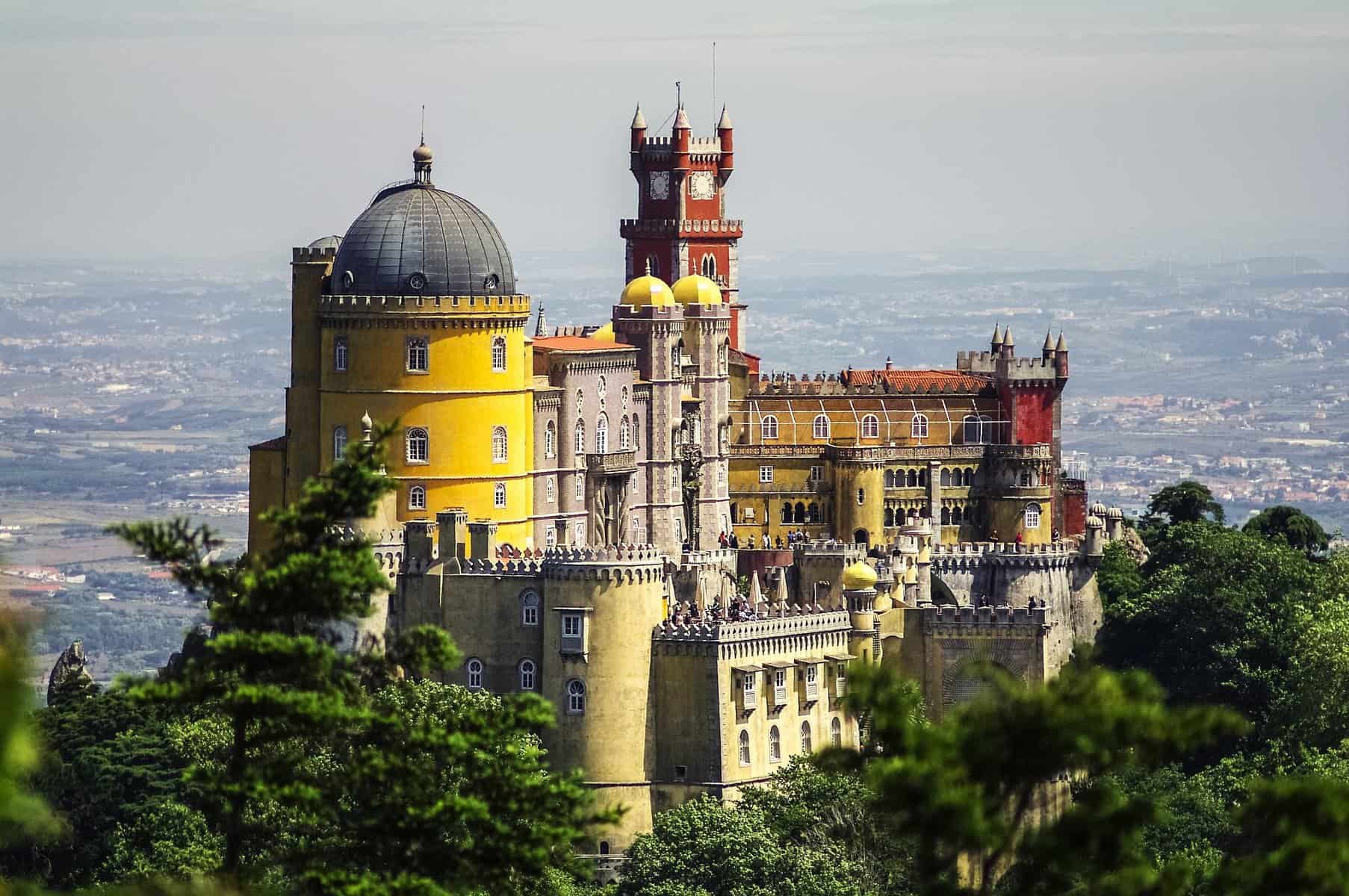
Sintra is both a town and a district, half an hour northwest of Lisbon. Here, Lisbon’s hills continue and reach their peak, covered in green forests that stretch almost all the way to the Atlantic Ocean and Cabo da Roca, in the western part of the district—the westernmost point on the European mainland. South of the Sintra district lies the upscale suburb of Cascais, another favorite day-trip destination for visitors staying in Lisbon.
After Afonso Henriques, the founder of Portugal, conquered Lisbon in 1147, the Muslims in Sintra surrendered, and since then the area has remained in Christian hands. Its closeness to Lisbon gave it strategic importance. Yet what drew Portugal’s kings here over the centuries was precisely that same proximity to Lisbon, along with the dense forests covering its hills, which made it an ideal place to build summer residences. They could hunt and enjoy the clear air without straying too far from the capital.
Today, visitors to wonderful but complex and crowded Lisbon usually flock to Sintra for a day trip. A visit here is the perfect mix of a walk in nature and time spent among monumental buildings and historic sites. What enchanted kings centuries ago still appeals to travelers today, and Sintra offers a refreshing break from the bustle of the capital.
For an excellent day trip from Lisbon to Sintra, Cabo da Roca, and Cascais, click here…
Sintra town center
The train from Lisbon arrives in central Sintra—note that there are two stations, and the second one is closer to the main sites. Since Sintra attracts huge numbers of visitors, many restaurants and cafés have opened throughout the town center along most of the main streets. Somewhat surprisingly, most are of a high standard and not tourist traps at all, but rather places that genuinely meet the needs of travelers.
The town center—and lunch there—makes an excellent stop on a Sintra itinerary, whether after Pena Palace and the Moorish Castle and before Quinta da Regaleira, or the other way around.
There are also many hotels in the center, making it a good place to stay if you decide to arrive the night before in order to fit in as much as possible—or if you choose to stay in Sintra for two or three days and head out for hikes in the surrounding countryside and visits to additional sites.
To find hotels in Sintra, click here…
Pena Palace | Palácio Nacional da Pena
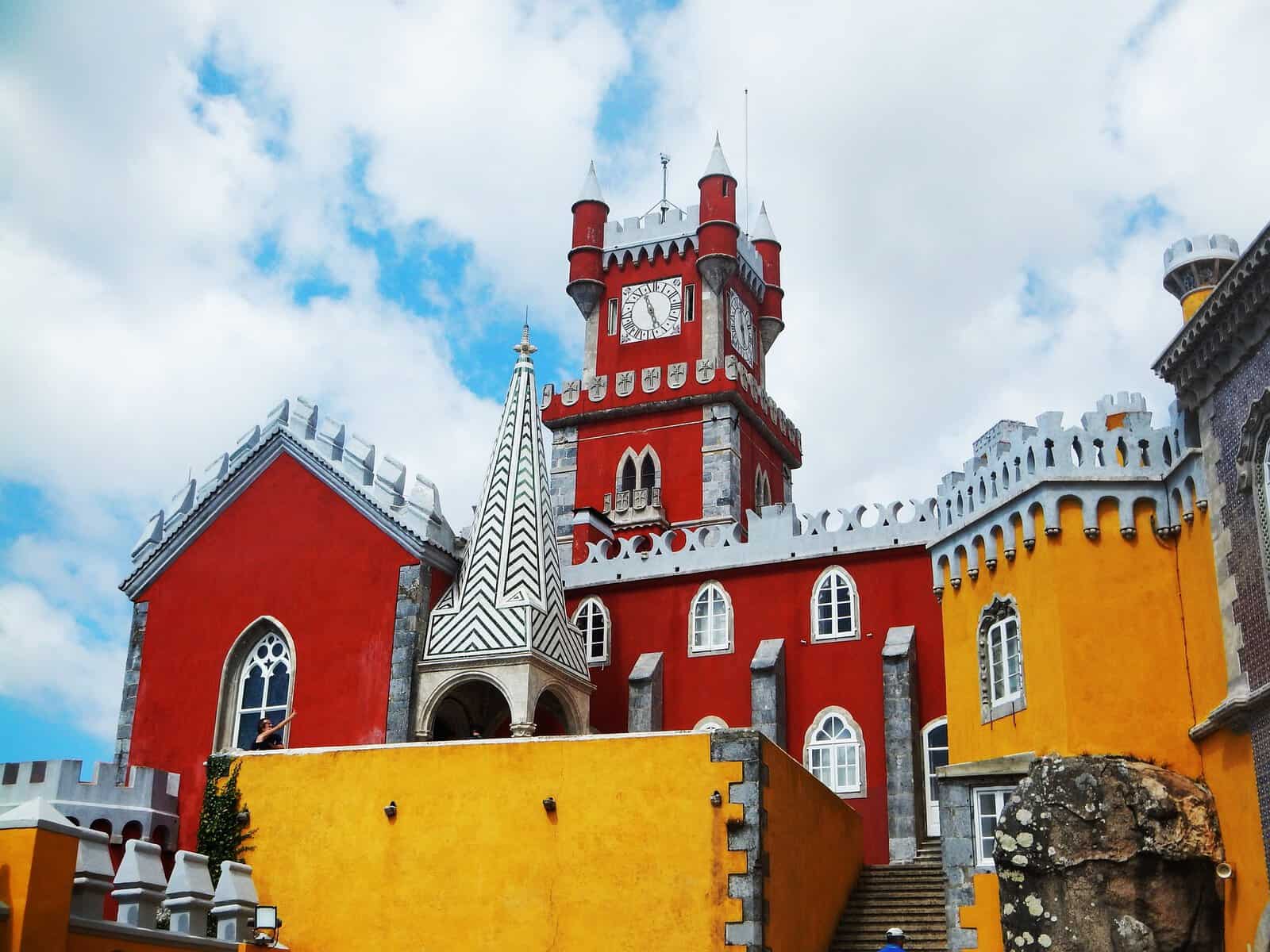
The most famous and colorful site in Sintra. It’s important to know that this attraction is almost always crowded, especially in summer. That’s also why it’s worth buying tickets in advance. In our view, the best time to visit is right when it opens in the morning or later in the afternoon, which also makes planning your day in Sintra easier.
The palace, which looks like a castle from an amusement park, is relatively modern and began construction in 1840 at the initiative of King Fernando II. The king was a German prince who married Maria II, Queen of Portugal. He was known as an artist in his own right, an art lover, and an intellectual. It was he who launched the ambitious project of building a new royal summer palace in Sintra.
The palace was built atop one of the hills of the Serra de Sintra, where a small monastery had previously stood. Ferdinand—known in Portugal as Fernando II—hired the German architect von Eschwege and gave him the task of a lifetime: to create a dream palace using bold, vivid colors. Construction continued for 45 years, essentially the remainder of Ferdinand’s life, and was completed in 1885.
The Portuguese royal family, who had maintained summer palaces in Sintra for centuries, got to enjoy the new and colorful Pena Palace for only a single generation. In 1910, with the proclamation of the republic, the palace passed into state hands and has served as a museum ever since.
That museum went on to become Sintra’s leading attraction and the most popular day trip from nearby Lisbon.
Once inside the palace, don’t miss the following sections:
- The Monumental Gate | Porta Monumental – the thick, fortified entrance gate with two small and striking towers above it.
- The dining room and pantry | Sala de Jantar e Copa – where you can see tableware bearing the emblem of King Fernando II’s family.
- Fernando II’s bedroom | Quarto de D. Fernando – this room was built inside the red square tower overlooking the Moorish Castle. Fernando II designed it for himself and his wife, Queen Maria II, but she died before the building was completed.
- Manuel II’s room | Aposentos de D. Manuel II – the room beneath the dome of the palace’s tall yellow tower. It is rounded in shape and has a ceiling decorated with stucco reliefs. Manuel II was the last king of Portugal.
- The Triton Gate | Terraço do Tritão – a beautiful gate centered on a statue of Triton, son of the sea god Poseidon, half man and half fish. This was a neoclassical architectural element that Fernando II was especially fond of. Notice the tiles along the gate’s supports.
- The Arab Room | Sala de Visitas – also called the visitors’ room. It was designed in a Muslim style, with white arches and richly decorated ceilings.
- The inner courtyard – the original Manueline cloister | Claustro Manuelino – this was the monks’ inner courtyard in the monastery whose ruins became the foundation for the palace. Fernando II decided to incorporate it into the new palace. The cloister is small and impressive, with two levels and lovely flooring.
- The Great Hall | Salão Nobre – originally it also contained a billiard table, so it was known as the billiard room. The hall was intended for royal entertaining. Notice the comfortable sofas and the chandelier with 72 branches.
- The wall walk | Caminho de Ronda – around the palace runs a paved walkway, something like a promenade linking terraces where the royal family could stroll and admire the magnificent views in every direction.
The Moorish Castle and its walls | Castelo dos Mouros
Beyond the wonderful views, the walls, and the history, one reason the Moorish Castle is such a popular stop in Sintra is that it fits naturally into an itinerary that includes Pena Palace. The palace—Sintra’s number-one attraction—sits right on the hill opposite the castle.
After descending from Pena Palace, or before climbing up to it, you’ll find the entrance to the Moorish Castle. From the entrance, it’s a roughly 15- to 20-minute uphill walk to the fortress. The climb itself is not especially difficult, and it passes through trees and lovely viewpoints, but it is still fairly long and won’t suit everyone.
The fortress, which dominates the old town, came into Portuguese hands in 1147 after the conquest of Lisbon from the Moors. It was first built about a century earlier by the Muslims—the Moors—which is how it got its name.
Once you reach the top of the hill, the first sections are still reasonably accessible, but to get to the viewpoints and the high walls, you’ll need to climb quite a few stairs.
The main attraction at the Moorish Castle is the route along its walls. It’s a wonderful walk that feels like stepping back a thousand years, and the views over the forests and toward Pena Palace are lovely. But the walls can be dangerous! First, because the inner side is low—similar to the walls in Óbidos, where there are no railings at all—and second, because of the strong wind that almost always blows across the hilltop. Extra caution is essential, especially when the site is crowded. If you’re traveling with small children, it’s worth considering whether to do this walk at all.
Beyond the crenellated walls and the views toward nearby Pena Palace, it’s also worth noticing the Moorish-era cistern (Cisterna), which is attractively displayed.
From the castle, there are wonderful views over central Sintra, Pena Palace, and of course the ocean, which lies about 4.3 miles away as the crow flies.
Quinta da Regaleira – the palace, the gardens, and the mysterious well
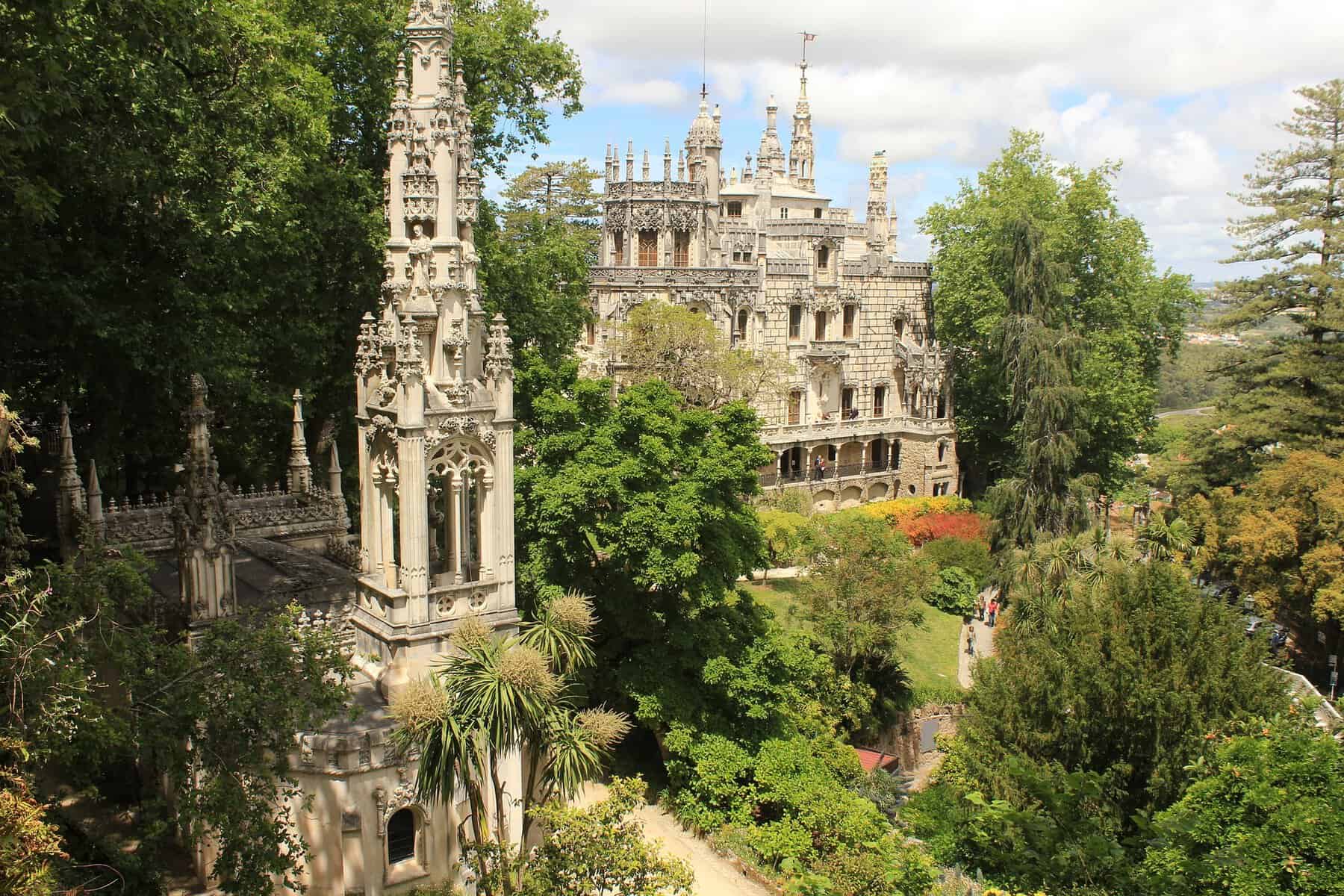
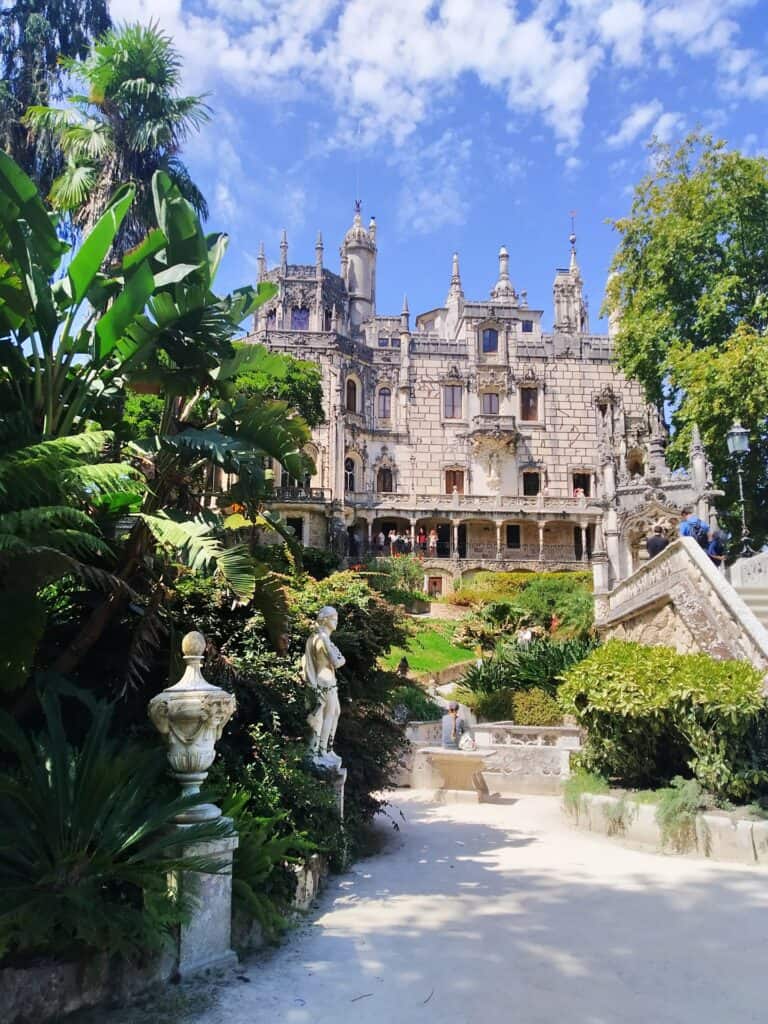
Despite its old-world appearance, the palace was built in the early 20th century. It is surrounded by extensive gardens and is the second most-visited site in Sintra. The palace itself is not especially large, and many of its rooms are not open to the public. A visit to Quinta da Regaleira is really about the gardens and the smaller structures around the palace. It’s a good idea to pick up a map at the entrance, since the grounds are fairly large.
This was not a royal palace. It was built in the early 20th century by a slightly eccentric Portuguese heir named António Augusto Carvalho Monteiro. He bought the 10-acre estate to create a residence for himself and his collections, as well as a kind of mysterious, mystical garden reflecting his interests—all alongside the royal palaces nearby.
The main attraction at Quinta da Regaleira is the “Initiation Well.” This is a 27-meter tower with a spiral staircase descending past 23 beautiful niches. It was never actually a well, but rather a ceremonial structure in keeping with the mysterious character of the estate.
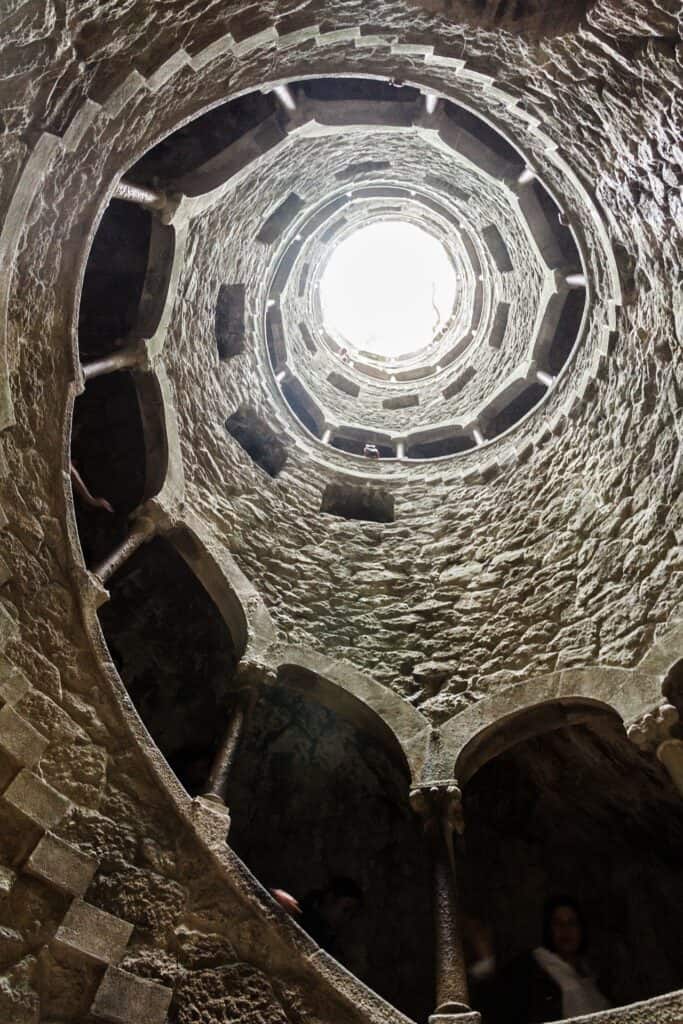
The well is located higher up in the park, and it’s worth heading there as soon as you enter the palace and gardens complex. After walking down the stairs—and of course taking the iconic photo—you reach a maze of underground caves that is quite an attraction in its own right.
The caves lead to different corners of the park, which is another reason it helps to have a map. Once you come back out, it’s easy to lose your sense of direction, and the map will help you find your next stop in the gardens.
As noted, the palace building itself is not the main attraction at Quinta da Regaleira, and if you’re short on time, you can skip the interior and simply admire its wonderful façade.
The National Palace of Sintra | Palácio Nacional de Sintra
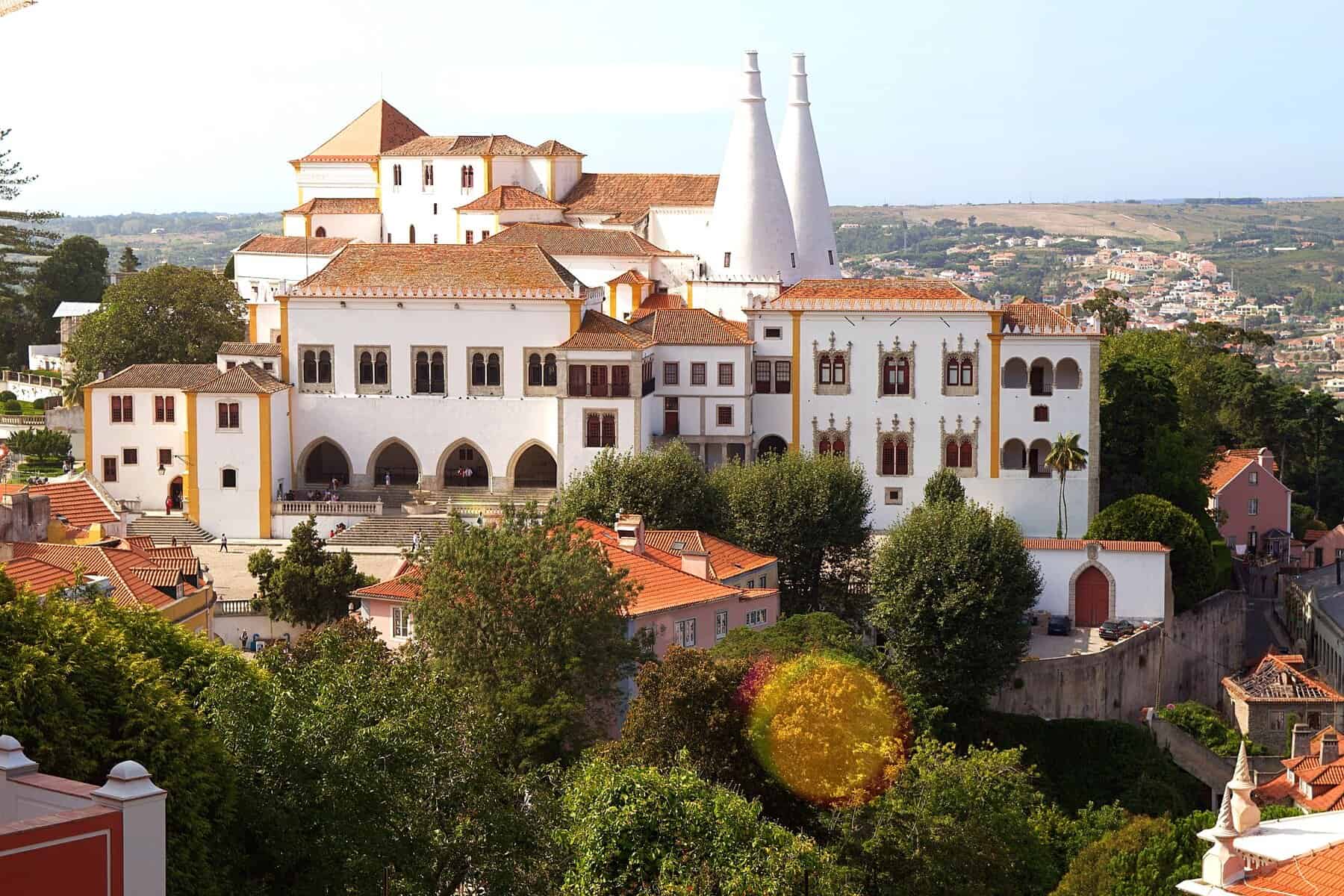
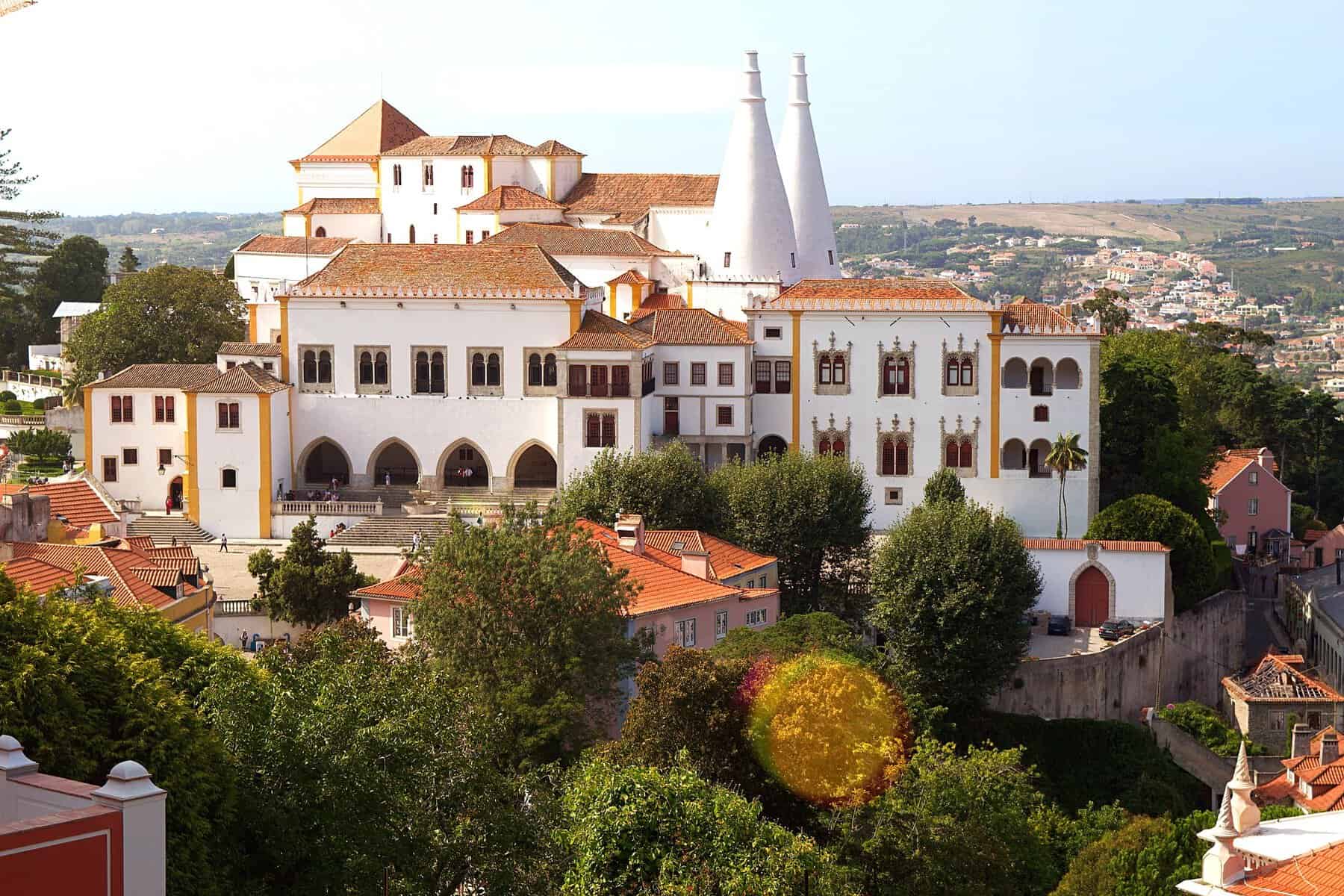
The white palace, commonly known simply as Paço Real – the Royal Palace, is the best-preserved medieval palace in Portugal. It sits just above the old town, so access is excellent. You can walk there in about 10 minutes from the train station, passing plenty of cafés and restaurants along the way.
The palace was built in the late 14th century by King João I on the foundations of an 8th-century Moorish palace. It remained a favorite of the royal family until the early 20th century, when the republic was established and monarchy ended in Portugal. For centuries, the palace served as a nearby summer retreat where royals enjoyed hunting in the surrounding forests. Manuel I, whose name gave rise to the Manueline architectural style, added a wing and many decorative elements in the early 16th century, and much of that survives today.
The palace is famous for its blend of Manueline and Moorish styles and is especially known for its two white cylindrical towers, which are actually kitchen chimneys rising 33 meters high. The interior is also very well preserved, with its varied and richly decorated ceilings standing out in particular.
There are several features worth paying attention to during your visit:
- The Coat of Arms Room | Sala dos Brasões – with its dome decorated with 72 coats of arms of Portuguese noble families, and walls lined with 18th-century tiles.
- The kitchen | Cozinha – located beneath the famous chimneys, which you can see from the inside here.
- The chapel | Capela – the prayer room where the king would sit during Mass. It is one of the surviving parts of the palace that predate João I’s major construction campaign and dates to the 13th century. Its arched Mudéjar-style ceiling is the best preserved in all of Portugal.
- The Swan Room | Sala dos Cisnes – the ballroom, with its high ceiling decorated with octagonal shapes containing paintings of swans.
- The gallery – the Galleys Room | Sala das Gales – a long passage connecting the palace wings. Its ceiling is painted with old sailing ships, and Spanish ceramics and other objects are displayed along the corridor.
- The Magpie Room | Sala das Pegas – named after the large songbirds painted on its ceiling. The room also contains antique carpets and tiles.
- The Manueline Wing | Ala Manuelina – the wing commissioned by King Manuel I from the late 15th century through 1530, featuring rooms with rare tiles from Seville.
- The garden between the walls | Jardim da Preta – a small garden to the left of the entrance that once served as a kind of inner royal courtyard.
For more information and the National Palace opening hours, click here…
To find a place to stay in Sintra, click here…
More attractions and sites in Sintra
Parque da Pena
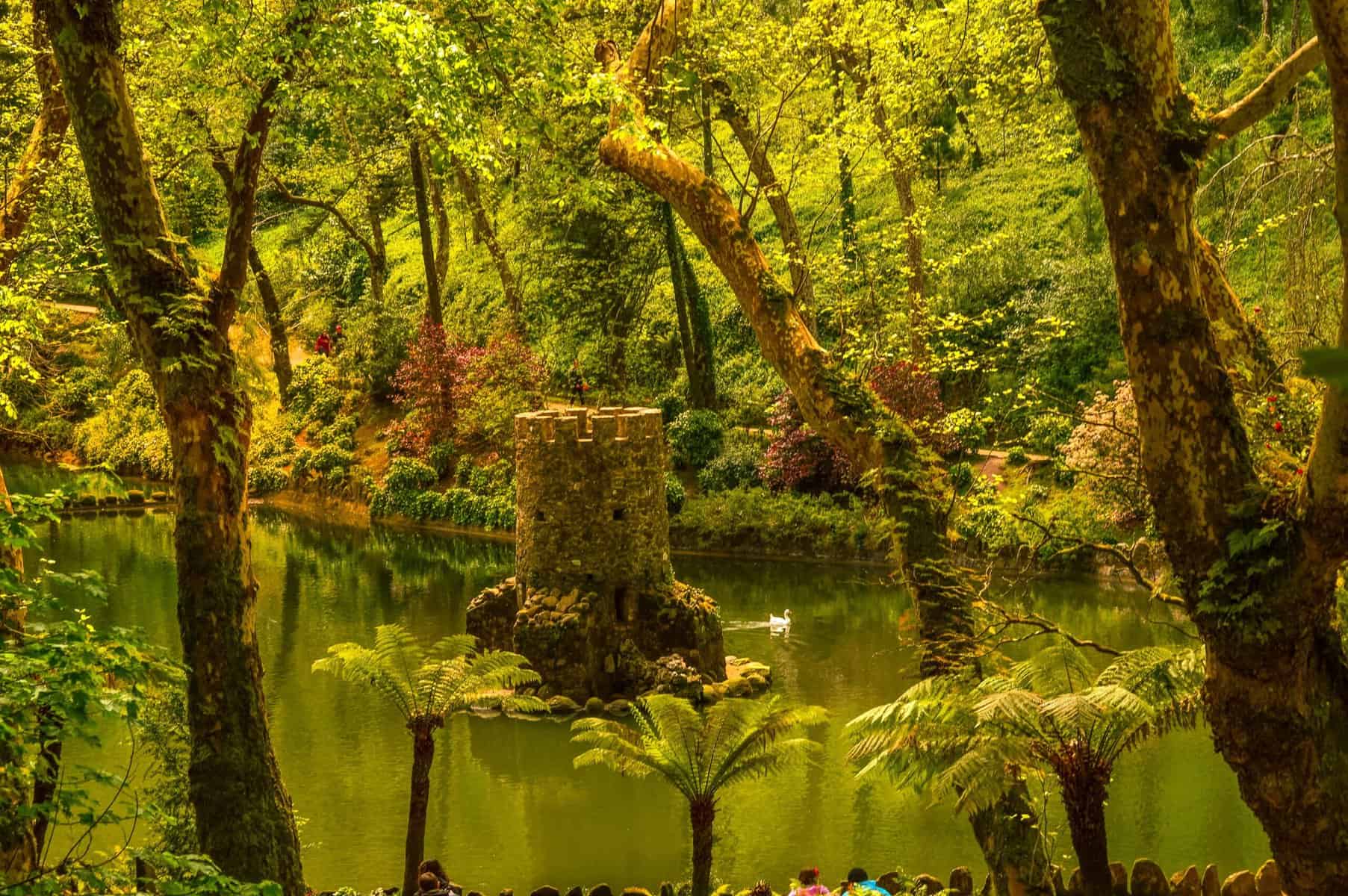
This is the park surrounding the famous colorful palace. Pena Park includes the wooded hillsides west of Pena Palace and stretches up toward and beyond the Moorish Castle. Along its paths you’ll find fountains, gazebos, and even a royal chalet.
You can follow walking routes through the park that continue into the forests farther west. The site most visitors come looking for is the Countess’s Chalet, built by King Fernando as part of the broader Pena Palace project.
The Chalet of the Countess of Edla lies among the woods in the western part of the park. This charming chalet in its mysterious setting was built by King Ferdinand II of Portugal in 1869. By the time he built it, he was no longer king after the death of his first wife Maria, who had been the Portuguese crown princess. After her death, the crown passed to their son Pedro V before later passing to his brother Luís I. Ferdinand, as noted, was a German prince who married the Portuguese heir Maria II. He was an artist himself and, even more than that, a devoted patron of the arts who supported many artists. In 1869, many years after his first wife died from childbirth complications while giving birth to their 11th child, he remarried Elisa Hensler, a Swiss-American opera singer and actress who became the Countess of Edla after the wedding. The chalet was built in an Alpine style and served as a retreat for the unusual couple.
Cruz Alta is the highest point in the park—and in Sintra as a whole. From this wooded hilltop, marked by a small cross, there are sweeping views over the ridge, the forests, and Pena Palace.
The park took advantage of the mild weather created by the nearby sea, and tropical trees and shrubs were planted throughout.
Check out our guide to the best day trips from Lisbon…
The Sintra Museum of Art | Museu das Artes de Sintra
The museum is located in town itself, more or less the same distance from both train stations—about a 7- to 8-minute walk. It displays collections by the painter Emilio Paula Campos and the sculptor Dorita Castel Branco.
Many visitors come to see several older paintings depicting the landscapes of Sintra.
Admission is free
For more information and the museum’s opening hours, click here…
The Sintra Natural History Museum | Museu de História Natural de Sintra
The museum is housed in a 19th-century building right in the center of the old town near the National Palace, so it’s very easy to reach. It has a huge fossil collection, most of it found in Portugal, along with many other natural-history finds from the western Iberian Peninsula. The collection is presented in a modern way and also includes video displays. In addition to the permanent exhibition, there are almost always temporary exhibits related to the natural world of Portugal.
It makes a good one-hour visit, and children usually connect well with it.
Admission is free
For more information and the Natural History Museum opening hours, click here…
To find a place to stay in Sintra, click here…
Queluz Palace – Located between Lisbon and Sintra
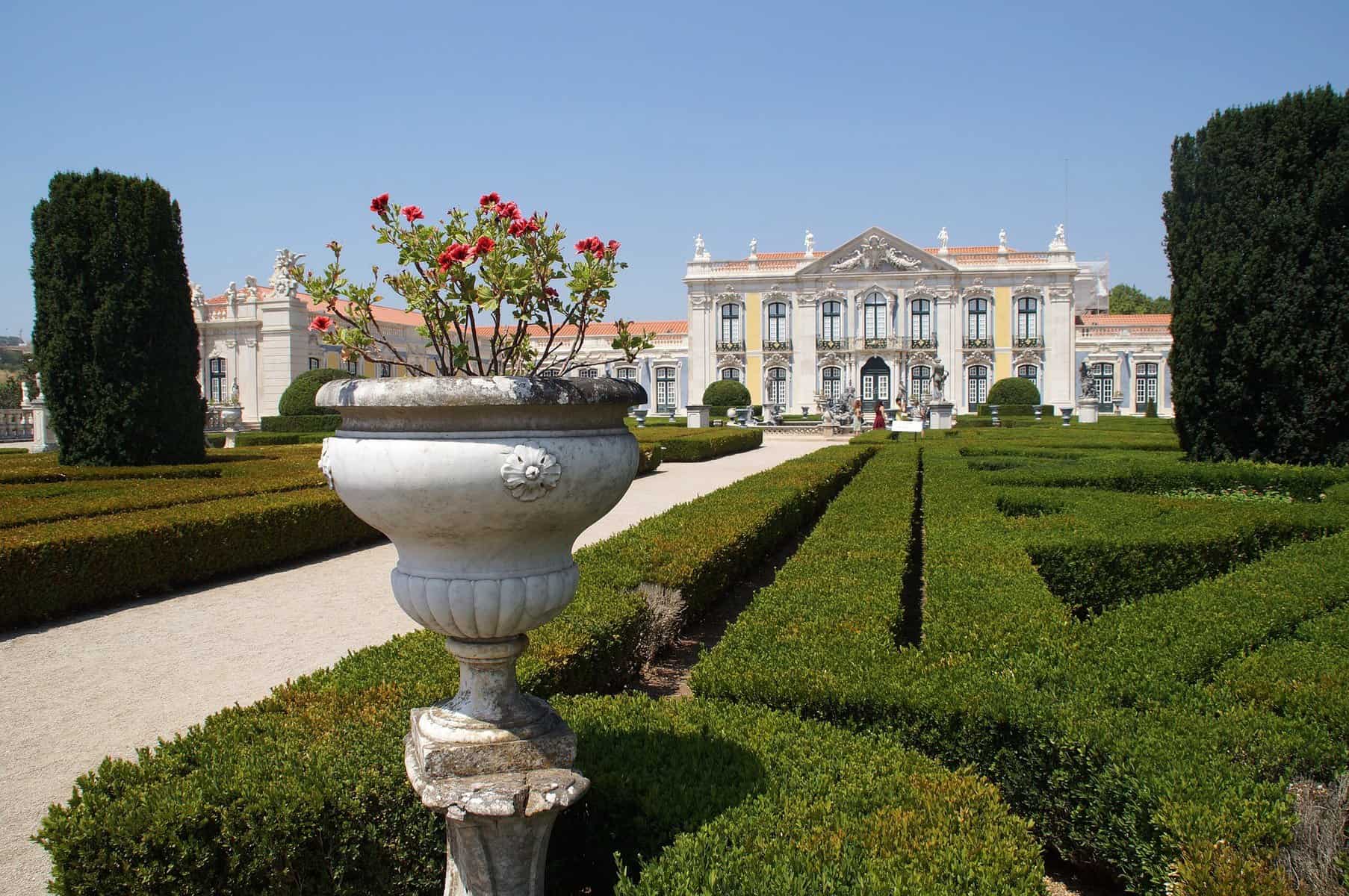
Queluz Palace | Palácio Nacional e Jardins de Queluz is Closer to Lisbon than to Sintra, but located on the way to or from Sintra. Even though it is not actually in Sintra, it is often included in itineraries because it is another royal palace with gardens, much like the palaces in Sintra.
Queluz Palace too, was built as a summer residence for the royal family in the heart of the woods. It is often called the “Versailles of Lisbon” because of its colorful design and its large, manicured gardens. The palace was built in the Rococo style and became one of the last buildings in Europe designed in that ornate mode. It stands on the site of an earlier hunting lodge used by the royals.
How do you get to Queluz Palace?
The palace is about a 25-minute drive northwest of Lisbon. By train, you can board at Rossio Station and get off after just 15 minutes at Queluz-Belas Station. From the station, it’s about a 10-minute walk to the palace.
To book tickets for the palace and gardens, click here…
The history of the palace
Construction of the palace began in 1747 under Prince Pedro, son of King João V. He hired the Portuguese architect Mateus Vicente de Oliveira. More wings were added later, once Pedro became king through his marriage to Maria I. At that stage, the French architect Jean-Baptiste Robillon was brought in, and he is the one who turned it into the jewel it is today. He also had to restore parts of the palace damaged in the colossal Lisbon earthquake of 1755.
The palace served as the official residence of the kings of Portugal for several years, from 1794 to 1807, after the palace in Lisbon—Ajuda Palace | Palácio da Ajuda —was damaged by fire. In 1807, Maria I and the royal family went into exile in Brazil as Napoleon’s forces began occupying the Iberian Peninsula during the Peninsular War.
The palace has functioned as a museum and attraction since the early 20th century. The Portuguese government also uses some of its wings for official banquets and receptions for presidents, kings, and other dignitaries. It is a bit like the way the French government uses the Palace of Versailles when the president hosts an important state dinner for visiting world leaders.
Don’t miss these highlights when visiting Queluz Palace:
The palace façade and grounds:
- The palace façade – facing the town square and providing it with a colorful, symmetrical backdrop. The southern “wing” of the palace stretches toward the broad avenue leading from the square to the clock tower.
- The clock tower | Torre do Relógio de Queluz – located in the church square outside the palace. The clock rises above a tower on top of a pale blue building. The building beneath the tower now serves as a pousada-style hotel, meaning a hotel set in a heritage building.
Inside the palace wings:
- The Ambassadors’ Hall | Sala dos Embaixadores – the floor is laid out like a blue-and-white chessboard, while the window frames and ceiling are decorated in an exuberant, colorful Rococo style. This is where diplomats and others would come when the king received delegations to kiss his hand. Notice the large Chinese porcelain vases.
- The Azulejo Corridor – the azulejos | Corredor dos Azulejos – lined with azulejo tiles depicting Portugal’s colonies.
- The Music Room | Sala da Música – this room once hosted the orchestra of Queen Maria I for operas and concerts. Notice the portrait of the queen above the antique piano. Special concerts are still held here from time to time.
- The Royal Salon – spread across several rooms, from which one could step directly out into the Malta Gardens. Notice the lavish furnishings.
- The refreshment room | Sala das Merendas – a small private dining room with colorful and distinctive decoration.
- The Throne Room | Sala do Trono – the largest of the reception rooms. Versailles has the Hall of Mirrors; here, it’s the Throne Room. In the time of Maria I and Pedro III, many balls were held here. It was designed so that the Malta Gardens could be seen across their full width, and it also opened directly onto them.
- The chapel | Capela – designed in a colorful Rococo-Baroque style. It is one of the earliest parts of the palace. The painting above the altar is by the Portuguese artist André Gonçalves.
- The Don Quixote Room | Quarto D. Quixote – a large royal bedroom with a domed ceiling and a stunning floor. It is named after Cervantes’ famous character because some of its decorations depict scenes from Don Quixote’s life.
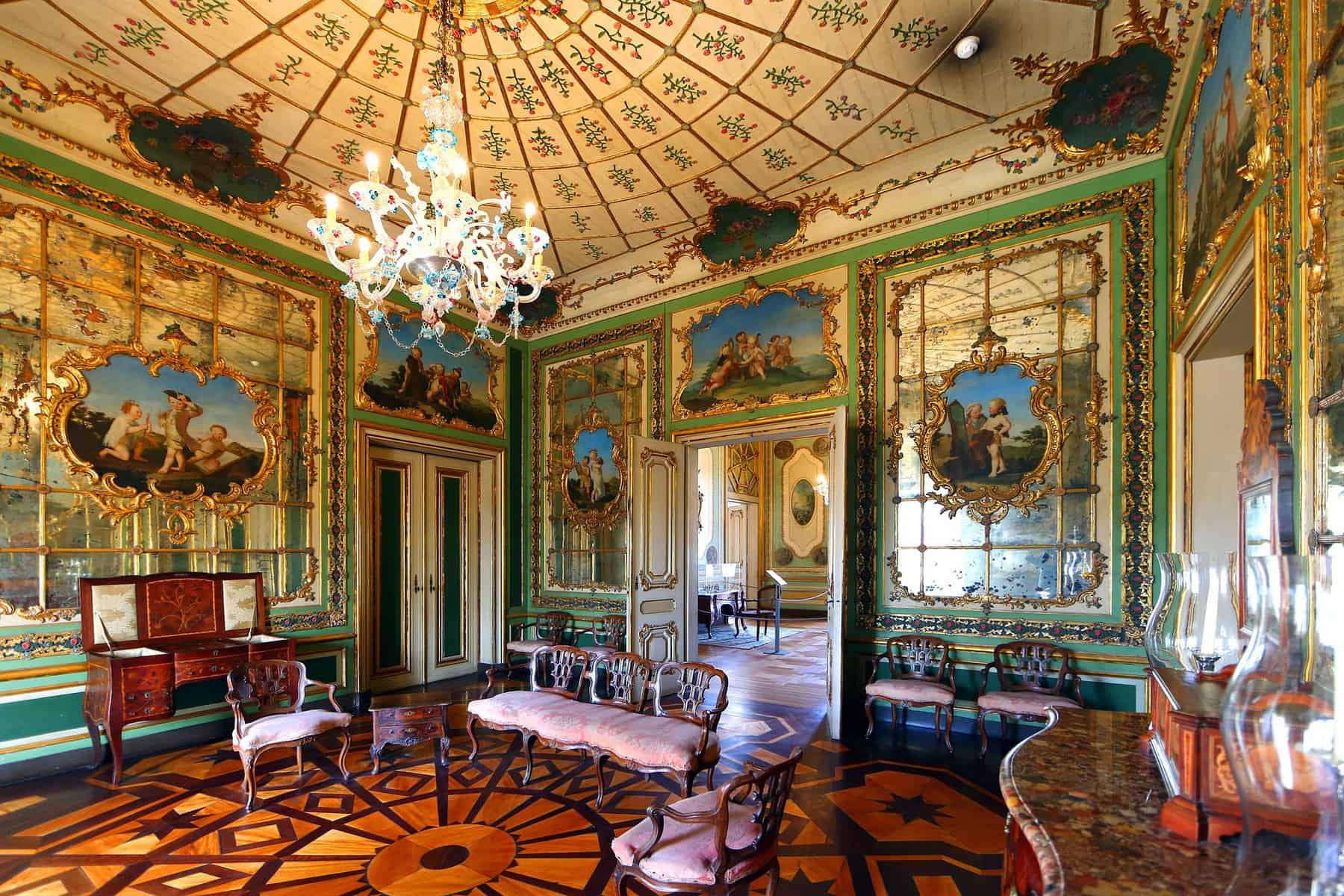
The gardens beside the palace are beautifully manicured and include a variety of features. Farther down, they give way to woodland crisscrossed by straight paths lined with trimmed shrubs. There are statues and fountains in this lower section as well, though the strongest impression still comes from the upper gardens. Down below, it’s mainly a pleasant place for a stroll. There is also another section of the gardens entered separately from the north.
Here are the main highlights of the gardens:
- The Upper Gardens | Jardins Superiores – the large, symmetrical gardens extending from the main façade. The famous fountain is also located here.
- Neptune Fountain | Fonte de Neptuno – much like Versailles, the fountains here draw on classical motifs. This beautiful fountain, very close to the palace building, photographs wonderfully with the palace in the background.
- The Malta Gardens | Jardim de Malta – part of the Upper Gardens, though really a garden square of their own. Jean-Baptiste Robillon designed them symmetrically opposite the grand and important Throne Room.
- The Lion Staircase and Robillon Pavilion | Pavilhão Robillion – broad stairs used by the royal family to descend from the Ambassadors’ Hall toward the canal and gardens. They come down from the palace’s western wing, whose walls are painted pink and which is known as the Robillon Pavilion after the palace’s designer.
- The old canal | Antigo Canal – a feature added to the gardens. The canal was once filled with water and decorated with blue azulejo tiles on both sides. The royal family used to sail along it, and not far away they also kept exotic animals in a kind of small zoo.