Braga is the second-largest city in northern Portugal, about a 40-minute drive northeast of Porto. Set in the heart of Portugal’s northern Vinho Verde wine region and surrounded by green, wooded hills, it’s a rainy northern city—but also a very pleasant place to explore, especially in spring and summer. Braga’s main landmark is Bom Jesus do Monte, the Church of Good Jesus perched on the hillside. Still, the city also has a charming center that’s wonderful for strolling. Its many gardens and relatively flat layout make getting around easy and enjoyable.
Braga holds an important place in Portuguese heritage. In the hills and along the streams between the city and nearby Guimarães, the small 11th-century kingdom that grew into a world-spanning empire was founded, and eventually became the welcoming, remarkable country Portugal is today. Braga is perfect for a day trip from Porto, though it also works well as a base for exploring the historic sites and green landscapes of northern Portugal.
How many days should you spend in Braga?
One full day in Braga is enough to see the main sights. A good plan is to split your time between half a day in the city center and half a day up on the hill at Bom Jesus, the Church of Good Jesus. Braga also makes an excellent day trip from Porto.
Click here to find hotels or vacation apartments in green Braga…
8 must-see sights and experiences in Braga
- Bom Jesus do Monte – Climb the stairs or ride the funicular up to the Church of Good Jesus
- Visit Portugal’s first cathedral | Sé de Braga
- Stroll among the flowers in the Santa Bárbara Gardens | Jardim de Santa Bárbara
- Soak up the atmosphere in Repúblic Square, the city’s main square | Praça da República
- Avenida da Liberdade with its beautiful gardens, extending from Praça da República
- Raio Palace with one of the most beautiful façades in the city | Palácio do Raio
- Visit Biscainhos Museum and the stately gardens around it | Museu dos Biscainhos
- Enjoy a glass of Vinho Verde, the local wine of the Minho region
Click here for a list of 8 hotels we loved in Braga…
How do you get to Braga?
Flights to Braga
The airport that serves Braga is Porto International Airport – Francisco Sá Carneiro Airport (airport code: OPO). The drive from Porto International Airport to Braga takes about 40 minutes. If you want to travel by public transportation from the airport in Porto to Braga, there are direct buses from the airport to Braga’s central station throughout the day (except in the very late-night hours), and they run very frequently.
Getting to Braga by rental car
Most visitors reach Braga either on a day trip from Porto, in which case public transportation also works well, or at the start of a trip through the northern Minho region. Braga is the historic capital of this region, which draws many travelers thanks to its green natural scenery, especially Parque Peneda-Gerês.
If your trip includes more than just Braga’s city center, having a car is the better option.
Check out our guide to driving a rental car in Portugal…
Parking in Braga
Parking in Braga’s city center can be tricky, but there are underground garages in the center, including several directly beneath Praça da República, accessed from Avenida Central (Av. Central).
Another option is a little farther along at the large underground garage beneath Parque Paretas.
There are also more parking lots around the center within a 10-minute walk, including one near the train station west of downtown.
Click here to search for hotels or vacation apartments in northern Braga…
Getting around Braga
In Braga’s city center, the best way to get around is on foot. The center is relatively flat, so it’s easy to walk, though it is fairly large, so any visit will involve a good amount of walking. The easiest way to reach Bom Jesus do Monte is by car, but there is also a bus.
Public transportation to Bom Jesus do Monte – Buses from Braga train station go up to Bom Jesus do Monte approximately every half hour. The bus also passes through the city center at the end of Avenida da Liberdade. The ride takes about 20 minutes.
Click here for a small-group guided tour of Braga and Bom Jesus…
Public transportation to Braga
Both Braga’s bus station and train station are very close to the city center. Since the center is flat, it’s especially easy to get from either station to the city’s main sights. That makes Braga a very convenient day trip from Porto for travelers using public transportation.
Getting to Braga by train
There are frequent direct trains from Porto to Braga. Trains leave from Campanhã station and arrive in Braga about an hour later. Braga’s train station is west of the city center, next to a shopping mall.
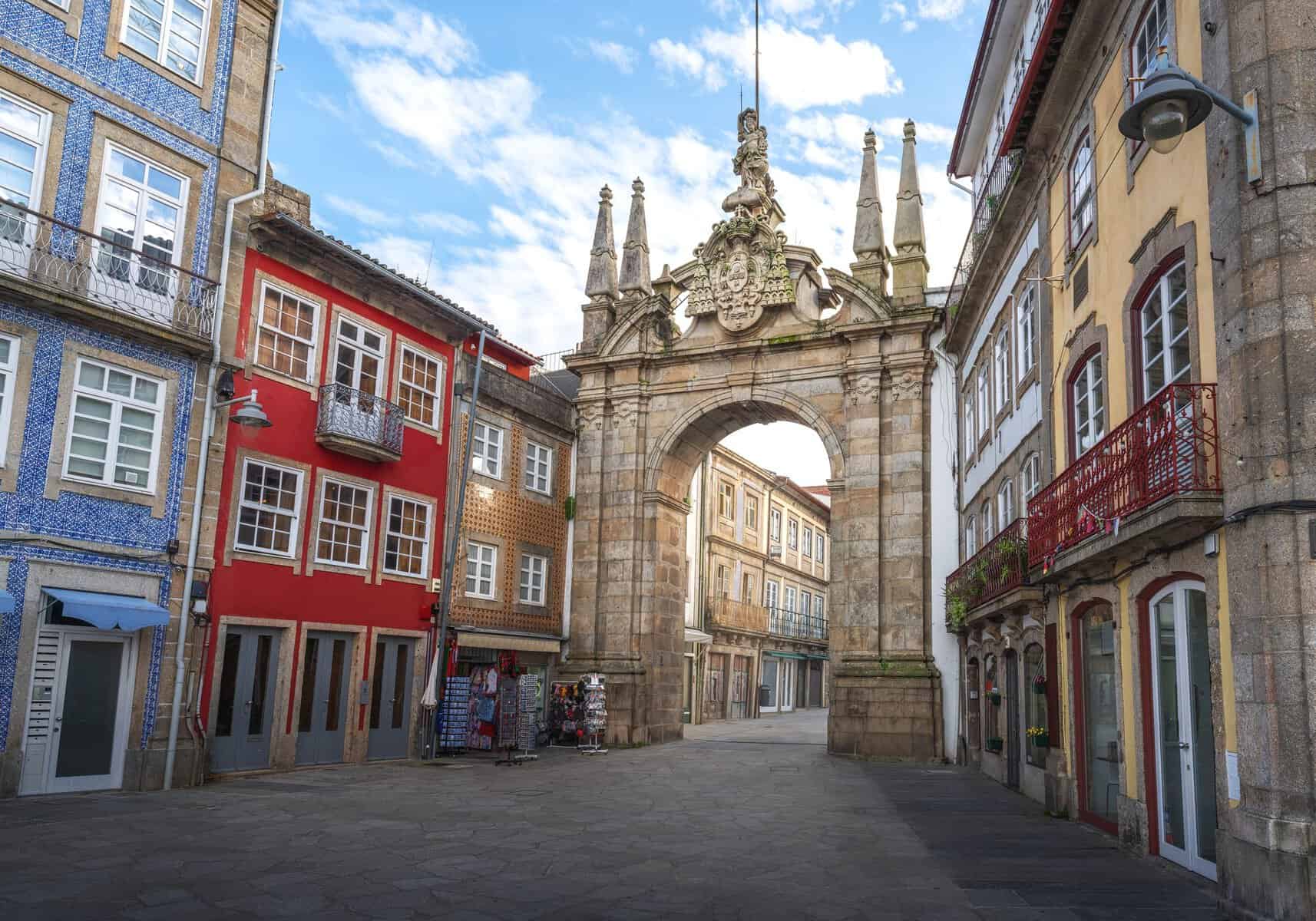
The walk from the train station to Praça da República takes a little over 15 minutes, but along the way you’ll pass more must-see sights in Braga, such as Porta Nova, a 6-minute walk from the station, and the cathedral, about 9 minutes away. That means you can simply begin exploring straight from the station, and the walk into the center won’t feel long at all.
Getting to Braga by bus
Braga’s central bus station is north of the city center, near the market—less than a 10-minute walk from Praça da República.
Buses from Porto also leave from Campanhã station very frequently, and the journey takes just under an hour. From nearby Guimarães, the bus is the best way to reach Braga by public transportation.
Click here for a list of well-located hotels in Braga…
Click here for the full list of attractions and sights in Braga…
About Braga
History
- Braga was founded by the Romans during the reign of Emperor Augustus in 16 BCE and was named Bracara Augusta. Located in the valley of the Cávado River, the city became an important Roman center and was crossed by several major roads. Later, after the province of Hispania Gallaecia was established, Braga became its capital.
- From then until now, it has remained a major city in this rainy and fertile region. Even after the Romans were driven out, Braga stayed the area’s leading city and had already gained Christian religious importance.
- Later, Santiago de Compostela, just 180 kilometers to the north, overtook Braga in religious prominence. Still, because Braga lay on one of the pilgrimage routes to the great shrine in Galicia, Spain, crowds of believers passed through then and continue to do so today.
- The city of Braga, and the historic Minho region more broadly, did suffer under Muslim occupation, but the Muslims were never able to firmly establish themselves here. It was also one of the first areas to be retaken during the Reconquista—the reconquest that, along the way, gave rise to two kingdoms that would become global empires: Spain and Portugal.
- Portugal’s first cathedral was built in Braga in the 11th century by the parents of Afonso Henriques, Portugal’s founding king, and both are buried there.
- Over time, countless churches and basilicas were added in and around the city, which is why Braga is sometimes called the “Rome of Portugal.” Beyond the cathedral, the leading pilgrimage sites are Bom Jesus do Monte and the newer, vast sanctuary of Sameiro, both on the ridge overlooking the city from the east.
- Braga and the surrounding region held a kind of autonomous status within the Kingdom of Portugal from the 12th century onward, governed by the city’s archbishop. That remained the case until the republic was established at the start of the 20th century.
- Because of its distance from Lisbon and the south, Braga did not share in the great wealth brought by Portugal’s Age of Discovery beginning in the 16th century, and it remained a religious, medieval city.
- From the 18th century onward, when the House of Braganza consolidated its rule over the kingdom, it began reinvesting in the region from which its ancestors came. That sparked a building boom in the city, including the famous staircase at Bom Jesus do Monte, and Braga took on a Renaissance character.
Braga today
- Braga is Portugal’s third-largest city if you don’t count the large suburban belts around Porto and Lisbon. The city has 200,000 residents, and its economy is based on both traditional industry and high-tech sectors. It is also home to a major university, Universidade do Minho, and is known for its high quality of life, with plenty of parks, pleasant streets, fresh air, and lots of greenery all around.
- Its proximity to Porto and the northern coast gives residents the best of both worlds: life in a relatively quiet city, while staying close enough to the north’s main urban center and to beaches that are especially lovely in summer.
Weather in Braga
- Rain – Braga is the rainiest city in Portugal, which goes a long way toward explaining all the lush greenery around it. Weather pays little attention to borders. Although Braga is in Portugal today, in Roman times it was the capital of Gallaecia, the region that now corresponds to northwestern Spain, the rainiest part of the country. Just as Vigo, 100 kilometers north of Braga, is Spain’s rainiest city, Braga is the rainiest large city in Portugal.
- Aside from the summer months—June, July, August, and early September, when rain is still possible—the city sees a great deal of rainfall for the rest of the year, especially in fall (annual average: nearly 1,500 mm).
- Temperature – Winters in Braga are cold and wet, but not freezing. Summers can be warm, though nights and early mornings are almost always cool. In fact, unless there’s a heat wave, summer temperatures are very pleasant and make sightseeing around the city especially enjoyable.
When should you visit Braga?
Spring and summer are the best times to visit Braga, when the weather is ideal for exploring.
- Click here for all the sights and attractions in Braga…
- Click here for a small-group guided tour of Braga and Bom Jesus…
- Click here to find a place to stay in Braga…
Bom Jesus do Monte – the Church of Good Jesus on the Hill
This is Braga’s most famous and important landmark, set on the hill east of the city. It is also the most spectacular religious site in all of Portugal!
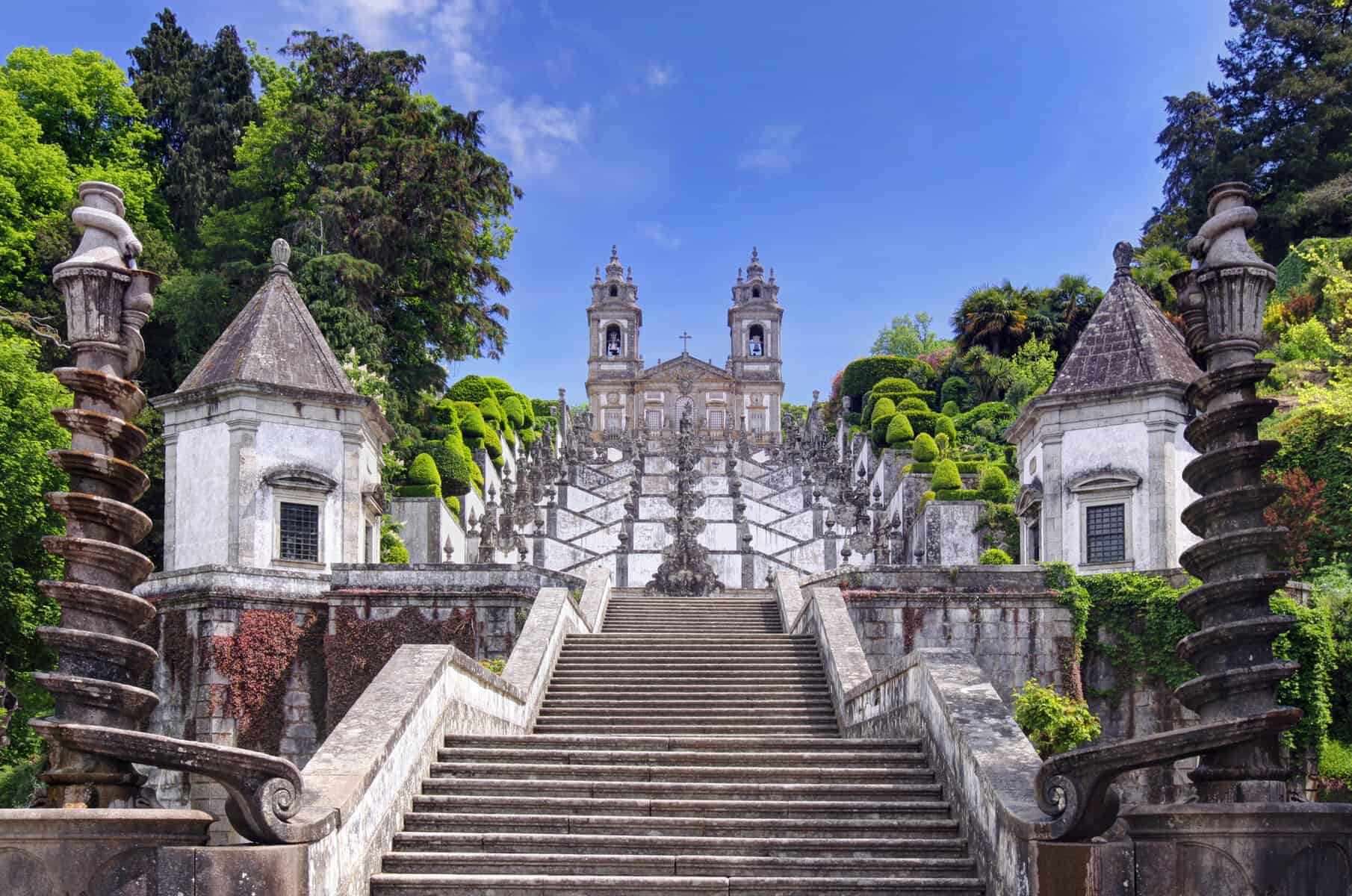
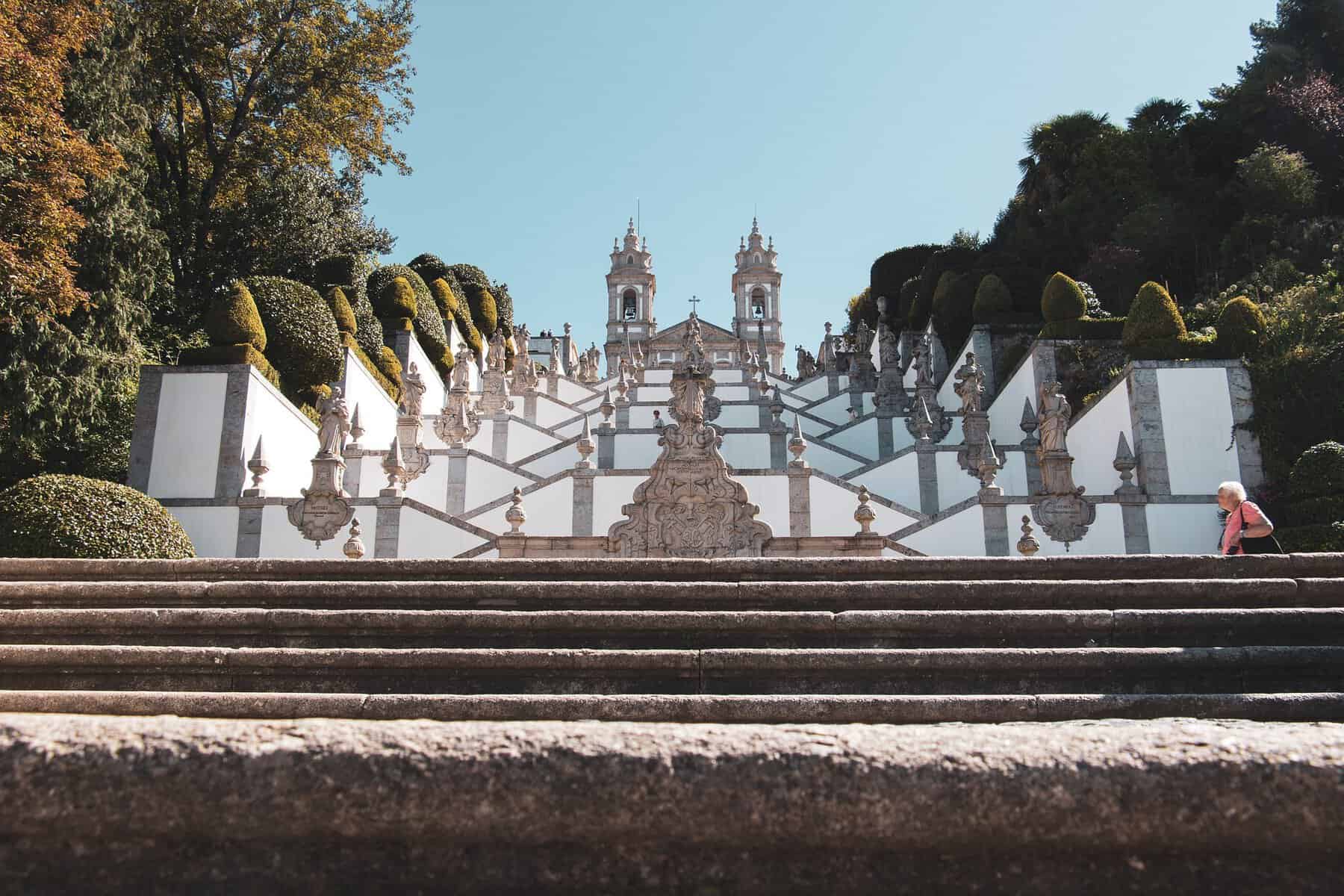
A monastery stood on the wooded hilltop on Braga’s eastern side as early as the 15th century. But it was the city’s archbishop who decided in 1722 to add the enormous Baroque staircase that has since become the site’s defining feature. Construction continued through the early 18th century.
The site is both religious and touristic. Pilgrims make the climb up the stairs as a kind of reenactment of Christ’s Passion—Jesus, or Zézus in Portuguese. Visitors, meanwhile, can also go up by funicular.
Bom Jesus do Monte gets very crowded on weekends, when lines for the funicular can be long. If possible, plan your visit for a weekday, or arrive early if you’re coming on a weekend.
Click here for a guided tour of Braga and Bom Jesus…
The climb to Bom Jesus:
- 577 steps make up the famous staircase leading to the top of the hill and the monastery.
- Luckily, there’s also a funicular—the Elevador do Bom Jesus do Monte—which can take you to the top. Interestingly, it is powered by water flowing down from the summit, which turns the wheels that pull the cable.
- The funicular was inaugurated in 1882 and was the first of its kind in Portugal. Its success was so great that the concept was later adopted in the distant capital, Lisbon. Lisbon’s funiculars, now electrically powered, became one of the symbols of the capital and of Portugal as a whole. But the original was here in Braga.
- The climb to the monastery is divided into three sections:
- The first begins near the funicular station. This is not the sculpted staircase itself, but rather a zigzag route with steps winding through shrubs and trees. It represents the 14 Stations of the Cross from Jesus’ path of suffering, the Via Dolorosa. Each station is marked by its own chapel.
- The second—the Escadaria—is the famous Baroque staircase most closely associated with the site.
- The third is a smaller ornamental staircase topped by Largo do Pelicano, “Pelican Square,” with its lovely gardens.
- Then just a few more steps and you’ll reach the top, with its handsome buildings and gardens.
At the top of the hill, you’ll find several buildings and a large garden:
- The church façade, framed by two towers, perfectly completes the symmetry of the long staircase leading up to it.
- The church itself was designed by the architect Carlos Amarante, who also built several structures in the city. Construction began in 1784 in a Neoclassical style that was groundbreaking for Braga at the time. Inside, the church is relatively bright, with colorful religious paintings and a fairly high dome.
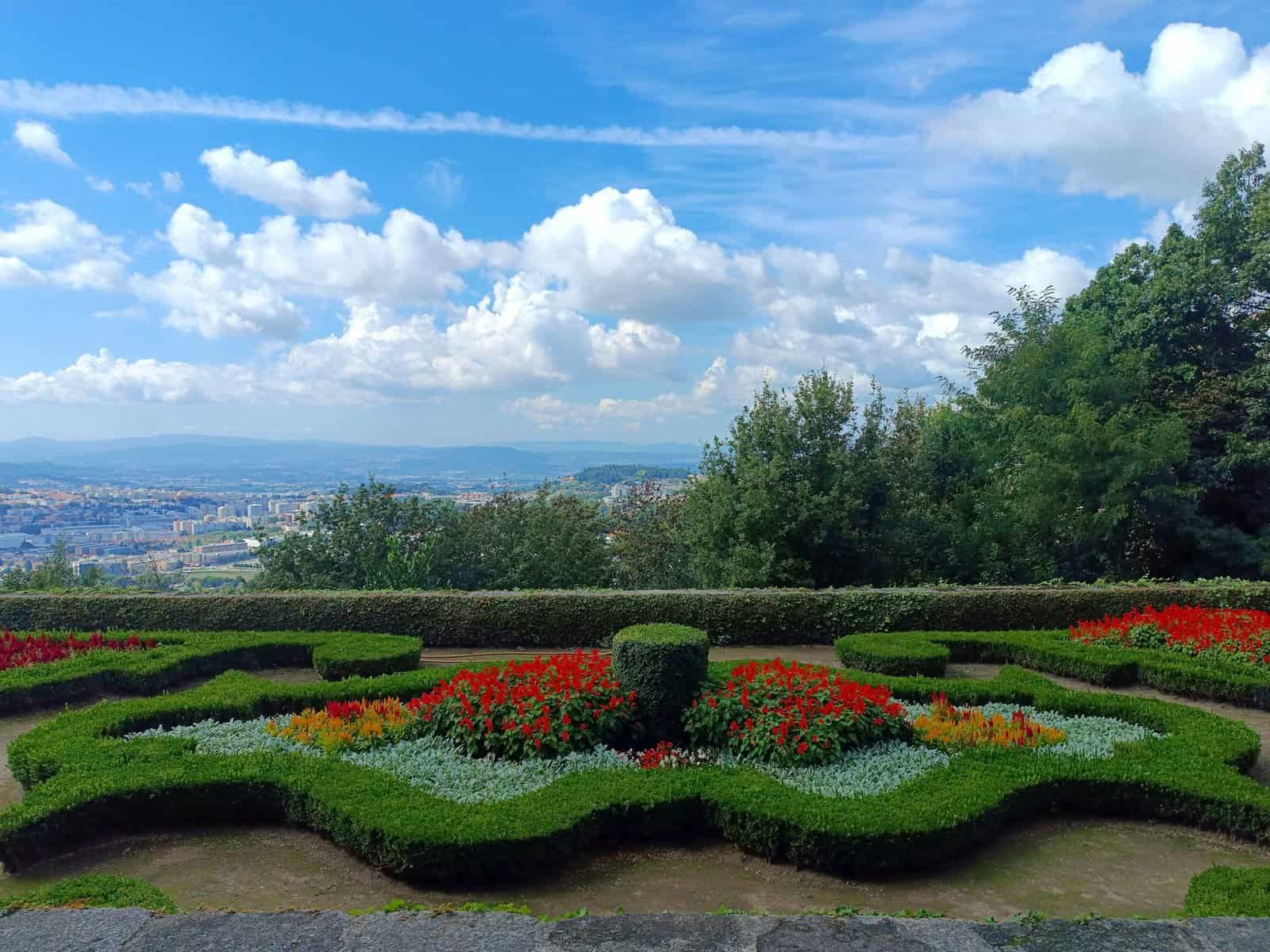
- The view over Braga and the surrounding landscape is wonderful from the top of the staircase.
- The artificial grotto (Gruta artificial) opened in 1903 and is an interesting decorative addition to the artificial lake above.
- The gardens – Once you reach the top, it’s well worth wandering through the gardens and wooded areas behind the church. The whole area functions almost like a large urban park, where locals come mainly on weekends to relax and unwind.
- Hotel do Parque – A historic hotel in a 19th-century building that once hosted pilgrims. It underwent a major renovation in 2014 and is now fully modern, offering a peaceful stay in the heart of the sanctuary’s beautiful gardens. There are up to three hotels around the complex, a reflection of its religious importance.
If you have the time and enjoy walking, there’s a lovely route between Sameiro, the second religious site in the hills, and Bom Jesus do Monte. The two sites are connected by a roughly 2-kilometer path, mostly through the woods and fairly easy to walk. It’s a great way to spend half a day in Braga while ticking off two of the city’s most important and most visited landmarks.
For a stay at one of the hotels near Bom Jesus do Monte, open the map and book here…
Click here for a list of hotels we loved in Braga…
Click here for all the attractions and sights in Braga…
Special events in Braga
Holy Week | Semana Santa
Held in late March or early April, with dates that shift slightly each year.
Across the Iberian Peninsula, Holy Week is a major observance, and nearly every city in Spain and Portugal holds a procession on Good Friday. In Braga, the Holy Week events are among the largest and most important in all of Portugal.
If you’re in town during these dates, it’s worth heading to the city center to watch the traditional procession.
Click here for more information about Holy Week in Braga and this year’s dates…
Braga’s Roman festival | Braga Romana
Held every year at the end of May for five days. Dates vary slightly from year to year.
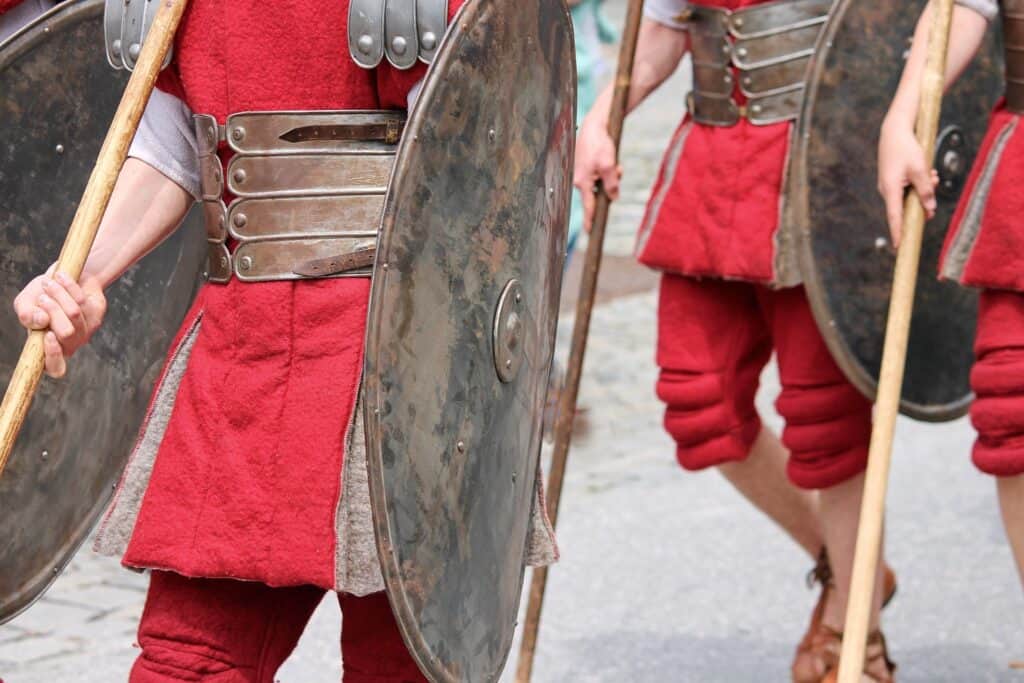
During the festival, many events celebrate Braga’s glorious Roman past. Most activities take place in the city center, especially the southern part, where the forum of ancient Bracara Augusta once stood.
The program recreates everyday Roman life, with participants dressed in traditional Roman clothing, including riders in chariots and on horseback. Events take place during both the day and evening. Throughout the festival, numerous street stalls also give it the feel of a fair, one that is especially popular with local children.
Click here for more information about the festival and its dates…
Shopping in Braga
Two good shopping areas in Braga are:
- Braga Parque (Braga Parque) – the city’s largest mall, where you’ll also find international chains. It’s located east of the city center.
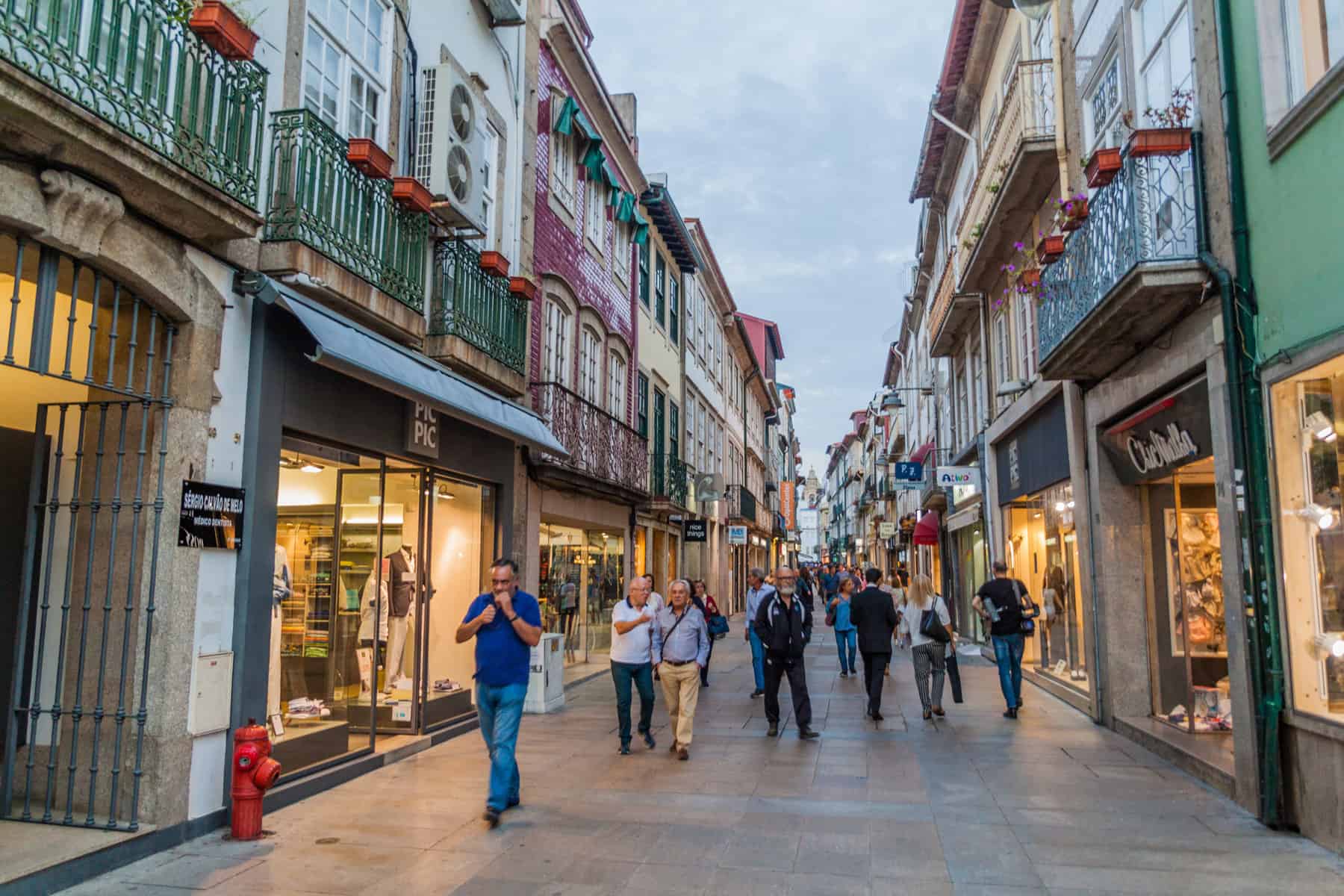
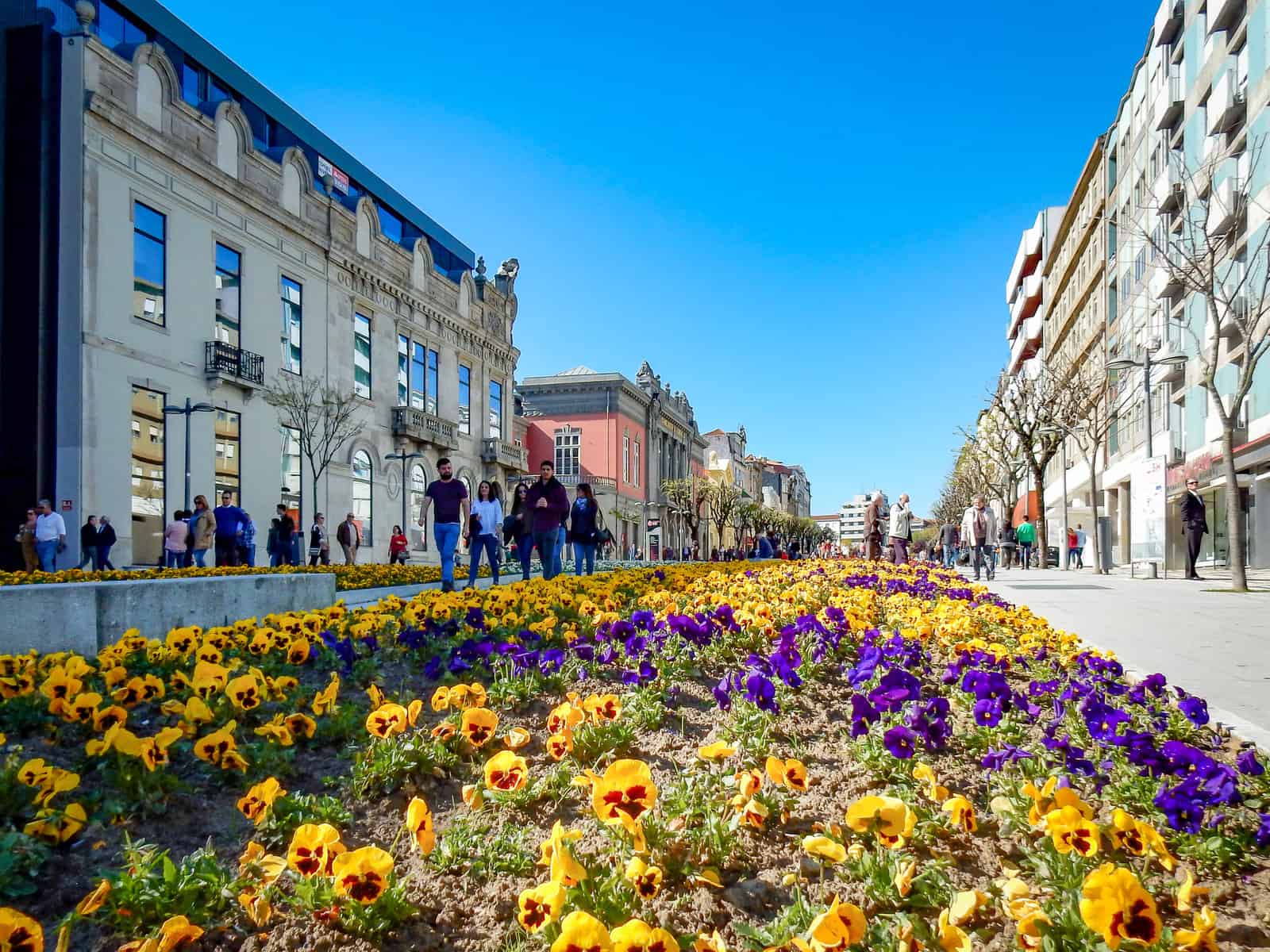
- The city center itself, especially Avenida da Liberdade, along with a few mini-malls around it and near Praça da República.
Football in Braga
Sporting de Braga, or simply Braga, is the next most successful football club after Portugal’s big three. Since the early 2000s, Braga’s club has steadily improved and begun achieving major results. These days, Braga regularly competes in European tournaments and occasionally in the Champions League.
In the Portuguese league, the club is a consistent top-flight side, though it has never won the championship. In recent years it has won several cups and also reached the Europa League final. The team’s colors are red and white, very similar to Arsenal’s kit in England. That’s why the club’s players and fans are nicknamed Arsenalistas in Portugal.
The team plays at Estádio Municipal de Braga (Estádio Municipal de Braga), which was also built for the 2004 UEFA European Championship held in Portugal. The stadium has a rectangular, English-style layout, with a huge, steep stand running along each side of the field. It sits north of the city center, about a 10-minute drive away, and holds 30,000 spectators.
Sporting Braga’s biggest rivalry is with the club from nearby Guimarães, just a 20-minute drive from Braga.
Whenever one of Portugal’s big three—Sporting, Benfica, and especially Porto—comes to town, the stands are electric.
If you’re visiting the city, especially on a weekend, it’s worth checking whether there’s an interesting match on, because when the major clubs come, the stadium is packed.
Click here for a list of hotels we loved in Braga…
Click here for a list of attractions and sights in Braga…
More churches on the ridge east of Braga
As mentioned, Braga and its surroundings have the highest concentration of churches in Portugal. Bom Jesus do Monte is the best-known church in the hills around Braga, but it is far from the only one. All of them also serve as peaceful escapes for locals, who come to enjoy the parks and open spaces around them.
A narrow road runs along the ridge, making it easy to drive from Bom Jesus toward the two churches to the south, both with wonderful viewpoints.
It’s also possible to walk between Sameiro and Bom Jesus do Monte along a 2-kilometer path that runs mostly through the woods.
Click here to search for hotels or vacation apartments in Braga…
Pilgrimage site and church of Sameiro | Santuário de Nossa Senhora do Sameiro
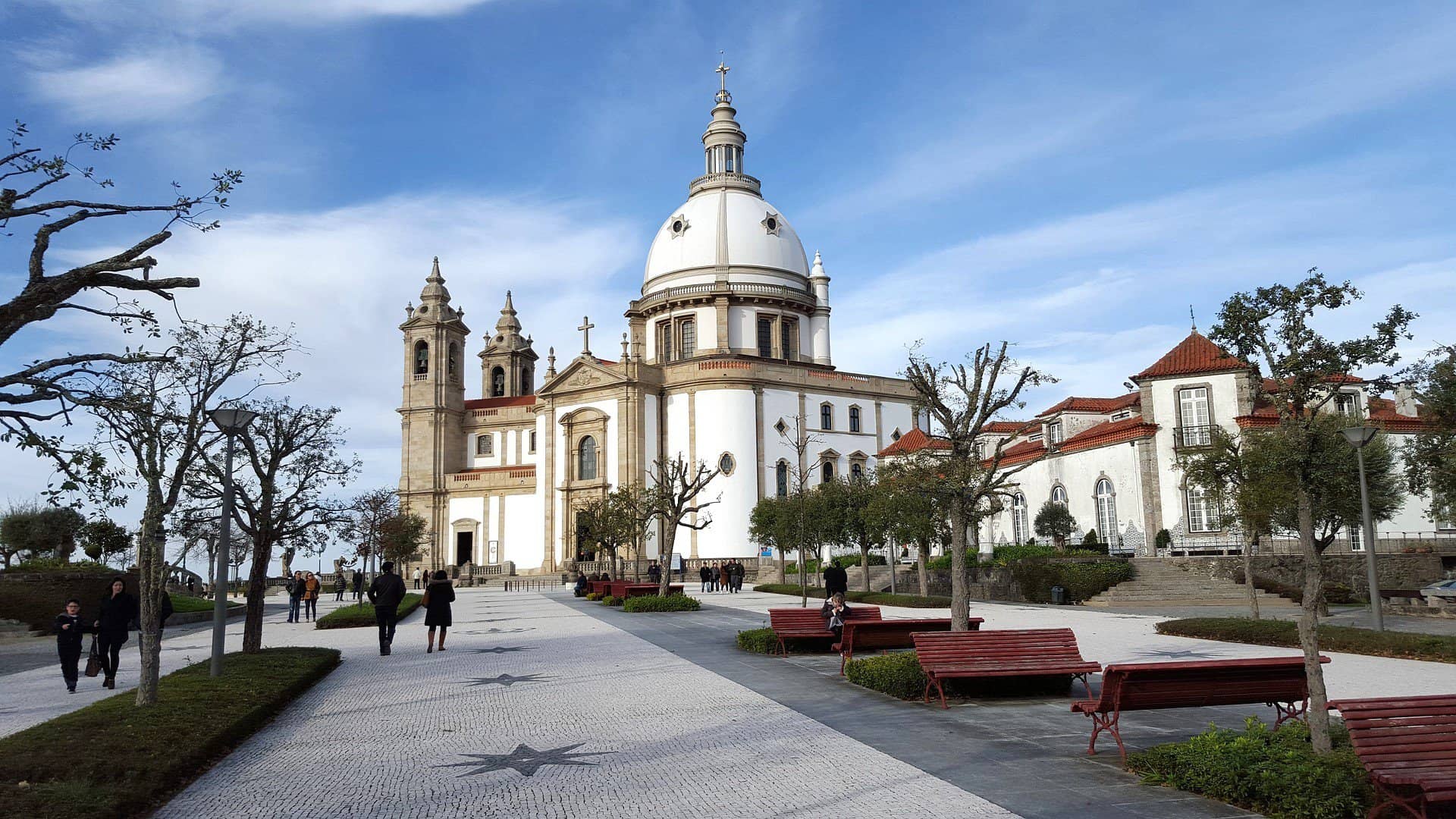
Sameiro is two kilometers south of Bom Jesus. The church is part of a vast complex with a large forecourt and additional buildings around it. Beyond them are extensive gardens, including one designed for children.
At first glance, Sameiro may seem to stand in the shadow of Bom Jesus do Monte and its iconic staircase. In reality, the complex here is much larger and draws no fewer worshippers. The open square in front of it is even larger than that of the relatively modern pilgrimage site at Fátima near Leiria in central Portugal.
This is a relatively modern site, established in the 19th century, after the end of the Peninsular War and Portugal’s civil war in the early 19th century, when freedom of worship had been suppressed.
A young priest named Martinho Silva (Fr Martinho Silva), who was active in Braga, decided to restore devotion to the Virgin and initiated the construction of the sanctuary. Over the generations, more and more believers were drawn to this elevated and pleasant site on the mountaintop, and today it is one of the largest places of worship in all of Portugal.
Ceremonies and prayers attended by thousands of pilgrims are held here on the first Sunday in June and the third Sunday in August.
The large complex also includes hotels, restaurants, and cafés, in addition to the spacious park around it. Together, they make it well suited for longer family outings, especially on weekends.
Church of Mary Magdalene – Falperra | Igreja da Falperra – Igreja de Santa Maria Madalena
Located about five kilometers south of Bom Jesus.
Smaller than its sister sanctuaries to the north, this church was built in the 18th century, during Braga’s period of prosperity.
The House of Braganza, whose roots were in this region, once again became the most influential noble family in Portugal after the Restoration War. As a result, the kings and counts of Braganza began commissioning religious and public buildings in Braga, Guimarães, and the surrounding area, and the city started to emerge from its medieval state. One of those projects was this Church of Mary Magdalene, set atop the hill southeast of Braga.
The church was built in Baroque style. It is fairly isolated, and unlike Bom Jesus or Sameiro, there is no vast complex around it. What it does offer is a wonderful view over the city and the surrounding forests.
Attractions and places of interest around Braga
Peneda-Gerês National Park | Parque Nacional Peneda-Gerês
Portugal’s first national park lies just over an hour’s drive northeast of Braga.
The park preserves not only the region’s distinctive natural landscape, but also the traditional way of life in dozens of villages scattered across its vast area. These villages, built of granite stone houses, offer a fascinating glimpse into life in northern Portugal, which changed very little for nearly 1,000 years before modernity arrived. Some of the villages also have hot springs, such as Gerês Thermal Baths | Termas do Gerês.
Peneda-Gerês is a true nature park—green, mountainous, and dramatic. In fact, its name comes from the two mountain ranges that define it: the Gerês Mountains to the south and the Peneda Mountains to the north, along the border with Spain.
The park is filled with jagged rocky peaks above deep valleys covered in pine and oak forests. It’s also home to abundant wildlife, including eagles, wolves, and deer, across its 720 square kilometers.
In between are villages of stone-built houses and isolated monasteries clinging to the mountainsides.
For hikers, the park has several marked trails that are considered among the most beautiful in all of Portugal. Some follow stretches of the old Roman road, and most are also suitable for mountain biking. A few trails are limited to small groups, mainly because they are narrow and steep.
There are also several camping areas in the park.
Click here to search for hotels in beautiful Peneda-Gerês National Park…
A few notable places in the park beyond the remarkable scenery:
- A stretch of Roman road along the Rio Homem – This road once connected Braga to the other Roman city in the region, Astorga, now in Castile and León, Spain.
- Sanctuary of Our Lady of Peneda | Santuario de Nossa Senhora da Peneda a wonderful small-scale replica of Bom Jesus do Monte in Braga, complete with its famous staircase.
- The village of Soajo | Soajo – Beyond the lush greenery and beautiful scenery, the village is known for its dozens of unusual granite granaries, each raised on thick stone pillars. To this day, locals store grain in them for the chilly winters of northern Portugal.
- São Miguel Waterfall | Cascata de São Miguel – Waterfalls and a rock pool right by the Spanish border and close to the route of the old Roman road. There is also a wooden pedestrian bridge here.
Click here for an amazing day trip from Porto or Braga to Peneda-Gerês National Park…
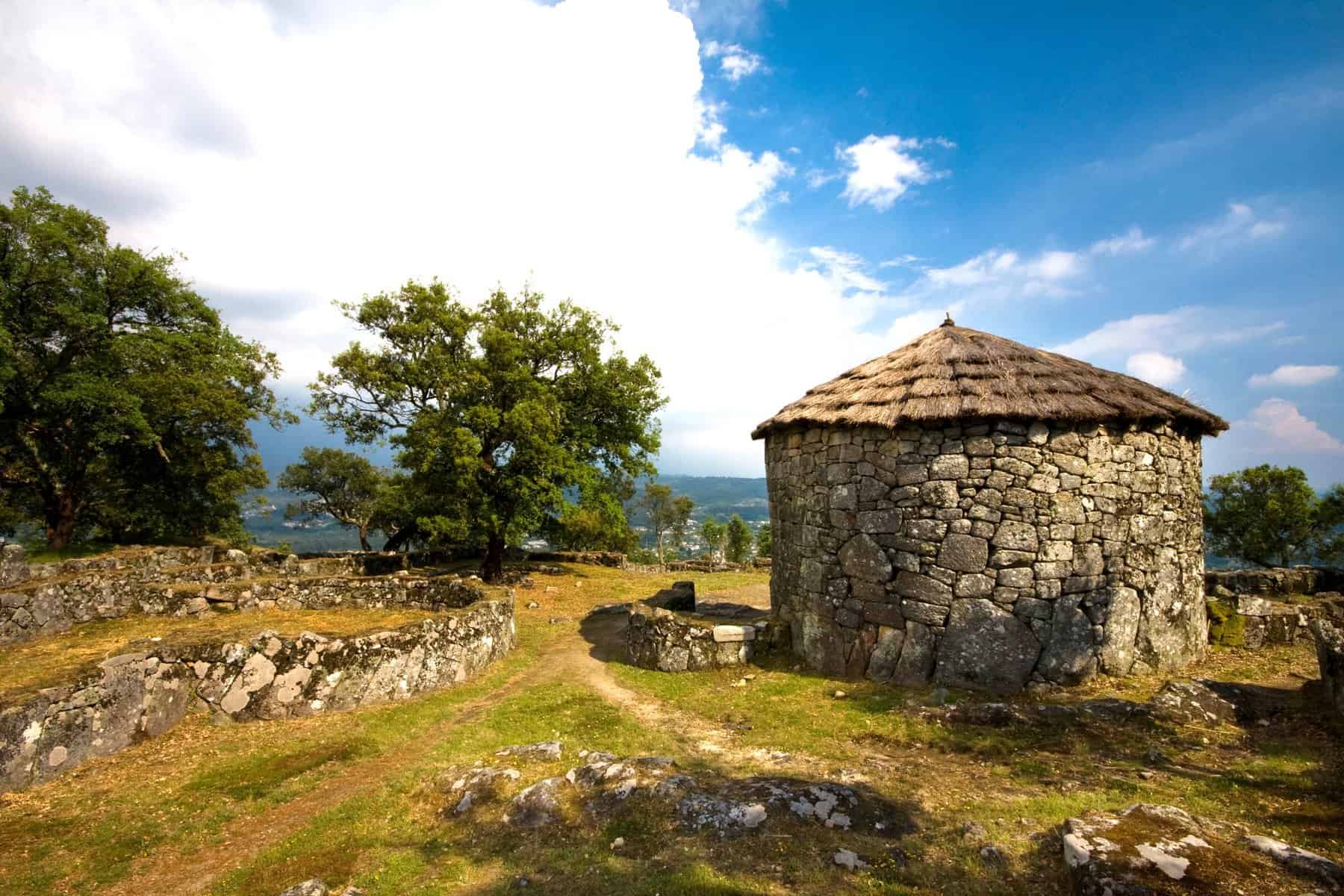
The archaeological site of Citânia de Briteiros | Citânia de Briteiros
Located between Braga and Guimarães, where Portugal was born, this site is of major archaeological importance. Much of it remains undeveloped, essentially an open area with archaeological remains scattered among the trees and up the hillside.
The site preserves the remains of a settlement from the Castro culture (in Portuguese, Cultura Castreja). This material culture developed during the first millennium BCE along the Douro River, which flows from Spain into northern Portugal. It later spread north into Galicia and Asturias, regions with which it remains associated to this day.
Citânia de Briteiros is a late example of a town built by the early inhabitants of northern Portugal, who were largely Celtic. The finds here date to the 2nd and 1st centuries BCE. Excavations were first carried out by the Portuguese archaeologist Francisco Martins Sarmento, who became so captivated by the site that he founded an association to purchase the land on which it stands. The association still owns it today and continues the excavations, gradually uncovering more finds.
Click here for more information and opening hours…
The town and bridge of Ponte de Lima
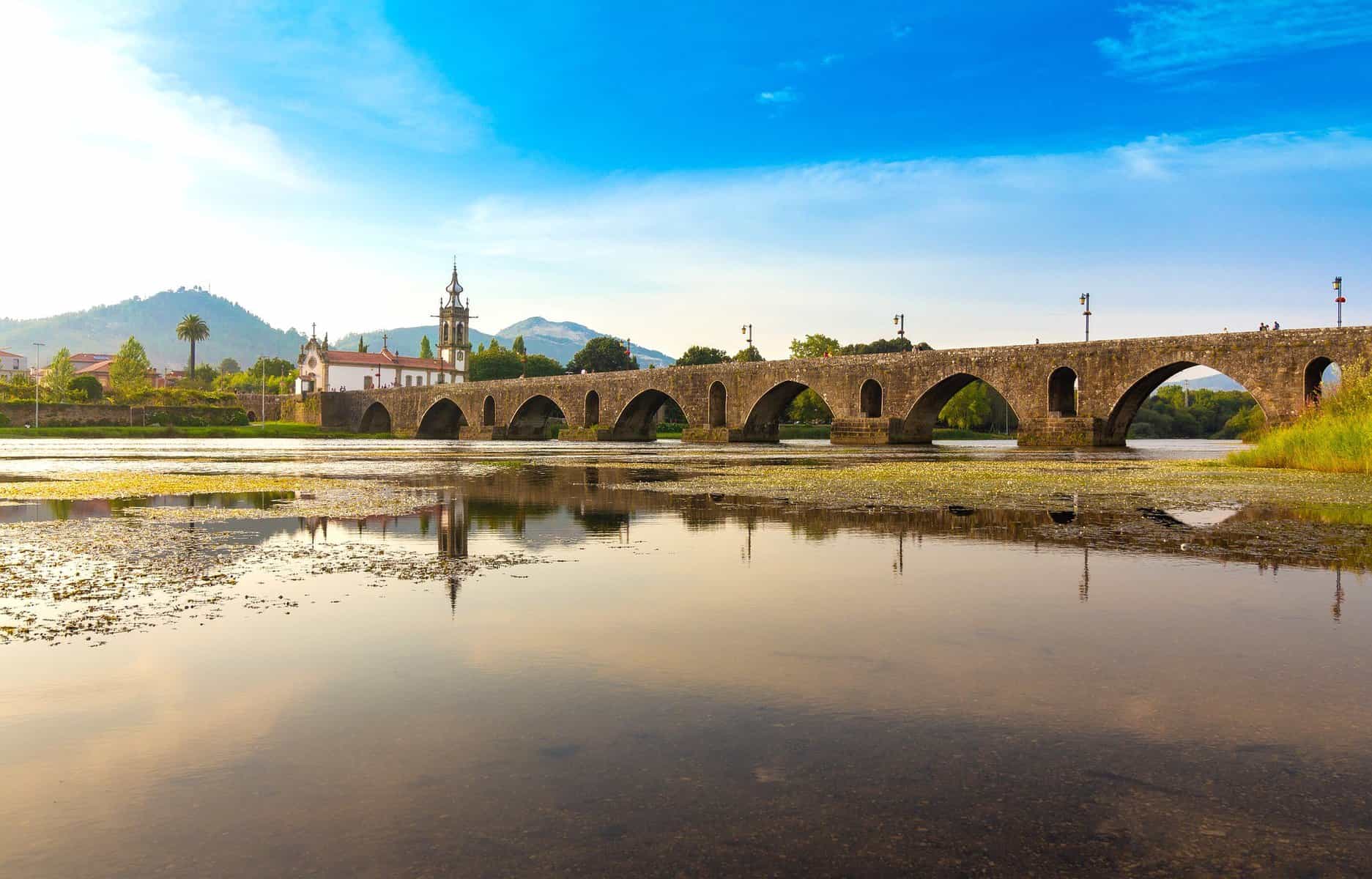
The town and the bridge it is named after lie about half an hour north of Braga by car. Ponte de Lima is one of the oldest towns in Portugal, and it developed around the bridge over the Lima River, first built during the reign of Emperor Augustus in the 1st century CE.
The famous river bridge is the town’s main attraction. It formed part of the ancient Roman road and today is also an important landmark on the Portuguese Way to Santiago de Compostela, which from here is no longer very far away.
Only five arches of the original Roman bridge survive. The rest of the beautiful bridge we see today is medieval, dating from the early 16th century.