Graciosa—pronounced Graciosa by the Portuguese—is a deeply agricultural island, with fields and pastureland stretching out against the backdrop of the endless ocean. It lies at the northern edge of the Azores’ Central Group and has only a handful of settlements. The largest is Santa Cruz, the island’s capital and home to its airport. In the south of the island, you’ll find Graciosa’s volcanic crater, blanketed in lush green vegetation, with a remarkable volcanic cave at its center that visitors can enter. Graciosa appeals to travelers who want to go deeper into the Azores and to anyone interested in volcanic activity. It is extremely isolated, quiet, and still largely untouched by tourism. That same remoteness also makes it ideal for those in search of deep peace, especially with the island’s warm and welcoming residents.
Please note: There is also an island called Graciosa in Spain’s Canary Islands. That one is a dry island north of famous Lanzarote. In the Azores, Graciosa is green and fertile, so the two are hard to confuse.
How many days do you need to explore Graciosa Island?
One full day is enough to see most of the island’s main sights. Still, Graciosa is the kind of place you visit on purpose—and if you’re making the journey, it’s well worth staying a few days to enjoy being in one of the most remote, peaceful, and tranquil places in the world.
Click here to find hotels and vacation rentals on laid-back Graciosa Island…
6 must-see sights and experiences on Graciosa Island
- Furna do Enxofre Caldeira — the cave inside the island’s volcanic crater
- Ponta da Barca — the lighthouse and views of Whale Islet
- A walk through the center of Santa Cruz | Santa Cruz da Graciosa
- Ajuda viewpoint and church above Santa Cruz | Nossa Senhora da Ajuda
- Viewpoint over Whale Islet at Ponta da Barca
- The windmills of Vila da Praia
How do you get to Graciosa Island?
The easiest and most recommended way to reach Graciosa is by plane. In summer, booking ahead is essential, since flights are limited and the season is the most popular time to visit the island.
Flights to Graciosa
Graciosa has a small airport west of the capital, Santa Cruz, in the north of the island | Aeródromo da Graciosa. The airport (code GRW) receives flights mainly from the Azores’ two major airports, in Ponta Delgada and on Terceira Island.
A flight from São Miguel, the Azores’ main island, to Graciosa takes about 50 minutes. From Terceira, the largest island in the Central Group, the flight takes about 30 minutes.
Ferry to Graciosa
Ferry service to Graciosa is limited and operates mainly in summer, and even then not every day. For that reason, we don’t recommend arriving by ferry. Ferries to remote Graciosa run only from Velas on São Jorge Island—a crossing of about two and a half hours—and from Terceira, the large island in the Azores’ Central Group. The sailing from Terceira departs from the town of Praia da Vitória and takes 4 hours. Ferries are operated by Atlânticoline, the Azores ferry company.
Cruise to Graciosa
There is a small cruise ship dock opposite the harbor in Praia (Vila da Praia). Small cruises, usually departing from the large island of São Miguel and calling at several islands in the Azores, also stop in Graciosa. These are available mainly from spring through early fall.
Click here for the complete guide to the Azores…
Where to stay in Graciosa?
The island’s airport was only built in the 1980s, and only since then have a small number of tourists begun to arrive. The first official hotel on the island opened as recently as 2009, which means the local tourism industry still feels very untouched. To this day, Graciosa remains an agricultural island, still relatively disconnected from the rest of the archipelago. Those who do make it here will find immense calm alongside beautiful scenery. From almost anywhere on this small island, the sea stretches out in a panoramic view toward the endless horizon.
Because the island is so small—or more accurately, because it’s tiny—it doesn’t really matter where you stay; everything is close by. Even so, we suggest staying in Santa Cruz (Santa Cruz da Graciosa) or Praia (Vila da Praia), where you’ll find a few restaurants and other useful tourist services.
Click here to search for accommodations on the peaceful little island of Graciosa…
About Graciosa Island
The island is the northernmost in the Azores’ Central Group. As a result, it is also the cloudiest and coolest of the group, conditions that suit cattle grazing—one of the Azores’ major agricultural activities. It is a small island, with a maximum length of 12.5 kilometers, and today has a total population of about 4,000.
Since the earliest settlement on Graciosa, sometime in the late 15th century, settlers benefited from its fertile land and relatively gentle terrain (its highest point is 375 meters). That made it possible to grow even grain crops and market them to neighboring islands. The island’s topography could also work against its residents, however, since it made the coastline easier for pirates and other invaders to raid and plunder, especially in the first centuries of settlement.
Graciosa’s agricultural wealth turned it into a stop on voyages sailing from Europe to the Americas, where seafarers stocked up on food and drink—much like on many other Azorean islands. As on nearby São Jorge Island, excellent cheeses are also produced on Graciosa, though on a smaller scale.
During the 19th century, the island suffered several natural disasters and droughts, and many residents left for the Americas. As on other Azorean islands, communities of people from Graciosa developed overseas. Those communities still maintain family ties and broader connections with the residents of this small island.
Today, Graciosa is still highly agricultural, and tourism has only just begun to develop. In terms of temperature, the climate is similar to that of the other central islands, though rainfall here is slightly lower.
Santa Cruz da Graciosa
Santa Cruz is the island’s largest settlement—though it is still very small.
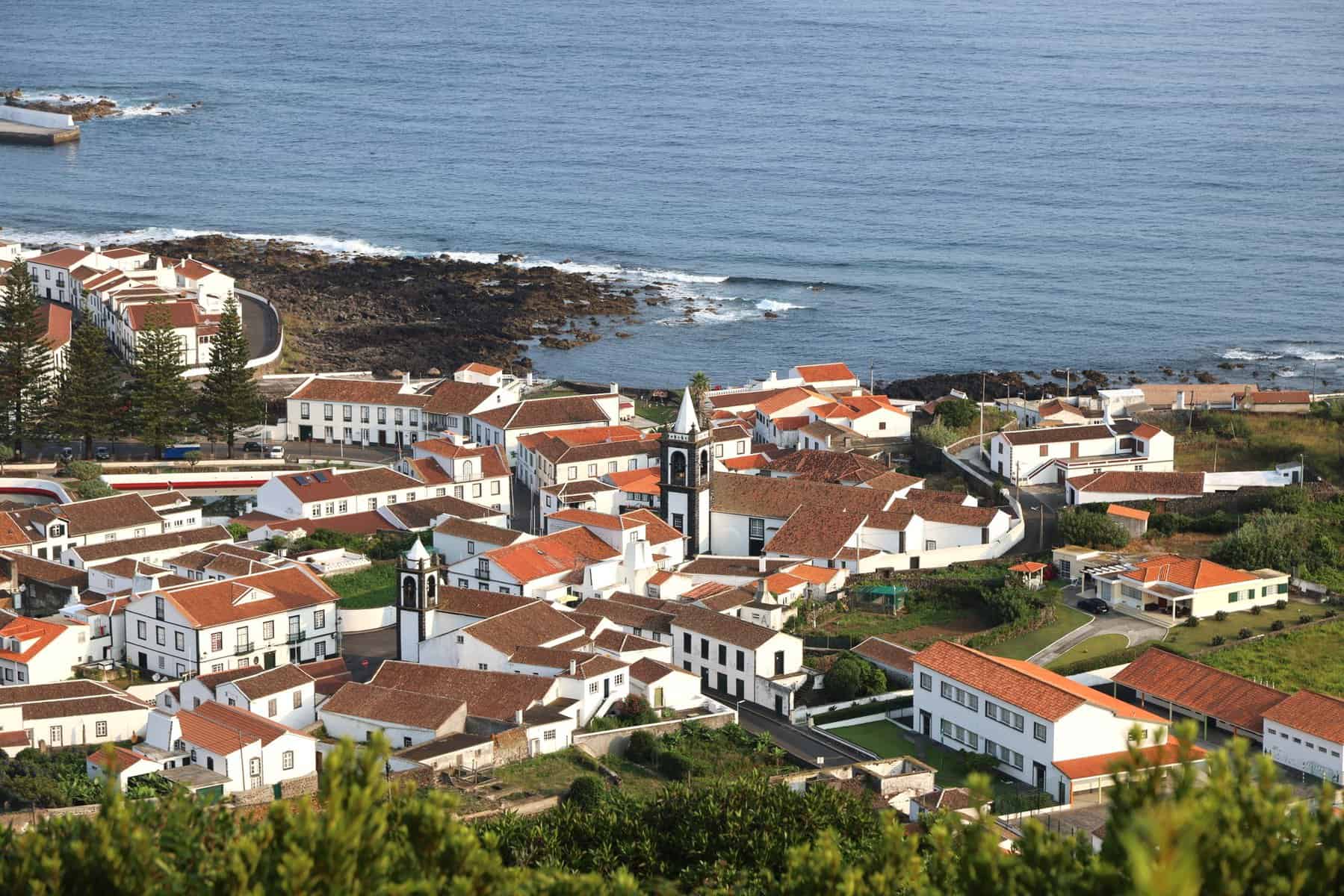
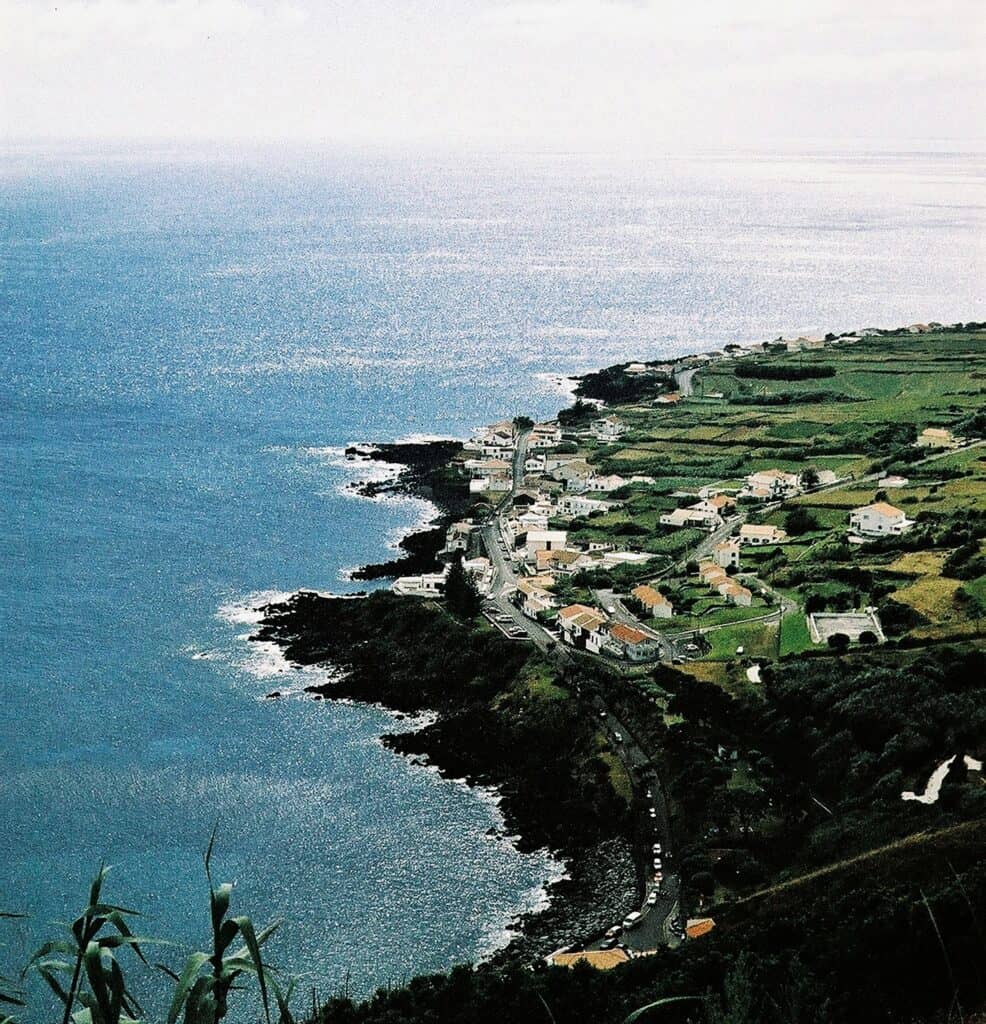
The town sits right beside the island’s small airport. It stretches between the indented shoreline and the main street, and it clearly feels like an agricultural town rather than a fishing village. One sign of that is the bullring (Praça de Touros) perched on the hillside overlooking the town. Also on the hill is a small church (Nossa Senhora da Ajuda), its white facade accented with volcanic stone.
The older houses on the streets near Santa Cruz’s pier are two-story homes, painted white and framed by dark trim around the windows. Their small wrought-iron balconies stand out in particular. The streets are paved in gray stone, making the town very pleasant to wander through. As you climb up from the compact center, the place starts to feel more like a village. There is more open space between the houses, with fields and vineyards in between. Every now and then, you may still spot farmers plowing small plots with ox-drawn plows.
The town has several sights and landmarks worth noting:
Ponds in the town center | Lagoa da Vila
The two ponds are pools enclosed by a low wall painted white and red. Together they form a kind of park in the center of town, linked to the nearby paved square with its several fountains. In between, you can spot a few dragon trees (Dragoeiro), which are more typical of Spain’s southern Canary Islands but are also found on Portugal’s islands.
Click here to find a place to stay on Graciosa Island…
Graciosa Museum | Museu da Graciosa
The small museum is less than 50 meters north of the ponds. It portrays life on this peaceful island in the not-so-distant past, with many exhibits related to the sea, along with furniture, household items, and toys from earlier times, plus keepsakes sent back to the islands by relatives in America. As mentioned, there are communities of Azorean descendants in Canada and the United States, which is relatively close to the islands in the heart of the Atlantic.
Next to the museum, you’ll also find a whaling boat, a reminder of what was once a major source of livelihood for local residents.
Natural sea pools | Piscina Natural do Boqueirão
The pools lie along the town’s central waterfront. Part of the site is natural, and part is a sunken concrete pool that helps shield swimmers from the waves. On warm summer days, locals love to splash around here. For visitors, the water may feel a bit too cool—but if the sun is out and the day is warm, why not give it a try?
Ajuda viewpoint and church | Ermida de Nossa Senhora da Ajuda
The church was built on the hillside above Santa Cruz, so both it and the road leading up to it offer wonderful views. The hill takes its name from the church, and this is a must when visiting Santa Cruz. The church was built above a fortified complex, and as with many churches in the Azores, the design came from the mainland while the building materials came from the islands themselves. That’s why dark basalt stones are incorporated into the facade, giving it a striking look. Inside, the church is decorated with 18th-century azulejos (painted ceramic tiles), making it an artistic gem as well.
Click here for our complete guide to the Azores Islands…
More attractions and sights on Graciosa Island
Vila da Praia
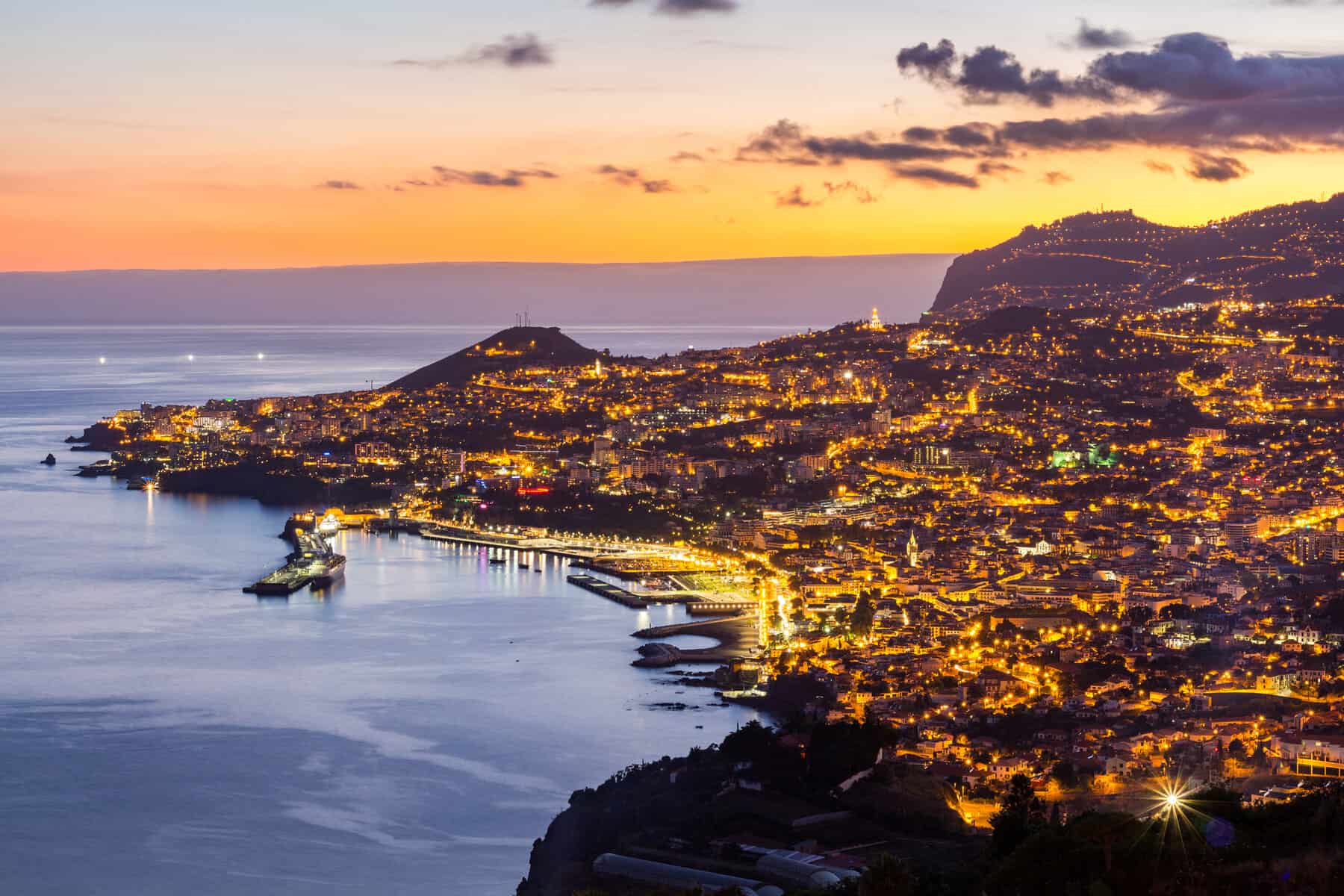
Graciosa’s harbor town lies on the east side of the island, about a 10-minute drive from Santa Cruz. This is where the ferries, boats, and cruise ships arrive. The town itself is very small, but then so is the entire island, so almost everyone visiting Graciosa passes through—especially those arriving by sea. The highlight here is the church, and above it are several excellent viewpoints. The main sights in Praia are:
- São Mateus Church | Igreja São Mateus da Praia located right by the seafront. The church has an antique organ dating to 1793.
- São Mateus Beach | Praia de São Mateus – a small, surprising sandy beach right next to the marina. Good for swimming in summer.
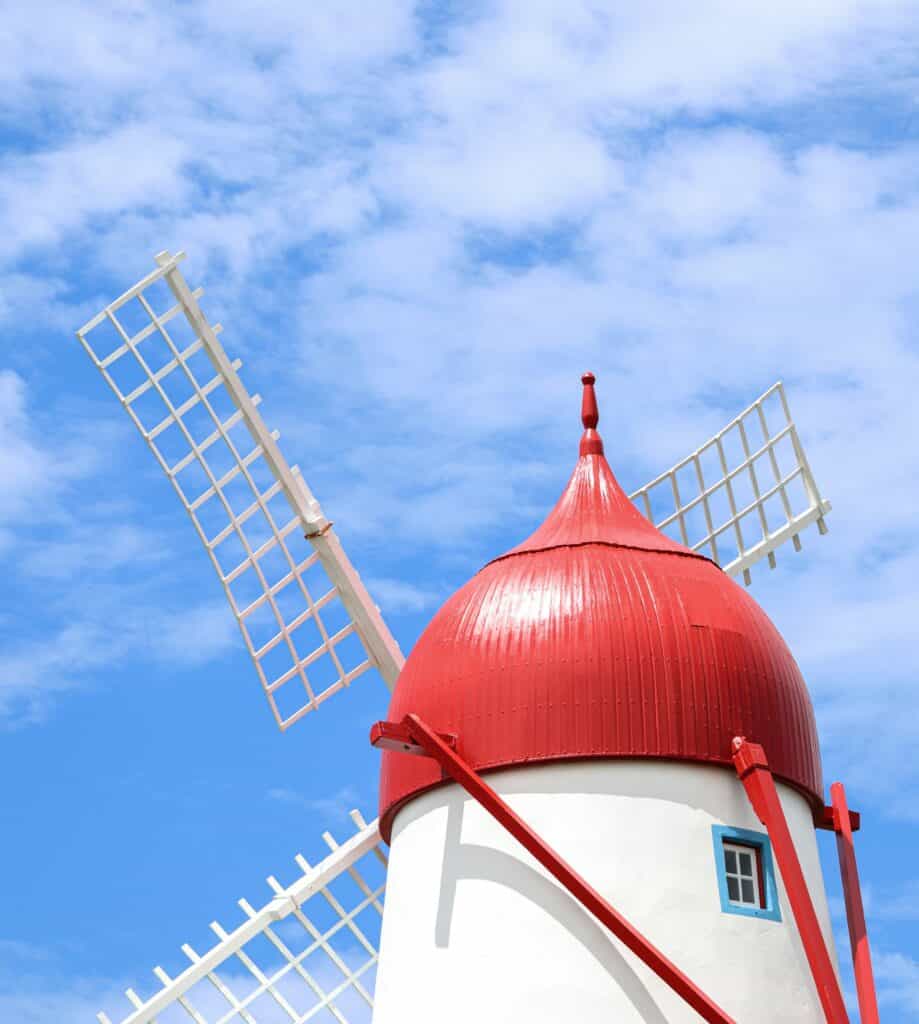
- Praia windmills | Moinho – now used as a small and distinctive hotel. They stand at the exit from the harbor and marina.
- Pinheiro Camping Park | Parque de Campismo do Pinheiro – located just outside town beside a wooded area. There’s a picnic area and a lovely viewpoint as well.
Ponta da Barca
Ponta da Barca sits at the island’s northernmost tip, on the far side of the airport. If you’re driving the road that circles the island, it’s well worth stopping here for the view. There’s a tall lighthouse and several spots with especially beautiful scenery. Just offshore from the lighthouse are a few small islets, including Whale Islet (Ilhéu da Baleia), a tiny island shaped like a whale.
There are actually three attractions here:
- The lighthouse | Farol Da Ponta Da Barca – the northernmost lighthouse on Graciosa, helping sailors navigate safely toward the harbor on the island’s west side. It has stood here since 1930, and beside it are the romantic keeper’s quarters so beloved by lighthouse enthusiasts. Because of the volcanic ground and the ongoing seismic activity in the Azores, the lighthouse has been damaged more than once. Still, it remains standing and in operation, rising to a height of 23 meters. This is a must for lighthouse lovers and, more broadly, for anyone drawn to romance and photogenic places.
- The small whale-shaped islet | Ilhéu da Baleia – a tiny rocky island very close to shore, unmistakably shaped like a whale. It looks like a whale with both its head and tail above the water. Many people come to the Ponta da Barca viewpoint just to see this charming little islet.
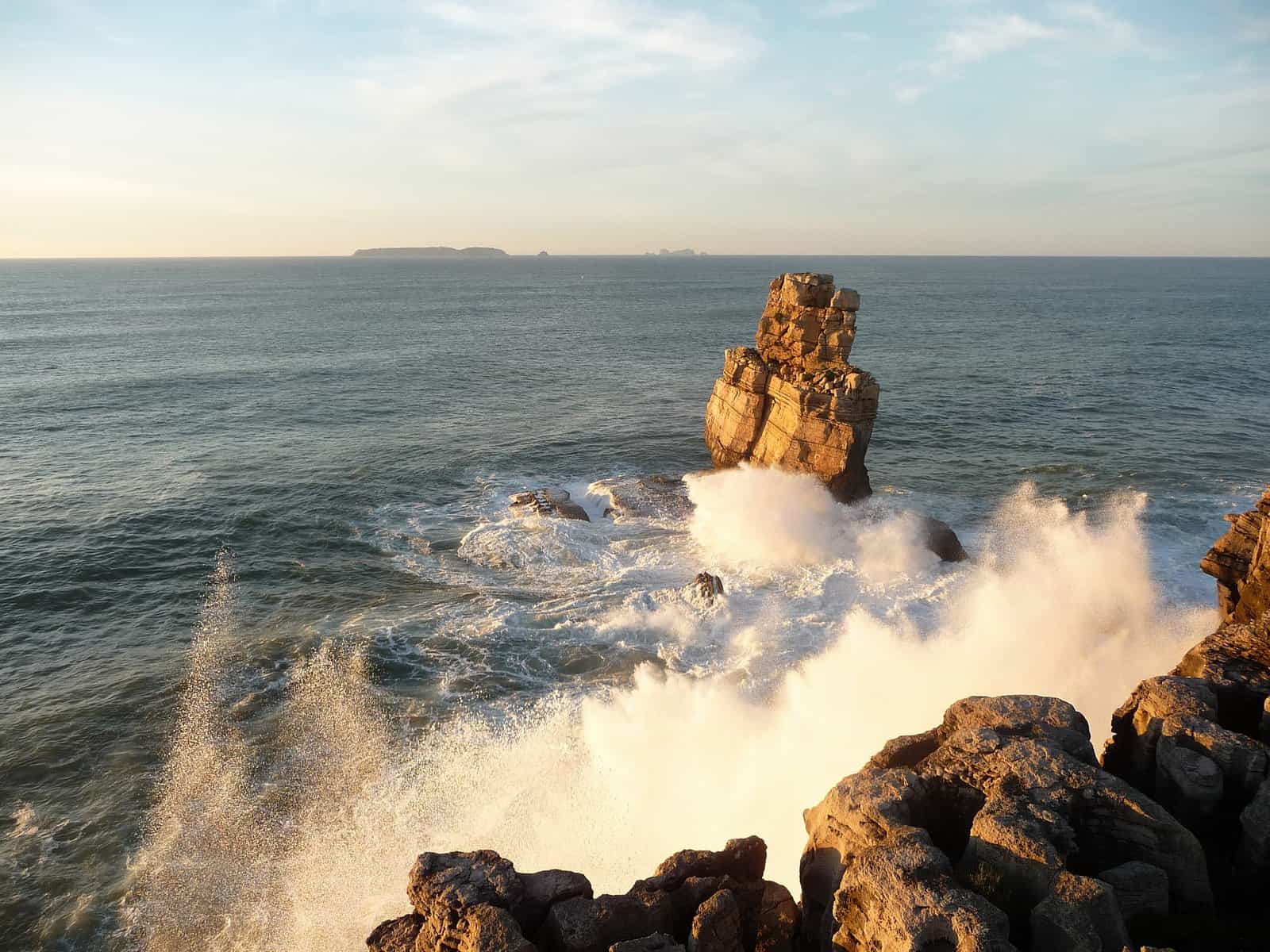
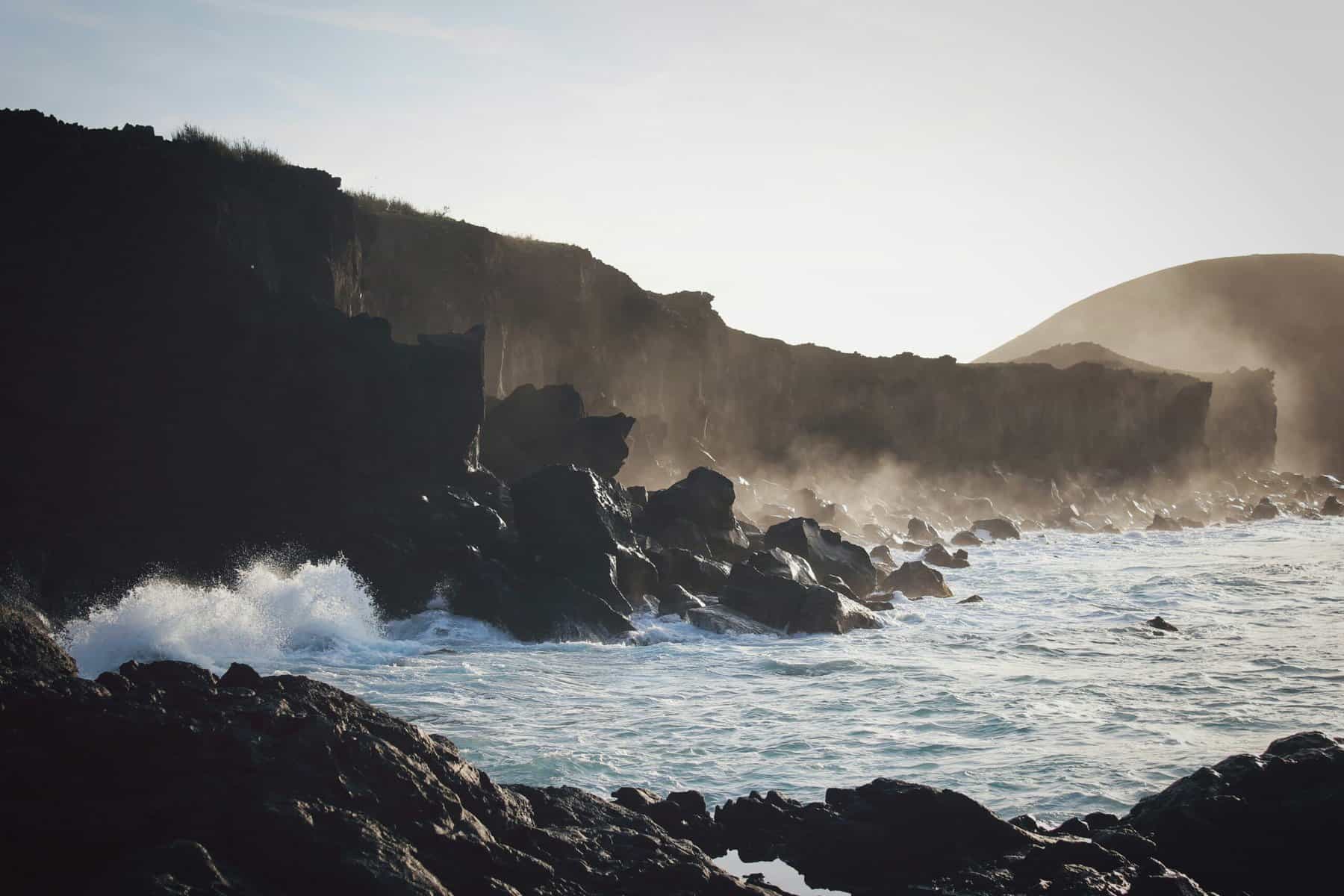
- The coves | Baías – below the lighthouse and opposite the whale-shaped islet are three small coves carved into the volcanic rock. Waves crash into them with force, making the viewpoint even more dramatic.
Graciosa’s volcanic crater — the Caldeira
The volcano in the south of the island, like those on the other Azorean islands, is just the top of a much larger mountain rising from the depths of the sea, with Graciosa itself forming its summit.
The island’s dormant volcano and its crater are Graciosa’s main natural landmark. Over the years, the volcanic crater has filled with dense vegetation and trees, so everything around it feels vividly green. As you approach the crater from the north, a narrow road tunnel leads into its interior and toward the volcanic cave, its main attraction. Before that, however, there is a turnoff to a narrow road that circles the volcanic crater, and it is absolutely worth driving the full route, stopping at viewpoints and enjoying the journey itself—forest on one side, fields on the slopes on the other. One of the loveliest viewpoints is from Furna da Maria Encantada, where there is another unusual cave.
When you reach the volcano, you can either drive through the tunnel first into the heart of the crater and to the cave | Furna Do Enxofre, and then do the route around the crater—or do it the other way around.
Click here for our complete guide to the Azores Islands…
The cave in the heart of the volcano | Furna Do Enxofre Caldeira
The cave lies at the center of the island’s dormant volcanic crater, at its southern end. It is one of Graciosa’s most intriguing sites and a world-class must for volcano enthusiasts. It was discovered in the 19th century by a research expedition led by none other than the Prince of Monaco.
Today, there is a modern two-story visitor center here, built according to sustainability principles. The cave tour begins inside the visitor center with explanations, and from there visitors descend into the cave. The way down involves 183 spiral steps.
Once inside, a vast chamber opens up, nearly 200 meters long. At its center stands a perfectly proportioned rock dome rising 50 meters high—the cave’s true showpiece.
The cave also contains a bubbling sulfur pool, a vivid reminder that volcanic activity still exists in the Azores.
Click here for more information and opening hours for the visitor center and volcanic cave…
The island’s coastline
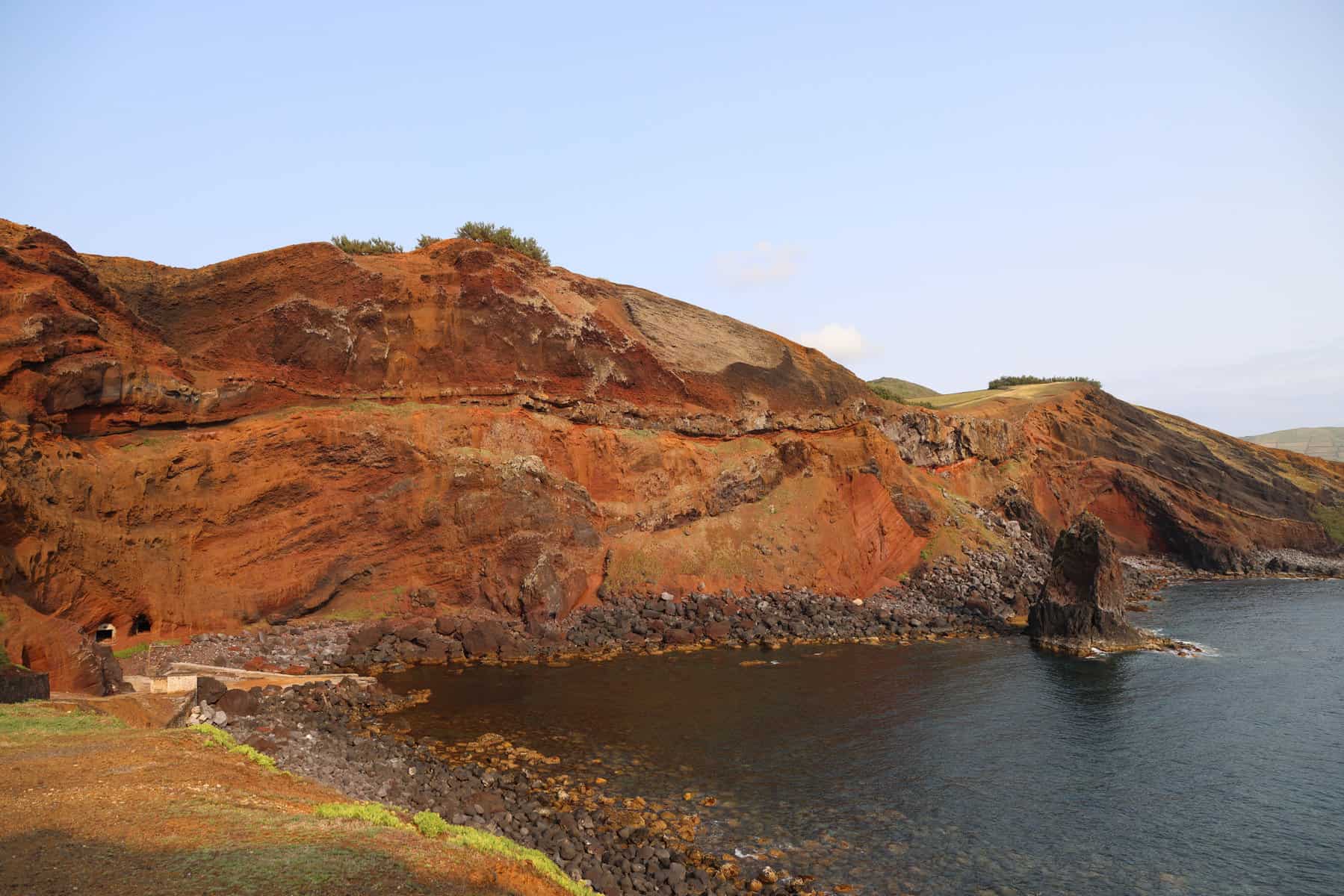
The island’s coastline could serve as a geology course in itself, with remarkable rock formations appearing one after another over just a few hours. Graciosa is small, so it’s highly recommended to drive the full perimeter and stop along the way for viewpoints. Much of the broken shoreline reveals formations of black basalt rock, along with red rock in places such as Porto Afonso.
There are also several small rocky islets off the coast, the most famous being Whale Islet | Ilhéu da Baleia, whose shape really does resemble a whale and photographs beautifully. The relatively large islets off Praia also stand out against the endless Atlantic seascape stretching in every direction.
Even if rocks aren’t your particular interest, the island’s ring road passes hundreds of green fields, and in the south you’ll also find lush vegetation and groves. All of it feels wonderfully scenic on a quiet, beautiful drive around this remote island.
Click here to search for accommodations on the small island of Graciosa…
Porto Afonso
At the island’s northwestern tip lies an abandoned fishing harbor tucked beneath reddish volcanic cliffs. It’s worth turning off the main road to stop for the view, a bit of fishing, or a careful swim on summer days. Because it faces west, sunset is especially beautiful here, when the already red rocks glow even more intensely.
Carapacho
This small village in the island’s southeast sits on the far side of the volcanic crater. Carapacho is known for two things. First, it was the island’s earliest settlement, where the Portuguese arrived in the mid-15th century. Second, it is home to mineral-rich hot springs fed by the volcano above the village.
Carapacho hot springs | Termas do Carapacho
Carapacho’s hot springs and spa have been drawing visitors since the 18th century. The healing qualities of the water emerging from these volcanic springs were discovered by settlers as early as 1750. The springs are fed by the nearby volcano—the Caldeira of Graciosa—which rises directly above.
In recent years, as tourism on the island has begun to develop more quickly, the springs have been transformed into an especially pleasant modern spa. The site includes several pools filled with volcanic water, treatment rooms, and an outdoor sea pool where you can swim in season—the natural pool of Carapacho | Piscinas Naturais do Carapacho, entered directly from the street.
Carapacho Lighthouse | Farol do Carapacho
The lighthouse stands above the pools and springs of Carapacho. It is a modern concrete lighthouse, so it lacks the romantic charm of the older ones. Still, both the lighthouse and the road leading to it offer excellent views over the surrounding area.
Click here to search for a place to stay on Graciosa Island…
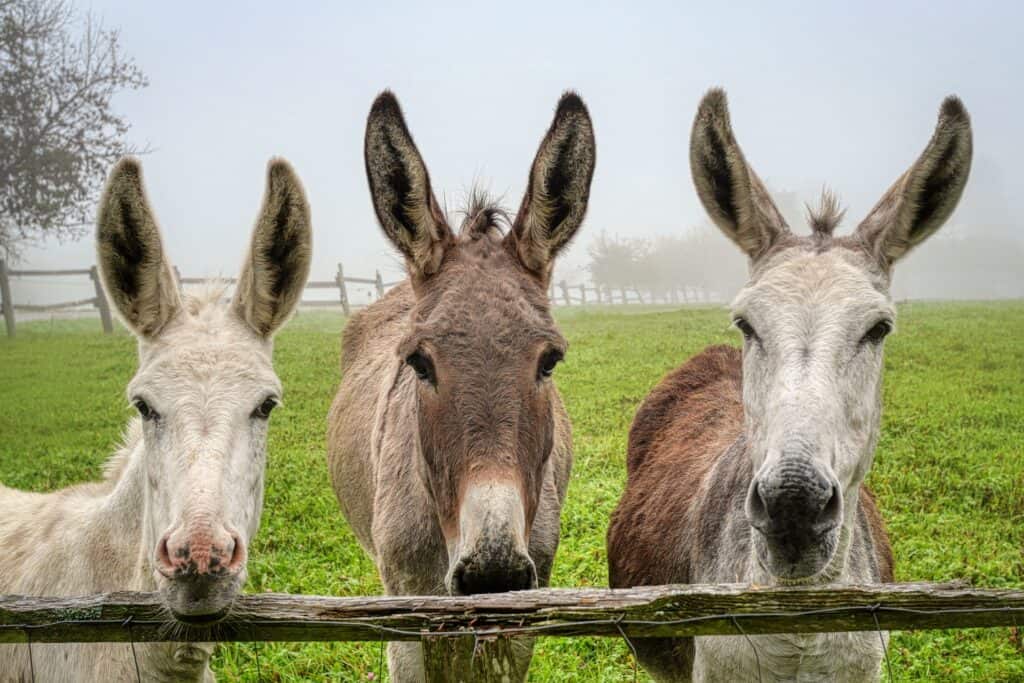
The dwarf donkey farm | Criadores do Burro Anão da Ilha da Graciosa
Donkeys were brought to the Azores very soon after the beginning of Portuguese settlement. They were used mainly for getting from place to place. Over the centuries, a special local breed developed on Graciosa—smaller donkeys unique to the island. As the years went by, the need for pack animals on the islands declined, and donkey numbers fell steadily. Eventually, people decided to preserve the Graciosa donkey, which led to the creation of this donkey farm on the western side of the island.
Today, visitors can come to pet them, feed them, or simply see them, and children are also allowed to ride them. Visits must be arranged in advance, and your hotel or guesthouse will usually be happy to help set it up.
Phone: +351967070246.