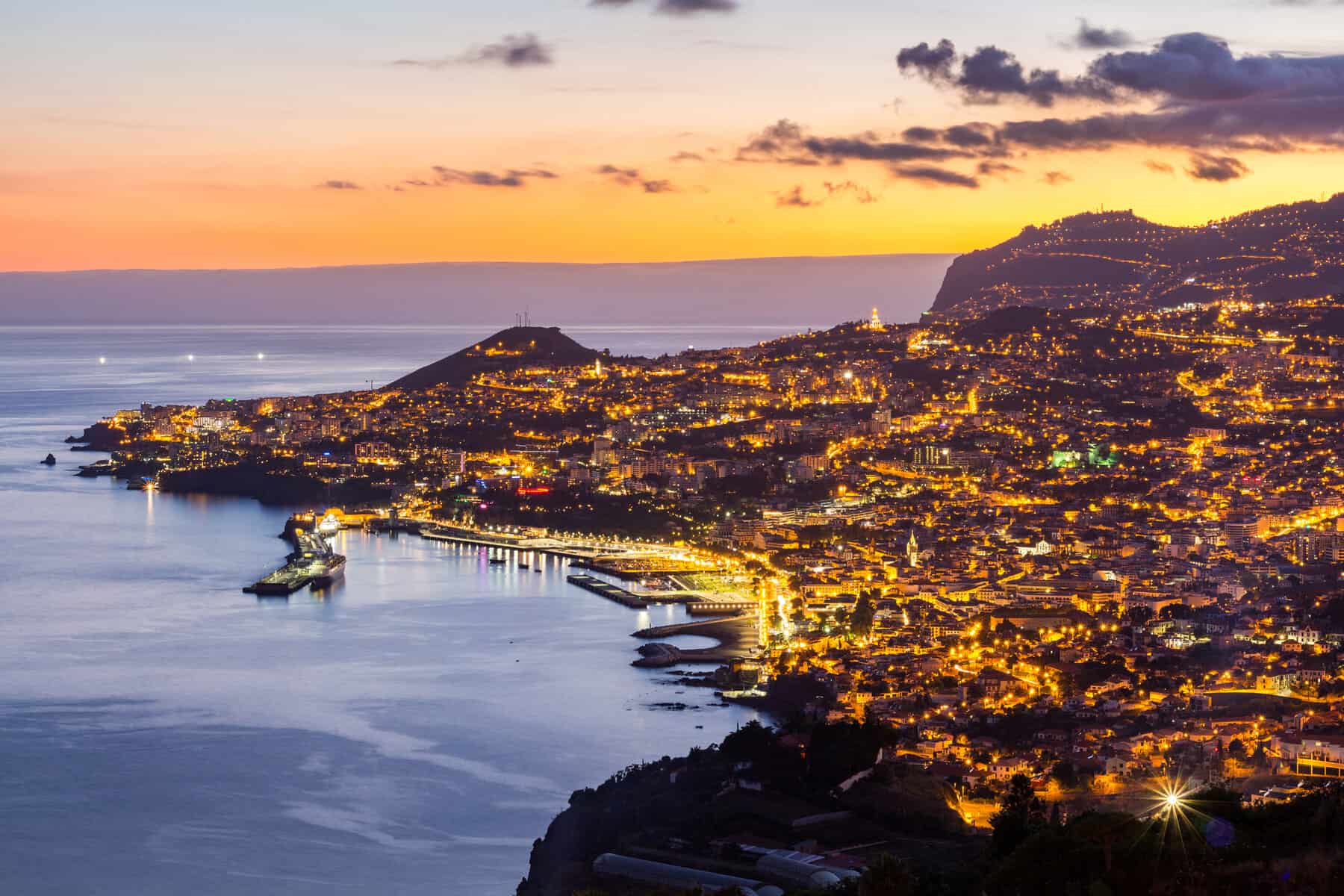
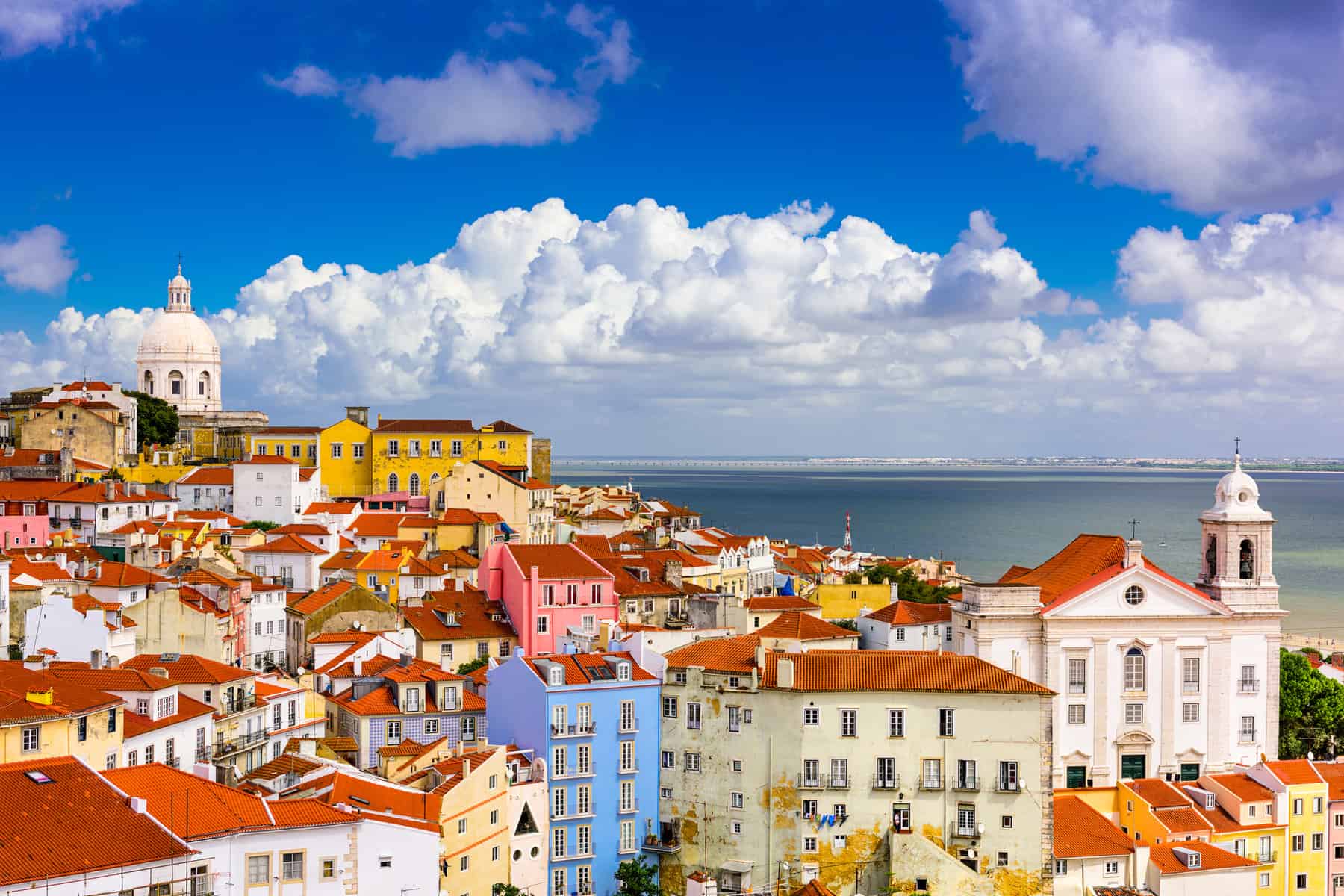
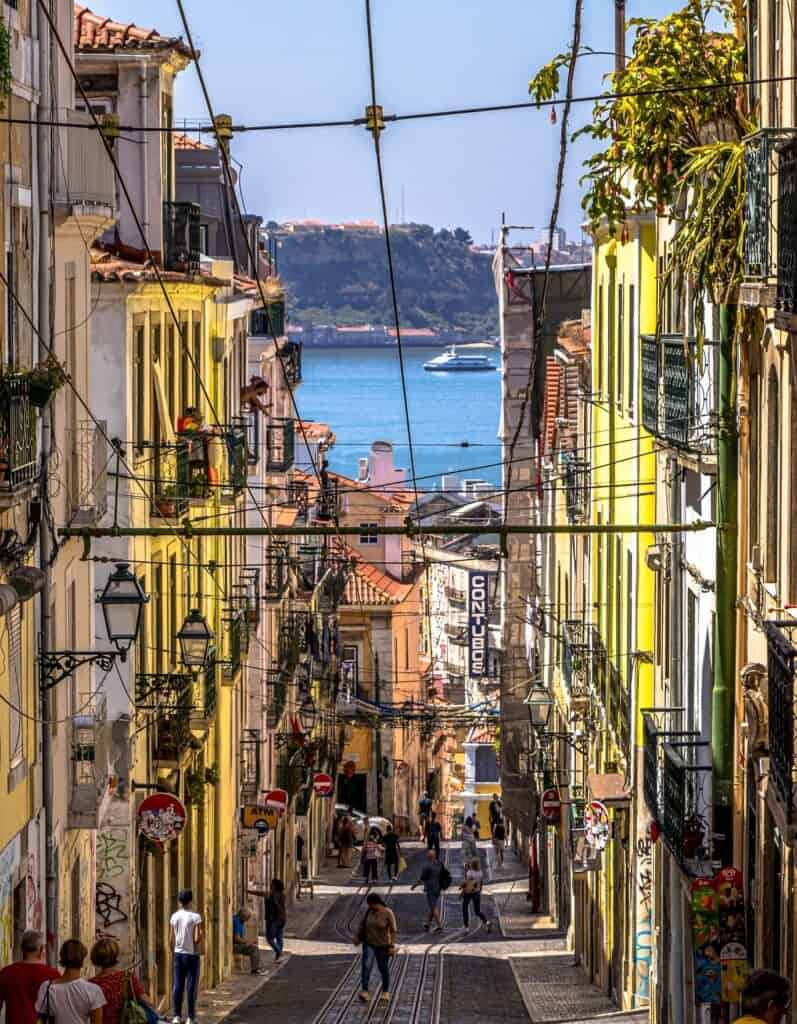
Lisbon, the capital of Portugal, is a large, dynamic city with plenty to see and do. It may not be as visually striking as its great northern rival, Porto, but this is where Portugal’s sense of grandeur and royalty is most deeply felt. Lisbon is a city of pastoral streets flowing down from the hills toward the wide estuary of the Tagus River, while charming yellow trams labor their way up the steep lanes of the historic center.
Lisbon is filled with grand squares famous for their mosaic patterns, lovely pastel-painted houses covered in stunning traditional tiles, an excellent culinary scene that blends old traditions with great modern food, and plenty of quality street food. The city also has no shortage of nightlife and a vibrant, edgy contemporary art scene.
How many days should you spend in Lisbon?
Lisbon deserves at least 4 full days of sightseeing.
Click here to search for accommodations in the beautiful city of Lisbon…
17 must-see attractions and things to do in Lisbon
- Walk beneath the Rua Augusta Arch in Commerce Square | Arco da Rua Augusta
- Ride the iconic Santa Justa Lift | Elevador de Santa Justa
- Climb to the top of photogenic Belém Tower | Torre de Belem
- Visit the National Tile Museum (azulejos) | Museu Nacional do Azulejo
- Sit down at a café on Rua Garrett – called Garci in the local slang | Rua Garrett
- The huge MAAT – Museum of Art, Architecture and Technology | MAAT
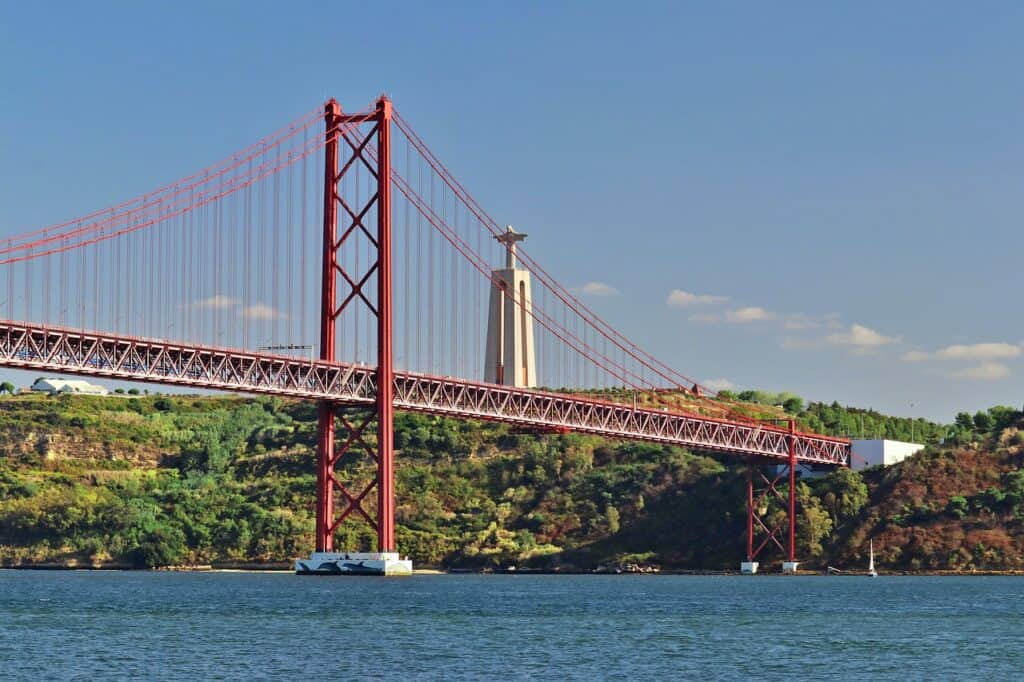
- Take in the view of the 25 de Abril Bridge from Estrela | Ponte 25 de Abril
- The National Museum of Ancient Art in Estrela | Museu Nacional de Arte Antiga
- Time Out Market Lisbon food hall | Time Out Market
- Walk beneath the skeletal remains of Carmo Convent | Convento do Carmo
- Ride a yellow tram through the steep streets of Alfama | Eletricos de Lisboa
- Santo Antão pedestrian street in the Avenida area | Rua das Portas de Santo Antao
- Lisbon Cathedral | Se de Lisboa
- Formal gardens in Eduardo VII Park | Parque Eduardo VII
- A soccer match with Benfica or Sporting | Benfica / Sporting
- Lisbon’s Cristo Rei – head up to the terrace at the top of the Christ the King statue | Santuario de Cristo Rei
- The private collection at the Medeiros e Almeida Museum | Museu Medeiros e Almeida
Click here to find hotels and vacation apartments in Lisbon, Portugal’s capital…
Click here for the guide on where to stay in Lisbon…
What should you know about Lisbon?
Lisbon, or Lisboa in Portuguese, is the capital of Portugal and the country’s largest and most important urban center. The city itself is home to around 600,000 residents, while the wider metropolitan area has roughly 3 million people. Lisbon sits on the broad estuary of the Tagus (Tejo), the longest and most important river on the Iberian Peninsula, fed by tributaries across the region south of Madrid.
Lisbon’s oldest quarters lie along the northern shore of the vast bay formed where the river opens into the Atlantic Ocean. The city is built across the slopes of seven hills and the valleys between them. Those hills, which roughly correspond to the city’s neighborhoods, descend sharply toward the Tagus estuary, creating a complex urban fabric. As a result, many streets are not suitable for car traffic.
Lisbon was most likely founded by Phoenician sailors in the early centuries BCE. The ancient settlement was called Olisipo and served primarily as a trading post. When the Moors conquered it, they renamed the city al-Lisbuna, adapting the original name. Today, Lisbon is a large and lively city with plenty of ways to enjoy yourself, from excellent restaurants and bars to energetic nightlife, and even the chance to watch high-level soccer with the city’s two great clubs: Sporting and Benfica Lisbon.
The city is Portugal’s financial and administrative center. It may not be as photogenic as its northern sister Porto, but it is a popular destination for very good reason, and anyone visiting Portugal should also explore its capital and the major sights across the metropolitan area. Lisbon is Portugal’s most important cultural city, with an enormous wealth of excellent museums tied to the country and its history. Several of Lisbon’s art museums rank among the most important in southern Europe, alongside museums devoted to local culture, such as the Tile Museum (Azulejos) and the Coach Museum. The city is also home to famous historic landmarks including Belém Tower, Saint George’s Castle, and Jerónimos Monastery.
There are countless beautiful old churches here. Some survived the devastating 1755 earthquake that left a deep scar on the city, while others were rebuilt or restored afterward in dramatic Baroque style. Lisbon also stands as a symbol of modern Portugal, with striking architectural landmarks such as the 25 de Abril Bridge leading toward the Christ the King statue in Almada, as well as the vast Vasco da Gama Bridge.
Click here for the complete guide to accommodations in Lisbon and the best areas to stay…
How do you get to Lisbon, and how do you get around the city?
Flights to Lisbon
Lisbon International Airport Aeroporto Internacional de Lisboa – LIS
Lisbon International Airport, also known as Humberto Delgado Airport Aeroporto Humberto Delgado, is the main gateway to Portugal. It lies within the metropolitan area, about 7 kilometers north of the historic city center.
The airport has two terminals: Terminal 1 serves scheduled flights, led by TAP (TAP-Transportes Aéreos Portugueses), Portugal’s national airline, along with other regular carriers. Terminal 2 is used mainly for low-cost flights from across Europe.
The airport is well connected to the city center by the Red Metro Line. The airport station is the line’s northern terminus. It’s best to stay on the line until the last southern stop, São Sebastião | São Sebastião, then transfer to the Blue Line for Baixa-Chiado station right in the heart of the city.
Public transportation in Lisbon
Lisbon Metro
Lisbon’s metro is a solid transit system, though it has one obvious drawback tied to the city’s challenging topography. Even if many important neighborhoods are not fully covered, the system still provides easy access to central Lisbon and connects with the tram network, which has become a popular tourist attraction in its own right.
The metro’s main station is Baixa-Chiado | Baixa-Chiado, which also gives access uphill toward Rossio and Restauradores. The system consists of four lines (Red, Green, Blue, and Yellow), serving mainly the Lisbon metropolitan area and the neighborhoods higher up in the hills. The metro also links the airport with the city center.
Click here for an updated map of the Lisbon Metro system…
Lisbon tram system
Given the city’s decidedly inconvenient topography, with seven hills and a center set largely in the valleys between them, the tram system is the mode of transport that serves residents best. The system is famous for its cheerful yellow cars, which slowly carry passengers up the city’s tough climbs (the descents are often easier on foot). The trams squeeze through narrow lanes, practically brushing the sidewalks.
Click here for an updated map of Lisbon’s tram system…
When should you visit Lisbon?
Summer is considered peak tourist season in the city, and while it has its advantages, it also comes with quite a few drawbacks. Lisbon fills up with visitors, and accommodation prices tend to be relatively high. Naturally, there are lines as well, though the city’s attractions are usually fairly manageable. Summer in Lisbon is also very hot, and sightseeing under the blazing midday sun can be difficult.
Early fall is an excellent time to visit Lisbon, with comfortable weather, little rain, and crowds that are still more manageable.
As fall moves closer to winter, conditions become rainier and stormier, which makes November and December less recommended. Winter here is fairly mild compared with other European capitals: cool and quite rainy, but by March it often turns absolutely delightful, with less rainfall and cool, pleasant weather.
Spring in Lisbon is simply wonderful, with comfortable temperatures and, most importantly, weather that is usually dry and sunny. The season stretches into June, when the long daylight hours bathe the city in an especially pleasant atmosphere.
Click here to search for hotels and vacation apartments in Lisbon…
Map of attractions and sights in Lisbon
How should you plan an itinerary in Lisbon?
Lisbon is the country’s main city, anchoring all of central and southern Portugal. A trip here can easily be combined with the towns, cities, sites, and attractions of this wider region. Lisbon also pairs well with a trip to the north of the country, around Porto. Travel time between Portugal’s two main cities is around three hours, and they are also well connected by rail.
Sightseeing in the city itself is naturally best divided by neighborhood. Because Lisbon’s topography is less than ideal, moving between its central neighborhoods and districts can be a bit challenging and sometimes costs valuable travel time. For that reason, it’s best to break the city into districts and explore them one by one, moving on only after you’ve finished each area.
The most appealing central districts stretch from historic Alfama | Alfama in the east, through Baixa | Baixa, the city center, then on to Bairro Alto just to the west (linked by the Santa Justa Lift), continuing through Estrela and farther west to Belém. You should also, of course, cross the 25 de Abril Bridge toward the enormous Cristo Rei statue in the city of Almada | Almada, south of the Tagus estuary.
Elsewhere in the metropolitan area, there are several other important sights, including Parque das Nações to the north and the upper-city districts, where you’ll find Eduardo VII Park, the waterworks and aqueduct, and Monsanto Forest (Monsanto).
There are also quite a few day-trip options from Lisbon. If you’re spending 4 to 5 days in the city, it’s well worth setting aside at least one day for a trip beyond Lisbon. The main destinations are nearby Sintra and Cascais, both especially easy to reach by train. There are also several other wonderful places to escape the city for a while.
Click here for the complete guide to popular day trips from Lisbon…
Accommodations and hotels in Lisbon
When booking a place to stay in Lisbon, it’s important to keep the city’s topography in mind. As is well known, Lisbon is built on hills above the Tagus estuary. That said, it’s generally manageable: most steep streets are served by trams or funiculars, and many can also be walked.
First-time visitors who want to stay close to everything should absolutely choose the city center. Baixa and Chiado are the very heart of Lisbon, and they are also fairly flat by local standards. Avenida, just above them, is also relatively level and is considered a slightly quieter area while still being extremely central.
Click here for the complete guide to accommodations in Lisbon…

Visiting Lisbon with kids
Like any major European capital, Lisbon has plenty of attractions for children. That includes the aquarium, the zoo, dolphin-watching cruises, the planetarium, and classic city sights such as São Jorge Castle, Belém Tower, and the science museum, all of which are must-sees for visitors.
Lisbon is also, of course, Portugal’s main gateway, and many travelers land here before continuing on elsewhere in the country. So even if your family plans to explore other parts of Portugal, if you’re already arriving in Lisbon, it’s worth setting aside at least two or three days. You’ll quickly see that kids have plenty to enjoy here too.
So before continuing on to Madeira Island, a vacation in Faro and the sunny Algarve beaches, or a trip to Porto through central Portugal, take a look at:
Click here for the top attractions for kids in Lisbon…
4 days in Lisbon
We’ve put together a sample itinerary so you can experience Lisbon properly in 4 days and 5 nights:
Day 1 – Getting to know the historic center
Stroll through the streets of Baixa, between Commerce Square and Rossio Square, stopping at cafés and points of interest along the way. Then head up to the viewpoints in Alfama (most fun on Tram 28) – Miradouro de Santa Luzia and others – then continue to the cathedral and São Jorge Castle. In the evening, catch a fado performance at one of the clubs in Alfama or in the city center (it’s worth booking tickets in advance).
Day 2 – Trendy neighborhoods and nightlife in Chiado, Bairro Alto, and Príncipe Real
This is the western side of the center, where the terrain starts to climb a bit. You can reach it via the Santa Justa Lift and go straight to Carmo Convent | Carmo, or begin at Praça de Luís de Camões | Praça de Luís de Camões, the heart of the area. From there, continue up to Santa Roque Church and the beautiful São Pedro de Alcântara viewpoint | São Pedro de Alcântara, which marks the beginning of Príncipe Real, then keep going into its lovely gardens. Return to the hotel to freshen up, and head back out in the evening to enjoy Bairro Alto, Lisbon’s best-known nightlife district.
Day 3 – Day trip to the palaces and forests of Sintra
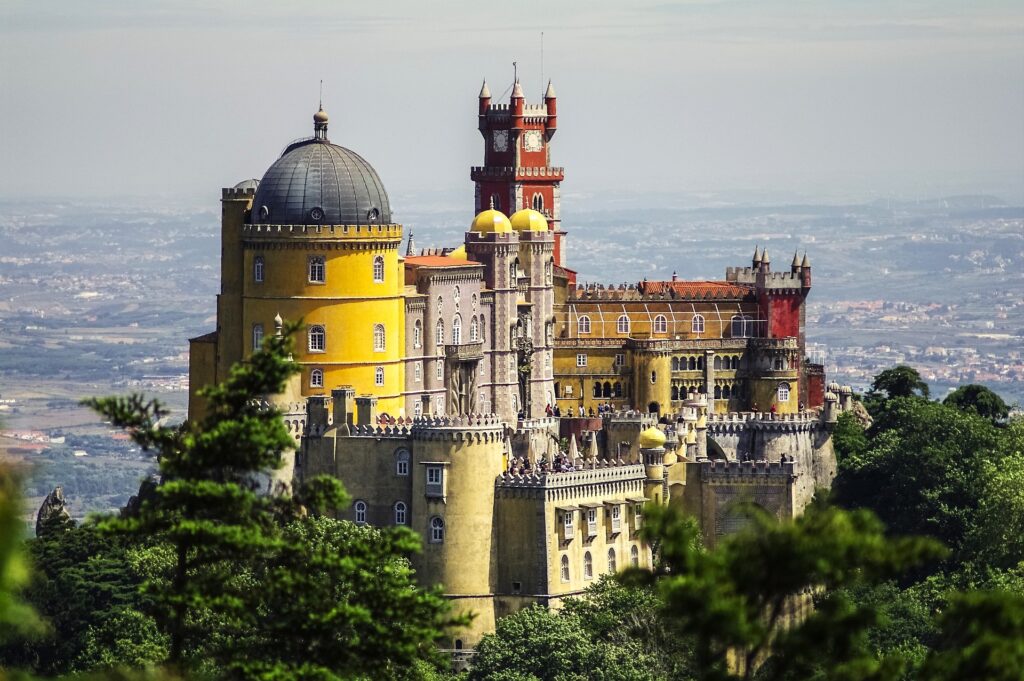
Depart from Rossio Station for a short train ride (40 minutes) to the palace region surrounded by forest and overlooking the sea – Sintra. Pena Palace, Quinta da Regaleira, Castelo dos Mouros, and more. There’s a lot to see in and around Sintra, so it’s a good idea to decide in advance what matters most. If you leave early enough, you can also take a bus from Sintra to Cabo da Roca | Cabo da Roca, the westernmost point of mainland Europe. From there, return on the same circular bus to Sintra, then take the train back to Lisbon. Another option is to join an organized day trip from Lisbon to Sintra.
Day 4 – Belém, museums, and the Tagus waterfront
Belém Tower, the Monument to the Discoveries, Jerónimos Monastery, the MAAT museum | MAAT, and many more museums all lie west of central Lisbon in the Belém district. In the evening, head back to the center and walk down to the riverfront at Cais do Sodré | Cais do Sodré, home to dining and nightlife hubs such as Time Out Market and Pink Street, both within walking distance of Commerce Square and the Rua Augusta Arch.
Day trips from Lisbon
Lisbon, as the heart of the country, is close to many towns and attractions. That makes it an excellent base for all kinds of day trips. Here are a few popular options we’ve chosen to highlight:
- The most popular day trips from Lisbon are to Sintra and Cascais.
- A little farther afield: Óbidos, Peniche
- Longer day trips, but worth it: Évora, Tomar
Click here for the guide to the most popular day trips from Lisbon…
LISBON: A District-by-District Guide
Lisbon’s old center – the Alfama district
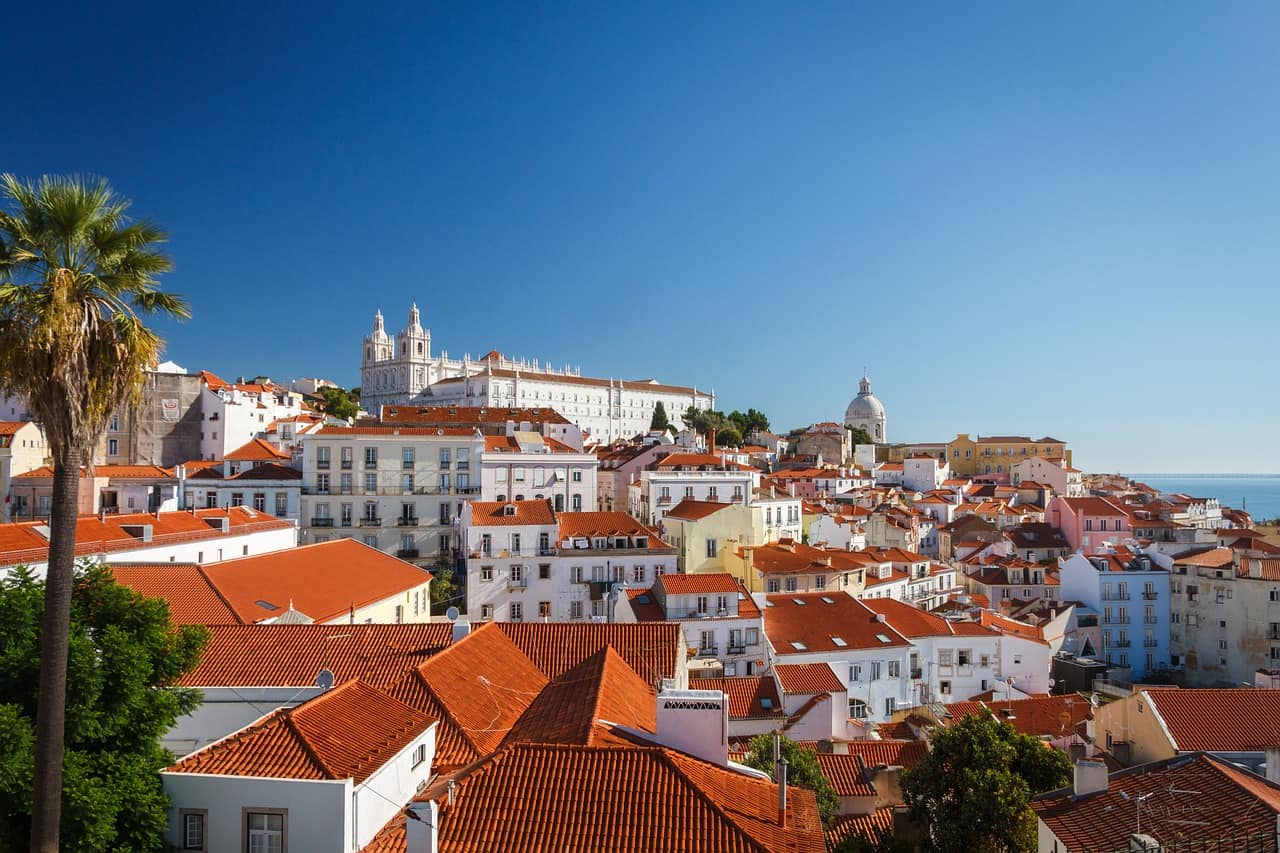
Alfama | Alfama is Lisbon’s oldest district, and one with a somewhat weathered feel. Historically, it was never among the city’s most polished quarters and was neglected for many years. Only after Portugal emerged from its dark period in 1974 with the Carnation Revolution did investment begin to return, though the area is still very much in the process of renewal. The district is threaded with streets that, true to Lisbon, tumble down the hillside toward the Tagus estuary. They’re full of charm, lined with old facades, a few of which still date back to the Moorish period nearly a thousand years ago.
Rising proudly above the neighborhood is Castelo de São Jorge, one of the city’s most impressive and beautiful fortresses. Its walls are visible from afar, and you can walk along them for sweeping views over the estuary. Below the castle, the streets are captivating and varied – some old, some peeling, some restored – yet all lively and full of people. These winding lanes are packed with restaurants, hotels, bars, and places to go out.
Closer to the river, there is a large cluster of churches and museums, led by the Sé, the city’s historic cathedral. To the east, toward the shipyards and port along the estuary, you’ll find a row of important cultural museums and old churches.
Click here for everything you need to know about sights and walking routes in historic Alfama…
Baixa and Avenida
Baixa | Baixa is Lisbon’s urban center. This planned district was built largely after the destruction of the great 1755 earthquake, in the low-lying valley between the hill of Alfama to the east and the hill of Bairro Alto to the west.
The neighborhood is laid out in a grid, with vast Commerce Square on the waterfront side and Rossio Square, or the regal Dom Pedro IV Square, at the other end. The streets of the district are considered the very center of Lisbon, packed with restaurants, hotels, bars, and places to spend an evening.
Avenida | Avenida stretches organically up the valley. Traditionally, this neighborhood was home to the city’s upper classes, and it offers plenty of nightlife, interesting museums, and concert halls.
Click here to find accommodations in central Baixa…
Click here for everything you need to know about visiting Baixa and Avenida, the heart of Lisbon…
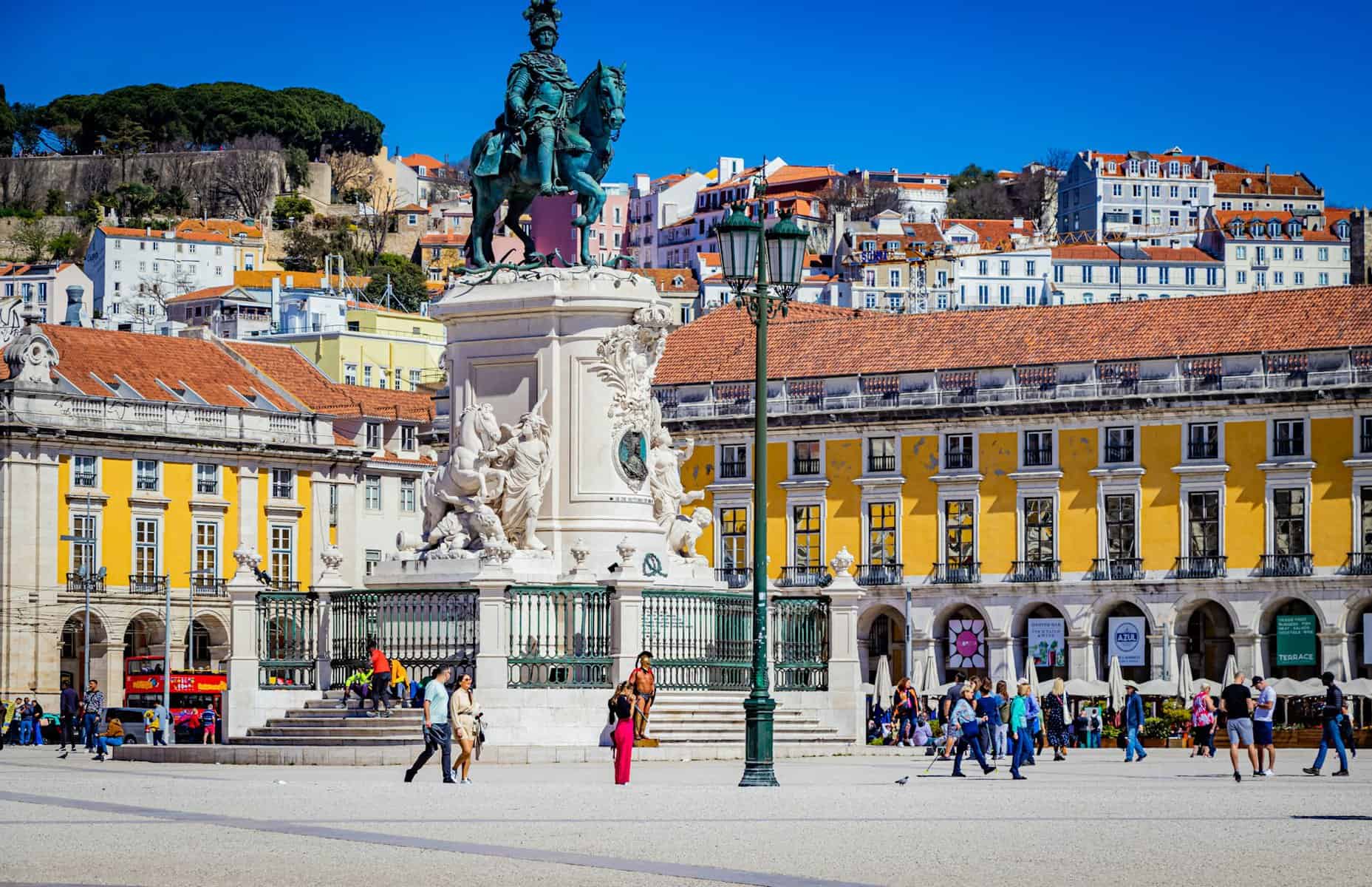
Bairro Alto
Bairro Alto | Bairro Alto offers a pleasant, easygoing route where you can feel Lisbon’s lively center at work. The district climbs the hill west of the valley that holds central Baixa and functions almost like a satellite quarter to Lisbon’s main axis along Rua Augusta. The district is connected to Baixa by the famous Santa Justa Lift (Santa Justa).
The central square of Bairro Alto is the elegant Praça de Luís de Camões, surrounded by lovely 17th- and 18th-century streets filled with shops, restaurants, and cafés. The buildings here are often topped with soft pastel colors, while their lower levels are splashed with equally colorful graffiti.
The district is home to several major sights, including the famous skeletal remains of Carmo Convent | Carmo. Downhill from the neighborhood, you’ll find the celebrated Time Out Market Lisboa food hall, one of the most enjoyable places in Lisbon, especially around lunchtime.
Click here for the complete guide and walking routes in Bairro Alto…
Click here to search for accommodations in Bairro Alto – Lisbon’s nightlife district…
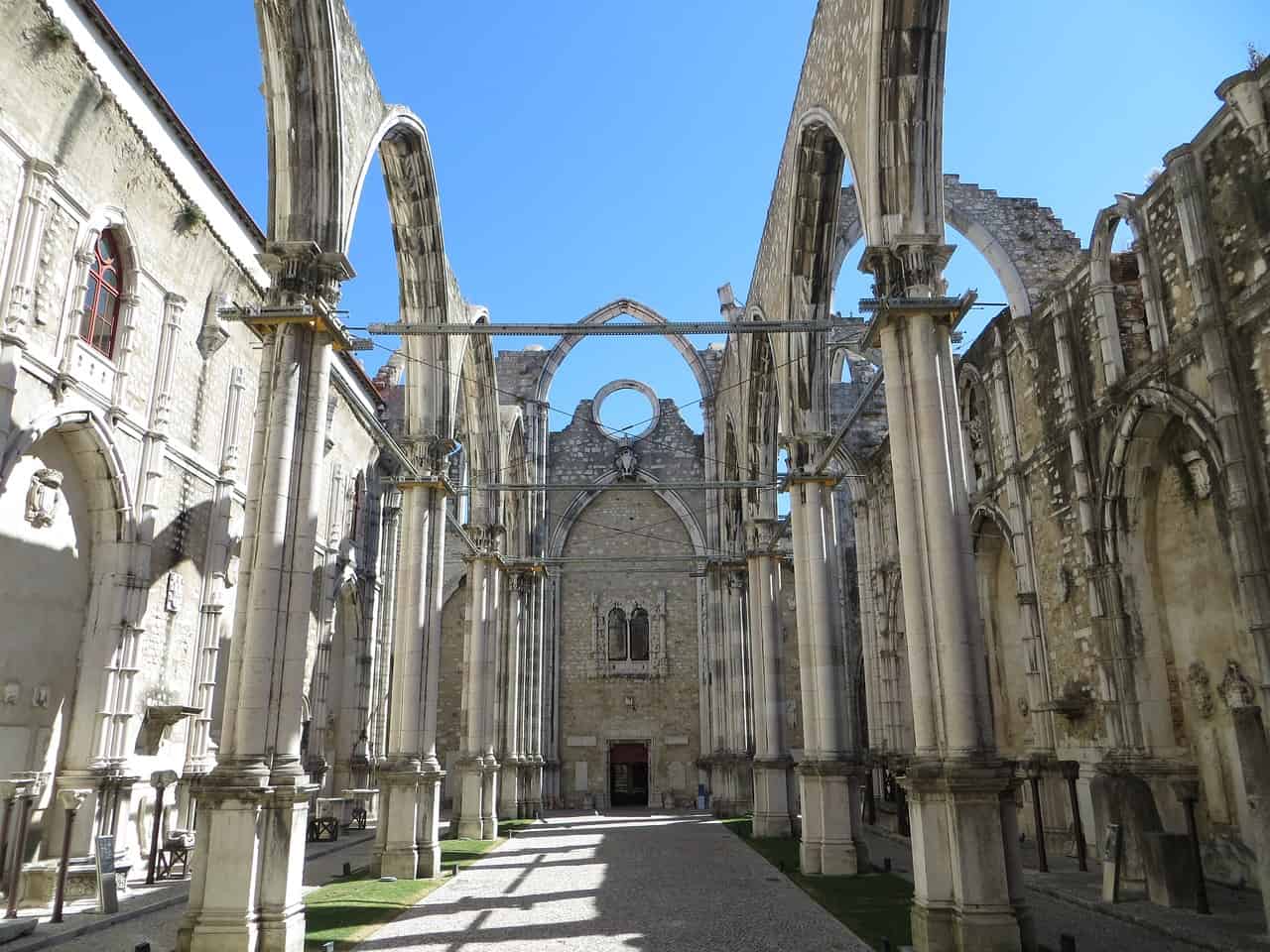
Estrela
Estrela | Estrela – or Esh-trela, depending on how deeply you lean into the accent – feels like a bridge stretched across a hill between Bairro Alto to the east and Belém to the west. Much of the district is residential, but there are also plenty of pleasant, attractive streets lined with restaurants and places to go out. Up on the hill, you’ll also find a string of important sights, including the Portuguese parliament at São Bento Palace and the magnificent Estrela Basilica overlooking the harbor from above.
The district’s waterfront is Alcântara, home to a large cluster of museums including the National Museum of Ancient Art – perhaps the most important art museum in all of Portugal. From this area, the dramatic 25 de Abril Bridge heads south toward Almada, Portugal’s answer to San Francisco’s Golden Gate.
Click here for the complete guide to exploring Estrela…
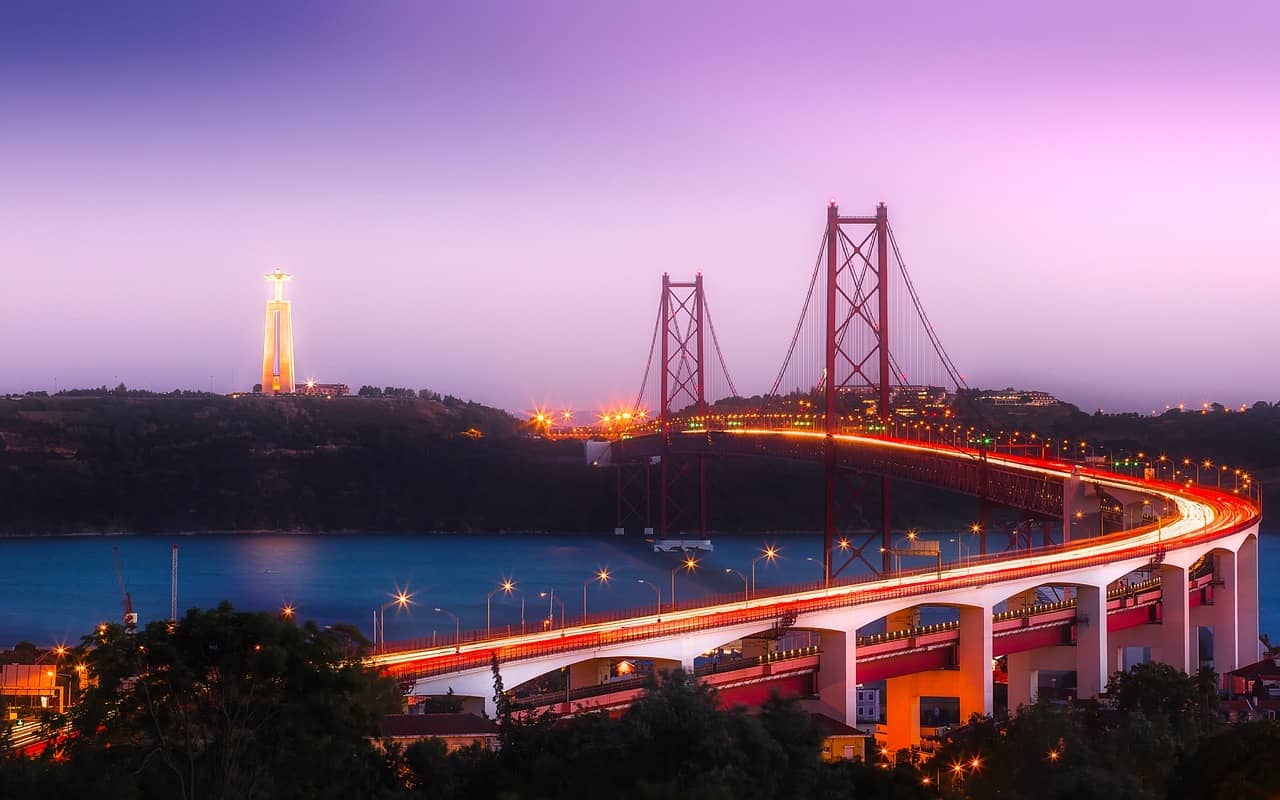
Belém
Belém | Belém, in western Lisbon, is one of the city’s most distinctive and important districts to explore. Set along the waterfront of the Tagus estuary, it packs in an impressive number of sights and attractions. The district’s main landmark is the historic Jerónimos Monastery (Mosteiro dos Jerónimos), whose wings now house a series of fascinating national museums. Not far from the monastery stands the city’s iconic symbol – photogenic Belém Tower, one of the most beautiful and distinctive sights in all of Portugal.
Along the district’s waterfront, you’ll find several more important museums, including the remarkable Coach Museum and the modern MAAT museum of art and architecture. The neighborhood also has a number of beautiful parks and gardens, such as the special tropical botanical garden beside Belém Palace. Above the waterfront and the district of Belém, up the hillside, lies the neighborhood of Ajuda, home to the impressive royal palace and its tropical garden, one of the most beautiful gardens on the Iberian Peninsula.
Click here for everything you need to know about visiting the lovely Belém district…
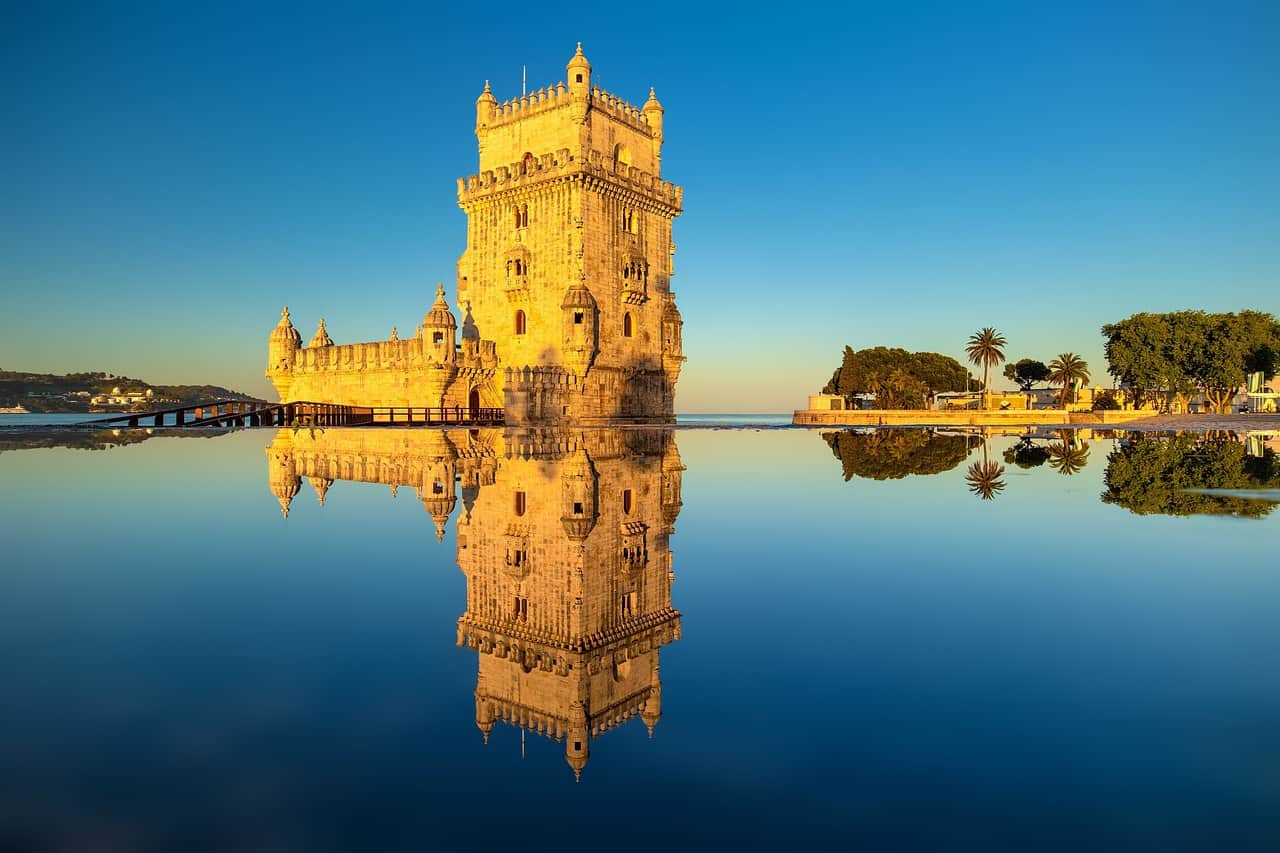
Greater Lisbon – sights and attractions outside the city center
Beyond Lisbon’s historic center, there are quite a few worthwhile attractions. Across the dramatic 25 de Abril Bridge lies the city of Almada, watched over by the monumental Christ the King statue above the Tagus. The statue rises over the skyline and is one of the city’s most recognizable landmarks. North of historic Alfama is Parque das Nações, the site of Expo 98. Today, it is home to Lisbon’s popular aquarium. Parque das Nações also has plenty of attractions for kids in Lisbon.
Higher up, in the city’s elevated residential neighborhoods, you’ll find several more important sights, including King Edward VII Park, the city’s impressive 18th-century water supply system, whose highlight is the Águas Livres Aqueduct, now a popular place to visit, and nearby Monsanto Forest, beloved by locals as an escape into nature. This area is also home to the Museu Calouste Gulbenkian, with its very rich art and archaeology collection, and the city’s two soccer stadiums, the home grounds of Sporting and Benfica – yes, two separate stadiums just a mile apart from each other!
Click here to find accommodations in Lisbon…
Click here for the complete guide to accommodations in Lisbon…