São Miguel is the largest island in the Azores, both in area and population. The island and its capital, Ponta Delgada, also serve as the main gateway to the Azores, where most trips through these remote Atlantic islands begin. São Miguel is about a 2.5-hour flight from Lisbon or 6 hours from New York, and it is one of the most remarkable places in the world. Formed by volcanic activity, the island offers primal landscapes, wild nature, spectacular trails, a rich local culture, and excellent food. Whether you want to soak in hot springs, sail alongside whales, taste a stew cooked in volcanic ground, or simply sit in front of a breathtaking green-blue lake, this island will leave you amazed!
How many days do you need in São Miguel?
As with Madeira, if you are traveling all the way out into the Atlantic, it is worth staying for a few days. The rule of thumb is that you need at least 4 days to see most of the key sights on São Miguel, while a full week may already feel like more than the average traveler needs. Somewhere in between is usually ideal. Since São Miguel is the main entry point to the Azores, it is also where most island-hopping trips begin. Travelers planning to visit other islands usually start with 3–4 days in São Miguel before continuing on to the next one.
Click here to find accommodations on São Miguel…
10 must-see sights and experiences in São Miguel
- Sete Cidades Lakes
- The capital, Ponta Delgada
- Whale-watching cruise from the marina | Marina de Ponta Delgada
- The hot springs in Furnas | Caldeiras – Furnas
- Terra Nostra Park in Furnas | Parque Terra Nostra
- The islet off Vila Franca – viewpoint or boat trip (when available) | Ilhéu de Vila Franca do Campo
- Gorreana Tea Plantation in the north of the island | Plantações de Chá Gorreana
- Fire Lake | Lagoa do Fogo
- Ribeira dos Caldeirões Park in the island’s northeast
- Sunrise viewpoint in the east of the island | Miradouro da Ponta da Madrugada
Map of São Miguel
How to get to São Miguel
The main way to reach São Miguel – and really the only practical one for most travelers – is by air. That said, many cruise ships also dock here.
Flights to São Miguel
Ponta Delgada Airport | Aeroporto de Ponta Delgada – João Paulo II is São Miguel’s airport (airport code: PDL). It lies west of the city and is the main gateway both to the island itself and to the Azores in general.
There are several daily flights from Lisbon, and in season there are also flights from other European cities. One of the most interesting things about the Azores is that there are also direct flights from the United States and Canada, with the eastern coast of North America only about 5 hours away from these Atlantic islands. Large communities of Azoreans and their descendants live in North America, having emigrated to the New World over the years.
From Ponta Delgada, there are also flights to all the other Azorean islands. Inter-island flights are operated by the Azores airline, Azores Airlines. The company also has a subsidiary called SATA Air Açores, which handles domestic flights. It is important to know that in peak summer, all inter-island flights fill up very quickly because the planes are small, so it is best to book as far in advance as possible.
Cruises to São Miguel
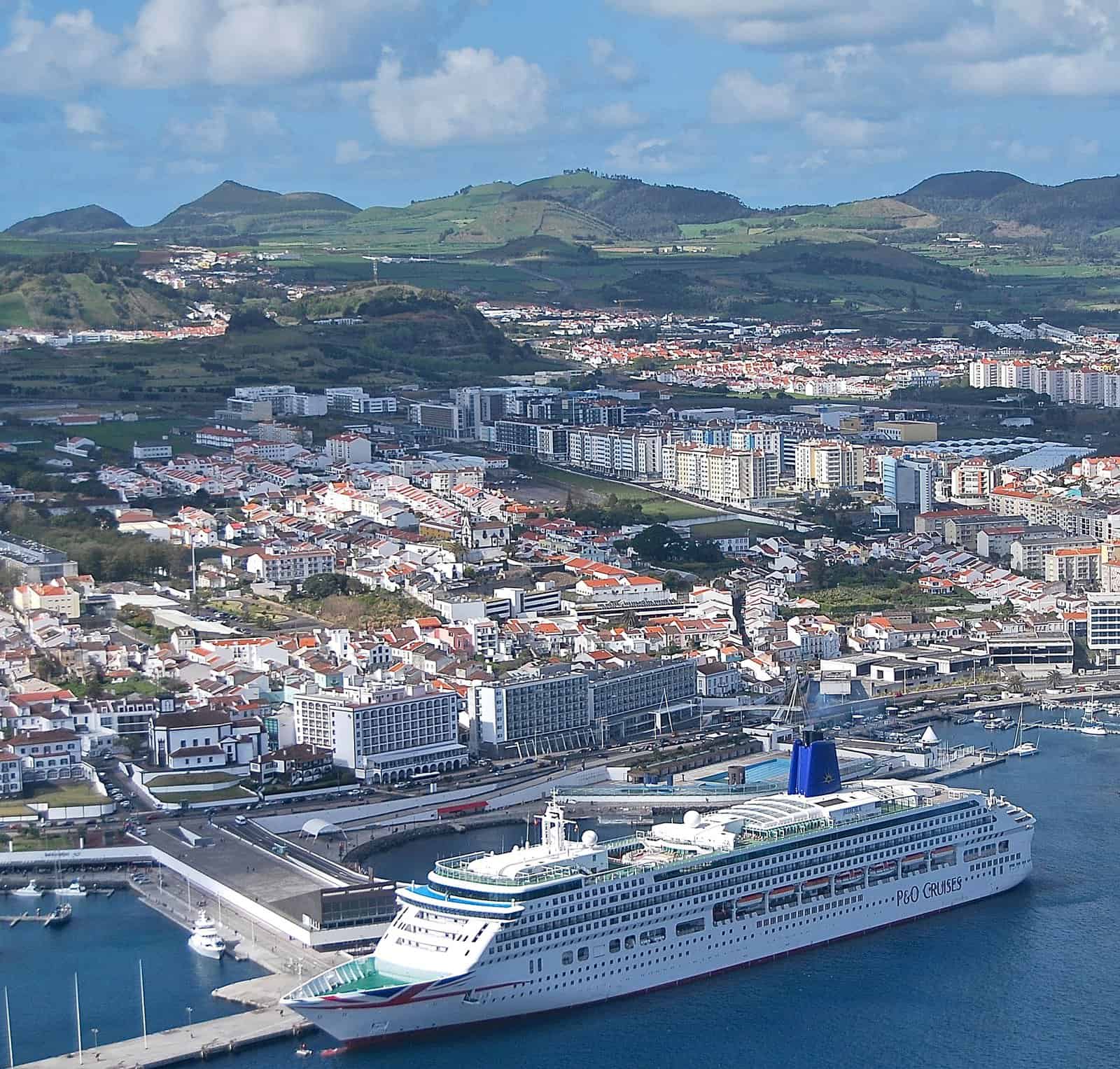
Many cruise ships dock in Ponta Delgada as part of itineraries departing from major western Mediterranean cities such as Barcelona and heading out to the Atlantic islands. Another popular option is a cruise from Southampton in southern England to Europe’s Atlantic islands: Madeira, the Azores, and Spain’s Canary Islands.
But cruise ships usually stop in São Miguel for only one day. That typically gives you time to see little more than Ponta Delgada and the Sete Cidades Lakes. If the weather is poor, you may miss the experience almost entirely. For anyone who truly wants to explore the Azores, flying in for several days is by far the better choice.
Where to stay in São Miguel?
During peak season (June–September), it is smart to book accommodations a few months ahead. If you are renting a car and like the idea, do not hesitate to choose more secluded places to stay—that is part of the island’s charm. In São Miguel, you can easily split your trip and spend two or three nights in one part of the island and another two or three elsewhere. Still, because distances are not great—most drives on the island take between 20 and 40 minutes—you can also stay in one place and head out each day to a different area.
Check out our list of 11 top-rated hotels on São Miguel Island…
The three main areas to stay in São Miguel:
1. Ponta Delgada – the most convenient base
The island’s largest city has everything a traveler needs: modern hotels, vacation rentals, restaurants, shops, and a market. It is close to the airport, the marina, and the main roads, making it especially well suited to anyone looking for a stable, central, and easily accessible base for day trips around the island.
Click here to find accommodations in Ponta Delgada, the island’s capital and largest city…
2. Furnas – nature, hot springs, and a green valley
A picturesque little town in the heart of a volcanic valley, with spa hotels, natural thermal pools, botanical gardens, and nearby nature trails.
Click here to find accommodations in and around the hot springs town of Furnas…
3. The north – surfing, wild beaches, and a local feel
In places such as Ribeira Grande, Santa Bárbara, and Mosteiros, you will find fewer hotels and more apartments, farm stays, and lodgings facing open beaches and rolling surf. Staying here makes it easy to explore the north coast, the east, and the island’s higher central areas.
Click here to find accommodations in Ribeira Grande and the north of the island…
Renting a car on São Miguel
Let’s start with the obvious: having a car makes traveling around São Miguel much easier. Despite the island’s remote location and changeable weather, the roads—though narrow at times—are well maintained, and driving is comfortable. Of course, caution is needed, especially in fog and rain, but overall the roads are safe, manageable, and lined with extraordinary scenery.
Beyond allowing you to see much more, one of the best reasons to rent a car in São Miguel is the flexibility it gives you. As mentioned, Azorean weather can shift several times in a single day—from sunshine to rain to wind, and most frustrating of all, fog.
Outside peak summer, fog can roll into almost any part of the island on almost any day. So if you have been dreaming of that perfect photo over the Sete Cidades Lakes, there is a real chance the whole view will be covered when you arrive. That is why the Azores have installed live scenic webcams across the islands, so travelers can check in real time whether the weather is good enough for the sights they want to visit. If you have a rental car, you can easily use the webcams and adjust your plans on the spot.
Click here for information and deals on car rentals in Portugal, including the Azores…
About São Miguel
São Miguel, known as “the Green Island,” is the largest and most populated of the nine Azorean islands in the Atlantic Ocean. It covers about 759 square kilometers and is home to around 140,000 residents, roughly 45,000 of whom live in the island’s main city and capital, Ponta Delgada.
The island offers a mesmerizing mix of wild nature, dormant volcanoes, colorful lagoons, black beaches, authentic villages, a rich local culture, and excellent food. The weather
Click here to search for accommodations on São Miguel…
History of São Miguel
São Miguel | São Miguel was discovered in the 15th century by Portuguese sailors during the Age of Discovery. It was the second island to be found after Santa Maria to the south. Settlement began shortly afterward, when Portuguese settlers, farmers from the Alentejo region, and Flemish colonists arrived, bringing with them agricultural knowledge and European traditions. The fertile soil created by volcanic activity encouraged the rapid development of farming, grazing, and trade.
In the 16th and 17th centuries, the island served as an important stop for ships returning from the New World and carrying gold, goods, and raw materials back to Europe. The ports of Ponta Delgada developed into wealthy and important economic hubs. Signs of that prosperity can still be seen today in the churches and other buildings constructed in Ponta Delgada during that period.
After the decline of the Portuguese Empire, the islands—including São Miguel—became more peripheral and remote in the 19th century, and their economy returned to an agricultural base. São Miguel then developed into a major center for tea, tobacco, meat, and dairy production. Later, however, periods of economic hardship led to large waves of emigration to America. To this day, Azorean communities remain in the United States and Canada, and ties to the islands are still strong. One reflection of that connection is that many Azoreans speak English well, unlike on the Portuguese mainland.
After Portugal’s democratic revolution in 1974, the island entered a period of major growth: resources were invested in infrastructure, transportation, and education, laying the groundwork for another leap forward in recent decades, much of it driven by tourism. Since the 1990s, São Miguel has become an international travel destination, with the development of nature reserves, viewpoints, visitor centers, and a modern airport. Today, the island balances a rich past with a modern economy built on agriculture, tourism, and a conservative yet open local community.
Check out our list of 11 top-rated hotels on São Miguel Island…
Geography and travel regions
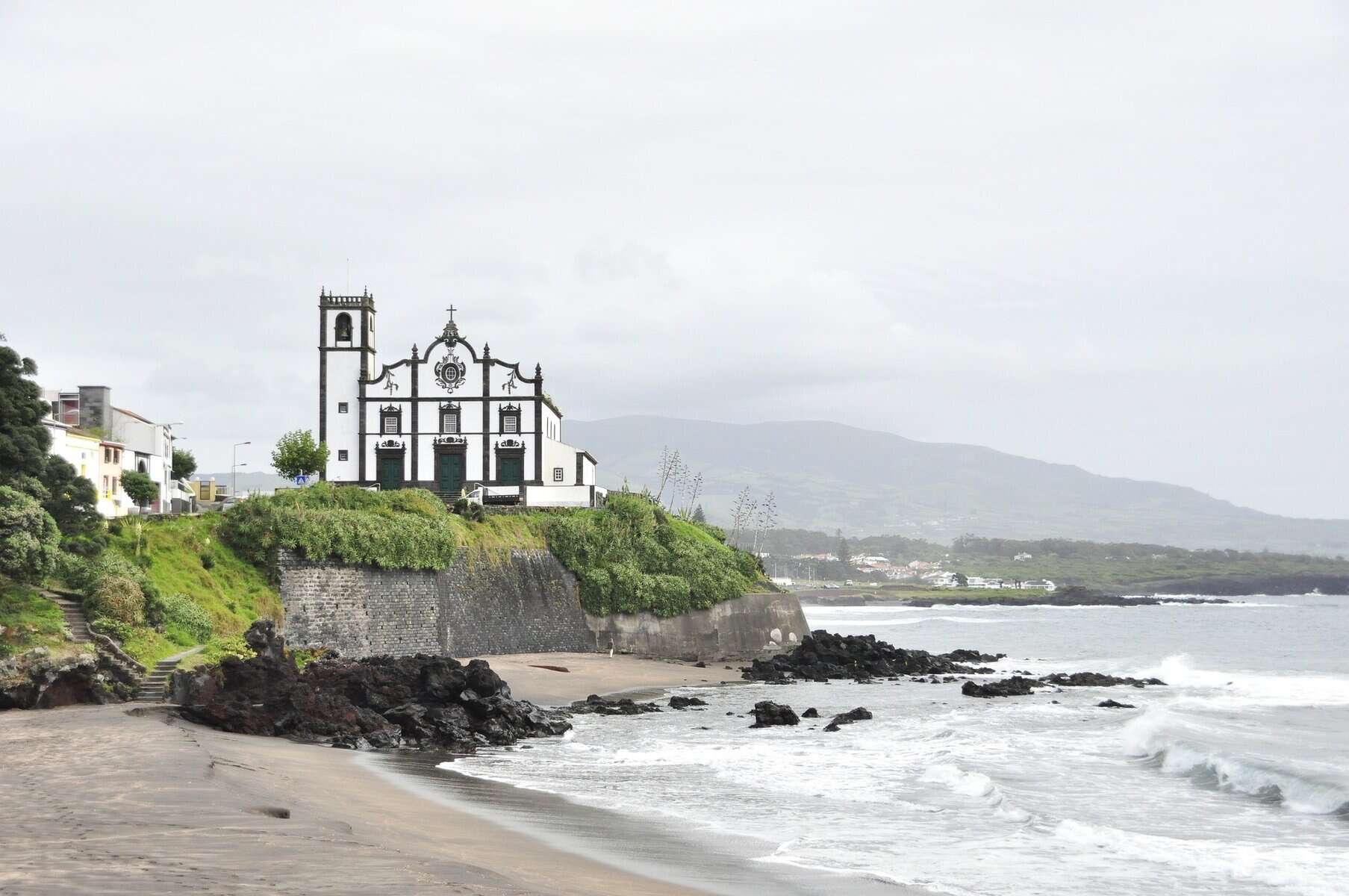
São Miguel is the largest island in the Azores and was formed entirely by long volcanic activity. Vast craters, volcanic lakes, basalt mountains, green valleys, and hot springs create an especially varied landscape. The coastline includes deep bays, black sand, and natural pools. As on the other islands, the beaches are generally less suited to swimming, except for the natural pools.
The island can be divided into 5 main touring regions:
- The main city of Ponta Delgada
- The west of the island, including the Sete Cidades Lakes
- The center and north of the island, mainly around Ribeira Grande
- The town of Vila Franca and its surroundings in the south
- The remarkably green and rural east
Weather in São Miguel
The island’s climate is mild throughout the year thanks to the ocean and the influence of the Gulf Stream. Temperatures are usually between 57 and 77°F (14–25°C), and periods of intense heat or extreme cold are rare. Winter is not especially cold, but it can be problematic for sightseeing.
Throughout the year, but especially in winter, the island sees strong winds—particularly in the north and west—along with low clouds and fog that can appear and disappear within minutes, though in winter they may also linger for days at a time. That is the main reason we do not recommend visiting São Miguel in winter: most of the trip is spent outdoors, and on many winter days the weather simply does not cooperate. As for rain, precipitation is high and showers can happen year-round, but that is also what keeps the island lush and vividly green.
The best time to visit São Miguel
The recommended period is from May to October, and if you want to be more precise and play it safe, from mid-June to mid-September, with July being the driest month. July and August are the busiest months, though they are still more pleasant than many of Europe’s summer destinations. April and November can bring beautiful days, but the weather is less predictable. Travelers who prefer quiet, misty scenery, and dramatic cloud-covered landscapes should come in the shoulder season—late April and May, or October.
Food in São Miguel
The local cuisine is built around beef—like on the other islands, there are broad grazing lands here—along with fish and seafood, fresh vegetables, pineapple, and local cheeses. The most famous dish is Cozido das Furnas, a stew of meat and vegetables cooked for hours in the island’s hot volcanic ground. Alongside these dishes, you will find local tea from the Gorreana plantations, traditional pastries, and farm products gathered directly from the island.
Whales and dolphins
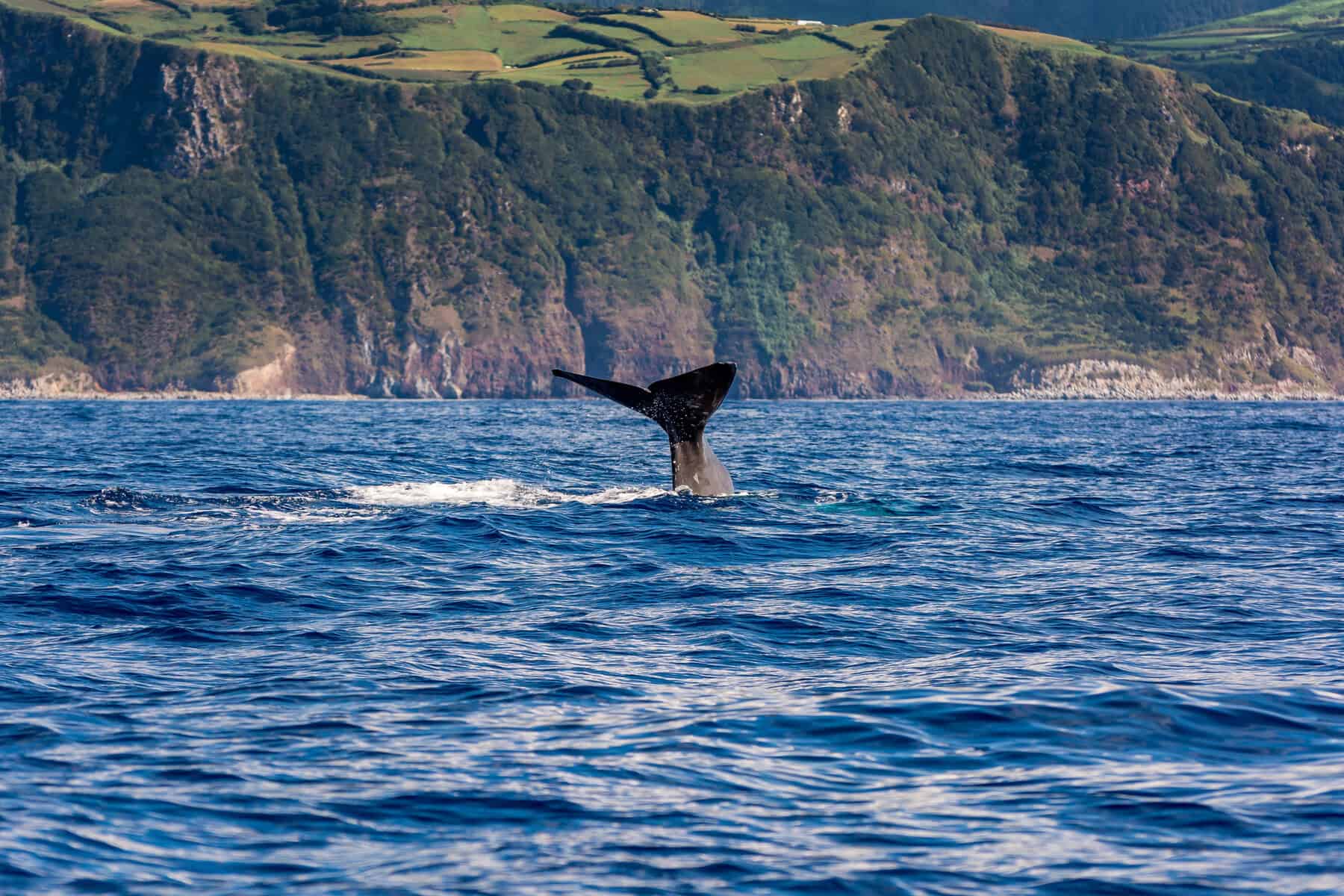
The Azores are known as one of the best places in the world for whale and dolphin watching, with more than 28 different species seen here throughout the year. Most tours leave from the two marinas in Ponta Delgada, and there are also a few options from the town of Vila Franca in the island’s central-southern area.
Click here for a whale-watching cruise departing from Ponta Delgada…
Click here for a boat trip to the small and unusual islet off Vila Franca…
São Miguel today
Today, São Miguel is the economic, cultural, and administrative center of the entire Azores. Its economy relies on tourism, modern agriculture, dairy production, tea, and pineapple, alongside fishing and a developed service sector. Ponta Delgada serves as the island’s main urban hub, with restaurants, educational institutions, gardens, and cultural life, offering a blend of old traditions and a modern pace of life. The island attracts travelers, students, and entrepreneurs thanks to its high quality of life, personal safety, green landscapes, and pleasant local atmosphere.
Click here to find accommodations on São Miguel…
Ponta Delgada – São Miguel’s capital and the urban heart of the Azores
Ponta Delgada, the island’s capital, is also the main urban center of the Azores as a whole. Every trip around the island, and most journeys through the Azores, begin in Ponta Delgada. It sits on the island’s southern coast and serves as the region’s main air and sea gateway, with direct flights from mainland Portugal and a range of European destinations, as well as an active port where ferries and cruise ships dock.
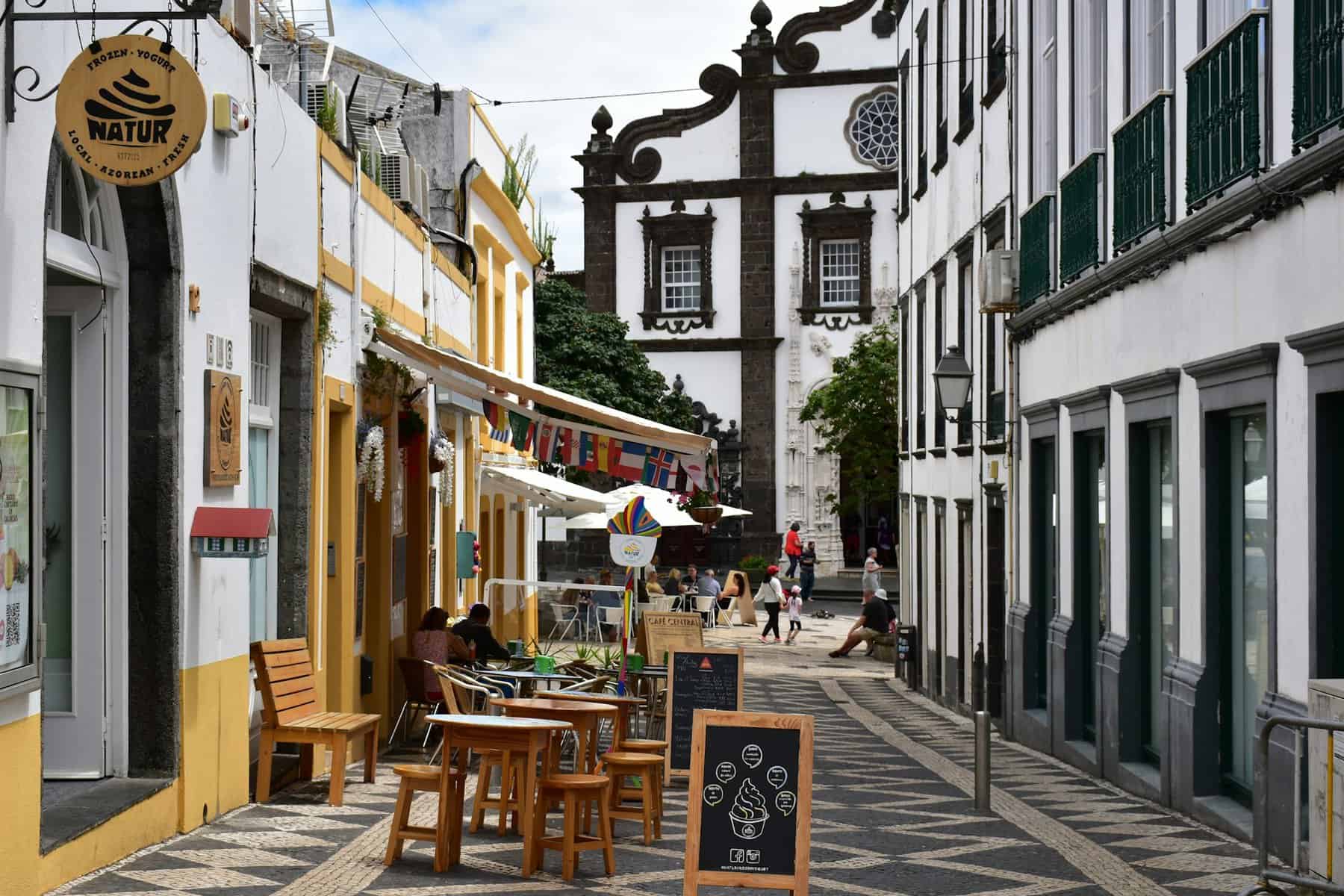
The historic city center is built in black basalt and white marble, with old squares, cobbled lanes, and Baroque churches. Around the city gates, Portas da Cidade | Portas da Cidade, which were built in the 18th century as the entrance to the old harbor, you will find cafés, restaurants, and shops. The city strikes an appealing balance between a calm urban feel and immediate access to nature.
The marina beside the Dom Henrique promenade is the main departure point for whale- and dolphin-watching tours, and within a short walk you will find lush botanical gardens such as Jardim António Borges and historic churches such as Igreja Matriz de São Sebastião. A short drive from the center leads to the lava cave Gruta do Carvão and the pineapple greenhouses Ananases A Arruda, both excellent examples of the island’s volcanic and agricultural character.
Thanks to its accessibility, services, restaurants, and the many excursions available nearby, the city is a natural and convenient base for any São Miguel vacation and an excellent starting point for getting to know the island as a whole.
Click here to find accommodations in Ponta Delgada, the island’s capital and largest city…
Selected must-see attractions in Ponta Delgada:
- The historic city gates | Portas da Cidade
- São Sebastião Church in the historic center | Igreja Matriz de São Sebastião
- Praça Gonçalo Velho Cabral – the main square facing the city gates
- Dom Henrique promenade – the city’s main seafront promenade | Avenida Infante D. Henrique
- Ponta Delgada Marina – departure point for boat trips and whale watching
- São Brás Fort guarding the entrance to the harbor | Forte de São Brás
- The botanical gardens – a lush and charming green space in the heart of the city | Jardim António Borges
- Carlos Machado Museum – the city’s main museum
- The pineapple greenhouses of Arruda | Ananases A Arruda
- Mercado da Graça
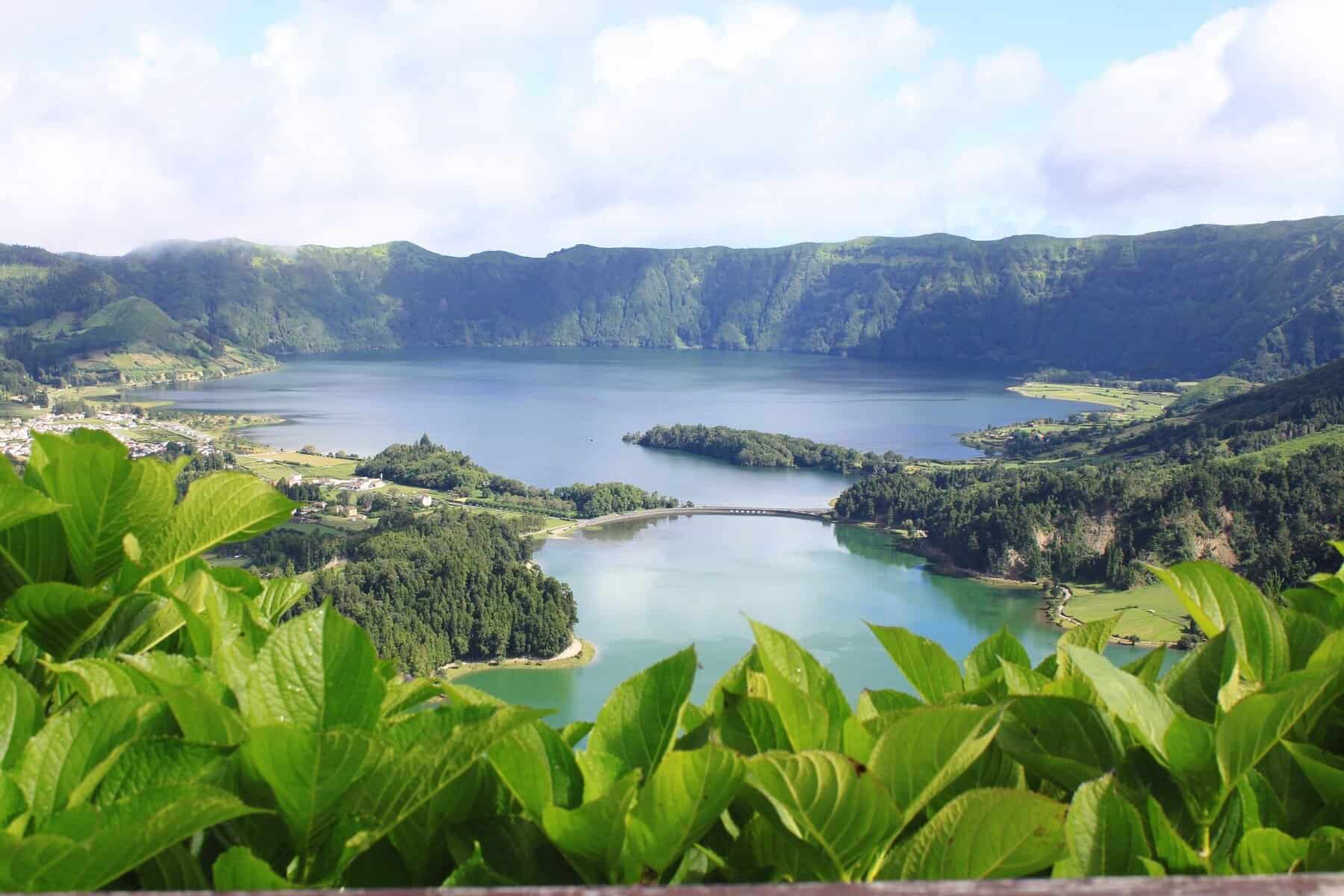
Sete Cidades Lakes
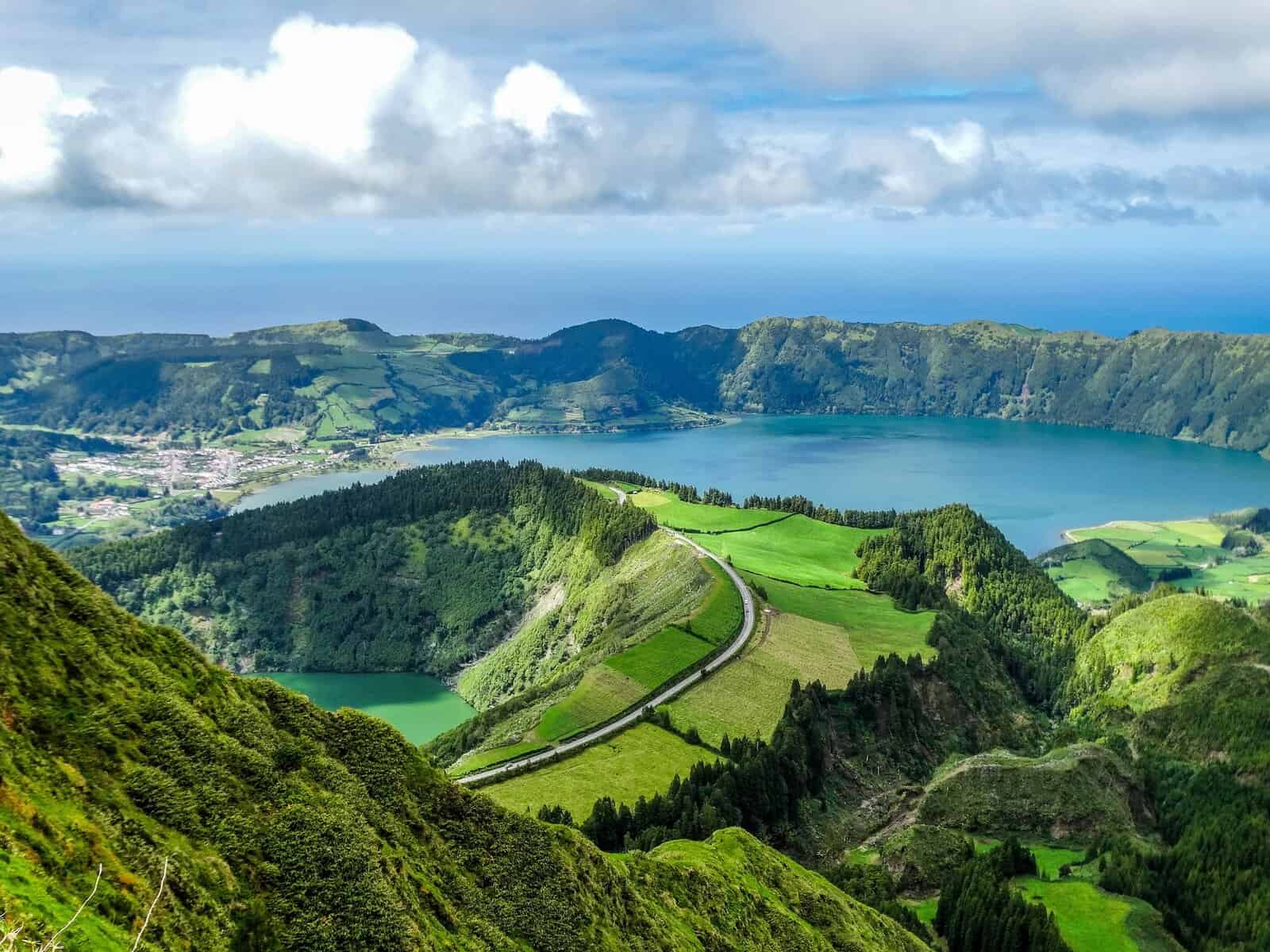
The Sete Cidades Lakes lie in western São Miguel inside a vast volcanic crater formed by the collapse of an ancient volcano. The two lakes—the Blue Lake and the Green Lake—are separated by a natural land bridge, creating an extraordinary landscape where the colors of the water shift according to depth, vegetation, and sunlight. The green slopes, hundreds of meters high, together with forests and wide-open spaces, give the area a peaceful, secluded feel.
The road climbing to the crater rim leads to two famous viewpoints, Vista do Rei and Miradouro do Cerrado das Freiras , each offering a different perspective over the crater as a whole. Clouds, light, and color change quickly here, so the view never looks quite the same twice—sometimes bright and clear, sometimes wrapped in soft mist. Descending into the crater brings you down to the lakes themselves and the small village of Sete Cidades, with its Gothic church, quiet streets, and laid-back atmosphere.
In the village, you can stop for lunch at one of the local restaurants before continuing on a short walk along the lakeshore or one of the easy, pleasant trails in the valley. This is one of those places where you can get close to grand scenery without much effort, combining light walking with an authentic rural setting in the heart of a crater.
Click here for an excellent day trip from Ponta Delgada to Sete Cidades and other natural sights…
Must-see and do in Sete Cidades:
- Vista do Rei viewpoint | Miradouro da Vista do Rei
- Cerrado das Freiras viewpoint | Miradouro do Cerrado das Freiras
- The village of Sete Cidades
- Walking trails around the lakes (selected sections)
- Lagoa do Canário – the small lake surrounded by groves nearby
Suggested itineraries for São Miguel
As we mentioned, especially if you are visiting in the shoulder season—meaning May to early June or late September to October—you need to stay flexible because of the weather. That is why we will repeat our recommendation to rent a car and explore São Miguel by road, which makes last-minute changes easy.
You can still book your accommodations in advance without worrying too much about weather-related route changes, because distances on São Miguel are short and drives between places usually do not take more than 50 minutes.
Check out our list of 11 top-rated hotels on São Miguel Island…
We have put together several itinerary options for São Miguel based on how much time you can dedicate to the island:
4-day itinerary
• Day 1: West – Sete Cidades Lake, viewpoints, Mosteiros Beach.
• Day 2: Ponta Delgada and surroundings, plus a drive and visit to Fire Lake.
• Day 3: Furnas in the east – gardens, hot springs, and Cozido dishes cooked in geothermal heat.
• Day 4: Northeast (Nordeste) and the north – viewpoints, tea plantations, and a scenic drive through the countryside.
5-day itinerary
• Day 1: West – Sete Cidades Lake, viewpoints, Mosteiros Beach.
• Day 2: Ponta Delgada and surroundings, plus a drive and visit to Fire Lake.
• Day 3: Furnas in the east – gardens, hot springs.
• Day 4: Whale-watching cruise and a visit to Vila Franca (including a boat trip to the islet if available).
• Day 5: A beach day and light touring, including a stop at the thermal pools in Ponta Ferraria on the west side of the island.
One-week itinerary
• Day 1: Sete Cidades Lakes and nearby attractions
• Day 2: Fire Lake and the tea plantations
• Day 3: Furnas and the hot springs
• Day 4: Whale-watching cruise and a visit to Vila Franca
• Day 5: Mosteiros, Ponta da Ferraria, and the west of the island
• Day 6: The island’s northeast and the cliffs
• Day 7: Gruta do Carvão, the pineapple fields, and other sights near Ponta Delgada.
Click here to search for accommodations on São Miguel…
Main attractions in São Miguel by region
Attractions in the west of the island
Sete Cidades – Lake of the Seven Cities | Lagoa das Sete Cidades
Lake of the Seven Cities lies on the western edge of São Miguel, inside one of the largest and most famous volcanic craters in the Azores. Within the crater, two adjoining lakes were formed—the Green Lake and the Blue Lake—separated by a natural land bridge. Their different colors are caused by water depth, varying vegetation, and the way sunlight refracts across the surface, creating an extraordinary landscape considered one of the most beautiful in Europe.
Around the lakes are green slopes, forests, pastureland, and a small village called Sete Cidades, which looks from above like something out of a fairy tale and is a pleasant place to stop for lunch. The roads climbing to the crater rim offer a variety of pull-offs and viewpoints, while different walking trails follow the ridge or descend to the water’s edge. The combination of the crater’s volcanic power and the calm of the lake and village makes this one of the landscapes most closely associated with the Azores.
Vista do Rei viewpoint | Miradouro da Vista do Rei
This viewpoint sits on the southwestern slope of the Sete Cidades crater, about a 20-minute drive from Ponta Delgada. It is one of the highest spots in the area and offers a sweeping view of the Green Lake, the Blue Lake, the bridge between them, and the village at the bottom of the crater.
The viewpoint is named after Portugal’s King Carlos I, who visited here in the 19th century and was impressed by the exceptional scenery. It is easy to reach, right on the ring road that follows the crater rim, and many travelers stop here first when visiting the area. From this vantage point, it is easy to grasp the scale of the crater and the way a single volcanic event shaped an entire part of the island.
Click here to find accommodations on São Miguel…
Grota do Inferno viewpoint | Miradouro grota do Inferno
Grota do Inferno viewpoint lies on the eastern side of the Sete Cidades area, not far from the small lake Lagoa do Canário. It is another high viewpoint, reached by a mountain road followed by a short walk along a wide, comfortable trail through conifer woods and green shrubs.
From the viewpoint, the landscape opens deep into the heart of the crater, with lakes, mountain ridges, and forested slopes painting the whole valley green. The curved shape of the hillside gives the viewpoint its dramatic name and emphasizes the sharp difference in height between the crater rim and the floor below. It is one of the most photogenic places on São Miguel, especially in the morning when the light is soft and the clouds still drift above the mountaintops.
Ponta da Ferraria
Ponta da Ferraria lies at the western edge of São Miguel, where volcanic activity meets the Atlantic Ocean. Ancient lava flows created dramatic cliffs and a maze of dark basalt rock, and among them a natural pool formed where seawater is warmed by heat rising from the ground.
When sea conditions are favorable, the result is a unique mix of relatively cool ocean water and warmer water inside the pool. On days when it is too cold to swim, the coastal walking paths and cliffside viewpoints are still well worth it. From here, you can take in both the inland scenery and the crashing waves, and the whole area gives a vivid sense of fire meeting water.
Natural pools of Mosteiros | Piscinas Naturais de Mosteiros
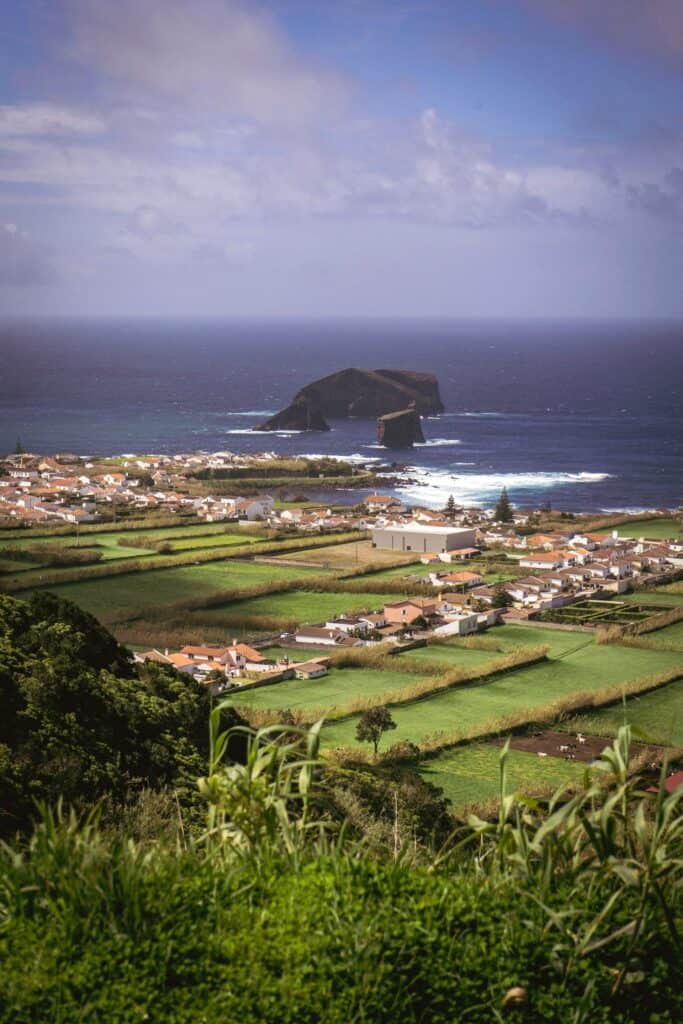
The natural pools of Mosteiros are also found at the island’s western tip, beside a small fishing village of the same name. Here, ancient lava flows created little rocky islets just offshore and basalt pools partly sheltered from the ocean swell.
On calm days, you can swim in clear water among dark rocks while the waves break farther out. At sunset, when the sun drops behind the small offshore islets, this becomes one of the most beautiful sunset spots in São Miguel. The nearby village, with its white houses and little fishing pier, completes the local atmosphere and gives the area a wonderfully remote feel.
The lava cave Gruta do Carvão
The cave is located on the outskirts of Ponta Delgada, on the city’s western side, and is one of the island’s most impressive lava caves. It forms part of a large lava tube created when hot lava flowed beneath the surface and cooled on the outside.
On the guided tour, visitors can see different layers of rock, formations resembling frozen lava stalactites, and unusual textures created as the volcanic material cooled. The cave lighting highlights the colors and shapes of the walls, while the explanations provided on-site help bring the island’s volcanic history and the processes that shaped it into focus.
Click here for more information and the cave’s opening hours…
The ghost hotel – Monte Palace | Ruínas do Monte Palace Hotel
The ruins of Monte Palace Hotel are one of São Miguel’s most intriguing sights. The hotel was built not far from Sete Cidades in the late 1980s as a luxury property intended to attract international tourism. It featured hundreds of rooms, panoramic balconies, and a large reception hall facing the dramatic crater views. But because of financial difficulties, regulatory burdens, and a tourism industry that was still far smaller at the time, the hotel closed shortly after opening and was left abandoned.
Over the decades, vegetation has swallowed much of it, and it has turned into a gloomy, graffiti-covered shell that draws photographers and travelers fascinated by abandoned places. Although official entry is forbidden, it remains a symbol of a tourism vision that arrived before its time, and a striking reminder of how much the island has changed in recent decades.
Aside from showing what happens to an abandoned structure in the heart of a rainy, forested region, the surrounding area also offers wonderful views over the lakes.
Click here to find accommodations on São Miguel…
Attractions around Vila Franca in the south
Peace Sanctuary and the iconic staircase leading up to it | Santuário de Nossa Senhora da Paz
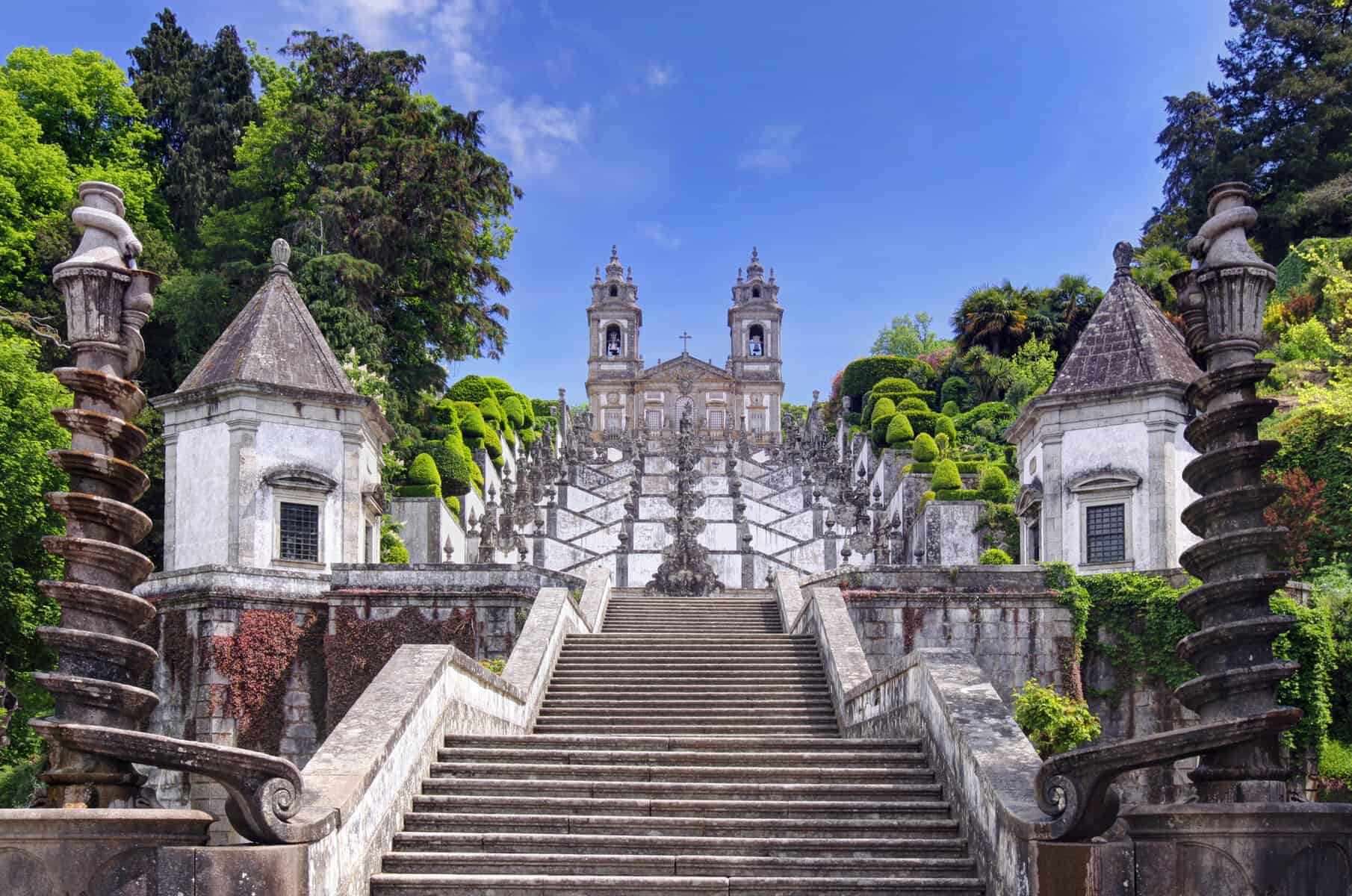
As at the famous site in Braga—Bom Jesus do Monte—here too in Vila Franca on the south side of São Miguel, a monumental staircase was built, turning the climb to the chapel at the top into a pilgrimage-like ascent. The Sanctuary of Nossa Senhora da Paz is an impressive religious site rising above the town.
A white staircase built in tiers leads up to the small chapel at the summit, decorated with blue azulejo tiles depicting scenes from the life of Mary. Local tradition says that a small Madonna statue was found here in the 16th century, leading to the construction of the first chapel, which became a place of prayer and hope in times of earthquakes and volcanic activity.
The site was restored in the 20th century, and the staircase was added to commemorate the symbol of peace and turn the sanctuary into a pilgrimage destination. From the top, there are sweeping views over the southern coast, the town below, and the islet just offshore—a combination of spirituality, history, and open scenery that feels deeply tied to São Miguel.
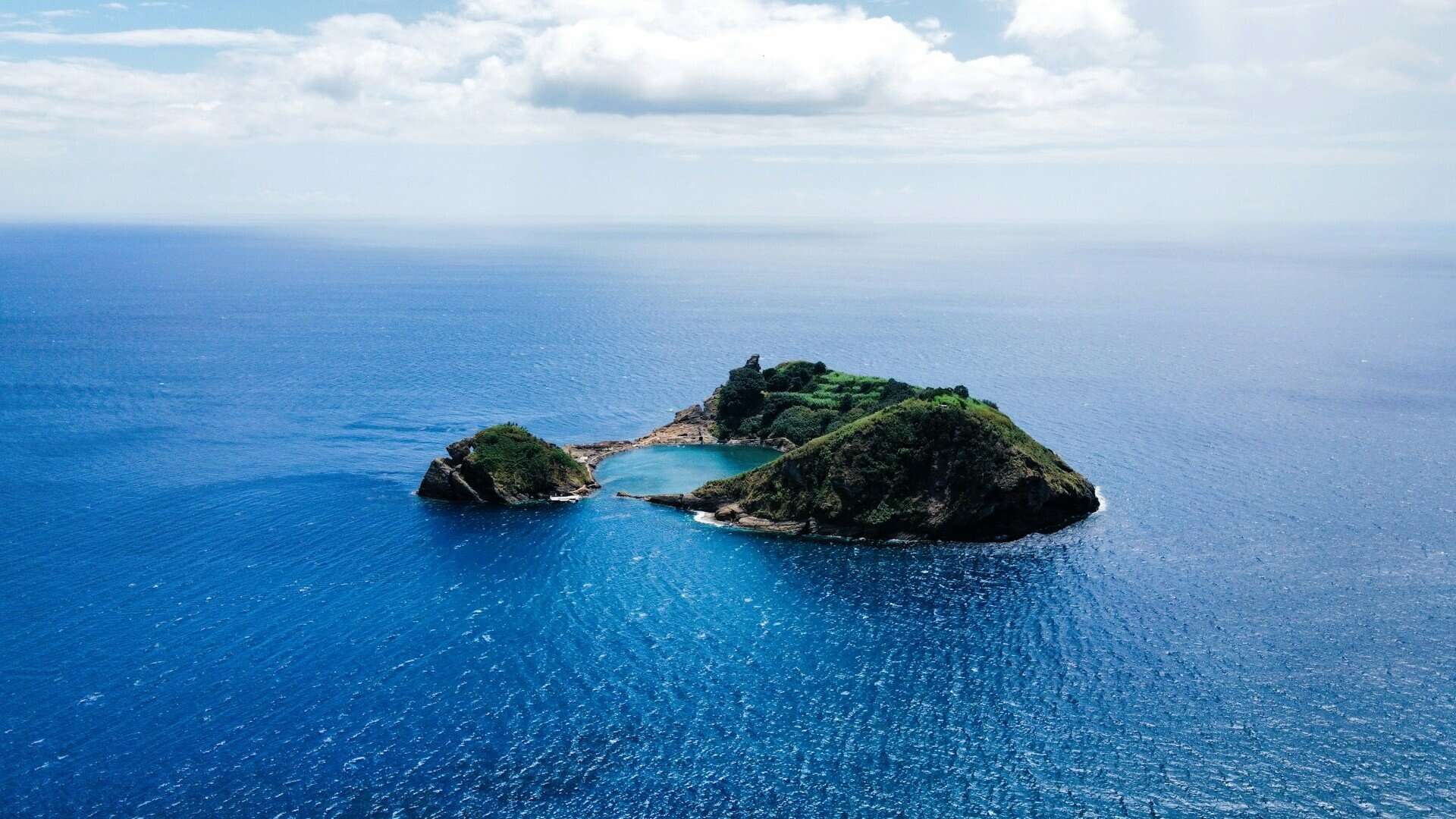
The small islet off Vila Franca | Ilhéu de Vila Franca do Campo
Off the town of Vila Franca do Campo sits a small ring-shaped volcanic islet. At the center of the ring is a natural lagoon protected from the waves, with calm, clear water that is especially suited to swimming and snorkeling.
The islet is a protected nature reserve, and access is regulated through seasonal boat services departing from the town harbor. Limits on visitor numbers help preserve the peaceful atmosphere and protect the marine environment. Looking back toward São Miguel from the islet gives you a completely different perspective on the island’s southern coastline, and time spent in the lagoon feels unlike a visit to an ordinary beach.
Click here for a boat trip to the small and unusual islet off Vila Franca…
The Ponta Garça lighthouse | Farol Ponta Garça
The Ponta Garça lighthouse stands on a high cliff along São Miguel’s southern coast, looking out over the open Atlantic. It is a relatively modern lighthouse and not heavily visited, which is a shame because many travelers pass it by. It was built in the mid-20th century as part of the lighthouse network designed to aid navigation in the region, and over the years it has become a quiet yet striking landmark in the south of the island.
The area around it is open and almost undeveloped, giving it a peaceful, authentic feel far from the more visited spots. The simple white structure rises above the ocean swells and offers a beautiful viewpoint, especially at sunrise, for travelers in search of nature, scenery, and a genuine sense of calm.
Attractions around Ribeira Grande in the north of the island
The town of Ribeira Grande | Ribeira Grande
Ribeira Grande is the second-largest city on São Miguel and is located on the island’s north coast. Its name comes from the wide stream that runs through it on the way to the sea. The town center features architecture typical of the Azores, with churches that have white façades and dark basalt detailing, small squares, and bridges crossing the stream.
Ribeira Grande is also considered an important hub for surfers, thanks to the nearby beaches, especially Santa Bárbara Beach. The city’s location in the middle of the north coast makes it a convenient starting point for trips to Fire Lake, Caldeira Velha, and the natural areas in the island’s interior, and the overall atmosphere blends easygoing town life with quick access to open landscapes.
Click here to search for accommodations in Ribeira Grande and the north of the island…
Santa Bárbara Beach | Praia de Santa Bárbara
Santa Bárbara Beach lies just west of Ribeira Grande and is considered one of the most impressive and best-known beaches on São Miguel. It is a long, wide beach of dark sand, with waves that make it ideal for surfing. Wooden walkways, seating areas, and a few places to eat and drink are scattered along the shore.
Its northern exposure to the full force of the ocean makes it a place where you can truly feel the power of the sea, while still enjoying good access and organized parking. For families (without swimming), surfers, and travelers who want to work a beach stop into their island trip, this is one of the most inviting natural settings on São Miguel. Ordinary swimming, however, is rarely possible because of the wind and the cold water.
Click here for a fun surf lesson at Santa Bárbara Beach…
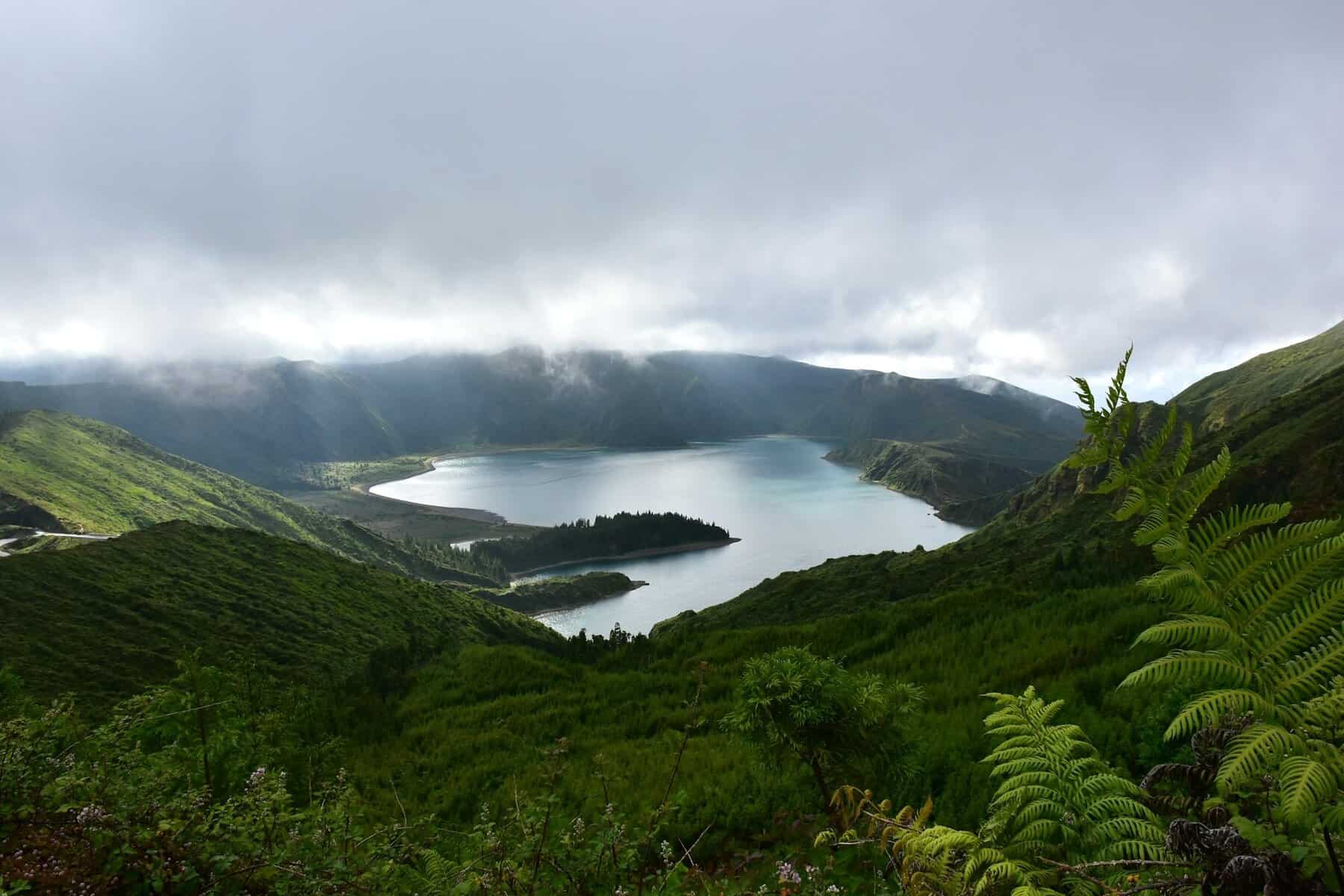
Fire Lake | Lagoa do Fogo
Fire Lake lies in the center of the island, at a relatively high elevation, inside a young volcanic crater formed quite recently in geological terms, in the year 1563 during an extremely powerful earthquake. The road leading up climbs from the main route between Ponta Delgada and Ribeira Grande and reaches a string of viewpoints looking down over the lake.
This is one of the sights most closely associated with São Miguel. The landscape here is wild and almost entirely uninhabited, emphasizing the rugged character of the island’s interior. On clear days, you can descend the trail from the ridge line to the lakeshore itself and experience the quiet, isolated space around it. Very often, clouds cover the crater and then suddenly part, revealing the lake in a deep blue—a dramatic effect that only heightens the sense of living, ever-changing nature.
Gorreana Tea Plantation | Plantações de Chá Gorreana
This is another of the landmarks most strongly identified with São Miguel.
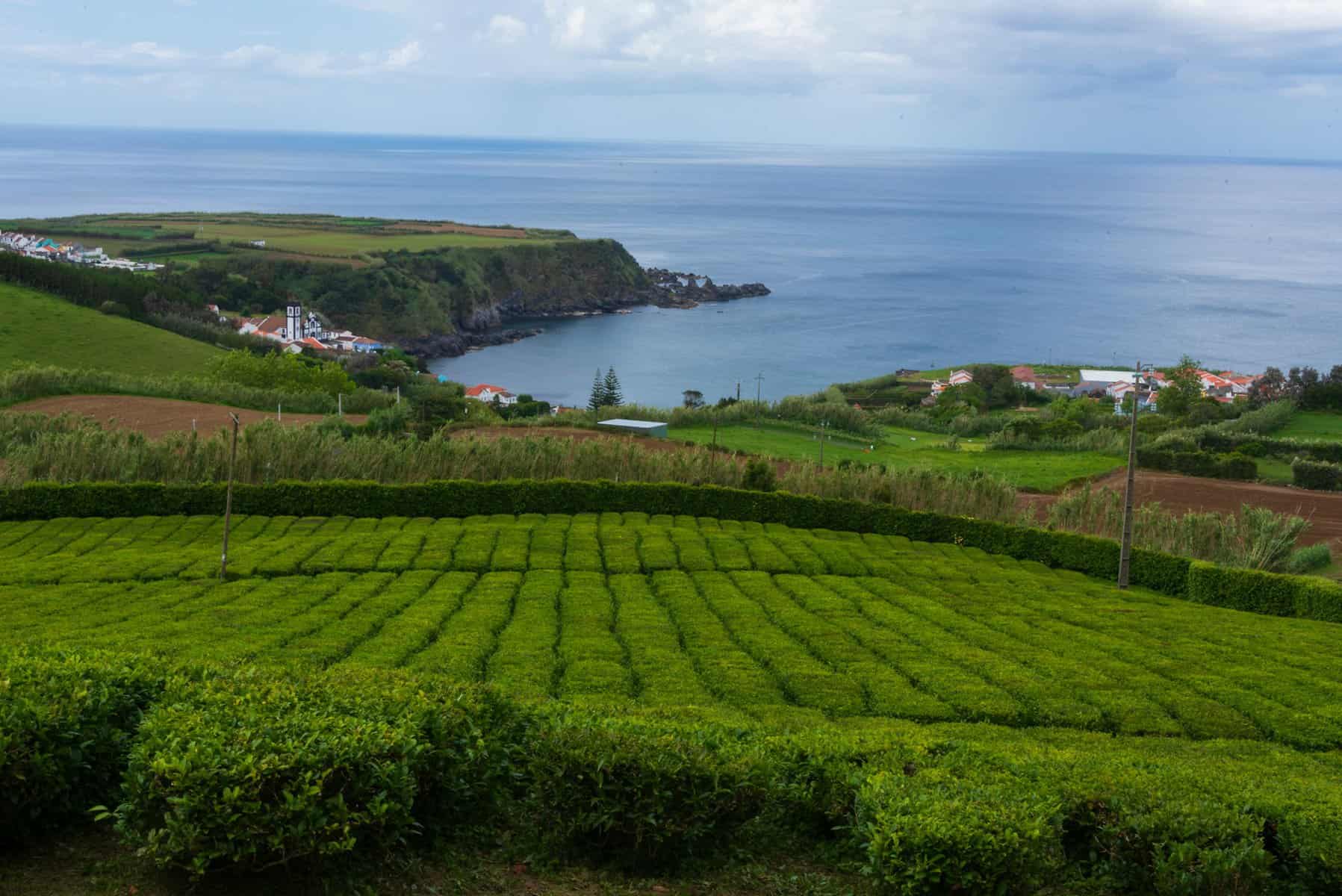
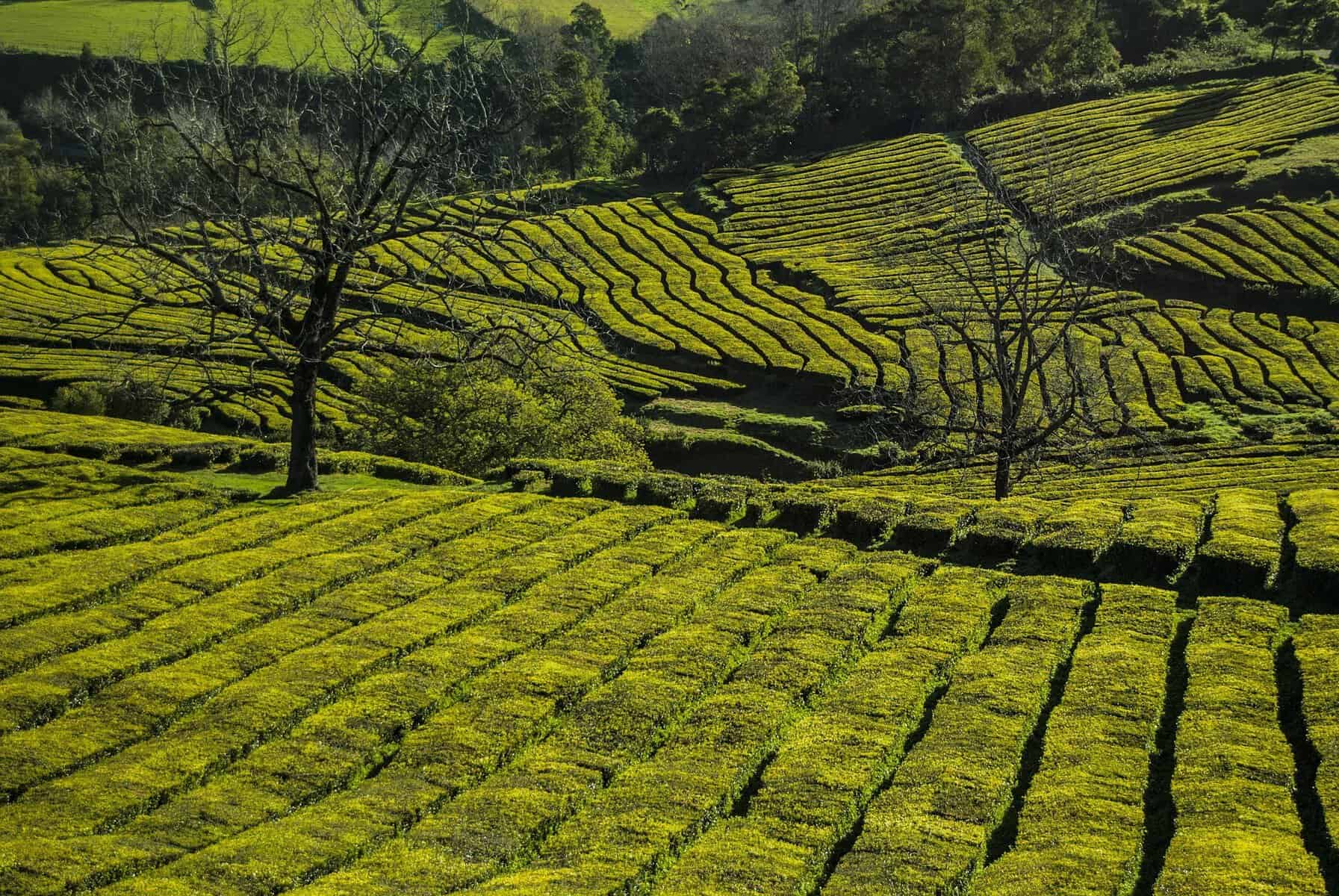
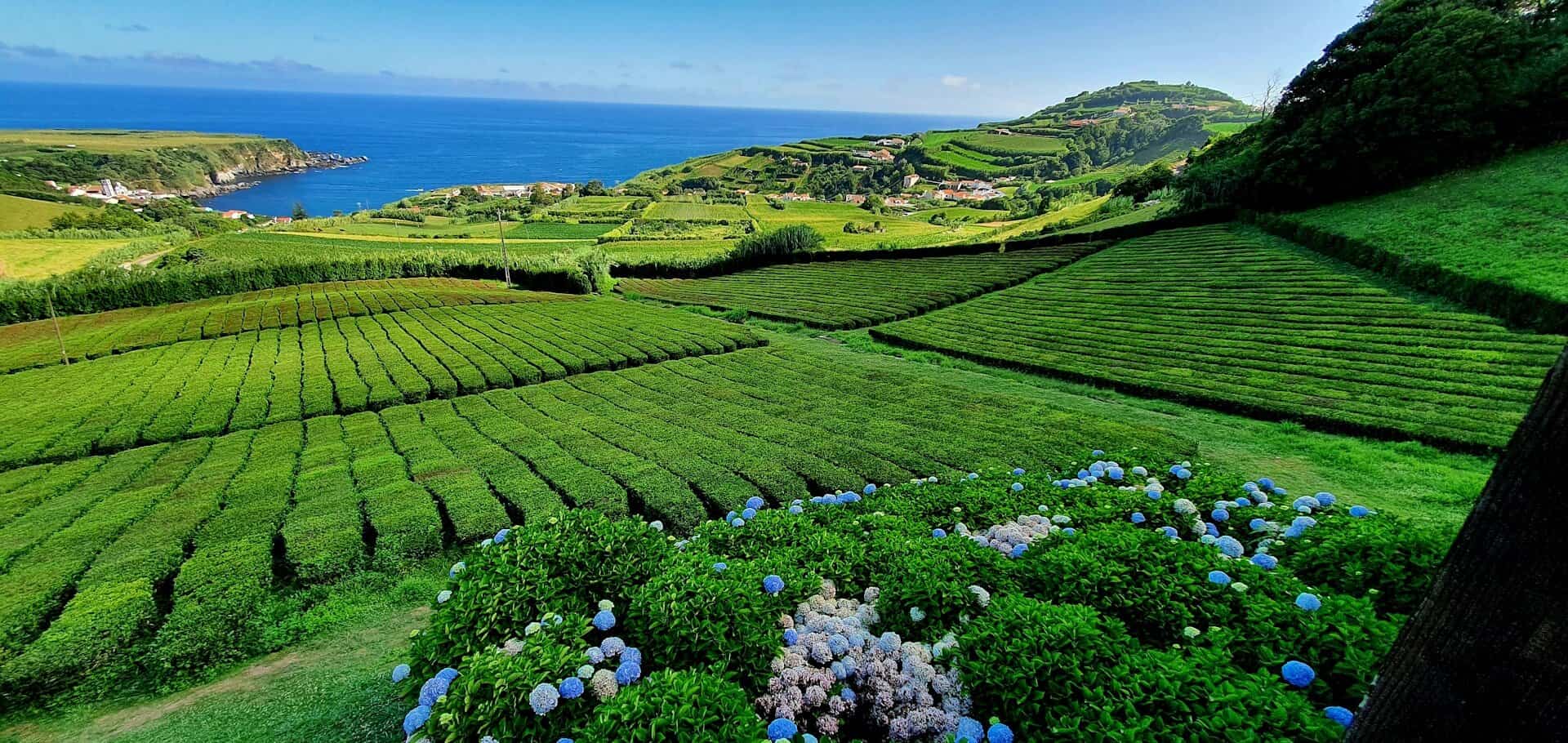
Gorreana Tea Plantation lies in the island’s northeast, on the road connecting Ribeira Grande and Nordeste, and it is considered the oldest tea plantation in Europe still in operation. The factory has been active here since 1883 and combines historic machinery with a modern tea-growing operation.
Visitors can wander freely around the factory area, watch the leaves being dried, and sample different teas. Marked walking paths run through the green rows of tea bushes and lead to viewpoints overlooking both the plantation and the northern coastline. The meeting of traditional agriculture with sea views and island scenery creates an experience that is hard to find elsewhere in Europe.
Click here for more information and the opening hours of Gorreana Tea Plantation…
Porto Formoso Tea Plantation | Chá Porto Formoso
The smaller Porto Formoso tea plantation is a short drive from Gorreana, also on the island’s north coast. It is a more intimate place, with a pleasant café, a terrace overlooking the sea, and guided tours explaining the history of tea growing in the Azores.
The main building blends a rural style with historic touches, and the atmosphere is especially calm. A visit here pairs beautifully with Gorreana for anyone who wants more and adds another perspective on the island’s agricultural traditions.
Click here to find accommodations on São Miguel…
Caldeira Velha reserve and pools
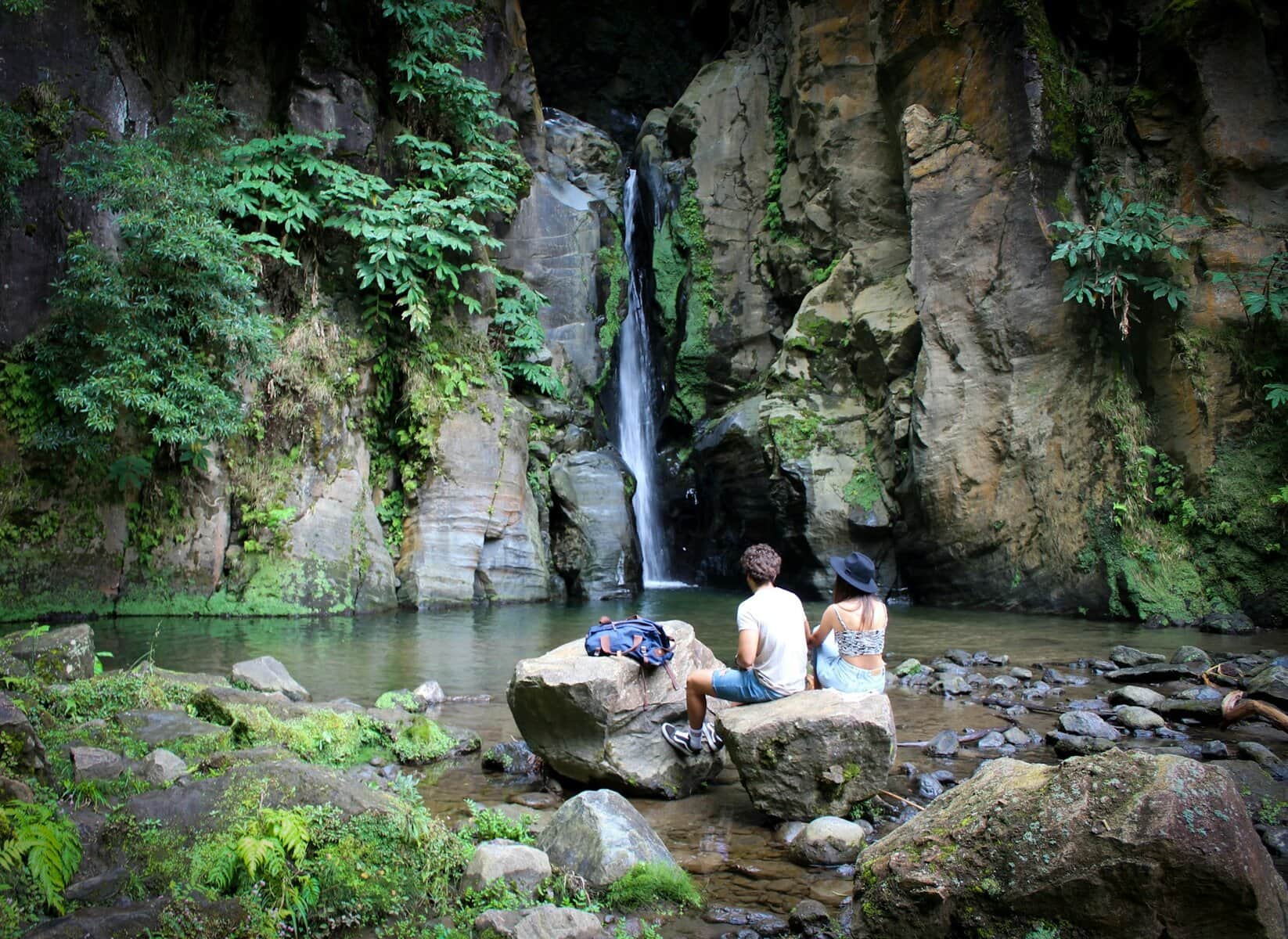
Caldeira Velha sits on the northern slope of the mountain where Fire Lake is found, about a 10-minute drive from Ribeira Grande. It is a small nature reserve with an almost tropical feel, full of dense vegetation, giant ferns, and tall conifers.
A system of wooden paths runs through the reserve, leading to several thermal pools and a small waterfall that spills into the main pool. The warm water comes from natural springs and carries minerals that tint it yellowish to brown. Bathing among the dark rocks and green forest heightens the sense of being in a hidden place deep in the island, and the intimacy of the pools creates a peaceful, relaxing experience.
This is a very popular place for families and for visitors in general.
Check out our list of 11 top-rated hotels on São Miguel Island…
Salto do Cabrito waterfall | Salto do Cabrito
Salto do Cabrito lies between Ponta Delgada and Ribeira Grande, not far from Caldeira Velha. Reaching the waterfall involves a relatively short route, often combined with a drive along a small road leading to a historic hydroelectric facility.
Along the path, you can still see parts of pipes and structures that once belonged to a water-powered electricity system. The waterfall itself drops into a small pool surrounded by trees and rocks, and the whole area feels like a pocket of nature close to town. It is an excellent destination for a few hours of walking in the spectacular natural landscapes of the island’s center.
Attractions in Furnas and the east
Furnas
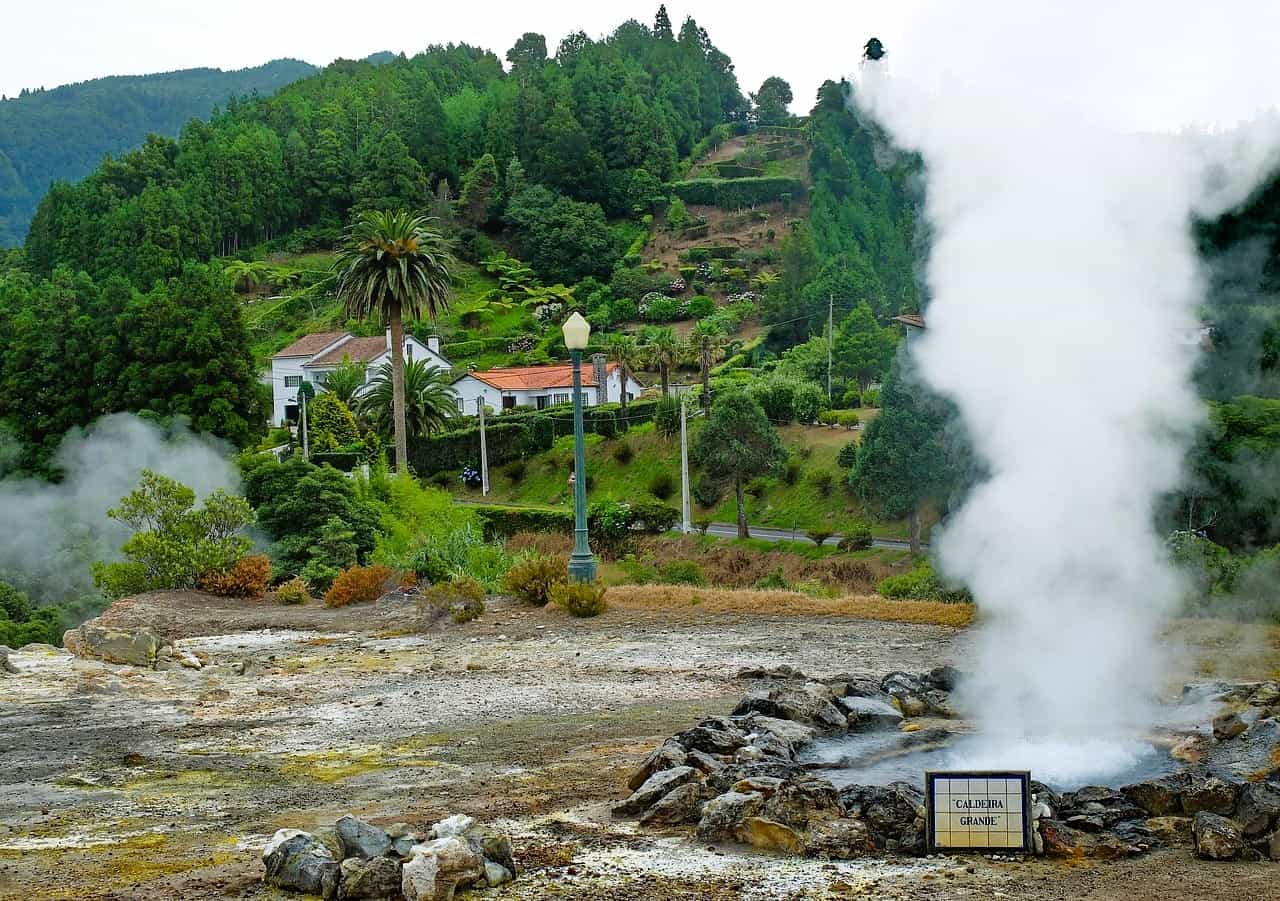
Furnas (pronounced Furnash) is in the eastern part of the island, about a 40-minute drive from Ponta Delgada, and it is one of the most geothermally active areas in the entire Azores. The town sits inside a broad crater with a lake, green slopes, a park of manicured gardens, and hot springs.
Along the streets of Furnas and around the edges of the village, signs of ongoing volcanic activity are everywhere: steam rising from the ground, boiling rocks, and earth bubbling in different spots. As early as the 17th century, Furnas was known as a natural spa center thanks to its mineral-rich waters and thermal springs, and later it also became a focus of scientific research into geothermal phenomena.
Click here to find accommodations in and around the hot springs town of Furnas…
Furnas springs | Caldeiras das Furnas
The Caldeiras area is located on the eastern edge of the town of Furnas and is the center of the local thermal activity. Here you can see geothermal vents releasing scalding steam, bubbling mud pools, and boiling water rising almost directly from the earth. You will also notice mineral deposits settling on the surface, creating vivid shades of yellow, orange, and brown.
Nearby is the traditional cooking area for Cozido das Furnas, where pots are buried in the hot ground and taken out after hours of natural cooking. The site is organized with walking paths and explanatory signs, making it easy to appreciate the volcanic power of the place in comfort and safety.
Terra Nostra Park
Terra Nostra Park lies in the heart of Furnas and is considered one of the most impressive botanical gardens in all of Portugal! In its early days, a holiday estate belonging to a Portuguese noble family was built here, and a large European-style garden was designed around it. Over time, many plant species from around the world were added, including tropical trees, striking ferns, and rare blooms, turning the garden into an impressive collection of global plant life. Wide walking paths run between lawns, little water channels, and islands of dense greenery.
At the center of the park is a large thermal pool in a deep orange hue. The pool is fed by iron-rich water at a comfortable bathing temperature. The color of the water creates an unusual sight, and the contrast between the carefully designed European garden and the natural hot spring gives the park a character all its own.
Bathing in the pools is included in the park admission price for those who want to swim.
Ribeira dos Caldeirões Park in the island’s northeast
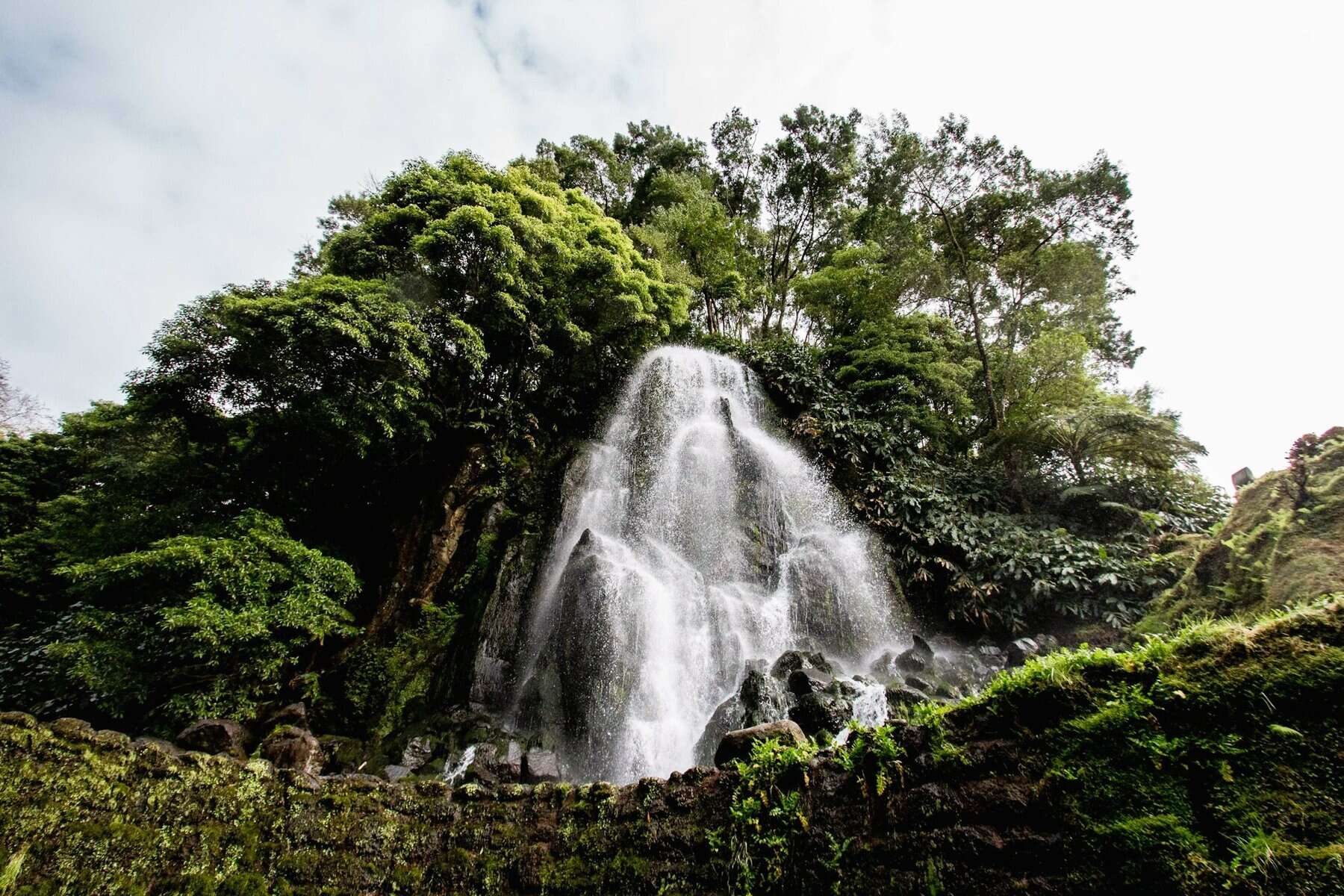
Ribeira dos Caldeirões Natural Park is one of the most beautiful and greenest areas on São Miguel. The park combines impressive waterfalls, old water channels, and flour mills that served local residents for centuries by harnessing the power of water.
Organized walking trails lead through green terraces, small bridges, and dense vegetation typical of the damp, mountainous northeast of the island. In the upper part of the park there is also a tall waterfall pouring into a natural pool surrounded by moss and trees, offering beautiful photo angles. It is one of those places where you can see up close the meeting of wild nature and old agricultural heritage, and it is a classic stop on the way to the Nordeste region and its famous coastal cliffs.
Click here to search for accommodations on São Miguel…
Salto do Prego waterfall
Salto do Prego waterfall is in the island’s southeast, near the town of Faial da Terra. A circular walking trail leads to it through a green, wooded valley lined with trees, streams, and small stone bridges. On the way, you pass the historic village of Sanguinho whose old buildings have been partially restored and preserve the memory of the rural community that once lived here.
At the end of the route, you reach a tall waterfall dropping into a natural pool surrounded by rocks and forest. This is one of the quieter corners of the island, well suited to travelers looking for a mix of hiking, lush nature, and traces of rural life from the past.
Check out our list of 11 top-rated hotels on São Miguel Island…
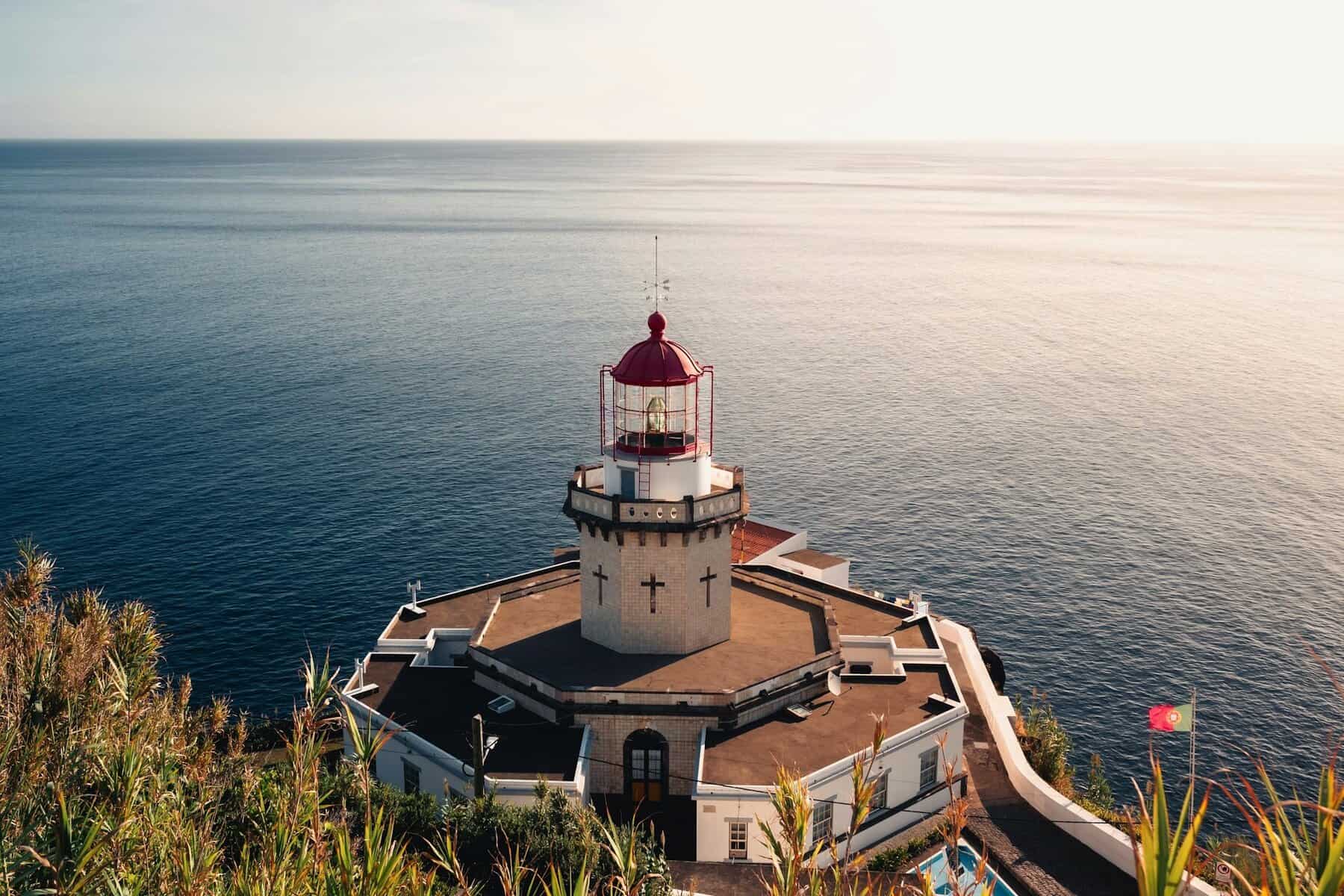
Ponta do Sossego viewpoint | Miradouro da Ponta do Sossego
This viewpoint is located in the eastern part of the island, on the coastal road between Nordeste and Furnas | Furnas. It is one of the most carefully landscaped viewpoints on São Miguel, with neat gardens, flower beds, grassy terraces, and several seating areas looking out over the ocean.
From here, you can see high cliffs plunging straight into the sea, small pockets of forest clinging to the slopes, and tiny coves that are difficult to reach by car. The scene mixes the green of the vegetation with the deep blue of the ocean, giving the place the feel of a peaceful edge-of-the-world escape far from the busier tourist areas.
Sunrise viewpoint | Miradouro da Ponta da Madrugada
The sunrise viewpoint sits at the island’s far eastern tip, north of Ponta do Sossego. Facing east over the ocean, it is considered one of the best places to watch sunrise on São Miguel.
Like the neighboring viewpoint, it has small gardens, trees, and wide terraces facing the sea. On a clear day, you can see the coastline winding north and south, along with layers of vegetation covering the slopes. The quiet setting and the relative distance from the larger towns create an especially calm atmosphere, perfect for a stop during the long drive around the island.
Events and festivals in São Miguel
Several events and festivals take place in São Miguel each year. If your visit happens to coincide with them, they are absolutely worth joining or at least watching. Since some of these festivals fall outside the main tourist season—that is, not between May and October—fewer visitors attend, even though they are deeply important to local communities. That is exactly why they are good to know about.
Senhor Santo Cristo dos Milagres
When: Late April or May (always on the fifth weekend after Easter)
This is the most important religious event in São Miguel and in the entire Azores, and at times it is even considered the largest in Portugal in terms of religious processions. For five days, Ponta Delgada fills with hundreds of thousands of visitors, residents, and worshippers who come for elaborate processions, prayers, decorated streets, and traditional parades.
The miraculous statue of Christ is carried through the city streets, accompanied by flowers, music, and displays of local artistry. It is a unique chance to see the island at its most festive, with a moving and distinctive atmosphere that brings together deep tradition and a warm, welcoming community.
Click here to search for accommodations in Ponta Delgada, the island’s capital and largest city…
Festival Tremor
When: Late March or early April
Festival Tremor is an international music event that in recent years has become one of the biggest cultural happenings in the Azores. For a full week, Ponta Delgada and different corners of the island host indie concerts, electronic music, art performances, intimate sessions in unusual venues, and surprise events in nature.
The festival is known for blurring the boundaries between stage, audience, and landscape. Performances take place in lava caves, nature reserves, and abandoned industrial buildings. It draws a young, creative crowd from the island and from across Europe, bringing a fresh energy to São Miguel’s cultural scene.
São João Festival | Festa de São João
When: June 23–24
The São João celebrations are part of Portuguese tradition, and on São Miguel they are marked on an especially impressive scale. Over two days, the island hosts live music, processions, street dancing, and traditional bonfires, especially in Ponta Delgada and in the settlements along the southern coast.
It is a joyful summer celebration that mixes old customs with local culture: street food, flower decorations, stalls, open-air performances, and lively nightlife. It is one of the island’s happiest events and is considered the official start of summer for the people of São Miguel.
It is worth noting that the biggest São João celebrations actually take place on the second-largest island in the Azores – Terceira, a festival that draws an enormous number of visitors. If you want to attend the Sanjoaninas celebrations in Terceira, book your accommodations as early as possible because demand is very high.
Click here to find accommodations on Terceira and in its beautiful capital, Angra…
Other islands that pair well with a visit to São Miguel and optional route ideas
Nearly every itinerary in the Azores begins on São Miguel. The island has the largest airport, with flights even from the United States, and from here there are connections to every other island. In broad terms, once you start in São Miguel, you can build almost any Azores itinerary you want.
We have prepared 3 of the most popular and easiest-to-plan routes in the Azores:
Itinerary 1 – The two largest islands: São Miguel + Terceira
Who it suits: Travelers looking for an easy blend of dramatic nature on the larger island of São Miguel with a historic city (Angra), culture, and local atmosphere on Terceira. This route works well for couples, families, and anyone wanting a varied trip without straying too far.
Suggested itinerary structure
Days 1–4: São Miguel
Sete Cidades, Fire Lake | Lagoa do Fogo, Furnas, Caldeira Velha, Ponta Delgada, Gorreana Tea Plantation.
Day 5:
A short domestic flight from São Miguel to Terceira | Terceira.
Days 5–7: Terceira
The beautiful city of Angra do Heroísmo – once the capital of the entire Azores, the lava cave Algar do Carvão, the volcanic area Furnas do Enxofre, Monte Brasil viewpoint, and villages and beaches around the island.
Day 8:
An easy return to your departure destination via São Miguel or an onward flight to mainland Portugal.
Click here to find accommodations in Ponta Delgada, the island’s capital and largest city…
Itinerary 2: São Miguel + Faial + Pico
Who it suits: Lovers of volcanic landscapes, nature walks, dramatic coastlines, and an Atlantic port atmosphere. This route combines the craters, hot waters, and valleys of São Miguel with Faial’s historic eruption zone and the highest mountain in Portugal on Pico.
Suggested itinerary structure
Days 1–4: São Miguel
Fire Lake | Lagoa do Fogo, Sete Cidades, Furnas, Caldeira Velha, natural pools in Mosteiros | Piscinas Naturais de Mosteiros, Santa Bárbara Beach.
Day 5:
A domestic flight from São Miguel to Faial
Days 5–6: Faial | Faial
The Capelinhos eruption site, Caldeira crater, Horta Marina, the waterfront promenade, and small villages around the island.
Day 7:
A short ferry from Faial | Faial to Pico, the island with Portugal’s highest volcano.
Days 7–9: Pico | Pico
Mount Pico for travelers interested in a challenging climb, Pico Vineyards among basalt terraces, lava caves, fishing villages, and viewpoints along the coast.
Day 10:
Return from Pico to Faial, and from there fly back to São Miguel or continue on to mainland Portugal.
Itinerary 3 – A journey to the westernmost islands: São Miguel + Flores + Corvo
Who it suits: Travelers in search of truly wild nature, waterfalls, green lakes, high cliffs, and an isolated atmosphere. This route is more demanding logistically, but the landscapes are among the rarest and most rewarding in Europe.
Suggested itinerary structure
Days 1–4: São Miguel
Sete Cidades, Fire Lake | Lagoa do Fogo, Furnas, Terra Nostra Park, Gorreana Tea Plantation, the lava cave Gruta do Carvão.
Day 5:
Flight from São Miguel to Flores usually with a connection in Faial.
Days 5–7: Flores
The Lagoas das Flores lakes, Ribeira do Ferreiro waterfalls, viewpoints over cliffs plunging into the ocean, small villages, and green valleys. The whole island feels like an isolated natural paradise in the middle of the ocean.
Day 8:
Boat or short flight from Flores to Corvo (45-minute ferry, or a flight of just over 5 minutes).
Days 8–9: Corvo
Visit Caldeirão crater, where several small lakes sit inside a wide volcanic bowl that looks as if it were lifted straight out of the movie Avatar. The island is tiny and extremely quiet, and staying here gives you a real sense of being at the edge of the world. Most visitors return the same day from Corvo, which is a very small island with few residents and limited lodging options. In practice, Corvo has just one main attraction worth coming for—the Caldeirão. Because of that, you can also return to Flores and shorten the trip by a day.
Day 10:
Return from Corvo to Flores, and from there fly back to São Miguel or continue on to mainland Portugal.