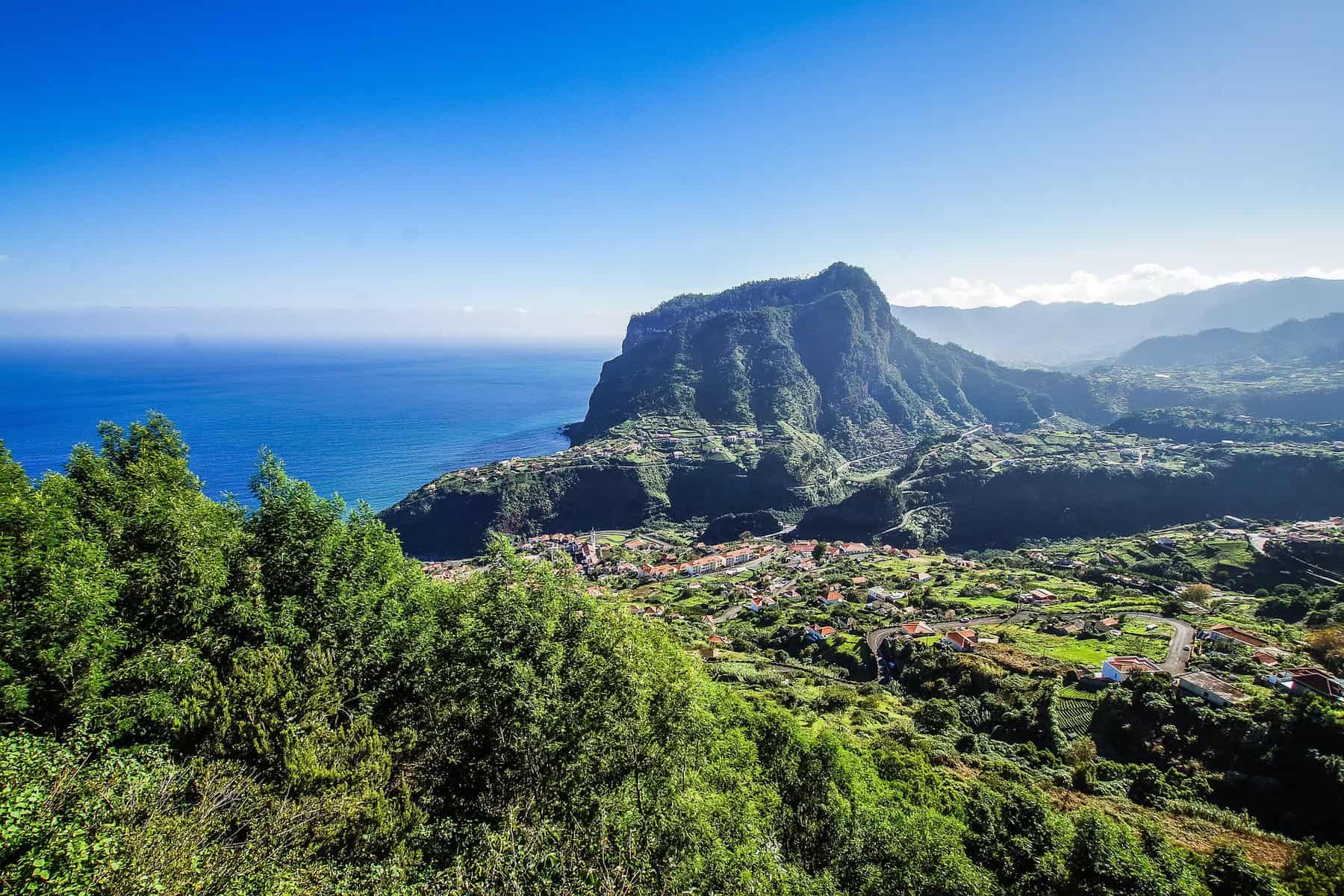
Madeira is a volcanic island in the Atlantic Ocean, with soaring peaks at its center and an almost tropical climate. It lies about 500 kilometers west of the coast of Morocco and roughly 1,000 kilometers from mainland Portugal. Madeira was, and still is, covered with remarkable forests that are remnants of the ancient woodlands that once spread across large parts of the Earth. That is also why the Portuguese sailors who arrived here in the 15th century called it Madeira — wood in Portuguese.
Its fertile soil, warm climate, and abundant water made the island ideal for tropical crops that do not grow in mainland Europe, such as sugar cane and bananas. Today, Madeira is an autonomous island region whose economy is based on tourism. Beyond the almost unreal landscapes found across the island and in its capital, Funchal, Madeira is also known for its excellent restaurants and upscale places to stay.
How many days should you spend in Madeira?
As a rule, four days is the minimum for a rewarding trip to Madeira, while more than a week is usually too much. Five or six days is enough to experience this unique island at its best. Madeira is always a final destination, so if you are making the trip, you will naturally want to see as much as possible. It is not a very large island, which makes that entirely doable in just a handful of days.
Click here to search for accommodations on the wonderful island of Madeira…
13 must-see places and experiences in Madeira
- Funchal, Madeira’s capital and its many attractions | Funchal
- Try the island’s traditional dishes or simply sample some of its unique tropical fruits
- Go whale watching from the town of Caniçal or from Funchal | Caniçal
- Pico do Arieiro above the clouds in the mountains of central Madeira | Pico do Arieiro
- Cascata dos Anjos — a Madeira-style car wash in the south of the island | Cascata dos Anjos
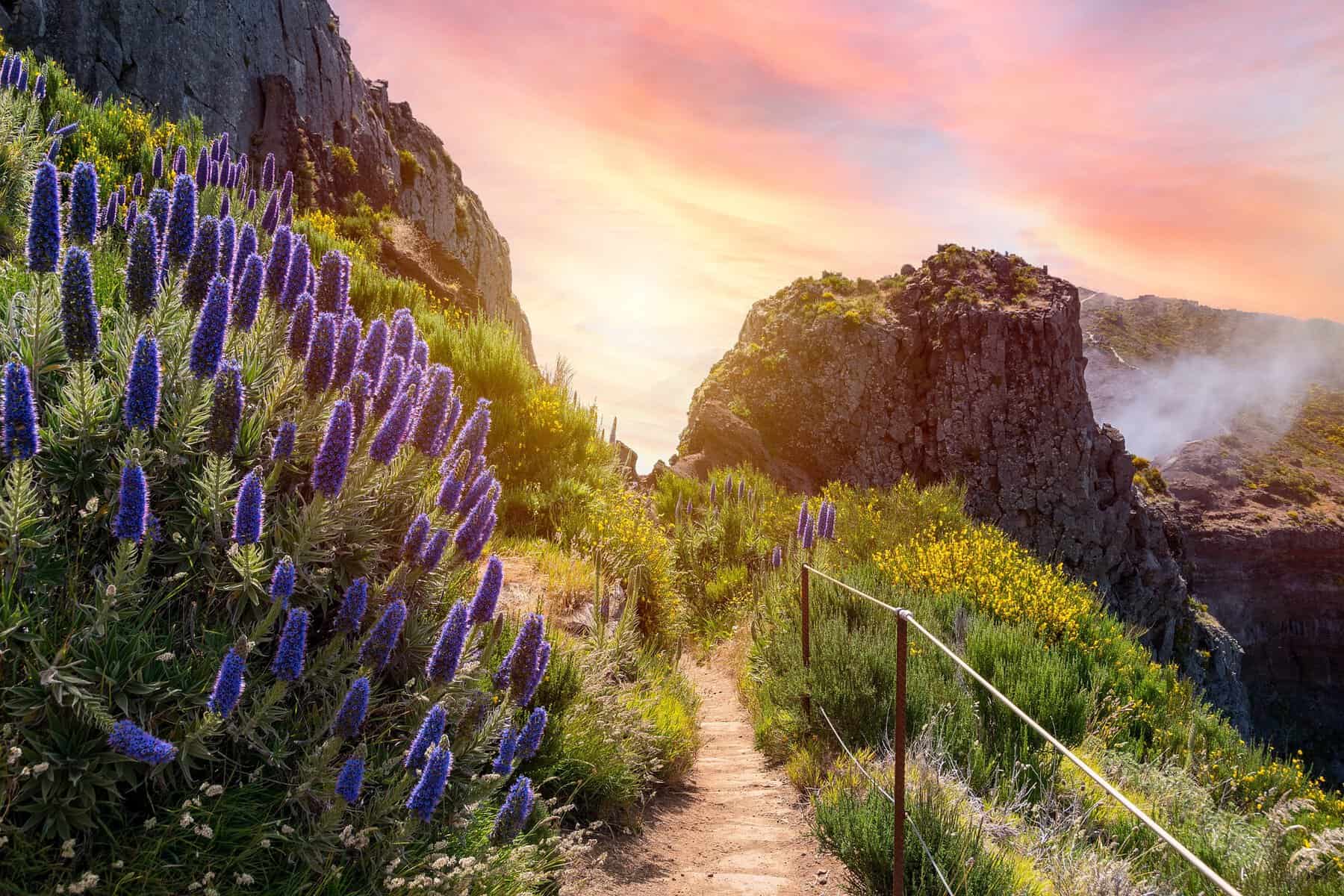
- Hike along the island’s water channels — Madeira’s levadas | Levadas
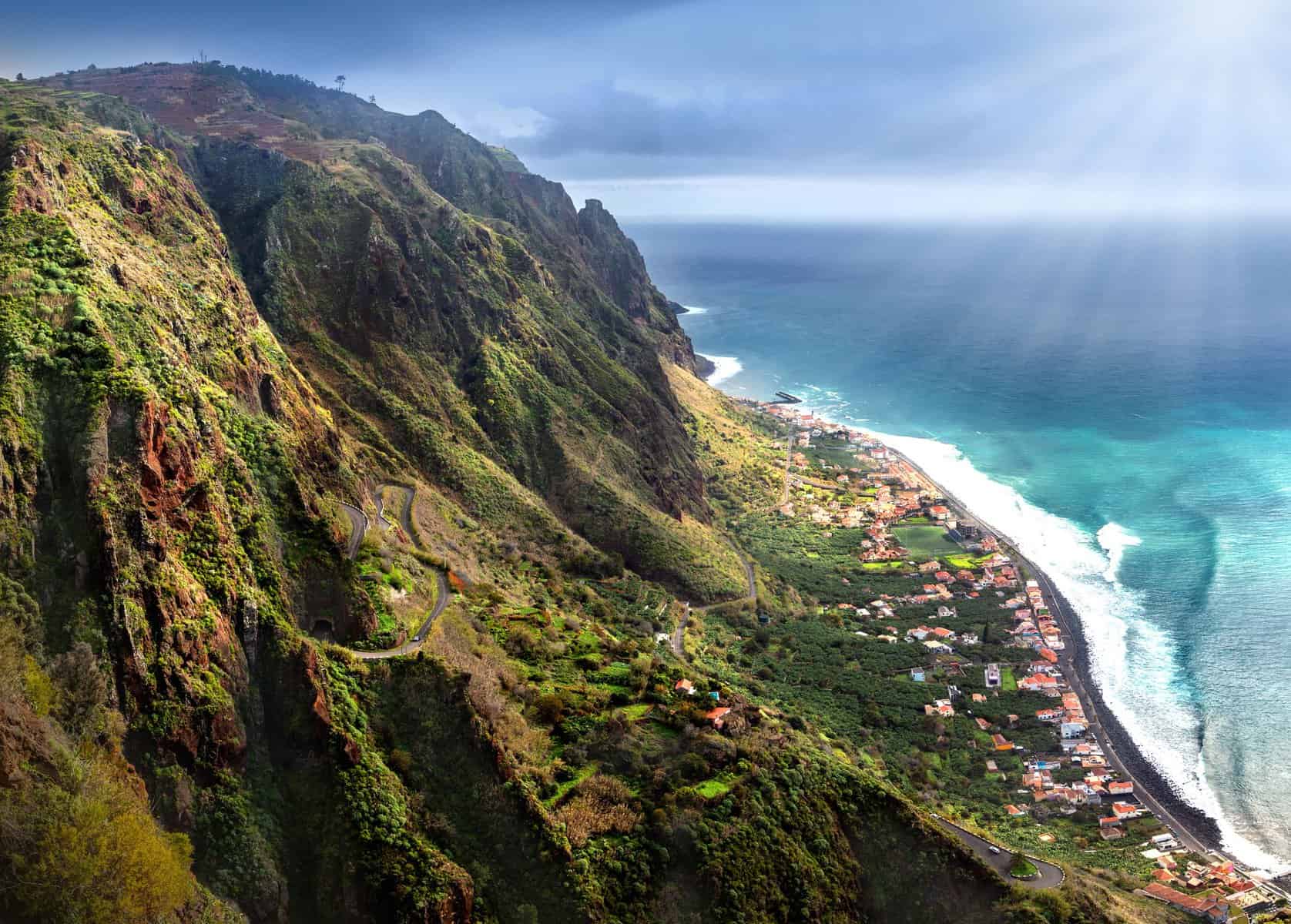
- The glass skywalk at Cabo Girão — the towering sea cliff not far from Funchal | Cabo Girão
- The triangular thatched-roof houses in the town of Santana in the north | Snatana
- The small chapel in the lush green mountains above São Vicente | Sao Vicente
- The town of Seixal and the viewpoint over the waterfall that drops into the sea in the green north | Seixal
- The natural sea pools of Porto Moniz on the western side of the island | Porto Moniz
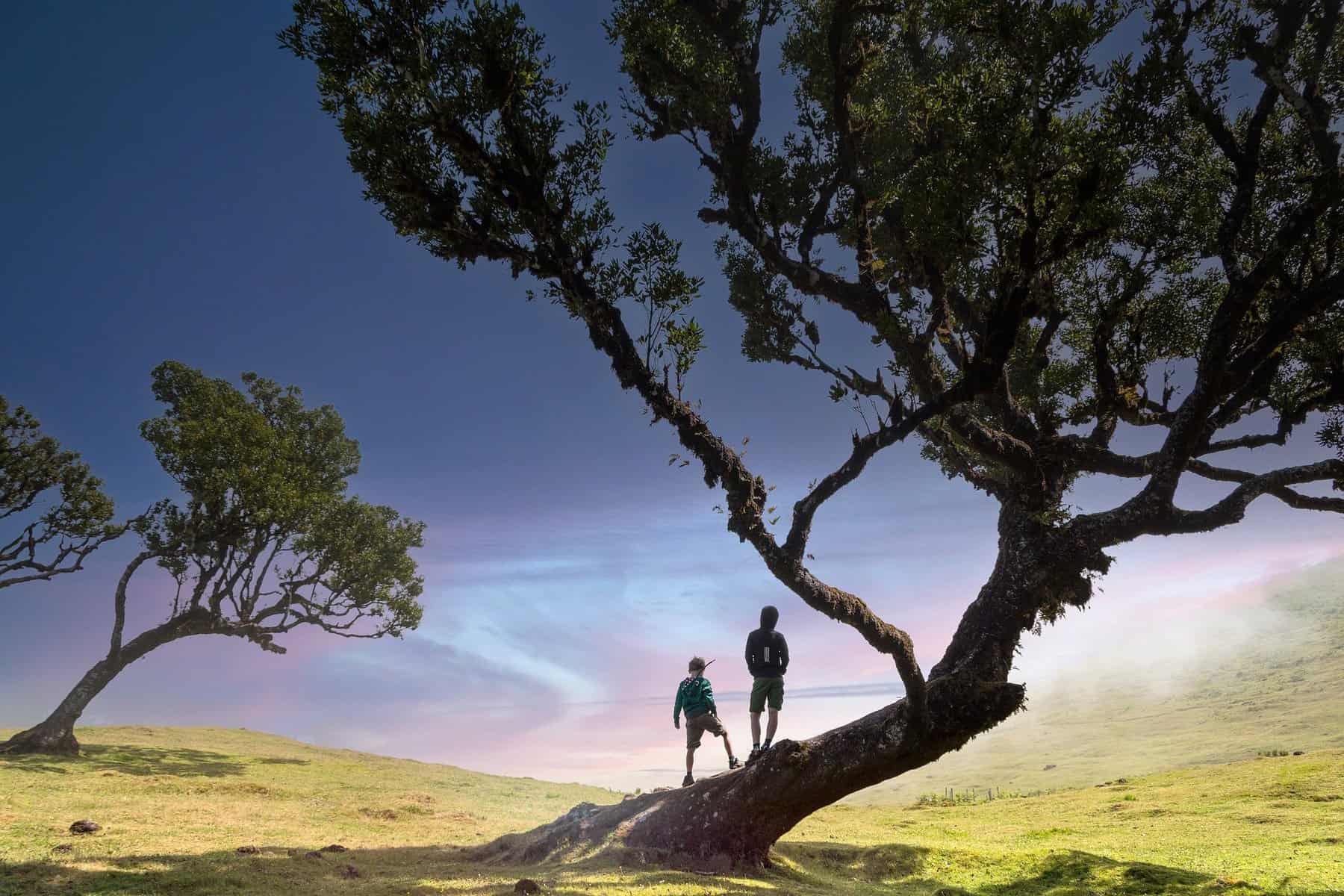
- A short walk through the ancient laurel forest of Fanal — especially on a misty morning, which adds to its mystery | Fanal
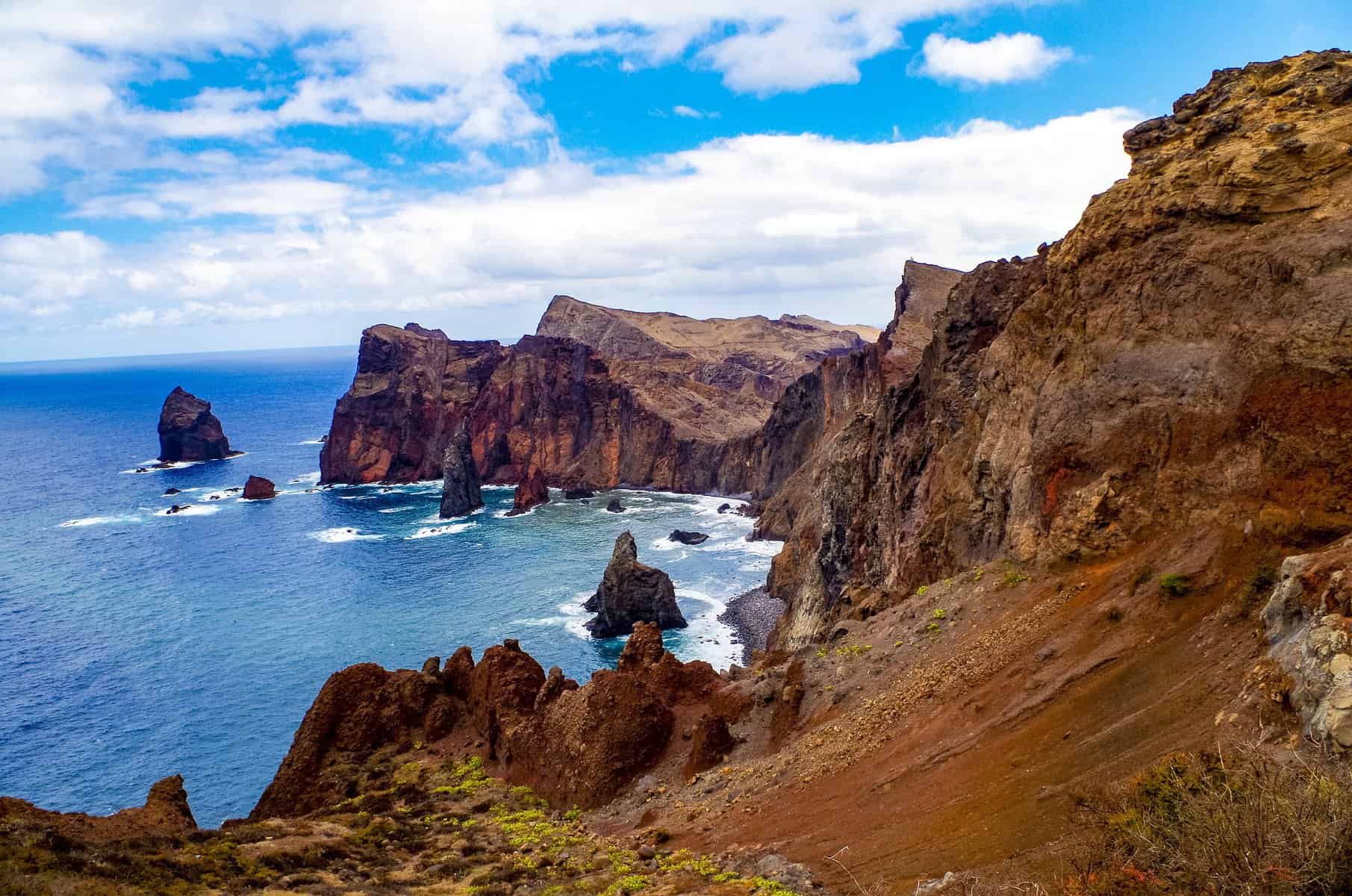
- The São Lourenço peninsula with its rocky cliffs in the east of the island | Ponta de São Lourenço
Click here for detailed information on Madeira’s sites and attractions…
Click here for a list of 12 excellent hotels in different parts of Madeira…
Map of Madeira
How do you get to Madeira?
Travelers reach Madeira in two ways: by air or on a cruise. The island has one airport, located near the capital, Funchal. Cruise ships dock conveniently at the pier directly opposite downtown Funchal.
Flights to Madeira
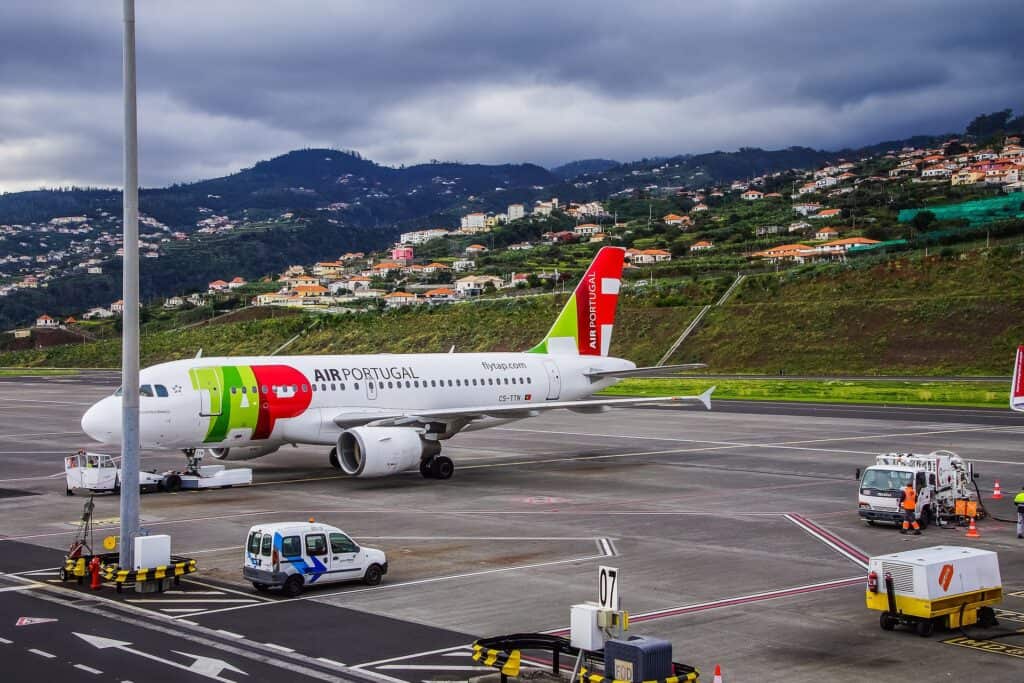
Cristiano Ronaldo Airport — yes, that Cristiano Ronaldo — is the island’s only airport (code: FNC). It is located in the suburb of Funchal known as Santa Cruz (Santa Cruz). The airport is about a 25-minute drive from central Funchal.
Most travelers are flying to Madeira via Lisbon (an hour and a half flight) or Porto (two hours flight), with several flights a day from both cities.
There are also direct flights, mainly on low-cost airlines, from cities in northern Europe — especially from England, whose residents are particularly fond of Portugal — as well as from cities in Germany, Madrid, Paris, and more.
Madeira’s airport has become an attraction in its own right because of its famously unusual landing approach. Strong winds and its location right by the water on a narrow strip beside the mountainside often force planes to descend at an angle until the very last moment, straightening only just before landing. On windy days when landings are still possible, aviation enthusiasts often watch the arrivals from the hills around the town of Santa Cruz.
Click here for a list of attractions in Funchal, Madeira’s capital…
Cruises to Madeira
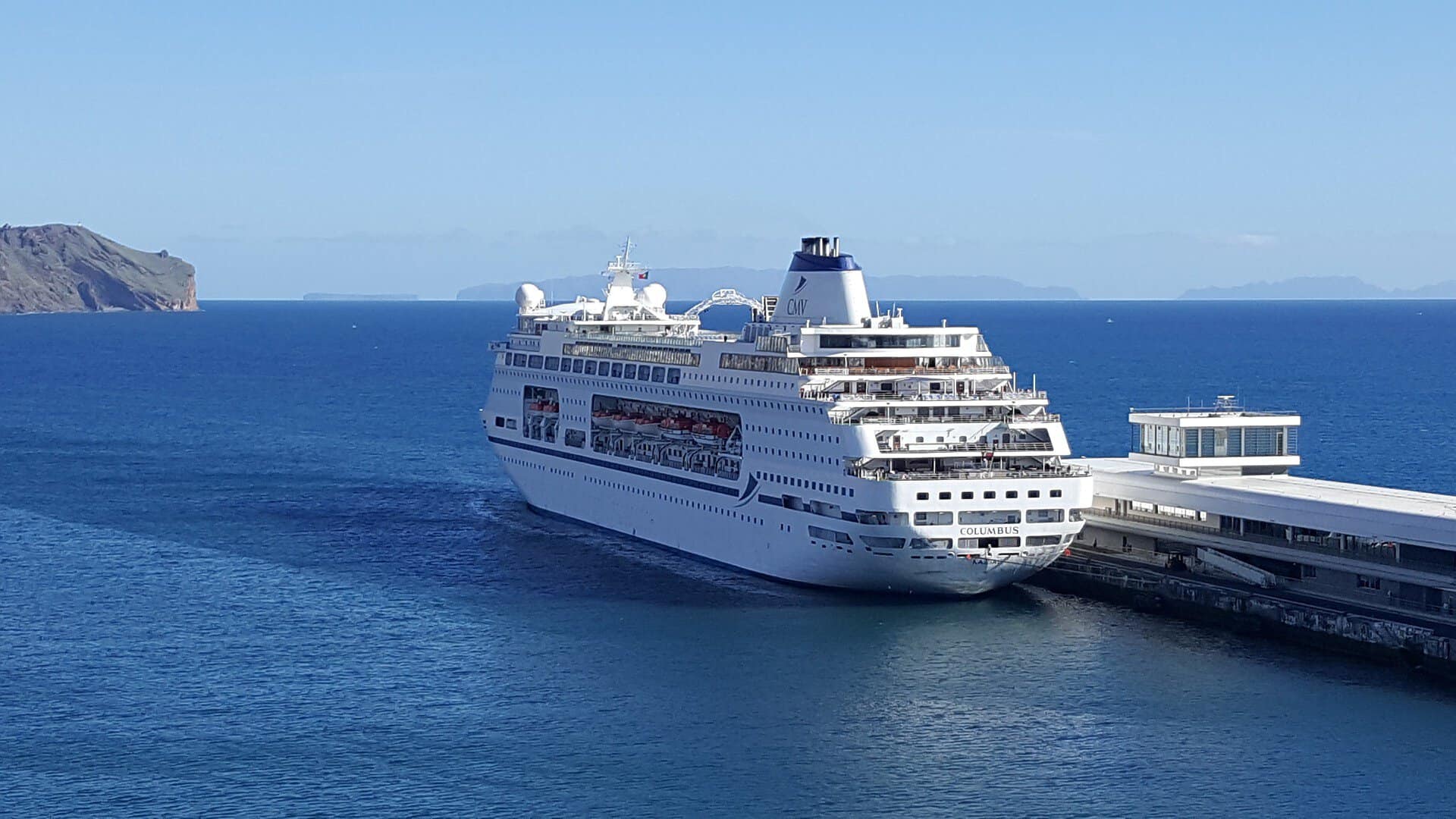
Madeira was once a regular stop for cargo ships traveling from America back to Europe and vice versa during the era of the Spanish and Portuguese empires. That tradition has returned over the past two decades, only now it is cruise ships that include Madeira on their itineraries.
Funchal has a naturally deep harbor thanks to Madeira’s unusual geological formation. As a result, cruise ships dock just a few dozen yards from the city center, giving visitors quick and easy access to Funchal and the island itself.
Madeira is usually included on transatlantic cruise routes to America, on cruises from England to the eastern Atlantic, and on cruises departing the Mediterranean for the coast of Spain via Gibraltar and then onward to Madeira. That is why there is hardly a day of the year when at least one cruise ship does not arrive in Madeira.
Click here to search for hotels and vacation apartments in Funchal, Madeira’s capital…
How do you get around Madeira?
Any trip to Madeira will begin in the capital, Funchal, which serves as the island’s gateway by air and sea. From there, visitors continue on to the island’s main sights and breathtaking landscapes. Most roads in Madeira are narrow and winding, but driving is generally easy and relaxed, much like the island itself. To experience Madeira at its best, it is worth adding a short walk to a waterfall or viewpoint that cannot be reached directly by road. So when packing for Madeira, bring comfortable shoes and clothes suited for light outdoor walks.
Rental car in Madeira
The easiest and best way to explore the island is by rental car. Madeira is not large, but its main sights and varied scenery are spread across a broad area between the mountains and the coast. A car is the only way to comfortably see most of them on a trip of just a few days. Yes, the roads are narrow and it can rain at times, but most drivers are tourists like you, moving at a fairly slow pace to enjoy the views, so driving is usually quite manageable.
Car rentals in Madeira are almost always arranged either at the airport or in Funchal itself, where there are several convenient options near the western hotel zone.
Click here for deals and information on car rentals in Madeira…
Public transportation in Madeira
There are bus routes between Madeira’s towns, especially in the more populated south and east. The problem is that there are far fewer public transportation options to the main tourist sites, so it is not a very practical way to tour the island. For those who prefer not to drive, day trips are available.
Day trips
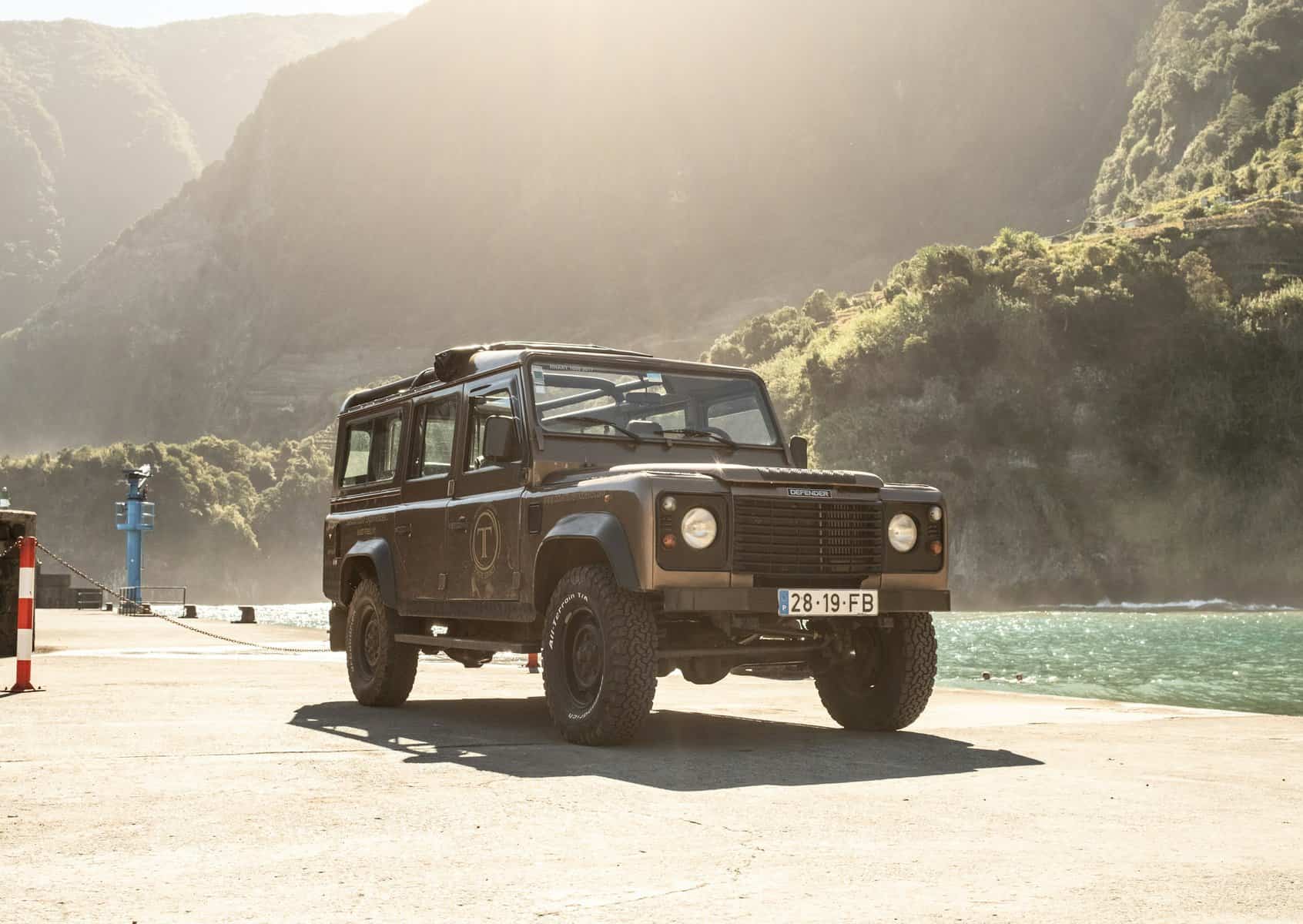
Most full-day and half-day tours depart from Funchal, Madeira’s main and wonderful city. From Funchal, you can find day trips to nearly all of the island’s major attractions. In addition, smaller towns offer 4X4 tours that reach places inaccessible by rental car.
Click here for more information on attractions in Madeira…
Where to stay in Madeira?
Staying in Madeira, like most trips to the island, almost always begins in and around Funchal. The city offers a wide range of accommodations: urban boutique hotels in the center, resorts mostly west of downtown, apartment hotels, and vacation rentals, often perched on the hillsides above the city.
In the smaller towns and villages around the island, there are plenty of small hotels, some tucked among vineyards, some overlooking the scenery and the ocean, all with a wonderfully peaceful atmosphere.
Hotels outside Funchal and its suburbs are usually made up of clusters of cabins or cottage-style units with a shared common area, or a large rustic two-story building with rooms upstairs and public spaces below. Many rural hotels also have a small pool, since Madeira enjoys pleasant weather for most of the year and Europeans flock here to escape the cold.
Click here for our full guide on accommodation in Madeira…
Click here to search for accommodations on the wonderful island of Madeira…
Click here for a list of 12 hotels with breathtaking views in Madeira…
Itineraries in Madeira
Every trip to Madeira starts and ends in Funchal, the capital on the south side of the island. Funchal is the island’s largest urban center, and it is from there and its suburbs that flights, ferries, and cruise ships depart back to the mainland.
In terms of sightseeing areas, Madeira is divided more or less into north and south. The mountainous center of the island is barely inhabited, and while access is easier from the Funchal side, it is also possible from the north.
As mentioned, the most comfortable way to tour Madeira is by rental car. The island is not large, and any point on it can be reached with a relatively short drive.
A hub-style trip in Madeira means staying in the Funchal area and heading out to a different part of the island each day. That is an excellent option for exploring the entire southern coastline and the eastern part of the island. Only the far northwest involves a slightly longer drive, and even that is no more than about an hour and a half each way.
A trip to the north can certainly be done as a day trip from Funchal and back. Still, many people prefer to spend one or two nights in the north to explore the area more deeply, especially those planning hikes or jeep tours who would rather not drive back to Funchal after an exhausting day.
Anyone continuing on to Porto Santo will usually want to stay at least two or three nights, if not longer, on the small island. That is because the main attraction of Porto Santo is a beach vacation on its sandy shore. A day trip to Porto Santo is possible, but if that is the plan, it is better to fly, since the ferry takes two and a half hours each way, while the flight is only about 20 minutes in each direction. It is highly recommended to book tickets in advance, especially in summer, since they are not particularly cheap to begin with.
Click here for information about traveling in Madeira with kids…
Click here for a list of 12 indulgent hotels in Madeira…
Good to know about Madeira
When we think of an island — especially one with an almost tropical climate — we tend to picture beaches and swimming in the sea. Madeira offers a very different experience. The island has very few beaches, and certainly not many sandy ones. Its geological formation simply does not allow for them. That is also what makes Madeira so distinctive, with landscapes that often seem almost impossible.
Madeira was a forested, uninhabited island until the explorers Zarco and Teixeira were blown ashore here in 1418 while sailing toward the western coast of Africa. They immediately named it Madeira — wood in Portuguese — because of the dense forests they found. In fact, Madeira was the first place discovered during the Age of Discovery, 74 years before Columbus reached America.
The island’s abundant water, fertile land, fish, and natural resources made it highly attractive to settlers from mainland Portugal. Many became very wealthy, mainly because Madeira could grow crops suited to tropical weather, such as sugar cane, which cannot grow elsewhere in Europe.
During the Age of Discovery, Madeira like the Azores became a stop on the route to America and other colonies around the world. Today it is especially popular on cruise itineraries departing from different parts of Europe.
From then until now, Madeira has remained an integral part of Portugal, and the overwhelming majority of its residents are of Portuguese origin. It is therefore also an integral part of the European Union, and its currency is the euro.
Administratively, Madeira is an autonomous region of Portugal, much like the not-so-distant Azores. That status allowed it to become a small financial center with more favorable tax laws. Today, however, in the age of low-cost flights and cruises, its economy is firmly tourism-based, and its accommodations are generally excellent.
Madeira lies about 1,000 kilometers from Lisbon and is about a 90-minute flight away, though in practice it is even closer to the coast of Morocco — just 520 kilometers away. This isolated island in the Atlantic enjoys stable, pleasant weather year-round, with drier summers and most of its rainfall falling in winter.
Madeira is the largest island in the archipelago of the same name, which also includes one other inhabited island — Porto Santo (better known for its sandy beach).
The Madeira archipelago includes four island groups in total. The uninhabited ones are the Desertas Islands (Ilhas Desertas), located about 30 kilometers from Madeira, and the Savage Islands (lhas Selvagens), around 250 kilometers south of Madeira. The Savage Islands are actually closer to the Canary Islands than to Madeira, but municipally they belong to Madeira. As noted, they are uninhabited and have been declared a nature reserve.
The food on the island is a little different from what you find in mainland Portugal, and of course there is an abundance of tropical fruit. Madeira — and especially its lively capital, Funchal — is also known for exclusive restaurants and bars with excellent service.
This green and unusual island attracts visitors mainly from Europe. They come for the wonderful year-round weather, the warm and welcoming people, the excellent places to stay, and landscapes that feel almost primordial.
Click here to find accommodations in wonderful Funchal…
Click here for a list of 12 excellent hotels in Madeira…
What to do in Madeira with kids?
Madeira once had the image of being an island for adults only — retirees or couples wanting to disconnect from the pressures of the mainland and relax by the ocean. That sense of peace and calm is certainly found in abundance here, along with plenty of hotels and great places to stay. Still, that does not mean children cannot enjoy it too. In fact, over the past few decades the island has increasingly geared itself toward traveling families, with more emphasis on attractions for kids as well.
Part of what makes Madeira so appealing is simply how varied the island is. Around almost every bend in the road, the scenery changes — mountains, waterfalls, crashing waves, dense forests, or cliffs dropping sharply into the sea — and for children, that alone can feel like an attraction.
Alongside all of that, the urban experience of the capital, Funchal, with its many attractions is also well suited to children. Funchal has colorful streets, a lovely promenade, and in every corner of the city center you will find restaurants, cafés, and ice cream shops.
For teenagers who love nature and hiking, the island’s levada trails can be unforgettable.
Click here to search for accommodations on the wonderful island of Madeira…
So, here are eleven attractions in Madeira for kids — though certainly not just for them:
- The cable car in Funchal and the ride back down in traditional wicker toboggans | Teleférico Funchal-Monte
- A sail on the Columbus ship or a catamaran from Funchal, where you will almost always spot dolphins | Santa Maria de Colombo
- The Cristiano Ronaldo Museum in Funchal — ideal for kids who love soccer | Museu CR7
- The water park near the airport | Aquaparque Madeira
- A whale-watching cruise from Funchal or Caniçal, which also has a whale museum | Caniçal – Museu da Baleia da Madeira
- The theme park and the triangular thatched-roof houses in Santana | Casas Típicas de Santana
- The sea pools and aquarium in Porto Moniz on the west side of the island | Piscinas Naturais de Porto Moniz
- The high cliff at Cabo Girão and its glass skywalk | Cabo Girão Skywalk
- Wash the car beneath Cascata dos Anjos | Cascata dos Anjos
- A short walk in the ancient Fanal forest | Fanal with the distinctive trees that gave the island its name — ideally with some mist to add to the mystery of the place
- A walk along the island’s water channels — shorter routes such as Ribeiro Frio | Ribeiro Frio are well suited to children. For nature-loving teenagers, almost any trail will be wonderful.
Click here for more information about traveling in Madeira with kids…
Food in Madeira
Madeiran food is rooted in mainland Portuguese cuisine, but here it comes with a tropical twist that gives it a character all its own. The food in Madeira is based mainly on fish and tropical fruits grown on the island. In keeping with island tradition, the local alcohol is a bit stronger than on the mainland, and in Madeira no meal feels complete without a glass of Madeira wine or ponche, the local cocktail.
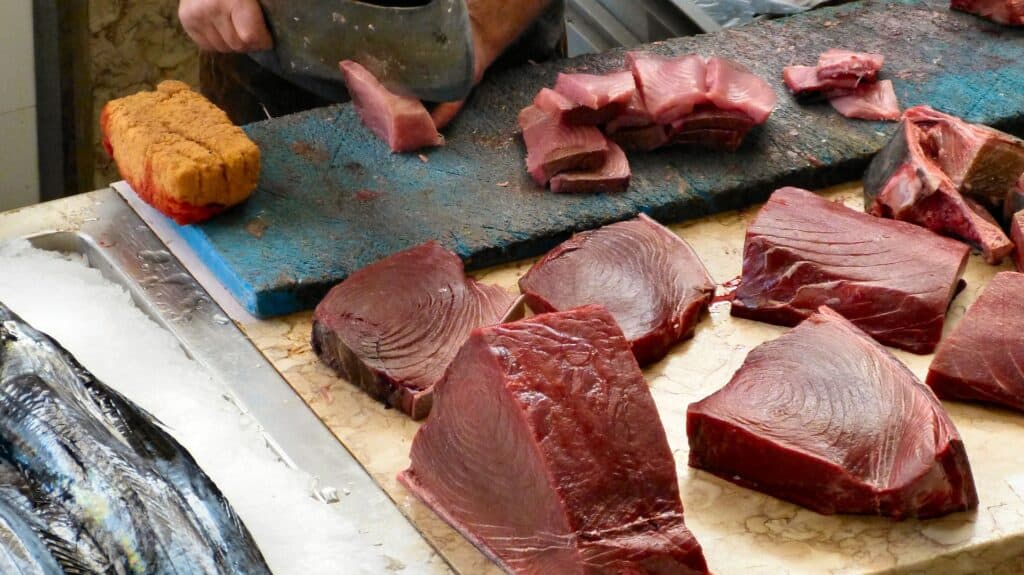
Tuna steak | Bife de Atum
Real wild tuna — now increasingly hard to find in regular markets across the West — still swims in large schools in the deep waters around Madeira. So if you love tuna and miss the flavor it used to have, you will find exactly what you are looking for here. Bluefin tuna, with its striking deep red flesh, is usually served as a steak in the island’s many restaurants. It typically comes with potatoes or fried cornmeal cubes (Milho Frito), a classic Portuguese side dish.
At Madeira’s sushi restaurants, you can also enjoy the tuna raw.
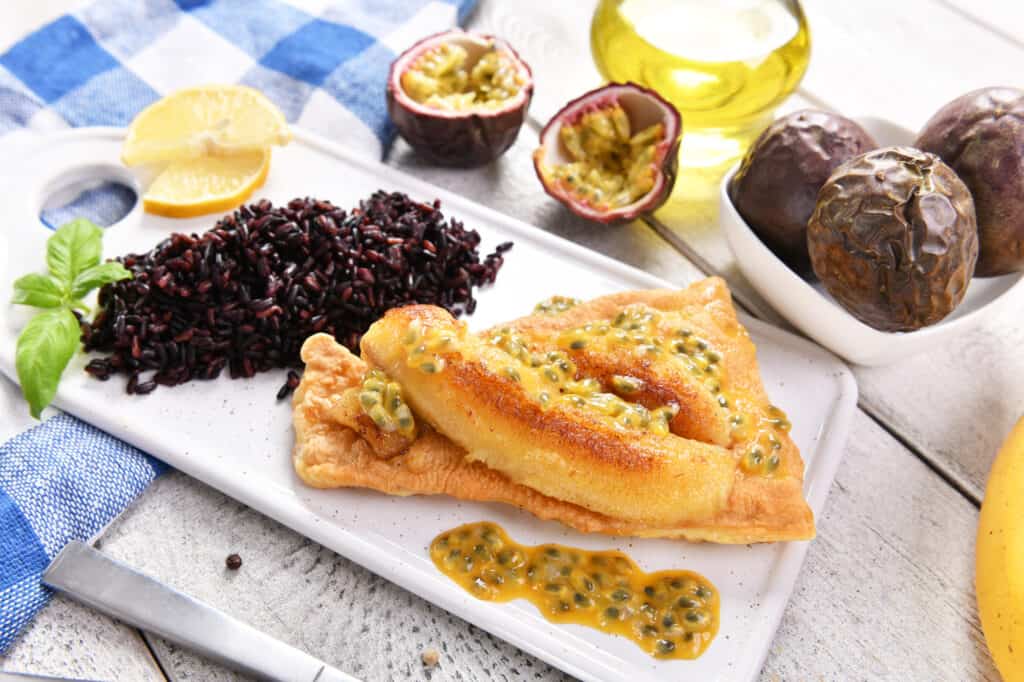
Espada com banana — fish with banana | Espada com banana
This is Madeira’s most iconic dish!
It is made with espada, a fish from the cutlassfish family that lives in the deep waters around the island. The fish is served with a small fried banana — another crop typical of the island — and often with a passion fruit-based sauce.
As unusual as the combination sounds, it is excellent and surprisingly delicious.
For hundreds of years, fishermen from the town of Câmara de Lobos, about ten minutes west of Funchal, have headed out every night to catch espada from the depths of the sea. By morning, you can already see the fish laid out on ice at the famous market stalls in central Funchal.
Espetada (skewer) | Espetada
Espetada is Madeira’s signature skewer. It is served also in the Azores Islands and elsewhere in Portugal as well, but in Madeira they take special pride in the version grilled over charcoal made from laurel wood, which gives it a distinctive aroma.
In Madeira, espetada is made with beef.
Ponche | Ponche
This is the island’s popular everyday alcoholic drink. It is relatively inexpensive and served almost everywhere.
The alcoholic base is a kind of rum made from local sugar cane, and it is quite strong (Aguardente). There are several common types of ponche on the island:
The original was the drink traditionally made by fishermen in the small harbor of Câmara de Lobos, not far from Funchal. This fishermen’s ponche is called pescador (fisherman in Portuguese) and contains only the spirit, freshly squeezed lemon juice, and sugar.
Poncha Regional — also includes orange juice.
Poncha Maracujá — alcohol, sugar, and passion fruit concentrate.
Click here to find accommodations on the wonderful island of Madeira…
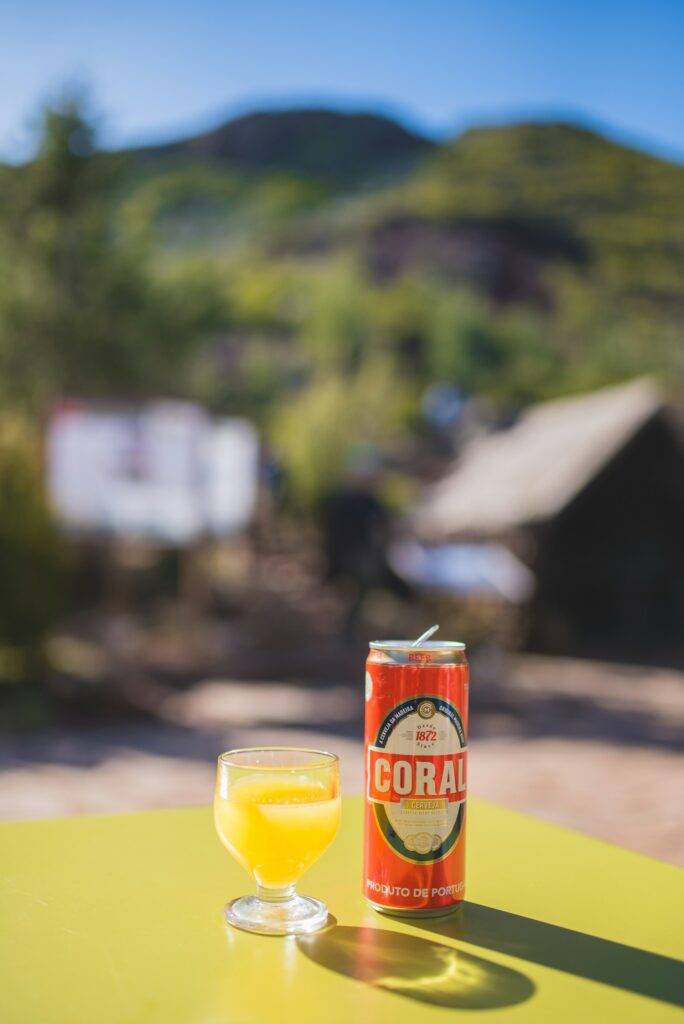
Local beer — Coral | Coral
Madeira’s beer is called Coral, and it is the most common beer on the island.
There are several types of Coral, but the lager is by far the best known and is also sold in mainland Portugal.
Madeira wine | Vinho da Madeira
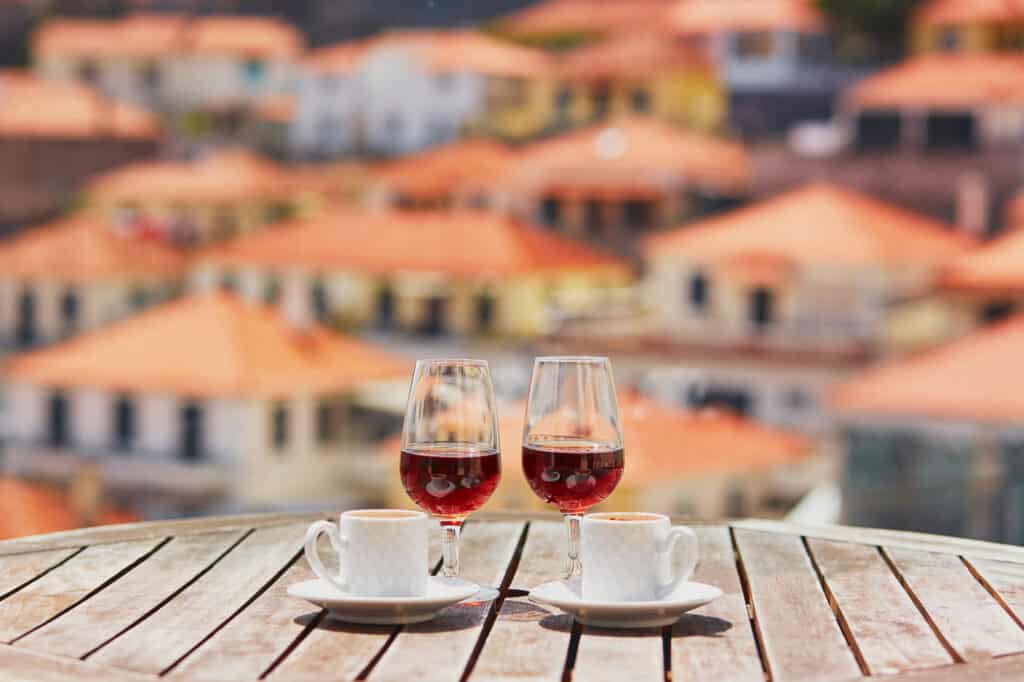
Madeira is famous for its distinctive wine, whose flavor comes from a production method that includes heating the wine, allowing it to develop its characteristic taste. Traditional Madeira wine is a fortified wine, so its alcohol content is higher than that of regular wine.
Madeira produces many semi-dry and sweet wines. Among the drier styles, two are especially famous thanks to the unique grapes from which they are made.
Verdelho | Verdelho and Sercial | Sercial are white wines made from green grapes that are characteristic of Madeira.
Wines from these varieties can be found in almost every restaurant on the island, usually served chilled alongside the appetizers.
Click here to search for accommodations on the island of Madeira…
Click here for a list of 12 excellent hotels in Madeira…
Madeira Carnival
Like its better-known counterparts in Tenerife and Rio de Janeiro, Madeira Carnival takes place every year in mid-February, about six weeks before Easter. It is not as large as those celebrations, but it is a wonderful experience for anyone visiting Madeira at that time. Madeira’s main carnival is held in the capital, Funchal over nearly two weeks, when the city is dressed up in bright colors. Two events stand out during the carnival:
The official parade | Cortejo Alegórico Carnaval
The official parade is always held on the first Saturday of carnival and is the main event. During it, competing samba groups march along Funchal’s main avenue, Avenida Arriaga (Avenida Arriaga). Enthusiastic spectators line the boulevard, stalls pop up along the nearby streets, and the whole city feels festive.
The street party — “the silly parade” | Cortejo Trapalhão
The second most important event, and arguably the more fun one, is the Trapalhão. It is essentially a giant street party spread through downtown Funchal and is also known as “the ridiculous parade,” a way of saying it is more popular and less formal than the main parade. It always takes place on the Tuesday after parade Saturday.
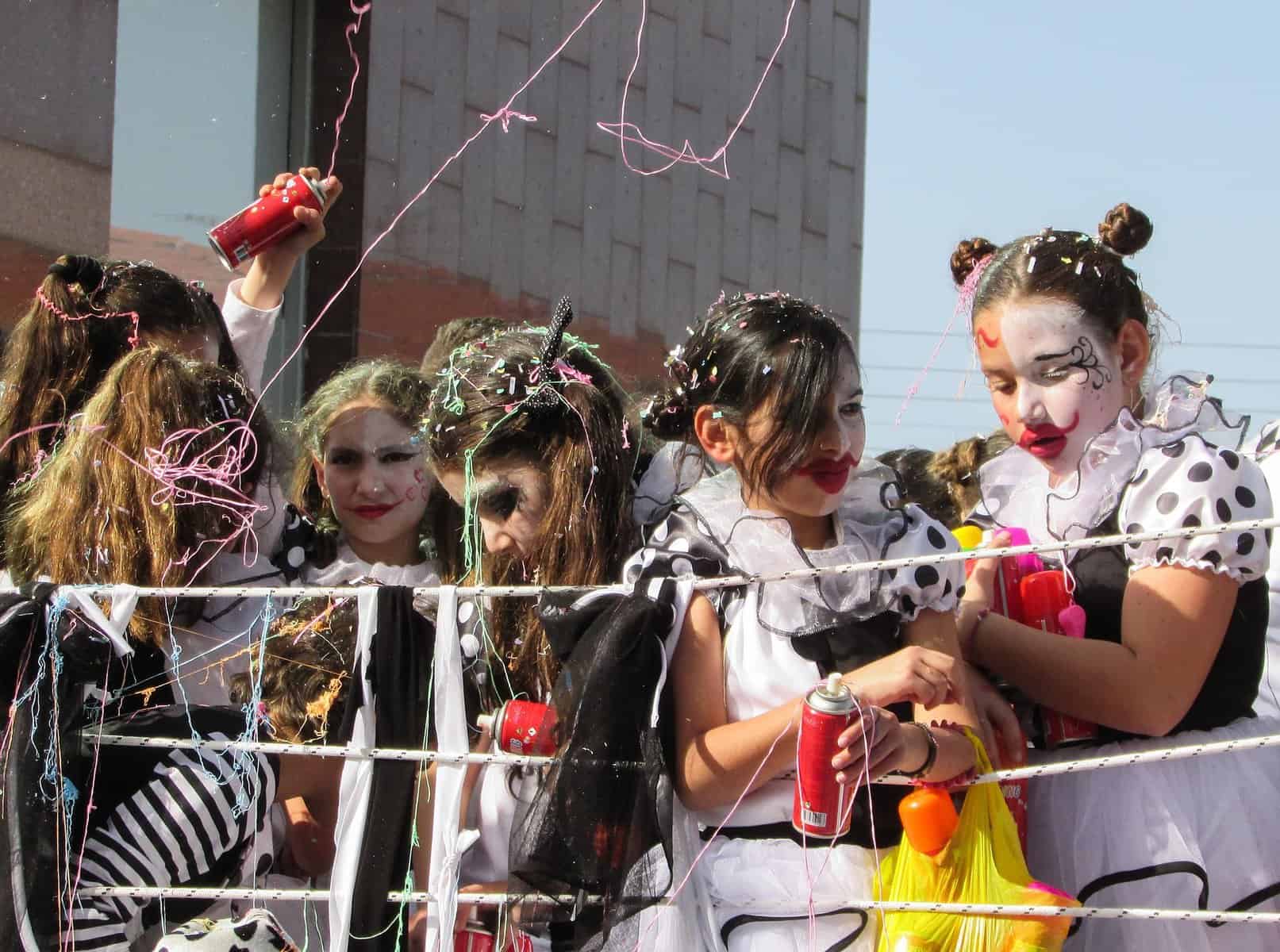
Throughout the celebrations, all the city’s children — and not only children — head into the streets in costume. The whole city buzzes with energy, stalls once again fill the main streets, and all of Funchal seems to be laughing and celebrating. During this street party there is also a smaller parade, which always ends in Town Hall Square (Praça do Município), where the winners of the costume contest are announced.
The Tuesday on which “the silly parade” takes place is an important day in the Christian calendar, after which Lent begins — a 40-day period leading up to Easter during which people traditionally refrain from eating meat. That is why carnivals are celebrated around the world: before the hardship comes the celebration!!
Click here to find accommodations in Funchal, Madeira’s large and attractive city…