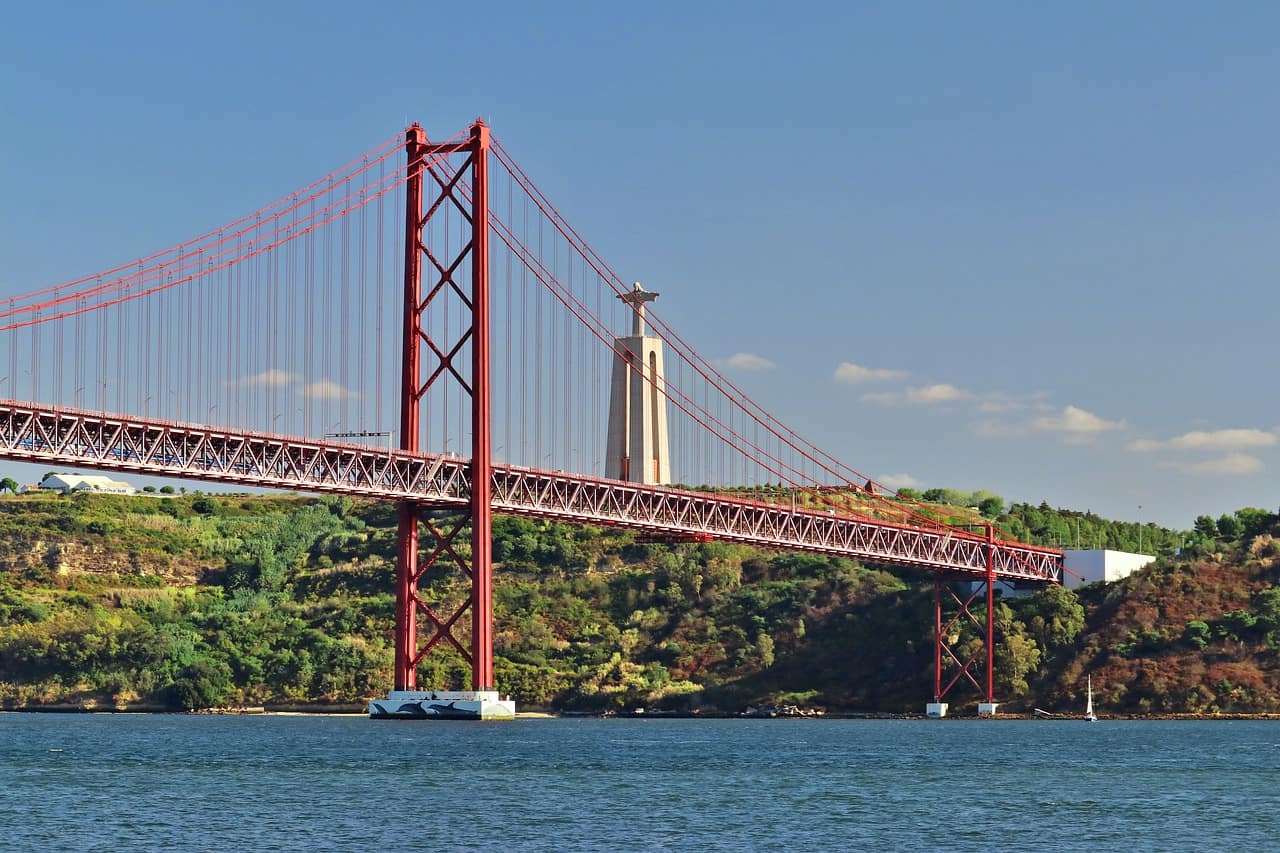
Just beyond Lisbon’s historic center, you’ll find quite a few attractions that are well worth the trip. Across the spectacular 25 de Abril Bridge lies the city of Almada, where the monumental Cristo Rei statue looks out over the Tagus River. Dominating the skyline, it’s one of the city’s best-known landmarks. North of the old Alfama district is Parque das Nações, the site of Expo 98. Today, the park is home to Lisbon’s popular aquarium.
Higher up the hill, in the city’s upper residential neighborhoods, there are several more important sites, including Eduardo VII Park, the city’s impressive 18th-century waterworks system, whose highlight is the Aqueduto das Águas Livres, now a popular place to visit, and nearby Monsanto Forest Park, a favorite local escape into nature. This area is also home to the Calouste Gulbenkian Museum, with its exceptionally rich art and archaeology collections, as well as the city’s two major football stadiums, the home grounds of Sporting and Benfica.
Time Needed for Greater Lisbon
To explore the attractions that circle Lisbon’s historic center, it’s best to allow at least one full day. It’s also worth checking in advance whether there are any interesting matches scheduled at Benfica’s or Sporting’s home stadiums.
For accommodations in Lisbon, click here…
What shouldn’t you miss in Greater Lisbon?
- Climb up to the observation terrace at the Cristo Rei statue in Almada | Santuário de Cristo Rei
- A family outing at Lisbon’s aquarium in Parque das Nações | Oceanário de Lisboa
- A Benfica or Sporting match | Benfica, Sporting CP
- Calouste Gulbenkian Museum for stunning art and collections from the Far East | Museu Calouste Gulbenkian
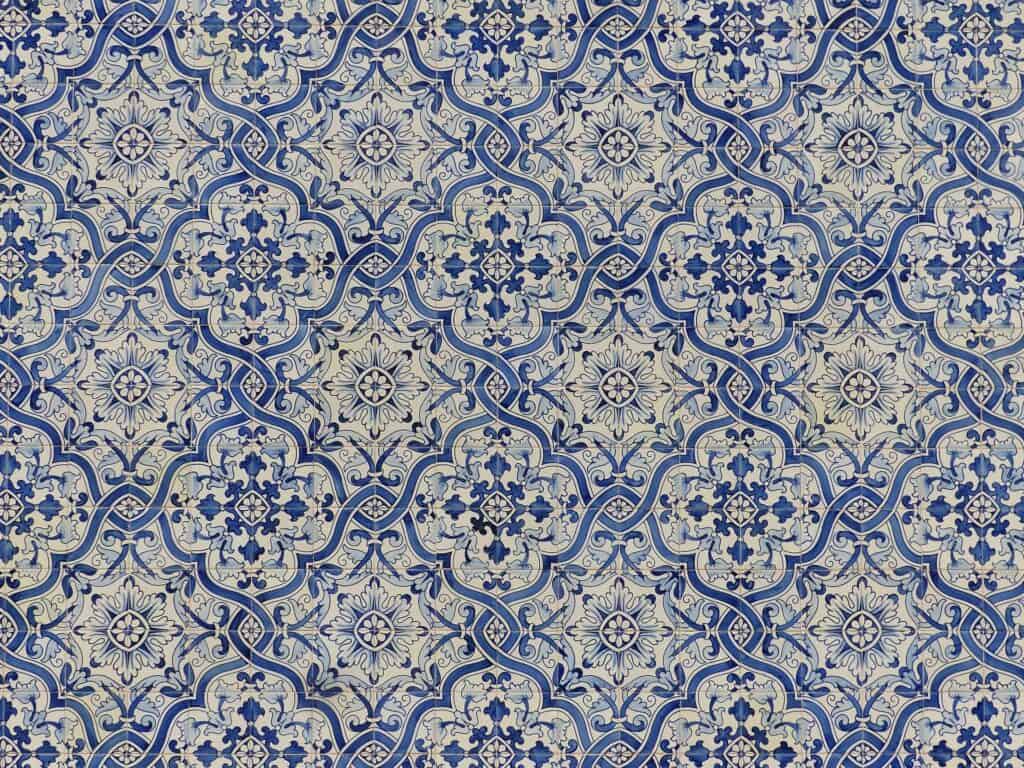
- Beautiful azulejos at the National Tile Museum | Museu Nacional do Azulejo
- Walk beneath the Aqueduto das Águas Livres | Aqueduto das Águas Livres
- Eduardo VII Park with its sculpted gardens | Parque Eduardo VII
Click here to find vacation apartments and hotels in Lisbon…
For a tour of Estádio da Luz, click here…
Almada
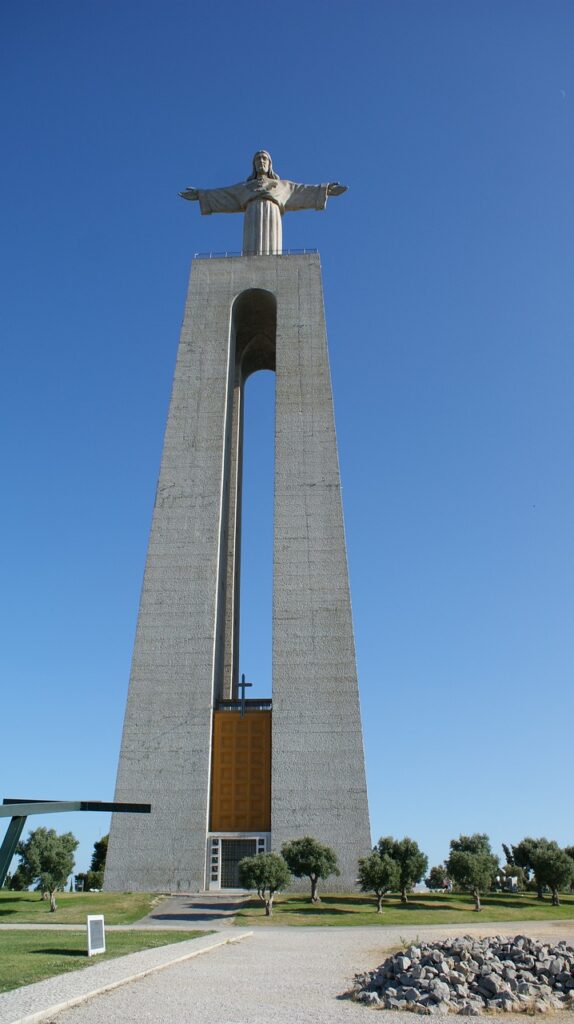
Almada is the city on the southern bank of the Tagus River, directly across from Lisbon’s waterfront. It is connected to Lisbon by the city’s iconic bridge, the 25 de Abril Bridge (Ponte 25 de Abril). Towering above it stands Almada’s signature landmark—and, some would say, one of the symbols of Lisbon and even all of Portugal—the Santuário de Cristo Rei, the statue of Christ.
The city itself is home to about 170,000 people. Almada is often seen as a sleepy, slightly gray suburb of Lisbon, but it’s worth making your way to Rua Cândido dos Reis near the harbor in the old part of town, where you’ll find plenty of pleasant restaurants.
Cristo Rei Statue – Santuário de Cristo Rei | Santuário de Cristo Rei
Portugal may have ruled Brazil for many years and deeply shaped the character of that vast South American nation, but the Cristo Rei statue reflects Brazil’s enormous influence on Portugal in return.
The giant statue was built in 1949, directly inspired by Christ the Redeemer (Cristo Redentor) on Corcovado Mountain above Rio de Janeiro’s stunning skyline. The Brazilian statue was completed in 1920, and its striking presence made waves around the world.
Portugal’s version was built on a high hill overlooking the Tagus River, facing the 25 de Abril Bridge and Lisbon. The statue stands on a 75-meter platform, with the figure of Christ itself rising another 28 meters. Altogether, the monument reaches a height of 133 meters above the level of the Tagus River.
A green park with a large parking area surrounds the statue. You can take an elevator to the top of the platform, where, right at the foot of the statue, an observation terrace opens onto sweeping views of Lisbon and the Tagus River.
Address: Av. do Cristo Rei, Almada
For the latest visiting hours for the observation terrace at the foot of the statue, click here…
The Tagus riverfront north of central Lisbon
National Tile Museum | Museu Nacional do Azulejo
Along the banks of the Tagus, a little north of Lisbon’s old Alfama district, you’ll find one of the city’s most interesting museums. It showcases examples of—and tells the story behind—the tile industry whose mark can be seen all over Lisbon’s streets: azulejos.
The national museum opened in a 15th-century convent built at the initiative of Dona Leonor, wife of King John II. Even without its tile collection, the convent is a lovely place to visit, combining Renaissance architecture with a richly colorful Baroque interior.
The collection includes a vast number of tile examples. The finest pieces were intended for the homes of Portugal’s nobility and royal institutions, while simpler ones were used to pave the streets. The earliest examples were rooted in the extensive Moorish tradition, which had a major influence on paving and tile design throughout Portugal. These 15th-century works reveal a great deal about Islamic rule across the Iberian Peninsula.
The displays also make it easy to trace the dramatic evolution of tile design over time, from bold Oriental patterns to a far more restrained European style.
Address: R. Me. Deus 4
For the museum’s current opening hours, click here…
Parque das Nações | Parque das Nações
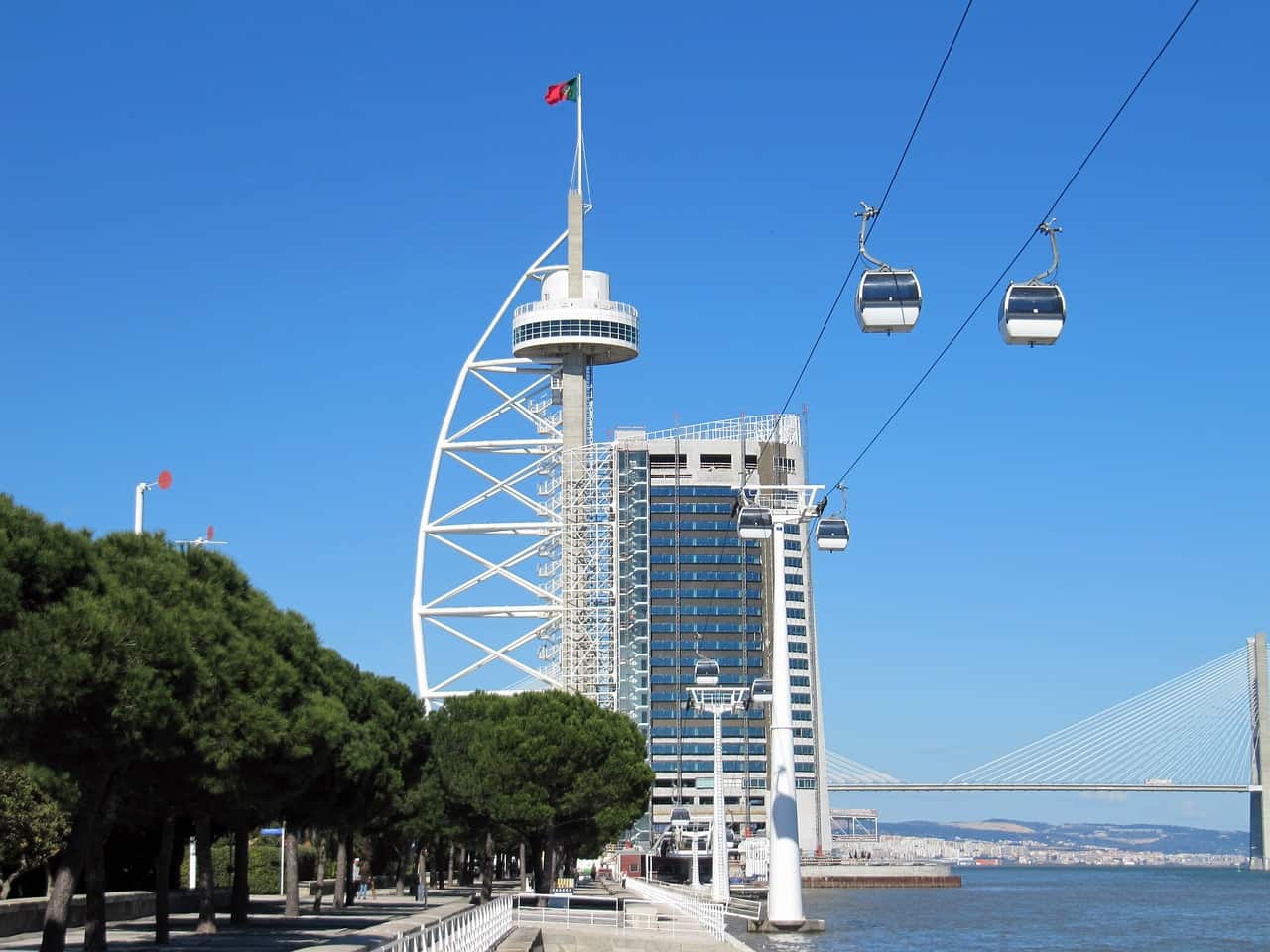
Parque das Nações is the site of Expo 98, not far from Lisbon International Airport. The park was developed on what had once been a neglected, gray stretch on the edge of Lisbon’s large port, and it has since become a major destination for family outings.
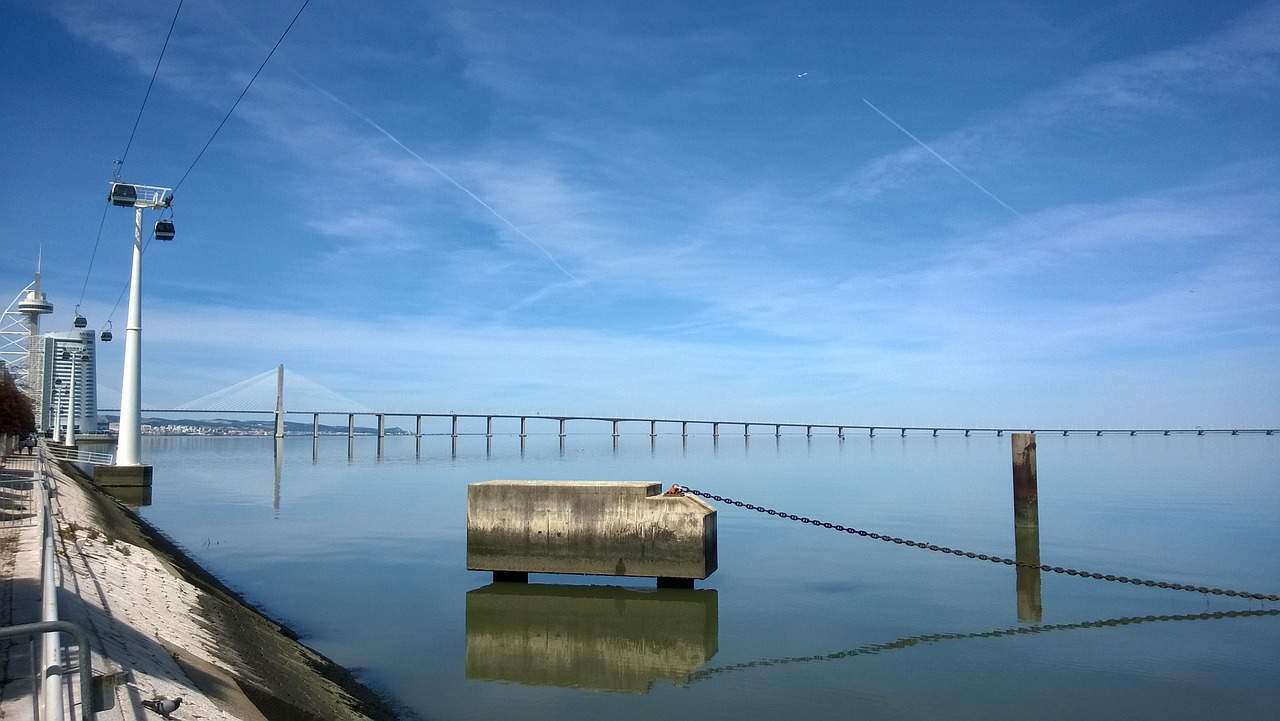
The park is home to several major attractions, especially some excellent attractions for kids. First among them is Lisbon’s outstanding Oceanário. Within the park you’ll also find the indoor arena, Altice Arena, and at its northern end, the Vasco da Gama Tower (Torre Vasco da Gama). At the top is an observation deck 145 meters high, with wonderful views of the massive Vasco da Gama Bridge (Ponte Vasco da Gama) to the north. The tower is also one end of a popular tourist cable car.
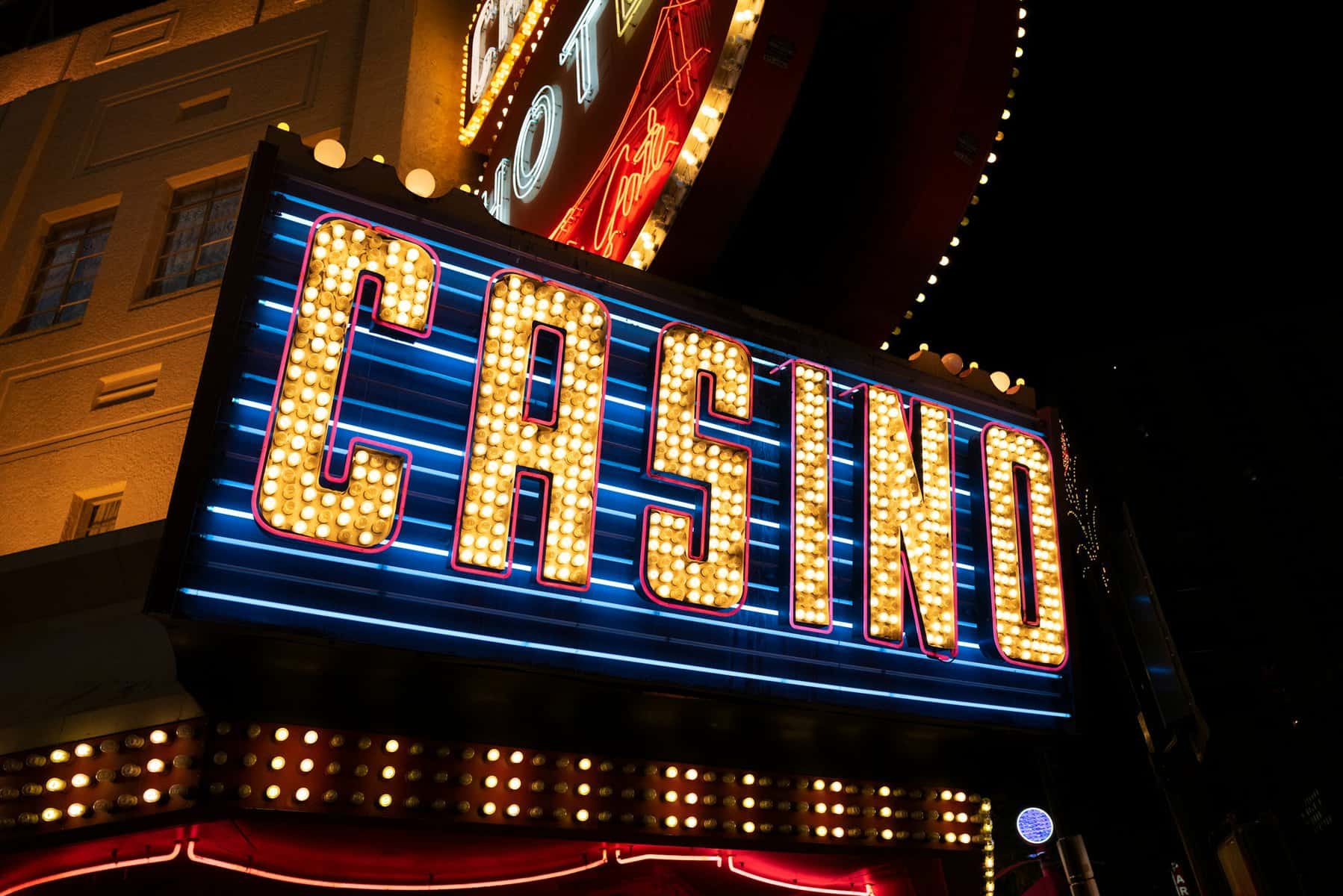
You’ll also come across spaces for rotating exhibitions, restaurants, entertainment venues, and a large casino throughout the park.
Lisbon Oceanarium | Oceanário de Lisboa
Lisbon’s aquarium is one of the city’s top attractions for families. It’s one of the best aquariums in southern Europe, with a very rich collection of fish and marine mammals, all presented in a pleasant, easy-flowing layout. The central tank features a wide variety of fish, including sharks and manta rays.
There’s also a section devoted to seabirds such as penguins, along with various amphibious mammals like seals.
The aquarium opened in 1998 as part of Expo 98, and since then it has welcomed around one million visitors a year, most of them tourists. It stands on the southern side of the large marina within Parque das Nações, near the large Casino Lisboa.
Address: Esplanada Dom Carlos I
To book tickets in advance for Lisbon’s amazing and popular aquarium, click here…
Sites and attractions in Lisbon’s upper neighborhoods
Eduardo VII Park | Parque Eduardo VII
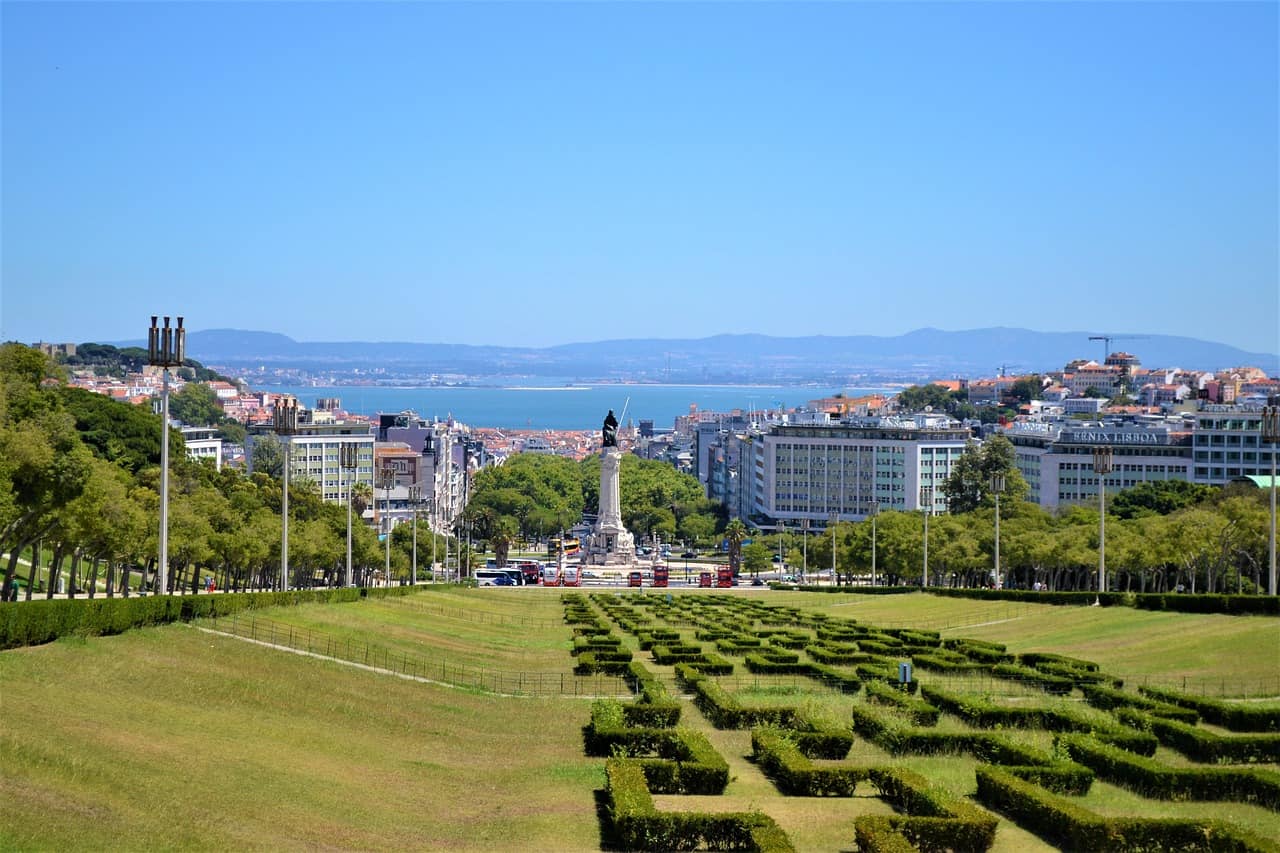
This beautiful park, named after King Edward VII, lies north of Marquês de Pombal Square, at the end of Avenida da Liberdade. The avenue links Lisbon’s upper neighborhoods to the city center by way of Restauradores Square, above the central Baixa district.
At the center of the large circular Marquês de Pombal Square stands the statue of the marquis, ruler of Portugal in the mid-18th century, during the period when the city was destroyed in the 1755 earthquake, looking down toward the Baixa district below.
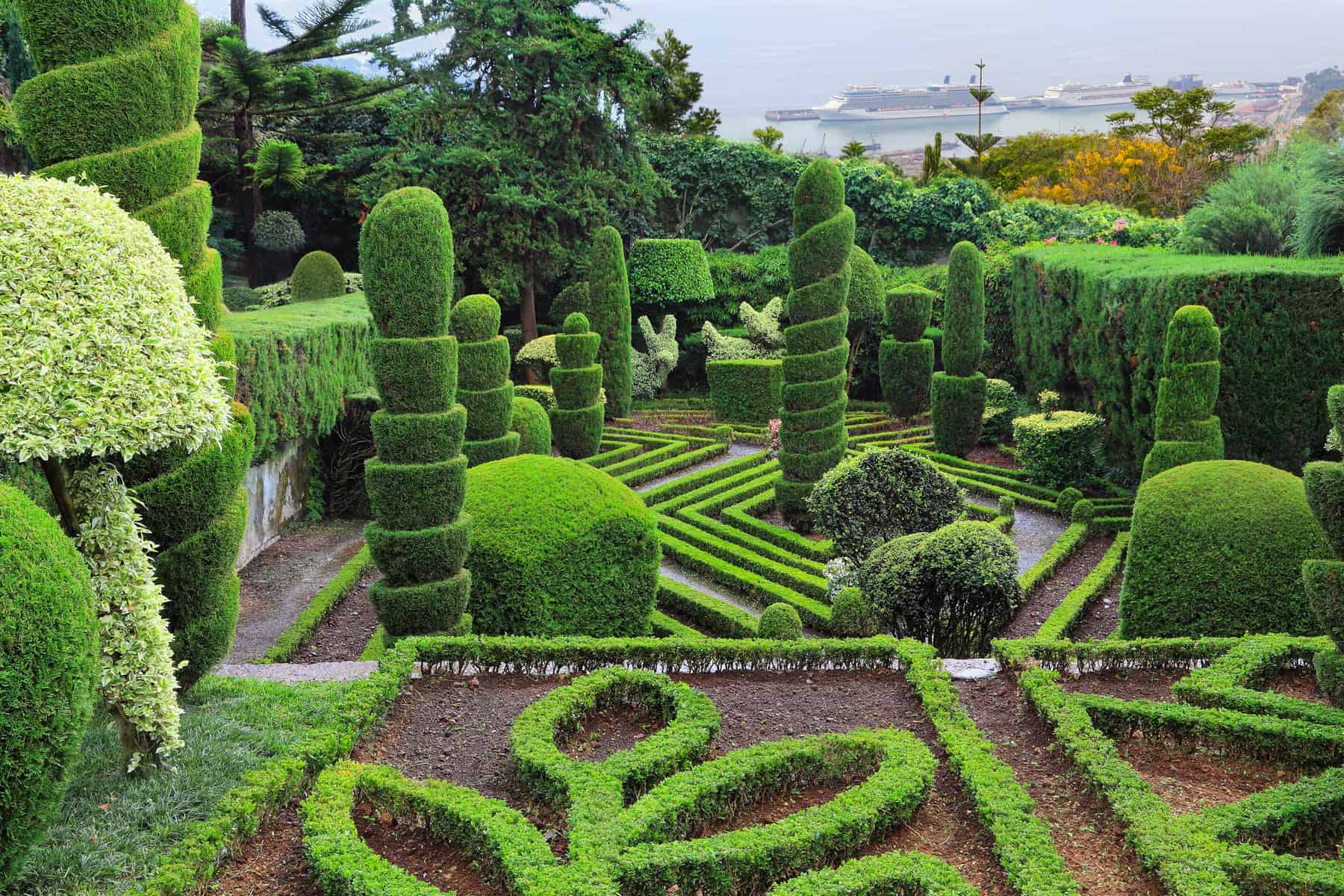
The park itself was dedicated to the British king, who came to Lisbon in 1902 to strengthen the Anglo-Portuguese alliance. Inspired by him, the entire park was designed in the elegant style of British gardens, complete with a greenhouse botanical garden (Estufa Fria), ponds, fountains, and carefully planned landscaping. The park’s central avenue is laid out with striking shrub patterns that have become its signature feature. Up the steps to the east of the avenue stands the Pavilhão Carlos Lopes building.
To find accommodations in the quieter Avenida district not far from the park, click here…
Aqueduto das Águas Livres | Aqueduto das Águas Livres
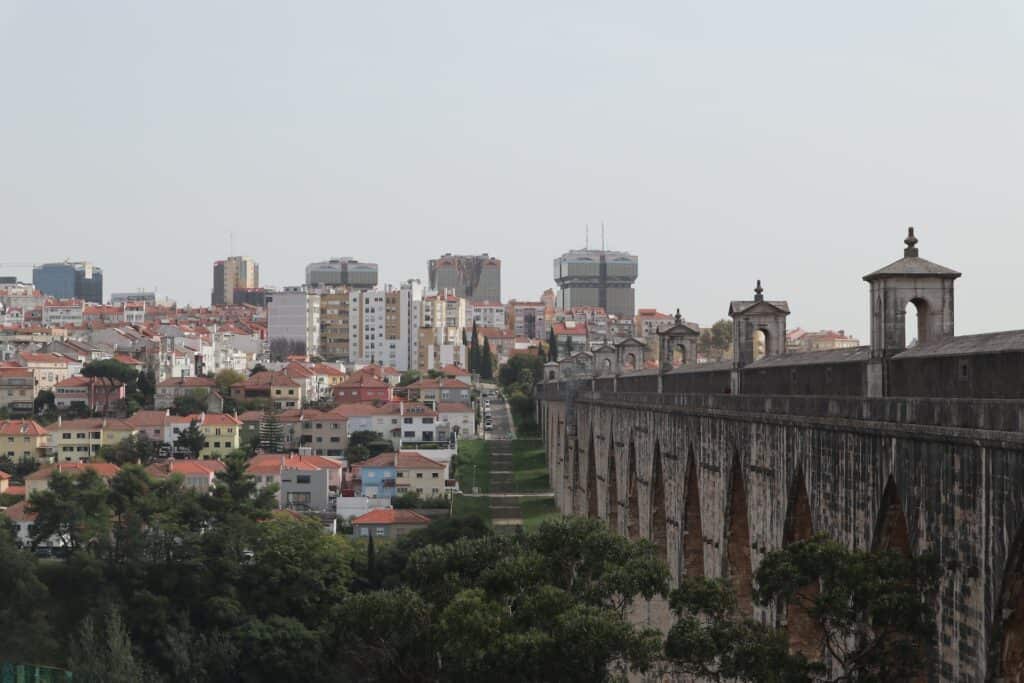
Lisbon’s remarkable aqueduct stands in the higher part of the city, a little west of Eduardo VII Park. It forms part of the project that brought water to Lisbon’s upper neighborhoods as the area was settled in the 18th century. Because the waters of the Tagus were not suitable for drinking, the decision was made to channel water from springs in Monsanto Forest toward the city’s neighborhoods. The waterworks had to cross the Alcântara Valley, and that is why the arches were built.
Echoing the great engineering works of ancient Rome, the arched structure takes the form of a Roman aqueduct along the highest section of the waterway above the Vale de Alcântara. The aqueduct rises about sixty meters above the valley below. You can walk the trails beneath its arches or follow a route along the water channel itself. At one end stands the small Water Museum (Museu da Água), which explains the system.
For the Lisbon accommodations guide, click here…
Monsanto Forest Park | Parque Florestal de Monsanto
This large and well-loved forest park, which borders Lisbon from the east (and the Belém district from the north), is a wonderful nature escape for city residents. The park has walking and hiking trails, along with plenty of well-kept lookout points over the city as it slopes down toward the Tagus River.
In the northern part of the park are the springs that feed the city’s major waterworks project. This is also where you’ll find the Fronteira Palace (Fundação das Casas Fronteira e Alorna), a country estate from the mid-17th century known for its distinctive azulejo tilework. The palace is a popular tourist attraction and absolutely worth visiting in its own right, even if you’re not planning a walk in the forest.
To find a place to stay in Lisbon, click here…
Museu Calouste Gulbenkian | Museu Calouste Gulbenkian
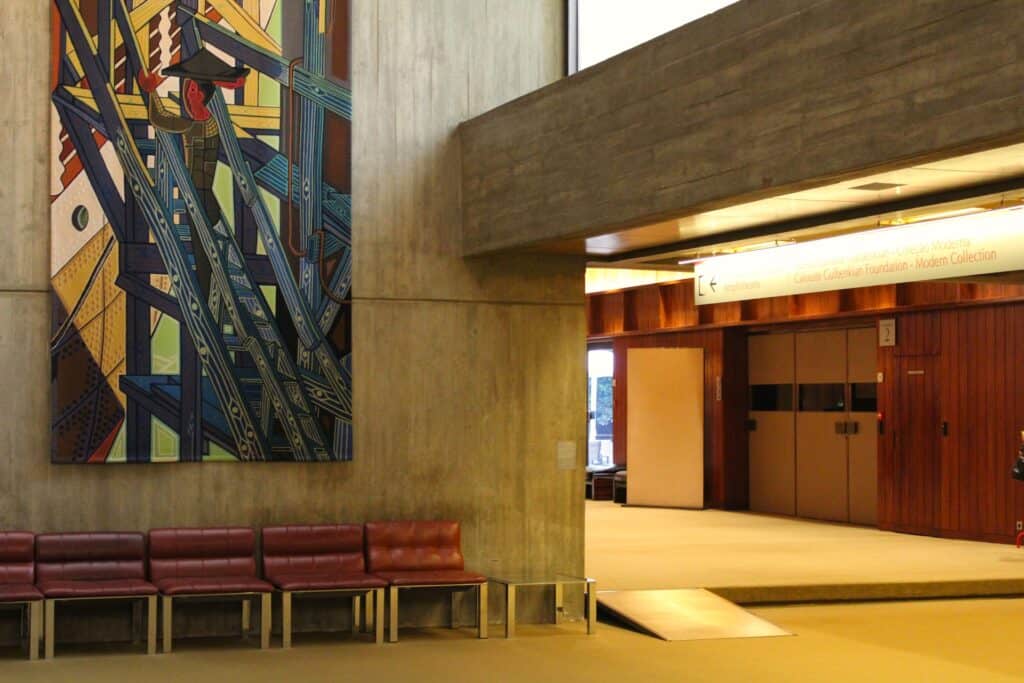
Set within an urban park in northern Lisbon, the Calouste Gulbenkian Museum opened in 1968 and has since become one of the city’s essential visits. It holds one of the most comprehensive and impressive private collections in the world. The collection belonged to Calouste Gulbenkian, an Armenian exile born in Istanbul who was among the pioneers of the global oil industry and became immensely wealthy. During World War II, he left his home and settled in Lisbon, since Portugal remained neutral during the war. Over the course of his life, Gulbenkian assembled a vast collection of art and archaeology, which he bequeathed to Portugal upon his death in 1955.
The museum’s holdings include many objects from ancient Egypt as well as from across Japan and China. An entire wing is devoted to Islamic and Armenian art, especially remarkable and rare ceramics. There is also a major collection of high-quality European paintings, featuring an impressively broad range of masters from the Renaissance onward.
The museum’s collection includes paintings by some of Europe’s greatest artists, among them Rembrandt van Rijn, Peter Paul Rubens, Auguste Renoir, Camille Corot, Edgar Degas, François Millet, Thomas Gainsborough, Édouard Manet, Claude Monet, Frans Hals, and others.
This exceptional collection is displayed in a large manor-like building set within the park, beside beautiful, spacious gardens that are part of the museum complex.
Address: Av. de Berna 45A
For the museum’s current opening hours, click here…
Lisbon Museum | Museu de Lisboa
Lisbon’s city museum is located in the northern part of the city inside Pimenta Palace, built in the mid-18th century. The museum tells the story of the city, including a fascinating record of Lisbon before the 1755 earthquake.
Nearby are the elegant Jardim Mário Soares gardens. On the other side of the gardens, opposite the Lisbon Museum, is the Museu Bordalo Pinheiro, home to many works by the popular local artist of the late 19th century.
Address: Campo Grande 245
Sporting’s football stadium – Estádio José Alvalade | Estádio José Alvalade
Estádio José Alvalade stands just across the road north of the Lisbon Museum. It is the home stadium of the great Sporting Lisbon club. Sporting is one of the three giants of Portuguese football, alongside its bitter city rival Benfica and its even more disliked national rival, Porto.
Sporting produced some of Portugal’s greatest footballers, led by Cristiano Ronaldo and Luís Figo, and its youth academy is still considered one of the best in the world.
Sporting has won 19 domestic league titles, roughly half as many as its city rival, but unlike its two major rivals it has never won the European Cup. Even so, in almost every season you can catch matches at the large stadium, which seats 52,000 spectators, including Champions League fixtures or other European competition matches. That’s in addition to regular Portuguese league games.
The most exciting domestic fixtures are the derby against Benfica and the clash with northern rival Porto.
Address: Rua Professor Fernando da Fonseca

Benfica Lisbon’s “Stadium of Light” | Estádio da Luz
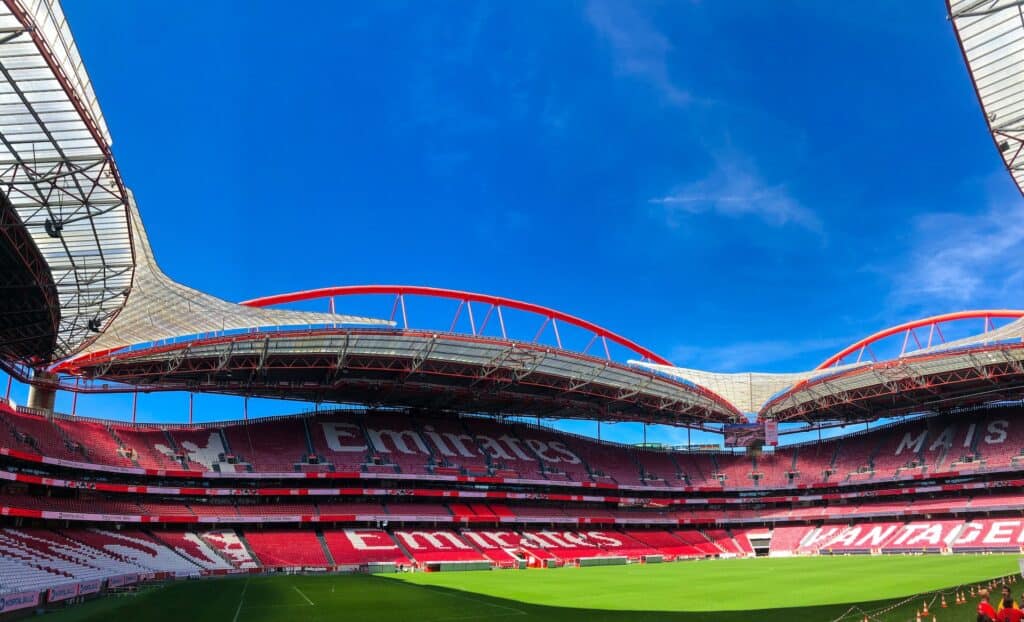
Benfica’s stadium is just a five-minute drive from the Estádio José Alvalade of its bitter rival Sporting. Benfica is considered Portugal’s national club, though it faces stiff competition from the mighty Porto. The stadium has 66,000 seats and was rebuilt on the site of the club’s old ground ahead of the 2004 UEFA European Championship. It also hosted the final, where Portugal suffered a shock defeat to Greece.
Benfica has won 38 domestic league titles and reached seven European Cup finals, winning back-to-back in 1961 and 1962. Today the club is past its peak, while its national rival Porto is thriving. Still, it’s well worth coming to watch Benfica, whose squad continues to feature plenty of recognizable players.
Here too, you can usually catch Champions League or Europa League matches almost every season. On the domestic front, the most attractive fixtures are the derby against Sporting and the showdown with national rival Porto.
Address: Av. Eusébio da Silva Ferreira
For a wonderful tour of Estádio da Luz that kids will love, click here…
For the comprehensive guide to Lisbon, click here…
For the guide to what to do in Lisbon with kids, click here…