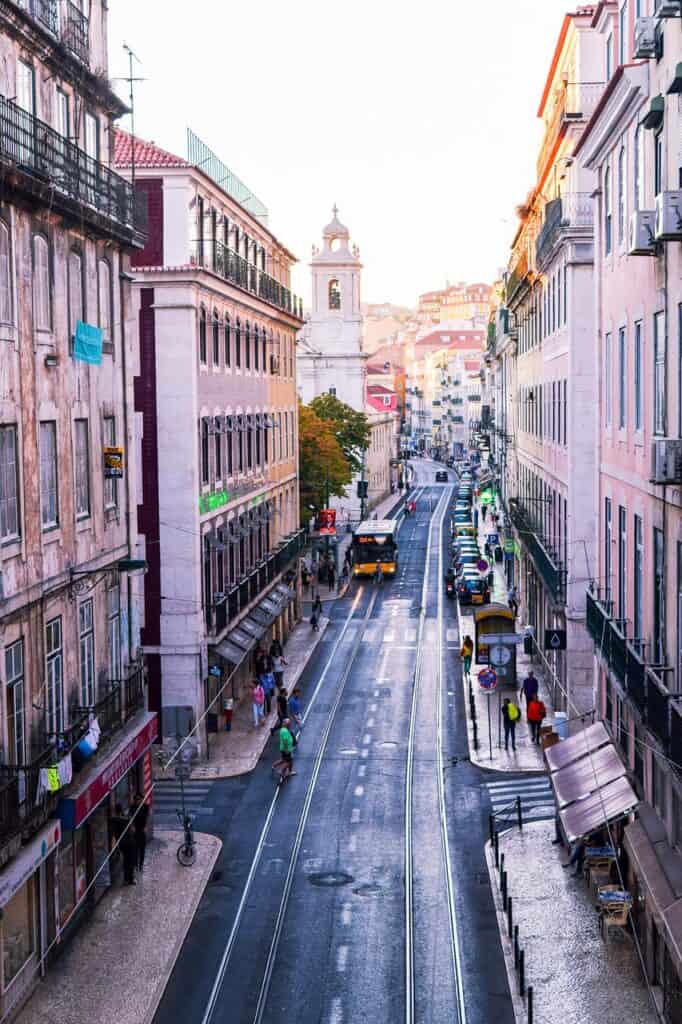
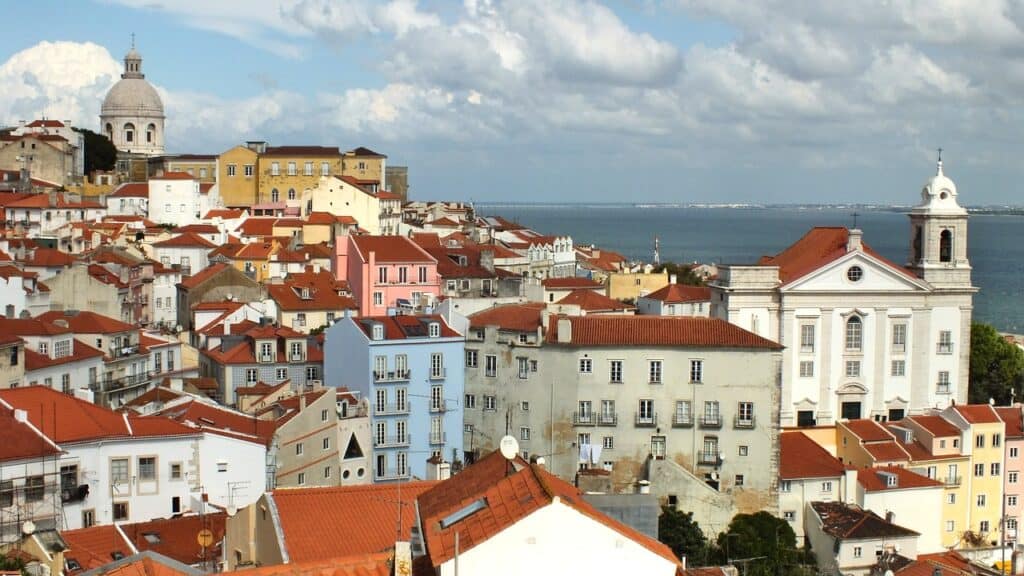
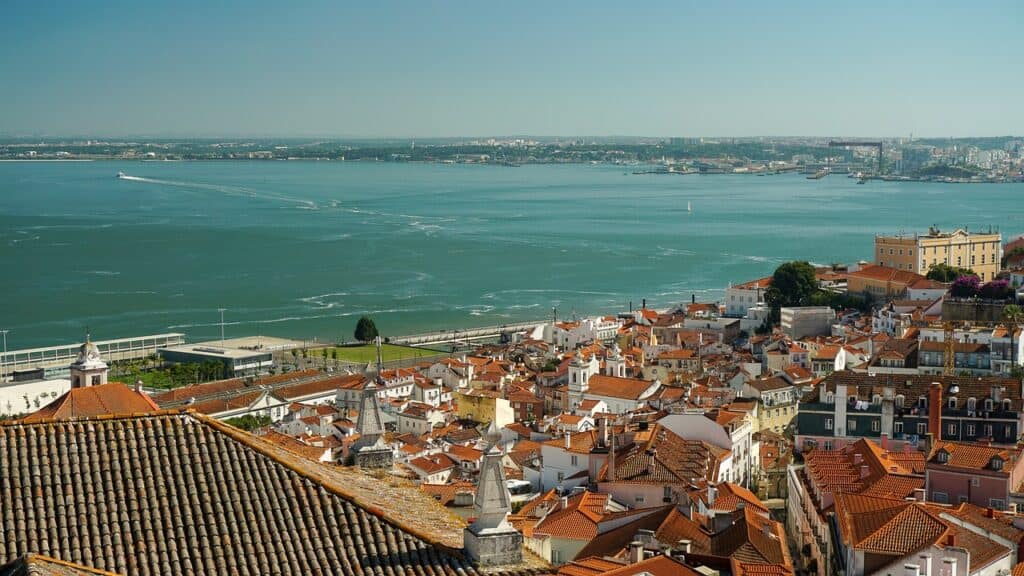
Alfama in Lisbon is the city’s oldest quarter, with a slightly weathered charm. Historically, it was never one of Lisbon’s most polished neighborhoods and was neglected for many years. Only after Portugal emerged from dictatorship in 1974, following the Carnation Revolution, did investment return to the area, and the neighborhood is still undergoing restoration today. The district is full of streets that, true to Lisbon’s landscape, tumble downhill toward the Tagus estuary. They’re packed with character and lined with old façades, a small number of which have survived since the Moorish period nearly a thousand years ago.
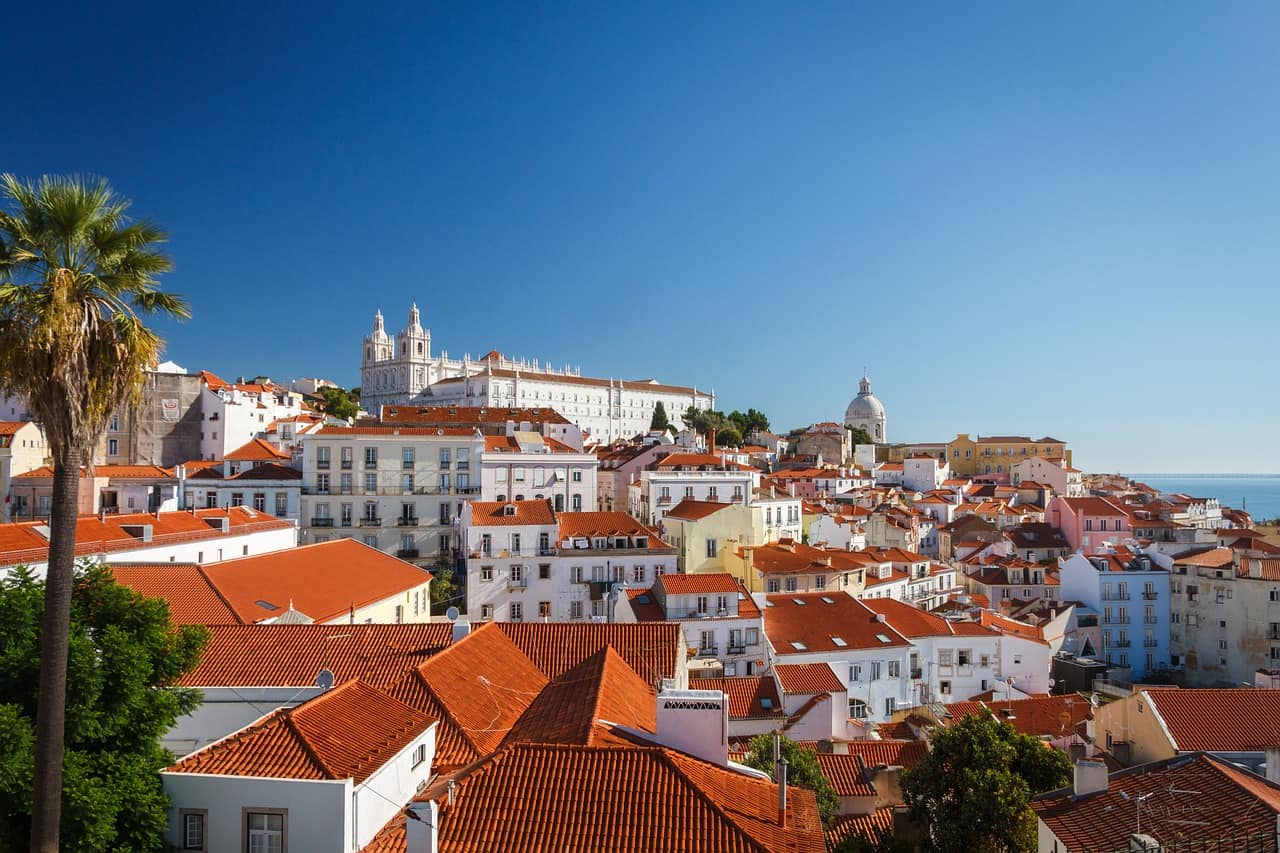
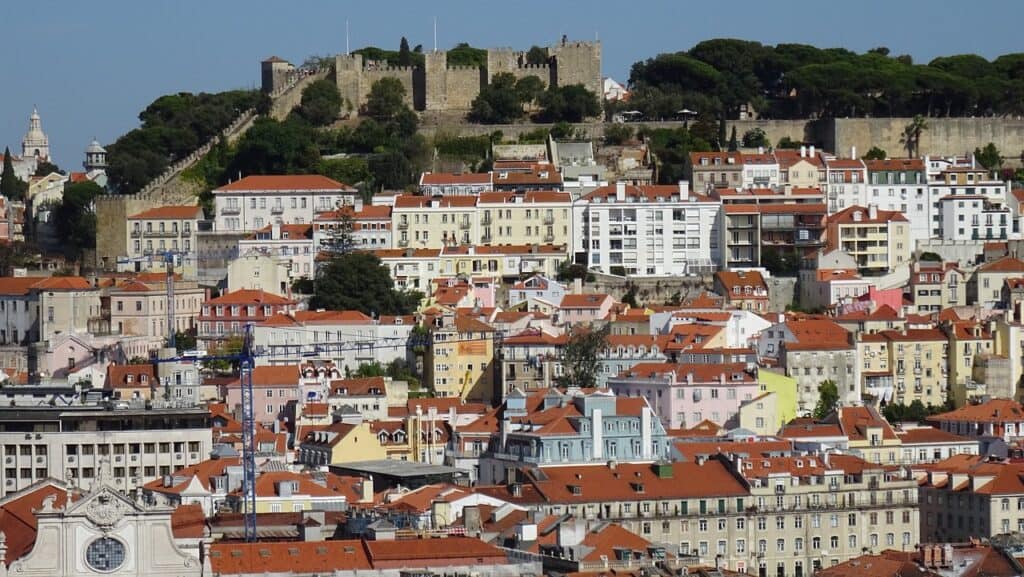
Rising proudly above the neighborhood’s rooftops is Castelo de São Jorge, one of the most beautiful and impressive fortresses in the city. Its walls can be seen from afar, and you can walk along them for magnificent views over the river estuary. Below the fortress, the streets are enchanting—some old, some peeling, some beautifully restored and buzzing with life. These winding lanes are packed with restaurants, hotels, bars, and places to go out. Toward the river estuary, you’ll find a large cluster of churches and museums, led by the Sé, the city’s historic cathedral. Head east toward the shipyards and harbors along the estuary, and there’s a string of important cultural museums and ancient churches.
How much time should you spend exploring Alfama?
Alfama is worth anywhere from half a day to a full day, depending on how many museums and sites you plan to visit.
Click here to search for accommodations in Alfama…
8 must-see attractions and things to do in Alfama
- Walk the walls of Saint George’s Castle | Castelo de São Jorge
- Lisbon Cathedral | Sé de Lisboa
- Church of Saint Anthony of Lisbon | Igreja de Santo António de Lisboa
- Resistance and Freedom Museum | Museu do Aljube Resistência e Liberdade
- Casa dos Bicos with its Venetian façade | Casa dos Bicos
- Fado Museum | Museu do Fado
- Church of Santa Engrácia and the National Pantheon | Igreja de Santa Engrácia
- Feira da Ladra flea market | Feira da Ladra
Planning a visit to Alfama
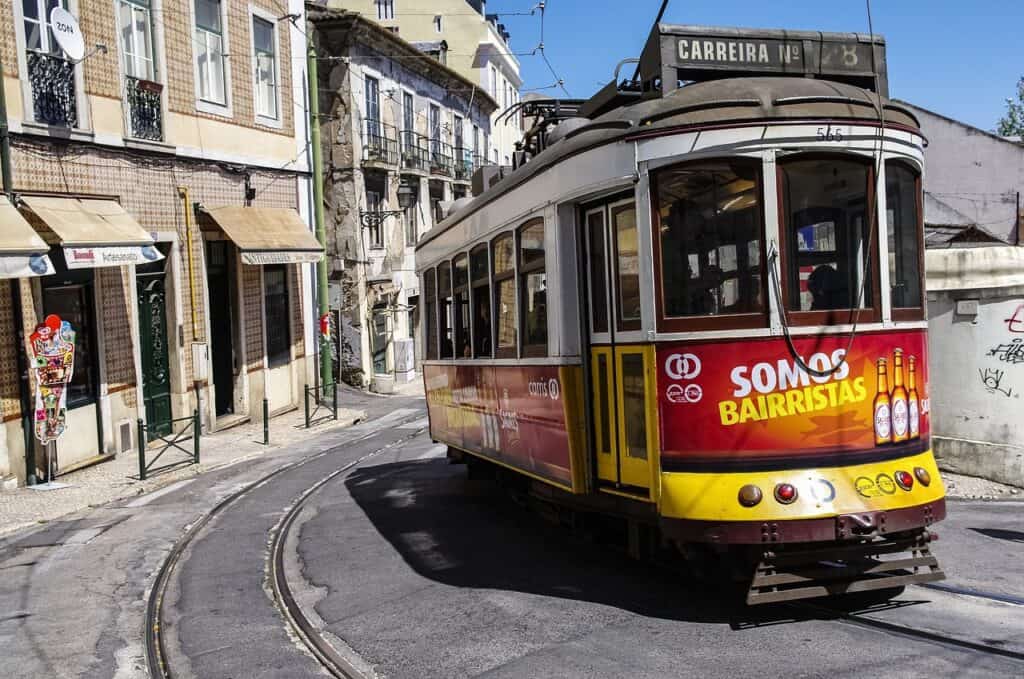
As elsewhere in Lisbon, it’s worth keeping the city’s topography in mind when planning your time in Alfama. The best approach is to start at Saint George’s Castle at the top of the hill and make your way down from there. The main route descending from the castle into the neighborhood runs along Rua Limoeiro, where the tram slowly climbs uphill. From the castle, you can either walk down toward the cathedral or hop on the tram.
Around the cathedral are several important sights, including the Church of Saint Anthony and the Resistance and Freedom Museum. From the Sé, it’s worth walking east along the harbor route toward Alfama’s old square and the Fado Museum. From there, continue east to sites that were once outside the city walls, such as the Church of Santa Engrácia, the Church of São Vicente de Fora, and the flea market.
Click here to find accommodations in Alfama…
Click here for the Lisbon accommodations guide…
Click here for a Fado performance in Alfama…
Historic sites and attractions in Alfama
Saint George's Castle | Castelo de São Jorge
This vast castle, named after Saint George of Lod, is one of Lisbon’s most recognizable landmarks. It towers above the streets of Alfama, the city’s oldest neighborhood.
Fortifications stood on this high, strategic point above the Tagus estuary as early as the 2nd century BCE, most likely built by the Phoenicians. In 1147, the Moorish rulers built the present-day castle on the ruins of earlier strongholds and called it Paço de Alcáçova (Paço de Alcáçova). The fortress was eventually dedicated to Saint George by King João I of Portugal (João I de Portugal) in the mid-14th century, in honor of the Crusades.
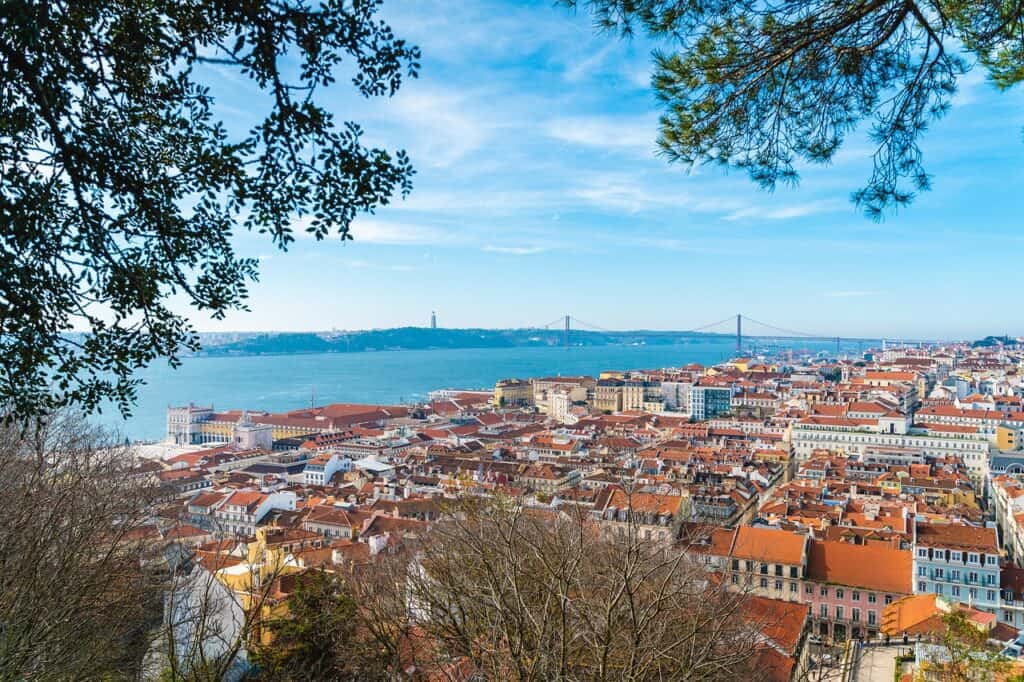
The castle itself underwent a careful restoration in the 1930s, though the process was fairly destructive and remains controversial because it damaged the preservation of the original Moorish castle. Even so, the castle draws huge numbers of visitors and is considered one of Lisbon’s essential sights. The walking routes along the top of the walls offer sweeping views over Alfama and the Tagus estuary as it opens toward the Atlantic Ocean.
Exploring Saint George’s Castle and its surroundings
A visit inside the castle naturally includes walking along its impressive Moorish walls and through its inner gardens. Right beside the eastern walls is an archaeological site (Núcleo Arqueológico do Castelo de São Jorge), where excavations continue on earlier fortifications built long before the Roman stronghold.
On the southern side of the excavations stands the beautiful Church of Santa Cruz do Castelo (Igreja de Santa Cruz do Castelo), built in the 12th century. Below the castle stretch the streets once linked to the fortress itself, where sections of the old wall still appear here and there.
The main street in the area, R. de Santa Cruz do Castelo, cuts diagonally through the neighborhood and is lined with restaurants, hotels, and beautiful old houses. At the lower end of the street stands the old castle gate, Arco do Castelo.
Click here to search for accommodations in Alfama, Lisbon…
Click here for the complete guide to Lisbon…
Museum of Decorative Arts | Museu de Artes Decorativas
This distinctive decorative arts museum sits below Saint George’s Castle in the heart of Alfama. It is also named after Ricardo Ribeiro do Espírito Santo Silva (Ricardo Ribeiro do Espírito Santo Silva), a wealthy banker who purchased Palácio Azurara (Palácio Azurara) and housed there his remarkable private collection of handicrafts, textiles, jewelry, and other artworks that reflect the country’s traditional culture.
This collection formed the basis of the museum, founded in 1953, and was later expanded with many more original objects from across Portugal, including ornate furniture, silverware, and porcelain dating from the centuries when Portuguese sailors traveled the world.
Address: Largo Portas do Sol 2
Click here for the museum’s opening hours and admission prices…
Lisbon Cathedral | Sé de Lisboa
Lisbon’s Sé, the city’s striking cathedral, stands on the western slopes of Alfama. The cathedral was built in 1150 by O Conquistador (O Conquistador), the grand title of King Afonso I (Afonso I).
Before becoming the ruler of Christian Portugal, Afonso Henriques (Afonso Henriques) was one of the key figures in liberating Portugal from Muslim rule. He built the Sé in honor of Lisbon’s first bishop, the English crusader Gilbert of Hastings, on the ruins of the great Moorish mosque.
The entrance to the cathedral is from Jardim Augusto Rosa (Jardim Augusto Rosa). The church façade is especially impressive, blending Romanesque architecture with touches reminiscent of the abbey style of medieval England. The entrance features a massive portal, a huge rose window above it, and two solid bell towers on either side.
Inside, the space is equally grand and heavy in feel, filled with ornament, reliefs, and statues, as you would expect in a Catholic church. The building was damaged twice by earthquakes, and in the great quake of 1755 it was partially destroyed. Since then, it has gone through several restorations and renovations, and today it more or less reflects the appearance of the 12th-century church.
Church of Saint Anthony of Lisbon | Igreja de Santo António de Lisboa
Across from Lisbon Cathedral stands another beautiful and distinctive church that’s well worth stepping into. It is dedicated to Saint Anthony of Padua, one of the most important Franciscan preachers, who spent most of his life in Bologna and Padua in Italy, where he preached the devout monastic way of life of the order. Anthony was born in Lisbon, and the house where he was born is the very spot on which the church was built.
The church was completely destroyed in the 1755 earthquake. The only surviving part of the original structure is the crypt on its southern side. The church we see today was built around the crypt in 1757 in a Baroque style with elegant Renaissance elements. In the entrance square stands an impressive bronze statue of Saint Anthony (Estátua de Santo António), and a nearby building houses a small museum dedicated to the local saint.
Address: Largo Santo António da Sé 22
Resistance and Freedom Museum | Museu do Aljube Resistência e Liberdade
This fascinating museum of resistance and freedom stands across the road from Lisbon’s Sé. The building originally served as an infamous prison where Portugal’s dictator António de Oliveira Salazar (Salazar) imprisoned political opponents. Salazar was more or less Portugal’s Franco, maintaining a regime that was essentially fascist until his resignation in 1968. That regime disappeared about six years later in the Carnation Revolution (Revolução dos Cravos) on April 25, 1974.
Today’s museum is part of Portugal’s recent history. It tells the story of political opponents to the fascist regime, presents testimony about the regime’s crimes, and displays a wealth of information and original objects connected to resistance figures beginning in the 1930s.
Address: R. Augusto Rosa 42
Click here for the museum’s opening hours and admission prices…
Click here to search for accommodations in Alfama…
Casa dos Bicos – José Saramago Foundation | Casa dos Bicos – Fundação José Saramago
On a large open square above the Tagus estuary and the city’s ferry terminal, opposite Largo José Saramago (Largo José Saramago), stands the striking building known as the House of Spikes. It was built in 1523 for Afonso de Albuquerque (Afonso de Albuquerque), the military leader who drove the maritime empire’s conquests in Asia. Albuquerque was the man who conquered Goa in India and the Malay Peninsula, now Malaysia. The house was designed in keeping with the fashion of the time, influenced by the elegant palaces lining Venice’s Grand Canal in Italy.
Today, the remarkable building belongs to the foundation honoring José Saramago, Portugal’s most important contemporary writer. On display are the author’s manuscripts, including the original manuscript of the novel “Blindness” (Ensaio sobre a Cegueira), the work for which he is especially associated with winning the Nobel Prize in Literature in 1998.
Address: R. dos Bacalhoeiros 10
Old Alfama Square | Praça Velha de Alfama
This photogenic square is, in a sense, the heart of the neighborhood. It sits at the end of the district’s steep, twisting alleyways as they descend toward the harbor. Facing the Fado Museum, it is considered a popular meeting place for locals. A few restaurants line the small square, and on sunny days their tables spill out across the plaza in front of the museum entrance.
Click here to find accommodations in Alfama…
Fado Museum | Museu do Fado
Lisbon’s music museum stands beside the city’s cruise port. From the street, you can catch glimpses of the river between the enormous cruise ships moored at the estuary, a jumping-off point for journeys along the western coastline of Europe.
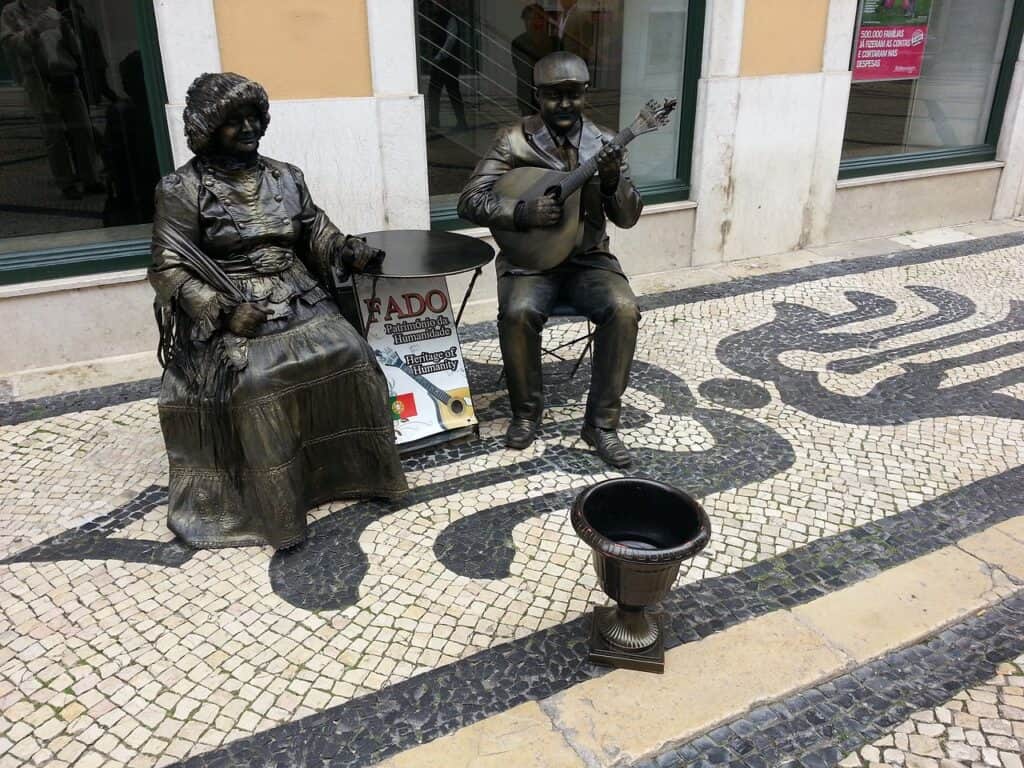
Built in 1998, the museum tells the story of the distinctive musical style that developed in Lisbon during the 19th century. Fado culture, centered on singing accompanied by a uniquely local guitar, is one of the most compelling features of Portuguese culture. The museum traces the evolution of the genre, displays a collection of guitars, and of course offers plenty of music to enjoy. It’s a must for anyone interested in Latin culture and world music.
Address: Largo do Chafariz de Dentro
Click here for the museum’s opening hours and admission prices…
Click here for a Fado performance accompanied by a traditional Portuguese dinner…
Lisbon Military Museum | Museu Militar de Lisboa
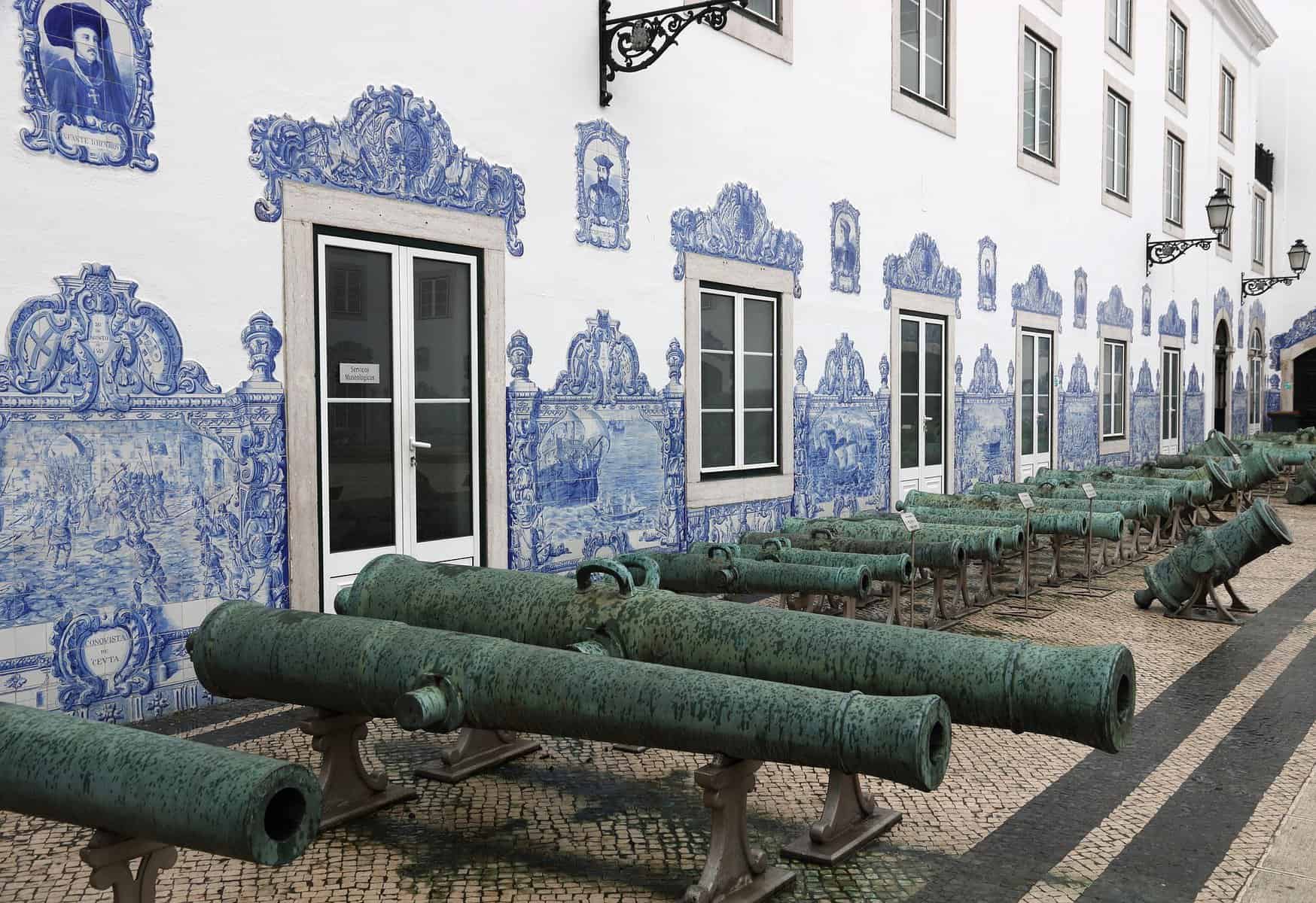
Not far from the Fado Museum, near Lisbon’s shipyards in the eastern part of Alfama, stands the grand Lisbon Military Museum. The museum presents an impressive survey of Portugal’s military history, including its major conquests from the 16th to the 18th centuries: in the Americas (Brazil), in Africa (Angola, Mozambique, Guinea-Bissau, and islands still under its control at the time—Madeira and Cape Verde), and in Asia (India, the Malay Peninsula, and Macau). The empire later declined, but weaponry continued to evolve, so there is a wide range of exhibits on display.
The museum includes a collection of cannons, World War I weapons, and more. Be sure to notice the painted ceilings in the exhibition rooms, as well as the azulejos (painted ceramic tiles) decorating the walls of the inner courtyard.
Address: R. Museu da Artilharia 51
Click here to search for accommodations in Alfama…
National Pantheon – Church of Santa Engrácia | Panteão Nacional – Igreja de Santa Engrácia
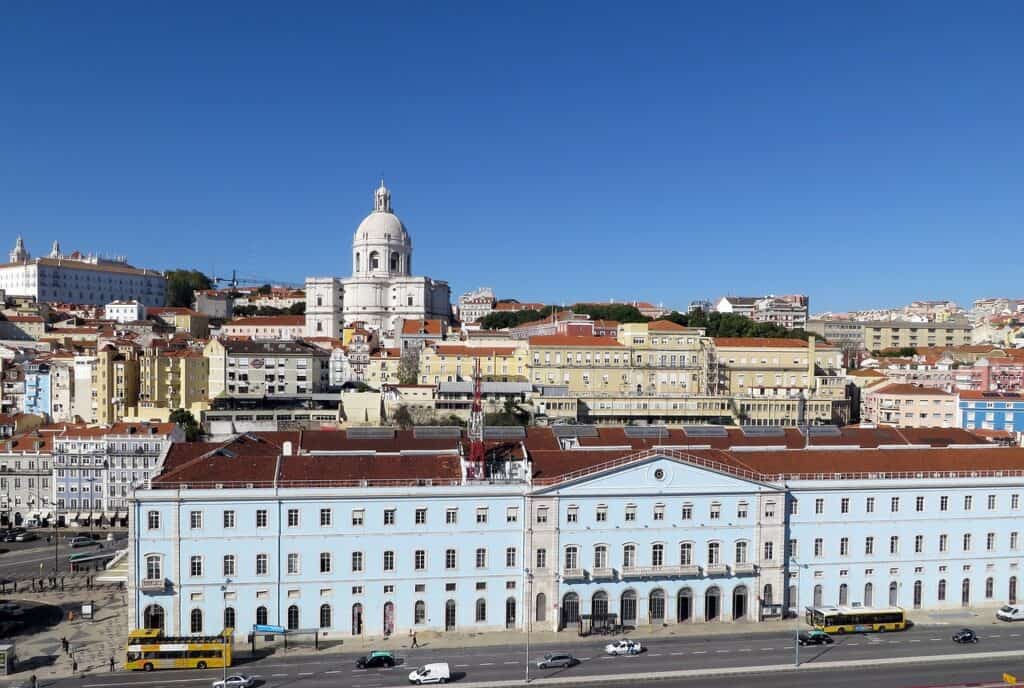
The Church of Santa Engrácia stands slightly uphill from the military museum, not far from the banks of the Tagus. Construction of the impressive square-shaped church began in 1682 after the original church collapsed the year before. It was built in a highly impressive Baroque style, crowned with a vast dome that dominates Lisbon’s skyline. The church was finally completed almost 300 years later, in the 1960s.
Over time, the church changed purpose and became Portugal’s National Pantheon. Several of the nation’s great figures are buried here, including the explorer Vasco da Gama, Afonso de Albuquerque—the conqueror of Goa and the Malay Peninsula—and others. You can climb to the upper part of the dome for sweeping views of the river estuary and the city.
Address: Campo de Santa Clara
Church of São Vicente de Fora | Igreja de São Vicente de Fora
On the western edge of the flea market stands another important church, the beautiful Church of São Vicente de Fora. It is dedicated to Saint Vincent, who is regarded as the city’s patron saint.
It was built in 1627 under the supervision of the Italian architect Filippo Terzi, a native of Bologna who moved to Lisbon after military service. The church was designed by the Spanish architect Juan de Herrera, the planner of the remarkable El Escorial Monastery (Mosteiro do Escorial) on the outskirts of Madrid.
This beautiful church was built in an impressive Mannerist style, with two prominent bell towers topped by elegant Renaissance-style pointed spires.
Address: Largo de São Vicente
Feira da Ladra flea market | Feira da Ladra
Lisbon’s large flea market is located just north of the Church of Santa Engrácia, in the impressive Mercado de Santa Clara | Mercado de Santa Clara.
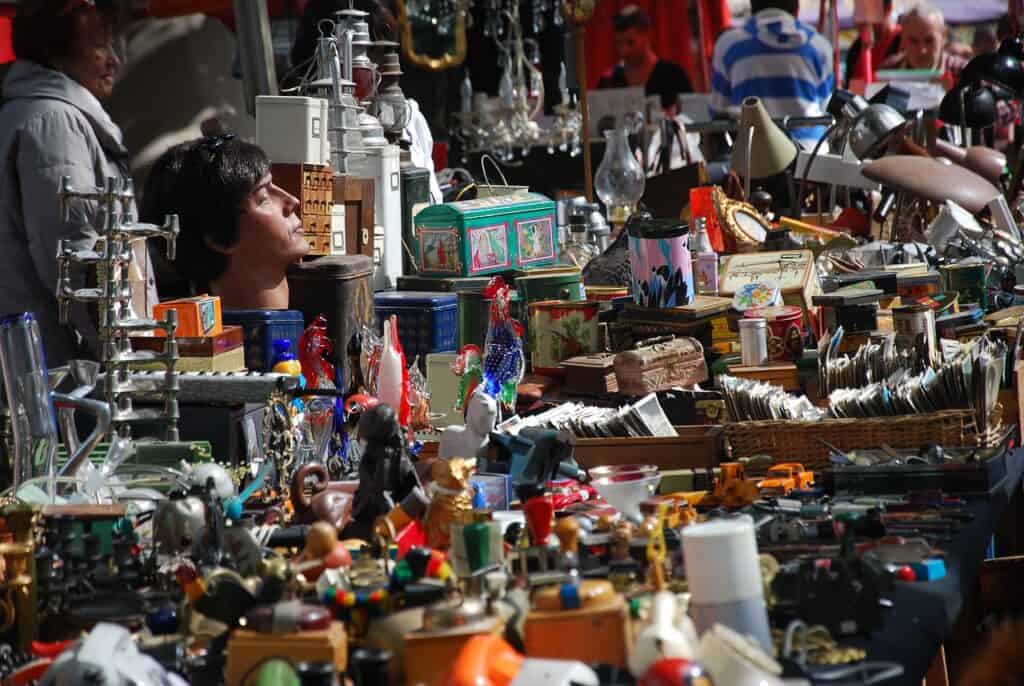
This historic market, often nicknamed the thieves’ market, has gradually been compressed into the large Santa Clara market building, though the surrounding streets still have the traditional flea-market feel that bargain hunters and lovers of a little chaos tend to enjoy. The flea market takes place on Tuesday and Saturday mornings, with a little bit of everything and plenty of it.
During the rest of the week, the Santa Clara market hosts food stalls and restaurants, along with a few antique shops.
Address: Campo de Santa Clara
Click here to search for accommodations in Alfama…