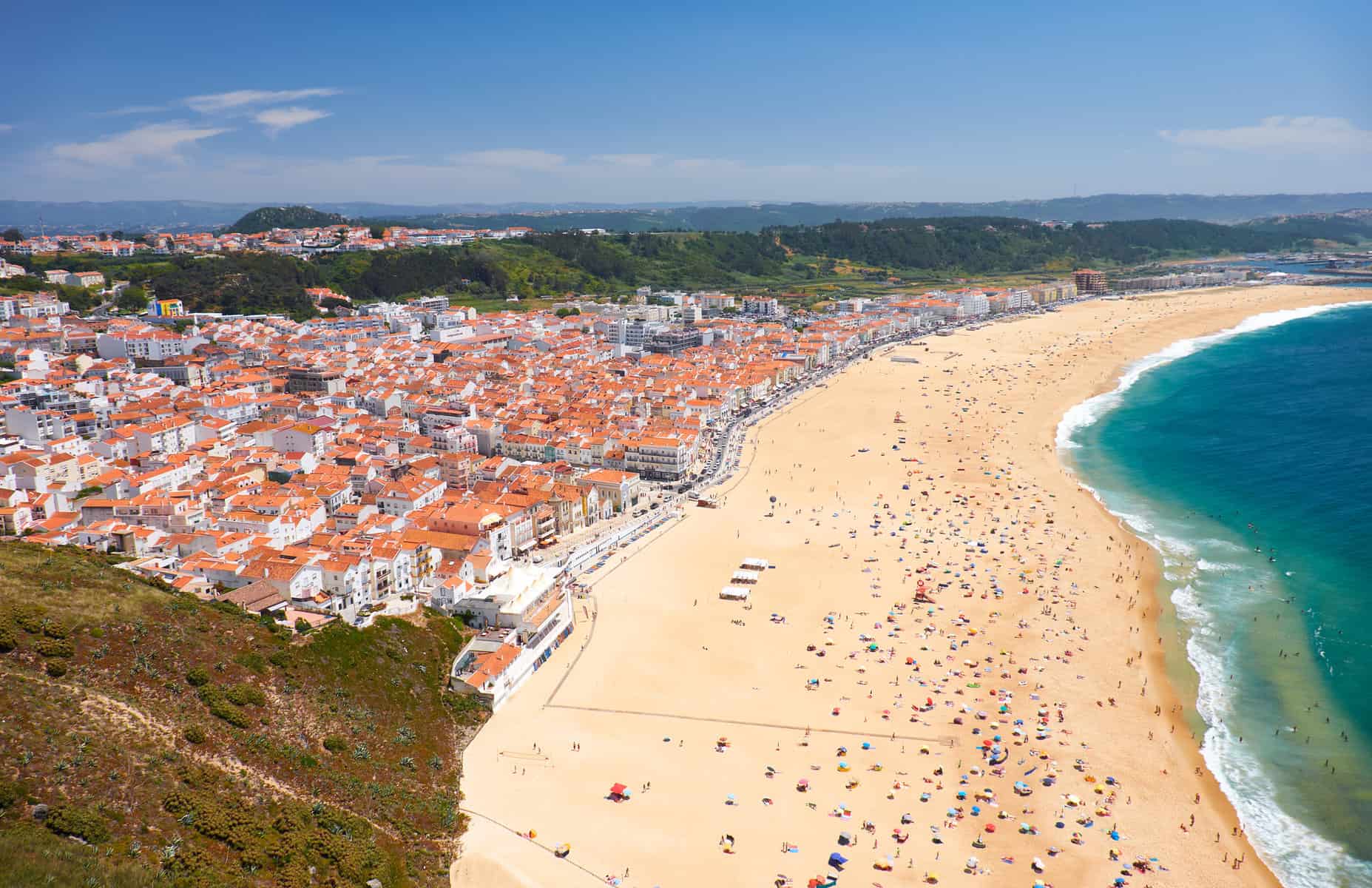
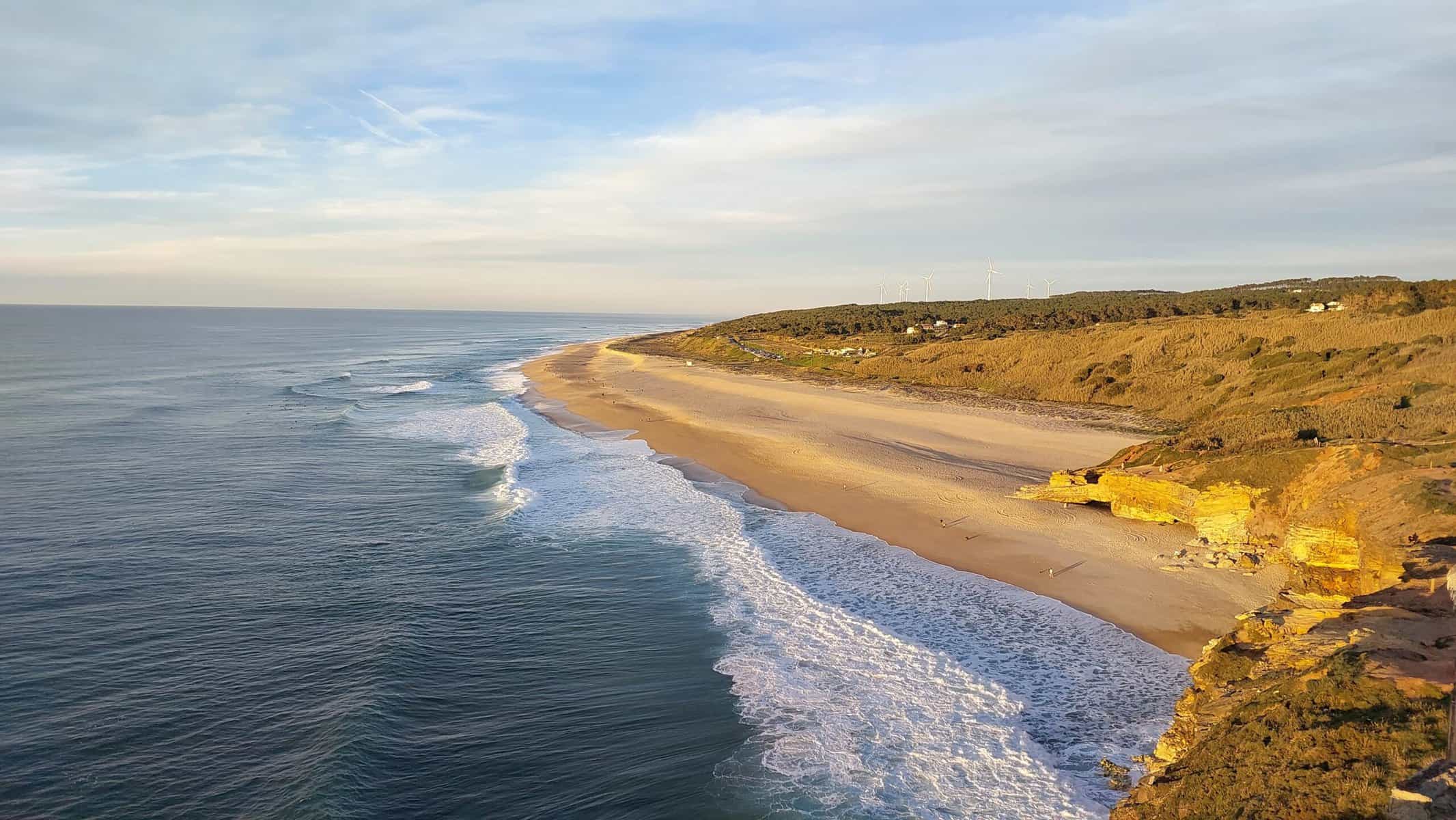
Nazaré is a seaside town in central Portugal and a must-stop for anyone traveling the coast between Porto and Lisbon. With its broad stretch of golden sand, Nazaré is one of the gems of Portugal’s central coastline. The beach and waves draw summer vacationing families, surfers year-round, and travelers in every season who come for the sweeping views from the high cliff above.
The town’s name is, of course, connected to Nazareth in the Holy Land. According to tradition, in the 4th century CE, a monk arrived on the Iberian Peninsula from the Land of Israel carrying a statue of the Virgin. After the Muslim conquests in the 8th century, the statue was moved to the site of present-day Nazaré. A church was built to house it, and the town gradually grew around that small sanctuary. In recent decades, Nazaré has become one of the most beautiful resort towns in Portugal, if not the most beautiful of all.
How much time should you spend in Nazaré?
One full day is enough to see all of Nazaré’s main sights. That said, most people who come in summer are here for a beach vacation, and in that case it’s worth staying at least three days.
If you’re coming to see the giant waves or surf them yourself (strictly for true professionals), it’s important to know that to have a real chance of catching the biggest swells, you should plan to stay in town for at least two weeks, ideally in the fall, since it’s hard to predict exactly when they’ll arrive.
Click here to find hotels or vacation apartments in Nazaré…
7 must-see sights and things to do in Nazaré
- Nazaré’s golden beach | Praia da Nazare
- Ride the funicular up to Sítio, the neighborhood above the cliff | Ascensor da Nazaré
- Suberco viewpoint overlooking Nazaré and the beach | Miradouro do Suberco
- Watch the giant waves and surfers from the lighthouse below Sítio | Farol da Nazaré
- Surf at the North Beach | For professionals only! Praia do Norte
- Eat fresh fish at one of the restaurants along the beachfront promenade | Praca Sousa Oliveira
- Stroll the narrow cobbled streets rising east from the beach | Praca Dr. Manuel Arriaga
How to get to Nazaré
Flights to Nazaré
The international airport that serves Nazaré is Lisbon Airport (LIS), from which you can reach town in about 1 hour and 20 minutes by car. From Porto Airport, the drive takes roughly 2 hours and 15 minutes.
Car
The best way to get to Nazaré is by rental car. Once you’re in town, you can get around on foot and reach almost all the main sights within a few minutes.
Parking — Most parking lots in Nazaré are located opposite the central section of the beach, near Mercado Municipal da Nazaré. The northern part near the cliff is much more densely built up, so parking there is very limited. Still, this is a small town, so from the lots in the south, most places of interest are only a short walk away.
Public transportation
The only way to reach Nazaré by public transportation is by bus. The central bus station is conveniently located in the southern part of the town center, a little uphill but only about a five-minute walk from the beach. There are direct buses from Lisbon, most of them departing from Lisboa Oriente, and the trip takes just under two hours.
Click here for a day trip from Lisbon to Nazaré and other sites in central Portugal…
About Nazaré
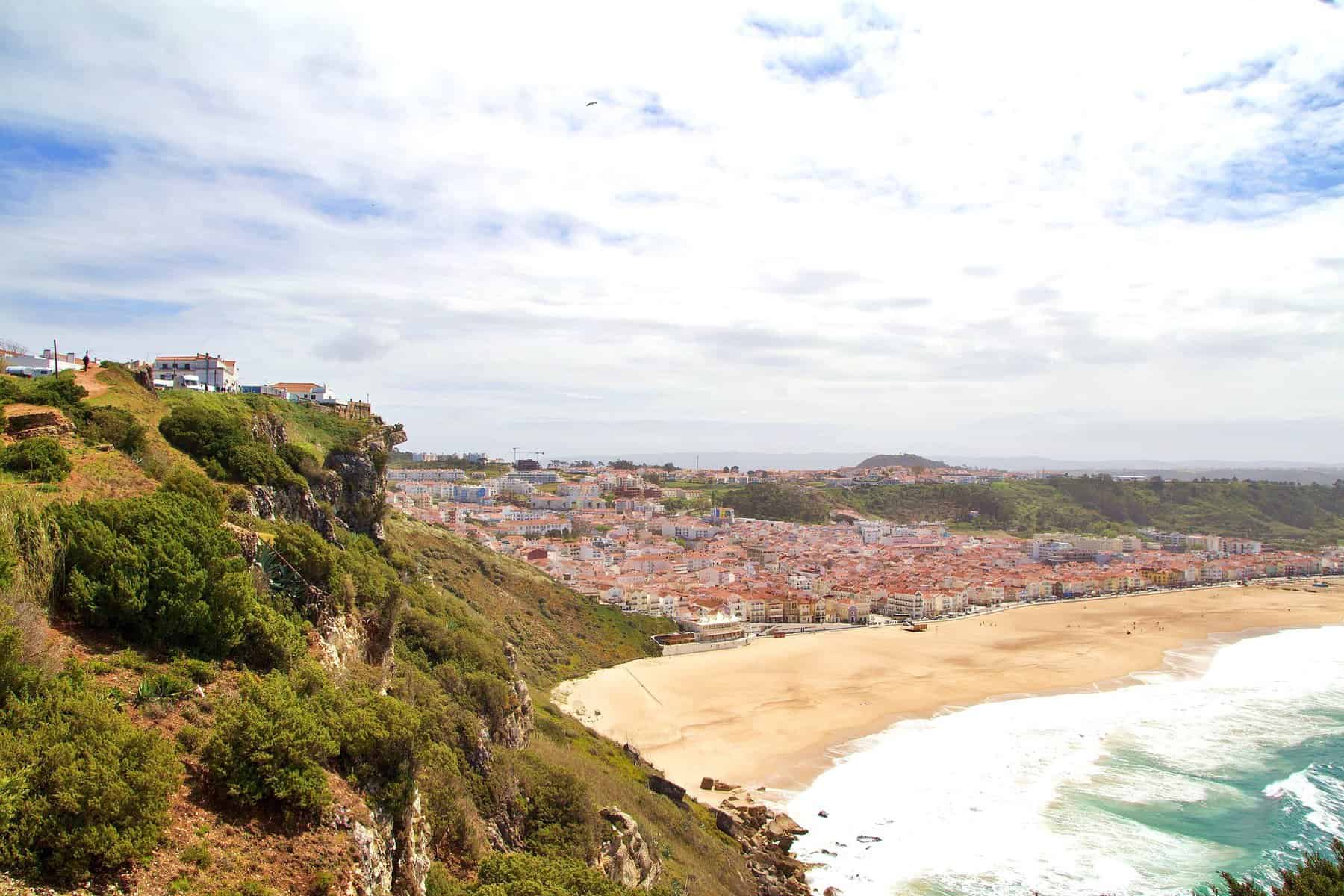
Nazaré is a town in central Portugal and one of the most popular seaside destinations on the coast between Lisbon and Porto. Around 10,000 people live here year-round, and in summer the town fills with many more vacationers. What makes it so distinctive is the combination of a wide golden beach, hills and cliffs, and a small, picturesque town of white houses with red roofs. That mix is exactly what makes Nazaré so attractive, photogenic, and inviting.
Nazaré is probably the oldest fishing town in all of Portugal, and it has done a remarkable job of preserving old traditions and deep-rooted Portuguese culture, including excellent seafood cuisine, alongside modern development.
The town of Nazaré is divided into three parts:
- Praia — the area running along the beach
- Sítio — the village on the cliff to the north, now developed into an urban residential neighborhood
- Pederneira — another former village that became a neighborhood on the hill east of the beach
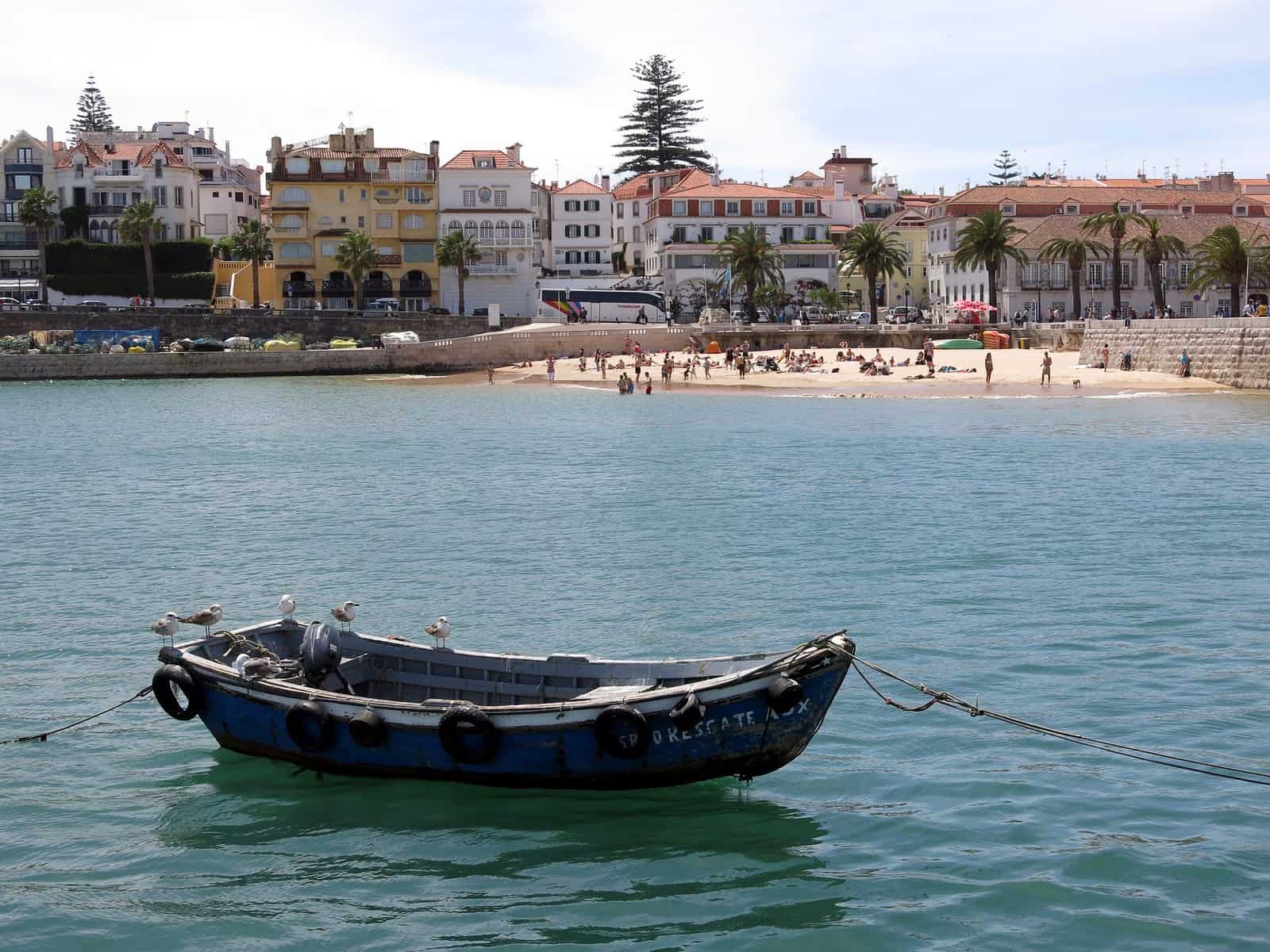
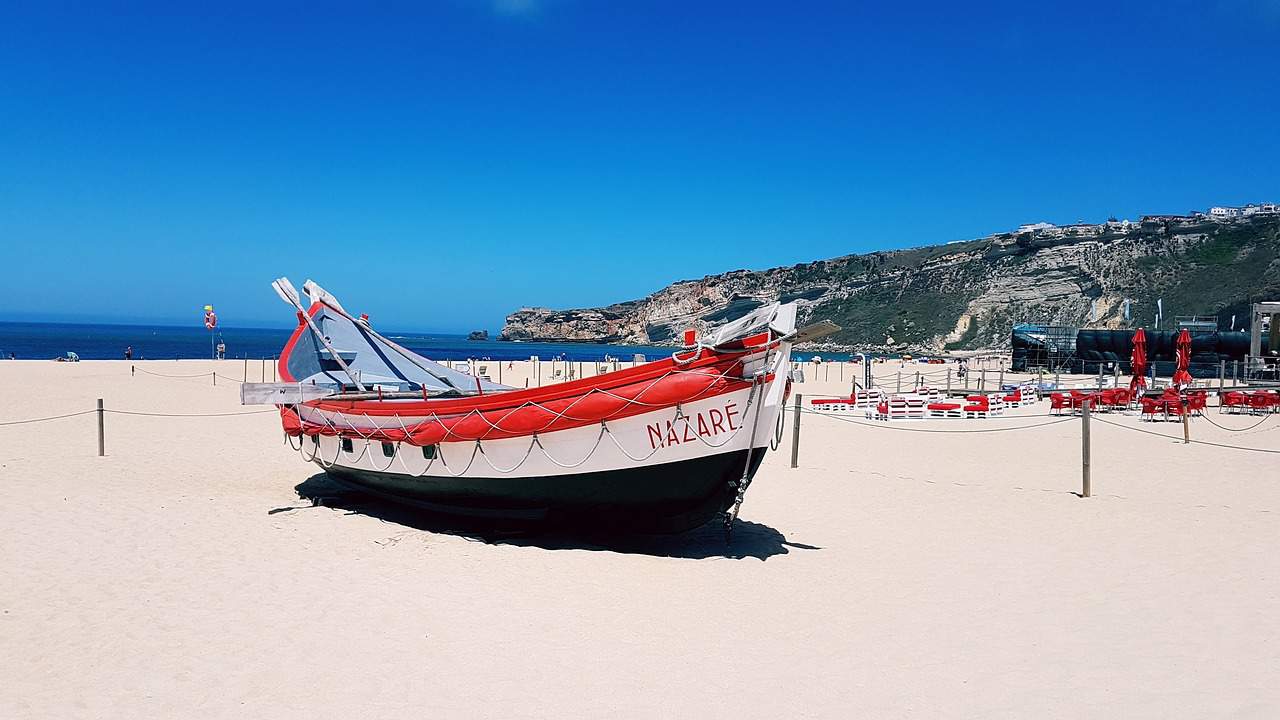
In the past, homes were almost always built up on the hills or farther inland, out of fear of pirate raids and other invaders. The shoreline served only as a landing place for fishing boats. In those days, the boats were dragged onto the sand for mooring, and you can still see some of them displayed on the beach in their bright colors.
Today, the traditional boats on the beach are becoming less common because a large modern marina has been built in the southern part of Nazaré. The marina now concentrates the town’s boating and water sports activity and also provides fishermen with a more convenient and sheltered harbor.
The weather in Nazaré, like on much of Portugal’s western coast, is very pleasant in summer, rainy and windy in fall, cold in winter, and sunny but cool in spring. Summer is naturally the ideal season to visit Nazaré, as it is for the whole Costa de Prata, Portugal’s Silver Coast. Even so, no matter the season, the area is worth stopping for, even if only for a short visit and the view of the town from Sítio above the cliff.
Click here to search for hotels or vacation apartments in Nazaré…
Click here for a day trip from Lisbon to Nazaré and other sites in central Portugal…
Attractions and interesting sights in Nazaré
Funicular to the Sítio viewpoint | Ascensor da Nazaré
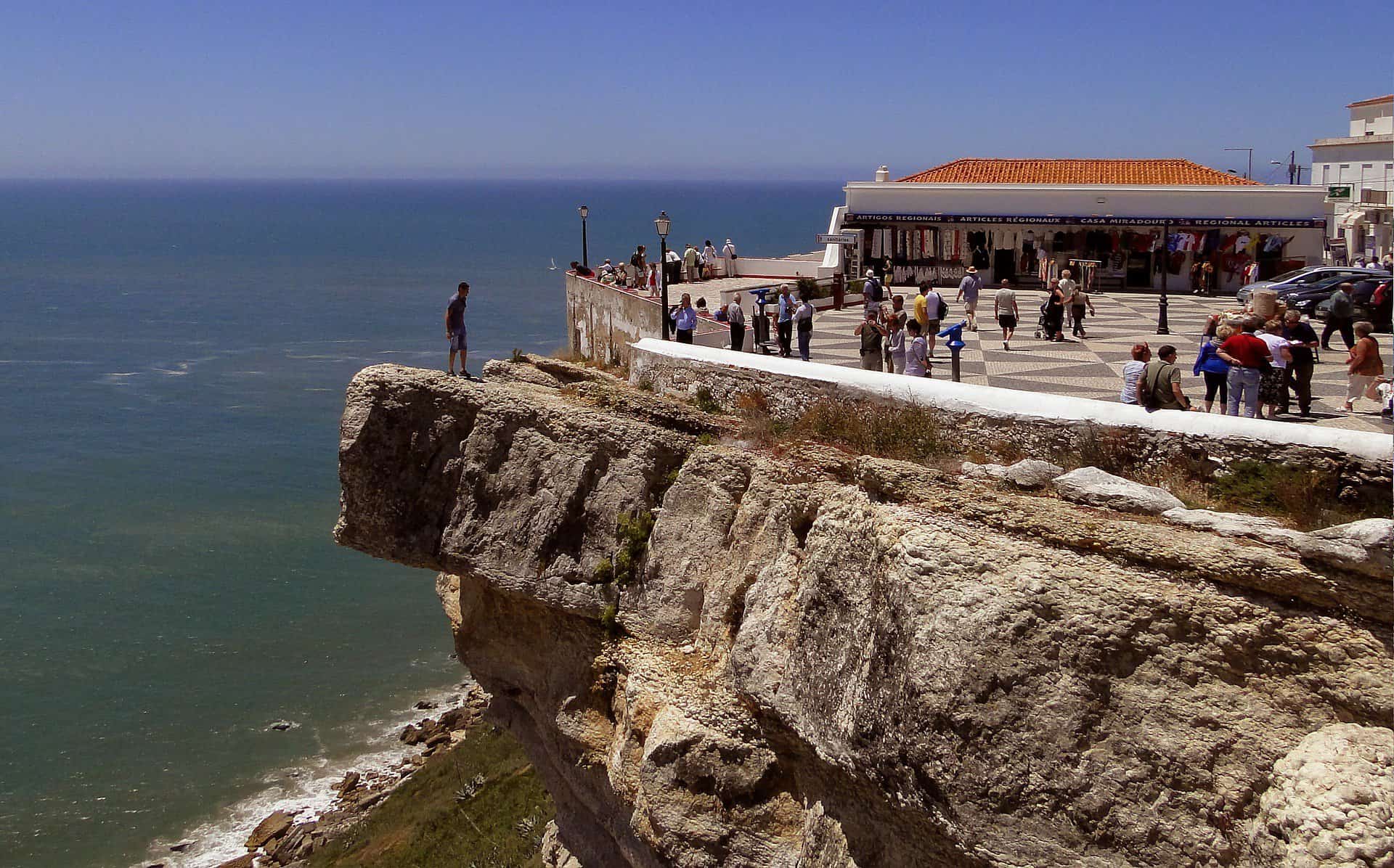
The cliff at Nazaré is known as the Promontório do Sítio, or simply Sítio. In the past, Sítio was Nazaré’s main settlement, while below it there were only fishing boats drawn up on the shore. The funicular that climbs to the cliff departs from the streets near the northern end of the beach below. Once at the top, most visitors head left for a short walk to the Suberco viewpoint.
The elevation difference between Nazaré Beach and the Sítio neighborhood above the cliff is 110 meters, which is why the view from the top is so spectacular. Hardly anyone visits the town without going up for the panorama.
Suberco viewpoint over the beach and sea | Miradouro do Suberco
The viewpoint most people come up for is just a few dozen yards to the left. The large terrace here opens onto a sweeping view of the broad golden beach and, beside it, the town, with white houses and reddish roof tiles climbing the hillside.
Next to the viewpoint stands a small chapel, Ermida da Memória, filled with azulejo decorations in blue and white ceramic tile. The chapel was built to commemorate a miracle said to have taken place in Sítio nearly a thousand years ago. According to tradition, a local nobleman named Dom Fuas Roupinho was saved by Mary herself just before his horse and carriage plunged off the cliff, after he had been chasing a deer that leapt from the heights toward the sea.
Click here for a day trip from Lisbon to Nazaré and other sites in central Portugal…
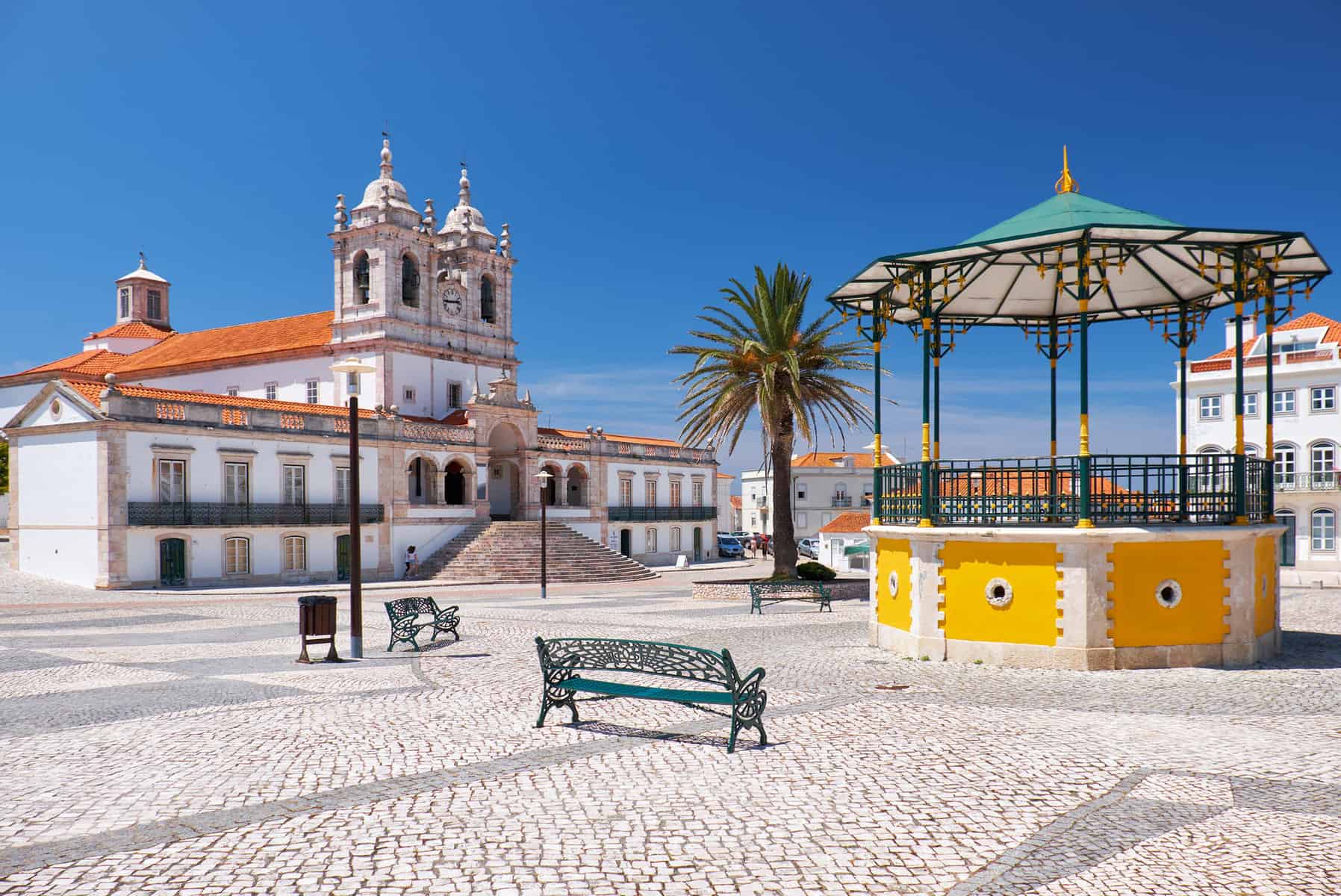
Sanctuary of Our Lady of Nazaré | Santuário de Nossa Senhora da Nazaré
This is the town’s largest church, and for a place as small as Nazaré, it is impressively grand. The church houses the wooden statue of Mary that reached Nazaré from Mérida in the Extremadura region of Spain.
The statue was brought here in 711 by Friar Romano to an ancient Visigothic monastery in the area, long before the town of Nazaré itself existed. He fled Mérida with the statue when Muslim forces arrived there during their conquest of the Iberian Peninsula.
Later, a church began to rise to house the sacred statue, and the entire town of Nazaré grew out of that history. Several religious sites around the church are also connected to the statue.
With its ornate façade, the church became a holy place over the centuries, even drawing Portuguese kings, who would stay in a palace built for them within the complex. The current church on the site was built in the 17th century, and in the 18th century the colorful tiles that decorate its interior were added.
At the beginning of every September, the statue is taken out of the church and carried down to the lower town in a traditional procession known as Festas da Nazaré.
Click here to find hotels or vacation apartments in Nazaré…
Nazaré lighthouse | Farol da Nazaré
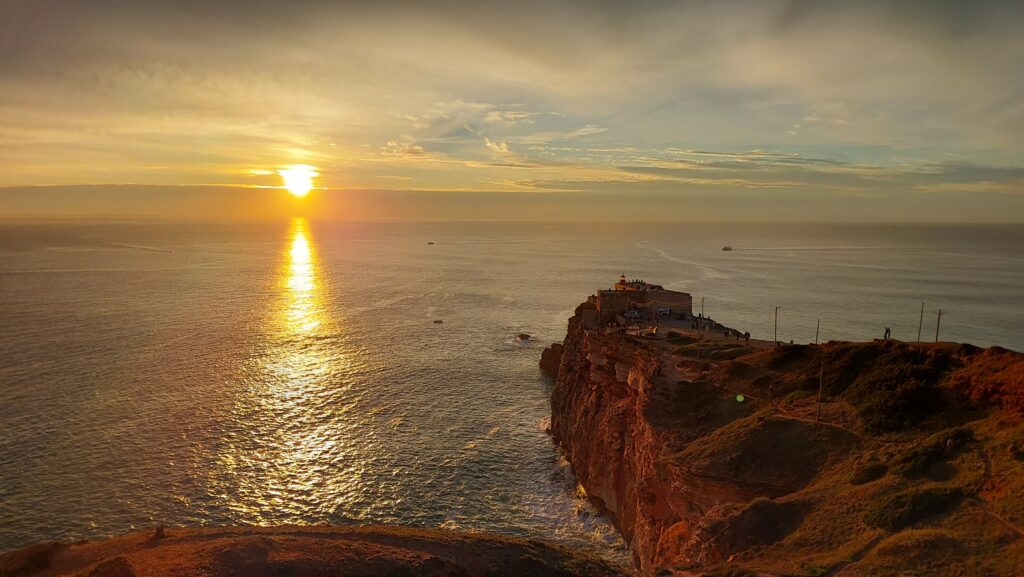
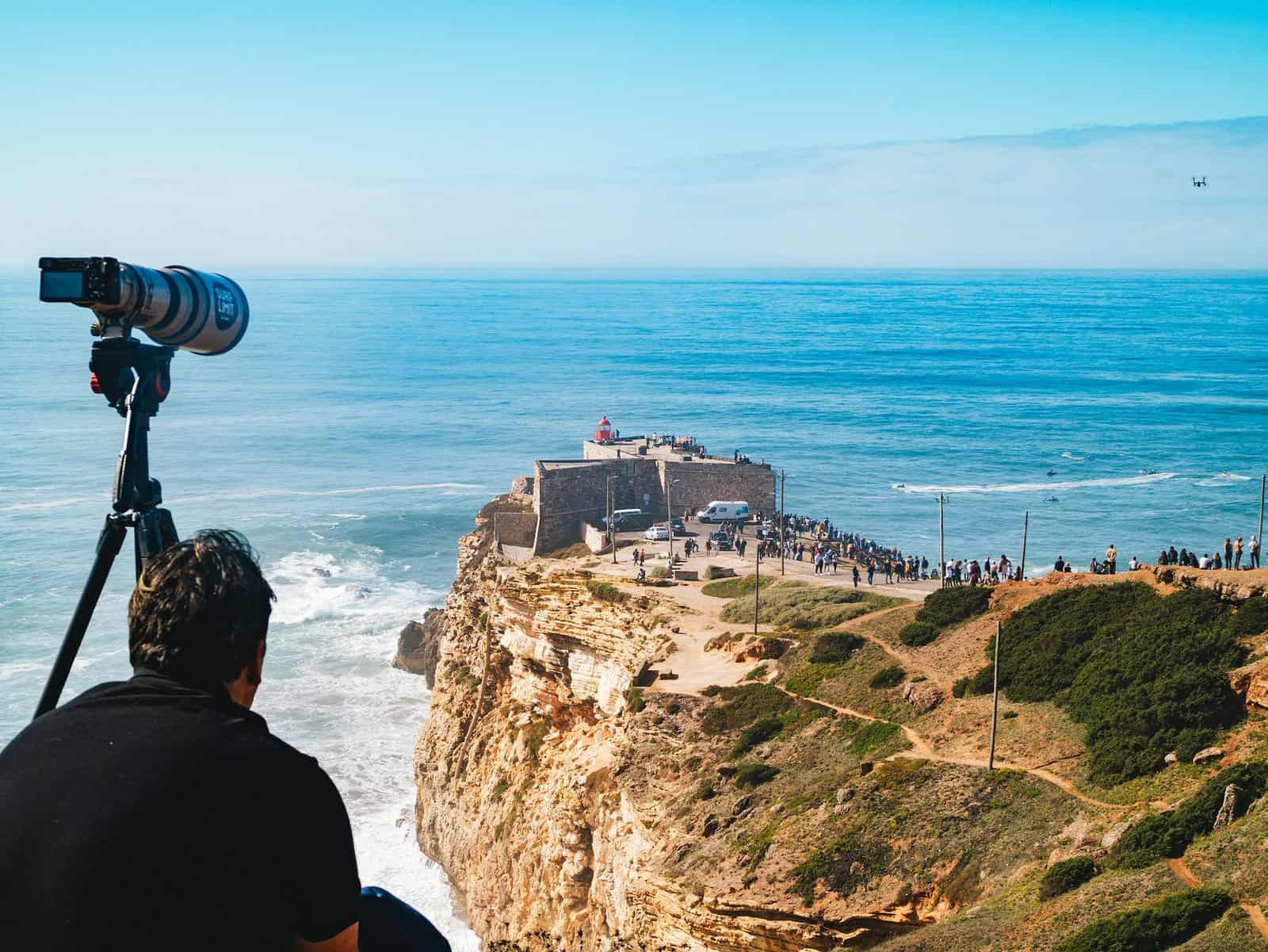
The Nazaré lighthouse stands on the headland that extends from the Sítio cliff into the sea. There is a road leading to it, but many visitors get there on foot after taking the funicular up to Sítio, with about a 10-minute walk to the point. The only catch is that the return is uphill, so it’s worth keeping that in mind.
The entire walk to the lighthouse is lined with viewpoints overlooking Nazaré Beach as well as the quieter North Beach, Praia do Norte, on the other side of the headland, where the giant waves roll in. The lighthouse itself is more like a lantern mounted on top of a building than the tall cylindrical tower many people expect.
The structure beneath it is an old fort called São Miguel Arcanjo, first built in 1577. Inside the fort is a small museum that opened in 2004, explaining the unique surfing conditions around Nazaré and telling the story of the German submarine U-963, which was scuttled by its own crew on Nazaré’s shore in May 1945.
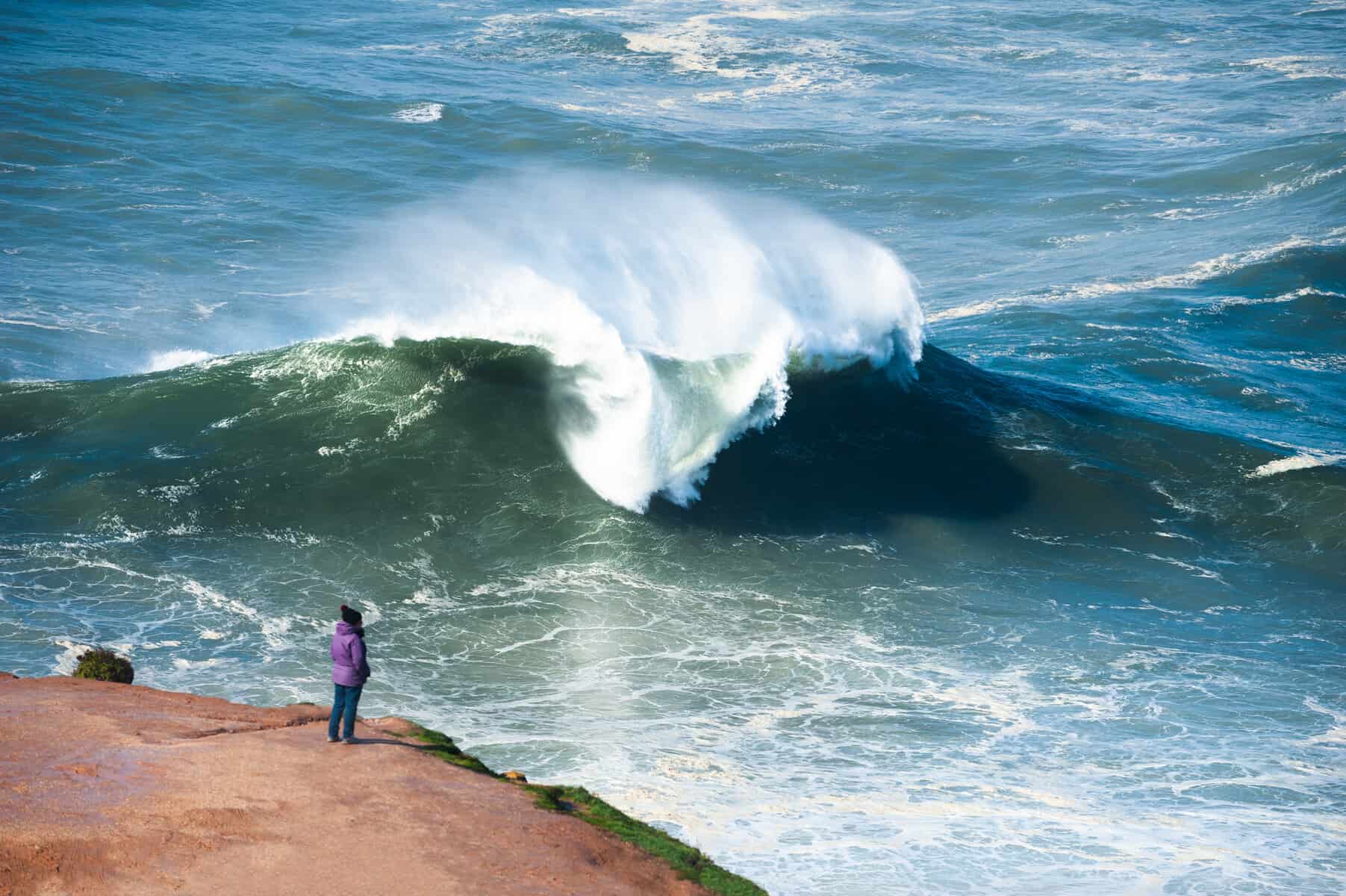
Beyond the scenery, the main reason visitors flock to the lighthouse is to watch the giant waves crashing along Portugal’s Atlantic coast. Note that the biggest waves arrive mainly in early winter, so they are actually rare during the peak summer travel season, though the sea is still usually quite rough. Even without the giant surf, the views, the wind, and the endless Atlantic from the lighthouse make for a pure Portugal experience.
Click here to find hotels or vacation apartments in Nazaré…
Dr. Joaquim Manso Ethnographic Museum | Museu Etnográfico Dr. Joaquim Manso
In a small building in the heart of a residential part of Sítio, you’ll find a museum named after Dr. Joaquim Manso. It is actually housed in the former summer home of the Lisbon writer and journalist. After his death, Manso left the house and his collection of archaeological items and objects to the local municipality to be used as a museum.
The museum contains objects and documents connected to Nazaré and its residents, especially their close relationship with the sea. There are also artworks and sculptures on display. It’s a small and somewhat dated place, but it continues to develop and is gradually becoming a more notable stop for visitors to Nazaré.
Click here for a day trip from Lisbon to Nazaré and other sites in central Portugal…
Nazaré Beach | Praia da Nazare
Despite the high cliff, the funicular, the giant waves, and the pleasant setting, most visitors come to Nazaré for its vast golden sandy beach, it's not as wide as the beach in Figueira, but it is still a vast sandy shore. Even outside swimming season, people still come to admire the beach from the viewpoint above and enjoy the promenade and restaurants that line its back edge.
In summer, the town fills with vacationers who come to Nazaré and stay for several days for a wonderful beach getaway on the Portuguese coast.
Click here to find hotels or vacation apartments in Nazaré…
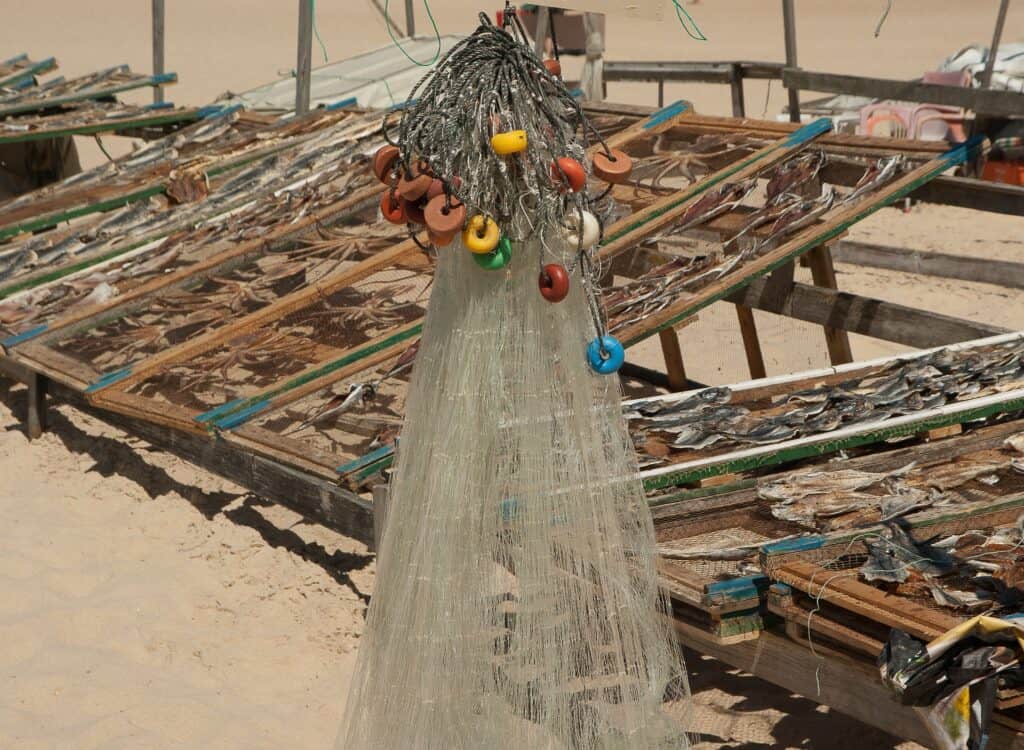
Fish drying on Nazaré Beach | Seca do Peixe
At the center of Nazaré’s wide beach, there is a designated area where local fishermen still dry part of their catch. As mentioned, Nazaré began as a traditional Portuguese fishing town and only in recent decades developed into one of Portugal’s most charming and important beach destinations. Even so, in typical Portuguese fashion, it continues to preserve older traditions.
Fish drying has been common in Portugal for hundreds of years, and this very tradition is what gave the world the anchovies eaten so widely today.
On the beach, you can still see a small part of that industry, with the fish-drying area especially active in summer. The fishermen and their wives remove the fish innards, split them open, and hang them on racks to dry in the sun and salt-laden air. After a few days, the dried fish is ready for storage and kept for the winter months, when the sea is rough and the fishermen cannot go out.
You can buy dried fish here, and it pairs wonderfully with a cold beer as an afternoon aperitif.
Click here to search for a place to stay in Nazaré…
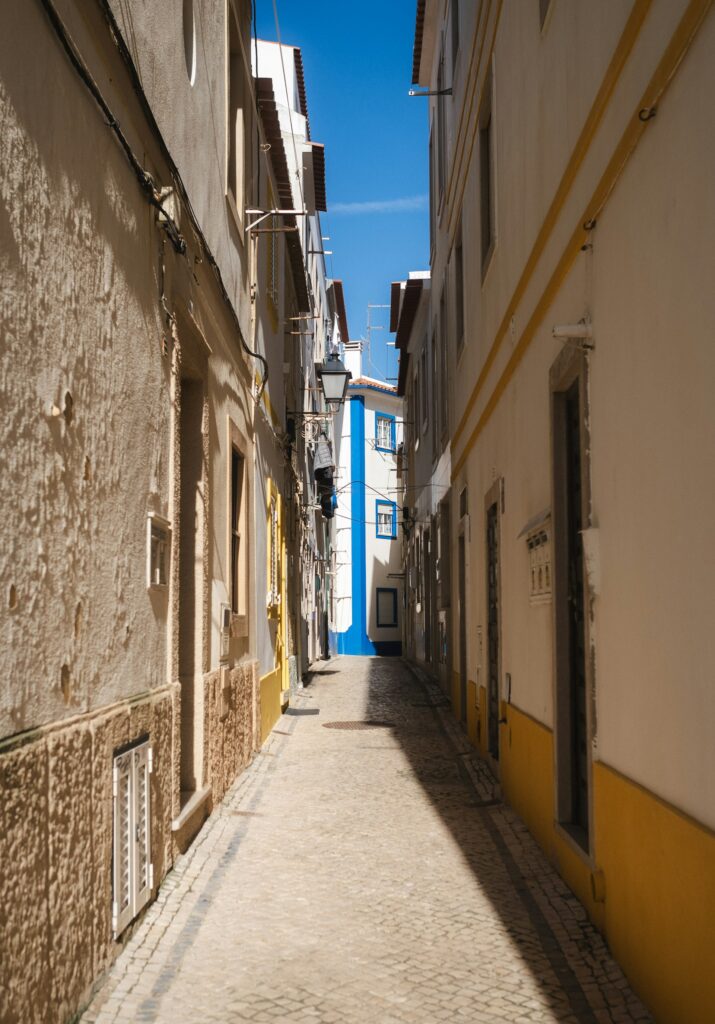
The streets behind the beach | Old Nazaré
The streets behind the center of Nazaré Beach are especially distinctive and interesting. They are quite narrow, almost like alleyways, and were laid out so that their western openings face the beach and allow the wind to flow through them. They begin along the promenade and rise uphill toward the slope, with houses built so that one façade faces one street and the other faces the parallel street behind it.
The result is striking: the streets of Nazaré directly behind the central beach are especially photogenic. The tightly packed white houses with colorful trim, together with the usually cobbled roadways, create a perfect backdrop for beautiful photos. They also make for a pleasant stroll, helped by the shade these narrow streets usually provide.
Nazaré Municipal Market | Mercado Municipal da Nazaré
The municipal market sits more or less opposite the center of the beach. It operates under the roof of an industrial-style building and mainly serves local residents shopping for everyday goods. It’s a nice stop for anyone who enjoys neighborhood markets in the classic European style, with stalls selling fruits and vegetables, meat, and fish.
If you have the option to cook while staying in town, it’s worth buying fish here, since it’s always very fresh.
The town’s main large parking areas are also right beside the market.
North Beach | Praia do Norte
Nazaré’s famous surf beach is North Beach, Praia do Norte, on the far side of the Sítio cliff.
Surfing at North Beach is for professionals only, as the waves are extremely high.
Click here to find a place to stay in Nazaré…
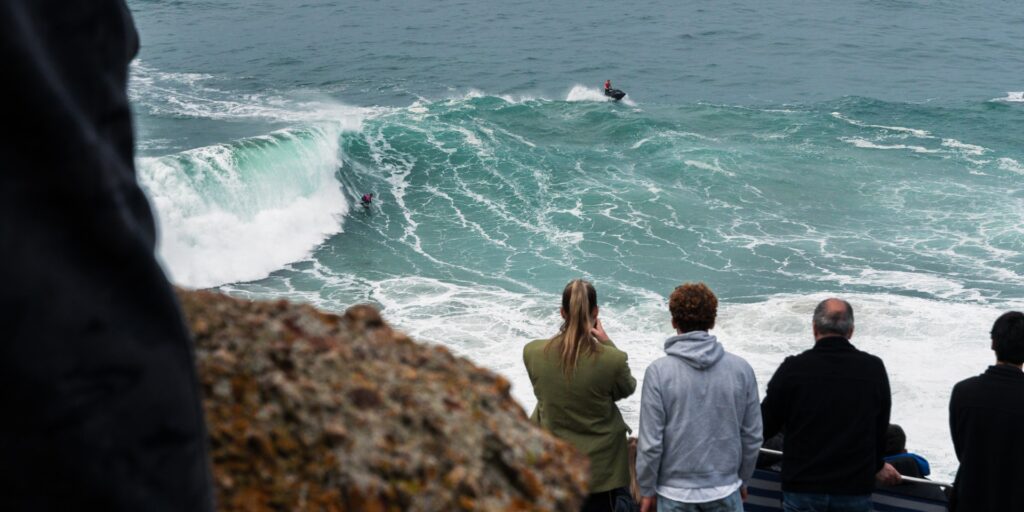
Surfing in Nazaré
The waves in Nazaré are breaking waves, created by a combination of strong Atlantic winds and the shape of the seabed. The Nazaré Canyon is extremely deep, allowing waves to reach the shore with very little loss of energy and remain so exceptionally tall.
Those massive waves are the reason Guinness records for the highest surf rides are set again and again off the coast of Nazaré in early winter. More or less all the records for the highest waves ever surfed in the world have been set off Nazaré’s North Beach, all on waves exceeding 20 meters.
The pioneer of big-wave surfing in Nazaré is American surfer Garrett “GMAC” McNamara, who set a world record here in 2011 by riding a 24-meter wave. Since then, that record has been broken several times again off the coast of Nazaré.
Like McNamara, other professional surfers from around the world relocate to town mainly in fall and winter, when the waves reach their peak heights.
Experienced surfers already know this, but it’s important to say that if you’re coming specifically to surf or to see the waves, you should plan at least a week in Nazaré, and some would say two, since no one can predict exactly when the biggest swells will arrive.
Note that Nazaré is not a classic young surfers' town like Ericeira or Peniche; it's more popular among very professional surfers
Click here to find hotels or vacation apartments in Nazaré…
Sights and attractions around Nazaré
Alcobaça Monastery | Mosteiro de Alcobaça
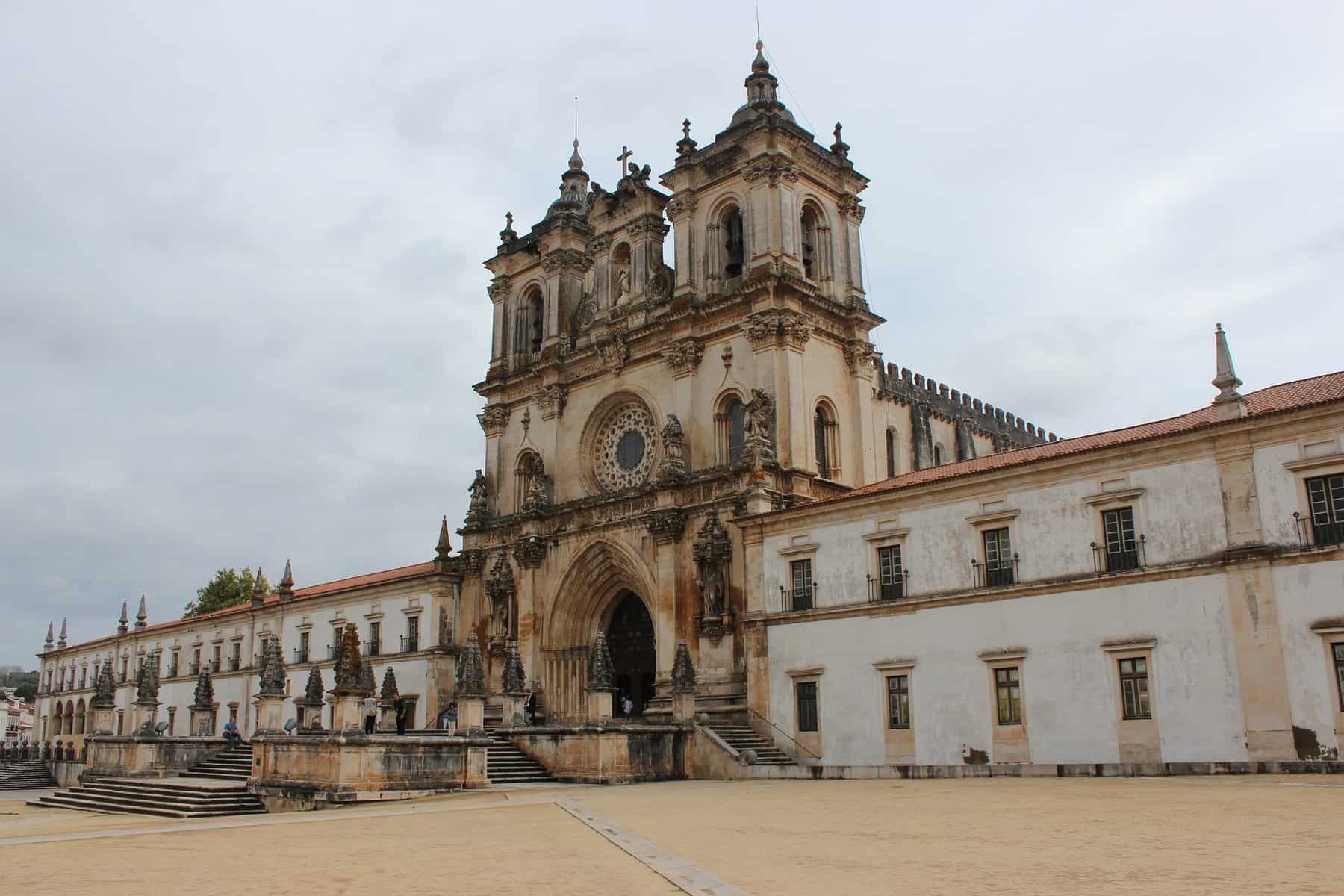
The town of Alcobaça lies about 15 minutes east of Nazaré. It developed around a vast Gothic monastery, Alcobaça Monastery, which is the city’s main attraction, is also a very popular stop when you travel between Porto and Lisbon.
Portugal’s first king, Afonso Henriques, established a church here after his victory over the Muslims and their expulsion from the area in 1147. The monastery is the first Gothic building in Portugal. Construction was completed in 1252, and fortunately it has survived almost exactly as it originally was.
King Afonso Henriques granted the monastery extensive lands, and it was run by Cistercian monks who accumulated great power and influence throughout the region. Because of its early date and its close connection to the foundation of Portugal, the monastery maintained a long and strong relationship with Portuguese kings over the generations. They supported it and continued adding various wings dedicated to them.
Several Portuguese kings are buried within the monastery complex, a sign of just how important it was to them and to the kingdom. It has also been recognized as a UNESCO World Heritage Site because of its close ties to Portuguese history.
Entry to the monastery begins at a vast square lined at one end with cafés and restaurants for the many visitors who come here. The façade above the main entrance is especially impressive, flanked on both sides by rows of windows from the monks’ quarters, where more than 1,000 monks once lived.
Inside, the church itself is in a restrained Cistercian style, with minimal ornamentation but high, bright ceilings and vaults.
The monastery contains three impressive cloisters, and the first of them, the Cloister of King Dinis, is the most beautiful.
Click here to search for hotels or vacation apartments in Nazaré and the surrounding area…
The large complex also includes several interesting rooms, including:
- the monks’ refectory
- the chapter house (sala do capitulo), where the monks gathered for discussion
- the striking kitchen
- the Hall of Kings, displaying later statues of Portugal’s monarchs