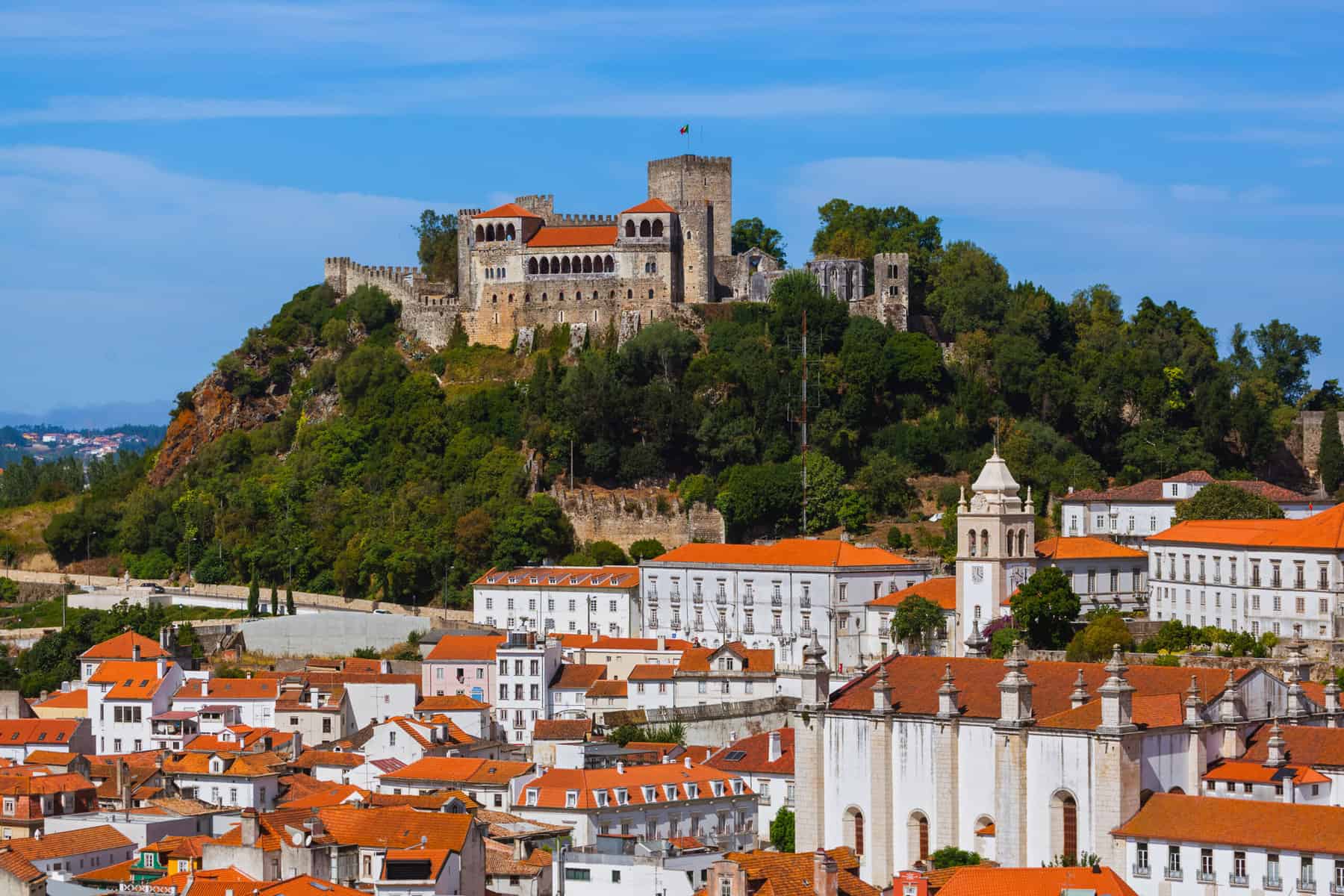
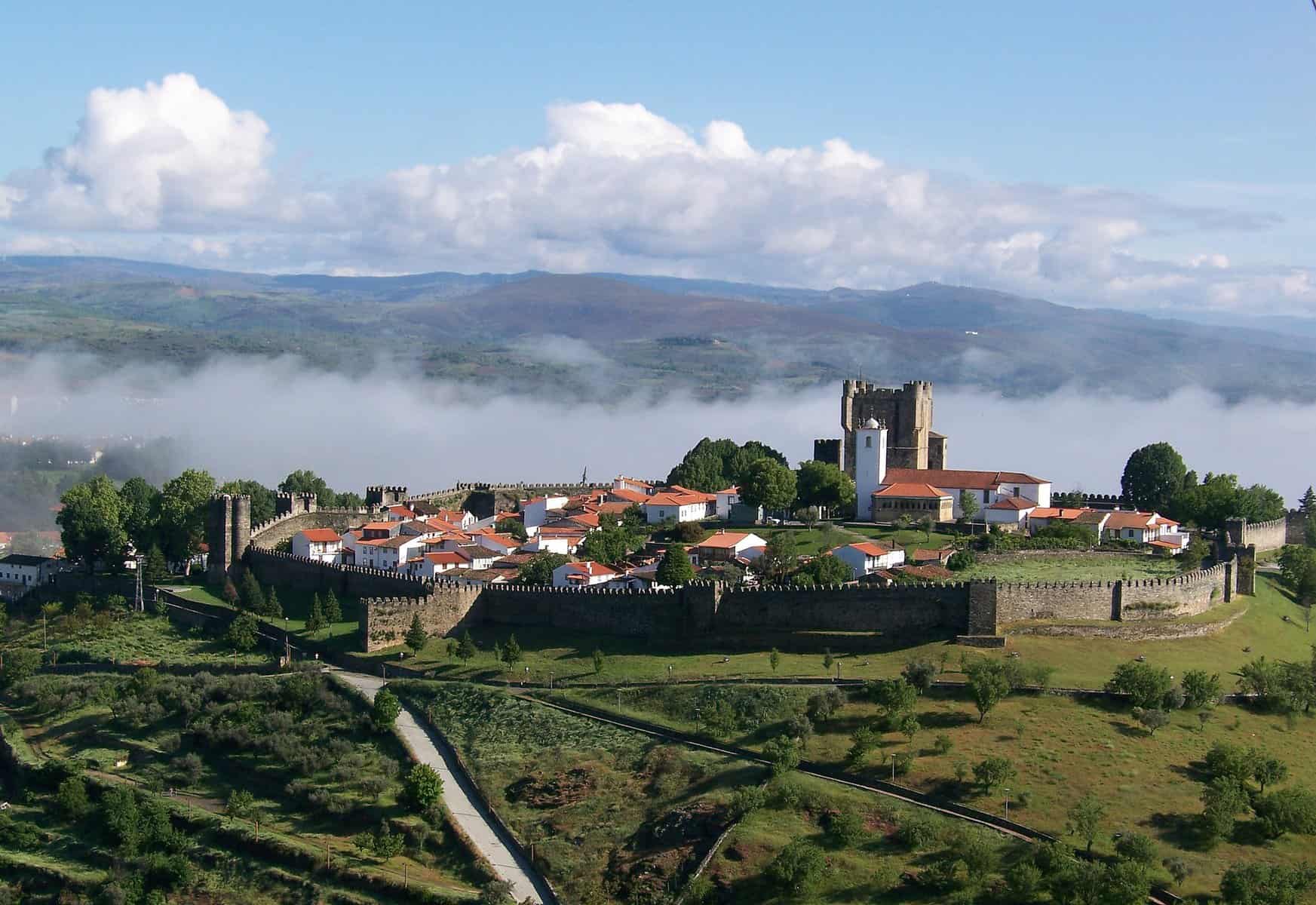
Bragança is the largest city in Portugal’s northeastern most region—the Terras de Trás-os-Montes district, which borders Spain to the north and east. Even so, it still feels like a small, intimate town, with narrow old streets full of the Portuguese charm we love so much. Above all, it is known for its castle complex, which served as an important stronghold for the young Kingdom of Portugal in the Middle Ages.
Most travelers reach Bragança as part of a rental car trip through the interior of northern Portugal and its surrounding countryside. The city itself is compact, and a few hours are enough to explore it. At the same time, it also serves as a gateway to nearby Montesinho Park and the wider rural landscape of unspoiled nature around it. Bragança is also known for hearty meat dishes slowly cooked over glowing embers, the kind of food that warms you from the inside out during the city’s cold mountain winters.
How much time should you spend in Bragança?
A visit to Bragança usually takes anywhere from a few hours to half a day. That said, most people arrive as part of a broader trip through northern Portugal. In that context, the city works well as a stop along your route, and it’s also a convenient base for staying overnight and heading out into the surrounding countryside and natural areas.
Click here to find accommodations in northern Bragança…
Seven must-see attractions and things to do in Bragança
-
- Walk through Porta de Santo António into the castle complex
- Visit the military museum and walk the fortress walls at Torre de Menagem
- See the old cathedral and the surrounding streets at Antiga Sé de Bragança
- Explore the science museum (great for kids) and the green trail that begins there at Corredor Verde do Fervença
- Experience the Podence Carnival in the nearby village (late February) | Carnaval de Podence
- Hike in Montesinho Natural Park and visit its villages | Parque Natural de Montesinho
- Try authentic Portuguese mountain cuisine in town or in Montesinho
How to get to Bragança
Bragança sits on Portugal’s far northern frontier, so most visitors get there by rental car as part of a trip through northern Portugal.
It is about a two-hour and fifteen-minute drive from Porto. Thanks to its proximity to the Spanish border, you can also reach it while traveling through Castile and León, via the city of Zamora, which is a little over an hour away by car.
Flights to Bragança
The international airport serving Bragança is Porto Airport (code OPO). From there, the drive to Bragança takes about two hours.
Public transportation to Bragança
The only way to reach Bragança by public transportation is by bus. Like other towns and small cities high in Portugal’s mountains, Bragança does not have a train station!
There are direct buses from Porto from Campanhã Station that take about 3 to 4 hours. If there is no direct service, you can travel halfway on a line to the town of Vila Real and then continue by bus to Bragança.
Click here to search for accommodations in Bragança…
Good to know about Bragança
Bragança, sometimes also spelled Braganza, is a city tucked into the far northeastern corner of Portugal, about 10 kilometers from the Spanish border. It is the largest city in Portugal’s northeasternmost district, Terras de Trás-os-Montes, and has a population of around 35,000.
The city in northern Portugal is famous for its remarkably well-preserved castle complex and for its dramatic hilltop setting. Bragança lies inland, high in the mountains at an elevation of 700 meters above sea level. That means .
For most of history, the area where Bragança now stands was remote and marginal. Even during the Muslim conquests of the Iberian Peninsula, it was barely affected. Only with the founding of the Kingdom of Portugal in the 12th century did the city itself begin to develop. Because it stood on the frontier near the Castilian kingdoms, its castle fortifications were strengthened and the walls expanded over time. Ever since, the city has been closely identified with the great castle rising above it.
In 1442, King Afonso V created the Duchy of Bragança for his uncle, who was granted patronage over the region and drew income from the crops grown on the wide surrounding lands. The title “Duke of Bragança” later became one of the most important in the Portuguese royal family, as reflected in many buildings across Portugal that bear the name, including the remarkable palace in Guimarães—Palace of the Dukes of Braganza.
Today, the city serves as the urban center for the broad rural area around it, and it is a starting point for Montesinho Park, which stretches across most of the district. Bragança is also known for restaurants serving steaming stew-like dishes slowly cooked over glowing coals. These meals come from hunting traditions, which remain a common pastime in the region, just as they were centuries ago.
Bragança Castle Complex
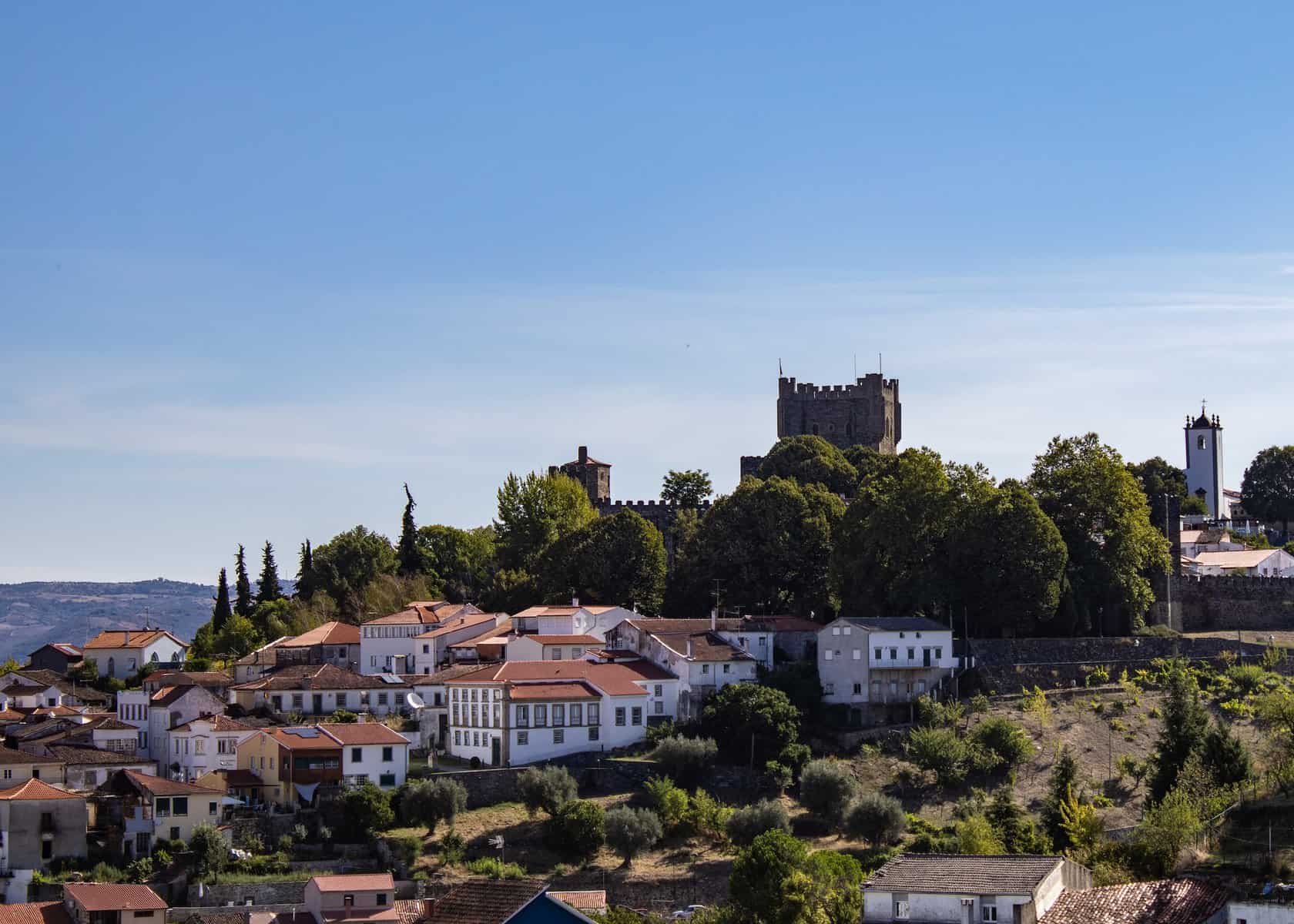
Bragança Castle is the city’s most important landmark. The walls around the citadel, built in wonderful medieval style, have survived almost intact. The current castle was built in 1409 by King João I, though it stands on the site of an earlier fortress built 250 years earlier by Portugal’s first king, Afonso Henriques.
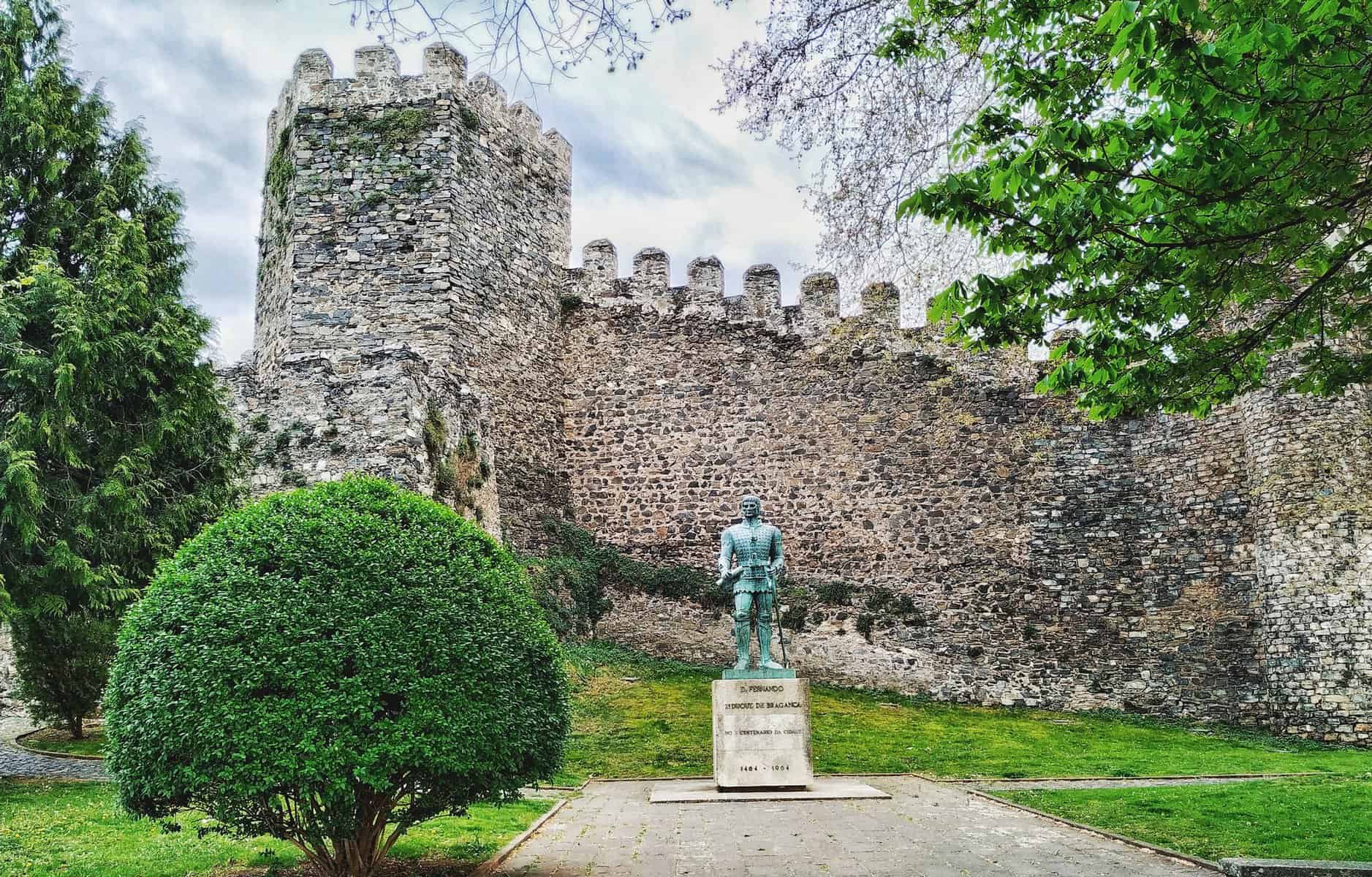
Along the walls are fifteen watchtowers and three entrance gates, the main one used by visitors being Porta de Santo António. You can reach the castle by following the city streets as they climb steeply from the center up toward the hilltop. It is also possible to approach via the “green trail,” which is a bit more challenging but shaded by trees and gardens.
Click here to find accommodations in Bragança with its lovely castle…
Parts of the castle complex:
- Porta de Santo António – Porta de Santo António
This is the castle’s main entrance, reached directly from the city streets that rise westward toward the fortress, such as R. Trindade Coelho.
The walk through the gate alone is worth the climb, though of course there is much more to see inside.
As you arrive, you pass a lovely, well-kept garden and then move beneath two separate arches set within the walls, which together form the gateway.
Above the arches stand two watchtowers, and crossing through the gate feels like stepping back into the Middle Ages. The gray stone walls and Bragança’s usually overcast skies only deepen the mood. - Pillory | Pelourinho de Bragança
The pelourinho stands in the garden around the great citadel. Its pig-shaped base dates to the pre-Christian period, probably around 500 BCE. The column itself is from the 12th or 13th century and was used as a scaffold for public executions, as was customary in the Middle Ages. There is another similar pillar in the city center, directly opposite the old cathedral. - The citadel | Torre de Menagem
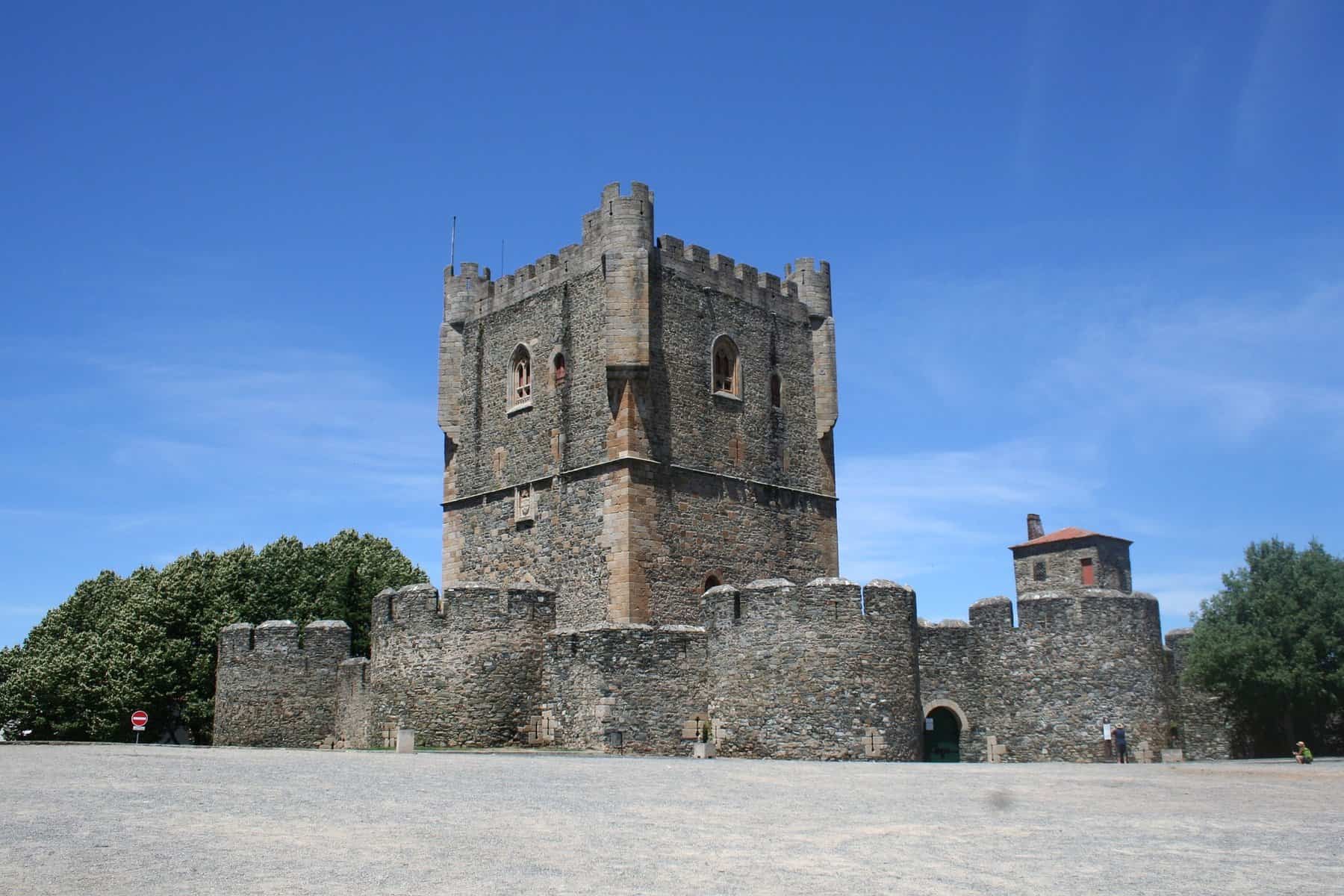
The citadel within the complex was the final stronghold, protected by an additional inner wall. It was built according to medieval defensive ideas, before heavy cannon fire began to shake Europe. Square in shape, 33 meters high and 17 meters wide, it was meant to serve as the last refuge for its occupants if invaders broke through both outer walls.
Today, the tower is one of the city’s symbols, and its rooftop offers wonderful views over the city and surrounding countryside. The structure features Gothic details around the windows, along with the emblem of the House of Aviz, the dynasty of King João I. The military museum is also housed inside the citadel, displaying weapons from centuries past. - Church of Santa Maria | Igreja de Santa Maria
This small, charming church inside the walls began to be built in the 14th century. It was altered and renovated over time, and today it can broadly be described as Baroque. Its façade, with a white backdrop, recalls many churches across Portugal. Here, though, the Baroque framing seems to have been added onto a structure originally built in a different style.
Inside, the colorful ceiling paintings in the main chapel and the altar are striking works of art. - Town Hall Building | Domus Municipalis
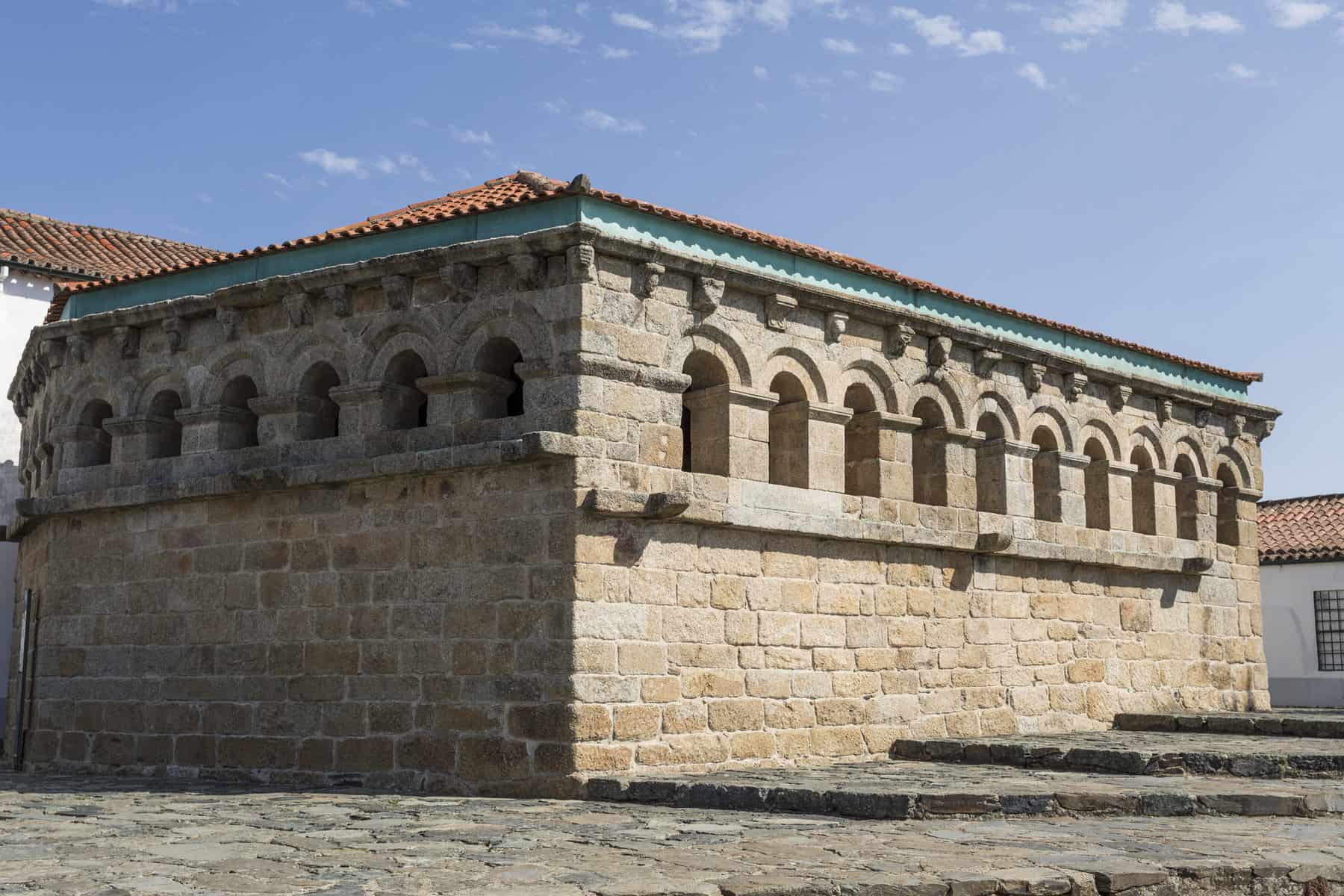
The town hall within the castle complex is the most unusual building in the entire site, and many consider it the highlight of a visit to Bragança. That is because it is a Romanesque building—one of the very few to survive anywhere in Portugal, and the only one built for civic rather than religious use. Its stone construction, instead of the wood used in many public buildings of the time, adds to its grandeur, especially since city councils usually reserved lavish architecture for religious and royal structures.
The irregular pentagonal building contains a broad upper gallery framed by symmetrical 13th-century windows. Its lower section is probably older.
This was once where the city’s leading figures gathered, and it is easy to imagine them seated on one of the benches beneath the windows, discussing the matters of the day in Bragança.
The roof was added in the 20th century as part of the site’s restoration and preservation, and beneath the building is an elevated cistern on which the meeting chamber was actually built. - Mask Museum | Museu Ibérico da Máscara e do Traje
This small museum occupies one of the houses inside the castle complex. It presents the culture of inland Portugal’s winter carnivals, along with traditions from the Zamora region across the border in Spain.
The museum opened in 2007 in cooperation with Spain, and it gives visitors who are not in town during carnival season a chance to understand and see the roots of the mask and costume traditions that have long been used—and still are used—by local communities in their traditional ceremonies.
Other attractions and interesting places in Bragança
Old Cathedral of Bragança | Antiga Sé de Bragança
Also known as the Church of São João Baptista, it stands in the heart of the city. The cathedral building was constructed by the Jesuit order in the 15th century and served them for nearly 200 years, until 1759. From 1764 onward, the bishop’s seat was moved from Miranda to Bragança, and the complex then became the cathedral and was significantly expanded.
Architecturally, the building blends several styles, reflecting its different phases of development. The entrance door is Renaissance, and the stone framing around the openings, set against the white background so typical of churches in Portugal, stands out in this cathedral at the center of town.
Inside, the 18th-century gilded altar and the 17th-century sacristy, with its antique cabinetry, are simply stunning. They are complemented by large oil paintings depicting scenes from the life of Saint Francis of Assisi and Ignatius of Antioch.
Cathedral Square and the surrounding streets | Praça da Sé
The square in front of the cathedral and the neighboring streets form the heart of the old town. The center is not large, but it is pleasant for strolling, wandering, practical shopping, and relaxing at a café or restaurant. The square is also close to several other points of interest in Bragança, including the green trail and the Graça Morais Museum, which stands right on one of its corners. From here, you can also begin the roughly ten-minute walk west and uphill to the castle.
Click here to find accommodations in northern Bragança…
New Cathedral of Bragança | Catedral de Bragança
The New Cathedral of Bragança, housed in a modern building, was the first cathedral consecrated in Portugal in the 21st century.
A few years after the cathedral seat moved from Miranda to Bragança in 1764, the bishop appealed to the royal authorities to build a new cathedral in the city. The old cathedral had originally been built as a monastery and school run by the Jesuits from the 15th century onward, and the bishop wanted a larger, newer home for the faithful.
The dream took more than two centuries to come to life, and only in the 1980s did it begin to take shape. The Portuguese architect Vassalo Rosa was chosen to design the cathedral, and construction began in the late 1980s. The cathedral was consecrated in 2001—fairly quick by cathedral-building standards.
The new cathedral covers more than 10,000 square meters. It is entirely modern in style, with a large plaza outside and a central staircase flanked by gentle water features.
Inside, the altarpiece and the altar itself are contemporary in style, built in stone on a clean, stepped platform. Behind the rows of matching wooden pews set across the cathedral’s two levels are two modern organs, which complete the overall design.
In short, it’s an intriguing experience—one more often associated with churches in the United States than with the Iberian Peninsula.
Church of São Vicente | Igreja de São Vicente
At the end of R. Combatentes da Grande Guerra, the broad street leading from Cathedral Square toward the castle, you’ll find the charming Church of São Vicente.
The church forecourt forms a small square lined with beautiful, unmistakably Portuguese buildings, and beyond it the climb toward the castle begins, with the fortress only about a four-minute walk away.
This small church was already here in the 13th century, though it was enlarged and renovated in the 16th and 17th centuries into what you see today. It is very beautiful both outside and in, with the exterior especially notable for the thick, decorative stone framing around the main door and windows.
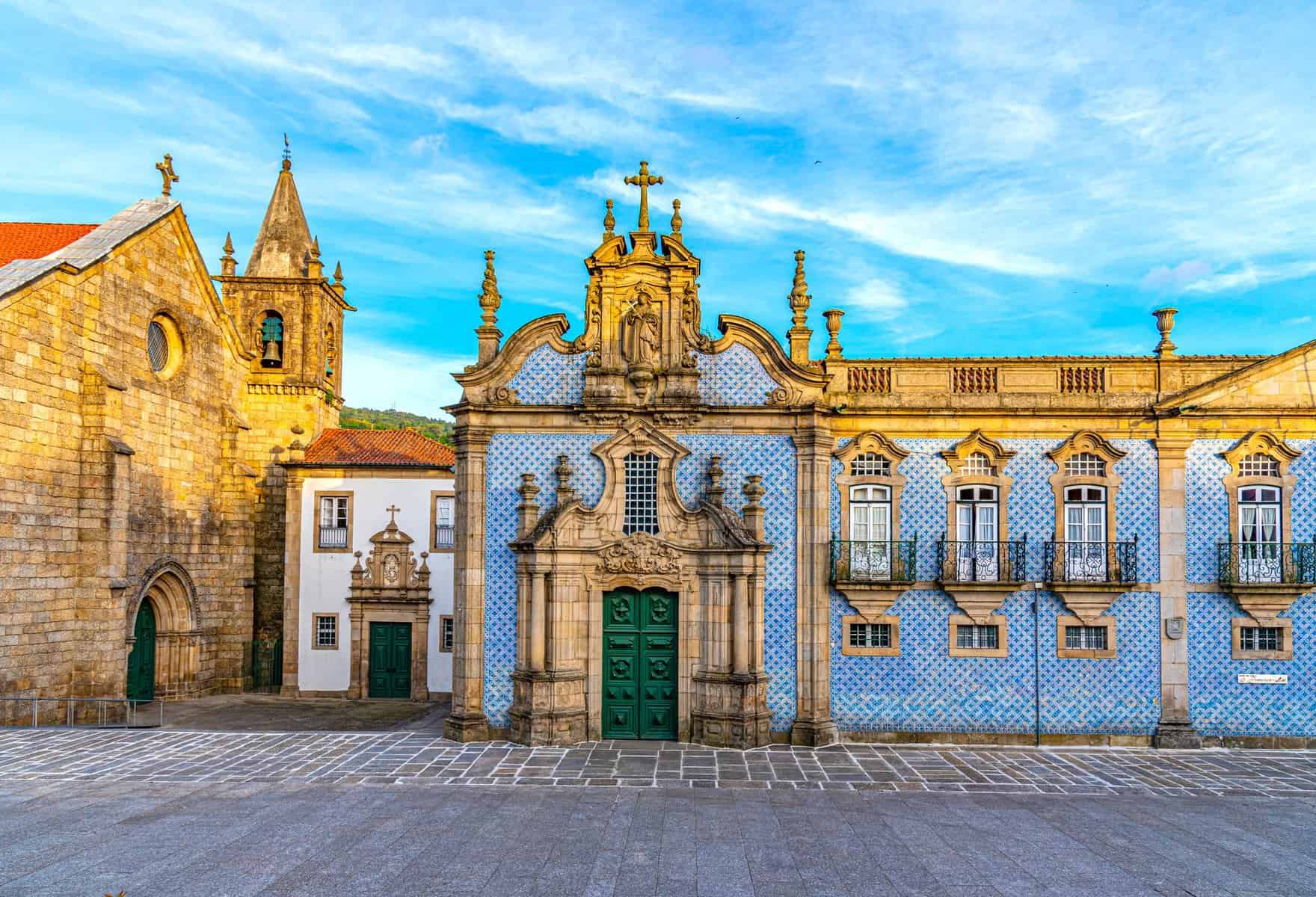
Also on the left side of the façade is a blue azulejo panel that stands out against the white background and feels distinct from other churches in the city. It depicts the secret gathering of local Portuguese forces that met in the church in 1808 to form a front against the French invasions during the Napoleonic Wars.
Inside, the golden Baroque altarpiece and the ceiling above it are the highlights, along with the magnificent, unmistakably Portuguese azulejo wall coverings that are impossible to look away from.
Click here to search for accommodations in Bragança…
Graça Morais Center for Contemporary Art | Centro de Arte Contemporânea Graça Morais
This museum stands opposite the old cathedral façade, on the other side of the square. Opened to the public in 2008, it is housed in a modern building designed by one of Portugal’s leading architects of his generation, Eduardo Souto de Moura.
The museum functions as an arts center and hosts a wide range of activities, including concerts and workshops, in addition to its exhibitions. A large part of the display features works by Graça Morais, who was born not far from Bragança and for whom the museum is named.
As you would expect from a contemporary art museum, many of the exhibitions are temporary and showcase works by emerging artists.
The clean, modern building is complemented by a small green garden and an inviting café, making it a lovely place to wrap up your visit before continuing with the day.
For more information and museum opening hours…
Abade de Baçal Museum | Museu do Abade de Baçal
The 17th-century building has been preserved much as it was, and together with the gardens behind it, it creates a wonderful complex that provides a fitting setting for the art inside. The museum is housed in the bishop’s palace, which once served as his residence for about half the year, during the period when the diocese was shared between Miranda and Bragança. Since 1915, the complex has served as a museum.
In honor of its founder and the building’s heritage, it was named after the abbot. Its founder, Abbot Francisco Manuel Alves, was a learned scholar who studied the history of northeastern Portugal and the art created there. He was the one who worked to ensure that the museum would properly present the region’s history and artistic heritage.
Like other regional museums, it covers a little of everything, but here there is a clear emphasis on art, and the exhibition spaces would not feel out of place in larger, better-known museums across Europe. In addition to the art, there is also an exhibit on the history of hunting in the region, a tradition that remains an important part of local heritage to this day. Many of northeastern Portugal’s typical dishes reflect that legacy—they are, in many ways, “hunters’ dishes,” usually beginning with plenty of meat slowly cooked into a stew over the fire.
The museum also includes an impressive section devoted to coins and jewelry, as well as a furniture wing, both featuring pieces from the 18th and 19th centuries.
For more information and museum opening hours…
Church of São Bento | Igreja e Convento de São Bento
About 50 meters downhill from the Convent of São Francisco stands the small Church of São Bento. This church, with its Baroque façade, has stood here since 1590. Inside, you’ll find colorful ceiling paintings and a gilded altar that is lavishly, almost extravagantly, decorated.
Church of São Francisco | Igreja e Convento de São Francisco
The monastery at the foot of the castle hill had already been established here by 1271. It is named after Francis of Assisi in Italy, one of the most important saints in the Catholic world who did not come from the Land of Israel in the first century CE.
In the past, the monastery was a popular stop for pilgrims, especially those coming from southern Portugal and southern Spain on their way to Santiago de Compostela, not terribly far from Bragança.
The monastery façade dates from the 17th century, and inside are several old frescoes on the walls.
Most of the large structure seen today, however, dates from the 19th century, when the site was converted into a military hospital. Today, most of the building serves municipal functions, so only part of it can be visited, though it is also worth simply admiring from the outside and taking in the view from the large forecourt in front.
You can visit it before or after seeing the nearby castle complex, or come directly from the city and combine it with the small and lovely Church of São Bento next door.
Click here to find accommodations in northern Bragança…
The Benedictine Monastery | Mosteiro de Castro de Avelãs
On the western outskirts of Bragança, in the heart of a rural area yet still very close to the city—about 3 kilometers away—you’ll find this well-kept Benedictine monastery.
A monastery has stood here since the 12th century, and it played an important role in the development of Catholic settlement in the region. During the Middle Ages, it also served as a stopping point on the road to Santiago de Compostela, just to the north.
The building is unusual for Portugal and was constructed to a very high standard, which likely also helped it survive so well.
A visit to the monastery offers a rural experience without taking you too far from Bragança’s other points of interest and the surrounding area. The village where it stands, Castro de Avelãs, is small, picturesque, surrounded by fields, and very quiet.
The green walkway above the Fervença River | Corredor Verde do Fervença
One of the most pleasant experiences in Bragança is walking along the raised path above the stream channel that runs through the city. Most of the route is built on wooden bridges or boardwalks and is very easy to walk.
The trail has two sections. One begins at the large pool formed along the riverbank at the foot of the Batoques neighborhood and heads south. The second begins about 200 meters away, from the eastern side of Batoques, and continues up to the hill where the castle stands.
Along the riverside route are many viewpoints with lovely views over the city and the surrounding landscape.
Click here to search for accommodations in Bragança…
Science Museum | Centro de Ciência Viva
This small, interactive science museum stands by the stream at the start of the green trail. It is mainly geared toward children, though adults can enjoy it too, especially the distinctive building perched right above the rushing stream at the bottom of the Batoques neighborhood.
The modern structure was built in 2007 as a municipal educational initiative on the site of what used to be the city’s flour mill.
The museum focuses on renewable energy, showing how people already knew how to harness it in the past, as with the old flour mill that once operated here. Most of the exhibit text is in Portuguese, but children can still enjoy the interactive displays.
Events in Bragança
Podence Carnival | Carnaval de Podence
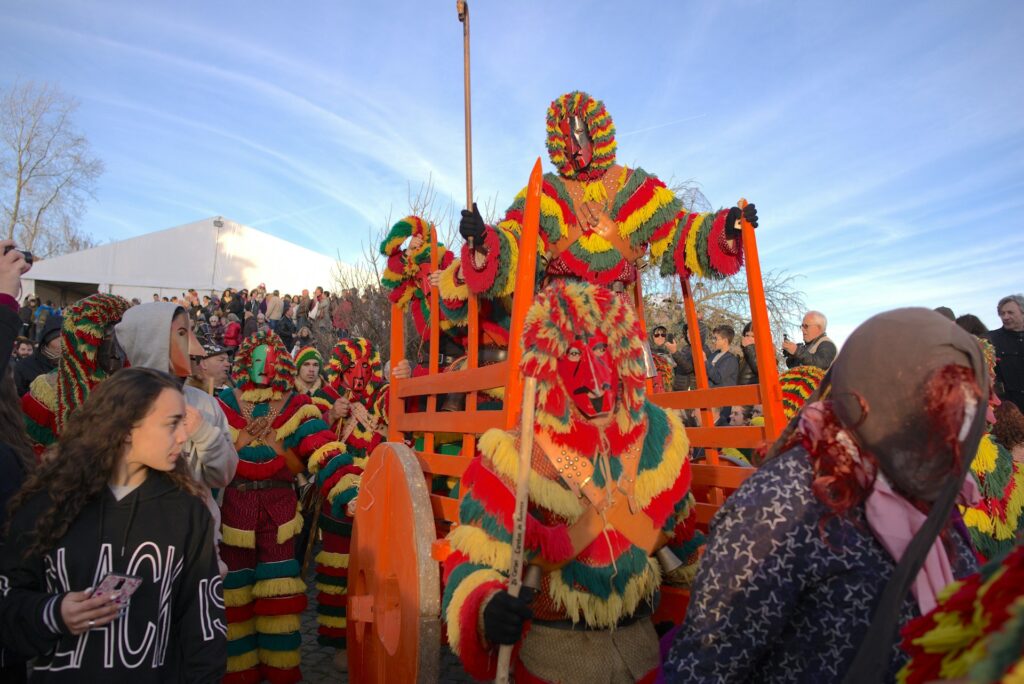
Also known as Caretos de Podence, it takes place every year from late February into early March. The caretos are boys wearing pointed-nose masks and colorful costumes, whose role is to disrupt the village order and create cheerful chaos.
During the carnival, they race through the village streets, replacing the usual quiet and calm with noise, dancing, and commotion. The carnival has pagan roots and originally served as a way to release pent-up energy and desire after the cold winter months, just before the blossoming spring season associated with fertility.
Because of its vivid character and the precise way it has been preserved over the centuries, the carnival has been recognized as a UNESCO Intangible Cultural Heritage event. There is also a traveling troupe of caretos from the village that performs around Portugal and beyond.
The carnival always begins on Sunday, known as Domingo Gordo, or Fat Sunday. It starts with an event featuring mock weddings between residents selected in advance. After that, throughout the day, the costumed boys run, dance, and revel throughout the village, and the same continues the next day.
It ends on Tuesday with a parade through the village streets, and at the close of the day, a straw figure is burned on a bonfire | Queima do Entrudo, symbolizing the end of the carnival.
Click here to find accommodations in Bragança and the surrounding area…
Attractions and places of interest around Bragança
Montesinho Natural Park and its villages | Parque Natural de Montesinho
About a half-hour drive from Bragança, along the northern border between Portugal and Spain, lies the wild, primeval landscape of Montesinho. The park stretches toward Spain, and some of the villages within it are literally split between the two countries. Even so, the dominant culture feels more Portuguese, as is the case in most villages and small towns along the border.
Entry into the park is usually through the village of the same name, where you’ll also find a visitor center. Much of the park remains truly unspoiled, and its remote, overlooked setting within the Iberian Peninsula only adds to its appeal. Several traditional villages in and around the park preserve their heritage, with Guadramil and Rio de Onor among the most beautiful.
Although this is a nature reserve, the breathtaking scenery is only part of the reason to come—at least half the appeal of Montesinho lies in visiting the remote villages scattered across it. With their slate-built houses, these settlements evoke the mountain villages of Zagori in northern Greece, both in appearance and in their sense of isolation.
Over recent decades, these far-flung villages have become an attraction in their own right, offering a glimpse of an older way of life in a distant, mountainous, often misty corner of the world—so different from what most of us experience day to day. The traditional homes blend so naturally into the landscape that at times you hardly notice them.
The park is characterized by gentle hills, streams, oak woods, and broad-trunked chestnut trees. In the western part, the forests are especially photogenic in fall, when yellow and reddish tones stand out against the green backdrop.
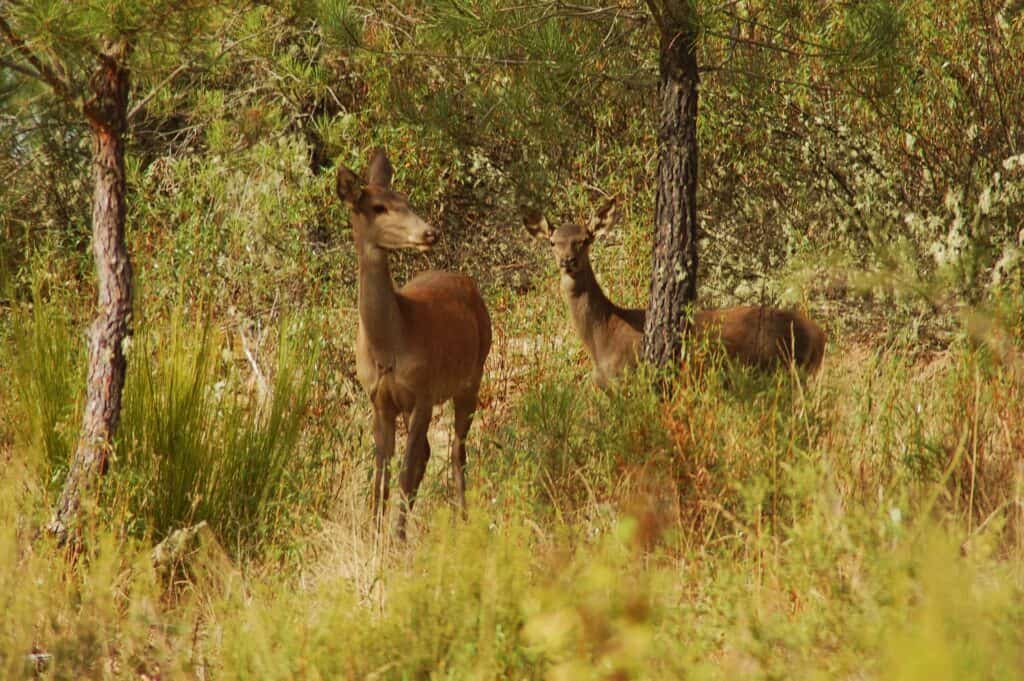
Montesinho’s higher peaks rise to nearly 1,500 meters above sea level, so even summer nights are cool, while winter often brings snow. The park is also rich in wildlife, helped by its remoteness—especially deer, wild boar, and even wolf packs.
When should you visit Montesinho? Fall is already cool, but the foliage is beautiful. Winter is cold, though it’s a great time to enjoy excellent casseroles and stews in the villages, and perhaps even go horseback riding, such as at Centro Hípico De França—just dress warmly. Spring brings lovely blooms, especially in the eastern parts of the park, while summer is the season for hiking trails that wind through forests and beside cool streams crossed by ancient bridges.
Click here to find accommodations in the villages of Montesinho…
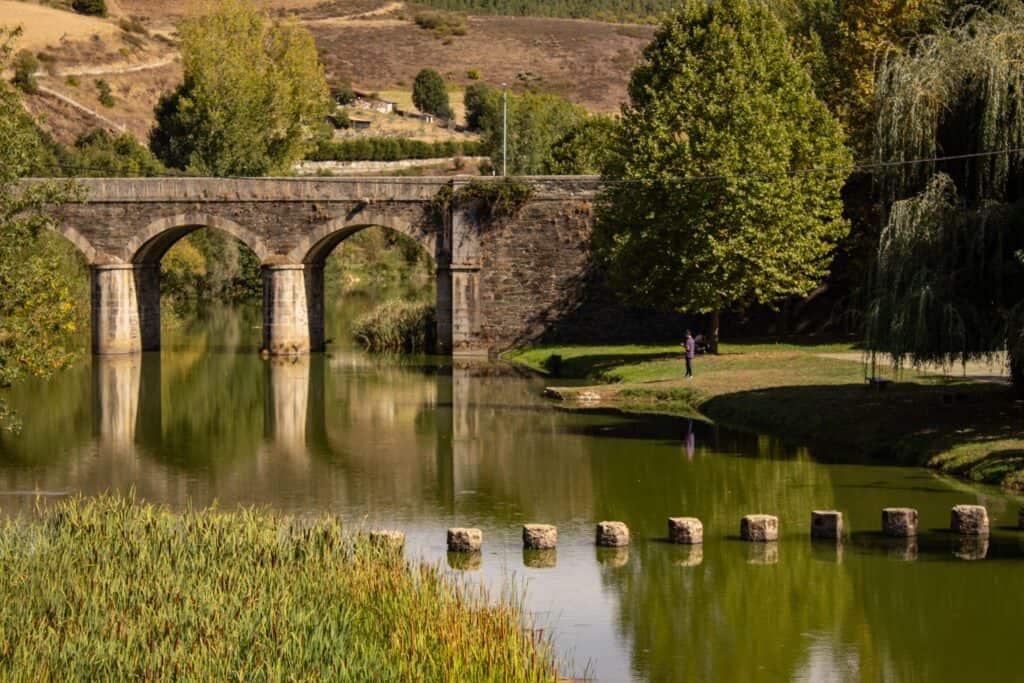
Gimonde Bridge
The village of Gimonde lies about a ten-minute drive east of Bragança. The village stands where two rivers meet and is home to a beautiful old bridge, along with another nearby bridge that carries the road.
The whole confluence area, together with the two bridges, feels like a small park or spacious garden, with a few stone benches beneath the trees and, here and there, stork nests perched on tall utility poles.
It makes a lovely escape just a few minutes from the city—a place for a picnic, or simply to enjoy the peace and scenery shaped by the bridges and the stream flowing beneath them.
Azibo Lake Nature Reserve | Albufeira do Azibo
The lake was created by damming the Azibo River, one of the rivers that flows into the famous Douro River. Here, a shallow lake formed and was later declared a nature reserve, making it popular with birdlife.
In summer, locals head to the artificial beaches created along the lake’s northern shore, near the village of Podence, which is also known for the carnival held there every February. That is also when water sports are available on the lake, mainly pedal boats and canoes.
The beaches are called Praia Fluvial da Fraga and Praia Fluvial da Ribeira.
Click here to search for accommodations in the villages of Montesinho…