Belmonte is a small town—almost a large village—in the mountainous northeastern part of central Portugal. It is best known for three things: the great castle that overlooks it, its status as the birthplace of Brazil’s discoverer Pedro Cabral, and its remarkable Jewish history. A community of crypto-Jews was found here, one that practiced its faith in secret for 500 years until only the last few decades. Belmonte lies far from Portugal’s main tourist hubs, yet surprisingly, it can fit into an itinerary in either northern or southern Portugal. Most travelers reach Belmonte as a continuation of a trip from the Alentejo and Castelo Branco area, or from northern Portugal via the city of Viseu.
How much time should you spend in Belmonte?
Two to three hours is enough to see Belmonte’s main sights. Still, because Belmonte is far from just about everywhere, once you add the driving time, it easily turns into half a day.
Click here for accommodations in Belmonte…
4 must-see sights and attractions in Belmonte
- The castle | Castelo de Belmonte
- The Jewish Museum | Museu dos Discobrimentos
- The Museum of Discoveries | Museu Judaico De Belmonte
- The mysterious Roman ruins | Torre de Centum Cellas
How do you get to Belmonte?
Most people get to Belmonte by rental car. The drive from Porto takes two and a half hours, while Lisbon is about three hours away. The city of Viseu is relatively close to Belmonte, about an hour away.
If you’re traveling by public transportation, Belmonte can only be reached by bus. Whether you’re coming from Porto or Lisbon, the usual route is to take a bus to Guarda and change there for Belmonte. From Lisbon, another option is to travel via the town of Castelo Branco.
The nearest major airport to Belmonte is Porto Airport | Aeroporto Francisco Sá Carneiro.
Click here for our Ultimate Portugal Car Rental Guide…
Where to stay in Belmonte?
Because Belmonte is a remote destination, it’s worth considering spending the night here and planning your trip accordingly.
If you decide to stay in Belmonte, it’s a good idea to arrive in the evening and explore the main sights the following morning. Another option is to arrive in the afternoon, around 3:00–4:00 p.m., before the sites close, visit them, have dinner at one of the local restaurants, and spend the night. The next day, you can finish your visit—or, if you’ve already seen everything, continue on to your next destination.
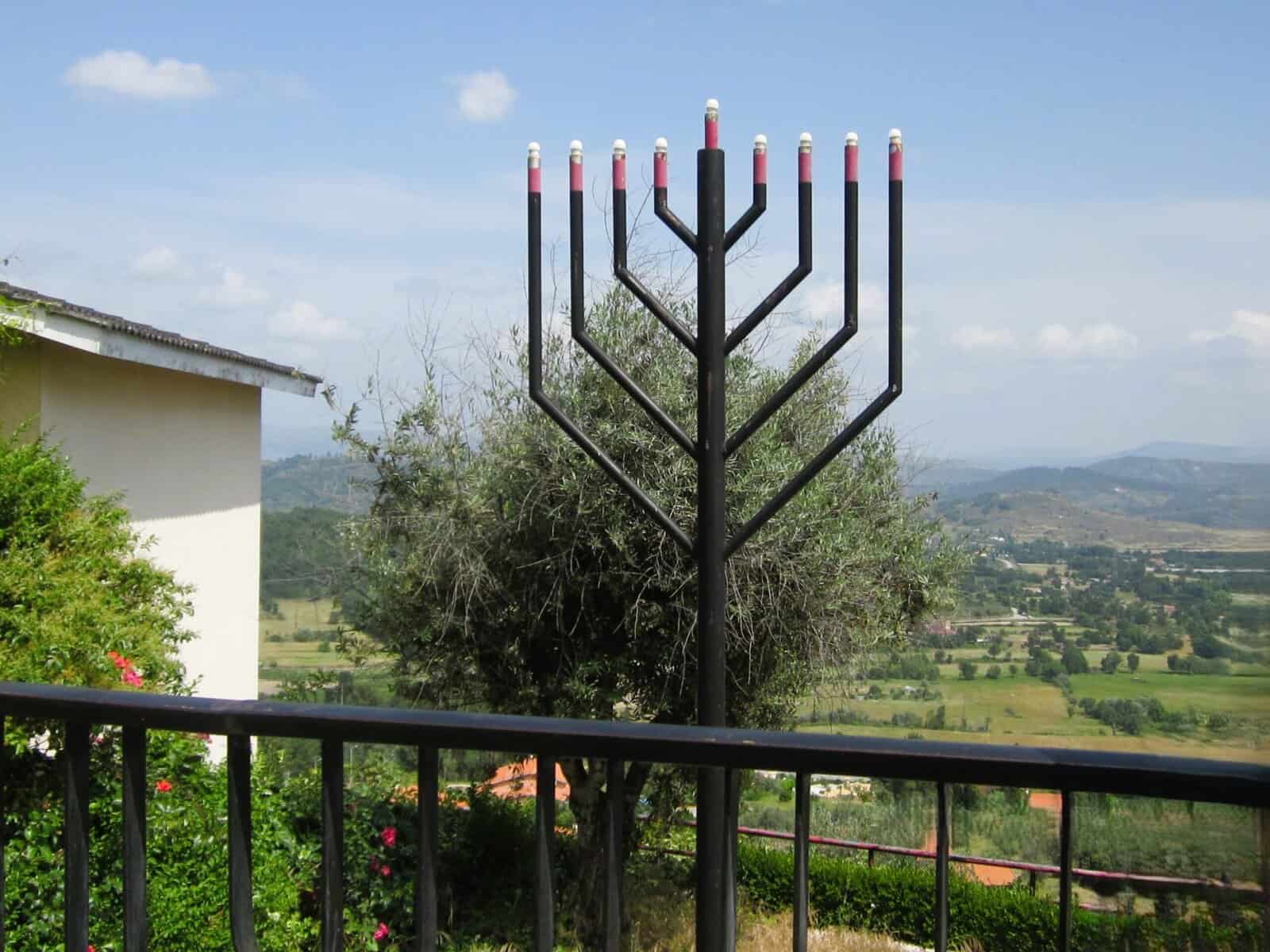
The best hotel in Belmonte is Pousada Convento de Belmonte. It’s about a 4-minute drive from the town center. A pousada is a hotel housed in a historic building, and this one occupies a former convent. It also offers wonderful views of the Serra da Estrela mountains and has its own restaurant.
Belmonte also has a number of private guesthouses, which can make for a wonderful rural stay. There are several restaurants in town as well, so staying overnight is easy.
Click here for reviews, prices, and photos of hotels and vacation apartments in Belmonte…
About Belmonte
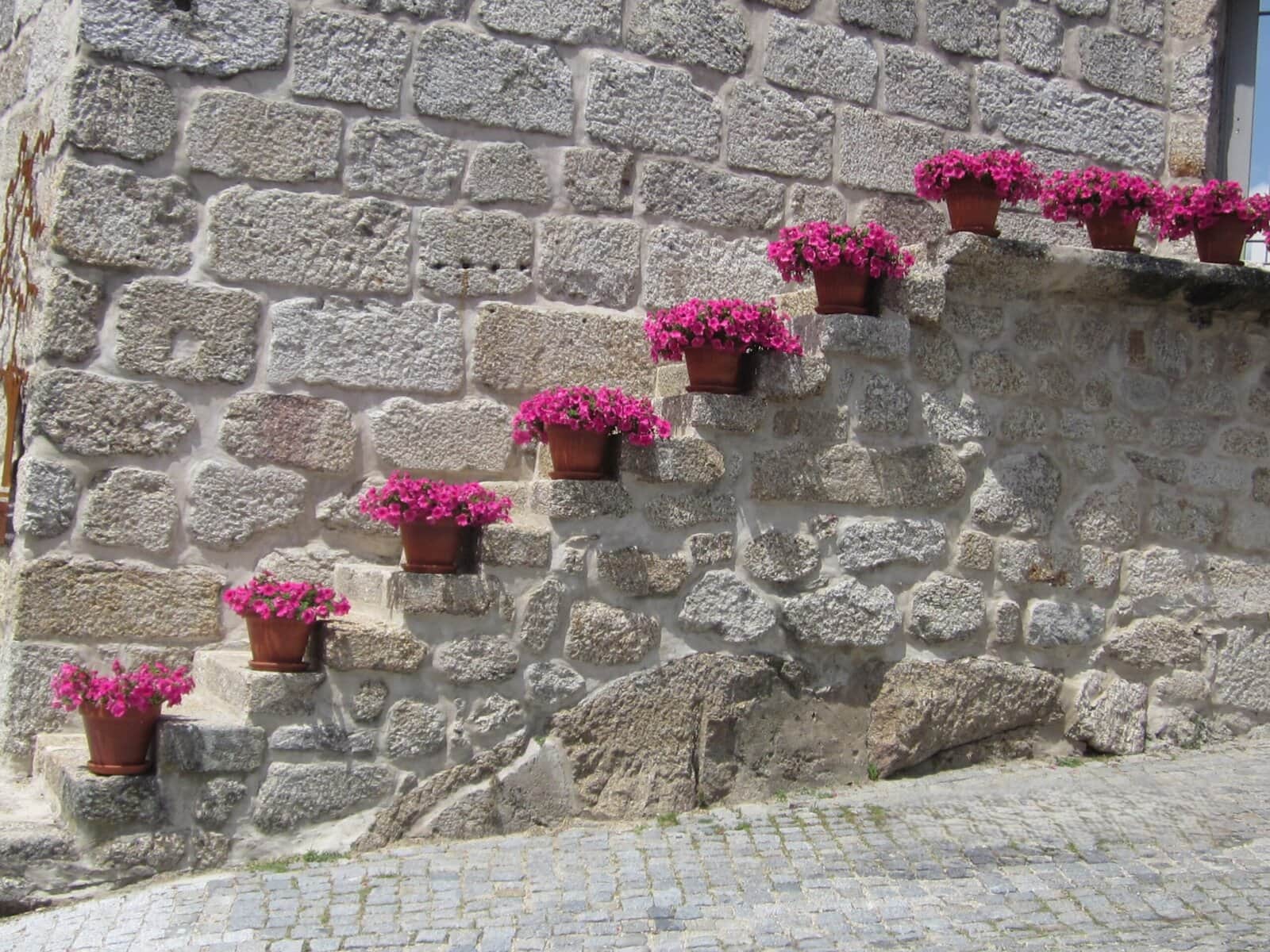
A narrow road winds through the Serra da Estrela mountains, south of Guarda—the highest city in Portugal at 1,053 meters—in the center of the country, and leads to a truly unusual town. Belmonte—“beautiful mountain”—has stood here for more than 800 years, built on granite rock and shaped by a fascinating history that has left its mark on both the architecture and the local culture.
The town lies near the Zêzere River and has a population of around 7,000, yet it covers 118 square kilometers and offers plenty for visitors. First and most striking is Belmonte Castle, perched on a rocky hill above the town with sweeping views all around. The castle has an interesting history and commemorates the man born here who discovered Brazil in 1500, Pedro Álvares Cabral. Portugal was a major maritime power in the fifteenth and sixteenth centuries, an era known as the Age of Discovery, and Belmonte proudly claims its part in that story, including through a museum dedicated to it.
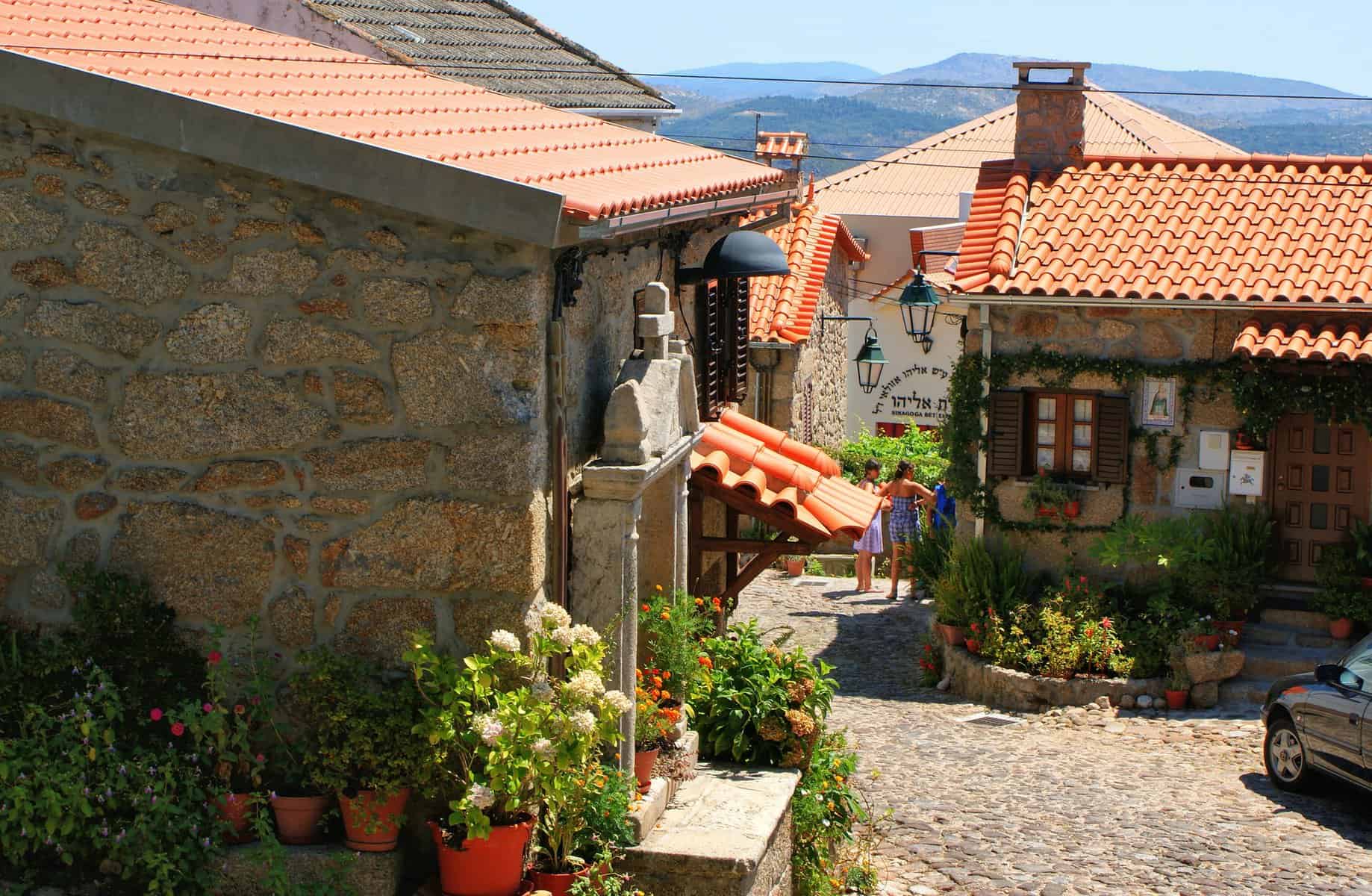
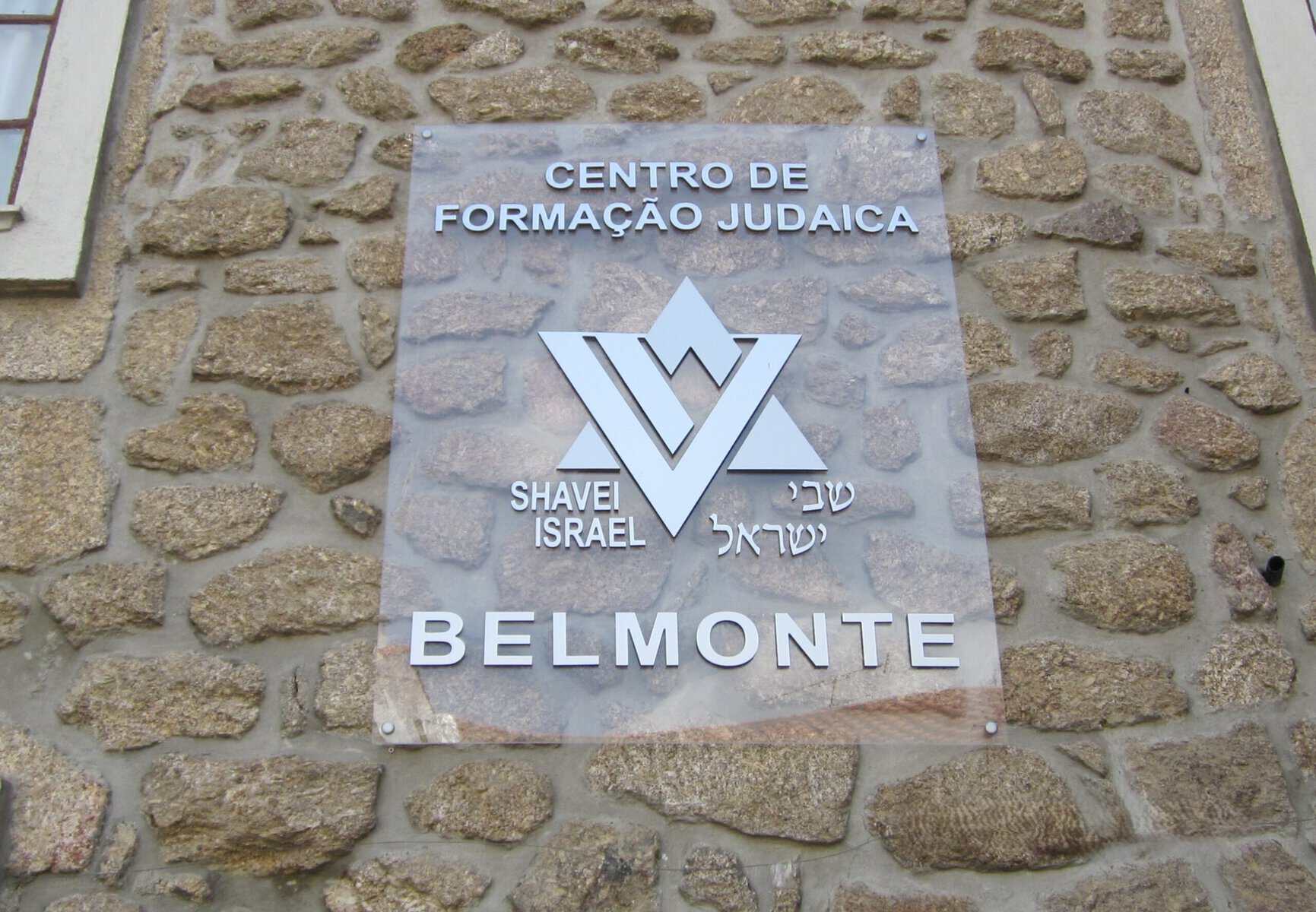
Belmonte’s Jewish dimension is especially compelling because of its large community of crypto-Jews—Jews who refused to convert and were persecuted by the Catholic Church in the Middle Ages. The Jews who settled in Belmonte and practiced their faith in secret turned the town into an important spiritual center. Their descendants still live here today. Their extraordinary story is preserved in the Jewish museum, the synagogue, and the large menorahs placed around town. Belmonte can quite rightly be called a “Jewish town.”
Click here to search for hotels and vacation rentals in Belmonte…
Uncovering Belmonte’s Jewish Story
In the sixteenth century, the Jews of Portugal and Spain were forced to convert by Christian monarchs and the Church. Some were expelled in what became known as the Expulsion from Spain and scattered across North Africa, Turkey, and the Balkans. Others were persecuted and tortured by the Inquisition, while some became crypto-Jews.
It was a dark chapter in relations between Christianity and Judaism, and it gave rise to the unique phenomenon of crypto-Jews—people who observed Jewish customs inside their homes while outwardly pretending to be Christians. In Portugal, King Manuel I decreed that anyone who refused conversion had to leave the country. Many did exactly that, while others became crypto-Jews individually. A third group, however, took an even bolder step: they chose to cut themselves off from the state and live in isolation as a community, where they could quietly continue a Jewish way of life.
They found refuge in Belmonte, which was then—and still is—far from Portugal’s major centers and isolated in the mountains. For centuries they continued to live as Jews in secret and even developed a coded language. Tradition was passed down orally from generation to generation, mainly by the mothers. Completely cut off from the wider Jewish world, they were called Marranos by the locals. Their descendants still live in Belmonte today.
This community of crypto-Jews was discovered about a hundred years ago by a Polish Jew traveling in the area, who later publicized their existence. In the 1990s, the Israeli rabbinate carried out an effort to return them to Judaism and formally converted some of them, mainly women. Only then did they openly identify as Jews and build a synagogue, which opened in 1996.
A sign inside the Sephardic synagogue “Beit Eliyahu” testifies to their history and character:
“Here in the village homes, the commandments of Judaism were kept in secret for 500 years, from 1492 to 1992. The tradition was passed down orally from generation to generation. Shabbat was observed in secret, while Sundays were observed in full view of the neighbors, taking care not to stumble between Jewish and Christian customs for fear of falling into the hands of the Inquisition and its dungeons. Here the Jewish soul was not lost; here the Jewish soul remains forever. And from the past, the future will rise.”
Check out our guide to Portugal's top travel regions…
Belmonte Highlights: Top Must-See Sights
Belmonte Castle | Castelo de Belmonte
This is the town’s main and most important landmark. It was built in the thirteenth century as part of a long defensive line protecting Portugal from Spanish enemies to the east. Once the border with Spain—still in place today—was established under the treaty signed in 1297, the castle lost its military importance. King Afonso V later granted it to General Fernando Cabral, who turned it into a beautiful residential castle that served generations of his family.
One of Portugal’s great national heroes—apart from Ronaldo—was born here. Pedro Álvares Cabral, the general’s third son, was the captain who led a vast fleet toward India and discovered Brazil. He was only 32 when he commanded an armada of thirteen ships carrying 1,500 crew members. They sailed from Lisbon, crossed between four continents, and after 43 days at sea, on March 9, 1500, anchored in Brazil. It later became an enormous Portuguese colony whose people still speak Portuguese today.
Once you enter the castle courtyard, it’s best to begin with a walk along the paths around the small amphitheater, taking in the views and the well-kept gardens. After that, step inside the more than 500-year-old building, where you’ll see symbols of the Cabral family along with sculptures and artwork carved from granite.
The mountainous landscape around Belmonte, with its huge granite boulders, was especially suited to herding goats and sheep, which at the time were considered highly profitable because of their wool. The Cabral family, who were responsible for the town of Belmonte, took their name from this lucrative trade—goat in Portuguese is cabra. That is why the family crest included goat figures, so keep an eye out for these charming symbols on the castle walls and elsewhere around town.
Also within the complex, it’s worth peeking into the small church once used by the family, where a statue of Pedro stands. The beautiful Manueline window preserved in one of the castle walls is especially striking. It offers another example of the distinctive Portuguese architectural style that developed after the discoveries, and especially from the wealth they brought, which led to the construction of many monumental buildings. To finish, climb to the top of the tower for a breathtaking view of the Serra da Estrela mountains and the plains around the town.
Click here for accommodations in Belmonte…
The Jewish Museum | Museu Judaico De Belmonte
This was the first Jewish museum established in Portugal, in 2005, and it presents the turbulent history of the country’s ancient Jewish community. Here you can trace the story of Portuguese Jewry through the centuries, with a focus on its contributions to science, art, culture, literature, and trade across the country, as well as in Belmonte and its surroundings. The era of persecution and the crypto-Jews who found refuge in Belmonte—and whose descendants still live here—naturally occupies an important place as well.
Click here for more information and the opening hours of the Jewish Museum…
Torre de Centum Cellas (Roman ruins) | Torre de Centum Cellas
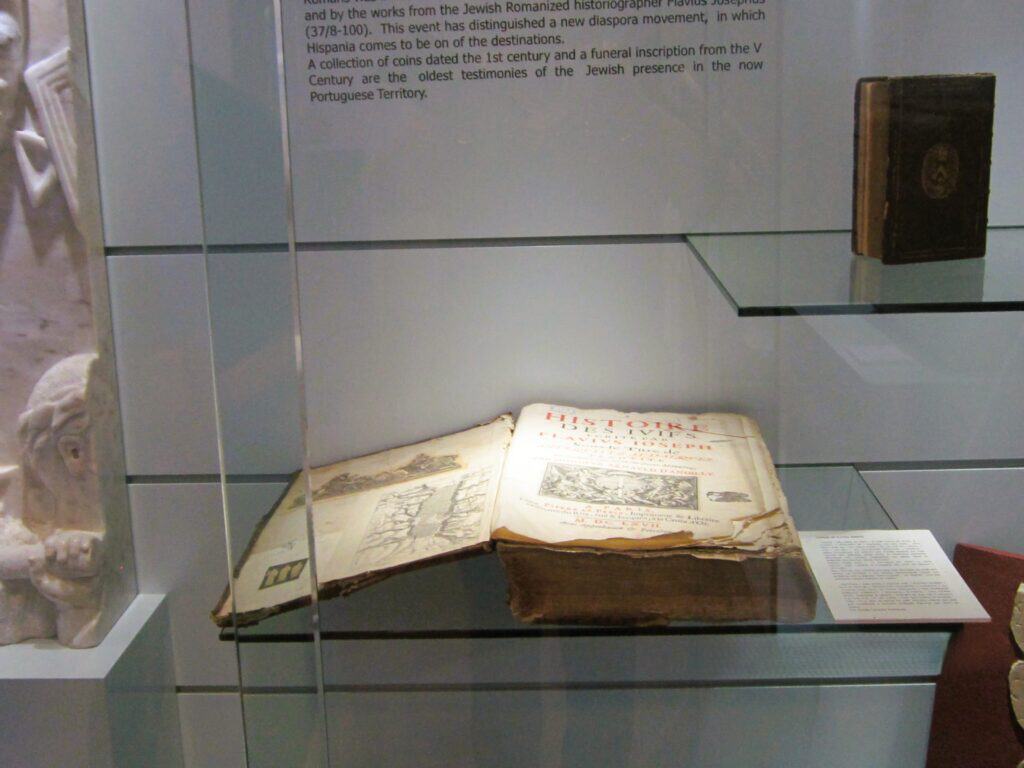
This is a remarkably well-preserved Roman remain dating to the first century CE. The tower is in fact considered the best-preserved Roman site in Portugal, and there has long been debate over what it was used for. Was it a temple? A prison? A military camp? A roadside inn, or perhaps a private villa? It stands in a strategic location, and the Romans were well aware of the importance of defending conquered territory through fortifications, while also developing agriculture and irrigation methods. The structure is impressive, beautiful, and mysterious, standing in the northeastern part of town. It’s well worth a visit—and a few photos.
Belmonte Parish Church | Igreja Matriz de Belmonte
Although this is a relatively modern church, inaugurated in 1940, it has something special about it. Beyond serving the town’s residents for Mass and ceremonies, this is where the statue of the Virgin that accompanied Pedro Cabral on his voyage to discover Brazil was transferred.
The unusual statue is placed on the church wall as a secondary altar beside the main altar. The church stands next to the Museum of Discoveries.
The Museum of Discoveries | Museu dos Discobrimentos
As noted, the explorer widely credited with discovering Brazil was born in Belmonte in 1467. That is why the Museum of Discoveries was established here. Brazil, after all, was the jewel in the crown of Portugal’s colonies, and local son Pedro Álvares Cabral is honored here as he should be. Throughout Portugal, there are museums and monuments tied to the discoveries, the most famous being the Monument to the Discoveries in Lisbon’s Belém district. Here in Belmonte, the museum is modest, but it carries special significance because it was from these very streets that Pedro Cabral set out on the journey that would change history with the discovery of Brazil.
The museum presents the history of Portugal’s great maritime discoveries, with a clear emphasis on the discovery of Brazil. It is located in the courtyard of Solar dos Cabrais, the Cabral family home, which also houses the municipal library.
The exhibits are interactive and recreate the world of 500 years ago, giving visitors the feeling of being aboard one of the ships that discovered new worlds. The museum’s 16 rooms display items collected by Portuguese explorers over the years from the many lands they reached.
Click here for more information and the opening hours of the Museum of Discoveries in Belmonte…
The Olive Oil Museum | Museu do Azeite
This small museum is located below the Museum of Discoveries. Nearby, there’s a beautiful viewpoint that is absolutely worth walking down to, and if you have a little extra time—or if it’s too cold outside—you can also step into the Olive Oil Museum for a quick half-hour visit.
The museum occupies a former olive press that closed in the 1990s. It explains the importance of olive oil to the region’s economy throughout history, as well as the wider global history of olive oil production. More than anything, though, because it was originally a working olive press until fairly recently, it clearly shows how olive oil is made.

The Zêzere Ecomuseum
This museum stands opposite the Museum of Discoveries, which, as mentioned, is housed in a Cabral family building. The ecomuseum is also located in a historic Cabral family structure, though in this case it is a former granary | Tulha dos Cabrais. The building has, of course, been beautifully restored and adapted into a museum.
This small museum explains the ecology of the Zêzere River basin in the Belmonte area, along with the modern impacts—especially those of dams—on the river and its surroundings.
Here too, a brief half-hour visit is enough.
Top Attractions Near Belmonte
As mentioned, Belmonte is far from everything, and that is part of its charm. The more central tourist destinations from which people usually head to Belmonte are the wine city of Viseu, about an hour to the northeast, and the beautiful town of Castelo Branco, 50 minutes to the south, where you’ll find the magnificent Bishop’s Palace, lovely gardens outside, and an impressive museum inside.
Three places of interest relatively close to Belmonte—roughly half an hour away—are:
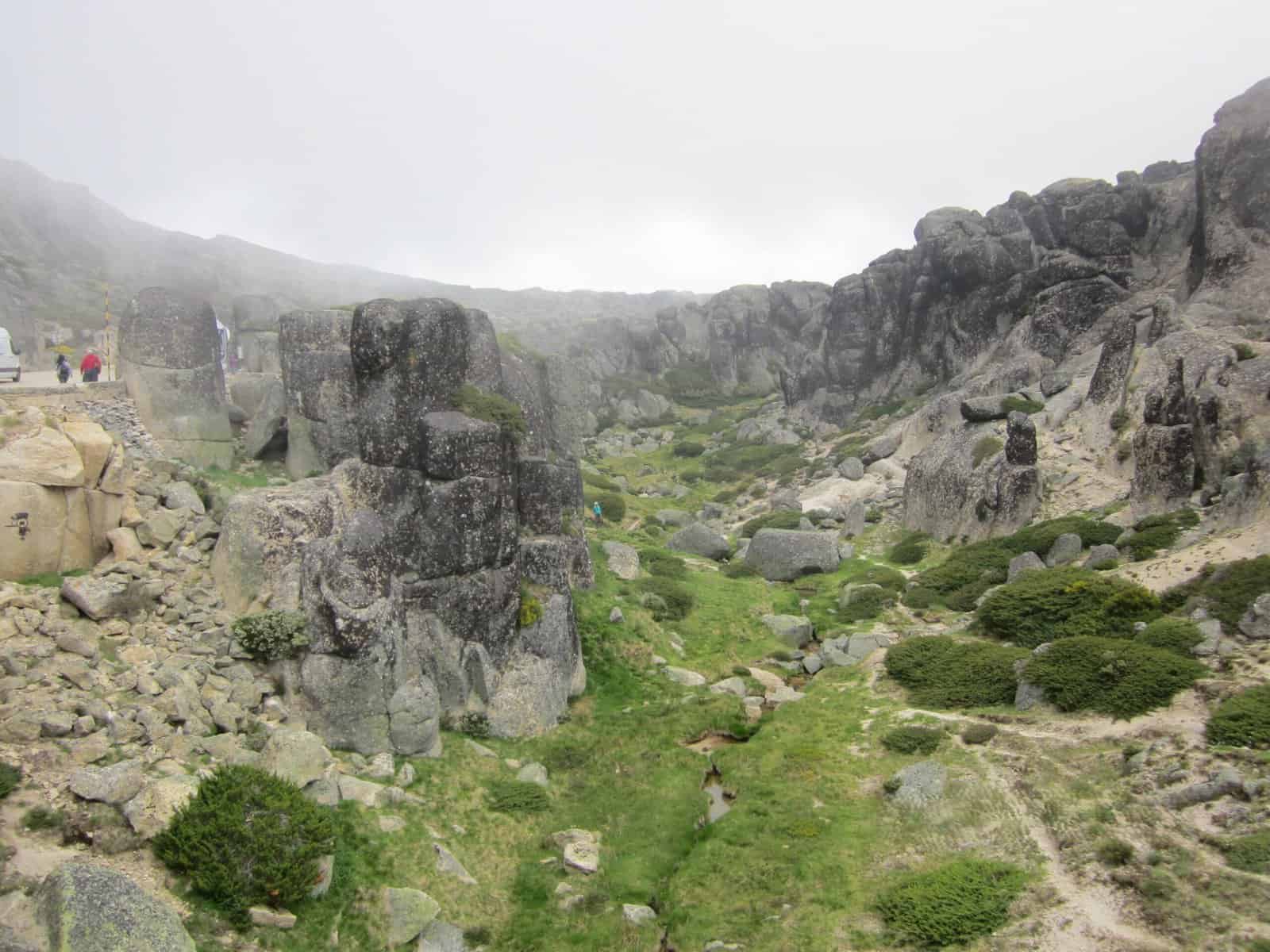
- Serra da Estrela – home to the highest mountains in mainland Portugal. There is also an observatory here.
- The town of Sortelha | Sortelha – with a beautiful castle, though the giant rocks and enormous boulders in the surrounding landscape and along the road there are even more remarkable.
- The city of Guarda | Guarda – the highest city in Portugal (1,056 meters), with a population of 40,000. It is known for its large castle, cathedral, and especially for the intense cold that settles in during winter.
Click here for the comprehensive guide to Portugal’s main travel regions..