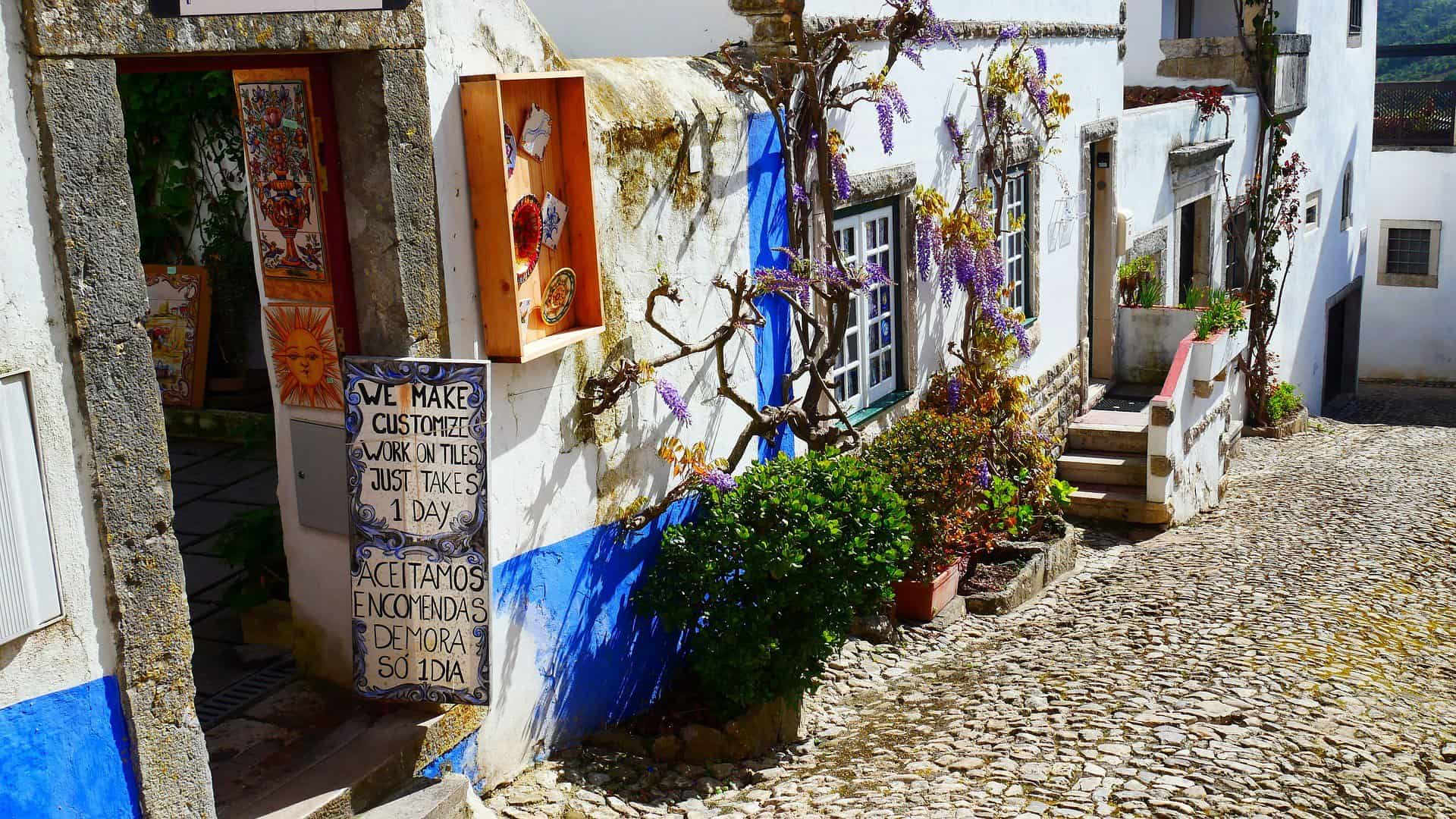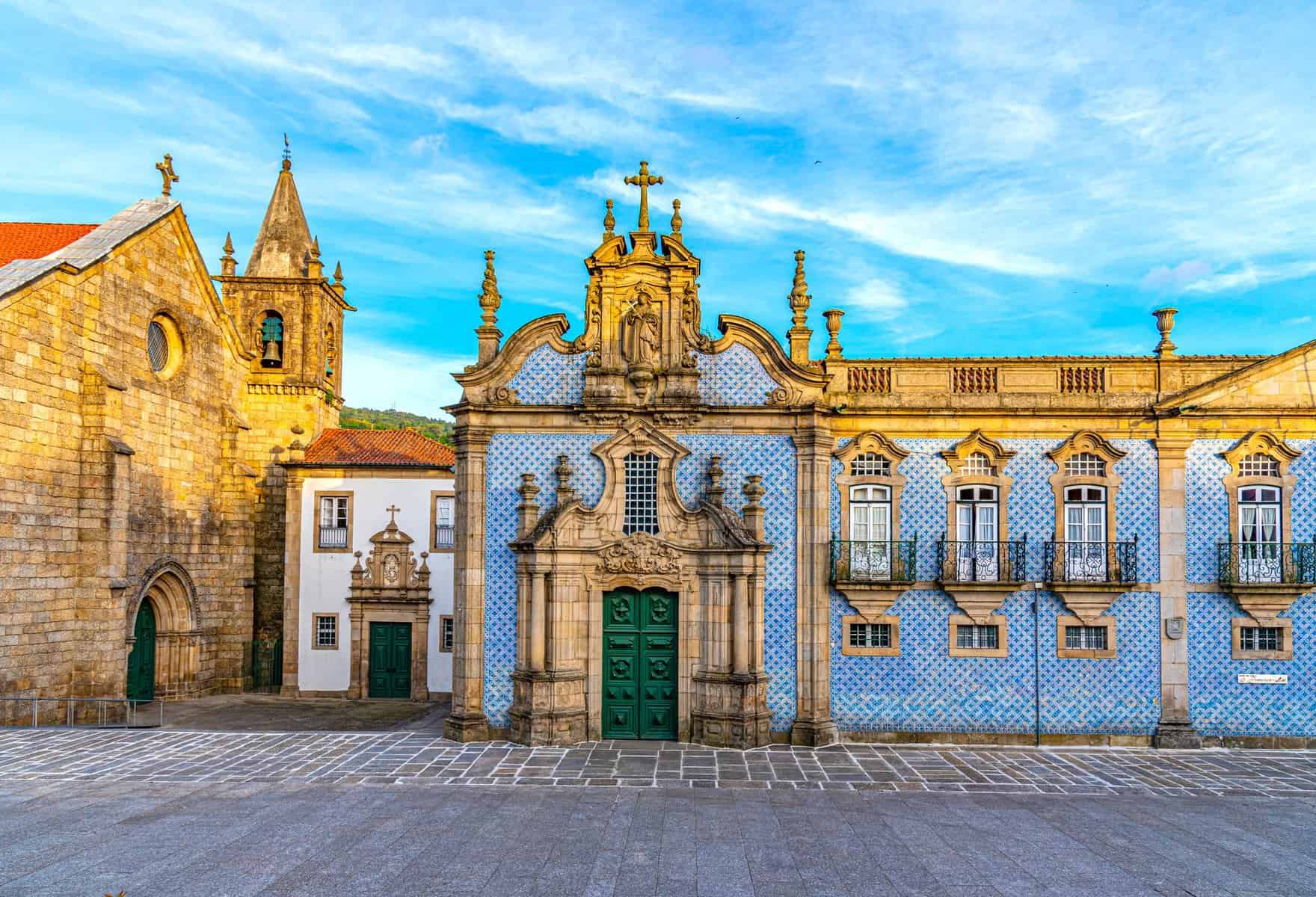
Faro is the capital of the Algarve and the largest city in this sunny southern region, where blue ocean views are never far away. It also serves as the administrative and transportation hub of southern Portugal, so almost everyone traveling through the Algarve will pass through at some point. Faro is home to Portugal’s third-busiest international airport, where millions of tourists land each year—especially in summer—on their way to a dream vacation along the Algarve coast. The city itself is a lovely place for an urban stroll, with cobbled streets, historic churches, inviting shops, traditional houses, and excellent restaurants. Faro also has a walled old town, home to its cathedral. Its beaches stretch across long sandy islands between the Ria Formosa nature reserve and the ocean. Some can be reached by car, while others are accessible only by boat. All of them share a wonderfully unspoiled atmosphere that draws plenty of young travelers each summer looking to disconnect from the rush of everyday life.
How many days should you spend in Faro?
Faro itself needs anywhere from half a day to a full day of sightseeing. That said, as with the rest of the Algarve, most people come to the region for a vacation that includes staying at one of the nearby resorts or hotels. So if you base yourself in Faro during an Algarve trip—especially in the golf and resort complexes west of the city—you can easily stay for several days, a week, or even longer, using it as a base for day trips to other sites and villages across the Algarve.
Click here to search for hotels and vacation apartments in Faro…
6 must-see attractions and experiences in Faro
-
- Faro Cathedral and the old town within the walls | Sé Catedral de Faro
- Faro Municipal Museum | Museu Municipal de Faro
- The Bone Chapel at Carmo Church | Igreja do Carmo
- Shopping — Faro is a major shopping hub in southern Portugal | Forum Algarve
- The island beaches of Faro — Praia de Faro
- Island-hopping boat trips and the Ria Formosa nature reserve | Ria Formosa
How do you get to Faro?
Faro is the largest and most central city in the Algarve. It absorbs the region’s huge flow of tourism, especially in summer, as vacationers make their way to the Algarve’s gorgeous beaches. In that sense, Faro is the gateway to Portugal’s deep south—the Algarve region.
Click here for a list of 12 excellent resorts around Faro and across the Algarve…
Flights to Faro
Faro Airport, officially named Aeroporto Gago Coutinho, is the main airport for the entire Algarve. With the code FAO, the airport is named after Portuguese aviation pioneers and channels tourist traffic to the sunny beaches of southern Portugal. It is also the country’s third-largest airport, after those in Lisbon and Porto. The airport is also simply known as Faro Airport.
There are many regular and low-cost flights to Faro from airports across northern Europe and England. The airport also handles domestic flights within Portugal, mainly to Lisbon and Porto.
The airport is just west of the city and very close to it—about a 10-minute drive. Still, most travelers landing in Faro are not heading into the city itself but to the hundreds of resorts spread along the southern Algarve coast. That is why the airport has a large car rental center.
Click here to find accommodations in Faro, the capital of the Algarve…
Arriving by rental car
Most travelers fly into Faro and pick up a rental car at the airport, using it to get around throughout their Algarve vacation. But if you are arriving in Faro from Lisbon or even from Seville in Spain, the two main roads you will use are Highway 22, the region’s primary east-west route, which runs north of Faro, and Road 2, about 9 miles west of Faro, which connects to Highway 22 and heads north through the Alentejo to Lisbon.
As the southernmost point in mainland Portugal, Faro is also the starting or ending point of the N2 route. This road is Portugal’s version of Route 1 or Route 66—a scenic drive that crosses the country through rural landscapes. In Portugal, it begins in Faro and ends in Chaves, the hot springs town in Portugal’s far north.
Explore our range of car rental options and special offers in Portugal…
Parking
There are two main parking options if you are coming into the city for sightseeing:
- The huge free parking lot near the old town — the advantage is that it is large, free, and usually easy to find a spot. The downside is that while it is close to the walled old town, it is a little farther from the city’s second main area near Carmo Church and São Pedro Church—about a 12- to 15-minute walk.
- Street parking and parking lots around the marina, bus station, and train station. The advantage is that it is close to both of the city’s main areas. The downside is that on weekends and during busy periods, parking can be hard to find, and in some places it is paid parking.
Click here for Portugal itineraries, including ones that combine the Algarve and Faro…
Public transportation
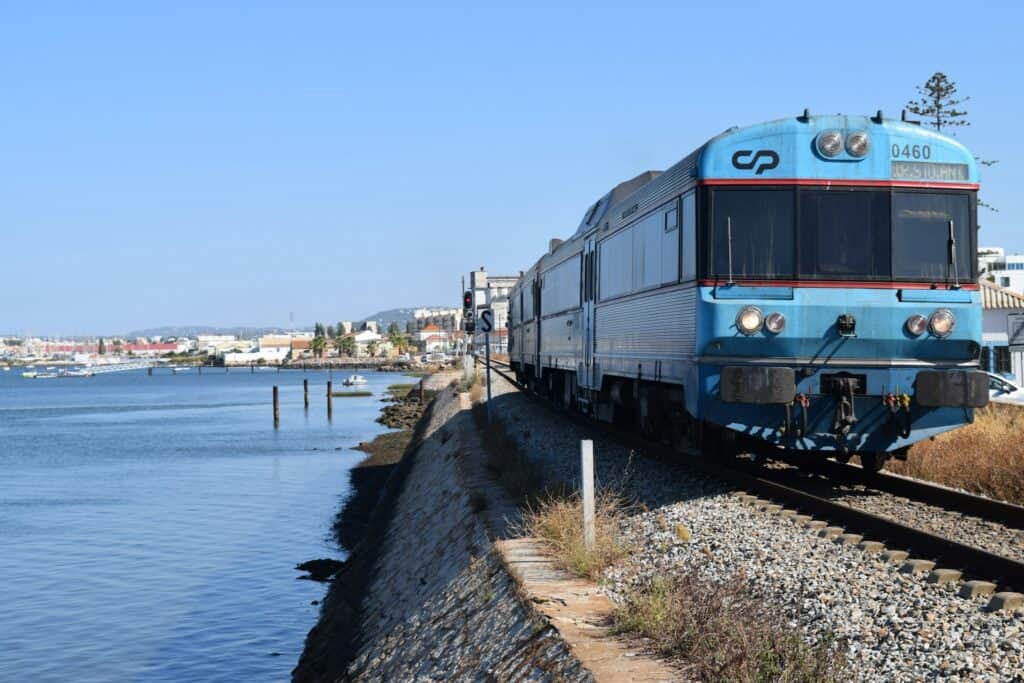
Faro train station sits along the waterfront in a very convenient lower-town location, about a 5- to 10-minute walk from most of Faro’s main sights. Trains from Lisbon to Faro take about three and a half hours. Even so, the railway is used more often for travel between Algarve towns, such as Portimão in the west and Vila Real de Santo António in the east.
Still, buses are the main form of transportation across the Algarve in general, and in Faro as well, connecting cities and towns throughout Portugal’s southernmost region. Faro’s central bus station is located between the marina and the train station. It is also in an excellent location, making it easy to arrive in the city and begin exploring on foot. For example, you can stay at one of the resort towns east or west of Faro and come into the city for a day trip by public bus.
About Faro
Faro’s location on the delta of the Ria Formosa has made it attractive for settlement since the Stone Age. From the dawn of history to the present day, Faro—apart from a few brief periods—has been the Algarve’s main and most important city. True, it does not have a beach in town itself, only on the islands, but in ancient times that was exactly the advantage: being close to the sea while having a harbor protected from the rough ocean and, even more importantly, from raids by enemies and pirates.
Today, Faro still benefits from those sandy islands, which continue to shield its marina. At the same time, they are close enough to reach by a short boat ride or a quick drive, whether for swimming, relaxing, spending the day, or simply exploring. Around 70,000 people live in the city and its immediate surroundings, many of them benefiting in recent decades from the Algarve’s tourism boom after centuries when the region remained remote and underdeveloped.
The weather in Faro is pleasant year-round and never especially cold. Faro enjoys one of the highest numbers of sunny days anywhere in Europe, which is a big part of what makes the city and its surroundings so appealing for a getaway. July and August are the hottest months, but the nearby ocean tempers the heat, so it rarely feels scorching. Rain falls mainly in winter, especially in December, while most of the year stays completely dry. Spring and fall are ideal for exploring the city itself. Even so, most visitors come to the Algarve in summer, so while downtown streets can feel a bit warm in July and August, Faro is still well worth a visit.
Broadly speaking, Faro can be divided into three tourist areas of interest: the walled old town, the city center beside it—which is also largely historic—and the islands of the Ria Formosa, the nature reserve stretching across sandy spits toward the ocean to the south. To these, you can add the coastal strip and golf resorts extending westward as far as Vilamoura. Officially, that area is not part of Faro, but many travelers vacationing around Faro stay there.
Most of the historic sights are found in the old town and city center, along with Faro’s famous cobbled streets full of charm. The western beach can be reached by car, while the islands and beaches to the east are accessible only by boat. For exploring the islands and the Ria Formosa nature reserve, an organized boat tour departing from Faro Marina is the best option.
Click here for the complete Algarve accommodation guide…
Click here for information about water parks near Faro and across Portugal…
Faro Beach – An Island Paradise Just Minutes Away | Praia de Faro
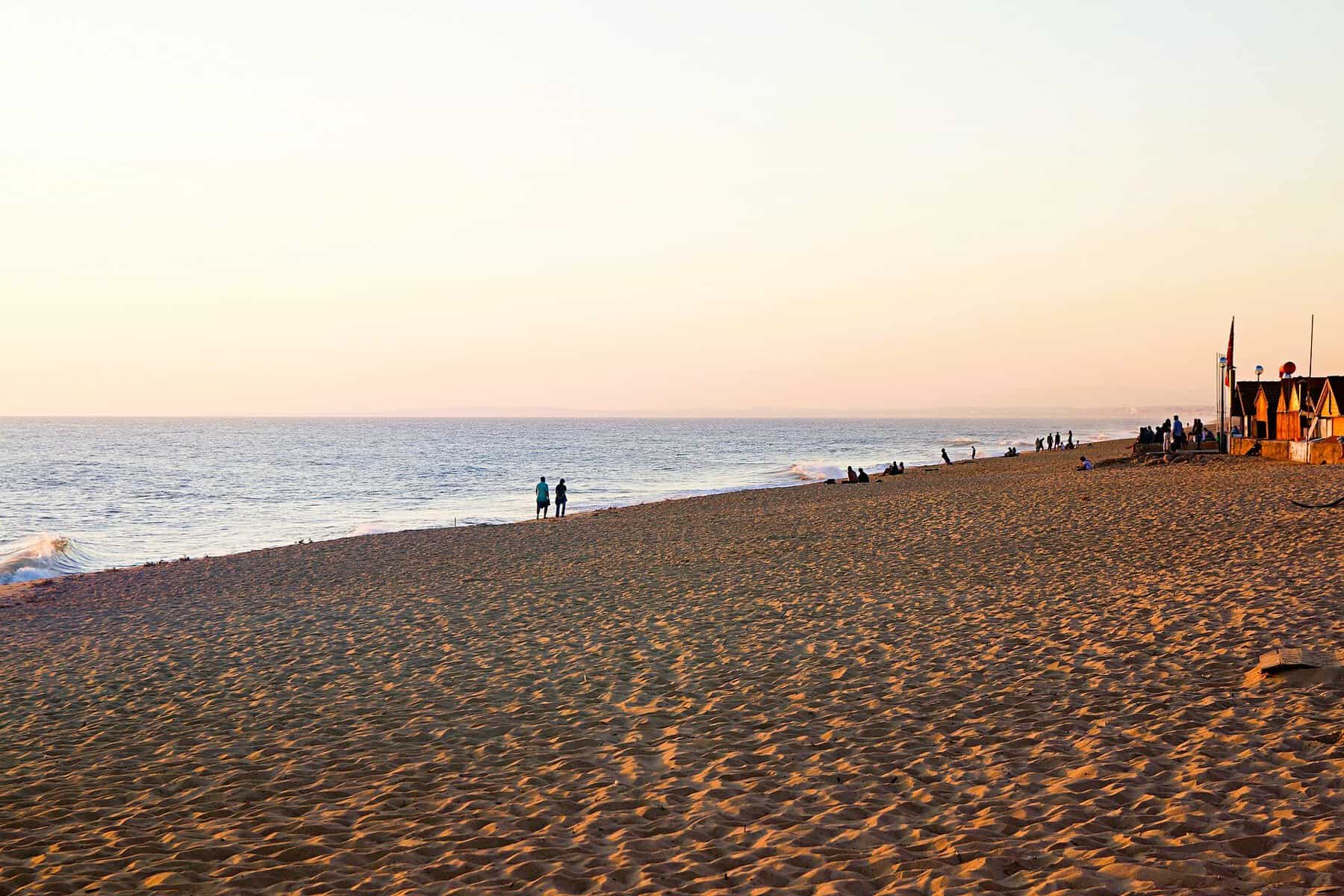
Praia de Faro, on the island opposite the airport, is the only beach among Faro’s sandy island beaches that can be reached by car. Ilha de Faro, or Praia de Faro, stretches for nearly 2 miles. At the beginning, just across the bridge, it is built up and full of activity, while farther along it opens into quiet, empty beaches between the sea and the lagoon.
In summer, Faro Island is the place for young travelers to hang out and enjoy the season. There are a few hostels, camping areas, and a strip of restaurants and bars that make it feel almost like a remote island escape. The island itself is really a long sand dune, separating the ocean from the lagoon. Its wonderful beaches are well suited to kitesurfing and a bit of surfing too, but above all they offer a perfect retreat on hot Algarve days.
The lagoon side, with the shallow waters of the Ria Formosa, is excellent for kayaking and all kinds of other water sports. A trip out on the water gives you the chance to spot dozens of species of water birds while enjoying the stillness and calm of the delta. If you are paddling on your own, be very aware of the tides, since at low tide many areas become impossible to navigate.
The best way to reach and experience Praia de Faro is by car or bus. Once there, you can rent a kayak and enjoy the endless calm. To top it off, have some grilled sardines at one of the authentic restaurants near the bridge.
You can visit Faro Island and its beach year-round, but only in summer are the local attractions and shops fully operating.
Click here to find accommodations on Faro’s islands…
Click here for a list of 12 excellent resorts around Faro and across the Algarve…
Shopping in Faro
The Algarve’s tourist centers are known for their excellent shopping options, and combining a beach vacation with a little retail therapy works especially well here. As the capital and largest city of southern Portugal, Faro serves as the region’s primary shopping hub. So if you are spending several days—or even a few weeks—on a summer vacation here, it is well worth setting aside half a day or a full day for shopping before heading home.
Forum Algarve
This large shopping mall is about a five-minute drive north of the city center. Forum Algarve is the leading mall in both Faro and the wider Algarve. With more than just shopping, it has such a pleasant atmosphere that visiting feels like an attraction in itself. The mall is partly enclosed and partly open-air, and it features stores from major European chains such as Zara, Mango, C&A, and more. Naturally, there is also a large food court, restaurants, and a great Starbucks. Additional shops have sprung up around the mall, including a large Decathlon. There is also a huge supermarket inside, along with several others nearby, making it a practical place to stock up before continuing into the Algarve’s more rural areas.
Faro Municipal Market | Mercado Municipal de Faro
Also called Francisco Sá Carneiro Market, after the square where it is located. This large market sits in the upper part of town, not far from the stadium. It serves as a neighborhood market for local residents, just as markets do in many parts of Europe. It opens early in the morning and runs through the afternoon, but the best time to go is in the morning, when everything is freshly arranged and browsing the stalls feels most pleasant.
The market offers more than fresh produce and food. You will also find clothing, souvenirs, and other local products.
Click here for more information about Faro’s market…
Santo Antonio Street | R. de Santo Antonio
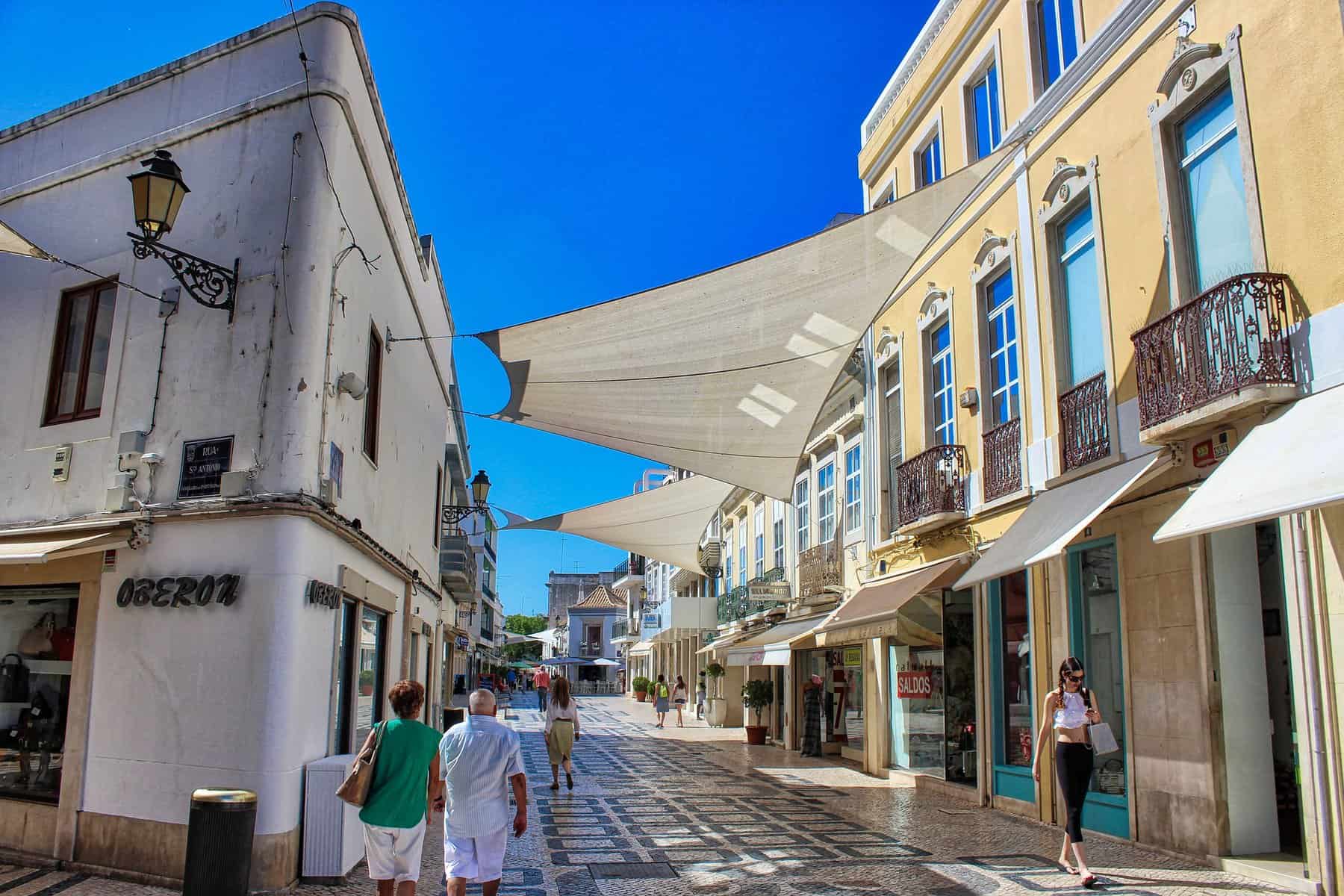
This is one of the prettiest streets in the city, and one of the most pleasant shopping streets in all of Portugal. It continues on from the modern Avenida 5 de Outubro and begins at the large paved square at its end. Santo Antonio Street in the city center, along with the surrounding streets, is packed with shops, restaurants, cafés, ice cream parlors, and just about everything else.
Paved in the much-loved Portuguese style, the street is wonderfully pleasant for a stroll, even in the hotter hours of summer, since parts of it are shaded by overhead canopies. It is not only a place to shop but also one of the spots that best captures the spirit of Faro—a southern waterfront city with a lovely Riviera feel.
Click here to search for accommodations in Faro, the capital of the Algarve…
The market in Olhão | Mercados de Olhão
A true, authentic Portuguese market and the better-known market in the Faro area. It is not in Faro itself but in Olhão, the neighboring suburb to the east, about a 15-minute drive away. The market is very local, and residents from the city and surrounding area come here to shop for everyday essentials. It is open daily from morning until early afternoon, except on Sundays.
The market stands in the middle of the promenade between Olhão’s two large marinas. Its location just below the town center makes it especially easy to reach. Built in the early 20th century in an industrial style, with exposed brick, iron framing, and glass roofing, it consists of two rectangular buildings—one for fish and one for vegetables. Around it are several restaurants and cafés, and the nearby town center offers many more places to sit down and enjoy a meal or drink.
The outlet in Almancil | Designer Outlet Algarve
A large outlet complex about 15 minutes northwest of Faro, in the suburb of Almancil. This open-air shopping center features dozens of international and local brands, including Adidas, Levi’s, Calvin Klein, Diesel, and more.
Right next to the outlet, you will also find a large IKEA branch and an indoor mall called MAR Shopping Algarve.
It is easy to spend a full day here, especially since there are plenty of food and drink options as well.
Click here for more information and outlet opening hours…
Click here to find hotels in southern Faro…
Click here for a comprehensive guide to accommodations and where to stay in the Algarve…
Interesting attractions and sights in Faro’s walled old town
Faro’s old town can be divided into the lower, walled section south of the marina and the newer section to the east and north of the marina, mainly around São Pedro Church and Carmo Church, which is essentially the city center.
Faro Marina | Doca de Faro
The large marina lies in the lower part of the city, bordered on the west by Jardim Manuel Bivar and the square with the bandstand. The walled old town stands just to the south, while the train and bus stations are to the north, with the elevated railway tracks acting as an embankment that protects the marina from the sea.
The marina occupies a central spot in Faro and plays a big role in the city’s waterfront atmosphere. Boat tours and ferry services to the sandy islands off Faro, where you can swim, depart from here.
Manuel Bivar Garden and the bandstand | Jardim Manuel Bivar
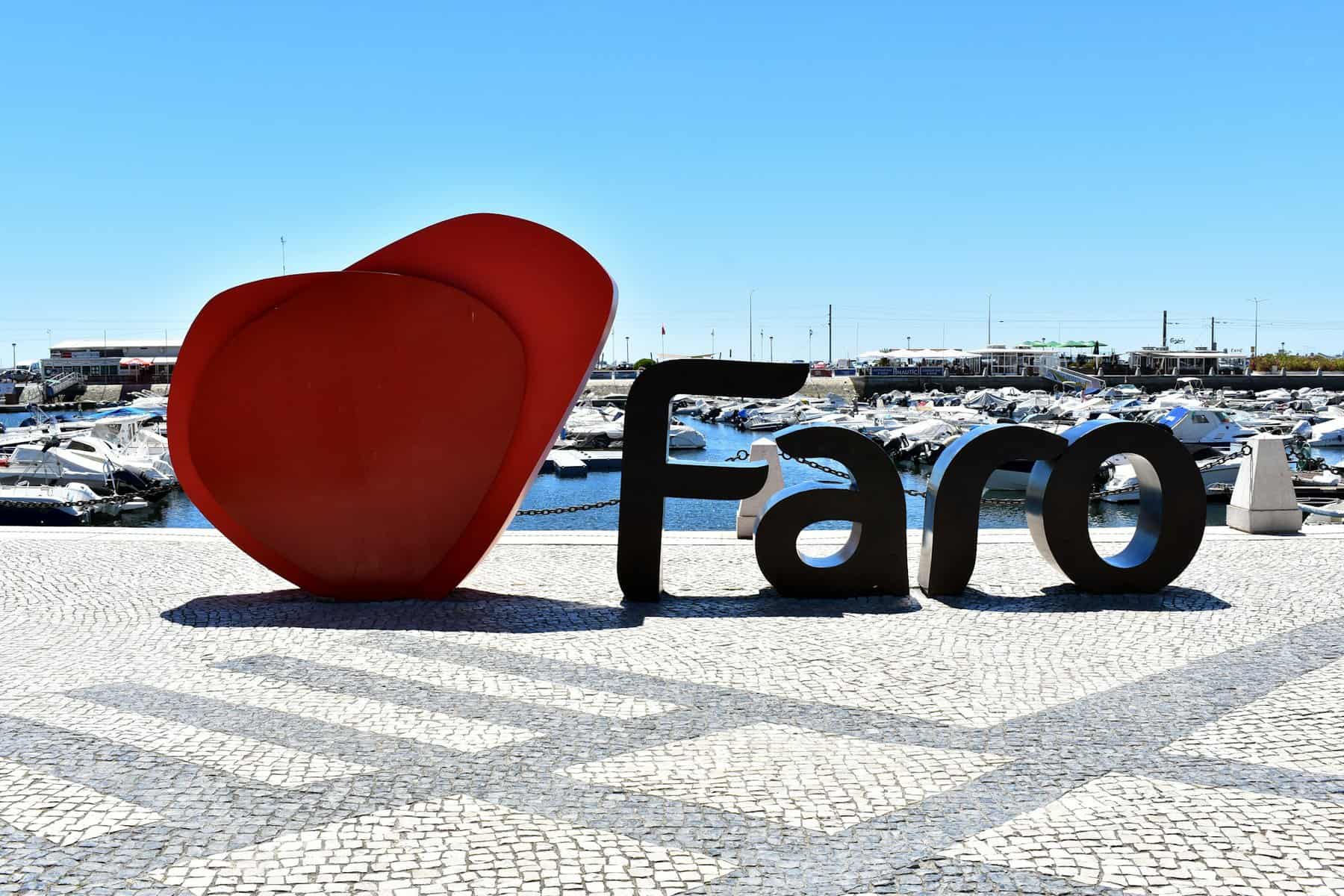
These gardens serve as an introduction to the old town. They are essentially a small city garden opposite Igreja da Misericórdia and across from the marina. The bandstand is another popular spot for photos with the water behind you. Walking down the short tree-lined path through the gardens brings you to the gate in the old town walls, where the sightseeing walk begins.
Arco da Vila | The Town Arch
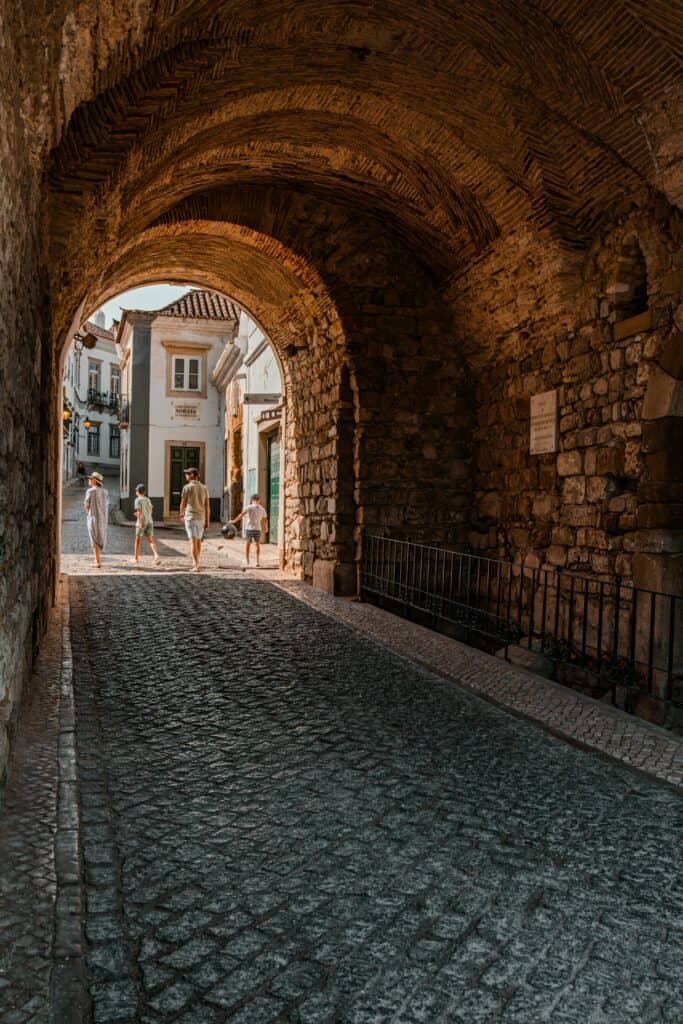
This is the most interesting gateway into Faro’s historic core. It is built into a large Baroque structure erected after the 1755 earthquake, replacing the earlier gate that once stood here. The gate itself is a narrow arched passage—not especially typical for an old-town entrance—which is exactly what makes it so distinctive. Thanks to its location near the marina and facing central Faro, it is the main entrance into the walled old town. If you parked near the marina, this is the best way in. If you parked in the free lot south of the old town, there is another entrance from that side.
Old town walls | Muralhas de Faro
The walls we see today date from the early 17th century, though they were restored and reinforced in the 1990s to help preserve them. Faro’s walls were first built by the Romans. During the Muslim period from the 9th century onward, they were rebuilt and the city was properly fortified for the first time in centuries. After Faro was reconquered in 1269, Afonso III ordered the construction of walls that stood until the invasion of Robert Devereux, 2nd Earl of Essex, in 1596. Faro was then burned and almost completely destroyed. The walls were rebuilt afterward, and those are essentially the ones standing today.
The walls are easiest to appreciate from the eastern and southern sides, where the large parking lot is located. On the other side of town, buildings were later constructed along the walls and even used them as part of their own structure, so they are not fully exposed. If the weather is pleasant, it is worth walking at least part of the way around the outside to see them in full and spot some of the other gates along the route.
Click here to find accommodations in Faro, the capital of the Algarve…
Faro Cathedral | Sé Catedral de Faro
Also known as Igreja de Santa Maria. It was built over the ruins of a mosque immediately after the reconquest of the city in the 13th century, but like much of Faro, it was destroyed during a British raid in the late 16th century. The building seen today dates mainly from the 17th and early 18th centuries and, aside from minor damage, has remained largely intact. For that reason, the cathedral—especially its interior decoration—offers some of the finest surviving period art in the entire Algarve. Inside are numerous statues and works of art, as well as several religious displays of a museum-like nature on the upper floor.
While inside, it is worth taking a few moments to admire the small and lovely Rosário Chapel, decorated with beautiful tiles.
The square in front of the cathedral, Largo da Sé, is the heart of the old town. Two other religious buildings stand around it—the episcopal palace and the convent school. The square is paved and handsome, and behind the cathedral you will find several places to sit for coffee or a meal.
There is also a nice view over the city from the cathedral’s bell tower.
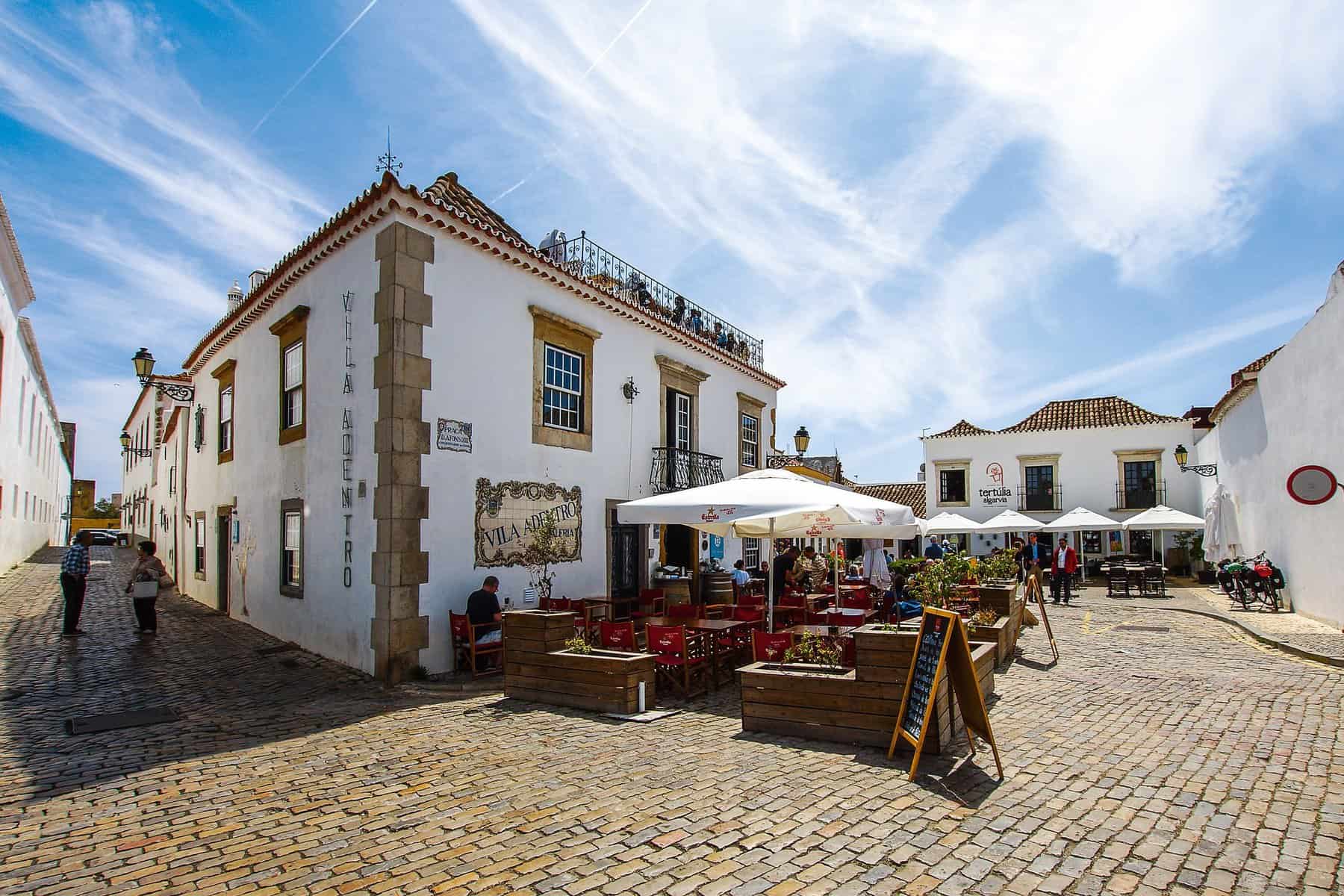
Faro Municipal Museum | Museu Municipal de Faro
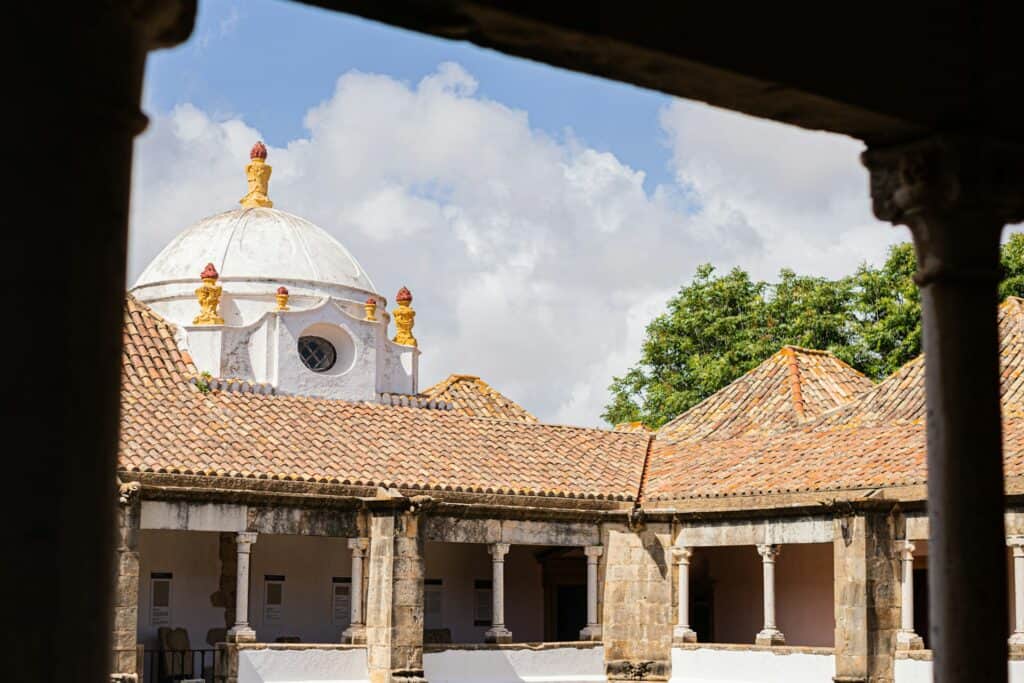
The museum is housed in a historic building with a large green courtyard that once formed part of the Convent of Nossa Senhora da Assunção. Its main collection focuses on finds from the Roman period, when Faro was known as Ossonoba and served as an important port and administrative center of the Roman world.
The museum’s most important exhibit is a mosaic depicting the Roman god Neptune, dating from the 3rd century CE. It was discovered not far from Faro train station and later moved here.
The museum also displays medieval artifacts related to the city.
Click here to find accommodations in Faro, the capital of the Algarve…
Fishermen’s Memorial | Memorial dos Pescadores Farenses
The memorial stands by the waterfront to the south, right beside the old town wall. In fact, it sits at the edge of the huge free parking lot where most visitors to the old town leave their cars—the southern parking lot at Largo de São Francisco. That makes it very easy to include before heading into the old town.
This unusual memorial commemorates an act of courage and kindness by three local fishermen, including a father and his 13-year-old son. In late November 1943, during World War II, a large American bomber searching for its base in Morocco lost its way and crashed off the coast of Faro after running out of fuel.
The three fishermen, already preparing to return to Faro at dawn, saw the plane go down before their eyes. They left behind their nets and rowed toward the crash site to rescue survivors. Five of the plane’s 11 crew members survived, some with serious injuries. The fishermen pulled them into their boat and cared for them for an entire day while waiting for the tide to rise enough to allow them to row back to town.
The story was largely forgotten, but thanks to a persistent local journalist it resurfaced in the early 2000s. In cooperation with the Americans, this memorial was then created to honor that deeply human moment shared between the two countries.
The metal engravings on the memorial form an image of the fishermen in their boat alongside the wounded airmen. It is especially beautiful at sunset, when the metal panels glow orange against the blue sea.
Faro Science Museum | Centro Ciência Viva do Algarve
The museum stands south of the marina, opposite the old town walls. For anyone visiting Faro with children, it can be a perfect way to fill an hour or two while keeping kids engaged and learning at the same time, since it is an interactive museum.
Inside, there is an aquarium that recreates aquatic life in the lagoon, along with a range of exhibits explaining the science behind Faro’s unique ecological setting. There is also a section for younger children and a rooftop viewpoint that will interest just about anyone. Thanks to its location near both the old town and the marina, it is very easy to visit.
Click here for more information and opening hours for Faro’s Science Museum…
Click here for information about water parks near Faro…
Click here for our complete guide to traveling in Portugal with kids…
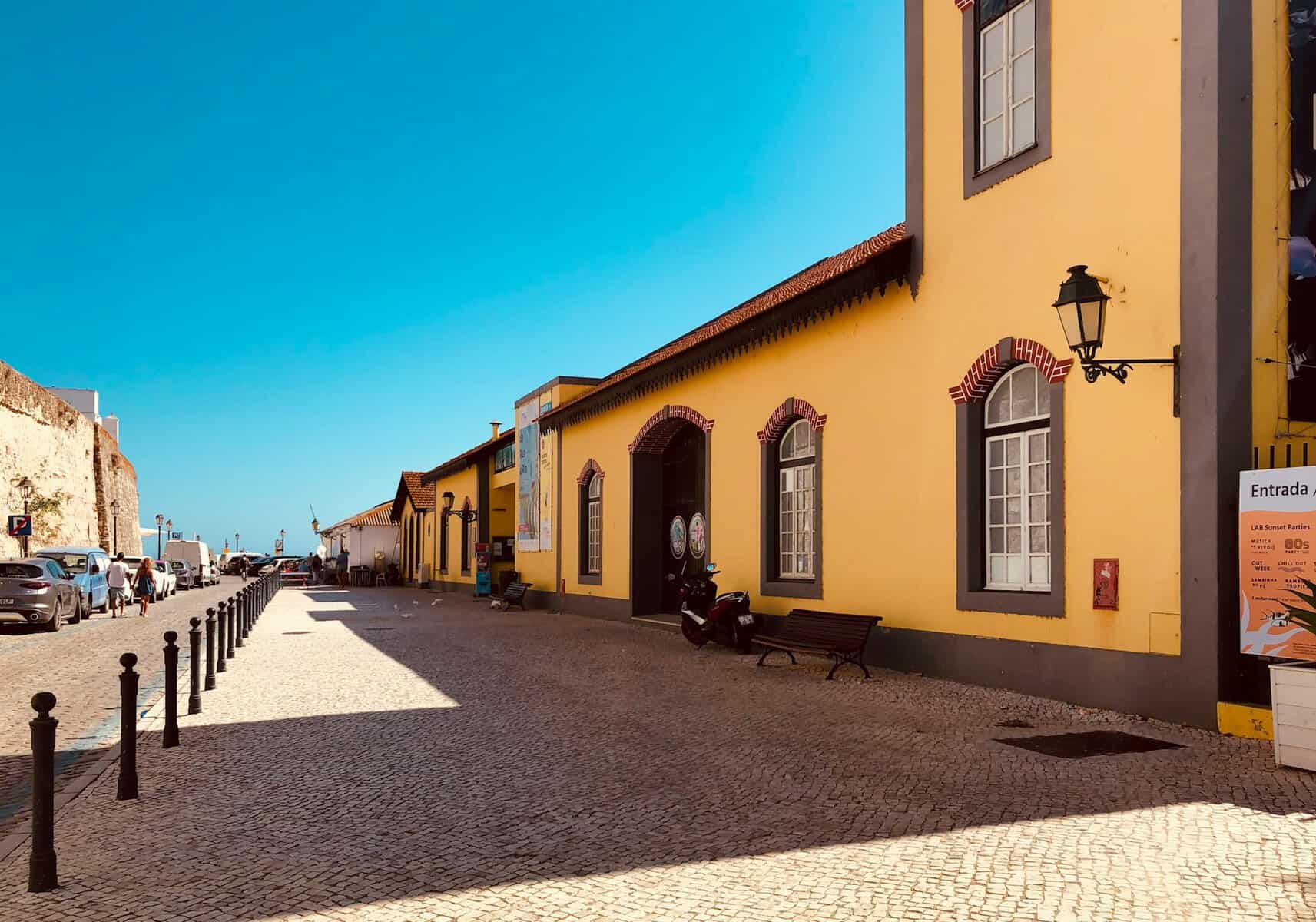
Interesting attractions and sights in Faro city center
Faro’s old town can be divided into the lower walled section south of the marina and the newer section to the north, which is still historic in character. This second area is essentially the rest of the city center, lying east and north of the marina and the train station, especially around São Pedro Church and Carmo Church.
Carmo Church | Igreja do Carmo
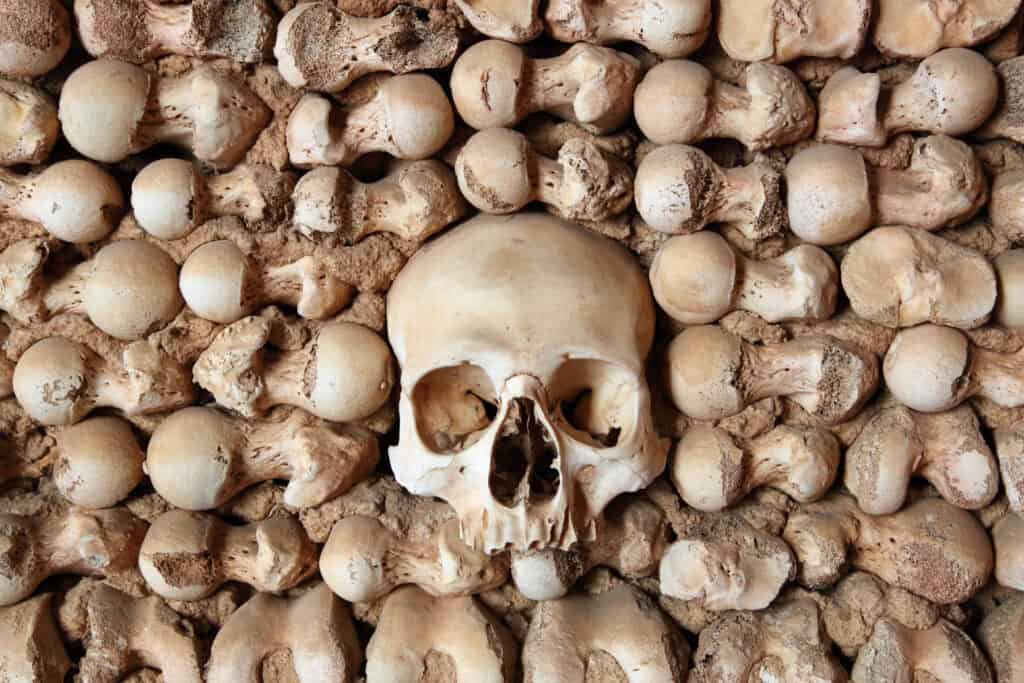
Carmo Church is still an active church for locals, but for visitors it is especially notable for one section unlike anything else in the city. The church, originally built in the early 18th century, was mostly destroyed shortly after completion in the 1755 earthquake. It was quickly restored, including the impressive façade with the two bell towers that you see today. The interior was also rebuilt during that period, though the exterior was only fully completed toward the end of the 19th century, which gives the building a relatively modern appearance. Most of the decoration inside is Baroque, but the most striking part of the church is the Bone Chapel:
The Bone Chapel of Faro | Capela dos Ossos de Faro
Much like the Bone Chapel in Évora, the historic capital of the Alentejo, this one is lined with bones—mainly those of monks buried around the church—arranged symmetrically across the chapel walls. Faro’s haunting Bone Chapel was created in 1818 and, like others of its kind, was meant to remind worshippers of the fragility and fleeting nature of life. Covered from floor to ceiling in bones and skulls, it is undeniably unsettling.
An admission ticket is required for the Bone Chapel, unlike the church itself, which can be entered free of charge.
São Pedro Church | Igreja Matriz de São Pedro
This 17th-century Baroque church, fitting for a coastal city, is dedicated to the patron saint of fishermen, São Pedro. It stands down the street from Carmo Church, right in the heart of the city.
Although the church is not especially impressive from the outside beyond its relatively large size, the interior is richly decorated, and the Baroque style has been preserved despite the fact that it too was damaged in the 1755 earthquake. In fact, the church is one of the earliest Baroque buildings in the Algarve to have survived to this day.
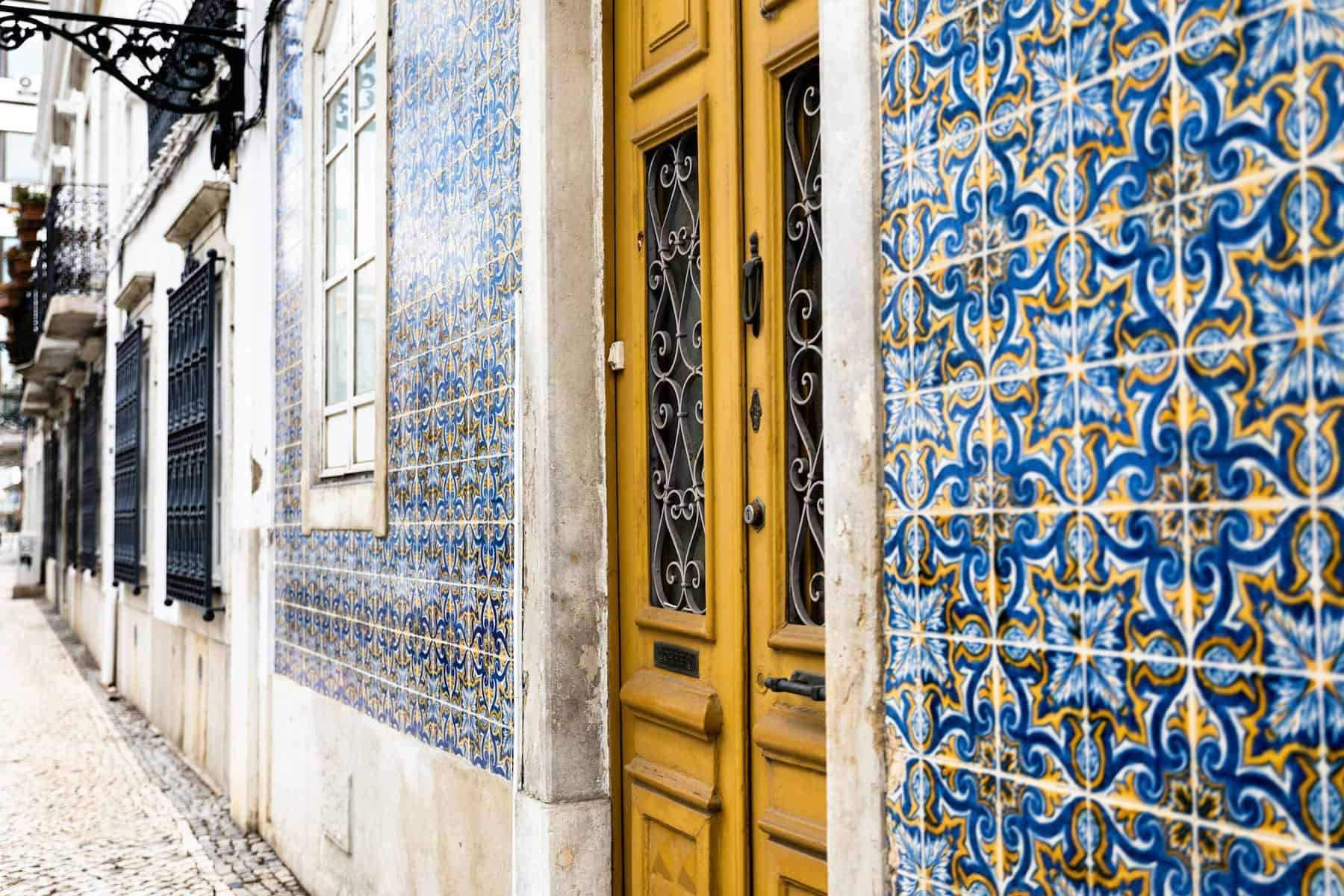
Two highlights stand out inside: the gilded main altar and the Chapel of Souls | Capela das Almas, which is lined with azulejo tiles. The ceramic panels depict Mary and other saints purifying the souls of the faithful.
Before you go in, look up at the stork nests on the church’s bell tower.
Click here to search for accommodations in Faro, the capital of the Algarve…
Jewish cemetery | Cemitério Dos Judeus
This small cemetery lies in the upper part of the city near the stadium. It is relatively modern and served Faro’s small Jewish community in the 19th and early 20th centuries. Jews came to Faro at the initiative of the Marquis of Pombal, who wanted them to help revive the city’s economy after the destruction caused by the 1755 earthquake. Several dozen Jewish families lived and prospered in the city during that time. The cemetery itself is arranged in the Sephardic tradition, with children buried near the entrance, women behind them, and men at the far end.
Within the cemetery grounds, 18 trees were planted in memory of the “Consul of Bordeaux,” Aristides de Sousa Mendes | Aristides de Sousa Mendes, recognized as Righteous Among the Nations. During World War II, he served as consul in Bordeaux, France. Over the course of the war, he issued around 30,000 travel visas to Jews and other refugees so they could reach neutral Portugal. He continued doing so despite explicit orders from Salazar’s dictatorial government in Portugal to stop. In spite of repeated warnings, Sousa Mendes kept helping refugees.
When he returned to Portugal after the war, all of his rights were stripped away. He could no longer work, his pension was taken from him, and he and his 14 children were left destitute. He died in poverty in 1954, and various organizations helped his children emigrate, as the entire family had also been blacklisted by the dictatorship.
He received no recognition during his lifetime, but after his death he was honored by Yad Vashem in Jerusalem as Righteous Among the Nations. Once the dictatorship in Portugal had ended, the democratic government apologized to his family, and he finally began to receive recognition in his homeland as well.
Algarve Regional Museum
This museum focuses on premodern life in the Algarve through a collection of early photographs. Alongside the images are displays of farming tools once used by local peasants, collections of clay vessels, looms for weaving textiles, and other everyday objects from life before the Industrial Revolution. One of the museum’s standout pieces is a water cart that remained in use until the 1970s.
Click here for more information and opening hours for the Algarve Regional Museum…
Click here to search for hotels in Faro, the capital of the Algarve…
Click here for the complete Algarve accommodation guide…
Places of interest and attractions around Faro
The village Estoi
The small village of Estoi (pronounced Eshtoi) is home to two sites with a similar spirit, though they are separated by nearly 2,000 years. The first is a splendid Rococo palace surrounded by gardens, and the second is an impressive Roman villa whose remains can be seen farther down the road.
Estoi lies north of Faro, about a 20-minute drive away. You can also get there by bus, which stops right near the sites. A visit to the village takes a few hours to half a day, including lunch.
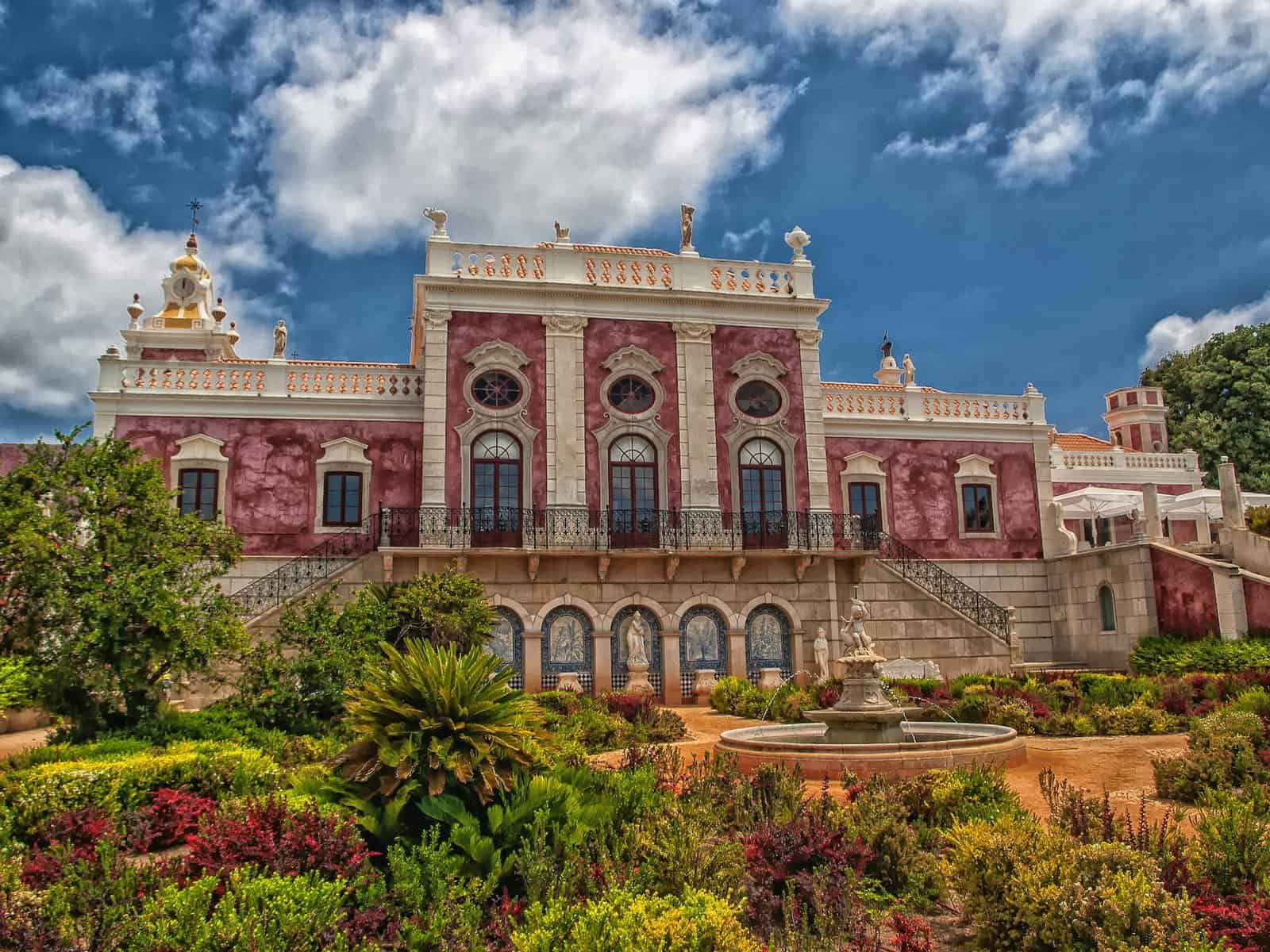
Estoi Palace | Palácio de Estói Much like Pena Palace in Sintra, it began as an aristocratic whim in 1840, very much in the spirit of the era. Its original noble patron died prematurely, and the project—designed by architect Domingo da Silva Meira – was completed by another wealthy local resident.
The palace, with its hundreds of statues and decorative details, was inaugurated in 1909. Today, Estoi Palace operates as a pousada, a historic hotel, and it is absolutely worth staying here—especially if you are touring the rural Algarve and Estoi makes a convenient stop. The palace interiors offer a bold Rococo experience, with impressive frescoes and a palette dominated by pastels.
The palace gardens are open to the public for a small entrance fee. They are not large, so the walk is short, but it is still worthwhile, especially if you want photos against such a distinctive backdrop. Among the plantings are orange and palm trees, as well as carefully clipped shrubs. Be sure to notice the azulejos on the staircase leading down to the gardens, along with the fountain and surrounding statues.
The Roman site of Milreu | Ruínas Romanas de Milreu lies below the village, about a half-mile walk from the palace. Roman presence here dates back to the 1st century, and in the 3rd century a spacious villa was built on the site. The importance of the Roman villa is reflected in the remains of the temple overlooking it. Although many of the key finds were moved to the municipal museum in Faro, the site remains interesting as it is.
Ria Formosa Natural Park
The Ria Formosa nature reserve includes the entire chain of barrier islands lying off Faro and stretching east and west. These islands are essentially large sand dunes at the edge of the delta where Faro sits. The combination of shallow, warmer waters and river flow has created a distinctive ecological environment, one that is carefully protected as a natural park. Many water birds live here, including the beautiful purple swamphen | Frango-de-água-azul, which is also the symbol of the park. Yet above all, this unique ecosystem is especially well suited to shellfish and other seafood. In fact, nearly all of Portugal’s production in this category comes from here around Faro.
The best way to explore the Ria Formosa is on a catamaran boat tour leaving from the marina and the pier south of it, opposite the old town | Cais das Portas do Mar. These tours stop at several places along the way. On some of the reserve’s islands, long wooden boardwalks stretch over the water and sand, and walking them is an experience in itself.
The islands with sandy beaches
Some of the islands in the nature reserve are inhabited, as described above. The channel leading into Faro lies more or less in the middle of them. Most of the islands to the west, near the airport, can be reached by car or bus. The central and eastern islands can only be reached by ferry or water taxi. Water taxis are naturally more expensive, but if you treat them as part of the experience, they are well worth the price. Most boats charge a fixed rate for up to five people, with a small extra fee for each additional passenger.
The islands are also a very good accommodation option in Faro for anyone looking for a vacation on an unspoiled beach beside traditional fishing villages. In summer, many young travelers head to these peaceful islands.
Click here to find accommodations on Faro’s islands…
Aquashow Waterpark
The park lies about a 20-minute drive northwest of Faro, near the resort town of Vilamoura. It combines slides, pools, and plenty of fun. This is one of the Algarve’s most popular water parks, and its proximity to Faro makes it quick and easy to reach from the city. Any child will enjoy it—and most adults will too.
The larger outdoor park is open from early May through the first week of September. There are restaurants and fast food options on site, so it makes perfect sense to spend at least a full day here.
Part of the complex is a smaller indoor water park that stays open during the rest of the year—from early September through the end of April. That makes it the only water park in the Algarve open outside the summer season.
The park also has a hotel for families who want to enjoy the full experience without rushing. The hotel is open year-round and includes an indoor pool and a spa center.
Click here for accommodations at Aquashow Park Hotel…
Click here for information about all the water parks in the Algarve and across Portugal…