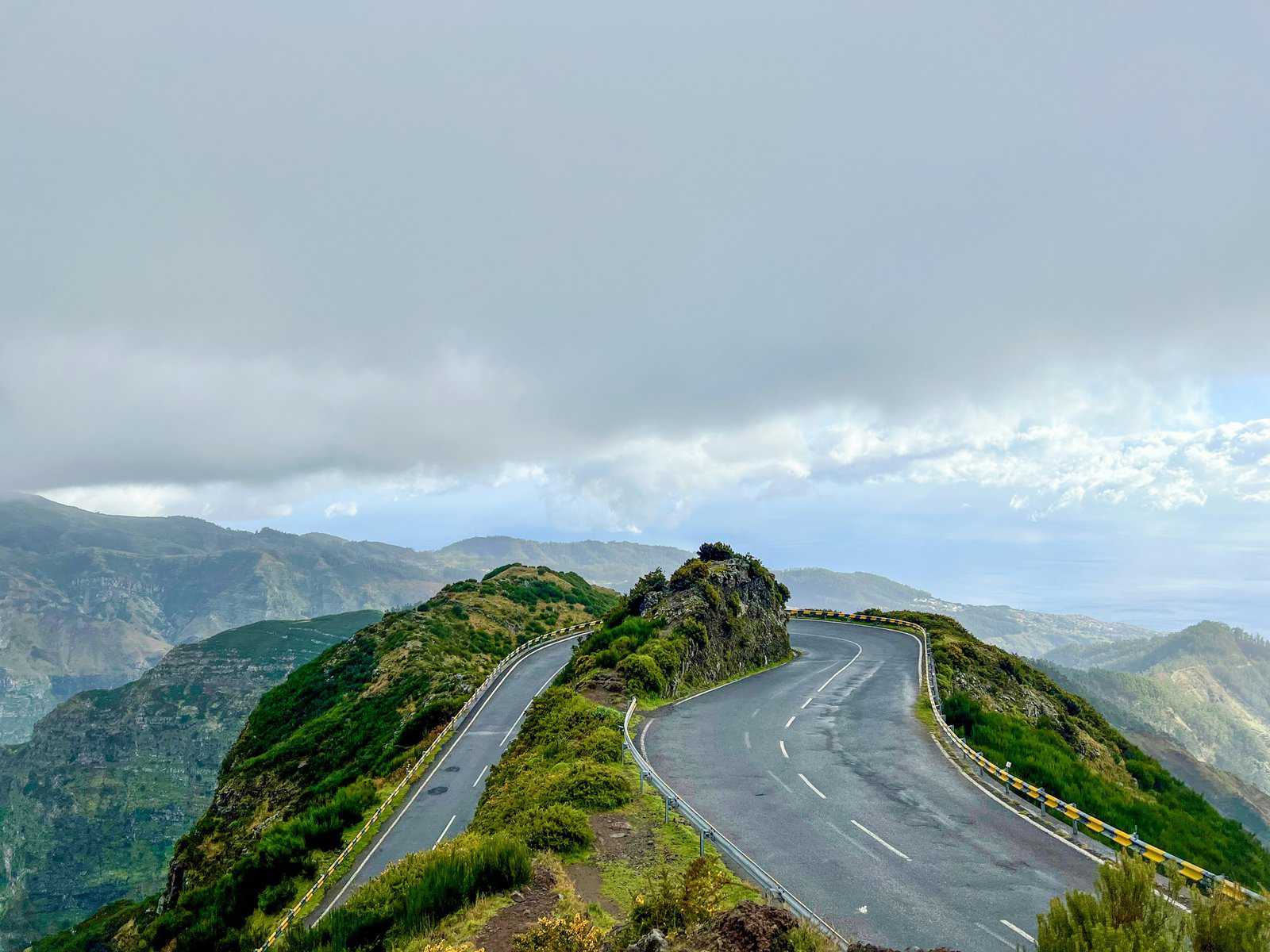
A journey between Lisbon and Porto is perhaps Portugal’s most iconic route, offering a perfect blend of urban energy and coastal charm. This classic itinerary connects the vibrant capital to the historic north, weaving through ancient towns and breathtaking Atlantic landscapes. To help you plan this classic trip, we’ve curated a list of the must-see sites and central towns along the way:
Here’s the list (from south to north):
- Mafra – a vast royal palace
- Ericeira – Portugal’s surfing capital
- Óbidos – a walled medieval town
- Peniche – cliffs, beaches, and the gateway to the Berlengas Islands
- Alcobaça Monastery – a UNESCO World Heritage Site and an enormous monastery
- Nazaré – a charming seaside town famous for giant waves
- Batalha Monastery – one of the country’s most important heritage landmarks
- Fátima – a major pilgrimage site with an impressive sanctuary
- Leiria – a pleasant city with a castle and scenic viewpoints
- Tomar – the city of the Templars and its vast monastery
- Coimbra – a historic university city with several must-see sights
- Montemor-o-Velho – a large castle above the Mondego River
- Buçaco – a royal forest and palace-monastery in the heart of nature
- Figueira da Foz – a popular seaside town with a long waterfront promenade
- Aveiro – a beautiful, colorful canal city
The route between Porto and Lisbon, or the other way around, is Portugal’s single most popular road trip. The two cities are 315 kilometers apart, and if you drive straight through on the highway, the trip takes about three and a half hours. But the real magic, of course, is in stopping along the way to explore the sleepy towns of central Portugal and the remarkable sights scattered between them. We’ve put together a list of the towns and attractions we think are the most interesting on the route. Now the only question is which ones you won’t want to miss.
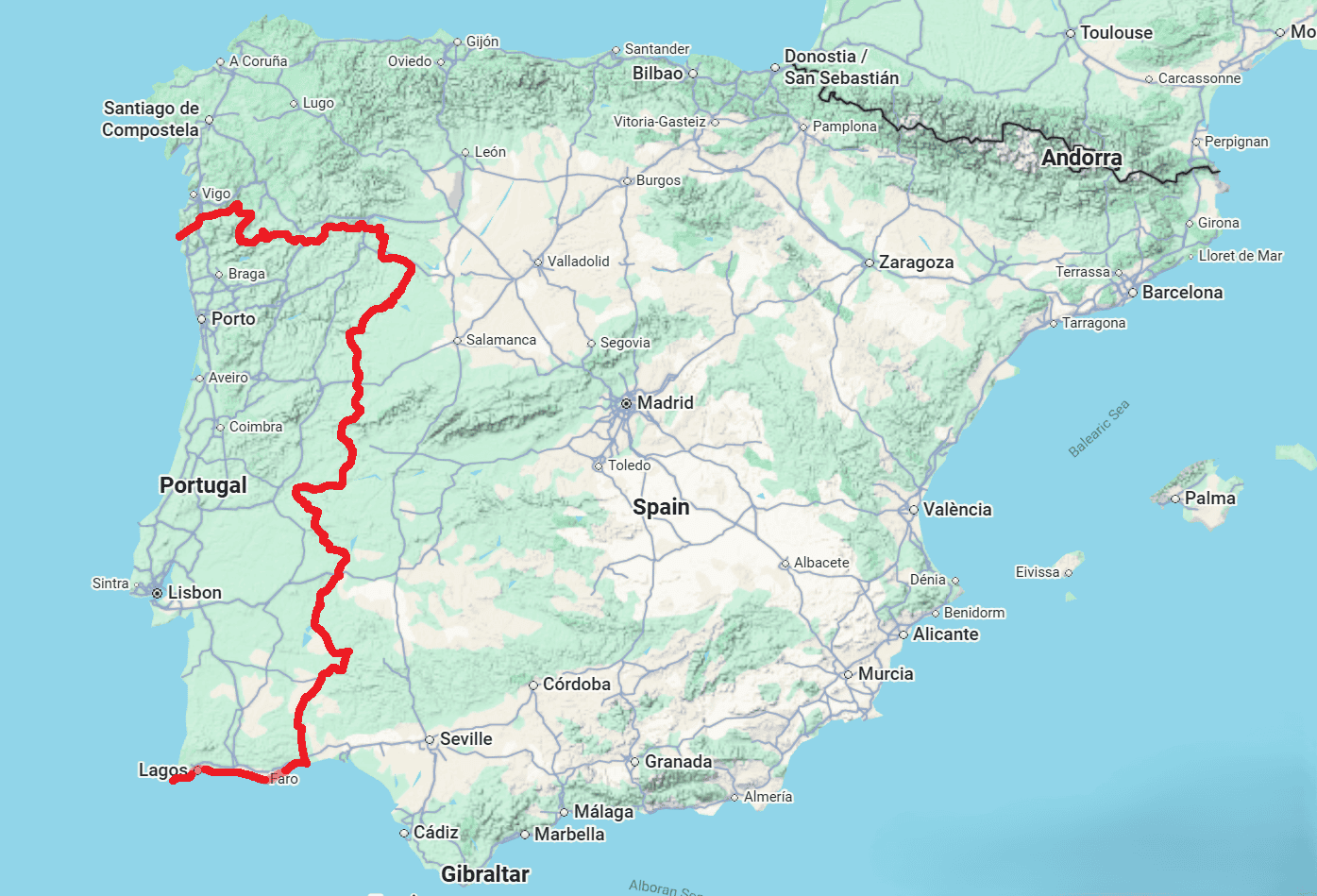
Map of towns and attractions between Porto and Lisbon
15 worthwhile stops between Lisbon and Porto
On the road between Lisbon and Porto, there are two popular routes: the coastal route (scenery, beaches, and fishing towns) and the inland route (monasteries, castles, and history). This list brings together both options, so you can choose longer half-day stops or shorter one- to two-hour visits without making major detours.
Here are the attractions, more or less from south to north:
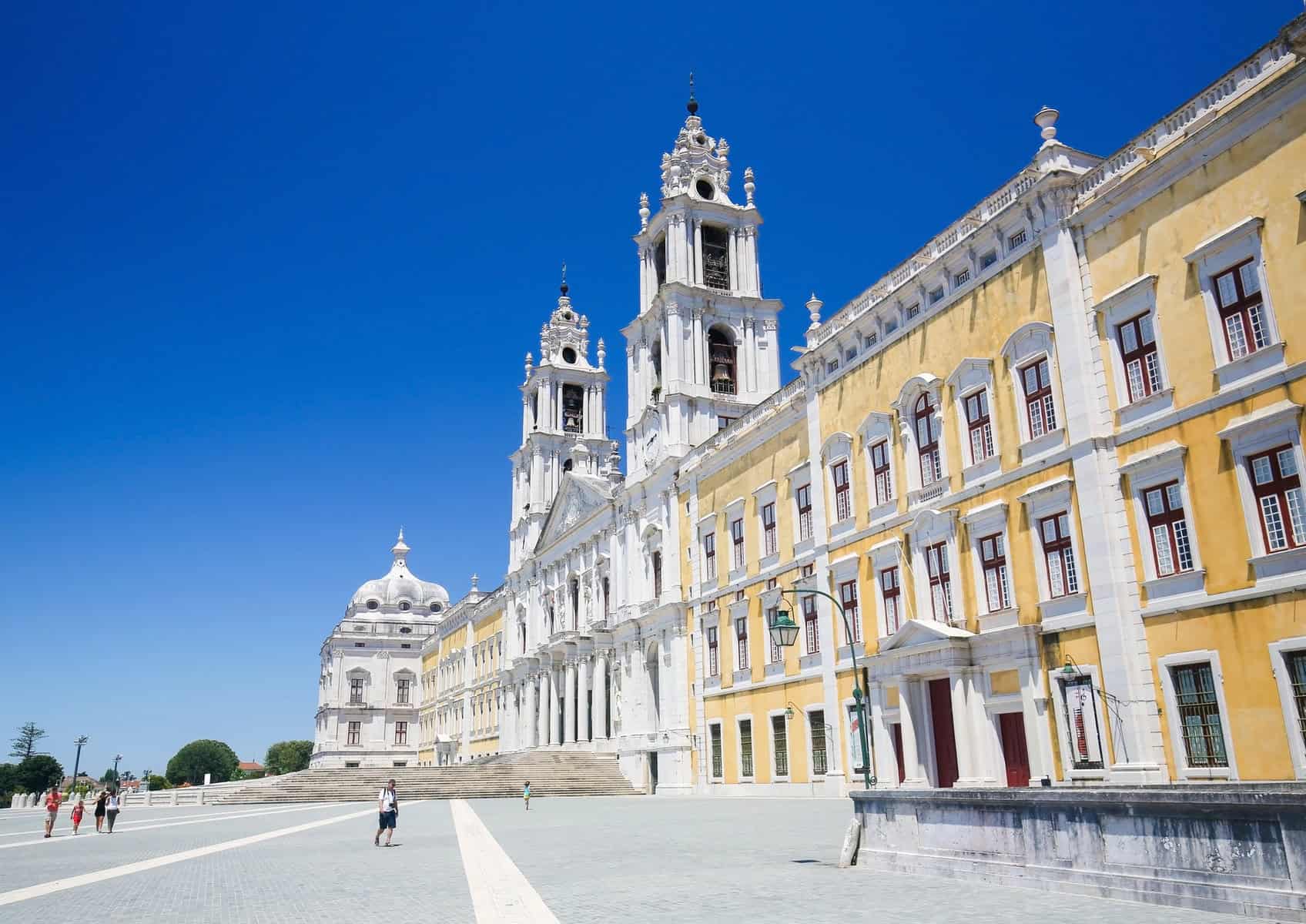
1. Mafra – an enormous royal palace you shouldn’t miss
Mafra is one of the most impressive stops for anyone who loves grand palaces surrounded by gardens and forests. The highlight is the National Palace of Mafra | Palácio Nacional de Mafra, a huge complex that feels almost like a small city. Mafra sits near the beginning of the drive north and is especially recommended for travelers leaving Lisbon in the morning who want a strong first stop—it’s about an hour from the capital. If time is short, you can focus on the main sections and be back on the road after an hour or two. Mafra is also very close to the surf town of Ericeira, and on days without waves, it makes an excellent place to spend a few hours.
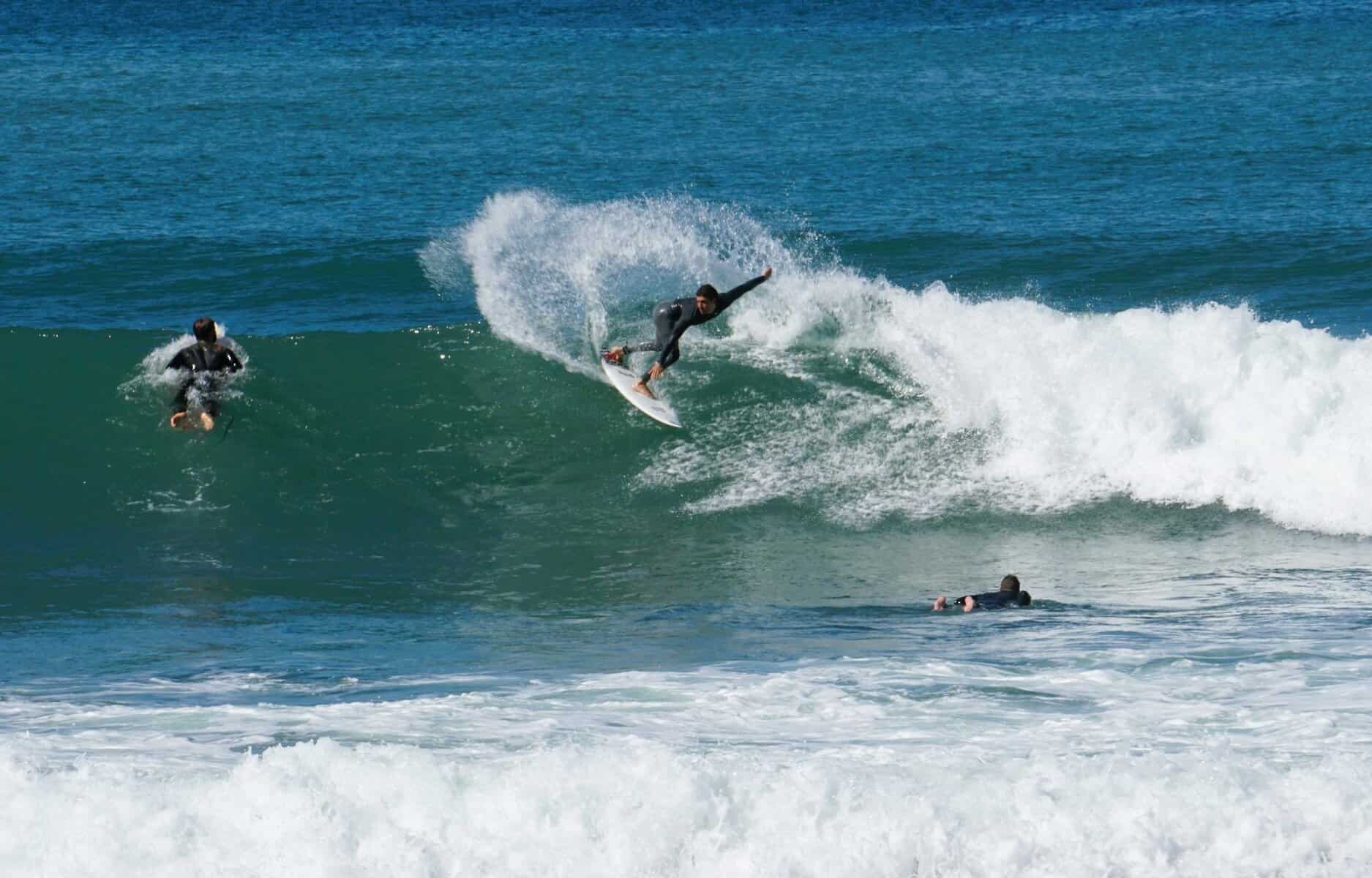
2. Ericeira – a seaside surf town with a youthful vibe
Ericeira is an excellent stop for travelers who want to begin the journey—or break it up—with the sea and a laid-back atmosphere. It’s a popular town, but it still feels local and peaceful, with small streets, cafés, and ocean viewpoints. Even if you’re not young and not into surfing, it’s still a lovely place to stop for a stroll, coffee by the water, and lunch. Ericeira works well as a one- to two-hour stop, or as an overnight stay for travelers moving at a slower pace. If you’re traveling with kids, it’s the kind of stop that helps everyone reset in the middle of a driving day.
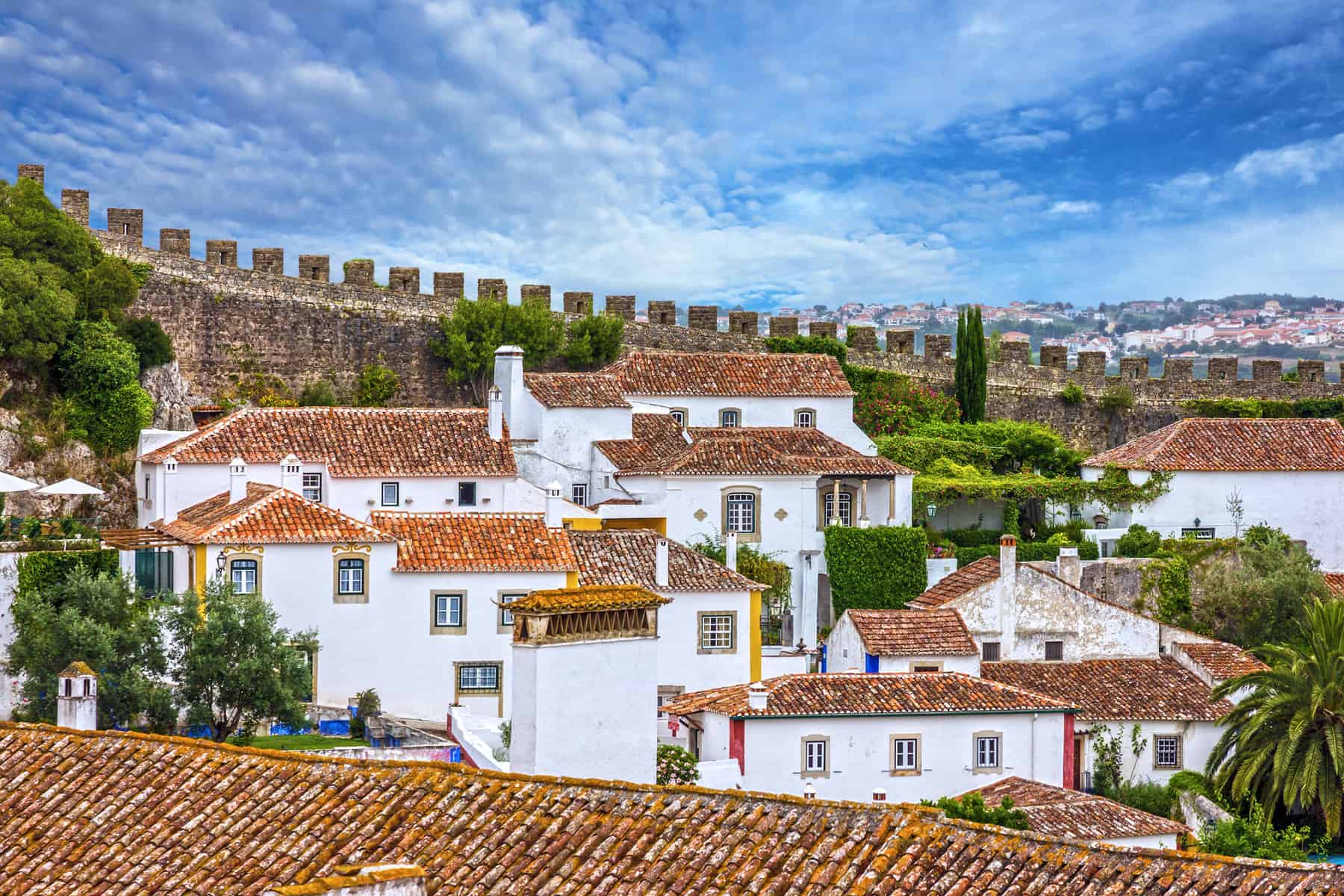
3. Óbidos – a walled medieval town
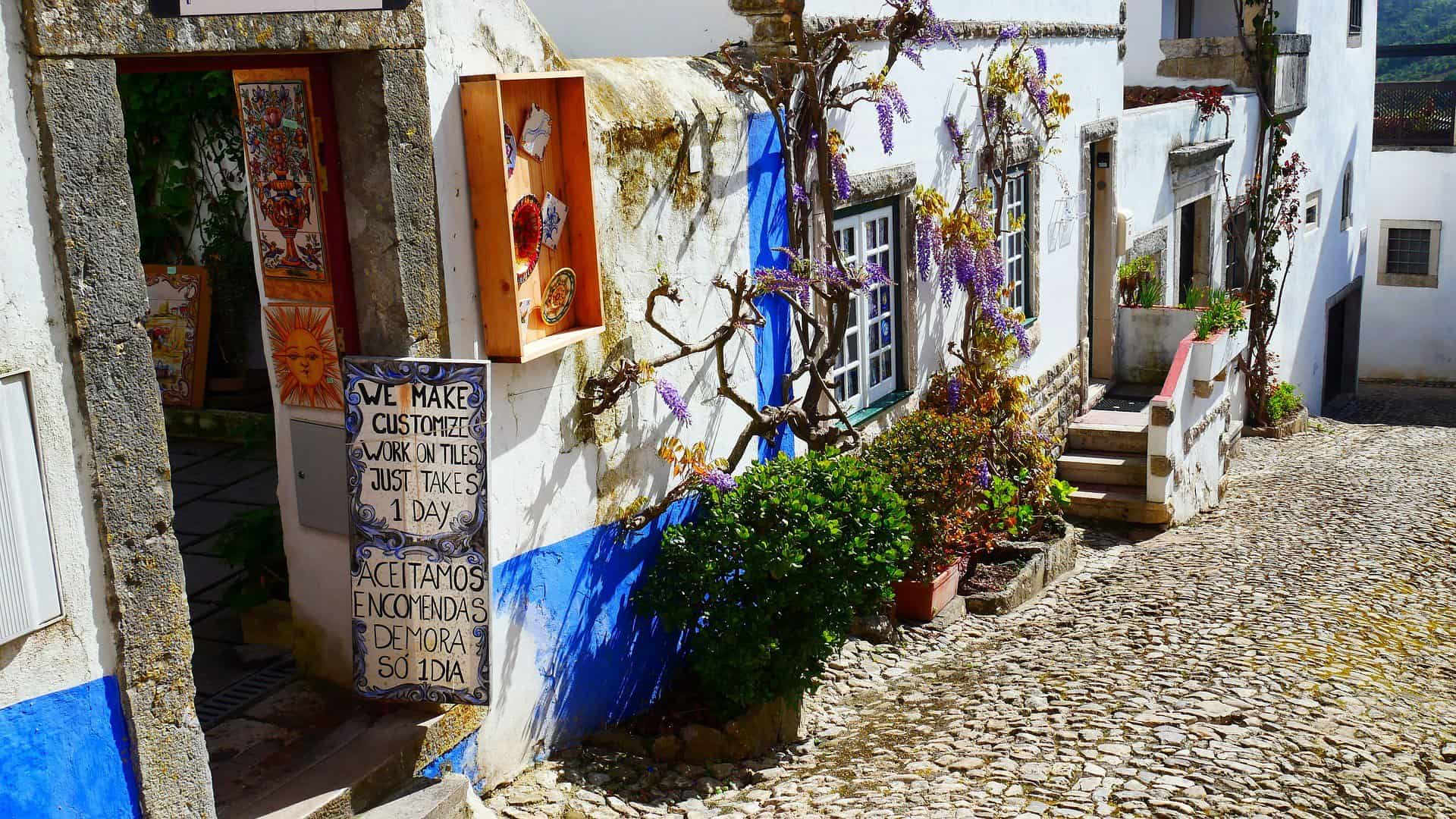
Óbidos is one of the most visited and photogenic stops along the way, and deservedly so. It’s small, easy to explore on foot, and feels like stepping back into the Middle Ages, with stone lanes and walls encircling the town. The visit also suits travelers short on time, since you can get a real feel for the place in just a couple of easy hours. If you have longer, it’s worth wandering beyond the main streets and walking the town walls as well (access to the walls is free, though you’ll want to be careful since there are no railings).
This is a perfect stop for photos, atmosphere, and families looking for a short, focused outing. Near Óbidos, you’ll also find a one-of-a-kind park called Buddha Eden | Jardim da Paz Buddha Eden. It’s a lovely green park filled with Buddha statues, oriental-style sculptures, and gardens, making it a very pleasant place for a family walk. There’s also a large restaurant on-site, so it works beautifully for a stroll and lunch before or after visiting Óbidos.
Click here for the full guide to Óbidos…
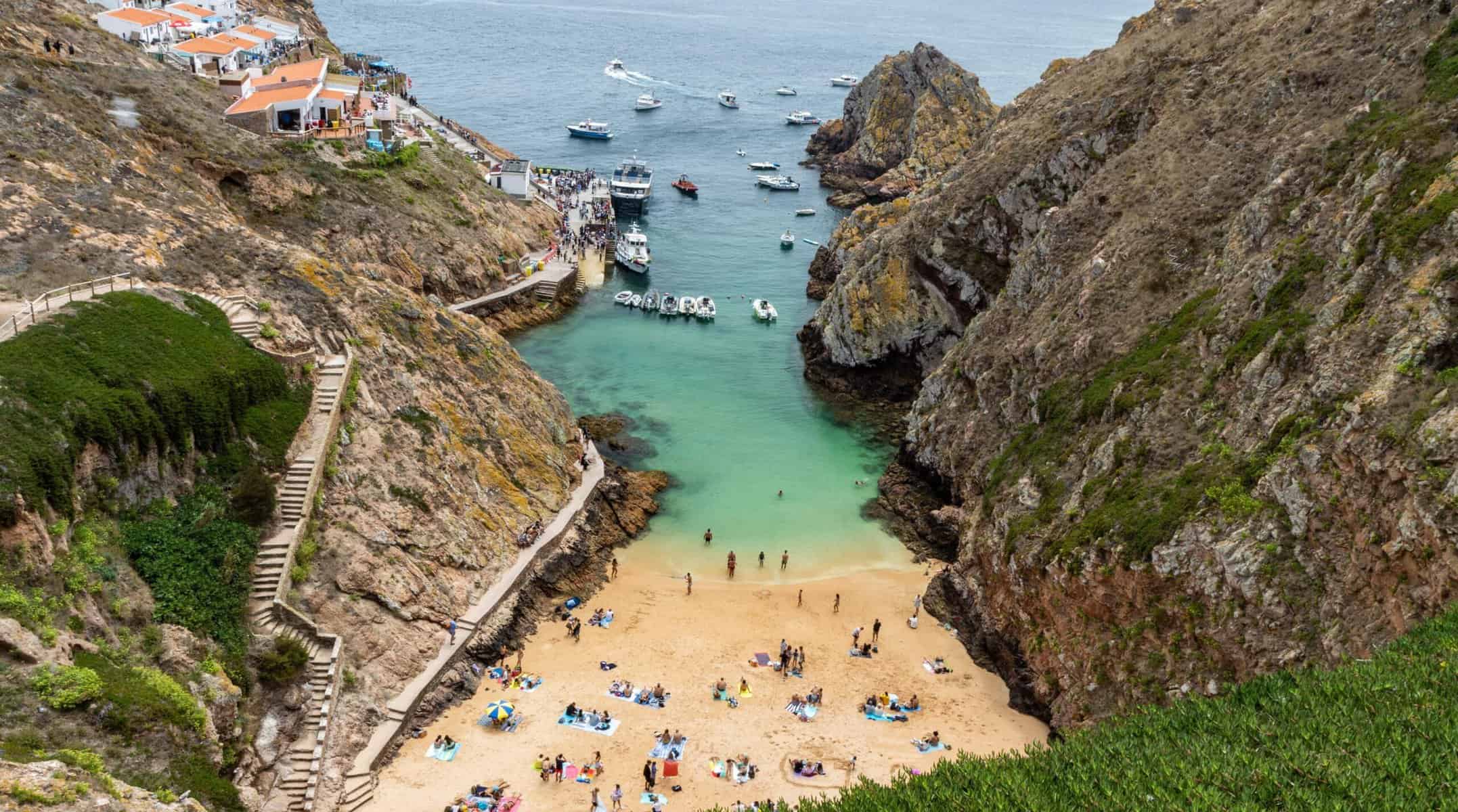
4. Peniche – cliffs, beaches, and the jumping-off point for the Berlengas Islands
Peniche is an especially rewarding coastal stop. It’s a relatively large fishing town that still holds on to its old-world charm. Beyond that, its natural formations and shoreline are particularly striking, with dramatic cliffs and long sandy beaches. Those same beaches are also a favorite, spacious destination for surfers from around the world.
One of the things that makes Peniche unique is that it’s the departure point for the Berlengas Islands, a favorite destination for boat trips and nature lovers, especially if you have a full day or more to spare. Even if you’re not heading out to sea, Peniche is well worth a stop for the viewpoints, a short walk along the cliffs, and coffee by the ocean. It’s a great place to experience the calm beauty of Portugal’s western coastline. In practical terms, Peniche can work either as a short stop or as an overnight base in the area, usually at very reasonable prices.
Click here for detailed information about Peniche and the Berlengas Islands…
5. Alcobaça Monastery | Mosteiro de Alcobaça – a UNESCO World Heritage Site
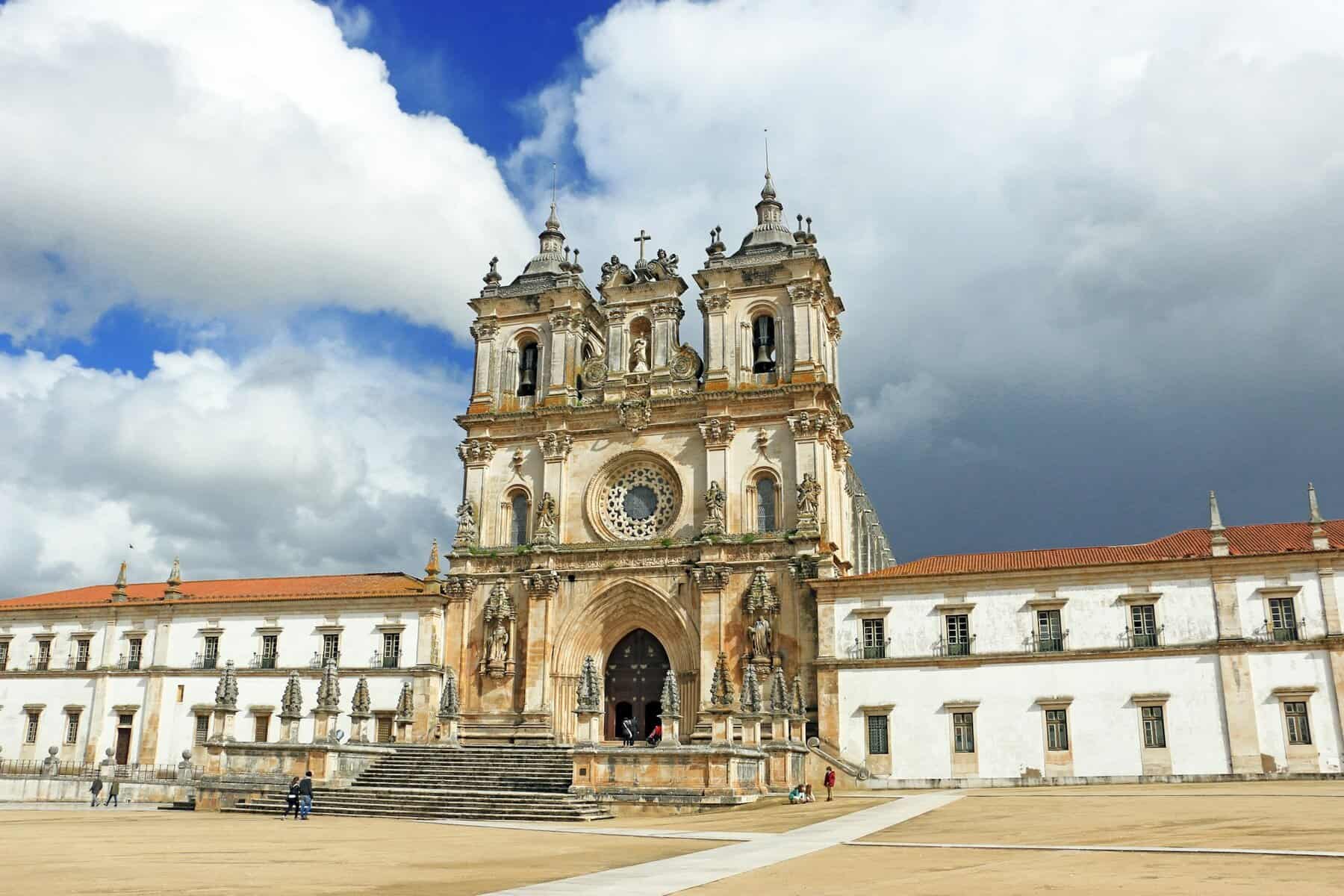
Alcobaça lies about 15 minutes east of the famous seaside town of Nazaré. It is one of Portugal’s most important monasteries, and a UNESCO World Heritage Site that feels immense from the moment you arrive. Portugal’s first king, Afonso Henriques, founded a church here after his victory over the Muslims and their expulsion from the region in 1147. The monastery is the first Gothic building in Portugal, completed in 1252, and fortunately it has been preserved almost exactly as it originally stood. Several Portuguese kings are buried within the monastery complex, a sign of its national importance.
The visit begins at a vast square lined with cafés and restaurants for the many visitors who come here. The atmosphere feels very classically European, with soaring and impressive spaces that put everything into perspective. A stop in Alcobaça usually takes one to two hours and pairs beautifully with other stops along the coastal route. If you enjoy history, this is one of the best stops between Lisbon and Porto.
Check out our list of popular itineraries in Portugal…
6. Nazaré – the Sítio cliff and giant waves
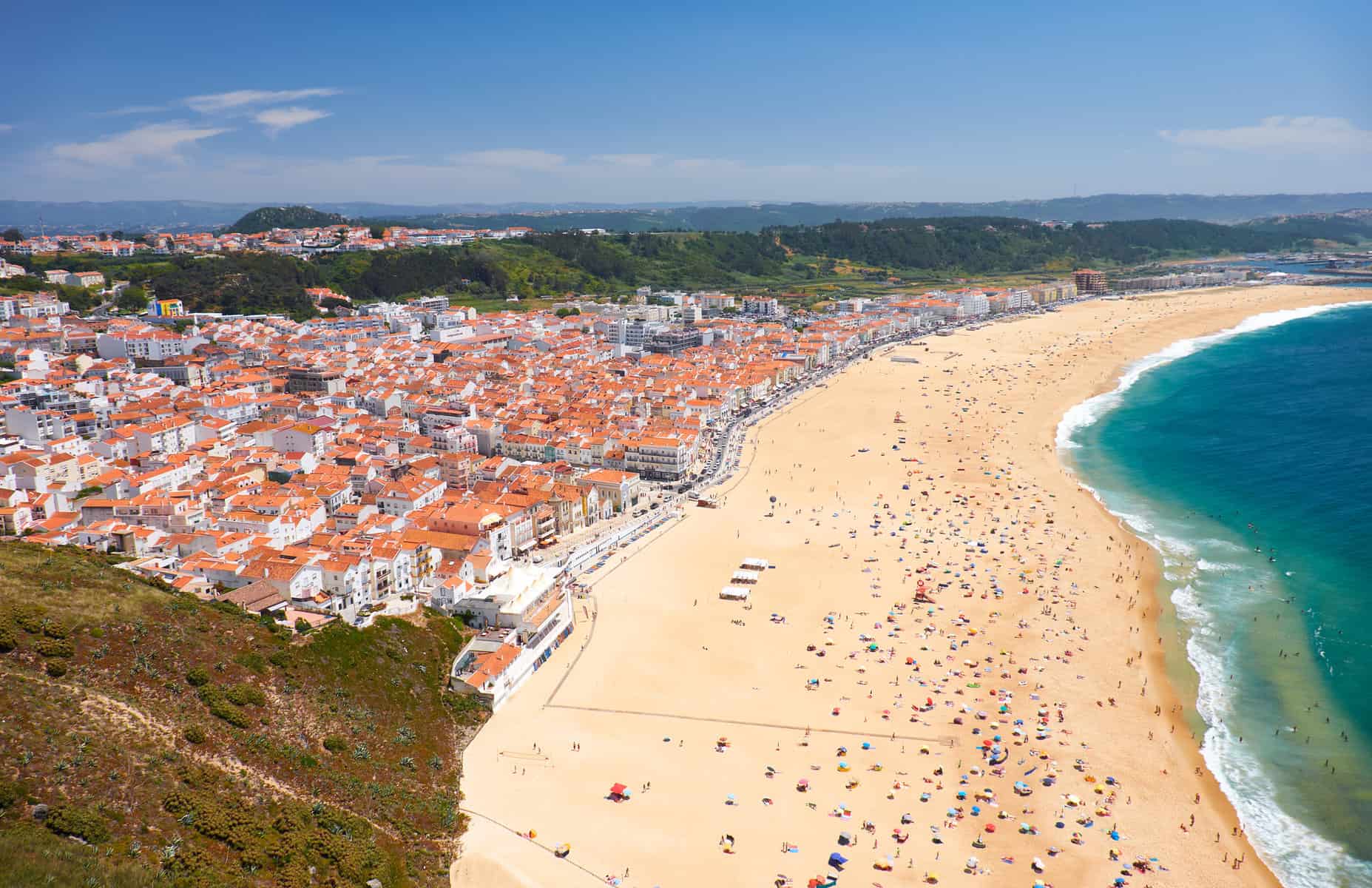
Nazaré is one of the best-known towns on this route, mostly because of its giant waves, but also thanks to the lanes of its old town, the wonderful viewpoint from the Sítio cliff, and of course its lovely sandy beach. The highlight for most visitors is heading up to the Sítio area on the funicular and taking in the view over the town below. It’s an excellent stop even if you’re not planning beach time, since you can come just for the scenery, wander a bit, and continue north. Winter gives you a better chance of seeing the famous towering waves, but Nazaré is fun in summer as well. It also combines very easily with two other worthwhile stops on the same day: Alcobaça and Batalha.
Click here for more detailed information about Nazaré on Portugal’s western coast…
7. Batalha Monastery | Mosteiro da Batalha – an especially impressive national monument
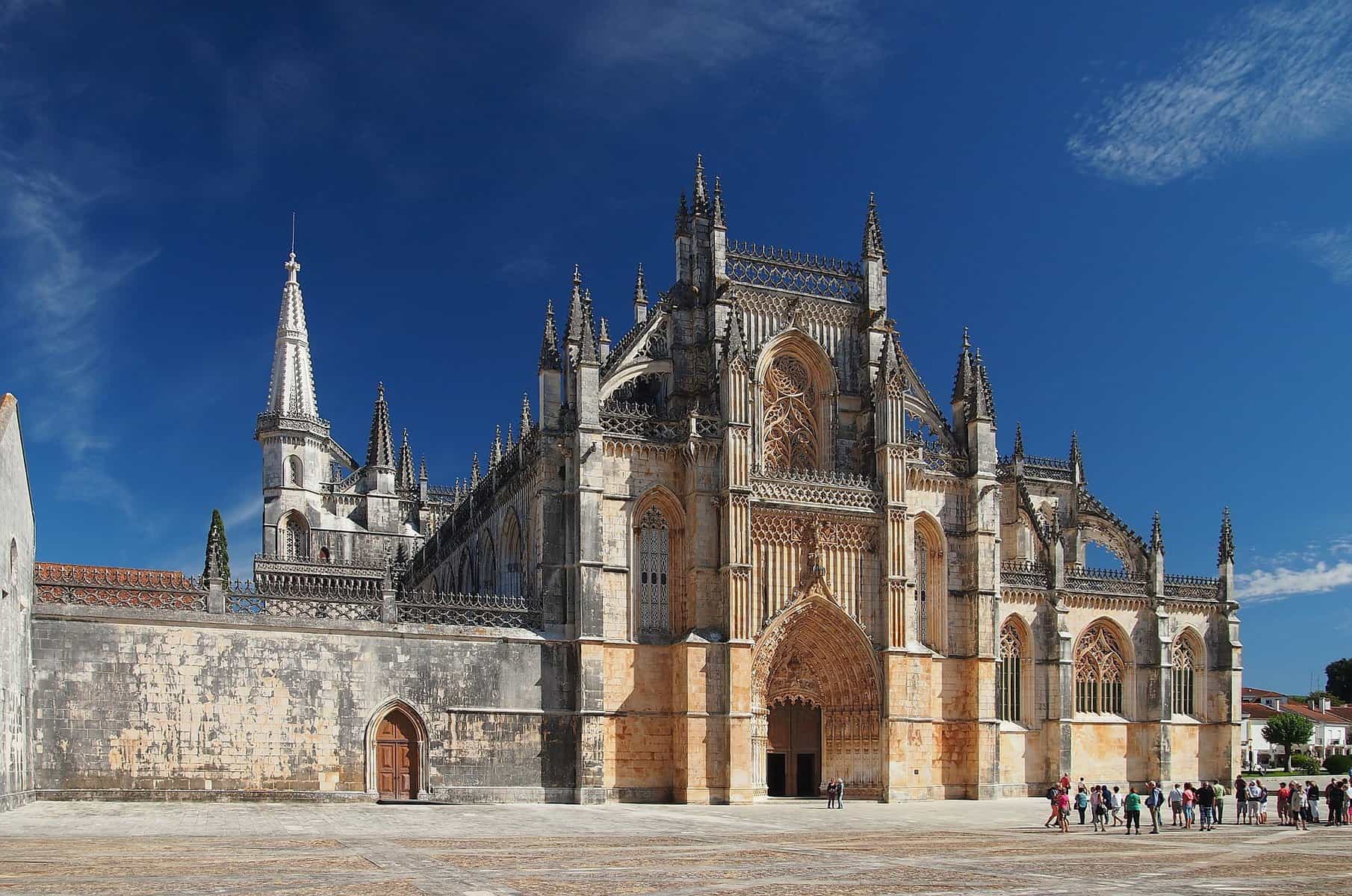
Batalha Monastery, near the town of Leiria, is a major Portuguese heritage site. It was built by King João I in 1385 to commemorate his victory over Castile at the Battle of Aljubarrota, which secured the survival of the Kingdom of Portugal. The battle took place not far from where the monastery was later built, and it is also where King João chose to be buried. In hindsight, that victory guaranteed Portugal two hundred years of peace and prosperity, which is why the monastery remained important to later Portuguese kings, who continued to expand it. It’s one of the country’s most significant sites, and visiting it feels like stepping into an entire chapter of history. A stop of an hour and a half to two hours is usually enough to appreciate it. You can plan additional stops on the same day, but it’s wise to stay flexible, since it can get busy in peak season.
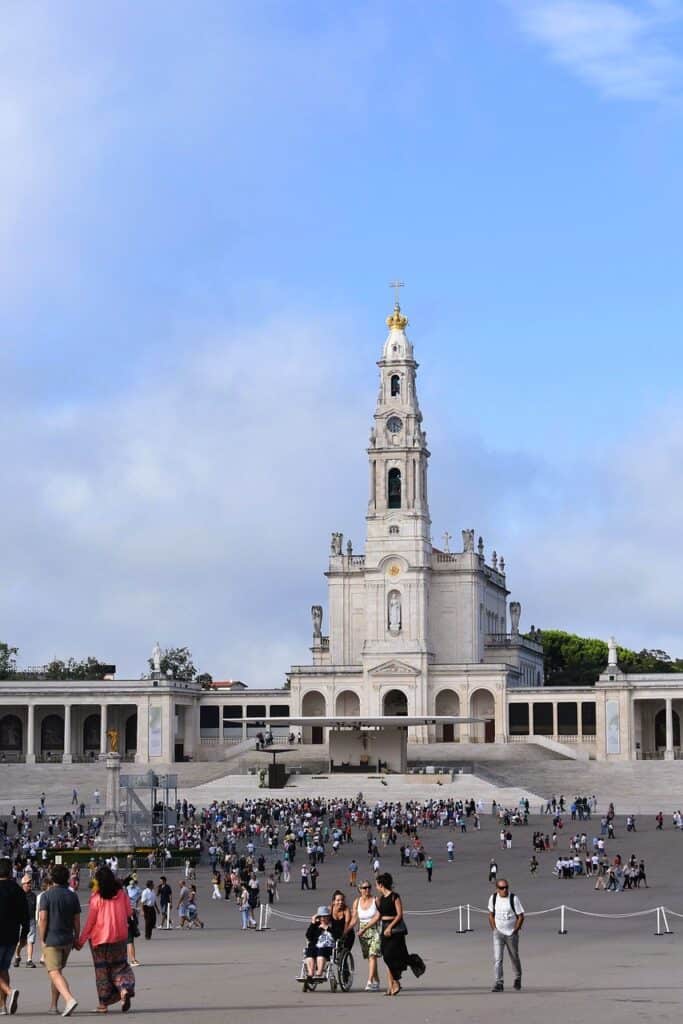
8. Fátima – a vast religious complex that draws visitors from around the world
Even if you’re not traveling for religious reasons, Fátima is an interesting stop because of its monumental scale and unusual atmosphere. It is one of the world’s most famous Christian pilgrimage sites, which gives the place a distinctly international and very touristed feel.
It is also a relatively modern pilgrimage site, having developed after a miracle that took place in 1917. On October 13 of that year, a glowing figure appeared from an oak tree to ten-year-old Lúcia Santos and her two young cousins, on the spot where the basilica stands today.
The figure, identified as the Virgin Mary, instructed the children to return to the oak tree once a month for six months, and each time she appeared to them again. With each visit, more and more believers came alongside the children, and that is how the local pilgrimage tradition began. In time, the impressive buildings now seen here were constructed.
A visit is usually fairly short: a walk through the main complex, time to take in the squares and monumental buildings, and then back on the road. This is a particularly good stop for travelers following the inland route or for anyone who wants a change from coastal sights and historical landmarks. Pilgrims come here year-round, and you can often see deeply devoted worshippers. Twice a year, however—on May 12–13 and October 12–13—the pilgrimage becomes massive, and if you happen to be nearby, it is truly an experience.
9. Leiria – a pleasant city with a castle and viewpoints
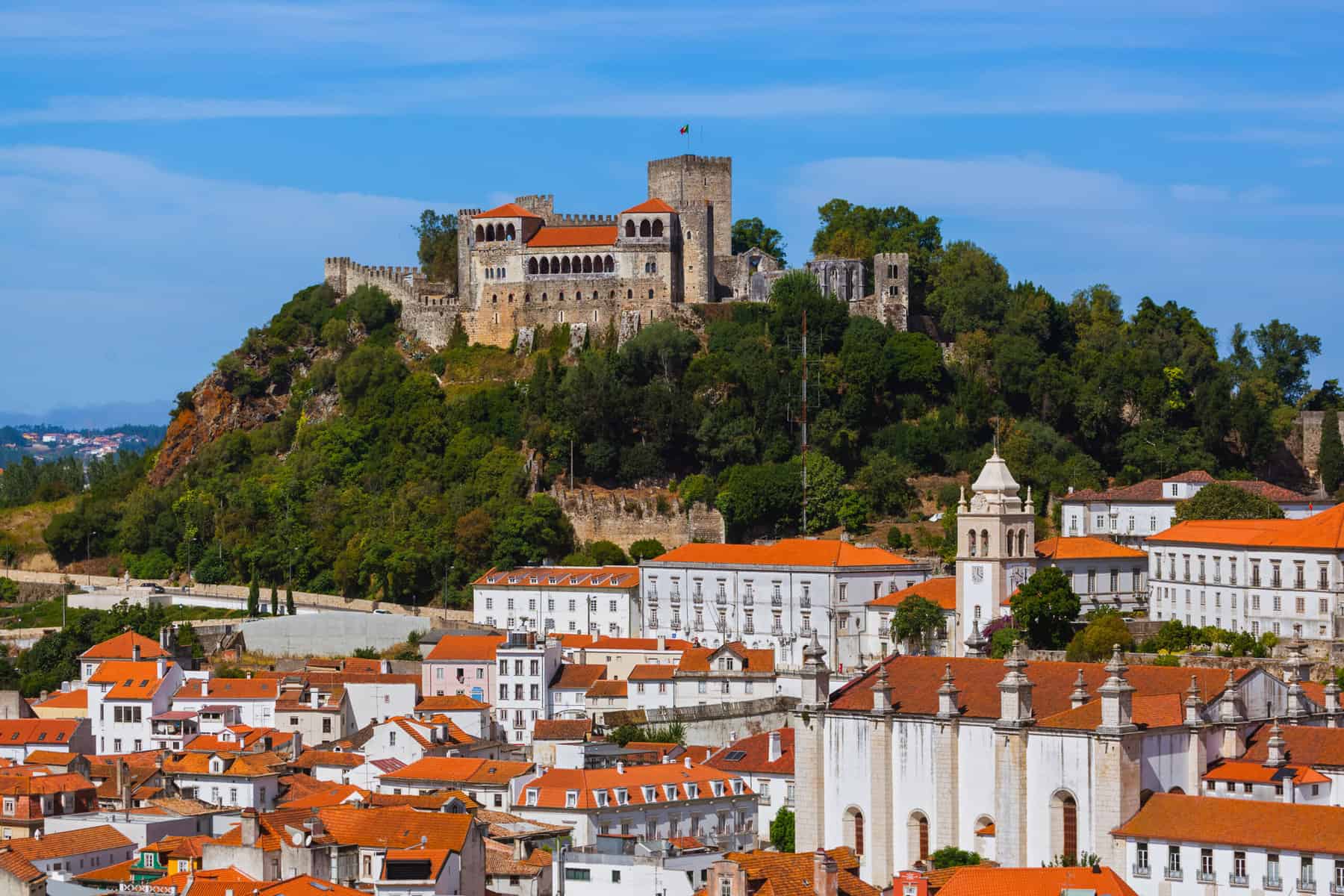
Leiria is an excellent choice for travelers who want a stop in a real city rather than just a single landmark. The city’s castle offers a beautiful viewpoint, and the center is ideal for a relaxed coffee break or lunch. It may not feel quite as essential as Batalha or Alcobaça, but it’s extremely practical and easy to fit into the route. Leiria also works well as an overnight stop for travelers who would rather avoid sleeping in more tourist-heavy places. If you’re road-tripping, it’s easy to include without straying far from the main routes.
Click here for the full guide to Leiria and the surrounding area…
10. Tomar – the city of the Templars and the Convent of Christ
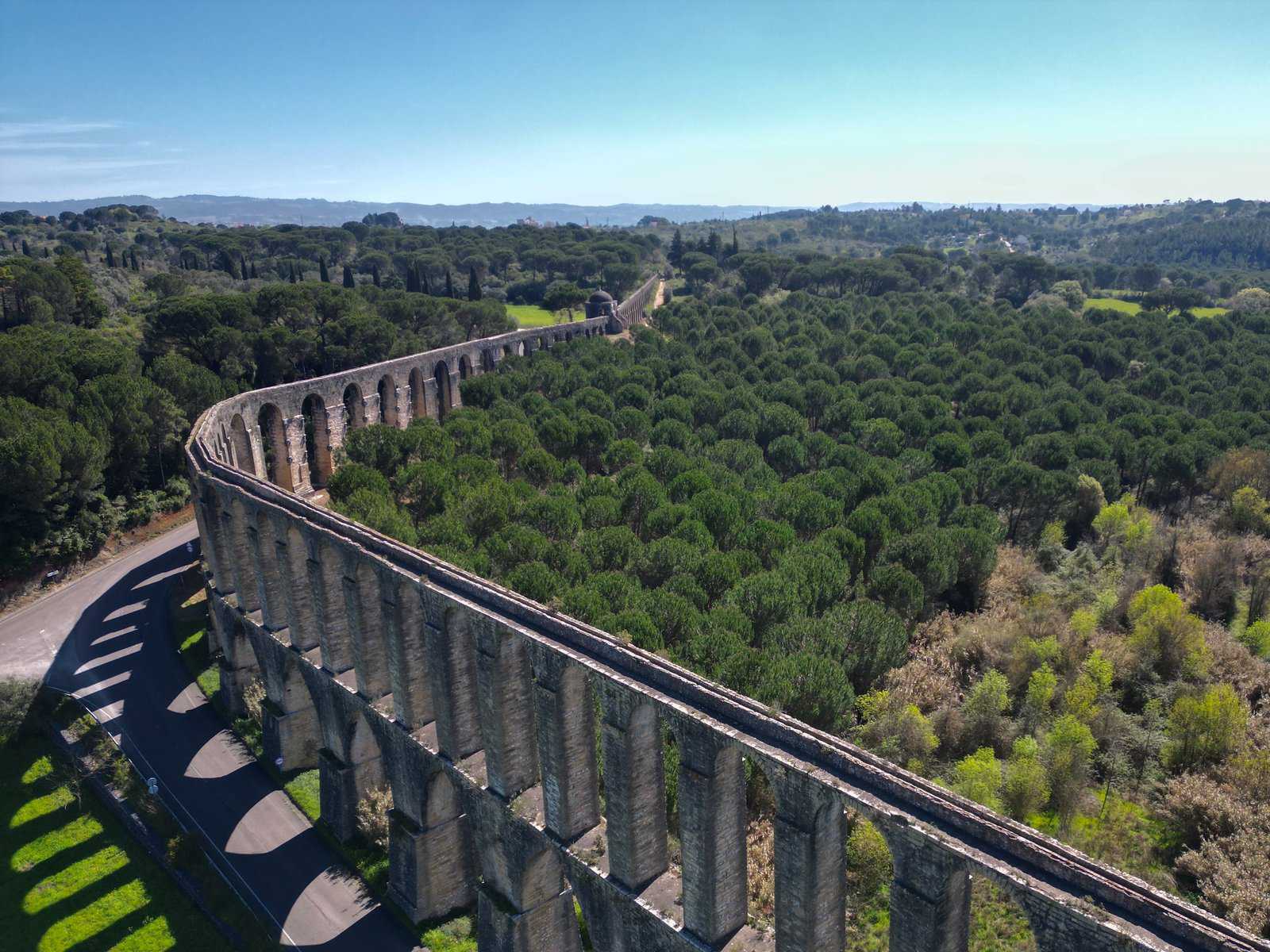
Tomar is one of the most important and most beautiful stops on the inland route, above all because of the Convent of Christ | Convento de Cristo. It is deeply tied to the history of the Templars in Portugal, and a visit feels like a blend of fortress, monastery, and major heritage site. The town itself is pleasant for a short stroll and adds a local layer to the experience beyond the main attraction. Tomar is a great fit for travelers looking for something different from the coast, with a stronger historical focus. It’s also a beautiful green town with a river running through it. You’ll find an old synagogue here as well, along with a long and relatively intact aqueduct that carried water to the fortress for centuries. Because Tomar sits a little off the main route, a visit here takes at least half a day.
Click here for the full guide to Tomar and its famous fortress…
11. Coimbra – a historic university city with several must-see sights
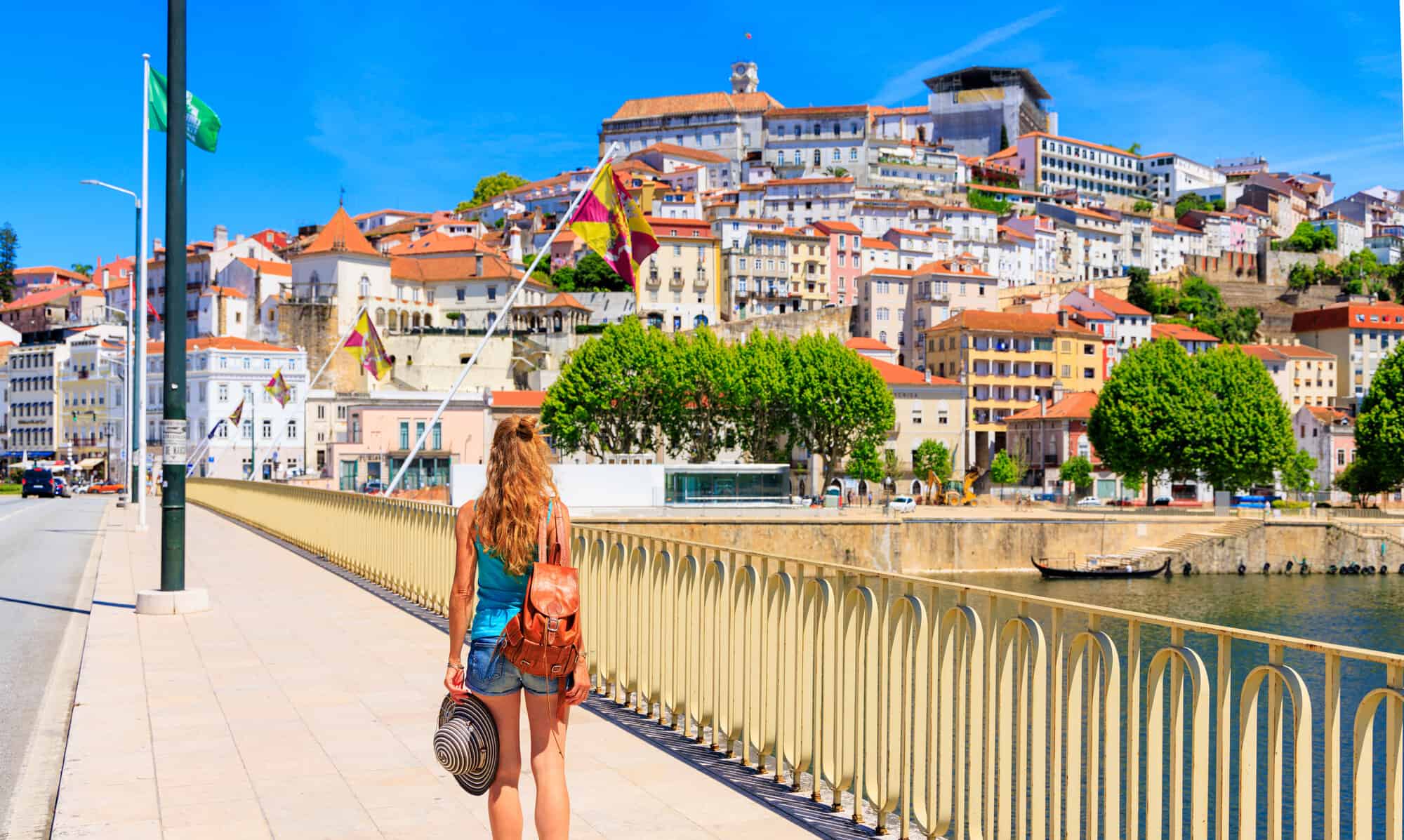
Coimbra is one of the most important cities on the route, and for many travelers it also makes an ideal overnight stop in the middle of the journey. The highlight is the university district, including the Joanina Library | Biblioteca Joanina, considered one of the most impressive libraries in all of Europe. It’s also worth combining with a short walk through the historic center, a stop at the Old Cathedral | Sé Velha, and, if you still have time, a look at the Monastery of Santa Clara-a-Velha. The city is built on a hill, so it’s worth keeping the climbs and descents in mind—but that’s part of its charm. For anyone looking for a mix of culture, history, and student-city atmosphere, Coimbra is a genuine must-stop.
Click here for the complete guide to Coimbra in central Portugal…
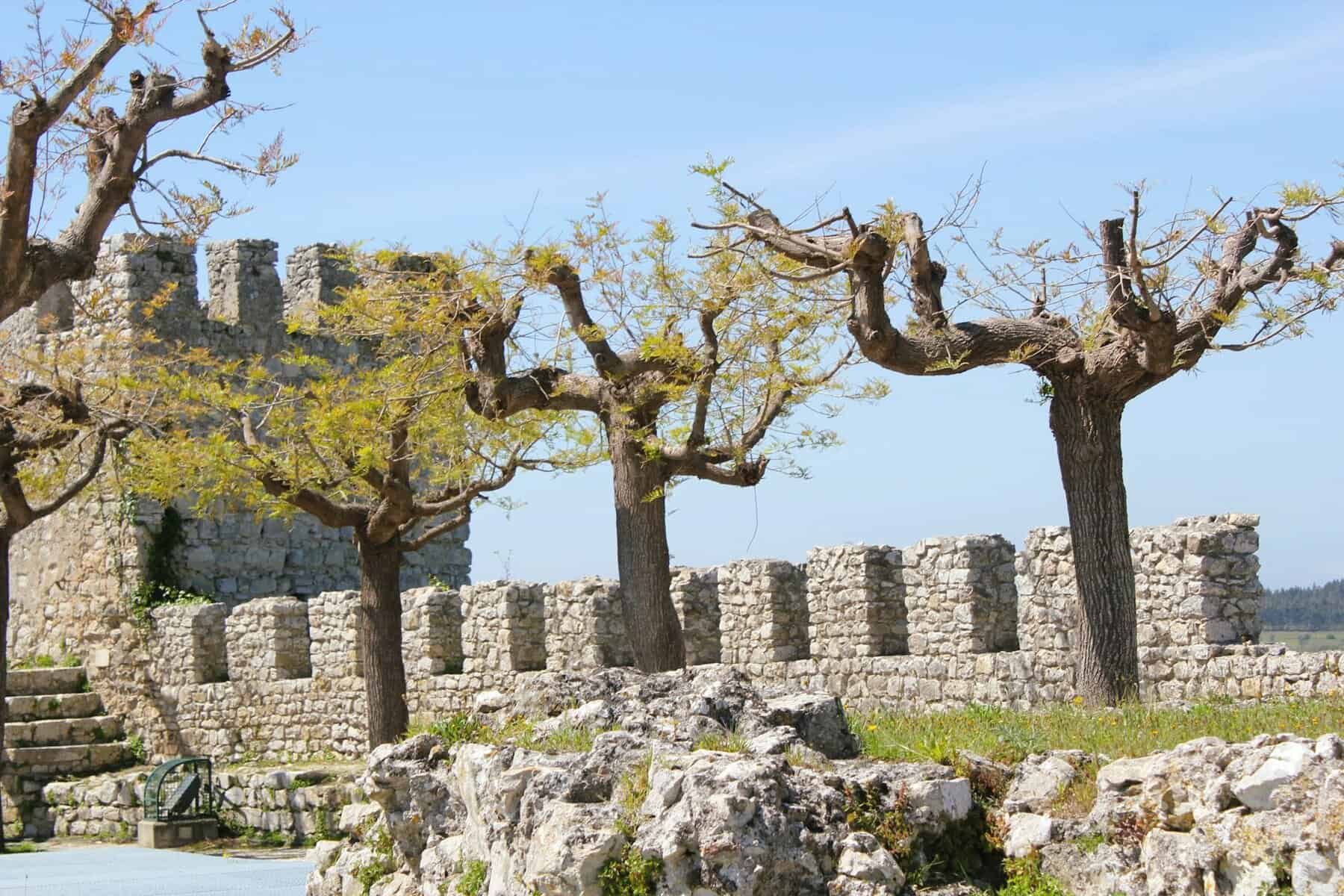
12. Montemor-o-Velho – a large castle above the Mondego River
This is an excellent stop for travelers who want an impressive castle without overwhelming crowds. The castle sits above the Mondego River | Mondego, which flows from Coimbra through here and west toward Figueira da Foz and the ocean. From the walls, you get beautiful views over the surrounding countryside. The site works well as a short one-hour stop, especially if you’re already in the Coimbra area and continuing north—or if you’re staying in the seaside town of Figueira da Foz, which is only about 15 minutes away. The atmosphere here is quieter and more local, and that’s part of the appeal. If you enjoy castles, this is one of the more rewarding stops on the route.
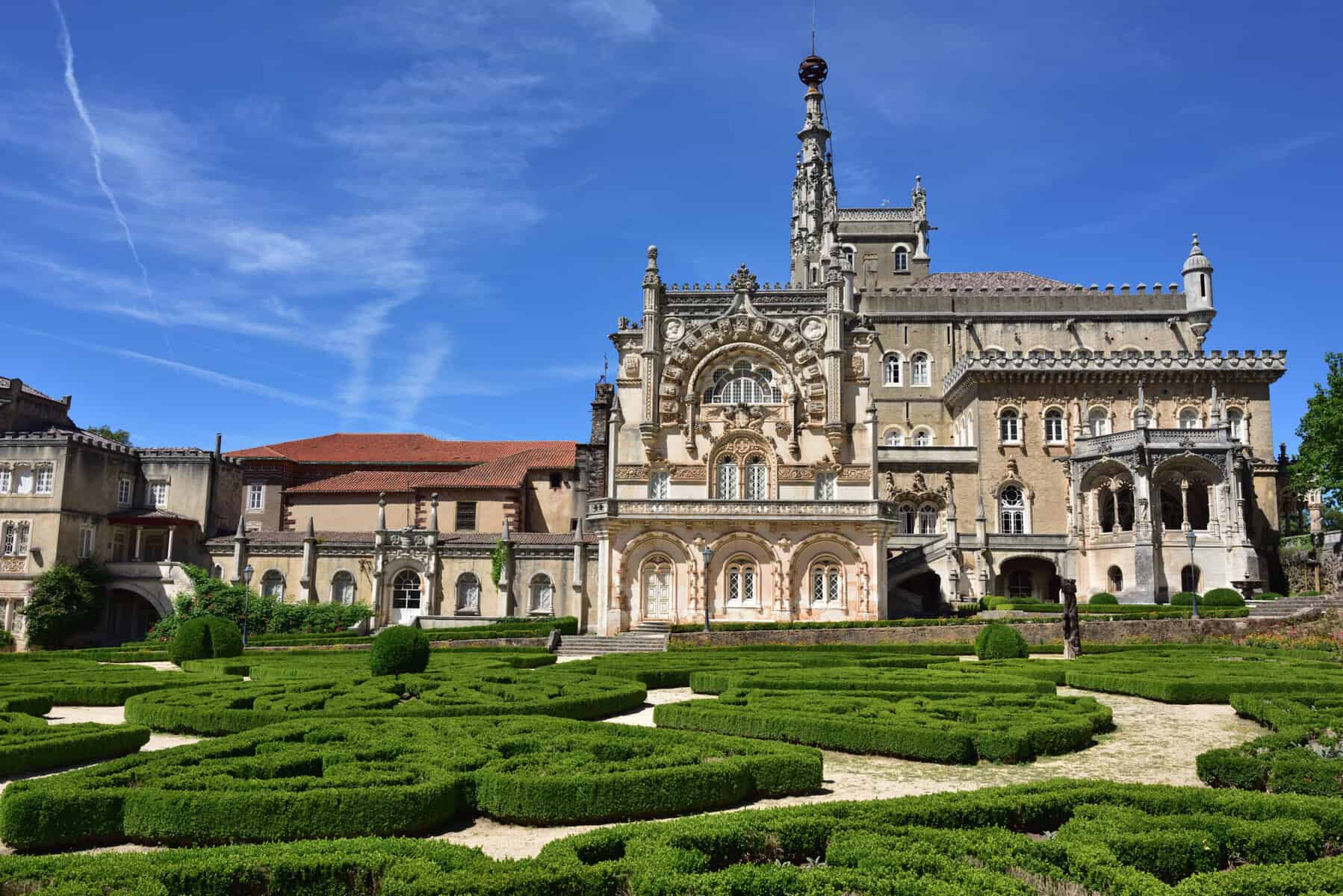
13. Buçaco – a royal forest, palace-monastery, and nature
Buçaco is one of the most distinctive stops on the route, because it’s not just another monument—it’s a blend of nature and architecture. You’ll find a dense green forest with easy, pleasant walking trails, and in the middle of it a remarkable building that looks as if it came straight out of a fairy tale. It’s an ideal stop for anyone who wants a green break in the middle of a trip filled with monasteries and towns. You can make it a very short stop, or spend half a day here if you enjoy walking. Buçaco is a particularly good choice for families, and also for couples looking for a quiet moment.
Check out our guide to the best seasons and times to visit the different parts of Portugal…
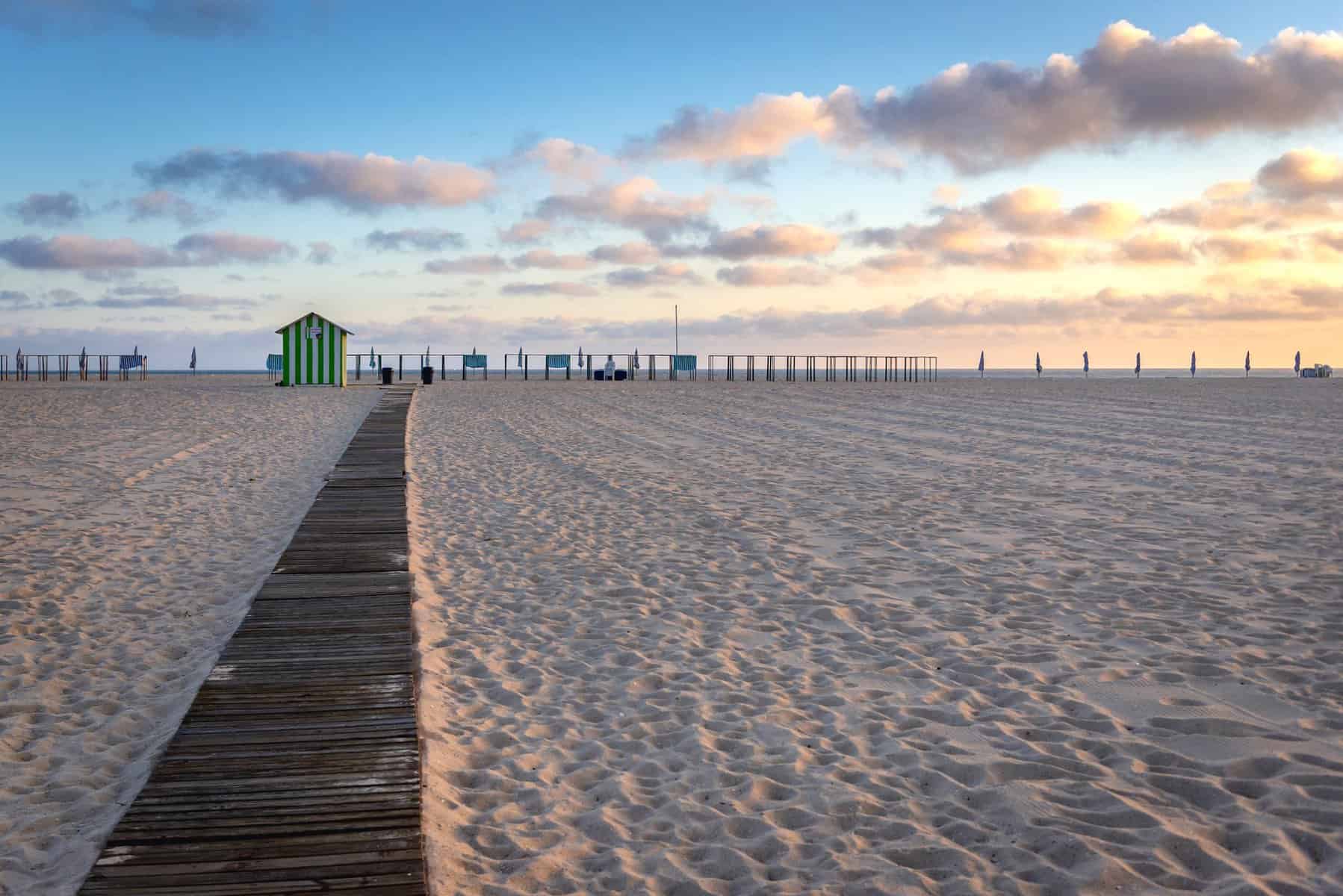
14. Figueira da Foz – a relaxed, relatively large seaside town
Figueira da Foz is a classic beach stop, especially if the route is beginning to feel like a little too much history. There’s a long promenade here, a wide beach, and an easygoing resort-town atmosphere, so it’s simple to fit in coffee by the sea or a short walk. It’s also a convenient stop on the way north if you’re following the coast and don’t want to head inland. For summer travelers, it can be a refreshing break in the middle of a driving day thanks to its huge, open beach. If you’re looking for an overnight stay away from the crowds of the larger cities, this is a solid option, with very reasonable prices, especially outside the summer season.
Click here for the general guide to Figueira da Foz and its broad beach…
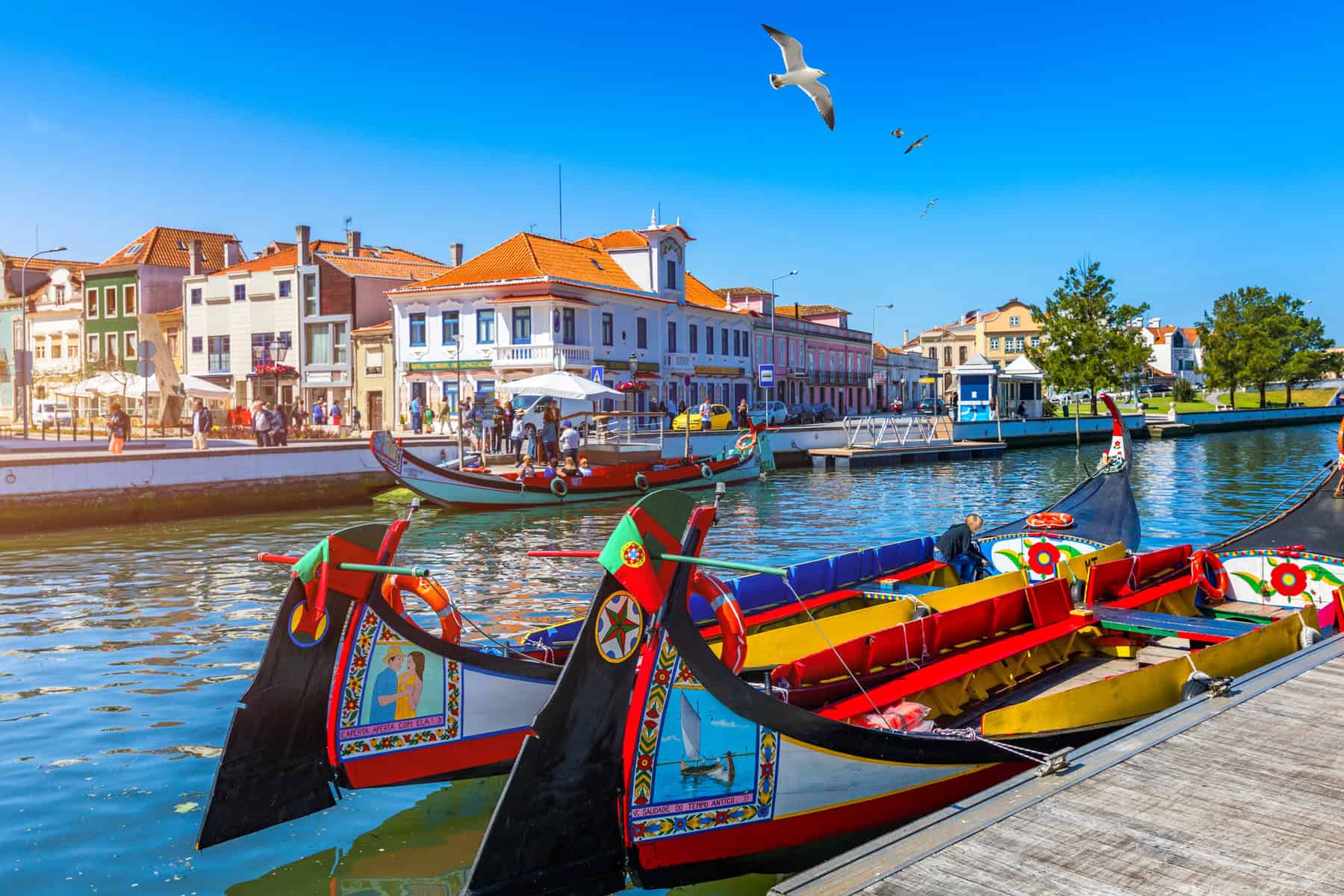
15. Aveiro – the colorful canal city not far from Porto
Aveiro is one of the most visited stops between Lisbon and Porto, mainly thanks to its canals and colorful boats, which give the city a light, cheerful feel. It’s much closer to Porto and can also work as a day-trip option from the northern city once you’ve arrived. A visit to Aveiro is especially well suited to a short walk through the center, with time for a café stop and, of course, a canal cruise on the colorful moliceiro boats. If you have extra time, you can also add a quick detour to the coastal area of Costa Nova, known for its famous striped houses. Aveiro is excellent as a final stop before entering Porto, or as a base for your last night before reaching the big northern city if you prefer a more relaxed pace.
Click here for the complete guide to Aveiro on Portugal’s northern coast…
7 important tips for traveling in central Portugal
1. How much time should you set aside for central Portugal?
Central Portugal is especially well suited to a 3–6 day trip, either as part of a route between Lisbon and Porto or as a regional trip in its own right. This is an area rich in historic landmarks, coastal towns, university cities, and green natural scenery, so it’s best not to cram too many stops into a single day. Travelers in a hurry can choose two or three key stops, while those moving at a gentler pace will benefit greatly from spending two or three nights along the way. Either way, this is an especially calm and peaceful region with a genuinely local character.
Click here for the complete guide to Portugal’s travel regions…
2. The best seasons for traveling in central Portugal
The best times to visit are spring (April–June) and fall (September–October), when the weather is pleasant, the landscape is green, and the sights are less crowded. Summer is hotter, especially inland, though the coast remains very pleasant. Winter can bring rainy days, but it’s also a good time for travelers looking for lower prices and fewer tourists, especially in cities like Coimbra and Tomar.
Click here for the full guide to the best time to visit Portugal’s different regions…
3. Do you need to rent a car for the trip between Lisbon and Porto?
Although public transportation exists between the major cities, a rental car is the most convenient and flexible way to explore central Portugal. It lets you combine the coastal and inland routes, reach monasteries, forests, and small towns, and stop whenever you like. If you’re short on time or want complete freedom of movement, renting a car will make a big difference.
Click here for detailed information about renting a car in Portugal…
4. What kind of rental car is best for the region?
In most cases, a compact or midsize car is the best choice—something fuel-efficient and easy to park in historic towns with narrow streets. Families or travelers carrying a lot of gear may prefer a larger midsize car or a small SUV with more trunk space. There’s no need for anything especially large, since the roads are comfortable and most sights are easy to reach.
Click here for the guide to driving and parking in Portugal…
5. Combining the coast with the inland route
One of central Portugal’s biggest advantages is how easily you can combine beaches with historic sights. You might spend one day driving through coastal towns such as Nazaré or Peniche, then head inland the next day to monasteries such as Batalha, Alcobaça, or Tomar. Distances are relatively short, and the roads make it easy to build a flexible itinerary.
6. Staying overnight in towns along the way
It’s well worth planning overnight stays in towns and cities between Lisbon and Porto, such as Óbidos, Coimbra, or Aveiro. Staying in places like these saves long back-and-forth drives, lets you experience them in the evening as well, and is often more pleasant and better value, since prices outside the two major cities are usually much lower. On a multi-day route, one or two overnight stops along the way can make a real difference to the pace of the trip and the overall experience.
Click here for a list of 7 popular hotels in Óbidos…
7. Travel pace and balancing your stops
Central Portugal is not the kind of region to rush through just to check boxes. It’s better to choose fewer stops per day, mix in relaxed walks, cafés, and viewpoints, and avoid racing from one attraction to the next. This part of the country especially rewards travelers who take their time, stop in small villages, and leave room for spontaneity.
Click here for an interactive map of Portugal…