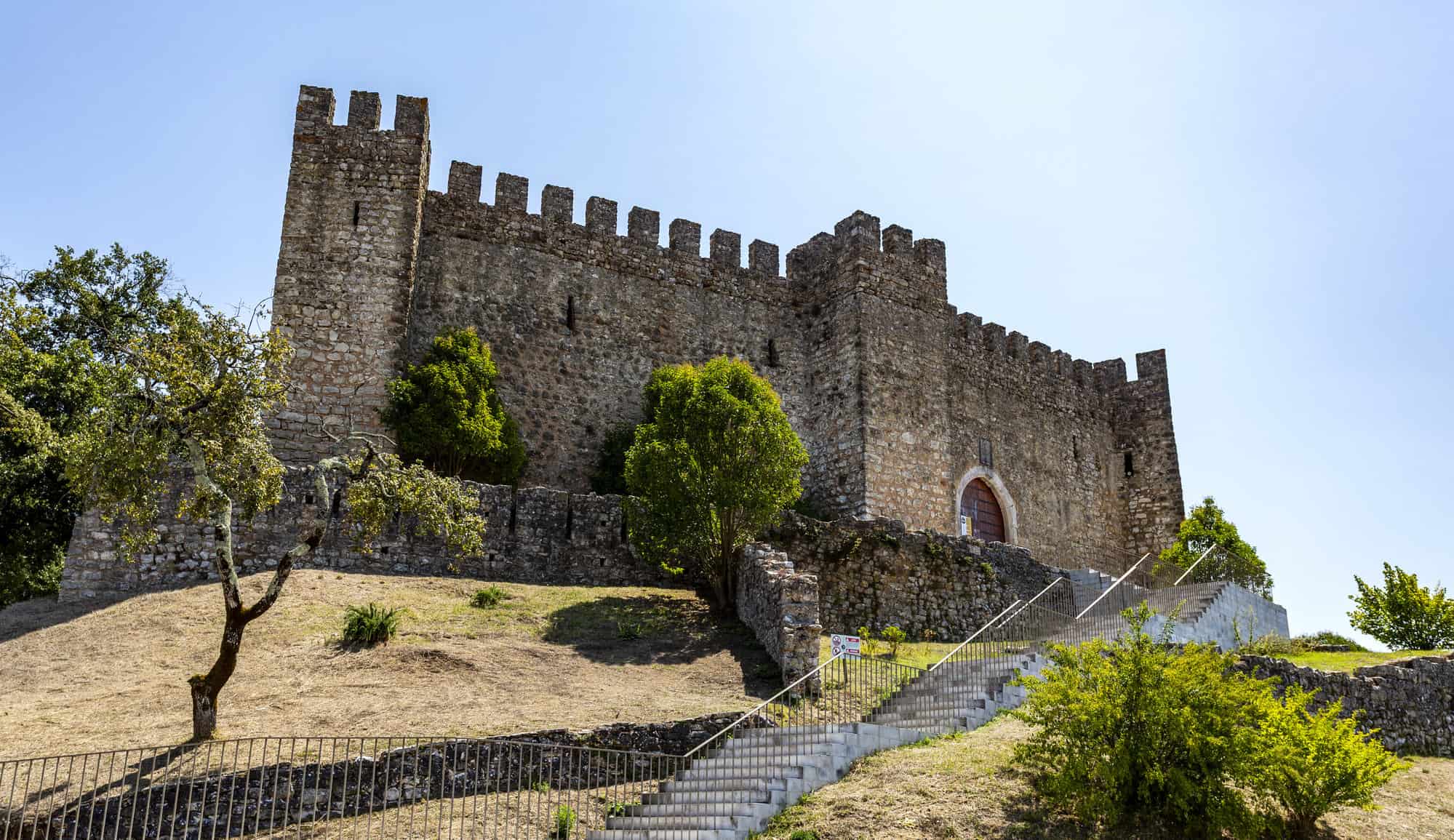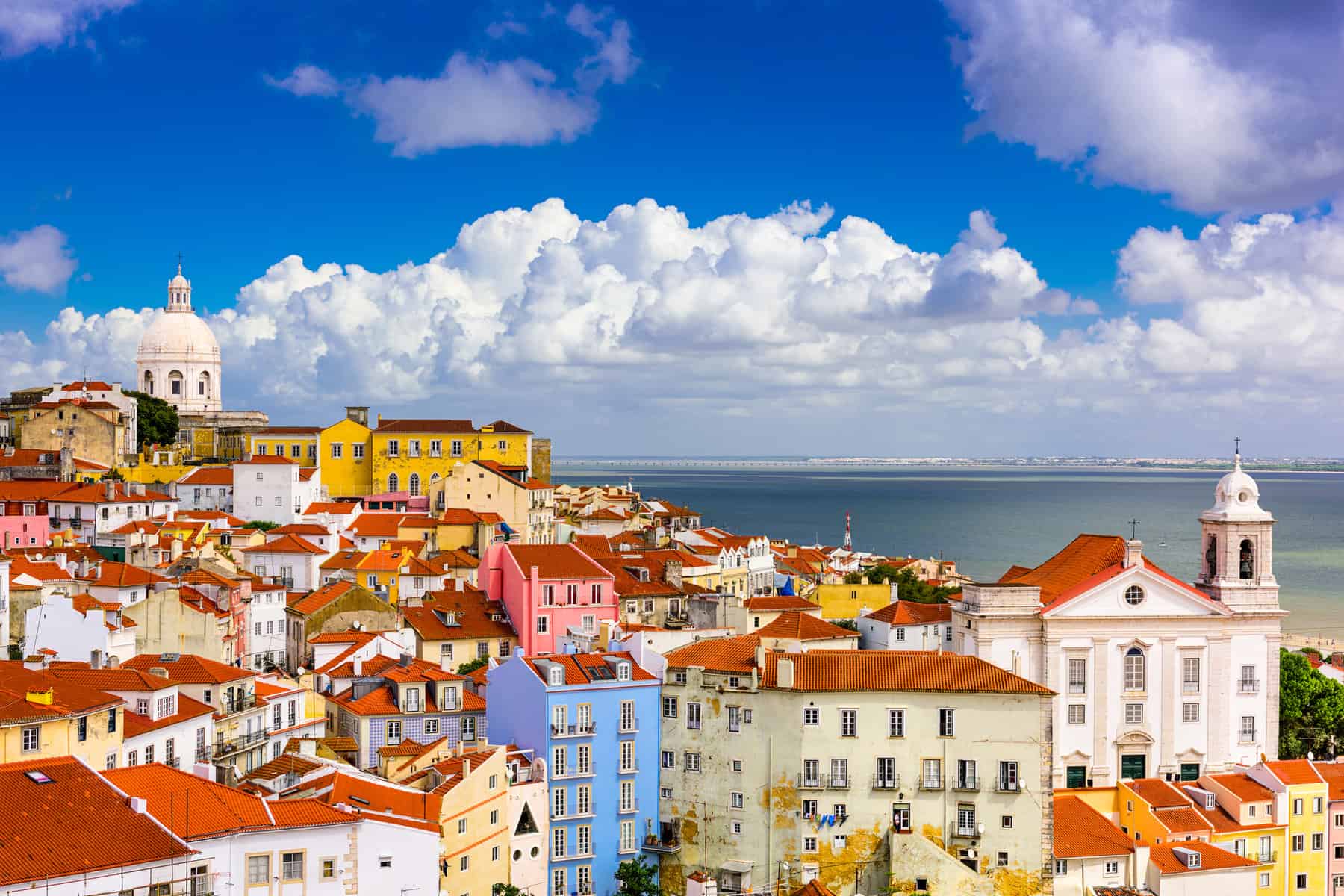
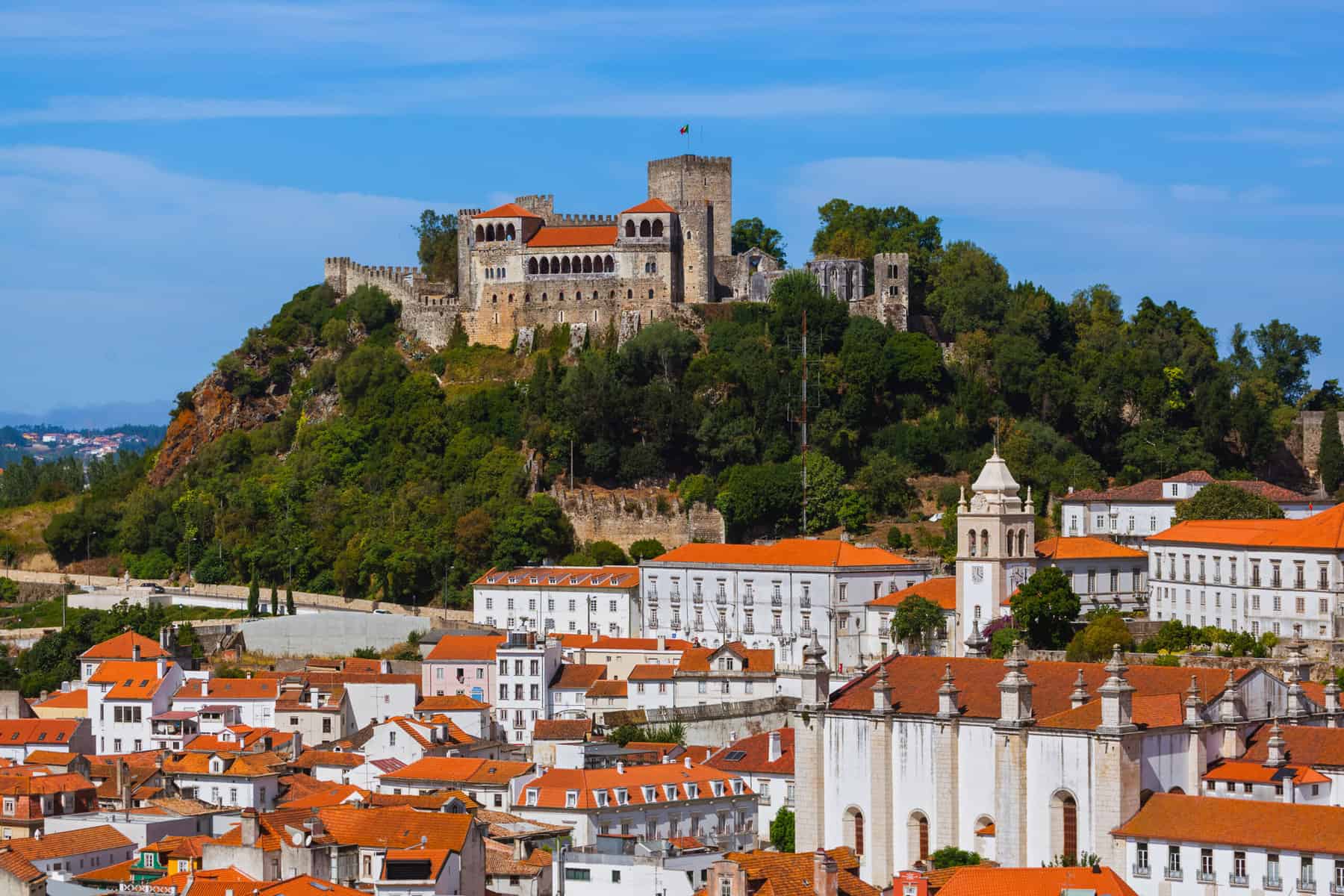
Leiria is a mid-sized city in central Portugal, almost exactly halfway between Porto and Lisbon. Distinctly Portuguese in character, it offers an authentic experience for anything from half a day to a full day of sightseeing. The city is best known for the castle perched on the hilltop above Leiria and the surrounding area, a fortress that played an important role in protecting key routes through the young kingdom during the Middle Ages.
Today, Leiria blends past and future. Alongside the old town, a modern industrial city has grown as well, drawing more than 200,000 residents to its metropolitan area. Even so, the old historic core and the castle still have a way of transporting visitors back centuries, to a calmer and more peaceful time.
The area around Leiria is also full of major sights such as Fátima and Batalha Monastery, which attract large numbers of visitors, so the city fits beautifully into almost any central Portugal itinerary.
How many days should you spend in Leiria?
To see most of Leiria’s main sights, half a day to one full day is usually enough. That said, there are many other attractions nearby, so Leiria is typically included as part of a broader central Portugal route with several additional stops along the way.
Click here to find accommodations in Leiria…
5 must-see attractions and experiences in Leiria
- Leiria Castle – Walk around the grounds and along the walls | Castelo de Leiria
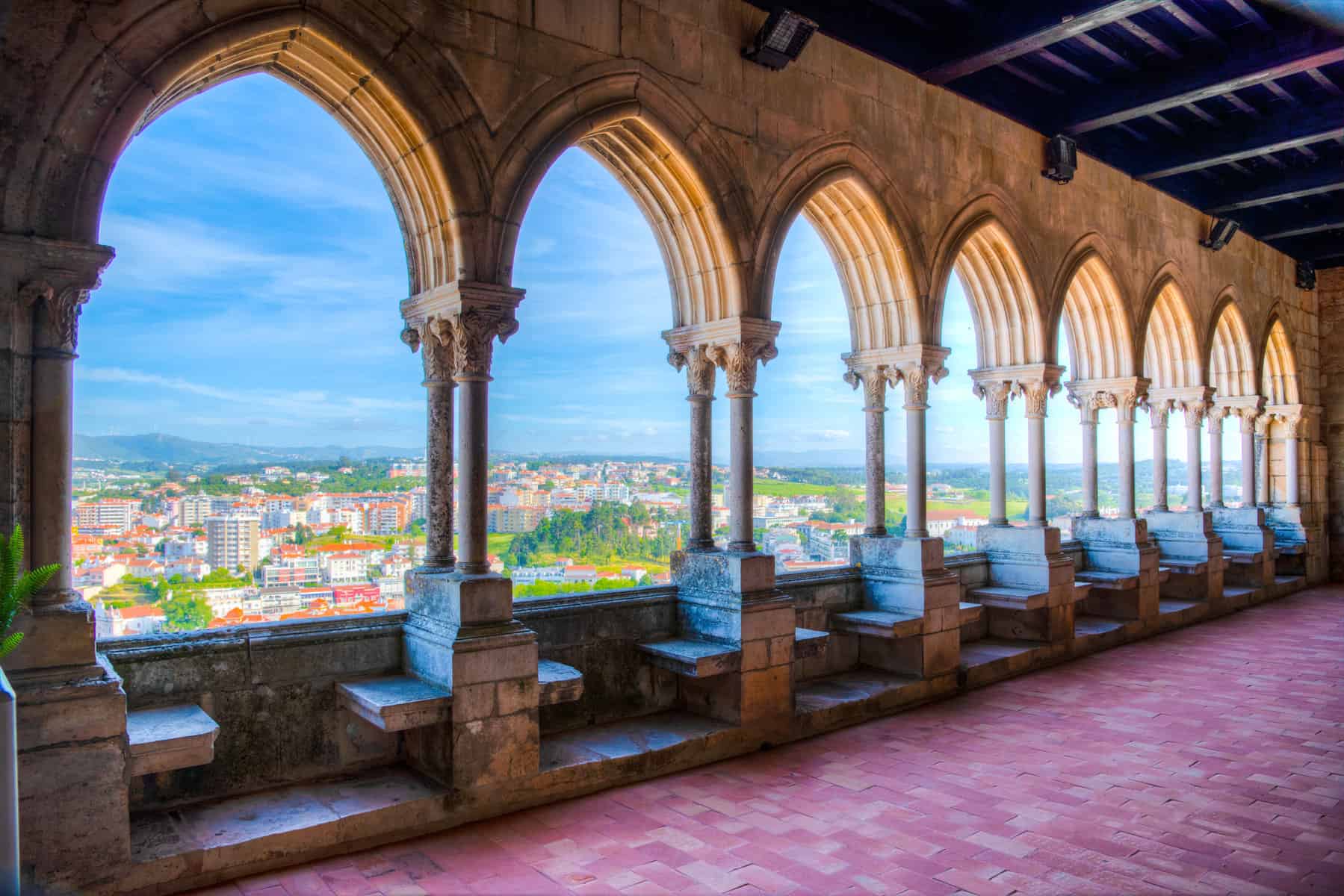
- Take in the view from the castle gallery over the city | Arcaria Gótica
- Have lunch in Rodrigues Lobo Square | Praça Rodrigues Lobo
- Climb the endless staircase to the Encarnação Sanctuary | Nossa Senhora da Encarnação
- Visit one of the sites near Leiria or all of them | Batalha | Fátima | Pombal
How to get to Leiria
Flights to Leiria
The airport that serves Leiria is Lisbon International Airport (LIS), about 1 hour and 20 minutes from the city by car. Since Leiria sits roughly halfway between Porto and Lisbon, arriving via Porto Airport (OPO) is also a practical option, with a drive of about 1 hour and 45 minutes.
Getting to Leiria by rental car
The best way to explore Leiria is by rental car. There are several major tourist sites around the city, so driving makes the most sense if you want to visit one or more of them in addition to spending time in Leiria itself.
Parking – There are several underground parking garages around Rodrigues Lobo Square in the city center. If you prefer not to drive into the tighter streets downtown, you can park at the entrance to the old town near Leiria Plaza and walk from there to Rodrigues Lobo Square in about 8 minutes, then continue on foot to the rest of the city’s sights.
Click here for 15 great stopover ideas between Porto and Lisbon…
Public transportation to Leiria
Bus
The easiest way to reach Leiria by public transportation is by bus, especially from Lisbon. There are direct buses from Lisbon’s Sete Rios station (Lisbon Sete Rios) to Leiria’s bus station, which is located by the river right in the center of town. The trip between Lisbon and Leiria takes around 2 to 2.5 hours. From Porto, there is usually a transfer in Coimbra.
Train
There are relatively few passenger trains to Leiria, and the rail line is used more heavily for freight. Leiria’s train station is not in the city center but to the west of town. There is also another station in the suburb of Marinha Grande, about a 10-minute drive from Leiria. For that reason, the bus is generally a better public transportation option than the train.
Click here to search for accommodations in Leiria…
Good to know about Leiria
The area around Leiria saw ancient settlement, followed later by Roman and Visigothic occupation, in keeping with the wider historical pattern of the Iberian Peninsula. The Muslims built a fortress here during their rule, but Leiria only began developing into a larger city after the area was conquered in 1135 by Portugal’s first king, Afonso Henriques. At the time, Leiria sat in central Portugal at the southern edge of the young kingdom, beyond which stretched territory still considered wild. It would take several more decades before those lands were settled by the new Catholic kingdom that had emerged in northern Portugal.
The Middle Ages marked Leiria’s golden age. It became an important city in the Kingdom of Portugal as the country rose to global prominence. Napoleon’s forces, which reached the peninsula in the early 19th century, caused extensive damage, and the city’s importance declined. In the 20th century, however, its position on the main route between Porto and Lisbon, right in the heart of the country, helped turn Leiria into an important industrial center for Portugal.
Today, Leiria is mostly a local city, but its historic center and castle more than justify a visit. The narrow streets in its old core, the lively squares, and the riverside promenade offer exactly the kind of urban experience many travelers hope to find in Portugal. Add in a stop at a café or one of the city’s many restaurants, and the appeal is easy to understand.
Leiria is also a rewarding destination for food lovers, with a wide range of restaurants serving Portugal’s best-known dishes at reasonable prices. Its inland location, not far from the sea, gives it the best of both worlds, so you’ll find excellent fish dishes, the famous Portuguese grilled chicken, and a generous selection of petiscos, Portugal’s answer to tapas.
Christmas in Leiria is well known throughout central Portugal, and the city dresses up for the season with sparkling lights and festive decorations everywhere you look. The center of the celebrations, including the traditional Christmas tree, is in the Jardim Luís de Camões at the entrance to Rodrigues Lobo Square.
Beyond that, Leiria’s central location makes it a convenient stop for a Portugal itinerary—ideal for breaking up the trip between Lisbon and Porto in a sizable city with all the amenities you might need
Click here to find accommodations in Leiria…
Attractions and interesting places in Leiria
Leiria Castle | Castelo de Leiria
The castle is the city’s main attraction, dominating Leiria from above. It was first built by the Muslims and was captured in 1135 by Portugal’s founder, King Afonso Henriques. In the early 14th century, King Dinis moved his royal residence to the castle, and elegant Gothic additions were built within the complex. Several points of interest can be found inside the castle grounds:
- Penha Church | Igreja de Nossa Senhora da Penha
It was first built in the 12th century, then expanded and embellished into the structure we see today in the 15th century by King João I.
- Masons’ marks | Marcas de Canteiro
These distinctive symbols were carved into the church stones to identify the mason who cut and placed each one in the wall. The marks ensured that every builder received the payment owed to him by the king for each stone.
- The keep | Torre de Menagem
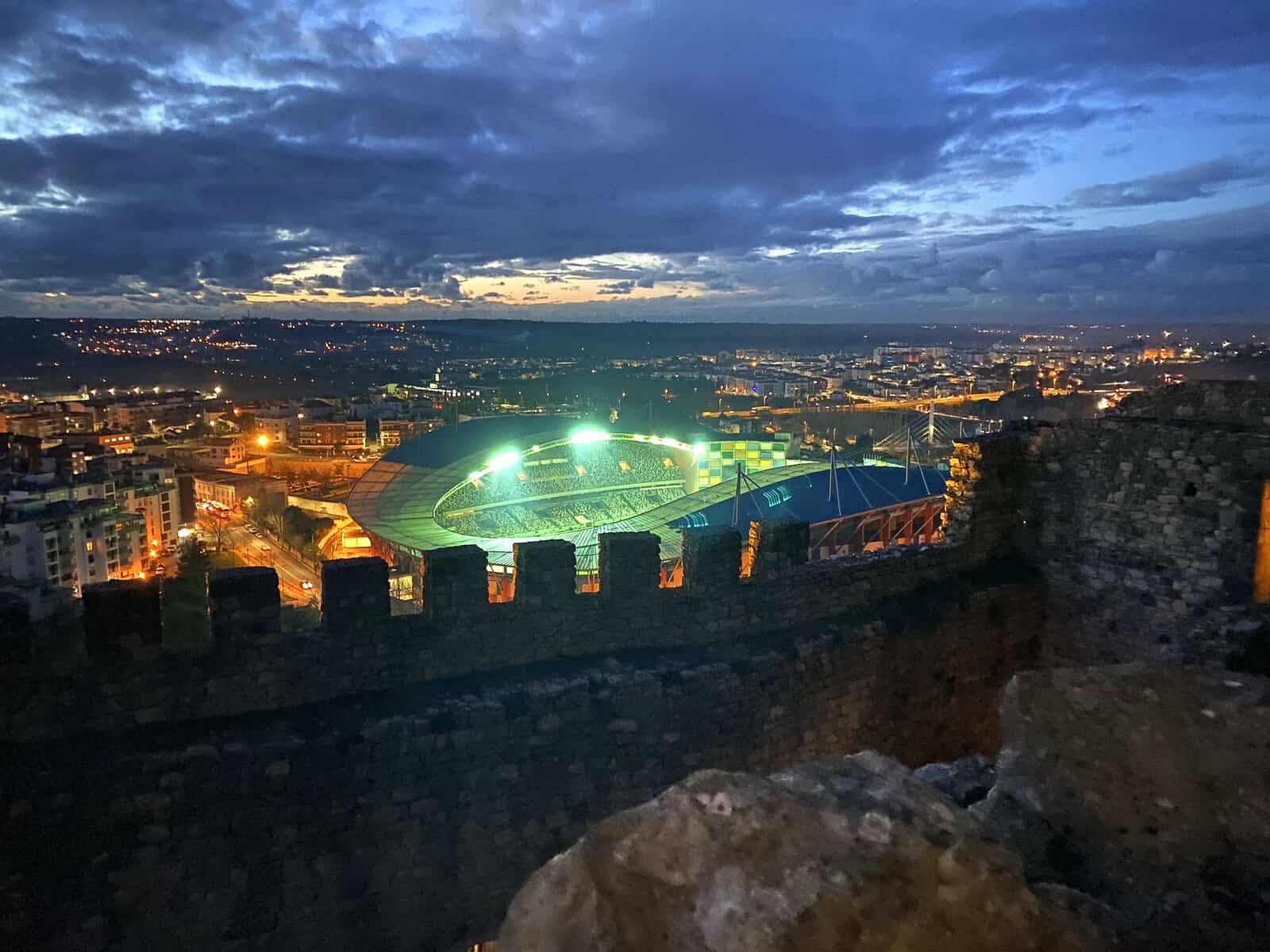
This tall, square tower was the most heavily fortified part of the complex. Today, it houses an exhibit of medieval clothing, along with knights’ armor and swords. Outside, the views from the walls stretch across both sides of the city. On the modern side, you can clearly see the roof of the large municipal stadium built for the 2004 European Football Championship.
- The royal palace and gallery with stone benches | Paços Reais – Arcaria Gótica
The palace built by King João I is the castle’s most impressive wing. At the top are stone benches carved into the threshold of the covered terrace — Leiria’s own loggia, if you like. Above them, Gothic arches support the ceiling and provide a sheltered viewpoint over the city below and the Leiria pine forest, Pinhal de Leiria. Much of the terrace has been reconstructed.
São Pedro Chapel | Capela de São Pedro – Leiria
At the foot of the castle, behind the film museum, stands this chapel built in 1176 against the walls. Until the city’s cathedral was constructed, it served as the bishop’s seat. The chapel is Leiria’s last remaining example of Romanesque architecture. Restored in the 1930s, it has a simple, clean, and inviting appearance.
It’s worth a quick stop, or even just a look from the outside, either on your way up to the castle or before entering the nearby Museum of the Moving Image.
Click here to find accommodations in Leiria…
Museum of the Moving Image | Museu da Imagem em Movimento
At the foot of the castle, the Museum of the Moving Image has been open since 1996, marking one hundred years of Portuguese cinema. The museum traces the development of film over the last century, with many objects dating back to the earliest days of photography.
In keeping with Leiria’s character, the museum itself is housed in a building that is partly old and largely new or restored. The exhibition spaces shift between tall, sleek white modern walls and lower ceilings supported by ancient arches — remnants of the older structure that was adapted for the museum.
It’s a must for anyone interested in the history of photography, and it can also make an engaging short visit even for children.
More information about the museum and opening hours…

Leiria Cathedral | Sé de Leiria
Below the castle complex and above Rodrigues Lobo Square, where the old town begins — or ends — stands the city’s cathedral. King João III ordered its construction in 1546, and it was consecrated in 1574. It was built in the late Renaissance style, but over the centuries additional wings were added and various changes were made, especially after the 1755 earthquake, so parts of it are now Baroque.
The highlight inside the cathedral is the impressive altar with its gilded decoration and the curved ceiling above it. Two Baroque organs flank the altar, completing the overall picture of the city’s main Catholic church.
The bell tower (Torre Sineira) was added in the 18th century. It is not attached to the cathedral itself but stands across the road toward the castle, effectively marking the starting point for a visit to Leiria Castle.
Rodrigues Lobo Square – the main square | Praça Rodrigues Lobo
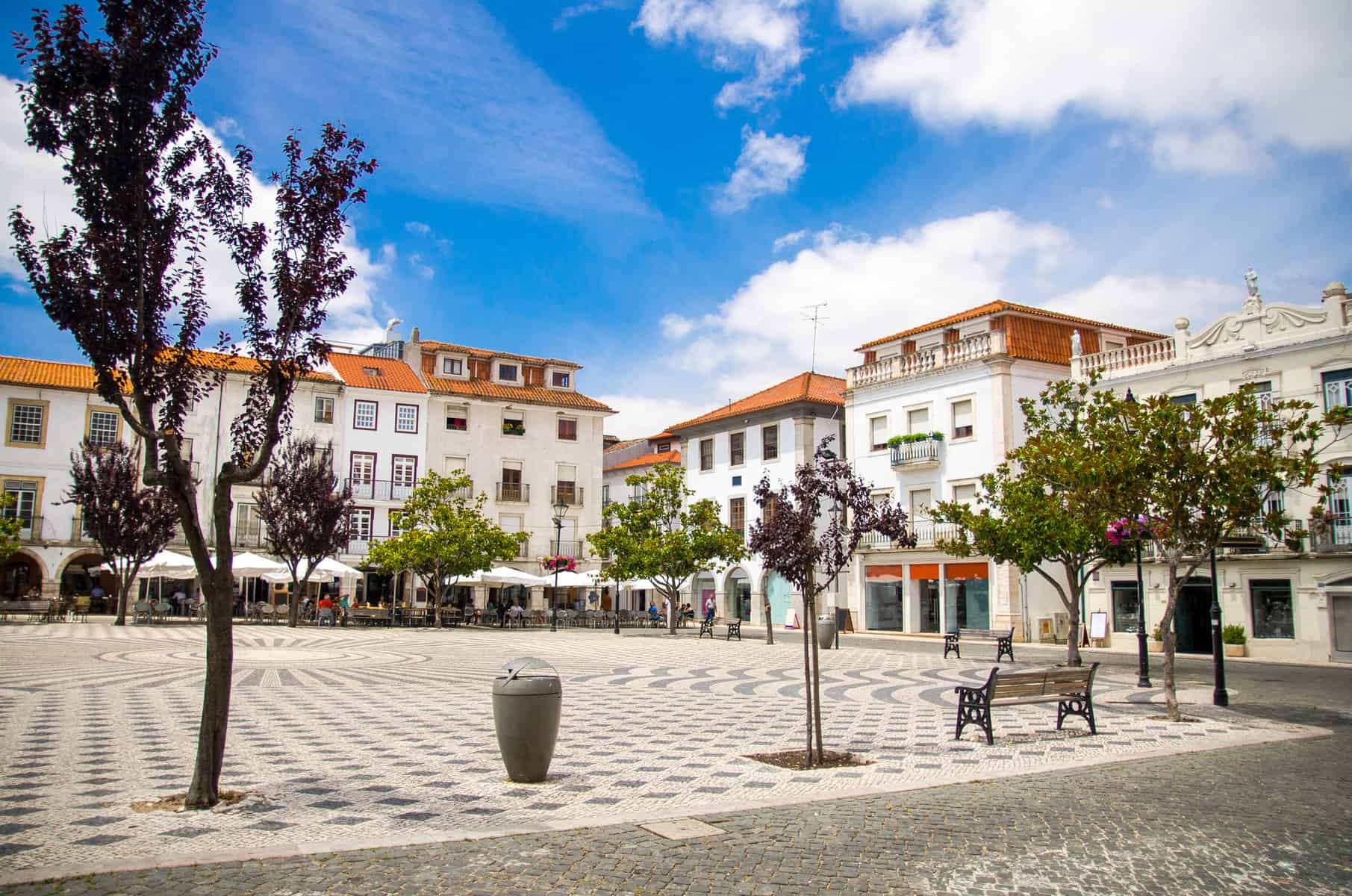
This is the city’s main square. It isn’t large, but naturally it is paved in black and white — as it so often is in Portugal. It’s a pleasant place to sit at one of the cafés and, of course, to take photos.
It also serves as the starting point for most walks through the city, whether you’re heading toward the river and gardens or climbing through the narrow, gently sloping cobbled streets toward the hill.
The square is the heart of the old historic center, originally built for pedestrians and carts in the Middle Ages. The maze of alleys you’ll find yourself wandering through on the way up to the castle is proof enough of that.
Click here to find accommodations in Leiria…
Jardim Luís de Camões | Jardim Luís de Camões
As you leave Rodrigues Lobo Square toward the Lis River, the Jardim Luís de Camões begins. Right at the entrance, you’ll also find the city sign (Letras Leiria), a popular photo stop for many visitors. This is also where Leiria’s well-known Christmas celebrations take place in winter .
The gardens are really a tree-lined boulevard and landscaped green spaces stretching along the street that follows a bend in the Lis River. The whole area is especially pleasant for a walk and a chance to appreciate the beauty of this Portuguese city, with its typical architecture and generous pedestrian spaces.
There is also a tourist information center here, always a useful stop for visitors.
Click here to find accommodations in Leiria in central Portugal…
Incarnation Sanctuary | Santuário de Nossa Senhora da Encarnação
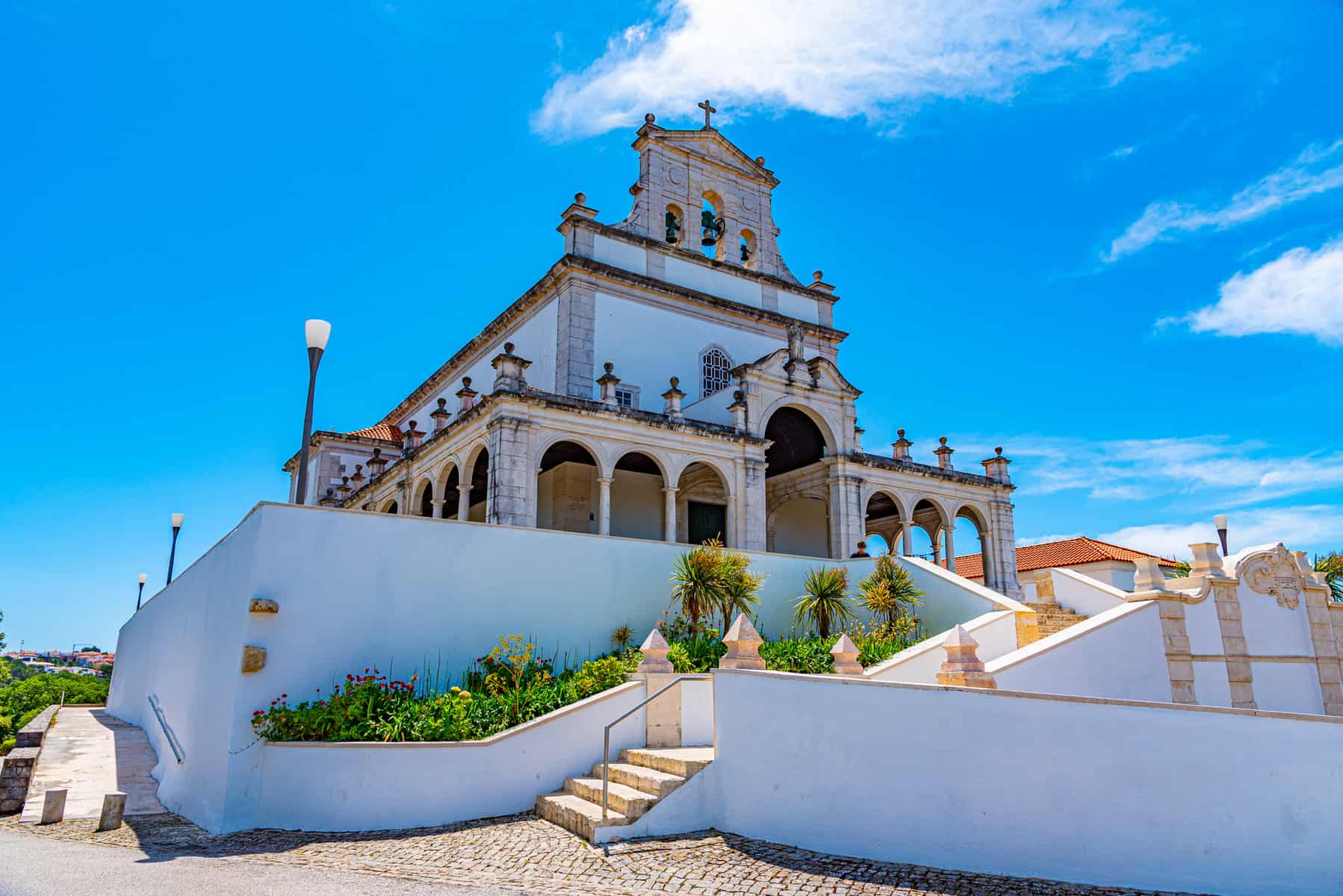
In the southeastern part of the city, at the top of what feels like an endless staircase, stands the Encarnação Sanctuary on a hill among gardens and wooded areas. The sanctuary was built in the 16th century on Gabriel Hill, at a time when the site lay well outside the city. It was dedicated to the Virgin and became a place of pilgrimage for the faithful.
If you make it up the staircase added to the complex in the 18th century — though today there is also a road leading to the sanctuary — you’ll find a white church with an impressive façade framed by arches. The views and surrounding woods are lovely too, offering a peaceful escape from the city below.
Still, the real impression comes from the interior, especially the walls covered in azulejos (painted ceramic tiles) with charming, colorful geometric patterns. Above the altar are richly colored 17th-century paintings depicting the life of Mary.
Leiria Museum | Museu de Leiria
Leiria’s city museum stands on the banks of the Lis River inside the former Monastery of Saint Augustine, more precisely in its inner courtyard, or cloister. The monastery complex underwent a major renovation beginning in 2006, so the building itself is deeply impressive, especially the modern interpretation of the cloister façade painted in blue.
In a thoughtfully designed, well-lit, and pleasant exhibition, it presents the history of the region and the city from prehistoric times to the present day. The display follows a route around the old cloister, built at the end of the 16th century, creating a compelling blend of old and new architecture. Like other municipal museums, it includes archaeology, art with a focus on painting, and exhibits on the natural world of the region, especially the Leiria pine forest.
Admission is free on Sundays. On other days there is a small entrance fee, with the option of a combined ticket that also includes the nearby paper mill.
More information and opening hours…
Paper Mill | Moinho do Papel
The old paper factory is actually a flour mill — for corn or other grains — that operated here from the early 15th century. Today, the historic mill has been restored, and visitors can see how water power was used to grind grain.
Outside, you can watch the wheel, partly submerged in the water, turning with the flow of the river. Inside, the rotating axle transfers that energy to the millstones, setting them in motion to grind whatever is fed beneath them. It’s a wonderful way to show children how people harnessed energy from nature long before electricity was produced, and how the same principles still help generate hydropower around the world today.
Paper is still made by grinding and drying plant fibers, and that was also the case in 15th-century Leiria. Since the mill operated according to the harvest seasons of different crops, it also found time in between to grind pulp that would later be dried and used as paper. For that reason, the mill also played a role in the accelerated settlement of Jews in the area, who were known for the printing houses that appeared across Europe in the late 15th century.
Entrance to the paper mill requires a small fee, and there is a combined ticket with the city’s other museums. The interactive presentation at the paper mill is usually arranged for school groups by advance booking, but there are certain times — especially on weekends — when it is open to the general public.
After your visit, you can buy different types of flour milled on site using water power, just as tradition intended.
More information and opening hours…
Click here to find accommodations in Leiria…
Football in Leiria
Leiria’s Football club, U.D. Leiria, currently plays in Portugal’s second division and spent much of the last decade in the third division. In the early 2000s, however, the club was a regular in the top flight before financial difficulties led to relegation.
From a Football perspective, the most interesting thing in Leiria is the stadium, which can even be seen from the castle, the city’s main tourist landmark. The colorful Estádio Dr. Magalhães Pessoa was built for the 2004 UEFA European Championship in Portugal and sits just beyond the castle hill in the center of the city.
Attractions and points of interest around Leiria
Leiria Pine Forest | Pinhal de Leiria
This forest was planted between the city and the sea to stop the spread of sand dunes. The vast woodland forms a barrier between Leiria and the coast, and planting began in the 13th century under King Afonso III and his successor Sancho II. King Dinis, also known as the “farmer king,” came to the throne immediately after them and ruled until 1325. He expanded the forest into what we see today and succeeded in protecting the land for generations to come. It is a striking example of the forward-thinking approach of Portugal’s kings, who understood the importance of protecting the fertile agricultural land near Leiria from erosion and drifting sand.
The coastal forest later played a role in the Age of Discovery as well, since timber from here was used to build the ships of the explorers who sailed from Portugal’s shores to the Americas and the East. Leiria Forest is a reminder that nature can be one of humanity’s greatest allies when the relationship works both ways.
Today, the forest is a wonderful place for walking along its long trails, accompanied by the sound of the many birds that have made it home.
The road linking the suburb of Marinha Grande, next to Leiria, with the coastal village of São Pedro de Moel cuts right through the forest from one end to the other. For anyone not interested in hiking but still wanting a taste of nature, it makes an excellent drive of a little over 20 minutes from Leiria, or about 15 minutes from Marinha Grande, with views of the forest followed almost immediately by sandy beaches and the lighthouse.
Click here to find accommodations in Leiria…
Penedo da Saudade Lighthouse | Farol Penedo da Saudade
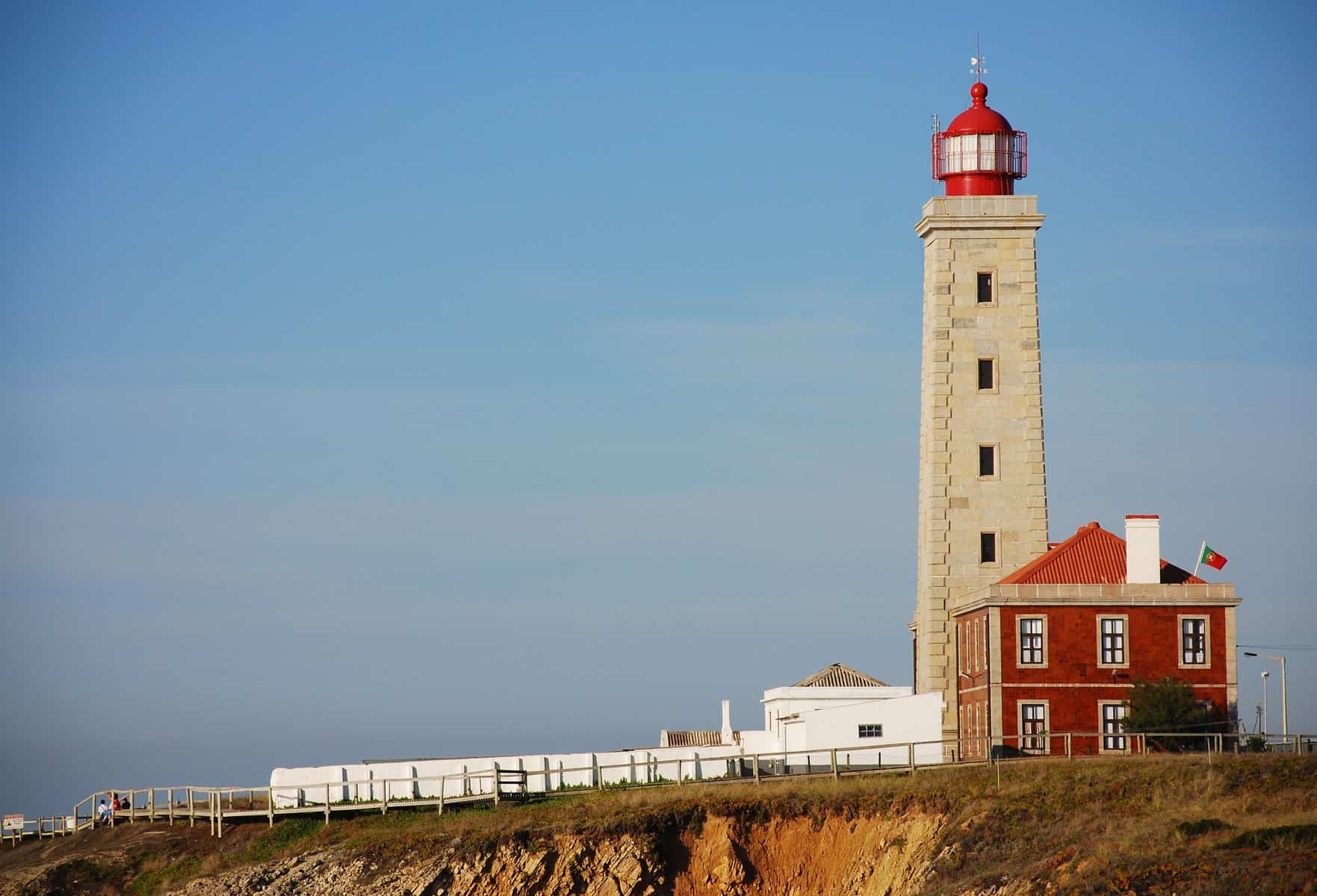
The lighthouse on the hill above the village of São Pedro de Moel is another good reason to cross the forest from Leiria to the coast.
The 32-meter lighthouse was inaugurated in 1912 and looks out from above the dark rocky cliffs toward the sea. The interior can only be visited on Wednesday afternoons and during the season, but it’s best to check ahead, as weather conditions sometimes make visits impossible.
In any case, the lighthouse is very romantic from the outside, and so are the bike paths along the coast.
Click here for more information about the lighthouse…
Source of the Lis River | Nascente do Rio Lis
About a 20-minute drive from the city, up in the hills, lies a wooded rural area where the Lis River begins to flow — the same river around one of whose bends Leiria is built.
This is a wonderful area for a nature walk, fairly well organized and not too difficult, through hills, forests, and most importantly the stream, which usually runs with plenty of water.
The route is a 9-kilometer loop, though there are options to shorten it and start from other points.
Link to trail maps around the river source…
Batalha Monastery | Mosteiro da Batalha
Also known as the Monastery of Saint Mary of the Victory (Mosteiro de Santa Maria da Vitória), it is about a 15-minute drive south of Leiria. The town of Batalha grew up around this enormous and deeply impressive monastery, which completely overshadows the surrounding sights. To properly take in most of the vast monastery and its surroundings, you should allow at least 2 to 3 hours. Luckily, there are plenty of restaurants and cafés in the town center directly opposite, perfect for a break afterward.
The monastery was commissioned by King João I in 1385 to commemorate his victory over Castile at the Battle of Aljubarrota, which ensured the survival of the Kingdom of Portugal. The battle took place not far from where the monastery was later built, and João chose to be buried there as well. In hindsight, that victory secured 200 years of peace and prosperity for Portugal, which is why the monastery remained important to later Portuguese kings too. It remains a heritage site of the highest importance today.
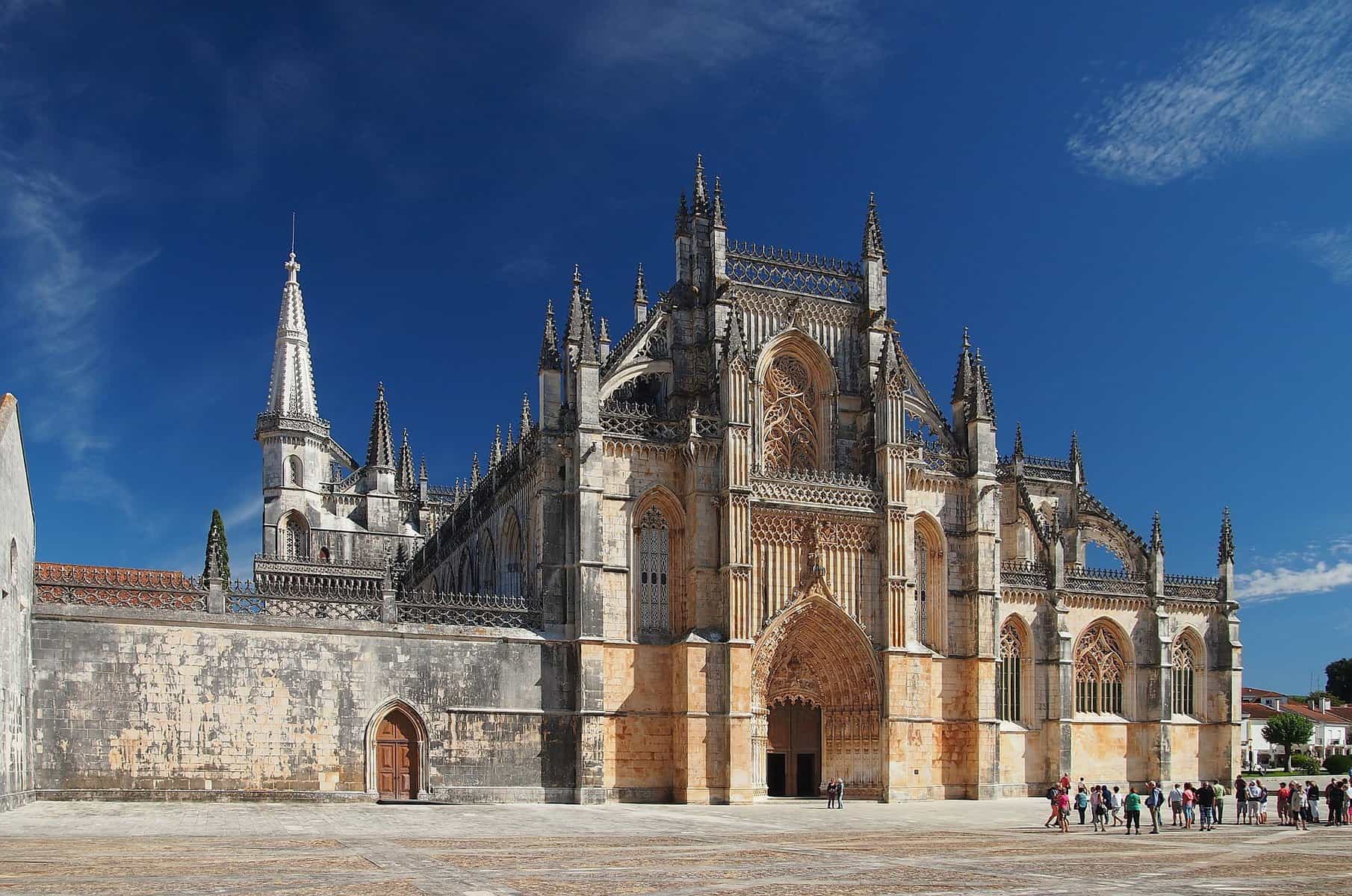
The monastery is a masterpiece of Portuguese Gothic architecture, designed by the master architect Afonso Domingues shortly after the victory at Aljubarrota. In the 15th and 16th centuries, additional wings were added by successive Portuguese kings, and the complex was decorated with many Manueline details, even though King Manuel himself was not among the rulers who invested heavily in the monastery.
Click here to search for accommodations in Leiria and the surrounding area…
Click here for additional great stopover ideas between Porto and Lisbon…
Different parts of the monastery:
- The entrance portal was designed by the monastery’s second architect, David Huguet, and features statues of the apostles.
- The tomb of João I and his wife – The chapel is immediately to the right of the main entrance. At the center of the Founder’s Chapel (Capela do Fundador), begun in 1426, lie King João and his wife Philippa of Lancaster of England. The carvings on the tomb depict the two figures holding hands. Above, the chapel dome is built as an octagon with glass windows that fill the space with even, bright light.
- The monastery’s lofty nave — the heart of the church, designed by Afonso Domingues.
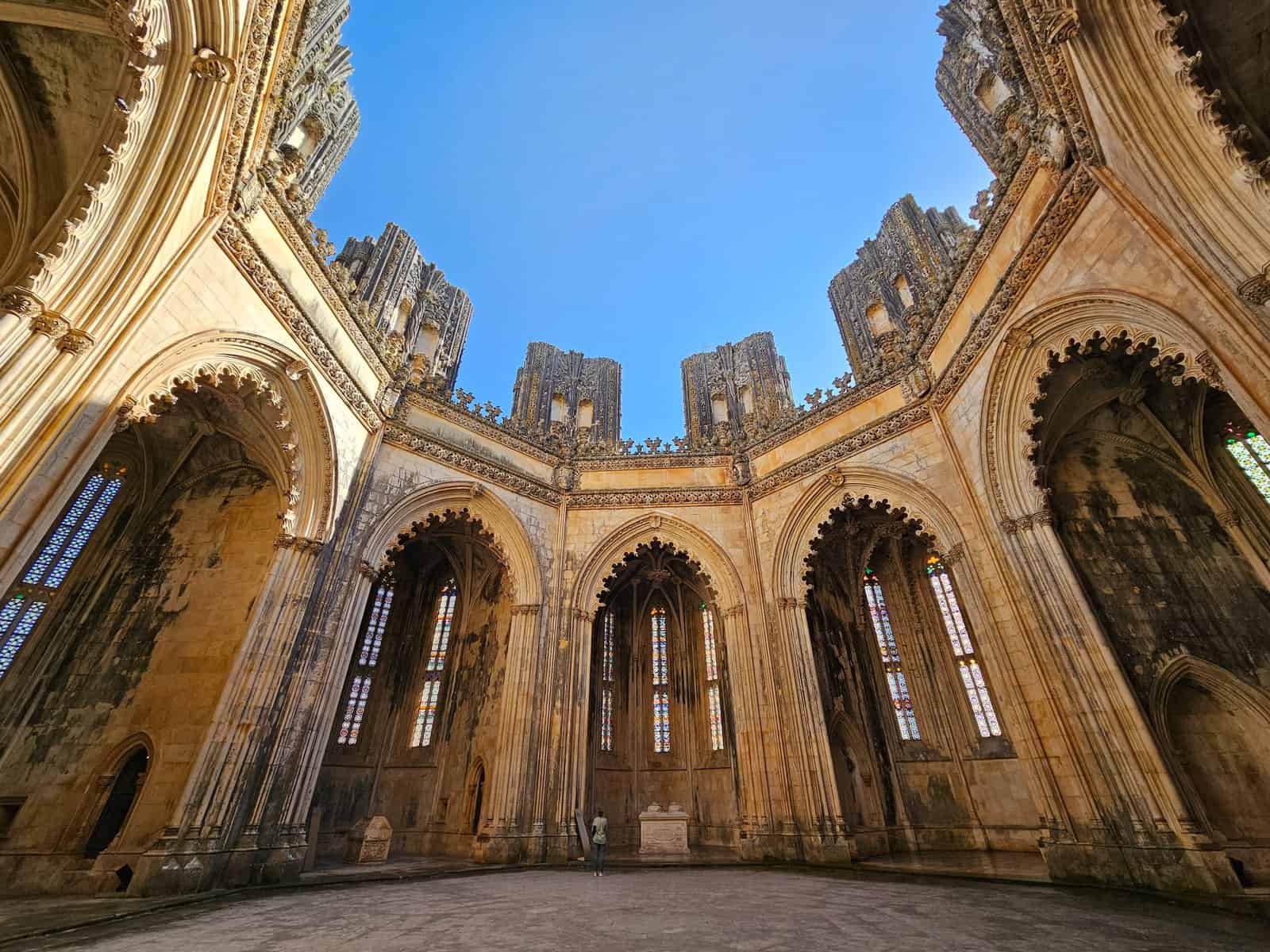
- The Unfinished Chapels — the most stirring part of the complex – Located at the far end of the church behind the altar. Be sure to notice the Manueline entrance portal.
- The royal cloister with its Gothic arches — the monastery’s crowning glory – Inside are manicured gardens, surrounded by magnificent arcades supported by arches
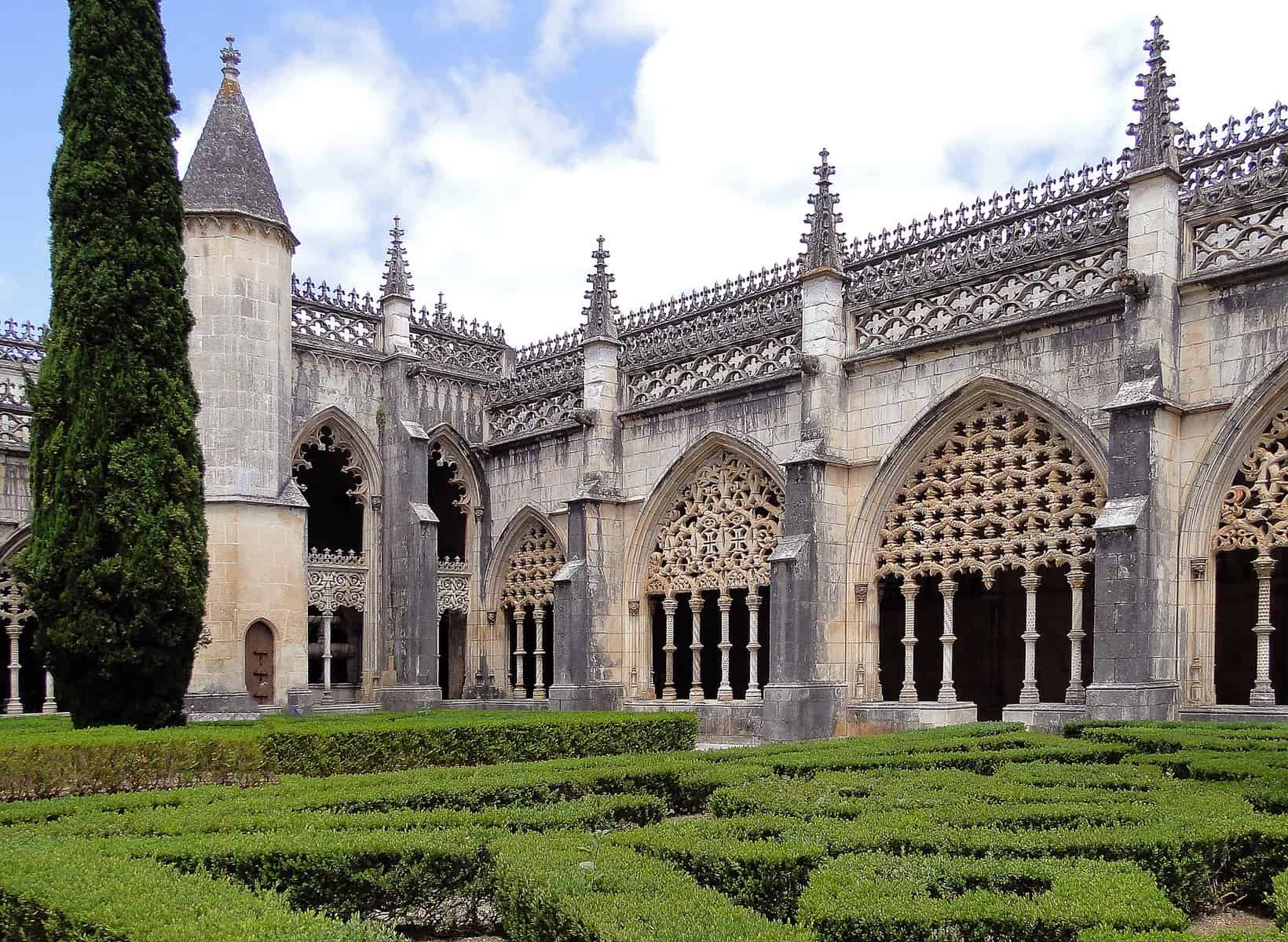
- The Tomb of the Unknown Soldiers and the watchtower above it are located around the royal cloister — the tomb commemorates two Portuguese soldiers killed in World War I.
- The Chapter House – Notable for its star-shaped intersecting arches in the ceiling, unsupported by columns. Also look for the stained-glass window from 1514 depicting the Passion of Christ.
- The monks’ refectory (Refectory) – Beside the royal cloister.
- The Cloister of Afonso V (Claustro de D. Afonso V) – The monastery’s second cloister, also with gardens and two-story arcades.
Fátima – the city and pilgrimage site
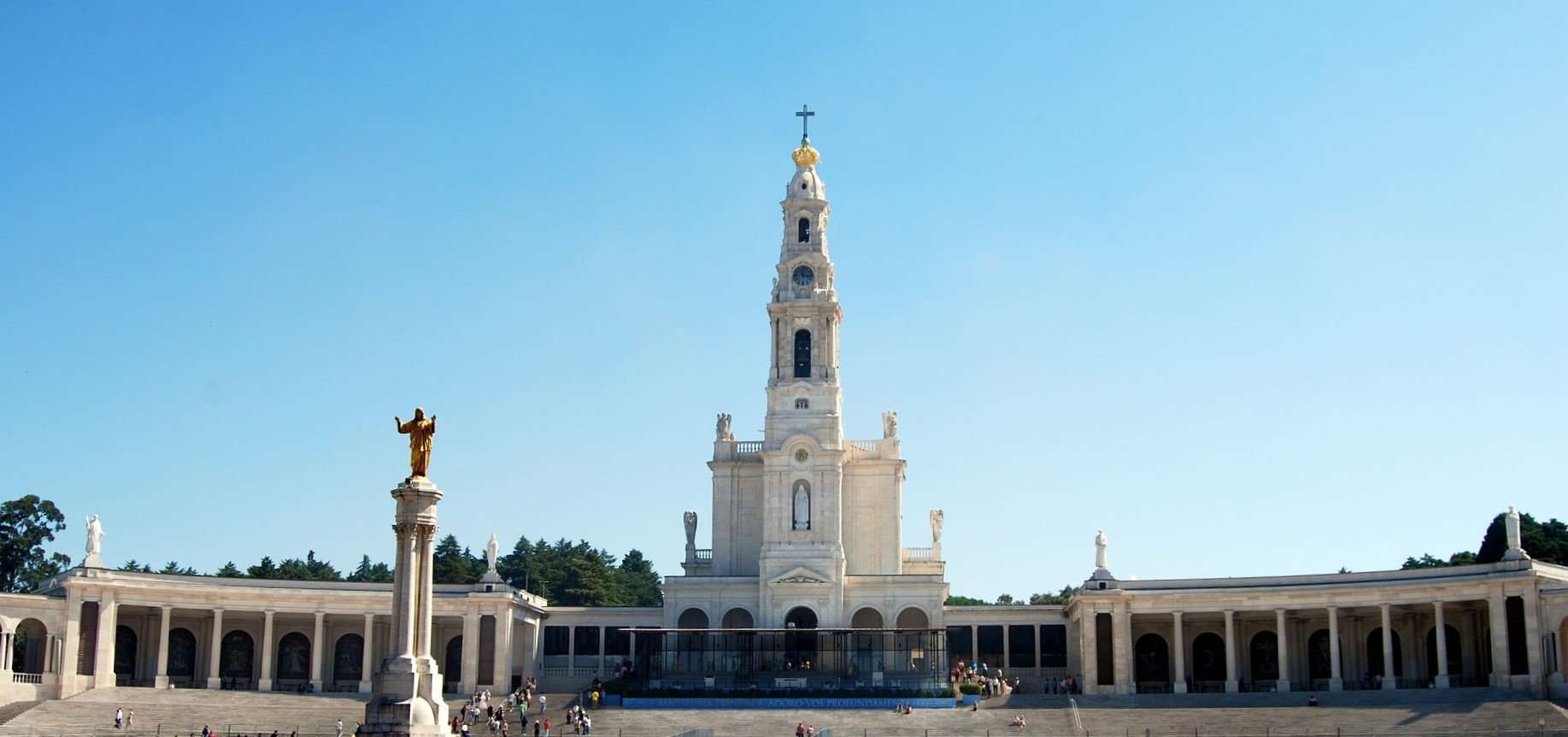
About a 20-minute drive southwest of Leiria lies a pilgrimage site that began to develop in the early 20th century after an apparition reported here. In Fátima, a vast and impressive basilica was built following the growth of belief in this relatively recent apparition, somewhat like Lourdes in France, where the Virgin appeared to one child, compared with three children here in Fátima.
The story of the apparition:
On October 13, 1917, a glowing figure appeared to 10-year-old Lúcia Santos and her two younger cousins from within an oak tree that stood where the basilica is today. The figure, identified as the Virgin Mary, instructed the children to return to the tree once a month for six months, and each time the Virgin appeared to them again there. By the final apparition, 70,000 believers had accompanied the children, and during the event Lúcia heard the secrets of “Our Lady of Fátima” (Os Três Segredos de Fátima), prophecies later associated with the outbreak of World War II.
Lúcia later became a nun and lived to nearly 100 years old, passing away in 2005 after writing several books and working extensively on behalf of the Catholic Church.
Since then, the site has become a year-round pilgrimage destination. Still, on May 12 and 13 and October 12 and 13 each year, Fátima hosts especially large-scale pilgrimages marking the Virgin’s appearance to the three shepherd children (Pastorinhos).
Inside the huge basilica, with its tall front tower, lie the graves of Lúcia’s two cousins, Jacinta and Francisco. In front of the basilica is an enormous square used as a gathering place for worshippers during pilgrimage days. The structure is an immense modern white monument, made even more striking by the vast open square before it.
Inside, the church is enormous, with modern, straight lines and without excessive ornamentation. Also within the complex, the Chapel of the Apparitions (Capelinha das Aparições) marks the place where the apparition occurred.
Beyond the architecture itself, visiting can be a particularly powerful cultural experience, especially on pilgrimage days, when crowds of believers are drawn to this relatively new holy site. Most striking of all are the penitents — worshippers who do not stop at simply arriving, but continue on their knees for hundreds of meters toward the altar.
Pombal
This town, about half an hour north of Leiria, also developed around the line of fortifications established after the Reconquista, when the Iberian Peninsula was retaken from Muslim rule and the Kingdom of Portugal was formed. It is no surprise, then, that the town’s main attraction is its castle.
The castle (Castelo de Pombal) – As in the Tomar fortress, the castle here too was built on a hilltop commanding views over the town and the surrounding area. It was constructed in 1161 by the Knights Templar.
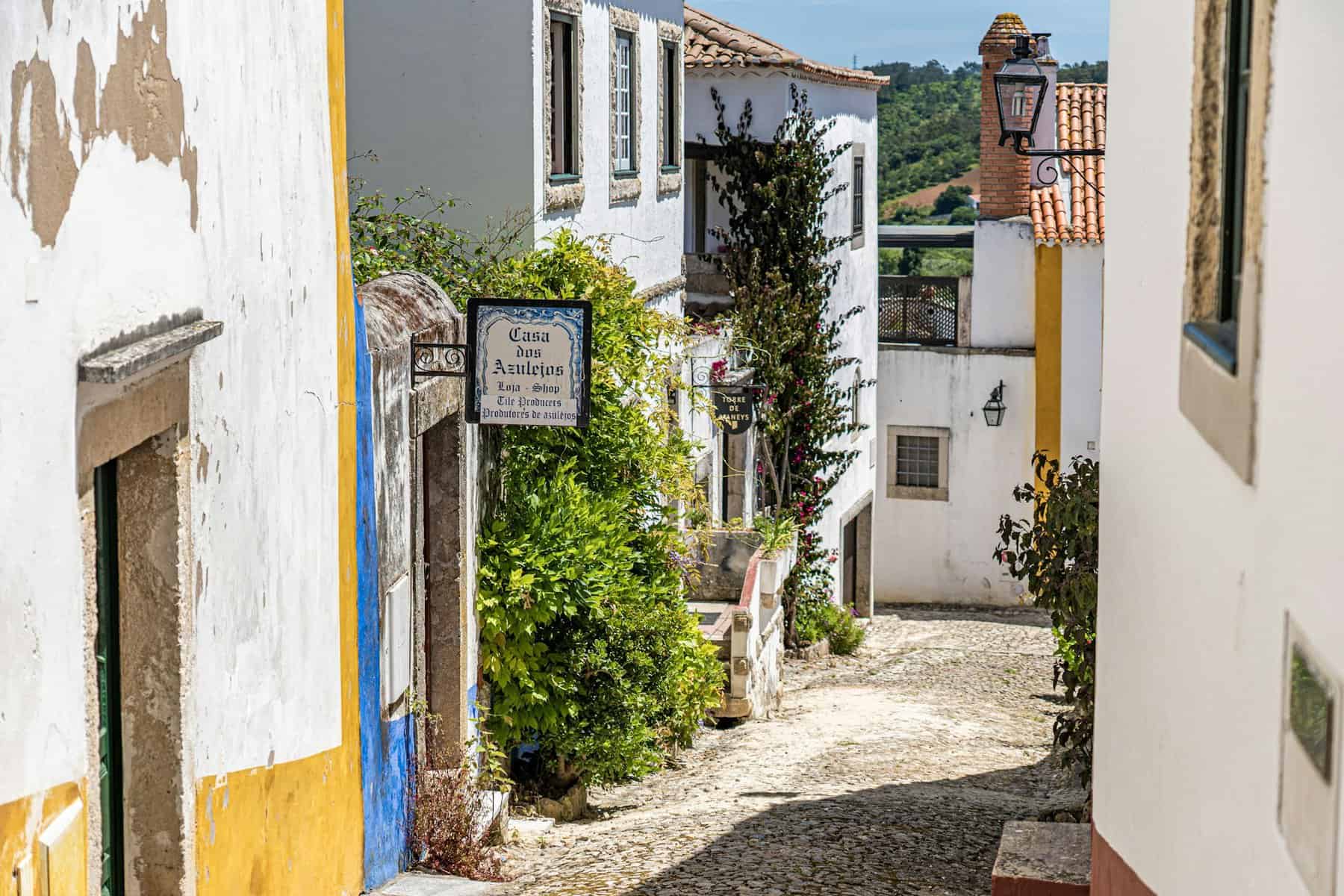
The old town center below the castle is made up of white houses linked by narrow cobbled streets that are an experience in themselves. The town is closely associated with the Marquis of Pombal, who helped rebuild Portugal after the 1755 Lisbon earthquake.
The Museu Marquês de Pombal (Museu Marquês de Pombal) sits on the town’s small square, which, as usual, is paved and surrounded by picturesque historic buildings. This small museum displays documents, objects, and works of art connected to the marquis’s life.
Click here to find accommodations in Leiria and the surrounding area…