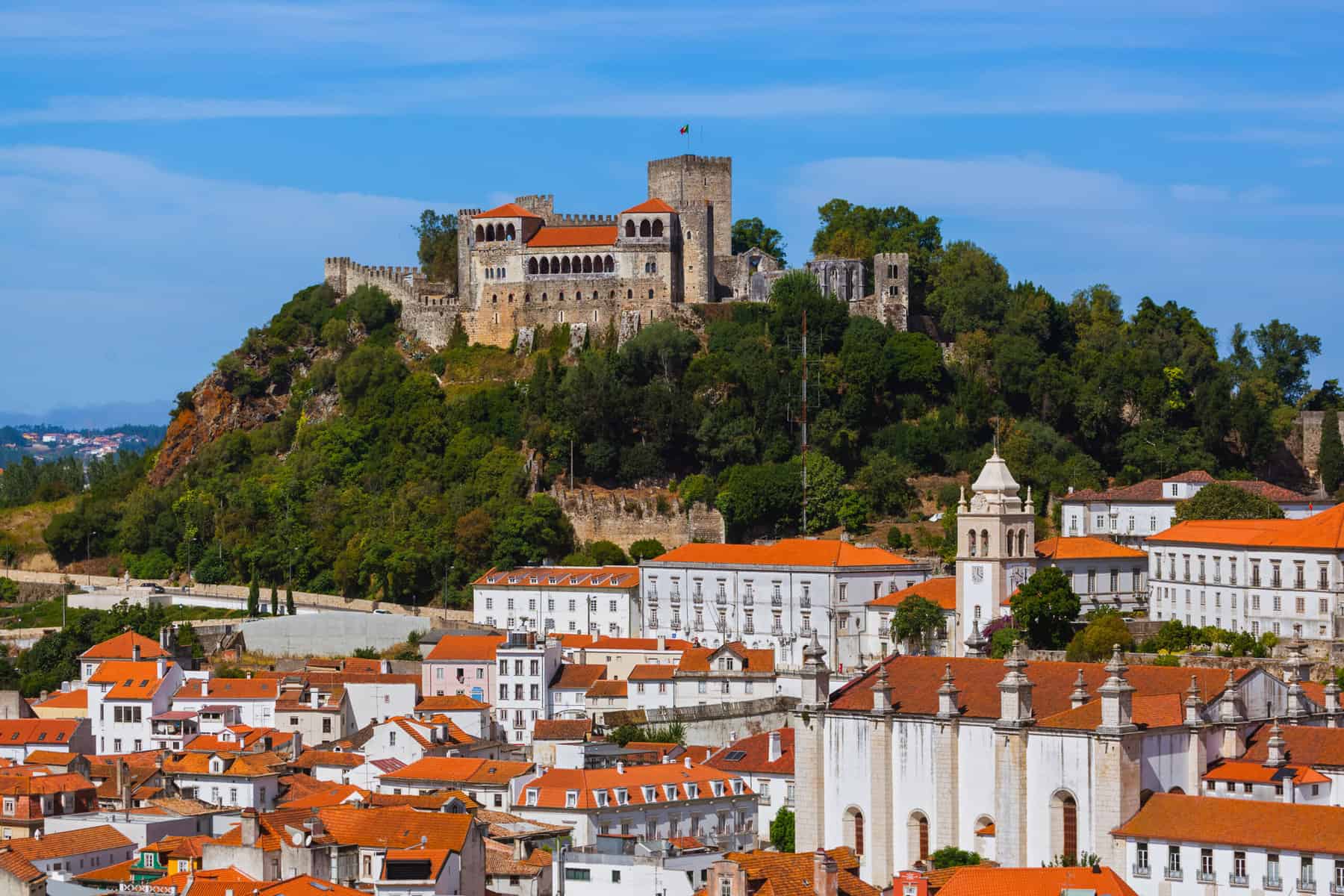
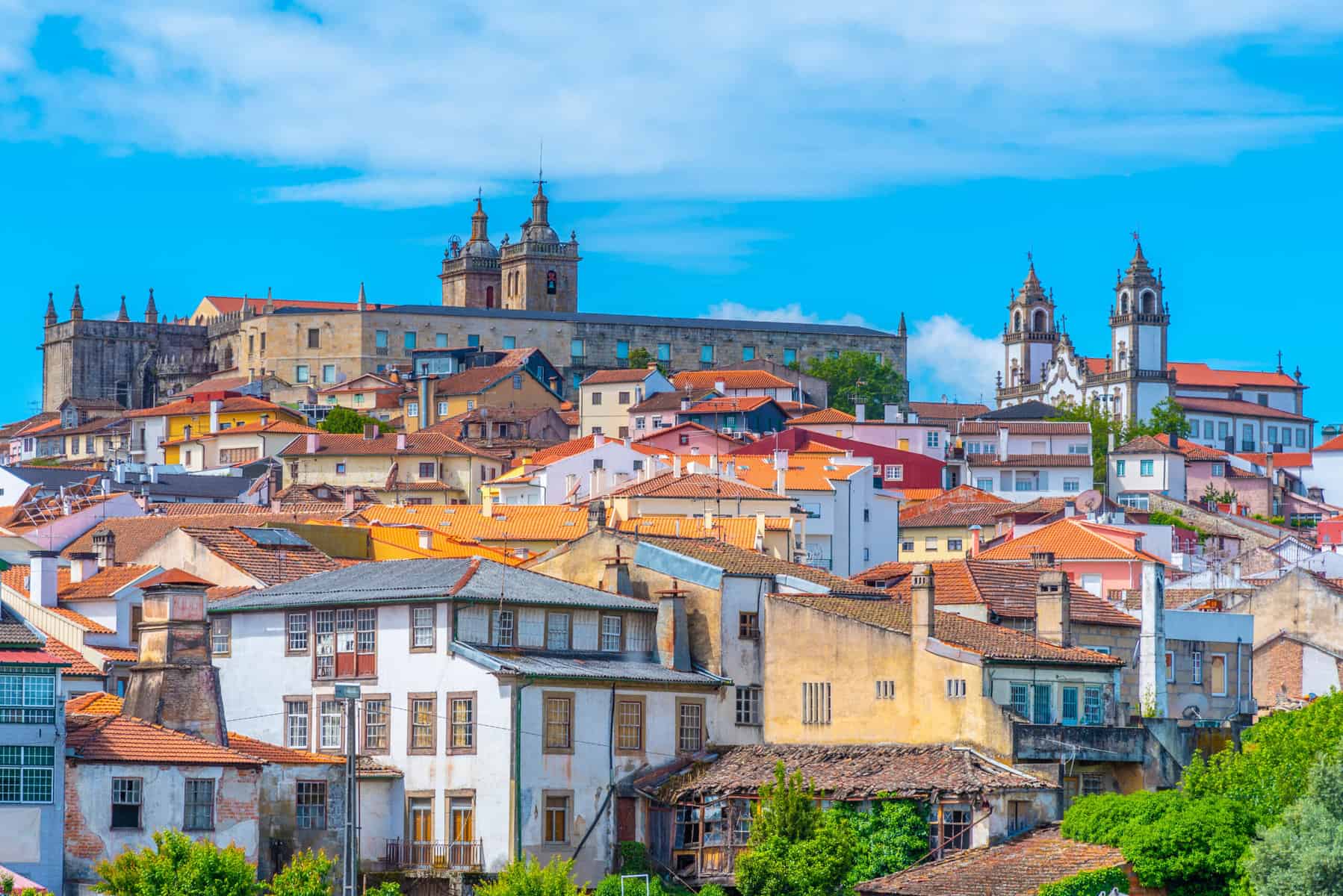
Viseu is a midsize city in north-central Portugal. It feels more like a hill town spread across forests and mountains than the region’s main urban center, and that’s very much part of its charm. Adding to the atmosphere is Viseu’s setting above the pastoral Dão River valley, an area renowned for its excellent wine. In recent years, the historic center has enjoyed a revival, and it’s now a picturesque, pleasant place to wander and settle into a restaurant meal with a good glass of wine. The city also has several historic and interesting landmarks, along with green parks filled with crisp, refreshing mountain air. Located exactly an hour east of Aveiro, Viseu fits easily into any north-to-south itinerary, or the reverse, especially if you plan to travel through the lovely rural roads of central Portugal.
How many days should you spend in Viseu?
Half a day to one full day is enough to see most of the sights in the city itself. That said, it’s worth considering an overnight stay in town or nearby so you can use a second day to explore the rural area around Viseu, especially the wineries along the Dão River. Viseu also makes a convenient stop on a road trip from Porto to central Portugal and onward to Lisbon. You could pass through Arouca Bridge before Viseu or Belmonte after Viseu, while staying overnight in Viseu itself.
Click here to find hotels or vacation apartments in Viseu…
5 must-see sights and things to do in Viseu
- Ride the funicular up Cathedral Hill | Funicular de Viseu
- Grão Vasco Art Museum | Museu Nacional Grão Vasco
- Duarte Square – lunch with Dão wine | Praca de D. Duarte
- The azulejo wall near City Hall | Painel de Azulejos
- Visit one of the nearby Dão wineries | Dão DOC
How do you get to Viseu?
Flights to Viseu
The main airport serving Viseu is Porto Airport (Aeroporto Francisco Sá Carneiro), about an hour and a half from the city by car. There is also a small airport north of Viseu used for private planes and other light aircraft. A few scheduled light-aircraft flights operate from there each day to a very limited number of destinations within Portugal, but for the average traveler visiting the area, it’s not especially relevant.
Getting to Viseu by rental car
The best way to reach Viseu is by rental car. It’s an excellent base for a trip, or a worthwhile stop along a route through the rural landscapes of central and northern Portugal, which naturally are easiest to explore by car. Visiting the immediate surroundings of Viseu, and especially the wineries around the Dão River, is also usually done by car.
From Porto or Lisbon, the drive to Viseu begins on the A1 highway connecting the two cities. From Porto, you then head east on the A25, which reaches Viseu’s southern outskirts. From Lisbon, you turn east just after Coimbra onto the IP3, which also leads to the southern outskirts of Viseu.
Parking in Viseu – There are almost no large parking lots on the hill where most of Viseu’s main attractions are located. It’s best to park below, to the north or west of the old town center, and then go up by funicular or on foot to the various sights.
Click here for the complete driving guide to Portugal…
Click here for the not very far away Douro Valley accommodation guide…
Getting to Viseu by public transportation
Bus – the easiest way to reach Viseu by public transportation. There are many direct buses throughout the day from both Porto’s central station and Lisbon, operated by the national company Rede Expressos. Other cities and towns in central and northern Portugal also have direct bus service to Viseu.
Viseu’s central bus station (Estação Rodoviária De Viseu) is close to the city center and Forum shopping mall. It’s about a 10-minute walk from the cathedral area or the City Hall area, which are the city’s main tourist zones, but getting to either one involves walking uphill, so taking a local bus or a taxi is recommended.
Train – because of Viseu’s topography – a city set among hills with major elevation differences between neighborhoods – there is no train service to the city of Viseu! It may come as a surprise that a city of more than 100,000 residents in Europe has no train station, but that is indeed the case in Viseu because of its unusual terrain. The nearest train station is in Nelas, 20 minutes south of Viseu, from where you can continue to other destinations in Portugal such as Porto or Lisbon, with a transfer in Coimbra.
Click here to find a place to stay in peaceful Viseu…
Good to know about Viseu
Viseu is a midsize city of around 100,000 residents in central Portugal. Its metropolitan area has more than a quarter of a million people, and it serves as the center and capital of the district of the same name.
Like other parts of the northwestern Iberian Peninsula, the first settlement in Viseu belonged to the Castro culture. During the Roman period, Viseu was part of the province of Lusitania, though it remained a relatively minor city. After the Romans came the Visigoths, who were later pushed aside by the Muslim Moors. In the 12th century, Portugal’s first king, Afonso Henriques, arrived in the area and, after several victories over the Muslims nearby, established his kingdom. From that point on, Viseu remained under Catholic rule.
In the 19th century, Viseu began to expand downhill and developed into an industrial city. It became a center for the region’s extensive wine industry and is also home to several major industrial companies in Portugal, led by the Visabeira group.
Today, the city blends old and new with ease, preserving its past for current generations and for the travelers who have begun discovering it in recent decades as an especially authentic and welcoming destination inland from Portugal’s coast.
As for the weather, like other cities in central and northern Portugal, Viseu is gray and rainy in winter, while summers are mild and pleasant. That makes summer the main season for a visit, though winter has a special charm of its own, when the steep streets and historic buildings sit wrapped in thick mountain fog.
Attractions and interesting sights in Viseu
Viseu Funicular | Funicular de Viseu
Steep streets climbing over hills are nothing unusual in Portugal, and in Lisbon, funiculars and trams have been helping people navigate them for well over a century. In Viseu, the municipality decided to build its own funicular as part of a plan to revive the old town center and draw more visitors in.
The Viseu funicular began operating in 2009. It carries visitors from the foot of the old town hill over a distance of 400 meters to the top, almost all the way to the cathedral. The lower station is not far from Casa da Ribeira on Rua Cava do Viriato, where there is also a huge free parking lot across the street.
Using the funicular is very convenient if you’re visiting Viseu briefly by car, and even if you aren’t, the ride itself is a great attraction.
Viseu Cathedral | Sé Catedral de Viseu
Viseu Cathedral is the city’s most important building. It was first built in the 12th century, although the current structure combines Renaissance and Manueline elements from the 15th and 16th centuries.
Viseu, like much of the Iberian Peninsula, was under Muslim rule from the 8th century onward. That rule was gradually pushed back over centuries as part of the Reconquista. Viseu was recaptured from the Muslims in 1058 by Ferdinand I, King of Castile and the first ruler to crown himself Emperor of Spain. Ferdinand was also the great-grandfather of Afonso Henriques, who was born half a century later in nearby Guimarães and would go on to become Portugal’s first king. After the reconquest, the foundations were laid for the cathedral in Viseu, and throughout the Middle Ages it gradually expanded into the building we see today.
From the outside, the cathedral is not especially large, but its façade is fascinating because of its mix of styles. Two symmetrical towers stand on either side of the front, though only one has a clock. Inside, two massive columns stand out, supporting the ribbed vaults that form the ceiling. Also notable is the Baroque-Rococo wooden altar by Santos Pacheco, who also designed the altar in Porto Cathedral not far away.
Click here to find a place to stay in peaceful Viseu…
Church of Mercy | Igreja da Misericórdia de Viseu
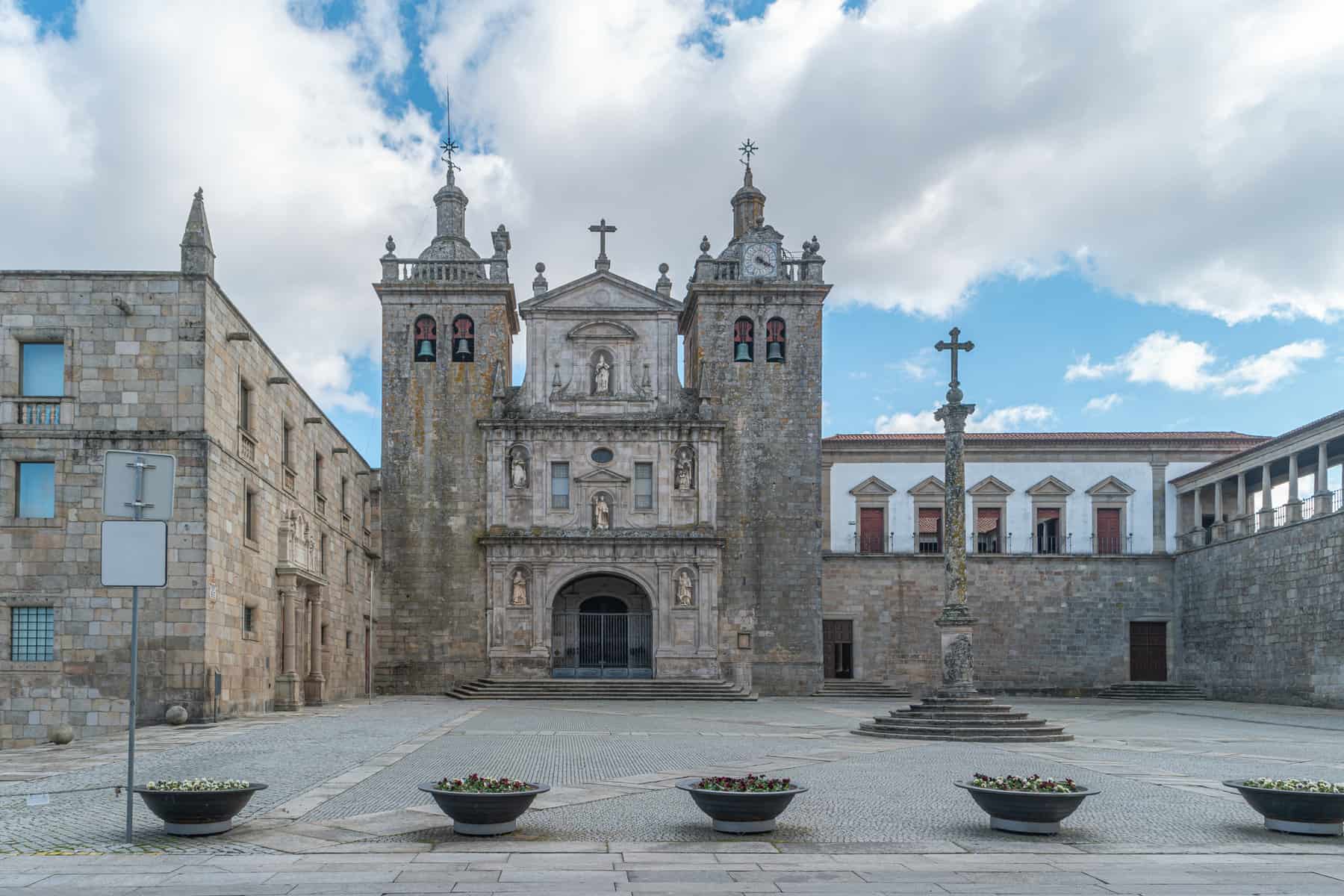
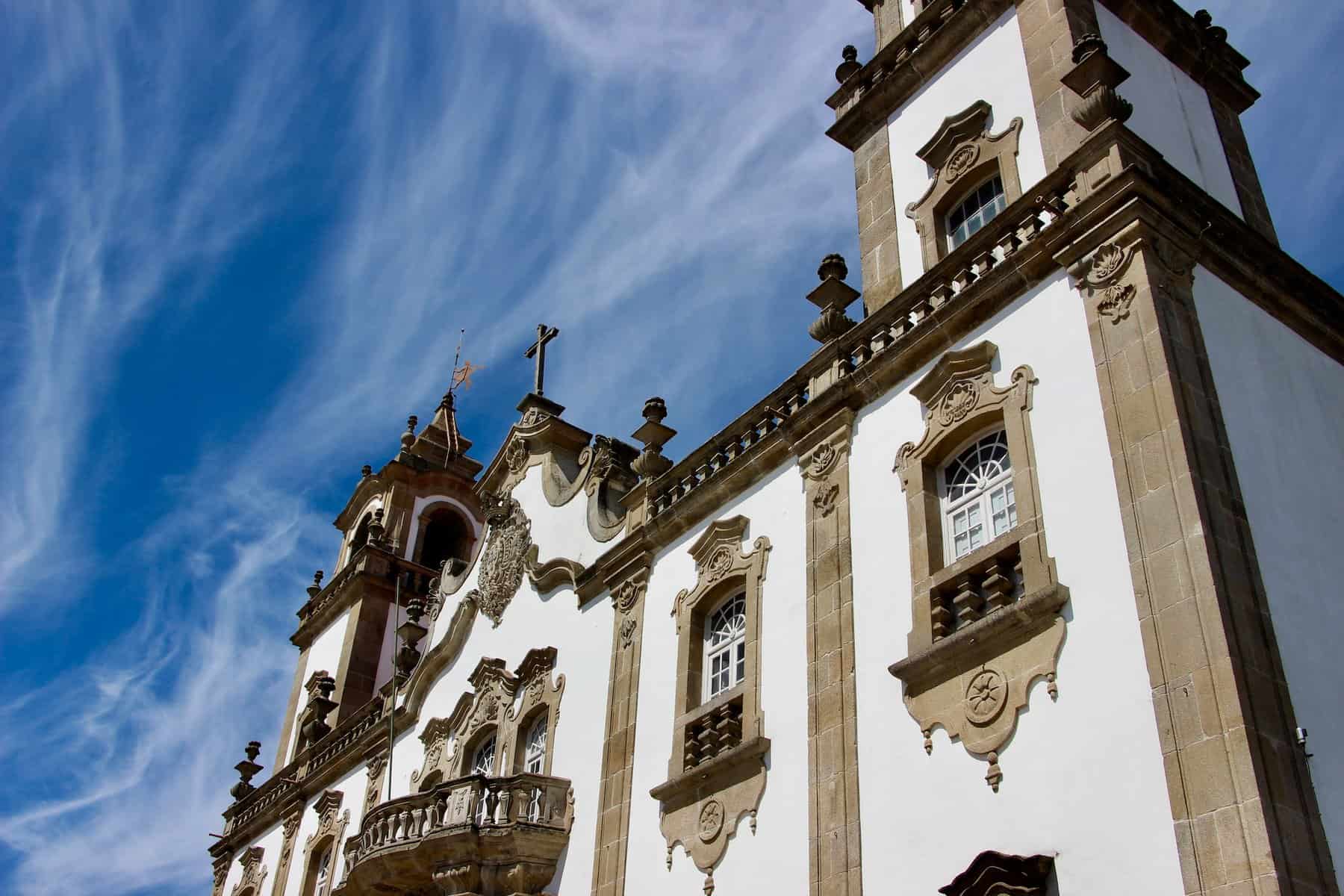
Misericórdia Church stands directly across from the cathedral. The church was built in the 16th century, then enlarged and extensively renovated at the end of the 18th century. During that renovation, its striking Rococo façade was added, easily stealing some of the attention from the neighboring cathedral.
The interior is relatively simple, with one large hall, smooth walls, and architectural elements that gently stand out from them. The most interesting part inside is the museum, with paintings and art objects from the 17th through 19th centuries.
Grão Vasco Museum | Museu Nacional Grão Vasco
The Grão Vasco Art Museum stands right next to the cathedral. As in Coimbra and other Portuguese cities, Viseu chose to dedicate a museum to a local artist. It is housed in a Renaissance building that was renovated and redesigned in the 20th century, so the galleries are bright, spacious, and very pleasant. The museum focuses mainly on religious art, including sculptures and Baroque miniatures.
It is named after the Portuguese Renaissance painter Vasco Fernandes, also known as Grão Vasco. He was born in Viseu or in one of the nearby villages and worked in the city in the early 16th century, when he became the most celebrated artist of his time.
The museum also holds sculptures and a fine collection of vessels, but the highlight is Grão Vasco’s own Renaissance work, “Saint Peter” | São Pedro, originally part of the altarpiece in the neighboring cathedral. Today it is displayed upstairs alongside several other masterpieces from the cathedral altar.
Across from the museum and next to the Church of Mercy, you’ll find the tourist information center, where you can pick up brochures and maps.
Click here to look for a place to stay in peaceful Viseu…
King Duarte Square | Praça D. Duarte
This square, which is really more of an elongated street junction, lies just south of the cathedral. It is named after King Duarte, who was born in the city in 1391, and his statue stands at the upper end of the square. Surrounded by 17th- and 18th-century buildings, it was the center of Viseu until the 19th century. Later, as the city expanded and industrialized, the center shifted downhill. Today it’s a wonderful place to sit down for a meal or a coffee after visiting the main sights nearby.
From the square, it’s worth heading down Rua Dr Luíz Ferreira, which connects with several other small, pleasant streets. Along the way are a number of authentic shops selling local delicacies and, of course, wine.
Soar Gate | Porta do Soar
Porta do Soar was one of the seven gates in the walls of the old city. This thick gate with its pointed arch was built in the 15th century as part of the city fortifications. It is only a two-minute walk from the cathedral and Duarte Square. Nearby, there is also a small square and narrow streets lined with cafés, restaurants, and bars.
The azulejo wall near City Hall | Painel de Azulejos
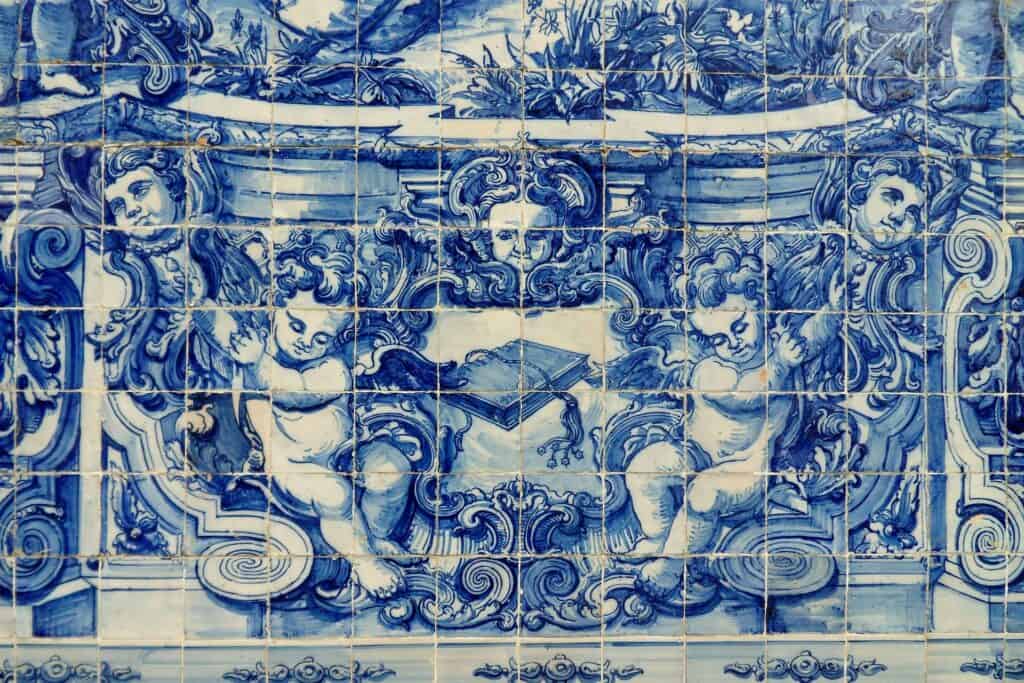
The azulejo wall (ceramic mural) in Rossio Square near City Hall is one of Viseu’s main points of interest. The tiles were painted in 1931 by the local modernist artist Joaquim Lopes and depict rural life in the Viseu area.
The wall stands in Praça da República, which is essentially City Hall Square and also includes a small park. A narrow road separates the azulejo panel from the square, but it still makes for a very interesting and authentic sight. The square where the azulejos are displayed is split across two levels, with a park below and a street above.
It’s a great idea to pick up a few excellent Portuguese pastries from the bakery across from the wall or from one of the others on nearby streets, then sit on a bench in the heart of the square under the trees and watch the passersby with the stunning mural as your backdrop.
Almeida Moreira Museum | Museu Almeida Moreira
Just uphill from the beautiful azulejo wall stands the former home of Almeida Moreira, now a small museum. Moreira was the founder and first director of the Grão Vasco Museum near the cathedral. He left his house and art collection to the city, and today the building serves the public as a museum and library.
The exhibits here are not among the great masterpieces of Portuguese art as they are in the Grão Vasco Museum, but they are interesting and give a sense of Portuguese culture at the start of the 20th century, when Moreira was collecting them. Beyond the displays, it is worth coming simply to see a well-preserved house typical of central Portugal.
Along the exterior walls facing the street, you’ll also spot several small and wonderful azulejo panels. Right next to the house and museum is the tourist information center, whose outside walls are likewise decorated with the famous tiles.
Aquilino Ribeiro Park | Aquilino Ribeiro Park
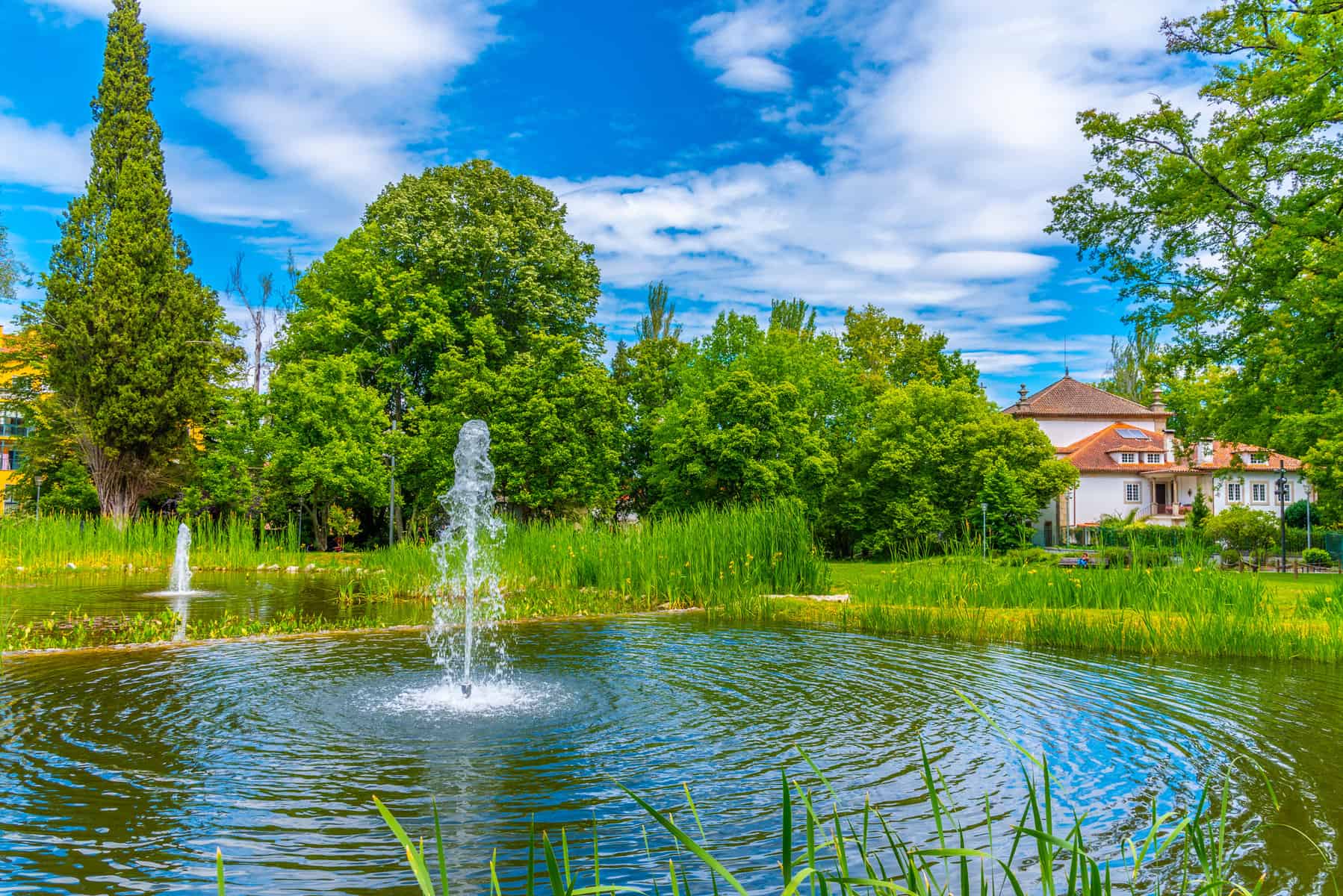
South of City Hall and the azulejo wall begins Aquilino Ribeiro Park. The park is not large, but it sits in the city’s administrative center and provides a pleasant green escape. What makes it special is its old trees, left from the days when this land belonged to a monastery that no longer exists.
At the entrance to the park near City Hall stands a small and beautiful Baroque church, São Francisco Church (Igreja da Ordem Terceira de São Francisco). A long gray staircase leads up to it, and at the top it stands in all its elegance, with the bright white look so typical of churches in Portugal. Against the green backdrop of the park, it looks wonderful. Inside are azulejo-covered walls and massive woodwork above the altar.
Click here to find a place to stay in peaceful Viseu…
Remains of the Roman walls – Rua Formosa
Like Spain, Portugal was under Roman rule for centuries, and almost every city preserves traces of the past that brought Latin culture to the Iberian Peninsula. Viseu, in fact, developed during the later Roman period, eventually becoming a crossroads where ancient Roman roads met. For that reason, the Romans only decided in the 3rd century CE to build stronger fortifications and walls here.
The remains of the walls in Viseu are fairly small, but they are presented in an especially interesting way. In the early 2000s, during renovation work in the heart of the old town on Rua Formosa and Rua da Paz, the remains of the ancient Roman wall were discovered beneath the street. City engineers considered what to do and decided that since the street was already planned as a pedestrian zone, they would preserve the walls by covering parts of them with glass, allowing visitors to see the ruins while still using the surface as part of the sidewalk. The result is excellent.
In fact, because the walls are covered with glass, they look even more impressive at night. If you are staying overnight in Viseu, it’s well worth coming to Rua Formosa in the evening after a good meal at one of the restaurants on the street or nearby.
Farther along Rua Formosa, you can spot a tiny additional section of the ancient walls in the center of a small grassy roundabout called Largo de Santa Cristina. That said, if you’ve already come to the area, the main draw is really the nearby gardens and park – Jardim de Santa Cristina. It’s a great place to rest on a bench after a walk through the pedestrian streets. Nearby, there is also a small and charming Portuguese church with azulejos covering its walls – Carmo Church.
Carmo Church with azulejo walls | Igreja de Nossa Senhora do Carmo
Carmo Church was built in the 18th century. Its highlight is the interior walls, covered in azulejo tiles with the characteristic blue-painted designs. They are not as spectacular as the azulejos in the Carmo Church in Porto. but they very uniqu and lovely.
The church walls are lined with azulejos on both sides, while the altar is gilded. Because the church is not large, the combination creates a distinctive and very authentic look.
Outside, the white walls are supported by dressed yellowish stonework. Two bell towers complete the elegant façade.
Click here to look for a place to stay in peaceful Viseu…
Fontelo Park | Parque do Fontelo
This park, on the eastern side of the city and higher up the mountain, is an old park that has been renewed and adapted to modern life. It has existed for 800 years, but in the 16th century it became a public leisure area thanks to the initiative of the local bishop, Miguel da Silva.
The forest is the park’s defining feature, with ancient chestnut and oak trees dominating the landscape. The park allowed the woodland to survive alongside ornamental gardens planted over the years, and the result is wonderful. In the 20th century, much of the western section of the park was turned into a multisport center, including an athletics stadium, soccer field, indoor pool, and gymnasium.
Its hillside setting and tall trees create the feeling of being in a forest right beside the heart of the city. It’s especially recommended for morning walks, particularly in the fall when the leaves begin to turn.
Wine tasting at the Dão wine visitors center | Solar do Vinho do Dão
At the northern entrance to Fontelo Park, near the stadium, there is a large visitors center explaining the history of Dão wine. It is not a winery itself, but it brings together information on all the wineries in the region, all inside a large and impressive historic building with a red roof, white walls, and a spacious garden of lawns and cypress trees.
The center gathers all the information about the different wineries in the Dão River region that produce this excellent wine. It also offers more than information: the wines themselves are available for purchase and tasting. Low-cost wine tasting tours are held here. It’s a smart stop before setting out on a winery-focused trip in the area, so you can taste first and decide where you’d like to go.
The Dão wine is not as famous as the Douro wine, but it is not far behind his neighbor to the north.
Beyond that, the impressive building and well-kept garden are reason enough to visit before a refreshing walk through nearby Fontelo Park.
Link to the Dão wine visitors center website…

Casa da Ribeira traditional culture center | Casa da Ribeira Viseu
Viseu’s traditional culture center lies at the northern edge of the historic center, about a 7- to 8-minute walk from the cathedral. Casa da Ribeira presents the city’s past way of life, which was built around agriculture-related industries such as flour milling and olive oil production. This charming building, with the white walls and red roof so typical of Portugal, stands on the bank of the Paiva stream, whose flow once powered the millstone used to crush olives or grind wheat for the people of Viseu.
Inside, you’ll find displays on these traditional industries as well as other exhibits related to the daily life of the city’s residents in the past, including a small riverboat. The garden at Casa da Ribeira is lovely, and the whole area around the building and the surrounding streets feels pleasant and inviting. Across from Casa da Ribeira stands the appealing Igreja de Nossa Senhora da Conceição, along with the Ribeira Gardens and their large reflecting pool. The funicular station is not far from Casa da Ribeira, so it’s easy to combine a visit here with the cathedral area up the hill.
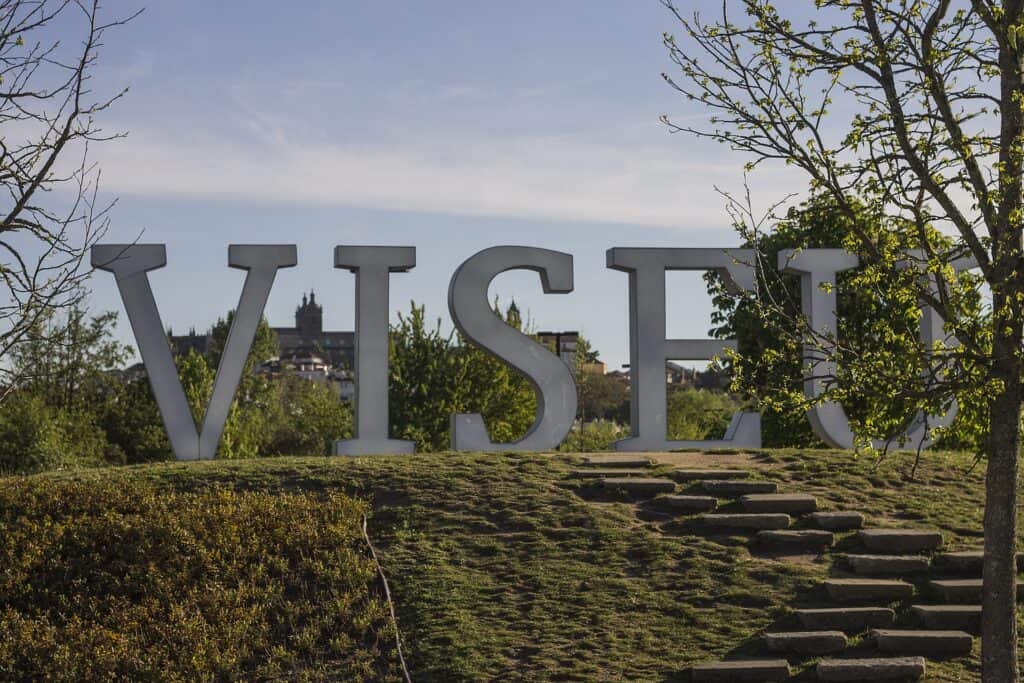
Santiago Park – 200 meters behind Casa da Ribeira begins a relatively new urban park built along the stream: Parque de Santiago. The park lies in the newer part of the city and has a modern feel, with running paths, exercise stations, and facilities for children. Since it was built recently, everything is neat, organized, and up to date.
Many people come to the park to take photos beside the sign spelling the city’s name – VISEU.
Admission to the park, like Casa da Ribeira, is free!
Link to the Casa da Ribeira website and opening hours…
Attractions and points of interest around Viseu
The town of Santar is about a 20-minute drive south of Viseu. It is another small, sleepy town in the mountains of Portugal, but what sets it apart are its beautifully maintained gardens and its position just above the Dão River. Vineyards surround it, and there are several wineries here as well.
Santar Vila Jardim (Santar Vila Jardim) – it’s worth booking a 90-minute tour of the gardens and family home in advance, ending with tastings of local specialties.
Casa de Santar Vinhos is located just beyond the gardens. (Casa de Santar Vinhos)
Paço Dos Cunhas De Santar (Paço Dos Cunhas De Santar) – also next to the gardens, it is one of the largest visitors centers in the Dão Valley. In addition to tasting tours, it also offers workshops.
Caminhos Cruzados Winery | Adega Caminhos Cruzados
Caminhos Cruzados Winery is about a 25-minute drive south of Viseu. As noted, the Dão River runs south of Viseu, and over the centuries a wine industry developed around it. The winery’s modern building, with its clean lines, stands out among the vineyards and forests of the Dão basin and feels very inviting.
It is the newest winery here, with a modern visitors center designed so that wine production and hospitality go hand in hand. The project was completed in 2017, and today the visitors center is open to wine lovers. The place preserves the legacy of the original winery at Quinta da Teixuga, a property with nearly 500 dunams of vineyards planted with different varieties.
It’s best to book a tour in advance.
Click here to look for a place to stay in peaceful Viseu…
Quartz Museum | Museu do Quartzo
North of Viseu, in the suburb of Campo, a museum housed in a modern building was established on the ruins of an old mine and is dedicated entirely to quartz, one of the most common minerals. The drive from the city takes about 15 minutes, and there is also a nice viewpoint nearby.
The exhibition is not large, but it is interactive and can be a good fit for children interested in science. A visit to the museum usually takes about an hour to an hour and a half.