Baixa is Lisbon’s downtown core. Most of the district was rebuilt after the devastation of the great earthquake of 1755, along the low valley between Alfama Hill to the east and Bairro Alto Hill to the west. Its streets follow a neat grid, stretching from the vast Praça do Comércio by the waterfront to Rossio Square, also known as Praça Dom Pedro IV, at the other end. These streets are considered the very center of Lisbon, packed with restaurants, hotels, bars, and nightlife. The Avenida neighborhood extends naturally up the valley. Over the years and still today, it has been home to many of the city’s leading figures, and it offers plenty of entertainment, interesting museums, and concert halls.
How much time should you spend exploring Baixa and Avenida?
Plan to spend anywhere from half a day to a full day visiting Baixa and Avenida. Most travelers stay in this area, so it’s also easy to drop by individual sights whenever you head out from or return to your hotel, alongside sightseeing elsewhere in the city.
Click here for a free walking tour of central Lisbon…
8 must-see sights and attractions in Baixa and Avenida
-
- Arco da Rua Augusta at the vast Praça do Comércio | Praça do Comércio
- A taste of Rome in Rossio Square (Praça Dom Pedro IV) |
- Ride the Santa Justa Lift | Elevador de Santa Justa
- Rua Augusta – the heart of Baixa | Rua Augusta
- Rua das Portas de Santo Antão pedestrian street – the heart of Avenida | Rua das Portas de Santo Antão
- The archaeological museum at Rua dos Correeiros | NARC
- São Domingos Church | Igreja de São Domingos
- The Lisbon Botanical Garden above Avenida | Jardim Botânico de Lisboa
Click here to find a place to stay in super-central Baixa…
Planning Your Perfect Visit to Baixa & Avenida
Exploring Baixa and Avenida is wonderfully simple and follows a linear route. You can go either from top to bottom or the other way around (though surprisingly, it’s best to start down in Baixa and slowly make your way uphill). The gateway to Baixa—and really to the whole center of Lisbon—is, of course, Arco da Rua Augusta, which stands between the vast Praça do Comércio on the waterfront and Rua Augusta, the liveliest pedestrian street in Lisbon. The streets around Rua Augusta are filled with restaurants and shops, making them a great place to wander even in the evening.
Continue uphill to the great Rossio Square, | Rossio, often seen as Portugal’s answer to Piazza Navona in Rome. This landmark square is considered the heart of the city. From Rossio, you can continue north up the valley toward Avenida. The neighborhood takes its name from the broad avenue running through it—Avenida da Liberdade—beside which you’ll find the magnificent botanical gardens of the University of Lisbon and the city’s science museum.
Click here for our guide to accommodations in Lisbon…
Everything you must see and do in Baixa
Commerce Square | Praça do Comércio
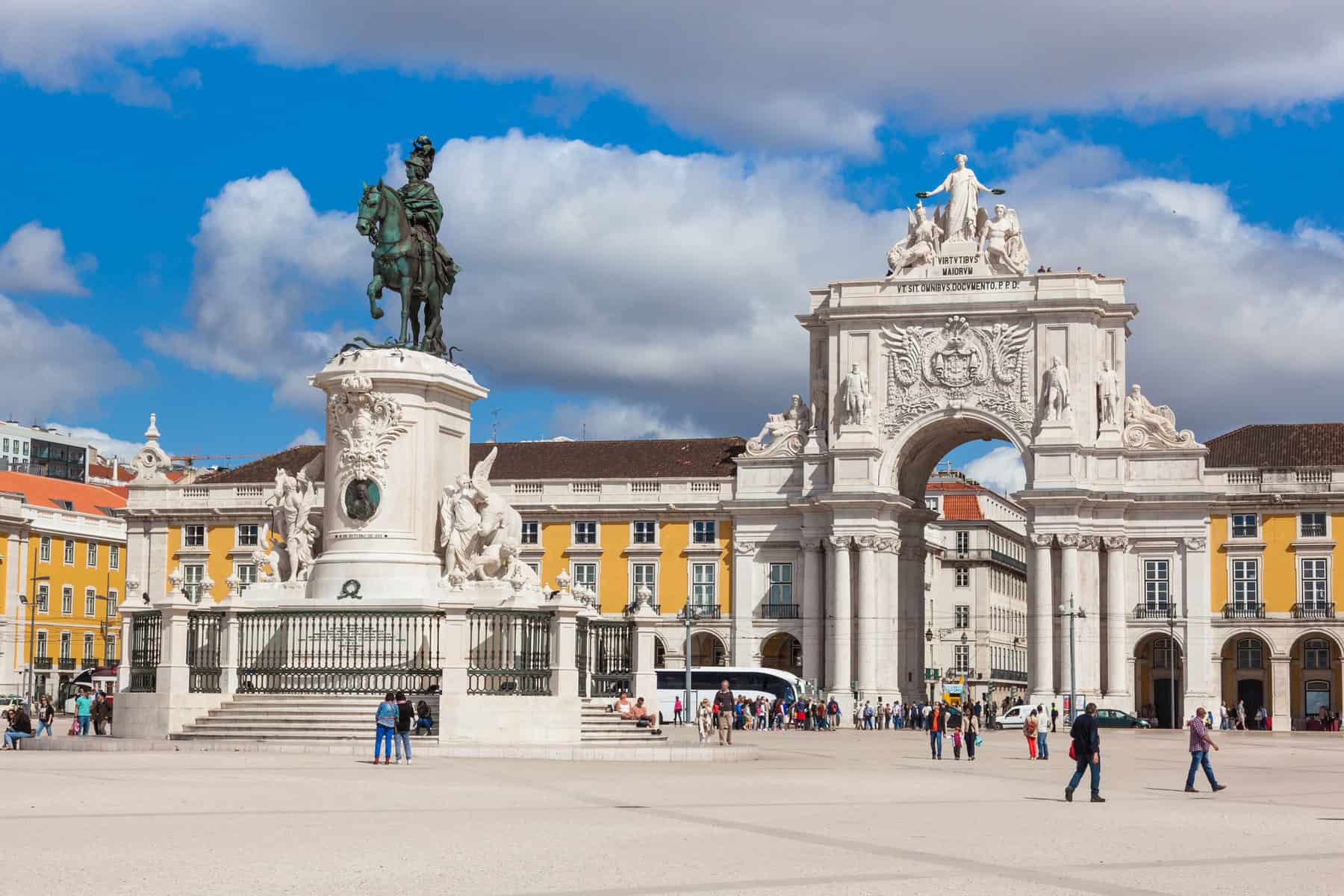
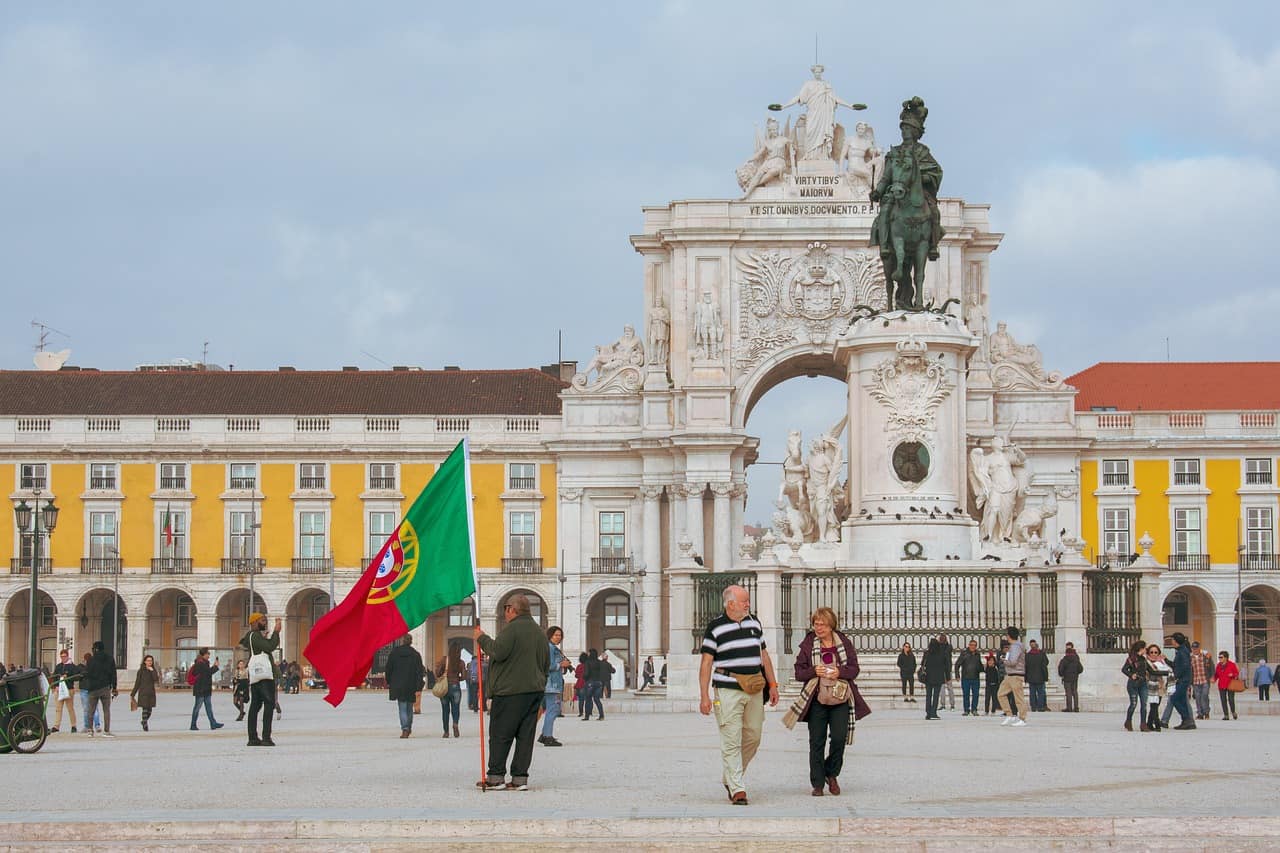
This enormous square is the heart of Lisbon. Vast in scale and framed on three sides by arcaded buildings, it opens directly onto the harbor and the broad estuary of the Tagus River. More than anything else, the iconic Arco da Rua Augusta symbolizes the passage from the waterfront into the very heart of Lisbon.
The square is one of the city’s main gathering places, hosting major ceremonies and events, and it was also the site of the “spark” that ignited the Carnation Revolution—the overthrow of the fascist regime on April 25, 1974. More than almost anywhere else, it reflects Lisbon’s spirit: a city cascading down the hillsides, shaped by the maritime empire Portugal once was. Cafés line the square, and on its eastern side you’ll find the Lisboa Story Centre, a city museum that offers visitors an engaging introduction to Lisbon.
Augusta Street Arch | Arco da Rua Augusta
This striking arch marks the official entrance to Rua Augusta, the street planned as Lisbon’s commercial heart. It stands between the vast Praça do Comércio and harbor on one side and the street itself on the other.
The arch was built in 1759, about four years after the devastating earthquake of 1755 left the city in ruins. It was designed in the model of the triumphal arches that spread across Europe during the Baroque period (the 17th and 18th centuries), drawing on the design of the Propylaea, the gateway to the Acropolis in Athens. This neoclassical-Baroque style swept through Europe’s major cities—Brandenburg Gate in Berlin is one example—as a symbol of the enduring link between European culture and classical Greek civilization. Above the arch are Baroque decorative elements representing Portugal’s geographic and cultural identity.
Click here for the complete guide to Lisbon…
Augusta Street | Rua Augusta
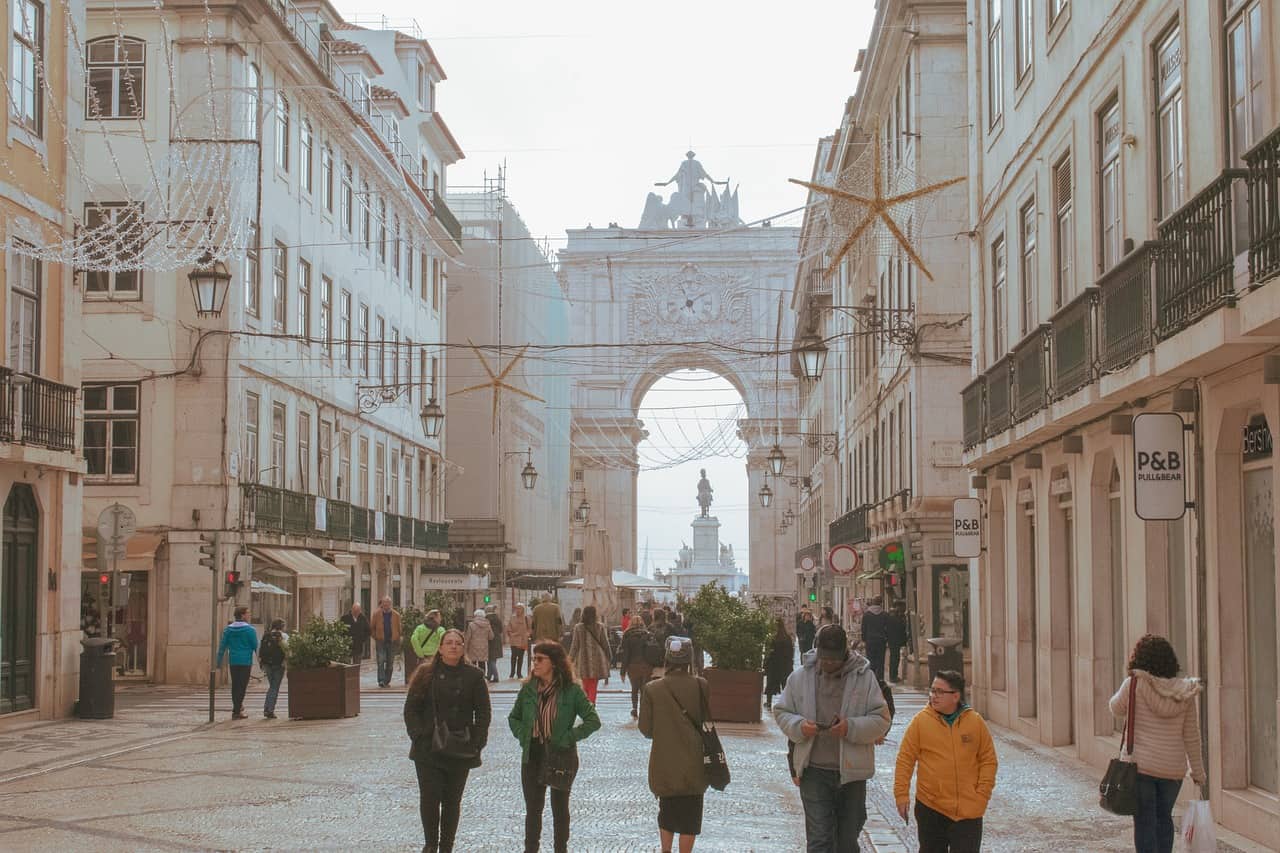
This beautiful pedestrian street runs from Arco da Rua Augusta through Baixa all the way to Rossio Square (Dom Pedro IV), and it’s very much the city’s beating heart. It is the finest expression of the district’s carefully planned urban design, created when Baixa was rebuilt after the destruction of the 1755 earthquake. Every sidewalk is paved with mosaics, and the length of the street is lined with shops, restaurants, entertainment venues, and just about everything a traveler might want or need.
The streets between Praça do Comércio and Praça Dom Pedro IV are laid out in a grid. Both the streets parallel to Rua Augusta and the smaller cross streets are packed with shops and businesses as well. This area is filled with a huge number of three- and four-star city hotels. It is the most visited part of Lisbon and offers a wonderful introduction to the lively city on the Tagus.
Church of Nossa Senhora da Conceição Velha
This beautiful church was built in the 16th century and once stood out along Lisbon’s waterfront skyline. In the 1755 earthquake, it was almost completely destroyed, with only its impressive façade surviving. The rebuilding created a remarkable blend of architectural styles: the original portal is essentially Gothic, the church structure reflects classical Renaissance influence, and the interior is richly Baroque.
Address: Rua da Alfândega 108
MUDE – Design and Fashion Museum | Museu do Design e da Moda
Lisbon’s design and fashion museum sits just one block in from Arco da Rua Augusta, in some of the city’s most appealing streets. The museum has an international outlook and focuses on modern fashion trends from around the world.
Its collection includes a wealth of fashion pieces and accessories from across Europe, with a particular emphasis on fascinating high-end design by leading fashion creators. If you enjoy the genre, it’s well worth stepping inside for a look at this distinctive collection, which includes some boldly imaginative design pieces.
Address: R. Augusta 24
Rua dos Correeiros Archaeological Center (NARC)
This unique archaeological museum combines an exhibition space with the excavation site beneath it. It stands in the heart of Baixa, right off Rua Augusta. In the early 20th century, deep excavations here uncovered the city’s many settlement layers, reaching back to its founding by Phoenician or Greek traders in the middle of the 1st century BCE. The museum presents these layers by period—the deeper you go, the older the era. The site also displays a wealth of finds discovered here, alongside illuminating explanations about Lisbon’s fascinating history.
Address: R. dos Correeiros 9
Click here for the museum’s current opening hours…
Santa Justa Lift | Elevador de Santa Justa
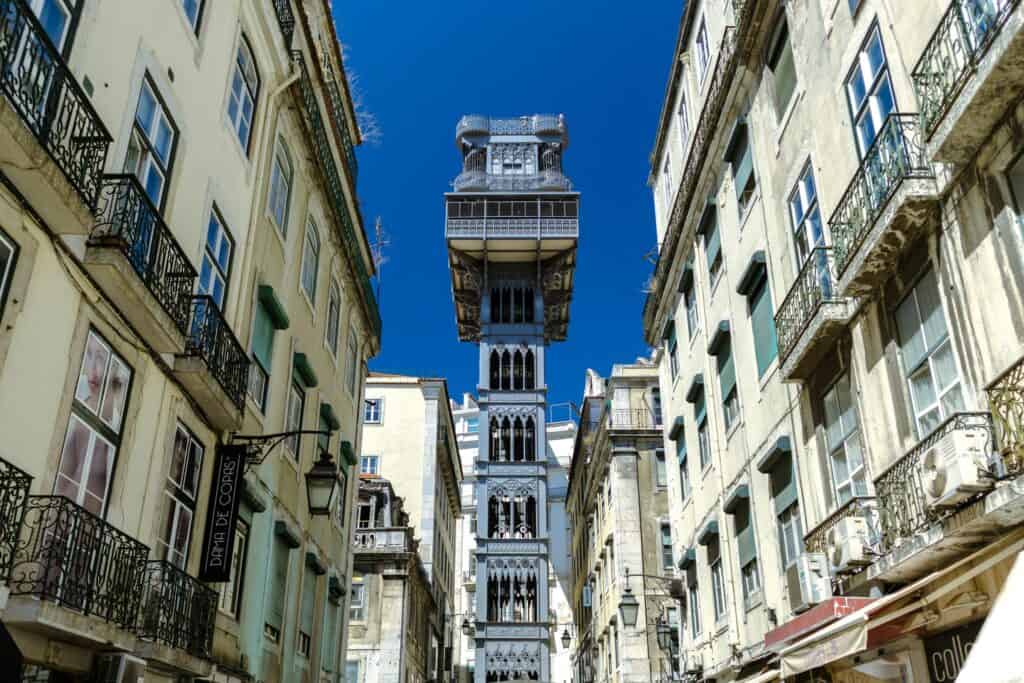
This distinctive elevator serves two main purposes. The first is practical transportation, linking the central streets of Baixa with the higher Bairro Alto district above. The second, naturally, is tourism.
The elevator stands at the end of Rua de Santa Justa, which crosses Rua Augusta, and it is also known as Elevador do Carmo, after the convent to the west at the upper level. The structure’s unusual appearance comes from the original vision of the engineer who built it. Raoul Mesnier du Ponsard, a local engineer and architect, studied in France under Gustave Eiffel. Inspired by the French master, he created the unique metal structure that quickly became one of the city’s sought-after attractions.
The elevator rises 45 meters above the valley floor where Baixa was built. It opened in 1905 as part of a vision to connect different parts of the city for pedestrians. Beyond its unusual neo-Gothic structure, the top of the elevator features an observation terrace with magnificent views over Baixa and the Tagus estuary.
Over the years, it has become one of Lisbon’s most popular tourist attractions, even though it was originally intended as a fairly standard piece of urban transport infrastructure.
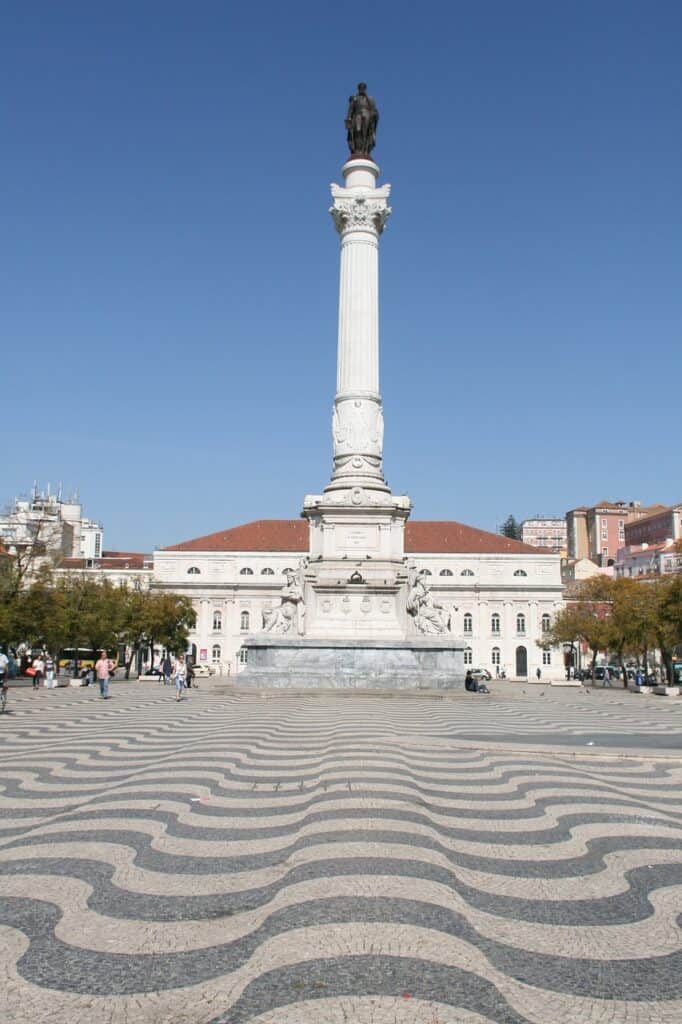
Rossio Square | Praça Dom Pedro IV
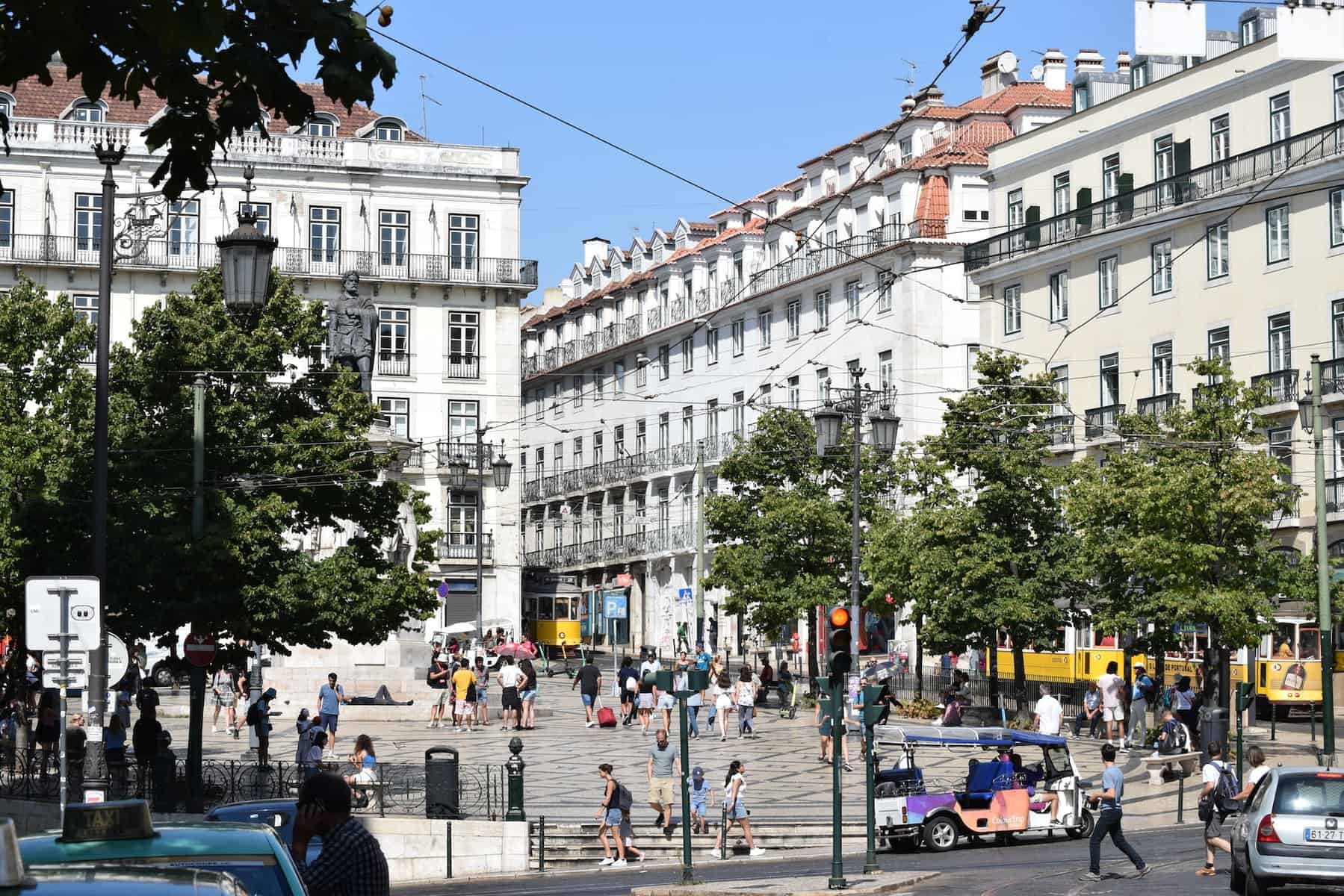
Rossio Square, today officially called Praça Dom Pedro IV, is Lisbon’s historic square. Rossio is without question the busiest and most central square in the heart of Lisbon. It marks the northern end of the most visited street in downtown Lisbon—Rua Augusta pedestrian street. The square’s surface is covered in a stunning mosaic pattern of black-and-white waves and movement. Around it you’ll find countless businesses, including restaurants, bars, and entertainment venues.
Its layout strongly recalls Piazza Navona in Rome, both in the square’s elongated hippodrome shape and especially in its fountains, which closely imitate those by Gian Lorenzo Bernini in the iconic Roman piazza. The main fountain in Piazza Navona is Bernini’s famous Fontana dei Quattro Fiumi, topped by a monumental obelisk. Here in Rossio, only the obelisk remains, without the fountain below, and crowned instead by a statue of King Pedro IV, conqueror of Brazil.
At the square’s northern end stands the Teatro Nacional Doña María II, named after Dom Pedro IV’s daughter.
Click here for a free walking tour of central Lisbon departing from Rossio…
Figueira Square
Right next to Rossio, to the east, lies neighboring Figueira Square. This square, somewhat gray and rectangular in shape, was home to Lisbon’s central market until the 1950s. The covered market was demolished, though various markets are still occasionally held here on certain days.
Hotels and restaurants surround the square, but it is often overshadowed by the dazzling presence of neighboring Rossio. At its center stands an impressive equestrian statue of King João I (Estátua Equestre de Dom João I).
Church of São Domingos
Standing at the northern edge of Rossio Square, this immense church is Lisbon’s royal church, and many royal weddings were held here. It also has a tragic history and has endured no shortage of disasters.
It faces a large open square east of the Teatro Nacional Doña María II. At the center of this space stands a small memorial to the Jews murdered in the “Lisbon Pogrom” of April 19, 1506. Around two thousand forcibly converted Jews were hunted through the city and burned alive in the square before the church. Beyond this brutal pogrom, the church itself has suffered repeated destruction and catastrophe since it was first built in 1241.
It was destroyed in the earthquakes of 1536 and again in the great quake of 1755. Rebuilt in an impressive Baroque style, it later caught fire in a major blaze in 1959. Since then the church has been restored once more, though the marks of the disasters it endured—including the scorch marks inside—remain deliberately integrated into the interior.
Where should you stay in Lisbon? Click here for our accommodation guide to Portugal’s capital…
Sights and attractions in Avenida
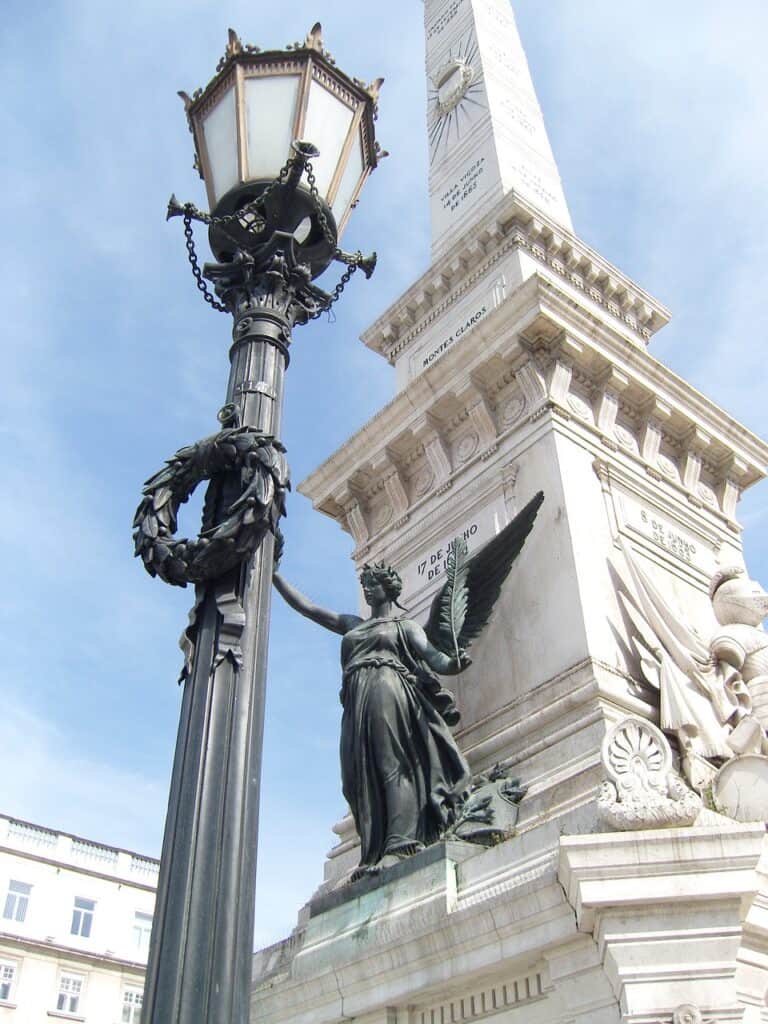
Restauradores Square | Praça dos Restauradores
Praça dos Restauradores is the natural continuation of the sequence of squares and streets climbing up from the harbor and Praça do Comércio in Baixa. These urban spaces unfold one after another up the valley, via Rua Augusta and Rossio Square, toward the Avenida area. Beyond the square to the north begins the broad, leafy Avenida da Liberdade.
Like many of the city’s other squares and streets, Praça dos Restauradores is paved with mosaic sidewalks in distinctive geometric patterns. It is also an important transportation hub, with a large metro station and busy roads that make it livelier than the squares lower down the valley.
At its center stands a monumental obelisk, erected in 1886. It commemorates Portugal’s independence from the Spanish crown in 1640, after which the kingdom went on to become a maritime empire. At the base of the obelisk are figures from mythology symbolizing victory and freedom.
Click here for a free walking tour in Lisbon departing from Restauradores Square…
Portas de Santo Antão Street | Rua das Portas de Santo Antão
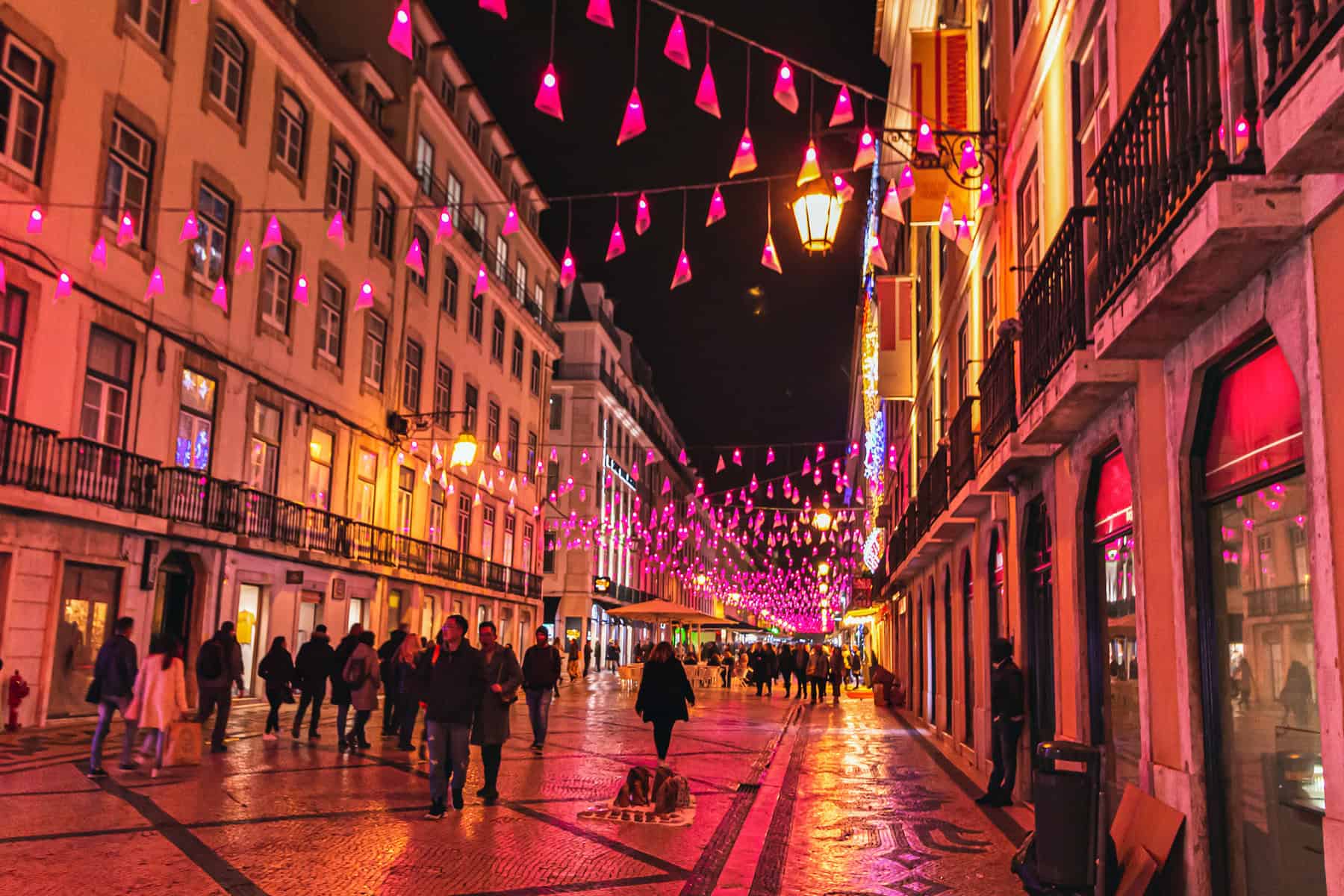
This charming, lively pedestrian street is the heart of Avenida further up the valley. In both atmosphere and mosaic paving, it recalls Baixa’s central streets such as Rua Augusta, but with a far more neighborhood feel. At its center stands the grand concert hall Coliseu dos Recreios. The street is lined with restaurants and bars, and it is especially known for its abundance of fish and seafood restaurants.
Click here to find a place to stay in quieter, but still central Avenida…
Liberty Avenue | Avenida da Liberdade
The impressive Avenida da Liberdade stretches north from Praça dos Restauradores in a straight line toward Praça do Marquês de Pombal and, effectively, the entrance to Eduardo VII Park.
The avenue was built in the late 19th century as a local attempt to emulate the Champs-Élysées in Paris, following the urban planning spirit of Baron Haussmann. It was less successful from a photogenic point of view, but it is still lined with commercial functions such as shops and restaurants, and its broad, tree-lined central promenade is genuinely pleasant.
This long, busy avenue is part of Lisbon’s somewhat everyday, subdued rhythm, yet the city’s distinctive mosaic paving continues here as well, running all the way from Praça do Comércio beside the Tagus estuary.
Click here for accommodations on Avenida da Liberdade…
Lisbon Botanical Garden and
The National Museum of Natural History and Science
Lisbon’s botanical gardens lie a little west of Avenida da Liberdade. They were established in 1878 by the University of Lisbon as a research site and form part of the same complex as the Museum of Natural History and Science, which was also founded through the university.
The gardens contain a rich variety of plant life from around the world. They are well worth visiting for the atmosphere alone, as well as for the colors of the trees and flowers grown here, all carefully cataloged with plenty of interesting details. Just to the south lies an extension of this green area, the equally lovely Jardim do Príncipe Real, created a little earlier in the 1860s.
The nearby museum is another very enjoyable attraction and especially good for children. Its collections cover geology, zoology, and of course botany in the gardens themselves, along with extensive research material and explanations reflecting the site’s academic and scientific foundations.
Natural History Museum address: R. da Escola Politécnica 56
Medeiros e Almeida Museum | Museu Medeiros e Almeida
Museu Medeiros e Almeida may well be the most surprising place in Lisbon. This small museum presents the private collection of António de Medeiros e Almeida, a wealthy Portuguese industrialist and passionate collector. The museum occupies Almeida’s mansion house and showcases a richly varied private collection of important art and decorative objects.
On display are period furnishings and objects once belonging to the family. The art collection includes striking Japanese paintings, but above all a group of works by some of Europe’s great masters—for example Peter Paul Rubens, Pieter Bruegel the Elder, the great painter of the Northern Renaissance, Giovanni Domenico Tiepolo, the Venetian Baroque master, and others. There are not many paintings in total, but each one is impressive in its own right, and it is remarkable to think they were once privately owned.
Address: R. Rosa Araújo 41
Click here for the museum’s current opening hours…
Click here for our complete guide to Lisbon…