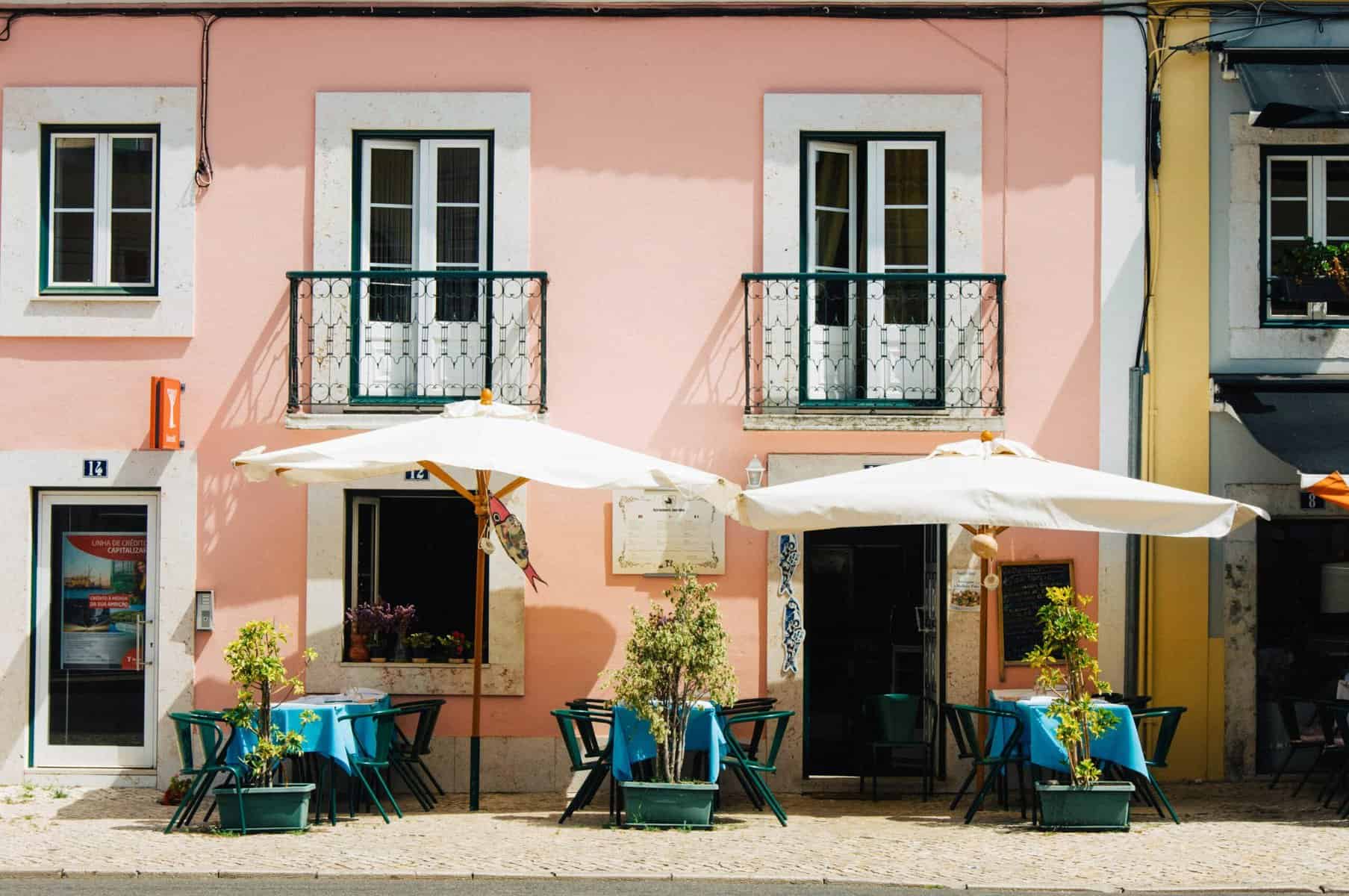
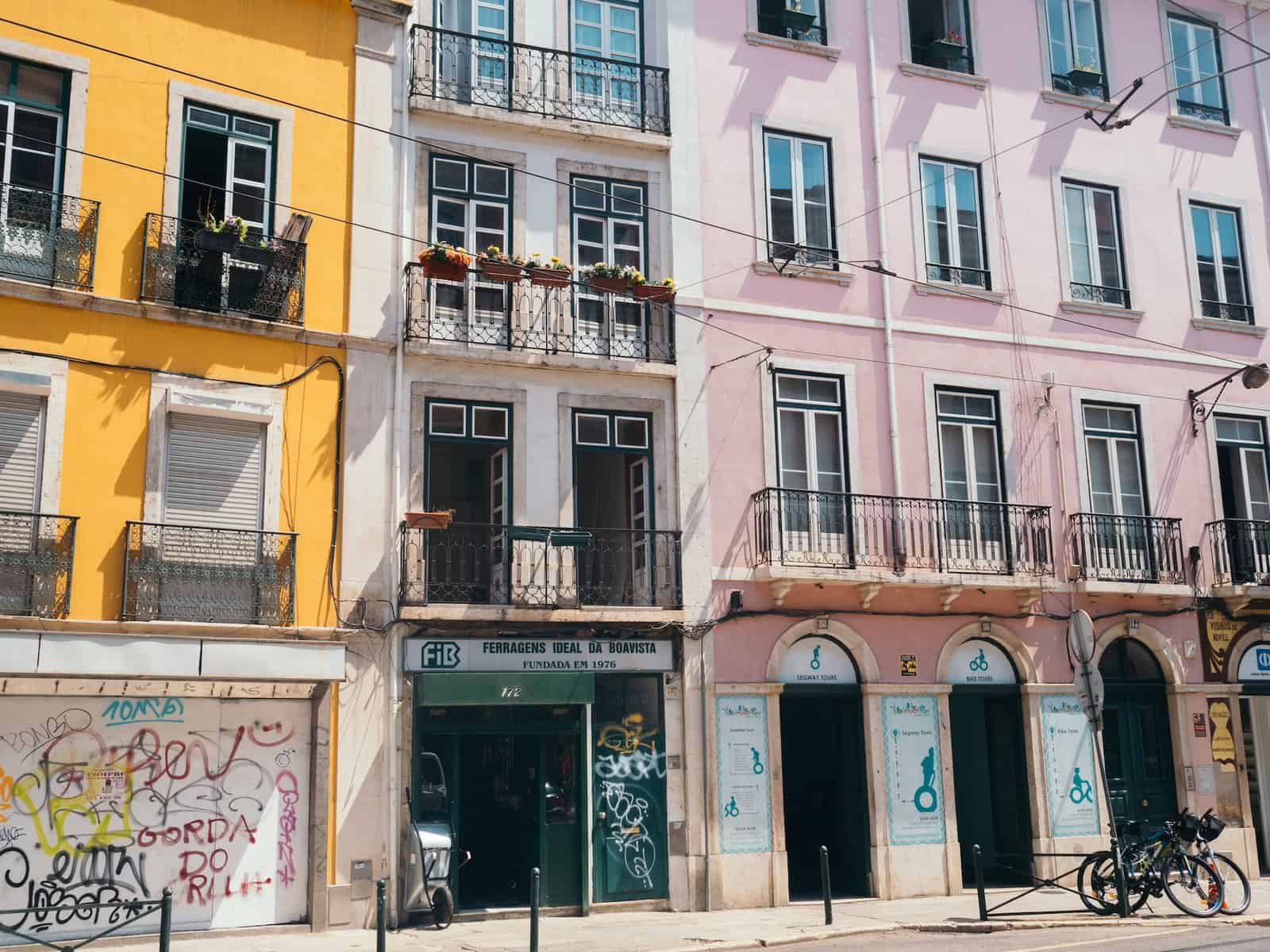
Bairro Alto is best known as Lisbon’s nightlife hub, but by day it offers a lovely walking route where you can get a real feel for the city’s lively center. The district sits on the hill west of the valley that holds central Baixa. It feels a bit like a satellite neighborhood to Lisbon’s main axis along Rua Augusta, and it connects to Baixa via the famous Santa Justa Lift. Bairro Alto’s main square is the elegant Praça Luís de Camões, framed by charming 17th- and 18th-century streets lined with shops, restaurants, and cafés. Many of the neighborhood’s buildings feature pastel-painted upper stories, while the lower walls are covered in equally colorful graffiti. Several major sights are found here, including the famous ruins of Convento do Carmo. Downhill from the neighborhood is the celebrated Time Out Market, one of the most enjoyable spots in Lisbon, especially around lunchtime.
Time needed for Bairro Alto
Give yourself a few hours for a walking route through Bairro Alto. It’s also worth coming back in the evening, especially on weekends, whether for a night out or simply to see the whole area buzzing with life.
Click here for a super cool tour of Bairro Alto…
Click here for Lisbon's complete accommodation guide…
5 must-see sights and things to do in Bairro Alto
-
- Eat at Time Out Market Lisboa | Time Out Market Lisboa
- The striking ruins of Convento do Carmo | Museu Arqueológico do Carmo
- Church of São Roque and its beautiful religious treasures | Igreja de São Roque
- Teatro Nacional de São Carlos – for opera or a classical concert | Teatro Nacional de São Carlos
- The cafés of Garrett Street and the poets’ statues along the street and at Praça Luís de Camões at its western end | Garrett
Click here to find a place to stay in Lisbon’s nightlife district, Bairro Alto…
Click here for a fado music performance in Praça Luís de Camões…
Discovering Bairro Alto: A Self-Guided Walk
Like most of Lisbon’s neighborhoods, Bairro Alto is best explored on a route that runs from top to bottom. The district stretches across the eastern side of a hill that borders central Baixa to the west. A funicular climbs the neighborhood’s streets, but it’s better to begin at Convento do Carmo, which is linked to Baixa by the famous Santa Justa Lift.
From the well-known convent, you can head slightly uphill to the beautiful Church of São Roque, then continue down toward lively Garrett Street. The street leads west to Praça Luís de Camões, the true heart of the neighborhood. Around the square, there are plenty more charming streets that are well worth wandering on foot. To finish, head down toward the waterfront, where the excellent food stalls of Time Out Market make a perfect lunch stop.
Click here for the comprehensive guide to Lisbon…
Click here for a guide to where to stay in Lisbon…
Interesting sights and attractions in Bairro Alto
Time Out Market Lisboa
Time Out Market is one of Lisbon’s coolest and most dynamic food hubs. The market was established next to the elegant Jardim Dom Luis and Cais do Sodré railway station, right along the city’s long waterfront. The site originally developed in the 1930s as the historic Mercado da Ribeira, the city’s main fruit and vegetable market. In 2014, the city decided to transform the outdated market buildings into an upscale food market.
A range of fast-casual dining spots opened here, showcasing plenty of local culinary flair alongside a wave of adventurous young chefs. The market has become one of Lisbon’s leading attractions and stays busy throughout the day. You’ll find all kinds of places to eat here, including quick-service spots, upscale restaurants, elegant bars, and more.
Address: Av. 24 de Julho 49
Museum of Contemporary Art of Chiado | (MNAC) Museu Nacional de Arte Contemporânea do Chiado
The National Museum of Contemporary Art moved to the Chiado neighborhood, just south of Bairro Alto, in 1994. The museum became an important part of a broader effort to revitalize the area near the waterfront, with large former warehouses converted to house the national collection of art from the late 19th century to the present.
The collection focuses mainly on Portuguese painters from the 19th and early 20th centuries, with a few works here and there by better-known artists, particularly from the French Barbizon school.
Address: R. Serpa Pinto 4
Click here for the museum’s current opening hours…
Teatro Nacional de São Carlos
Teatro Nacional de São Carlos is home to the national opera, the national ballet company, and the national symphony orchestra of Portugal. This elegant building was constructed in the 1790s after the old opera house was destroyed in the 1755 earthquake. Architecturally, it draws inspiration from renowned Italian institutions and feels like a blend of La Scala in Milan and the magnificent Teatro di San Carlo in Naples.
Address: R. Serpa Pinto 9
Click here to find a place to stay in Bairro Alto…
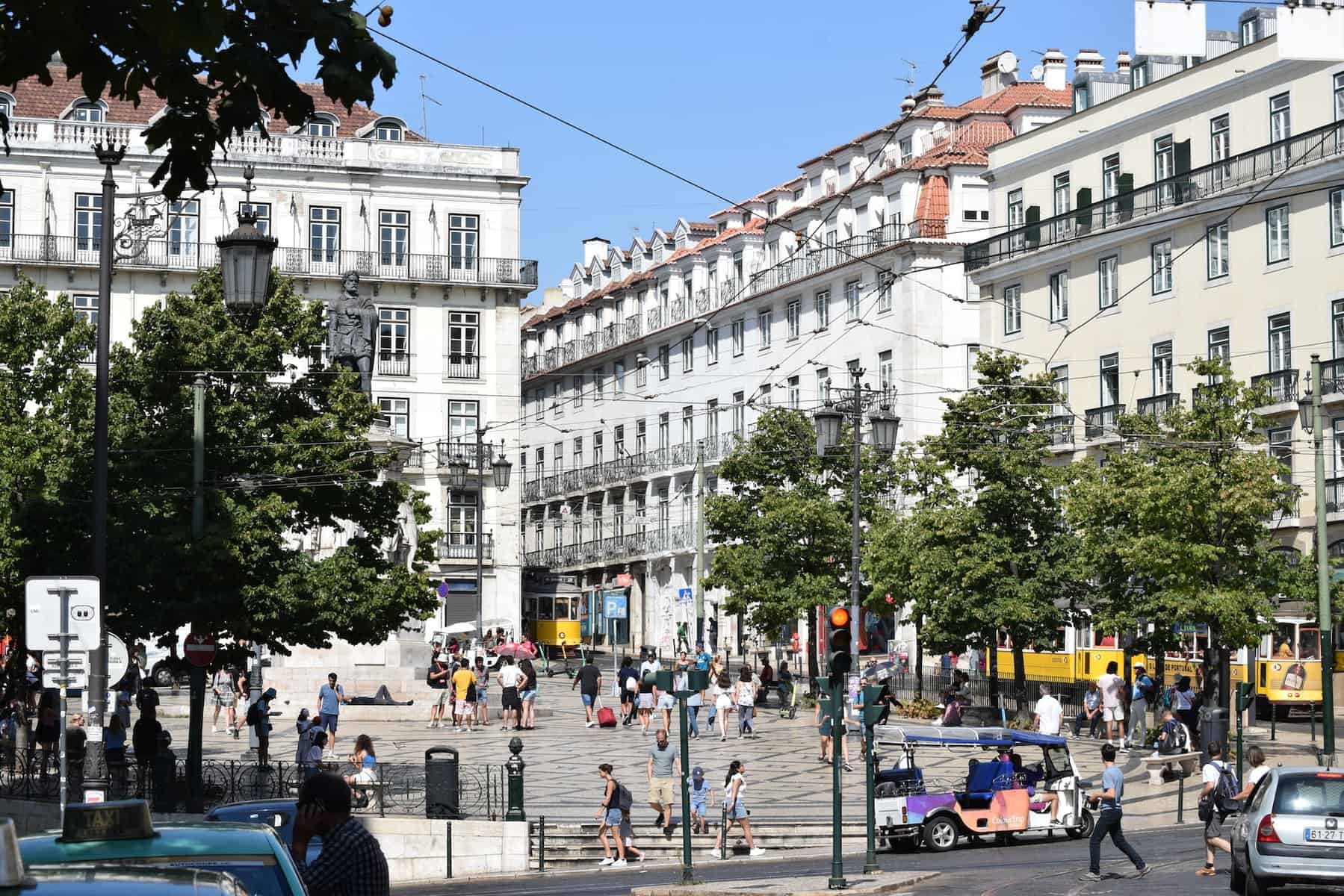
Praça Luís de Camões
This elegant oval square sits at the heart of Chiado, part of the broader Bairro Alto area. True to Lisbon and Portugal as a whole, the paving is decorated with beautiful mosaic patterns surrounding the statue of poet and writer Luís de Camões, widely regarded as Portugal’s greatest poet and active in the city during the 16th century.
On the eastern side of the square stands the lovely Church of the Italians, Igreja de Nossa Senhora do Loreto dos Italianos. It was built in the early 16th century as a place of worship for merchants arriving from Venice and Genoa. The church was nearly destroyed in the 1755 earthquake and rebuilt in 1785. Opposite it is the Baroque Igreja de Nossa Senhora da Encarnação.
Click here for a fado music performance in Praça Luís de Camões…
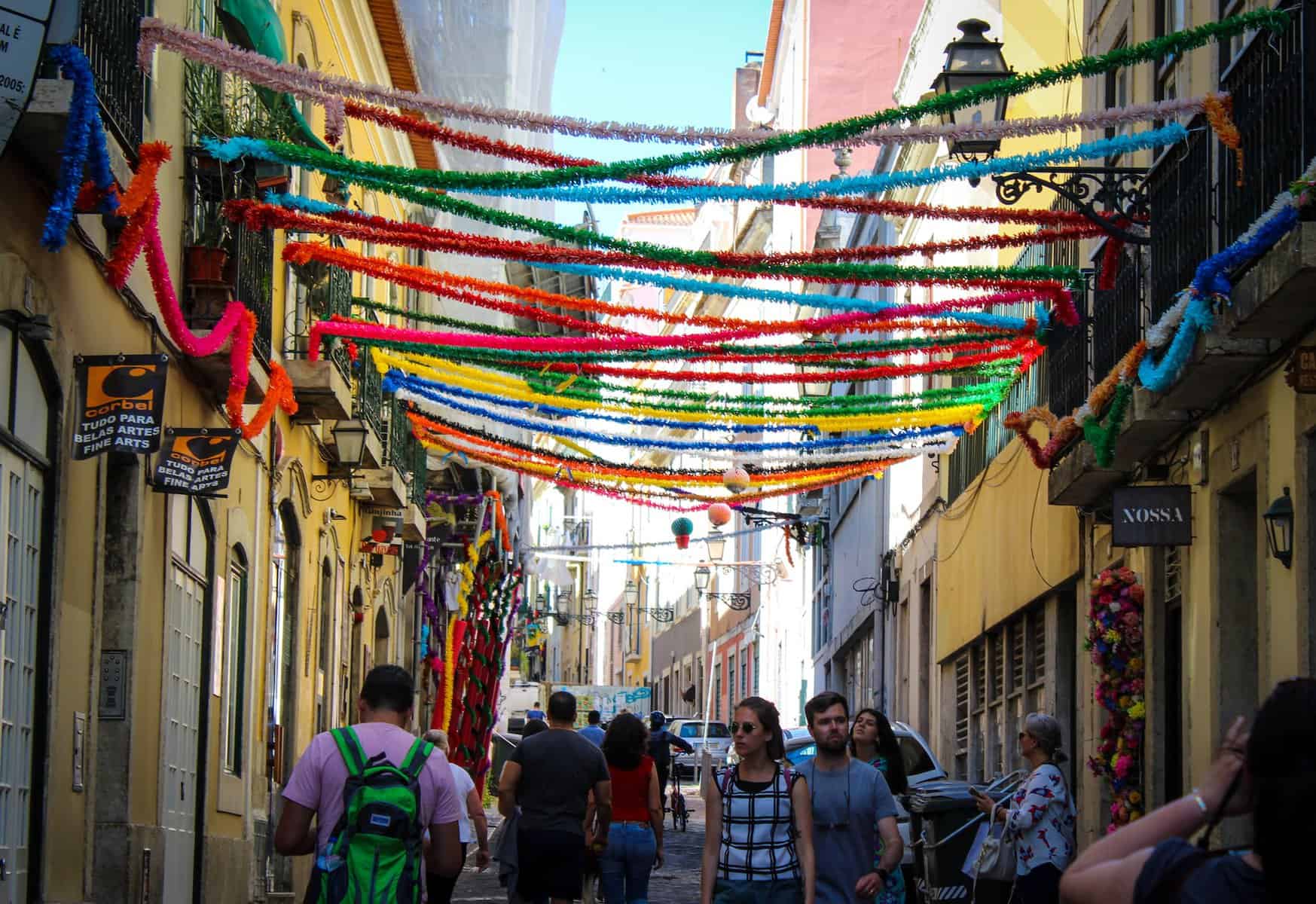
Garrett Street – known locally as Garçi | Garrett
Stretching east from Praça de Camões and the two churches is Garrett Street, one of the most elegant streets in central Lisbon.
Near the beginning of the street, as a modern echo of the Camões statue, stands a statue of Fernando Pessoa, considered the father of modern Portuguese culture. The distinctive bronze sculpture blends naturally into the rhythm of the street and its café terraces, depicting Pessoa seated, hat on, writing.
Nearby is another statue of a well-known local poet, António Ribeiro Chiado, who was active in the late 16th century. This impressive Baroque statue presents the poet in a notably dynamic pose.
The street itself is considered one of the main entertainment areas in the heart of Lisbon. Restaurants, bars, and cafés line its full length. Farther east, it continues toward the city’s central Baixa district. The eastern section also gives access to Convento do Carmo and to the upper entrance of the famous Santa Justa Lift (Elevador de Santa Justa), which descends to the streets of Baixa.
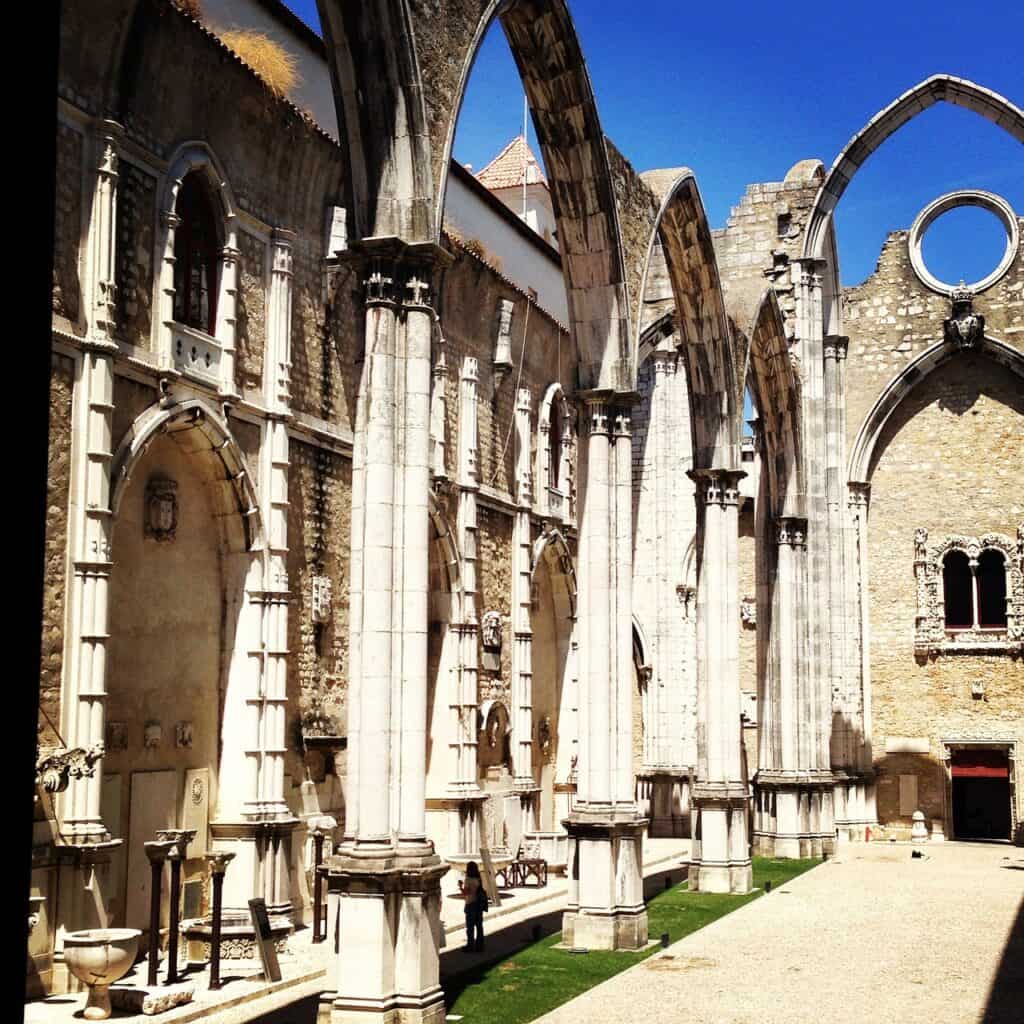
Archaeological Museum at Convento do Carmo | Museu Arqueológico do Carmo
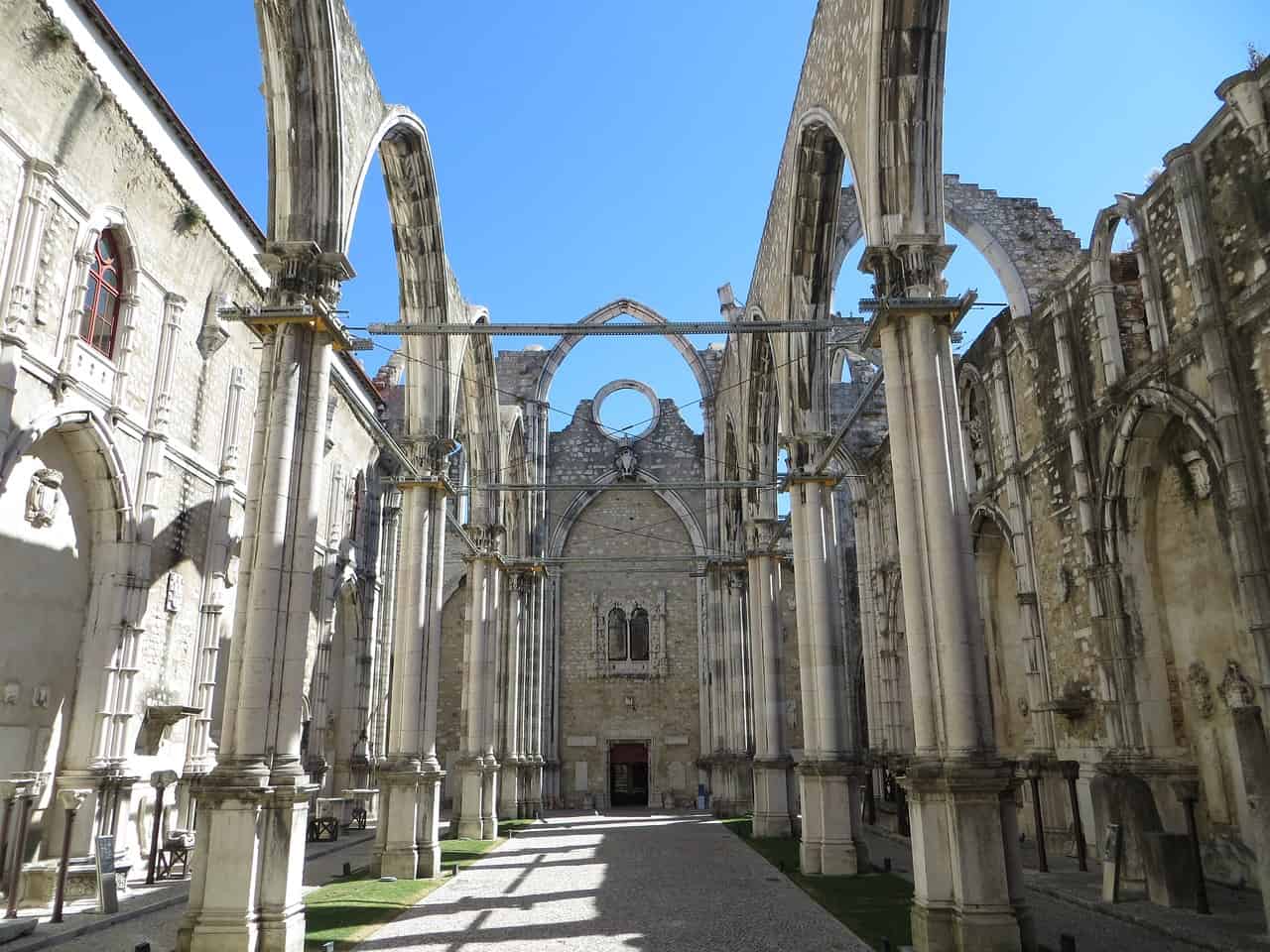
Convento do Carmo, the monastery of the Carmelite order, is one of Lisbon’s most impressive landmarks. Much of the complex was severely damaged in the 1755 earthquake, and it stands beside the upper station of the Santa Justa Lift.
The entrance is from the elegant Praça do Carmo on the western side. The roof of the monastery church collapsed in the earthquake, and today the central nave stands open to the sky. The striking space left behind, framed by massive Gothic walls and exposed pointed arches that remained standing after the collapse, is truly a unique sight.
A small archaeological museum now occupies the remaining monastery buildings, displaying finds mainly from the Roman and Phoenician periods in Portugal. The museum also includes artifacts from Mexico and Africa that reached Portugal during its conquests in past centuries.
Address: Largo do Carmo 27
Click here for the museum’s current opening hours…
Church of São Roque | Igreja de São Roque
Lisbon’s main Jesuit church stands above the Carmelite convent of Carmo. It rises on the western side of Rossio railway station, with Praça dos Restauradores on the opposite side in the central Baixa district.
This is one of the most beautiful churches still standing in Lisbon, largely because it suffered very little damage in the city-defining earthquake of 1755. Historically, it was one of the earliest churches built by the Jesuit order and was dedicated to Saint Roch. The Jesuits were expelled from Portugal in the 18th century, and today it functions as an active Catholic church.
Built in the mid-16th century in the Mannerist style, the façade is restrained and elegant, while the interior is far more dramatic, with strong Baroque decorative influences. A small museum inside lets visitors take a closer look at religious paintings, reliefs, and sacred objects associated with the church.
Address: Largo Trindade Coelho
Click here for the complete guide to Lisbon, the capital of Portugal…