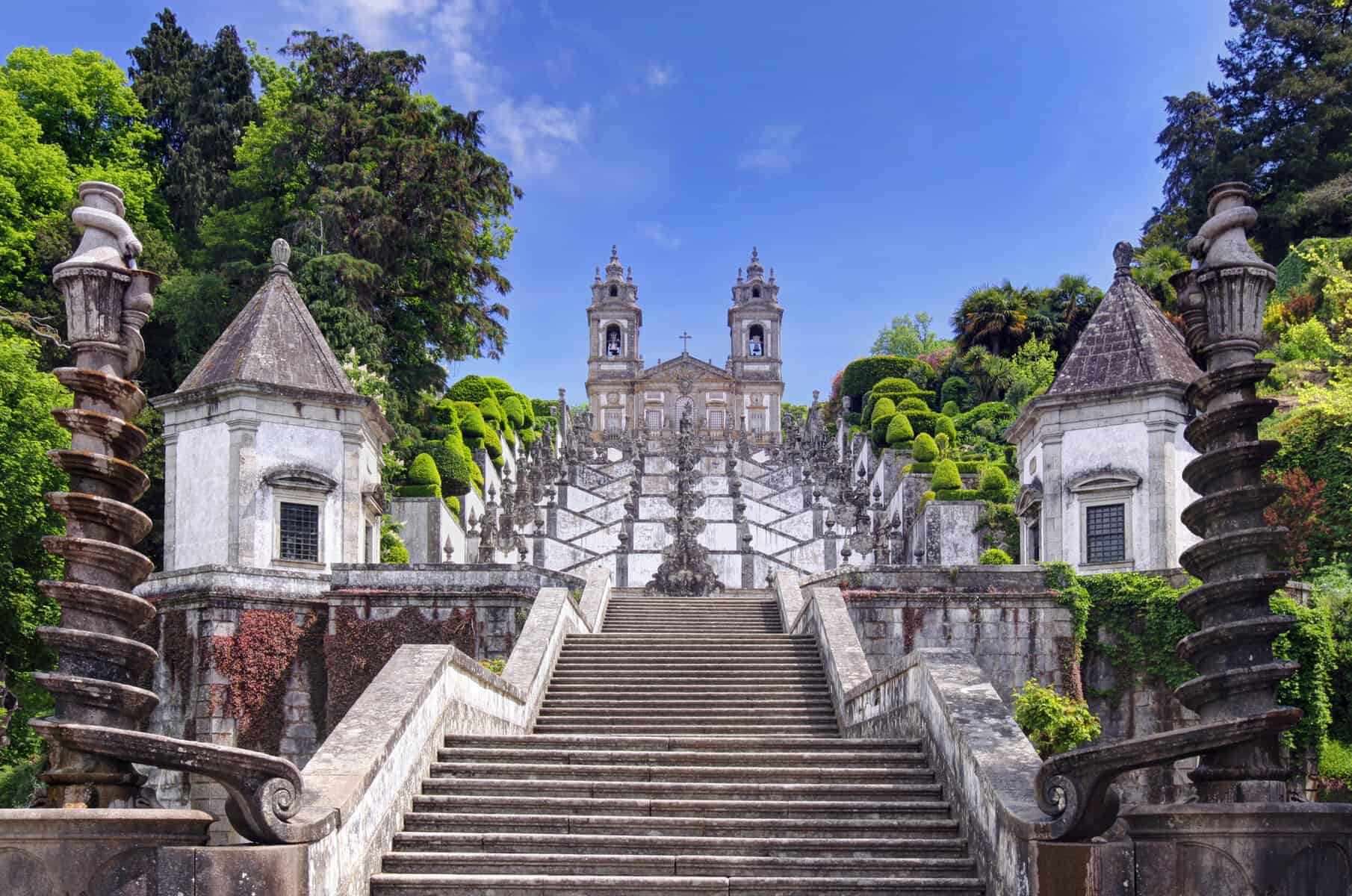
Peniche sits on Portugal’s central coast, a little over an hour north of Lisbon by car. It’s best known in the global surfing community as one of the top year-round surf destinations. The town itself offers a deeply authentic slice of Portugal, and arriving here can feel a bit like stepping back a few decades. For much of the year, as on much of Portugal’s coastline, the weather is gray and windswept, so summer is the easiest time to visit. Still, the calm atmosphere, unhurried pace, and striking coastal scenery make this special town worth visiting in any season, even if you’re not a serious surfer. Though Peniche is really a large fishing village at heart, its restaurants serve excellent fresh fish, including fish soup that feels just right in any season, not only in winter.
Just off the peninsula where Peniche was built lies a small archipelago called the Berlengas, one of the most isolated spots in Portugal, reached by ferry from town.
How much time should you spend in Peniche?
In Peniche, one full day is enough to see most of the main sights and points of interest. If you’re planning to sail out to the Berlengas Islands, it’s worth staying in town the night before so you can leave early in the morning. Peniche is relatively close to Obidos, so visiting both towns is a great option for a full-day trip from Lisbon as well. If you’re coming to surf, plan on spending at least a week in the area. The waves are almost always good, but some days are clearly better than others.
Click here to find a place to stay in Peniche…
7 must-see sights and things to do in Peniche
- Peniche Fortress with its dark history | Forte de Peniche
- Take a surf lesson at one of the town’s famous surf beaches | Supertubos / Baleal
- Cape Carvoeiro at the tip of the peninsula — watch the Atlantic waves crash powerfully against the cliffs | Cabo Carvoeiro
- The sandy spit leading to the Baleal neighborhood | Baleal
- Take a ferry to the remote Berlengas Islands (if you have enough time in Peniche) | Berlingas
- Eat at one of the town’s small fish restaurants and try one of the traditional fresh seafood dishes
- Stop in Óbidos on the way to or from Peniche, the walled medieval town (about a 25-minute drive) | Óbidos
Where to stay in Peniche?
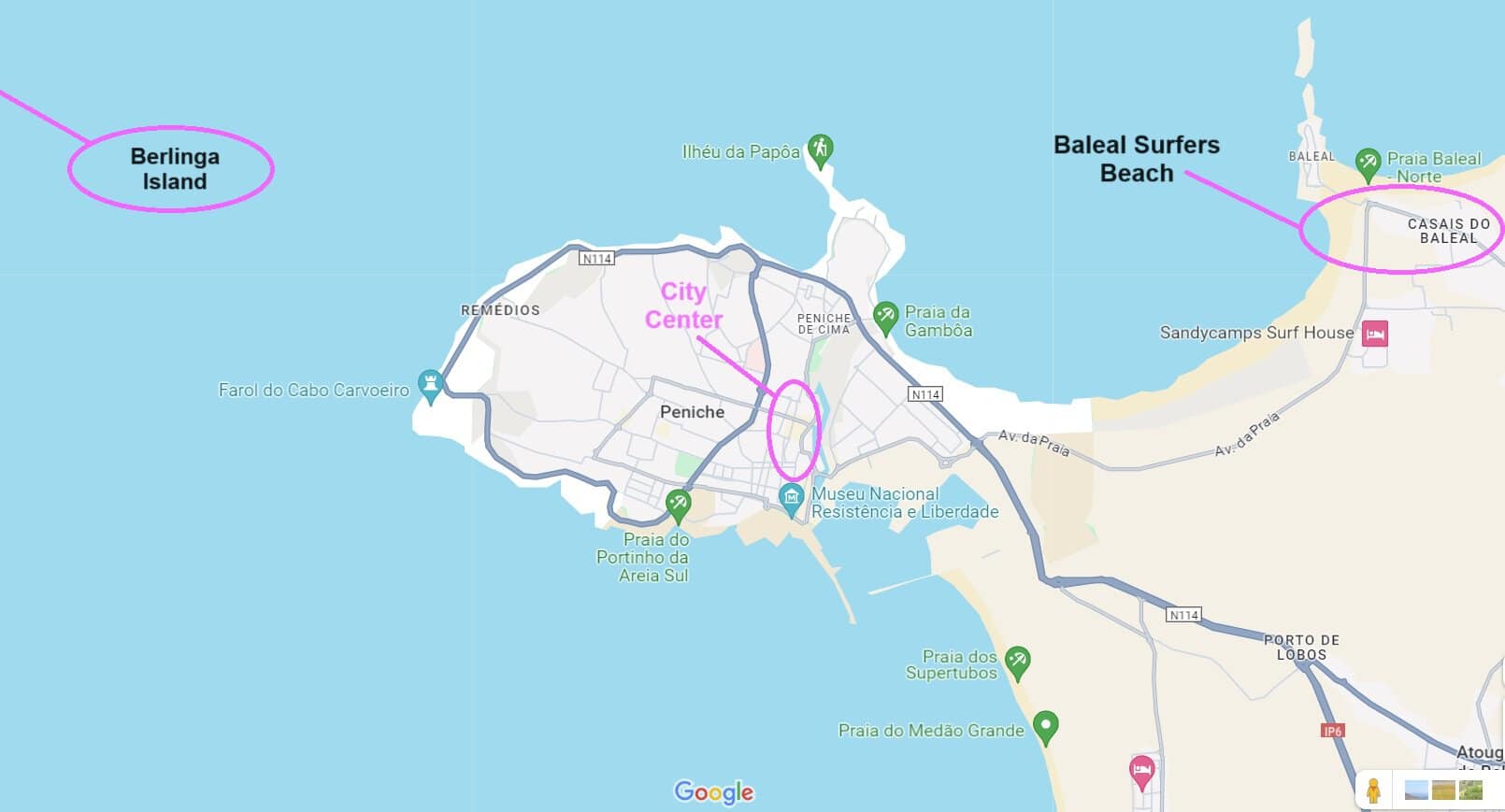
The most popular areas to stay in Peniche are the town center on the peninsula, Baleal Beach, and if you’re after something truly special, even Berlenga Island.
Peniche may be a small town, but it covers a fairly wide area, mainly because of its large and excellent surf beaches. That’s why it helps to understand which part of town suits you best before booking your stay.
In general, accommodations in Peniche are fairly affordable, which also makes it a good overnight stop on a road trip along Portugal’s western coast, for example between Lisbon and Porto.
The three areas we think are best to stay in, depending on your travel style, are:
- The town center on the peninsula — more specifically, the strip between the fortress in the south and the market in the north. This area works well if you’re staying one or two nights and want to catch the ferry to Berlengas in the morning while being within walking distance of most places.
- Baleal Beach | Baleal — across from the Baleal spit — ideal for surfers and for anyone staying more than a night or two. This is the younger, livelier part of town, set between two of Peniche’s stunning surf beaches.
- Berlenga Island | Berlinga — a once-in-a-lifetime experience — spending the night on an almost deserted island in the middle of a rough sea, yet still close to the mainland (10 kilometers from Peniche). There aren’t many places to stay on the island, but if you want to check off a truly unforgettable experience, it’s well worth a look.
Click here to find the right place to stay in Peniche…
Map of the best areas to stay in Peniche
How to get to Peniche?
Flights to Peniche
The international airport serving Peniche is Lisbon Airport, a little over an hour’s drive from this surf town.
Getting to Peniche by rental car
As with most towns along Portugal’s coast, the easiest and most convenient way to reach Peniche is by rental car. The drive is relatively short — about an hour from Lisbon and roughly two and a half hours from Porto. Peniche is often the first stop on a road trip heading north from Lisbon to other coastal towns, especially Nazaré.
Click here for 15 interesting stopes between Lisbon and Porto…
Public transportation to Peniche
The best way to reach Peniche by public transportation is by bus.
Buses leave from Lisboa Oriente in Lisbon and travel directly to Peniche several times a day. Most continue north afterward to Figueira da Foz.
Peniche’s bus station is on the sandy strip connecting the mainland to the peninsula where the old town sits, so it’s actually closer to Praia de Peniche de Cima than to the historic center.
Click here for a boat trip from Peniche to Berlenga Island…
About Peniche
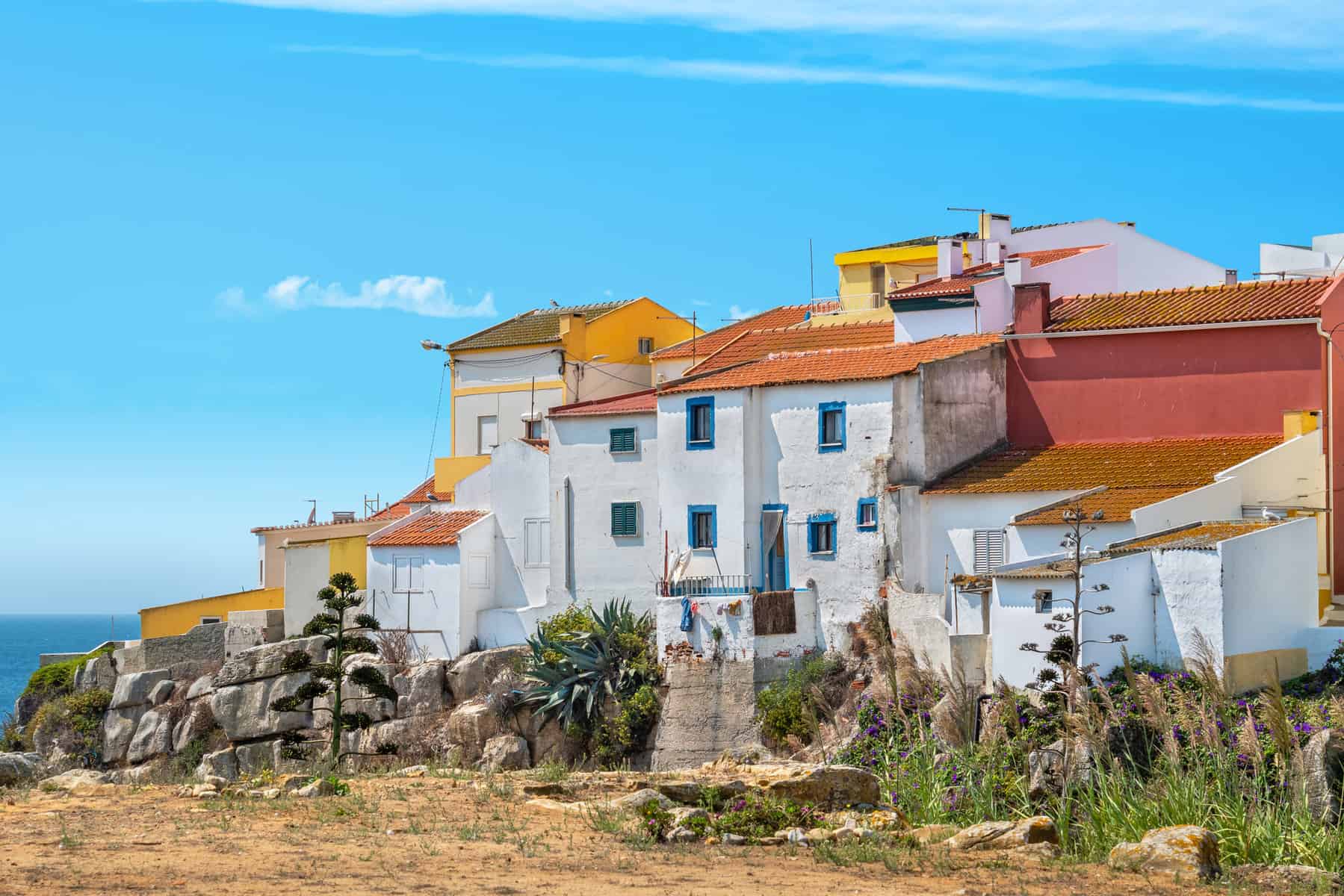
Peniche is a waterfront town in central Portugal, just over an hour from Lisbon, and it’s known as one of the best surf spots in Portugal. Geographically, this small town of around 15,000 residents has a distinctive and unusual layout. Peniche sits on a rocky peninsula raised above sea level. A few kilometers offshore lie the Berlengas Islands, which over the centuries served as an outer defensive stronghold and today form a rocky nature reserve surrounded by the wild Atlantic.
The weather in Peniche is similar to that of other small Portuguese coastal towns, with rainy but not especially cold winters and sunny summers that rarely get too hot. That said, Peniche is almost always windy. Surfers love it, but for travelers it can be less pleasant, so it’s worth planning your clothing and time outdoors accordingly.
Food in Peniche revolves around fish dishes, and the town has many authentic restaurants with good prices. There are also several lodging options, especially along the northern and southern beaches, where many places cater to surfers and their lifestyle.
A non-surfing trip to Peniche offers a feel for life beside the rough Atlantic, in a setting that still feels somewhat isolated from Portugal’s larger cities. On top of that, the natural scenery — especially the cliffs with waves crashing against them — is captivating to any traveler not used to living beside an ocean that can, at times, feel especially wild and powerful.
The walled town of Óbidos, an open-air museum of the Middle Ages, is about a 25-minute drive from Peniche. It’s absolutely worth stopping there on the way to or from your trip to Peniche. If you came to surf and the waves aren’t good one day, Óbidos makes an excellent day trip from Peniche.
Click here to search for accommodations in Peniche…
Click here for a great surf lesson on Peniche’s beaches…
Attractions and interesting sights in Peniche
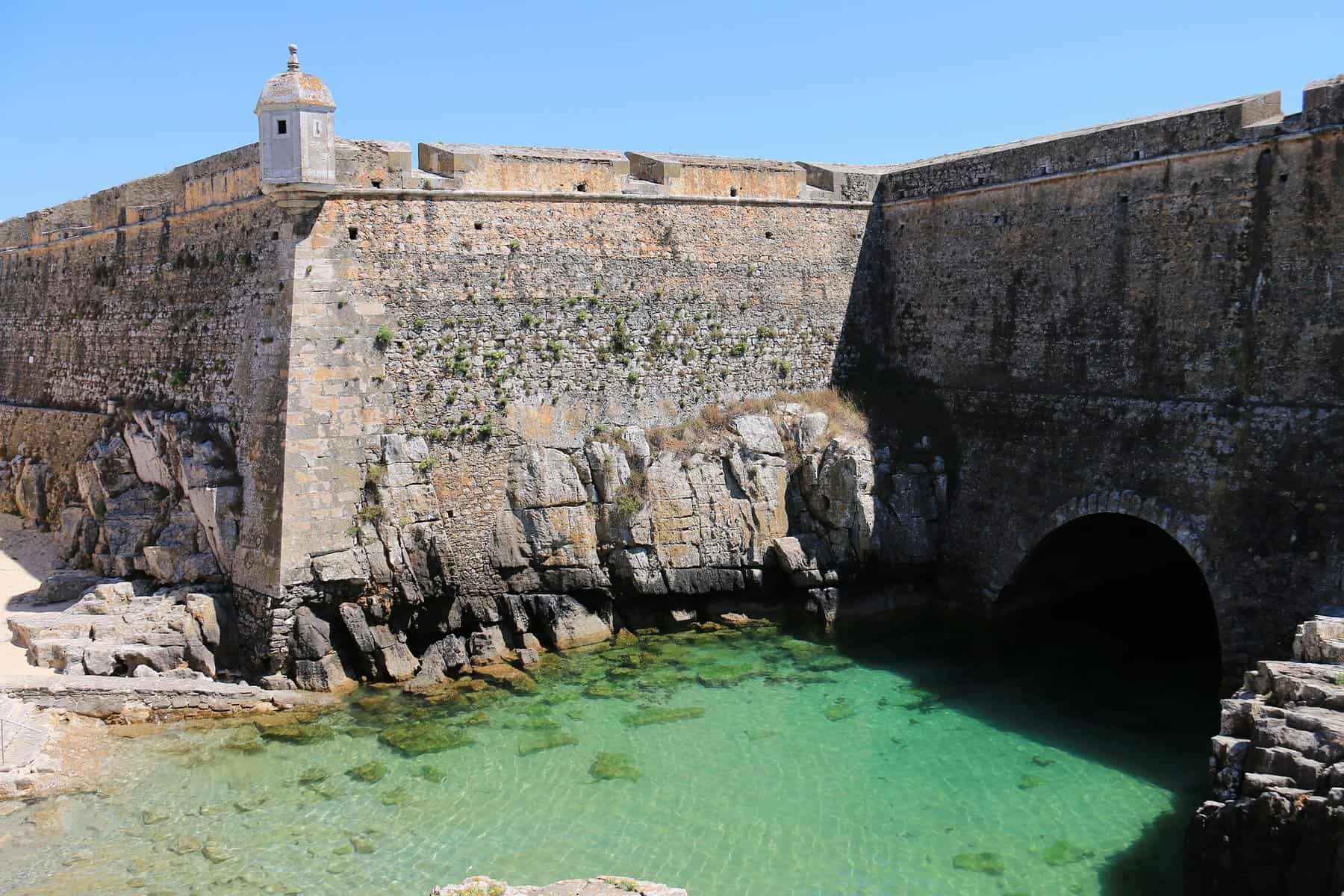
Peniche Fortress | Forte de Peniche
The citadel at the southern end of the peninsula was part of a defensive system that also included a wall and the fortress on the Berlengas Islands, all built in the 16th century. They were intended to protect the coast mainly from English forces, as well as pirates who took advantage of any vulnerability along Portugal’s long shoreline to raid and plunder.
In the 20th century, the fortress became a prison used by Salazar’s authoritarian regime. It became especially famous in 1960, when Portuguese communist leader Álvaro Cunhal | Alvaro Cunhal managed to escape from it.
Today, the citadel houses a museum — the Museum of Freedom | Museu Nacional Resistência e Liberdade, which tells the story of the struggle for freedom during Portugal’s dictatorship and includes the prison cells where political prisoners were held.
Admission is free
Click here for more information and opening hours for the fortress…
Peniche Marina Lighthouse | Farol de Peniche
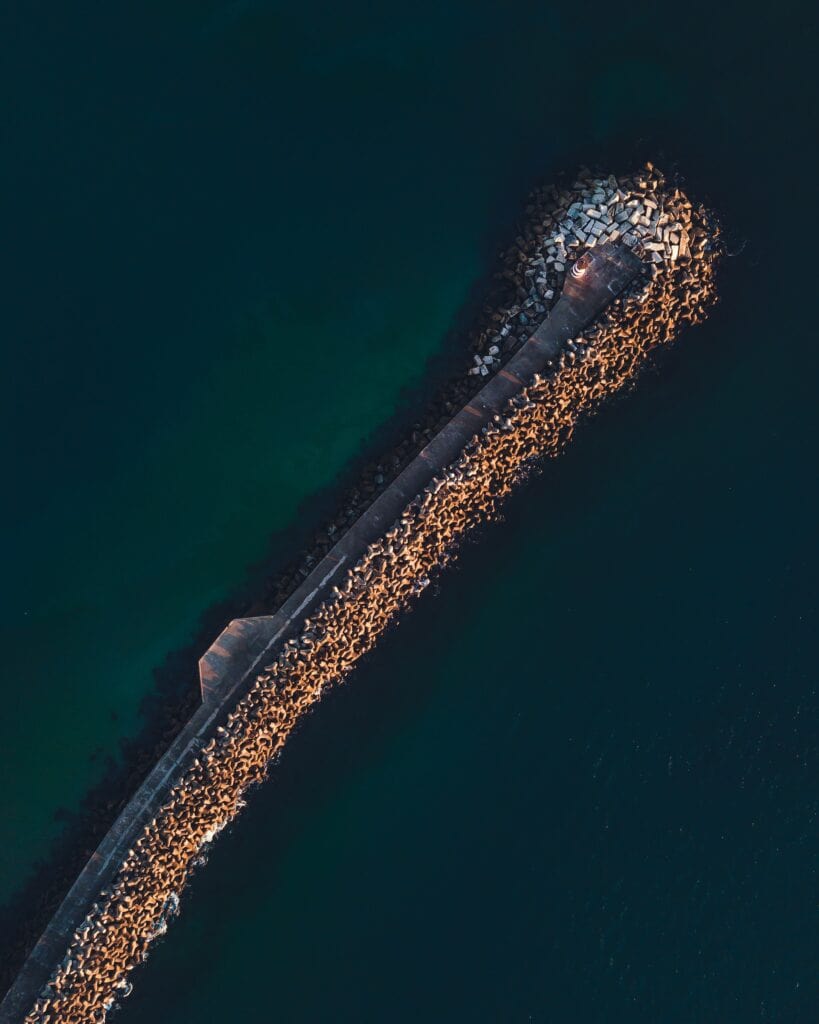
Peniche’s lighthouse stands at the end of the marina breakwater. It’s neither especially tall nor as striking as some of the other lighthouses along Portugal’s coast. What makes it interesting, though, is that you can walk the entire length of the breakwater all the way to the lighthouse. The entrance to the path along the breakwater is just outside the fortress, heading toward the marina.
It’s a lovely experience before or after a visit to the fortress, or simply around sunset. As usual on this stretch of Portugal’s coast, be ready for strong winds.
Click here for a great surf lesson on Peniche’s beaches…
Papôa Peninsula | Ilhéu da Papôa
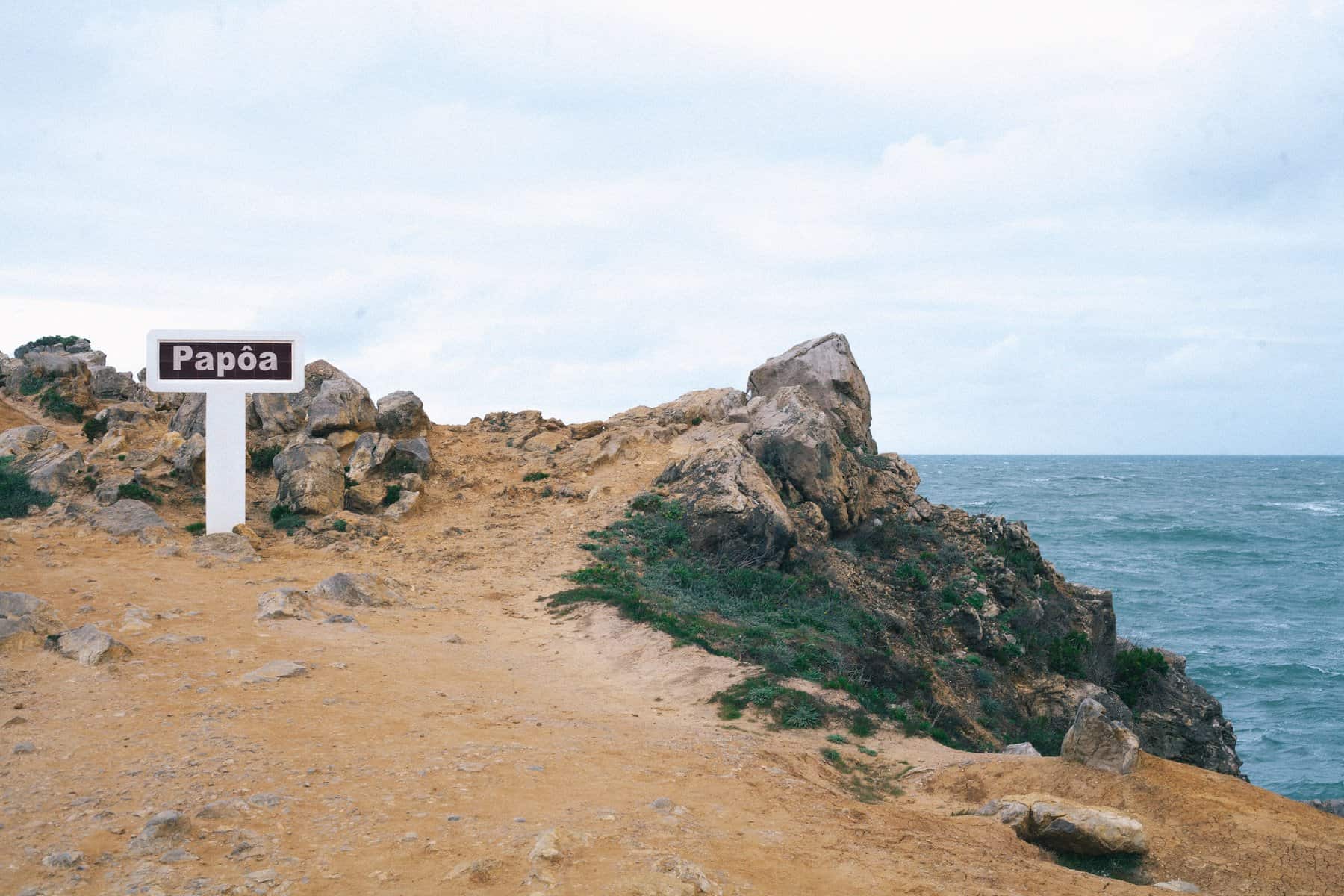
The narrow tongue of land extending from Peniche’s northern tip, at the start of the peninsula, is called Papôa. It forms the western edge of the horseshoe-shaped Baleal surf beach.
As elsewhere in Peniche, Papôa offers unmarked trails across the rocks above the sea, leading to cliffs that plunge straight into the water. At the far end, you’ll almost always find fishermen unfazed by the strong winds, casting their lines each day into the deep waters where the larger fish swim.
The end of the spit also opens up wonderful views east toward Baleal Beach and west toward the cliffs, beaches, and the open ocean on all sides.
The small beach tucked between the cliffs at the start of the Papôa spit is called Portinho Beach | Praia do Portinho da Areia do Norte, and it’s one of Peniche’s hidden little gems.
Church of São Pedro | Igreja de São Pedro
This church, built in the familiar Portuguese style, is the largest and most impressive of all the churches in town. It stands uphill, about 100 meters from Peniche Fortress, facing a square with broad, gently rising steps.
It was built in the 16th century, though most of the paintings and interior decorations were added in the late 17th century in a distinctly Baroque style. Its gilded altar, topped by a colorful painted ceiling, is the church’s true highlight, and what makes it especially impressive in such a small and relatively overlooked town.
Peniche Municipal Market | Mercado Municipal de Peniche
Located north of the heart of the old town, this is a very local market that mainly serves residents. If you enjoy markets, it’s worth a stop, especially in the morning hours, since it’s usually open until 2:00 PM. The streets around the market are also commercial, with restaurants and shops, though the selection is limited — Peniche is still a small town, after all.
Food in Peniche
As you’d expect in a traditional fishing town, Peniche is all about fish dishes. The specialties the town is known for include fish soup — bouillabaisse | Bouillabaisse, also called caldeirada | Caldeirada, seafood rice | Arroz de Marisco, and grilled sardines.
For dessert, look for almond pastries, especially ‘Amigo de Peniche’ | Amigo de Peniche or a dry almond cookie called Esses | Esses.
Cape Carvoeiro and the lighthouse | Cabo Carvoeiro
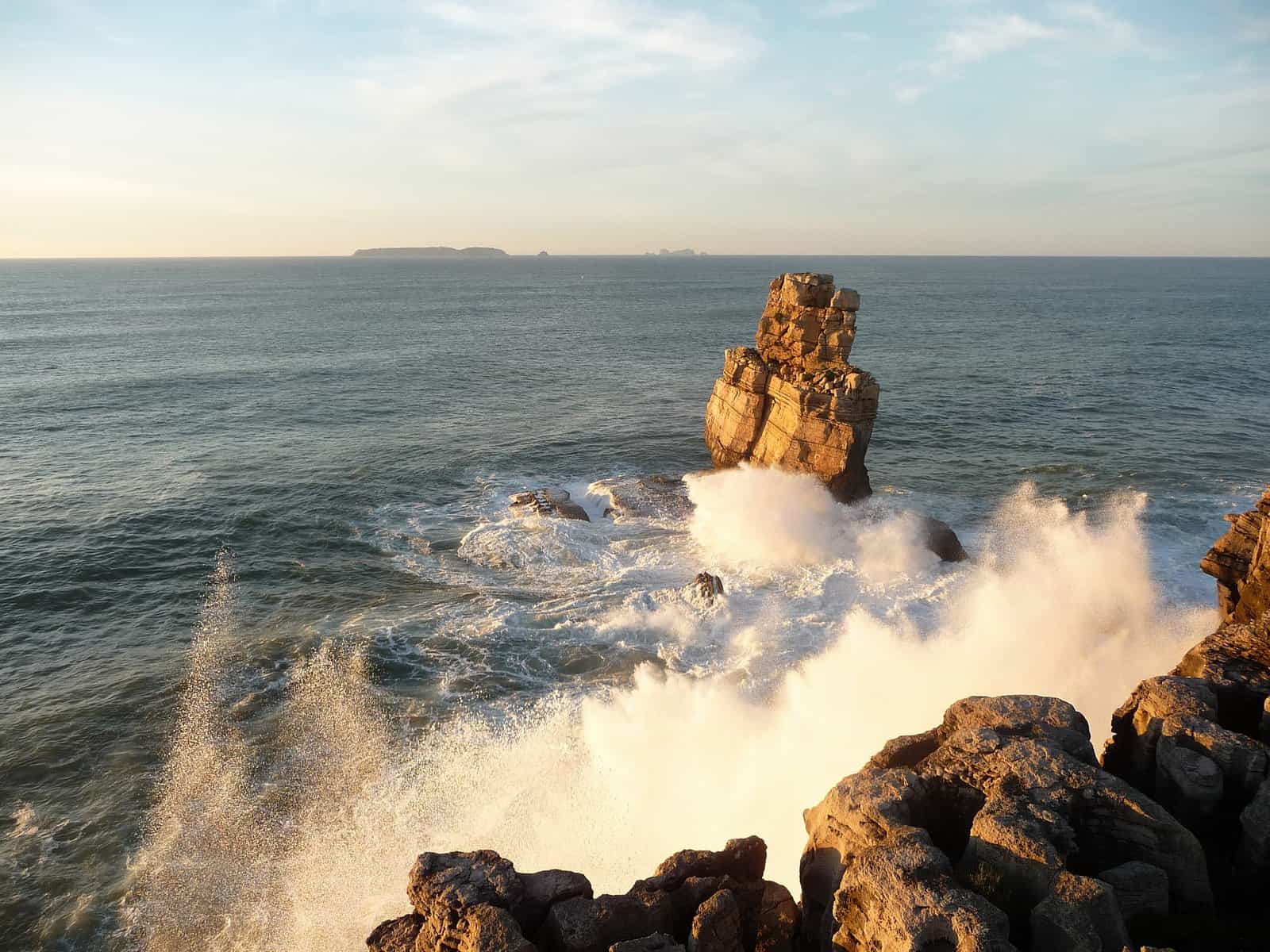
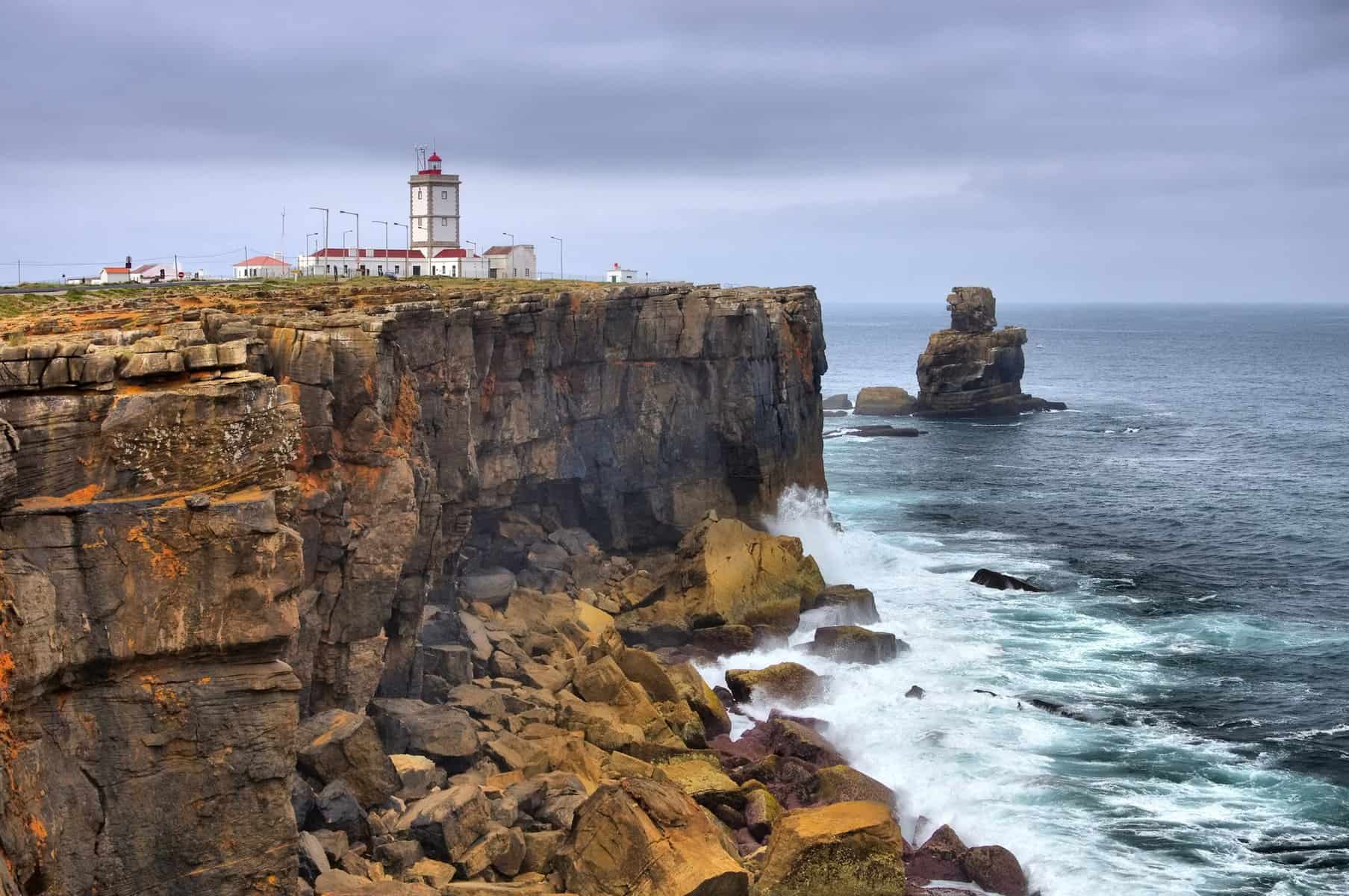
The westernmost tip of the Peniche peninsula offers sweeping views of the usually rough ocean, and especially of the famous rock formation jutting out of the water offshore. That cliff, along with the broken rocks lining the coast and the waves crashing against them, creates a dramatic and thrilling scene.
The lighthouse standing firmly above the cliffs, facing the fierce winds of Cape Carvoeiro, has a special charm, and lighthouse lovers won’t want to miss a photo here.
To reach Cape Carvoeiro, follow the road that circles almost the entire peninsula. The lighthouse sits roughly halfway along this scenic loop, which is about 8 kilometers long. Along the way, there are several places where you can pull over for viewpoints, so don’t wait until you reach the cape itself.
As you head farther west, the landscape becomes more isolated, with fewer houses and more open scenery. Cape Carvoeiro is the highlight in terms of views and lookout points, but the rest of the drive — especially the northern section — also offers some dramatic and memorable vistas.
From the town center, head roughly past the market (Mercado Municipal de Peniche) and connect to the ring road from the north. If you’re arriving from outside the center, simply continue west instead of turning south into town, then stay on the ring road until it loops back into the heart of Peniche.
Remédios Church | Santuario de Nossa Senhora dos Remédios
This church stands on the western edge of the peninsula, above the cliffs exposed to the rough sea, just before you reach the lighthouse and Cape Carvoeiro. It was built in the mid-17th century over a cave where, according to tradition, the Virgin appeared, and the site became sacred from then on.
Its distance from town, set against the rough sea and powerful winds, only deepened its mythic aura and drew monks who came here to worship God in solitude. From the outside it’s very modest, but the views from the two lookout points beside it capture the force of the Atlantic, which has been breaking against Peniche’s rocks for thousands of years.
The most remarkable feature inside the church is its azulejos (painted ceramic tiles), which are relatively old here. The azulejos covering the church walls depict the life of the Virgin Mary. Most were painted by the renowned 17th-century Portuguese ceramic artist António de Oliveira Bernardes.
Bobbin lace | Renda de Bilros
As in other fishing villages in Portugal, a tradition of bobbin lace-making developed in Peniche while the local men were away at sea fishing. The tradition is still alive, and you can buy handmade lace in local shops. There is also a small lace museum in Peniche.
The small lace museum (Museu da Renda de Bilros de Peniche) is located opposite the Church of São Pedro, just a little north of the fortress.
Another monument tied to Peniche’s bobbin lace tradition is the Monument to the Lace Maker | Monumento à Rendilheira de Peniche. It stands in the lovely square beside Jardim do Baluarte, also north of the fortress and about a two-minute walk from the lace museum.
On the other side of the square, near the tourist information center, there’s a kind of lace-making workshop opened by the municipality as a gathering place for local women. During the day, you can stop by the small center | Escola de Rendas de Bilros to watch the town’s traditional lace-making craft and hear the women chatting with one another in Portuguese, in a strong local accent.
Click here to search for accommodations in Peniche…
Church of Misericórdia | Igreja da Santa Casa da Misericórdia
Right beside the square with the lace-maker statue and near the old town walls, you’ll find this small and unusual church.
The walls and ceiling of this 17th-century church are entirely covered in especially vivid paintings. Some of them are by the famous Portuguese Baroque painter Josefa de Óbidos.
The walls are lined with colorful azulejos, while the ceiling features scenes from the life of Jesus arranged in neat panels that follow the curve of the roof. Everything is done in the emotional, ornate Baroque style.
Baleal spit
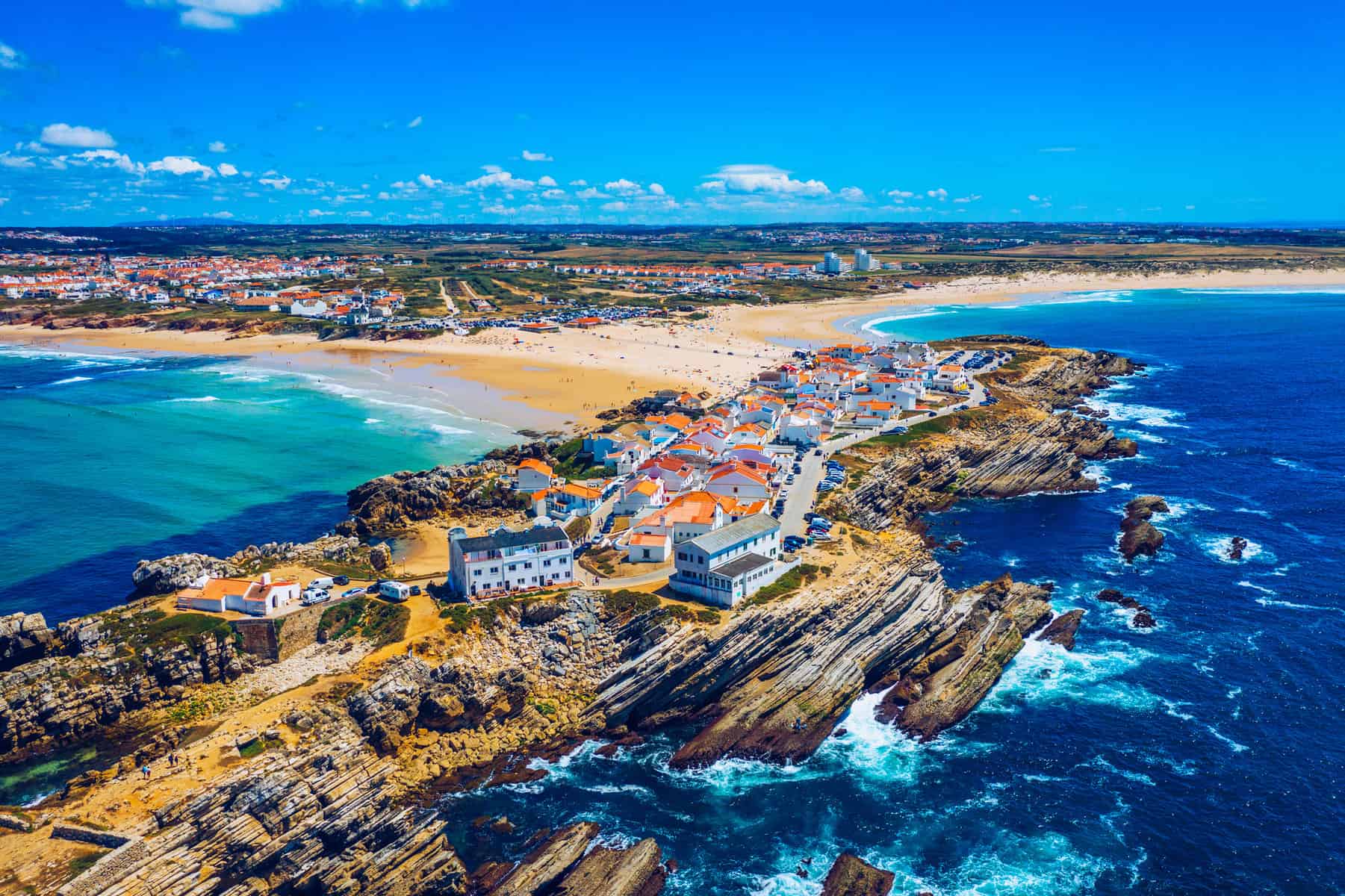
This narrow spit closes off Baleal Bay, whose opposite end is framed by the Papôa Peninsula. Between Baleal’s large horseshoe-shaped beach and the spit itself, a wide sandy formation has built up, separating the mainland from the rocky spit. This sandy formation is one of the most distinctive sights in Peniche — especially the road that runs across it.
A road was laid directly over the sand between the neighborhood on the spit and the mainland. As you drive across it, there are beaches on both sides, each facing the water from a different direction. Many people also choose to walk along the sidewalk beside the road and begin their stroll along the spit from there.
The village of Baleal on the spit itself is charming, with white houses and paved walkways. It’s worth wandering in on foot and at least walking as far as the chapel, with sea views all around along the way. It’s one of the loveliest walks in and around Peniche, and very much worth experiencing.
Beyond the chapel, unmarked trails begin across the rocks, offering a completely natural meeting point of land and sea. If you continue onto the rocks, the walk becomes a bit more challenging, and it’s important to remember that strong winds are common here, so come prepared.
Surfing in Peniche
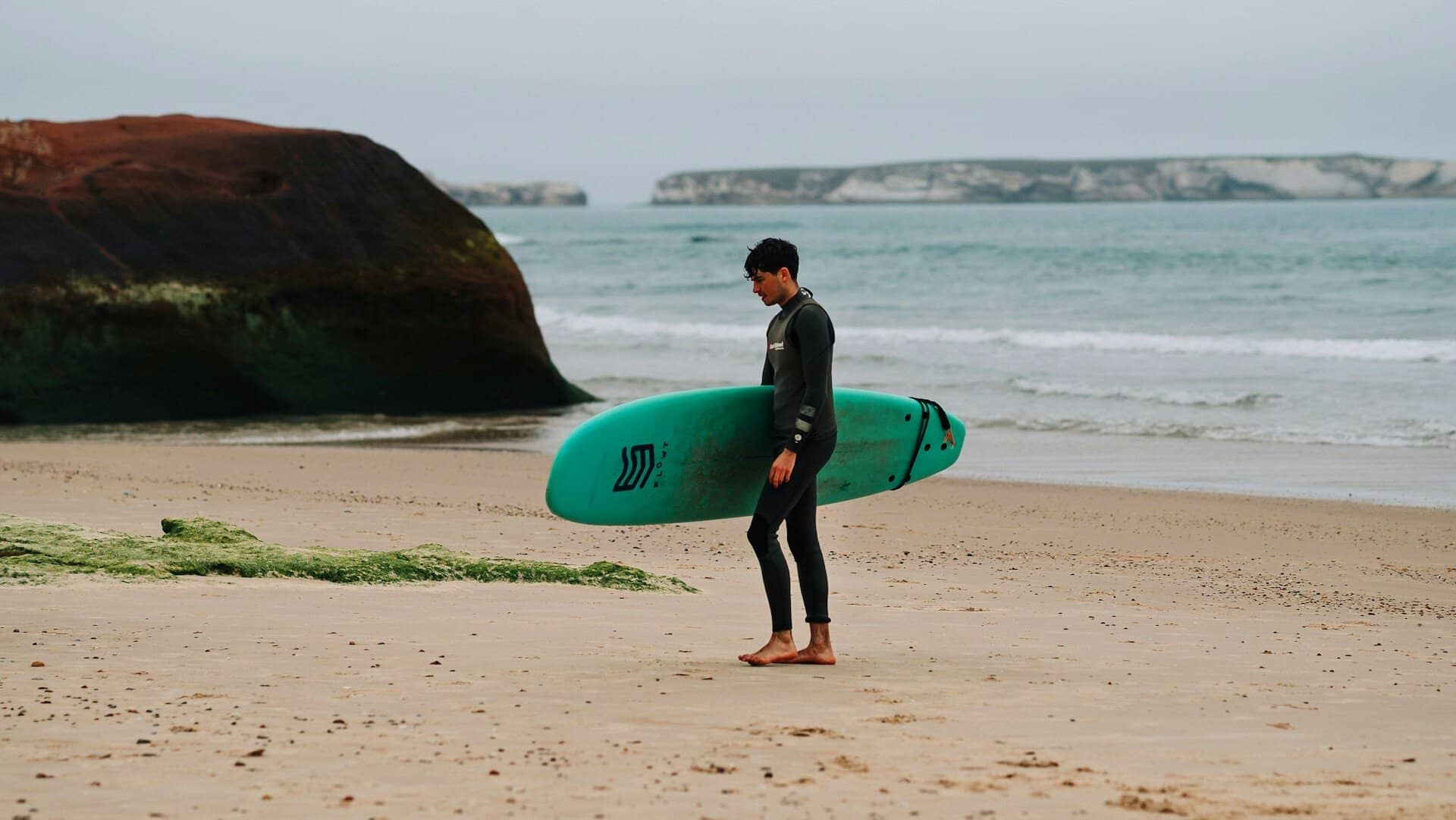
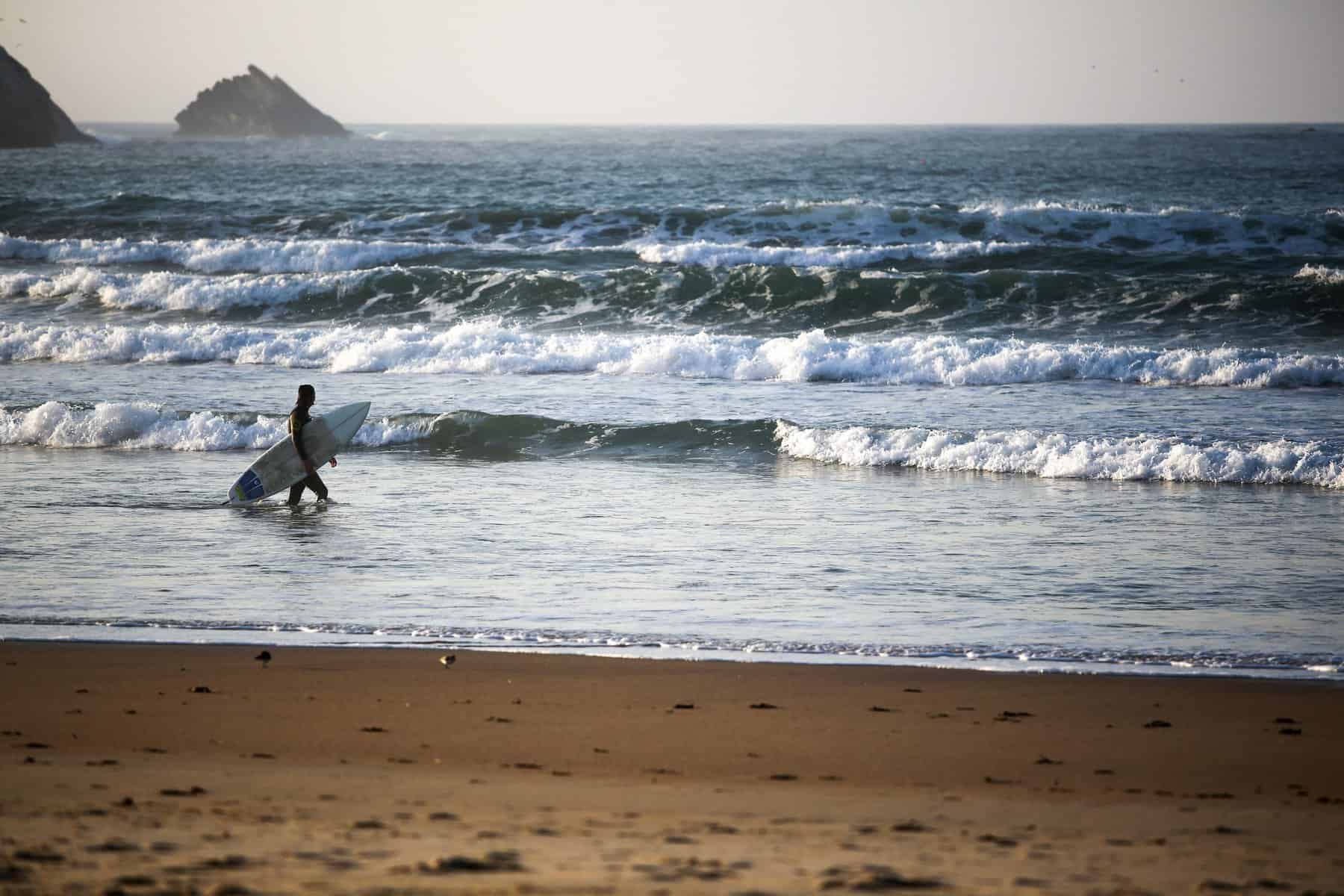
The whole area north and south of Peniche is suitable for surfing. That said, the beaches closest to the Peniche peninsula — Baleal to the north and Supertubos to the south — are the best, since the town itself provides the support surfers need, with plenty of accommodations, restaurants, gear, and easy access.
Surfing seasons in Peniche generally break down like this: from May through September, conditions suit everyone. October and November are the best months for surfers, since the water still isn’t too cold but the bigger Atlantic winter swells have already started to arrive. From December through the end of April, only truly experienced surfers can surf here — and even they usually choose not to in winter — because the waves are powerful and the water is cold.
Click here for an amazing surf lesson in Peniche…
Consolação Beach – Supertubos | Praia da Consolação – Supertubos
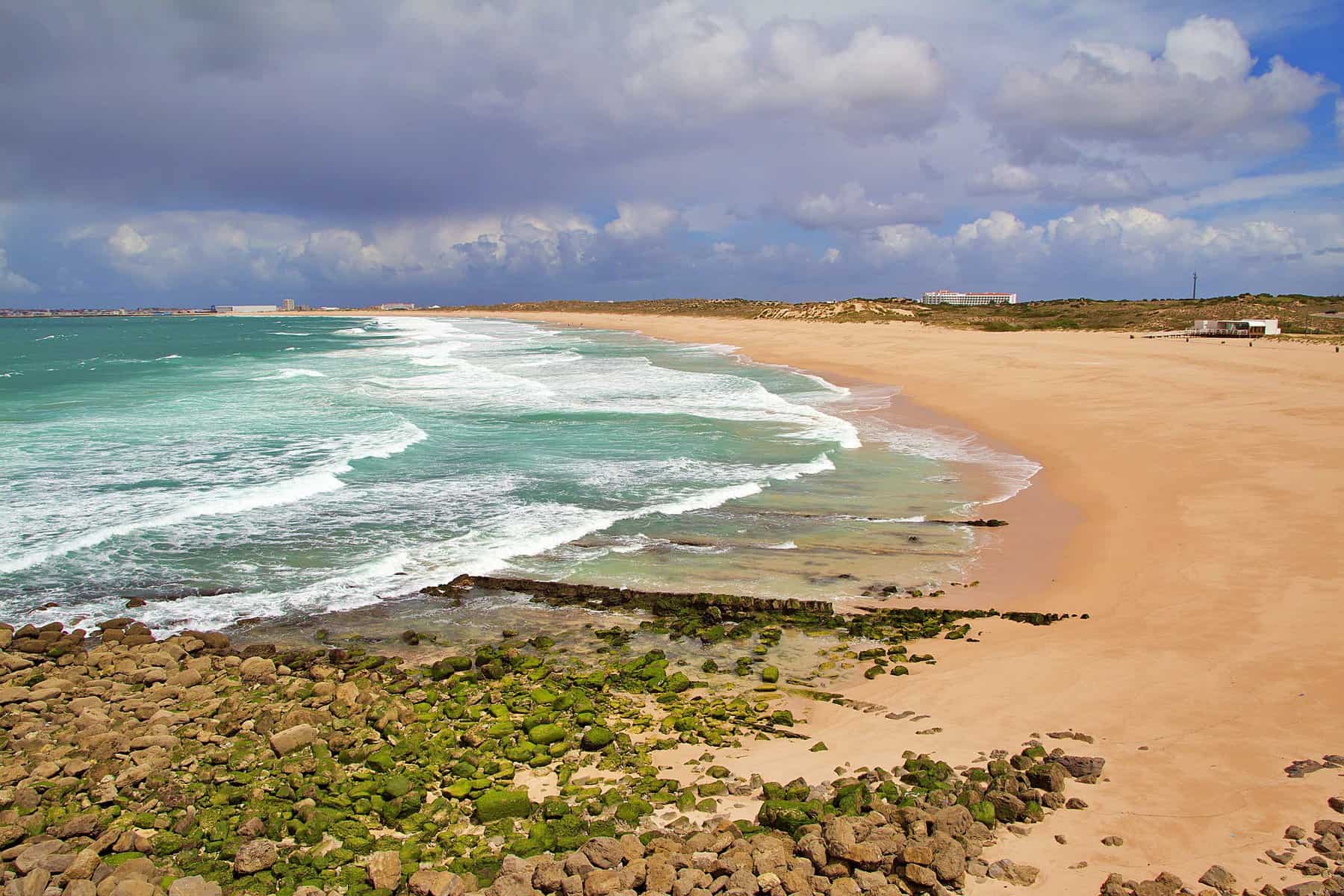
South of the peninsula lies Peniche’s most popular surf beach, and possibly the best surfing beach in all of Europe!
Surfers from all over the world come here year-round to this two-kilometer stretch of sandy beach. Every October, it also hosts the World Surf League event (MEO Rip Curl Pro Portugal). As the best-known beach in the area, it’s well equipped with services and facilities for surfers.
Although it’s usually not ideal for complete beginners, there are still plenty of opportunities here to learn how to surf.
Beaches of Baleal Bay | Praia Baleal
The entire stretch of coast north of the Peniche peninsula along Baleal Bay is lined with surf spots. This horseshoe-shaped bay runs for about four kilometers of white sand and is also very pleasant for anyone not coming to surf. This is usually the easier beach for beginners to surf.
At the start of the beach, closer to Peniche town (Praia Cima, Praia Gambôa), there are many surf schools as well as other facilities for surfers. The middle section is much more natural, while the far end near the Baleal spit has many guesthouses that are especially popular with surfers staying in the Peniche area.
Click here to find a place to stay in Peniche…
Beaches in the towns to the south | Praia da Area Branca, Praia de Santa Rita
Areia Branca Beach is about 20 minutes south of Peniche and suits beginner to intermediate surfers. It’s often chosen by surfers looking to escape the crowds at the better-known surf beaches during the busy season.
Santa Rita Beach is about a 40-minute drive south of Peniche. Beyond being naturally beautiful, with rocks breaking into the sea, it offers both right and left beach breaks thanks to those same rock formations, which act as a kind of natural breakwater. The beach is suitable for all surfing levels and is also quite isolated, far from Peniche’s busier and more famous beaches.
Peniche’s islands – Berlengas Islands | Arquipélago das Berlengas
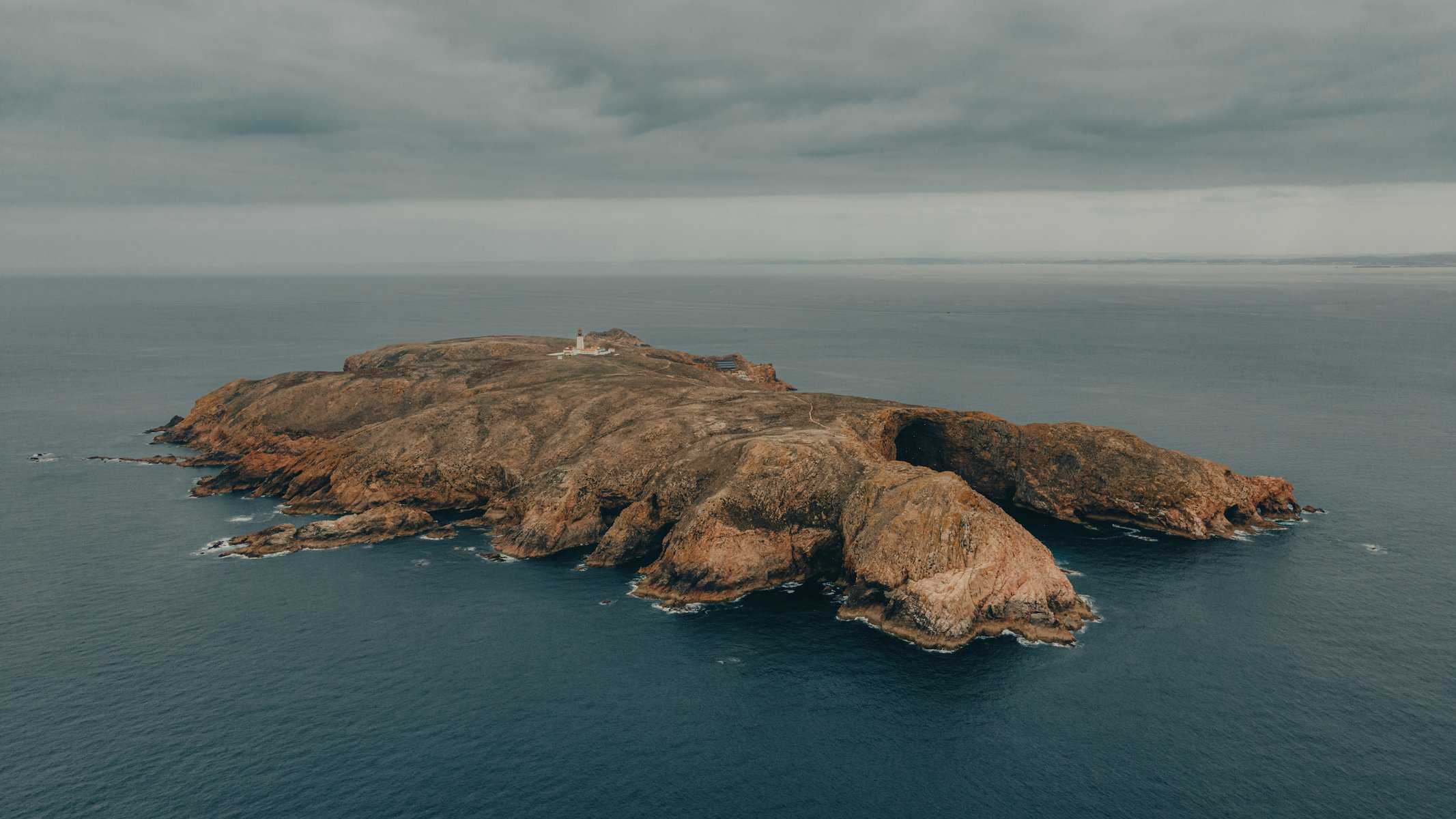
One of the most interesting things about Peniche is the group of islands lying a few kilometers offshore. You reach them by ferry departing from the area near the fortress, and the crossing takes a little under an hour.
This rocky archipelago is a nature reserve where several species of seabirds nest. Nature thrives here below the surface as well — perhaps especially below the remarkably clear water — and the Berlengas attract divers who come to explore this unique marine reserve, mainly in summer. Around the island, many rocks rise dramatically from the sea in unusual shapes carved by years of exposure to the elements.
Beyond the natural beauty, the islands also have several points of interest reached on foot, via many stairs, or by small boat. It’s a slightly challenging experience, so keep that in mind.
All the tourist services, along with most of the main sights, are concentrated around the ferry dock below the fishing village.
Click here for a boat trip from Peniche to Berlenga Island…
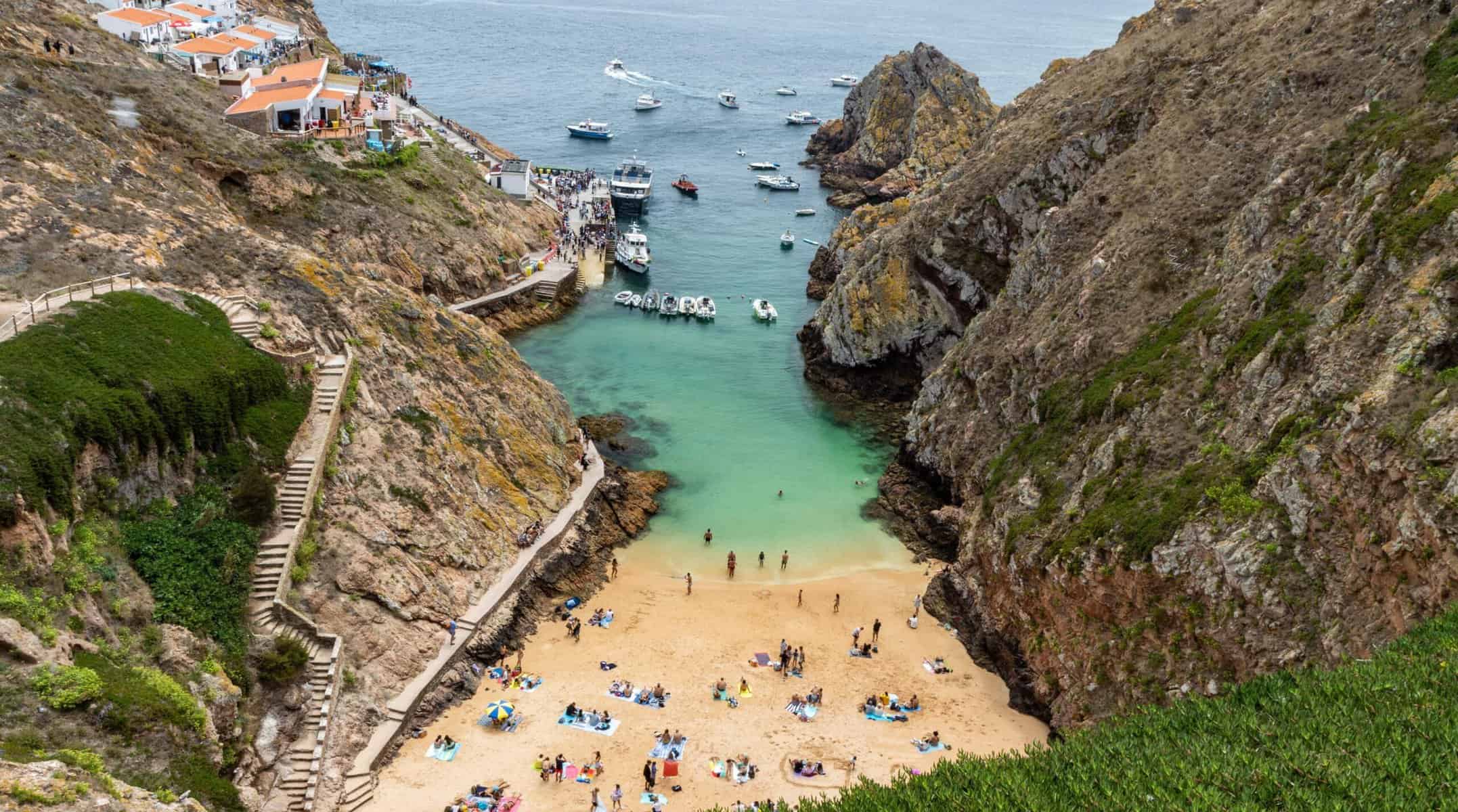
Carreiro do Mosteiro Beach | Praia do Carreiro do Mosteiro
This beach, which somewhat recalls Navagio Shipwreck Beach on Zakynthos in Greece, lies between two rocky cliffs with a narrow strip of sand and is wonderfully photogenic. The ferry from Peniche to Berlengas docks right in front of it.
Click here to search for accommodations in Peniche…
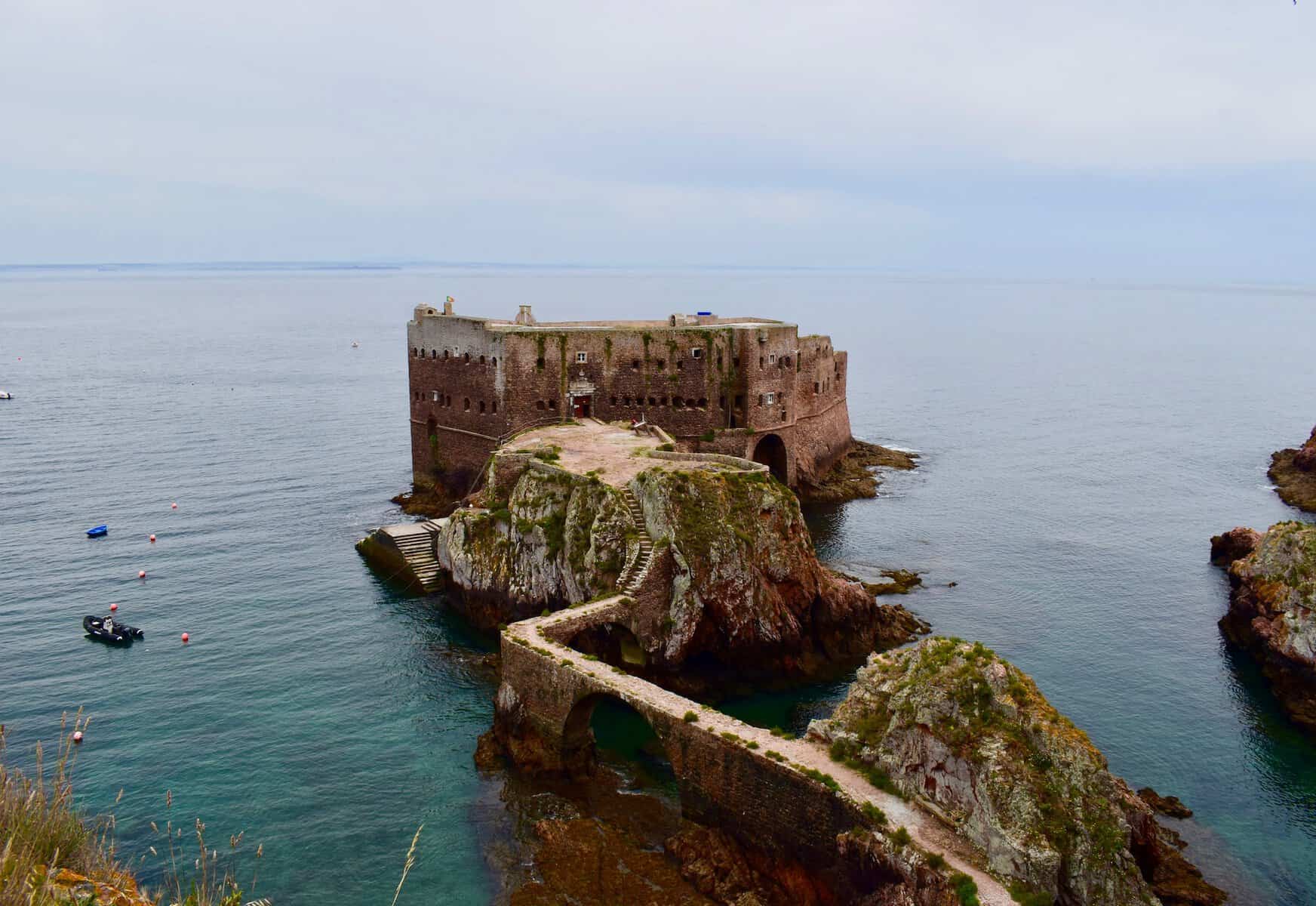
São João Baptista Fortress | Forte de São João Baptista
At the southeastern tip of the main island stands the fortress that was part of the 17th-century defensive system protecting Peniche and the coast. Built of stone, with a highly photogenic bridge leading to it, it’s worth coming to the island just for the photo opportunity.
Today, rather surprisingly, the building serves as a fairly simple youth hostel.
You can reach the fortress via the longer route, climbing stairs up from Carreiro Beach toward the lighthouse and then descending along narrow paths and stairways. Another option is by kayak boat rented near the ferry dock, before or after visiting the sea cave.
In fact, getting there by boat is the better option. It’s much easier, and it also lets you see the bridge to the fortress from the water, where it looks absolutely stunning.
Click here for a boat trip from Peniche to Berlenga Island…
Furado Grande sea cave | Furado Grande
A long sea channel, roughly 70 meters in length, cuts through reddish rock and opens into the ‘Bay of Dreams’ (Cova do Sonho). You can rent small kayaks at the main dock and paddle through this wonderful sea cave. The experience is somewhat reminiscent of the Blue Grotto on Capri in Italy, though everything here feels wilder and far less commercial.
Berlenga Lighthouse | Farol da Berlenga
You reach the lighthouse from Carreiro Beach or from the fishing village via a narrow path and many steps. The lighthouse has stood here since 1842, rises 29 meters high, and is still active today, complete with a lighthouse keeper living on site (lighthousekeepers).
It stands on the islands’ relatively flat upper plateau, where slightly uneven walking trails wind among the rocks. It’s a wonderful place for a walk, one that makes the troubles of the distant mainland feel far away.
Click here for a boat trip from Peniche to Berlenga Island…
Elephant Rock | Pedra do Elefante
The southern spit of the island, beyond São Baptista Fortress, drops steeply into the water, and many people recognize the shape of an elephant’s head and trunk in the rock formation. It’s best seen from the water during a boat ride.
The pink granite rocks unique to the Berlengas Islands have been eroded into unusual forms all around the island, and here the effect is especially dramatic.
Click here for a boat trip from Peniche to Berlenga Island…