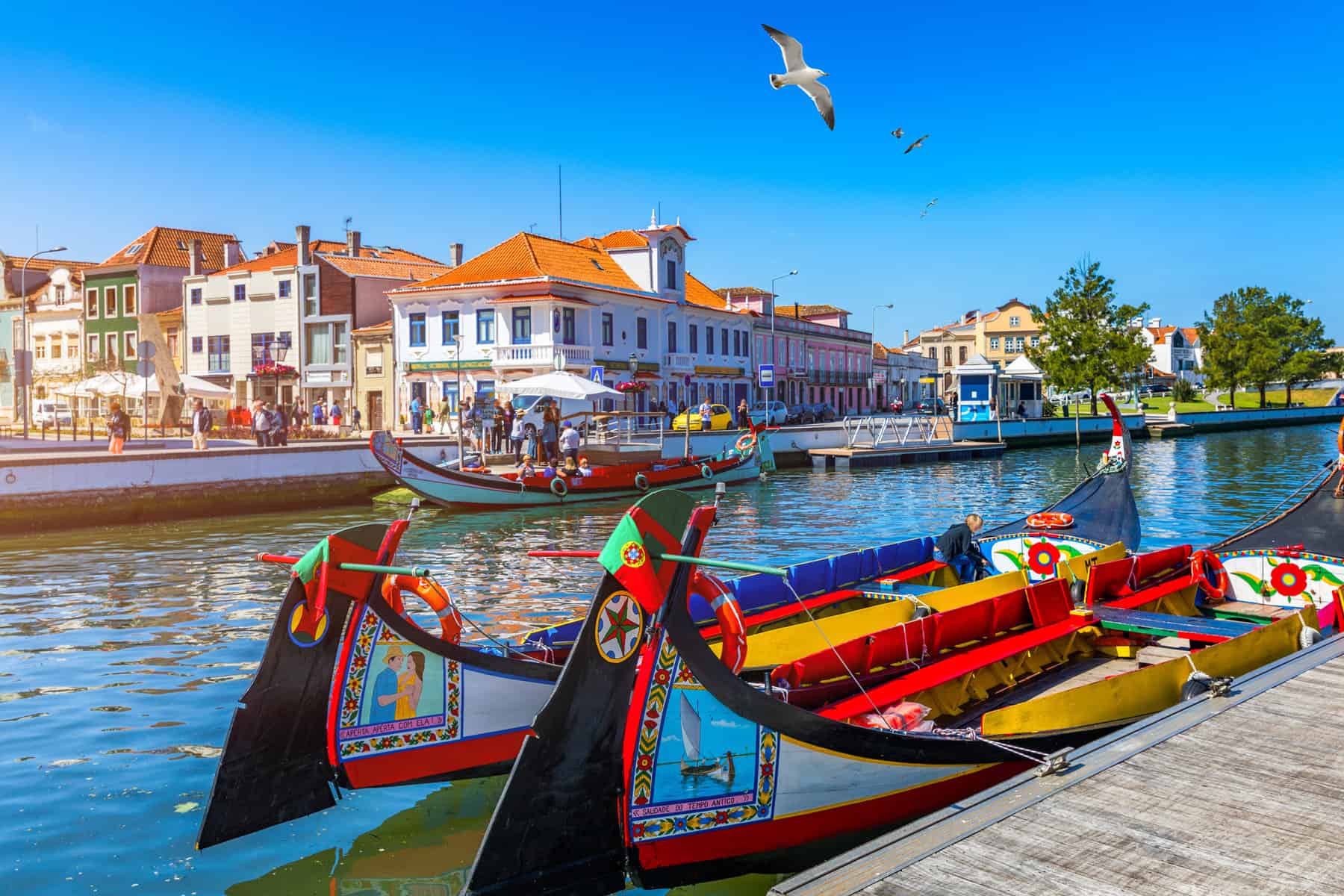
Aveiro is a seaside town in northern Portugal, not far from Porto. Although it’s a coastal city, a large lagoon lies between it and the open sea, shaping its character for generations. Canals run from the lagoon into both the ocean and the city itself, where traditional moliceiro boats glide through the water. A ride on one of them is Aveiro’s top attraction, and the reason it’s often called the Venice of Portugal.
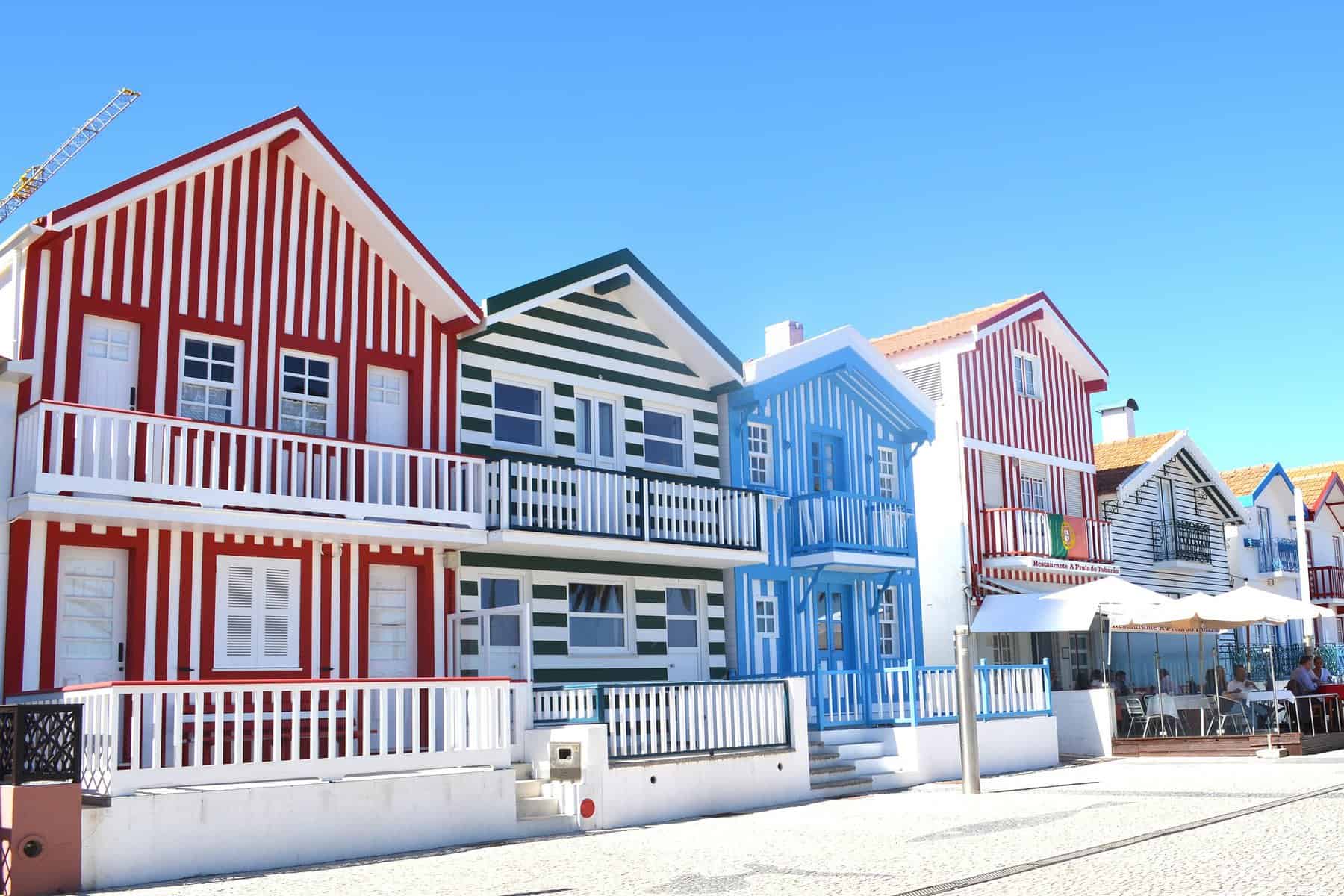
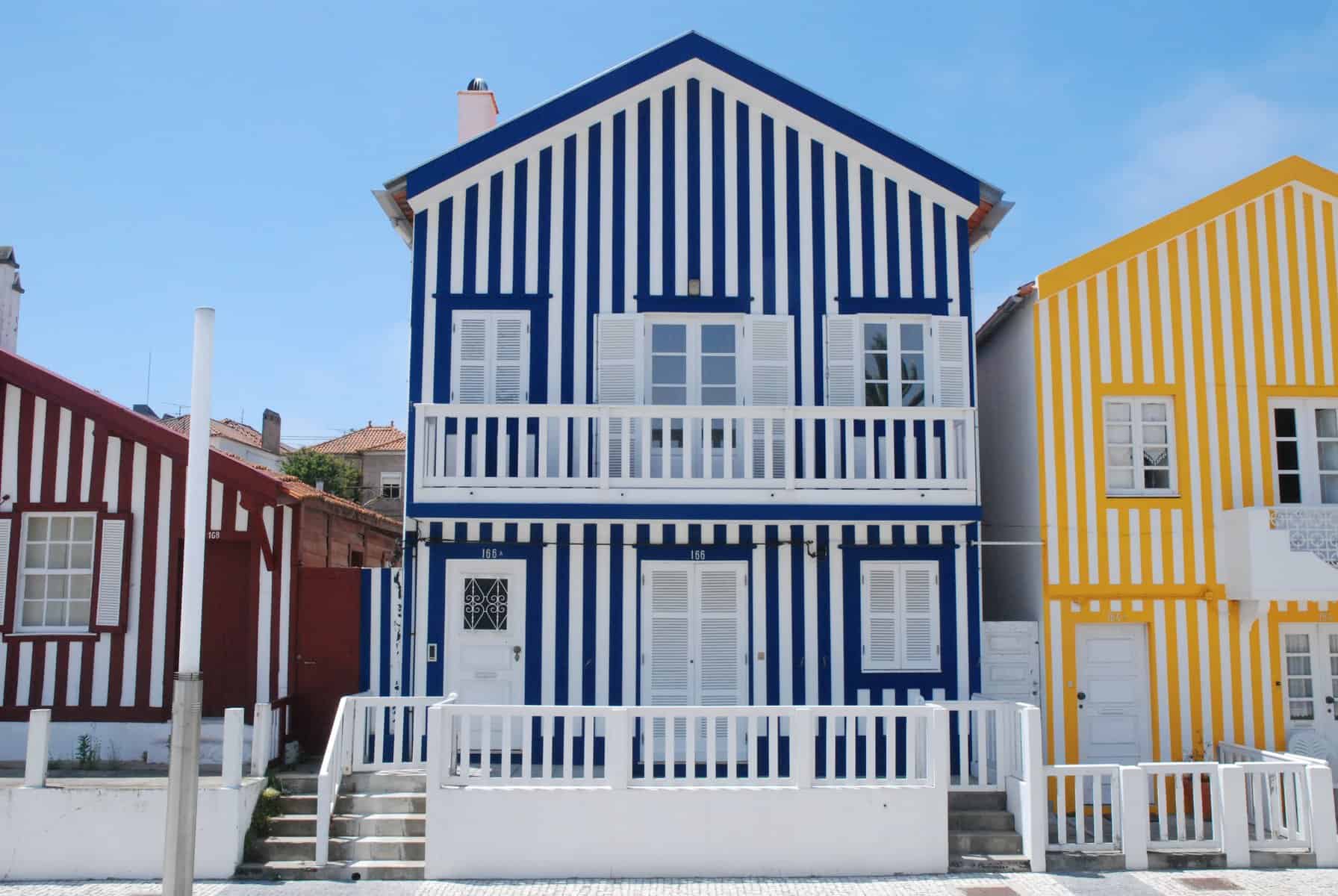
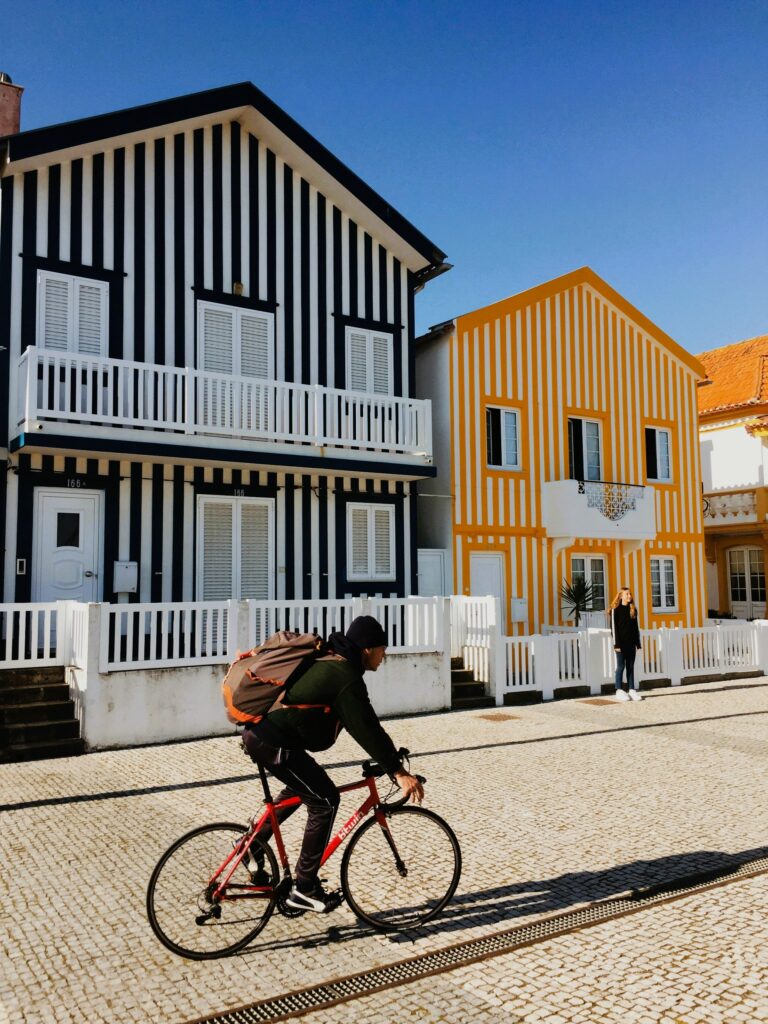
The part of town by the sea is called Costa Nova, where colorful wooden houses once belonged to fishermen and are now among the most sought-after properties in Portugal. Aveiro is very easy to reach from Porto, making it ideal for a day trip. It’s also a must-stop on any rental car journey along Portugal’s western coastline between Lisbon and Porto. The beach, the colorful houses, the attractions, the fresh seafood, the famous sweets, and Aveiro’s calm Portuguese atmosphere offer just about everything a traveler could want, and it’s a destination that also appeals to children.
Aveiro is the most colorful city in northern Portugal and an essential stop for anyone exploring the Porto area.
How much time should you spend in Aveiro?
One day is enough to experience this wonderful city. In summer, though, it’s easy to stay a few extra days and enjoy the beach and the city’s relaxed atmosphere. If you’re traveling from Lisbon to Porto, Aveiro also makes a great overnight stop in a truly charming town.
Click here for a wonderful day trip from Porto to Aveiro…
6 must-see sights and experiences in Aveiro
- A moliceiro boat ride | Moliceiro
- The fish market and the restaurants along the canal | Largo da Praça do Peixe
- The colorful houses of Costa Nova (you can also explore by bike) | Praia da Costa Nova
- The modern maritime museum in Ílhavo | Museu Marítimo de Ílhavo
- Taste the city’s famous dessert, Ovos Moles | Ovos Moles
- The old train station covered in azulejo tiles | Antiga Estação da CP Aveiro
How to get to Aveiro
Flights
The airport that serves Aveiro is Porto Airport (airport code OPO), about an hour away by car.
Click here for a list of 7 recommended hotels in Aveiro…
Click here for a lovely ride on a moliceiro boat…
Car
The easiest way to reach Aveiro is by rental car. Whether you’re driving the coast between Porto and Lisbon or exploring central Portugal, Aveiro is a stop you’ll want to include, so having a car is highly recommended.
Parking – parking can be difficult right in the old town (north of the main canal).
The best option is to park at the entrance to the city in the large free lot – Nossa Sra dos Aflitos and walk from there toward the main canal and city center. If it’s full, there are plenty of other parking lots on both sides of the train station, from which you can either walk (about 15 minutes) or take a taxi.
There are also a few more parking lots around Forum Aveiro or along the São Roque Canal, but they’re still about a 10-minute walk from Aveiro’s main sights, so in most cases it’s easier to park at the entrance to town.
In any case, getting around between Aveiro’s main points of interest is best done on foot, by boat, or by bicycle.
Click here for 15 must-see stops between Porto and Lisbon…
Public transportation
Aveiro’s bus station and train station sit side by side at the entrance to the city, which makes arrivals especially convenient.
The easiest way to reach Aveiro by public transportation is by train, whether you’re coming from Porto or Lisbon. From Porto’s Campanhã station, the ride takes about 45 minutes. From Lisboa Oriente in Lisbon, it takes about two hours, usually with a stop in Coimbra.
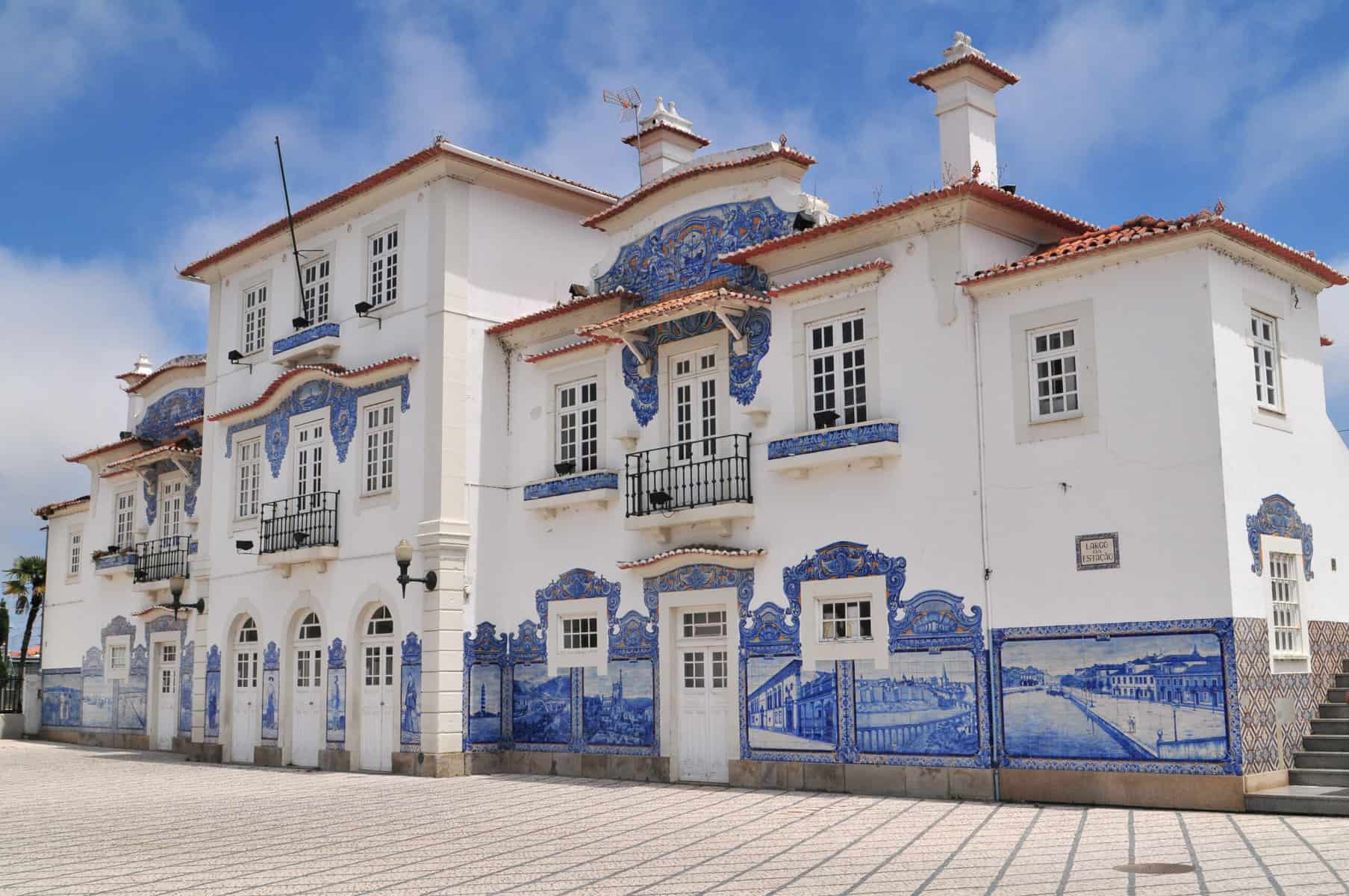
Aveiro’s new train station has made the city especially accessible from most major cities in the region, and particularly from Porto, so it’s easy to decide on a whim to hop on a train and visit this beautiful canal city, especially if you’re already nearby in Porto. The old station next door is one of Aveiro’s must-see sights thanks to its remarkable beauty, especially its wonderful azulejo tiles.
There are also buses to Aveiro. They’re a bit cheaper, but the trip takes longer, which is especially noticeable if you’re traveling from Lisbon.
Click here to find hotels and vacation apartments in picturesque Aveiro…
about Aveiro
Aveiro is a coastal city about an hour south of Porto. A large lagoon lies between the city and the ocean, with canals branching out from it, which is why Aveiro is often called the Venice of Portugal. Traditional moliceiro boats carry visitors through the calm waters of the canals.
Click here for a wonderful day trip from Porto to Aveiro…
Aveiro was once a city where many residents made their living harvesting seaweed for fertilizer and collecting salt in Atlantic evaporation ponds. Today, those industries have largely faded, but the city’s famous boats remain, now carrying visitors between the city, the lagoon, and the beach.
The city itself has about 80,000 residents, and roughly 120,000 people live in the wider metropolitan area, making it one of the more densely populated regions in north-central Portugal. Aveiro’s urban area can be divided into two main parts: the old town with its canals—Aveiro itself—and the area across the lagoon with the golden beach at Costa Nova (Costa Nova do Prado).
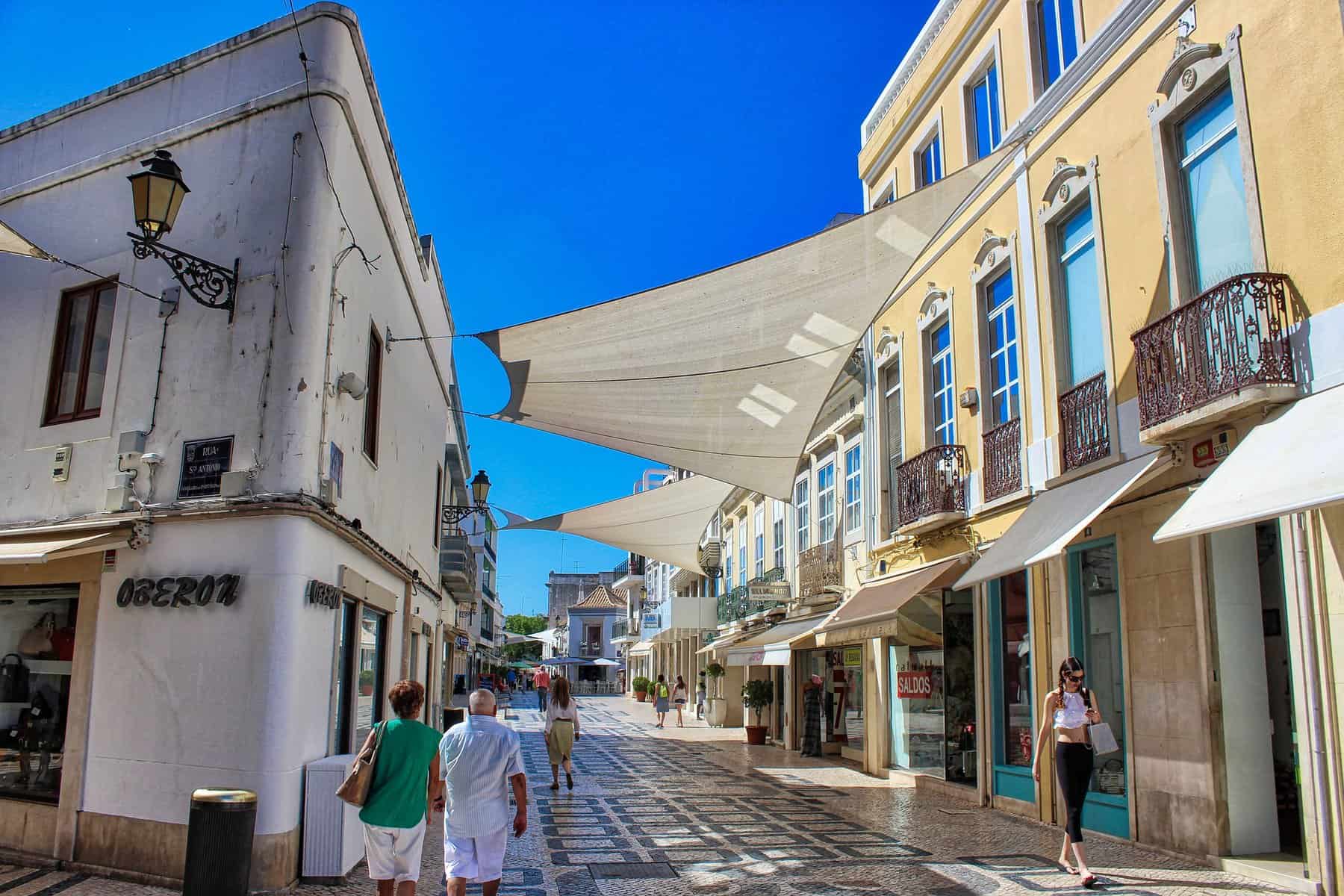
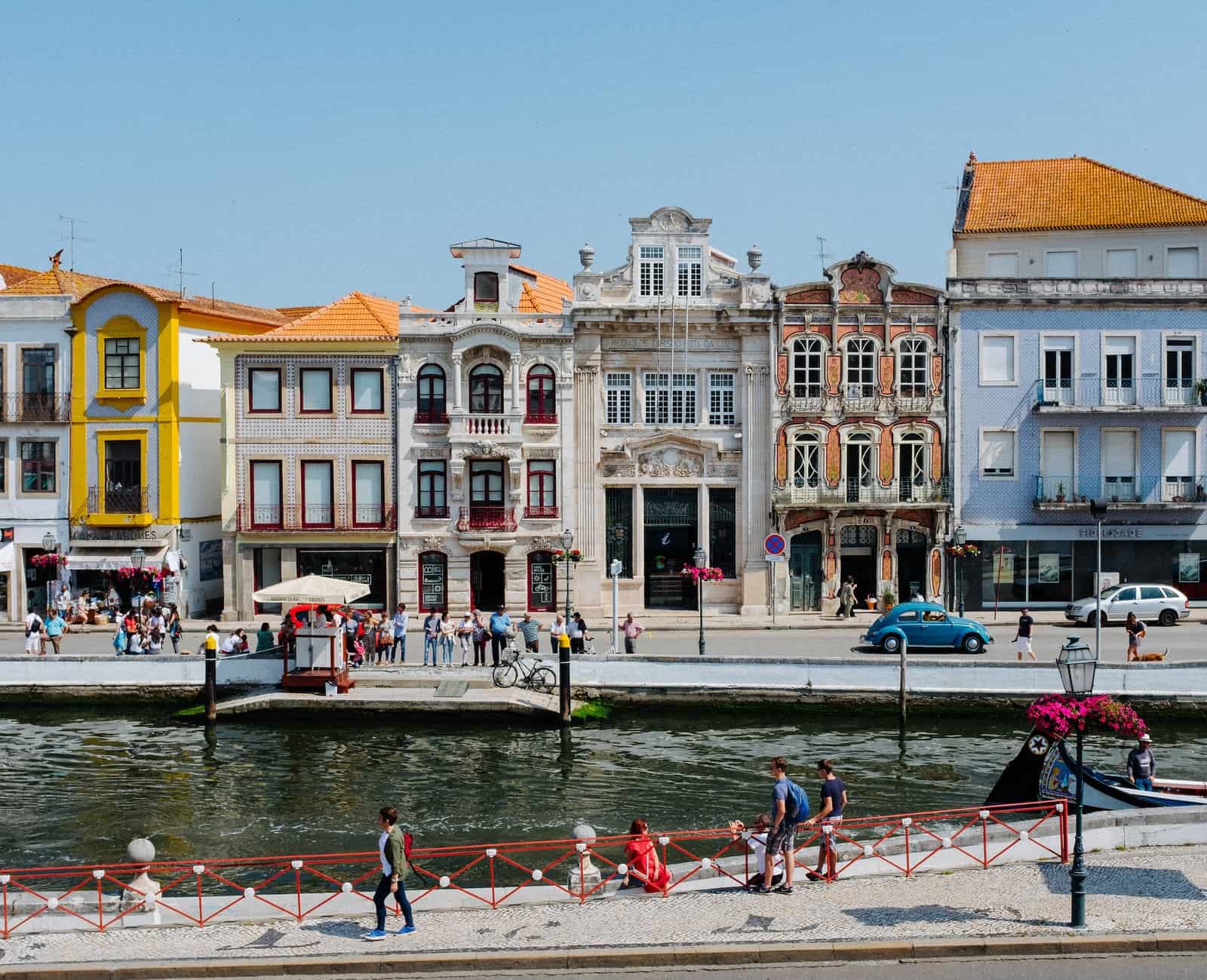
The historic center is filled with beautiful buildings along paved streets lined with dozens of cafés and restaurants, making it ideal for lunch or a late breakfast. Beyond that, it’s simply a lovely place to wander, with narrow streets, Art Nouveau houses, and canals throughout.
Costa Nova began as a small fishing village and grew into an exceptionally colorful seaside town with a wonderful beach and a one-of-a-kind atmosphere in northern Portugal. In fact, it may be one of the most photogenic places in the entire country, especially thanks to its small wooden houses in every shade facing the lagoon. Once simple fishermen’s homes, they have become rather upscale vacation houses in recent decades. Costa Nova is also a great place for cycling, with routes that run along both the lagoon and the beach.
The weather in this northern coastal city is usually pleasant, and in summer it’s almost never too hot. Like much of northern Portugal, Aveiro is very rainy in fall and winter and can feel quite gray. That makes summer, early fall, and spring the best times to visit. Winter trips are still possible, but it will likely be chilly.
As a lagoon city, Aveiro has plenty of seafood restaurants, and throughout Portugal it is especially famous for its signature dessert, Ovos Moles, made from a sweet egg-yolk filling wrapped in pastry shaped like shells.
Click here to search for accommodations in Aveiro…
Attractions and interesting sights in Aveiro
The canals of Aveiro | Canais de Aveiro
The main canal | Canal Central
Aveiro’s main canal enters the city directly from the port and the lagoon’s salt ponds, and from it the other canals branch off. Its main attraction is the principal dock for the moliceiro boats.
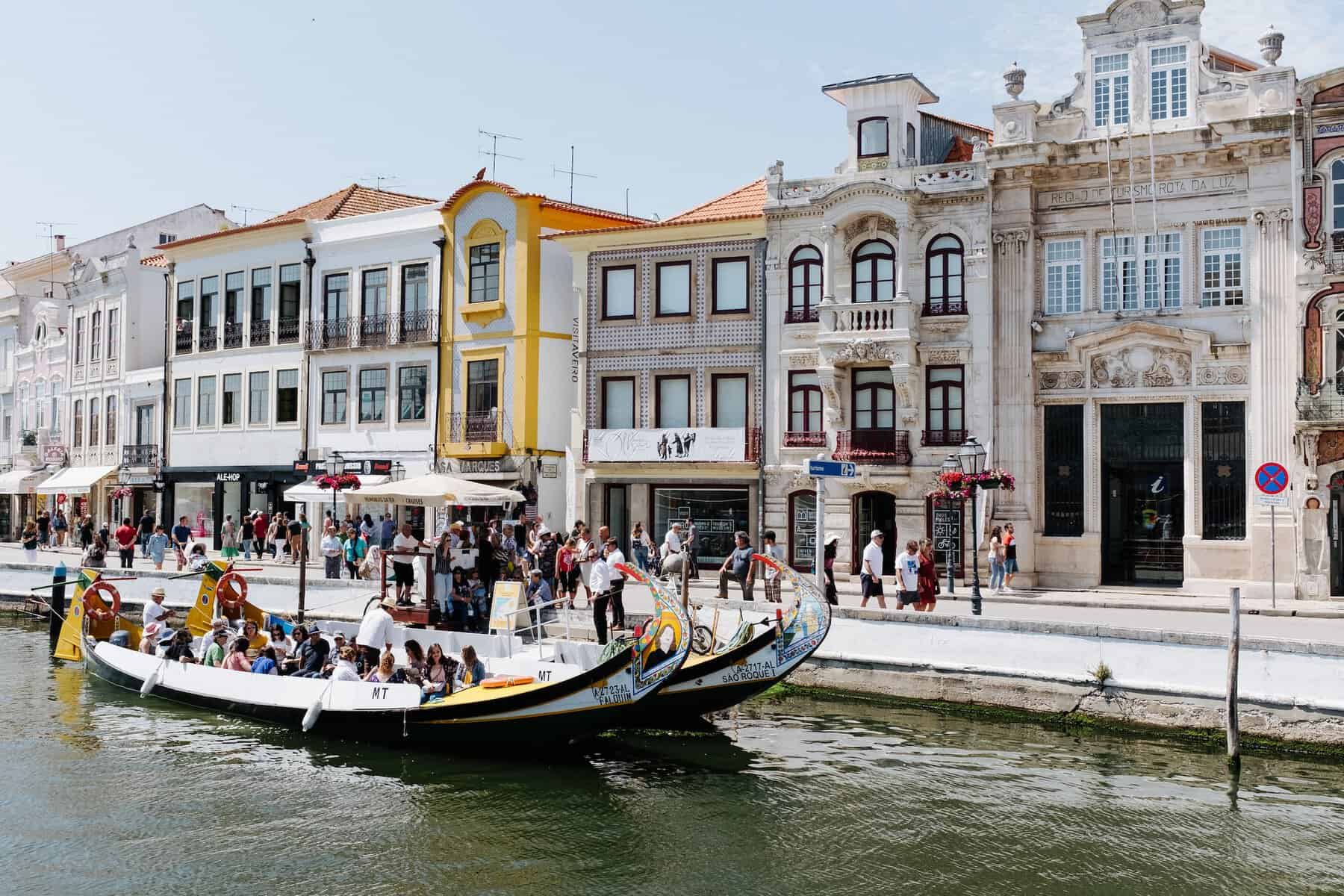
The dock is near the Art Nouveau houses and Praça General Humberto Delgado, which links the two parts of the city. This is where moliceiro boat rides depart, the iconic experience most closely associated with Aveiro.
The part of town north of the main canal is essentially the old city, with denser streets and picturesque alleys.
São Roque Canal | Canal de São Roque
The São Roque Canal branches off from the main canal just outside the city center. It’s easy to reach on foot, just a short walk north of the moliceiro dock on the main canal.
A walk along it can begin at the branch leading to the square and fish market, Praça do Peixe de Aveiro, located just beyond the row of Art Nouveau buildings along the main canal. From the square, continue toward the long canal that marks the northern edge of the old town center.
Once you reach the São Roque Canal, you can cross the round bridge (Ponte dos Botirões) or stay on the side with the houses. Whichever side you choose, a peaceful and romantic stroll is guaranteed.
Cojo Canal | Canal do Cojo
This is the continuation of the main canal beyond Praça General Humberto. Along it you’ll find shopping and entertainment areas, most notably Forum Aveiro, and it continues to the large Fonte Nova quay.
Fonte Nova quay | Cais da Fonte Nova
This is actually the innermost end of Aveiro’s canal system. Around the quay are a park, walking paths, and the famous soft eggs monument. There are also plenty of parking lots nearby, making it a convenient place to leave your car and walk into the city along the canals.
Click here for a moliceiro boat ride…
Moliceiro boat ride
Over the centuries, two traditional industries developed around Aveiro’s lagoon: salt drying and the harvesting of soft aquatic plants from the lagoon. Those plants were dried and later used as fertilizer. While salt production still survives on a small scale, the harvesting of seaweed and water plants has disappeared. Technological advances and global trade made it unprofitable, but the boats once used by seaweed gatherers are still moored at the dock, and these days they carry tourists instead of seaweed.
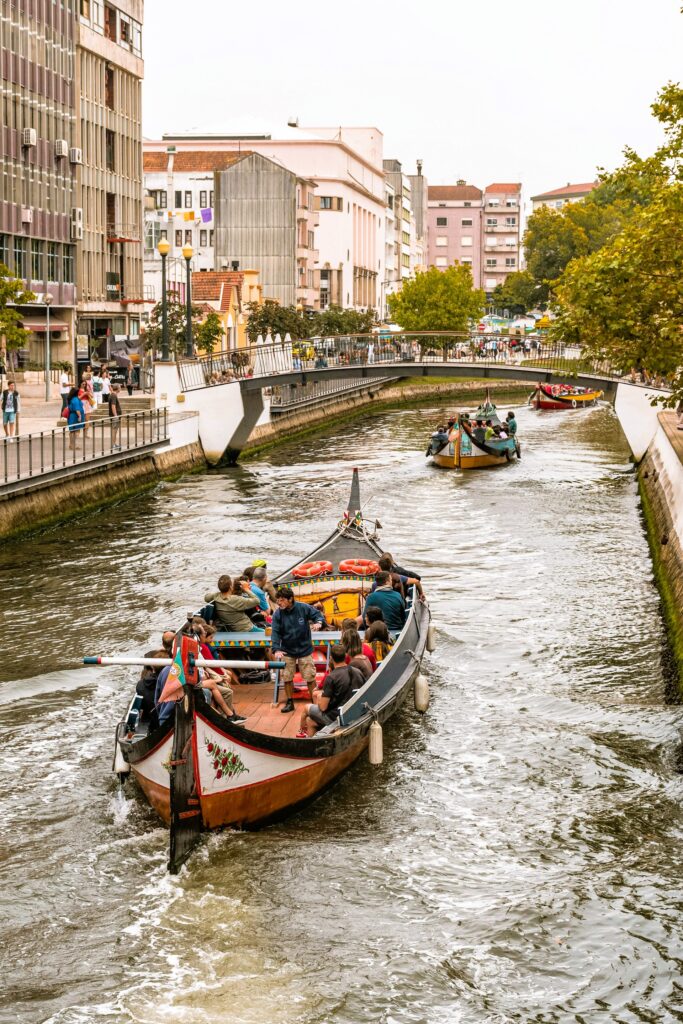
The boats, known as moliceiros, take visitors through the city’s canals and out onto the lagoon, and they’re an experience no traveler to Aveiro should miss. The easiest place to board one of these long, elegant boats—Aveiro’s answer to a gondola—is along the city’s main canal at Cais dos Moliceiros, opposite the Art Nouveau Museum.
Unlike Venetian gondolas, which usually carry two to four people, moliceiros are larger and typically take between ten and fifteen passengers per ride.
Click here for a lovely ride on a moliceiro boat…
Tie a ribbon on one of Aveiro’s bridges
If you cross one of the pedestrian bridges over the canals in central Aveiro, you’ll notice dozens or even hundreds of colorful ribbons tied to the railings. According to local tradition, if you tie a ribbon and make a wish, it will come true.
Most of these bridges are along the canal near Forum Aveiro in the city center, so if you’re already in the area, why not give it a try?
Click here to find accommodations in Aveiro…
Shopping in Aveiro
Aveiro offers several shopping options. First among them is Forum Aveiro, right in the middle of town along the main canal.
Another mall in the southern part of the city near the university is Glicínias Plaza, which mainly serves locals and also includes a movie theater complex.
In the industrial area at the entrance to the city, north of the A25 highway, there’s a large shopping center called Aveiro Center. There are also many other stores scattered around the area, including Decathlon, as well as several huge supermarkets.
The old town also has plenty of souvenir shops.
Click here for a wonderful day trip from Porto to Aveiro…
Art Nouveau Museum | Museu de Arte Nova
Aveiro in general, and especially the area along the main canal, is home to many buildings built in the Art Nouveau style. The museum, located beside the moliceiro dock on the main canal, presents the characteristics of this architecture along with its influence on modern culture at the end of the 19th century and the beginning of the 20th.
The museum is small and housed in a stunning building that is, of course, itself in the Art Nouveau style.
At the back of the building on the first floor is the tea house, Casa de Chá, which completes the Art Nouveau mood with coffee and pastries by day, or cocktails and music at night.
Click here to search for accommodations in Aveiro…
Aveiro City Museum | Museu da Cidade de Aveiro
Aveiro City Museum is on the same street as the Art Nouveau Museum, opposite the moliceiro docks on the main canal. This small museum presents details about the city and also hosts changing exhibitions, mostly featuring young artists.
The museum building is covered in tiles, and above its façade hangs a colorful fish sculpture in keeping with the city’s lagoon identity. Inside, there is also tourist information about the city and a small shop.
If there’s a line for the moliceiro boats, it’s well worth stepping in for a quick half-hour visit.
Click here for a list of 7 recommended hotels in Aveiro…
Fish market square | Largo da Praça do Peixe
This small square in the heart of the old town sits just north of the city museum, the Art Nouveau Museum, and the main canal. As the name suggests, it’s the fish square—Praça do Peixe de Aveiro—where local fishermen come to sell their daily catch.
The market and square also sit along one of Aveiro’s famous canals, which only adds to the wonderfully authentic local atmosphere.
Above the market is a fish restaurant, and around it are several more cafés, restaurants, and bars worth visiting from lunchtime into the small hours of the night.
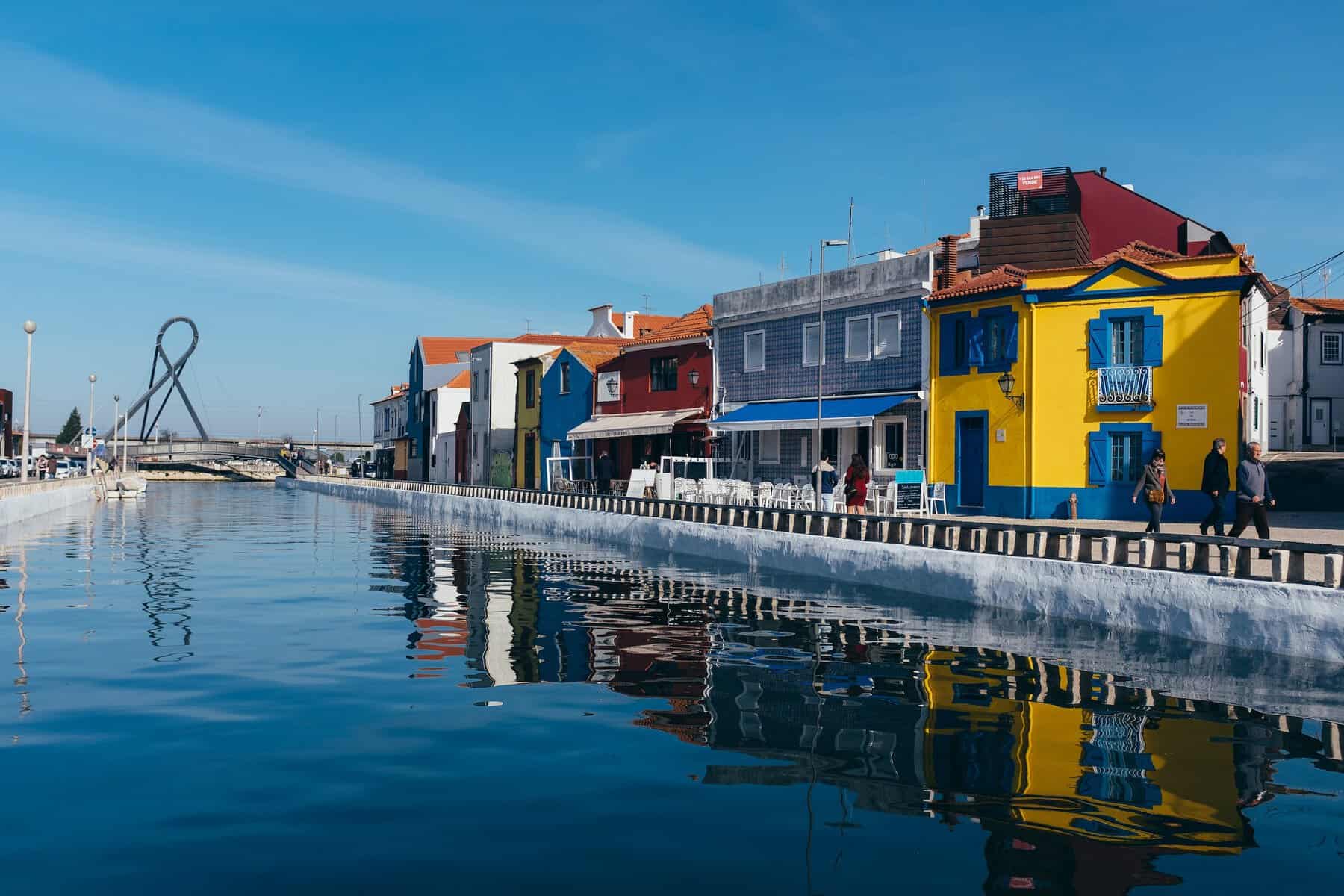
All the while, the colorful houses reflect in the narrow canal, creating a beautiful setting for a walk around midday or in the early evening.
Click here to search for accommodations in Aveiro, the city on the lagoon…
Aveiro Museum – Santa Joana | Museu de Aveiro/Santa Joana
Located very close to Forum Aveiro on the southern side of the canal, this museum is housed in a large former convent with two inner courtyards (cloisters) and a grand Baroque church whose stunning azulejo tiles alone are worth the visit.
The Dominican nuns’ convent was founded here in 1458. Not long afterward, Princess Joana, daughter of Afonso V, King of Portugal, joined the convent, where she spent her “retirement” years in Aveiro’s pleasant climate. Because of her major contribution to the convent’s development and preservation, she was declared a saint in the 17th century, which is why the site is called Santa Joana.
The convent went through many transformations over the years and underwent extensive renovation in the 18th century, but since 1911 it has served as the Aveiro Museum.
The museum’s exhibits mainly include works from the 10th to the 15th centuries, among them a portrait of Princess Joana herself. Joana’s tomb is also here and is a work of art in its own right, as are the church decorations and chapels. In the garden facing the museum, between the traffic lanes, there is also a statue of Saint Joana.
Click here to search for accommodations in Aveiro…
Aveiro Cathedral | Sé Catedral de Aveiro
The cathedral stands opposite the Aveiro Museum in the southern part of the city center. It is also known as São Domingos Cathedral because it was built on the grounds of the adjacent 15th-century Dominican convent.
The cathedral’s dominant motif is white, both inside and out. Outside, it has a tall bell tower and a relatively modest-sized façade rich in decorative detail. There is also an uncovered colonnade leading to the church’s rear entrance. Inside, the design is fairly simple, with bright white walls throughout.
The cathedral is one of the city’s landmarks and sits between the museum and the old cemetery, making it a worthwhile short stop on a walking tour between sights.
The soft eggs monument and the “I Love Aveiro” steps | Monumento aos Ovos Moles de Aveiro
The monument stands at the end of the canal where it opens into a small lake as part of Jardim Fonte Nova. The local dessert, Ovos Moles, is made from egg yolks, and it was this sweet that inspired the artist.
On the other side of the canal, near the Meliá hotel, there is a large staircase with the words I Love Aviero written across it in a clever artistic design. The steps have become an icon in Aveiro, and many people come here to take photos. You can cross the bridge on foot from the soft eggs monument area and, in just four minutes, come away with two excellent Instagram shots.

Aveiro train station | Antiga Estação da CP Aveiro
The city’s old station, right beside the entrance to the new one, is an architectural gem that seems to gather all the charm of Portugal into a single building. Even if you didn’t arrive in Aveiro by train, it’s absolutely worth stopping by just to admire the exterior azulejo decorations (blue ceramic tiles).
If you did arrive by train, all the more reason to walk a few steps toward the old station and see this wonder for yourself, even if only from the outside.
It’s one of those places that makes you pause and think about how much care once went into public buildings, and it’s hard not to feel admiration for earlier generations.
If you arrive by train from Porto, there’s no need to make a special trip to the old station—just walk a few dozen yards to the right as you leave the new station and you’ll be there.
Costa Nova Beach and Barra Beach | Praia da Costa Nova, Praia da Barra
It’s important to know that the beaches are about 10 kilometers from central Aveiro.
Aveiro may be described as a seaside city, but its historic center actually lies inland on the edge of the large lagoon. To reach the beaches, you need to cross the bridges over the lagoon, and only then do you arrive at Costa Nova, where the beaches are located.
Costa Nova Beach (Praia da Costa Nova) lies south of the lagoon mouth and the lighthouse, and it is the city’s main beach. Unlike the northern beaches of São Jacinto, this one has facilities behind the beach for swimmers and vacationers.
Barra Beach lies just to the north, adjoining Costa Nova Beach, and is essentially a continuation of it.
Click here for a stay in Costa Nova, with its colorful houses by the beach…
Cycling in Aveiro
While most cities in northern Portugal are built on hills and slopes, Aveiro developed around a lagoon and river estuaries, so it is mostly flat. As a result, much like in the Netherlands, it’s very easy and enjoyable to explore by bike.
In recent decades, many dedicated bike paths have been laid out across the city, especially near the beach and the lagoon.
Some routes even pass over wooden boardwalks built right above the lagoon. The weather also helps make cycling here pleasant, since for most of the year it rarely gets too hot, and aside from rainy days, the excellent paths in and around the city are suitable for an enjoyable ride almost every day.
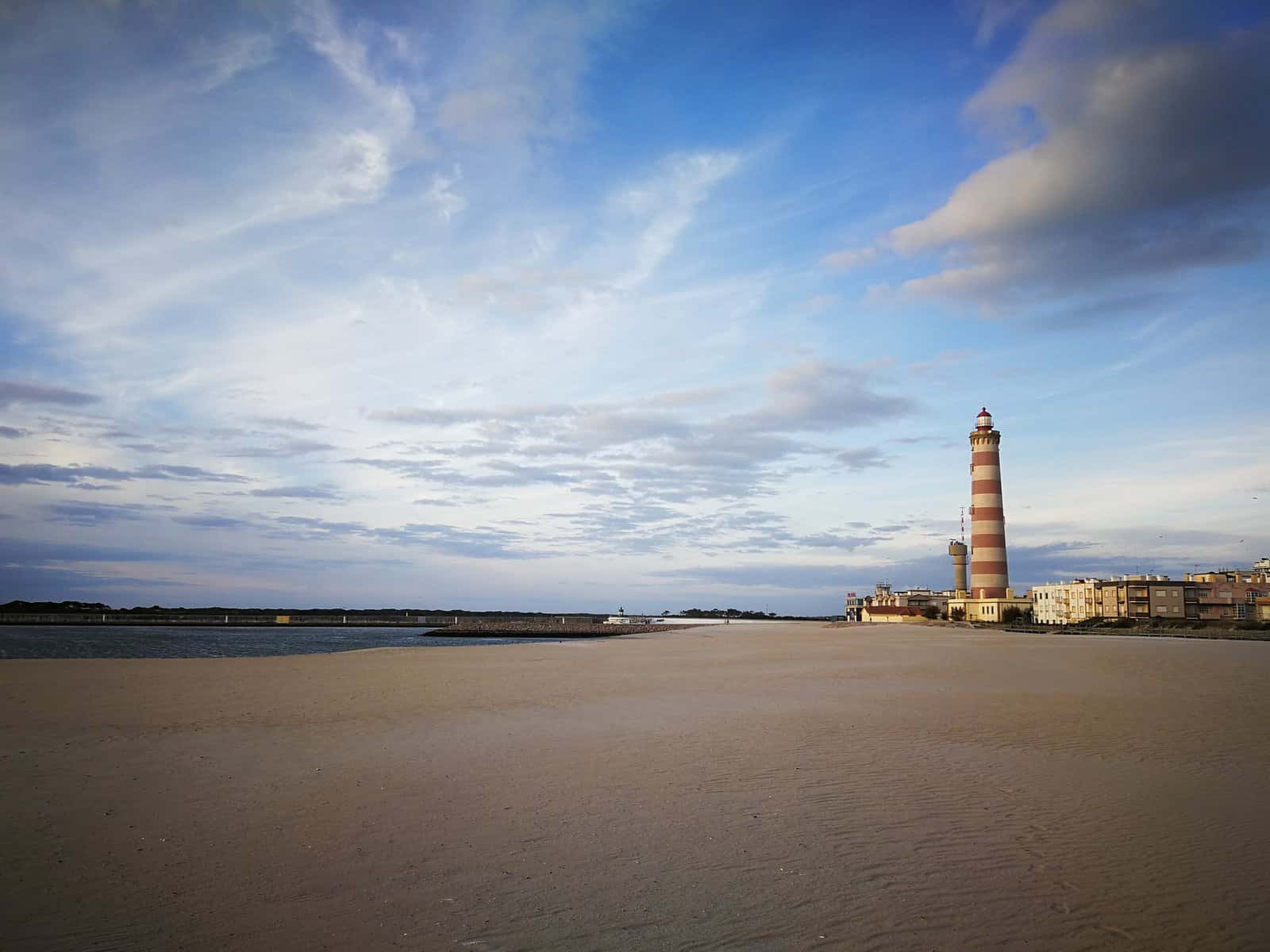
The lighthouse | Farol de Aveiro
The tall lighthouse at the mouth of the lagoon is one of the city’s symbols. In Portuguese, a lighthouse is called farol, which is why it’s known as Farol de Aveiro.
The lighthouse stands at Barra Beach and is easily accessible from the street, so there’s no need to walk through sand to reach it. Around the square in front of it—naturally called Lighthouse Square—you’ll find restaurants, cafés, and ice cream shops, making it a great place to spend time by day or night.
It’s also worth heading to the small promenade along the channel where the lagoon meets the sea, just 30 meters north of the lighthouse, for views out toward the ocean from the pier. Along the promenade there’s also a sundial with an obelisk at its center, a great chance to show children how people once told the time not so long ago.
Click here for a stay in Costa Nova, with its colorful houses by the beach…
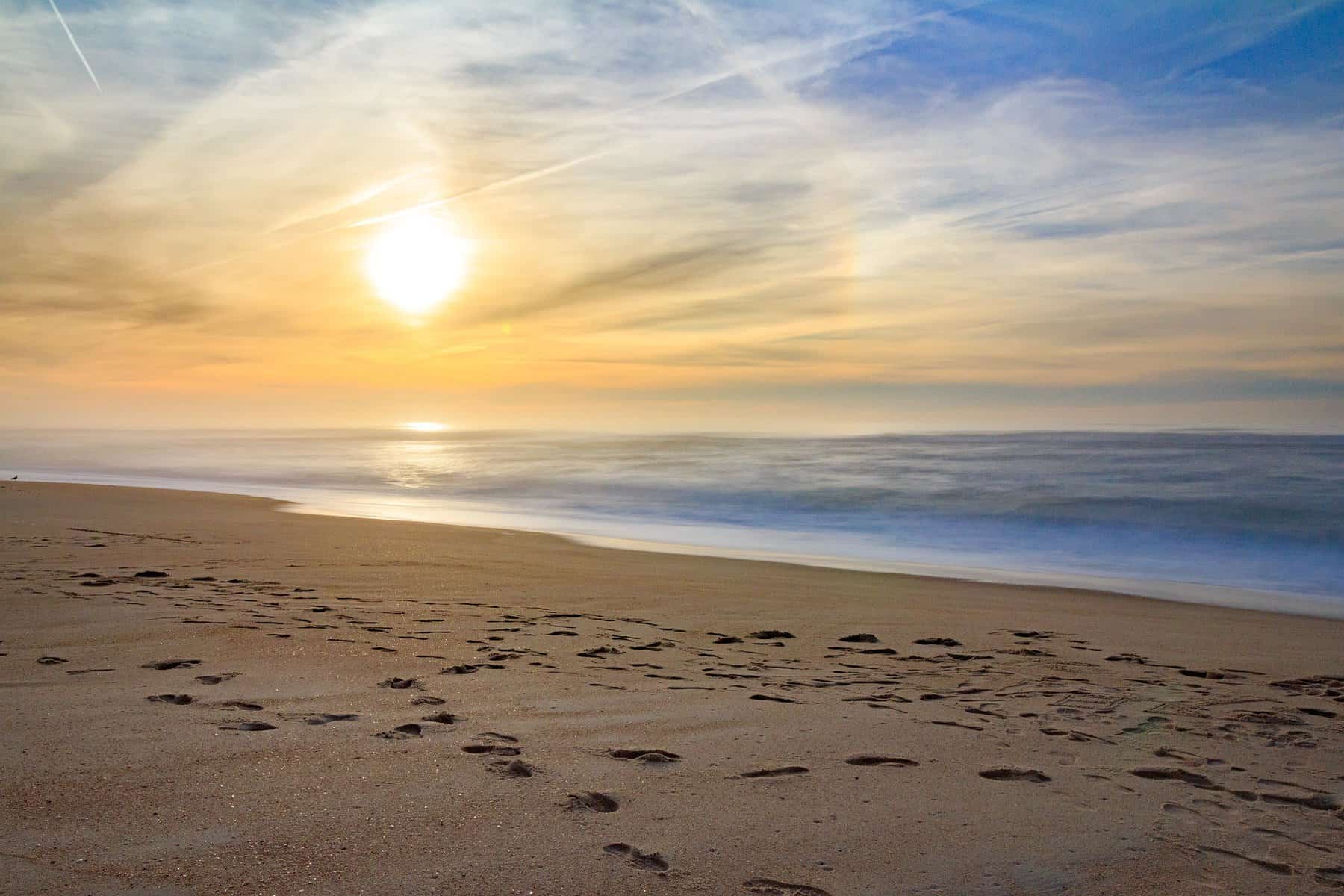
São Jacinto Dunes Nature Reserve | Reserva Natural das Dunas de São Jacinto
Driving from Aveiro to São Jacinto Beach and the reserve involves a long detour around the entire lagoon and the rural area north of Aveiro, and takes at least 50 minutes!
The beaches along the lagoon’s northern side are part of a sandy nature reserve known as the São Jacinto Dunes. The reserve stretches along the spit of land between the towns of São Jacinto and Torreira to the north. It isn’t especially large—around 4 to 5 kilometers long—but what makes it so appealing are the beaches, which are inaccessible to vehicles and therefore wonderfully secluded.
The beaches on the seaward side of the reserve are unspoiled, while behind them lie small white-sand dunes covered with characteristic grasses, shaped into ripples after strong winds. In between, there are also a few springs where groundwater has broken through the surface. So close to the city—at least as the crow flies—and yet so quiet, natural, and carefree.
To enter the reserve, you can go to the visitor center and continue on foot from there. If you want the more isolated beaches, it’s best to park at São Jacinto Beach (Praia do São Jacinto), which is itself fairly quiet and secluded, and walk north. If you’re coming from Torreira, you can drive to Praia da Colónia de Férias and walk south from there.
Needless to say, these remote beaches have no lifeguards or facilities of any kind.
Click here for a lovely ride on a moliceiro boat…
Click here for a list of 7 recommended hotels in Aveiro…
Flamingos and the salt ponds
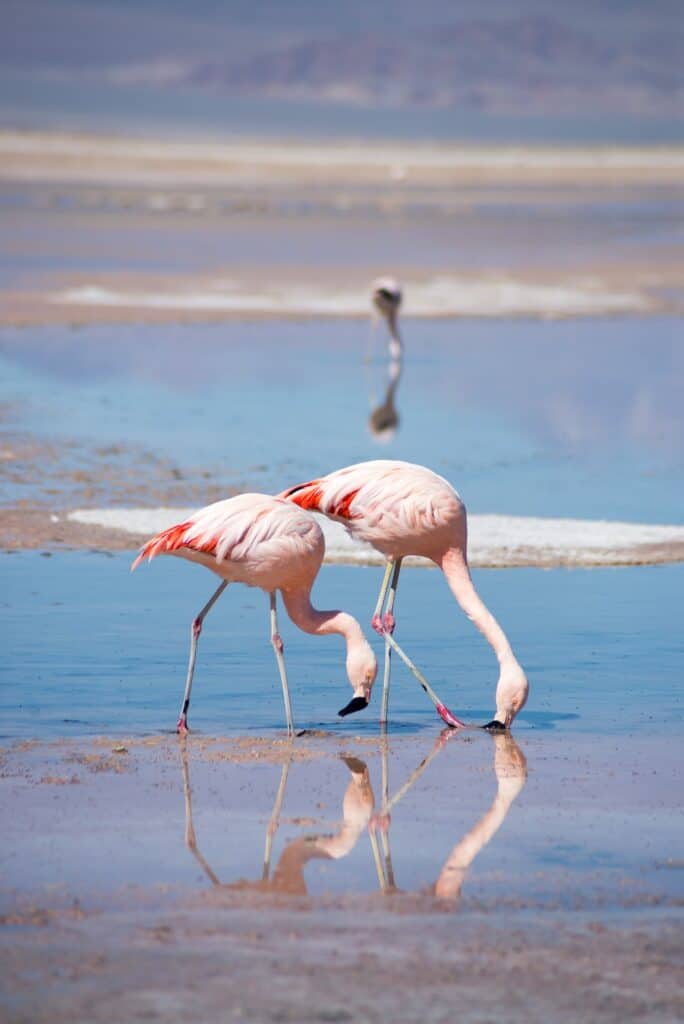
The salt ponds were once a major part of Aveiro’s economy, and only a few are still active today. At those that remain in operation, guided tours explain the different stages of the evaporation process and the final salt harvest. The salt ponds that have been abandoned have become a favorite feeding ground for flamingos, which come here in search of small reptiles and crustaceans.
Flamingos are easiest to spot around sunset. They are social birds and usually appear in groups, so you’ll often see several together. Some flamingos stay in Aveiro year-round, while others stop here during migration. In general, simply wandering around the lagoon area is often enough to spot a few.
That said, there are several places where you’re more likely to see them in the evening: the salt ponds of Marinha da Troncalhada, the area around the São Roque Canal close to the city center, the salt ponds near the university known as Marinha de Santiago da Fonte just outside the center, and the Murtosa area in the northern part of the lagoon.
Open-air salt ponds museum | Salinas de Aveiro
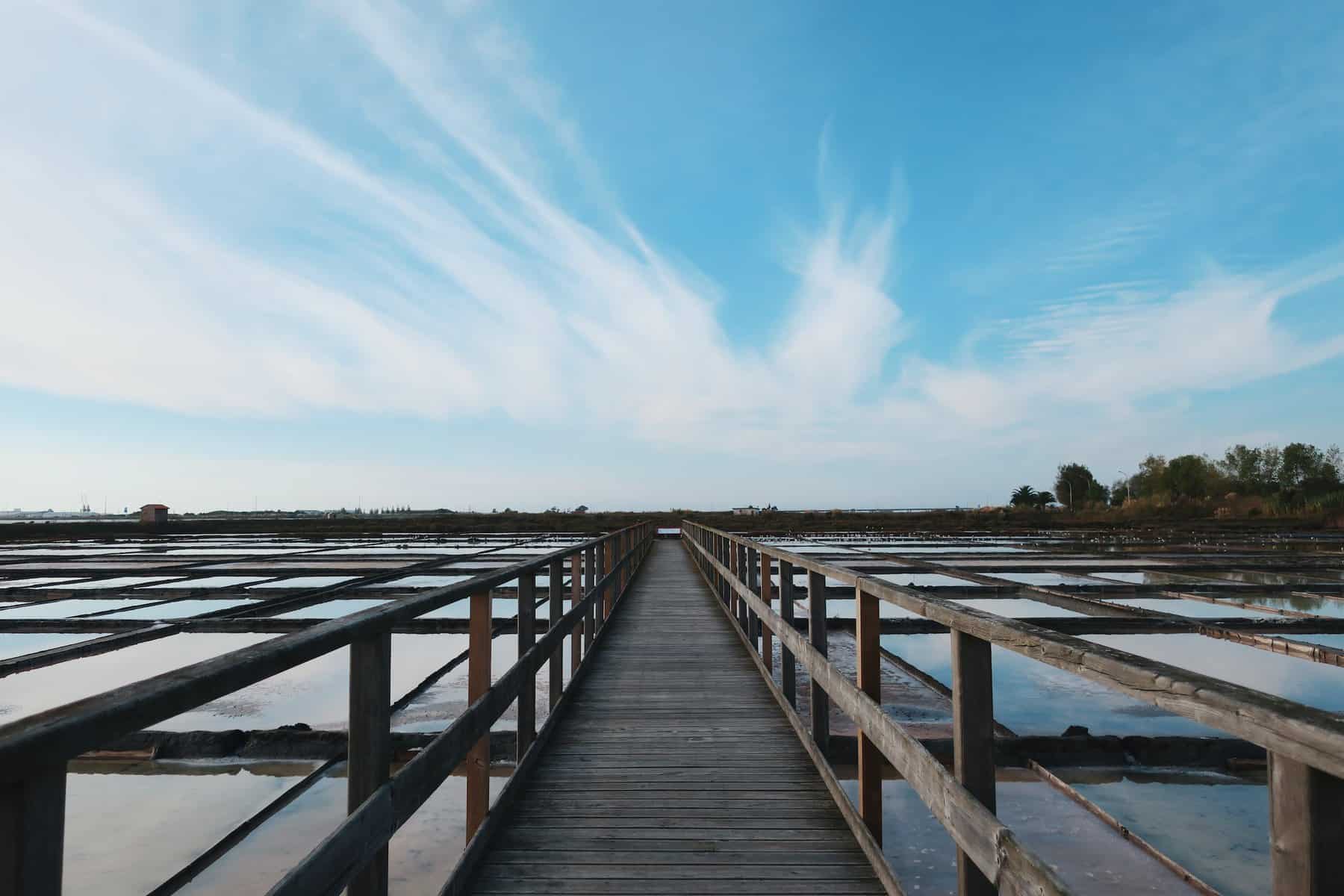
The salt ponds are an integral part of both Aveiro’s history and its present, so this is a great opportunity to learn more about this important industry—one that flourished in many coastal towns across Portugal, especially along the Atlantic, with its excellent salt.
You can drive to the ponds, park, and continue on foot, or visit them as part of a moliceiro boat trip. Most tours combine a boat ride with an introduction to the traditional salt ponds. It’s best to arrange this in advance and get more information at the shop in the city center—ZETA, at Rua Mendes Leite nº 4, Aveiro.
On the other side of the canal opposite the salt ponds is an artificial beach that is also essentially part of a salt pond. Aveiro’s artificial beach (Praia Artificial de Aveiro) on the edge of the lagoon was created by bringing in sand and setting up several umbrellas. That means there’s a beach very close to the city center, and the water is warmer than the Atlantic as well.
Maritime Museum in Ílhavo | Museu Marítimo de Ílhavo
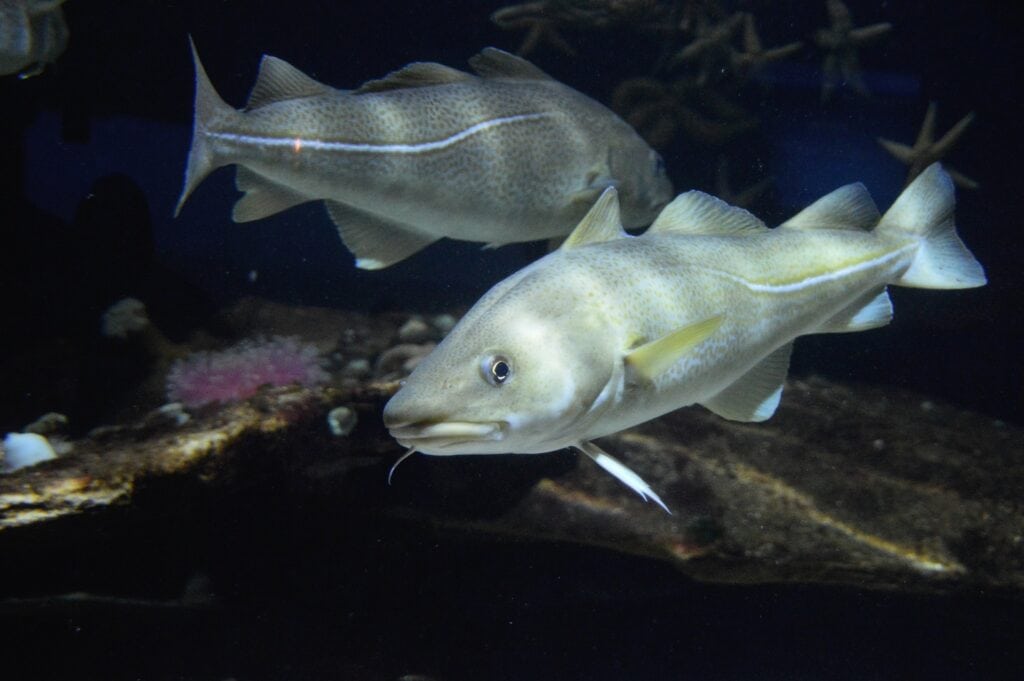
About a 10-minute drive south of central Aveiro, in a district on the southern side of the lagoon, you’ll find a striking modern museum: the Maritime Museum of Ílhavo. This contemporary museum presents Portugal’s maritime culture in an engaging way, from the country’s past as a seafaring empire to the painted decoration of Aveiro’s traditional fishing boats, the moliceiros, and above all a vivid look at the Portuguese connection to cod—bacalhau.
The museum is excellent for children. Its sleek modern building and interesting exhibits, especially the aquarium where cod swim, add a lot to the experience.
As so often in Portugal, a museum visit can be a wonderful fallback when the weather isn’t ideal for spending too much time outdoors—rain, wind, and the like.
Click here for more information about the museum…
Food in Aveiro
Aveiro’s famous dessert is Ovos Moles. It consists of a filling made from egg yolk and sugar, wrapped in a thin wafer shaped like shells or fish to reflect the character of this lagoon city.
Beyond that, as you’d expect in a Portuguese city by the sea, restaurants here serve plenty of seafood and fresh fish.
Attractions and points of interest around Aveiro
Águeda
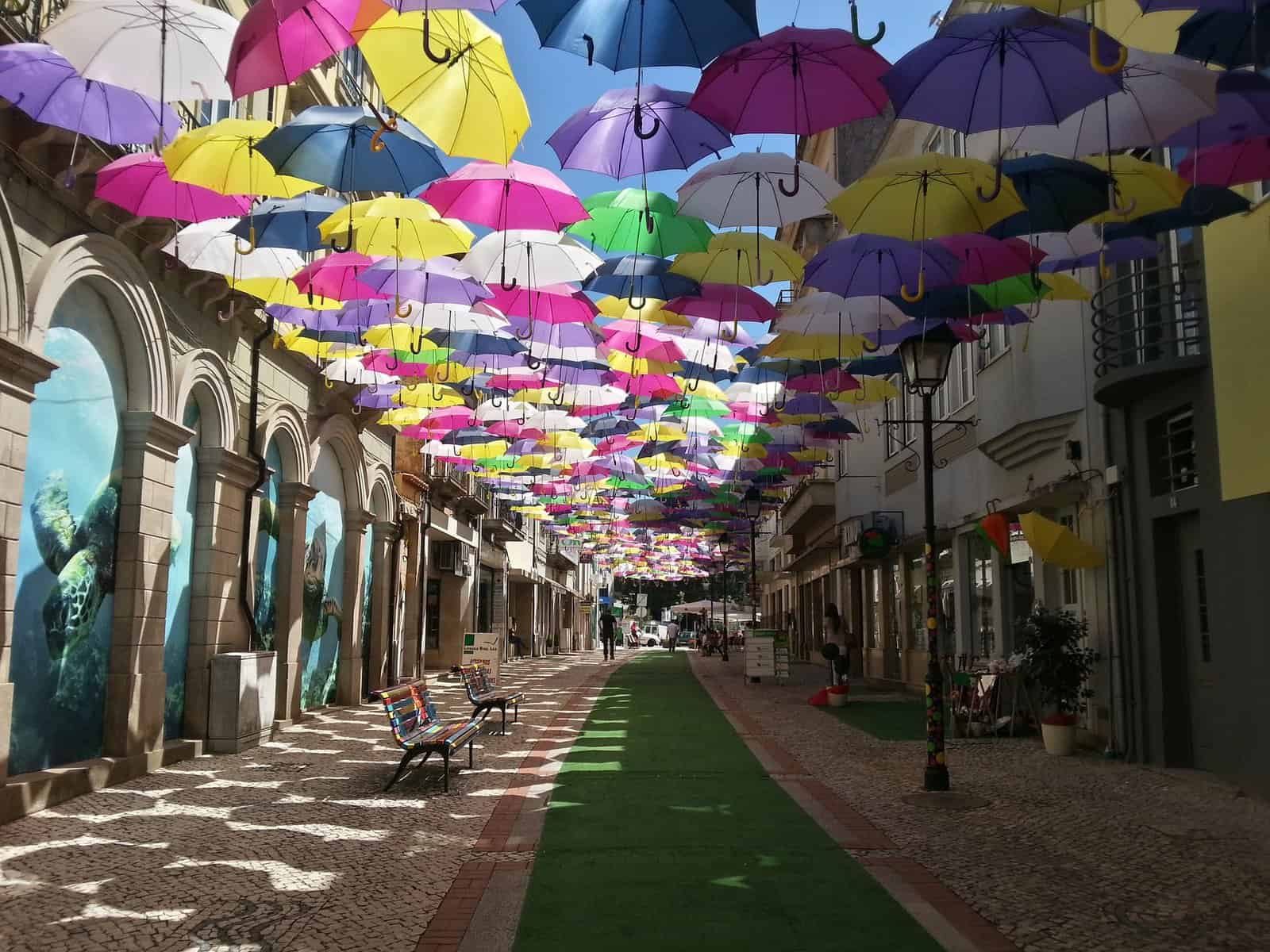
Águeda is a town in the hills about half an hour east of Aveiro. It seems to have decided to compete with Aveiro’s colorfulness and draw visitors into its small, inviting streets. Starting in 2011, thousands—if not tens of thousands—of colorful umbrellas were suspended above much of the historic town center.
The result is a major tourist draw that firmly put this small town on the map. Beyond brightening the streets, the umbrellas also provide shade, making a walk through the narrow lanes pleasant even during the hottest hours of the day.
The riverside area—Jardim do Largo 1º de Maio—is also worth a visit, especially before Christmas or during the festival, when it fills with activities.
Because of its success, each summer brings even more decorations to additional streets in Águeda, and a street art scene has developed there as well. The town also dresses up for the festival:
AgitÁgueda Art Festival
Every July, the town hosts a festival that lasts around three weeks. During the festival there are many performances by musicians from across Portugal and other countries as well. There are also many street art installations as part of the event, and it draws large crowds of visitors.
Click here for more information about the festival…
The underground museum in Sangalhos | Aliança Underground Museum
A winery, hundreds of brandy barrels, African art, mineral exhibits, Portuguese ceramics—all of it set inside a maze of underground chambers that calls itself a museum. In short, you really have to see it to believe a place like this exists. The museum lies between Aveiro and Águeda in the village of Sangalhos, about half an hour from the lagoon city.
The surrounding Bairrada region is known for wine and brandy production, and originally this was simply a winery with underground storage for large brandy and wine barrels.
Portuguese-South African businessman Joe Berardo, known as an art collector especially of modern and African art, bought the old winery and in 2007 opened this intriguing and slightly eccentric underground museum.
Berardo is well connected in the European art world, particularly in Portugal, and his large collection is displayed at the Museum of Contemporary Art in Belém, Lisbon. Here in Sangalhos, though, he tried to create art out of art itself, inside a building few would have imagined could even serve as an exhibition space.
Tours of the underground museum are conducted in groups, so it’s a good idea to book ahead. Still, if you show up and there’s room, they’ll usually be happy to add you to a tour.
Click here for more information about the museum…