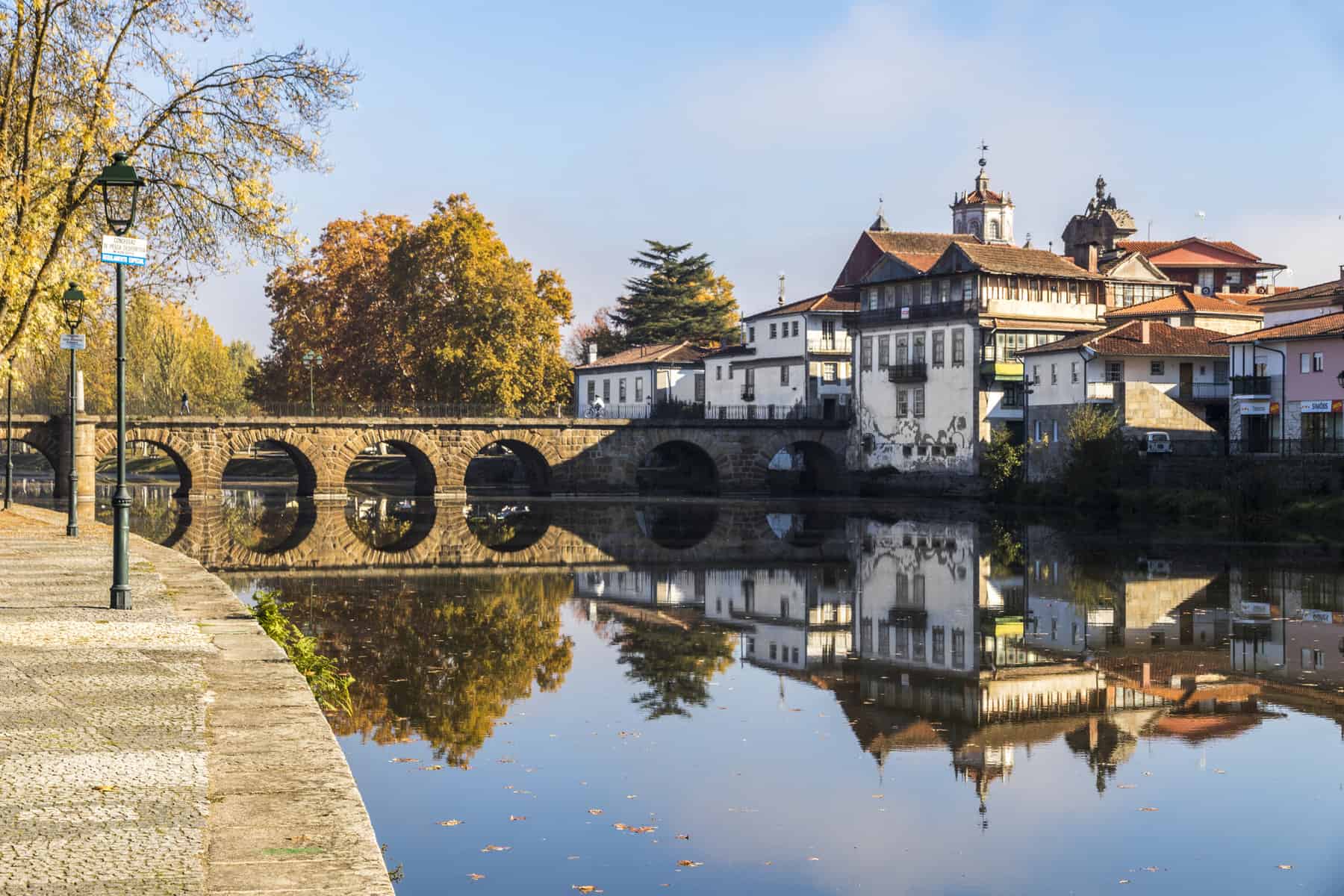
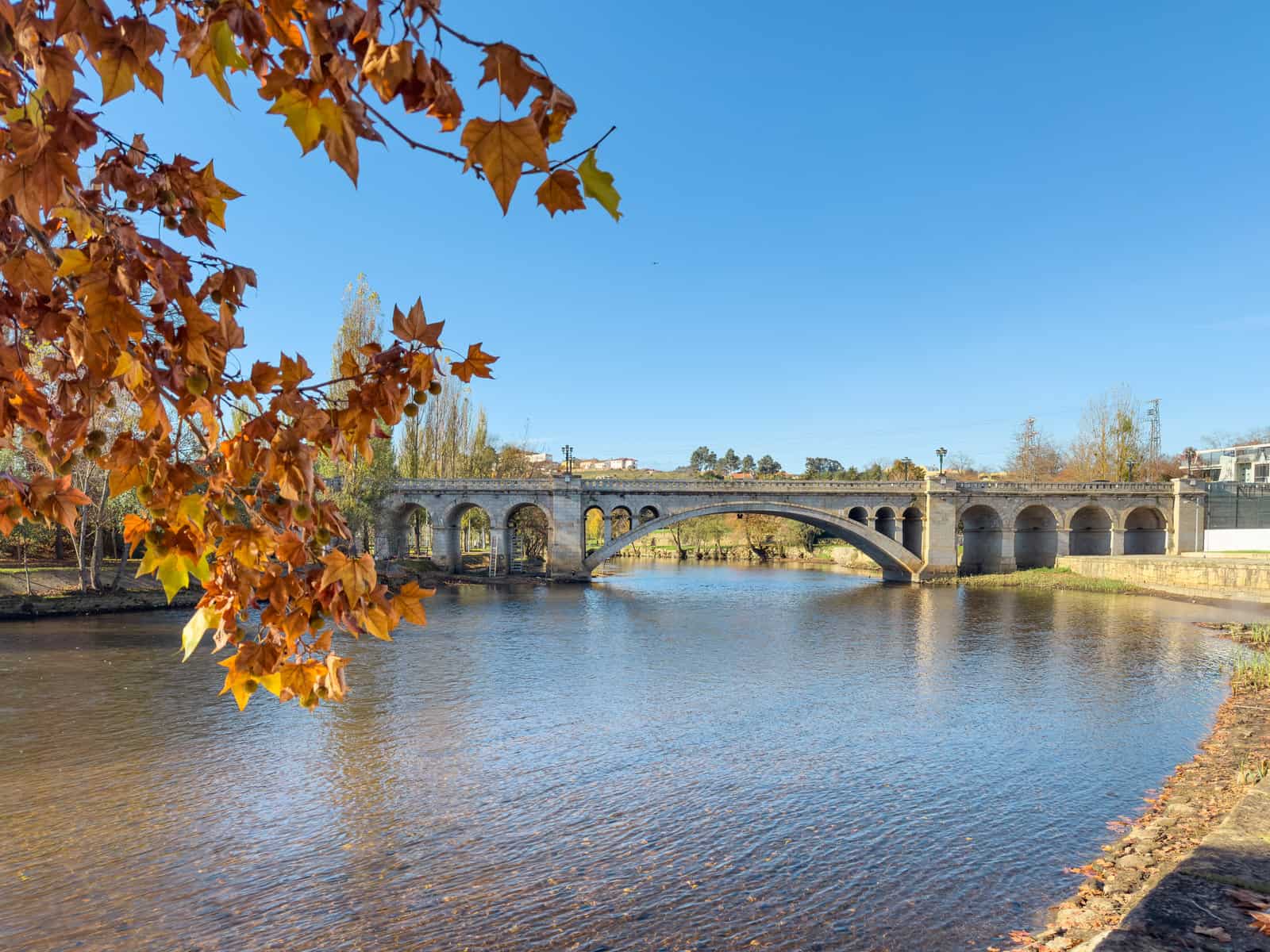
Chaves—or Shabesh, as the locals pronounce it—has been known since Roman times as the hot springs city of northern Portugal. From the earliest days of the Kingdom of Portugal, Chaves was a frontier town, which is why forts and walls were built to defend it. The city, in the far north, is crossed by the Tâmega River. Several bridges span the river, including the Roman bridge of Chaves, supported by rounded arches for nearly 2,000 years. Its old town is small, but it delivers a medieval atmosphere layered with Roman archaeological remains, and at times it truly feels as though time has stood still.
Chaves is also the northernmost end of the National Road 2 (N2), which cuts through rural Portugal from Faro in the south. That’s why many travelers come here to begin or finish this long and lovely route. In recent years, Chaves’ therapeutic springs—with their genuinely boiling water—have also started drawing wellness tourism. As a result, the city is adding more leisure options, including its large new casino.
How many days should you spend in Chaves?
Half a day to a full day is enough to see Chaves, even if you want to cover all the main sights. Still, it’s easy to stay for a night or two if you’d like to enjoy wellness treatments and explore the nearby towns, which also have hot springs, as well as the surrounding countryside wrapped in lush green scenery.
Click here to find a place to stay in Chaves, the northern city of hot springs…
9 must-see sights and things to do in Chaves
- Walk across the Roman bridge | Ponte de Trajano
- Trajano Promenade – walk or bike along the river | Alameda de Trajano
- Chaves Castle and its surrounding gardens | Castelo de Chaves
- The small, colorful Misericórdia Church | Igreja da Misericórdia de Chaves
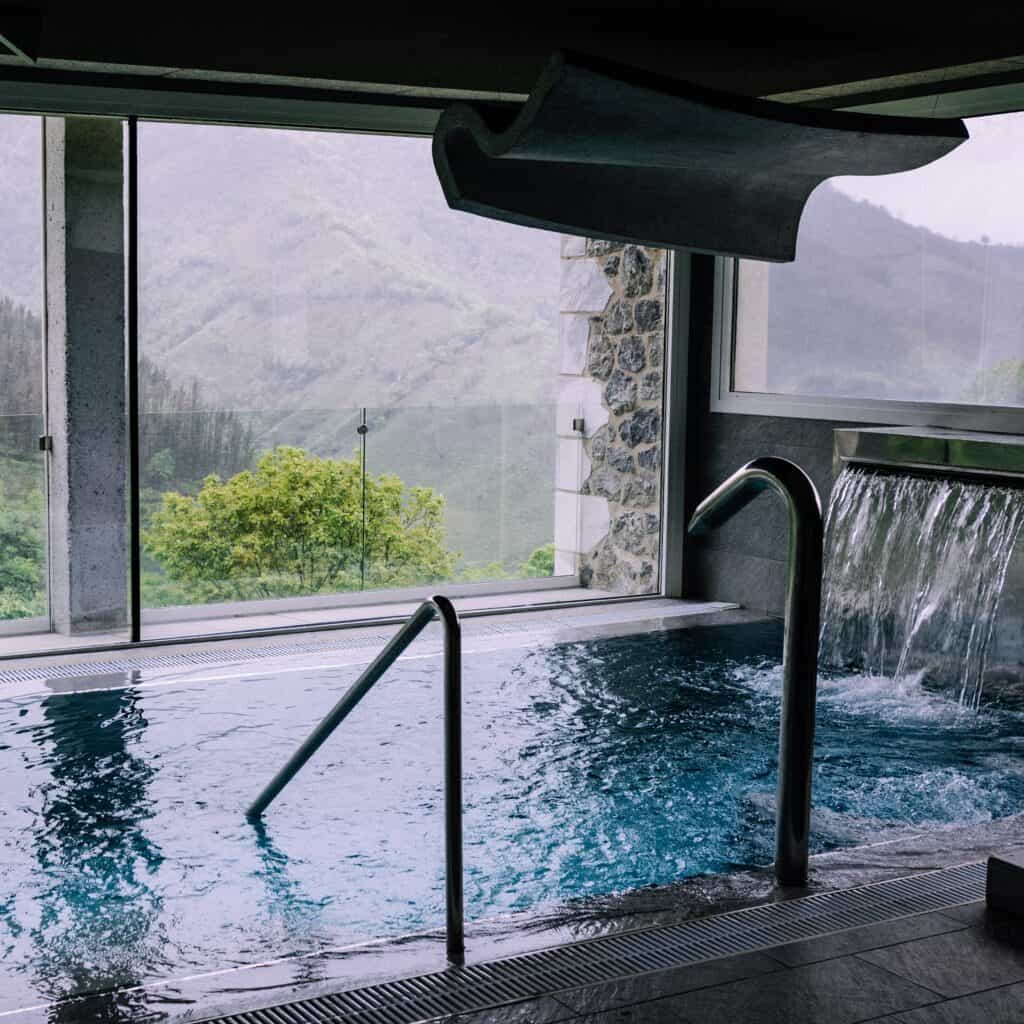
- The thermal springs of Chaves | Termas de Chaves
- Drink warm mineral water at the “bar” in the square at the entrance to the springs | Buvette de Chaves
- The Roman baths and museum | Termas Romanas
- Eat northern Portuguese food at the restaurants around Silveira Square | Praça General Silveira
- Take a photo at the N2 end-of-the-road marker crossing Portugal – especially if you’ve just finished or started the route | Estrada Nacional 2, Km 0 (Chaves)
How to get to Chaves
Flights to Chaves
Like almost every city in northern Portugal, the airport that serves Chaves is the one in Porto (airport code OPO), about an hour and a half away by car.
Because Chaves sits on the border with Galicia in Spain and near one of the main routes to Santiago de Compostela, there are a few other options as well. Chaves is about two hours from Vigo Airport and about two hours from the Rosalía de Castro Airport in Santiago de Compostela (airport code SCQ).
Click here to find a place to stay in Chaves with its hot springs…
Getting to Chaves by rental car
The best way to reach Chaves is by rental car. First, it marks either the beginning or the end of the N2, the rural road that crosses Portugal, so many travelers come here because of that beautiful and distinctive route. Second, a trip to Chaves is usually part of a wider journey through the stunning nature and rural landscapes of northern Portugal—an area best explored by car.
Parking
Parking is not a problem in Chaves, and most lots are located around the historic center, just a 2- to 3-minute walk away. There is also a convenient free parking lot behind the Roman baths (Aparcamiento gratuito), about five minutes on foot from the city center.
Public transportation to Chaves
The only way to reach Chaves by public transportation is by bus. Most buses traveling from Porto to Chaves stop along the way in Vila Real, and the full trip takes about two hours.
about Chaves
Chaves was founded as a Roman city in 79 CE during the reign of Emperor Titus of the Flavian dynasty. Even before that, there was a Roman military outpost here that developed around Chaves’ hot—or rather boiling—springs. As so often happened in the Roman Empire, towns grew up around military bases, and Chaves was no exception. The Roman city was called Aquae Flaviae, named both for its famous waters and for the Flavian dynasty.
The city remained Roman until the 3rd century, when barbarian invasions began and the Romans withdrew. Because of its remoteness, the city effectively stayed under barbarian control until the Muslim invasion—in other words, the Visigothic period in the Iberian Peninsula mostly passed it by. When the Muslims arrived, the city was abandoned by its residents, who fled into the mountains during the early-8th-century conquests.
At the time, Chaves was still called Aquae Flaviae, and incidentally its residents are still known today as Flavienses | Flavienses. It was also one of the first places to be reconquered by Christians during the Reconquista. By the late 8th century, the city had already returned to the control of what would later become the Spanish Kingdom of León. Jews also arrived later, and a Jewish quarter was established here.
With the founding of the Kingdom of Portugal, the first king, Afonso Henriques, conquered the region and soon after began fortifying it (1160). Ever since, Chaves has remained a border town with Spain. During the Peninsular War in the early 19th century, it was a stronghold that managed to withstand the French.
Chaves lies at the edge of a plateau about 400 meters above sea level and roughly 10 kilometers long. The Tâmega River, which runs through the city and the plateau, allows the fertile land to be irrigated through canals dug from it. As a result, Chaves has long been—and still is—a prosperous agricultural center.
The weather in Chaves brings cold, rainy winters and hot, dry summers. Spring is also relatively dry, though temperatures stay moderate, while fall is pleasant but can already be rainy. That makes spring or early fall the best time to visit the city. Summer is comfortable too for exploring the city and region, though heat waves are possible.
Today, Chaves feels deeply Portuguese, and its residents take pride in guarding this remote northern frontier. Tourism is beginning to grow, and more attractions and leisure options are appearing around the hot springs, including the excellent casino. The local soccer team plays fairly regularly in Portugal’s top division, and the city’s role as the start or finish of the National Road 2 route across Portugal draws curious travelers as well.
Food in Chaves, like elsewhere in the mountainous north of Portugal, is known for hearty meat dishes and dry-cured sausages that some say are among the best in Europe. One interesting restaurant that is also a bit of a historic landmark is Adega de Faustino. Located in the city center, it serves local dishes in an old-world setting. The city’s signature pastry is Pastel de Chaves, a kind of local empanada—pastry filled with ground meat—though there are also vegetarian and sweet versions.
Click here to search for accommodations in Chaves, the northern city of hot springs…
Attractions and interesting sights in Chaves
The hot water “bar” of Chaves | Buvette de Chaves
Across from the hot springs, as part of Caldas Park, there is a small shelter with a spring of hot water flowing beneath it. The water that comes out of the tap and runs nonstop is even drinkable, and it is believed to have healing properties. Many travelers who come for the hot springs of Chaves and the surrounding area stop here as one of the city’s must-see spots.
The thermal springs of Chaves | Termas de Chaves
Although the Romans built the city of Chaves around its hot springs, modern-day tourists have not fully discovered this steaming wonder yet, and for now it is mainly locals who come to the city’s spa facilities. The springs are very easy to reach and are close to the city center on foot. They are located in Caldas Park, just downhill on the far side of the castle.
The site is still in transition from a medical wellness center to a full spa complex, so many of the treatments offered are not only enjoyable and relaxing, but also aimed at helping relieve illnesses and pain. Even so, treatments that may seem medical can still be deeply soothing and a lovely way to round out a vacation before returning to everyday life.
The springs of Chaves are known for the very high temperature of their waters. In fact, the water emerges at more than 70 degrees Celsius. Naturally, by the time the pools are filled, it has been cooled to a temperature that won’t cook the guests.
One of the more interesting treatments typical of Portugal and the Iberian Peninsula in general is the duche de jato. It can be translated roughly as a jet shower. During the treatment, high-pressure water is sprayed from a distance onto the body to help relax the muscles. Prices are fairly reasonable, with good-value packages available. In short, it’s a wonderful experience that adds even more calm to the peaceful and remote region of Trás-os-Montes in northern Portugal.
For more information and opening hours…
Chaves Castle and gardens | Castelo de Chaves
From the earliest days of the Kingdom of Portugal, Chaves was always a border town, so it has several fine examples of medieval fortifications as well as later ones. The castle was built on what was once a small hill, and the old city center grew up around it. Construction dates to the reign of King Denis, who ruled Portugal from the late 13th century until 1325.
The castle stands right in the middle of town, behind Camões Square and the city hall. Of the large original castle, only the tall keep remains, and you can climb to the top by stairs. From the tower, there are wonderful views over the city and surrounding area. At its base, a small military museum displays weapons from the past.
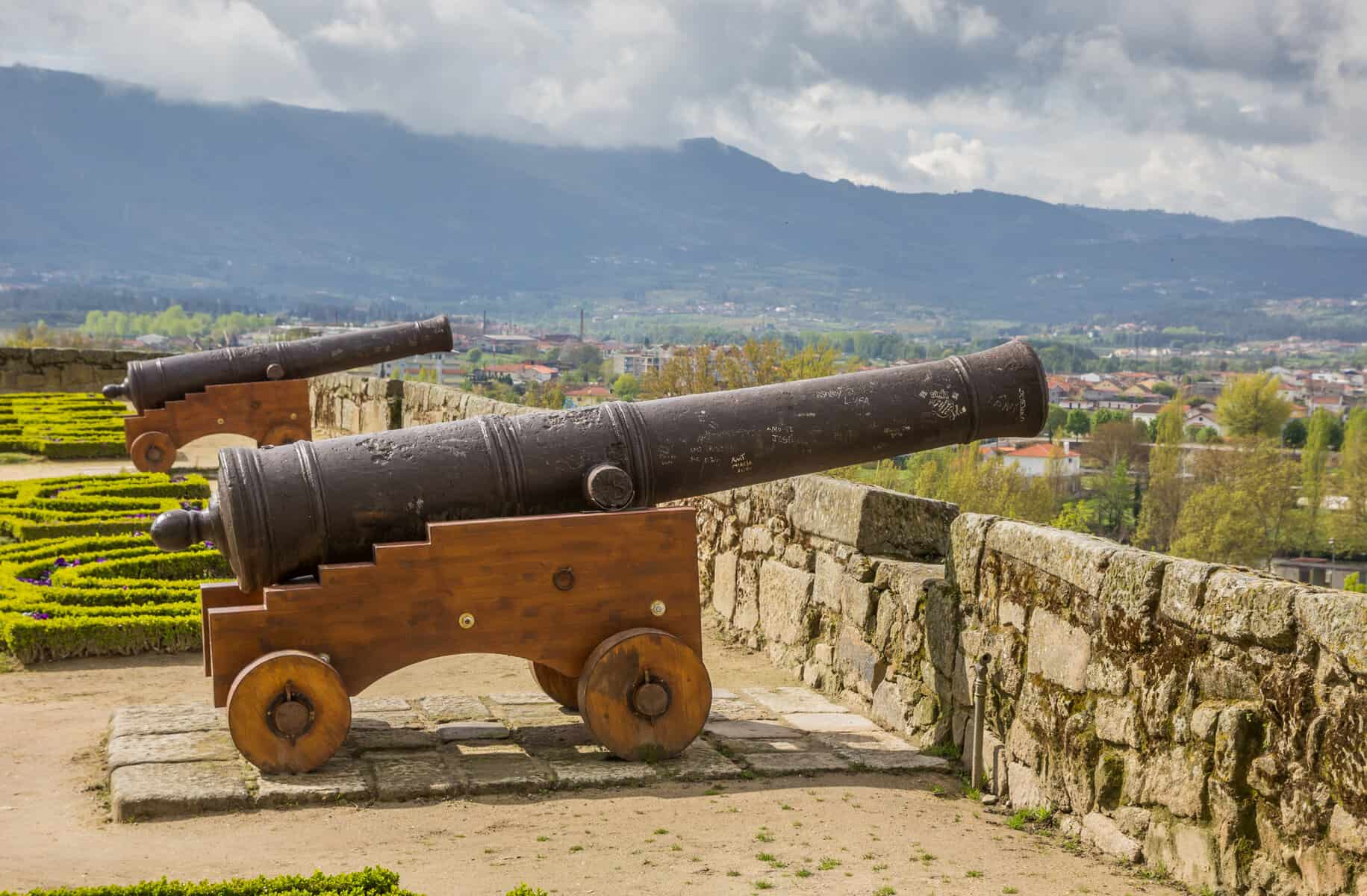
Beyond climbing the keep, the main attraction at Chaves Castle is the gardens that surround it. The gardens are neatly laid out in geometric shapes and are especially known for the cannons placed along their edges. The gardens also offer lovely views, since they were planted on top of the walls. That is also why the cannons were positioned there, giving them a commanding view over the area. The castle and gardens make for a very pleasant short stroll between the various sights in central Chaves.
Camões Square – the historic center of the city | Praça de Camões
City hall, two old churches, a paved square, and a row of colorful historic buildings—this square, named for Portugal’s national poet, gathers about half of Chaves’ main sights in one place, and it is remarkably picturesque and inviting.
Any walk through the old town of Chaves will pass through this square, and from here you can also head up to the castle and gardens. Facing city hall stands the statue of the first Duke of Braganza—15th-century Dom Afonso.
Click here to search for accommodations in Chaves…
Matriz Church | Igreja Matriz de Santa Maria Maior
This large church in an early Romanesque style stands on Camões Square. Its facade is simple and modest, and that is part of its beauty. The original structure, along with the medieval bell tower, has remained almost exactly as it was when the church was built in the 12th century. It was most likely built on the foundations of an earlier Visigothic church, which itself may have stood on the site of an ancient Roman temple.
The interior has retained its old appearance, though the church roof was completely replaced in the 19th century. As a result, the high wooden ceiling dates from a later period. Be sure to notice the stained-glass windows and the blue azulejo tilework on the ceiling supports.
Misericórdia Church | Igreja da Misericórdia de Chaves
This church, also located on Camões Square, sits in the shadow of the larger Matriz Church beside it. From the outside, it does not look especially remarkable, but step inside and the effect is strikingly colorful. The walls of the 17th-century Misericórdia Church are covered from floor to ceiling in blue azulejos—Portuguese ceramic tiles—depicting scenes from the Scriptures.
The church ceiling, meanwhile, is lined with gilded wood decoration in an 18th-century Baroque style. The richly ornamented altar, also carved in wood and covered in gold, completes the lavish scene that unfolds once you cross the threshold of this small church.
Archaeology Museum | Museu da Região Flaviense
Like several other points of interest in Chaves, the museum is located on Camões Square. It is housed in a building that once formed part of the palace complex of the Counts of Braganza. The museum displays archaeological finds from Chaves and the surrounding area, especially from the Roman period.
It is not large, but it does contain some fascinating pieces, including a collection of jewelry dating back to times even earlier than the Roman arrival in Chaves.
Click here to search for accommodations in Chaves…
Chaves Casino | Casino de Chaves
Casino de Chaves sits on a hill above the city and is set up as a hotel and casino complex. It is relatively new, housed in a modern building, and feels very welcoming. Thanks to its elevated position, it also offers wonderful views from both the property and its restaurants. It is one of the most pleasant casinos in Portugal.
The casino complex is one of the main attractions in this spa town, where many Portuguese visitors come to rest and enjoy treatments at the hot springs. It is fairly large, with several restaurants and bars, making it more than just a casino and hotel.
The casino itself is open in the evening and stays open into the early hours.
Click here for more information about the casino…
Click here to stay at Chaves’ wonderful casino hotel…

The Roman bridge | Ponte de Trajano
At 140 meters long, this bridge is one of the landmarks most closely associated with Chaves. The Roman bridge over the Tâmega River | Tâmega was built at the end of the 1st century CE by order of Emperor Trajan. It has undergone many restorations since then, but at its core it remains the same bridge, spanning its full 140 meters.
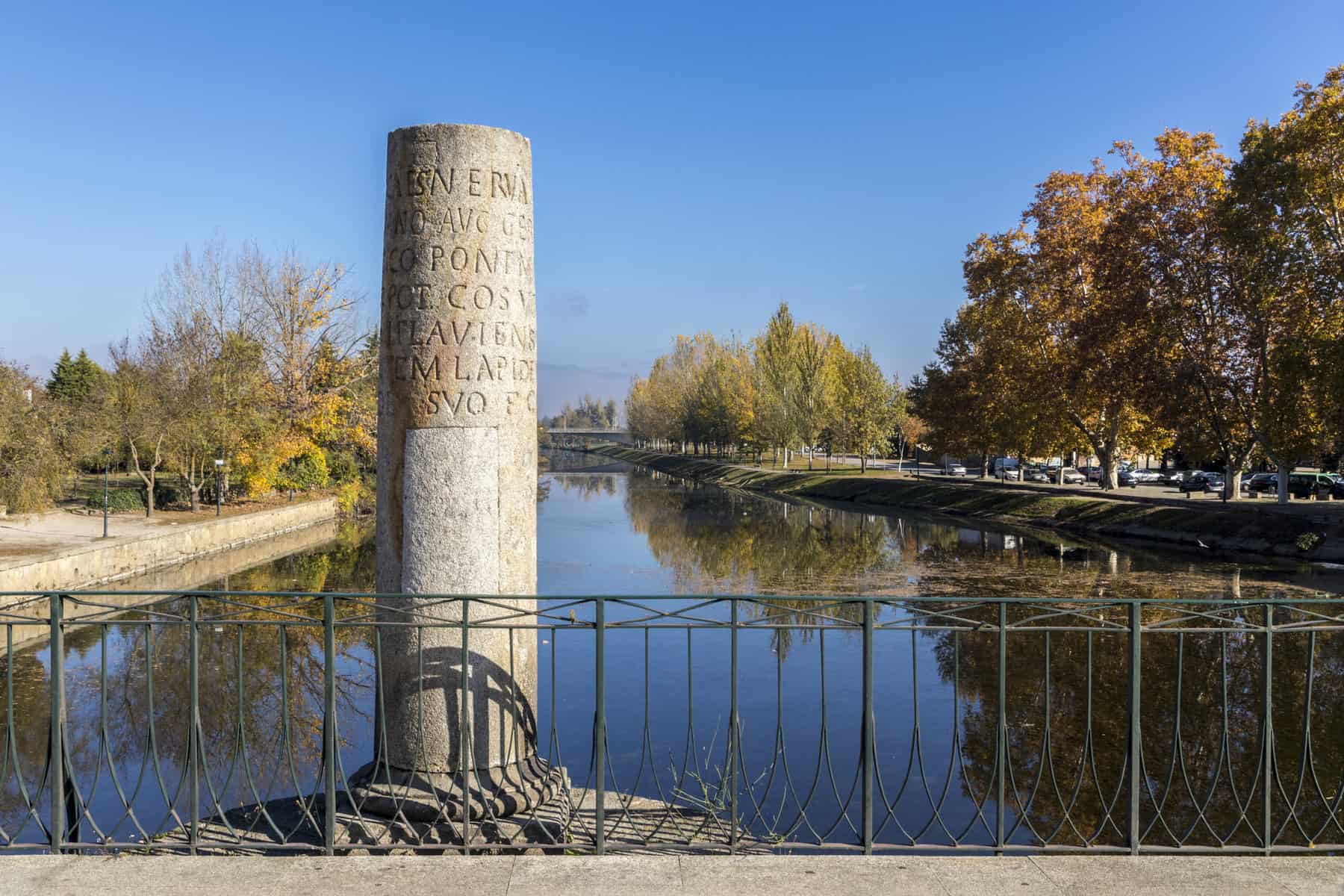
One of the bridge’s most interesting features is the Roman column | Padrão dos Povos, which bears a Latin inscription celebrating its construction. There is also a Roman milestone on the bridge marking the distance to the cities of León and Braga, both of which began as Roman cities.
The bridge is for pedestrians and effectively serves as the entrance to the old town. On the far side lies the square where the N2 road across rural Portugal comes to its end.
Trajano Promenade | Alameda de Trajano
This lovely riverside promenade along the Tâmega begins on the town side of the Roman bridge and continues as far as Barbosa Carmona Bridge | Barbosa Carmona. At just under a kilometer long, it offers several of Chaves’ most iconic views, including the reflection of the Roman bridge and its rounded arches on the water.
Halfway along, you’ll come to the modern pedestrian bridge and, beside it, the more adventurous stepping-stone crossing. The walkway is calm and pleasant, and at least part of it is a must in Chaves.
For cyclists, the promenade continues in both directions, but especially northward along the Tâmega, on a flat unpaved path that is very comfortable for riding.
Click here to find a place to stay in Chaves…
The Roman baths and museum | Termas Romanas
These are the largest Roman baths discovered on the Iberian Peninsula, and they were rediscovered almost by accident. In the early 2000s, the city began work on a public parking lot in the center of town when a pool fed by hot spring water suddenly came to light.
Fortunately, the city decided to move the parking lot elsewhere and develop the baths—the very source of Chaves itself—as one of its main heritage sites.
Chaves was founded in the 1st century around its hot springs, which, as is well known, were especially beloved by the Romans. It grew into an important city for them, which helps explain why the baths that were uncovered are so large and impressive.
Today, the bath complex is covered by a roof and operates as a museum. You can see the original pools, still filled with hot water, as part of the display. Inside, there are also many other finds explaining how the baths functioned during the Roman period and afterward.
Click here for more information and opening hours for the ancient Roman baths…
Nadir Afonso Museum of Contemporary Art | Museu de Arte Contemporânea Nadir Afonso – MACNA
This wonderful and surprising museum opened in 2016 in a large, modern, and striking building.
The heart of the museum is a display of works by the Portuguese artist Nadir Afonso. Born in Chaves in 1920, he became one of the great artists of his generation and a pioneer of kinetic art. Nadir created thousands of works, most of them in a geometric abstract style, with his “cities series,” painted throughout his life, standing out above all.
Here in his hometown, the museum displays dozens of his paintings. It also features works by other Portuguese artists, including Ema Berta.
The museum building includes a foyer, library, and auditorium, so it also serves as a cultural center and regularly hosts changing contemporary art exhibitions.
The modern museum building is impressive and pleasant, and as is often the case in northern Portugal, it can be a welcome refuge on rainy days or during the hottest summer hours.
For more information and museum opening hours…
General Silveira Square | Praça General Silveira
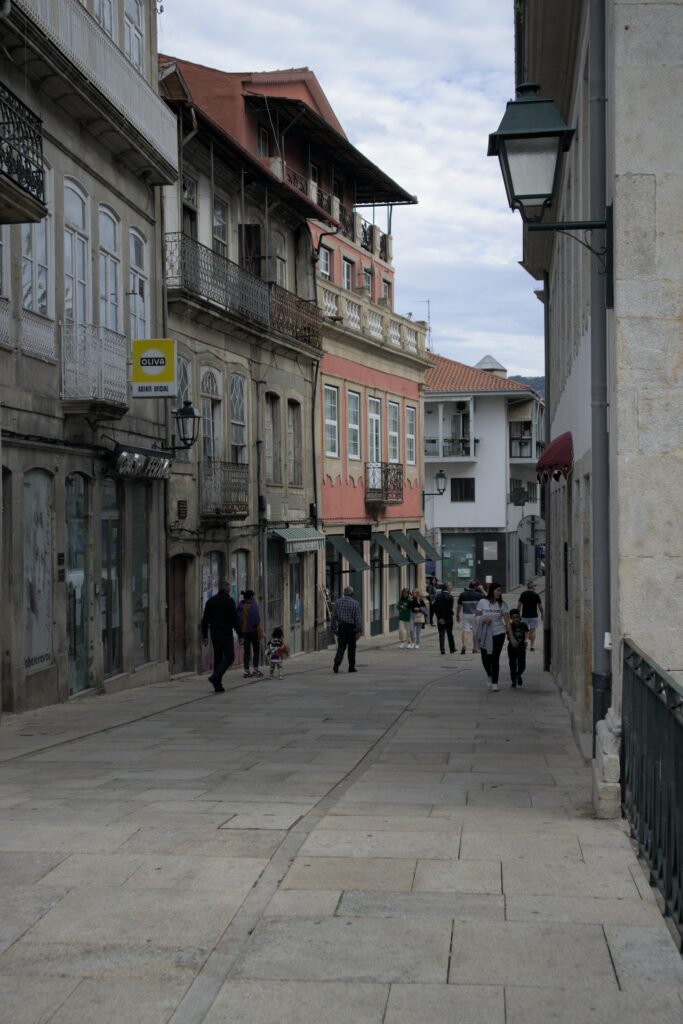
This square lies in the center of the old town. It forms part of the Santo António axis | R. Santo António, which cuts across the old town from the Roman bridge to the Bacalhau Gardens. It is one of the city’s main squares, and it is also where you’ll find the CHAVES letters that visitors come to photograph.
Beyond that, it is framed by several attractive buildings, and a number of small, old cobbled streets lead off from it, lined with shops, cafés, and restaurants.
Saint Francis Fort | Forte de São Francisco
Forte de São Francisco was built on the site of a former Franciscan monastery on a small hill, which is where its name comes from.
Chaves remains a border city with Spain to this day. During the Portuguese Restoration War in the 17th century, against the Spanish, Chaves had to strengthen its defenses. The fort was built at that time so it connected with the city’s medieval walls, completing the defensive line all the way to the Roman bridge.
Like its counterpart São Neutel farther on, it was already designed according to artillery defense principles following the French Vauban model.
Today, the fort complex is a large hotel right in the middle of Chaves.
Outside the fort (on the southern side), set against the walls, stands the statue of General Silveira | General Silveira on horseback.
Behind the statue are murals depicting the battles in which the clever general led his forces to recapture Chaves. This took place during the Peninsular Wars, when Napoleon’s armies invaded Spain and Portugal in the early 19th century.
Click here to search for accommodations in Chaves…
Saint Neutel Fort | Forte de São Neutel
It stands a little north of the old town near the stadium. While the fort inside the city (São Francisco) has become a hotel, this one remains much as it was and is a must for anyone interested in military architecture.
Built in the 17th century during the Portuguese Restoration War, the fort survives in fairly good condition. It was designed in the Vauban fortification style on top of the hill, with double walls, a moat, and guard positions projecting like spearheads far beyond the walls. A small chapel was also built inside for the soldiers.
Later, the fort was turned into a prison, and today it is a rather isolated site on the edge of town that functions as a park.
There is a walking path around the fort’s moat, which actually runs along the top of the moat wall. It makes for a very pleasant walk, with the moat and walls on one side and wonderful views of the city and surrounding area on the other.
Most of the time, the fort is empty of visitors. For that reason, children—but not only children—will really enjoy the open space around it while taking in the fortifications.
Chaves Thermal Park | Caldas de Chaves
The park sits directly opposite Chaves’ stepping-stone bridge and continues as far as the thermal springs on the other side. It can be a natural extension of your walk if you cross the Roman bridge or the newer pedestrian bridge just to the west, or part of a riverside stroll that includes crossing the bridges.
Because the park lies across from the hot springs area and close to the old town, it is very easy to reach. That makes it a convenient place to pause for a short rest before, after, or during a walk between Chaves’ main sights.
Chaves stepping-stone bridge | Poldras de Chaves
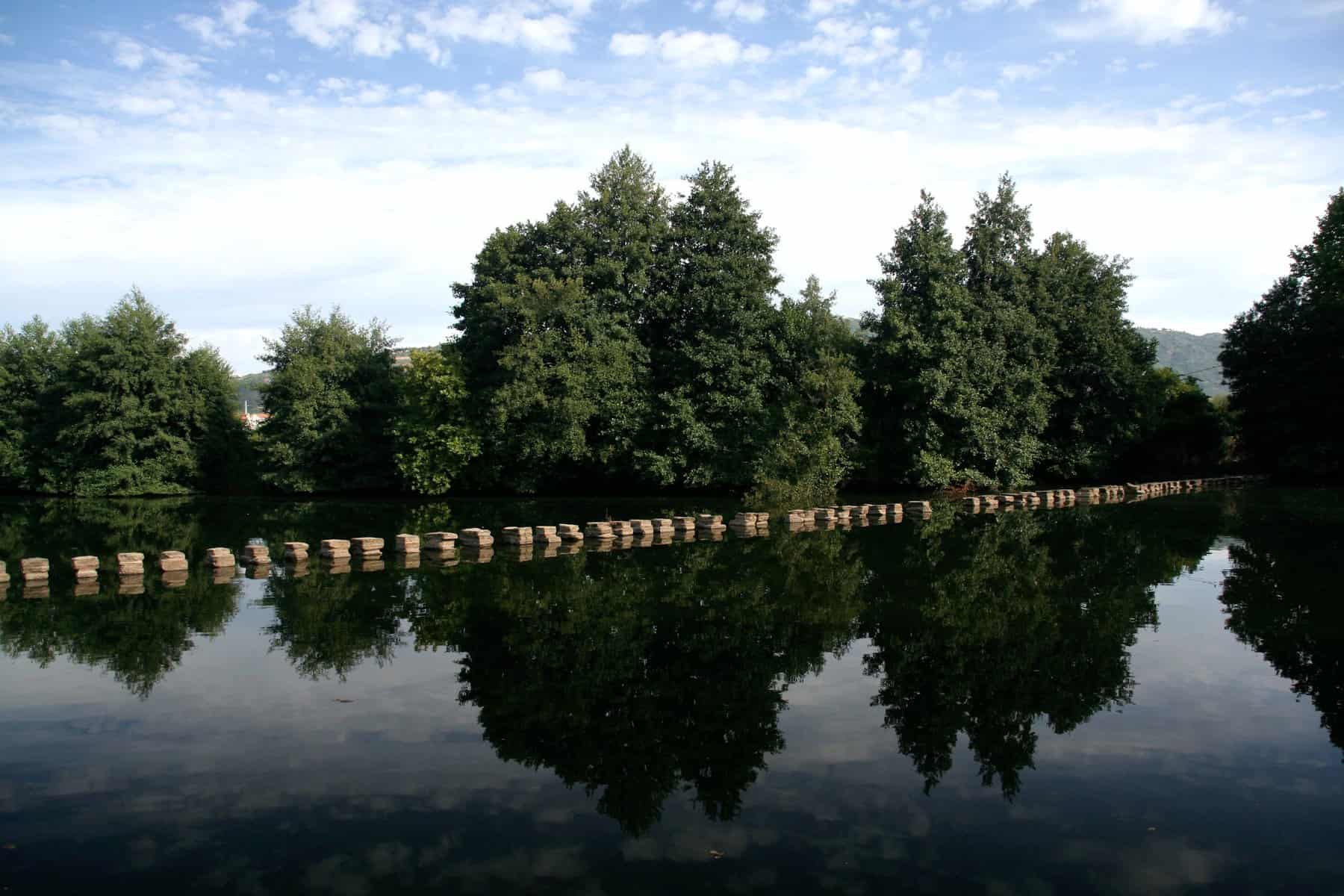
Between the Roman bridge of Chaves and the new pedestrian bridge, there is another old crossing—the stepping-stone bridge. This is an old pedestrian crossing created by placing stones with small gaps between them across the Tâmega River. People could hop from one stone to the next and cross from one bank to the other.
Today, these stones are one of Chaves’ attractions, and most younger visitors do not skip them. Crossing can be genuinely intimidating, and depending on the river level, the stones may be almost at water level or stand like columns roughly a meter above it—which is when the sense of fear really kicks in.
Crossing the river on the stepping stones is a slightly challenging and even somewhat scary experience, so it is not for everyone. Still, it is usually very popular with young people, teenagers, and the young at heart visiting Chaves. It really is worth being careful while crossing.
The bridge consists of 90 large stones. Many people set out and then turn back, so everyone can decide for themselves whether it is the right challenge.
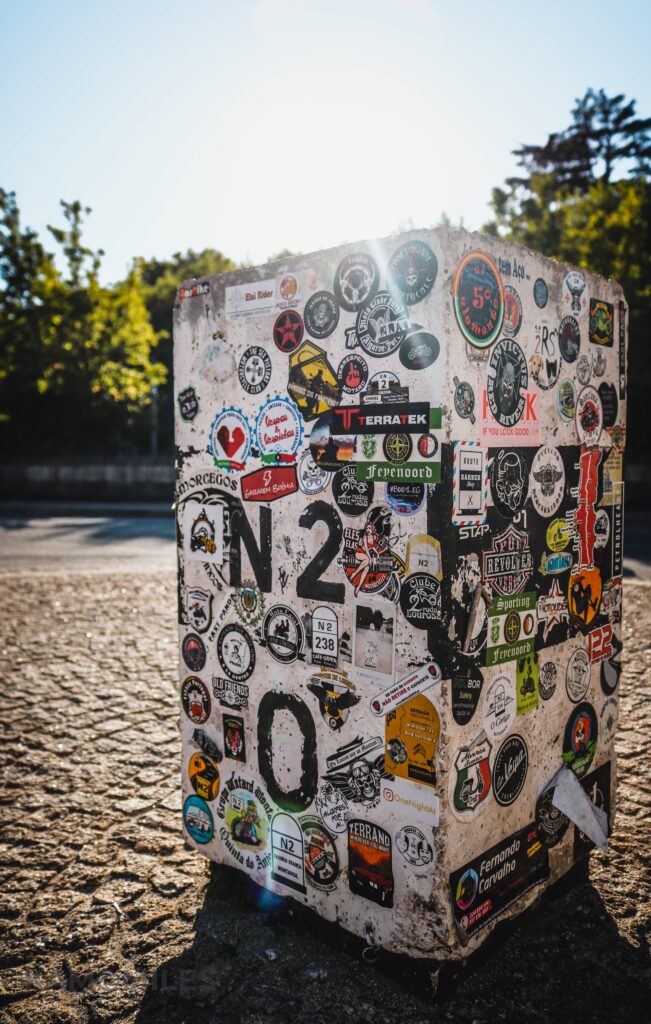
The starting point of the N2 road across Portugal | Estrada Nacional 2, Km 0 (Chaves)
In Chaves begins—or ends—the 739-kilometer road that runs all the way down to Faro | Faro in the south. The “Nacional Dois” runs through the entire length of Portugal, right through its center. Many travelers driving rental cars in Portugal choose to drive at least part of the road, especially the sections passing through villages and the country’s more remote areas.
Travelers on the route, and especially those who complete the full journey, come to photograph the 0 km sign on the N2 in Chaves. The marker stands in the middle of a traffic circle very close to the Roman bridge, about a three-minute walk away.
Click here to search for accommodations in Chaves…
Chaves Park | Jardim Público de Chaves
The gardens lie between the Roman bridge and the N2 end-of-the-road marker on the opposite side of the river from the old town. They are a very convenient place to stop and rest after a walk that includes crossing the Roman bridge. With its tall trees, the park offers shade on hot days and is generally a pleasant place to sit.
You can also start a longer riverside walk here, crossing the bridges farther along the river and returning through the green open spaces.
The whole area can also be explored by bike, including crossing the modern bridge built for pedestrians and cyclists. From there, continue to the lovely Trajano Promenade (Alameda de Trajano) between the Roman bridge and Barbosa Carmona Bridge.
Football in Chaves
The city has a small club that in recent years has moved up and down between divisions. The team is called G.D. Chaves and plays in blue-and-red uniforms reminiscent of Barcelona.
Chaves’ biggest rivalry is with the Football club of nearby Vila Real, making it a true derby since both belong to the same district. However, the teams have not played in the same division for years, so today the main rivalry is with Vitória Sport Clube Guimarães, which is also based in northern Portugal.
The team’s supporters are known as Flavienses, a name that actually refers to anyone from Chaves. The nickname comes from the city’s Roman name. Back then, Chaves was called Aquae Flaviae, after the Flavian dynasty under which it was founded.
The team plays at Estádio Desportivo de Chaves, located just north of the old town. The stadium holds around 12,000 spectators. It is a little dated, although a new stand was recently built behind one of the goals.
A historic moment at Chaves’ stadium came back in 2003, when Cristiano Ronaldo made his debut for the Portugal national team there.
Attractions and places of interest around Chaves
The hot springs route: Vidago-Chaves-Verín | Vidago – Chaves – Verin
The hot springs of the Trás-os-Montes region do not stop at borders, so there are thermal springs on the Spanish side as well. The town of Verín is Chaves’ counterpart just across the border in Spain, while Vidago lies a few kilometers south of Chaves.
There is a route known as the “hot springs route,” where lovers of steaming waters travel between the springs in all three towns, comparing where they enjoyed themselves most.
The route begins in Vidago to the south, where there is also a luxurious spa hotel | Vidago Palace. It continues through Chaves, about 20 minutes to the north, and ends in Verín across the border in Spain—roughly half an hour’s drive from Chaves. There is even a “passport” that spa enthusiasts have stamped in each town they visit along the route.
All three offer therapeutic hot springs, and what makes them especially appealing is that tourism here is still in its infancy. Many people have yet to discover the charms of the remote northern part of the Vila Real district.
Click here to find a place to stay in Chaves…
Monforte Fortress | Castelo de Monforte de Rio Livre
About 20 minutes east of Chaves, this fortress stands on a hilltop in the heart of a forest, above the village of Águas Frias | Águas Frias. The fort sits at an elevation of more than 800 meters, with wonderful views over the surrounding valleys. The drive there is beautiful as well and offers an authentic taste of northern Portugal.
The Chaves area was incorporated into the Kingdom of Portugal as early as its foundation in the 12th century, and even then an outpost with a good vantage point was established here. The first fortress was built in the 13th century, while the structure seen today dates to the Portuguese Restoration War in the 17th century, with further improvements made in the 19th century.
The fortress was abandoned in the mid-19th century, and in the 20th century it was declared a heritage site. Even so, it has not been properly restored, and some visitors may actually appreciate its weathered, authentic look.
The Bobadela Boulder
Farther along the road, still within the rural surroundings of the village of Bobadela, stands a large mushroom-shaped stone known as the Bobadela Boulder | Pedra Bolideira da Bobadela.
This granite stone, about three meters high and nearly ten meters long, is split down the middle, and over the years legends have grown around who placed it there and cleaved it in two.
It stands right by the road (N103), so it takes very little time to stop and see it. If you have a bit of extra time after visiting the fortress, it’s worth making the short detour—about 7 to 8 minutes’ drive from the site—for a photo.