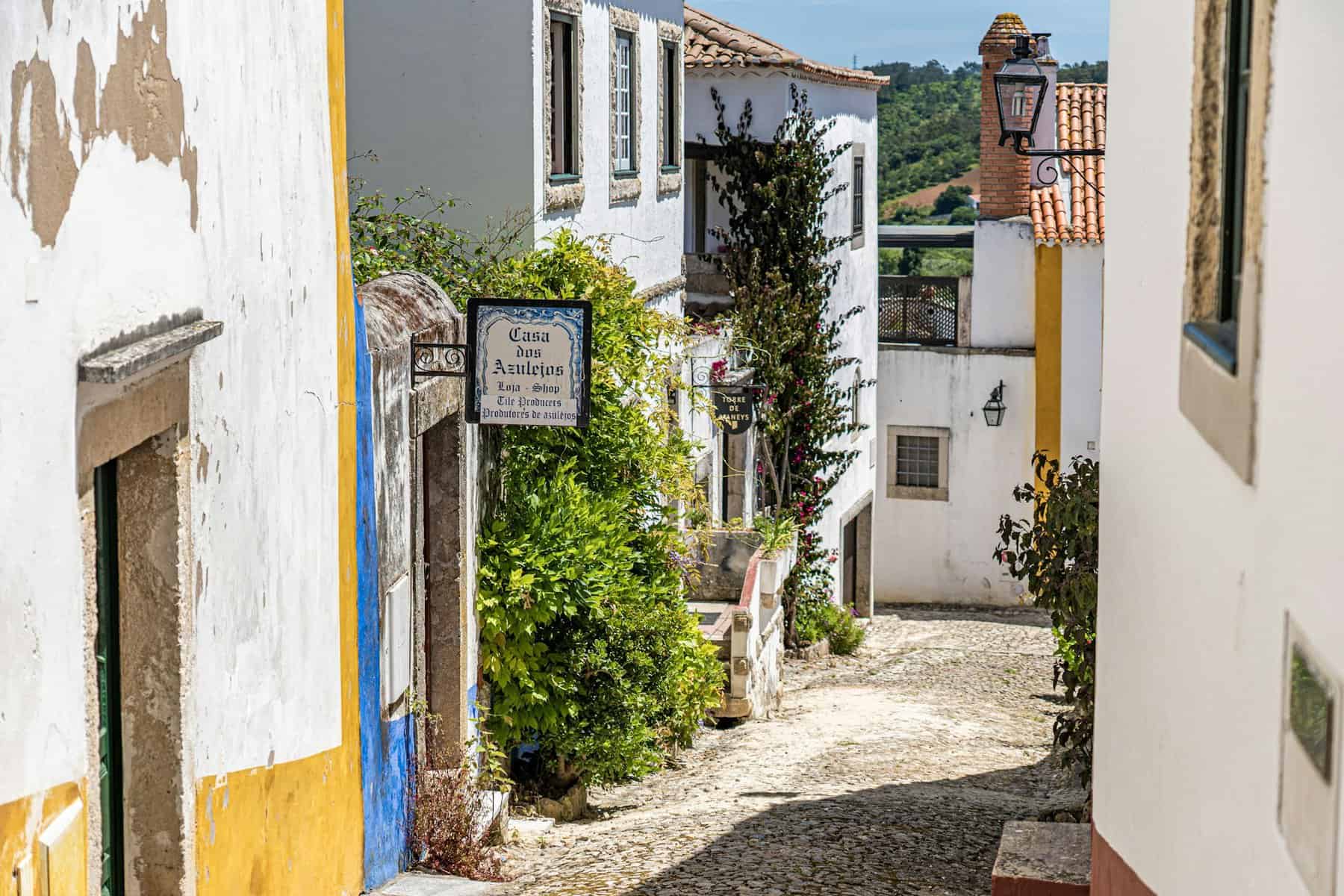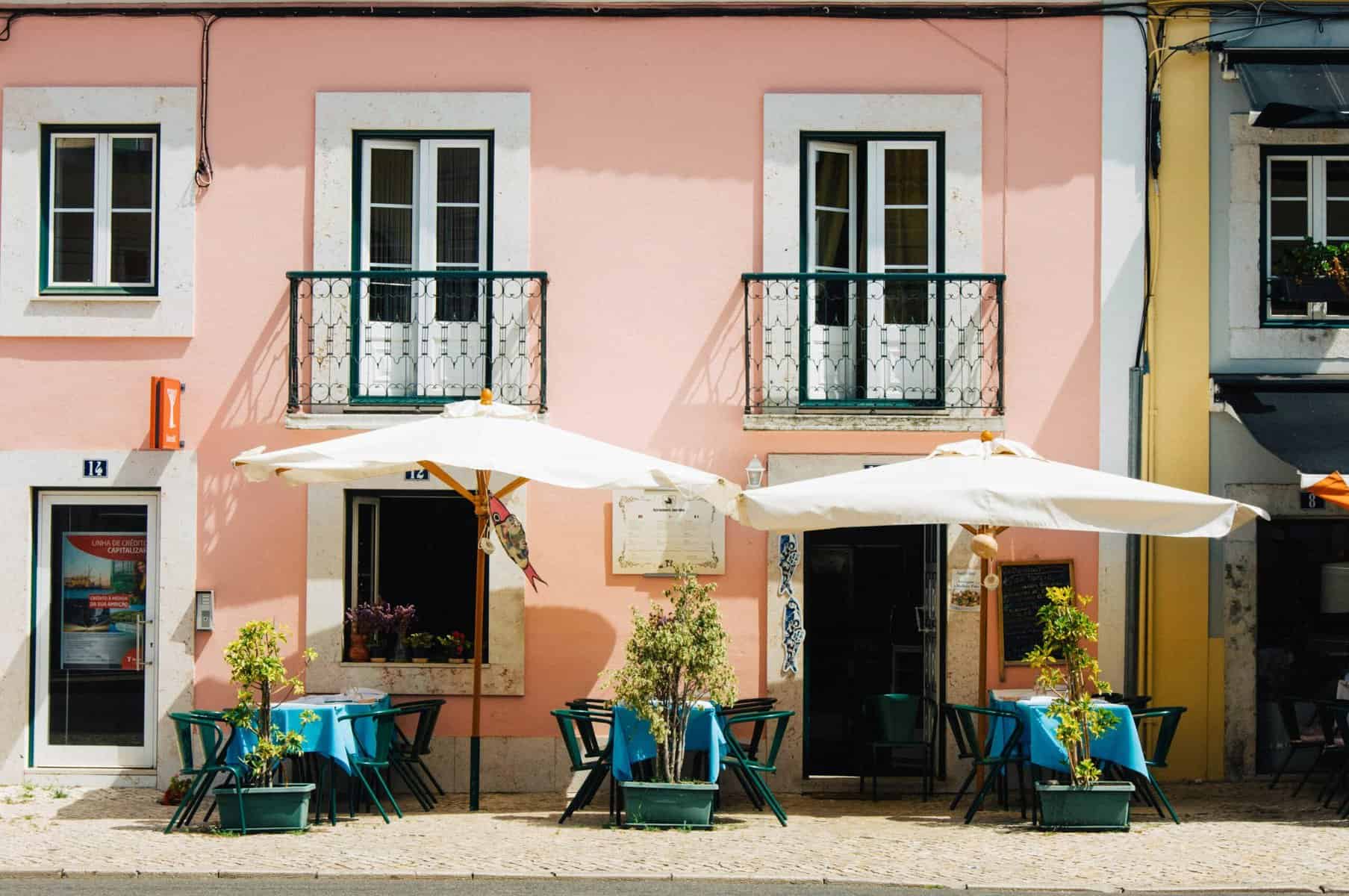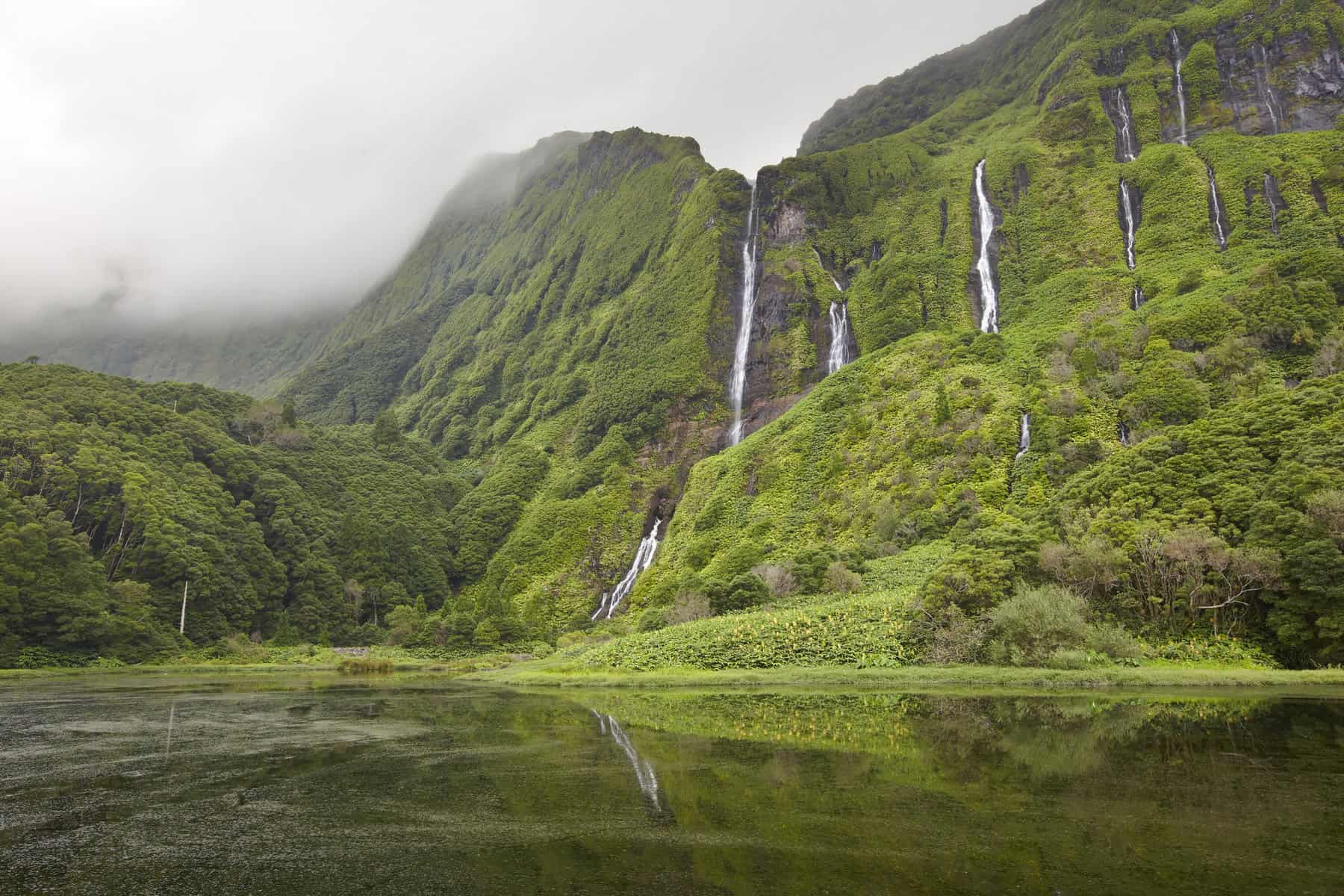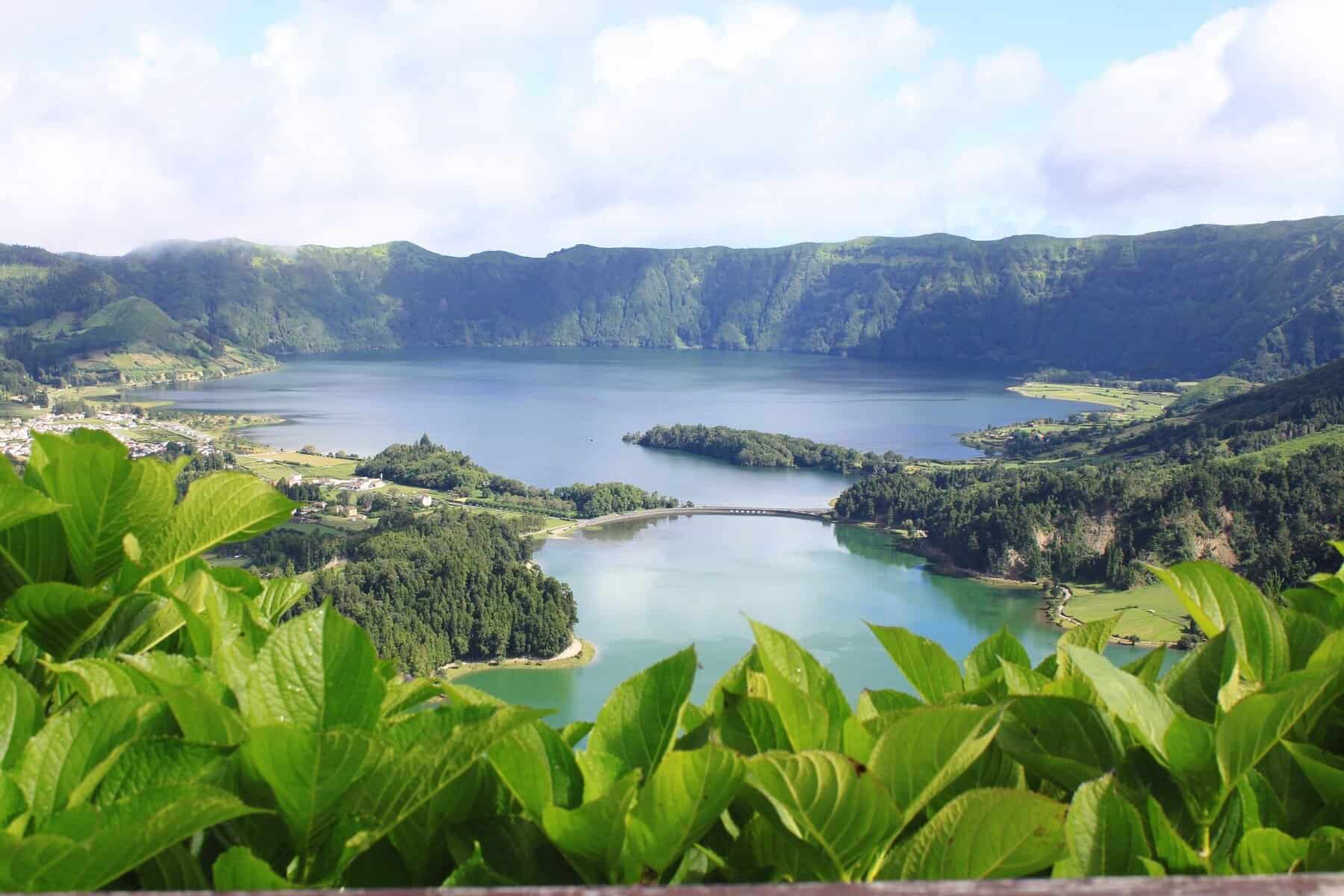
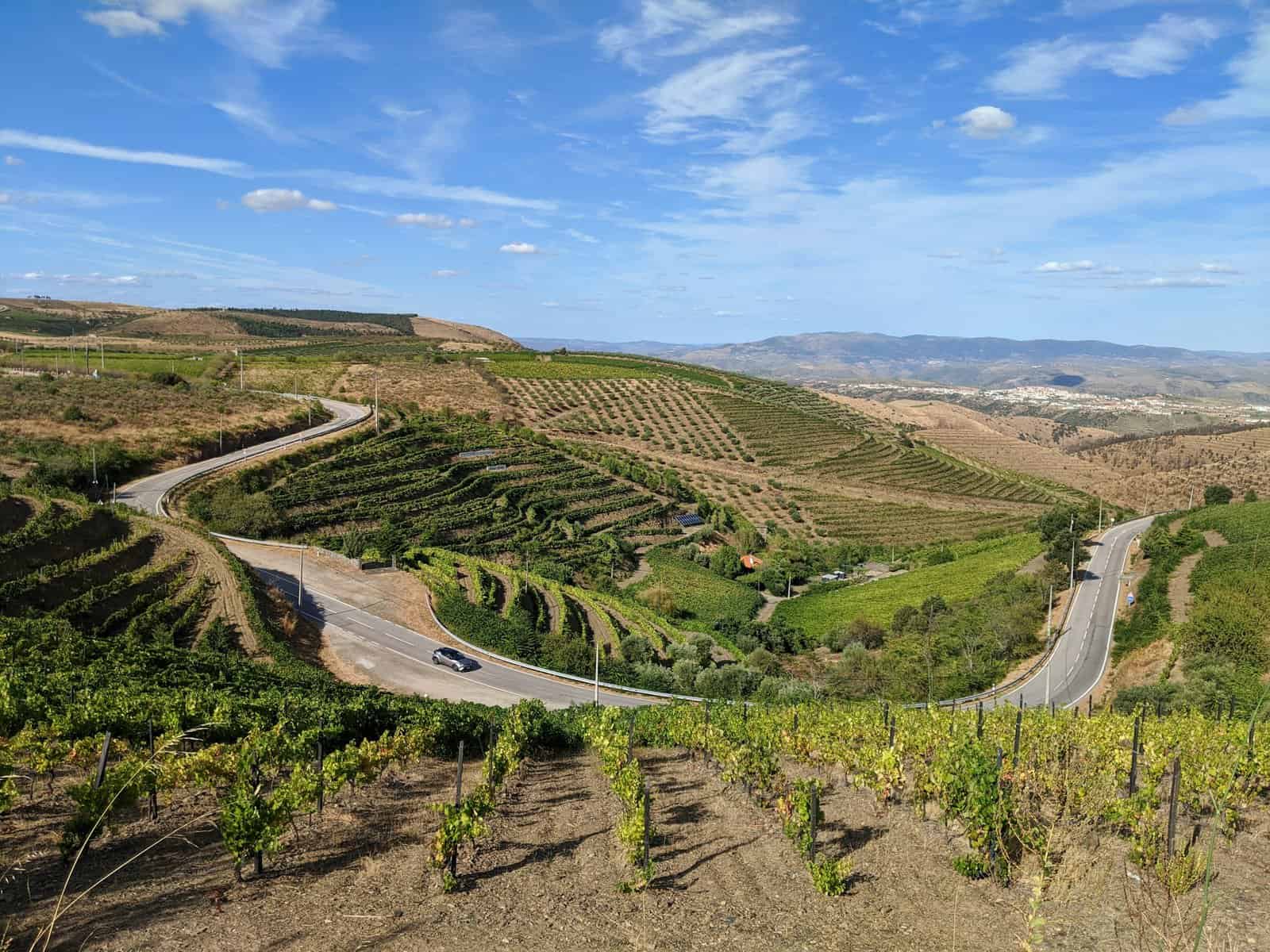
Vila Real, in northern Portugal, draws most visitors to the city for Mateus Palace. Yet anyone who gives the city itself half a day will discover a place with a distinctly medieval feel, full of charming narrow cobbled streets. Scattered among them are several churches, mostly Baroque, with characteristic ornamentation and, of course, azulejo tilework. Mateus Palace is Vila Real’s main attraction, and its elegant building and gardens are sometimes called the Versailles of Portugal—just on a much smaller scale. Set above the famous Douro River, Vila Real is also known as a winemaking center. The surrounding countryside is dotted with vineyard-covered hills and crossed by little streams. Just outside town, there is even a surprising water park. Vila Real works well as a stop on a self-drive trip through the inland regions of northern Portugal. The water park can even serve as a little “bribe” to persuade the kids to come along.
How many days should you spend in Vila Real?
Half a day is enough to see all the main sights in Vila Real itself. That said, most people visit as part of a broader trip through northern Portugal and the Douro river, in which case it can also work well as an overnight base for exploring the surrounding countryside. If you want to include the water park, you should definitely plan on at least two days, with half a day for the city and its sights and one full day—or more—for the park.
Click here to find vacation rentals and hotels in Vila Real…
7 must-see sights and things to do in Vila Real
-
- Visit the grand Mateus Palace and all its wings | Casa de Mateus
- Vila Real Cathedral in its old Gothic building | Sé Catedral de Vila Real
- Visit Igreja do Calvário at the heart of its large surrounding square | Igreja do Calvário
- Step inside Igreja de São Pedro to admire its lavish interior decoration | Igreja de São Pedro
- Wander the streets of the city center all the way to romantic Capela Nova | Capela Nova
- Walk the raised paths above the Corgo River gorge below the city | Viaduto do Corgo
- Spend time at the water park and the adventure park at NaturWaterPark (great for kids) | NaturWaterPark
How to get to Vila Real
Flights to Vila Real
The international airport that serves Vila Real is Porto Airport (OPO), about an hour’s drive from the city.
Vila Real also has a small airport used mainly by firefighting aircraft, private planes, and service aircraft. It does, however, handle commercial domestic flights on small planes operated by (Sevenair Air Services). The airline also flies from Viseu, Cascais, and several other small cities around the country. The airport is located on the far side of the Corgo River, relatively close to the university, and was recently renovated and expanded. For now, though, commercial service is limited to these small aircraft flights.
Getting to Vila Real by rental car
The best way to reach Vila Real is by rental car.
Most visitors include the city as part of a trip through northern Portugal, either as a stop along the way or as a base for nature outings in the surrounding area. For that reason, a rental car is the most convenient option for exploring both the city and its surroundings. Within the old town, most sights are easy to reach on foot, but you’ll need to drive to Mateus House.
Parking – There is a large parking garage beneath Praça do Município, right in the heart of town, as well as several smaller ones nearby. In the rest of the city, parking is generally plentiful.
Public transportation to Vila Real
The only way to reach Vila Real by public transportation is by bus.
From Porto, the trip takes a little over an hour, and most buses depart from Campanhã Station (Oporto Campanha). Note that most services continue on to Bragança, with Vila Real as an intermediate stop.
Vila Real’s main bus station is conveniently located about a 5-minute walk northwest of Praça do Município.
Click here to look for accommodations in Vila Real…
Good to know about Vila Real
The famous Douro River does not actually flow through the city itself. Instead, the Corgo River, which runs below Vila Real, is one of the Douro’s tributaries and joins it about 12 miles to the south near the town of Peso da Régua | Peso da Régua. More broadly, the district of Vila Real stretches from the north bank of the Douro all the way to the Spanish border, so the topography is very similar. That is why some of the wines produced around the city are considered Douro wines.
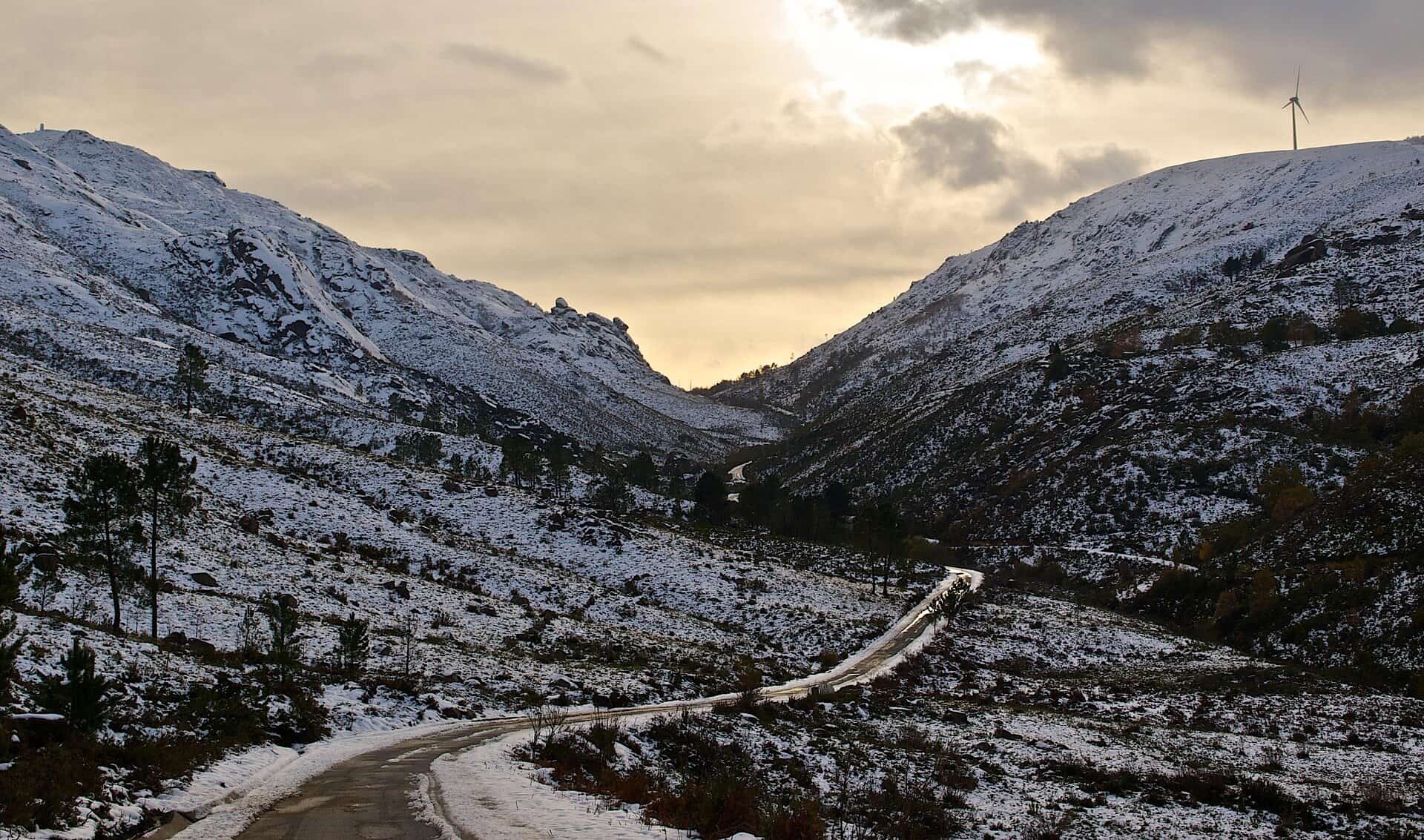
Vila Real is the largest city in the district of the same name. It has about 30,000 residents, with roughly another 20,000 living in the surrounding rural area. The city stands on a plateau about 1,475 feet above the valleys of the Corgo | Corgo and Cabril | Cabril rivers. This plateau lies between relatively high mountains with beautiful natural scenery, especially in the Alvão Mountains to the north | Parque Natural do Alvão.
The weather in Vila Real is much like the rest of northern Portugal, with plenty of rain in fall and winter. The best time to visit is from spring through early summer. July and August can be hot, since the city lies inland, but the rest of the year is generally neither very hot nor freezing, unlike higher and more remote inland areas.
Founded around 700 years ago, the city reached its height in the 16th and 17th centuries, when the family of the Marquês de Vila Real | Marquês de Vila Real was among the most important noble houses in the kingdom. Several of the city’s most beautiful churches were built during that period as well.
Its location at the crossroads of Viseu–Chaves and Porto–Bragança made it strategically important to the Portuguese crown throughout much of the country’s history, attracting economic activity that allowed noble families here to grow and prosper. Like much of Portugal, however, the city declined in the 19th century and early 20th century.
Today, Vila Real is beginning to grow again as a student city around the University of Trás-os-Montes and Alto Douro | Universidade de Trás-os-Montes e Alto Douro, which opened here in 1986 on the far side of the Corgo River. Its cultural life is also developing, with a large library, a new theater, and modern shopping centers.
In recent years, Vila Real has been working to attract more visitors to the city itself, not just to Mateus Palace and the wineries in the surrounding area. The car race that runs through its streets | Circuito Internacional de Vila Real has also been revived. It belongs to the lower racing tiers, but it is still a fascinating event—especially in a small place like Vila Real.
This small city in Portugal’s northern interior may be off the main tourist trail, but it is surrounded by beautiful nature and firmly tied to the world of wine and vineyards. A visit to Vila Real and the nearby sights offers exactly the kind of calm many travelers long for as a break from everyday life.
Click here to find a place to stay in Vila Real…
Mateus Palace | Casa de Mateus
Mateus House, or Casa de Mateus as locals call it, is the city’s most important sight and the main reason travelers come to Vila Real.
Construction of the palace began in 1740 on the foundations of an older building used by the noble family. The Italian architect Nicolau Nasoni | Nicolau Nasoni, who worked mainly in Porto, was involved here as well.
Until 1961, it remained solely in family hands, but since then parts of it have been opened to the public. It has also been managed by the Fundação da Casa de Mateus | Fundação da Casa de Mateus, which hosts many cultural events on the estate.
The site is about a 5-minute drive west of the city center. The house sits on a hill beyond the Corgo River, surrounded by beautiful vineyards. It is certainly not as vast or as opulent as the Palace of Versailles outside Paris, but it is undeniably an impressive building, filled with ornamentation, paintings, and attention to every detail.
That makes it a must for anyone traveling through the upper Douro in northern Portugal. The estate is divided into three parts: the gardens, the palace-museum, and the winery. You can visit all three together or each one separately. There is a combined ticket, though the winery is always ticketed separately, and family discounts are available.
Click here to find hotels in Vila Real…
Gardens
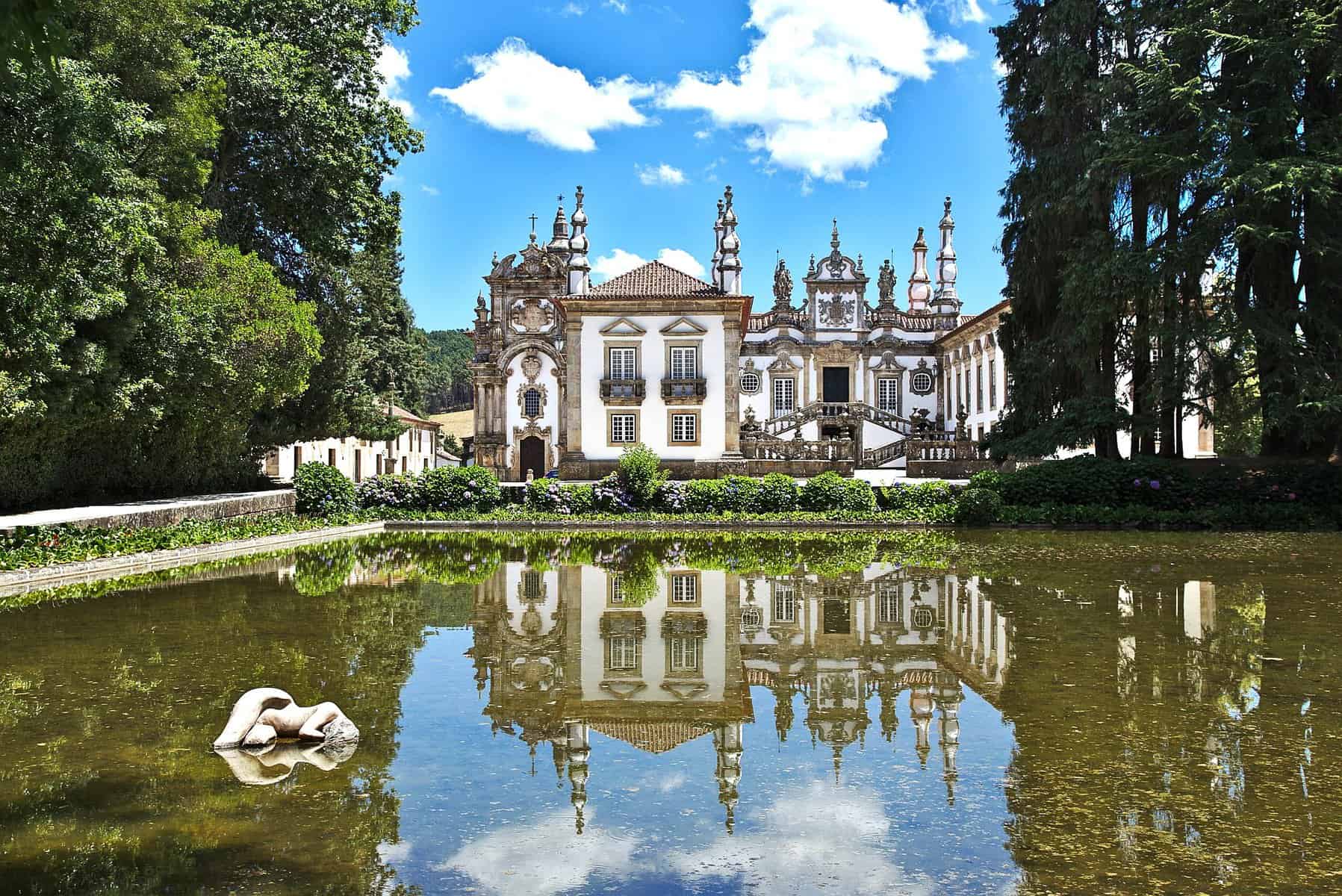
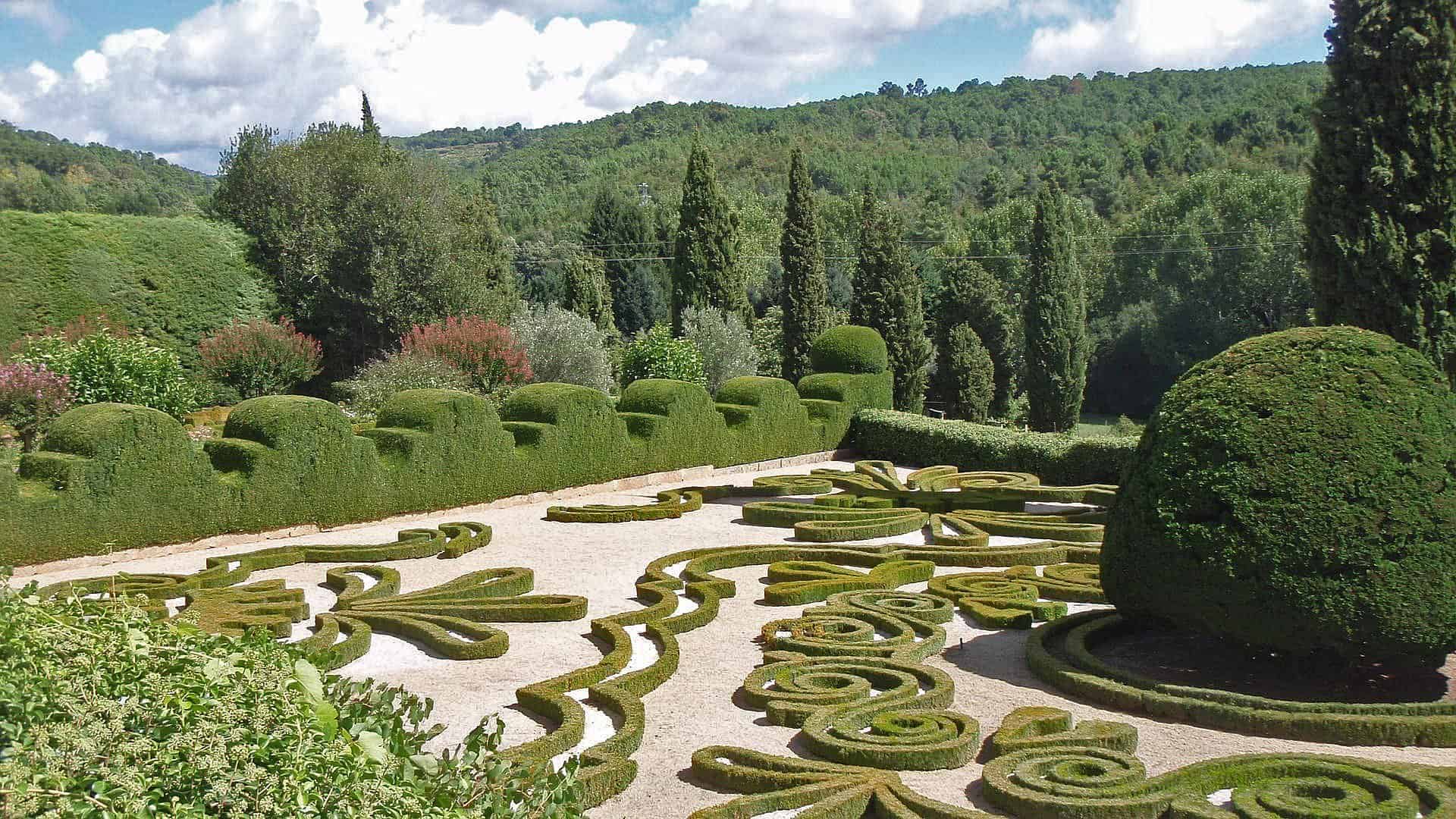
For many visitors, the beautifully kept gardens are the highlight of the estate. The first plantings here date back to the 18th century, though most of what you see today—including the oaks and chestnut trees—was planted in the 20th century. The same is true of the shallow reflecting pond, which was created to mirror the splendid Baroque palace.
In the middle of the pond stands João Cutileiro’s reclining female sculpture | João Cutileiro from 1981, completing the palace’s iconic image.
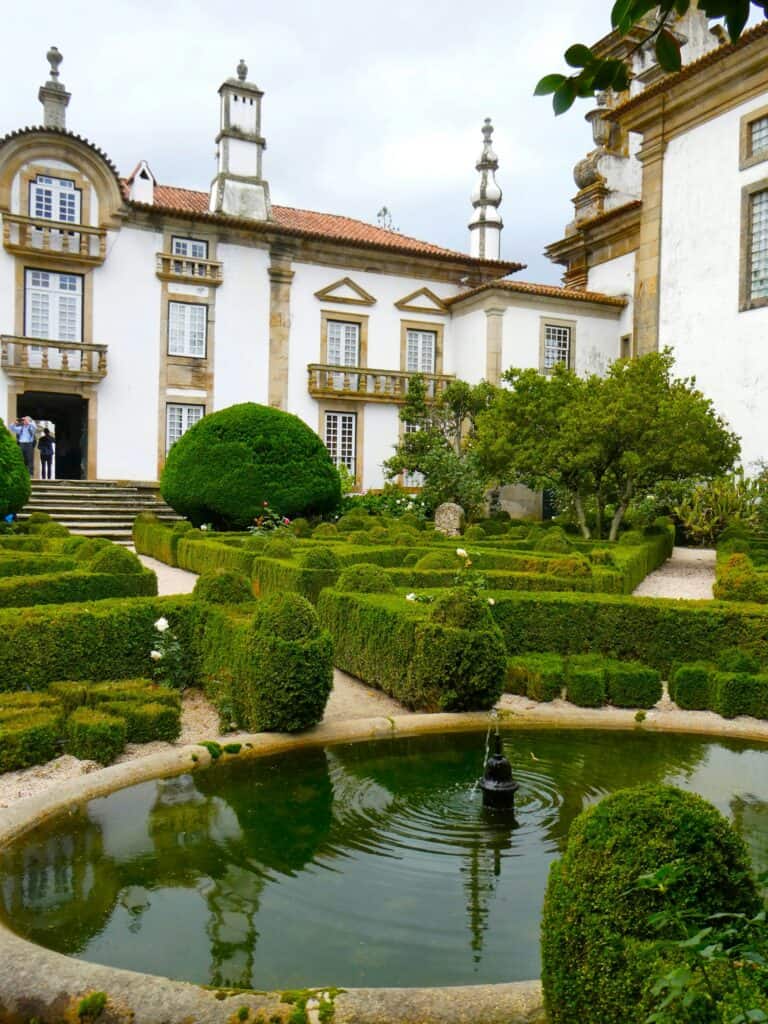
It is worth walking the full length of these manicured gardens rather than stopping only near the palace entrance, even if that section is the most photographed. The area to the side of the palace, for example, is especially worth seeing, particularly the long pathways beneath arches of carefully trimmed shrubs.
Look out as well for the large ladders made of carved wood, which the gardeners use to trim the higher branches.
The palace-museum
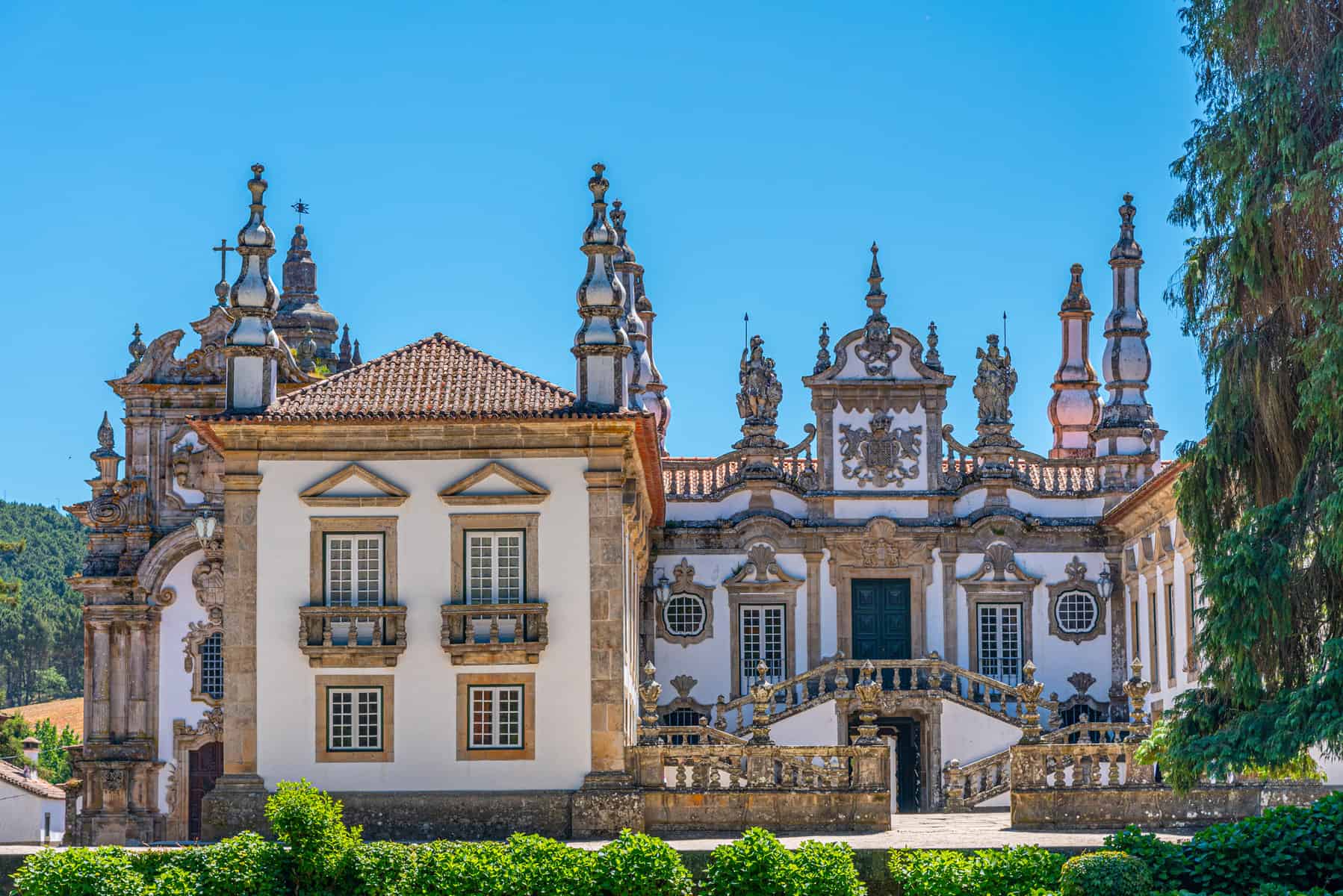
The palace itself is one of the finest examples of Baroque architecture anywhere in Portugal, especially for a non-religious building. Its walls are white, while every opening is framed by grand, elaborately decorated sandstone surrounds, giving the whole building a refined old-world elegance.
Inside, the palace largely aims to recreate the life of the noble family who lived here as it was more than a century ago. The rooms have been left much as they were, complete with antique furniture, old rugs and bedcovers, and artworks hanging on the walls.
One of the most striking features inside the palace is its heavy wooden ceilings, found in nearly every room. They vary in both color and form, and few places preserve such a remarkable concentration of historic decorative wooden ceilings.
As you would expect in an aristocratic residence, the palace also has a chapel. It is attached to the main building as a separate wing, and its narrow but charming façade can be seen from the area around the reflecting pond. Inside, the gilded altar makes the strongest impression.
The winery
The winery is the oldest part of the estate, dating back to the 16th century.
Today, the winery offers tasting tours at very reasonable prices, featuring respected Douro wines as well as Port. Touring the old winery building is a memorable experience, especially the tasting room, which still carries an unmistakably historic atmosphere.
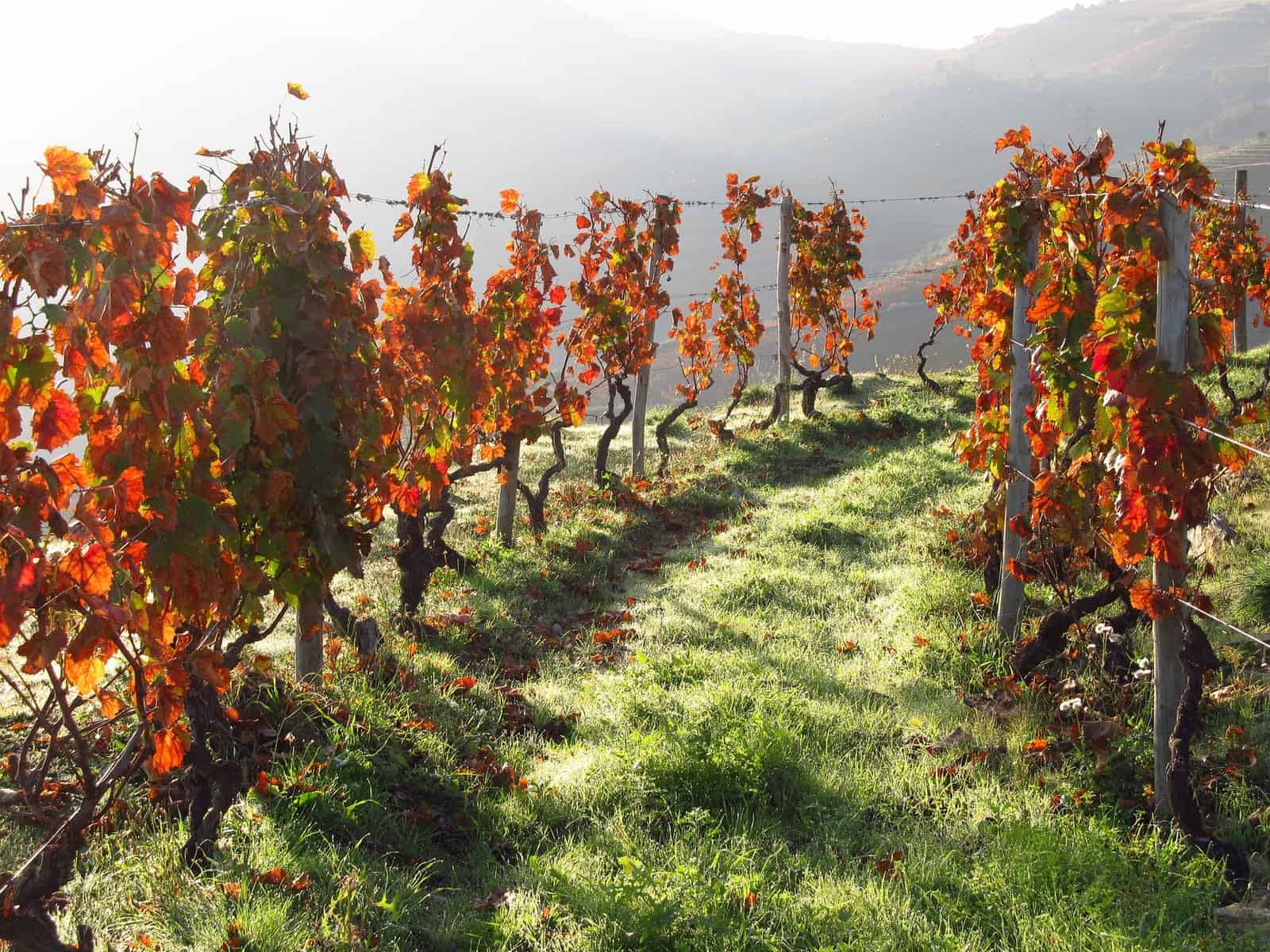
This is also a good place to note that until fairly recently, Vila Real was the wine center of northern Portugal before the heart of the industry shifted to larger Porto. The vineyard-lined road leading to Mateus Palace says as much as anything.
Even more famously, an image of the palace still appears on bottles of Mateus Rosé | Mateus Rosé, the wine that took the world by storm in the 1950s.
Fernando Van Zeller Guedes | Fernando Van Zeller Guedes, founder of the Portuguese wine marketing group Sogrape | Sogrape, made a brilliant decision to produce a Portuguese rosé shortly after World War II. Until then, the Douro region had been known mainly for its fortified Port wines, especially popular with the British.
In an even more ingenious marketing move, he chose to sell the wine in a broad bottle somewhat reminiscent of the canteens soldiers had carried during the war. The first grapes used for this rosé—which was then something quite new in Portugal—were purchased from the vineyards of Mateus House. With the family’s permission, he therefore chose to print an image of the palace on the bottle, where it still appears today.
The wine became hugely popular, especially in England but also in the United States, with tens of millions of bottles produced each year. Until recently, it was also said to be Queen Elizabeth II’s favorite wine.
For more information and opening hours for Mateus Palace, click here…
Click here to search for accommodations in Vila Real…
NaturWaterPark water park and adventure park
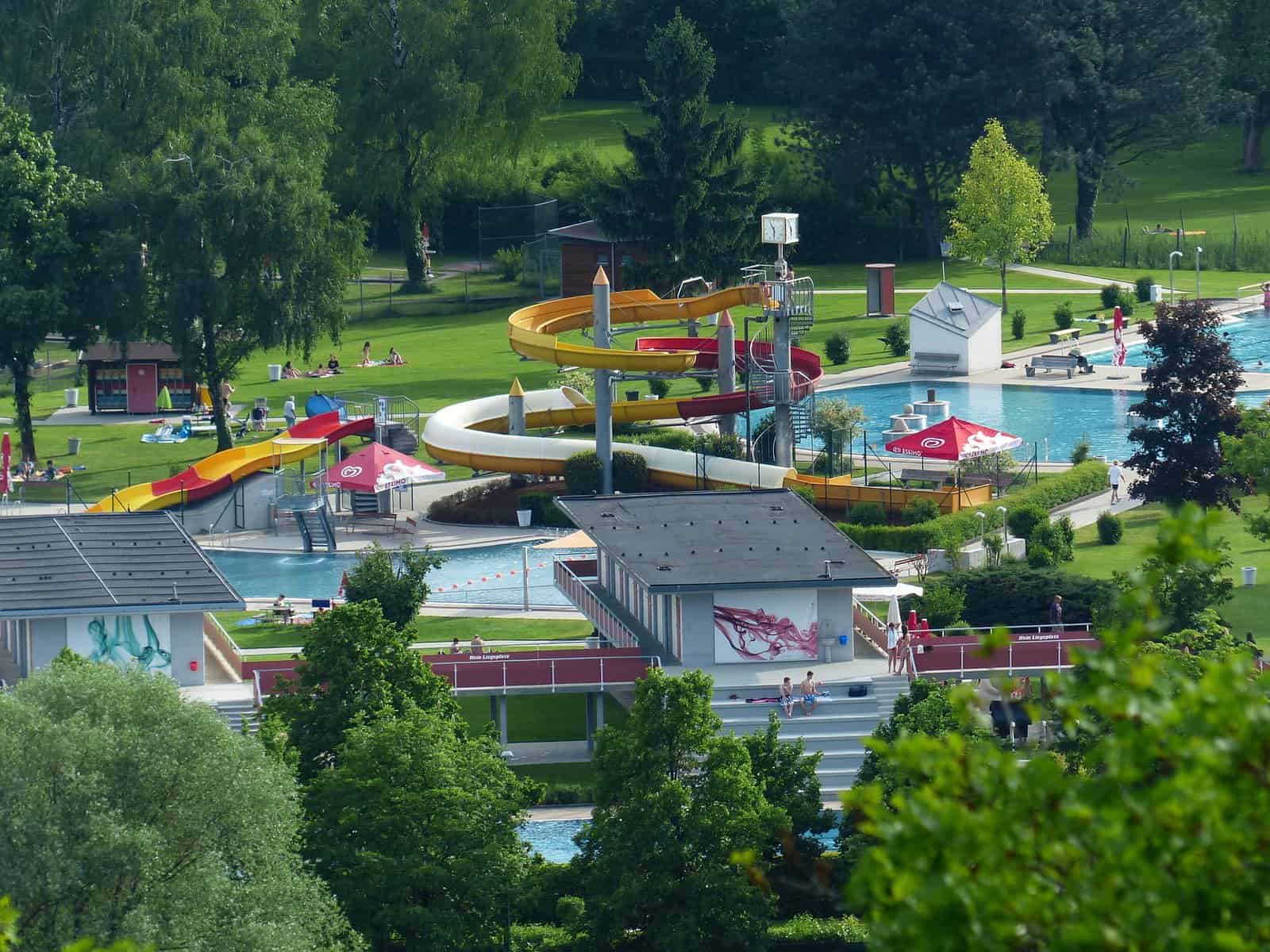
If Mateus Palace is Vila Real’s main attraction for adults, then NaturWaterPark is the standout attraction for children across the whole district. It is a surprisingly good water park and adventure park in northern Portugal, about a 15-minute drive from Vila Real.
The park is especially popular with children from Vila Real and the surrounding area, and it caters mainly to locals, since most tourists are not familiar with it.
The park, also known as Parque de Diversões do Douro | Parque de Diversões do Douro, is primarily a water park with pools and slides, but it also includes an adventure area with activities in the forest. Bikes can also be rented on site for rides through the pleasant surrounding area.
There is also a large restaurant serving Portuguese food that works well for the whole family (who could say no to grilled chicken and fries?).
In addition, the park offers camping as well as very pleasant bungalows for anyone looking for a happy medium between staying outdoors and sleeping in a hotel.
You can easily spend a full fun-filled day here, or even stay several days for camping and trips into the beautiful natural surroundings.
The water park is open from May through September. During the rest of the year, only some of the facilities are open.
Click here for more information about the water park…
Click here for more information on the best water parks in Portugal…
Click here to find a place to stay in Vila Real not far from the water park…
More attractions and interesting sights in Vila Real
The main avenue – Av. Carvalho Araújo | Av. Carvalho Araújo
This is the city’s main street, partly a road and partly a wide pedestrian promenade paved in stone and lined with gardens and trees. It connects the two main squares: the City Hall square to the south and Praça Luís de Camões to the north.
At the center stands the old 16th-century pillory, the Pelourinho de Vila Real. This elongated square-like avenue leads past many of Vila Real’s main points of interest. The parallel streets and nearby lanes are also very pleasant for strolling.
One example is R. António de Azevedo (R. António de Azevedo), a small street running parallel to Av. Carvalho Araújo, paved and full of shops and businesses. It is worth getting a little lost here, or in one of the small streets that branch off from it, such as R. 31 de Janeiro (R. 31 de Janeiro), which leads north to Capela Nova, or the tiny Misericórdia street | R. da Misericórdia, which heads south to the chapel of the same name.
Or simply wander the whole maze of narrow lanes and streets and enjoy the feeling of stepping back into the Middle Ages.
Vila Real Cathedral | Sé Catedral de Vila Real
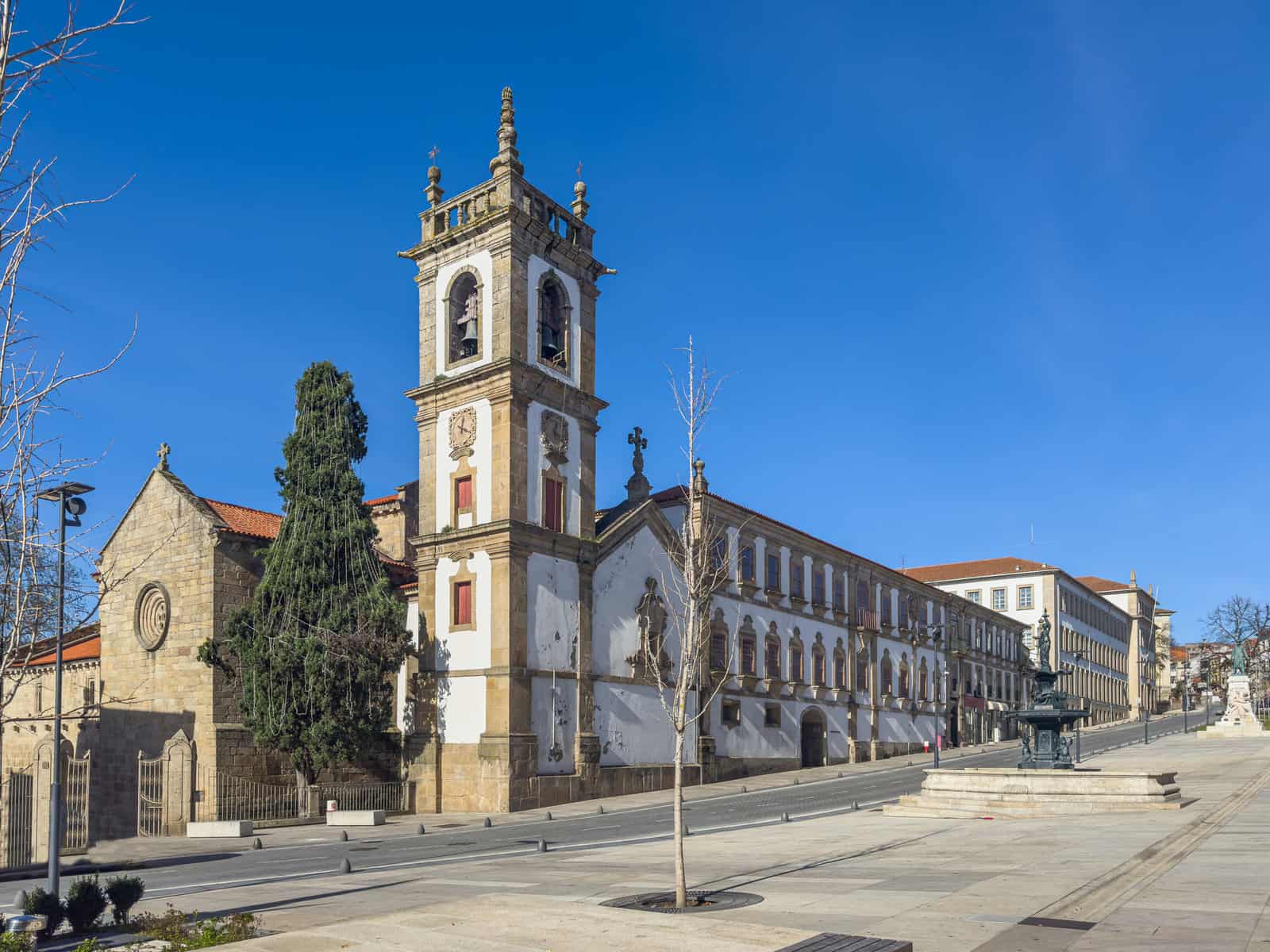
The cathedral stands along the city’s main axis on Av. Carvalho Araújo. It is also known as Igreja de São Domingos (Igreja de São Domingos), because it was built on the foundations of a Dominican monastery established here in 1421.
At the time, the monastery stood outside the city walls, since Vila Real originally extended only to the southern edge of the cliff on which it was founded. That cliff rose above two river valleys that formed a natural boundary, so a wall was needed on only one side.
Most of the medieval Dominican monastery was demolished in the 19th century, and only the church remained, later expanded and restored. From 1922 onward, the church became a cathedral when Vila Real was made the seat of a bishopric—that is, it was assigned a bishop as the city had grown. With that change came a major restoration and rebuilding campaign.
From the street, the building looks much like many churches in Portugal, with white walls, sandstone surrounds around the openings, and a tall bell tower. However, from the main avenue you are actually seeing the rear of the cathedral and its newer wings.
That is why it is worth turning onto the side street to see—and enter—the old medieval Gothic church that today serves as the cathedral. It is also one of the clearest examples of Gothic architecture in Portugal.
Inside, only a few remnants survive from the distant past. More striking are the modern stained-glass windows added in the early 2000s.
Click here to search for accommodations in Vila Real…
The New Chapel | Capela Nova
This Baroque church stands on a small, charming square from which several narrow old streets branch out. The square has a cone-like shape, narrowing as you move away from the church, and is framed by old houses above paved sidewalks. The church façade is narrow and tall, completing the square’s lovely overall scene.
Inside, the space is fairly broad, with blue azulejo decoration running along the lower walls and benches facing an elaborate gilded altar.
The square in front of the chapel is where the pottery fair takes place each summer.
City Hall Square | Praça Camilo Castelo Branco
This is effectively the historic center of Vila Real, located at the southern end of the city’s main axis, Carvalho Araújo.
It is worth passing the City Hall building and continuing into the city’s oldest core, of which only fragments remain today. If you go all the way to the edge, you can appreciate Vila Real’s unusual topography, as it was built on a plateau above two deep stream valleys that provided natural protection.
The panoramic view from the edge of town is also wonderful, and from here you can even see the huge modern bridge spanning the Corgo valley—the Viaduto do Corgo.
Old Town Museum | Museu da Vila Velha
A few dozen yards behind the City Hall building and the square in front of it, you will find the small archaeological museum Museu da Vila Velha.
The Vila Velha neighborhood, where the museum stands, is the oldest part of the city, and it was here that the first buildings of Portuguese Vila Real were established during the reign of the poet-king Dom Dinis in the late 13th century.
The small museum is housed in a modern building with clean lines and displays archaeological finds from the site, from prehistoric times through the Roman period and into the Middle Ages. It also hosts temporary art exhibitions and functions as a cultural center.
The main reason to come to the museum area, however, is the gardens around it, which stretch as far as the old São Dinis cemetery and the viewpoints beyond. A short walk around the museum helps explain why the city began here in the first place: Vila Velha occupies a strategic ridge between two ravines, leaving only the northern side exposed.
For more information and opening hours…
Vila Real Municipal Market | Mercado Municipal de Vila Real
About a 5-minute walk north of Praça do Município is the municipal market.
This is where city residents come to shop, and it feels very local. Inside are stalls selling fruits and vegetables, fresh meat, fish, flowers, and plenty of Portuguese sausages of the kind northern Portugal is known for.
If you enjoy this kind of place, it is worth stopping in, especially since the market fits naturally into a walk toward the two beautiful churches north of the city center (São Pedro and Calvário).
Click here for more information, location, and opening hours…
Archaeology Museum | Museu de Arqueologia e Numismática de Vila Real
This small regional museum displays an archaeological collection and a coin collection found in the area. It sits uphill on the edge of the old town, about a 5-minute walk from Praça Carvalho Araújo.
The museum is housed in an 18th-century building specially converted for exhibitions and opened to the public in 1997. Most of the finds were uncovered in excavations across Trás-os-Montes (Trás-os-Montes), the historic region of Vila Real.
Most of the objects date from the Bronze Age through the Roman period.
For more information and opening hours…
Calvário Church | Igreja do Calvário
Igreja do Calvário stands north of the old town on a raised platform above the street. The church stands alone at the center of a large open square, a scene more often associated with chapels on hilltops outside town than with a city center.
It really was outside the city on a high hill when it was built in 1680 by monks of the Franciscan Order (Ordem Franciscana Secular). Over time, the large square around it was added. This open space was created by filling the sloping eastern side with earth supported by beautiful stone retaining walls, forming large terraces where the Jardim da Carreira was planted.
In the mid-19th century, the church itself underwent a major renovation. That was when the bell tower was added, followed later by its most recognizable feature—the blue ceramic tiles covering the façade.
The church is very beautiful from the outside and distinctly Portuguese in character. Indoors, the gilded altar makes the strongest impression.
Click here to find a place to stay in Vila Real…
Saint Peter's Church | Igreja de São Pedro
It stands close to Igreja do Calvário and also has an exceptionally beautiful façade. The difference is that Igreja de São Pedro is hemmed in by other buildings, which makes its front stand out all the more.
The church was built in the 17th century, though a religious structure had stood here earlier to serve the residents of the village of São Pedro, the first settlement outside Vila Real’s walls.
The interior is unusually distinctive, and for good reason. This relatively small church was built over the course of two hundred years, with great care given to every detail.
Its interior is colorful and richly decorated, with the highlight being the curved gilded ceiling, lavishly adorned. The walls are covered in blue-and-yellow azulejos, and it seems there is not a single inch left plain or undecorated.
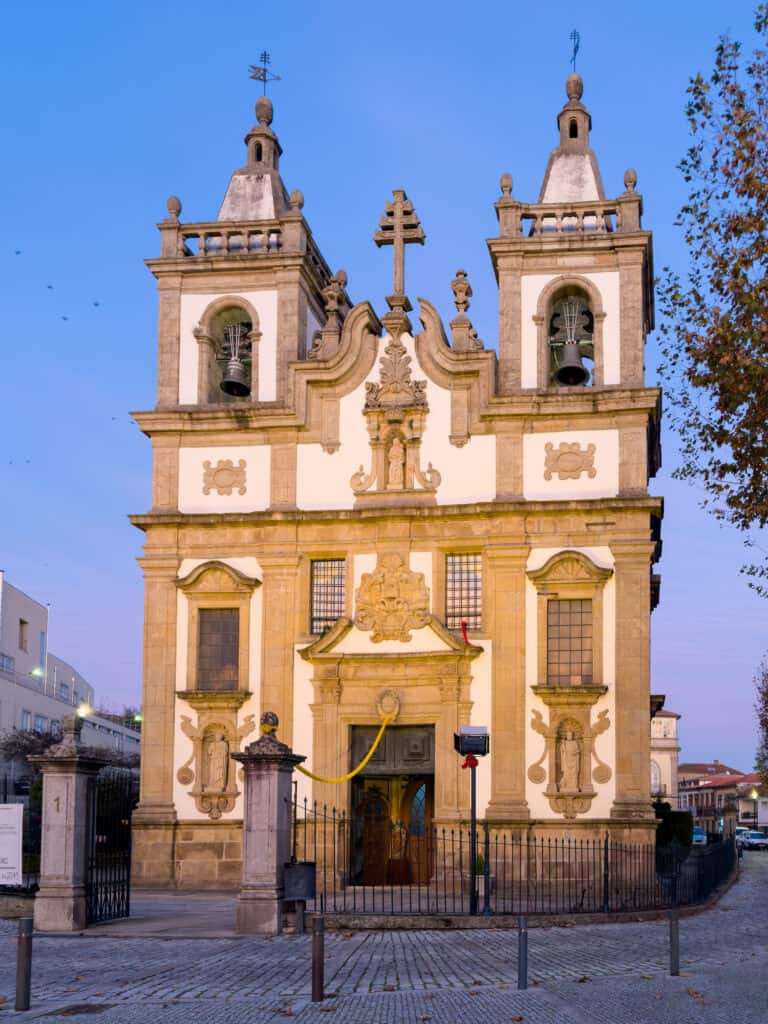
Carreira Public Garden | Jardim da Carreira
Jardim da Carreira was planted on the terrace built to support the large square around Igreja do Calvário. The gardens continue behind the church, and above them is a soccer field used as a training ground by the local team.
Though not especially large, the gardens offer lovely views of the surrounding area and plenty of benches and quiet corners where you can sit and rest after walking between the churches.
Corgo Park and boardwalk trails | Passadiços do Corgo
This is the city’s main park, stretching below town along the Corgo River valley. It combines wooden bridges and raised wooden walkways over the stream, making it a very pleasant place for a walk. There are also several small wooden bridges across the river, so crossing to the other side can be a fun little experience for children too.
You can access the park and its paths from several points below the city center, such as near the small science center (Centro de Ciência de Vila Real) or farther along beneath the new bridge leading to the other side of town at Passadiços do Corgo.
Nosso Shopping
The city’s mall sits on the hill opposite the center. To get there, you cross the new bridge over the Corgo River. It is a modern shopping center with European chains such as Zara and FNAC, along with many local clothing stores. There are also fast-food restaurants, a movie theater, and a large supermarket.
It is a convenient place to stock up on essentials, or simply to take shelter if it is raining or too hot outside.
Click here to find vacation rentals and hotels in Vila Real…
Events in Vila Real
Festa de São Pedro
Each year on June 28 and 29, Vila Real celebrates the Festa de São Pedro.
The festival is also known as the “Pottery Fair” (Feira dos Pucarinhos). In practice, it is a fair where pots and other ceramic wares from the nearby village of Bisalhães (Bisalhães) are sold. It takes place in front of Capela Nova and was revived in recent years. In 2016, UNESCO declared the craft of making these black clay pots to be in urgent danger of disappearing, and it has supported the continuation of the festival.
Portugal is famous for its ceramics, especially its azulejo tiles. As elsewhere in the country, Vila Real developed a tradition of folk pottery over the generations. One important center was the village of Bisalhães, about 10 minutes from town, known for producing black ceramic ware. The pots get their dark color from the firing method, done in an open kiln with burning pine needles.
Each summer on Saint Peter’s Day, villagers would come to Vila Real to sell the distinctive pottery they had made over the course of the year. That tradition has now been revived through the initiative of UNESCO and Vila Real’s city government, and it takes place as part of the saint’s day celebrations.
Click here to find vacation rentals and hotels in Vila Real…
Attractions and points of interest around Vila Real
High bridge over the Corgo River | Viaduto do Corgo
This modern bridge, inaugurated in 2013, reaches a height of 755 feet above the Corgo River valley at its highest point.
It is an important structure that reflects modern Portugal, a country whose development gathered pace somewhat later than some of its European Union peers.
The bridge is nearly 2 miles long and forms part of the A4 motorway, which crosses northern Portugal from the port of Matosinhos (Matosinhos) in Porto to the castle city of Bragança in the far northeast of the country.
You can spot the bridge from several places in Vila Real, including the lovely viewpoint behind the City Hall building.
Fornelos river beach | Praia Fluvial de Fornelos
A very European kind of attraction: a stream pool among vineyards and hills, with lawns around it that locals refer to as a beach.
This riverside bathing spot lies about a 25-minute drive south of Vila Real, in the valley below the small village of Fornelos | Fornelos. It is small and very different from NaturWaterPark.
Locals come here to sunbathe on the broad lawns around the pool, with vineyard-covered hills rising above.
It makes a nice stop for an hour or two, whether for a refreshing dip in the cool water or for stretching out on the sunny grass with green views all around.
The site is open only in the late morning and around midday..
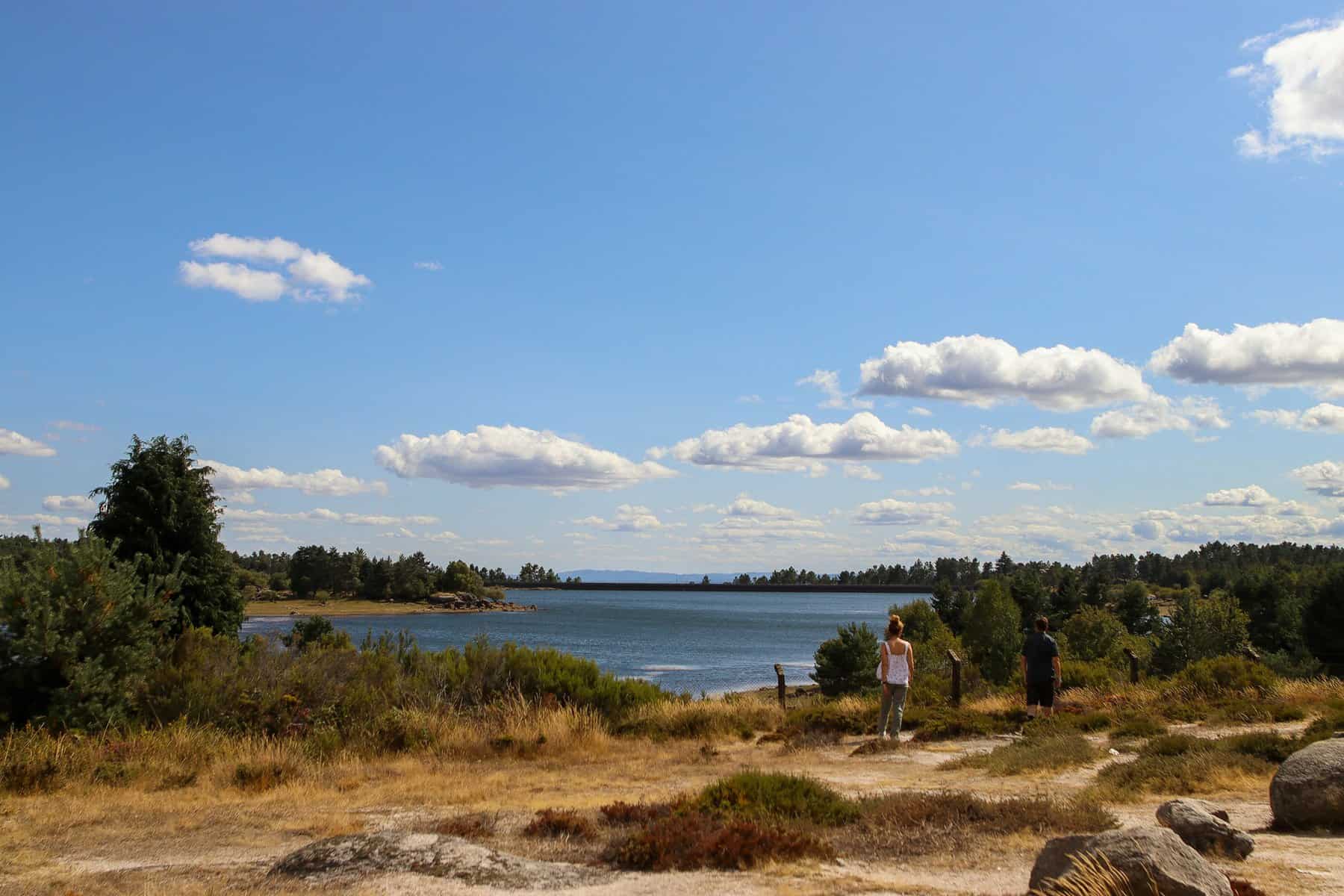
Alvão Natural Park
The park lies in the mountains north of Vila Real, about a 25-minute drive away. It can make a worthwhile stop on the way north to Chaves, the city of hot springs.
Its highest point is Mount Alvão at 4,265 feet. The park is characterized by rounded mountain landscapes with plateaus and small stream valleys between them. That means the park and its surroundings also feature several waterfalls and natural pools.
There is also a small dam in the park, one of the earliest in Portugal to generate electricity—Barragem do Alvão ou da Cimeira | Barragem do Alvão ou da Cimeira.
A good place to begin exploring is the viewpoint near town by the small village of Muas | Miradouro de Muas. The turnoff from the road is easy and convenient. From there, you can continue along the winding road that crosses almost the entire park and eventually reaches the tall waterfalls:
Fisgas de Ermelo waterfalls | Cascatas das Fisgas de Ermelo
There is a viewpoint over the falls (Miradouro das Cascatas de Fisgas de Ermelo) reached by turning off the road behind Capelinha do Fojo | Capelinha do Fojo.
Above the falls, there is actually a river pool you can reach on foot via somewhat challenging trails.
Click here to find accommodations in Vila Real and the surrounding area…
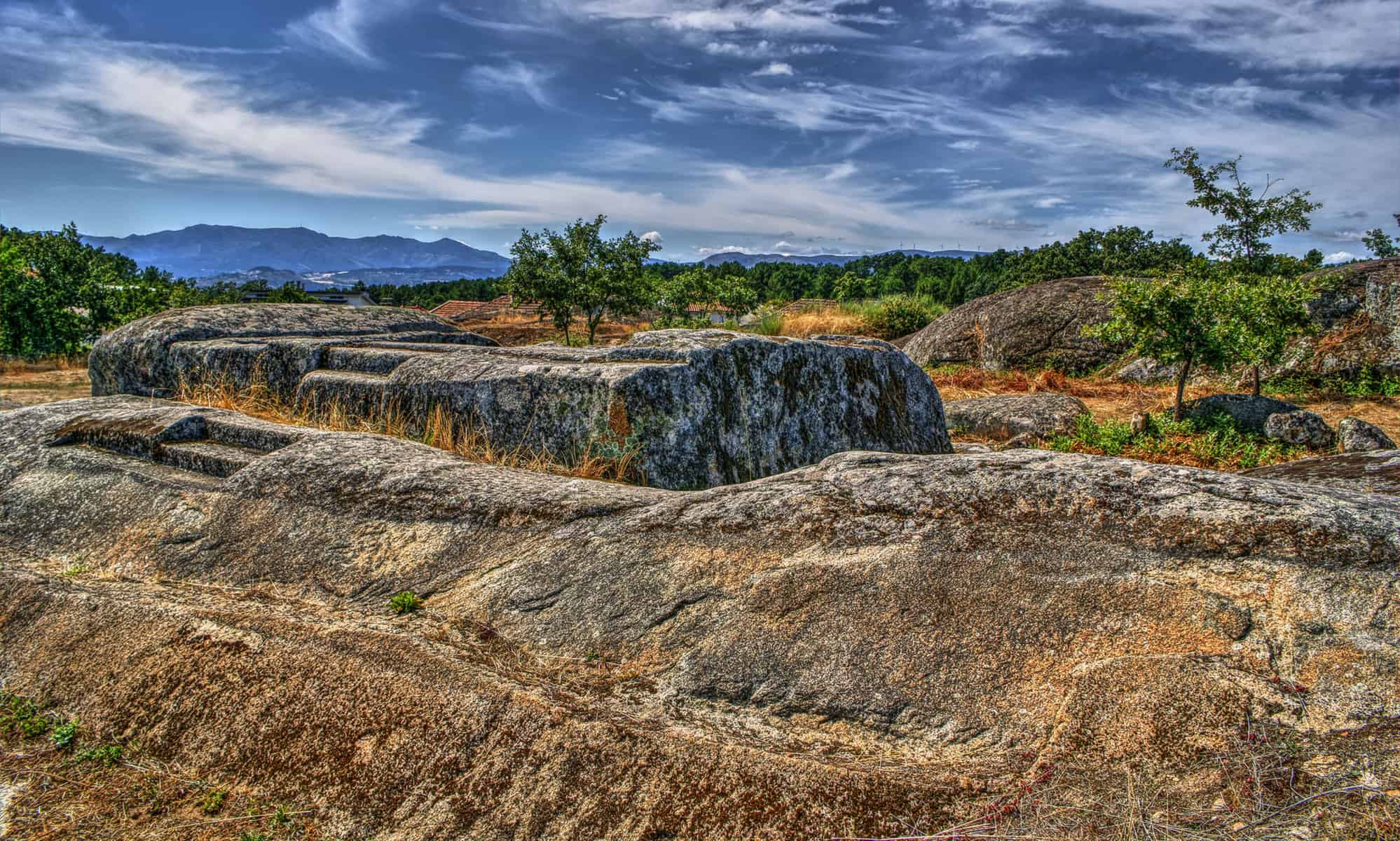
Panóias Sanctuary | Fragas de Panóias
This rock-cut altar, carved into an exposed outcrop, lies about a 15-minute drive from the city along one of the roads near the village of Assento, making it very easy to reach.
This mysterious sanctuary most likely developed here in the 2nd or 3rd century BCE, created by pre-Roman tribes. The altar is entirely carved into the large rock, including steps and small basins that were used to drain the blood of animals sacrificed here, as well as water for washing afterward.
When the Romans arrived in the region in the 1st century BCE, they dedicated the sanctuary to the god Serapis (Serapis), the Greco-Egyptian deity whose cult had begun under Ptolemy I in the 3rd century BCE and later spread into the Roman Empire, which was known for “adopting” foreign gods.
That is why the sanctuary bears inscriptions in both Latin and Greek. Other rocks in the surrounding area also carry Roman inscriptions and seem to have been part of ritual activity.
Mondrões Church | Igreja de Mondrões
Also known as the Church of São Tiago, it stands about a 15-minute drive west of Vila Real in the small village of Mondrões.
This is a Baroque-Rococo church from the 18th century, surprisingly large for such a minor village.
Vila Real, like all of northern Portugal and especially Braga, is deeply connected to the Christian pilgrimage site of Santiago de Compostela, which is not especially far away.
In the past, many pilgrims stopped in this area on their way to the holy site where, according to Christian belief, the remains of Saint James are buried (the apostle James, son of Zebedee). That is also why so many churches in the region are dedicated to him, often built in part with donations from pilgrims traveling toward the sacred destination in Galicia. As a result, some villages here have churches that are relatively large for their size.
Pay attention to the church’s interesting façade, especially the central stone carving showing Saint James battling the infidels.
Inside, you can admire the high ceiling, the vaulting that supports it, and the overall quality of the construction.
Beyond the church itself, the drive here also offers a glimpse of village life in northern Portugal, where the rhythm of life has changed very little over the centuries.
Quintela Tower | Torre de Quintela
On the other side of the valley from Mondrões stands another striking structure in the middle of a village: the 69-foot-tall tower-fortress of Quintela.
It was first built in the reign of Afonso III in the mid-13th century, making it one of the oldest structures in the area.
Over the centuries, it served as a watchtower because it controlled the routes running through the mountains to the north and south. It is also one of the signs of Portugal’s medieval military landscape, allowing a small force to remain protected in the area and call for reinforcements when needed, without having to station large numbers of troops to control the region.
You can stop here on the way to the Galegos waterfalls | Cascata de Galegos da Serra, a little farther north, as part of a trip through the countryside and natural landscapes around Vila Real.
Click here to find vacation rentals and hotels in Vila Real and the surrounding area…