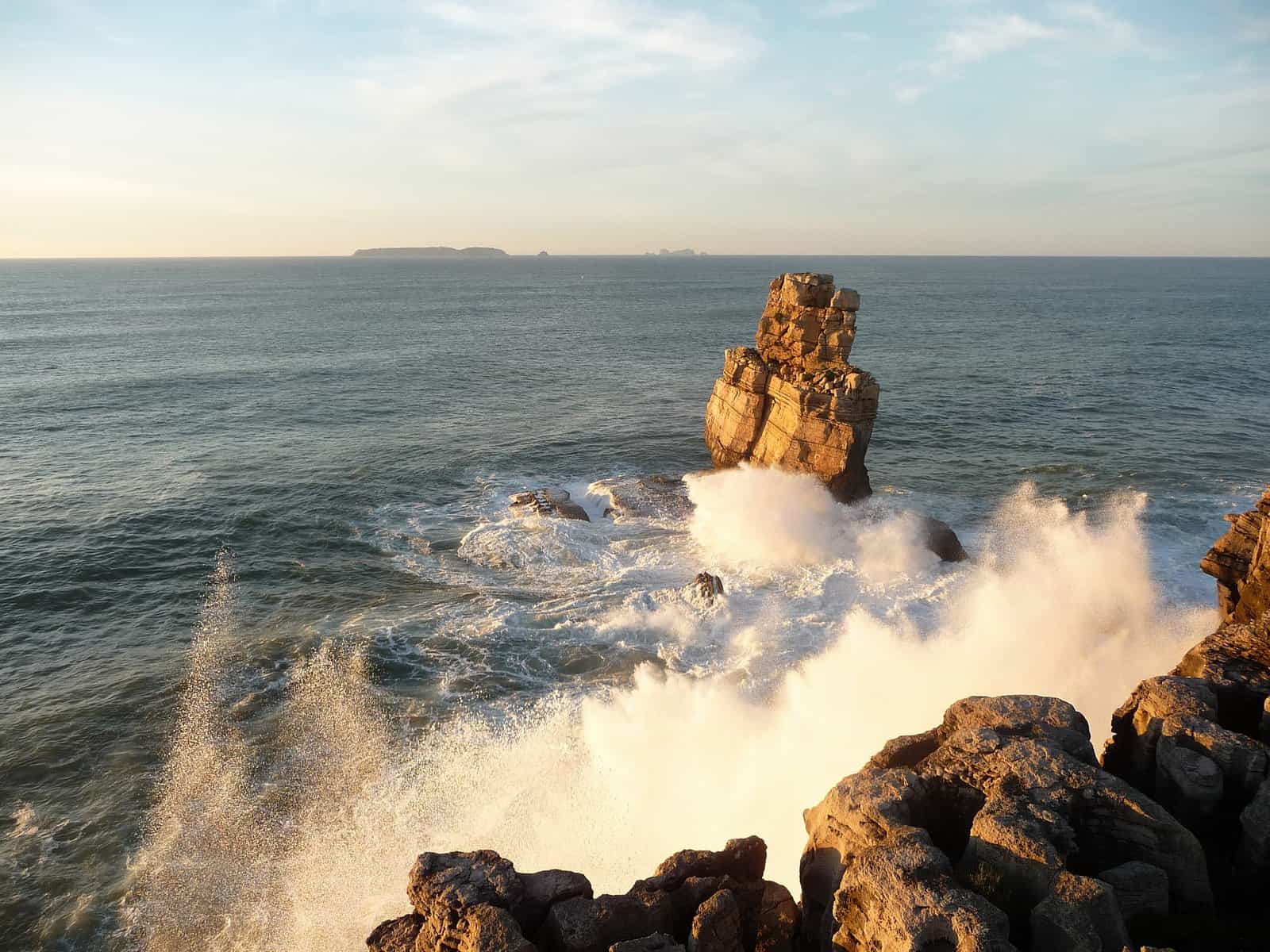
Beautiful Porto is the most enticing destination in northern Portugal, and perhaps in the country as a whole. Portugal’s second-largest city offers a lively, exceptionally photogenic travel experience.
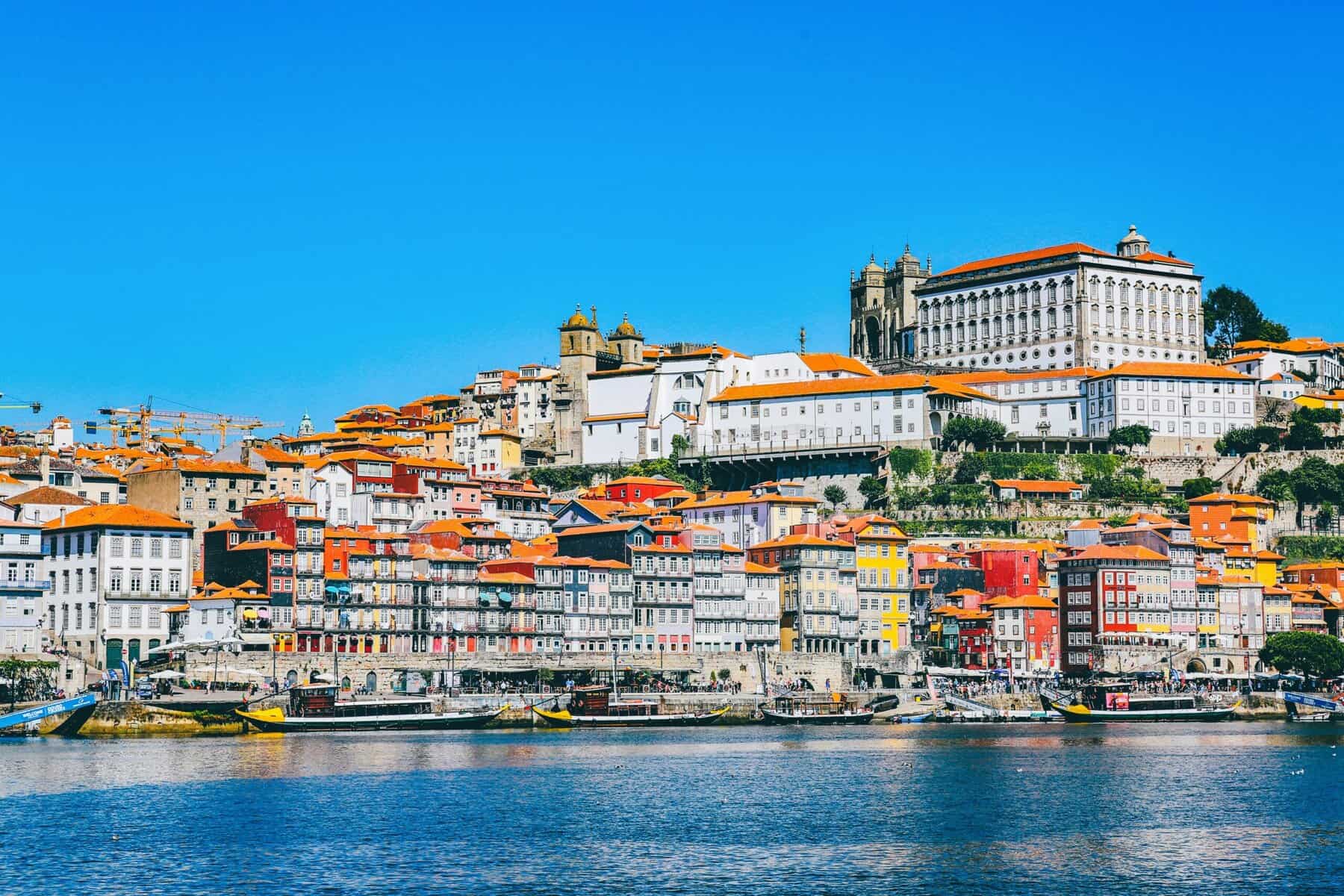
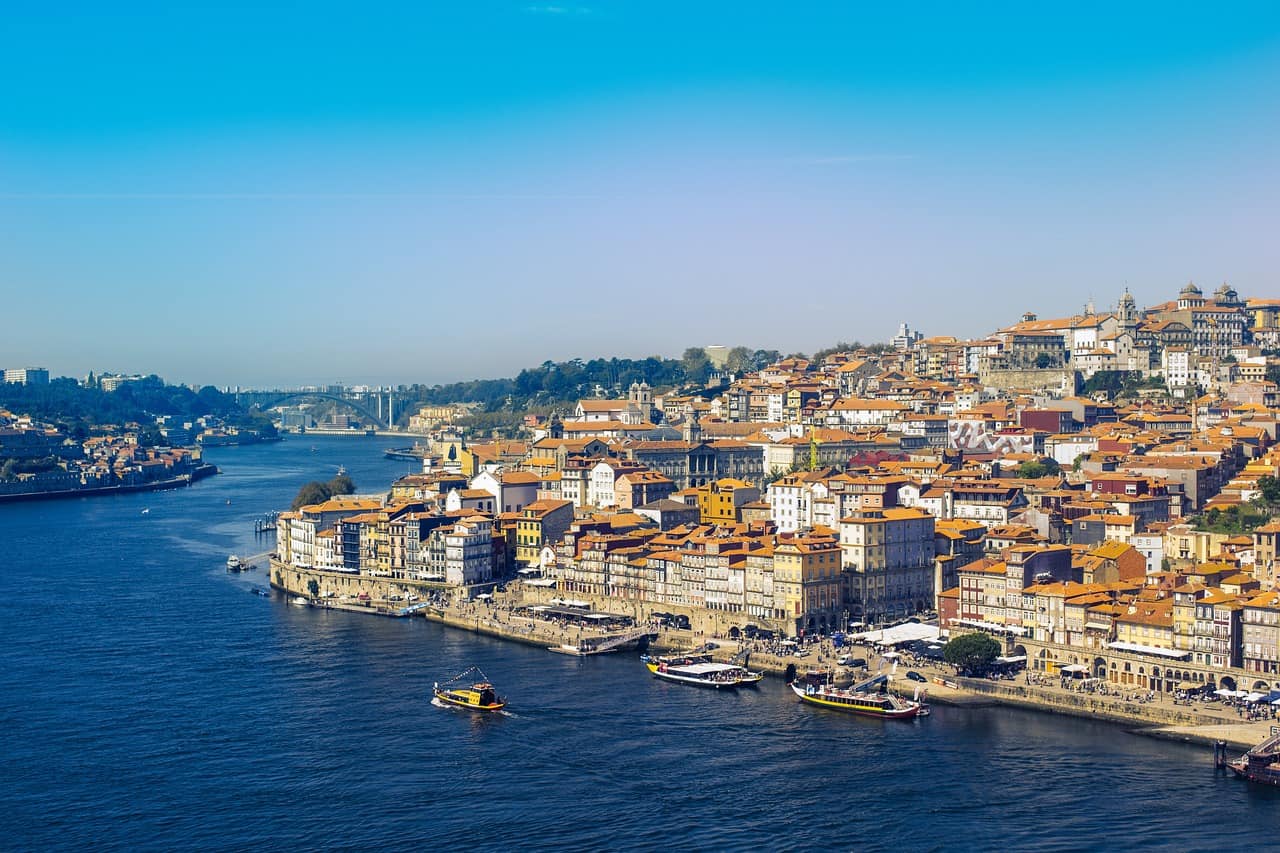
The Ribeira along the banks of the Douro River forms the heart of the old city. Nearby, you’ll find stunning churches, grand palaces, and lively streets filled with restaurants, cafés, and nightlife. On the river’s southern bank lies beautiful Vila Nova de Gaia, home to a range of viewpoints overlooking charming Porto.
How many days should I spend in Porto?
You’ll need at least one full day to explore Porto. If you want to really experience the city and soak up its atmosphere without rushing, though, two days or more is a much better plan. Porto is also a great base for several day trips across northern Portugal, so it can easily anchor a wonderful city break.
Click here to find a place to stay in beautiful Porto…
11 must-see sights and things to do in Porto
- Ribeira do Porto
- Porto Cathedral | Sé do Porto
- Carmo Church with its blue-tile facade | Igreja do Carmo
- Clérigos Church and Tower | Igreja e Torre dos Clérigos
- The view from Mosteiro da Serra do Pilar and Jardim do Morro in Gaia | Mosteiro da Serra do Pilar Jardim do Morro Gaia
- São Bento Station, a true work of art | São Bento
- Dragão Stadium — Porto’s passionate home ground; if there’s a match while you’re in town, it’s a must | Estádio do Dragão
- Ride the Gaia cable car down to the waterfront | Teleférico de Gaia
- Have lunch on Flores street | Rua das Flores
- Livraria Lello, the bookstore said to have inspired Harry Potter | Livraria Lello
- Crystal Palace Gardens | Jardins do Palácio de Cristal
Click here for our guide to where to stay in Porto…
Map of Porto
Good to know about Porto
Porto is Portugal’s second-largest urban center after the capital, Lisbon, and the main metropolitan hub of northern Portugal.
The city itself is home to around a quarter of a million residents, while the wider metropolitan area has nearly two million.
It sits near the mouth of the Douro River on the Atlantic and has a major seaport that developed largely as the export center for Portugal’s signature fortified wine: port. Port wine played a major role in the city’s growth, serving as an alternative to French Bordeaux. In the 17th century, British merchants established wineries in the city’s agricultural hinterland to produce the sought-after wine, following shortages in England during the Anglo-French wars.
Porto began developing as a port city during the Roman period, after the Romans took parts of the Iberian Peninsula from Carthage. The original urban nucleus was Cale, on the southern bank of the Douro estuary, where Gaia stands today. The Romans established the port of Cale, or Portus Cale, as early as the 2nd century BCE.
It later became one of the most important ports in the western part of the empire. The city — and eventually Portugal itself — took its name from the word for port, via Portus Cale. The term “opportunism” is also said to derive from the city’s name, based on the idea that in the age of sailing ships, Porto’s sailors would set course wherever the wind took them.
Today, Porto is one of the highlights of any trip to Portugal and an essential stop for visitors. Its historic center is among the most beautiful in Europe.
Click here to search for hotels and vacation apartments in Porto…
How to get to Porto, and how to get around the city
Flights to Porto
Francisco Sá Carneiro Airport (OPO) — the city’s international airport sits on Porto’s northern outskirts. It is the second-largest airport in Portugal, behind only the country’s main airport in Lisbon. The airport offers many routes connecting Porto with destinations across Europe.
Porto Airport is well connected to the city center. The drive from the airport to downtown takes only about 20 minutes. The airport is linked to Porto’s metro system via Line E (purple), and you can reach the center as far as Trindade station, where you can transfer to Line D (yellow) for the historic center. The metro ride from the airport takes around 45 minutes.
Lisbon International Airport (Aeroporto Internacional de Lisboa (LIS — most travelers arriving in Portugal land in Lisbon, Lisbon’s international airport, also known as Aeroporto Humberto Delgado, is the country’s main gateway. It lies within the metropolitan area, about seven kilometers north of the old city center. Travel time from Lisbon to Porto is just under 3 hours.
Click here to find hotels and vacation apartments in Porto…
Public transportation in Porto
Porto Metro | Metro do Porto
Porto’s metro system mainly serves commuters traveling into the city center from across the metro area. It’s modern, very easy to use, and simple to navigate.
The network has six intersecting lines, marked by different letters and colors. Its main hub is Trindade station, located in the northern part of the city center.
For travelers arriving by air, the metro is a very convenient way to reach central Porto. Once you’re in the old town, though, there’s usually little need to use it. Most sightseeing is concentrated in a compact area that’s best explored on foot — or in style aboard the city’s vintage streetcars.
Porto’s tram system
Porto’s trams have become a tourist attraction in their own right. Much like in Lisbon, the city’s lovely vintage cars roll through beautiful streets, carrying both locals and visitors along the way.
Click here to learn more about Day Trips from Porto…
When to visit Porto?
Porto is beautiful and photogenic year-round, and the weather is generally excellent, apart from late fall, when it gets very rainy. Climatically, it’s a Mediterranean city, with hot, relatively dry summers and mild winters that can also be wet.
The best time to visit Porto is in late spring. Temperatures are very comfortable, daylight hours are long, and rainfall is minimal. June is the perfect month in the city, with wonderfully pleasant weather and fewer crowds than at the height of summer.
Summer in Porto — especially July and August — is warm to hot, with very little rain. At times, it can be truly hot. This is also peak tourist season, so the city can feel very crowded. Early spring is also a great time to visit, especially if you’re combining Porto with a trip through the rural landscapes of northern Portugal. April and May are relatively rainy, but those are manageable spring showers, not the heavy downpours of fall. Autumn is the least favorable season for a trip to Porto. October through December tend to be rainy and can be stormy.
Click here to find a place to stay in Porto, in northern Portugal..
How to plan a trip to Porto?
Porto is Portugal’s second-largest city and a must on any itinerary through the country. It lies in the north, not far from a number of attractive destinations such as Aveiro, Braga, Guimarães, and more. The capital, Lisbon, is well connected to Porto both by road and rail, with travel times ranging from two and a half to three hours.
Exploring Porto itself is easy and straightforward. Most sightseeing centers on the city’s historic core, from the Ribeira along the Douro and north toward Clérigos Church and Carmo Church. You should also make time for the river’s southern bank in Vila Nova de Gaia, where the views back toward Porto are excellent — but that’s not all. In Gaia, don’t miss Jardim do Morro and the 16th-century Mosteiro da Serra do Pilar with its church. From there, you can take the cable car down to the lively waterfront.
Click here for our guide to accommodations in Porto and the best areas to stay…
Attractions and interesting sights in Porto
The Ribeira district | Ribeira do Porto
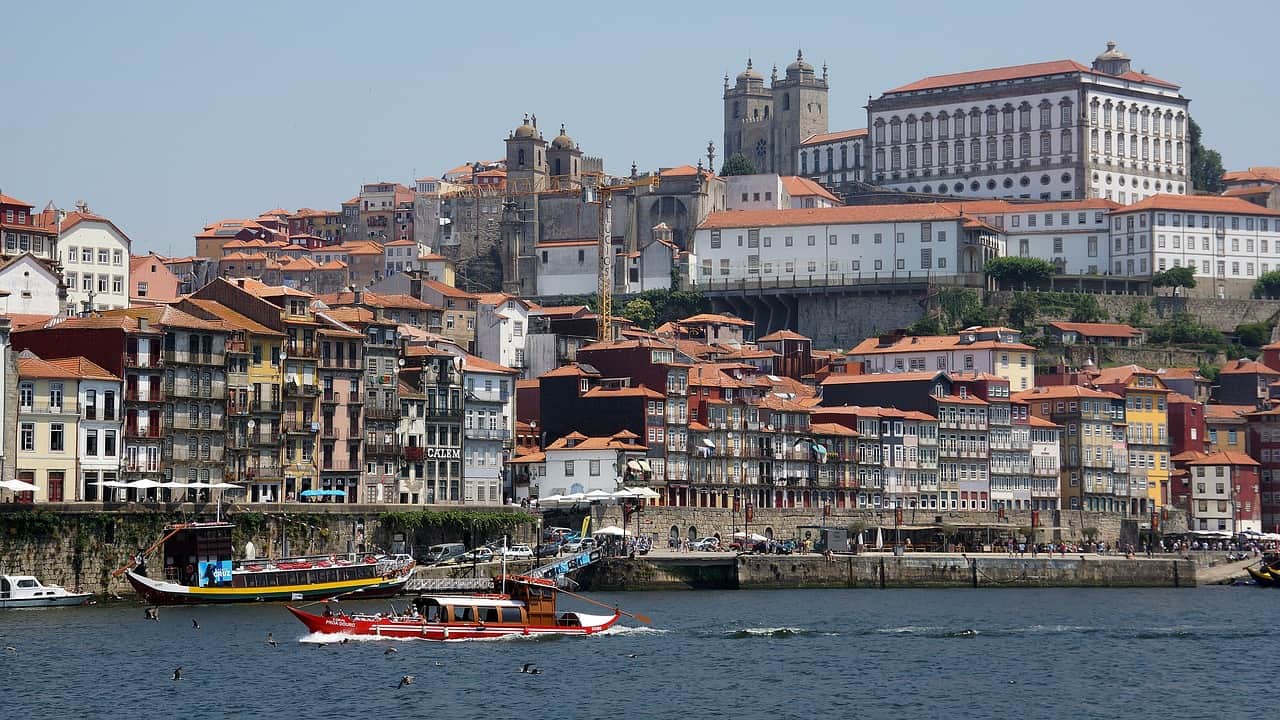
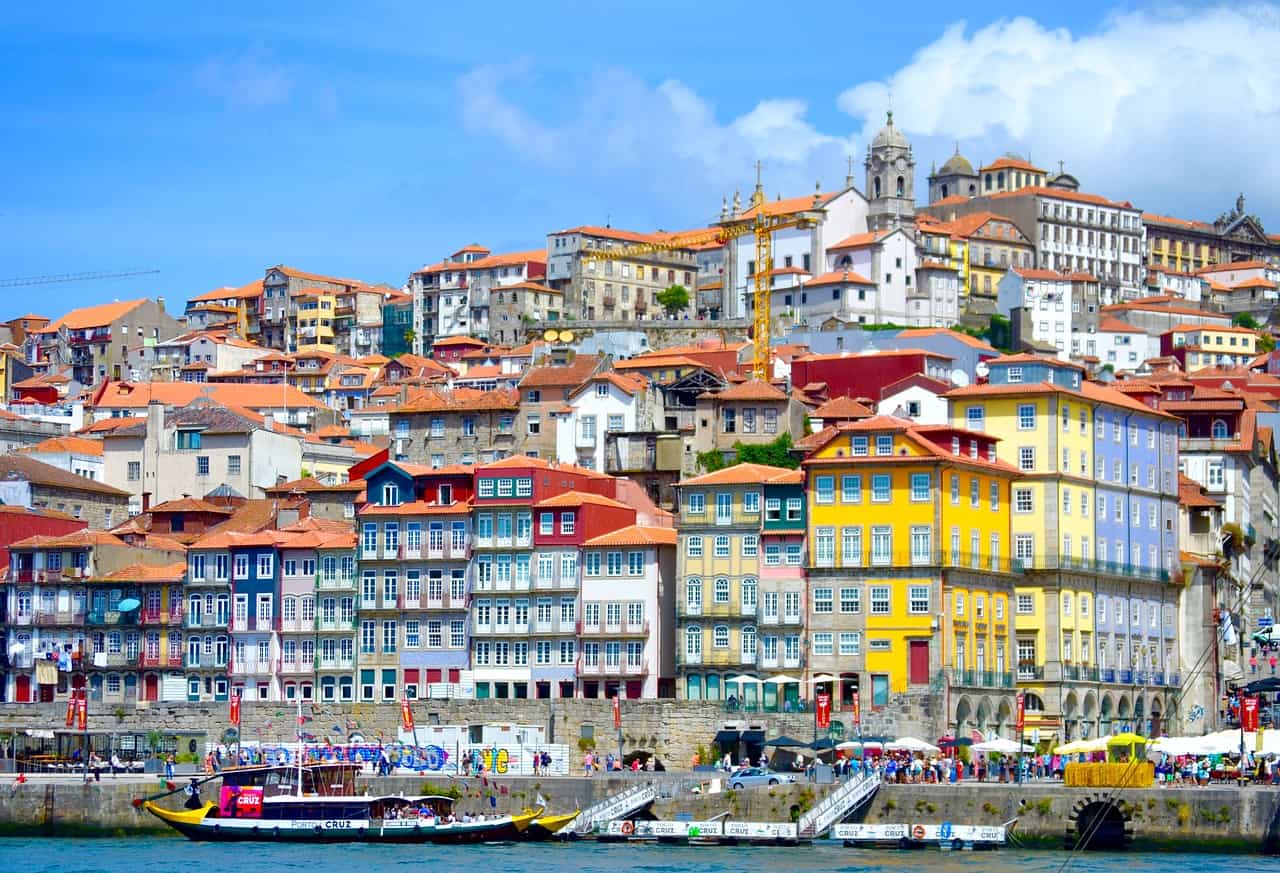
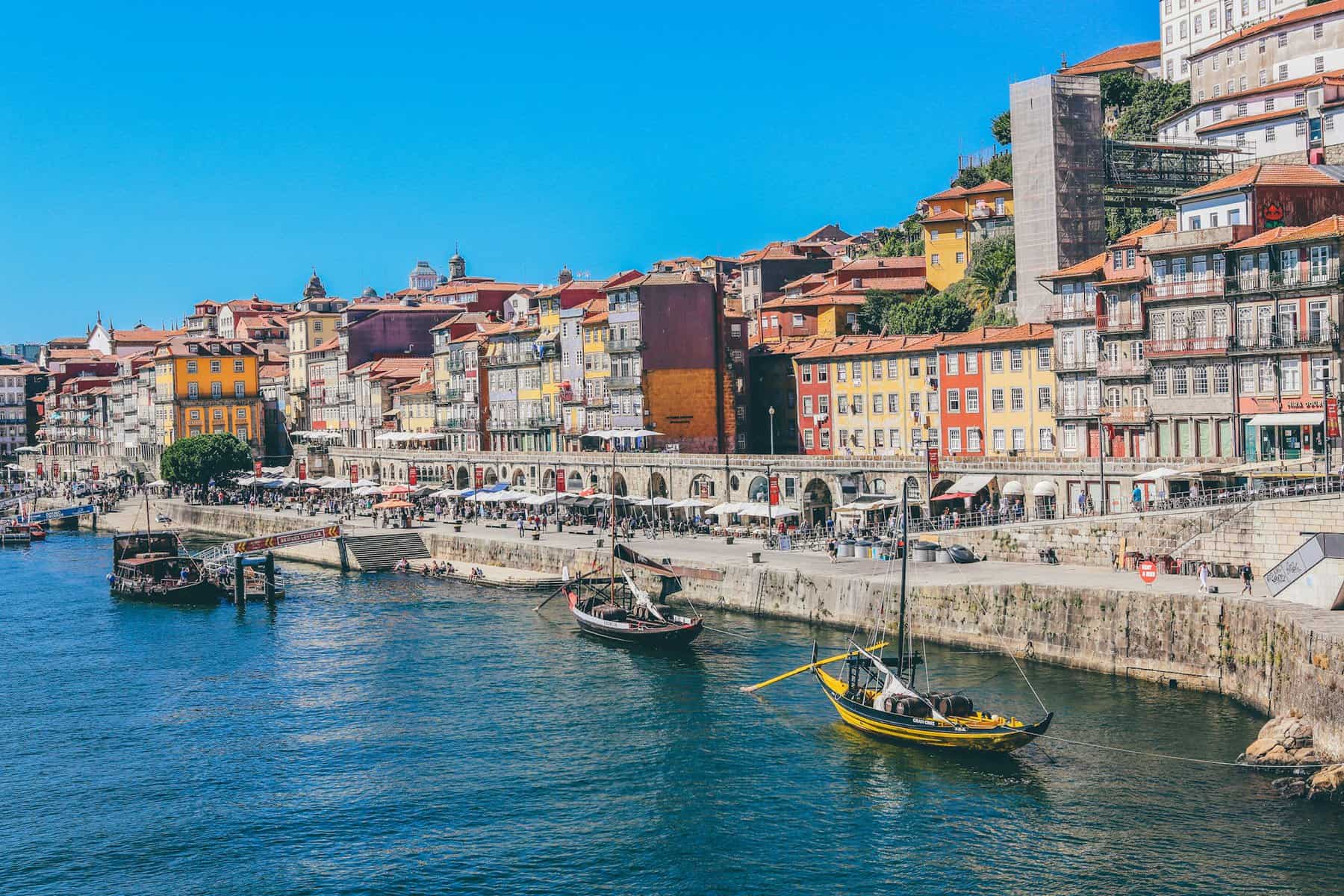
The Ribeira district is Porto’s historic center and the city’s main sightseeing area. In the past, the neighborhood was enclosed by the Fernandine Wall (Muralha Fernandina). Today, only a beautiful surviving stretch remains in the eastern part of the quarter. The district itself contains the city’s main historic landmarks, with the cathedral at its center.
The neighborhood climbs a hill crowned by the cathedral, with narrow streets and breathtaking houses all around. Down below, Ribeira is the heart and soul of Porto, with little shops, vintage stores, longtime local restaurants, newer dining spots, charming cafés, and the warm, lively atmosphere of a Mediterranean city — technically speaking, that’s accurate. Along the neighborhood’s riverside promenade, on Cais da Ribeira, the city’s beauty seems distilled into one unforgettable stretch.
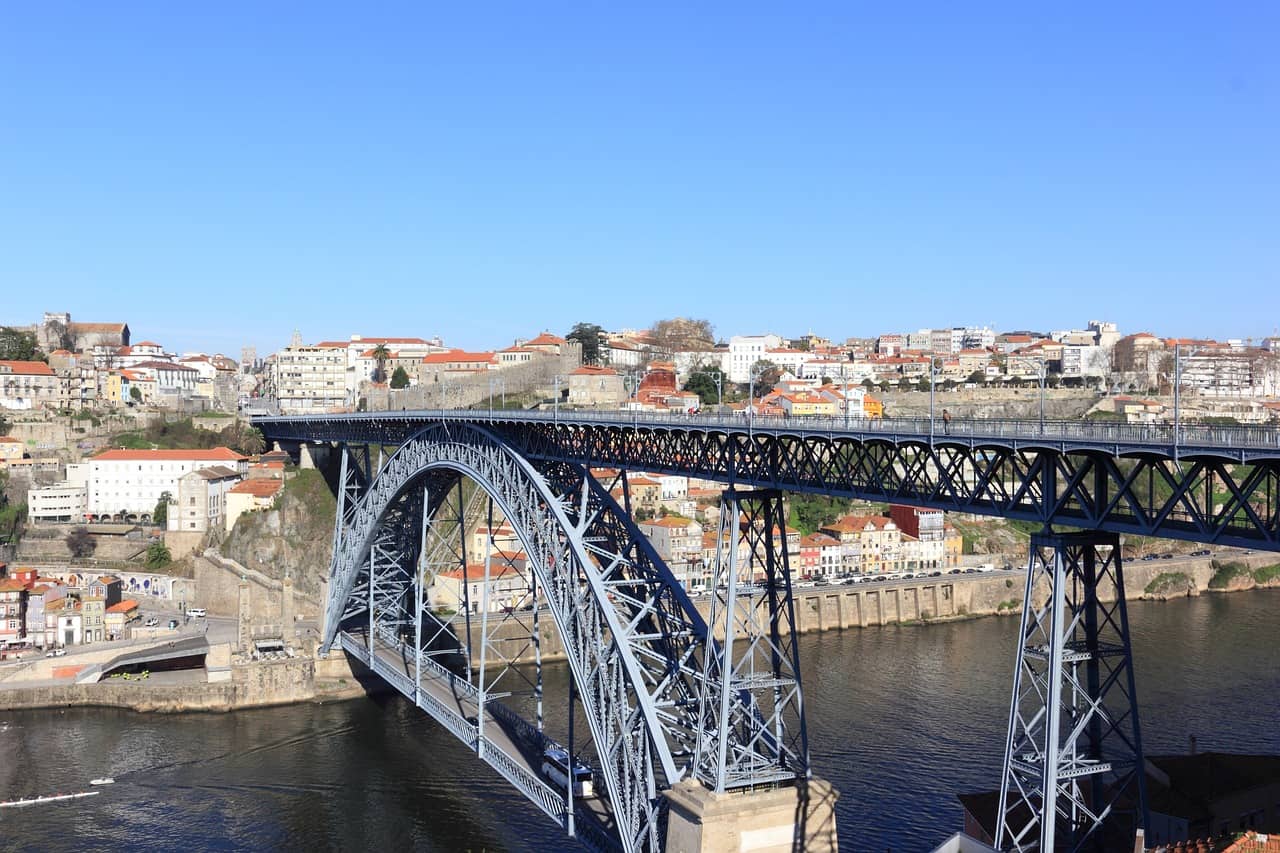
From Ribeira, the views over the Douro and Gaia on the southern bank are superb. The two sides are linked by the photogenic Dom Luís I Bridge (Ponte Luís I), an iron arch bridge rising 45 meters high. Built in the late 19th century, it has long been one of Porto’s defining landmarks.
Click here to search for a place to stay in Porto’s romantic Ribeira…
Porto Cathedral | Sé do Porto
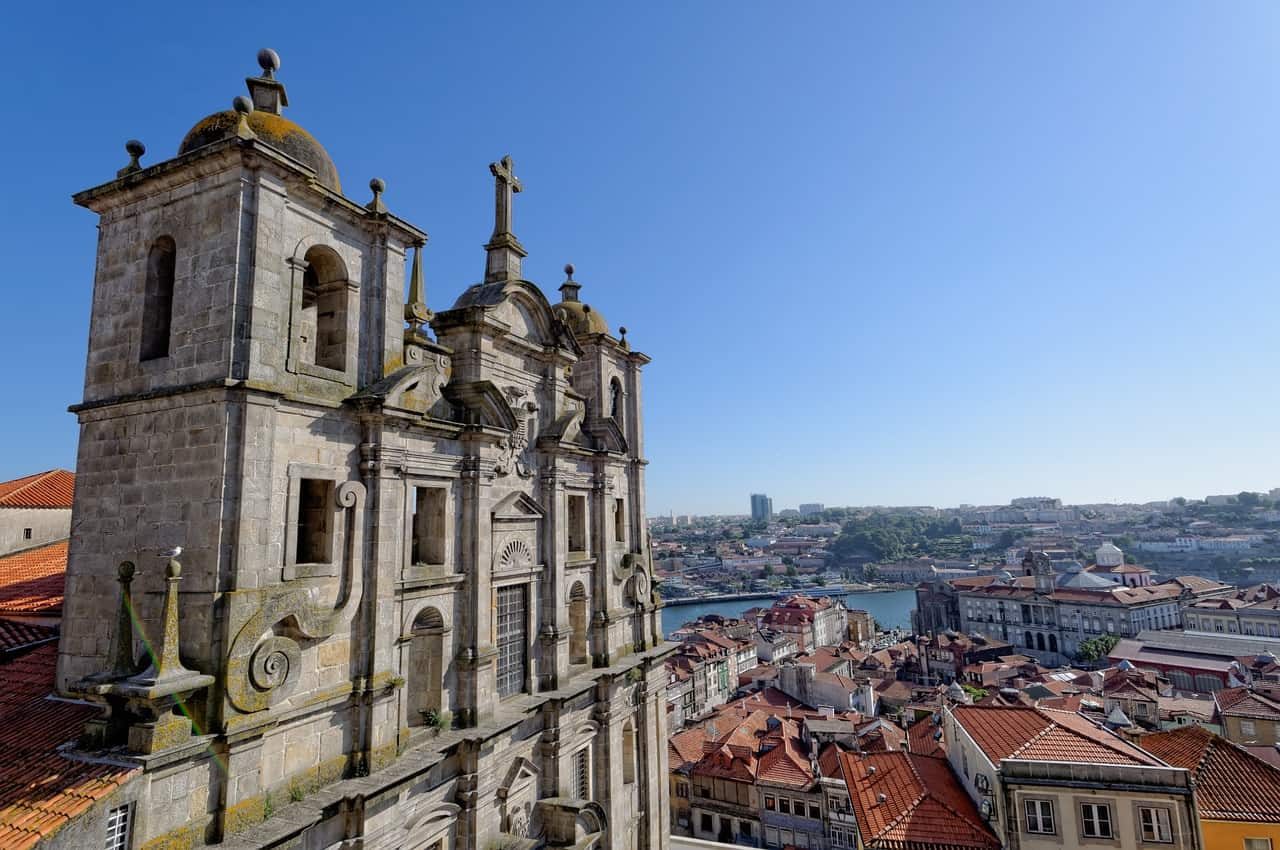
Porto Cathedral is one of the most impressive buildings in all of Portugal. It stands at the top of the hill in the heart of Ribeira, overlooking the Douro estuary from a commanding position. The cathedral is a striking blend of church and fortified castle.
Construction on the fortress-cathedral began in the 12th century, and over time it was expanded with additional defensive elements. The church facade is its most prominent 12th-century feature, including the huge and impressive rose window.
Entry to the cathedral is through a large courtyard at whose center stands the Pelourinho do Porto, the twisted pillory column symbolizing sin and the power of the Church. From here, there are sweeping views of the Douro estuary and Gaia on the southern bank.
It’s well worth stepping inside the cathedral, where the interior feels like a patchwork of time. Throughout the complex are chapels and courtyards built in different periods, creating a rich mosaic of European architecture across the vast structure.
Address: Terreiro da Sé
Episcopal Palace | Paço Episcopal do Porto
The bishop’s palace stands beside Porto Cathedral.
It served as the residence of the city’s bishop from the 13th century, following the cathedral’s completion. The bishop lived here until 1832, when he fled the city during the Siege of Porto in the Portuguese Civil War.
Today, visitors can tour parts of the palace designed by the Italian Baroque architect Nicolau Nasoni. The visit focuses mainly on the bishop’s former residence.
You can admire not only the impressive architecture, but also the luxurious furnishings and decorative objects once used by the city’s highest religious authority.
Click here to search for a place to stay in Porto…
São Bento Train Station | São Bento
Porto’s main railway station sits at the northern edge of Ribeira, below the slopes leading up to the cathedral.
The station is the perfect starting point for exploring Porto’s enchanting old quarter. São Bento is also a destination in its own right, simply because of its striking beauty. Built in the early 20th century in the French Beaux-Arts style, it still feels like a small slice of Paris in the heart of Portugal.
Inside the station, right by the platforms, the walls are covered with thousands of blue tiles depicting festival scenes from across Portugal. Above them runs a frieze of colorful azulejos portraying moments from the country’s traditions and development.
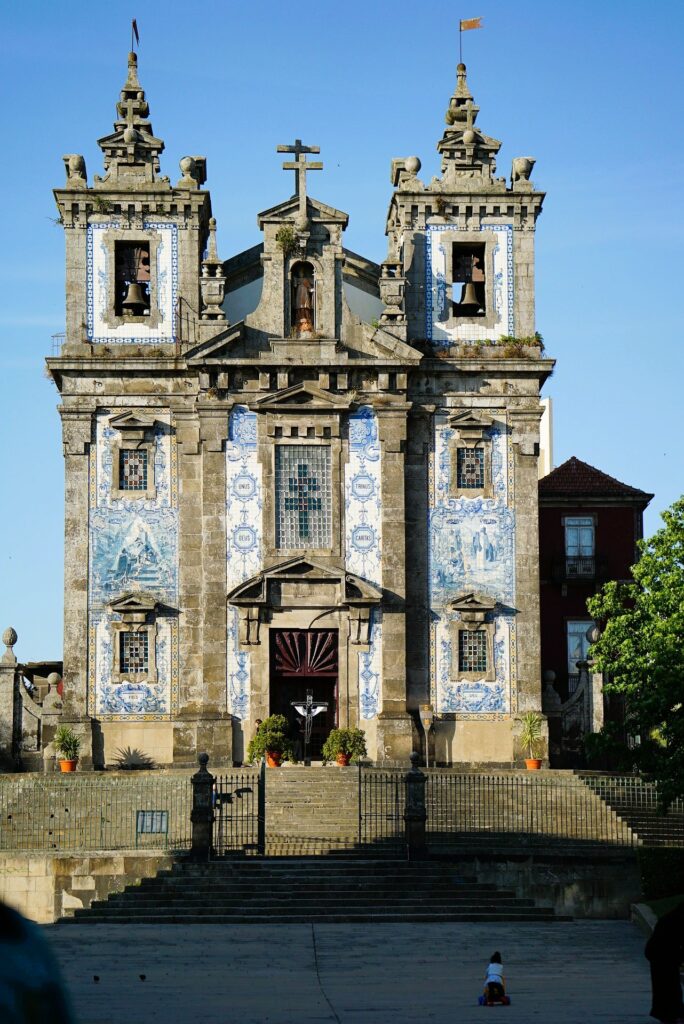
On the station’s eastern side stands the magnificent facade of Santo Ildefonso Church (Igreja Paroquial de Santo Ildefonso).
Address: Praça de Almeida Garrett
Click here to find a place to stay in wonderful Porto…
Flower Street | Rua das Flores
Rua das Flores is one of the most enjoyable streets in central Porto. This narrow, elegant street runs southwest from São Bento Station and ends at the square facing Palácio das Artes.
It is lined with tightly packed houses and wrought-iron balconies, along with plenty of shops, small hotels, restaurants, and cafés.
Click here for a list of 4-star hotels in Porto…
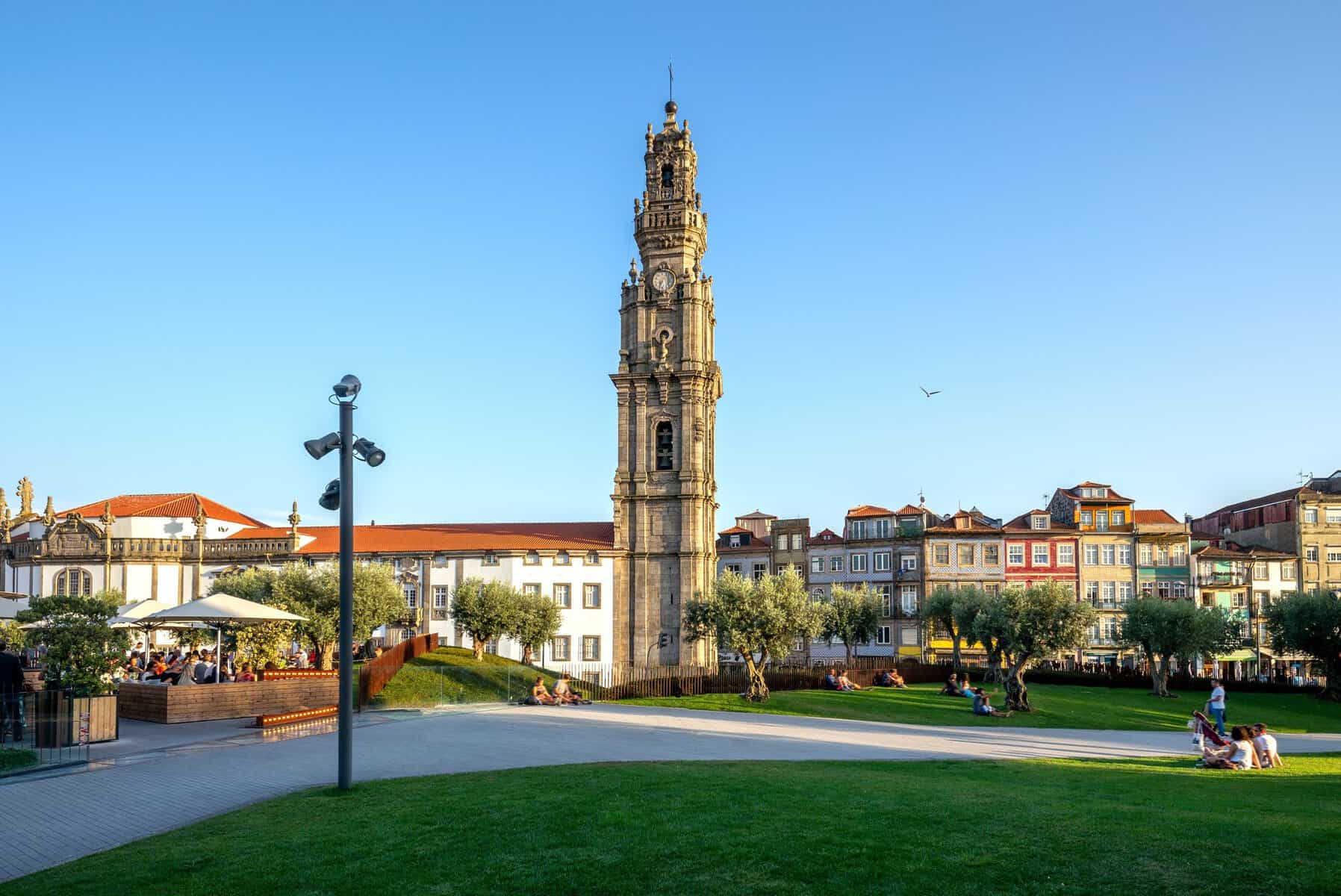
Clérigos Church and Tower | Igreja e Torre dos Clérigos
Clérigos is the impressive Baroque masterpiece of the Italian architect Nicolau Nasoni. The church was built in a prominent Baroque style with Gothic influences and has an unusual overall design.
The church is exceptionally long and narrow, with a particularly tall interior. Its elegant facade faces east, where you enter the small, lofty church space filled with gold and lavish ornamentation.
At the rear rises the campanile — in keeping with its Italian architectural spirit — the Torre dos Clérigos. At about 74 meters tall, it is one of the highest bell towers on the Iberian Peninsula and remains one of the tallest structures in Portugal.
You can climb to the viewing terrace at the top of the tower for magnificent views over the river and the city. It’s a 240-step climb, but for those who can manage it, the effort is absolutely worth it.
Address: R. de São Filipe de Nery
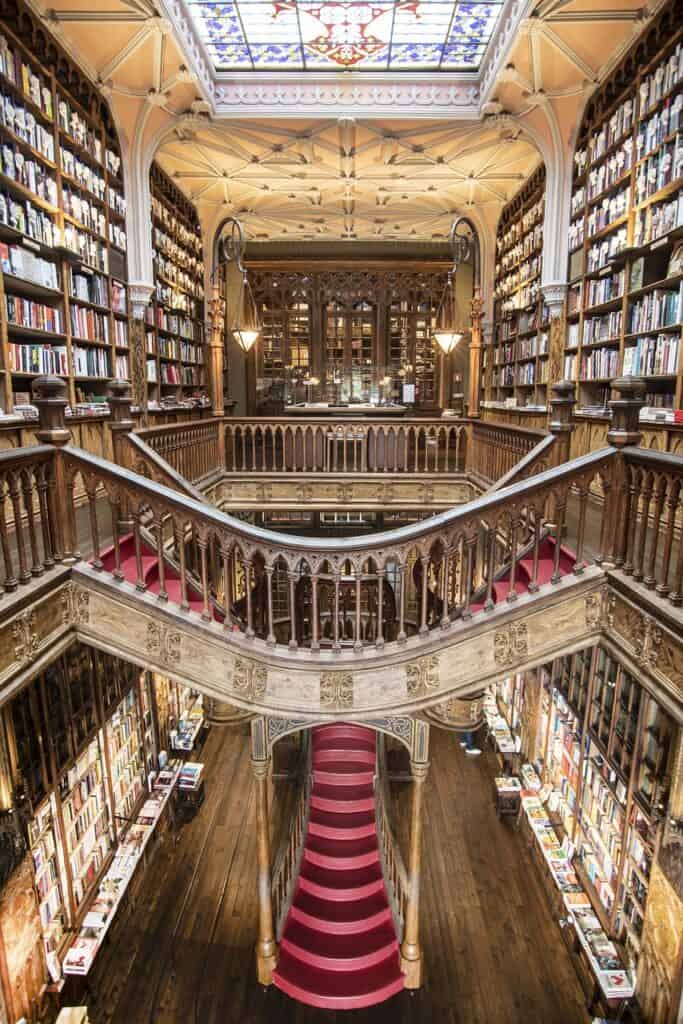
Livraria Lello bookstore | Livraria Lello
This distinctive bookstore, founded by the Lello brothers in 1906, was designed with undeniable flair. Its interior is breathtaking, with sweeping staircases and an impressive gallery level.
Porto’s famous bookstore stands at the northern edge of Praça de Lisboa, opposite Clérigos Church. On the square’s western side is the University of Porto campus. A little farther on, beyond the Lions Fountain (Fonte dos Leões), you’ll come to Carmo Church.
In recent years, the store has become a must-visit because of the rumor that it inspired J.K. Rowling’s vision of Hogwarts in the Harry Potter series.
Whether that’s true or not — probably not — the tourist buzz is very real, and today the bookstore is one of the city’s essential stops.
Address: R. das Carmelitas 144
Click here to search for hotels and vacation apartments in charming Porto…
Carmo Church | Igreja do Carmo
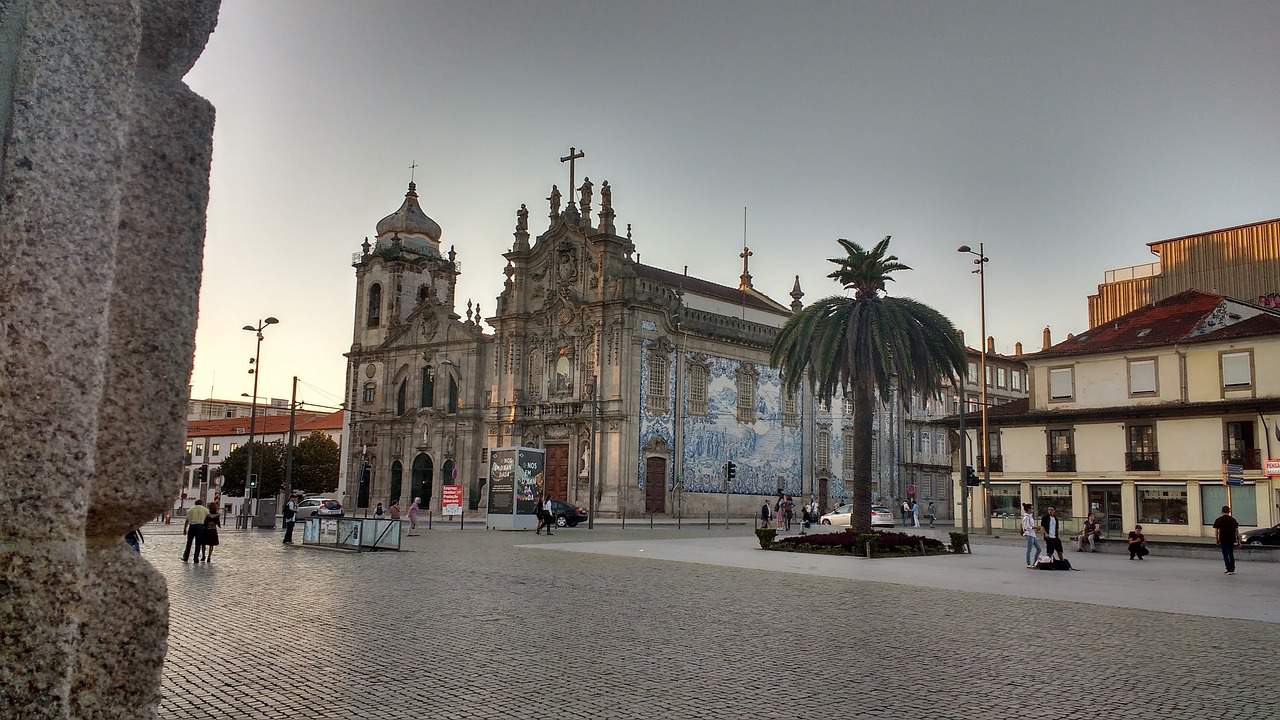
Carmo Church, or the Church of Our Lady of Mount Carmel (Nossa Senhora do Carmo), is one of the most beautiful and impressive churches in Portugal, and one of the country’s most striking buildings. It stands opposite the neoclassical building of the University of Porto, on the western side of the small square centered on the Lions Fountain.
Carmo is one of Portugal’s most precise and refined examples of the style known as Portuguese Baroque. It was completed in 1768, based on the plans of the architect José Figueiredo Seixas.
The church is best known for its azulejos — the blue-and-white tile covering on its eastern wall. The interior is equally impressive, with sculptural decoration and reliefs in Rococo and Baroque style.
Next to Carmo stands the Igreja dos Carmelitas, which served as the Carmelite order’s base in Porto. Between the two churches is an extremely narrow house known as the “Hidden House” — Casa Escondida — which you can also visit. The house is just one meter wide and once housed Carmelite monks.
Click here to search for hotels and vacation apartments in Porto…
Porto’s stock exchange palace | Palácio da Bolsa
Porto’s stock exchange palace stands just north of the Church of Saint Francis, on the green square of Monumento ao Infante Dom Henrique in the eastern part of Ribeira. At the center of the square, the large statue of Infante Dom Henrique points westward.
The Porto stock exchange opened in 1842 in what had once been the monastery of the adjacent Franciscan church. It remained active until 1990, when it closed and all trading moved to the Lisbon Stock Exchange. Today, you can enter the impressive building for a tour of the former monastic rooms, or simply admire the palace from the square outside.
Address: R. de Ferreira Borges
Church of Saint Francis | Igreja de São Francisco
This church, dedicated to Saint Francis of Assisi, was the center of the Franciscan order in Porto.
It was built in the 14th century in the Gothic style. Until the 18th century, the church interior reflected the Franciscan spirit — austere, spiritual, and nearly bare. In the 18th century, however, the interior underwent a major transformation and was redesigned in an exceptionally rich and ornate Baroque style.
To this day, the interior remains one of the most impressive church interiors anywhere on the Iberian Peninsula.
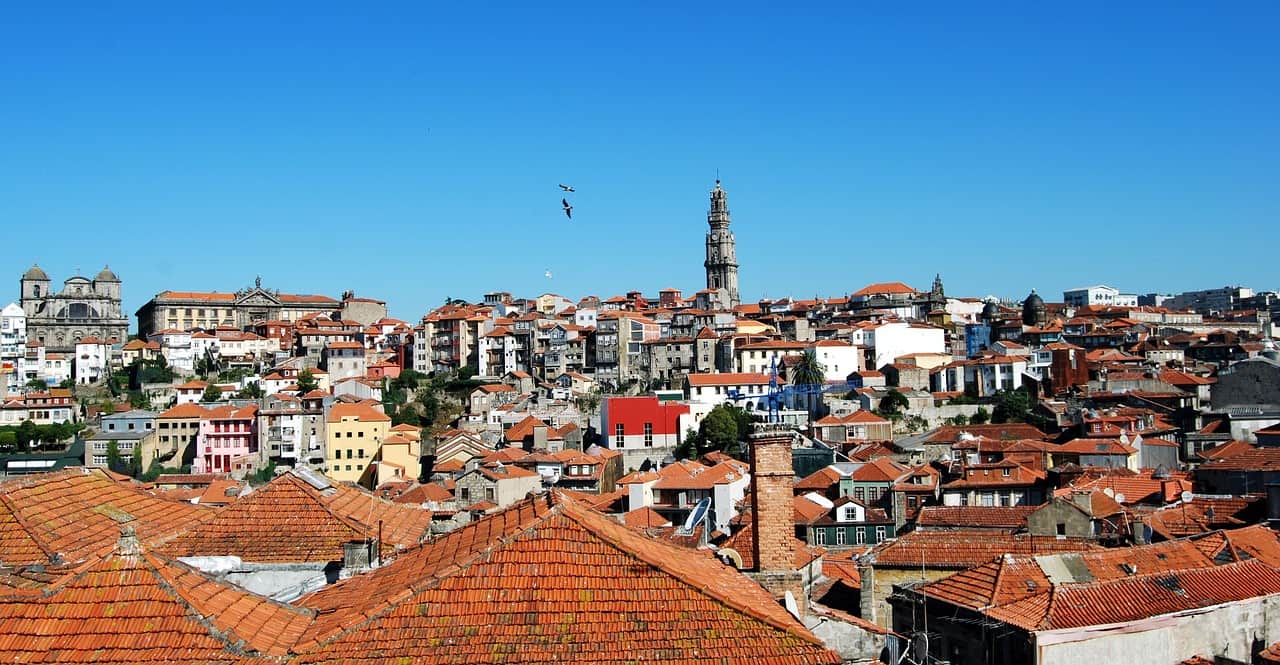
The House of the Prince | Casa do Infante
Casa do Infante is a large medieval building near Palácio da Bolsa. It is one of the oldest surviving structures in Porto.
Today, the building houses the municipal archive, though it was originally built as the city customs house. It is named after Infante Dom Henrique, who was born in the customs house in 1394. He was one of the key figures in the age of Portuguese exploration and maritime expansion in the 15th century.
It’s worth stepping inside the archive for the building alone, a remarkable structure dating to the mid-14th century.
Address: R. da Alfândega 10
Click here to search for hotels and vacation apartments in Porto…
Portuguese Center of Photography | Centro Português de Fotografia
Porto’s photography museum stands not far from Rua das Flores and Clérigos Church. It hosts interesting exhibitions of local photography, along with temporary shows and a fascinating display of antique cameras.
The highlight of a visit is really the building itself. In the past, this was the city prison and courthouse. It was a vast detention complex built in 1767, with numerous wings, a court, a small hospital, guards’ quarters, and other almost self-contained functions within what was then the city.
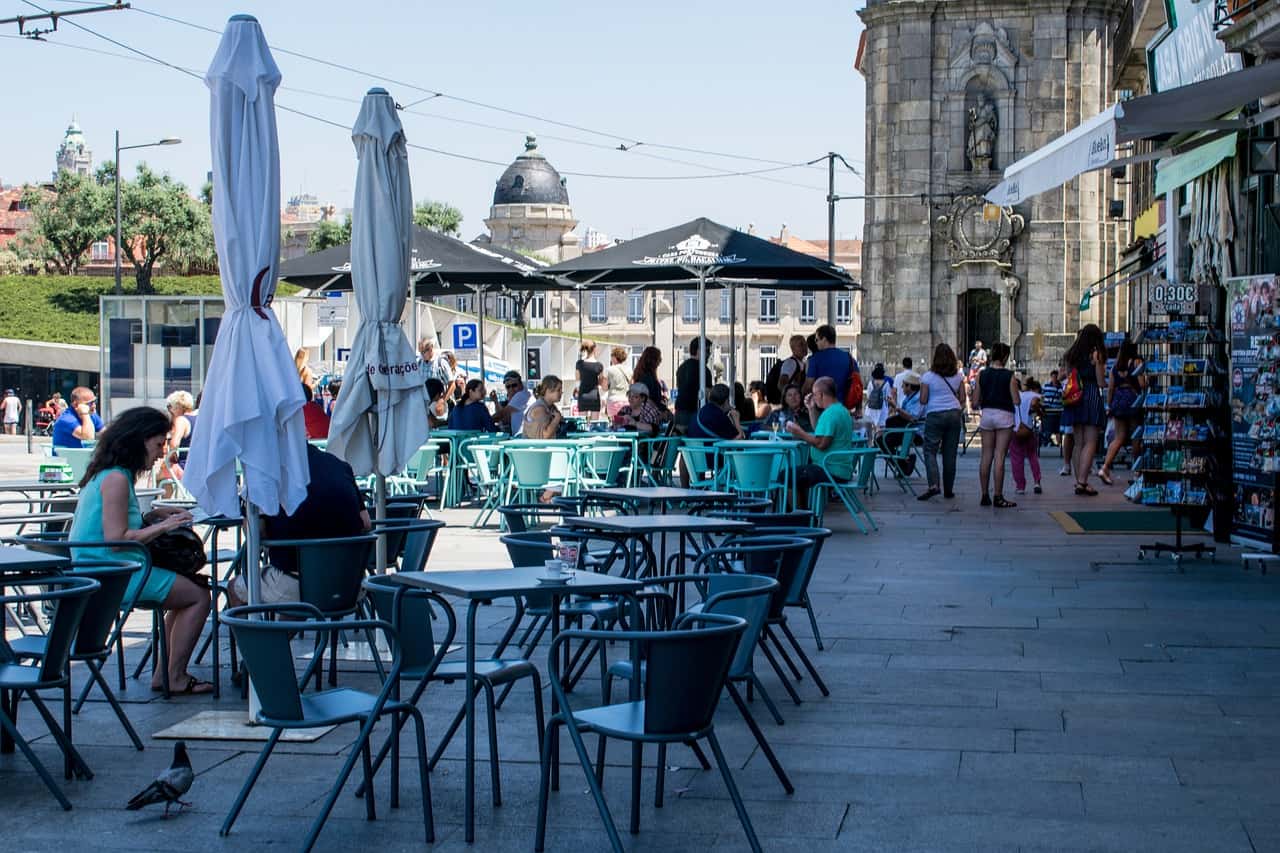
National Museum Soares dos Reis | Museu Nacional Soares dos Reis
A five-minute walk west of Carmo brings you to the museum dedicated to the national sculptor António Soares dos Reis.
The museum is housed in a large 18th-century town palace that once operated as a Jewish-owned textile factory. It later passed into the hands of the French rulers of the city and served as their headquarters in Porto. Today, the palace rooms display sculptures by Soares dos Reis, along with paintings by major Portuguese artists from the 18th and 19th centuries.
Address: R. de Dom Manuel II 44
Click here for the museum’s current opening hours…
Click here to find hotels and vacation apartments in Porto…
Museum of Transport and Communications | Museu dos Transportes e Comunicações
This large museum is housed in the Alfândega do Porto building, a historic conference venue on the banks of the Douro.
Its exhibits trace the development of transportation in Portugal, with displays ranging from horse-drawn carriages to motor vehicles. Another wing focuses on communications technology.
Across from the Museum of Transport is World of Discoveries, a pleasant place to spend time with kids while learning about Portuguese voyages around the world from the 16th century onward.
Address: R. Nova da Alfândega 59
Click here for the museum’s current opening hours…
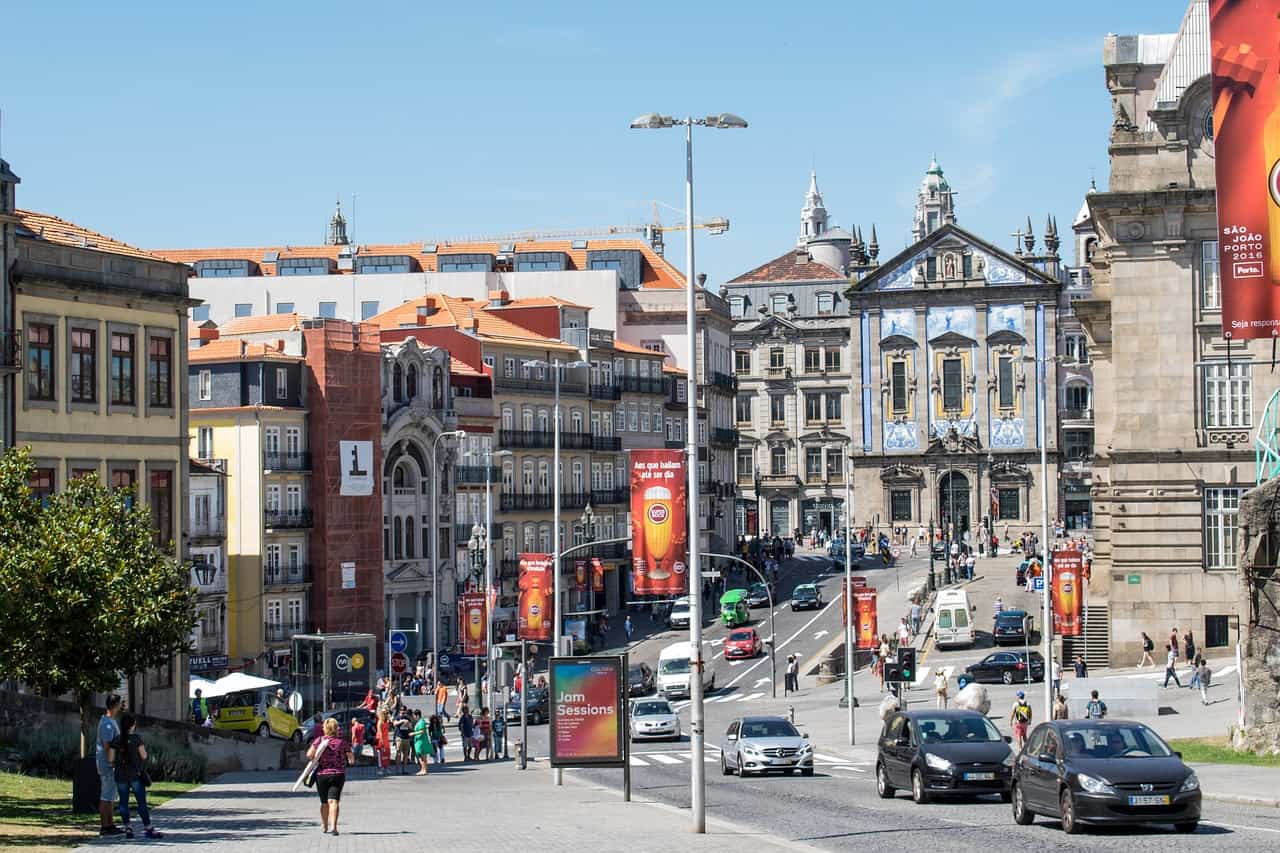
Crystal Palace Gardens | Jardins do Palácio de Cristal
Porto’s Crystal Palace was built in 1861, inspired by London’s Crystal Palace.
Over the years, the palace became a beloved attraction for locals, but in the 1950s it was replaced by the Pavilhão Rosa Mota. Around the former Crystal Palace, lovely gardens were planted, and they have since become Porto’s most popular urban park.
The gardens offer beautiful views of the Douro River and the houses of Vila Nova de Gaia on the southern bank. On the gardens’ western side, you’ll find the Museu Romântico, with displays of period furniture.
Click here for a list of 5-star hotels in Porto…
Football in Porto
FC Porto | Futebol Clube do Porto
Porto’s main Footbal club is one of the most important powerhouse clubs in Europe.
The team has won the European Cup twice, first in 1987 and again in the unforgettable year of 2004 under manager José Mourinho. The year before that, Mourinho led the club to the UEFA Cup title.
Known as the Dragões, the club is widely considered Portugal’s number-two side after Benfica of Lisbon. Porto has won 30 Portuguese league titles, and many of the country’s greatest players have come through the club or still play there today. It has also long been a favored launching pad for Brazilian players beginning their European careers.
Porto’s home ground is Estádio do Dragão, the modern Dragon Stadium in the eastern part of the city. It seats more than 50,000 and is considered one of the best venues on the Iberian Peninsula.
Even if you’re not in town when there’s a match — and especially if you are — stadium tours are also available and are likely to interest kids who love soccer.
Click here for a wonderful tour in the Dragão Stadium….
Boavista | Boavista Futebol Clube
Porto’s city rival is the likable Boavista. The club plays at Estádio do Bessa in the western part of the city. The older stadium was renovated in 2003 ahead of the European Championship and has around 28,000 seats.
Boavista is generally a mid-table side and has won the Portuguese championship just once.
Click here to search for hotels and vacation apartments in Porto…
Attractions in Vila Nova de Gaia – the other side of the river
Vila Nova de Gaia, or simply Gaia, is a separate city from Porto on the southern bank of the Douro River.
Much of the city is suburban and forms part of the Porto metropolitan area. More than 300,000 people live here, roughly similar to Porto’s own population. Gaia is officially considered Portugal’s third-largest city, after Lisbon and Porto.
Gaia is connected to Ribeira, Porto’s riverside quarter, by the photogenic Dom Luís I Bridge.
Click here to search for hotels in Gaia, where you’ll get the best views of Porto…
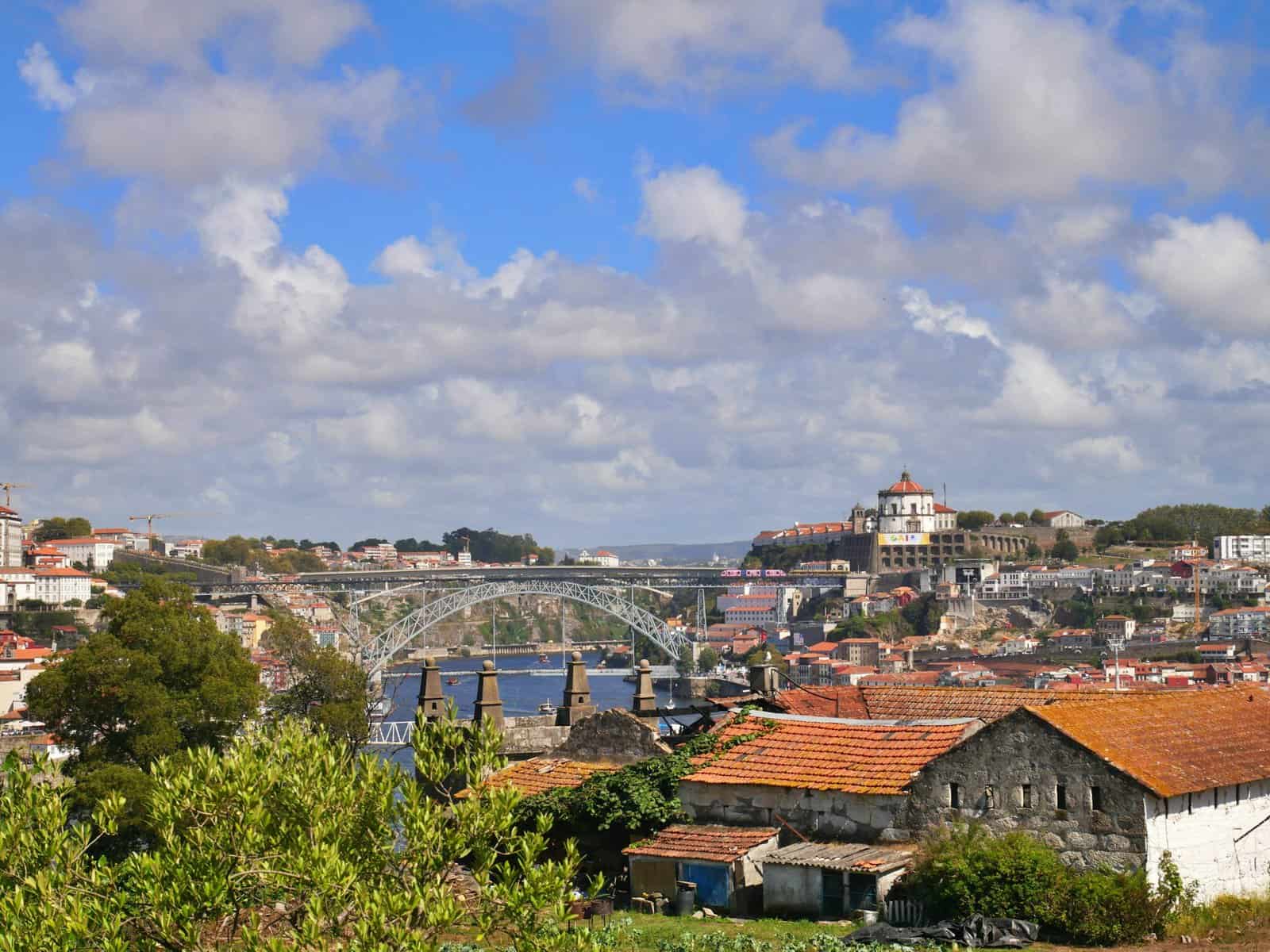
Gaia cable car | Teleférico de Gaia
The Gaia cable car links Mosteiro da Serra do Pilar and Jardim do Morro at the top of the hill, beside the end of the Dom Luís I Bridge, with Gaia’s waterfront, Cais de Gaia.
The waterfront — Cais de Gaia — is Gaia’s lively, easygoing heart. It sits right along the river and looks out onto Porto’s magnificent skyline on the northern bank.
The riverfront is lined with restaurants, a promenade, bars, and plenty of tourists.
Monastery of Pillar Hill | Mosteiro da Serra do Pilar
The monastery and church of Serra do Pilar are Gaia’s main attraction.
The old church at the top of the hill was built in a circular form according to Italian Renaissance principles during the 16th century. Thanks to its strategic position facing Porto, it was also used in the early 19th century by forces under Arthur Wellesley, the Duke of Wellington, as well as by his Napoleonic enemies.
The large terrace outside the monastery offers the finest view of Porto and the Douro River.
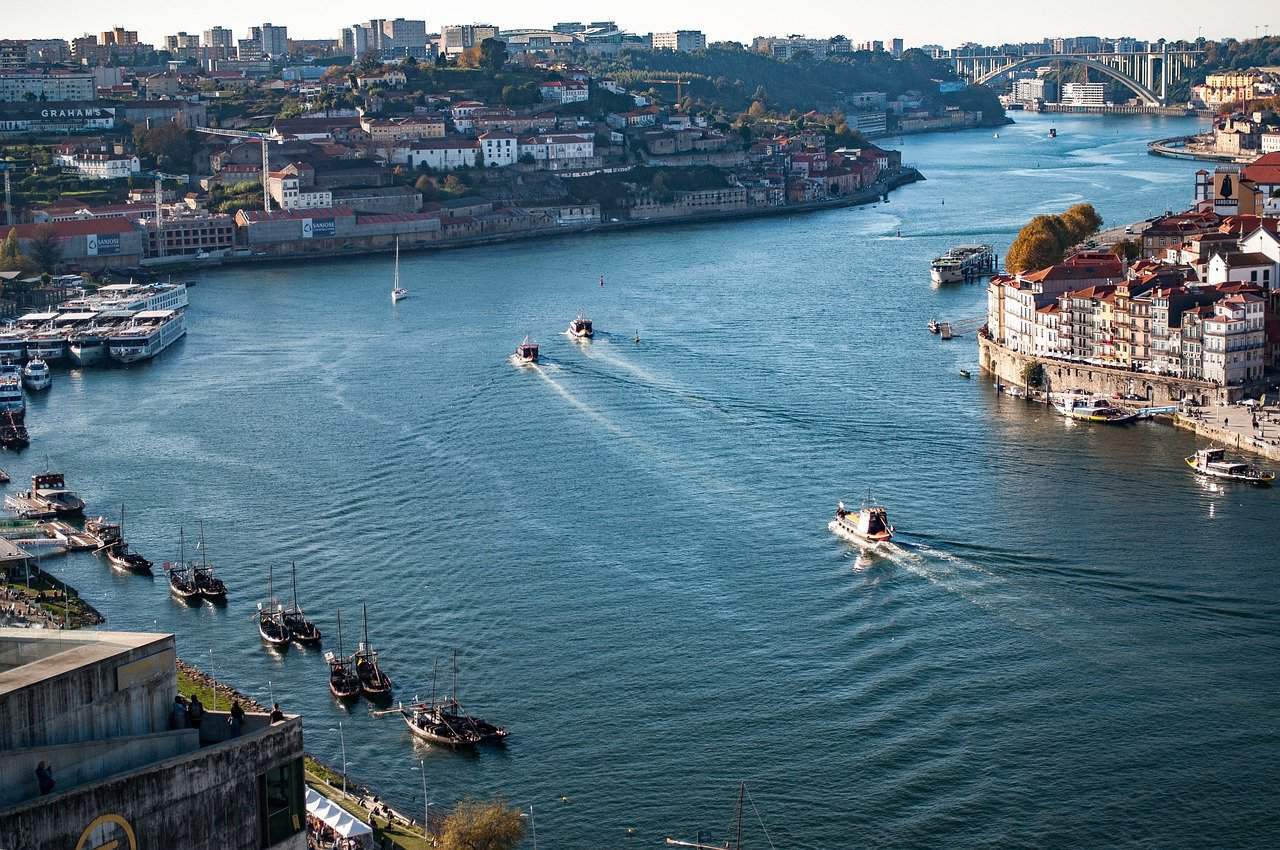
Hill Garden | Jardim do Morro
These hillside gardens lie across the road from Serra do Pilar Church, at the southern end of the Dom Luís I Bridge.
Set along the slope below the church and monastery, they offer another wonderful viewpoint over the Douro River and Porto’s historic core.
The gardens were laid out on open land in Gaia in 1927 and have since become a very popular place to stroll and relax.
Click here to find a place to stay in Vila Nova de Gaia…
Teixeira Lopes House Museum | Casa Museu Teixeira Lopes
The Teixeira Lopes House Museum is dedicated to the local Portuguese artist, one of the most important sculptors of the early 20th century on the Iberian Peninsula.
Inside the extensively renovated house, you’ll find a wide range of the artist’s bronze sculptures, along with paintings and sculptures by other local artists from the late 19th century.
Address: R. Teixeira Lopes 32, Vila Nova de Gaia
Click here to search for hotels and vacation apartments in Porto…
Click here for the complete guide to accommodations in Porto, or “Where to stay in Porto?”…