The volcanic island of Madeira stretches 34 miles long and 14 miles wide, an “oasis” set far out in the Atlantic Ocean. After a 90-minute flight from Lisbon, you’ll arrive on a small island that still feels big enough to pack in a remarkable variety of sights and attractions for a truly fascinating vacation. This lush green island offers breathtaking scenery, farming villages, forests, cliffs plunging into the sea, a lively and sizable capital city, and soaring mountains with jagged peaks rising above the clouds. You can explore all of it over the course of a few days, while also meeting the island’s warm and welcoming residents.
Map of Madeira
How do you get around Madeira?
The easiest way to travel between Madeira’s sights is by rental car. In practice, almost any other option is close to impossible, aside from organized day tours that usually depart from the capital, Funchal. Driving in Madeira is an experience in itself. The island’s roads are narrow and winding, many of them running through tunnels that have shortened the journey between the towns and villages scattered along the coast.
Click here to search for hotels and vacation rentals on Madeira…
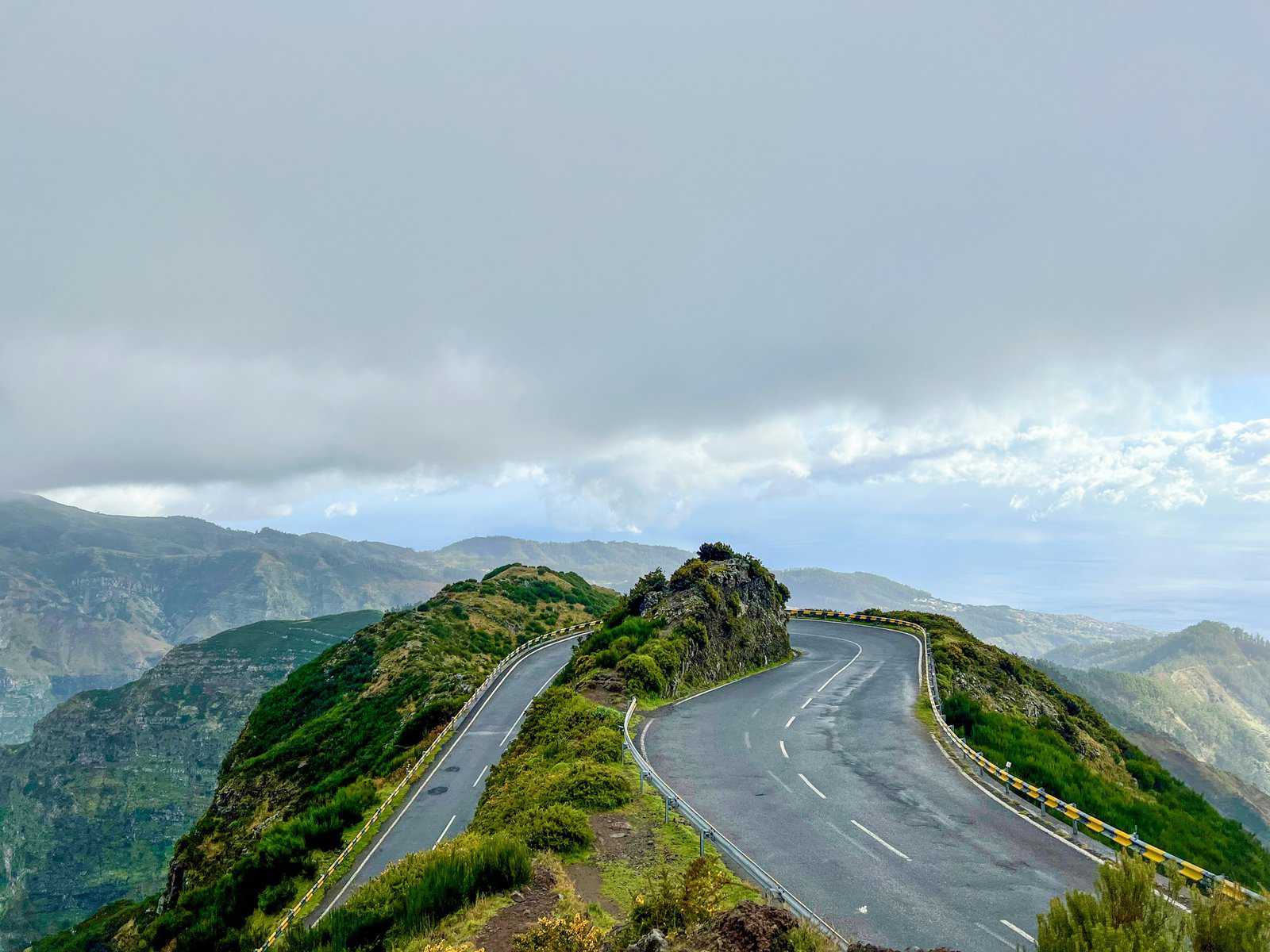
The capital, Funchal
Lively Funchal is Madeira’s gateway, and most routes around the island begin and end here. The city itself has plenty to offer and is known for its warm hospitality and friendly atmosphere. Its urban life is wonderfully appealing, with old streets alongside newer ones, all lined with plenty of places to sit back and soak up the island’s laid-back mood. Funchal also has several sights and attractions of its own, and it’s the main departure point for whale- and dolphin-watching cruises—an activity Madeira is especially famous for.
Click here for all the sights and attractions in Funchal, Madeira’s capital…
Click here to search for accommodations in Madeira’s wonderful capital, Funchal…
Click here for excellent food and wine tours in Madeira…
Madeira’s peaks
Madeira’s peaks are the main reason many visitors come to the island. These summits rising above the clouds have long been considered a must-see not just in Madeira, but across Europe, largely because of the spectacular views from the top—which also happen to photograph beautifully. Sitting just over 5,900 feet high, the peaks can fit easily into almost any Madeira itinerary. Pico do Arieiro is more accessible from Funchal, about a half-hour drive, while Pico Ruivo is best reached from the island’s north side, around 20 minutes from the town of Santana. Anyone planning to hike the trail between them (PR1) should start from Pico do Arieiro.
Click here for a super-popular sunrise tour from Funchal to Madeira’s peaks above the clouds…
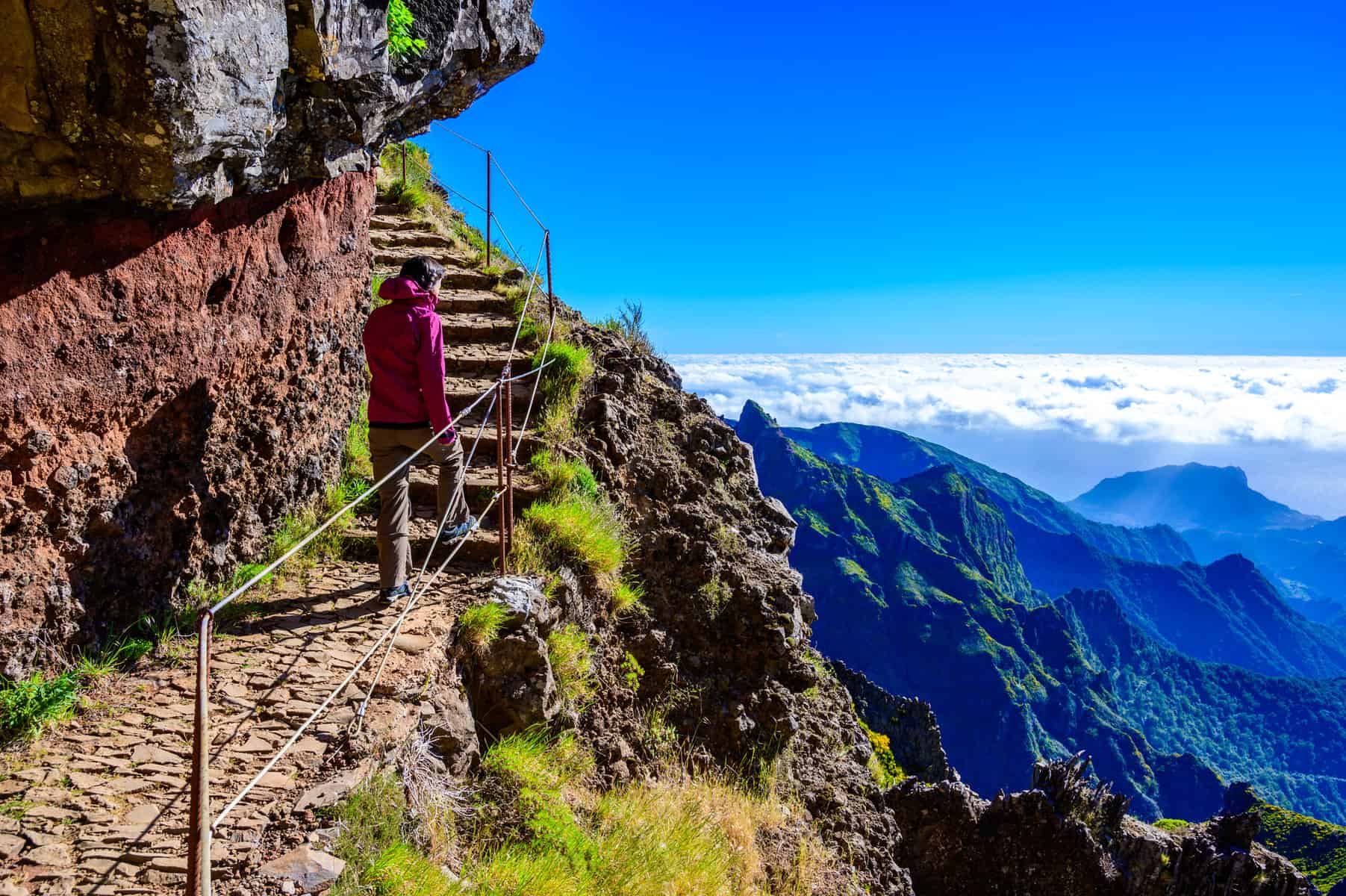
Arieiro Peak | Pico do Arieiro
Madeira isn’t a large island, which is exactly why its contrasts feel so striking. Between the ocean, farmland, mountain peaks, and cliffs dropping into the sea, narrow roads thread their way across the island and make almost every corner accessible. That means you can reach Madeira’s second-highest summit just half an hour from the capital, a thoroughly modern city.
That’s also Pico do Arieiro’s big advantage over the other peaks: you can drive almost all the way to the top. The narrow road to the 5,938-foot summit climbs above the clouds near the end, and on most days the sun reappears as you rise. It’s one of the island’s signature moments, and one of the reasons travelers from across Europe—especially younger visitors, though certainly not only them—flock to Madeira.
The image of rocky peaks peeking above a blanket of clouds is one of Europe’s most iconic nature scenes. As noted, Pico do Arieiro is also exceptionally easy to access. At the summit, you’ll find a small convenience store and a café as well.
Click here for a list of 12 wonderful hotels in Madeira…
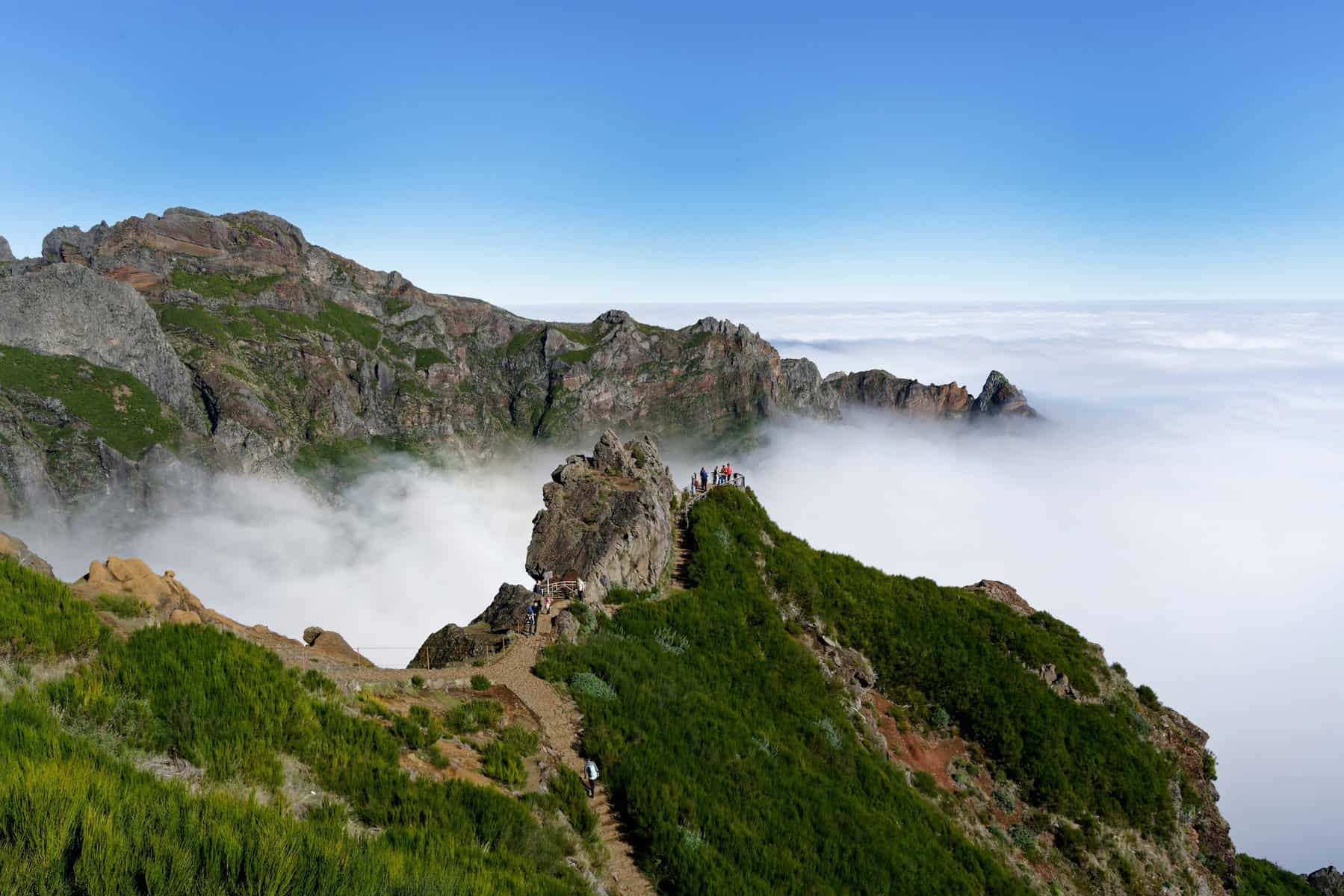
Ruivo Peak | Pico Ruivo
This is Madeira’s highest peak, rising to 6,106 feet and standing just slightly above its neighboring summits. The peak can only be reached on foot, and there are several ways to get there. The first and shortest route starts from Achada do Teixeira. There’s a small free parking lot there, and the trail to the summit begins right beside it—about a 45-minute walk.
For experienced hikers and anyone coming specifically to trek among Madeira’s peaks, there’s a well-maintained mountain trail that starts at Pico do Arieiro. At roughly 4.3 miles long, the route is somewhat challenging and includes sections alongside steep drop-offs. Still, it isn’t considered extremely difficult and is absolutely doable. Needless to say, the views along the way are breathtaking.
Click here to search for accommodations in Madeira…
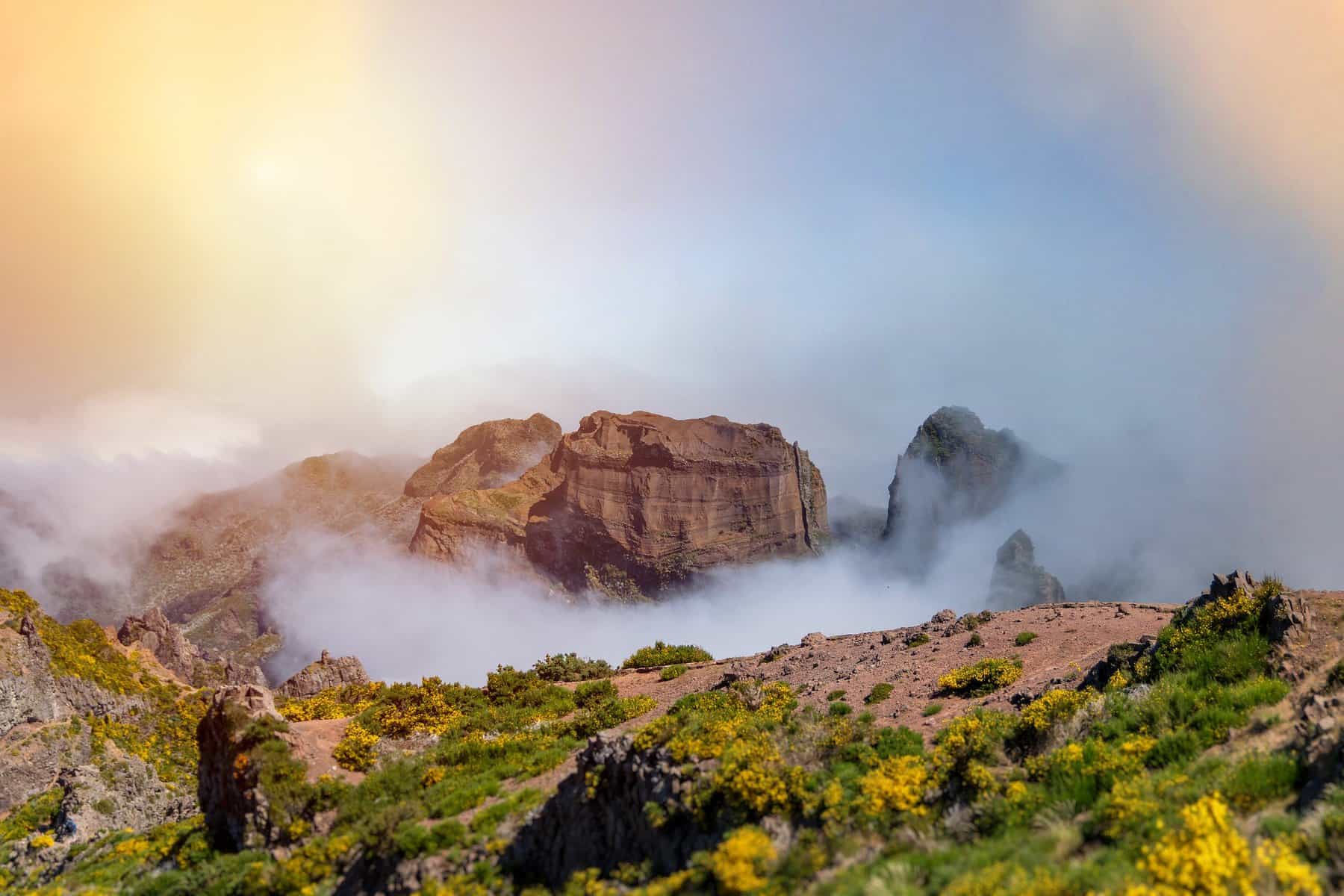
Hiking trail between Pico do Arieiro and Pico Ruivo | PR1 Vereda do Areeiro
This is a 4.3-mile out-and-back trail. Hiking time is usually around three and a half to four hours. It’s considered moderately difficult and is relatively well organized.
On many sections, the path is narrow and runs along steep drop-offs. The trail is almost always busy, so be considerate and take care around hikers coming from the opposite direction, especially in the tighter stretches.
Some parts of the route include stairways as well as passages through small tunnels carved into the rock.
About half an hour after setting out from Pico do Arieiro, you’ll reach a stairway climbing to the top of a peak that is usually wrapped in cloud, which is why it’s known as the “Stairway to Heaven.” It’s one of the trail’s favorite photo spots.
Whenever you’re planning time in the peaks—especially if you’re hiking the longer route between them—it’s essential to bring food and water, since there’s nowhere to buy anything along the way. Mountain weather can also change in an instant, swinging from sunshine to rain and sometimes strong winds, so it’s wise to come prepared with proper shoes and a rain jacket if you have one. Even with all the warnings, for hiking lovers this is an unforgettable and highly photogenic experience that will likely be one of the highlights of the trip, if not the highlight.
Click here for organized transfers from Funchal to Madeira’s peaks…
Ribeiro Frio – Madeira’s Natural Green Sanctuary
Ribeiro Frio is a stopping point in the eastern part of Madeira’s mountains, surrounded by dense forest. On site you’ll find a restaurant, a convenience store, and a small fish farm, a reminder that one of Madeira’s cold-water streams begins here. Ribeiro Frio is easiest to reach from Funchal in the south, though it’s also accessible from Santana in the north.
Ribeiro Frio is also the starting point for two of the island’s best hiking trails following Madeira’s irrigation channels, known as the levadas:
Levada dos Balcões – suitable for everyone
Also marked as PR11. This is a short trail of about half an hour, offering a taste of what it’s like to walk along the levadas. It begins a little past the restaurants on the left.
Levada do Furado – Ribeiro Frio – Portela – for experienced hikers
Also marked as PR10, this is the trail that heads off to the right, behind the restaurants. It’s best suited to experienced hikers because it’s both long—more than 7.5 miles—and includes several tunnels and steep slopes. If you choose this route, come prepared.
Click here for more information on where to stay in Madeira…
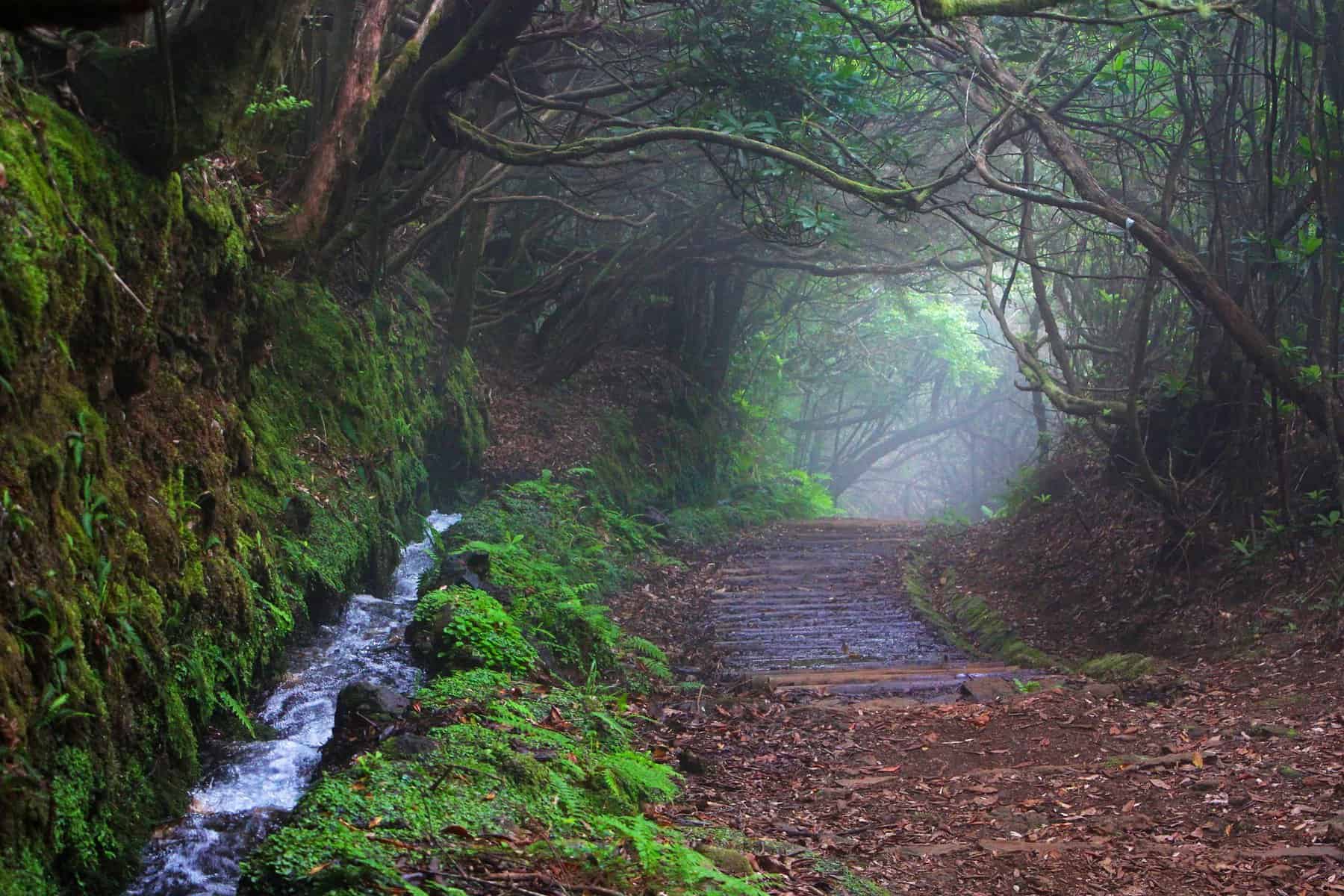
Attractions and sights in southern Madeira
The southern side of the island is less green than the north, and the weather along its coast is warmer. It’s also the most populated part of Madeira, largely because Funchal is here. Since most of the population lives in the south, the infrastructure is better too, with wider roads and long tunnels that save drivers from winding climbs into the mountains. Still, it’s worth remembering that Madeira is small, so the north and the island’s interior are also easy to reach from the south.
All the sights in the south of the island are very easy to access from Funchal.
Click here to find accommodations in Madeira’s wonderful capital, Funchal…
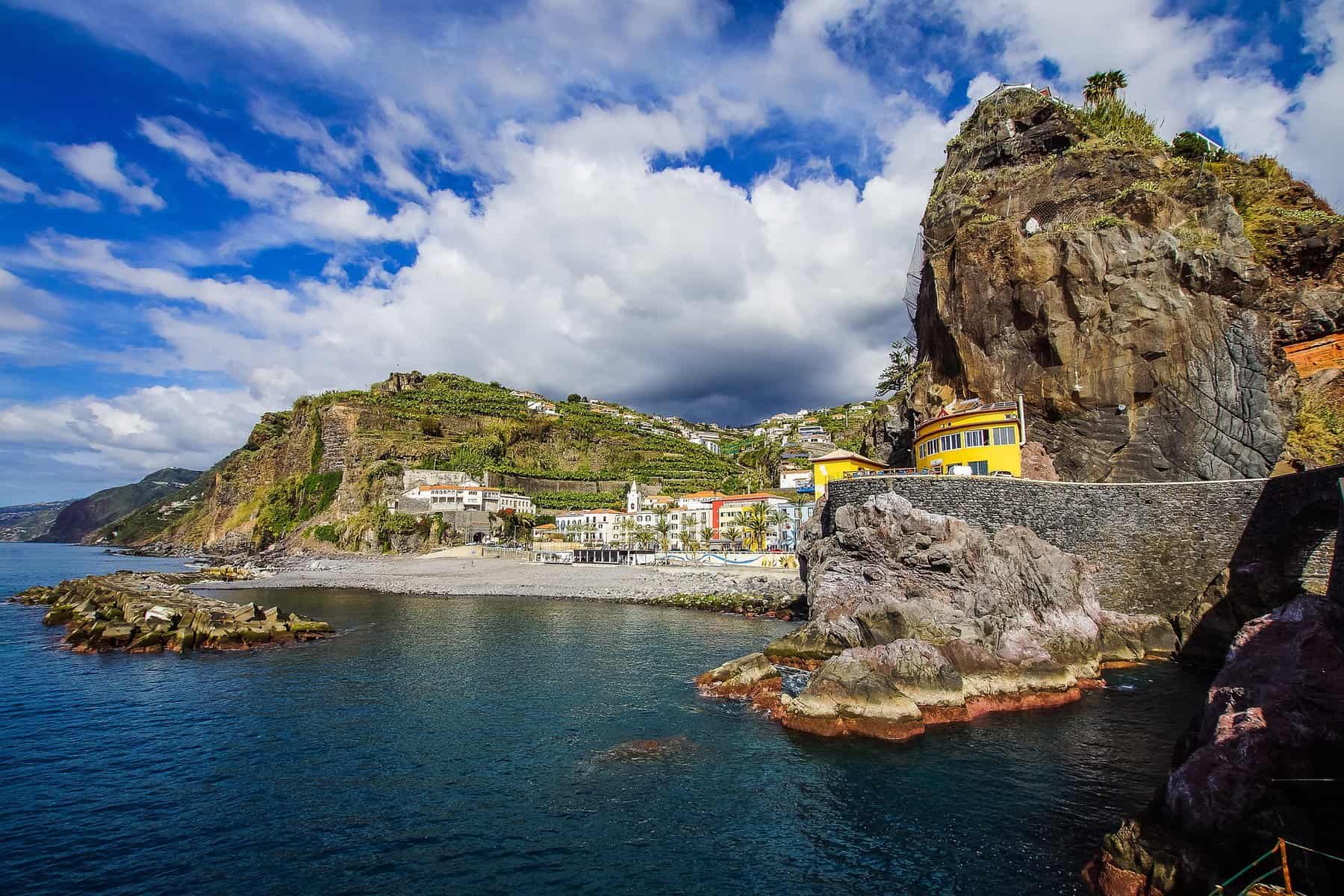
Ponta do Sol – Charming Coastal Sun Trap
A town on the south coast that brings to mind Amalfi, Italy’s most photogenic town—only on a smaller scale, of course. Here too, colorful houses cling to the cliff above the sea, and like Amalfi, it has a small cove beach, a stone bridge above it, and a platform for jumping into the water. It’s not far from Funchal, and true to its name, it’s the sunniest place on the island.
Many of Madeira’s tropical crops are grown in and around the town, including bananas and sugarcane. Ponta do Sol also has several rocky beaches where you can sunbathe and swim, which is relatively rare in Madeira.
From Ponta do Sol, the road continues up into the mountains toward the Paúl da Serra plateau and its excellent hiking trails.
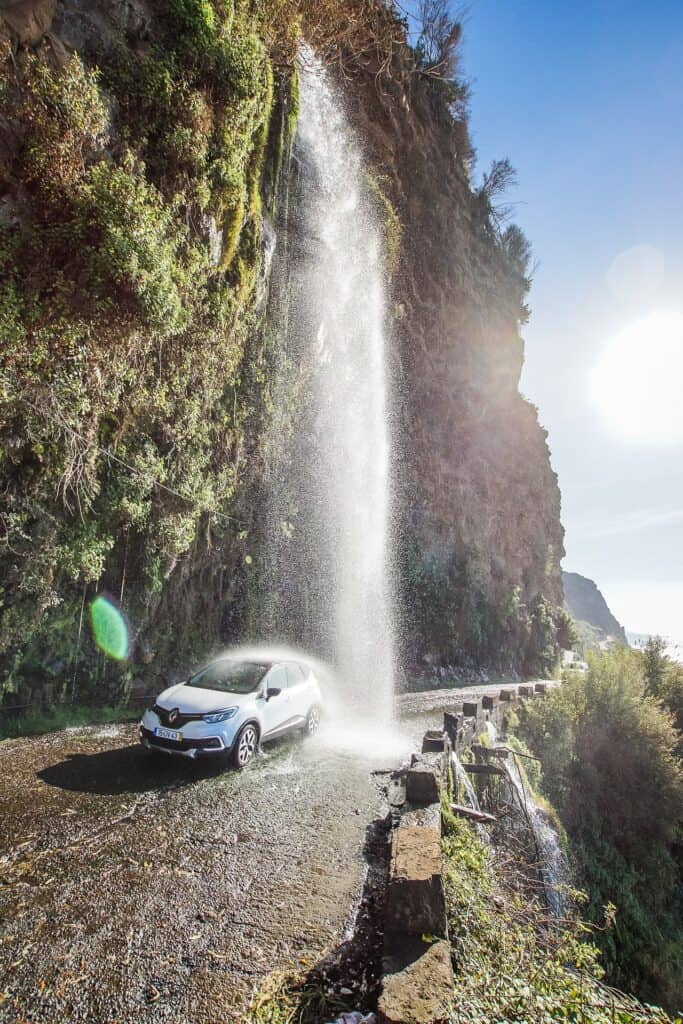
Angels Waterfall – a Madeira-style car wash | Cascata dos Anjos
A three-minute drive west of Ponta do Sol brings you to another of Madeira’s wonderful waterfalls—this one with a twist.
Because the waterfall pours directly onto the road carved between the cliff and the sea, it creates the perfect opportunity for a “Madeira-style” car wash.
Paúl da Serra – Madeira’s Vast High Plateau
This is the only plateau on Madeira, located just west of the island’s center. It’s accessible both from the Funchal area in the south and from São Vicente in the north. The plateau has several hiking trails, as well as a scenic driving route with plenty of stopping points.
The plateau stretches for about 10.5 miles and is roughly 3 miles wide. Paúl da Serra is a striking contrast to Madeira’s usually steep mountains. Even so, it sits at a high elevation, around 4,900 feet above sea level on average. At times, you can see the same magical spectacle of peaks rising above the clouds, along with more sweeping viewpoints.
Unlike most of the island, Paúl da Serra doesn’t have dense vegetation, because the layer of volcanic soil is thin. Instead, it’s covered with low grasses that bloom vigorously in spring.
The plateau acts as a filter for rainwater, which seeps through the ground and feeds Madeira’s levadas, carrying water south and east. Two narrow roads leave the plateau and lead only westward, since to the east lie the island’s jagged, impassable peaks. The hiking trails here take you to places inaccessible by car, including the Risco Waterfall (Cascata do Risco).
As mentioned, the plateau is at a high elevation and also gets strong winds—that’s why you’ll see wind turbines there so hikers should dress accordingly.
Click here to find accommodations in Madeira…
Risco Waterfall and 25 Fontes trail | Cascata do Risco, Cascata das Vinte e Cinco Fontes
These are two levada walking trails following Madeira’s water channels to two distinctive waterfalls. Both routes begin at a point marked PR6, below a place called Rabaçal on the road. The trails are considered easy to moderate.
As with all hiking trails in Madeira, be sure to bring food and, of course, water, since there’s nowhere to buy anything along the way. Light rain is also common here, so it’s a good idea to wear suitable shoes and bring a rain jacket if you have one.
The trails to the waterfalls are also accessible from the island’s northwest—from Ribeira da Janela and Porto Moniz—not only from the south.
Risco | Cascata do Risco
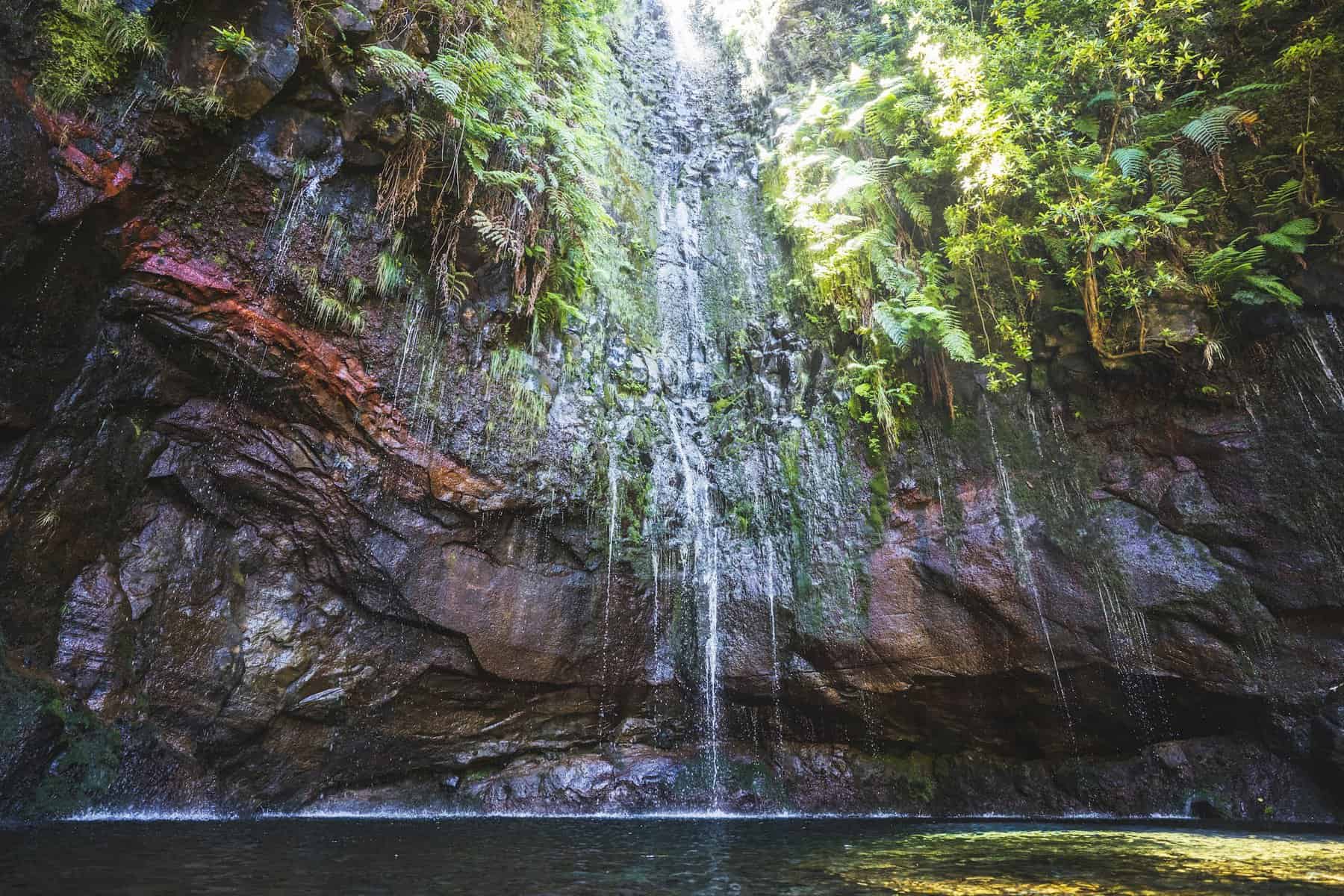
The trail to Risco Waterfall is about 1 mile long and suitable for everyone, including children. It offers a wonderfully lush and immersive nature experience. Once you reach the waterfall, the contrast between the thin white stream of water, the black rock face, and the famous Madeiran forest behind it makes the trip more than worthwhile.
25 Fontes Waterfall | Cascata das 25 Fontes
The trail to 25 Fontes Waterfall is a little over 2.5 miles long. The waterfall has become hugely popular for photos and Instagram posts, and many people are willing to take on this moderately difficult walk just to see it.
As breathtaking as the waterfall is, the pool and area beneath it are relatively small and enclosed on almost all sides by rock and vegetation. For that reason, the end of the trail is almost always crowded.
Combined trail
There’s also a combined circular route that passes both waterfalls as well as a few additional points of interest. This route is nearly 6.2 miles long and rated moderate to difficult.
Cabo Girão – Europe’s Highest Sea Cliff
Cabo Girão is the island’s highest sea cliff. At the top, there’s a viewpoint with a glass platform where you can look straight down into the abyss below. This spectacular lookout sits more than 1,640 feet above the water and is very close to Funchal, making it easy to visit even during a city stay.
The glass platform | Cabo Girão Skywalk
As mentioned, the glass platform hangs 1,932 feet above sea level. It isn’t very large, and at times it gets crowded with visitors eager to experience the thrill. Either way, the views over the sea south of the island are wonderful. From up here, it’s easy to appreciate just how isolated you are in one of the world’s more remote places, with no sign of land anywhere on the horizon.
Cable car to the fajã | Teleférico das Fajãs do Cabo Girão
Cabo Girão has another small attraction a few minutes’ drive east of the glass platform. A fajã is a narrow, fertile strip of land at sea level in Madeira and in the Portuguese islands more broadly. One famous example can be found on São Jorge Island in the Azores, known for its fajãs. On one hand, a fajã produces excellent crops thanks to its rich soil. On the other, it’s very difficult to access, trapped between the sea and towering cliffs. There are several examples of these along Madeira’s coast, and most of them are still reachable only on foot.
Here at Cabo Girão, a short and unusual cable car was built to provide easy access to the fajã beneath the giant cliff. It was originally used by farmers, but today it’s also a tourist attraction that offers another glimpse into the island’s distinctive landscape.
Click here to search for accommodations in Funchal, not far from Cabo Girão…
Click here for excellent tours of the south and west, including the island’s glass platform…
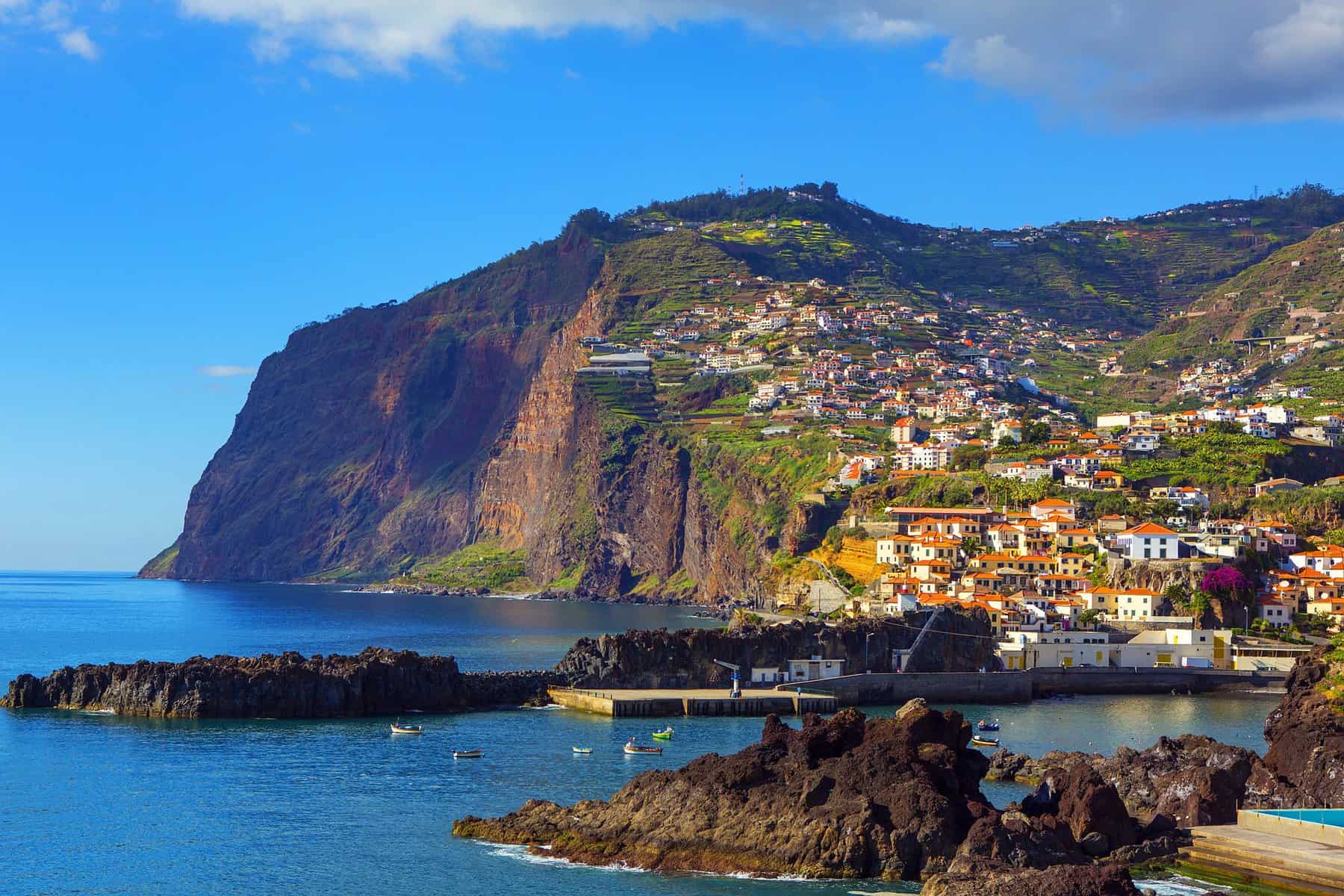
Câmara de Lobos – Charming Historic Fishing Village
This small town with its picturesque fishing harbor, 6 miles west of Funchal, was the first settlement in Madeira. João Gonçalves Zarco himself, the discoverer of Madeira, lived here between 1420 and 1424. Five hundred years later, its charm also drew Winston Churchill, who visited Madeira several times and painted Câmara de Lobos in one of his works. That’s why a number of businesses in town still bear his name.
Today, about 35,000 people live here, mostly higher up on the hillside. The old quarter remains by the sea around the small harbor and is known as the bay—Baía de Câmara de Lobos.
When the first settlers arrived on the island, the spit of land was full of sea lions, which in Portuguese at the time were called sea wolves. That’s where the town’s name comes from: lobos means wolves in Portuguese. Even today, you can occasionally spot sea lions lounging on the rocks in the sun.
In the old town, there’s a convent and two churches dating from the 15th and 16th centuries. In the small church by the harbor, renovated in the 18th century, you can see fishing-related decorations and get a sense that for centuries, the fishermen of Câmara de Lobos have indeed been fishing.
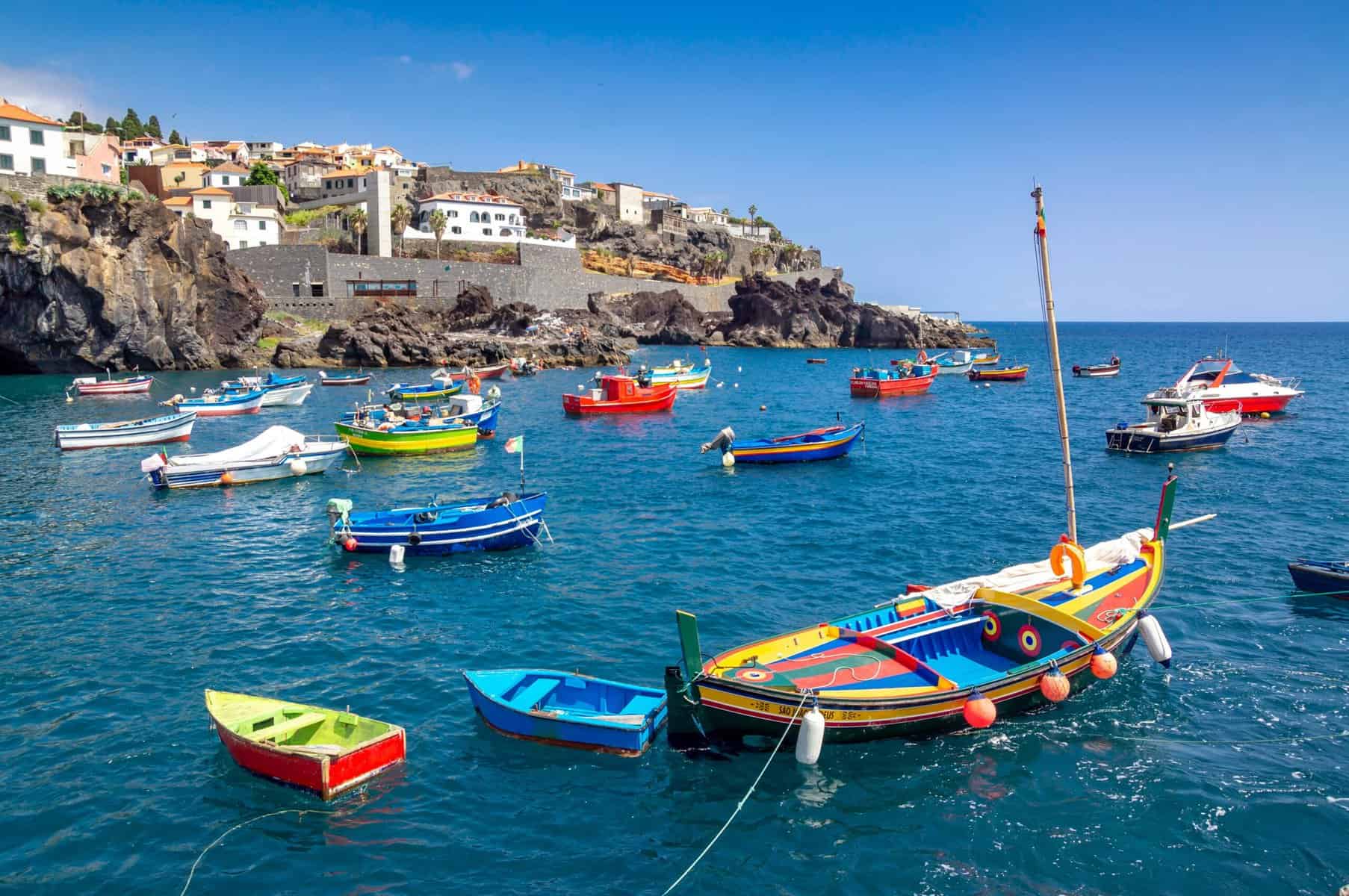
That is the main reason to visit: to see the harbor and the fishing boats anchored there. The colorful fishing boats, known as Xavelhas, sit in a harbor built around the natural spit of land. For centuries and still today, fishermen from Câmara de Lobos have headed out to catch espada, a deep-sea scabbardfish that is the key ingredient in the island’s famous dish, Espada com banana.
Just above the harbor, there’s a small market and old streets lined with plenty of restaurants and cafés. Beyond them, the streets begin climbing steeply up the mountain.
Click here to search for accommodations in Madeira…
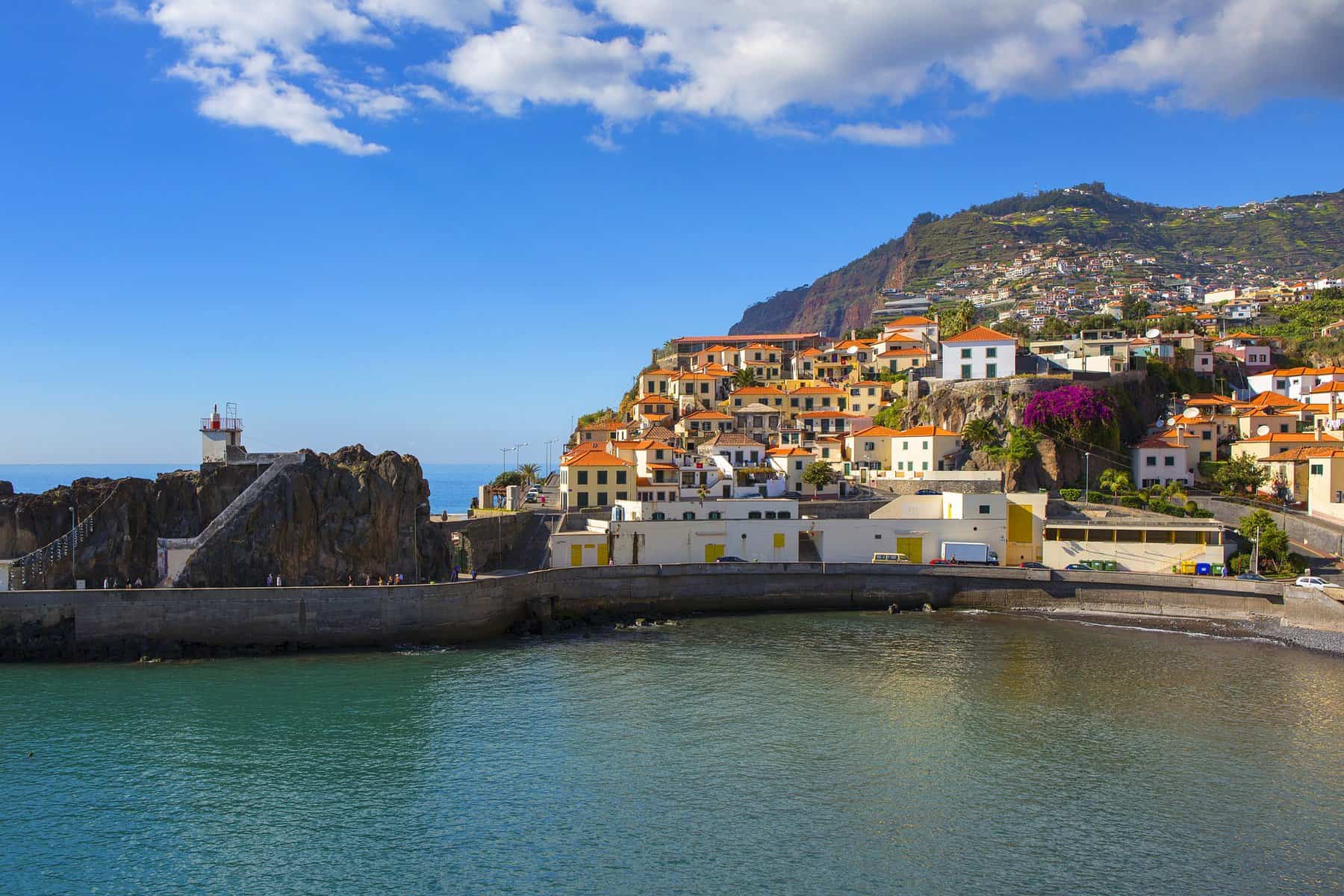
Calheta – Madeira’s golden beach
A relatively large town in the southwest of the island, about 40 minutes from the capital, Funchal. Calheta was a major center for cultivating and processing sugarcane, the island’s main crop in the early years after the Portuguese arrived. Even today, Calheta remains the main area for sugar and rum production in Madeira.
The town has a factory producing sugar syrup and rum—Engenho Novo da Madeira—and you can already catch the sweet scent of sugar in the surrounding area. Madeira rum has enjoyed something of a revival in recent years and is one of the island’s favorite souvenirs to bring home.
There are several other sights in town, all fairly close together:
The golden sand beach | Praia da Calheta
Although Madeira is a tropical island, it doesn’t have many beaches because of its unusual geology. Even on the few sandy beaches you will find, the sand is usually black and volcanic. Here in Calheta, there is an artificial beach where golden sand is imported almost every year, since the waves nearly always wash much of it back into the ocean.
The beach lies at the lower end of town, more or less in the middle of its shoreline. It was created with the help of a breakwater, which also protects the boats moored in the marina. The beach has two neighboring sections, both artificial and sheltered by the breakwater. The area is very well organized, with a restaurant and bar, plus facilities for children along the promenade above the beach, where parking is also available.
Contemporary art museum | MUDAS
Not far from the golden beach and the water, you’ll find Madeira’s contemporary art museum. Its highlight is a painting by none other than Picasso. The museum is housed in a modern concrete building with clean, straight lines. And naturally, in true Madeira fashion, it stands on the edge of a cliff, with viewing terraces built along it looking out over the ocean and mountains.
Calheta’s main church | Igreja Matriz da Calheta
The church sits uphill from the beach and marina, on Rua Manuel I. It’s very old—nearly 600 years old—having been built in 1430.
Inside, there is a black ebony wood altar decorated with silver, donated to the church by King Manuel I in the early 16th century. It also has a very distinctive wooden ceiling made from local materials. As mentioned, the first Portuguese settlers named the island Madeira—Portuguese for wood—because of the abundance of timber they found here.
Click here for a list of hotels with breathtaking views in Madeira—including in Calheta…
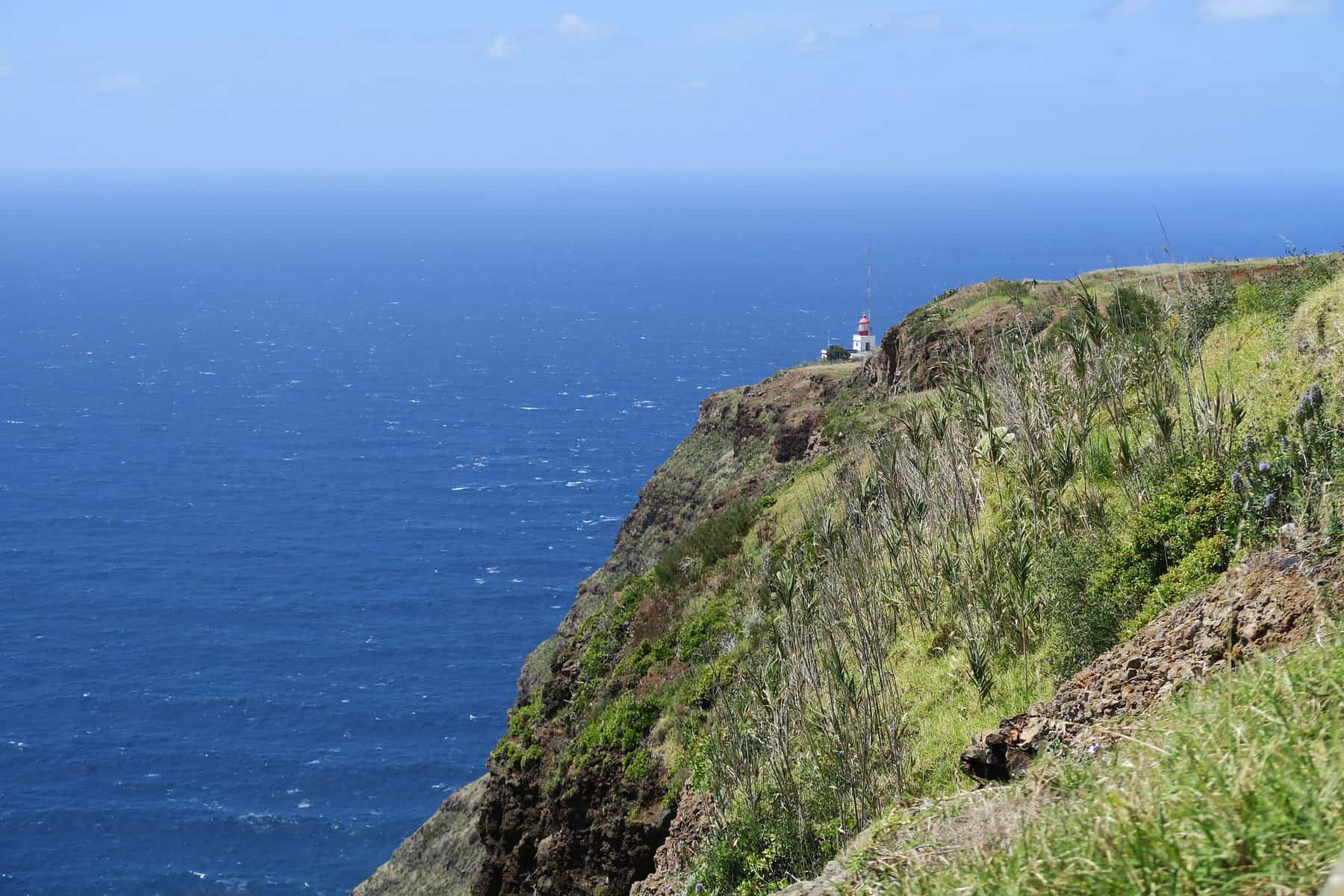
Ponta do Pargo – the westernmost tip
The far western end of Madeira is one of the reasons the island can feel a little like Hawaii. The high plateau at the edge of the island drops sharply into the ocean, creating a dramatic scene of mountain, sea, and greenery clinging to the summit. When the sun is out, the colors grow so vivid that Hawaii suddenly doesn’t seem all that far away.
The lighthouse | Farol da Ponta do Pargo
Since Ponta do Pargo marks a land’s end, a lighthouse in the familiar Portuguese style was placed atop the cliff. Because it stands 984 feet above the sea, there was no need to build a tall tower—only to place a light at the top of the structure. The lamp was installed on the upper part of a square building originally constructed for the lighthouse keeper. There’s a small museum here presenting the lighthouse’s history, dating back to 1922, and of course, a stunning viewpoint.
Attractions and sights in northern Madeira’s green landscapes
Madeira’s north coast is sparsely populated compared to the south. Heavy rainfall, strong winds, and a rocky shoreline have made it less convenient for settlement, but ideal for agriculture and, of course, for Madeira’s famous forests. Nearly the entire northern coastline is a spectacular sight, with green mountains dropping dramatically into the Atlantic.
Santana – Picture-Perfect Triangular Cottages
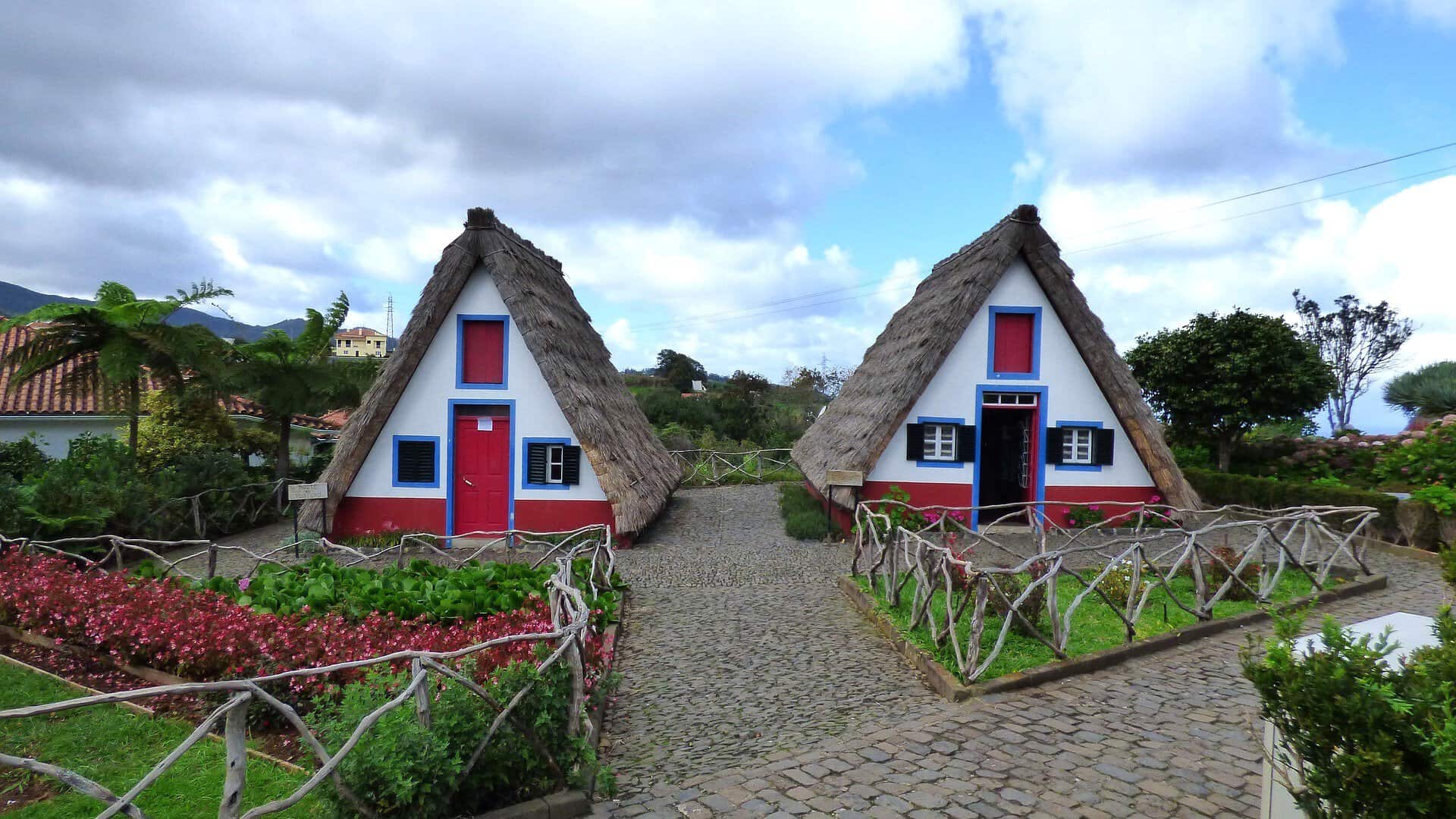
Santana is a small town-village in the island’s northeast, in an area of gentler hills that support farming. It is best known for its triangular thatched-roof houses, though there are also many ordinary homes with red roofs scattered across the plains between the mountains above.
The triangular thatched-roof houses | Casas Típicas de Santana
One of Madeira’s most famous attractions is found here in Santana: the triangular thatched-roof houses. Their distinctive roof design was meant to protect against the heavier rainfall typical of the north, shaped by the winds and the mountain range at the center of the island. The village and its houses are among the most beloved spots on this green island. The houses are located uphill in the center of town, near Santana Town Hall, where there’s a large parking lot opposite, and it’s lovely to stroll among them. You can also see examples in Madeira’s theme park, just two minutes away.
Madeira Theme Park | Parque Temático da Madeira
In Santana, a favorite stop for Madeira visitors, a small theme park was created to tell the story of the island. The park includes several huts where local artisans make crafts typical of Madeira. There are also water pools, gardens—including a delightful hedge maze for children—and plenty of interesting plants native to the island. Among them, you can see willow branches, used to weave Madeira’s traditional wicker baskets.
Click here for more information about the theme park…
Click here to search for accommodations in the lovely small town of Santana in Madeira…
Arco de São Jorge – Scenic Coastal Garden Village
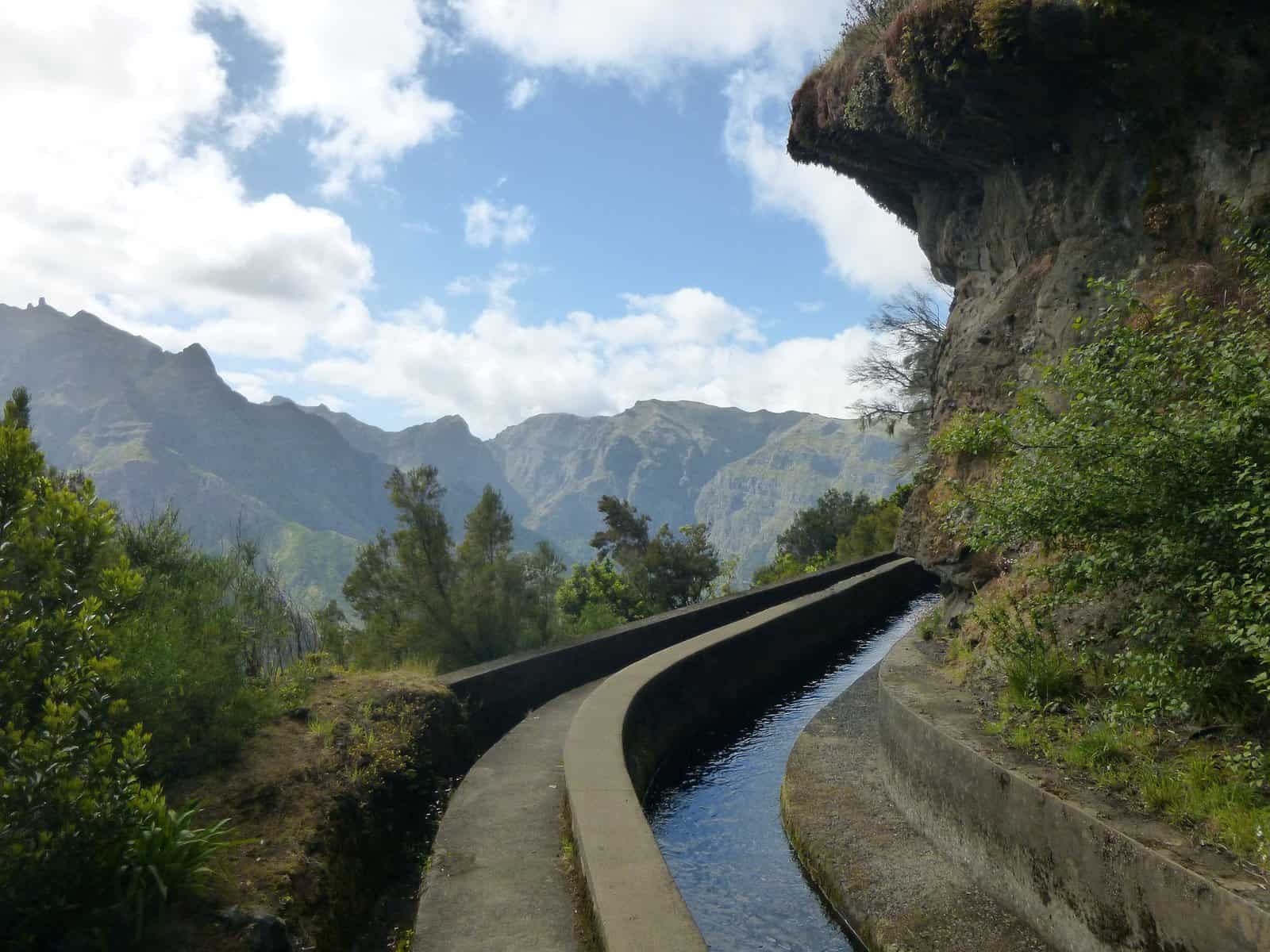
Arco de São Jorge is a small town tucked beneath the mountain on the island’s north side. Above it runs a levada trail with beautiful waterfalls, known as Levada do Rei | Cascata Levada do Rei.
On the winding road climbing from the village toward the levada trail, there’s a viewpoint right by the roadside. From here, you can look out over the town, with the sea on one side and forested mountains on the other. The viewpoint is called Miradouro da Beira da Quinta.
In town itself, there’s a special rose garden with hundreds of rose varieties—Roseiral Quinta do Arco—located beside the Hotel Pestana | Pestana Quinta Do Arco and managed by it.
São Vicente – Rugged Mountains & Coastal Charm
The town of São Vicente sits roughly in the middle of the island’s north coast. That has made it something of a hub for exploring the northern shore and continuing on into the more rural northwest.
The town center around Igreja Matriz feels lively, especially compared with the quieter place São Vicente once was before Madeira’s economy began leaning heavily on tourism. In the center, several cobbled streets are lined with restaurants, cafés, and bakeries selling Madeira’s famous dessert, bolo de mel. Loosely translated as honey cake with nuts on top, it is actually a cake made with sugarcane syrup.
There’s also a tourist information center in the village center, which can be useful. São Vicente has a few small but interesting sights beyond its charming commercial streets, including the famous chapel with the clock:
Chapel of Fátima, São Vicente | Capelinha de Nossa Senhora de Fátima
The chapel stands higher up in the valley between the mountains. Bells were installed in its prominent tower and ring every hour, a gentle reminder that we are still in this world—even if the view around you can feel like paradise.
São Vicente Church | Igreja Matriz de São Vicente
This small church stands in the center of the village. It was built back in the 17th century, and what makes it special is its interior decoration—especially the ceiling, painted in vibrant colors with the saint shown protecting the town.
São Vicente Caves | Grutas de São Vicente
These caves, formed in cooled lava walls, were created by a volcanic eruption nearly a million years ago. Today, there’s a walking route a few hundred meters long running through them. Along the way, you’ll also see several small underground lakes that, under the dramatic lighting, seem almost endless. It’s a wonderful chance to step into the depths of the earth and learn more about the special geology of this captivating island. At the entrance, there’s a small visitor center with explanations about the site and how it formed.
Click here to find hotels and vacation rentals in São Vicente, in the north of the island…
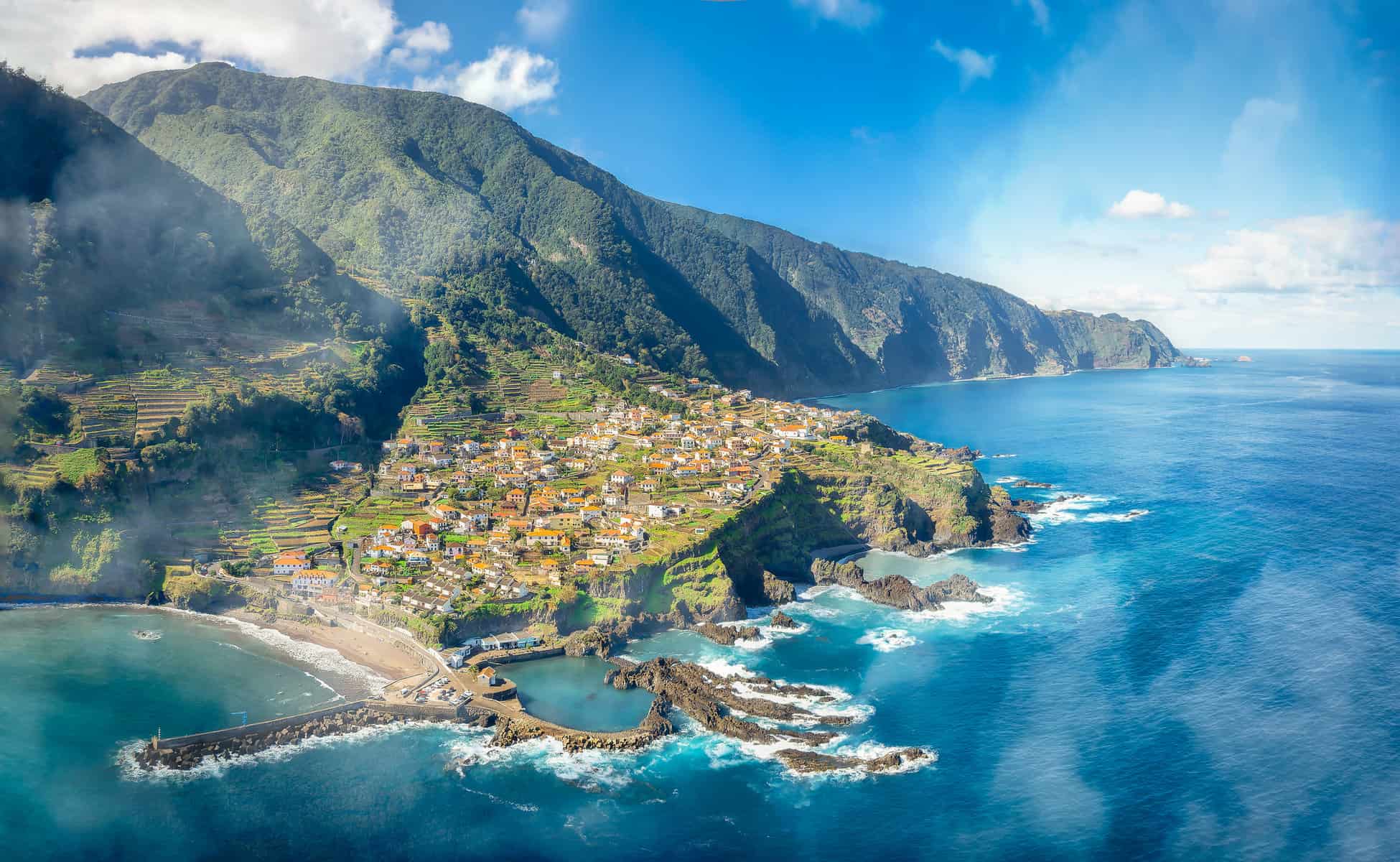
The town of Seixal
A town with a small beach, a natural sea pool, and of course wonderful viewpoints. Seixal is one of the most photogenic places in Madeira—and that’s saying something.
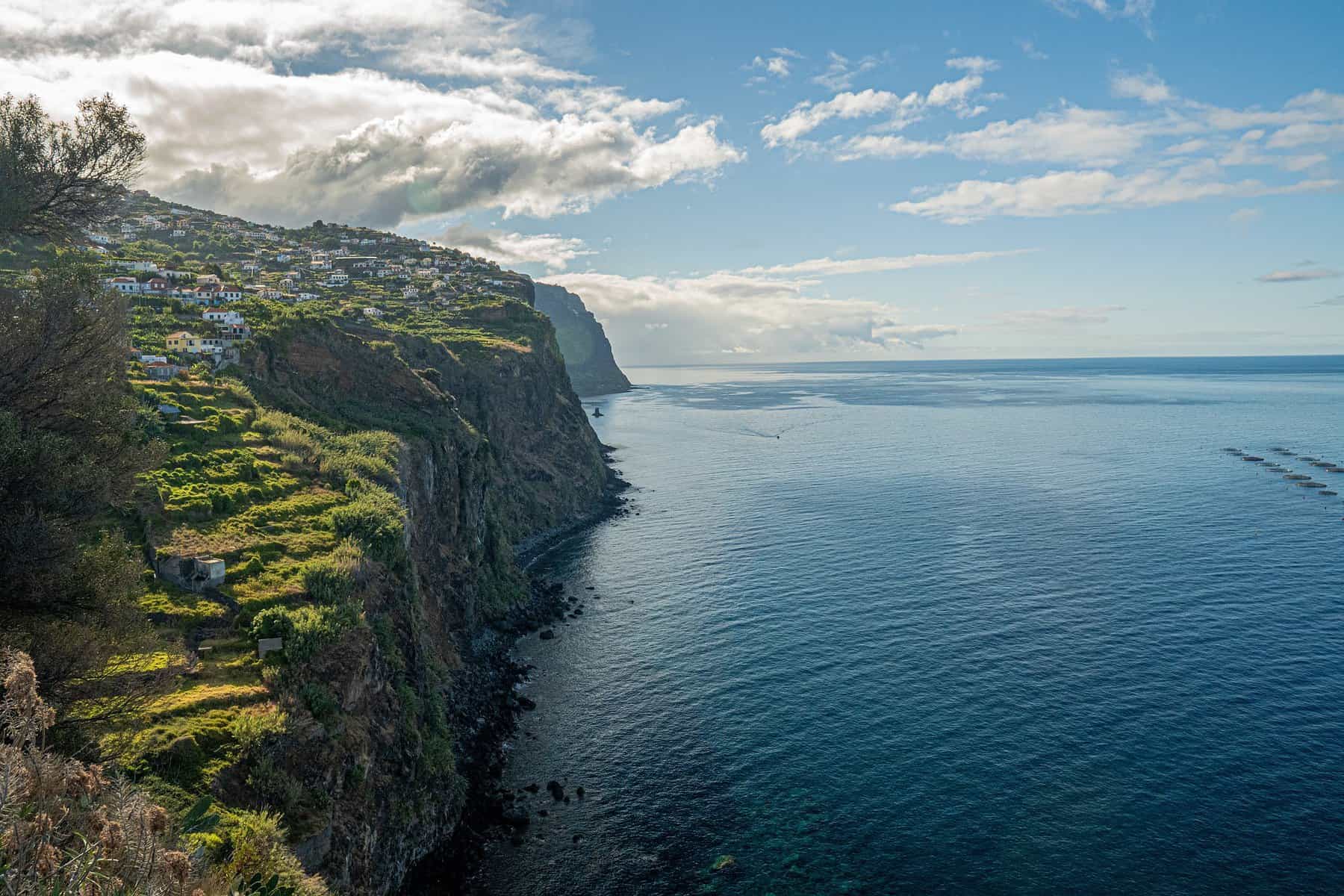
Because it sits on the north coast, Seixal is sometimes hit by storms, but those same weather systems also bring abundant rainfall. To retain the water, terraces were built one above another on the slopes above town. Among other crops, vines were planted there, producing Seixal’s excellent wine.
About ten minutes from Seixal lies another of Madeira’s wonders: the tall, narrow rock formation rising from the sea at Ribeira da Janela. In Seixal itself, several sights and attractions are clustered close together:
Natural pools | Piscinas Naturais do Seixal
Not as large as the pools in Porto Moniz on the west side of the island, but they do the job beautifully. Admission is free, and there are changing facilities where you can comfortably change clothes. Just be careful getting into the water—sometimes the edges can be a bit slippery.
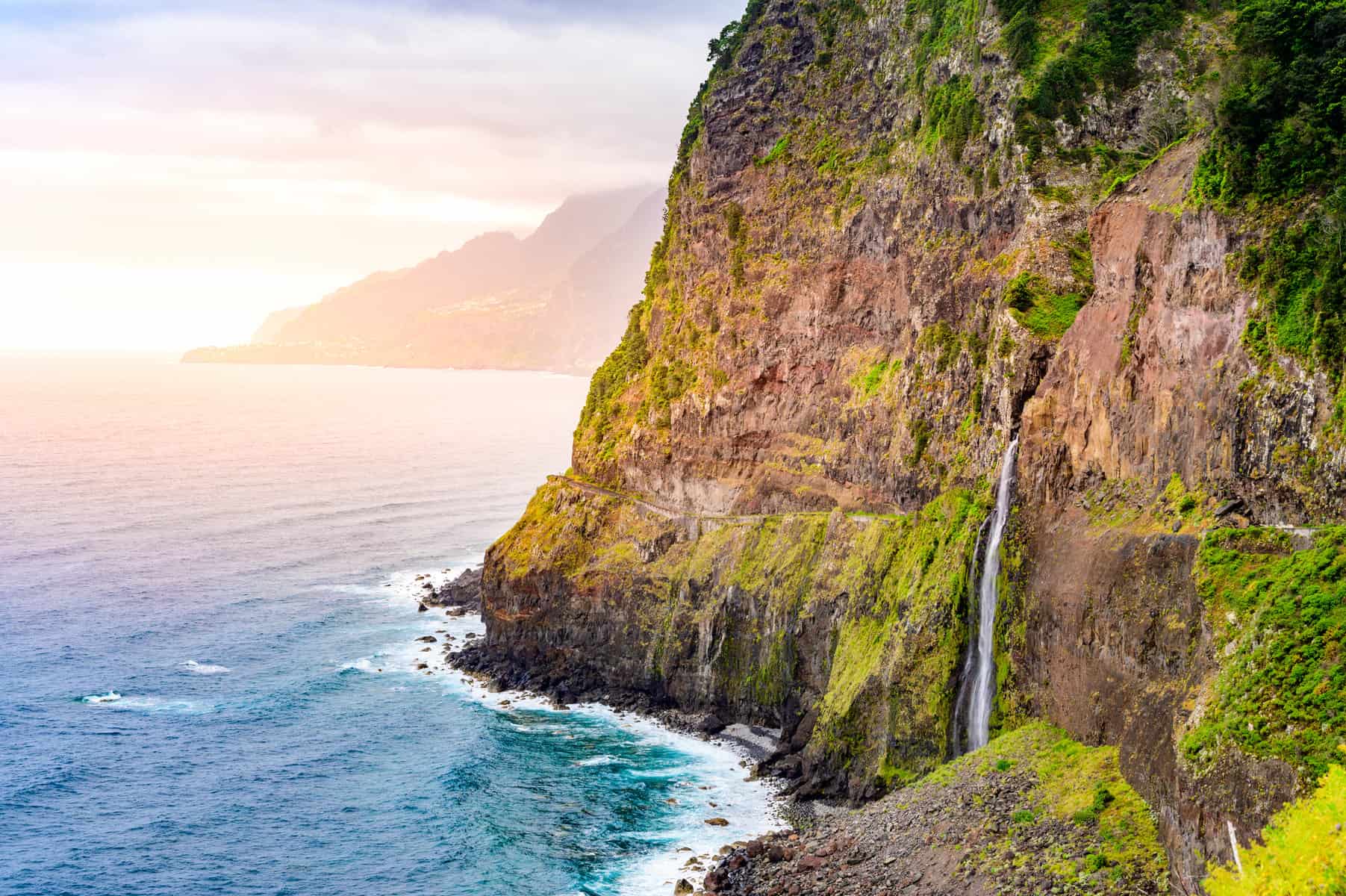
Bridal Veil viewpoint over the waterfall pouring into the sea | Miradouro do Véu da Noiva
A little east of Seixal is one of Madeira’s most spectacular viewpoints, combining blue ocean, massive vegetation-covered cliffs, and a waterfall spilling into the water. The view is panoramic, but the main drama comes from the waterfall cascading into the Atlantic on the right.
Seixal’s small sandy beach | Praia do Porto do Seixal
A beach with breathtaking scenery that more than makes up for its black volcanic sand. This little beach is where many of Madeira’s famous photos are taken, with people in swimsuits framed by green mountains above the sea.
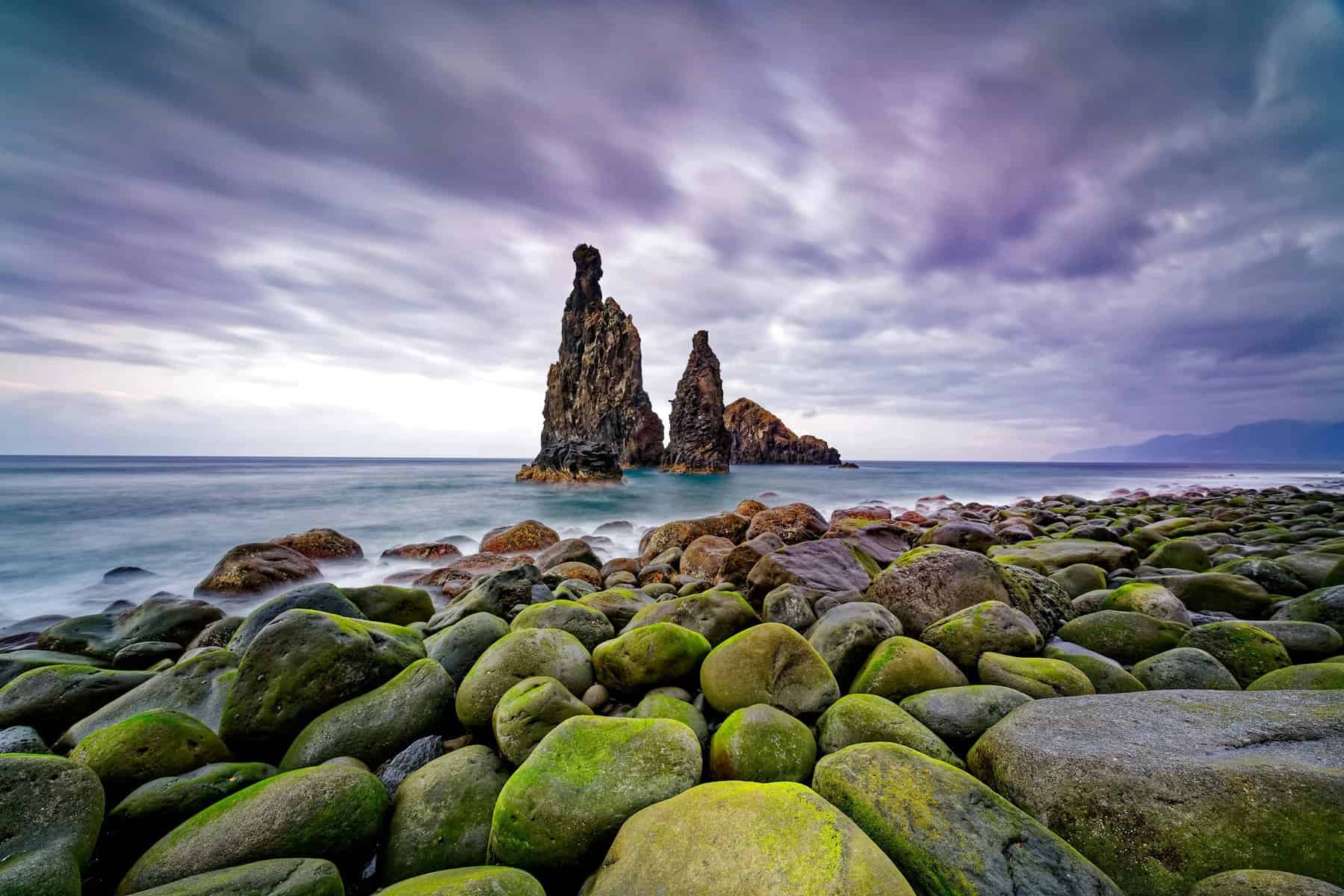
The narrow rock at Ribeira da Janela
One of Madeira’s iconic views appears along the road between Seixal and Porto Moniz.
Off the shore of the village of Ribeira da Janela, several small islets rise from the water in a narrow, jagged rock formation. High up on one of the great rocks is a small opening that looks like a window, which is why they’re called janela—window in Portuguese.
The rocks stand opposite a small pebble beach that is actually the mouth of one of the rivers flowing down from the mountains. There’s also a campsite beside the beach, and since Madeira doesn’t have many beaches, this spot is an attraction in itself, especially for surfers.
Fanal Forest – Ancient Trees & Magical Landscapes
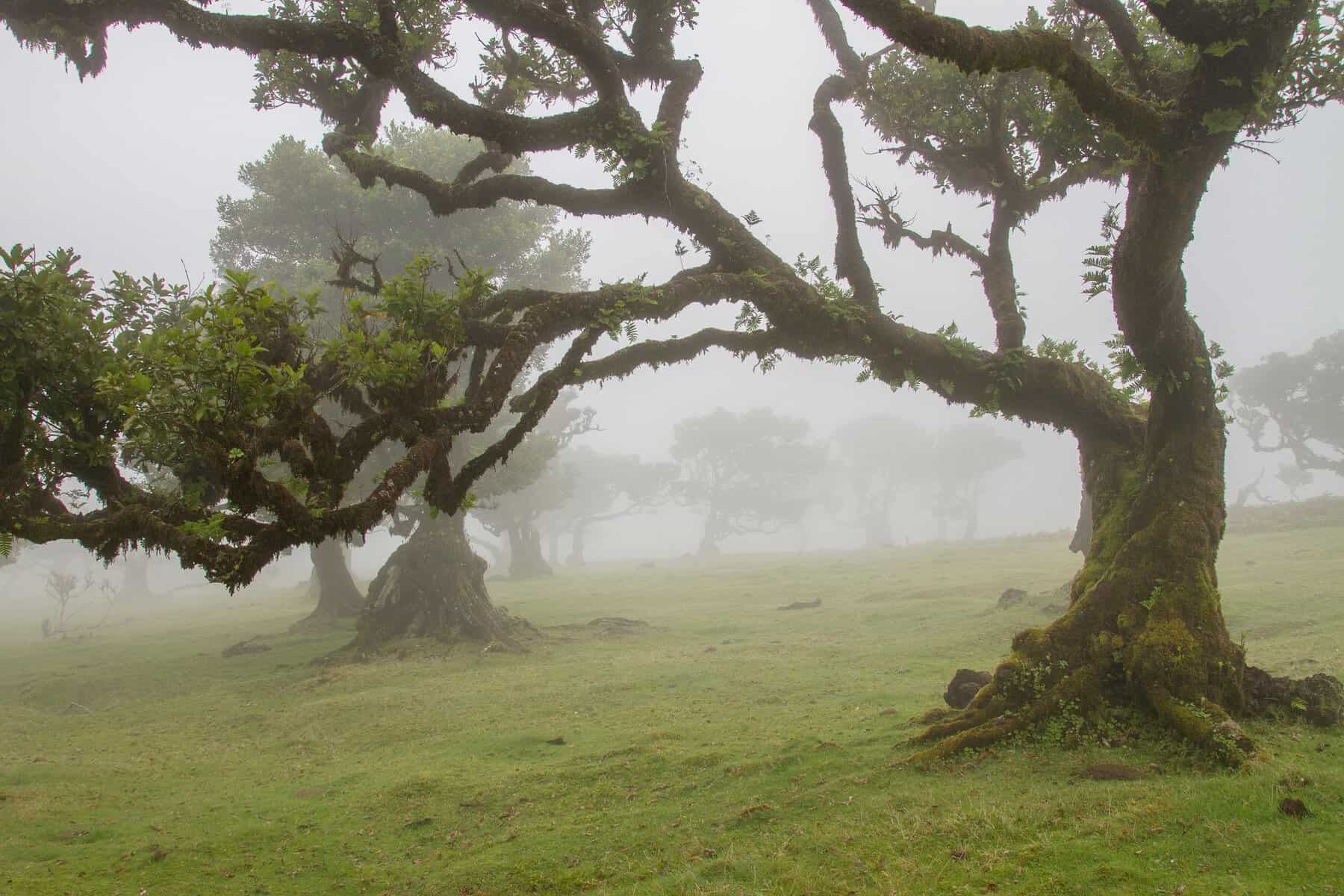
Above the village of Ribeira da Janela lie dense forests, with trails weaving among levadas and streams. The most important and famous site farther up the road is Fanal Forest. The forest has been designated a UNESCO World Heritage Site because it is one of the few remaining examples of the subtropical laurel forests that once covered various parts of the Earth for ages. The trees here, from the laurel family, are hundreds of years old and unique to Madeira.
Right next to the parking area where people stop to see Fanal Forest, there’s a clearing dotted with several giant-trunked ancient trees. This is where many of Madeira’s famous misty-forest photos are taken.
There isn’t always fog here, but when it rolls in, it adds an unmistakable sense of mystery, as if a troll might jump out from behind the cloud curtain at any moment.
Even though Fanal Forest is in the island’s northwest, it’s still easy to reach from Funchal in just over an hour through the mountains—after all, Madeira is a small island.
The natural pools of Porto Moniz
The small village of Porto Moniz lies at the northernmost tip of Madeira, on the island’s western side.
The village is remote, surrounded by farmland where heather shrubs were planted to absorb salt from the sea air. The heather blooms purple, and against the green fields and mountain backdrop, the effect is wonderfully painterly. Still, the main reason to come to Porto Moniz is its natural sea pools.
The village has two separate complexes. One consists of deeper pools and a building housing an aquarium, known as “the aquarium” or the old pools (Piscinas Naturais Velhas). The other, right next to it, is the large bathing pool complex, combining natural and built sections. Between them runs a promenade with a lovely view of the rocks and ocean.
Click here to search for accommodations in Porto Moniz in the island’s northwest…
The bathing pools of Porto Moniz | Piscinas Naturais de Porto Moniz
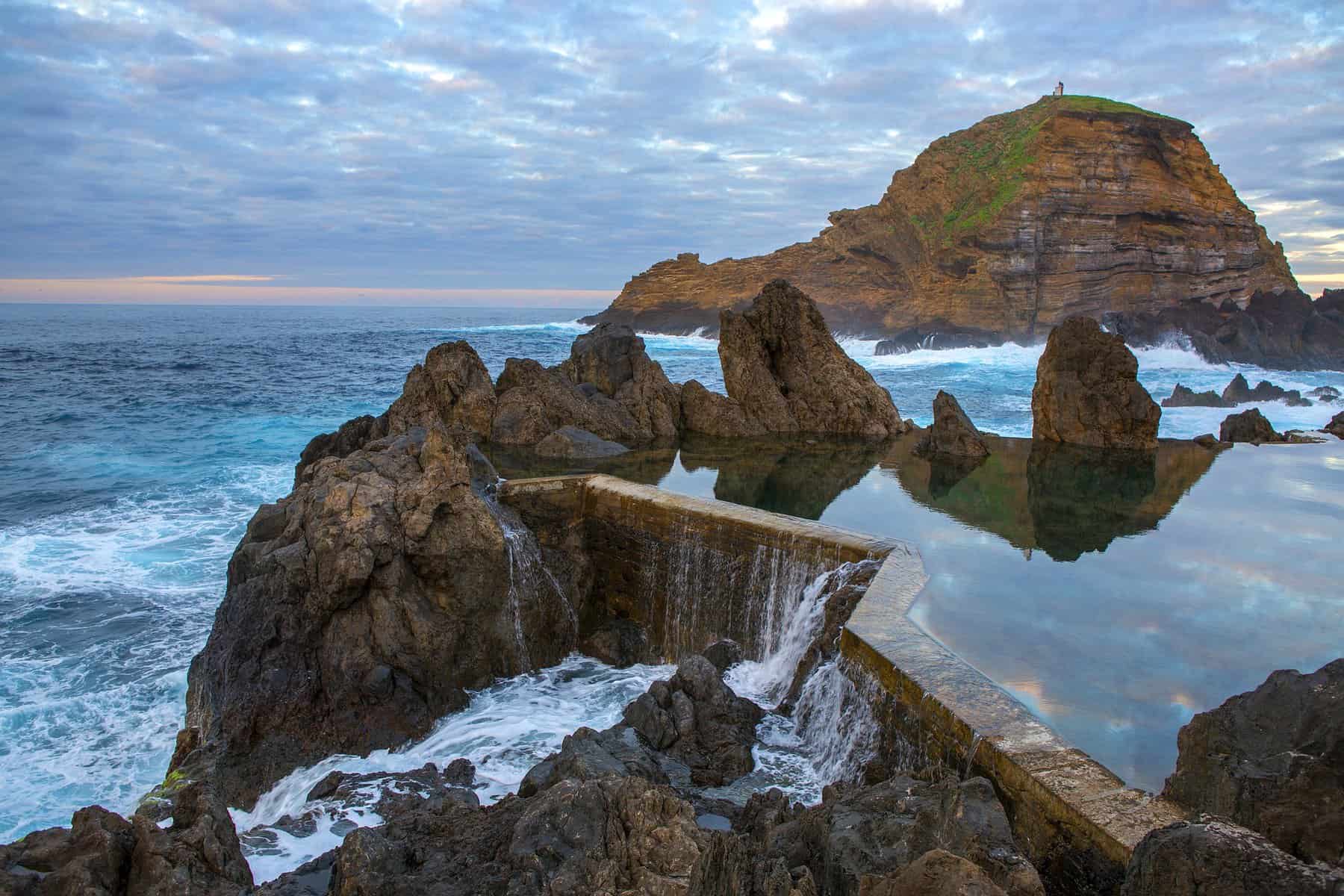
These bathing pools are simply an otherworldly experience. You float in calm water while behind you Atlantic waves crash against jagged rocks worn smooth over the years. Even within the pools themselves, several sharp rock formations were deliberately left in place, creating a swimming complex with a striking look unlike many others in the world.
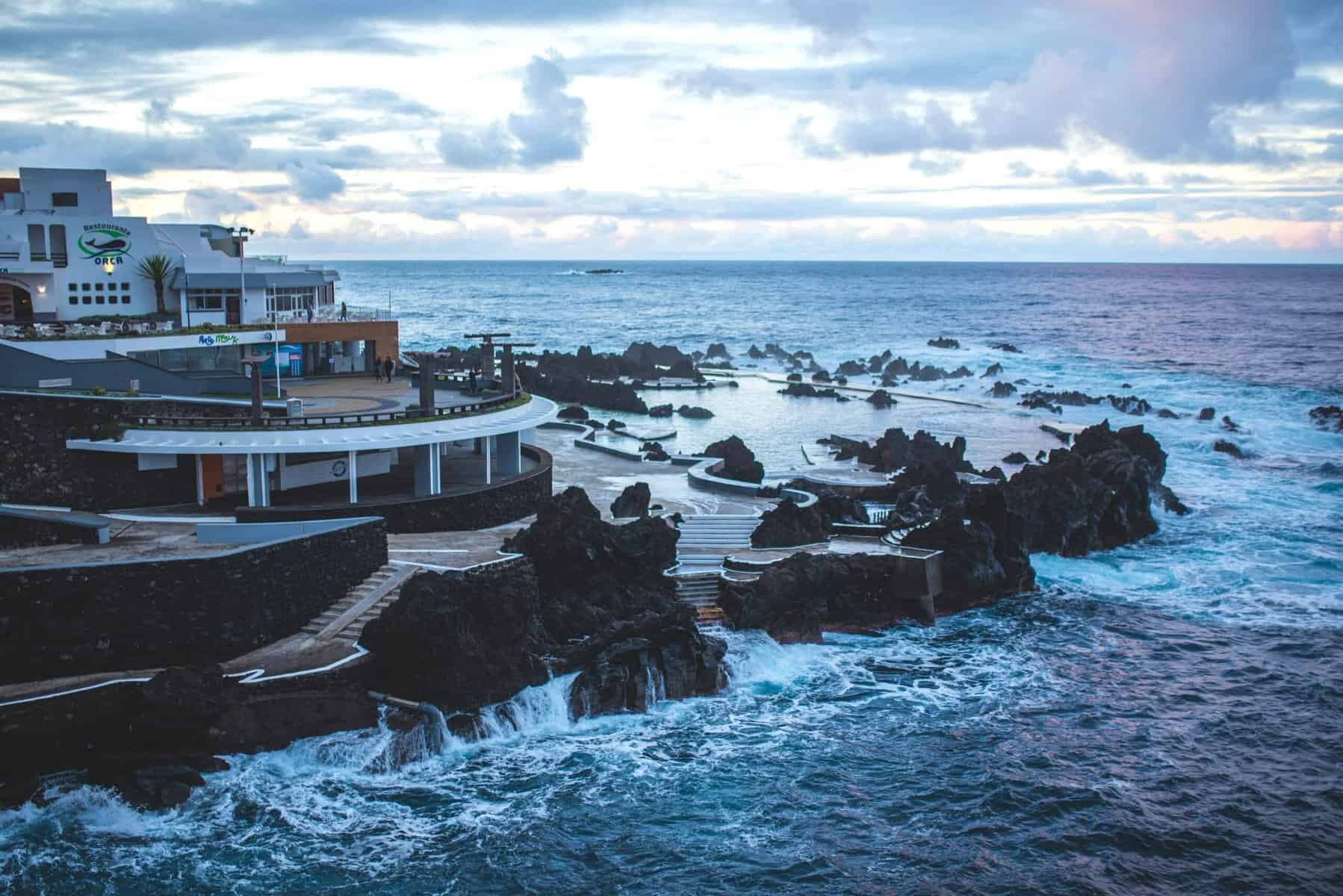
The pools were formed over time by erosion of the rock, and the seawater inside them is refreshed whenever the ocean is wavy, and certainly when it’s rough. On sunny, pleasant days the water warms up, making the experience even better. Still, it’s almost always enjoyable—especially for Europeans—to get into the water or at least paddle around a bit.
There is a modest admission fee to enter the complex, and it includes changing facilities and other visitor amenities. That makes it an easy stop during a rental-car trip around Madeira: after a swim and lunch, you can continue on your way.
One especially fun detail is that from time to time, large waves crash against the rocks below the pools and spray the people inside—without the danger of being caught in the full force of the surf.
Click here for more information and opening hours for the pools…
The Porto Moniz Aquarium | Piscinas Naturais do Aquário
The Porto Moniz Aquarium is housed inside a renovated 18th-century fortress that now serves as an exhibition space for Madeira’s marine life. It’s not large, but it contains several aquariums beautifully integrated into the old structure, with more than a hundred fish species typical of Madeira.
Next to the aquarium are natural sea pools that are deeper and also suitable for diving. The center offers guided diving options in these pools as well, and it’s best to arrange them in advance.
The aquarium sits right beside Porto Moniz’s large, famous pools, so it’s easy to visit both on foot.
Click here for more information about the aquarium…
Attractions and sights in sunny eastern Madeira
The eastern side of the island, along with the long peninsula extending from it, is the warmest part of Madeira and enjoys the longest hours of sunshine. This is also where you’ll find one of the island’s tougher hiking trails, a complete contrast to the levada walks through lush, vegetation-covered mountains. The harbor in the small town of Caniçal, at the base of the São Lourenço peninsula, used to serve as a center for whale hunting, once a common part of Madeira’s history. Whaling was outlawed in the early 1980s, and today you can head out from town on boat trips to see whales, as well as dolphins.
Click here for a selection of fascinating tours in the east of the island…
The town of Machico
Spread across the slope between the mountains, Machico has been Madeira’s second most important town since the earliest days of settlement. It was, and still is, an agricultural center built around the stream running through the narrow valley. Around 20,000 people live here, and it serves as the gateway to Caniçal and the peninsula on the island’s eastern side.
The first church in all of Madeira was built here in 1420. The original structure was washed away in one of the floods that struck the town in the early 19th century, but the cross survived—an event still commemorated every year in Machico on October 8. The church was rebuilt in 1815 around the surviving cross and is called Capela dos Milagres. The town also has another large church standing here since the 15th century, Igreja de Nossa Senhora da Conceição.
By the sea and the river mouth, there’s a small sandy beach. Just south of the beach, you’ll find a promenade with a large square and an avenue leading to the town-name sign (Letras MACHICO).
Click here for accommodations in Machico, also close to Madeira Airport…
Caniçal – whales in Madeira
Caniçal is the easternmost town on Madeira. It has a small industrial port, but it is best known as the town tied to whaling, which fortunately came to an end in Madeira in 1981.
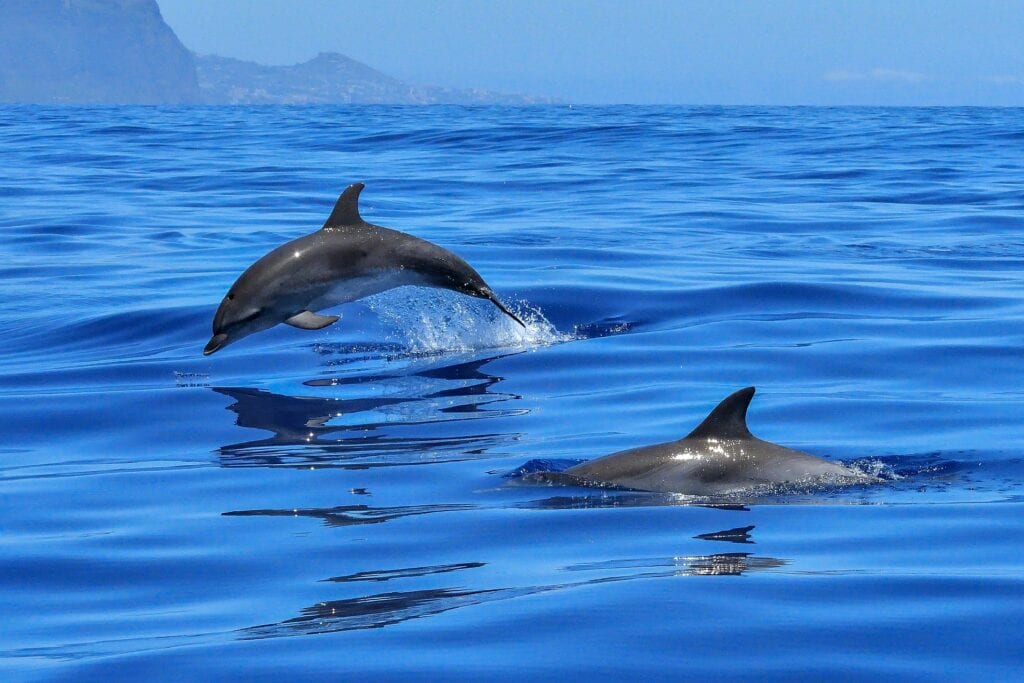
Today, Caniçal is one of the departure points for whale-watching cruises, one of Madeira’s main attractions. These trips also offer frequent dolphin sightings and, of course, plenty of fish. From the water, you also get wonderful photo angles of the long São Lourenço peninsula. The town is also home to a hands-on museum for children—the Madeira Whale Museum.
Whale Museum | Museu da Baleia da Madeira
The museum is not large, but it contains several exhibits related to the town’s history as a whaling center. It stands right by the water and includes a large observation terrace overlooking the sea, with the option to walk all the way down to the shoreline.
Among the displays are the hunting tools once used by fishermen to hunt whales, along with old photographs of the fishermen and their catch. The museum also includes several whale and dolphin models suspended from the ceiling, video displays, and educational activities.
Click here for more information and the museum’s opening hours…
The São Lourenço peninsula | Ponta de São Lourenço
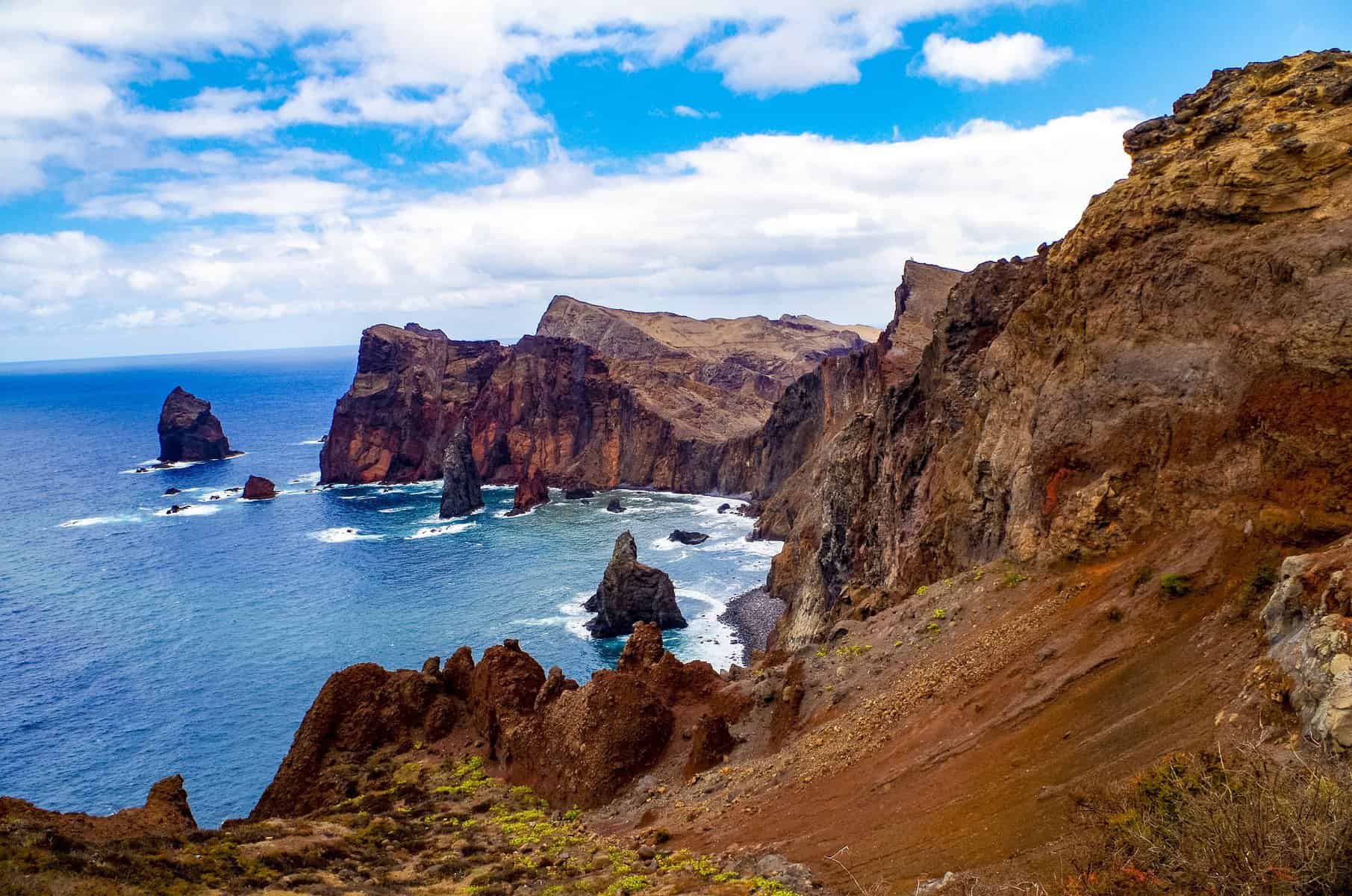
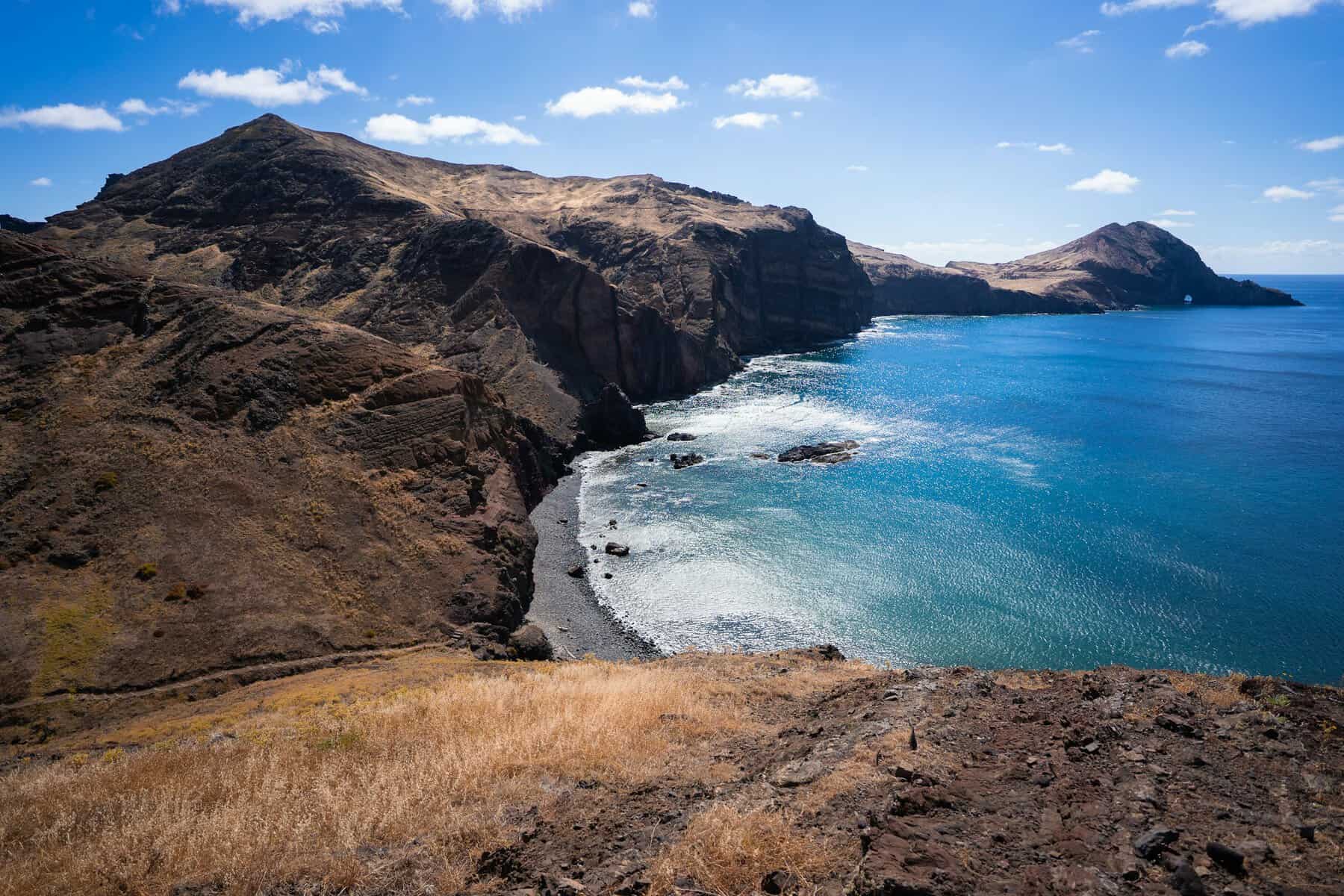
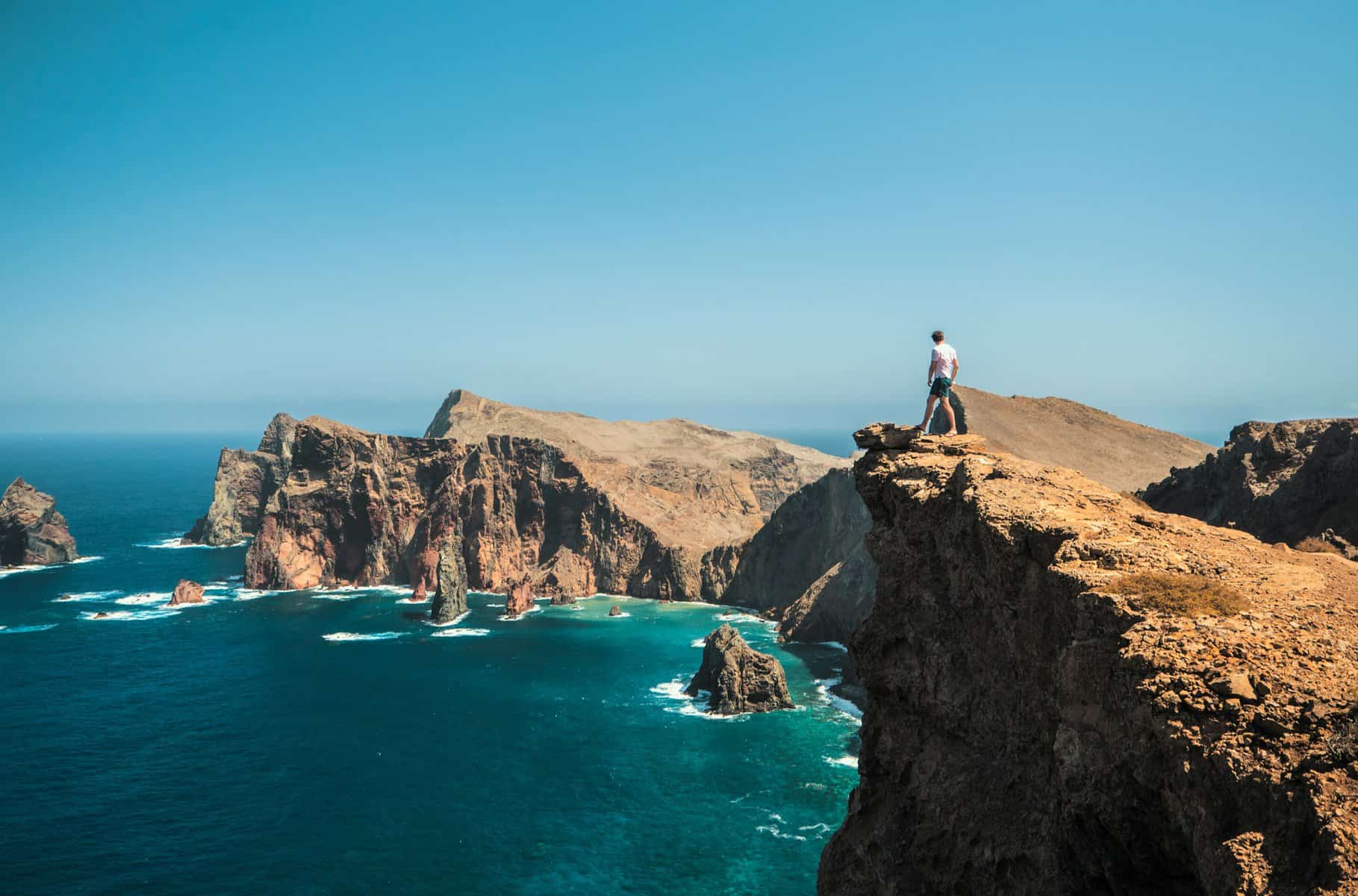
The peninsula marks the easternmost tip of Madeira. São Lourenço is rocky and mountainous, gradually breaking apart into islets as you continue east. Access by car is only partial and begins from the town of Caniçal. One of the most captivating sights here is watching the waves crash against São Lourenço’s giant rock formations. During the rainy season, some of the slopes on the high rocks turn green as low grasses sprout across them, making the view even more dramatic. In the dry season, the rocks are brown, but still spectacular.
Ponta do Rosto viewpoint
The viewpoint where people often come to watch the sunrise—or simply admire the rock formations at any other hour—is called Ponta do Rosto. There is a small parking lot on site, from which you walk up to the viewpoint.
The challenging São Lourenço hike | PR8 Vereda da Ponta de São Lourenço
As with the peaks and the levadas, there is also a marked hiking route here among the cliffs and their slopes, known as PR8. The São Lourenço trail begins at the end of the paved road, and in fact it is more difficult and demanding than most other hikes in Madeira. It is also much hotter here than high in the mountains, which adds to the challenge, especially in summer. So if you decide to tackle the longer hike, it’s worth preparing properly. Anyone who isn’t an experienced hiker would be better off skipping the full walk and sticking to the viewpoints.
Click here to find hotels and vacation rentals throughout Madeira…