Funchal, Madeira’s wonderful capital, offers a terrific mix of sightseeing and things to do. The fact that it’s the fourth-largest city in all of Portugal says a great deal about the good life on this faraway island. Funchal gives its residents an urban lifestyle that can rival major European capitals, all on a secluded island that is one of the world’s natural wonders. The city itself, much like the island as a whole, is filled with gardens, lush vegetation, and breathtaking viewpoints over singular landscapes. All of that comes alongside lively streets packed with restaurants, shops, and bars. Below, we’ve gathered 20 of the very best sights and attractions in Madeira’s largest city:
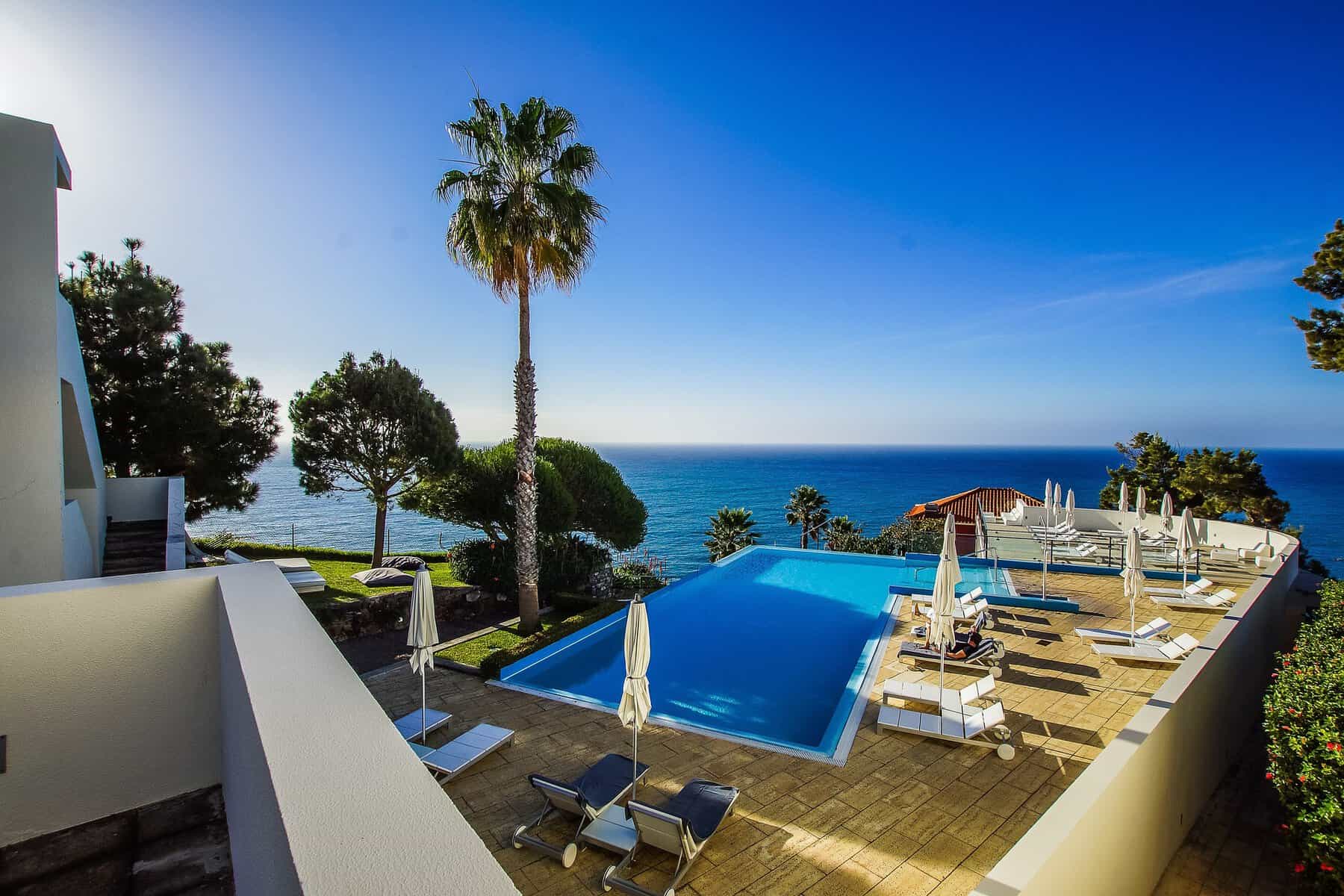
Click here to find a place to stay in charming Funchal…
Click here for the complete guide to Funchal…
Click here for a super-popular sunrise tour from Funchal to Madeira’s peaks above the clouds…
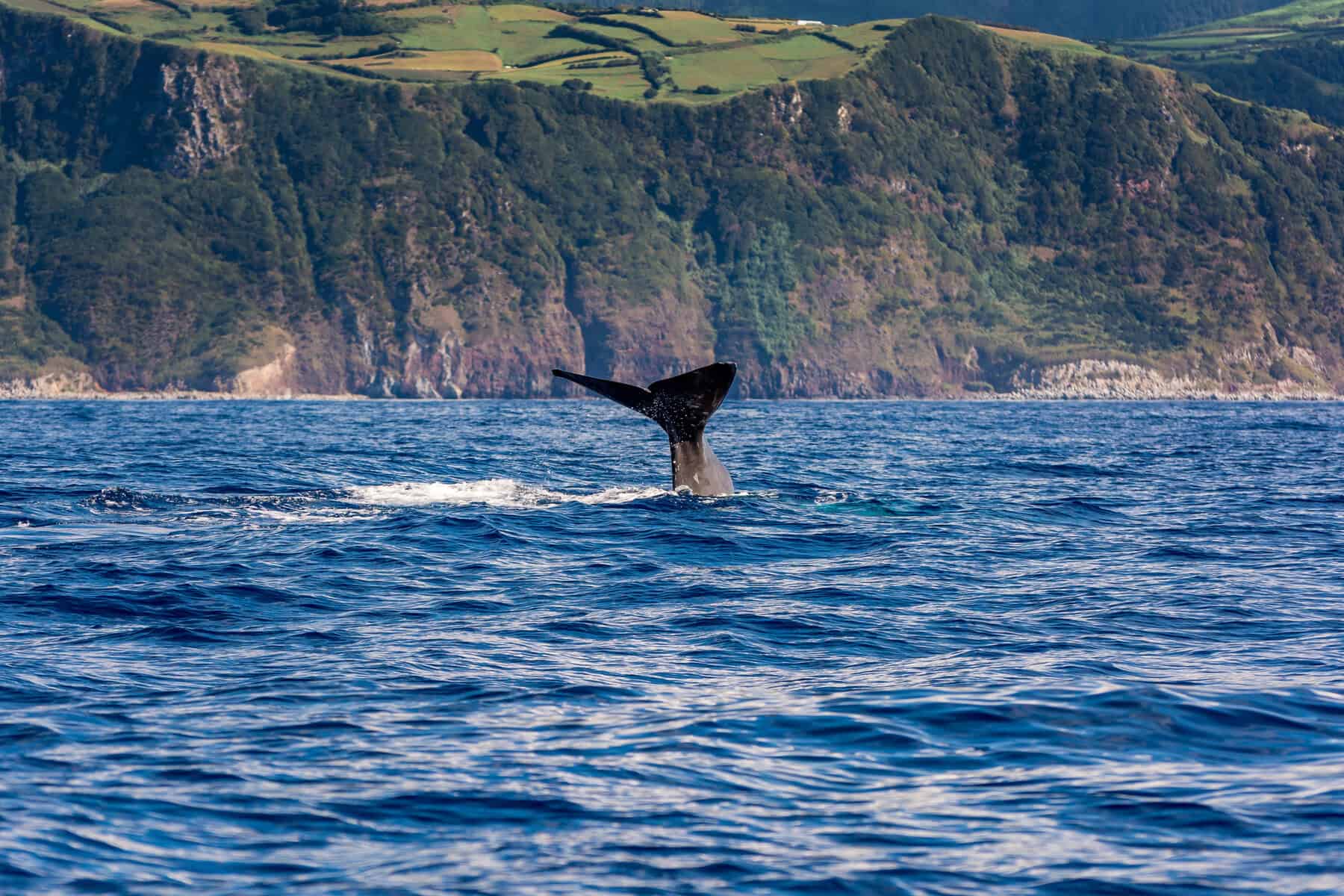
Click here for a wonderful boat trip from Funchal to spot whales and dolphins…
1. Funchal Farmers’ Market | Mercado dos Lavradores
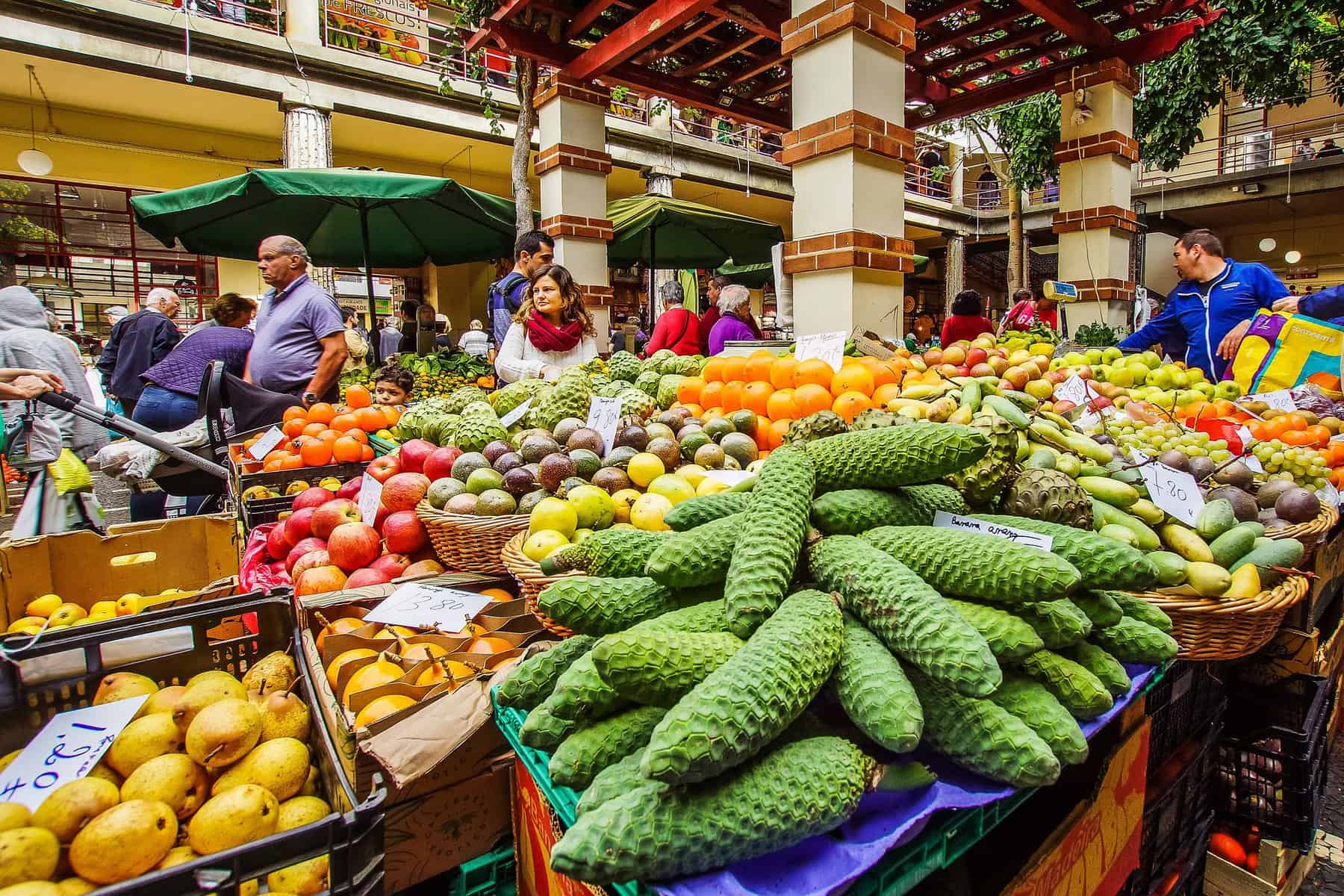
Mercado dos Lavradores is one of Funchal’s most colorful and best-known attractions. Inside, you’ll find stalls loaded with the island’s finest produce alongside souvenir shops.
The market is a great place to come across unusual tropical fruits that are nearly impossible to find elsewhere in Europe. There are also stands selling some of the fish Madeira is famous for, especially red tuna. Beyond that, you’ll see plenty of stalls and shops offering classic Madeira souvenirs, including its distinctive wines and local foods.
Like many city markets around the world, it has become more of a tourist attraction than a truly local market. That doesn’t mean the goods aren’t excellent and fresh—just that prices are often higher.
2. Funchal–Monte Cable Car | Teleférico Funchal-Monte
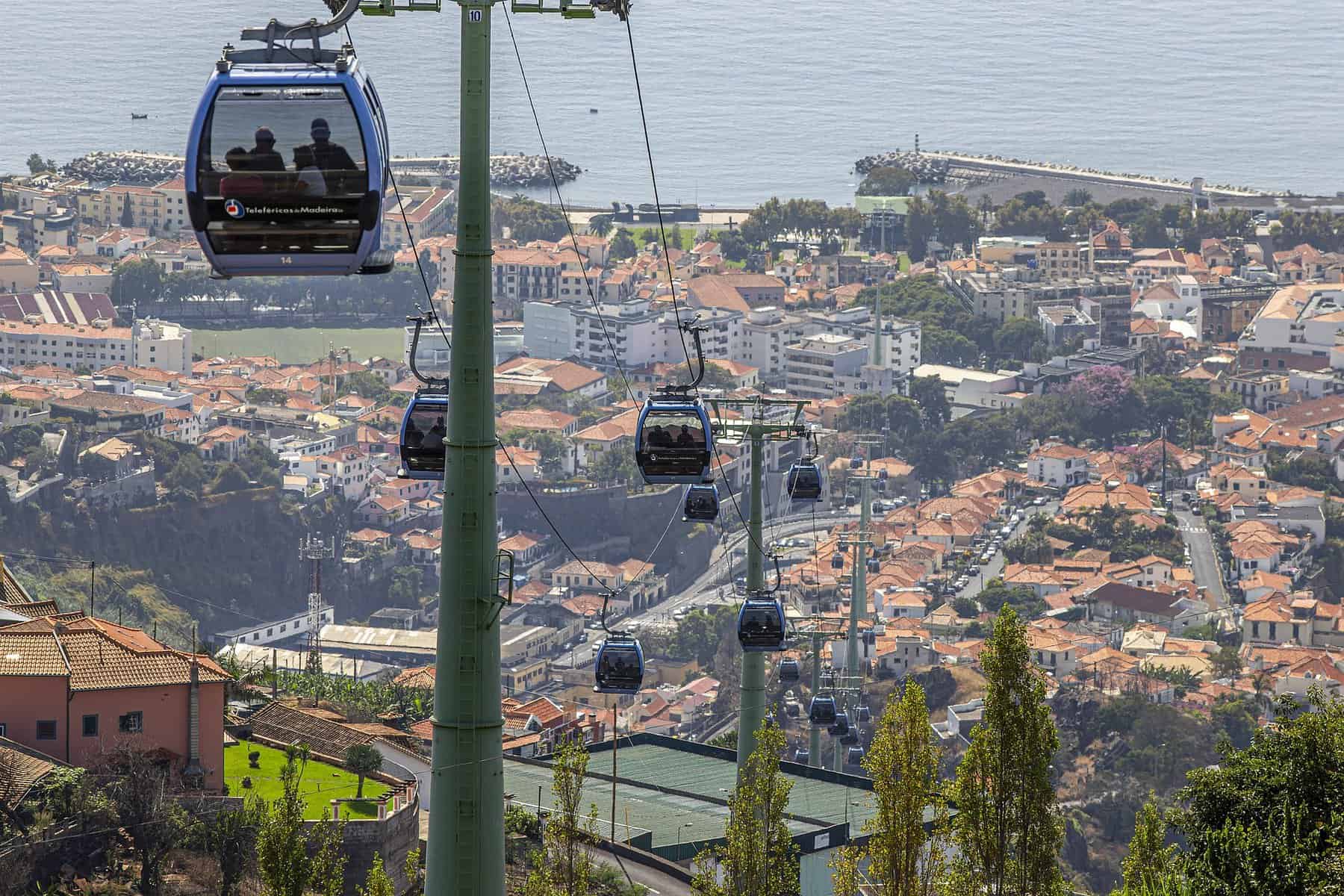
Funchal’s cable car departs right from the heart of the old town, near the small gray-sand beach of Praia do Almirante Reis. From there, it climbs up to Monte and Funchal’s impossibly green gardens.
The cable car is one of Funchal’s headline attractions, so there’s almost always a line. You should expect some wait in any case, but buying tickets online in advance can save you the line at the ticket office.
The ride climbs 1,968 feet above the city below, straight toward the tropical gardens, so there’s often a noticeable change in temperature. On cloudy days, it’s wise to bring a layer. The journey itself is an attraction, with wonderful views of the city, the mountains, and the ocean. It lasts about 15 minutes, and you can buy either a round-trip ticket or a one-way fare if you plan to come back down in the wicker toboggans. Families with kids traveling in Madeira usually love this journey.
If you want to continue to the tropical gardens—which is highly recommended—walk about 820 feet to the right to a second cable car, the Teleférico do Jardim Botânico, which will take you to the stunning botanical gardens. Combined tickets for both cable cars are available. It’s a little pricey, but this is arguably one of Funchal’s most iconic experiences.
Click here to reserve a spot on the famous wicker toboggans for the ride back down from Monte…
3. Monte Palace Tropical Garden | Jardim Monte Palace Madeira
Monte Palace Tropical Garden is located right where you step off the cable car in Monte.
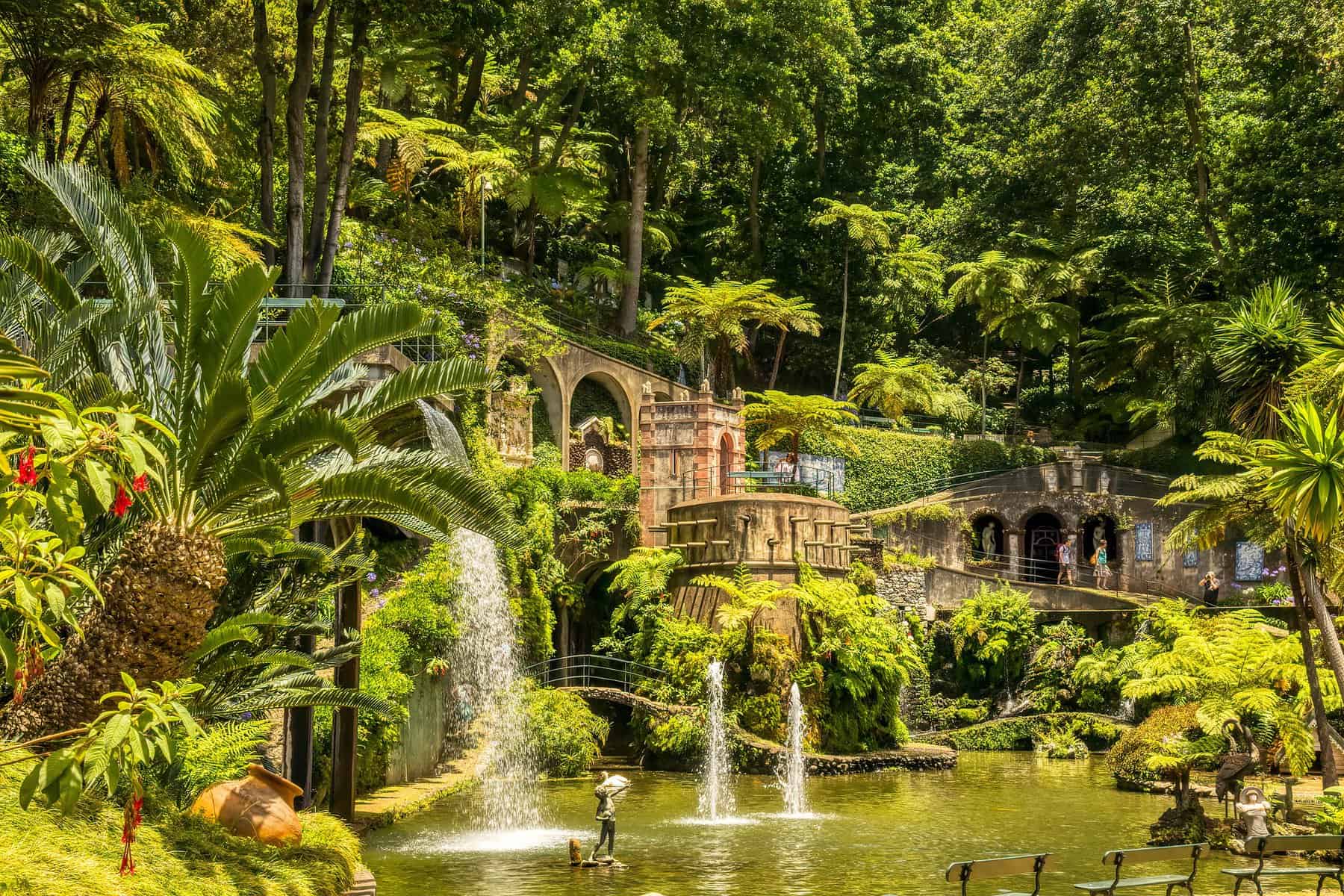
These are Funchal’s most famous gardens, and they’re large enough to explore for several hours. Along with rich vegetation and trees of many different kinds, you’ll find sculptures, pergolas, bridges, fish ponds, and more. Flamingos can also be seen here, and one section of the garden is designed in an oriental style with pagodas.
You can also drive up to the gardens—about a 10- to 15-minute trip uphill.
Click here for the complete guide to Funchal…
4. Botanical Gardens | Jardim Botânico da Madeira
These are different gardens from Monte Palace Tropical Garden, and reaching them by cable car requires taking a second ride for an additional fee, if you choose to go that way.
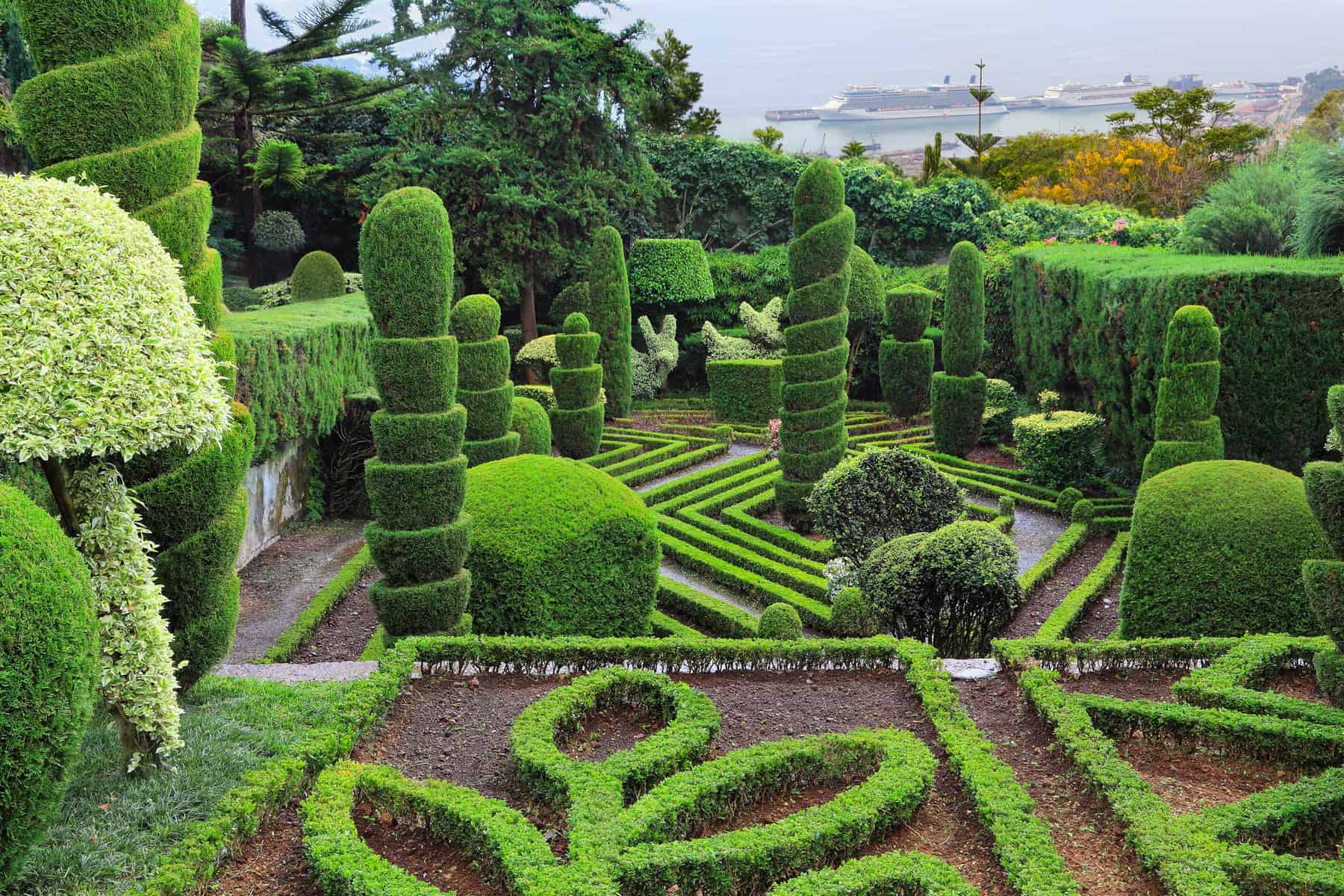
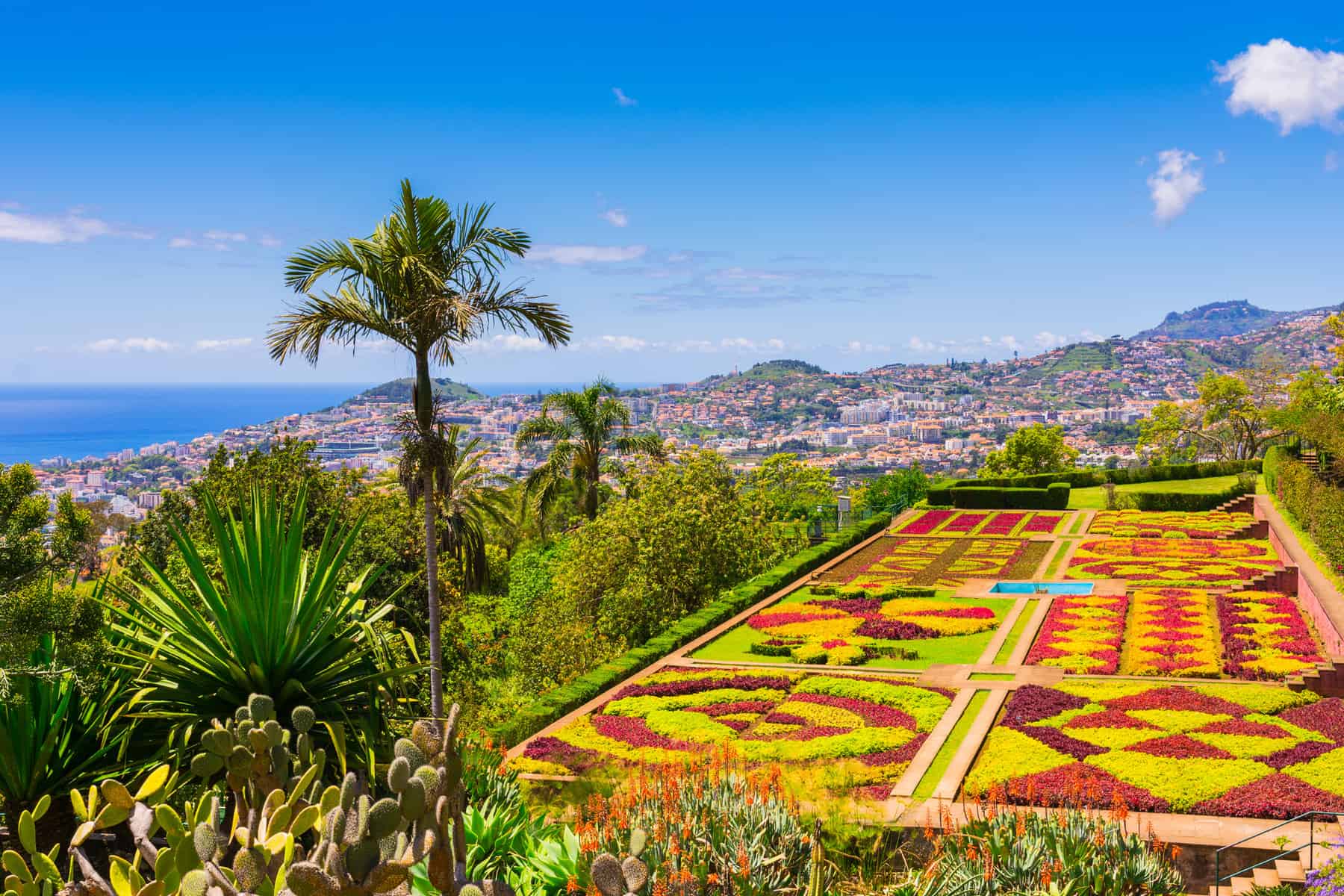
Funchal’s botanical gardens, not the tropical gardens in Monte, were established in the 1960s. Thanks to Madeira’s mild climate, they showcase plant species from around the world. The most famous section is the planted display laid out like a checkerboard, with green and burgundy squares.
The garden combines carefully designed landscaped areas with sections where plants are left to grow more freely. There’s also an entire cactus section, as well as Madeira dragon trees | Dracaena draco, with their thick trunks and cactus-like leaves growing from the crown. Dragon trees are characteristic of both Madeira and the Canary Islands.
The botanical gardens can also be reached by car or taxi in about 10 minutes from central Funchal, heading uphill.
Click here to find a place to stay in Funchal…
Click here to head from Funchal up to Madeira’s peaks…
5. Wicker Toboggans | Descida Carro de Cestos Camacha Monte
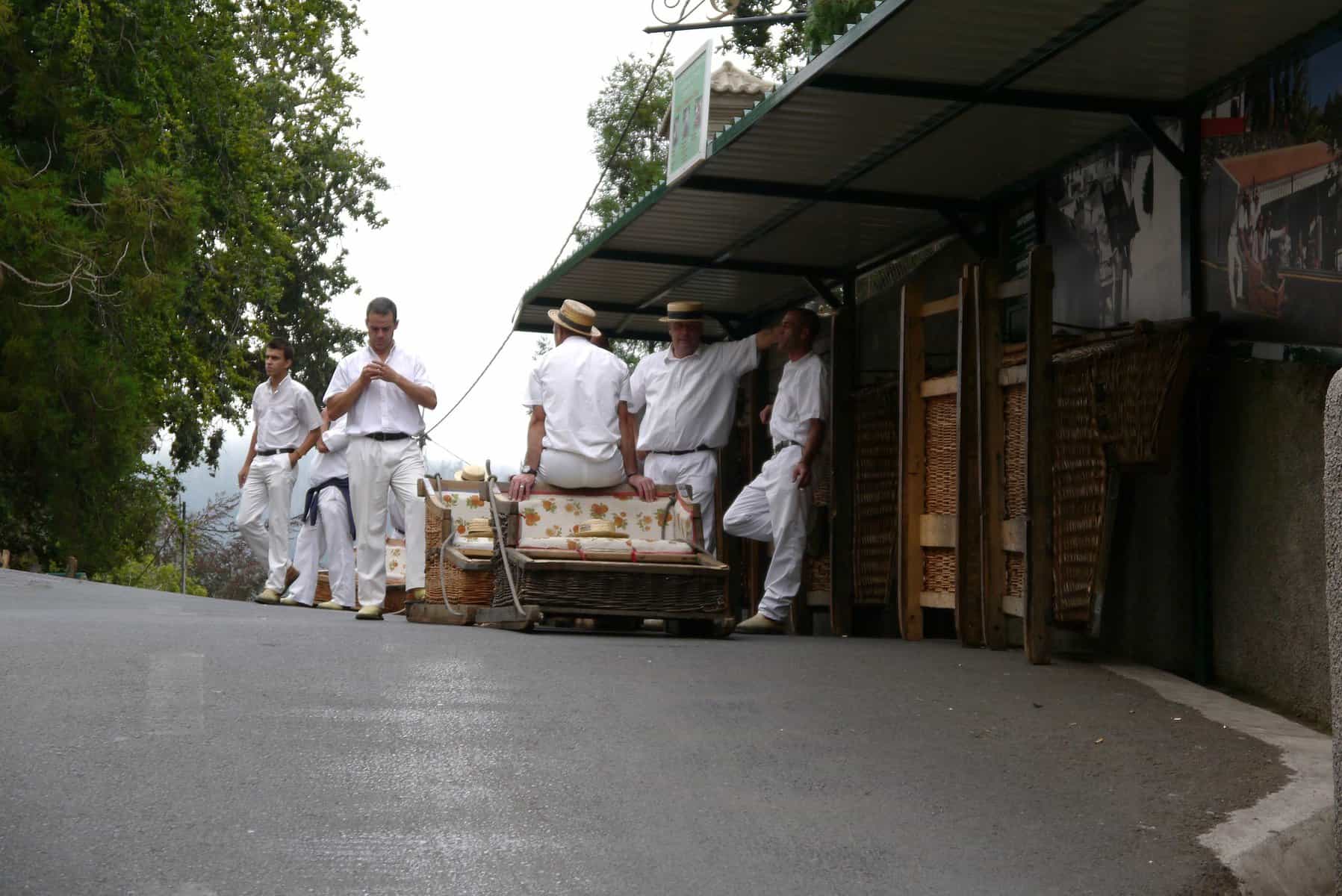
After making your way up from Funchal to Monte, there’s a truly unusual way to come back down: Monte’s wicker toboggans. These wheeled wicker sleds usually take two passengers and are steered downhill by the Carreiros do Monte. In the age of social media, the toboggans have become one of Funchal’s most popular attractions.
Each toboggan is handled by two drivers, who make sure you get back down to Funchal safely over a descent of about 1.2 miles. They wear thick rubber-soled boots that serve as brakes. The ride can be very fast at times, and now and then the drivers stop to pull the toboggan uphill over a small rise in the road using a rope.
There can be lines for the toboggans too, but once you’re on, the descent is quick and can feel a little intimidating at moments. Still, the two experienced drivers on each sled know exactly what they’re doing and keep the ride safe.
Click here to reserve a spot on the famous wicker toboggans…
6. Funchal Municipal Garden and The Ritz Madeira
Funchal’s municipal garden sits at the western edge of the old town, parallel to the marina. Nearby, there’s also a modest mall in a modern building that’s handy for shopping | Plaza Madeira. What makes this area especially interesting, though, is that one of Funchal’s iconic spots stands just across the road on Avenida Arriaga.
The Ritz café opened in 1904, founded by an American businessman. Christian Ritz was traveling from America to England when his ship was blown off course in a storm and ended up in Madeira—much like the vessel of the explorers Zarco and Teixeira, which drifted to Madeira in 1418.
He fell in love with the island, married a Madeiran woman, and the couple spent the early years of their marriage in Funchal. The café he established became a hub for businessmen and foreigners arriving in Madeira. It also served as Madeira’s first chamber of commerce, which later expanded significantly as the island built its economy as a tax haven.
The Ritz café/restaurant complex in its historic building is a must in Funchal. Early evening is the best time to come for tea, coffee, or one of Madeira’s fine wines, much as foreign businessmen did here in the early 20th century.
Facing the lovely gardens, the building is considered the most beautiful on Funchal’s main boulevard, Avenida Arriaga. Its façade facing the avenue is decorated with wonderful small azulejo tile paintings depicting Madeira’s history.
Even if you don’t plan to sit down at the café or the upstairs restaurant, it’s still very much worth passing by to admire the beautiful azulejos and soak up the atmosphere.
Click here to find hotels or vacation rentals in Funchal…
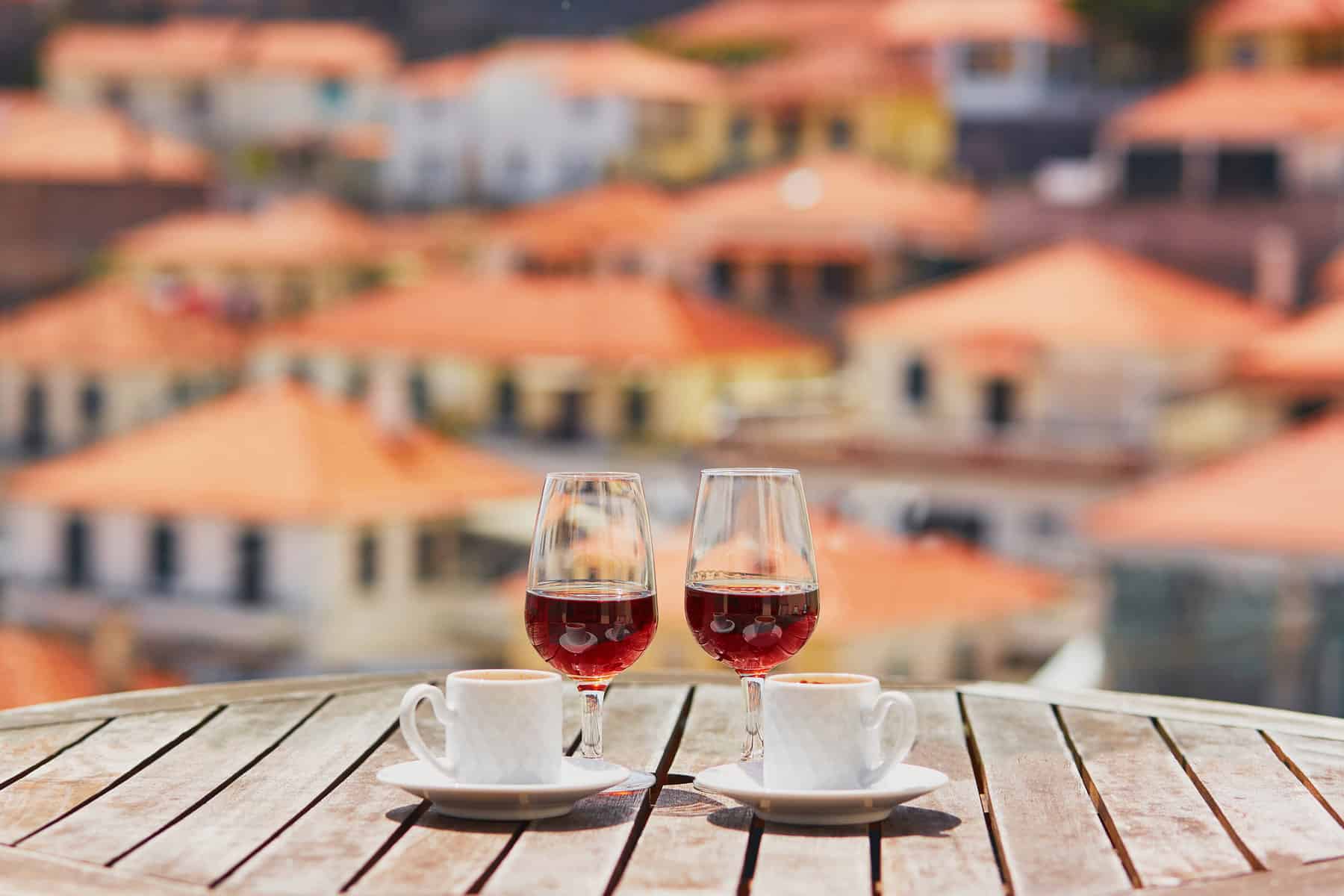
You can’t be in Funchal without having a glass of Madeira wine at one of the city’s excellent restaurants, bars, or cafés
7. Santa Maria Street – the main street in the old town | Rua de Santa Maria
This narrow street, running parallel to the waterfront in the eastern part of the old town, is Funchal’s most colorful. It’s lined with restaurants, shops, cafés, and more, while bright houses on both sides give it bags of atmosphere.
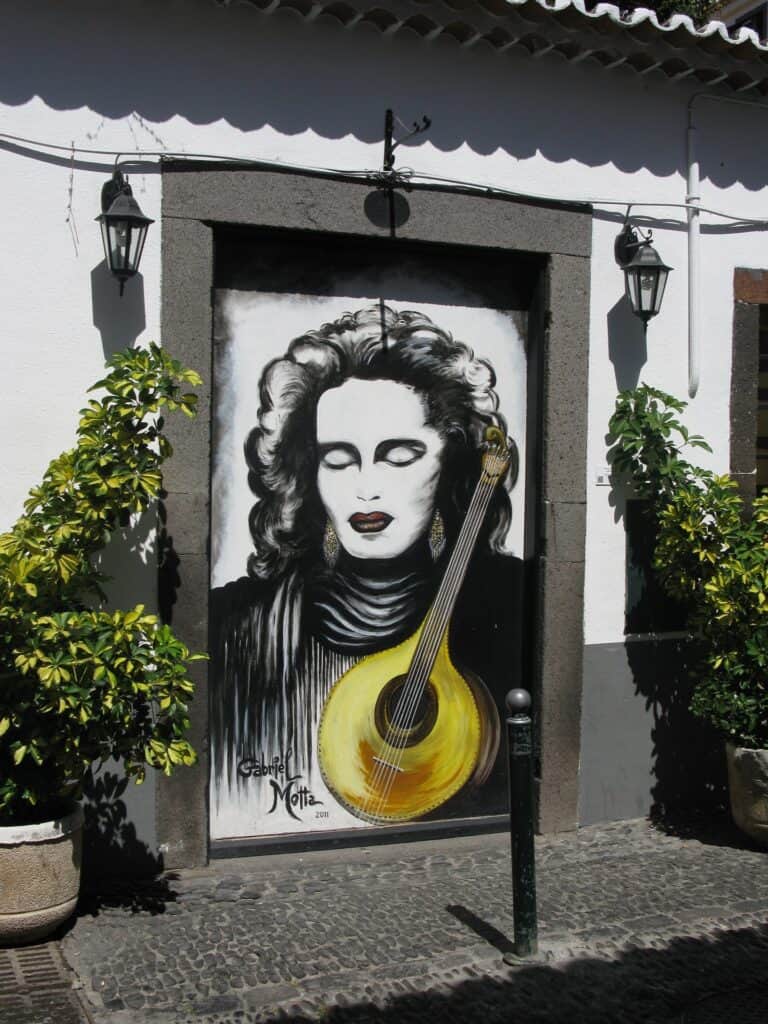
Beyond its bars and nightlife, the street is especially famous for the painted doors along the way. In the early morning, when things are still relatively quiet, it’s a great time to wander and look for the colorful doors—some of them are genuine works of art.
Click here for a guided tour of Funchal’s old town…
8. Blandy's Wine Lodge
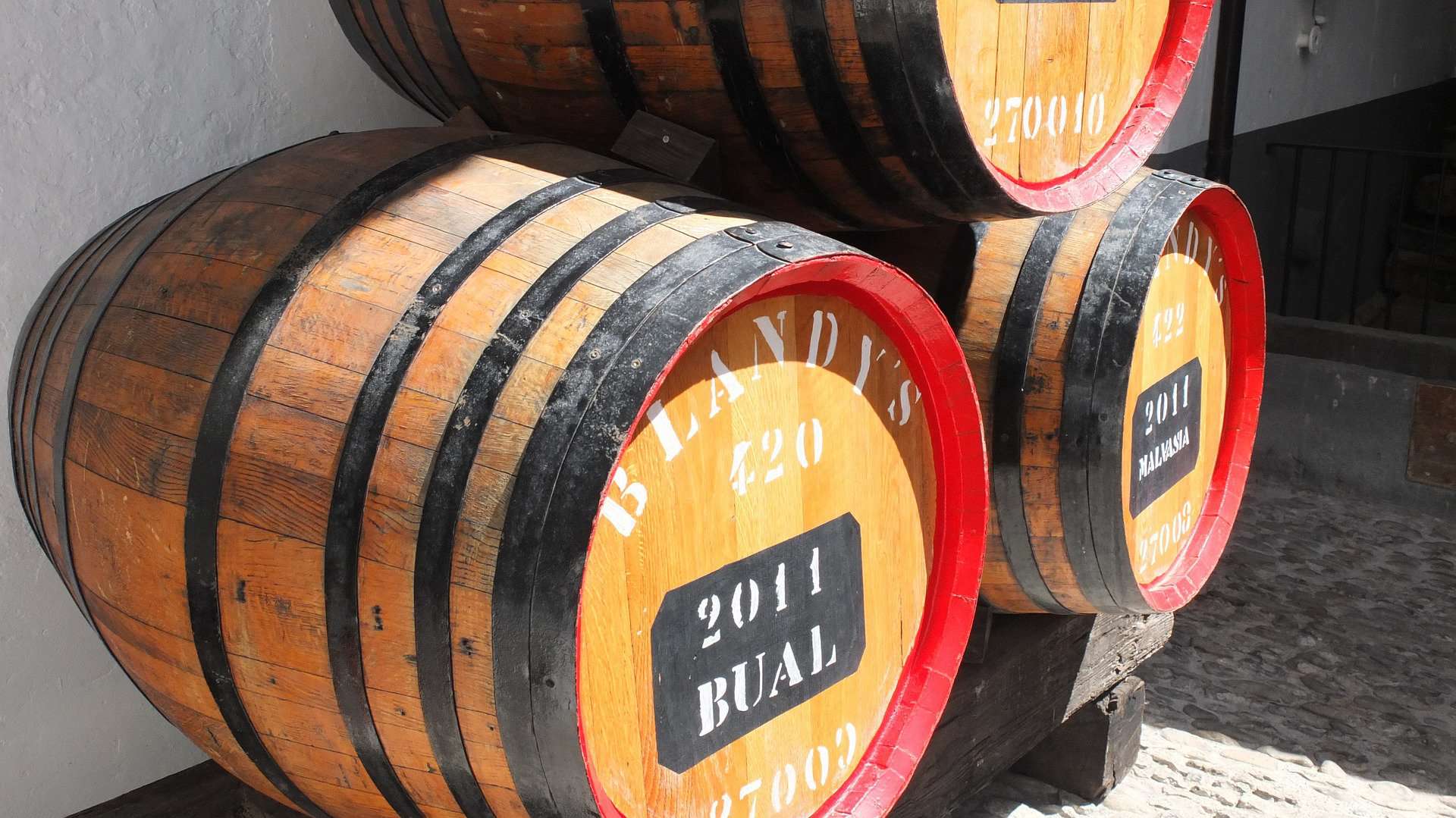
Madeira is known for its distinctive wines, and vineyards and wineries are spread across the island. The advantage of Blandy's is its central location, right in the heart of the city, which makes it especially easy to reach. Tours are conducted in groups of up to 20 people and end with tastings in a large room with an old-world atmosphere.
The tours explain Madeira’s history and its unique fortified wine—the same wine sailors stocked up on for years while stopping at the island. Barrel after barrel was loaded into the hulls of ships before long voyages across the vast ocean, helping ease at least a little of the loneliness of life at sea.
Wine tastings may not be the usual morning activity, but morning is actually the best time to visit, since there are hardly ever lines then.
Click here for fun food and wine tours in central Funchal…
9. Funchal Promenade | Avenida do Mar
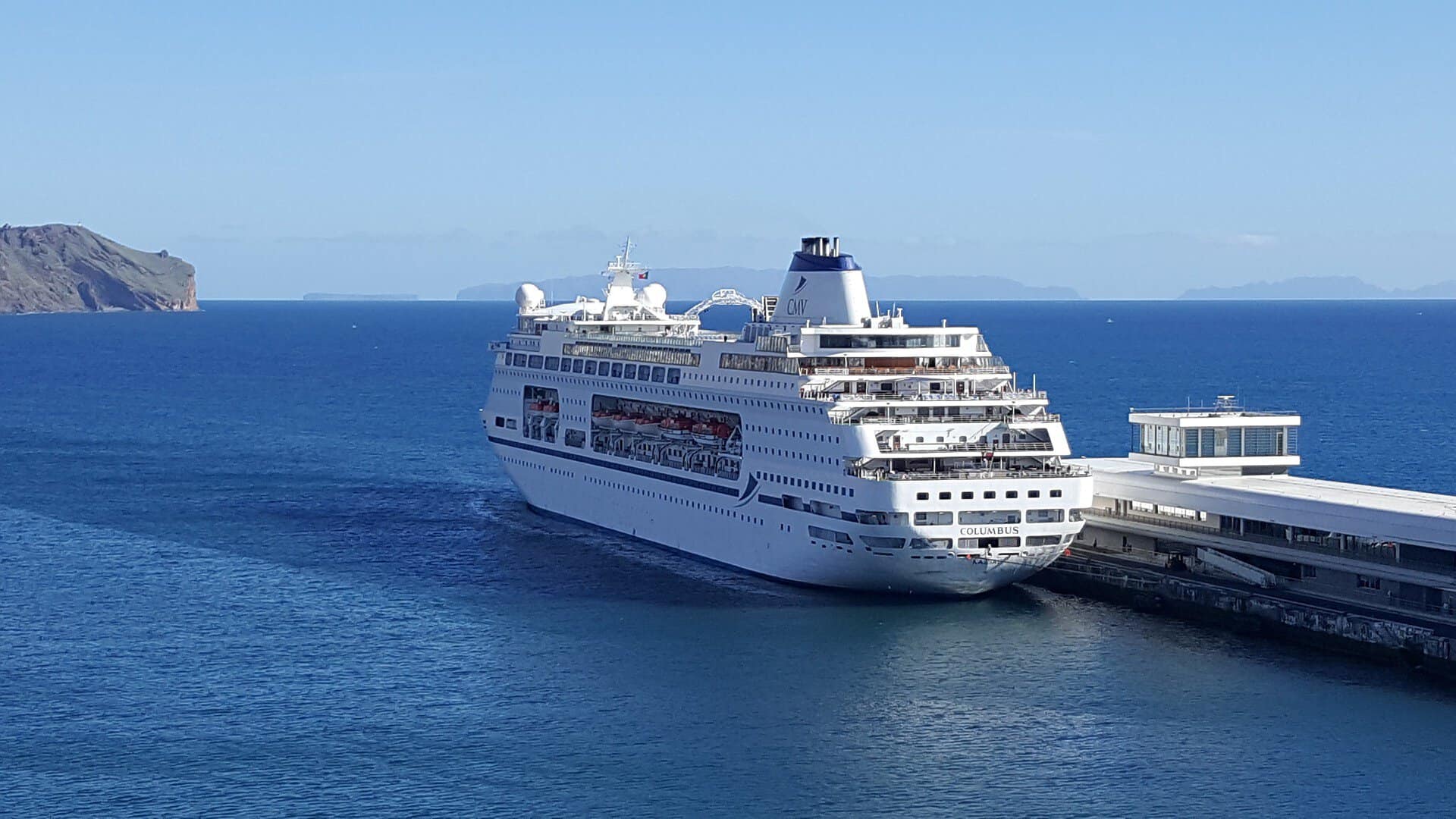
The promenade is a pleasant place to visit at any hour of the day, whether you’re there to stroll and take in the scenery, the people, or the sea. Almost every day, a large cruise ship also docks at the pier opposite, creating a striking backdrop against the vast ocean.
At the center of the promenade, you’ll find large colorful letters spelling Madeira | Madeira – Letreiro, a popular photo spot. The letters stand above Praça do Povo, a broad plaza in the middle of the promenade, surrounded by gardens and benches—an especially pleasant place to pause and look out over the endless Atlantic on the horizon.
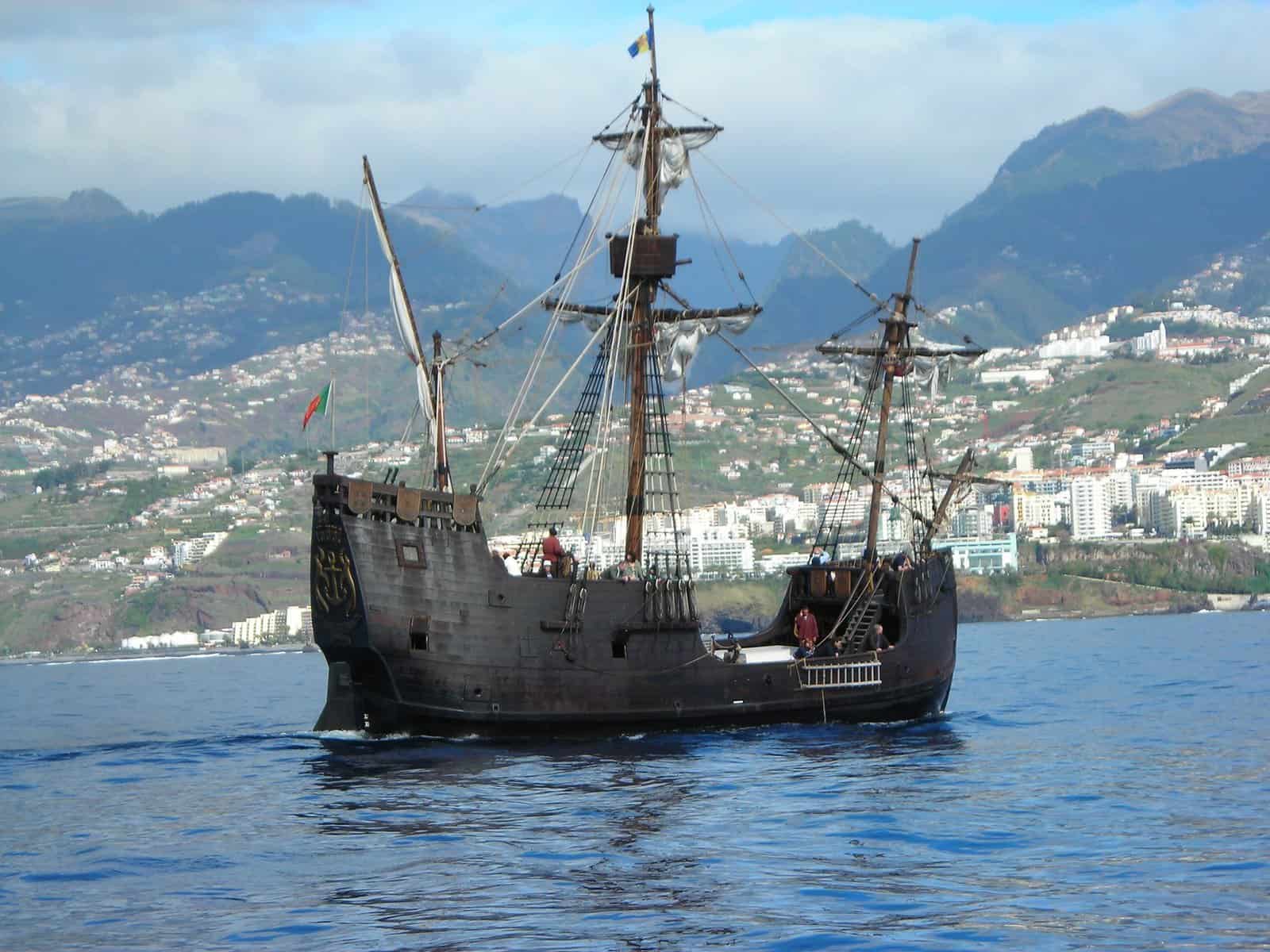
10. Sailing on Columbus’s ship | Santa Maria de Colombo
One of Funchal’s more distinctive attractions is a three-hour cruise along Madeira’s southern coast. The trip takes place aboard a ship modeled after Christopher Columbus’s original vessel, the one he used on his voyage to America.
The Santa Maria ship departs from below Praça do Povo, near Funchal’s marina. Tickets are also purchased there, and children up to age 12 pay half price.
During the cruise, curious groups of dolphins often accompany the boat. On warm days, the ship also anchors near Cabo Girão and gives passengers the chance to jump in and swim in the sea.
Unless it’s a truly hot, sunny day, it’s worth bringing something with long sleeves, since sailing on the Atlantic is almost always accompanied by a cool breeze.
Click here for a cruise aboard the Santa Maria along Funchal’s coastline…
Click here for more attractions for kids in Madeira…
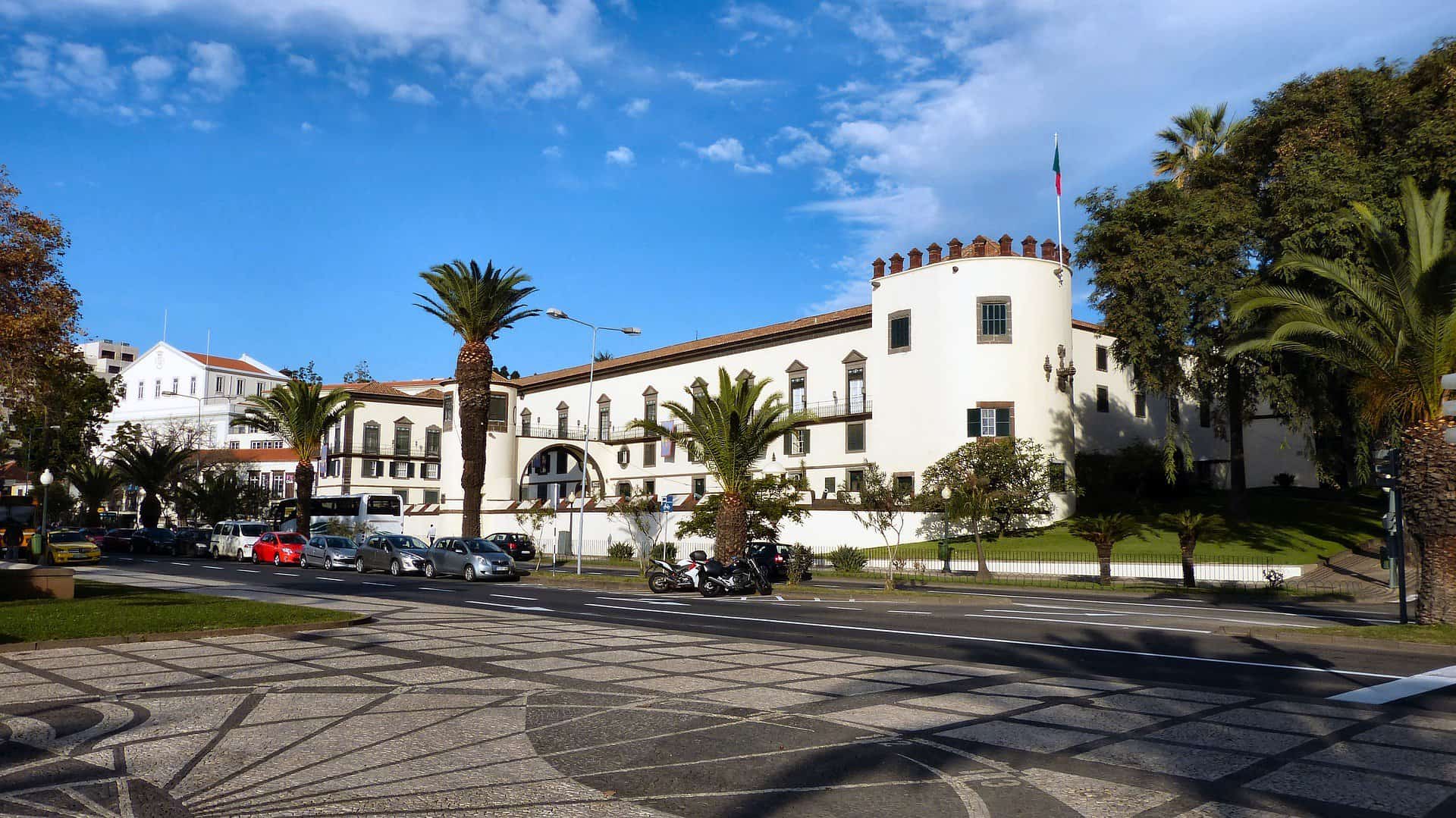
11. Nini Andrade Silva Design Centre
Nini Andrade Silva is an influential interior designer born in Funchal. She is best known for designing the interiors of modern hotels around the world. Her center stands on the cruise pier opposite central Funchal and tells the story of the inspirations behind her work.
The center is housed in the historic fortress building where Madeira’s discoverer, Gonçalves Zarco, once lived. You reach it by elevator, and inside you’ll find displays of Nini Andrade Silva’s work as well as rotating exhibitions by other contemporary interior designers.
There’s also a cafeteria and restaurant on-site, both with splendid views of the sea and the city. They’re lovely places to sit for a while after your visit and enjoy the stylish setting, with the city climbing the hillside above the water.
Click here for more information and opening hours…
Click here for food and wine tours with locals in Funchal…
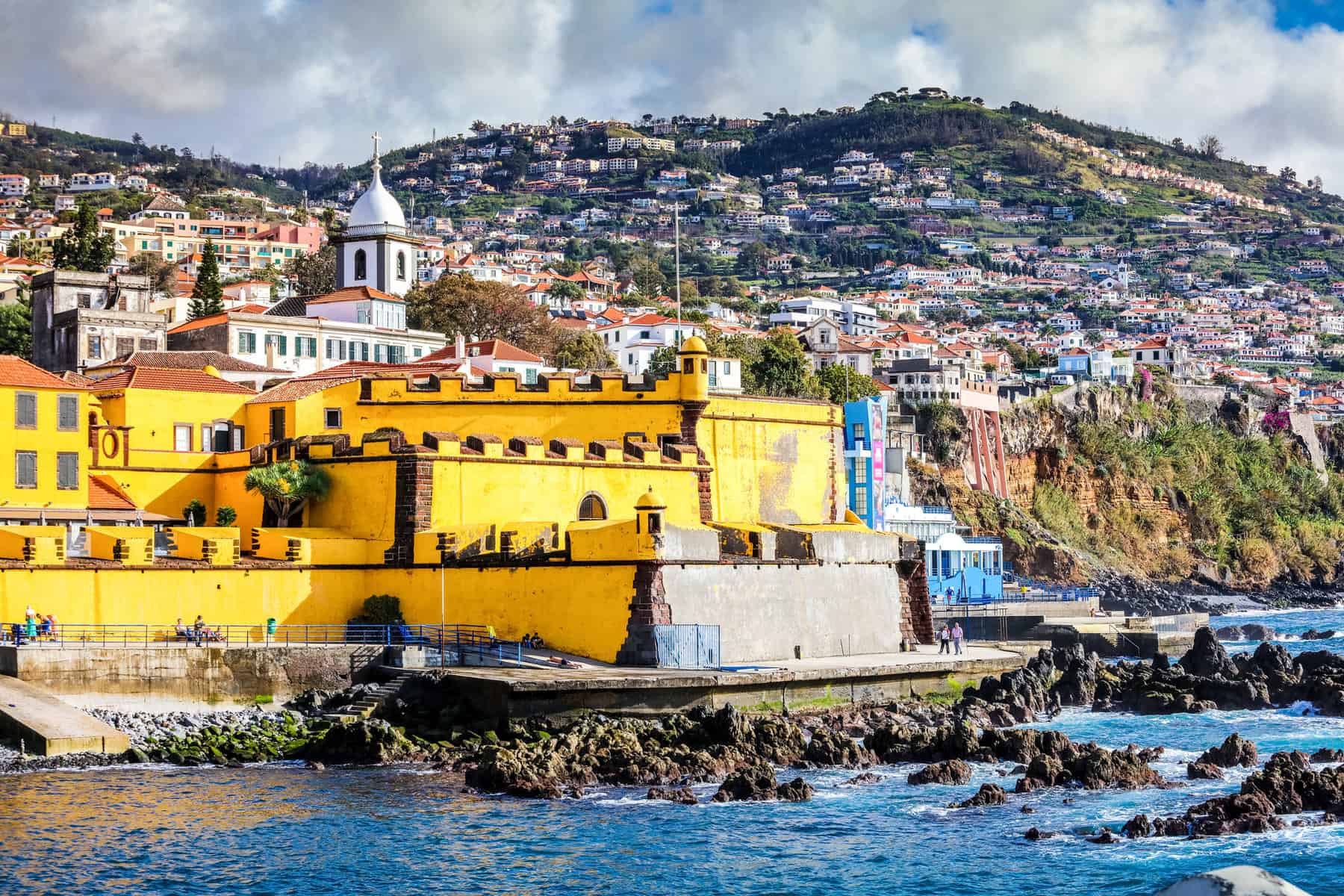
12. The Yellow Fortress | Fortaleza de São Tiago
The yellow, slightly weathered building at the eastern end of Funchal’s promenade is called São Tiago Fortress. Construction began in 1604, and its strategic position was meant to protect the old town area | Zona Velha from pirate raids and other attacks.
The fortress has gone through several changes since then. Before its most recent renovation, it served as a modern art museum, which has since moved to its new home in the town of Calheta, west of Funchal.
Today, the building is a wonderful viewpoint over the city, especially from the terraces on its upper levels. It makes a lovely finale to a walk along Funchal’s promenade.
Click here for a guided viewpoints tour outside Funchal and into the Valley of the Nuns…
13. Funchal Cathedral | Sé Catedral do Funchal
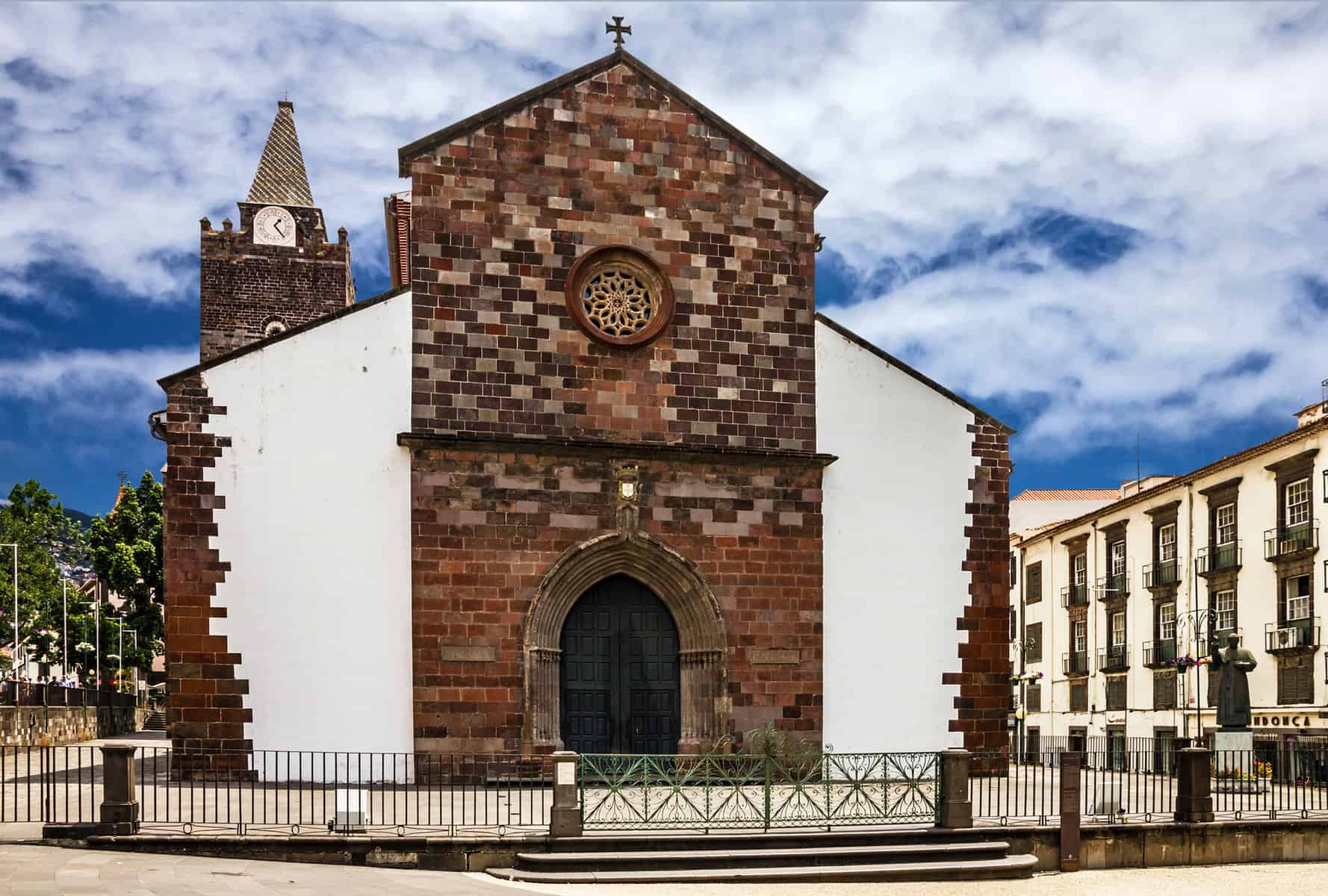
Funchal Cathedral was built by order of King Manuel I, beginning in the late 15th century and completed in 1514. It is one of the very few buildings in Madeira to survive from the earliest period of Portuguese settlement on the island.
The cathedral stands in the city center, at the eastern end of the main thoroughfare Avenida Arriaga. In front of it lies a paved square in classic Portuguese style.
The cathedral’s exterior is distinctive, with extensive use of local basalt stone.
The highlight inside the church is its wooden ceiling, also made from local materials. The decoration can be a little hard to make out because the cathedral is dimly lit, but it’s easier to see near the brighter altar area.
Visitors with a sharp eye will notice that alongside the religious motifs are scenes from everyday life in 15th-century Madeira. These are carved mainly into the choir stalls and include details such as angels carrying bananas, wine, and other goods.
Some of the religious objects that once belonged to the cathedral have been moved to the Museum of Sacred Art, not far away.
Click here for a guided tour of Funchal’s old town…
Click here to find a place to stay in Funchal…
14. Museum of Sacred Art | Museu de Arte Sacra do Funchal
The museum sits a little uphill from the old town in City Hall Square. It occupies a 17th-century building that once served as the home of Funchal’s bishop.
Inside are hundreds of artworks with Christian themes, collected from churches and other religious buildings across the city. Madeira’s wealthy residents and merchants, who regularly sailed rough seas, invested heavily in religious objects to protect them or bless them on dangerous voyages. That helps explain the richness of the collection you see here.
Click here for more information and the museum’s opening hours…
15. Pináculo Viewpoint | Miradouro do Pináculo
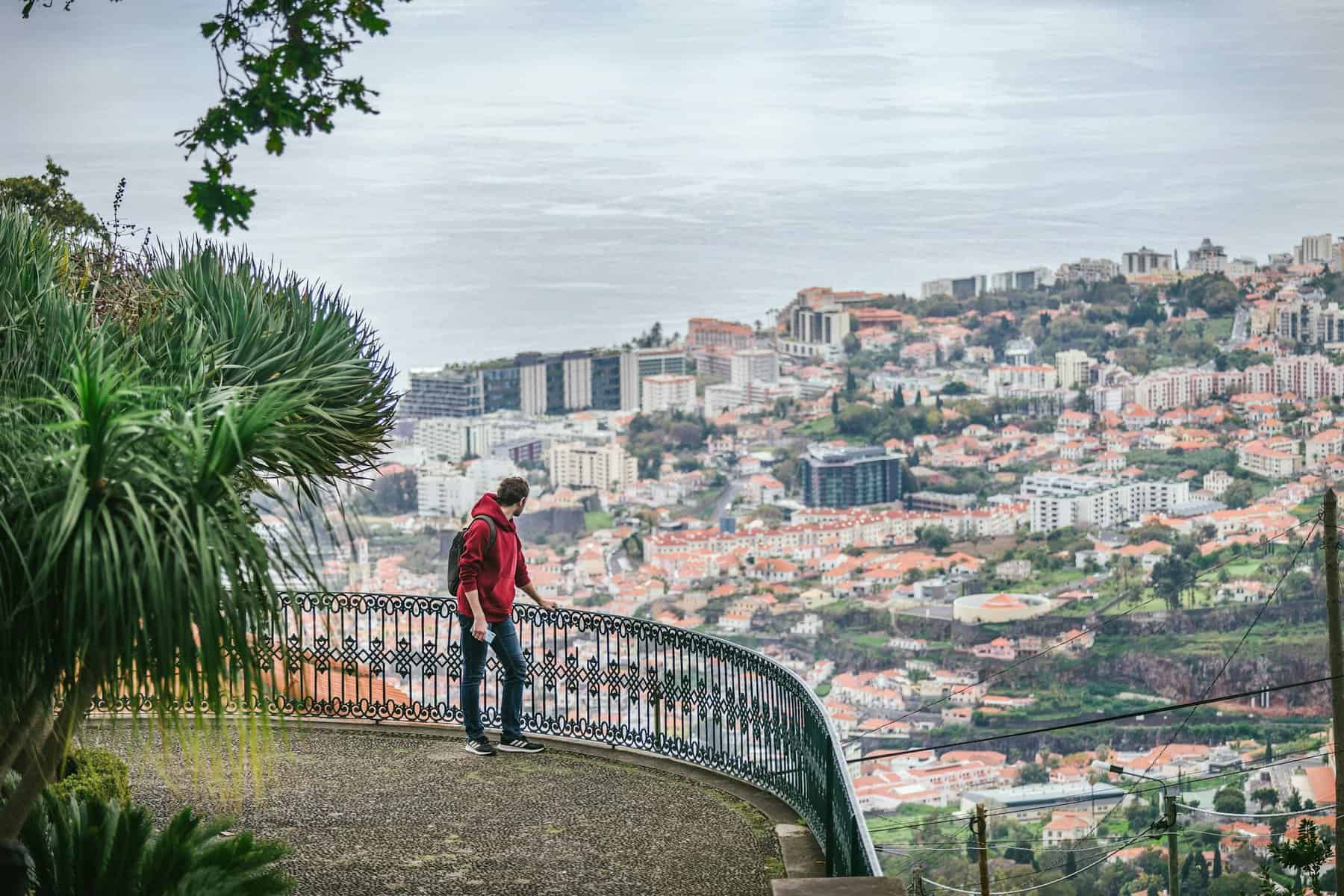
Funchal—and Madeira in general—is full of viewpoints. One of the viewpoints just east of Funchal, with a view over the harbor and the urban area around it, is Pináculo Viewpoint.
The viewpoint is essentially a small, romantic terrace that juts slightly out from the narrow road and is framed by bougainvillea bushes. What makes it special is that it’s possible to take photos from an angle that shows you almost suspended over the view. Because the road curves and the terrace projects outward, you can get a great shot leaning against the railing—carefully, of course.
Click here for a guided viewpoints tour outside Funchal and into the Valley of the Nuns…
16. Cristiano Ronaldo Museum and Statue | Museu CR7
Cristiano Ronaldo, the greatest footballer Portugal has ever produced and one of the greatest players in the history of the sport, was born in 1985 in Funchal. Ronaldo’s status across Portugal is almost godlike, and in Madeira and Funchal, he’s closer to Zeus, father of the gods.
Ronaldo is deeply attached to his hometown and chose to display some of his trophies here. He opened the museum on this faraway island rather than in one of Portugal’s larger mainland cities—or anywhere else in the world—and both locals and visitors to Funchal are grateful for it.
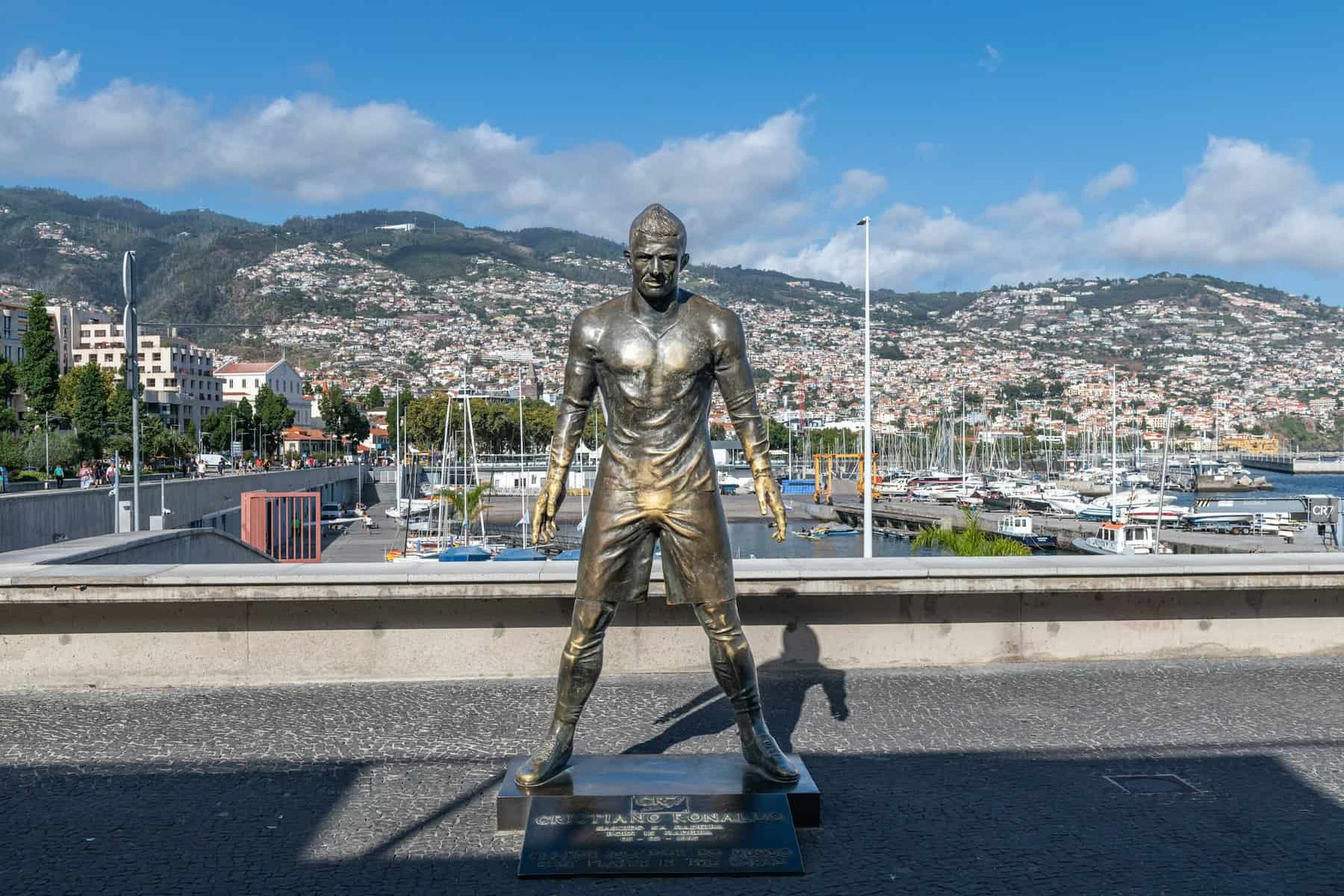
Outside the museum stands a bronze statue of Ronaldo, which you can visit and photograph even when the museum itself is closed. The museum is in a very convenient spot at the western end of Funchal’s promenade, opposite the cruise pier also known as Pontinha.
Inside, more than 150 trophies won by the player are on display, along with video presentations of his greatest moments and other items connected to his extraordinary career. Not everyone agrees he was the greatest of all time, since the competition with Messi is fierce, but almost everyone agrees he was the most professional player in the world—a footballer who was never satisfied with what he had achieved, always wanted more, and never let himself ease up.
Click here for more information and the museum’s opening hours…
Click here to find a place to stay in Funchal…
17. Casino da Madeira
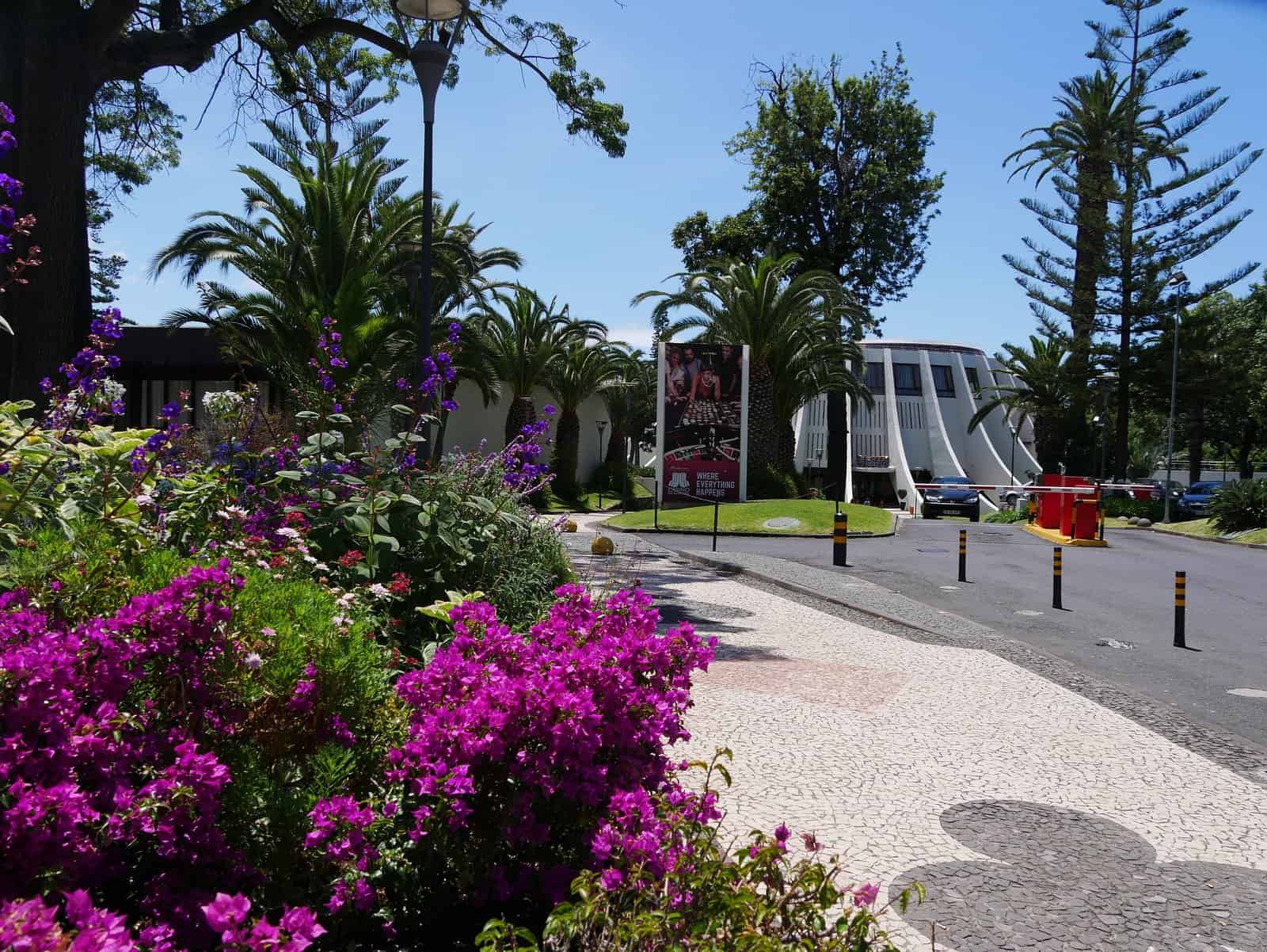
The casino is located just behind the Cristiano Ronaldo Museum, near the exit from the cruise dock, a few hundred yards from central Funchal. It occupies a distinctive building with exterior supports, beside the large hotel Pestana Casino Park, and is surrounded by gardens.
Funchal’s casino has long been more than just a casino—it’s also an entertainment venue, with a restaurant, a well-known cocktail bar, and above all a nightclub that operates on weekends. There is also an open-air live performance area, from which the night usually continues straight into the party until the early hours. At certain times, performances by famous Portuguese singers are also held here.
In line with the laws governing casinos in Portugal, the casino in Madeira operates from 3:00 p.m. to 3:00 a.m., and on Fridays and Saturdays from 4:00 p.m. to 4:00 a.m. Appropriate dress is expected, and entry is naturally limited to those 18 and over.
Click here for more information about Funchal’s lively casino…
For more information about Casinos in Portugal click here….
18. Museu da Quinta das Cruzes – Historic decorative arts museum
This museum, in the upper part of the city center, is housed in a grand 19th-century residence. Part of the display is the house’s own furniture, and the interior design aims to recreate what the home of a sugar plantation owner in Madeira’s earliest centuries of settlement might have looked like.
Sugar cane was one of the main crops planted on the island after the Portuguese arrived. Sugar had begun to captivate Europe as early as the Crusader era in the 12th century, enriching the merchants who traded in it. So when the Portuguese found a nearby island with abundant water and a relatively warm climate, they wasted no time planting this profitable crop. It became one of the main drivers of Madeira’s rapid enrichment and of the quick arrival of many Portuguese settlers after the discoveries.
On the ground floor, you’ll see a great deal of mahogany furniture. Many of the pieces were made from wooden crates that had previously been used to transport sugar. Once sugar cultivation shifted to Brazil in the 18th century, the crates were no longer needed and were recycled into furniture. Alongside the furniture, the museum also displays paintings, jewelry, and gold objects belonging to those wealthy merchants.
One of the museum’s most interesting pieces is in its garden: a Manueline-style window frame from Madeira. Dating from the early 16th century, it is carved with Lullian figures, lions, and other animals. The pleasant, well-kept garden also contains other preserved architectural fragments from old buildings across the island, along with distinctive tombstones.
Click here for more information and opening hours…
19. Convent of Santa Clara | Convento de Santa Clara
The convent is actually a complex of several handsome buildings from different periods and stands opposite Museu da Quinta das Cruzes. It was founded in 1496 by the grandson of Madeira’s discoverer, Gonçalves Zarco. One of the most interesting features of the complex is its 17th-century azulejo walls, among the earliest azulejos on the island to have survived in perfect condition.
João Gonçalves Zarco, Madeira’s discoverer, is buried within the complex.
Click here to find a place to stay in Funchal…
20. Funchal’s bathing complexes – the lidos of Funchal | Complexo Balneares – Lido
Funchal itself, and Madeira more broadly, are something of an oxymoron when it comes to what most people imagine when they think of an island. Most of us picture an island as a place full of golden beaches, or at least sunny, warm ones. In Madeira, because of its unusual geology—which is also its main draw—you could say that, broadly speaking, there are no beaches.
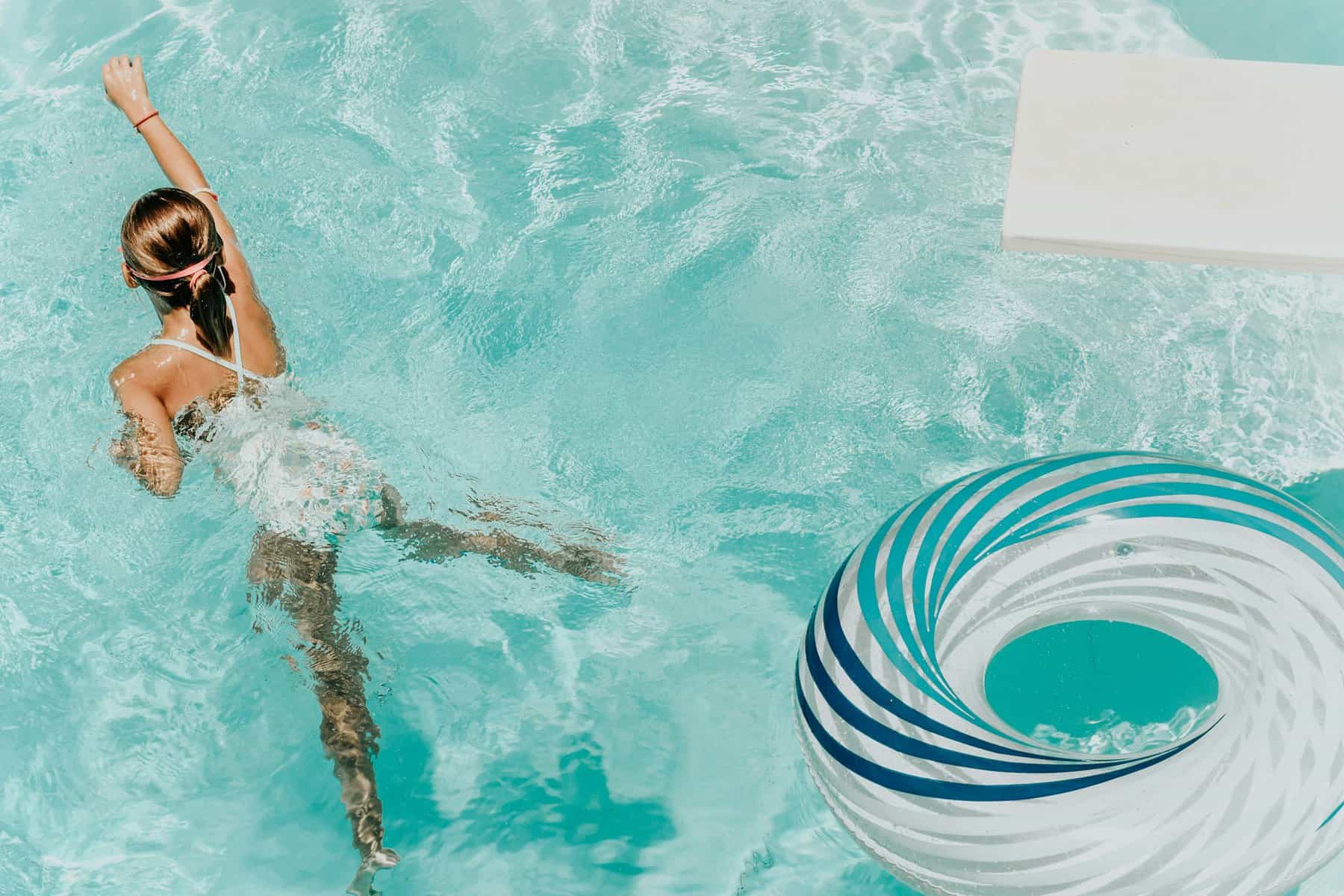
To address this, the island authorities, and especially those of Funchal, decided to create bathing complexes for residents and visitors alike. Several such swimming areas were built, known by the generic name “lido,” much like the famous beach in Venice.
Near the hotel zone west of central Funchal, there are several of these lidos, and children especially tend to love them.
Click here for a guided viewpoints tour outside Funchal and into the Valley of the Nuns…