Braga, the capital of the historic northern region of Minho, is a pleasant city set among mountains and green forests about a 40-minute drive from Porto. It has the highest concentration of churches in Portugal, which is why it is often called the “Rome of Portugal.” The nickname also fits because the city was founded in Roman times and was their most important city in the northwestern Iberian Peninsula. Today, Braga is a growing city with a high quality of life, and it makes an excellent day trip from greater Porto. You can also stay longer and use it as a base for exploring the natural sites of northern Portugal along the Spanish border. Braga gets a lot of rain, so spring and summer are the best times to visit, though the rainfall has its upside: everything is incredibly green, with lush gardens all around.
Most of Braga’s attractions are in the city center, more specifically along the route between Republic Square and the cathedral. In addition, two huge and beautiful church complexes rise on the hills to the east (Bom Jesus do Monte, Sameiro). Of the two, Bom Jesus do Monte, the “Good Jesus” church, is the attraction that draws the most visitors to the city.
Click here for a day trip from Porto to Braga and Guimarães with a Portuguese lunch…
Click here for a fascinating guided tour of the Bom Jesus monastery…
Click here for a free tour of central Braga…
Click here to find accommodations in the green city of Braga…
Must-See Attractions in Braga
Republic Square and the Fountain | Praça da República
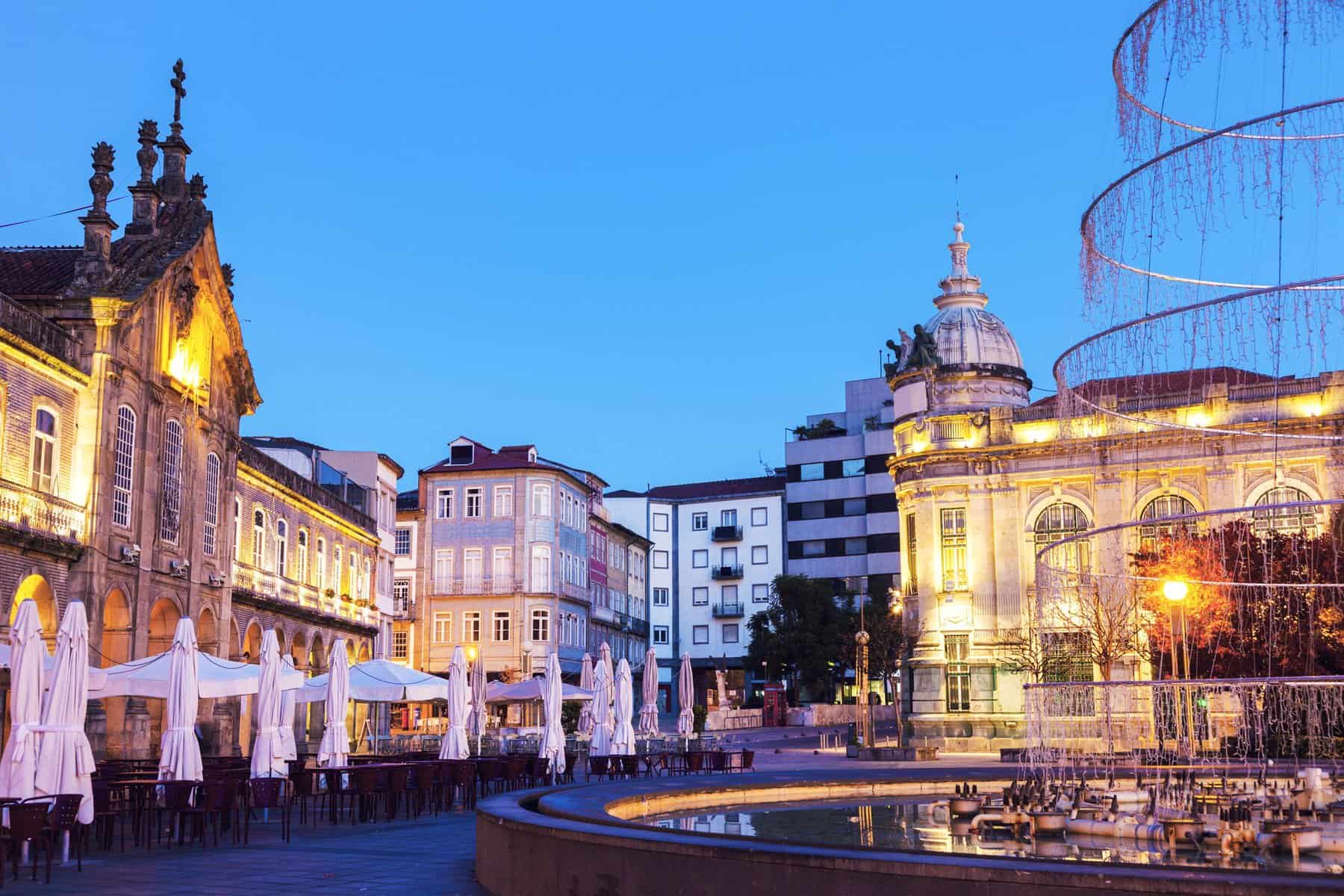
This square is the heart of Braga, and most walking routes through the city begin here. Gardens line the square, and at one end stands an ornate fountain (Chafariz), one of Braga’s symbols. With trees and landscaped areas throughout, it’s a very pleasant place for a stroll.
It has officially been called Republic Square only since 1910, when the Portuguese Republic was finally established. Still, it had already become the city’s main square in the early 18th century, during a period of major building and renewal.
Then as now, locals call the square Arcada, after the old covered arcade found here (behind the fountain). In the past, the arcade sheltered a kind of market where food was sold. Since Braga is famously rainy, it was a practical way to keep trade going year-round.
Today, two cafés have operated continuously under the arcade for nearly 150 years: Café Vianna and Café Astória.
Almost every street leading off this elongated square will take you to an important site or key route in Braga, especially the streets branching out from the fountain area. Beyond that, the square also has more cafés, fast-food spots, shops, and facilities for children.
Click here for a free tour of central Braga…
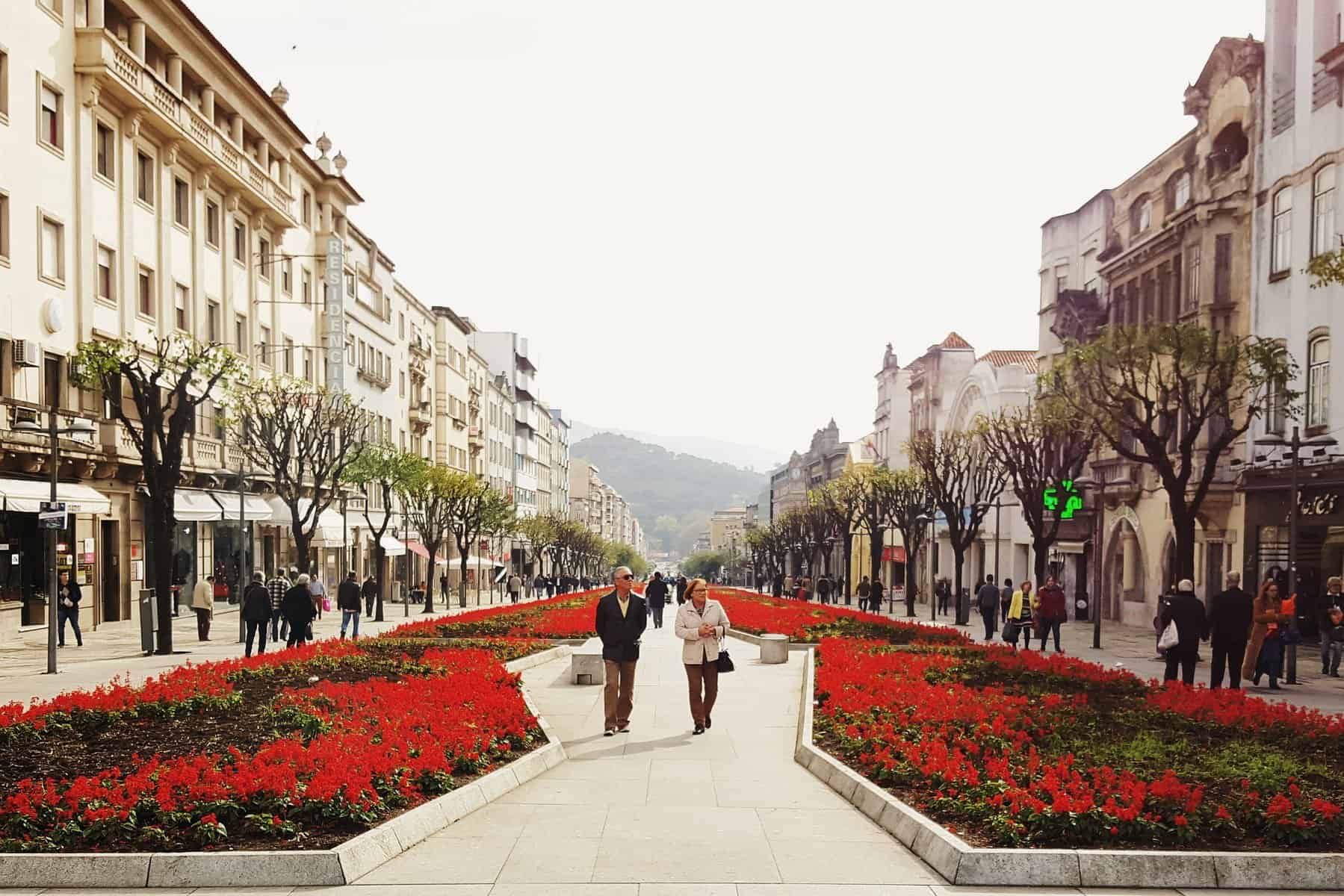
Avenida da Liberdade – Braga’s main boulevard
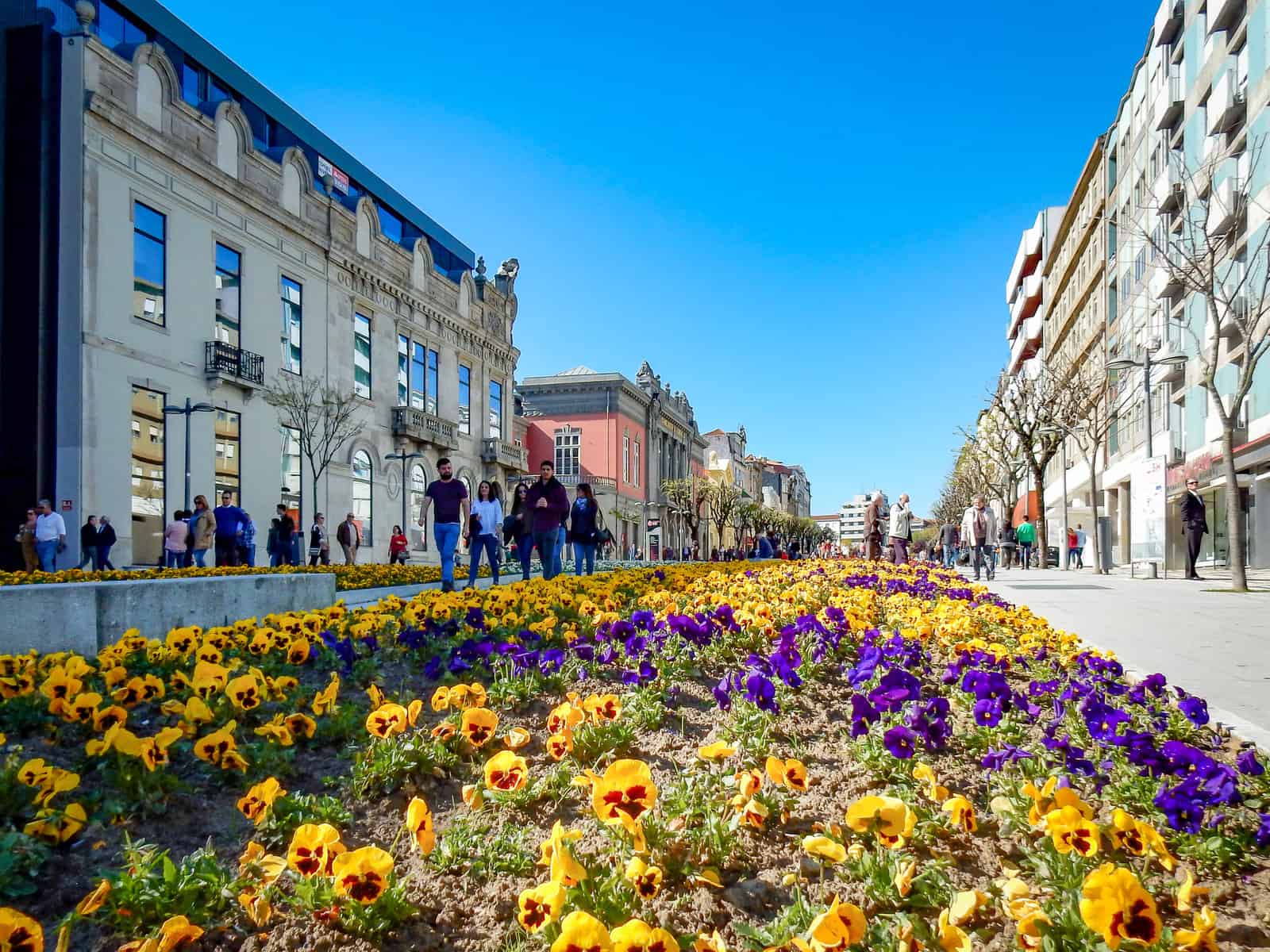
Liberdade Avenue is Braga’s best-known boulevard, loved for the flower gardens that run along it.
It begins at Republic Square and stretches south to the city parks, Parque Da Ponte and Parque do Picoto.
At its northern end, it becomes a pedestrian promenade that feels like a continuation of Republic Square. Lovely flower beds fill the center, with a broad walkway for pedestrians between them, while shops, cafés, and restaurants line both sides.
The avenue and its surroundings are part of any visit to downtown Braga, especially for anyone looking to do some shopping.
Click here for a list of well-located hotels in Braga…
Braga Cathedral | Sé de Braga
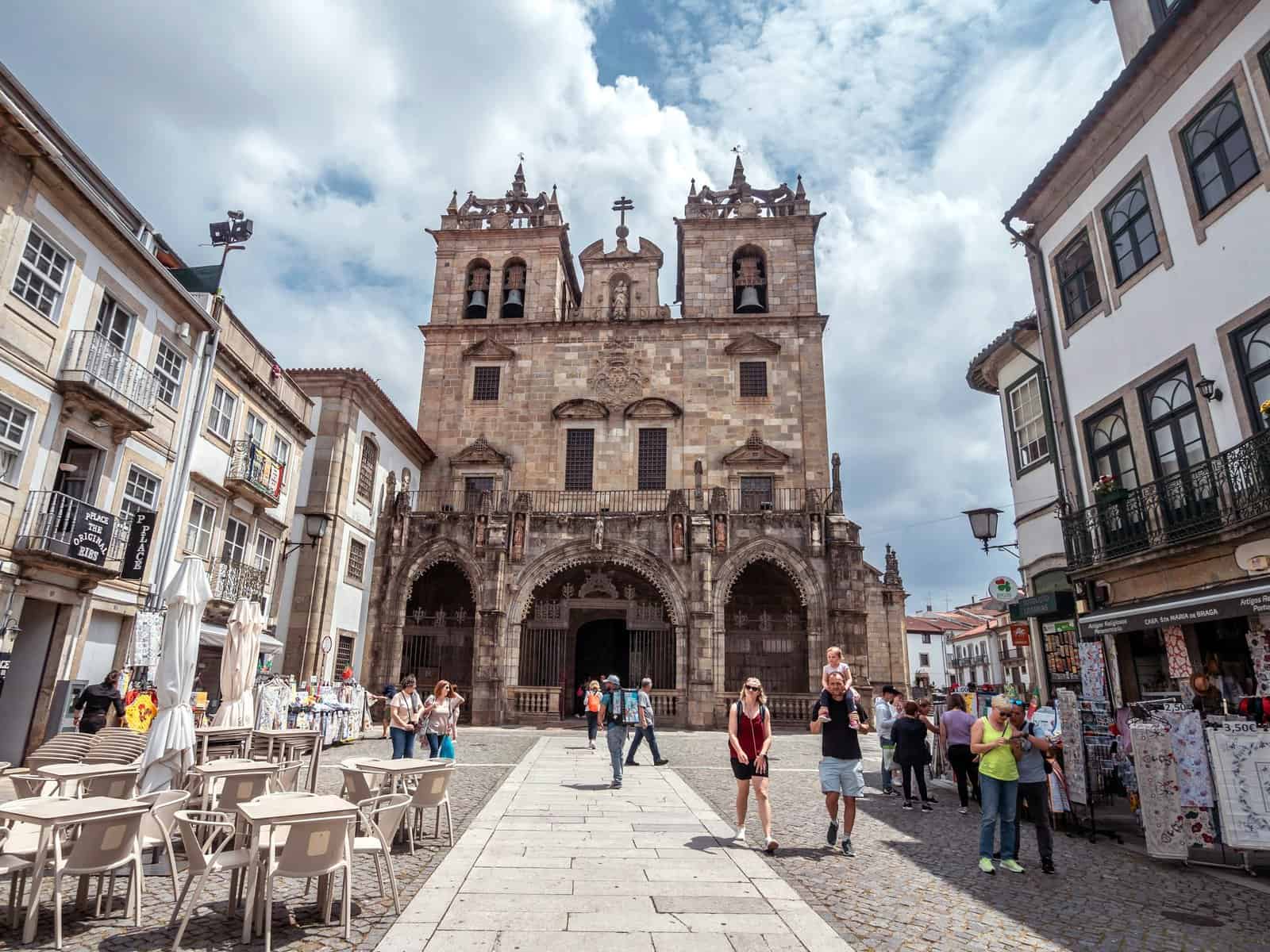
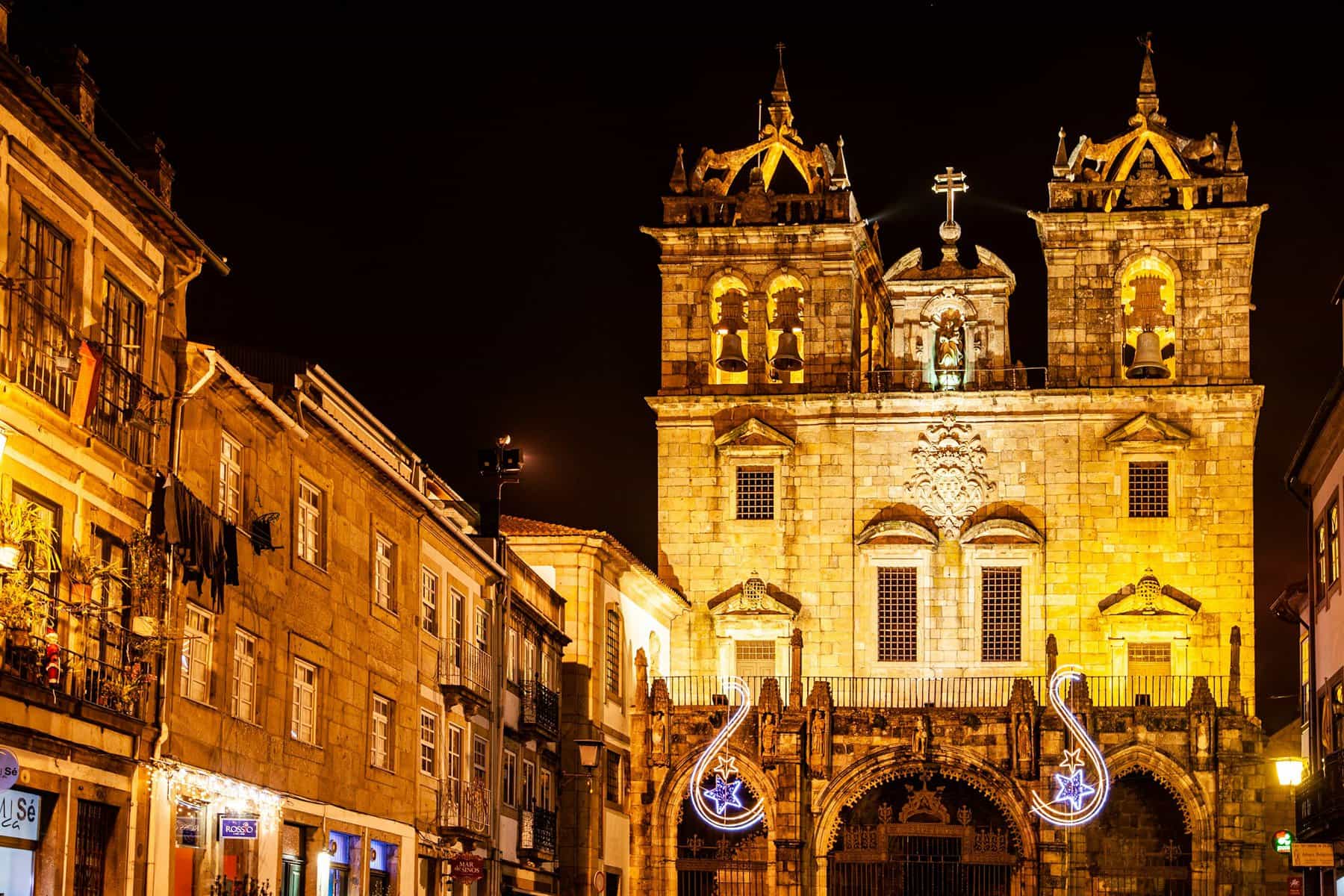
Braga Cathedral is the oldest cathedral in Portugal, built in the 11th century. The original Romanesque structure was altered over time, mainly through the addition of many surrounding elements that created the cathedral complex seen today.
It is one of the most important buildings in all of Portugal, both religiously and as part of the country’s heritage. The cathedral was built by the parents of Afonso Henriques, Portugal’s first king, and they are also buried here.
The cathedral façade faces R. Dom Paio Mendes, which offers a great angle for photos. The two old bell towers above it stand out in particular. Somewhat surprisingly, the street and its surroundings are also a nightlife area with bars in Braga.
Inside the cathedral, there is a museum along with several sculptures and artworks important to Portuguese heritage:
- As you enter the cathedral, you can see the tomb of Infante D. Afonso, the son of King João I, who died prematurely in Braga in 1400 at just 10 years old. His tomb, with its engraved figure in Flemish Gothic style, is one of the city’s standout works of art.
- The cathedral complex also includes a religious art museum | Tesouro-Museu da Sé de Braga. Its collections include Christian artworks as well as a group of old azulejo tiles. One of the museum’s most notable pieces is the cross used in the first mass held in Brazil, the crown jewel of Portugal’s colonies.
- At the back of the cathedral, where R. de São João begins, you can see a sculpture on the wall of Mary nursing the infant Jesus. Known as Nossa Senhora do leite, it dates from the early 16th century. The original sculpture is inside the museum and is attributed to Nicolau de Chanterene, the French sculptor who worked in Portugal during the Age of Discovery in the 16th century.
The Old Archbishop’s Palace | Antigo Paço Arquiepiscopal
Near the cathedral stands the bishop’s old palace. The street-facing façade is the only part that survived the great fire that swept through the palace in the 18th century. Today, the building serves as an archive and library, and the most interesting part of the site is really the palace garden, known as Santa Bárbara Garden.
Click here to find hotels and vacation apartments in the green city of Braga…
Click here For more popular Day Trips from Porto….
Santa Bárbara Garden | Jardim de Santa Bárbara
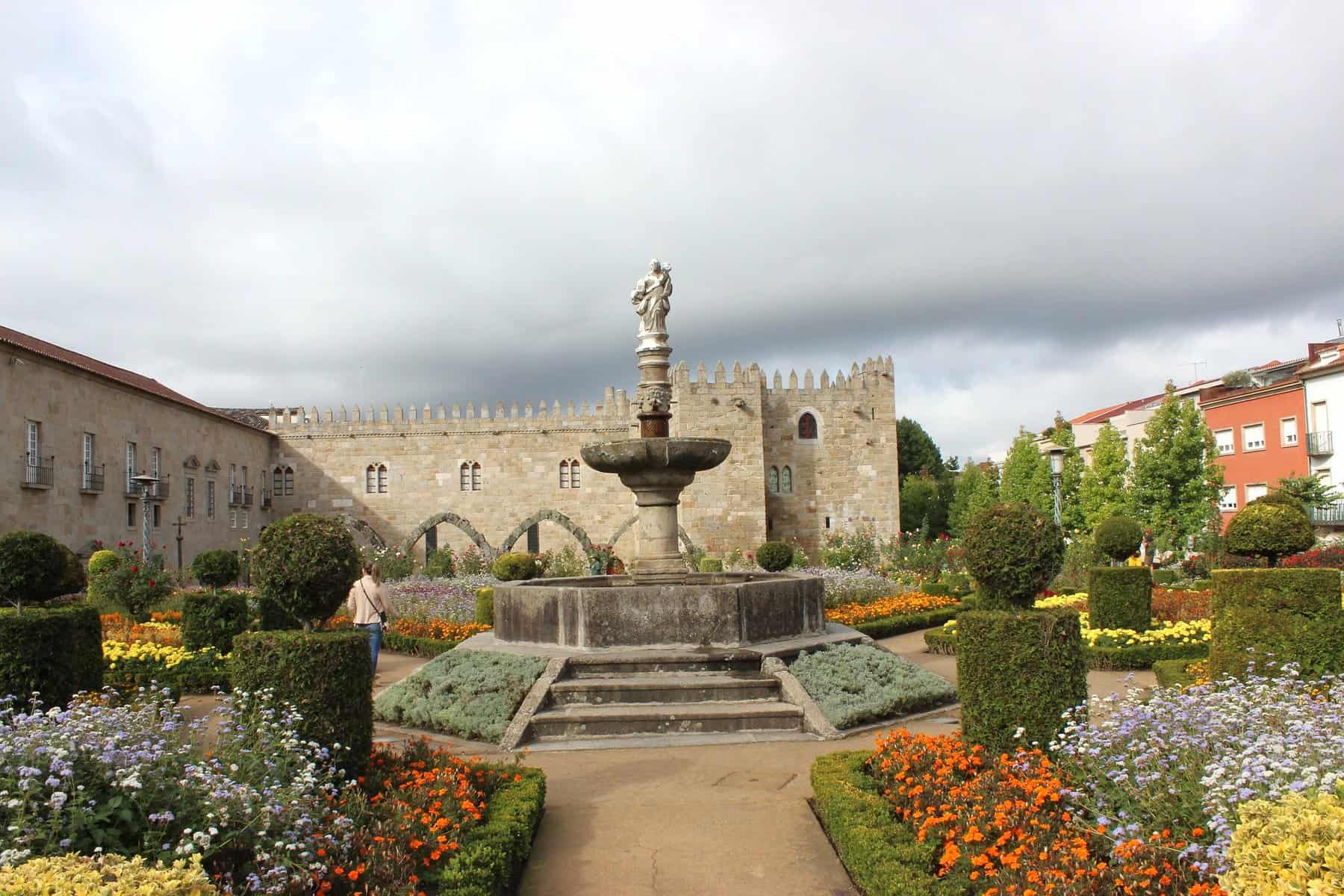
Santa Bárbara Garden was created behind the Old Archbishop’s Palace in the 1950s.
The gardens are laid out in geometric patterns with ornamental plants, shrubs, and an abundance of flowers in many varieties. Paths run between the garden beds, and at the center stands a statue of Saint Barbara, after whom the gardens are named.
The striking arch remains visible on the side away from the street are actually remnants of the old bishop’s palace, which, as mentioned, burned in the 18th century.
The gardens make a lovely continuation of a walk from Republic Square, which lies just beyond the cluster of buildings to the west, and they are of course a wonderful spot for photos.
Click here for a list of 8 wonderful hotels in Braga…
Biscainhos Palace and Museum | Museu dos Biscainhos
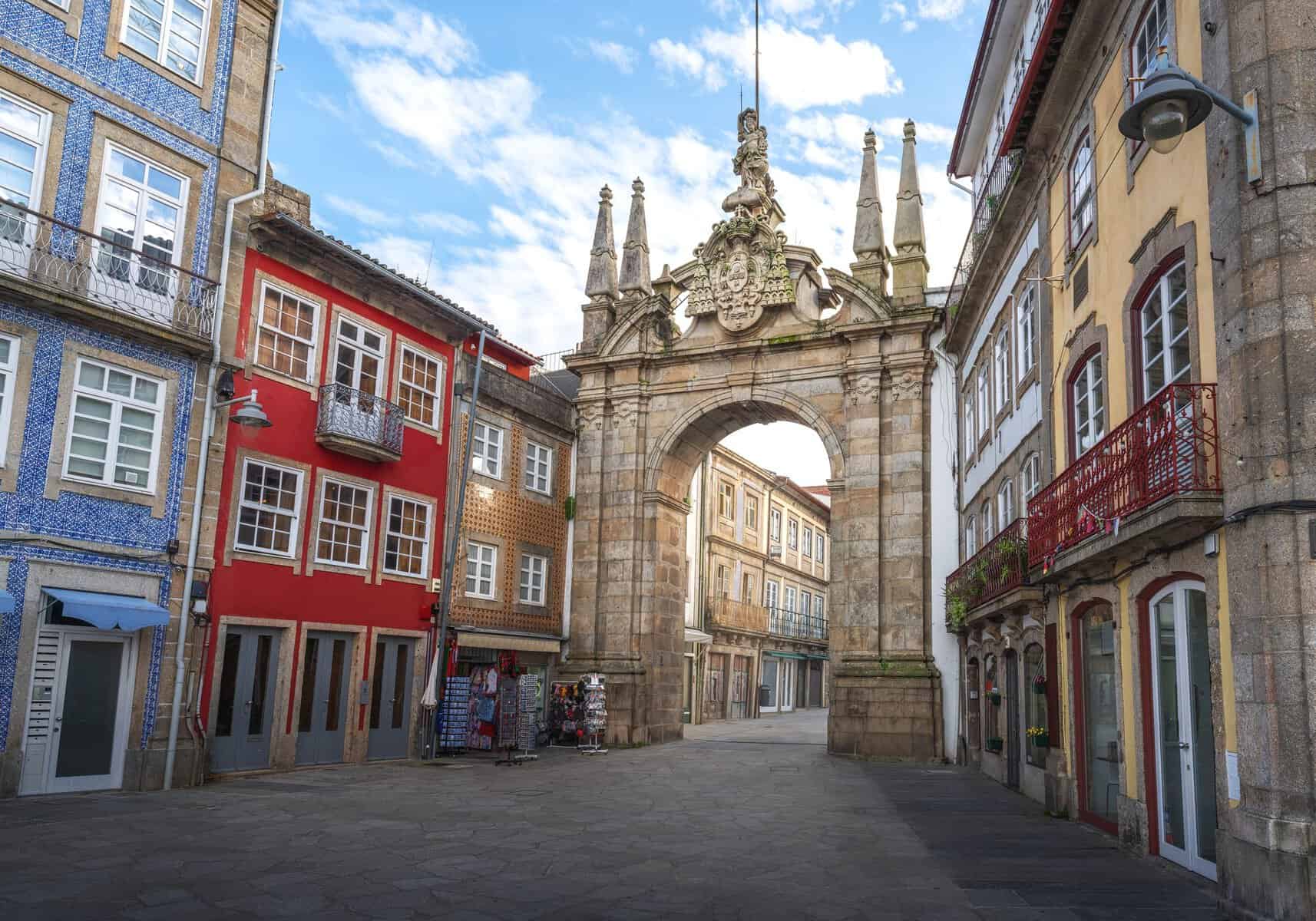
This lies on the western side of the city center behind the town hall building, and just about 100 feet from the city’s beautiful old gate, Arco da Porta Nova, which is worth passing under on your way to or from the museum.
During the 17th century, Braga underwent a period of renewal and construction shaped by the Baroque style. The city’s most famous monument from that era is Bom Jesus do Monte, with its monumental staircase. At the same time, the influence of the House of Braganza grew, and as the city prospered, the noble residences built here became larger and grander.
Biscainhos Palace is one such noble residence. It was expanded in the 19th century, and in the 20th century the family donated it to the town, which decided to turn it into a museum.
The museum essentially preserves the house with its furnishings and objects, along with a few additions. The displays offer a glimpse into how the noble families of northern Portugal lived in the not-so-distant past.
Notice the paved ground floor. Carriages could enter the building, drop off passengers, and continue on to the stables at the other side, very much like a modern garage.
On the main floor, Portugal’s cultural richness is on full display, especially in the painted and colorful ceilings.
The gardens outside are very large and are also designed in the Baroque style. It’s possible to visit just the gardens, and admission to them is free.
Click here for more information and museum opening hours…
Click here for a list of 8 hotels in great locations in Braga…
Porta Nova Arch
It stands west of the city center on the street leading up toward the Biscainhos Museum.
This is a city gate that never actually had a door and was really meant as an ornament. The charming arch was first built in 1512. At the end of the 18th century, during Braga’s period of renewal and construction, it was renovated and altered. That was when the Rococo elements seen today were added. Even then, no door was installed.
In Israel, people jokingly ask someone who leaves a door open, “Were you born on a bus?” In Portugal, they say, “Are you from Braga?” The expression comes from this city gate, Porta Nova, which never had a door.
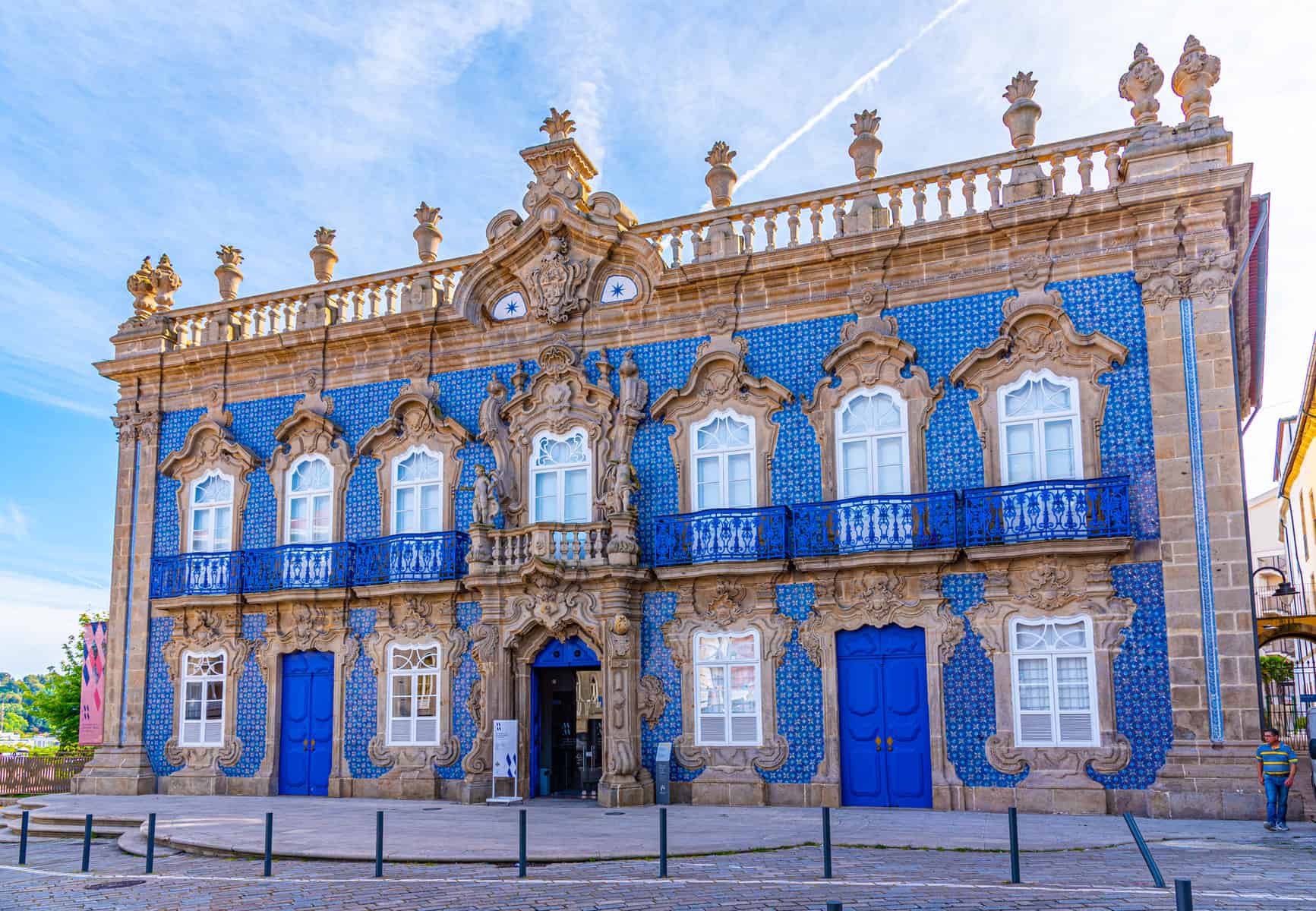
Raio Palace | Palácio do Raio
This is one of the most beautiful buildings in all of Braga. It was designed by the architect André Soares, who also created several other wonderful buildings in the city, including the town hall.
Palácio do Raio was built in the Baroque style in the mid-18th century as the home of a wealthy merchant who lived in Braga.
This beautiful building is one of the finest examples of Baroque architecture in Portugal. Above all, its façade clad in blue tiles is what makes it so memorable. The vivid blue doors add even more character to the building, which stands at the edge of the old town near more modern structures.
Over the years, the building changed hands and at one point was used by the neighboring hospital until 2012. It was then restored and turned into a museum focused mainly on its remarkable architecture, along with a small collection of artworks.
Today, you can visit the interior and admire, among other things, the superb azulejo tiles that carry the design of the façade into the inside. The staircase and the room ceilings are especially striking, and their restoration received particular attention.
Click here for more information and opening hours…
Click here to find accommodations in the green city of Braga…
Braga Tower | Torre de Menagem de Braga
It stands in the complex of buildings at the western end of Republic Square, behind the fountain. The tower is set inside an inner courtyard, though its top can be seen from the square.
This tower is the last prominent remnant of Braga Castle and the city walls that once defended it.
Braga’s walls had already stood here since the 2nd century CE, after being built by the Romans. The current structure dates from the early 14th century, when King Denis ordered the construction of the castle and the strengthening of its fortifications.
The city walls, along with the castle, were gradually demolished starting in the mid-19th century as Braga expanded during the Industrial Revolution. In 1910, the remaining towers of the walls and the castle were finally demolished, except for this watchtower, which rises to almost 100 feet.
Click here for a day trip from Porto to Braga and Guimarães…
São Francisco Church | Igreja dos Terceiros de São Francisco
It stands opposite Braga Tower, right at the exit from Republic Square.
The church was built in the late 17th century in a distinctly Baroque style. Since it sits right along the way and close to other points of interest in Braga, it’s easy to pop in for a short visit even without planning ahead.
The main reason to step inside is the church walls, which are covered with azulejos (blue ceramic tiles) depicting biblical scenes.
Braga Letters and São Marcos Church | Letras Braga, Igreja de São Marcos
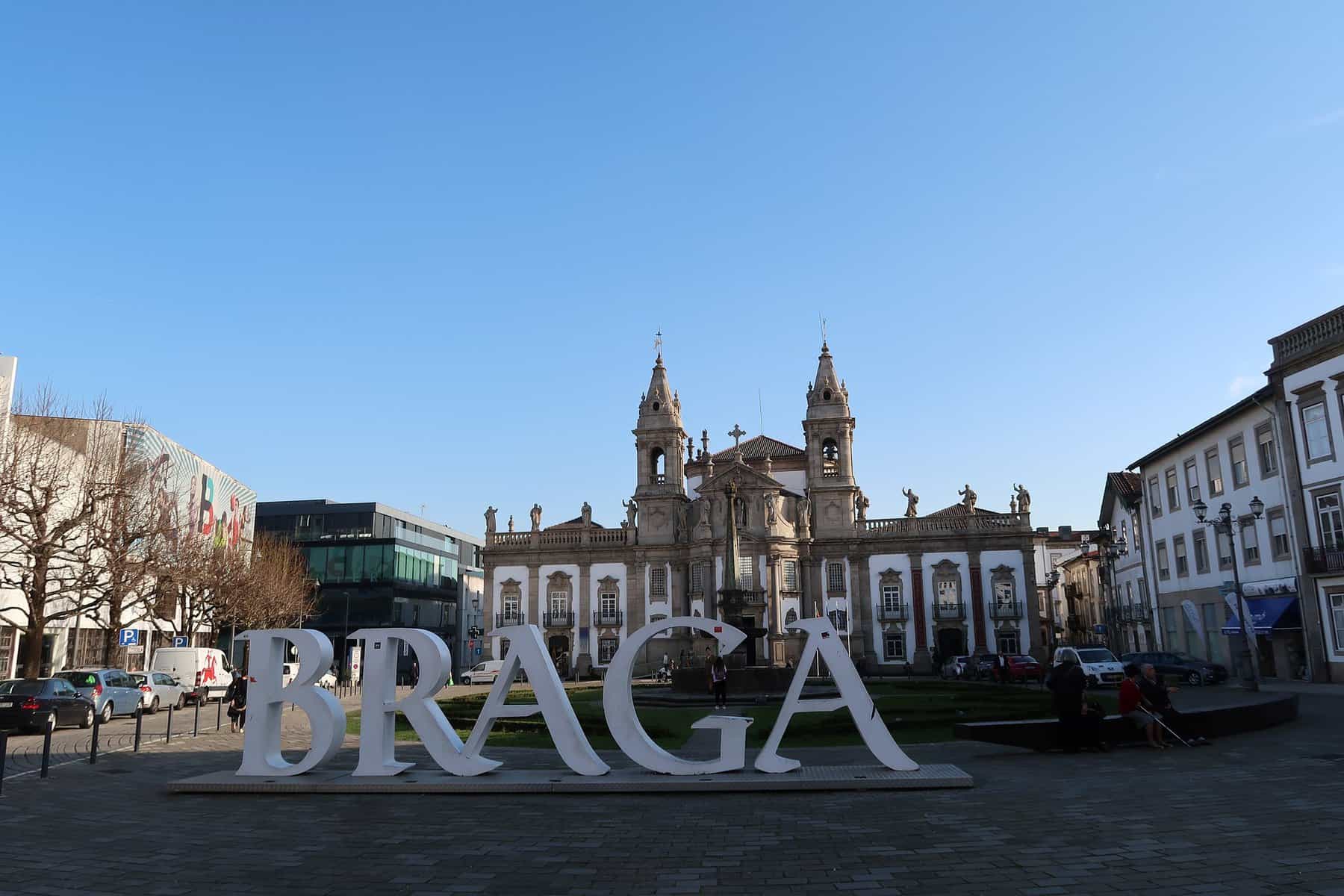
The main building on the square was built in the 17th century in the Baroque style for which Braga is known, especially the staircase at Bom Jesus. It was built as a church and hospital dedicated to Saint Mark, and it indeed served that purpose for many years.
At the center of the square are a fountain and flower beds, just as Braga likes them. In Largo Carlos Amarante, named after the architect who designed São Marcos Church, large letters spelling out the city’s name have also been installed.
The letters, set against the flowers, fountain, and old building, make a lovely souvenir photo.
The square also has cafés and restaurants along its northern side, as well as a modern new shopping center attached to the Baroque building on the south side, a useful place to duck into on a rainy day.
Click here to find accommodations in the green city of Braga…
Click here for a list of 8 wonderful hotels in Braga…
Diogo de Sousa Archaeology Museum | Museu D. Diogo de Sousa
This impressive modern museum building sits a little south of the city center, about a 10-minute walk from the cathedral. It reopened in this handsome large building in 2007, in the heart of the area once occupied by the ancient Roman city of Bracara Augusta.
The museum is named after Diogo de Sousa, the Archbishop of Braga in the early 16th century. He did a great deal to improve the appearance of Braga in his time. Unusually for the era in which he lived, he also worked to preserve the city’s Roman sites and heritage, since Braga was, as mentioned, founded during the Roman Empire.
That is why the museum was named after this activist archbishop, and indeed a substantial part of the exhibition is dedicated to Roman finds. The museum also has a large garden with archaeological remains, and several nearby sites are still being excavated.
The museum hosts many activities throughout the year in its spacious building, so it’s worth checking whether anything interesting is happening while you’re in town.
Click here for more information and museum opening hours…
Click here for a free tour of central Braga…
The Roman Baths of Maximinos | Termas romanas de Maximinos
One example of Braga’s Roman excavations can be seen just a short distance from the Diogo de Sousa Museum.
These large baths began to be built in the early 1st century. They were later expanded and reached their height in the 3rd century, when Braga was the capital and most important city in the province of Gallaecia.
Excavations are still ongoing, but a significant portion is open to the public and covered, useful in a city as rainy as Braga.
After visiting the nearby Diogo de Sousa Museum, it’s worth stopping here for a short visit, especially if you have an interest in Roman history.
Click here to find hotels and vacation apartments in Braga…
Braga Market and Food Hall | Mercado Municipal – Mesa na Praça
The market is mostly a regular food market, but it also includes a new food hall section, just the way we like it. The main market stays open until early evening, while the smaller food hall remains open later into the night.
The market is very conveniently located just north of the city center, a 7-minute walk from Republic Square and only 4 minutes on foot from the central bus station.
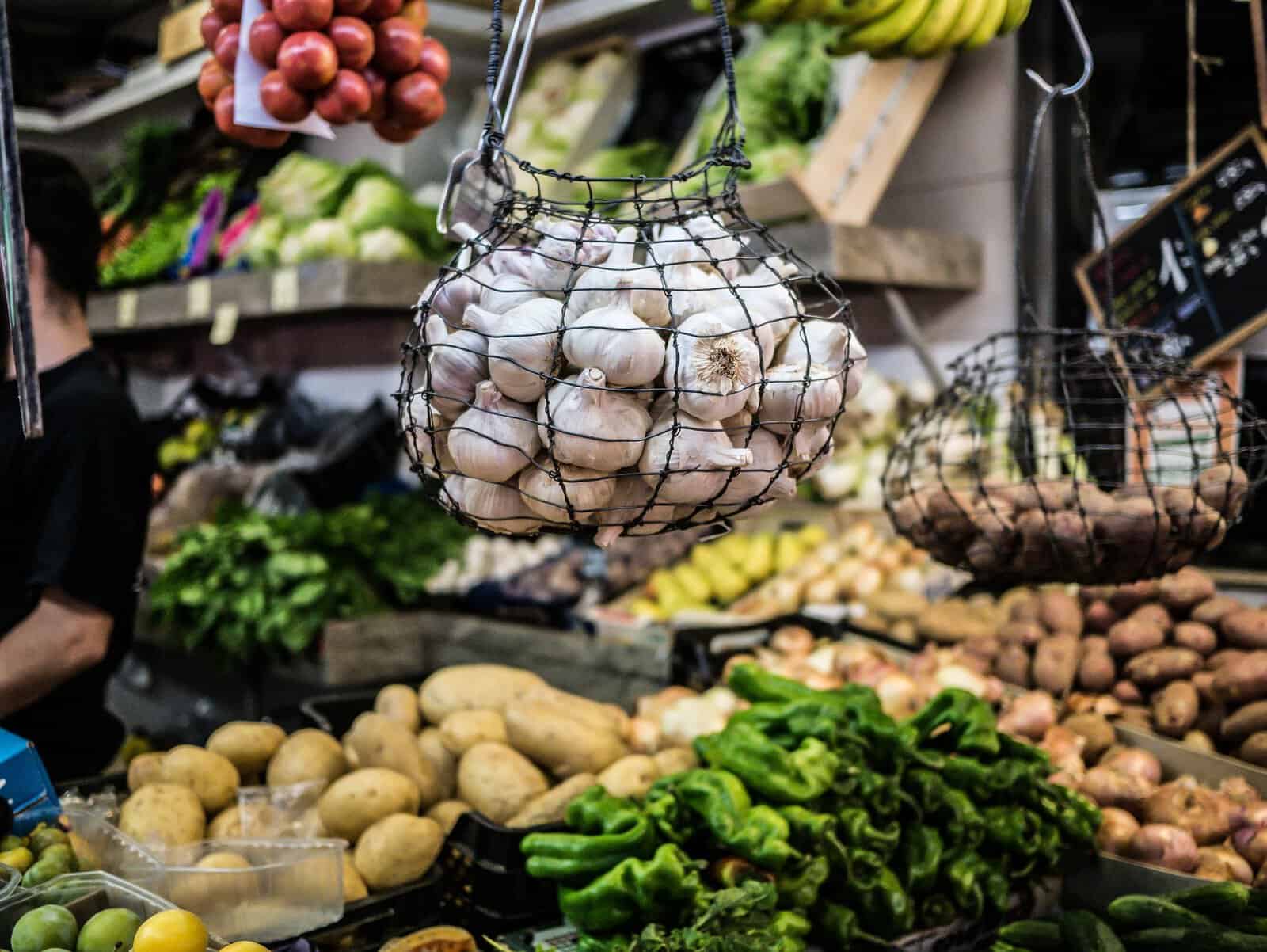
The traditional market has been renovated and fitted with a new roof that gives it a more modern feel. Beneath it is a large and airy space selling the fruits, vegetables, and flowers typical of Portuguese markets, with separate sections for fish, meat, and cheese to the side. Locals living nearby often shop here for their daily groceries.
The food hall is completely new and adjoins the market on the side closer to the central bus station. In front of it is a pleasant plaza that fills with outdoor tables, especially in summer.
Click here For information about popular Day Trips from Porto….
Sacred Heart of Jesus Viewpoint in the city | Miradouro do Sagrado Coração de Jesus
The viewpoint and tower are northwest of the city center within the grounds of the Catholic University.
You can walk there via the lovely Praça Mouzinho de Albuquerque, and the whole route takes about 10 minutes from Republic Square.
It’s also easy to reach by car, with parking available around the site.
This is the highest point in Braga, which is why it served as a water tower until a few decades ago.
The statue of Christ at the top of the tower was added only in the late 19th century.
Today, most people come here to climb to the upper terrace and take in the panoramic views over the city and its surroundings.
The best time to come is just before sunset.
Click here for a free tour of central Braga…
Shopping in Braga
Braga Parque is the largest mall, and you’ll also find international chains there. It is located east of the city center.
The city center, especially Av. Liberdade, is one of Braga’s main shopping areas. Around the avenue you’ll also find a few mini-malls, and there are small shops and shopping centers around Republic Square as well.
Click here to find accommodations in the green city of Braga…
Click here for a list of hotels in Braga’s best locations…
The great hilltop churches of Braga
On the mountain east of Braga stand several churches, another reason the city is known as the “Rome of Portugal.” The most prominent, of course, is Bom Jesus do Monte. Not far to the south is Sameiro, another vast church and pilgrimage complex.
It is possible to walk between the two sites, about 1.25 miles along a fairly comfortable route that mostly passes through forest. You can also drive between them on the narrow and beautiful mountain road.
These two complexes overshadow every church in the city, and arguably every church in northern Portugal, some would even say in the entire country.
It is no accident that Braga remains such an important religious center in the western Iberian Peninsula. During Roman times, it was the most important city in the region. After the empire adopted Christianity in the 4th century, temples began to be turned into churches. The Suebi tribes that invaded the area in the 5th century and effectively drove out the Romans also adopted Christianity. Since then, Christian presence here has been continuous, and Braga remained the main Christian center in the region until Santiago de Compostela, about 110 miles to the north, stole the spotlight.
Within Portugal, however, Braga is still considered the country’s most important religious city, and it is also where the nation’s first cathedral was founded by the parents of Portugal’s first king, Afonso Henriques.
Even during the Muslim period, northern Portugal was one of the more remote regions, where Muslim rulers struggled to maintain permanent settlements. It was also among the first areas to be reconquered by Christians during the Reconquista, and in effect this is where the Kingdom of Portugal was established.
The grand churches and the extensive complexes around them testify to Braga’s importance both as a religious center and as a cradle of Portuguese heritage, whose roots lie precisely here in the mountains and hills between Braga and Guimarães.
Both complexes get very crowded on weekends, especially when it isn’t raining, so it’s best to plan your visit for a weekday. If you do come on a weekend, arrive early.
Click here to find accommodations in the green city of Braga…
Bom Jesus do Monte – Braga’s Most Iconic Site
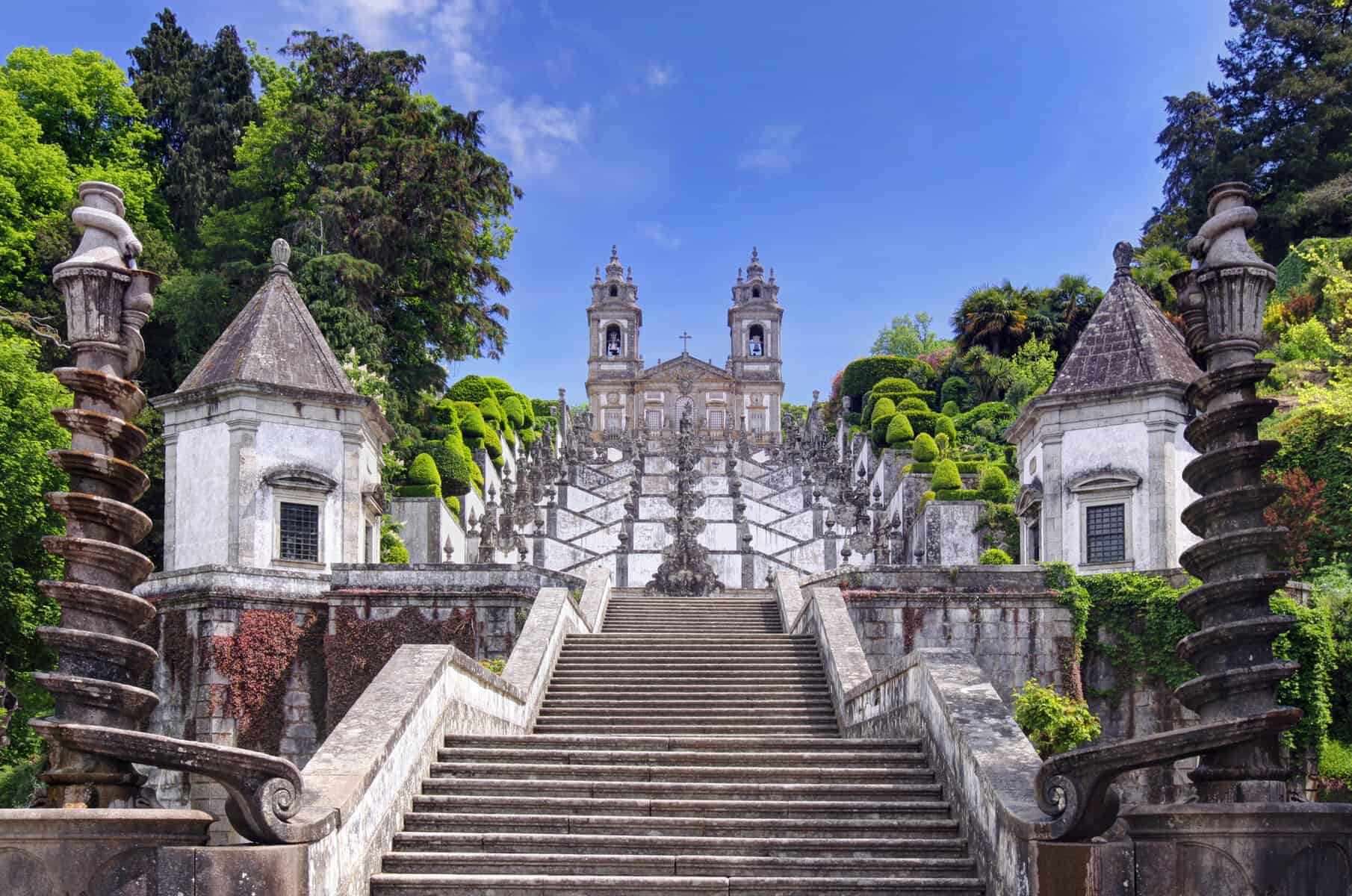
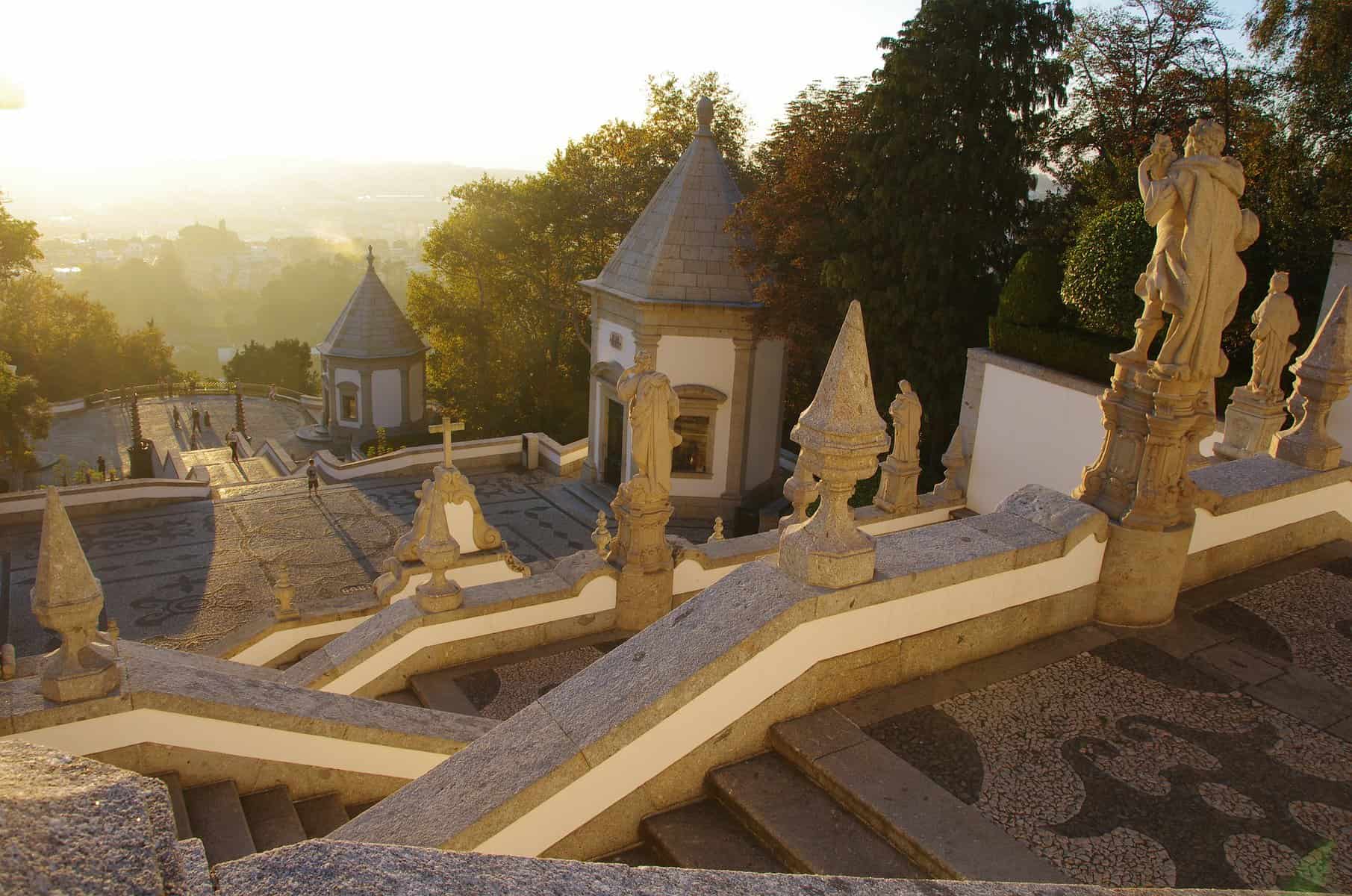
Bom Jesus do Monte is Braga’s best-known and most important site. It is also considered the most beautiful religious site in all of Portugal.
Click here for a fascinating guided tour of the Bom Jesus monastery…
The sanctuary atop the wooded hill on Braga’s eastern side has stood on the mountain since the 15th century. But it was the city’s archbishop who decided in 1722 to add the giant Baroque staircase that has become the site’s defining feature.
This is both a religious and tourist destination. Pilgrims make the effort to climb on foot in a kind of Stations of the Cross, following the path of suffering of Christ, Jesus, or “Zezus” in Portuguese. Tourists, meanwhile, can settle for the funicular rather than climbing all 577 steps to the top, though there are usually lines for the ride.
Beyond the church itself, one of the great attractions at the summit is the large park, with its pleasant landscaping that draws not only worshippers but also many families looking to relax, especially on weekends.
Sameiro | Santuário de Nossa Senhora do Sameiro
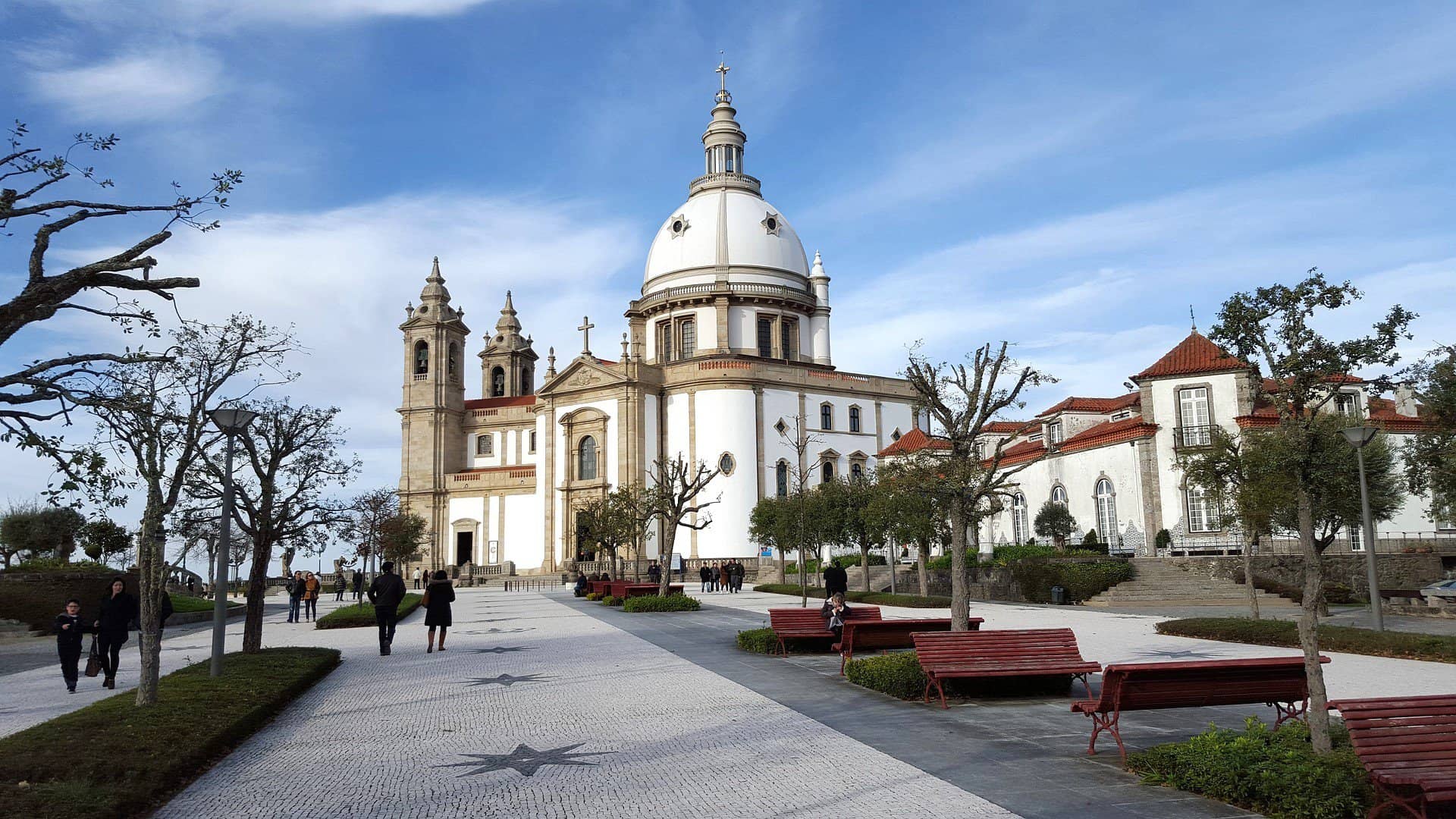
This Christian pilgrimage site lies 2 kilometers south of Bom Jesus.
Very large gardens surround the church, including an area designed for children.
The church may seem to stand in the shadow of Bom Jesus do Monte and its iconic staircase, but in fact the complex around it is much larger, and it attracts just as many, if not many more, worshippers.
The plaza in front of Sameiro is even larger than the one at the relatively modern pilgrimage site in Fátima, near Leiria in central Portugal.
This is a relatively recent site, established in the 19th century, and today it is one of the largest places of worship in Portugal.
On the first Sunday in June and the third Sunday in August, ceremonies and prayers are held here, drawing thousands of pilgrims.
The large complex also includes hotels, restaurants, and cafés, in addition to the expansive park around it, making it a place where families from the city often spend long stretches of time, especially on weekends.
Click here to find accommodations in the green city of Braga…
Click here for a list of 8 wonderful hotels in Braga…
Click here to search for hotels and vacation apartments in Braga…
Click here for a list of hotels in wonderful locations in Braga…