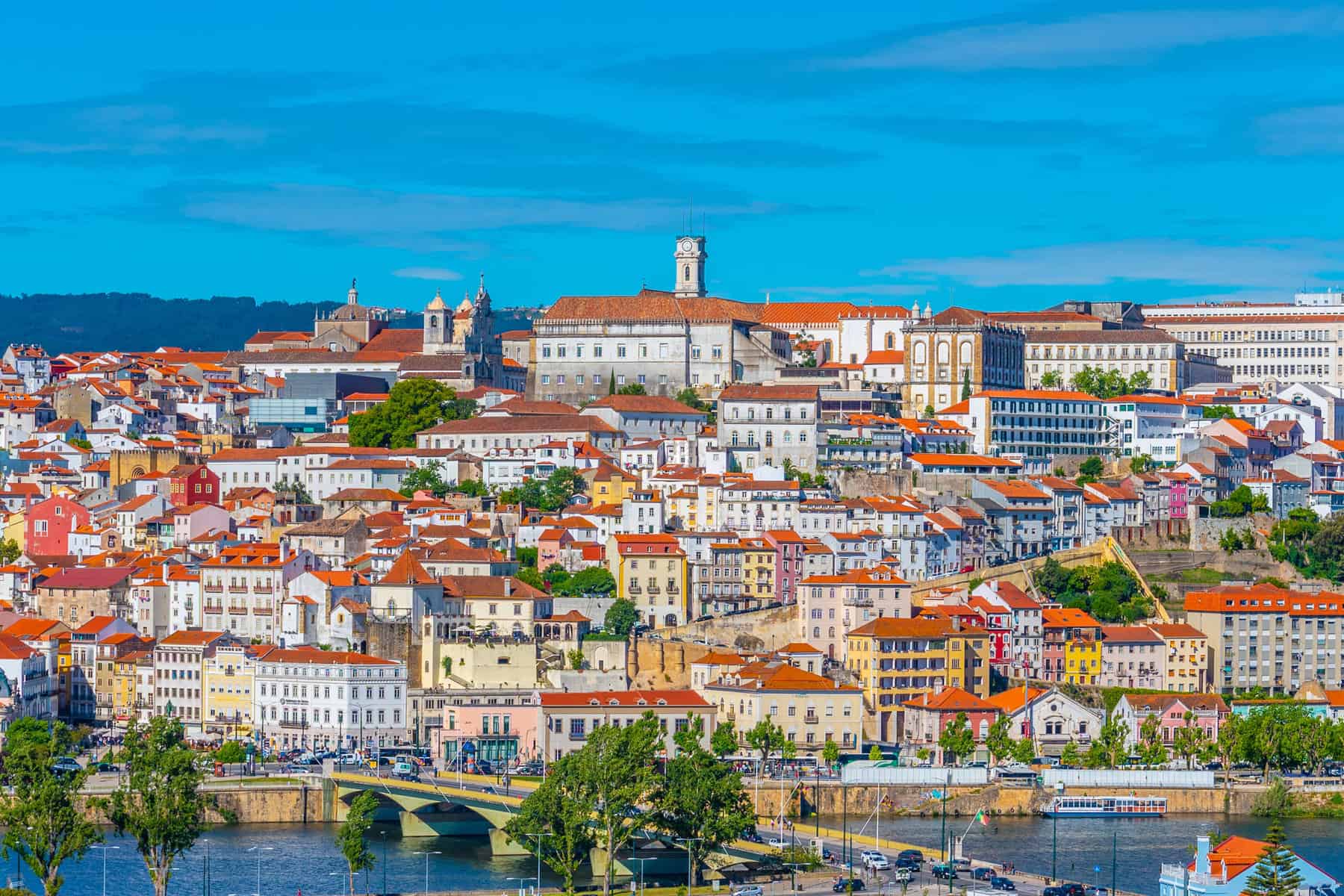
Coimbra – Central Portugal’s university city unfolds across a hill above the Mondego River. The city is wonderfully colorful, and its old streets are an experience in themselves. Add in the many students who keep them lively day and night, and the atmosphere becomes even more special. Coimbra sits in central Portugal, though it’s closer to Porto than to Lisbon. It feels unmistakably Portuguese and less shaped by the cosmopolitan character of the country’s two largest cities. Many of its historic sights are clustered on and below the hill that forms the old center, led by the university complex most closely associated with the city. One day is enough to see Coimbra, but it’s better to stay overnight and enjoy its student nightlife. Coimbra also works well as a day trip from Aveiro, the city of canals, or from northern Porto, both of which are not very far away.
University of Coimbra: The Historic Central Complex
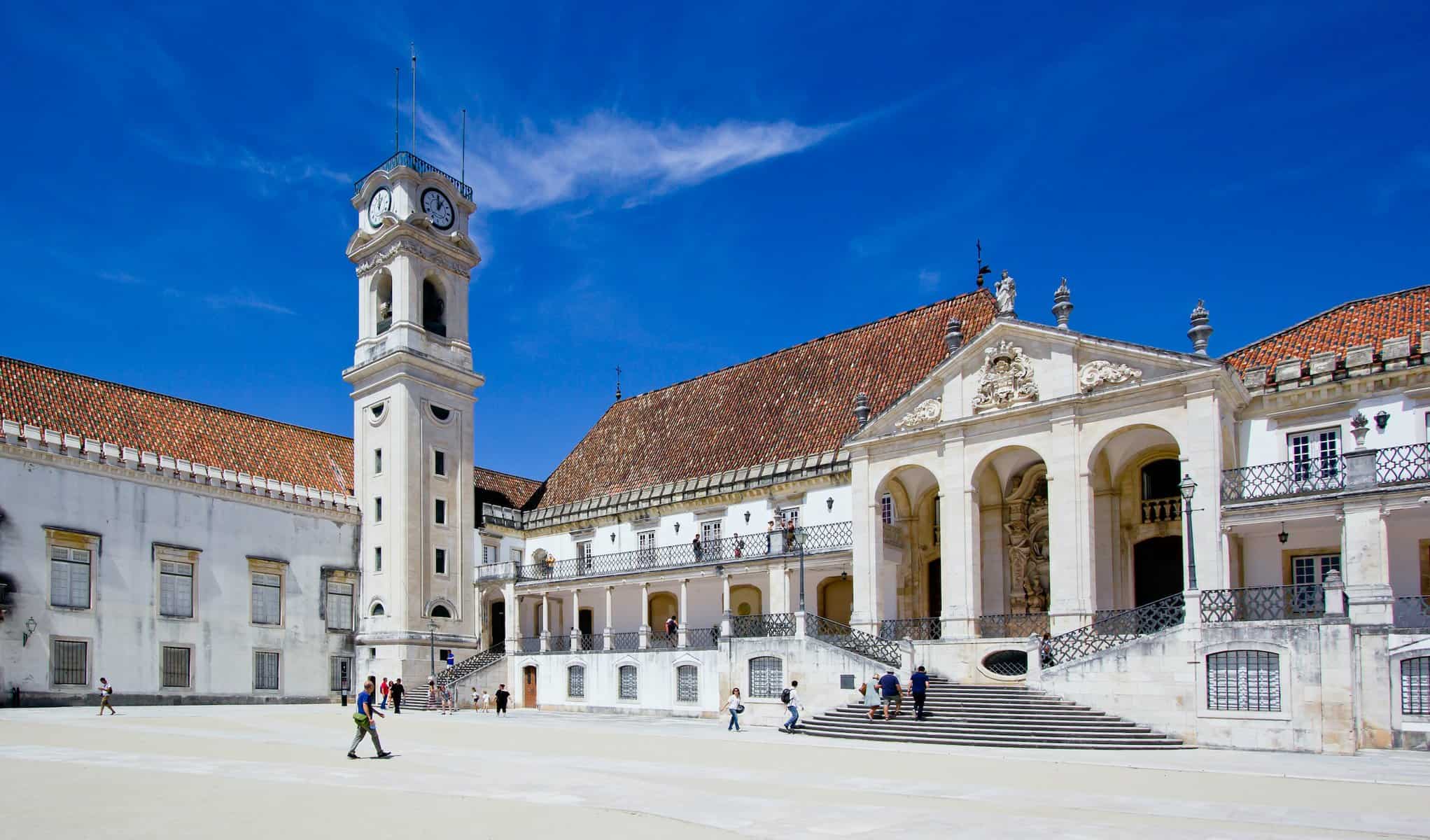
The University of Coimbra is one of the oldest universities in continuous operation anywhere in Europe. It was founded in Lisbon in 1290 and moved to Coimbra a few years later. Afterward, it returned to Lisbon, but since 1537 it has been here on the hill in Coimbra.
Today the university has close to 30,000 students and is a leader in many fields in Portugal, including medicine.
Click here for a private guided tour of the university complex and library…
Throughout Portugal, Coimbra is identified with its university, and the students give back by making the city lively, youthful, and full of energy, even though the weather is often gray during much of the academic year.
As mentioned, the university stands at the top of Coimbra’s hill, with wonderful views over the Mondego River. At the heart of the campus is Pátio das Escolas, the university courtyard and the center of campus life, surrounded by the university’s main historic buildings:
- Iron Gate | Porta Férrea – This is the entrance gate to the university, built in 1634. It is dedicated to its founding kings. The outside is dedicated to Dom Dinis, and the inner side to Dom João III. Notice the floor, decorated like a mosaic using only large stones.
- The Tower | Torre da Universidade – Built in 1728, it can be seen from almost every corner of the city, which is why it is one of Coimbra’s symbols. At the top are four bells that once rang to tell students when it was time to go to class and to mark special events.
- Palace of the Schools | Paço das Escolas – The main building, with its façade of three arches. It really was once a royal palace, but it has served the university for centuries. Inside is the Hall of the Capes.
- Hall of the Capes | Sala dos Capelos – Named for the cape university graduates receive during the graduation ceremony. It is also sometimes called the Great Hall (Sala Grande dos Actos). With its lofty ceiling, red floor, and gold decoration on the walls, the hall was designed in the 17th century. It is one grand, ornate work of art, and portraits of Portugal’s kings hang along its walls.
- Via Latina – This is the entrance balcony to the Palace of the Schools. It is called a “way” because it is really a long exterior passage, covered and supported by arches, that stretches along the entire building.
- São Miguel Chapel | Capela de São Miguel – This colorful chapel began to be built in the 16th century, based on plans by the Portuguese Manueline architect Marcos Pires. Located behind the Joanina Library, the chapel is so beautiful and colorful that it should not be missed. The altar is decorated with azulejos, and all around are wonderful paintings and ornamentation already showing Mannerist influence.
Joanina Library | Biblioteca Joanina
- The Joanina Library, inaugurated in 1728, is part of the university’s main historic complex and is considered one of the most beautiful libraries in the world.
- It is the most sought-after site in the complex, and many visitors come just to see it.
- It was built by King João V, is named after him, and his large portrait hangs in the middle of its main hall.
- The library is designed in an exuberant, colorful Baroque style and is one of the finest examples of Portuguese Baroque in the western Iberian Peninsula. It has three levels and holds around 60,000 antique books arranged on beautiful wooden shelves.
- Visits to the library’s main hall are limited to 20 minutes and 60 people at a time.
- Anyone coming to the library will usually want to see the other buildings in the university’s historic complex as well. So if the line is long, you can visit another building first and return later, since the library visit is, as noted, short and limited. In any case, the wait is usually not too long, and even if it is, it’s worth it.
Entry to the university courtyard is free, but you need a ticket to enter the buildings.
Click here for full information about Coimbra…
Click here to search for accommodations in Coimbra…
Beyond the University: Nearby Sights & Hidden Gems
Machado de Castro National Museum | Museu Nacional de Machado de Castro
The Machado de Castro Museum is named after the 18th-century sculptor born in the city. It opened in 1913 in a building at the top of Coimbra’s hill, between the university and the New Cathedral.
Beyond its art collections, the museum has an underground archaeological wing that is essentially a maze of supporting corridors that once formed the base of the Roman forum of Aeminium, the Roman name for Coimbra. This Roman section is the most distinctive part of the entire museum.
The art galleries display sculptures and works mainly from the 14th through the 18th centuries, and they include some of the finest sculpture in all of Portugal. The museum also houses collections of coins, art from the Muslim period, azulejo tiles, salvaged pieces from church buildings, and much more. Everything is presented in large, spacious, and clean galleries.
The museum is housed in what was once the bishop’s palace, on the very site where the city’s Roman forum once stood.
The Roman remains are displayed as part of the museum in the Criptopórtico do Forum de Aeminium. This entire section is a kind of maze of underground passages that once formed the streets of the Roman forum. Alongside Roman statues and steles, the underground passageways also display remains from the Visigothic period in Coimbra, which followed the fall of Rome. Do not miss this remarkable section!
The museum’s inner courtyard is famous for its upper arcaded walkways with a red roof above them (loggias), one of Coimbra’s icons. From the upper passage, and farther along as well, there are wonderful views over the city.
Click here for more information and the museum’s opening hours…
Click here to search for accommodations in Coimbra…
Click here for information and tickets for a stunning fado show in Coimbra…
New Cathedral | Sé Nova de Coimbra
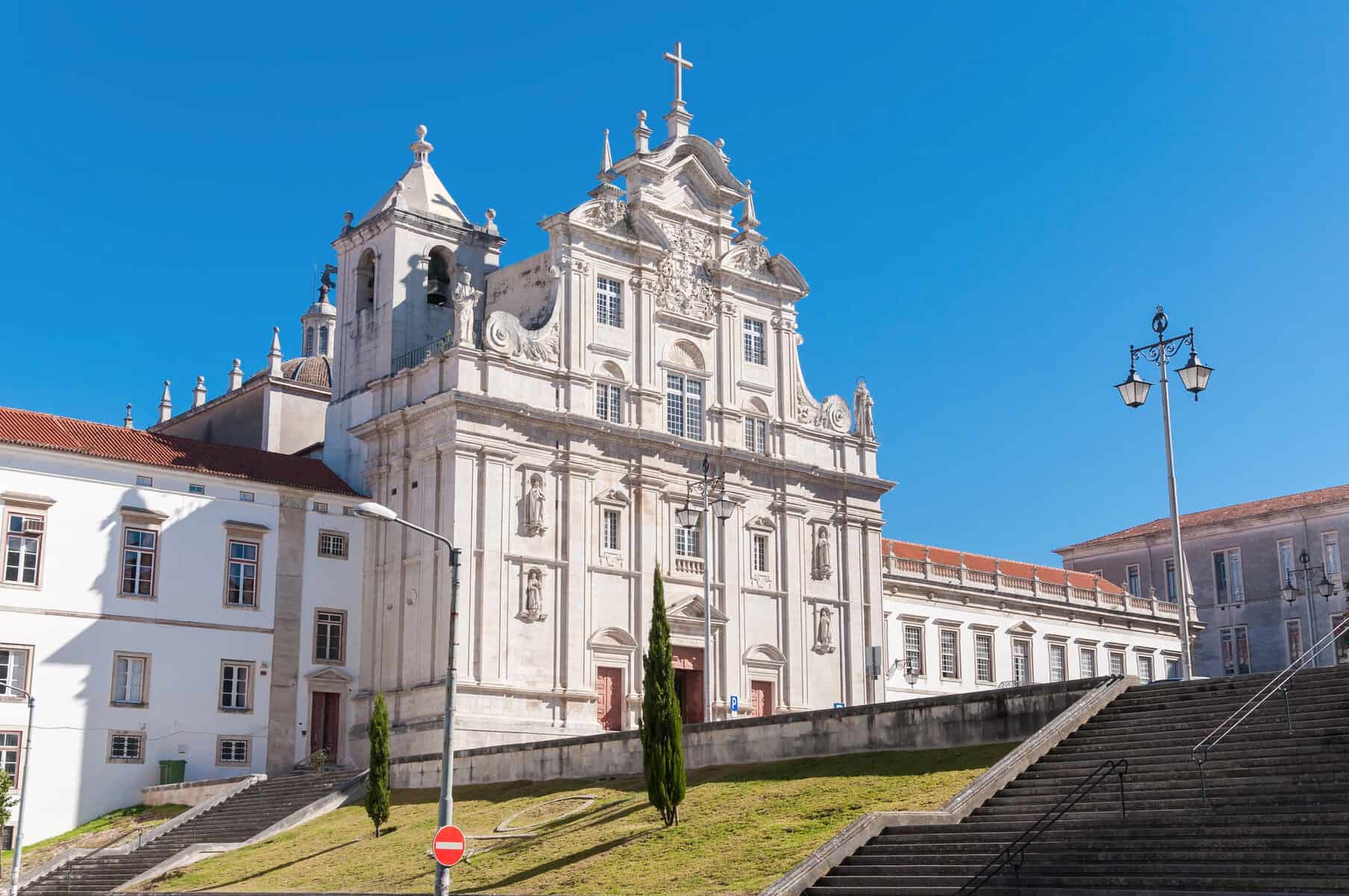
Coimbra’s New Cathedral was originally a school of the Jesuit order, begun in 1598 near the university, and it too stands at the top of the hill. Construction of this broad and impressive building was completed about a hundred years later, in 1698. A great deal of thought and craftsmanship went into it, and it is filled with countless architectural details.
In the 1760s, the Jesuit monastery was banned from operating in Portugal, and the building passed into the hands of the local Catholic Church. A few years later, in 1772, the bishop of Coimbra decided to move here from the old Romanesque cathedral, since this building was larger, newer, and far more spacious. That is why it has been called the New Cathedral ever since.
From the outside, the main impression comes from the huge façade, whose lower part is Mannerist while the upper section is already Baroque — a contrast that is easy to spot.
The cathedral’s interior is richly colored and lavish. Its highlight is the giant gilded altar with its sweeping arches. The other chapels are also decorated in eye-catching, exuberant Baroque gold. Just inside on the left is the octagonal baptismal font, brought here from the old cathedral after the new one was completed. The cathedral also has two 18th-century organs, one on each side of the altar.
Click here to find accommodations in Coimbra…
University Science Museum | Museu da Ciência
The museum stands at the northeastern edge of the university complex near the New Cathedral, and it’s a wonderful experience for children in Coimbra — though not only for them. The museum is divided into three sections: the chemistry wing, where the entrance is located, the physics wing, and the zoology and natural history wing. It is packed with detail and has a very extensive collection. In the animal section you’ll find many taxidermy displays, as well as a whale skeleton — fittingly enough for Portugal’s waters — and jars filled with preserved reptiles.
The museum does not aim for a polished, highly designed presentation, and at times the collection can even feel a bit cluttered. But it was clearly built for true science enthusiasts, and they will be drawn right in.
Coimbra Botanical Garden | Jardim Botânico de Coimbra
Coimbra’s Botanical Garden lies on the southern side of the hill, beside the life sciences faculty. Botanical gardens began appearing in Europe after the great discoveries of the 15th and 16th centuries. At first the main interest was medicinal plants, and later tropical ornamental species that needed shelter from the European cold.
The Coimbra Botanical Garden began to be laid out in 1772 on the southern slopes of the hill where the city stands, near the university, so that researchers and students could study plants (similar to El Retiro Park in Madrid, next to the Prado building, which was originally constructed as a life sciences faculty).
Like many Portuguese projects after the 1755 earthquake, this botanical garden was also initiated by the Marquis of Pombal. Its purpose was to expand botanical research and thereby help Portugal’s farmers increase their yields.
The Coimbra Botanical Garden covers 130 dunams and is considered one of the most beautiful in Europe. It contains hundreds of species of trees and plants, along with old stairways, fountains, and statues that are attractions in their own right. Although the garden serves research purposes, it was designed to be enjoyed on foot as well. There are also lovely views down to the Mondego River.
The garden is open during the day, and entry is free. Most visitors enter from the university area above (along the aqueduct). Guided tours are also available by prior arrangement. There is another entrance below on Rua da Alegria, though it is less convenient.
Click here for more information and opening hours for the lovely botanical garden…
Click here to search for accommodations in central Coimbra…
The Path to the Peak: Sights Along the University Hill
Santa Clara Bridge | Ponte de Santa Clara
The bridge over the Mondego River connects the older parts of the city and leads straight toward the city center and the hill.
It’s well worth crossing on foot, and from about the middle you get a full view of Coimbra’s old town climbing up the hill, crowned by the university buildings.
Once you cross the bridge, you arrive at the square where the old town’s main pedestrian street, Rua Ferreira Borges, begins.
Click here for a lovely boat ride on the Mondego River and beneath Coimbra’s bridges…
Ferreira Borges street | Rua Ferreira Borges
This is the main pedestrian street in the old town. It is the city’s main tourist axis and is lined with several of Coimbra’s points of interest.
It runs from Largo da Portagem to the Monastery of Santa Cruz. Rather than climbing the hill, it runs parallel to it, so the walk is fairly easy and mostly flat. At first it is called Rua Ferreira Borges, and at the first fork it continues as Visconde da Luz.
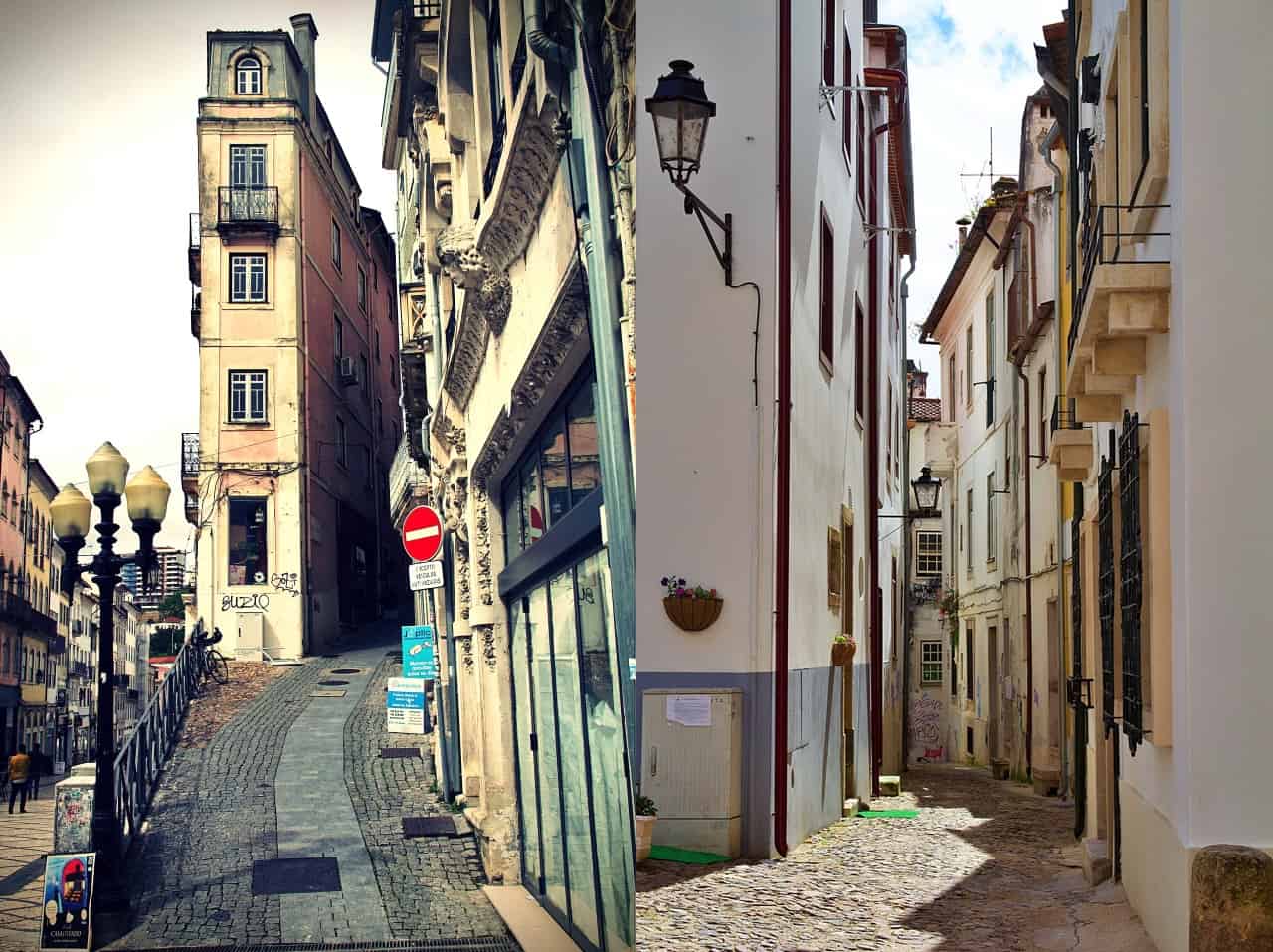
Dozens of businesses and shops line the street beneath three- and four-story Neo-Classical buildings. At the beginning of the pedestrian street, notice the narrow buildings on the right, designed so that the small streets beginning to climb uphill could pass between them.
Click here for full information about Coimbra…
Click here to search for accommodations in Coimbra…
Santa Cruz Monastery | Mosteiro de Santa Cruz
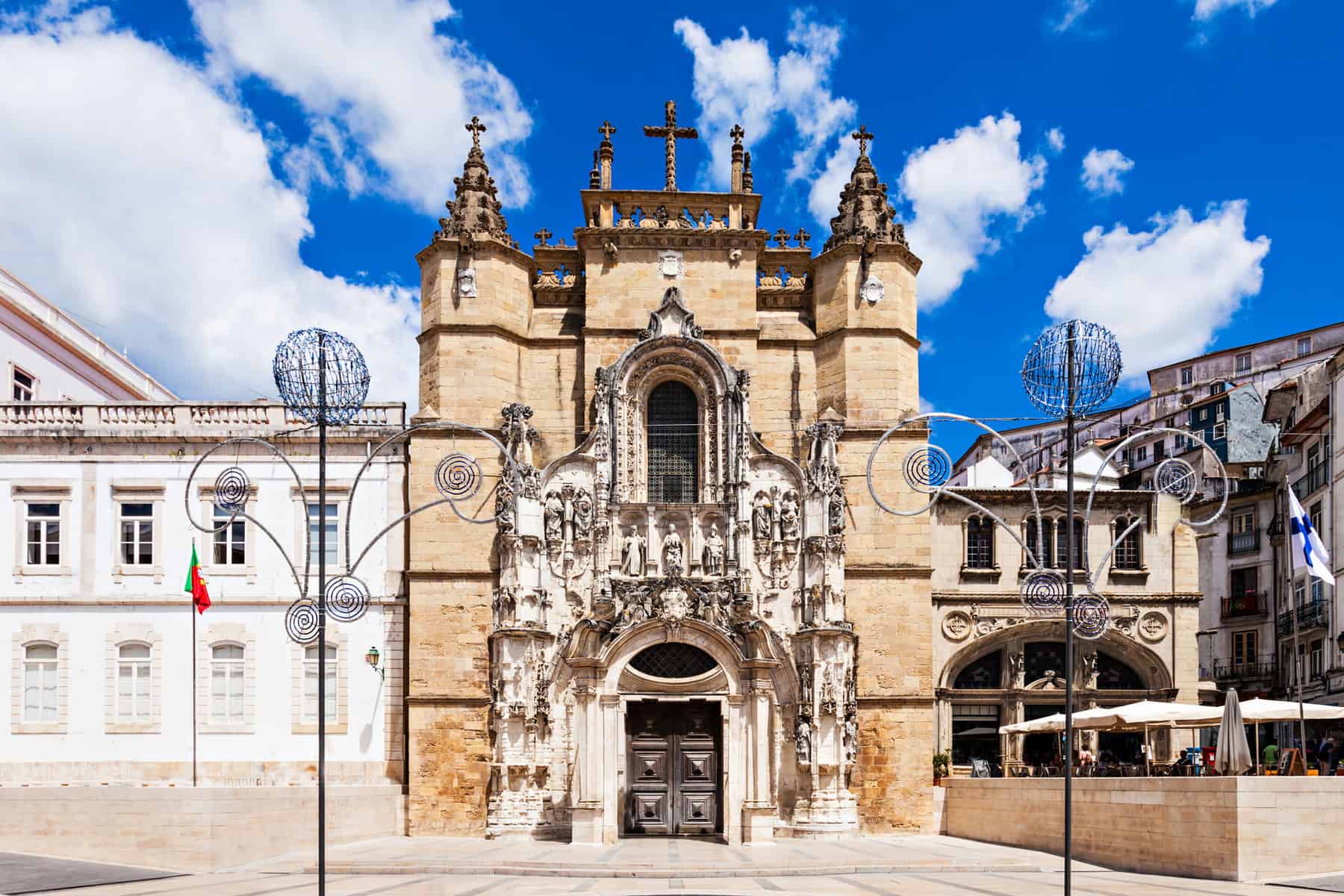
Coimbra may be best known for its university, but Santa Cruz Monastery is the city’s most important site in terms of Portuguese heritage. It also laid the groundwork for the university, since it served as a major school for the clergy. That educational infrastructure helped influence the decision to move the university from Lisbon to Coimbra.
Click here to search for accommodations in Coimbra…
- Santa Cruz Monastery stands at the end of Rua Ferreira Borges. It adjoins the city hall and is one of the buildings surrounding Praça 8 de Maio, the heart of the flat old town.
- Its classic 16th-century Manueline façade is impossible to miss among the colorful Neo-Classical buildings.
- The monastery is also a national pantheon, since Portugal’s first two kings, Afonso I and his son Sancho I, are buried here.
- Santa Cruz Monastery was originally built in 1131 in the Romanesque style outside the city walls and became the most important monastery in the young kingdom. The structure we see today, however, dates from the 16th century, when King Manuel I rebuilt it from the ground up to honor the burial place of the first kings.
- Manuel I became Portugal’s first imperial king following the discoveries in the New World. In those early years of exploration, Portugal’s treasury grew very rich, and he spared no expense in construction, bringing in the finest artists of the age to decorate the church.
- Among the artists brought in to build and adorn the church were the French sculptor Nicolas Chantereine and Diogo de Castilho, who created the kings’ tombs, repositioned in the main chapel.
- Diogo de Boitaca was the architect of the monastery complex as a whole — the structure that still stands today.
- As the monastery’s religious and national importance continued to grow over the years, additional changes were made after the 16th century. Nearly every later king of Portugal wanted to leave a mark on this important and sacred building, so each generation added another treasure to it.
- Inside the church, it is worth going up to the choir level to see the full interior spread out before you.
- The church has two cloisters, one of which is accessible from the street running north of the square and monastery and now actually contains a bus stop. The small Jardim da Manga garden, with a little chapel at its center, can be seen from Olimpio Nicolau Rui Fernandes Street. Directly opposite stands the “Jews’ Fountain,” decorated with wonderful azulejos.
- The cloister accessible from inside the monastery is called the Cloister of Silence (Claustro do Silêncio), and entry requires a ticket. It is worth entering if only to admire the azulejo decorations adorning its arcades.
- The kings’ tombs and the Cloister of Silence are the two main highlights of Santa Cruz Monastery.
- Click here for information and tickets for a stunning fado show in Coimbra…
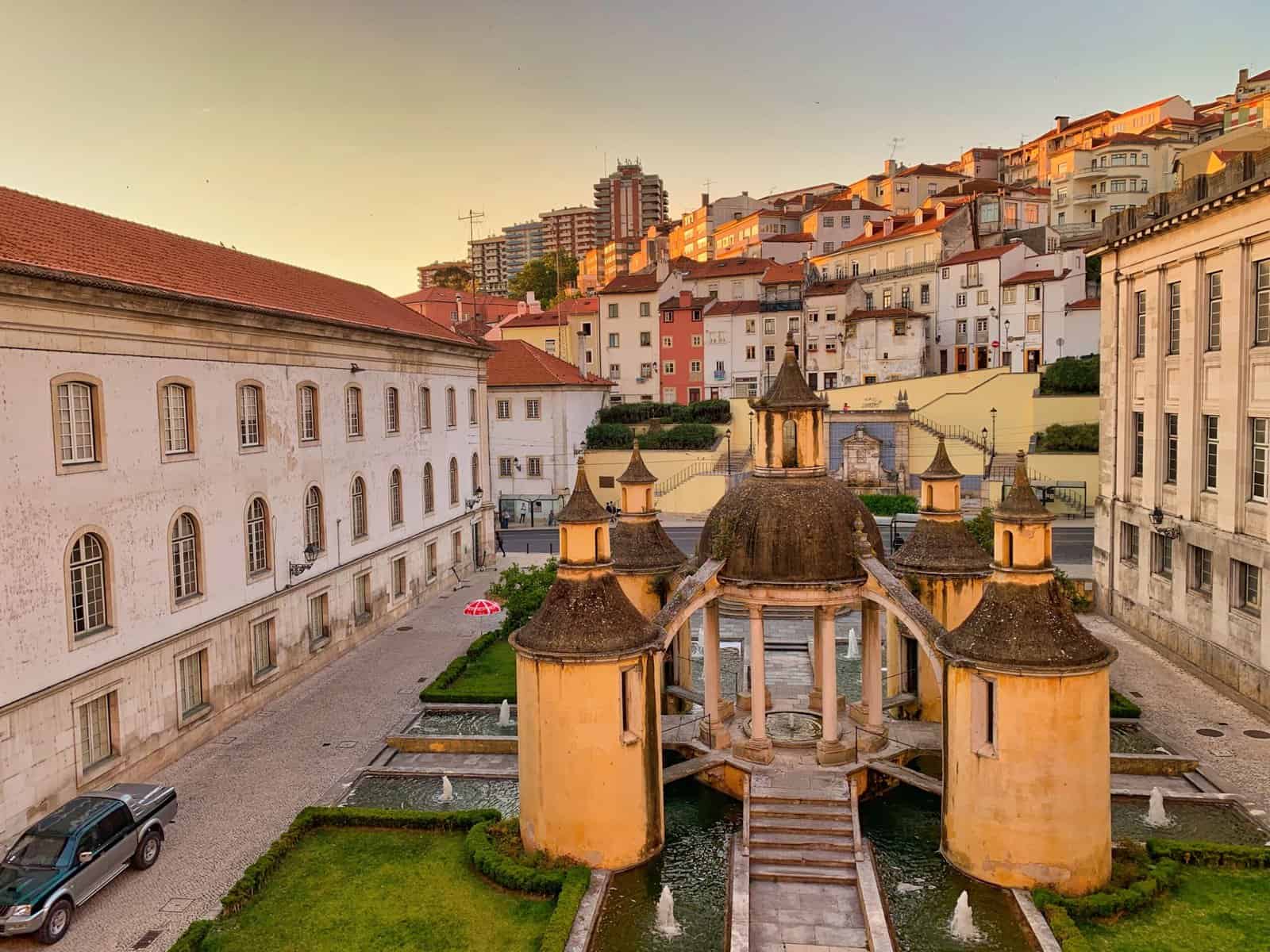
Municipal Market – Pedro V Market
The municipal market functions as an everyday market for local residents, with stalls selling fruits and vegetables, meat and fish, cheese, and flowers. It is open all week except Sunday. The market is housed in a modern building uphill behind the iconic Santa Cruz Monastery.
In fact, it sits on the modern bypass route connecting the lower center with the university above. It is accessible by car and can even be a parking option when visiting the city.
About 30 meters downhill from the market begins Visconde da Luz pedestrian street (R. Visc. da Luz), opposite Santa Cruz Monastery. Farther along, it connects with Rua Borges, which begins opposite Santa Clara Bridge.
Anyone who enjoys neighborhood-style European markets will find one here, only slightly larger than usual. The market sits at the meeting point between the hill of the old town and the newer part of the city to the north, where there are mainly residential buildings.
From the upper floor, you can step out to a viewpoint over the river. On the other side of the street (R. Olímpio Nicolau Rui Fernandes), farther uphill, there is a wall decorated with several large azulejos (Portuguese blue ceramic murals) that are well worth seeing.
Click here for full information about Coimbra…
Sá da Bandeira Avenue and Republic Square | Av. Sá da Bandeira – Praça da República
Farther up the main street climbing from Santa Cruz Monastery, broad avenues begin and continue to the square leading into Sereia city park. Beyond their trees and handsome colorful buildings, Sá da Bandeira Avenue is also one of the city’s important thoroughfares. Businesses, hotels, and public buildings line the avenue. At the top, farther up the hill around Praça da República, you’ll find a nightlife area popular with students from the nearby university.
Sereia Park | Jardim da Sereia
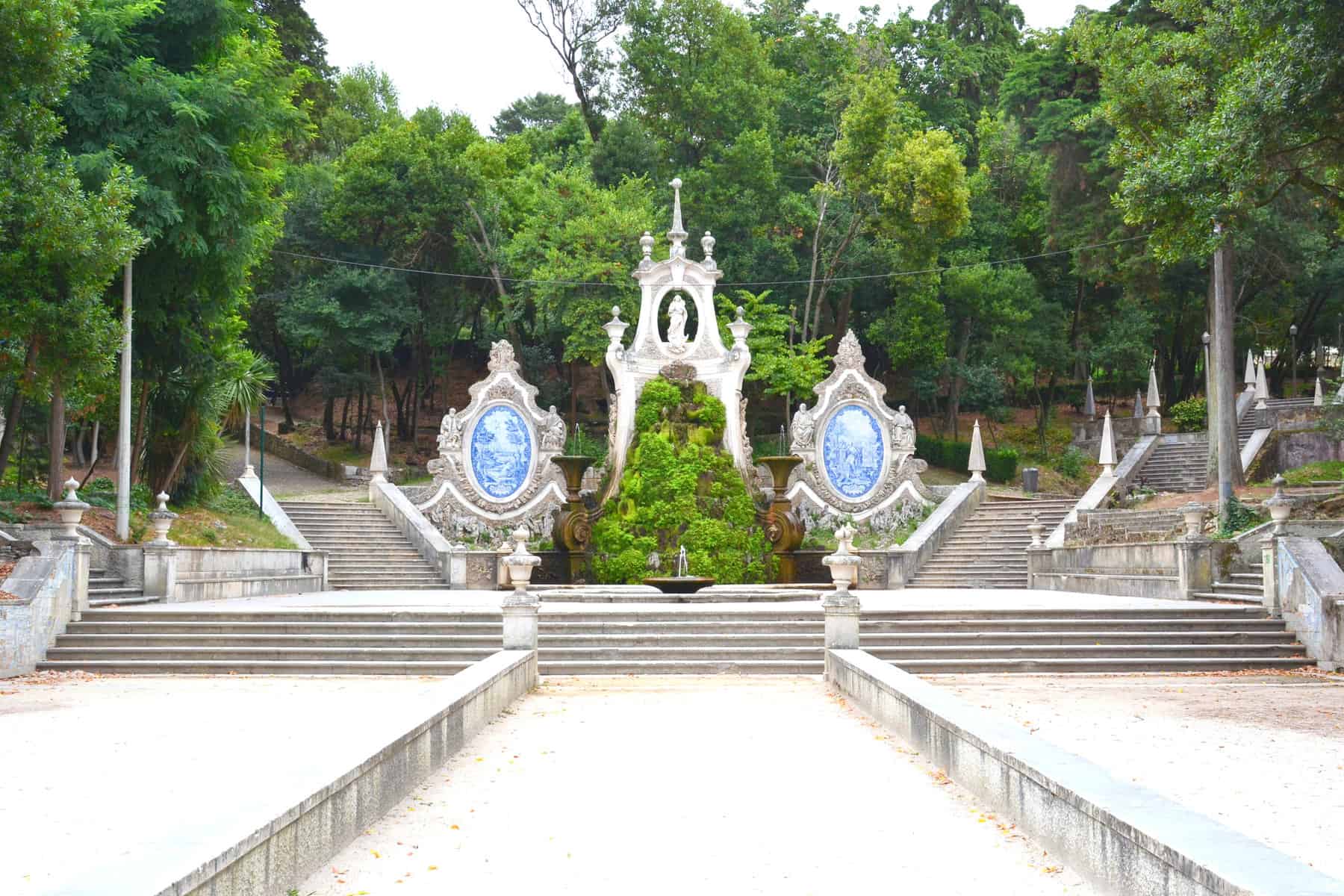
The park beyond Republic Square is famous for its grand entrance corridor, which ends at a huge gate framed by two staircases decorated with stunning azulejos.
Also known as Jardim de Santa Cruz, the park is one of Coimbra’s green lungs, with plenty of places to sit on benches and steps, offering students from the nearby university a quiet and relaxing escape from campus.
It’s worth entering the park just to see the entrance corridor. Benches along the way have backs made of azulejo artwork, and at the end stands the great, even flamboyant gate-sculpture, with its azulejo decoration set against white marble.
Click here to search for accommodations in Coimbra…
Barbacã Gate | Porta de Barbacã
Further up Rua Borges, roughly halfway along, you’ll find Barbacã Gate (visible directly from the pedestrian street). In the pre-modern period, a line of fortifications once stood here, preventing enemies from climbing into the city. Back then, Barbacã Gate was one of Coimbra’s old entrances.
The gate can serve as the start of a route up toward the university, passing the Old Cathedral along the way.
The walk follows the narrow, wonderful streets of Coimbra’s old center, lined with cafés, bars, and restaurants where the thousands of students living nearby go out to socialize.
Click here to find accommodations in Coimbra…
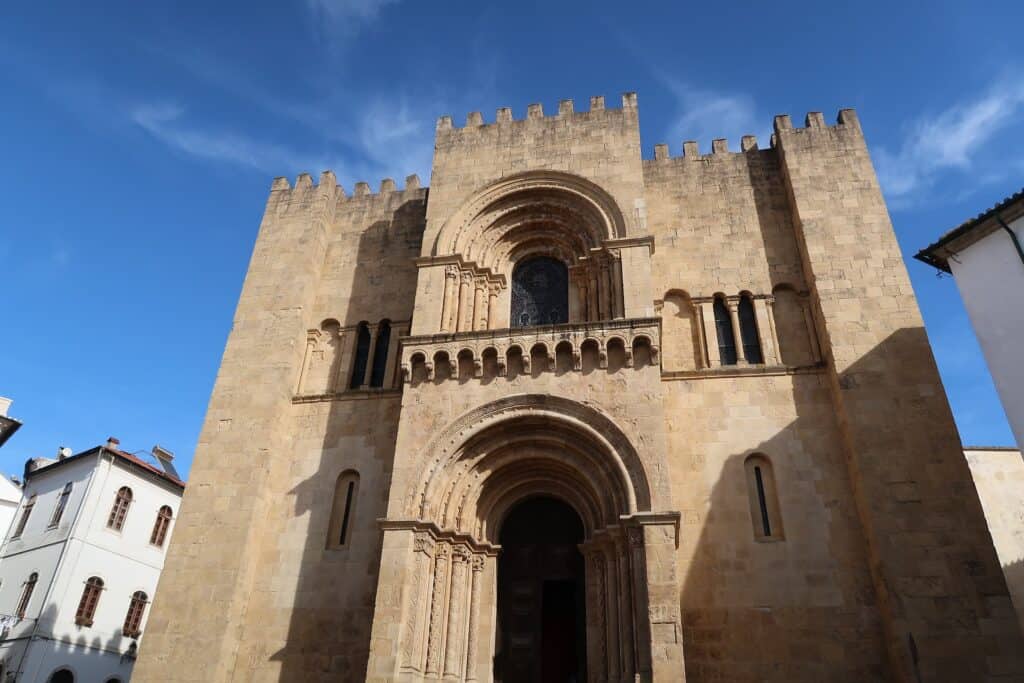
Old Cathedral | Sé Velha – Coimbra
Coimbra’s Old Cathedral was consecrated in 1184 in its current form, though it stands on the site of a Christian structure dating back to the 5th century CE. It is close to the top of the hill, near the university complex and the Machado de Castro Museum. Construction began immediately after the victory over the Moors in 1064, and it is considered the most refined Romanesque building in Portugal. Portugal’s second king, Sancho, was crowned here in 1185, and it remained the bishop’s seat and Coimbra’s cathedral until the move to the New Cathedral in the 18th century.
The cathedral’s late Romanesque façade and exterior are not especially large, but from outside they conceal its real jewel: the spacious cloister within. The cloister is large in proportion to the cathedral, and part of the hill had to be carved away to complete it in the straight, symmetrical lines typical of the style. The courtyard began to be built in 1218 and is one of the earliest examples of Gothic architecture in Portugal, complete with its famous vaulting.
Inside the cathedral, the supporting columns stand out in particular, and not one of them is left undecorated, each carved with geometric forms or vegetal motifs. The gilded altar is another masterpiece. Very little natural light enters through the façade windows, giving the interior an air of mystery and making a visit here feel authentically medieval.
Click here for a comprehensive guide to Coimbra…
Click here to find accommodations in Coimbra…
Beyond the River: Riverside Parks & Historic Sights
Little Portugal | Portugal dos Pequenitos
On the far side of Santa Clara Bridge, about a four-minute drive from the foot of the old town, there is a small miniature park called Portugal dos Pequenitos — essentially a “Mini Portugal” park. It’s a wonderful attraction for children in Coimbra, though not only for them.
The park opened in 1940 on the initiative of Bissaya Barreto, a local doctor and politician, as an educational amusement park. It presents Portugal’s traditional building styles as well as some of the country’s most important historic monuments.
There is also a section displaying the characteristic architecture of Portugal’s former colonies around the world, all in miniature.
The highlight of the park is the scaled-down model of the Templar fortress in the city of Tomar, which is not very far away.
When you leave the park, across the road and along Av. João das Regras toward the bridge leading into the city, you’ll find fast-food places, cafés, and most importantly, several ice cream shops that round out a fun outing for kids.
Click here for a boat ride on the Mondego River and beneath Coimbra’s bridges…
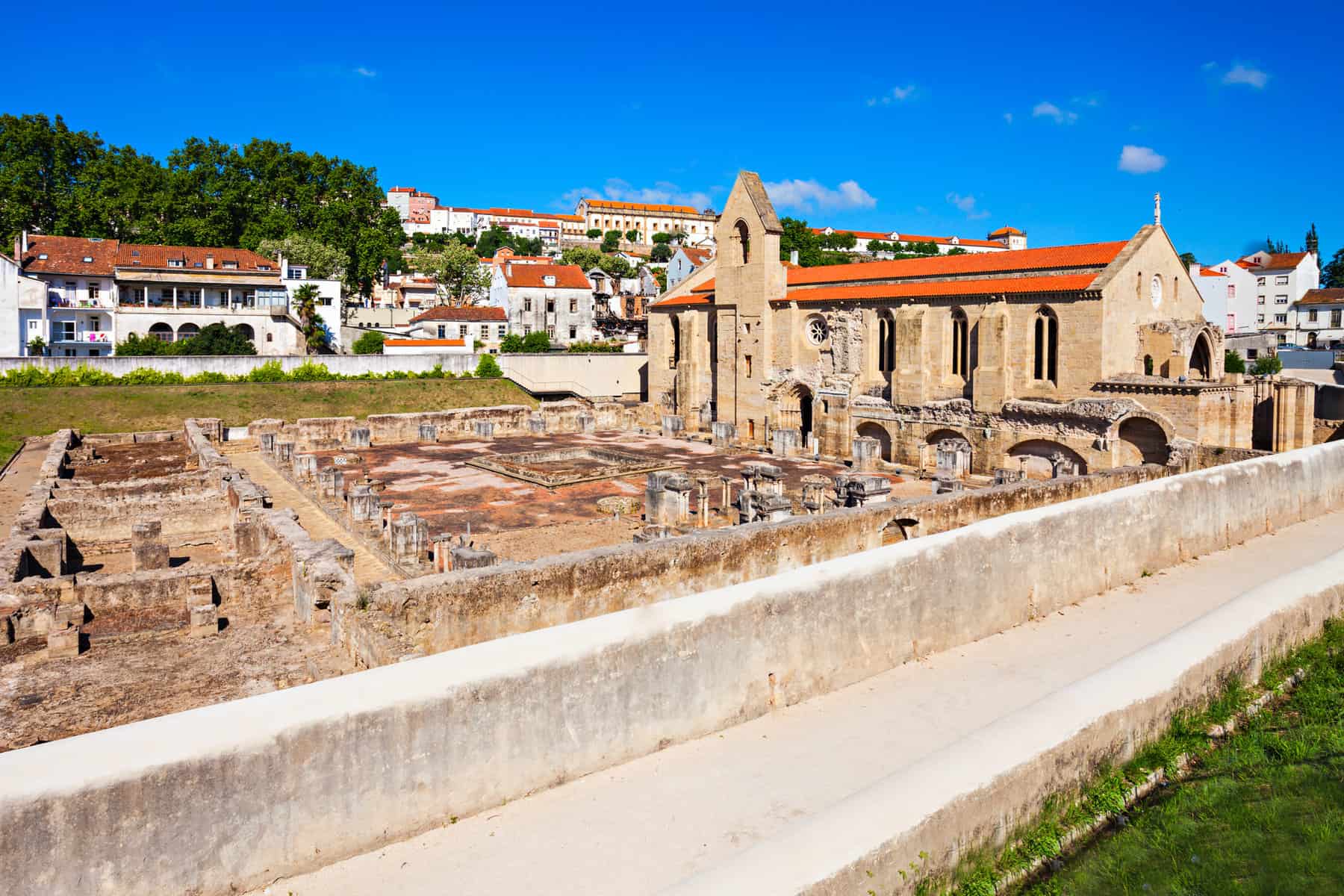
Santa Clara Monastery and Museum (Old) | Mosteiro de Santa Clara-a-Velha
It stands right next to Mini Portugal.
The monastery, so close to the riverbank, has a long history of flooding.
It was founded in the 13th century and by 1311 had been completely flooded and destroyed. Queen Isabel, widow of King Dinis and known for her extensive charitable work, rebuilt it in 1314. After her death in 1336, she too was buried there in a splendid tomb. The monastery later went through several additional changes and improvements.
Flooding continued until, in 1677, the nuns had had enough of life by the river. The monastery was abandoned, and they moved a little higher up the hill to a new building — Santa Clara-a-Nova. Queen Isabel’s tomb was moved to the new monastery twenty years later as well.
The old monastery was buried in mud and silt carried by the river floods. In the 20th century it was excavated and restored, and remarkably, it had survived in fairly good condition. Today it can be visited as a museum, showing exactly what convent life was like
Santa Clara (New) | Mosteiro de Santa Clara-a-Nova
The larger, newer monastery stands about 200 meters uphill from the old one, also on the western side of the Mondego River. It was built between 1649 and 1677 as a new home for the nuns, safely on dry ground.
The most interesting part of the monastery is the Baroque church, where Queen Isabel — the patron of the old monastery — is buried.
In addition, the monastery has a huge cloister donated by King João V in 1733, who was known for his support of monasteries. Part of the monastery complex now serves military purposes.
Click here for more information and opening hours for the New Santa Clara…
Click here to search for accommodations in Coimbra…
Lovers’ Tears Park – the story of King Pedro and Inês de Castro | Jardins da Quinta das Lágrimas
This romantic garden lies behind Little Portugal. The site includes a large garden and a quinta-style hotel — in other words, a hotel set inside a historic old building (Quinta). The hotel commemorates the forbidden love story of Portugal’s King Pedro and Inês de Castro, a noblewoman from Spain. This story is similar to the one in Beja that inspired the ‘Letters of a Portuguese Nun', though it took place even earlier
Prince Pedro, who was born in Coimbra and later became King Pedro I, married Princess Constança of Castile, the neighboring kingdom to the east. The marriage was intended to strengthen ties between the two nearby royal houses.
Inês de Castro was a noblewoman, though not of royal blood, from Galicia, who came to Portugal as part of the Castilian princess’s entourage. Pedro fell in love with her immediately, but he could not marry her because she was not considered fit to be queen.
A romance developed between them, one that Pedro’s father, King Afonso IV, strongly opposed, fearing it would damage relations with the Kingdom of Castile. Constança later died of illness, and Prince Pedro refused to marry any other royal bride proposed by his father; he wanted only to marry his beloved Inês.
Their love was so powerful, and the two remained so close, that even after King Afonso banished her from court in the hope Pedro would forget her, they stayed together. In 1355, Afonso finally reached the end of his patience and ordered the murder of his son’s lover.
Inês was murdered by beheading at Santa Clara Monastery, and the young Pedro swore to avenge her once he became king. When he did become king in 1357, he declared that he had been married to Inês, hoping to make their children legitimate heirs to the crown. That did not ultimately happen, because another of his illegitimate sons claimed the throne and became king after the dynastic crisis — João I, beginning in 1385.
Pedro’s love for Inês did not fade after her death, and when he prepared his own magnificent burial place, he reserved a place beside him for her. When Pedro died, the body of Inês de Castro was moved to Alcobaça Monastery near the lovely seaside town of Nazaré. To this day, the two lie in magnificent tombs, waiting to awaken one day together, side by side, at the end of days.
The medieval love story of King Pedro and Inês de Castro has inspired countless references in Western culture. Paintings were made, books were written, operas and ballets were composed about Inês’s story, and even in modern times a Portuguese series was produced about the noblewoman.
Click here to search for accommodations in Coimbra…
Green Park along the Mondego River | Parque Verde do Mondego
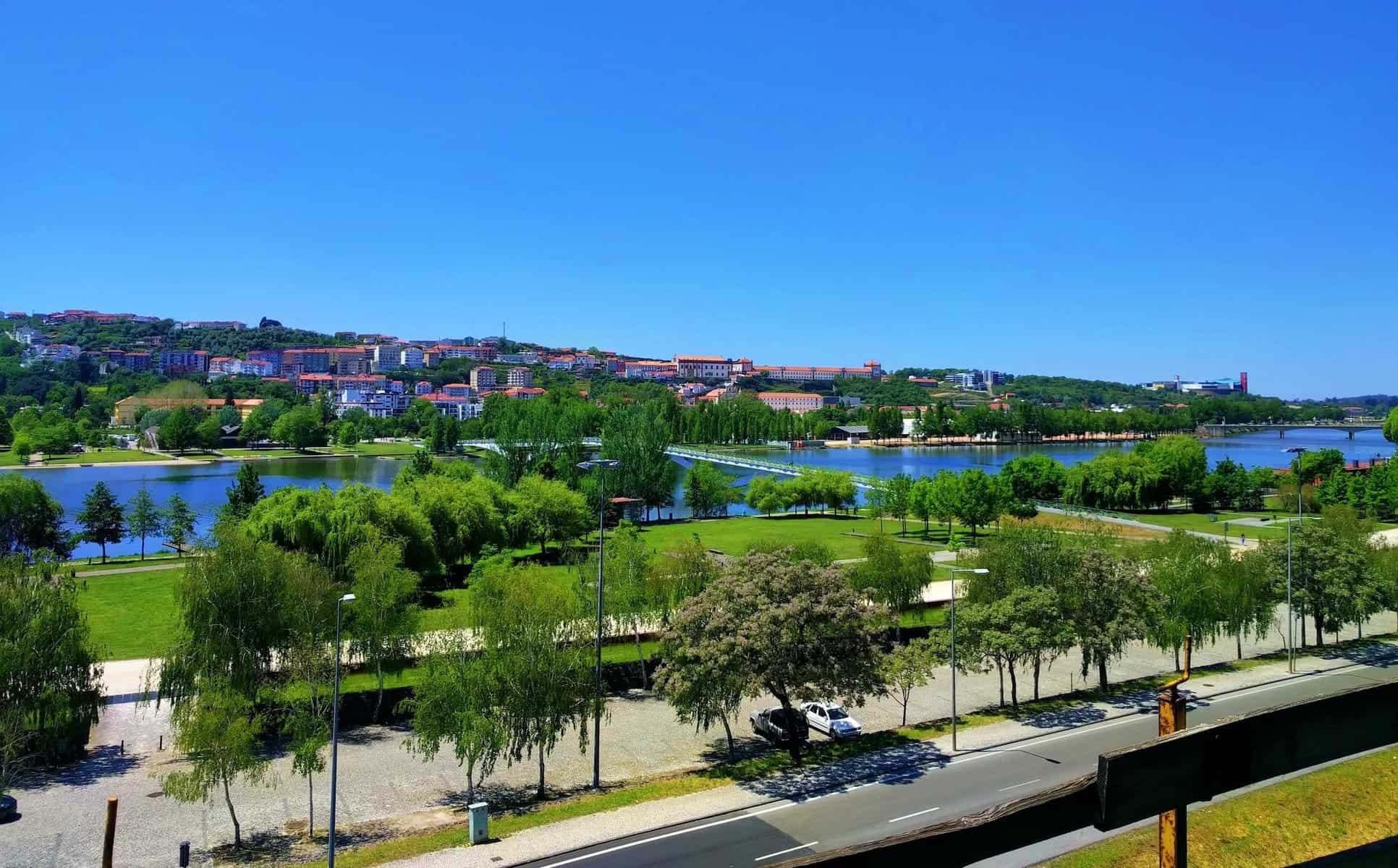
Coimbra’s city park begins near the central Santa Clara Bridge. At first it consists of trees and shrubs planted in geometric forms. It continues south along the river, where it becomes the Green Park, with broad lawns, paths, and green open spaces for residents to enjoy.
At the center of the park is the striking pedestrian bridge Ponte Pedonal Pedro e Inês, which crosses to the opposite bank of the Mondego. Walking across this 180-meter bridge is an experience in itself, and it’s worth coming to the park for that alone — just not on a particularly rainy day.
The bridge’s unusual design makes anyone approaching from either side think they can only get as far as the middle of the river. That is why it is nicknamed “the bridge that never meets.” No need to worry, though — there is a bend in the middle that will carry you all the way across.
On the opposite bank, the park continues, and there are also several places that rent kayaks and pedal boats, mostly on weekends.
Click here for a lovely boat ride on the Mondego River and beneath Coimbra’s bridges…
Queen Isabel Cable-Stayed Bridge | Ponte Rainha Santa Isabel
The Queen Isabel Cable-Stayed Bridge crosses the Mondego River from east to west. Queen Isabel, as mentioned, is the saint buried in the city, and the bridge is dedicated to her.
It is a major route between the two parts of the city and more broadly toward western Portugal, with two lanes in each direction.
This cable-stayed bridge opened in 2004 and greatly improved access from the southern part of the city to the center. It also completed something like a ring of major roads around Coimbra, the fourth-largest metropolitan area in Portugal.
The bridge is visible from afar and serves as an elegant landmark in the city.