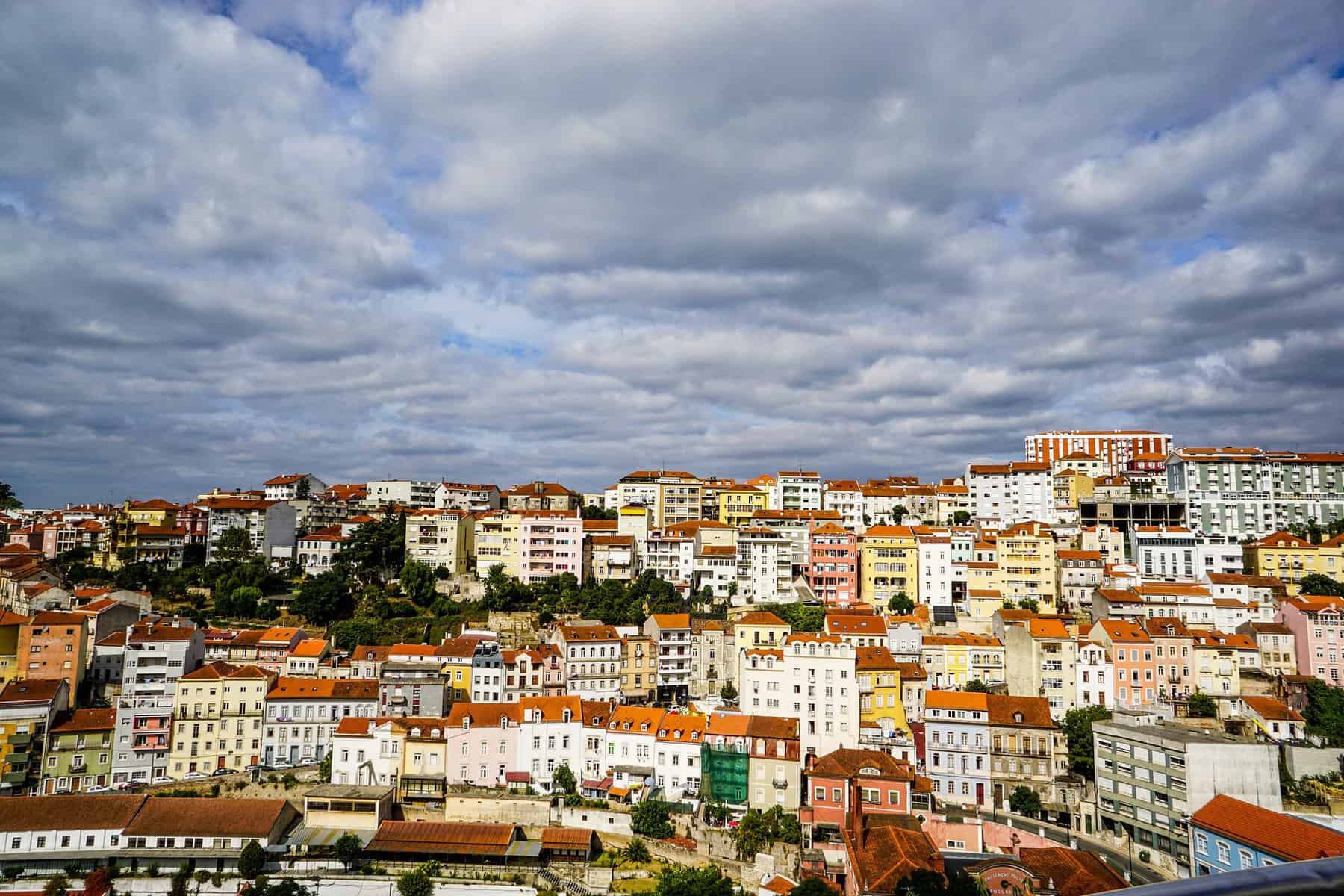
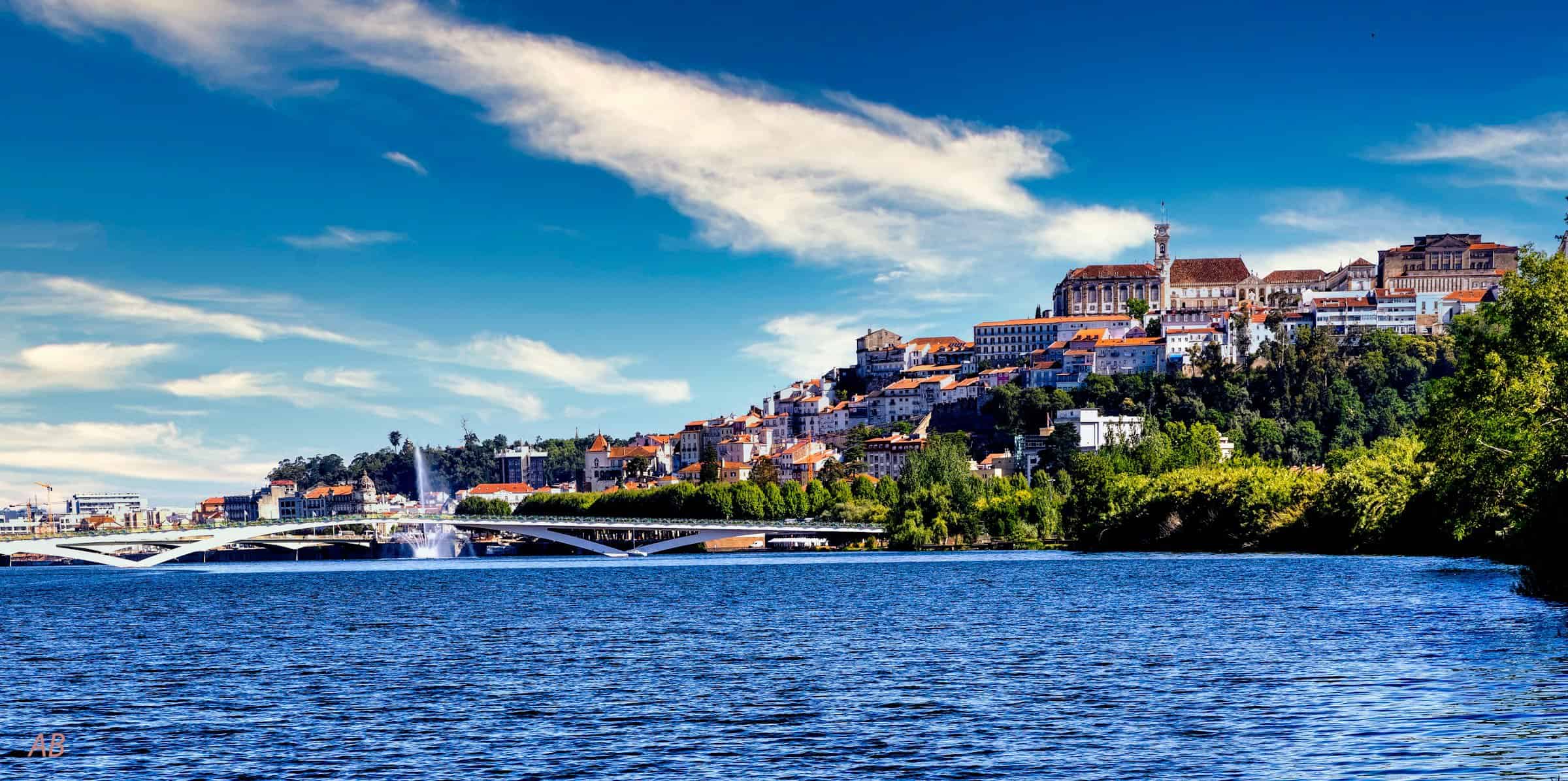
Coimbra is the capital of the district of the same name in central Portugal, the largest city in the region, and best known for its university. It lies in the northern part of central Portugal’s Beiras region, closer to Porto than to Lisbon. Rising above the Mondego River, which borders the city to the south and east, is the hill where Coimbra first took shape, crowned by the university. Its colorful buildings, narrow cobbled streets, and important historic landmarks make it an especially worthwhile and fascinating place to visit. Coimbra feels genuinely and authentically Portuguese, with a wonderful atmosphere both day and night. Much of that energy comes from the city’s 40,000 students enrolled in its higher education institutions.
8 must-see sights and experiences in Coimbra
- The university campus and courtyard | Universidade de Coimbra
- The Joanina Library at the university – one of the most beautiful in all of Europe | Biblioteca Joanina
- The Machado Museum near the university – art and Roman antiquities | Museu Nacional de Machado de Castro
- Ferreira Borges pedestrian street – shopping and atmosphere | Rua Ferreira Borges
- The grand Monastery of Santa Cruz in the city center | Igreja de Santa Cruz
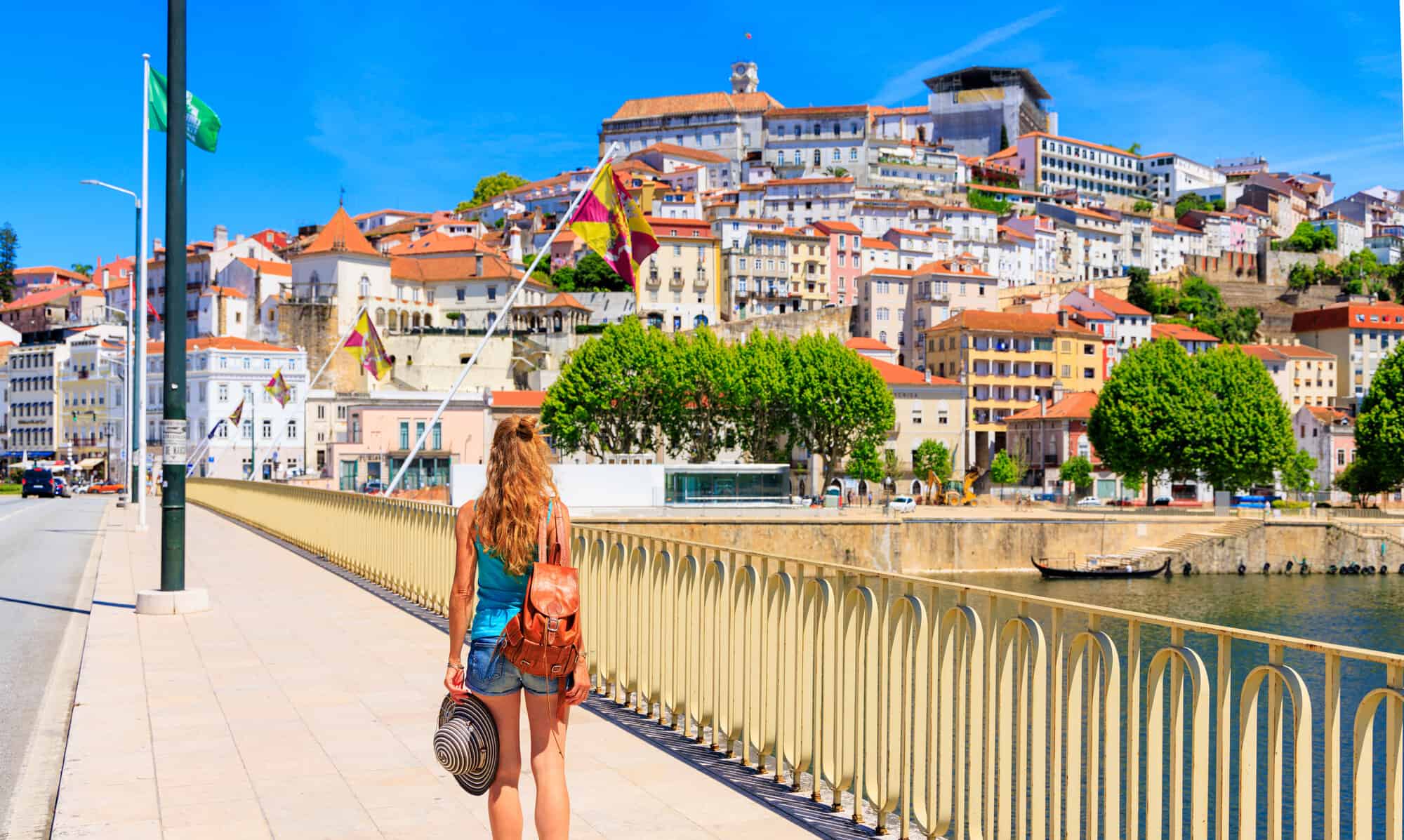
- Santa Clara Bridge – views of the city on the hill | Ponte de Santa Clara
- A local fado performance at one of the clubs in the city center | Coimbra Fado
- The grand entrance to Sereia Park from Republic Square | Jardim da Sereia
- The student festival “Burning of the Ribbons” (in May) | Queima das Fitas Coimbra
How much time should you spend in Coimbra?
To cover most of Coimbra’s main sights, you’ll need a full day. That said, it’s well worth staying overnight so you can enjoy the nightlife of this university city and explore its landmarks and museums at a more relaxed pace over a day and a half to two days.
For younger travelers — and the young at heart — a weekend visit is especially recommended. That’s when the nightlife is even livelier, thanks in no small part to the city’s nearly 40,000 students.
Click here to find a place to stay in wonderful Coimbra…
Click here to learn more about interesting stops between Lisbon and Porto…
How to get to Coimbra
Flights to Coimbra
Although Coimbra is in central Portugal, it is closer to Porto than to Lisbon. That means the airport that serves Coimbra is Porto International Airport (OPO), about an hour and twenty minutes away by car.
Lisbon Airport (LIS) is about a two-hour drive from Coimbra.
Getting there by rental car
Unlike most cities in central Portugal, Coimbra is actually better reached by train, mainly because it brings you right into the heart of town. Nearly all of the main sights are on or around the hill, and getting between them is best done on foot.
That said, many travelers visit Coimbra as part of a road trip between Lisbon and Porto, and then onward farther north or east. On a trip like that, which is almost always done by car, Coimbra makes an excellent stop along the way, whether you stay overnight or not.
Click here for our guide to driving and renting a car in Portugal…
Parking in Coimbra
- Parking in Coimbra can be tricky. The old center not only has narrow streets, but many of them also climb steeply toward the university. In other words, don’t even think about driving into the historic center. Since any visit to Coimbra involves walking uphill anyway, it’s best to park either in the parking lots along the river or, better yet, in the market parking lot, which is also very close to the Monastery of Santa Cruz and the pedestrian street.
- There are a few more parking lots on the river’s western bank, but using them means crossing Santa Clara Bridge on foot afterward. That’s really not a bad thing, since the views from the bridge are the best around, and it leads straight into the city center. Up on the hill and around the university there are hardly any parking lots, though street parking does exist.
Public transportation to Coimbra
Train
- The train ride from Lisbon to Coimbra takes just under two hours, while Porto to Coimbra takes about an hour and fifteen minutes.
- Important: Coimbra has two nearby train stations, Coimbra-A and Coimbra-B.
- Station B is the larger one, located slightly north of the city center on the main rail line. Coimbra-B is where you change trains for other cities. It was built as the city expanded, since there was no room to enlarge station A, which sits right in the center, and add more tracks.
- Station A, then, is the one right in the heart of the city, where you should get off to start sightseeing. It’s the terminal station, sitting at the foot of the hill below Coimbra’s main attractions.
- As a major city in central Portugal, Coimbra is an important stop on the Porto–Lisbon rail corridor.
- From here, connections are especially useful for trains heading west to the beautiful coastal towns, above all Aveiro, the colorful city on the lagoon. Trains there take less than half an hour, making it easy to visit Aveiro as a day trip from Coimbra — or the other way around.
Bus
Coimbra’s central bus station is located a little north of downtown, about a 15-minute walk away. So if you’re coming to Coimbra by public transportation, the train is a better choice than the bus, because it takes you right into the city center (get off at Coimbra-A station).
Click here to search for hotels and vacation apartments in Coimbra…
About Coimbra
The history of Coimbra
- Coimbra was founded as a Roman city on the hill overlooking the Mondego River during the reign of Emperor Augustus in the 1st century CE.
- It was then called Aeminium and lived in the shadow of Conímbriga, the great Roman city 15 kilometers to the south. Later, it would take its name from that same Conímbriga, which was abandoned in the 5th century following Germanic invasions and the fall of Rome.
- The remains of Aeminium can still be seen today at the top of the hill in the Machado Museum. Its remarkable underground maze-like display takes you back 2,000 years.
- Then as now, Coimbra stood on the key route of the Roman road between Braga in the north and Lisbon. The hill dominating the river from two directions made it an excellent strategic point.
- Coimbra is so closely associated with its university that it was once called the Athens of Lusitania (Lusa-Atenas), after the Roman province of Lusitania, to which the Coimbra area belonged.
- During the Muslim period, the city was not especially important. Still, it was among the first areas in Portugal to be captured from Muslim rule during the Reconquista, which effectively made it the capital of Portugal in the kingdom’s early years.
- Coimbra was the capital of Portugal for more than a century, from 1131 until the move to Lisbon in 1255. Portugal’s first king, Afonso Henriques, is buried here in the Monastery of Santa Cruz, and several of the country’s early kings lived in the palace that is now part of the university complex.
- In the early 14th century, the university founded in Lisbon in 1290 moved here. After several more moves between the two cities, the university settled permanently in Coimbra in 1537, and ever since, the city and the university have been inseparable in name and identity.
- During the Peninsular War in the early 19th century, a decisive battle took place in the Bussaco Forest to the north. There, the Portuguese joined forces with the British under the Duke of Wellington and defeated Napoleon’s armies in a victory still remembered as part of Portugal’s national heritage.
Coimbra today
- Coimbra is one of Portugal’s most historic and important cities, as well as a major center of culture and education.
- It is a large city, and its metropolitan area is home to more than 250,000 people.
- Coimbra sits on the vital route linking south and north between Lisbon and Porto, as well as on river and waterway routes leading to the nearby coast.
- Beyond the city’s large and famous university, Coimbra has also developed a technology and medical sector.
- Click here for a private guided tour of the university complex and library…
- It is a very pleasant city to live in, with the old center being more tourist-oriented and home to many student residences.
- The modern city has spread out across both banks of the river and up into the surrounding hills.
- Dense forests begin just beyond Coimbra’s eastern edge and continue through much of central Portugal. They are ideal for anyone who enjoys hiking or cycling.
- Click here for a charming boat ride on the Mondego River beneath Coimbra’s bridges…
Weather in Coimbra
- Because Coimbra lies in central Portugal, you already begin to feel its closer connection to the north in the weather as well.
- Coimbra is cooler and rainier than Lisbon — and certainly more so than southern central Portugal — though less cool and less rainy than Porto and the northern cities.
- The extensive forests around Coimbra contribute to the quality of the air and to the city’s refreshing feel, especially in the mornings.
- Even in summer, nights tend to be cool and pleasant, except during the occasional heat wave that usually comes once or twice a season.
- As in the rest of Portugal, spring and summer are the best times to visit, but like other northern cities, Coimbra can also be lovely in winter, when it takes on a special atmosphere — just come prepared with the right clothing.
Coimbra Fado Music
- One of Coimbra’s defining cultural traditions is its distinctive style of fado.
- In Lisbon, and more generally, fado is associated with melancholy songs full of longing for a lost past.
- Here in Coimbra, fado has a more academic, romantic, and melodic character, and is considered more refined and less melancholic than the capital’s style.
- Fado singers are called Fadistas, and to this day the tradition is still taught at Coimbra’s great university.
- Coimbra’s fado songs are also romantic, and some even have the feel of drinking songs.
- It can be a wonderful experience to catch a short performance at one of the small fado clubs in Coimbra’s city center.
- Click here for tickets to an amazing fado performance in Coimbra…
Click here to search for a place to stay in Coimbra…
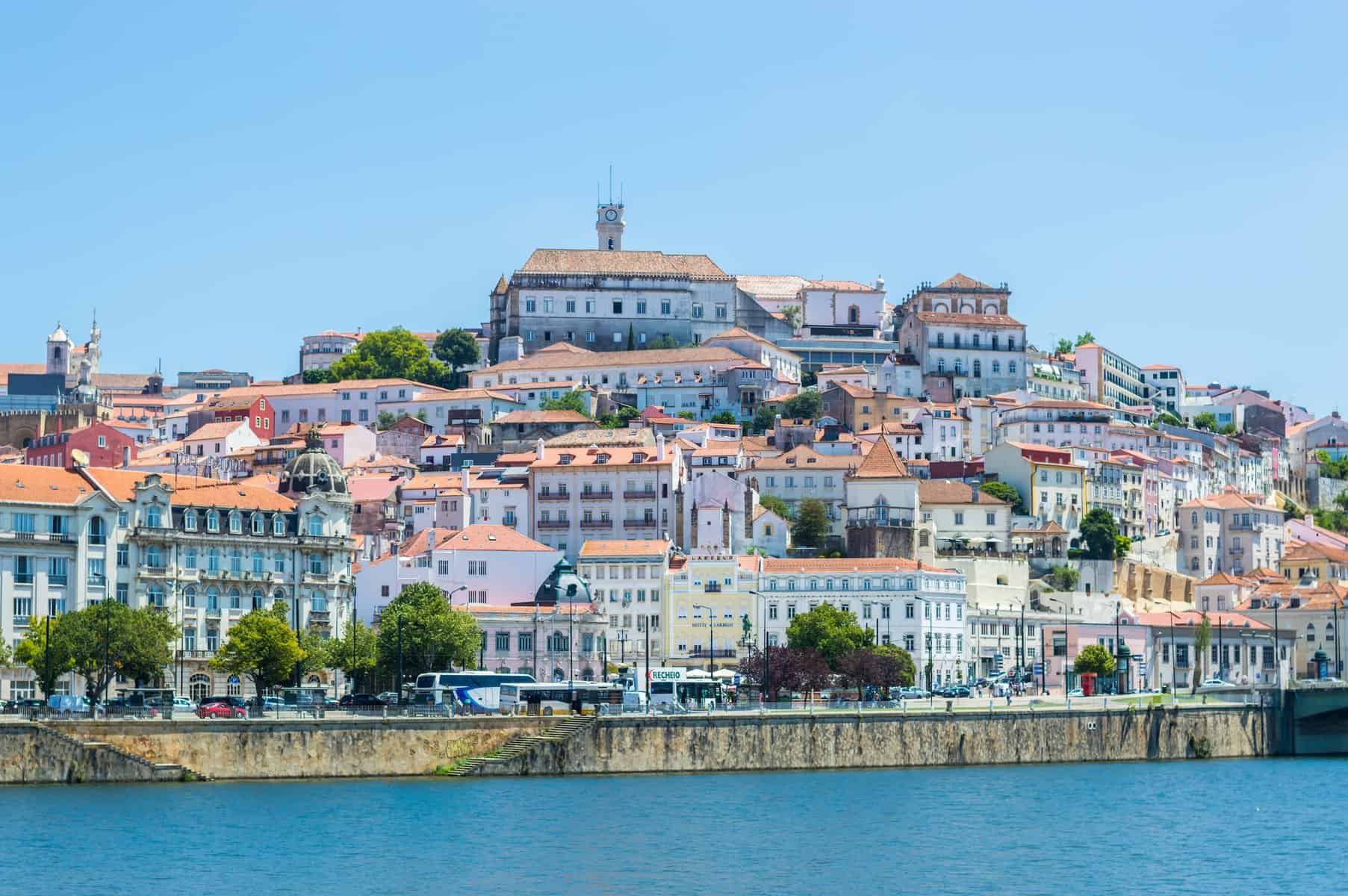
The historic university complex of Coimbra
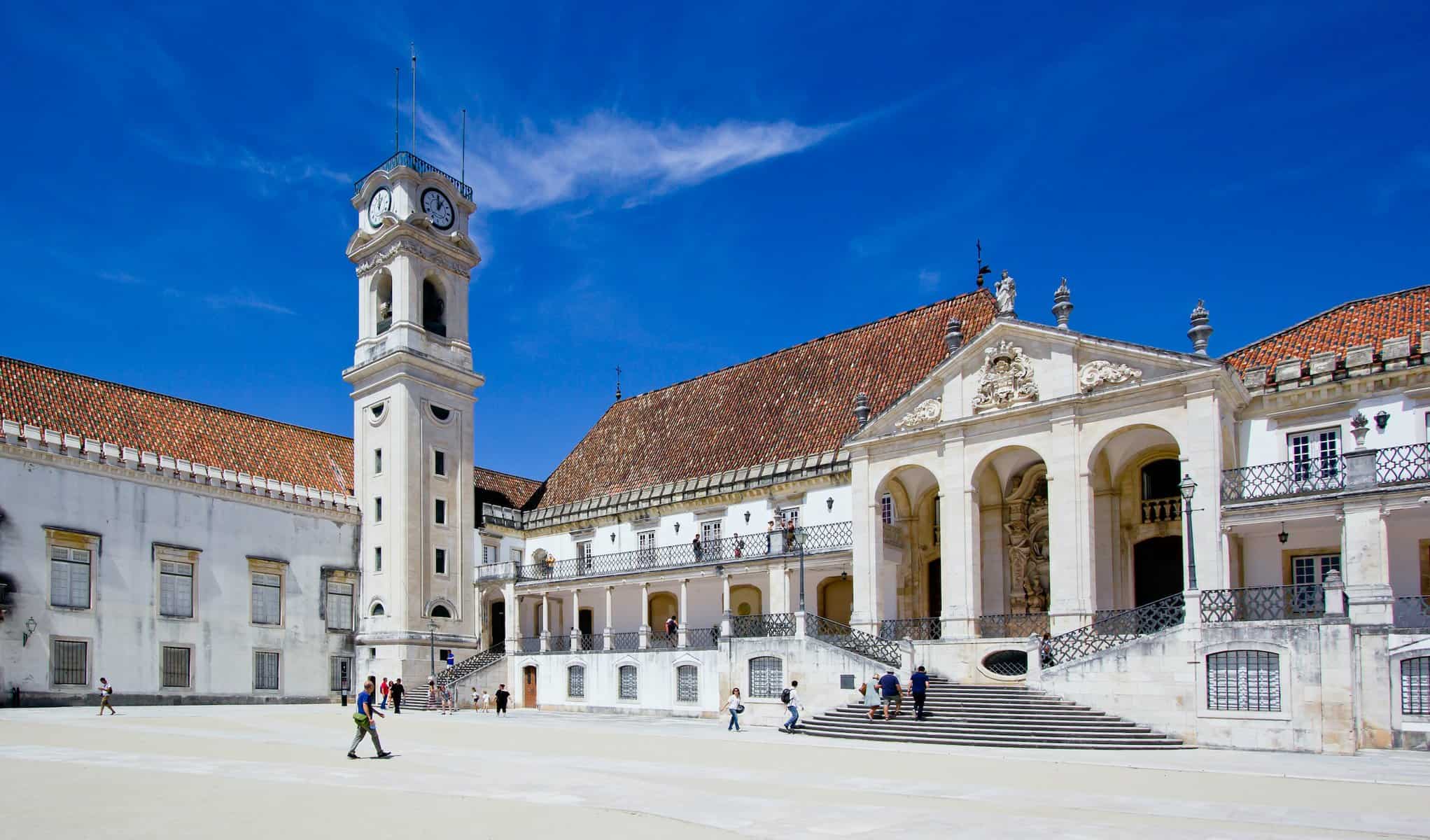
The university complex | Universidade de Coimbra is Coimbra’s main attraction. At the top of the hill, the complex includes a large number of historic buildings, each with its own story.
The University of Coimbra is one of the oldest in Europe, founded in the 13th century. Even today, throughout Portugal, the city is closely identified with the university, and the students give something back in return by making Coimbra lively, youthful, and full of energy despite its distance from Portugal’s main centers of power.
At the heart of the campus is the university courtyard (Pátio das Escolas), the true center of the complex, surrounded by its most important historic buildings. Beyond the courtyard’s inner circle, several more key sights in Coimbra lie nearby.
Entry to the campus and courtyard is free, but tickets are required for the library and interior halls.
Click here for a private guided tour of the university complex and library…
List of sights in the university complex:
- The Iron Gate | Porta Férrea – the university’s main entrance
- The university courtyard | Pátio das Escolas – Coimbra’s iconic campus center
- The tower | Torre da Universidade – visible from nearly every corner of the city and one of Coimbra’s symbols
- The Palace of the Schools | Paço das Escolas – the main building with the three-arched façade
- The Hall of Capes | Sala dos Capelos – inside the Palace of the Schools, a large, colorful, lofty hall filled with works of art
- Via Latina | Via Latina – it is called a “way” because it is actually a long covered outdoor passage supported by arches running along the entire Hall of Capes building
- São Miguel Chapel | Capela de São Miguel – this colorful chapel, whose origins date to the 16th century, sits behind the Joanina Library. It is so beautiful and richly decorated that it should not be missed. Inside are striking azulejo tiles, along with paintings and ornamentation in warm tones everywhere you look.
- The Joanina Library | Biblioteca Joanina – considered one of the most beautiful libraries in the world! – Important to know: visits to the library are time-limited, and after a few minutes visitors are asked to leave so the next group can enter.
Sights around the university courtyard:
- Machado de Castro Museum | Museu Nacional de Machado de Castro – an art museum, especially noted for its sculptures, considered among the finest in Portugal
- The Roman cryptoporticus at the Machado Museum – | Criptopórtico – a maze of underground passageways that once formed part of the Roman forum
- The inner courtyard of the Machado Museum – the loggia | Loggia – one of Coimbra’s symbols, surrounded by elevated passageways and a red-tiled roof
- The New Cathedral of Coimbra | Sé Nova de Coimbra – a cathedral with an impressive façade, where the bishop moved in the 18th century
- The university science museum | Museu da Ciência – next to the cathedral, an old-fashioned science museum that is wonderful for children
- The Botanical Garden of Coimbra | Jardim Botânico de Coimbra – just south of the university and already on the way down, a lovely place for a walk and for views over the Mondego River below
Click here for a full list of attractions and sights in Coimbra…
Food in Coimbra
Here are a few local specialties to try in the city’s restaurants and bakeries:
- Pastel de Santa Clara | Pastel de Santa Clara – a puff pastry dusted with a mountain of powdered sugar. This is Coimbra’s best-known signature pastry, filled with egg yolks and cinnamon inside delicate layers of pastry.
- Tentúgal | Tentúgal – a pastry found throughout Portugal, but considered especially good here in Coimbra. It has a sweet egg-yolk filling inside an especially crisp shell.
- Chanfana | Chanfana Coimbra – a red-wine goat stew, a Coimbra specialty of slow-cooked meat.

Shopping in Coimbra
- Alma Shopping | Alma Shopping – the modern mall next to the stadium in the newer part of the city
- The municipal market | Mercado Municipal D. Pedro V – located right beside the Monastery of Santa Cruz, and also a good parking option before exploring the city center
- The 7th and 23rd fair | Feria dos 7 e dos 23 – a traveling market, including a farmers market, held a little north of the city center on the 7th and 23rd of every month. It’s a good pick for market lovers, or if you happen to be in town that day and want a break from the center.
Click here for a charming boat ride on the Mondego River beneath Coimbra’s bridges…
Events in Coimbra
Two major events take over the streets of Coimbra, both tied to student life in the city.
- The “Festival of the Cans” – Festa das Latas – held in early October at the start of the academic year. It is essentially a collection of initiation rituals for new students in the city. It’s called the Festival of the Cans because in the past people made as much noise as possible, mainly by banging on metal cans. Today, students mostly play musical instruments and parade through the streets during the festival.
- Burning of the Ribbons – Queima das Fitas | Queima das Fitas – one of the biggest student parties in all of Europe!!
- The festival takes place in May (with slightly different dates each year) and lasts about 8 days across the faculties of the University of Coimbra.
- If parties aren’t your scene, don’t come to town during the festival, when the whole city turns into one giant carnival.
- If you’re in the mood for a youthful atmosphere, this is the time to visit.
- The festival celebrates the end of the university courses.
- The burning of the ribbons symbolizes the completion of studies.
- A similar festival takes place in other cities around Portugal, but here in Coimbra it is considered especially large and distinctive.
Click here to search for hotels and vacation apartments in Coimbra…
Click here to book a spot at a fascinating fado performance in Coimbra…
Points of interest and attractions around Coimbra
Aveiro – Charming Coastal Canal City
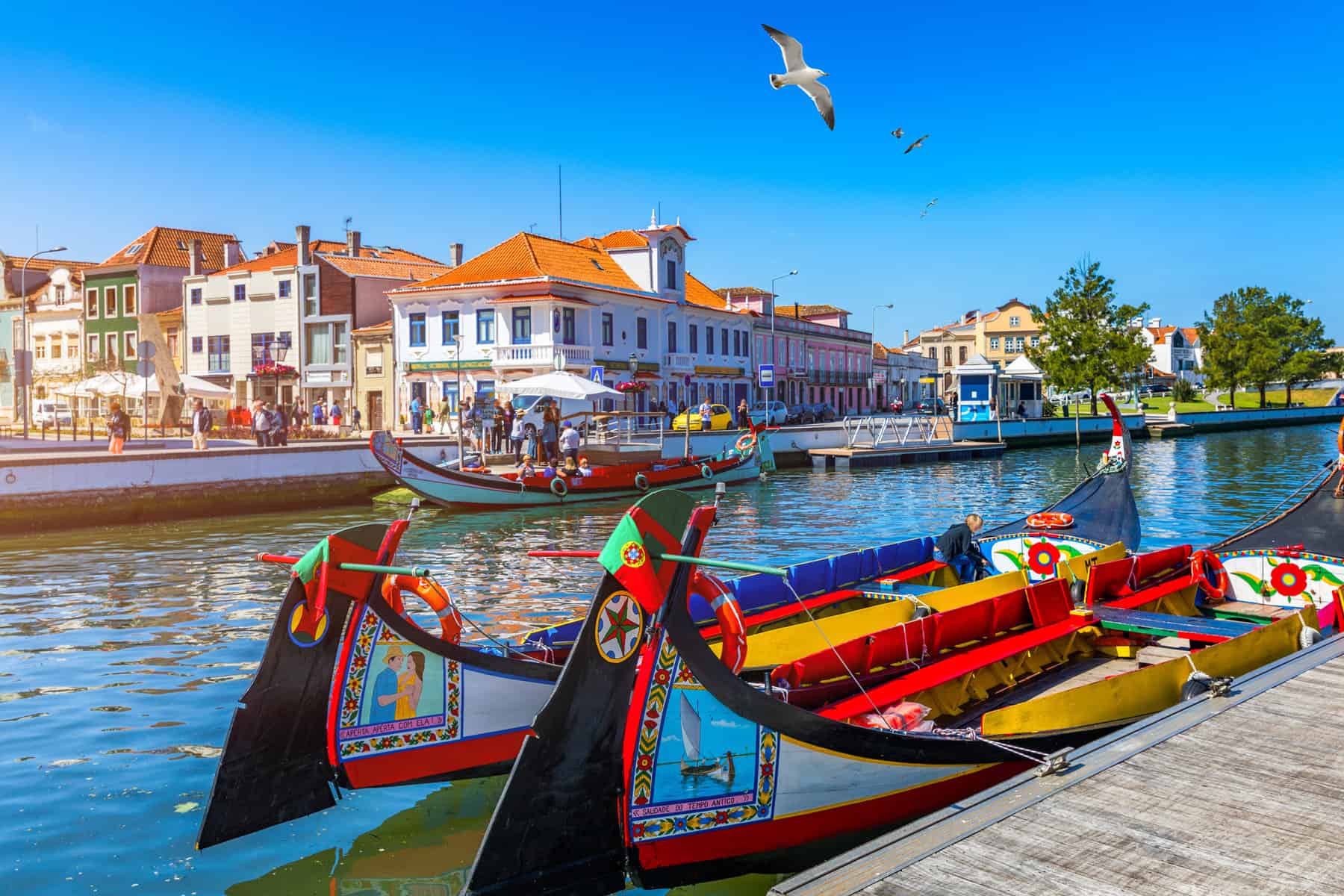
Coimbra is very close to Aveiro, the city on the lagoon. Aveiro is known as the “Venice of Portugal,” and you can cruise its canals in moliceiro boats. There are direct trains between the two cities that take about half an hour. By car, the drive takes 45 minutes. That makes Aveiro an easy day trip from Coimbra, and vice versa.
Click here for our guide to Aveiro and its attractions…
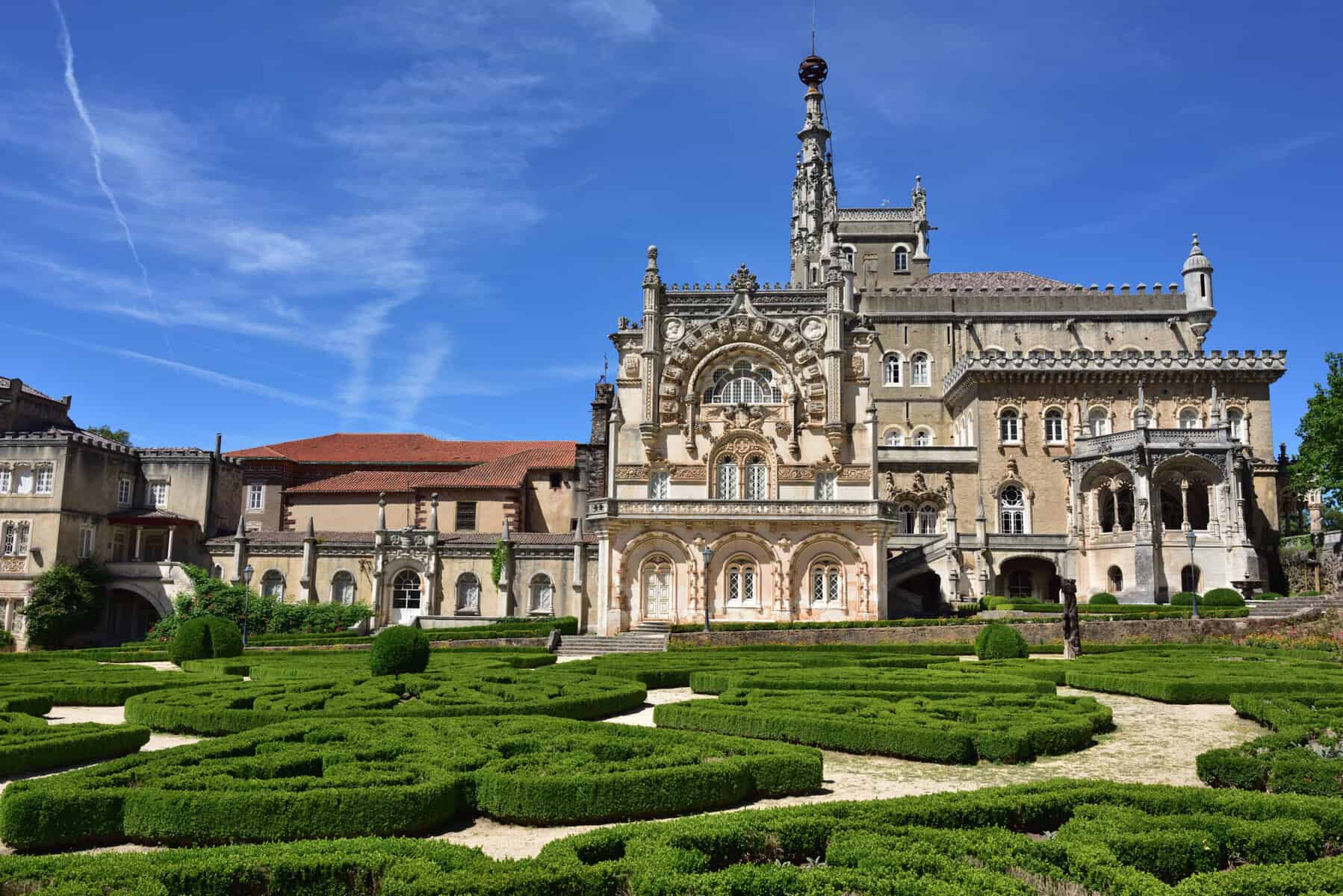
Buçaco Palace and Forest
The palace and forest are about a 40-minute drive north of Coimbra, in a peaceful rural setting.
At the heart of a dense, green forest, a Carmelite monastery was established in the early 17th century. Like other monasteries, it sought to withdraw from everyday life and await redemption in solitude. That calm was shattered in 1810, when the Battle of Bussaco was fought here. The Portuguese, together with the British under the Duke of Wellington, fought Napoleon’s forces and succeeded in driving them back. The great victory was etched into Portugal’s history and remains remembered to this day. Not long afterward, in 1834, the monastery was abandoned after the Carmelite order was outlawed in Portugal.
The kings of Portugal then began to turn their attention to this stunning site, which strongly recalls the castle regions of Germany. In 1888, a palace began to rise here at the initiative of King Carlos I. For the project, he hired the Italian architect Luigi Manini.
The building was designed in the Neo-Manueline style, and its wings were decorated with a rich variety of motifs. The palace contains several mural paintings, along with wonderful azulejo wall panels, including one celebrating the great victory at the Battle of Bussaco.
Surrounding the palace is the dense, mysterious forest stretching into the distance — the Buçaco Forest (Mata Nacional do Bussaco). In the area closest to the palace, trees from around the world were planted, brought back by Portuguese explorers from the New World, along with many other plant species. Entry to the forest is free, and there are bicycle trails as well.
Click here to find accommodations in Coimbra and the surrounding area…
In the forest near the palace, there are several landmarks worth visiting (most of them can only be reached on foot):
- The tall cedar tree | Buçaco Cedar – an ancient tree planted in the 17th century that rises to nearly 30 meters
- The artificial waterfall | Fonte Fria – a stepped waterfall descending into a pool shaded by dense trees and shrubs
- Cruz Alta viewpoint | Cruz Alta – the highest point in the forest, with a very European-looking view over the forest and surrounding landscape. Naturally, there is also a tall cross here, with a viewing terrace around it.
- Via Sacra | Via Sacra – a path that passes several chapels containing large statues. It was laid out in the 17th century as a recreation of Christ’s Passion route.
- Fern Valley | Vale dos Fetos – a trail descending into a valley filled with ferns and other plant species, especially green and mysterious in feel
Beyond the palace, there are two more sites tied to the famous battle fought at Bussaco. Both are located in the nearby village just before you reach the palace and forest:
- The Bussaco Military Museum | Museu Militar do Buçaco – a small museum describing the famous battle at Bussaco, with cannons, soldier figures, and information about the battle’s heroes, led by the Duke of Wellington
- The battle monument | Monumento Comemorativo da Batalha do Buçaco – a large but rather old-fashioned obelisk monument in a forest clearing beside the road
The Roman ruins of Conímbriga | Ruínas de Conímbriga
Portugal’s largest Roman archaeological site lies about half an hour south of Coimbra by car. It preserves an entire Roman city called Conímbriga, once one of the most important cities in the province of Lusitania. The city of Coimbra took its name from this historic Roman settlement.
In terms of scale and the grandeur of its discoveries, the site is somewhat reminiscent of Madinat al-Zahra near Córdoba in Spain. Of course, what is presented here is Roman rather than Muslim culture, and from a much earlier period.
The Roman city of Conímbriga existed for roughly 600 years, beginning in 139 BCE, until it was destroyed in the invasions of Germanic tribes. Before that, there had been a settlement here belonging to Castro culture, though most of the finds on display are from the Roman period.
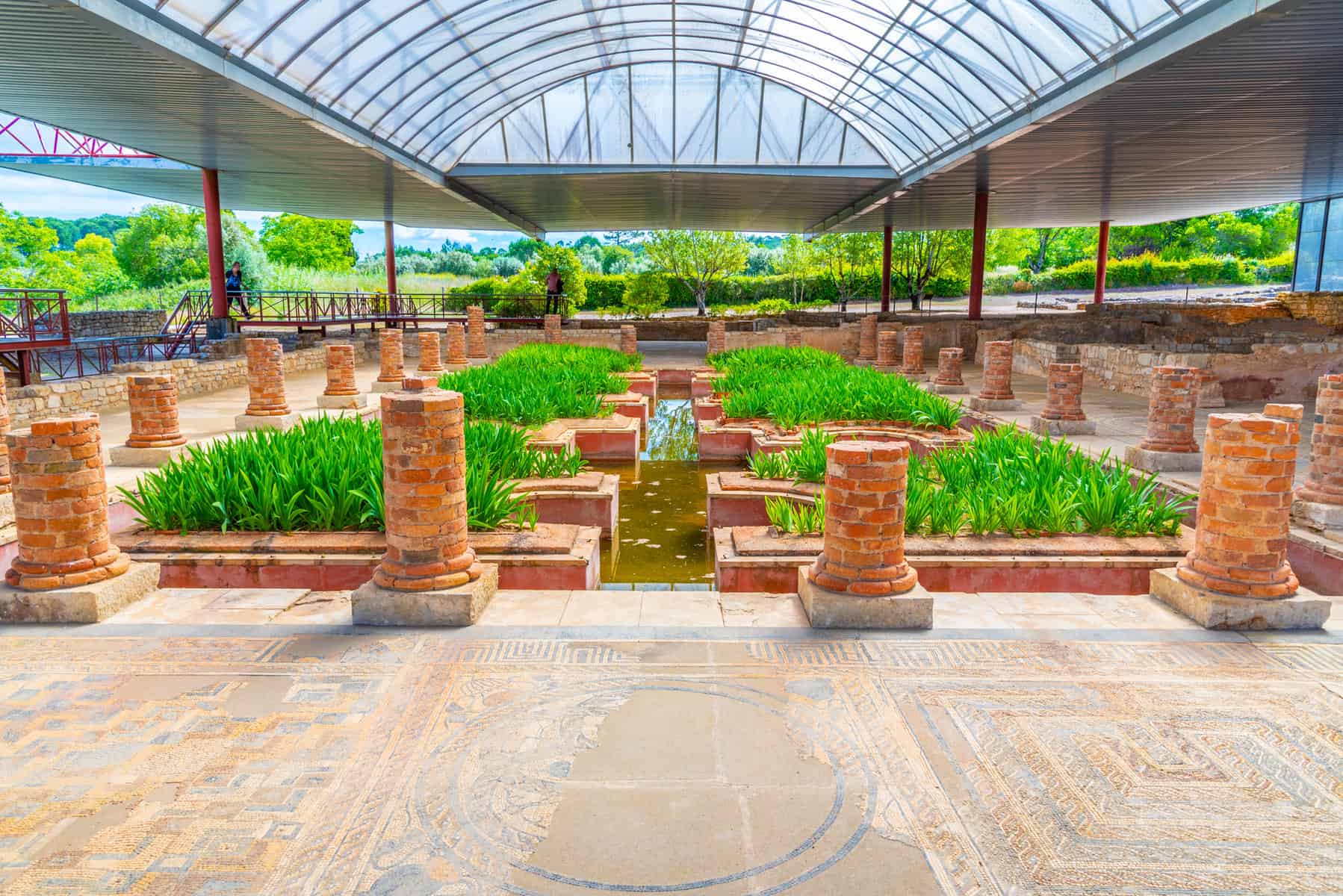
Excavations at the site began as early as the late 19th century. To this day, only about ten percent of the Roman city has been uncovered. Based on estimates, it once had a population of around ten thousand, and what has been excavated so far is simply astonishing — especially the mosaics that decorated the floors of the domus, the homes of wealthy Romans.
Most of the site is outdoors, though a few mosaics and remains of other structures are sheltered to protect them from the weather, including the House of the Fountains (Casa dos Repuxos).
A visit begins at the museum, which displays objects and other finds from Conímbriga, and then continues outside. Under the open sky, you can see the remains of Roman baths, the city forum, a basilica still in its original form, and more houses of the upper classes with their large mosaics.
As noted, the remains are exceptionally well preserved, and the site itself is clean and inviting.
This is a must for anyone interested in the Roman Empire — especially since, for most of the year, it’s very pleasant to walk around here, with none of the harsh sun you often get at Roman sites in southern Spain, for example.
Click her for 15 places and interesting sites between Porto and Lisbon…
Click here to search for a place to stay in Coimbra and the surrounding area…