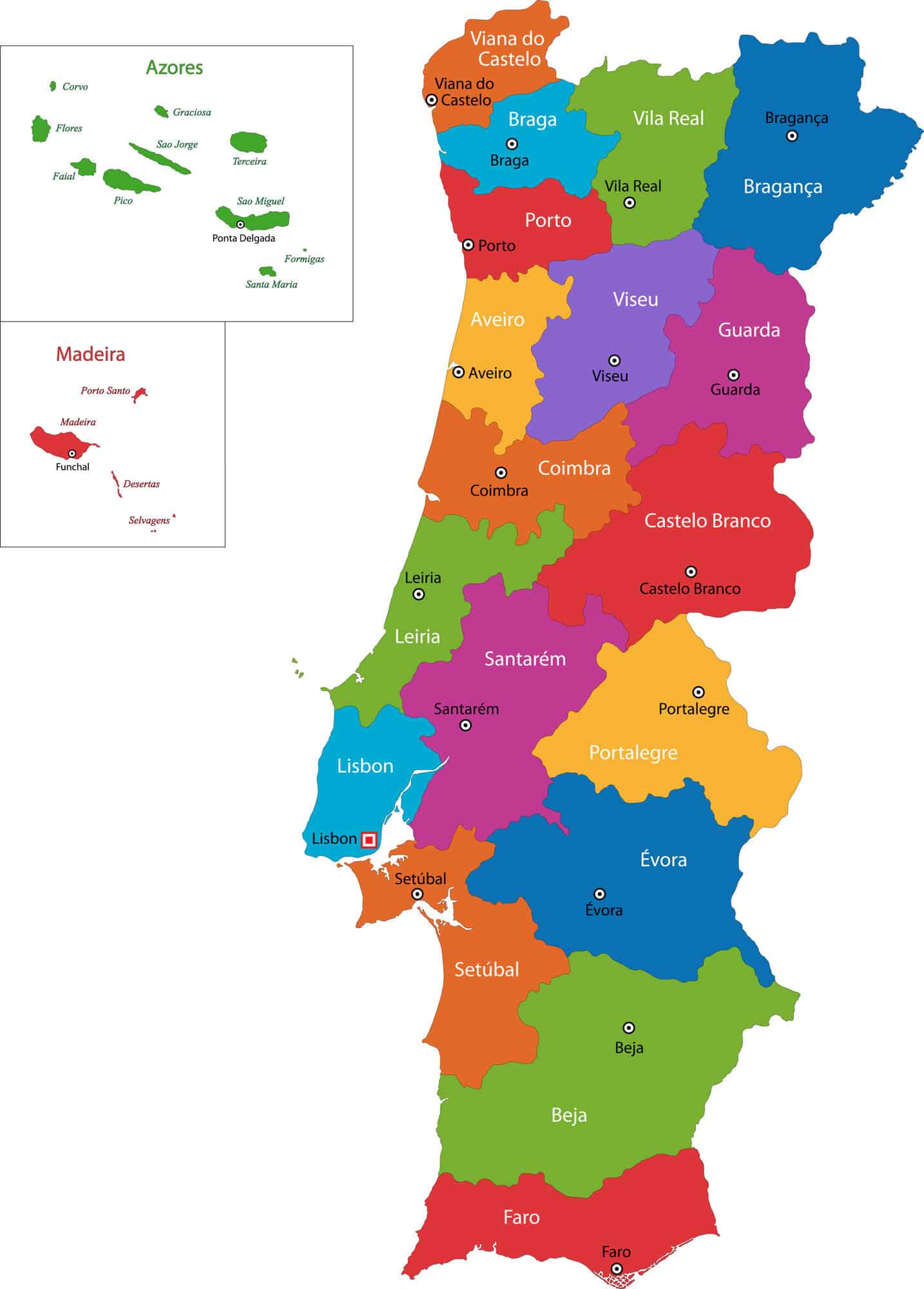
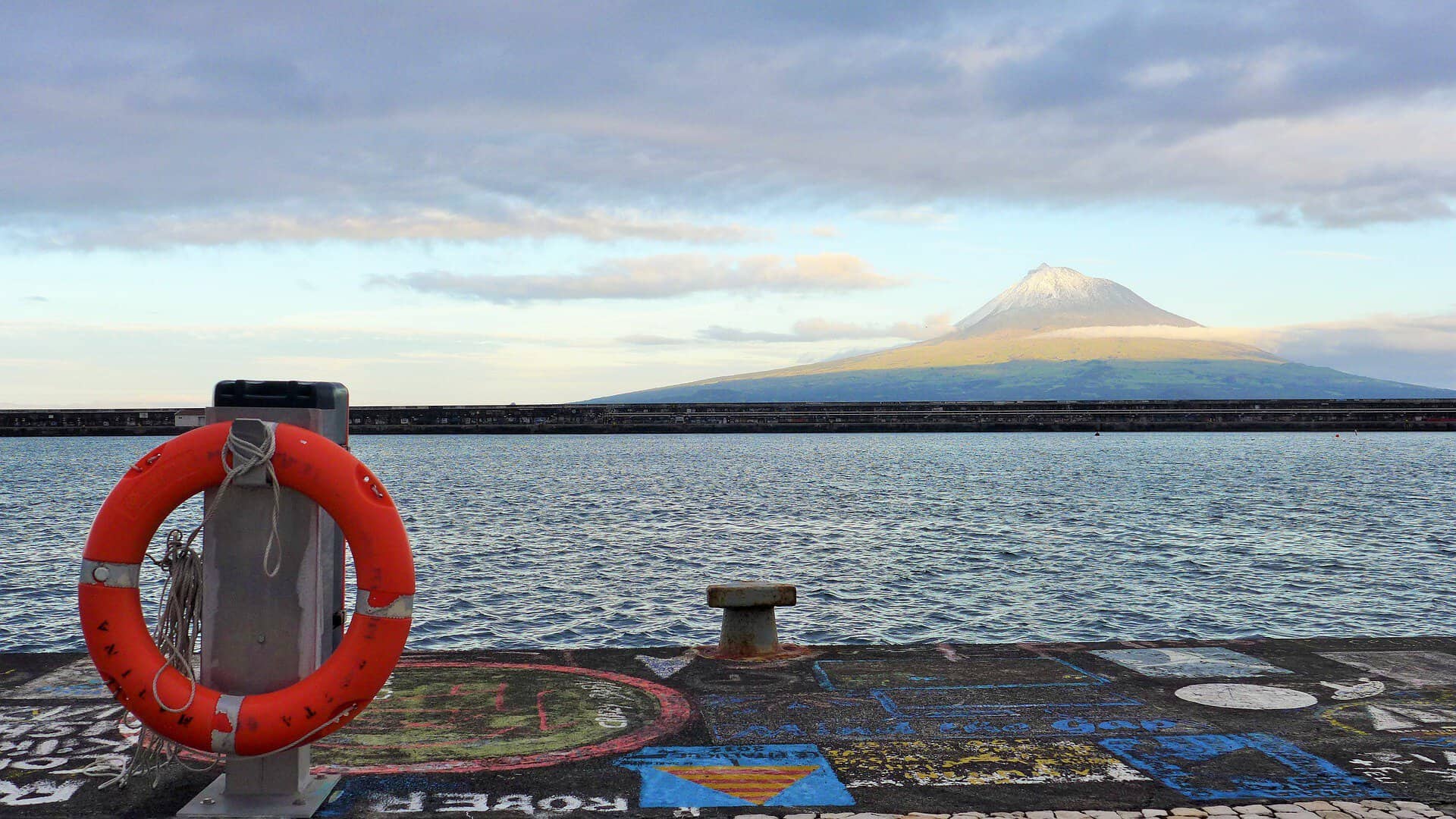
Faial Island lies within the “Triangle Islands” of the Azores’ central group, facing Pico and close to São Jorge. It is the main island of the three, with the larger airport and flights to mainland Portugal as well. Faial also offers the finest views of Mount Pico, the highest peak in Portugal, rising on the neighboring island.
Its capital, Horta, is world-famous among sailors. The city has a large harbor known internationally as a stopover for yachts and boats crossing the Atlantic. That was true centuries ago during the voyages to the New World, and it remains true today for modern sailors.
Faial was the site of the Azores’ most recent volcanic eruption, in 1957. At Capelinhos, on the island’s western tip, the scorched remains of buildings offer a haunting reminder of nature’s force. There is also a distinctive volcanic interpretation center that functions as a museum, explaining the volcanoes that shaped the Azorean archipelago. A visit to Faial is especially well suited to travelers looking for a cosmopolitan atmosphere wrapped in the Azores’ trademark calm and quiet, and to those planning a deeper journey beyond only the main islands.
How many days do you need to visit Faial Island?
To see most of Faial’s main sights, allow a day and a half to two days. Another option is to arrive by a short ferry ride after spending one day on nearby Pico Island, then visit only Horta. After that, you can continue your Azores trip—or fly home—from Faial’s larger main airport.
Click here to find hotels and vacation rentals on Faial Island…
Click here to explore our complete guide to the Azores Islands…
6 must-see sights and experiences on Faial Island
- Have a gin and tonic at Peter Café in Horta harbor | Peter Café
- Pick your favorite symbol from the sailors’ and boats’ paintings | Marina da Horta
- Our Lady of Conceição Viewpoint | Miradouro Senhora da Conceição
- The great volcanic crater of Cabeço Gordo | Caldeira do Cabeço Gordo
- Capelinhos volcanic interpretation center at the island’s most recent eruption site | Vulcão dos Capelinhos
- Blue hydrangea flowers season (especially in June and July)
Click here for a full-day guided tour of Faial Island…
How do you get to Faial Island?
Flights to Faial
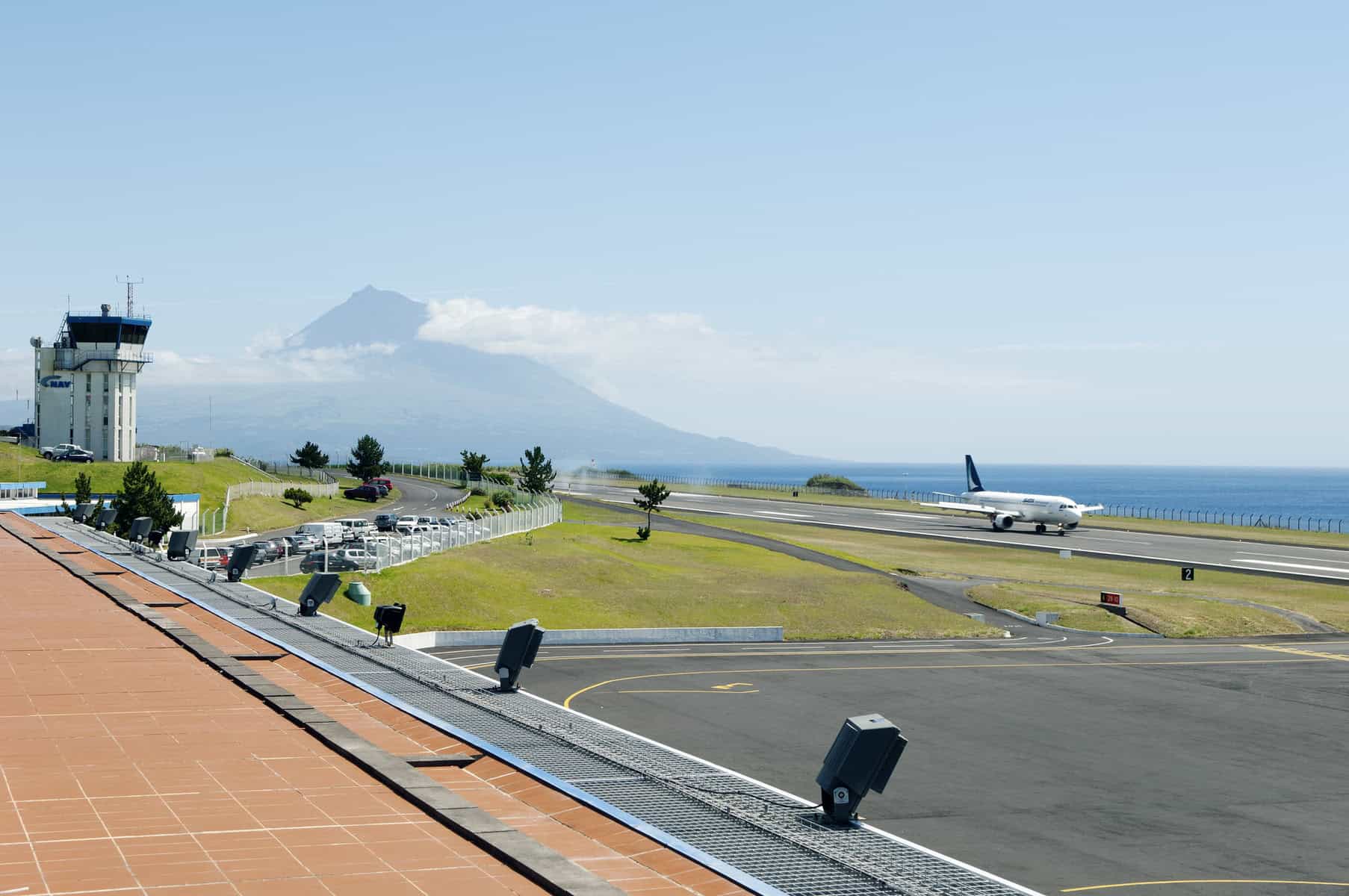
Horta Airport | Aeroporto da Horta is on the south side of the island, about a 10-minute drive from town. From the airport (code HOR), there are several daily flights to Ponta Delgada on São Miguel, the main island, with a flight time of around 50 minutes. There are also flights to Terceira, the central island in the middle group of the Azores, which take about half an hour. All inter-island flights are operated by Azores Airlines.
Flights from mainland Portugal to Faial
Faial is the archipelago’s third most populous island, so there are also direct flights from Lisbon, with a flight time of about two and a half hours.
Ferry
Ferries depart from the northern pier in Horta harbor. From Faial, the main ferry connections are to Pico Island, just 3 miles (5 km) east across the strait. There are short crossings to Madalena directly opposite, as well as a route to São Roque. From São Roque, on northern Pico, ferries continue to São Jorge Island, completing the “Triangle Islands” of the Azores’ central group.
Ferries are a convenient way to move between these three nearby islands, mainly because the crossings are short. They are far less practical for reaching the larger central islands of Terceira and São Miguel, mostly because the sailing time is much longer.
On Faial, the ferry ride itself can be part of the experience. On a clear day, it is well worth sailing at least to Madalena opposite and photographing Mount Pico from the water along the way.
Boats and yachts to Horta, Faial’s capital
As noted, Horta, Faial’s main town, is a world-famous destination for sailors arriving by boat and yacht. There is hardly a sailing enthusiast in Europe or North America who does not know Horta, and even those who have never visited usually see it as a place to reach one day. As in the Age of Discovery, Horta remains a stop on the route between American ports and European ones, especially for those sailing from the Caribbean toward the Old World and back again.
Click here for the complete guide to the Azores…
About Faial
- Each island in the Azores has an associated color, and Faial’s is blue, mainly because of the blue hydrangeas that bloom here.
- Beyond that, it is also known as the cosmopolitan island because it is a well-known stop for boats and yachts from around the world. When sailors come ashore, they gather in the bars and restaurants near the harbor, giving the island an especially international feel.
- It is the westernmost island in the Azores’ central group. In fact, Capelinhos, the volcanic area on the island’s west side, is the westernmost point in all of Europe. That is because Flores and Corvo already sit on the North American tectonic plate.
- Faial—especially Horta and its surroundings—offers the best views of Mount Pico on the neighboring island. Because the mountain is so tall (2,350 meters / 7,710 feet), it needs a little distance to be appreciated in full. A few miles west of Pico Island, Faial is the perfect place to take in the highest mountain in all of Portugal.
- Faial is the third most populous island in the Azorean archipelago. It has about 15,000 residents, almost all of them living in the capital, Horta.
- The first settlers arrived on Faial as early as the 15th century. When the Age of Discovery began, Horta became a stopover port on the route to and from the New World, and the island steadily grew.
- By area, it is the fifth-largest island in the Azores, covering 173 square kilometers (67 square miles), about one-fifth the size of large São Miguel.
- Faial’s highest point rises to just over 1,000 meters (3,280 feet) above sea level. It is at Cabeço Gordo, with excellent views over nearly the entire island and across to Pico.
Weather on Faial
- The weather on Faial, like the rest of the Azores’ central group, is a little cool and rainy.
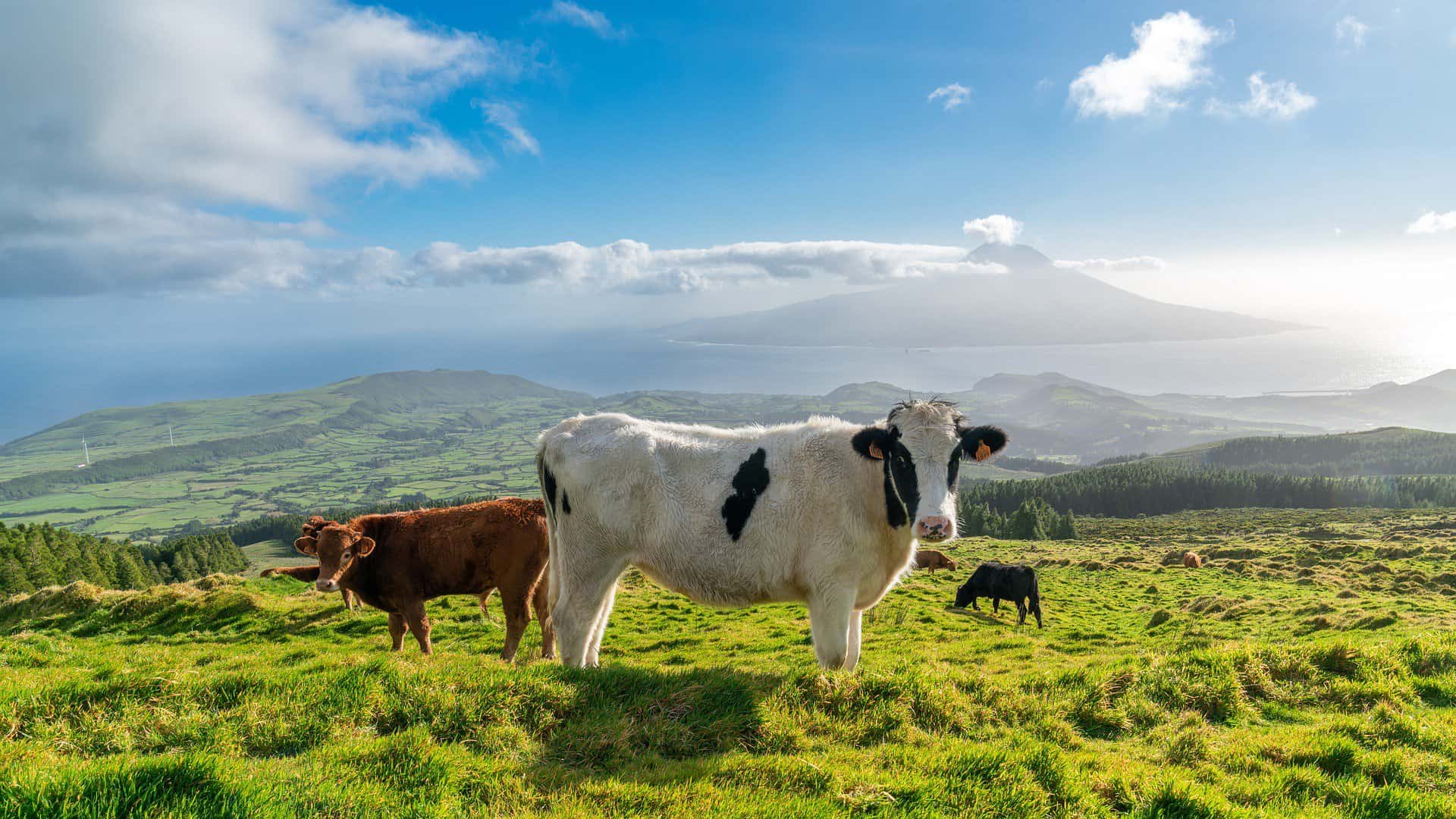
- Temperatures almost never drop below 10°C (50°F) and rarely climb above 25°C (77°F). That is one reason you see so many cows grazing on the island’s lush, fertile green pastures—cows whose milk is used to make excellent cheeses.
- The rainiest months are in fall, from October through December. It does rain during the rest of the year as well, just less heavily.
- June, July, and August are the ideal months to visit Faial.
- In any season, as across much of the Azores, the weather can change several times in a single day, so it is always smart to bring a light layer with you.
- Keep in mind that some sites on Faial close in winter and late fall, the island’s quieter tourist seasons.
Click here to search for accommodations on Faial Island…
Click here for a tour of Faial’s volcanic area…
Horta – The Azores' Cosmopolitan Port
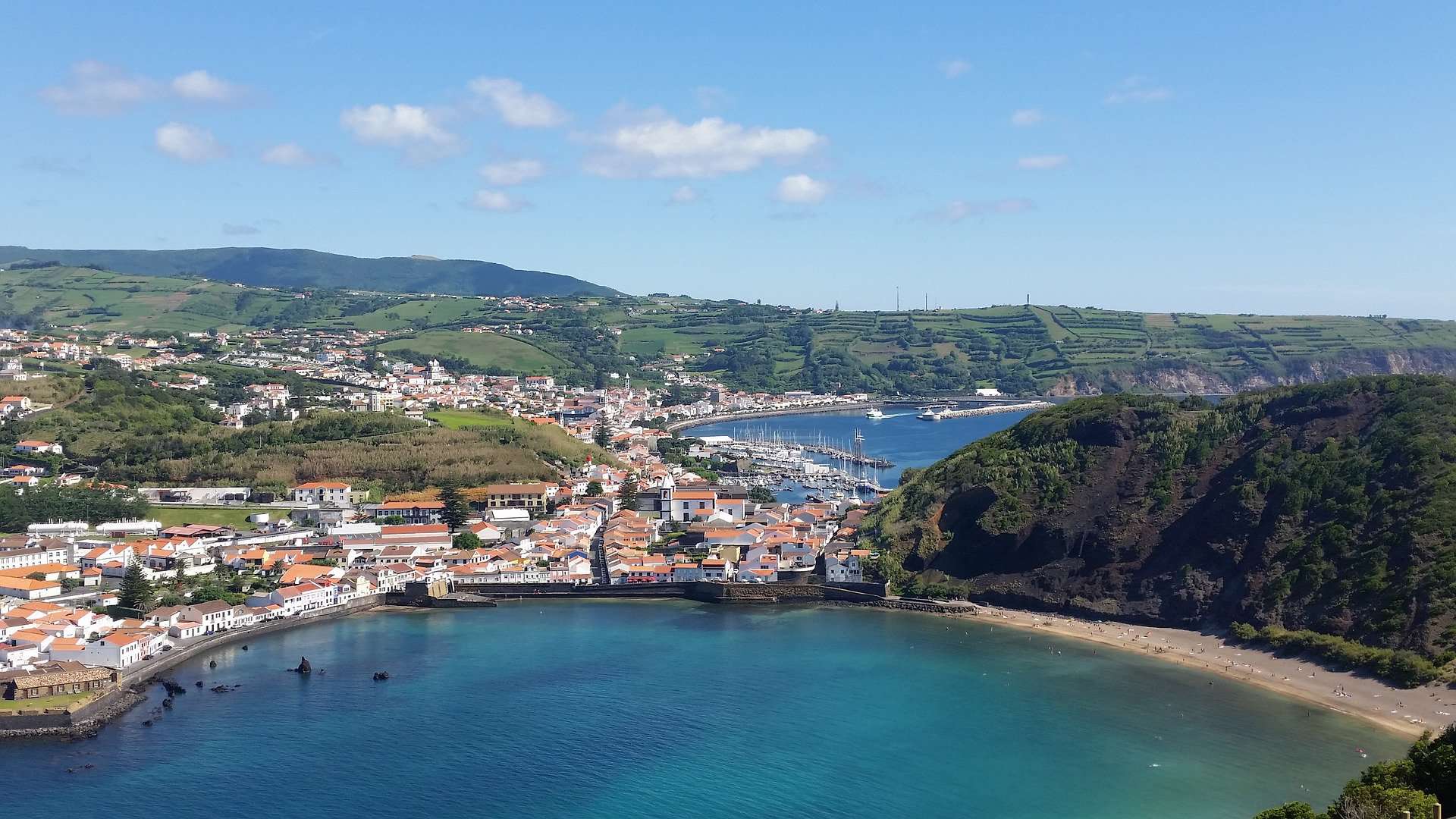
The town of Horta sits on a deep natural bay at the southwestern tip of Faial, facing Pico Island. It is a very pleasant town to explore and feels, in some ways, a bit like Ponta Delgada on the main island of São Miguel.
Horta’s town center lies just north of the marina. Here you will find cafés, restaurants, shops, and the city’s main public buildings. The main street is R. Conselheiro Medeiros, a long, narrow, charming street that is wonderful for a stroll.
Horta also has a small waterfront promenade that begins in the center and stretches along the harbor and marina. At its southern end, it connects to the lovely beach at Porto Pim. Beyond the easygoing feel of a walk here, the promenade—and really much of Horta’s shoreline—offers views of the highest peak in the archipelago and in all of Portugal: Mount Pico, assuming the clouds cooperate.
Pico Island is only about 3 miles (5 km) away in a straight line, which is why it is seen so clearly from Faial. Many hotels in Horta also have perfect views toward Mount Pico, so it is almost impossible to miss.
Click here to search for accommodations in cosmopolitan Horta…
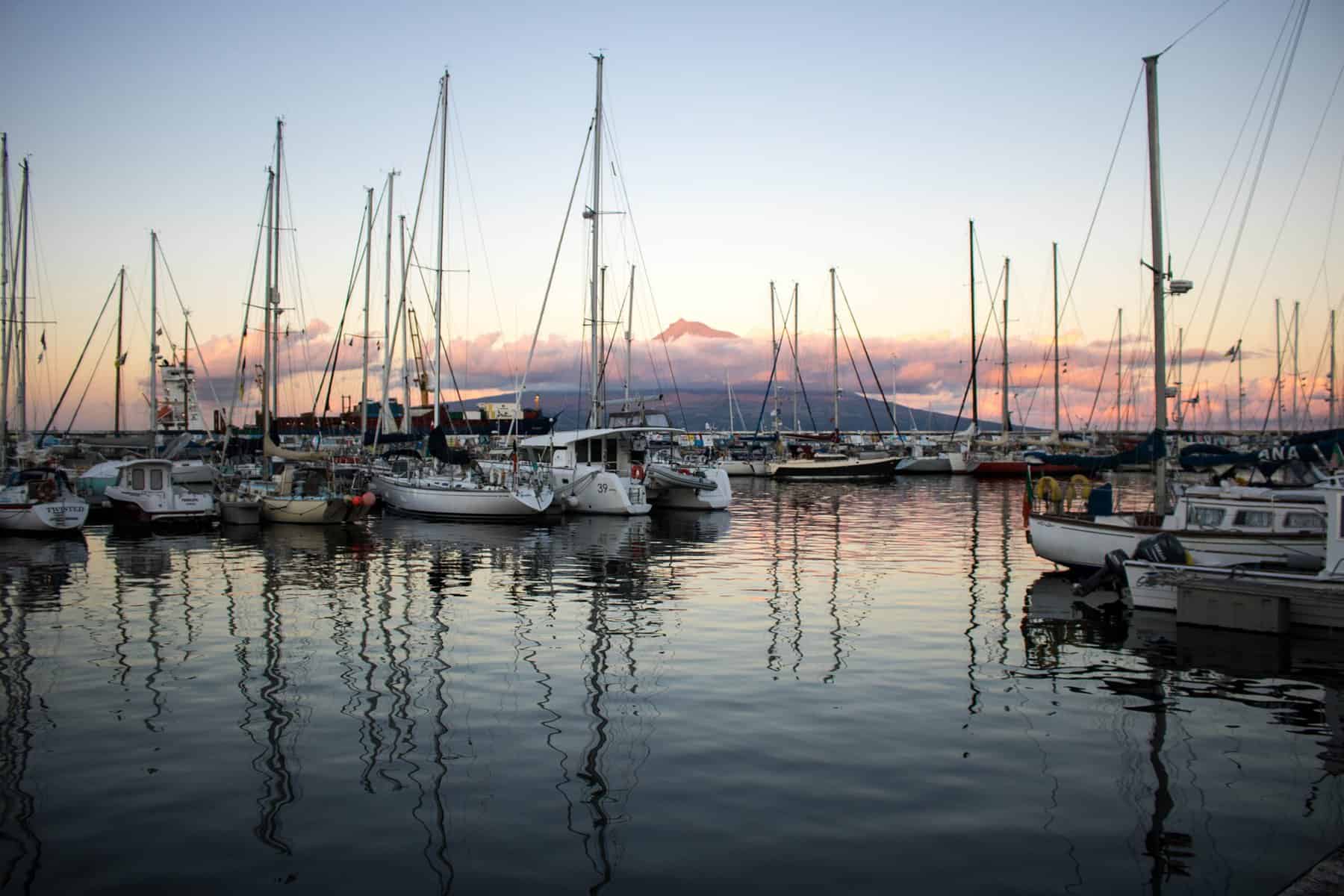
Horta Marina | Marina da Horta
As mentioned, Faial is the island where many yacht passengers crossing the Atlantic come ashore. Most stop in Horta harbor and dock in the marina after a passage from the Caribbean to Europe or vice versa.
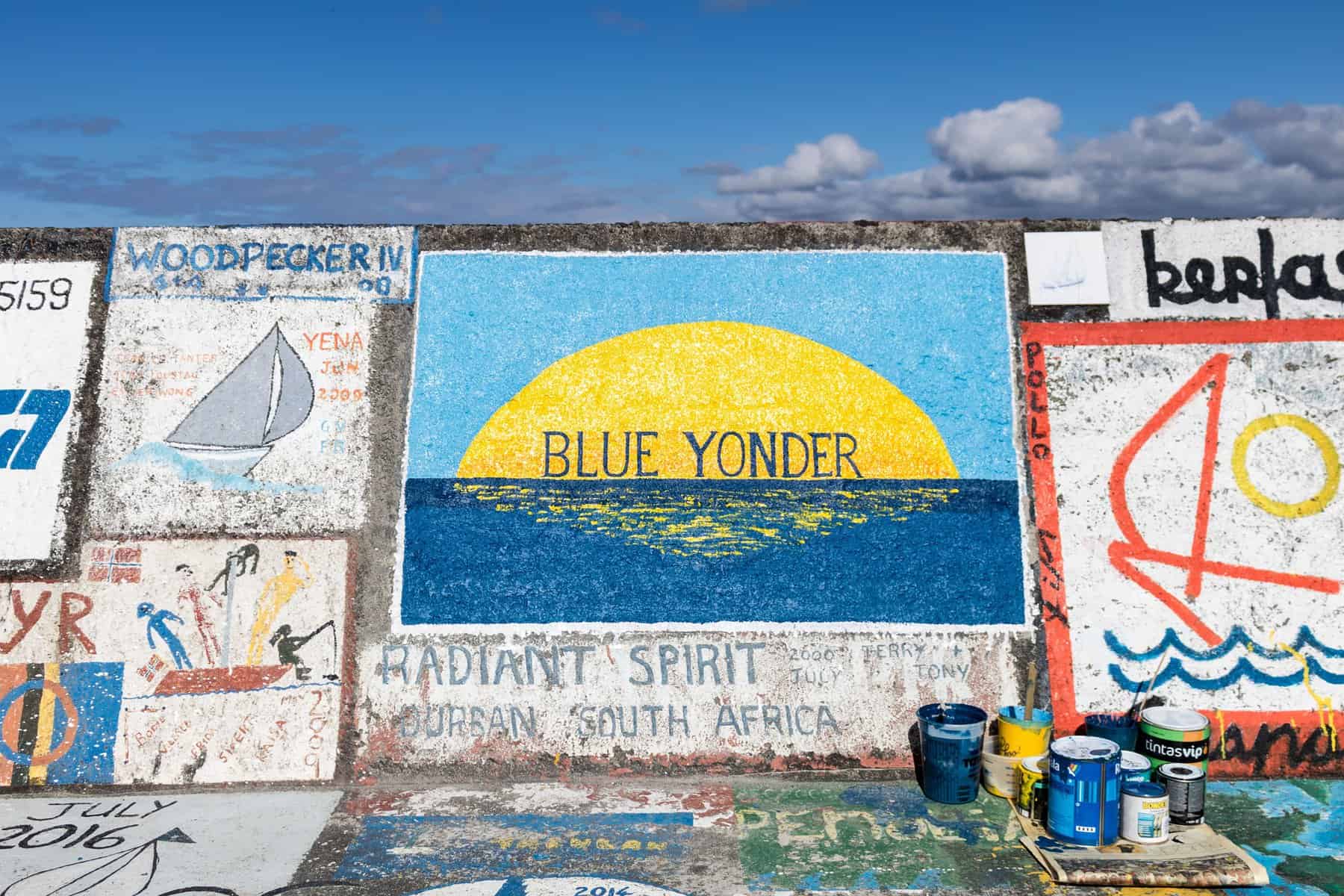
A custom that developed over the years is to paint a kind of travelers’ stamp—or the emblem of the boat and its crew—all along the long quay. The result is a colorful patchwork spread across every side of the marina’s gray concrete walls. All that is left to do is wander among them, decide which symbol you like best, and of course take a photo.
As noted, Horta and Faial are names familiar to virtually every yacht crew—and certainly every sailboat crew—crossing the Atlantic, so for sailing enthusiasts in particular, the famous quay is a must.
Click here to search for accommodations in Horta, the capital of Faial…
Peter Café Sport
Peter’s bar has been part of Horta harbor for well over a century. After painting their mark, sailing crews traditionally celebrate a successful crossing at Peter Café, right at the entrance to the marina.
Horta, as mentioned, is the main harbor of call on the route between the Caribbean and mainland Europe. In the past, sailors used to leave letters and mail for one another at Peter’s bar, and also pick up post heading in the opposite direction. That was in addition to the cosmopolitan gatherings that took place here each evening. To this day, Peter’s bar remains a heritage landmark for sailing enthusiasts worldwide.
Even if sailing is not really your thing, it is absolutely worth stepping inside. For one, the gin and tonic at Peter Café is considered among the best in the world. Just as importantly, the atmosphere is genuinely international, and the place is filled with hundreds of objects tied to Horta’s past as a global sailing hub.
Upstairs at Peter’s, you will also find a small museum-like display area, the Scrimshaw Museum, with artistic objects made from whale bone and engraved whale teeth created in the 19th century.
Click here for optional Itineraries in Portugal including once that goes to the Azores…
Porto Pim Beach | Praia do Porto Pim
This small beach at the foot of Monte da Guia, about 330 feet (100 meters) from the end of Horta’s harbor promenade, is the most pleasant beach on the island. Although the Azores are not especially known for beach vacations but rather for nature and agriculture, Porto Pim is a true gem—not only on Faial, but in the islands as a whole.
It is easy to reach directly from central Horta, and the scenery is striking, with the mountainside rising steeply just above it. Families especially like the beach because it is sandy and very well protected from waves.
On the side of the beach facing the town stands Genuíno Restaurante, which, like Peter Café, is something of an institution in Horta. The first Portuguese sailor to circumnavigate the globe solo, Genuino Madruga, returned from his journey around the world and decided to open a restaurant in his hometown. Alongside the excellent food, lovely atmosphere, and beautiful views, the restaurant displays objects, maps, and documents he collected during his long voyage from all corners of the world.
Click here for more information and opening hours for the restaurant and the display inside…
Click here for a full-day guided tour of Faial Island…
Monte da Guia Viewpoint
At the southern edge of Horta Bay stands a split volcano that looks like a green hill from the harbor. Its broken side faces south toward the sea, and the crater has filled with water. You can drive fairly high up the mountain, and along the way there are views of Pico’s summit on the neighboring island. From the viewpoints above, Horta and its harbor spread out below.
At the foot of the mountain there is a visitor center linked to the study of the ocean around the Azores, as well as Casa dos Dabney, the former vacation home of the U.S. consular family in the Azores in the early 19th century. The Azores became an important stop between the United States and Europe as far back as the Age of Discovery, when the U.S. was still a colony.
The consuls were not the only ones to strengthen ties between the Azores and North America. For more than a century—and still today—the islands have maintained close connections with both the United States and Canada, including many family ties, since large numbers of islanders emigrated to North America. Geographic proximity and the islands’ strategic location both played a role, and those ties remain strong. That is also one reason why English is commonly spoken in the Azores, unlike in many parts of mainland Portugal.
Click here to search for accommodations on Faial Island…
Horta Museum | Museu da Horta
The museum in the center of town displays items from the city’s past, including furniture, maritime objects, old photographs of Horta, and various historical artifacts.
It also features miniatures depicting everyday life on the island, clearly carved with the kind of endless patience one might imagine belongs to island life, where the seasons are watched and waited out in long rhythm.
Click here for more information and opening hours…
Church of the Most Holy Savior | Igreja do Santíssimo Salvador Horta
Located near the Horta Museum and beside the town hall, the church began construction in 1680. Its façade is the largest architectural façade in the entire Azores, not just on Faial. Since it stands right in the middle of town, you are likely to pass it on any walk through Horta’s small streets.
The church was built next to a Jesuit school, and after the Jesuits were outlawed in Portugal in the mid-18th century, the church took over the building and the two were joined into one enormous structure. The result is a church that feels surprisingly large for such a small town.
Inside, the church is richly decorated, with beautiful old azulejo tiles as well.
Click here to search for accommodations in Horta, Faial’s capital…
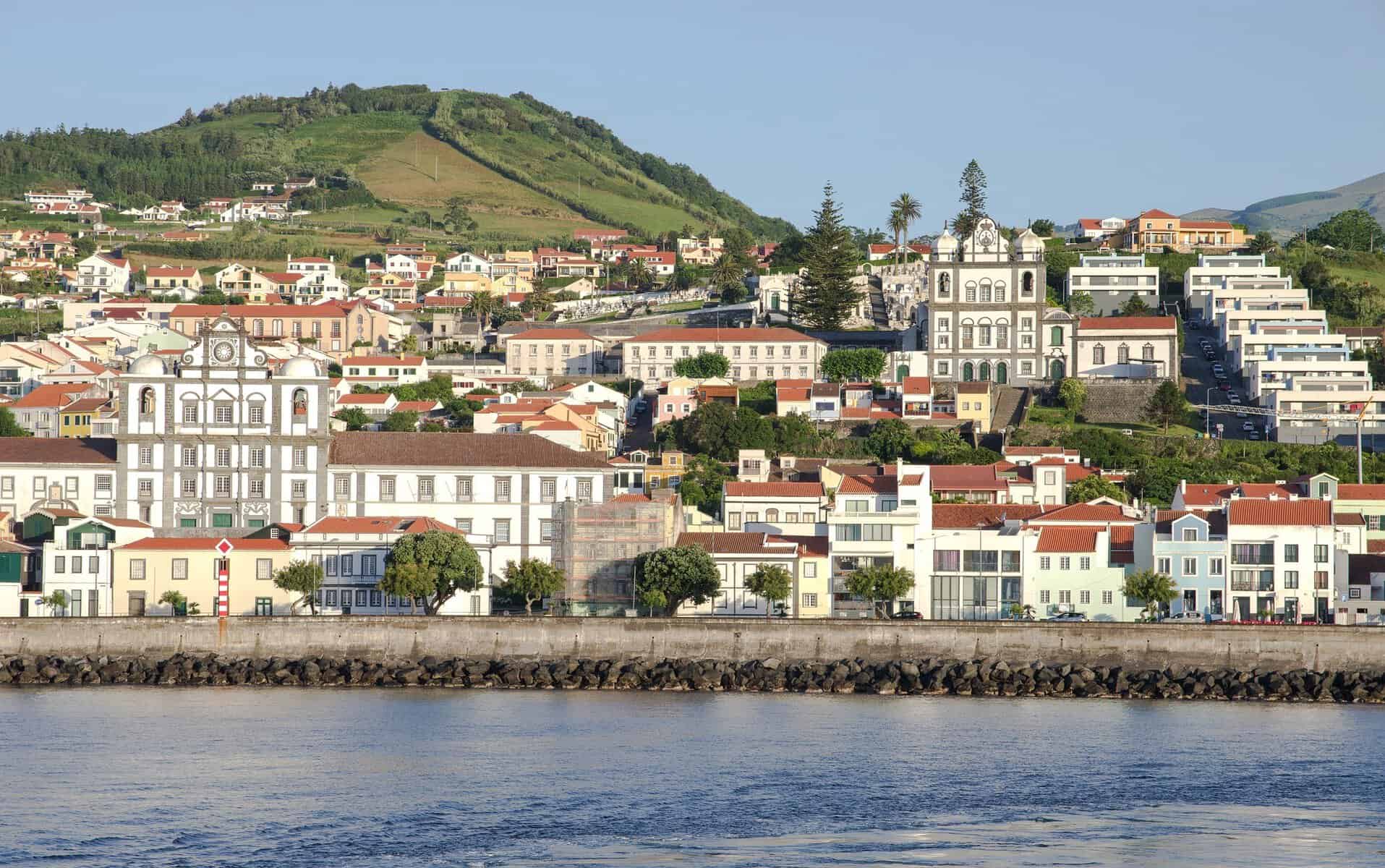
Our Lady of Conceição Viewpoint and Statue | Miradouro de Nossa Senhora da Conceição
This viewpoint north of Horta harbor looks out over the whole town and Monte da Guia at the end of the bay. Naturally, it also offers a clear view of the summit of the high mountain on nearby Pico Island. The spot is also known as Espalamaca.
The viewpoint sits right beside the narrow road climbing the hill. There is a small parking area, and around the statue is a circular terrace overlooking the landscape. From here, you can see how Guia shelters Horta and protects its harbor. It is no wonder the town became a stop for ships laden with gold from South America on their way back to Europe in the days when pirates roamed the open Atlantic.
Farther along the road in the nearby village, there is also an old windmill (Moinho Giratório).
Almoxarife Beach | Praia do Almoxarife
This beach lies on Horta’s northern outskirts. From here, the views across the strait to Pico Island and its lofty mountain are simply superb.
At the southern end of the beach, at the foot of the hill, there is a camping area.
Click here to search for accommodations on Faial Island…
More attractions and sights on Faial Island
Hydrangea Flowers
Faial is known as the Blue Island because of its hydrangea blooms. It is considered one of the most beautiful places in the world to see these flower-laden shrubs. In that sense, just as the island is associated with its yacht marina, it is also strongly identified with its vivid hydrangea hedges. Peak bloom comes in June and July, when row after row of flowering shrubs can be seen between the island’s bright green pastures.
Hydrangeas bloom in different colors depending on soil acidity, and here on Faial the pH of the soil means they flower in shades of blue and sky blue.
Click here for our full guide to the Azores' largest and main island, Sao Miguel…
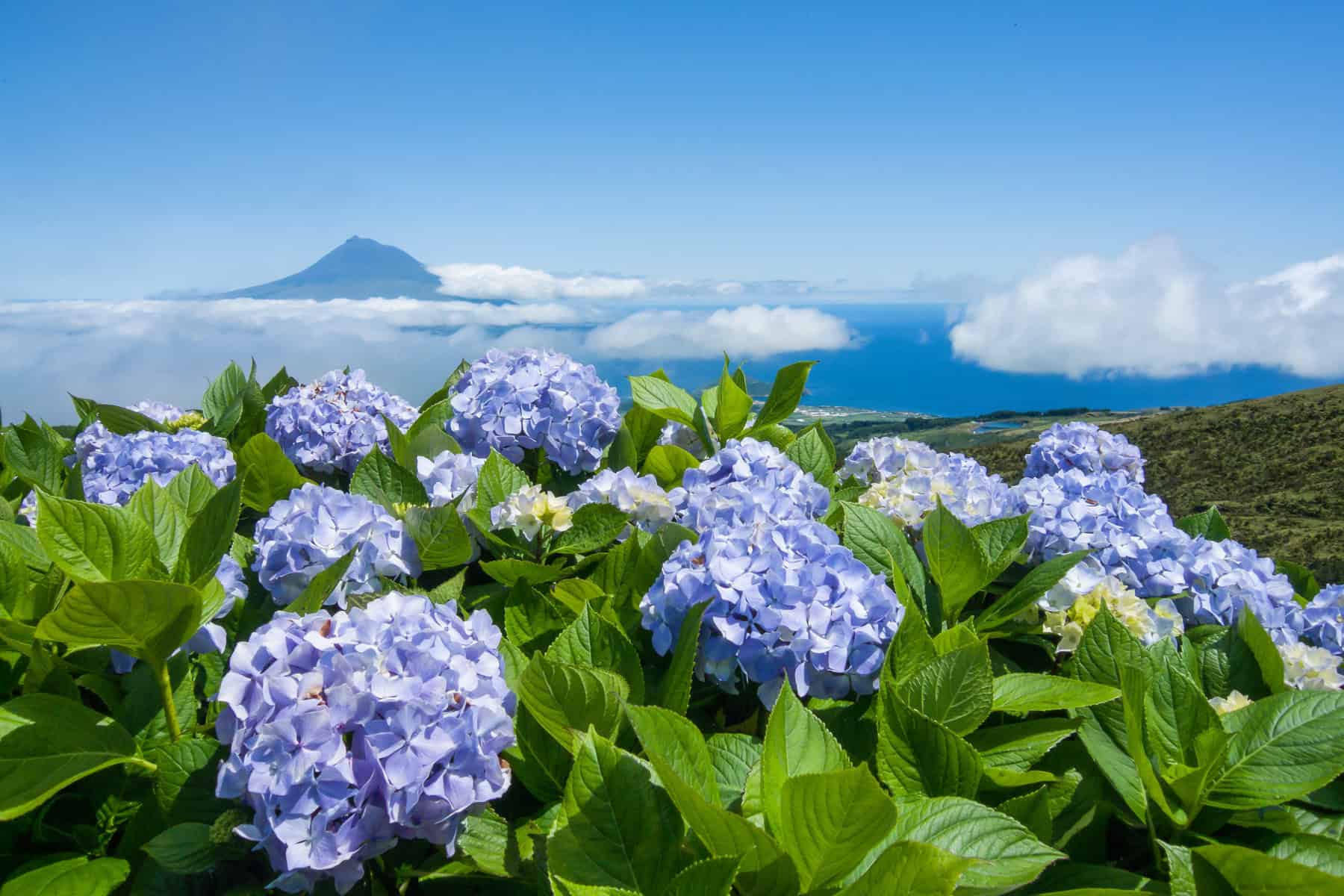
The sky-blue hydrangeas are characteristic of Faial, which is why it is also called the Blue Island
Ribeirinha village
A little north of Horta, the small hilltop village of Ribeirinha sits above the coast. Many buildings in the village were destroyed in the 1998 earthquake; some were restored, while others were not. Those left in ruins have become attractions in their own right, drawing visitors to sites such as:
- The lighthouse | Farol da Ponta da Ribeirinha — from the village, a path leads toward the sea to a small headland with the abandoned ruined lighthouse.
- São Mateus Church | Igreja de São Mateus — the church on the edge of the village and the cemetery beside it look as though they belong in a horror film, especially on a gray day. It is a stark reminder of the forces of nature and how quickly they can alter human life.
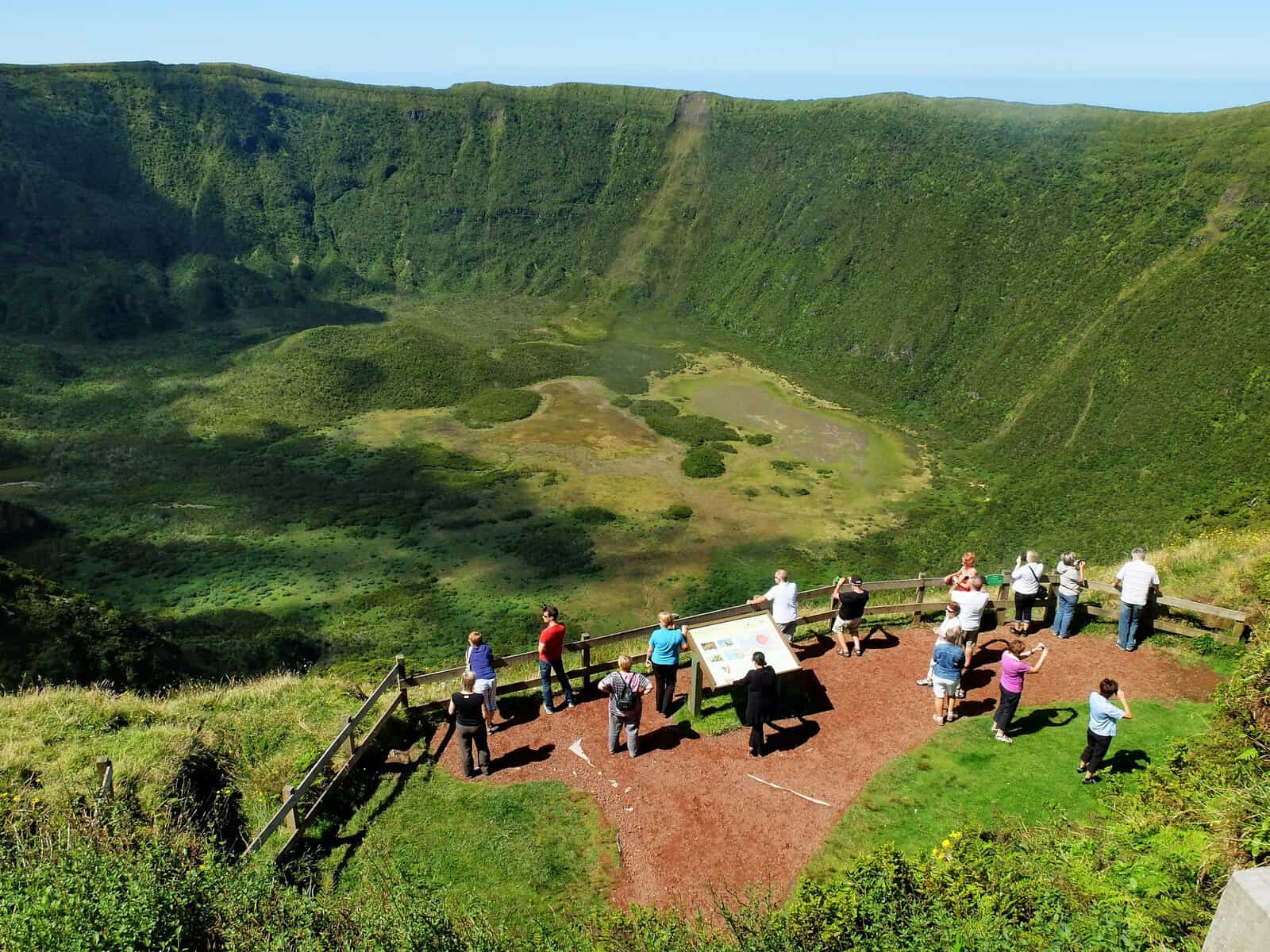
Cabeço Gordo Crater | Caldeira do Cabeço Gordo
Faial’s volcanic crater is not as deep as some of the craters on other islands, it has no large lake, and the vegetation inside is not especially dense. Even so, it has its own strengths, especially the walking trails and the hydrangeas growing along the roads that lead to it. There is a trail that circles the crater, nearly 7 kilometers (about 4.3 miles) long, but it is considered easy since there are no steep climbs.
Another trail starts at the viewpoint and descends into the crater before climbing steeply back out. It is shorter—about 2.5 kilometers (1.6 miles)—but rated difficult because of the incline. Neither trail is a good idea in bad weather.
Even if you do not plan to hike the full route, the main road to the crater and the beginning of the trails end at a small parking lot, from which—and from several nearby spots—there are wonderful views. The bonus is that if you turn around instead of looking into the crater, you get an equally beautiful view of Pico Island and its high mountain.
The highest point above the crater stands at over 1,000 meters (3,280 feet), so on clear days you can see all the islands in the Azores’ central group, and sometimes even as far as distant Graciosa.
Click here to search for accommodations on Faial Island…
The volcanic interpretation center at Capelinhos Volcano | Centro de Interpretação do Vulcão dos Capelinhos
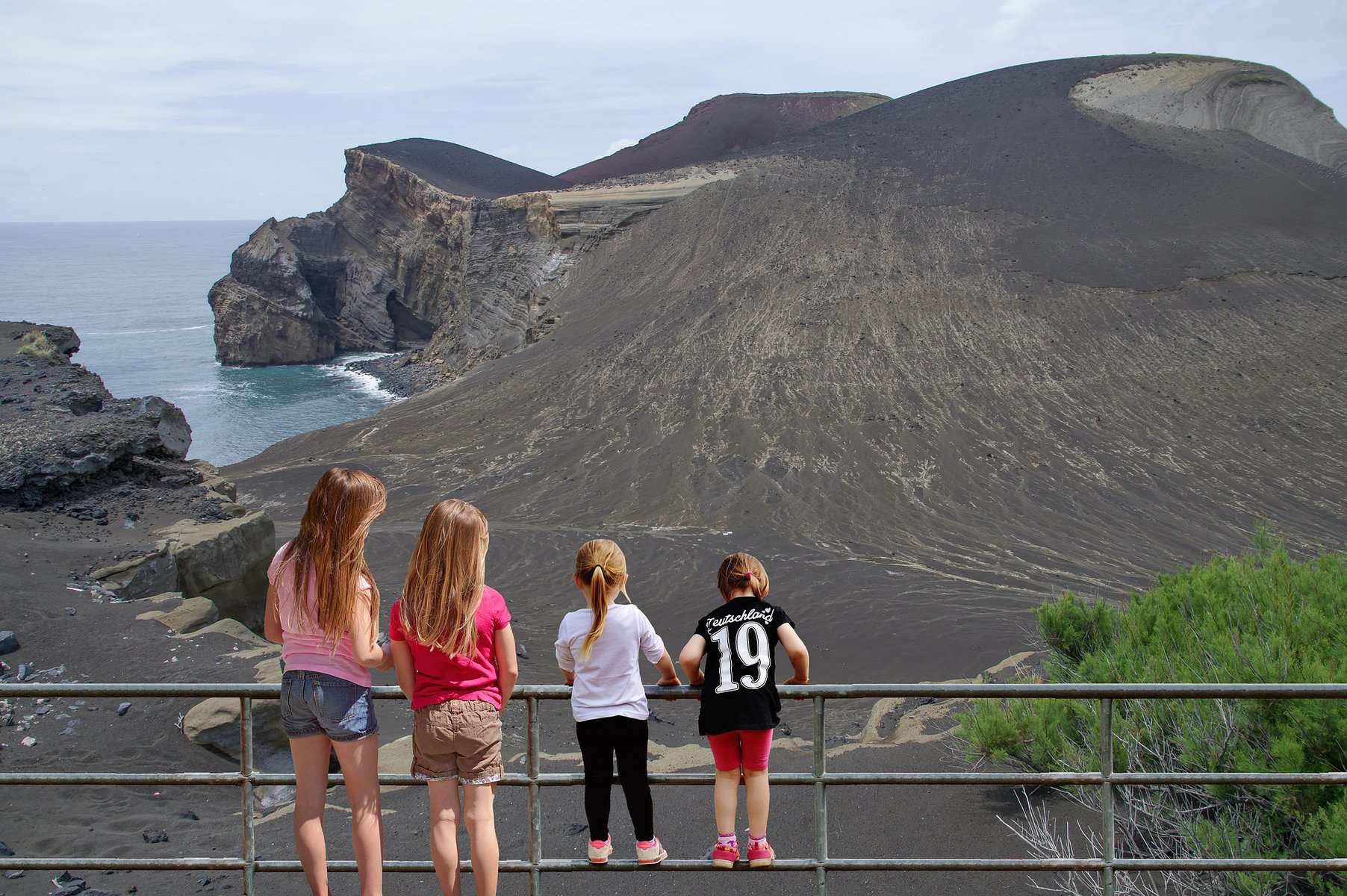
At the island’s westernmost tip, a volcano erupted in 1957 in what remains the most recent eruption in the Azores. The traces of that eruption are visible everywhere, especially in the black volcanic ash left behind.
To explain the volcanic activity here and across the Azores more broadly, an interpretation center was created on site. It explores what volcanoes are and how eruptions happen. The center includes multimedia displays and guided visits explaining first the eruption at Capelinhos and its consequences, but also volcanic activity throughout the Atlantic.
The burned lighthouse nearby serves as a living exhibit, showing visitors what happens when blazing lava flows close to buildings. The entire center is underground, designed so it does not block the landscape.
Click here for more information and opening hours for the volcanic center…
Click here for an excellent half-day tour from Horta to see Faial’s volcanic landscape…
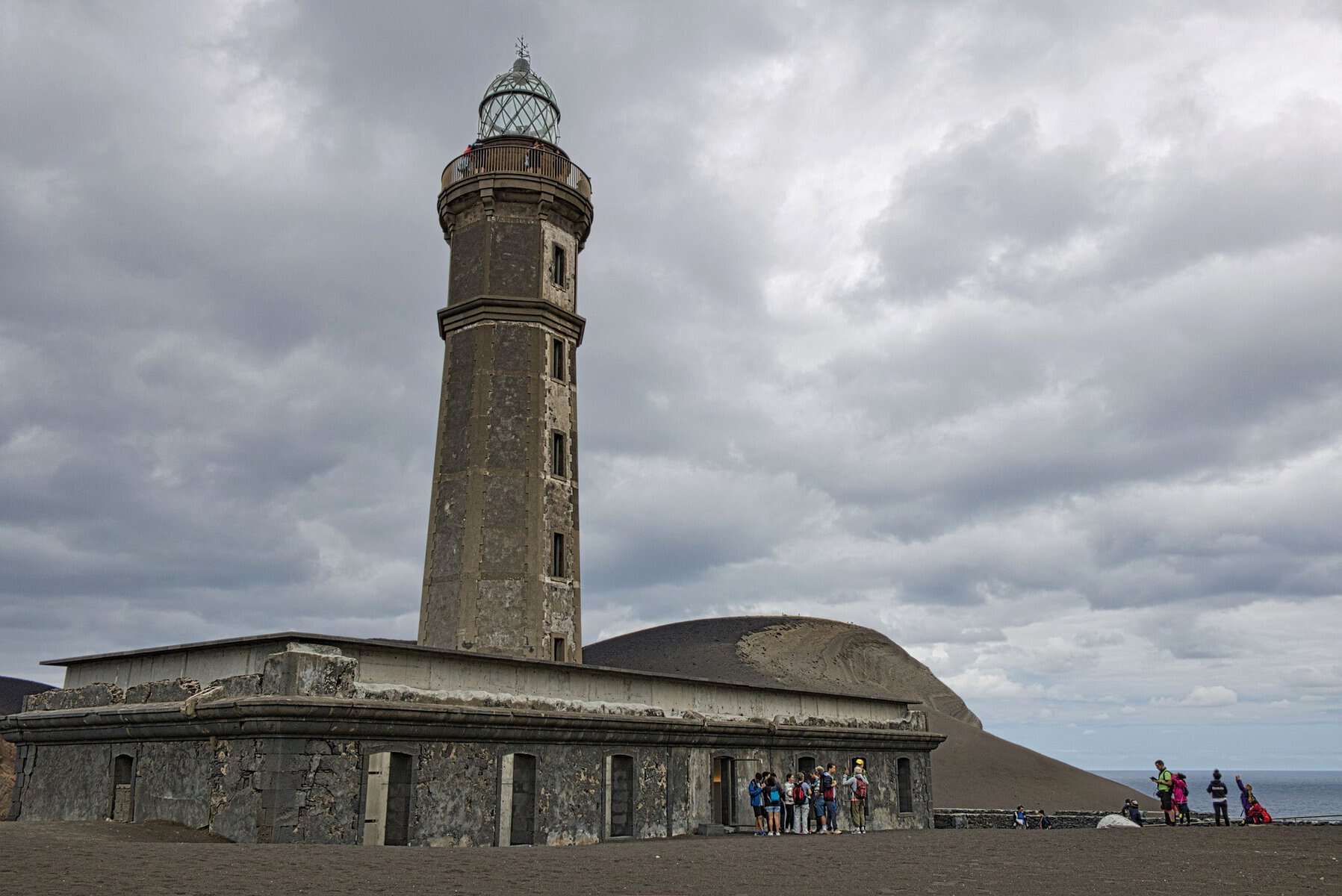
The lava-burned lighthouse at the island’s western tip | Farol da Ponta dos Capelinhos
Ponta dos Capelinhos Lighthouse stands at the westernmost edge of the island. As was customary, a lighthouse was built at this far tip of Faial, but during the eruption it too was slowly burned by the heat of the lava.
Today, the lighthouse stands as a kind of monument to that volcanic event and has become one of Faial’s most visited attractions, largely because of its apocalyptic appearance.
Click here to find accommodations on Faial Island…
West Faial — Capelo to Varadouro
In the west of the island, between the crater and Capelinhos, lies a stunning rural landscape. The road between the villages of Varadouro and Capelo, and beyond, opens up panoramic views over this part of Faial. Between green fields and black lava rock, you will find a few hot springs and several isolated guesthouses.
Click here for a tour of Faial’s volcanic area…
Praia do Norte | Praia do Norte
This small village shares its name with its location on the island. It lies not far from the lighthouse—about a 10-minute drive west. In addition to a few places to stay and several excellent viewpoints above it, there is also a genuinely lovely little beach here. It is a rare sandy beach in the Azores, with black sand beneath cliffs covered in green vegetation.
The whole beach is classified as a fajã, meaning a small strip of land surrounded by cliffs and rocks. This landform, set against turquoise-blue water, photographs beautifully on a sunny day. There is parking along a small waterfront promenade, as well as a playground and picnic area.
Above the beach, there is also a viewpoint over the cliff above the fajã at an elevation of 320 meters (1,050 feet), and it is well worth stopping there before or after your visit.
Click here to search for accommodations on Faial Island…
Click here to explore our complete guide to the Azores Islands…