Cascais is the westernmost part of the vast Lisbon metropolitan area. This seaside town is essentially one of the Portuguese capital’s most upscale suburbs. It has a large marina, urban beaches, an excellent food scene, and plenty of nightlife and entertainment. Much like the famous French Riviera, Cascais draws the rich and famous. On sunny summer days, the meeting of sea, sand, and colorful houses creates the perfect backdrop for parties and glamorous events. Fitting for a stylish Riviera town, Cascais is also home to a grand and lavish casino—Casino Estoril. Most people visit Cascais as a day trip from Lisbon, though you can easily stay longer, especially if you enjoy lively weekends.
How many days should you spend in Cascais?
Cascais is perfectly suited to a day trip from Lisbon, which is enough to experience it at its best. That said, if you want to build in a mini weekend break during your time in Lisbon—something more relaxed by the sea, with the option of going out at night—it’s worth staying at least one night.
Check out our guide to Day Trips from Lisbon….
7 must-see sights and attractions in Cascais
-
- Central Cascais – Take a stroll and enjoy a meal along one of the town’s narrow, beautiful streets
- The marina and the square above the citadel | Marina de Cascais
- The Hell's Mouth (cliff formation) | Boca do Inferno
- A walk along the seaside promenade in Cascais
- Castro Guimarães Museum | Museu Condes de Castro Guimarães
- Paula Rego Museum | Casa das Histórias Paula Rego
- Casino Estoril – One of the largest in all of Europe
How to get to Cascais
Flights to Cascais
Cascais is a suburb of Lisbon, so the main air gateway is Lisbon International Airport.
Cascais is not only a town but also the name of the district. In keeping with its reputation as a playground for the rich and famous, the area also has a small airport (Aeródromo Municipal de Cascais) that mainly serves private aircraft. Cascais Airport (code CAT) is located northwest of town, about a 20-minute drive away, in a place called Tires. The scheduled flights operating from there are domestic services by Sevenair using small aircraft.
Click here to find hotels or vacation apartments in Cascais…
Train to Cascais – best!
The best way to reach Cascais by public transportation is by train.
Trains leave from Cais do Sodré station in Lisbon every half hour during the day. The station is right next to Time Out Market Lisbon, and the ride to Cascais takes about 40 minutes. That makes Cascais especially well suited to a day trip from Lisbon and a welcome break from the big city.
The train ride is an attraction in its own right. As you approach Cascais, the tracks run right along the coast, so if you can, grab seats on the left side of the car when leaving Lisbon and on the right side on the return trip.
Driving to Cascais with a rental car
Cascais is about 30 kilometers from Lisbon, and getting there is easy. Almost the entire drive is along the highway that leads straight into town, and it usually takes around 35 minutes.
Check out our guide to renting a car in Lisbon…
Parking in Cascais
Parking right in the heart of Cascais and close to the beach is almost impossible, especially on weekends. There are several large parking lots and plenty of smaller ones around the town center, all within walking distance:
Museum area – a relatively large parking lot: Marechal Carmona Parking (Estacionamento Marechal Carmona)
Train station area – a good option if you want to walk to the beach and the yellow streets. There are several lots nearby, including Alameda Parking by the tracks (Alameda).
Marina area – a convenient choice if you want to park close to both the museum district and the town center: Marina Parking (Estacionamento Marina Terra Cascais).
Click here for a day trip from Lisbon to Cascais, Sintra, and Cabo da Roca…
Good to know about Cascais
Cascais is a city in its own right, but its closeness to Lisbon and how easy it is to reach from the capital—there’s a train straight to central Cascais—make it a destination with several different sides.
You’ll find museums and culture here, along with countless restaurants, street food, and even a market. Its beaches are quite different from most beaches in Portugal. There’s a lively nightlife scene and a huge marina where the rich and famous gather. The rocky, dramatic coastline stretches westward, with rock pools and large dunes that can even be explored by bike. In other words, Cascais has something for just about everyone, whether you want to focus on one attraction or sample a little of everything.
More than anything, Cascais is a day-trip destination from Lisbon that also works very well for families. It’s the kind of place where you can spend the day, enjoy lunch at one of the excellent restaurants, and soak up an atmosphere that feels more like a Greek holiday island than a suburb of Portugal’s capital.
Click here for a list of 11 excellent hotels in Cascais and Estoril…
Click here for a boat trip along the coast of Cascais…
Food and nightlife in Cascais
The Yellow Streets | Rua Amarela
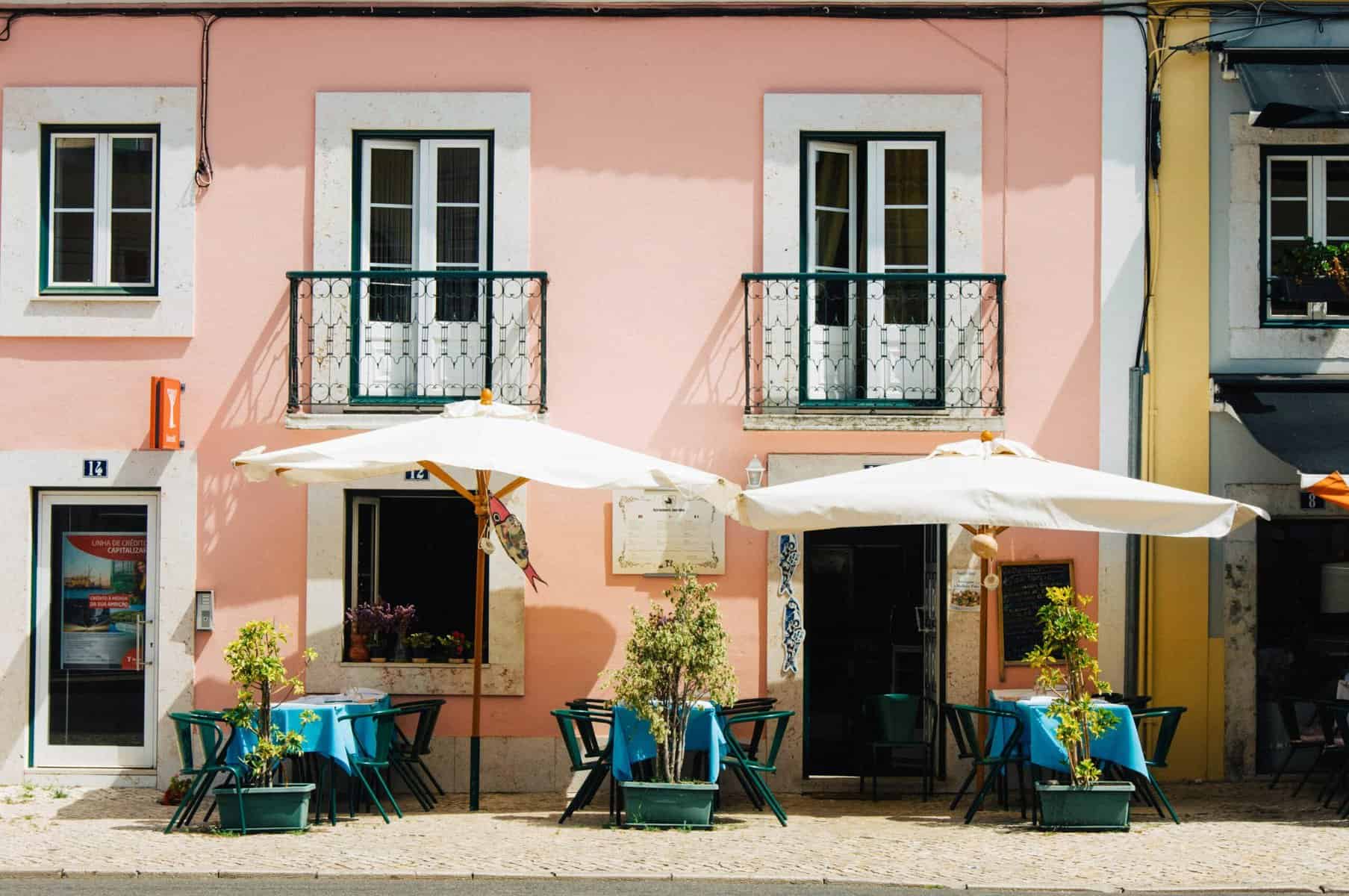
The Yellow Streets are a cluster of streets in the heart of town that form Cascais’s main dining hub. Some of them really are painted yellow, so they’re hard to miss. From Praça 5 de Outubro, simply walk up the main pedestrian street, Afonso Sanches (R. Afonso Sanches), for about 200 meters and you’ll reach the center of the action. Restaurants spill their tables onto the street, and especially on weekends, these small, pleasant lanes are packed.
Click here to search for accommodations in central Cascais…
Interesting Streets in central Cascais
The town center is small and made up of narrow streets, many of them pedestrian-only. As mentioned, Afonso Sanches—the pedestrian street that begins at Praça 5 de Outubro opposite Ribeira Beach—is one of the main ones, with smaller streets branching off from it. A few other streets worth noting are:
- Flower Street – Flores | R. das Flores – lined with many restaurants.
- Frederico Arouca Street | R. Frederico Arouca – the street running parallel to the waterfront, with shops, restaurants, and cafés.
- Luís de Camões Square | Largo Luís de Camões – the main square, known for its famous cafés and restaurants.
Food in Cascais
Cascais is a great destination for foodies. Everyone will find something to enjoy here, and the town is famous as a Lisbon escape where people come—especially on weekends—to get some fresh air, eat, drink, and have fun. That’s why you’ll find plenty of restaurants, bars, and street food. The main food areas are:
- The Yellow Streets – lively by day and by night
- The streets in the town center – running parallel to the beach
- The marina
- And for those exploring Cascais by car, the western beaches outside town—home to a few exclusive restaurants frequented mostly by Lisbon locals from the upper class.
A few typical specialties Cascais is known for:
- Dessert – Areias de Cascais – small sugar-coated cookies.
- Tapas – or, as they’re called here, petisco. In Cascais, tapas often focus on cheeses, though not only.
- Ice cream – in Cascais, it’s considered the best in Portugal. Santini | Santini, founded by immigrants from Italy, is the town’s iconic ice cream shop and sits about 100 meters uphill from central Ribeira Beach.
The municipal market | Mercado da Vila
Cascais Market is located near the train station and close to most of the town’s main attractions. In recent years, it has been transformed into a hub of bars and restaurants, much like other markets in city centers around the world. On Wednesday and Saturday mornings, the market extends into the street, when vendors also come to sell kitchenware, linens, clothes, and more.
Click here to find accommodations in Cascais…
The Cascais casino – Casino Estoril
The casino is named after the town where it stands, Estoril, though in Portuguese it’s pronounced more like Ashtoril. Over time, Estoril has effectively become part of Cascais as the towns expanded and merged.
It sits above Tamariz Beach, with its famous seawater pools, just a few minutes from central Cascais. If you don’t have a car, simply get off at Estoril train station, the first stop after Cascais—just 4 minutes away—and walk uphill to the casino in about 5 minutes through Estoril’s palm-filled gardens.
The casino is one of the largest in Europe. It first opened here in 1931, and during World War II it became a place where spies from all sides would gather, socialize, and try to extract valuable intelligence. Those encounters at Casino Estoril inspired Ian Fleming to write his novel ‘Casino Royale', which later became one of the most successful James Bond films.
Inside the large casino, you’ll find all the familiar table games—roulette, blackjack, and more—along with plenty of slot machines and poker (both cash games and weekend tournaments).
The casino also has several restaurants and a few bars, making it a night-out destination even if you’re not there to gamble. It also includes several halls and an auditorium that host events, conferences, and performances, especially on weekends. The casino is open daily from 3:00 PM until 3:00 AM.
The casino area in Estoril has several large resort-style hotels and modern buildings that make an excellent place to stay in the Cascais area.
Click here for more information about the Cascais casino – Casino Estoril….
Click here to search for hotels near the casino in Estoril…
Check out our guide to Casinos in Portugal…
More sights and attractions in Cascais
October 5th Square and City Hall | Praça 5 de Outubro
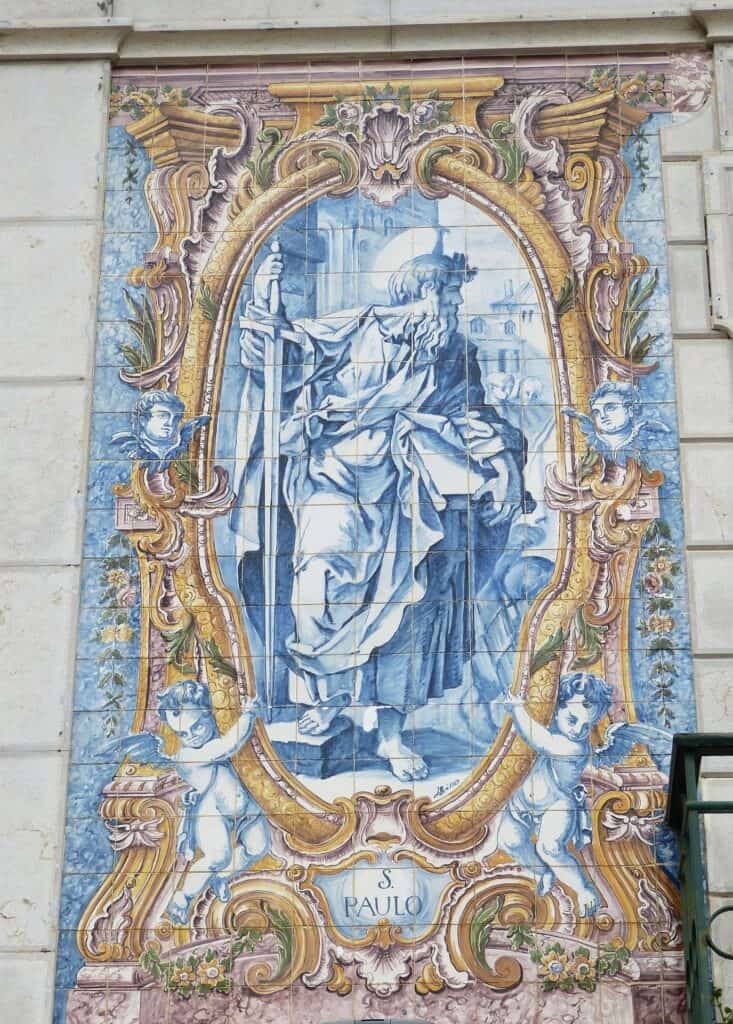
Praça 5 de Outubro, above Ribeira Beach, is the center of town, and almost every route through Cascais passes through it. In the square itself, beyond the black-and-white paving so typical of Portugal, take a moment to look up at the wall tiles—the azulejos—decorating the City Hall building.
Click here for a day trip from Lisbon to Cascais, Sintra, and Cabo da Roca…
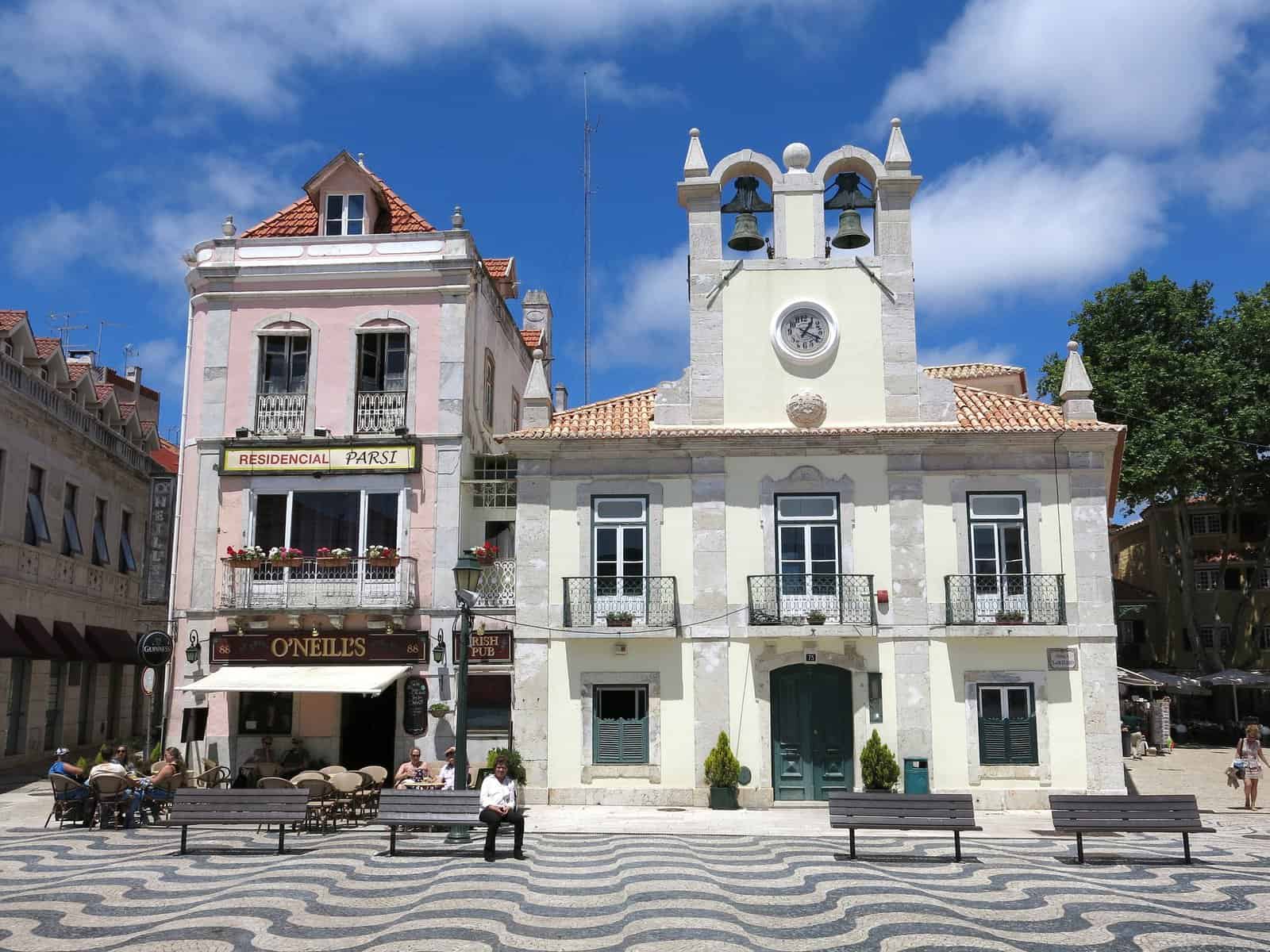
Cascais Marina
The marina area is polished, attractive, and lovely to wander around. The many boats and yachts in the background create that unmistakable feeling of being somewhere glamorous. The marina is a great spot for lunch or simply sitting down for a coffee or an afternoon cocktail.
The new marina was built in the 21st century and has berths for 650 boats. The entrance area is lined with restaurants and shops of all kinds. There are also a few bars that come alive at night, along with excellent restaurants for a daytime meal.
As you leave the marina toward Cascais Citadel, a short and pleasant promenade leads back to the town center. Above the marina stands the Cascais citadel, and it’s well worth walking up to the small square built on top of it.
Click here for a short and wonderful boat trip departing from the marina along the Cascais coast…
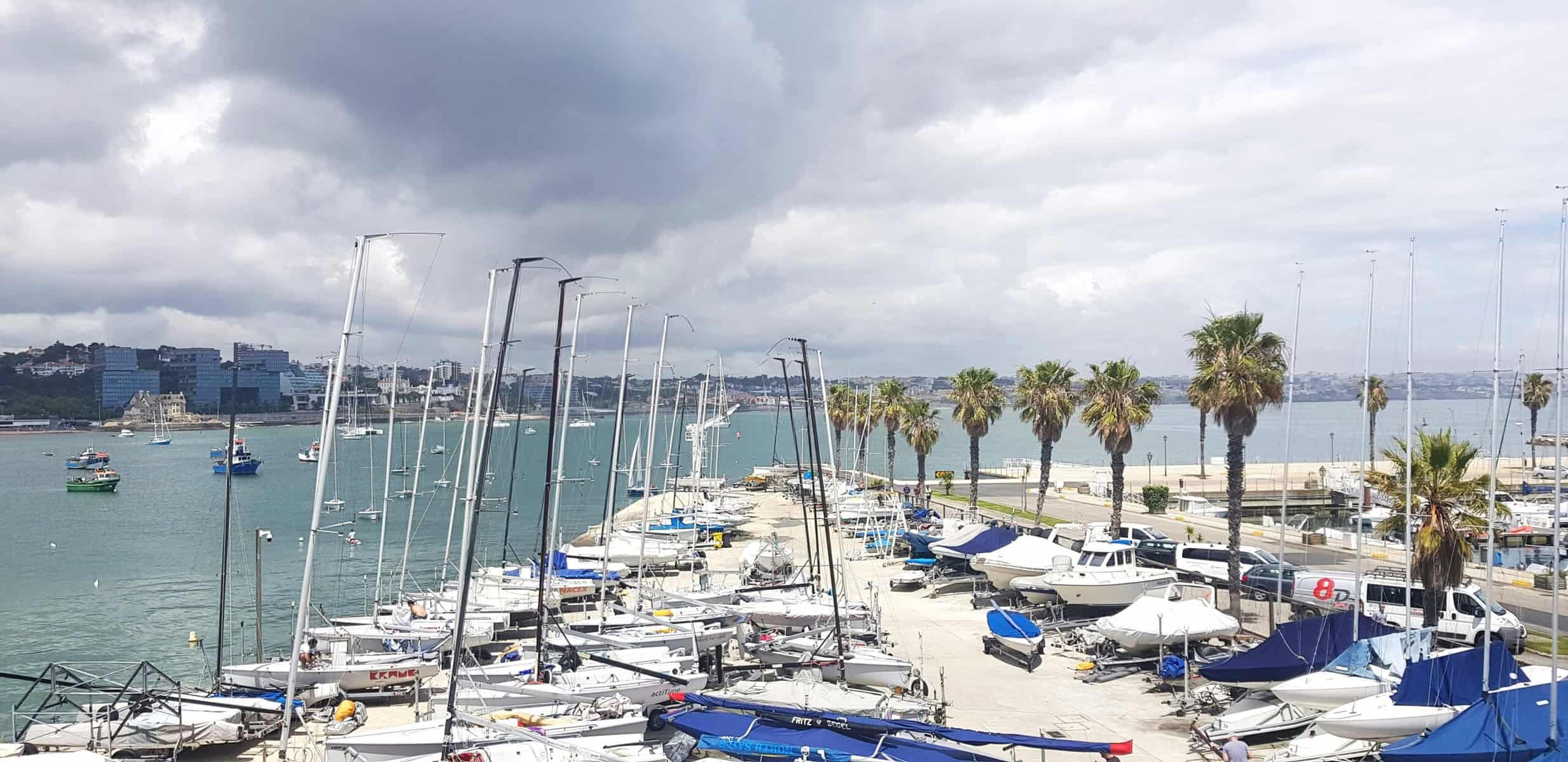
The square atop the Cascais Citadel | Cidadela de Cascais
The square at the top of the citadel above the marina is a small, wonderful spot right in the middle of Cascais’s sights and attractions. It has a few art and book shops, a restaurant, and a lovely hotel. The citadel, which became a royal holiday palace in the 19th century and is now a luxury hotel, has a charm all its own. In this square, many of Cascais’s defining elements come together—art, luxury, history, and leisure.
At the edge of the complex stands Cascais Fortress | Forte de Nossa Senhora da Luz de Cascais, a remnant of the original stronghold.
Click here for 11 excellent hotels in Cascais and nearby Estoril…
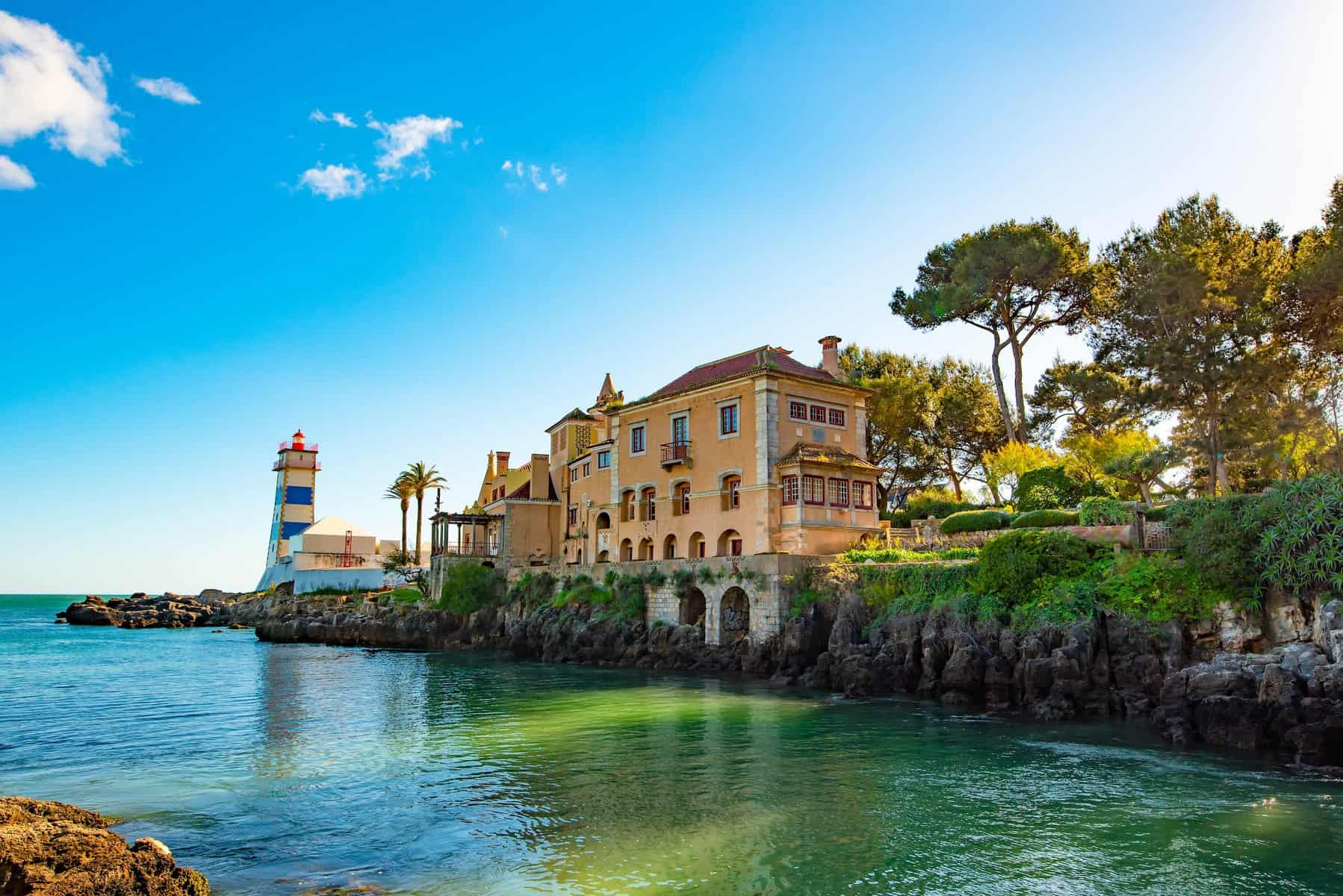
Santa Maria Lighthouse and Museum | Casa Museu de Santa Maria
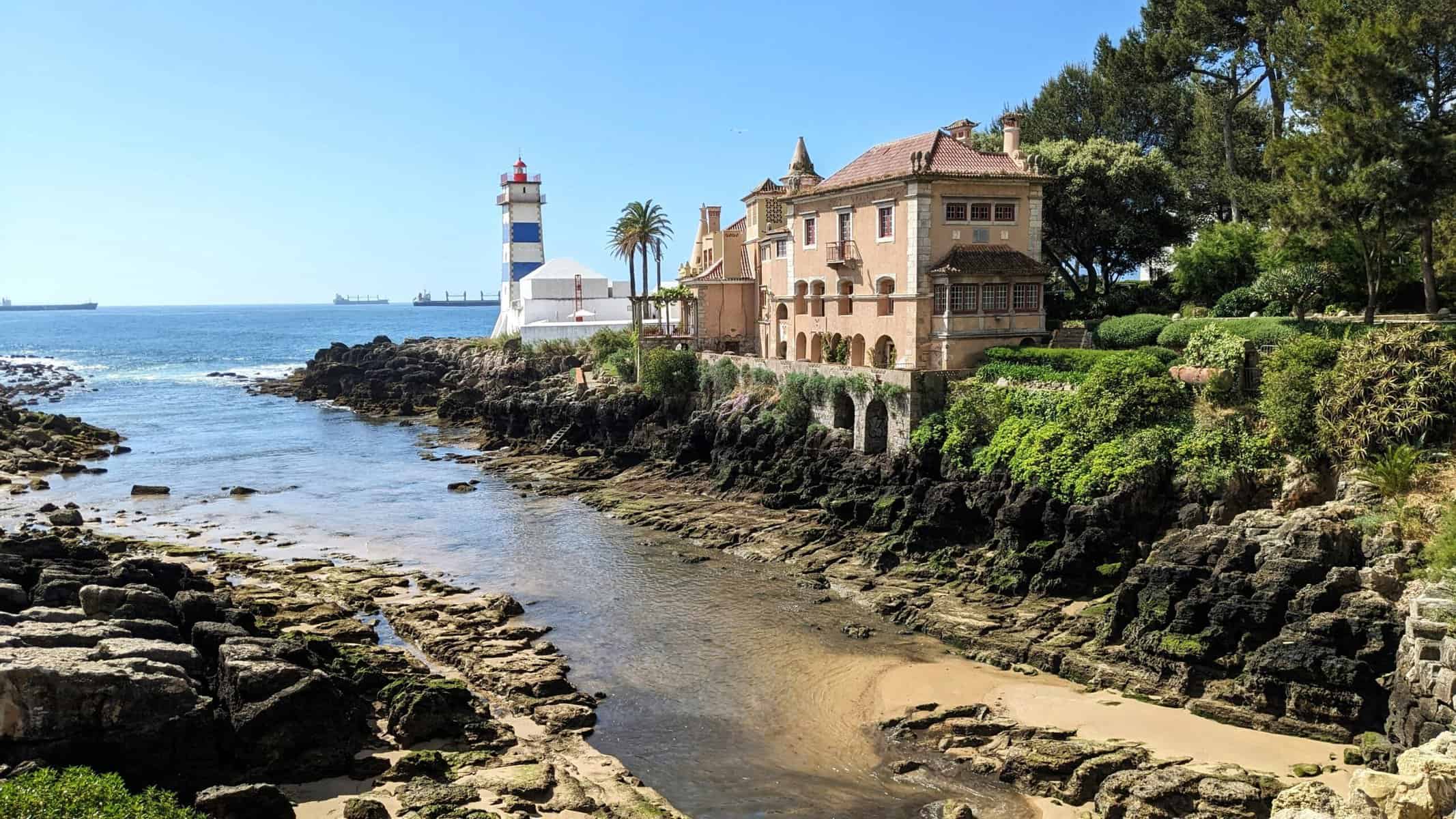
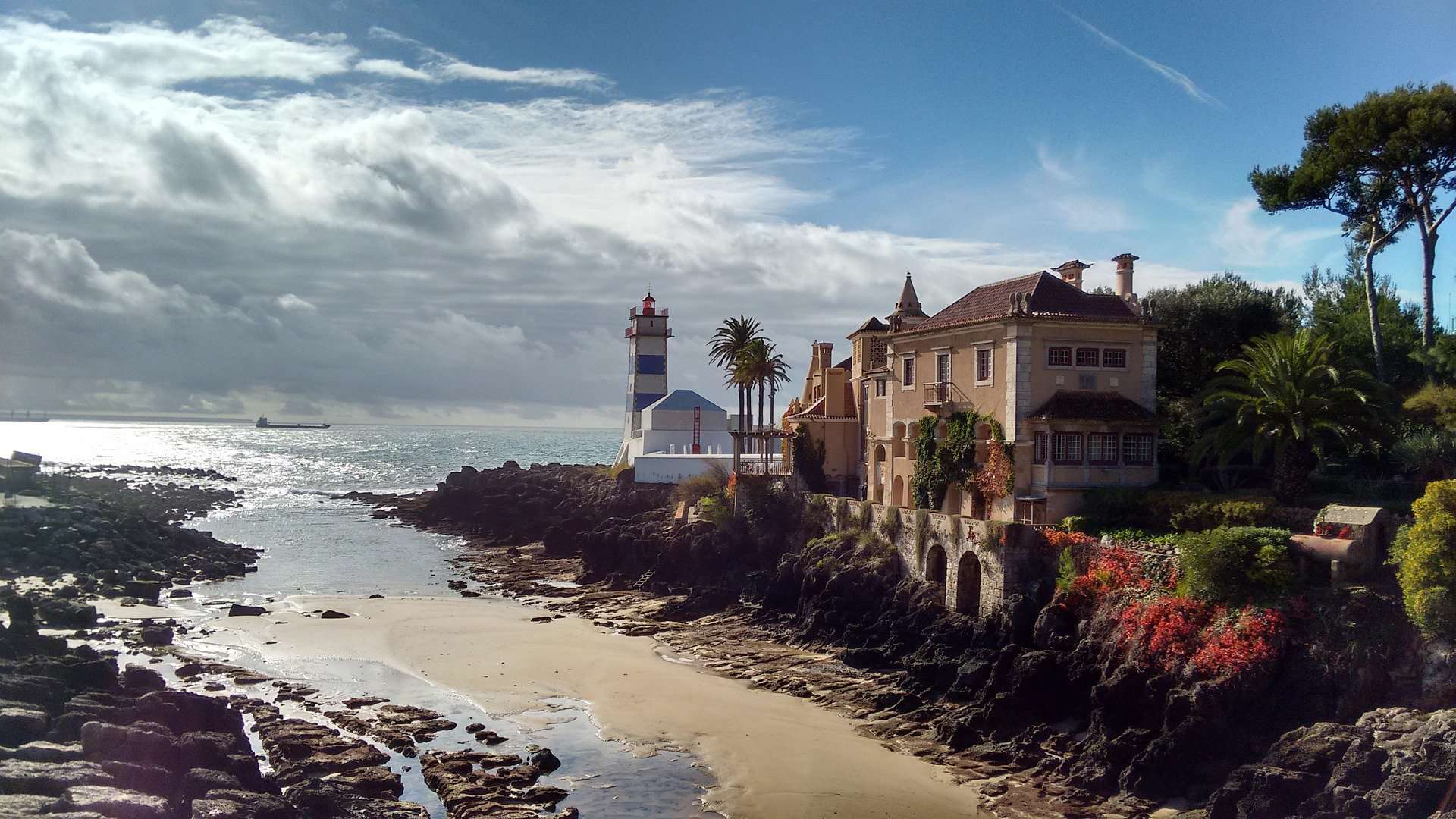
At the southern exit of the marina is one of the most photographed spots in Cascais. It changes with the tides, yet the lighthouse and the beautiful Santa Maria house remain steady and striking at all times.
Anyone exploring Cascais’s museum district will likely pass by here, and even if you’re just at the marina, it’s worth making the short detour for a photo against this beautiful backdrop.
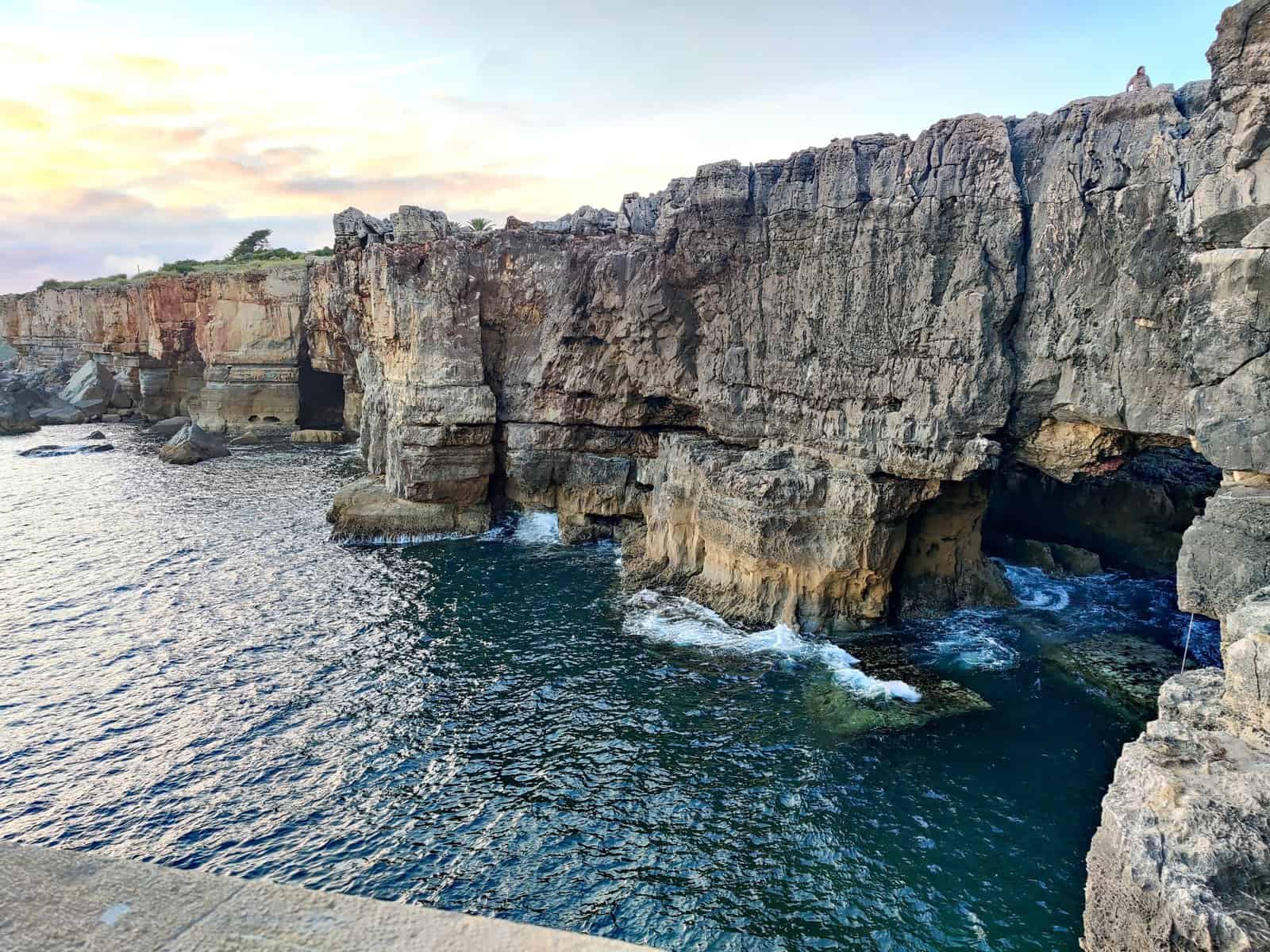
The Hell's Mouth (cliff formation) | Boca do Inferno
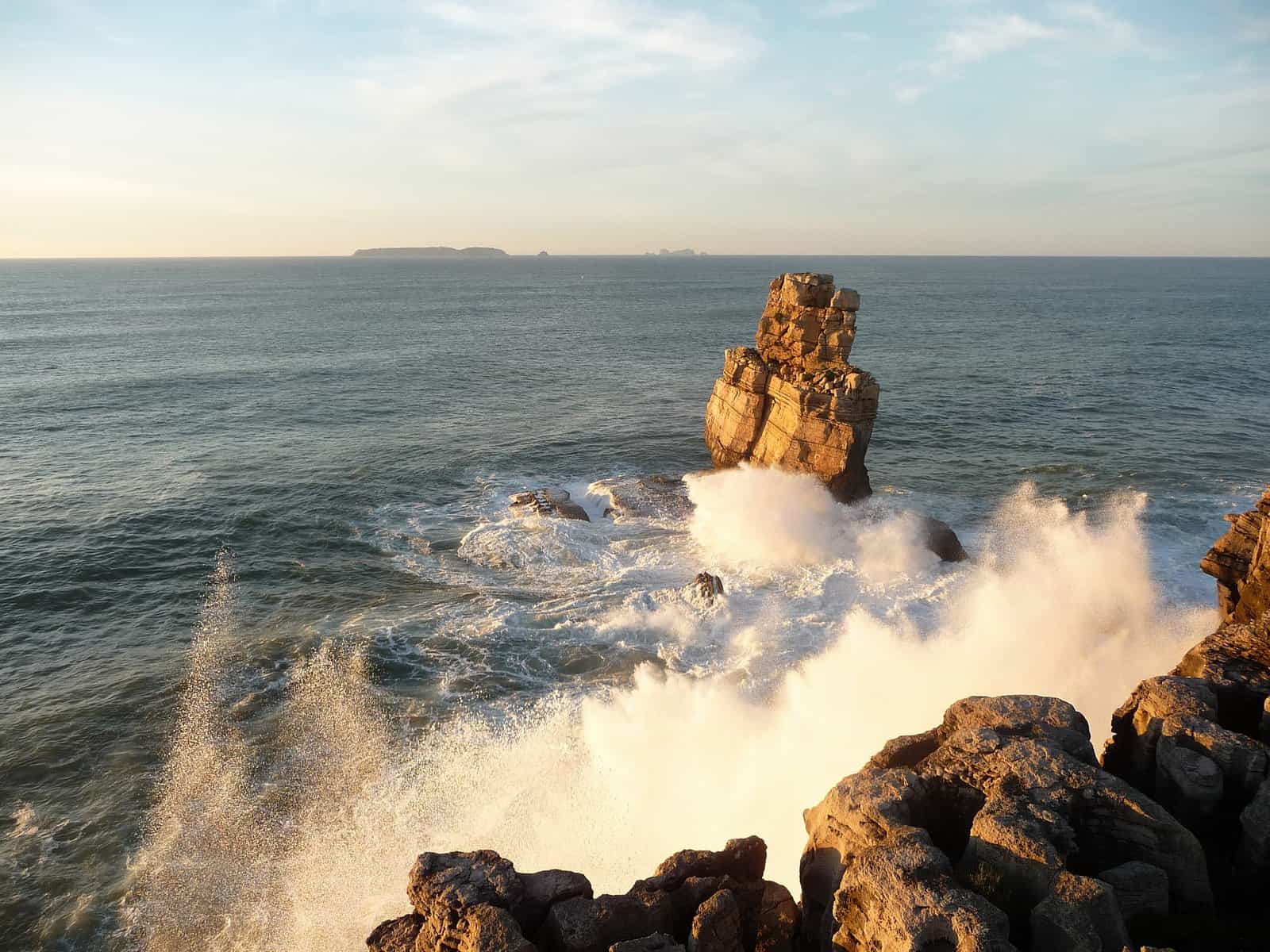
This is Cascais’s main natural attraction. The rock formation, worn over time into a broad arch, is called ‘Hell’s Mouth.' The name comes from what happens on days with bigger swells, when waves rush into the arch, crash powerfully on the other side, and shoot upward in a burst of white spray. That dramatic effect only happens on relatively rough days. At any other time, it’s still a wonderful place to visit, about a ten-minute walk from the marina.
There are excellent walking paths leading to Boca do Inferno and around the site itself, and it’s not to be missed during a visit to Cascais.
Click here to find accommodations in Cascais…
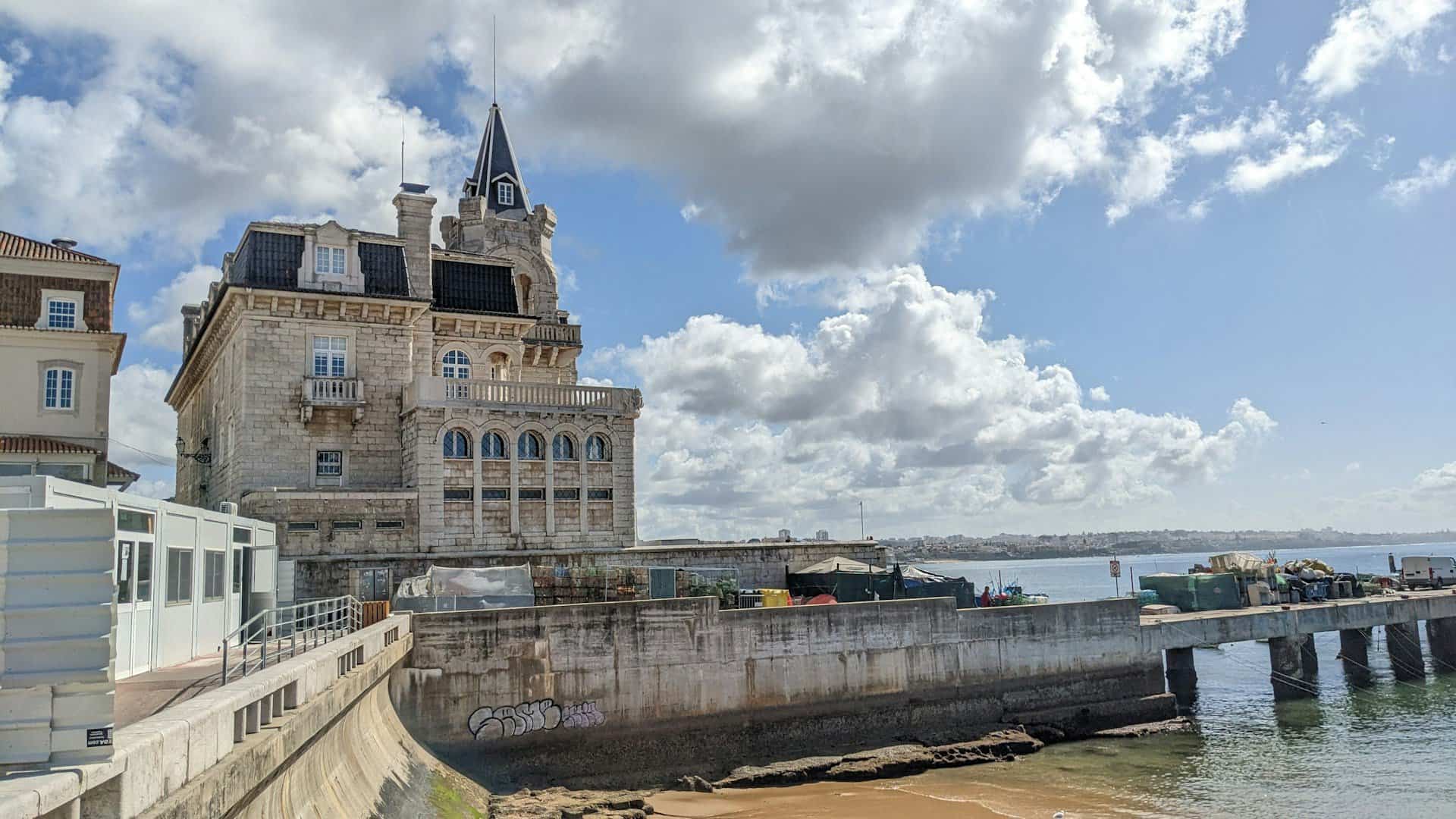
Seixas Palace above Ribeira Beach | Palácio Seixas
The palace above Ribeira Beach sits right in the center of Cascais and is impossible to miss. It was built as a summer house for one of the aristocratic families who followed King Luís I in building grand homes along the Cascais waterfront. That process began around 120 years ago and helped turn today’s Cascais into the glamorous, upscale suburb of Lisbon it is now—a place where any Lisbon resident who considers themselves part of the scene wants a weekend home. Think of it as a smaller version of the Hamptons near New York.
Built in the early 20th century on the foundations of a 17th-century fortress, the palace has a distinctive and eclectic appearance. Today it serves public functions, and for visitors it is mainly a beautiful and unusual landmark in the heart of town.
Click here to find hotels and vacation apartments in Cascais…
The beaches of Cascais
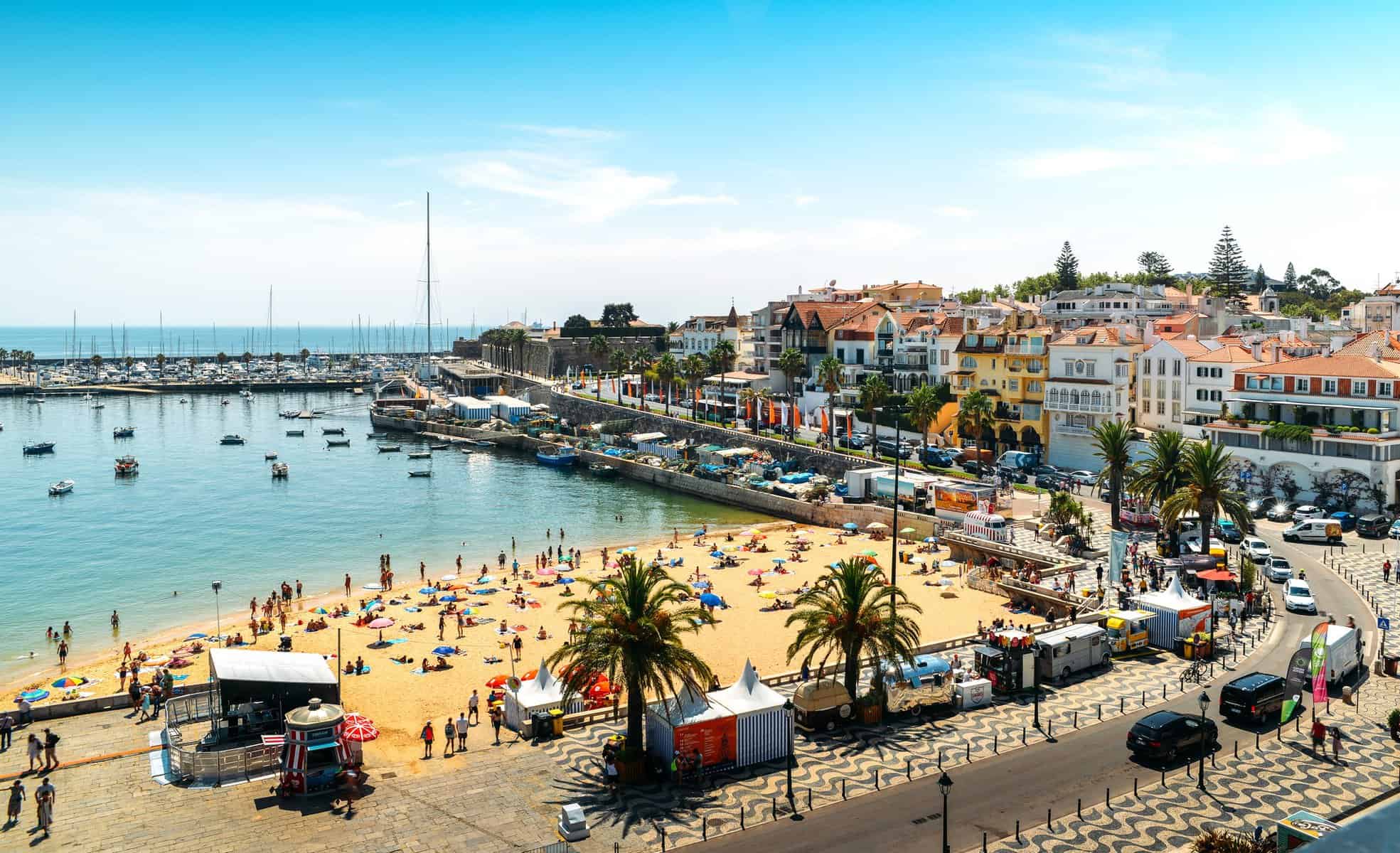
Cascais has several very photogenic urban beaches, some of them right in front of the main restaurant and nightlife areas. The beaches are part of the town’s everyday rhythm, and because they sit in small coves, the waves don’t hit them the way they do on the large, famous beaches north of Lisbon and all the way up to Porto. Even so, they are small, and on hot days it can be very difficult to find room to spread out your towel and sunbathe on the sand.
The beaches of Cascais are really one long, narrow shoreline divided into several sections by rock formations. It starts with the famous main beach right across from the town center and continues to beaches that in some places become natural sea pools opposite the gardens of Estoril, where the large hotels and casino are located. You can also walk the shoreline via the promenade or ride a bike. From Rainha Beach begins a pedestrian street (R. Frederico Arouca) that turns into a narrow seaside promenade between the railroad tracks and the beaches all the way to Estoril, a distance of about 2 kilometers.
Click here to search for accommodations in Cascais…
1. Ribeira Beach | Praia da Ribeira
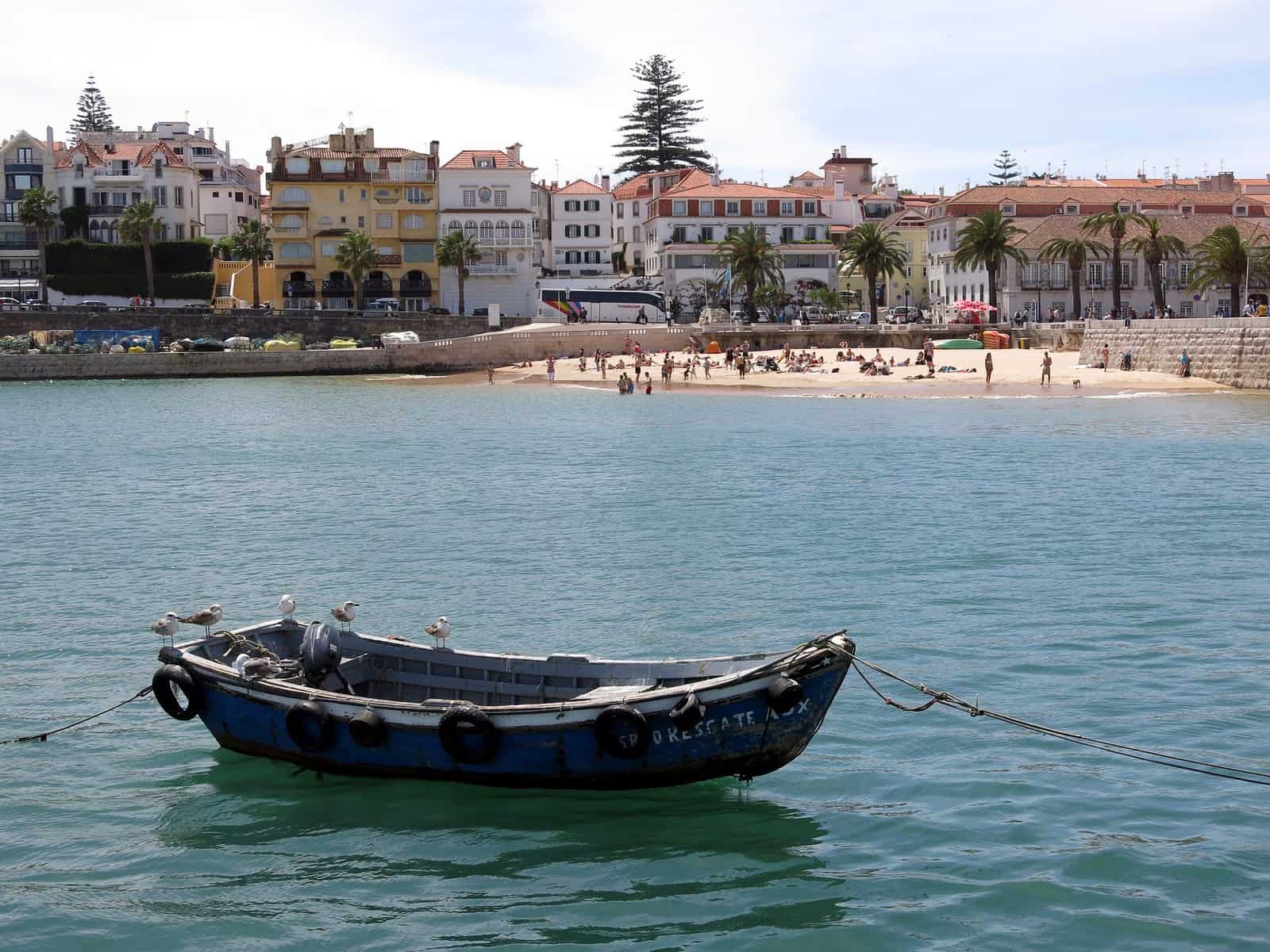
This beach sits opposite the town’s main square and feels like part of the center itself. It also has a small pier you can walk out on, though be careful—there are no railings. It is also known as Fishermen’s Beach because of the dozens of small fishing boats anchored just offshore, which preserve something of old Cascais’s character from the time when, just a century ago, it was still a remote fishing village.
2. Rainha Beach | Praia da Rainha
This is a very small beach with rocks all around and a compact, pleasant stretch of sand. It is sheltered from the waves on all sides, which makes it a favorite with families, but on a sunny weekend there is almost no chance of finding space. Historically, it was the private beach of Queen Amélie (Amélie d'Orléans), the French royal who married Carlos, King of Portugal, and was the mother of Manuel II, the last king of Portugal. Cascais as a whole began to develop as a glamorous destination in the late 19th and early 20th centuries, when the Portuguese and Spanish royal families found refuge here.
3. Duquesa Beach | Praia da Duquesa
This is the next beach along, and from its edge you can already see the railroad line that separates the town from the shoreline. It is larger than the two beaches closest to the center, and its most distinctive feature is the row of restaurants right above the waterline. The beach lies next to a large manor house—the Palace of the Dukes of Palmela | Palácio dos Duques de Palmela—which once belonged to an aristocratic family and now houses public offices. On the other side of the palace is the Alberto Romano Ocean Pool | Piscina Oceânica Alberto Romano, a very orderly man-made seawater pool.
4. Flat Beach – Rata | Praia da Rata
This is the last beach before Estoril begins. Like the others, it sits behind the railroad tracks that divide it from the town. It is a small, pleasant beach popular with younger visitors. The setting is unusual, tucked right between the tracks and the water, and part of it consists of sea pools reached by steps.
5. Tamariz Beach – Estoril’s main beach | Praia do Tamariz
This is the main swimming beach for the Cascais area, located in the neighboring town of Estoril. Estoril is famous for its huge casino as well as its large, modern hotels close to the beach. One part of the beach is a broad sandy stretch, while the other is made up of large natural sea pools between the rocks. With so many hotels above the beach, it’s especially popular with visitors coming to Cascais for a weekend that includes time by the sea.
Click here for a short and wonderful boat trip along the Cascais coast…
The town of Estoril
The town of Estoril—pronounced more like Ashtoril—lies right next to Cascais, just a few minutes east by car. It is known as a seaside resort town that is a little less exclusive, but with the same beach and weather as Cascais.
Estoril is the second-to-last stop on the train from Lisbon to Cascais, and just 4 minutes later you’ll be at the final stop in Cascais. Its historic center is close to the train station, which makes it very easy to reach. Estoril has a lovely, peaceful atmosphere, and it’s no coincidence that the whole area is compared to the French Riviera. Walking between central Cascais and Estoril is not only possible but recommended, and the distance is about 2 kilometers.
Estoril promenade
Another feature that recalls the famous French Riviera is Estoril’s promenade. It may not be as long and wide as the promenade in Nice, but it still stretches for 3 kilometers in both directions and is a perfect place for an early evening walk.
Estoril Congress Center
Because of its proximity to Lisbon and the many hotels in the area, which mainly serve tourists during the summer season, a modern convention center was built in Estoril, drawing visitors even outside the warmer months. Much like in Las Vegas, where trade shows and fairs are common, Estoril’s large casino becomes a place for conference-goers to unwind and mingle in the evening.
Estoril casino
The large Estoril casino mentioned above serves both Estoril and Cascais, since Estoril has long since become part of greater Cascais. Across from the casino are the Estoril Gardens (Jardim do Estoril), which stretch to the train station, with the sea just beyond it. The gardens are filled with palm trees that make it feel unmistakably like vacation.
Tamariz Beach | Praia do Tamariz
Estoril’s large beach sits just beyond the train station and the tracks. On the far side, away from Cascais, are the area’s famous natural seawater pools.
Click here to find accommodations in Estoril…
Click here for a list of hotels in excellent locations in Cascais and Estoril…
The museums of Cascais
Cascais is known for its ‘museum quarter,' located just next to the town center. Despite the grand-sounding name, there is no reason to imagine a long, exhausting day on your feet like in the museums of Paris or London. Most of the museums here are restored houses that aren’t especially large, and each one is set in a building more distinctive than the last.
That means you can simply walk between them and admire them from the outside if you like—there’s no need to go into every single one. In fact, although they are called museums, some of these places are really preserved houses filled with architectural and artistic treasures.
Marechal Carmona Park
This city park, which serves as the public park for Cascais’s upscale neighborhood, is essentially the heart of the museum quarter, with all the museums gathered around it. That makes walking between them especially pleasant. The park is filled with different kinds of trees, including palms, and much of it is shaded. There are playgrounds, picnic tables, sports facilities, lawns, and more. The weather in Cascais is almost never too hot or too cold, so the park can be enjoyed year-round except on rainy days.
Castro Guimarães Museum
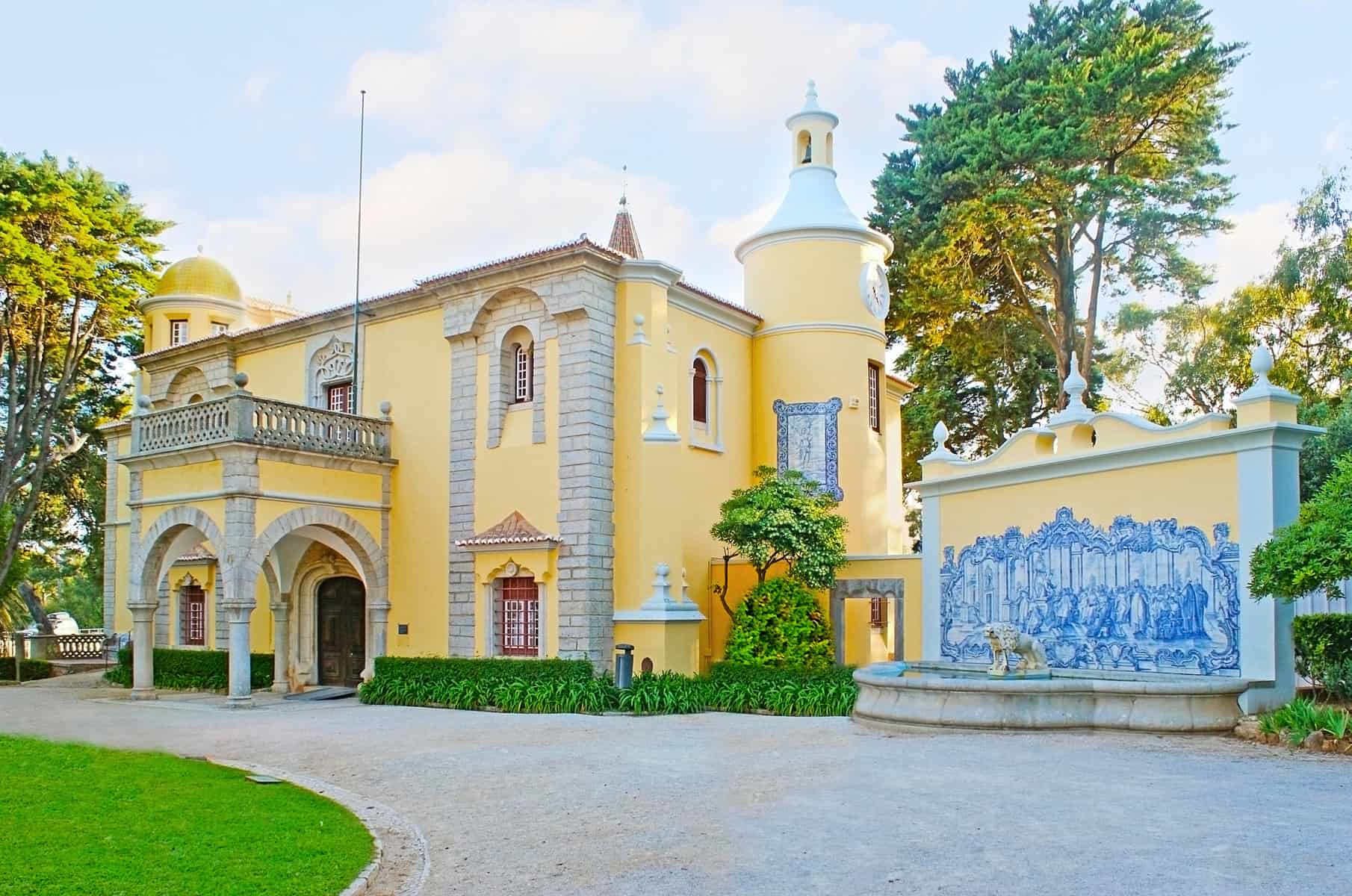
This is the main museum in Cascais’s museum quarter and the best place to learn about the town’s history. The building itself was also built by Jorge O'Neil in the early 20th century. Soon after, it was purchased by the Count of Castro Guimarães, a collector of art and historical objects. The entire house is filled with museum-quality preserved objects, and its rooms are decorated in different styles, some with high painted ceilings.
As early as 1927, the count bequeathed his home and the collections inside it to the municipality of Guimarães, which turned it into a museum. Inside are paintings, antique furniture—especially from Portugal’s colonies in the Far East—and rare books. Among them is a work by Duarte Galvão, a court official to the kings of Portugal. Written in 1505, the book is about Afonso Henriques, the first king of Portugal, who lived in the 11th century.
The building itself is highly distinctive and colorful, and at the entrance there is a water spout and fountain faced with azulejo tiles. Inside, there is a patio surrounded by arcades with a fountain at its center. The house is striking from every angle, and on one side the sea itself appears and retreats with the tides.
Even if you don’t plan to go inside, it’s worth making sure you pass by during a walk through Marechal Carmona Park and at least admire it from the outside.
Cascais Cultural Center | Fundação Dom Luís I – Centro Cultural de Cascais
The center is located just behind the Cascais citadel and marina, and it can be a good starting point for exploring the museum quarter.
The large pink building that now houses the cultural center began life as a Carmelite monastery in the 16th century. It was largely destroyed in the 1755 Lisbon earthquake, and afterward aristocratic families built their summer houses on the site. At the end of the 20th century, the building was handed over to city and state authorities, who decided to turn it into a cultural center.
In 2000, the cultural center named after King Luís I—Portugal’s late-19th-century king, a musician and man of culture—opened here. It has three floors with exhibition halls, an auditorium, an inner courtyard, and a restaurant/cafeteria.
It hosts a permanent display of contemporary art and also stages rotating exhibitions of visual art. The exhibition spaces are bright, and some are lined with wall tiles—the unmistakable azulejos so characteristic of Portugal.
Click here for more information about the Cascais Cultural Center…
Click here to find hotels and vacation apartments in Cascais…
Paula Rego Museum | Casa das Histórias Paula Rego
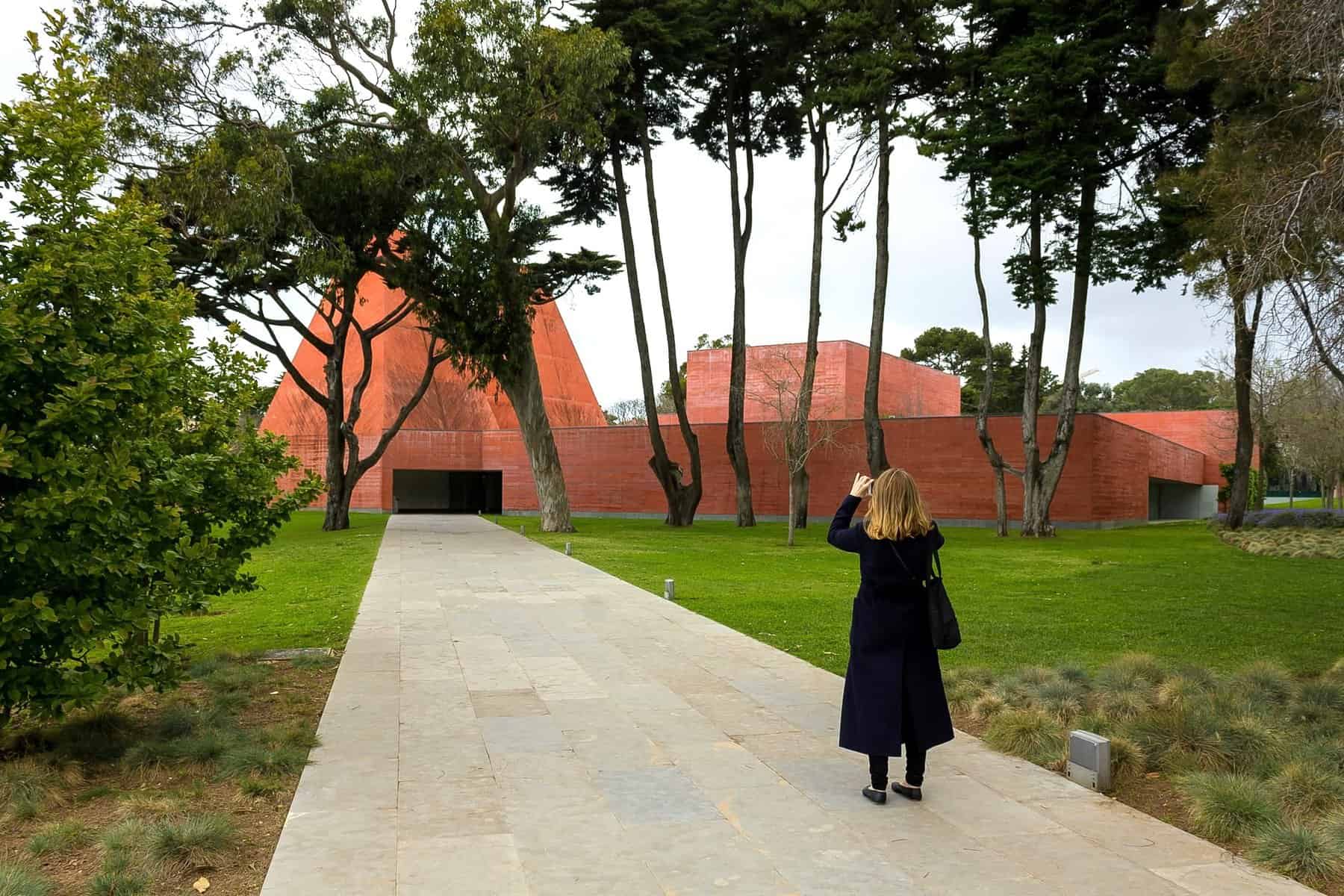
This is perhaps the most distinctive building in Cascais’s museum quarter. It was designed by the award-winning Portuguese architect Eduardo Souto de Moura.
The ‘House of Stories,' named after Paula Rego, is a modern red concrete building whose most striking feature is the pair of pyramids rising above it. Souto de Moura was chosen by Paula Rego herself to design the museum that would display her works. The pyramids are a modern nod to local architecture, echoing the two conical chimneys of Sintra National Palace (Palácio de Sintra), about 20 kilometers to the north.
The museum presents the work of the great 20th-century Portuguese-British painter and traces her artistic development across more than fifty years of creation. Paula Rego drew inspiration from children’s stories and folk tales. She also illustrated many books, which is why the museum’s name can be loosely translated as ‘Paula Rego’s House of Stories.
King Carlos I Sea Museum | Museu do Mar Rei Dom Carlos I
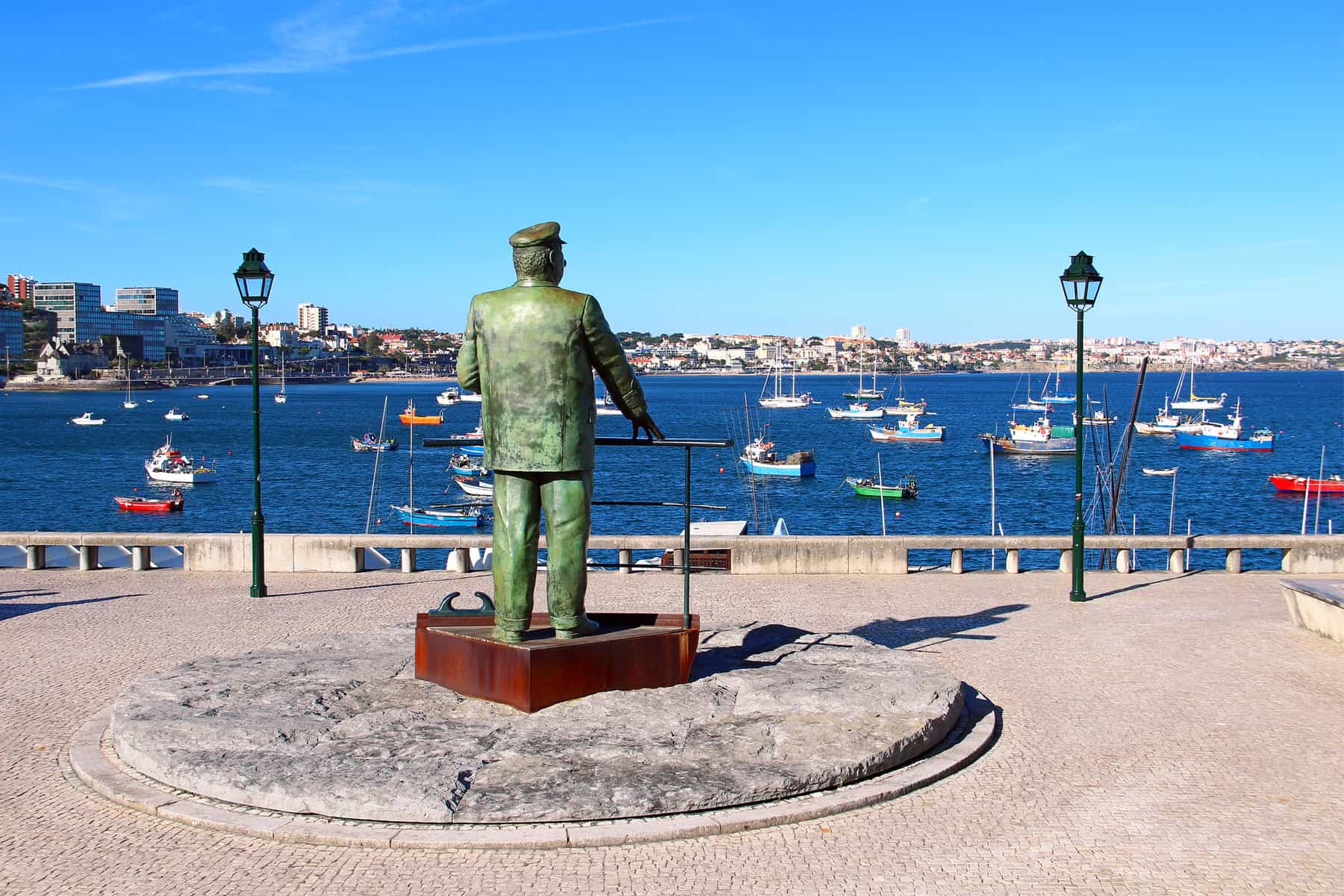
The Sea Museum sits right behind the Paula Rego Museum. It is named after the 19th-century King Carlos, who lived in Cascais. The museum occupies the original building commissioned by the king as the clubhouse of Cascais’s nautical sports club. The king had a deep interest in oceanography, especially deep-sea research, and even undertook several exploratory sea voyages himself. He and his wife loved Cascais, and as mentioned, Queen Amélie had both a private beach and an estate here (Praia da Rainha).
The museum explores Cascais’s connection to the sea and also displays various objects that belonged to the king, who was assassinated in the early 20th century. The museum opened in the early 1990s, and several exhibition rooms were added to the original building. Among the exhibits are parts of shipwrecks, along with fossils and shells.
The museum is not large and can also be a good fit for children interested in the sea and ships.
Click here to find hotels and vacation apartments in Cascais…
Santa Maria House | Casa Museu de Santa Maria
Santa Maria House is the building that appears beside the lighthouse in Cascais’s iconic photograph.
The house was commissioned by Jorge O'Neil, an aristocrat of Irish descent, and designed by the Portuguese architect Raul Lino. O'Neil built it as a wedding gift for his daughter and tasked the architect with using only materials sourced from Portugal. The building combines several styles, and its most striking feature is the horseshoe arches in a Moorish-Islamic style—like those in the mosque of Córdoba—supporting the windows and balcony.
Raul Lino’s older brother, José Lino, an engineer and art collector, bought the house in 1914. He expanded it and decorated it with works of art, especially Portuguese tiles—azulejos and more—brought from various old buildings in Lisbon. Some of them have even been associated with the name of the great 17th-century azulejo master António de Oliveira Bernardes.
The additional wings were also designed by the younger brother, and some of them feature high, illustrated ceilings. The ceiling of the main salon is the most impressive of all.
Over the years, the house passed through the hands of other wealthy families and hosted dukes, presidents, and other notable figures, fitting for one of the grandest homes in glamorous Cascais.
In the early 2000s, the house came under municipal ownership and was turned into a museum, though by today’s standards it might be more accurate to describe it as a preserved historic house.
Casa Sommer
Casa Sommer was the home of a Portuguese industrialist of German descent who built his summer residence in Cascais. The white building has smooth lines and a neoclassical style, with three floors housing Cascais’s municipal archive and library. The first floor serves as the library, the second hosts rotating exhibitions, and the third contains the archive and several work tables.
A visit to Casa Sommer will be fairly short unless you’ve come to research the history of the 650-year-old town in the archives. The main impression comes from the beautiful building itself and the quick step back in time as soon as you cross the threshold.
Click here to search for accommodations in Cascais…
Attractions and points of interest in Cascais surroundings
Cascais is a perfect day-trip destination from Lisbon, offering a beautiful blend of sandy beaches and a charming historic center. Located just a short train ride from the capital, it’s also incredibly close to Sintra. This proximity allows travelers to easily combine both iconic locations, exploring Sintra’s fairytale palaces and Cascais’ coastal beauty in one unforgettable journey. On this page, we are mentioning only the sites closest to Cascais:
Cascais is small, and most places are relatively close together. As noted, people usually come here by train from Lisbon rather than by car. For that reason, the surrounding sights are best suited to visitors with a car or those planning a longer bike ride out from Cascais.
The western side of Cascais is still relatively natural, without too much residential development. You’ll find a wild beach, sand dunes, and folds in the landscape covered with green shrubs. Near the coast there are also several restaurants with wonderful ocean views, and they are absolutely worth planning a meal around, as they are excellent places mostly frequented by locals.
Click here for 11 excellent hotels in Cascais and nearby Estoril…
Click here for a day trip from Lisbon to Cascais, Sintra, and Cabo da Roca…
Cabo Raso Lighthouse | Farol do Cabo Raso
This is the westernmost point in the Cascais area, with nothing behind it but the vast, restless Atlantic Ocean. At the edge of the cliff above the water rises the red lighthouse, surrounded by the lighthouse keeper’s residence. It’s an especially romantic place toward evening.
Cresmina Dune | Duna da Cresmina
This relatively large dune appears almost unexpectedly between the rocks and green-covered hills. It is well worth stopping here, especially with children, and walking a little on the sand. Raised wooden walkways lead all the way to the dune itself. This is another place best visited if you’re exploring the Cascais area by car, and you can finish with a meal at one of the excellent nearby restaurants.
Guincho Beach | Praia do Guincho
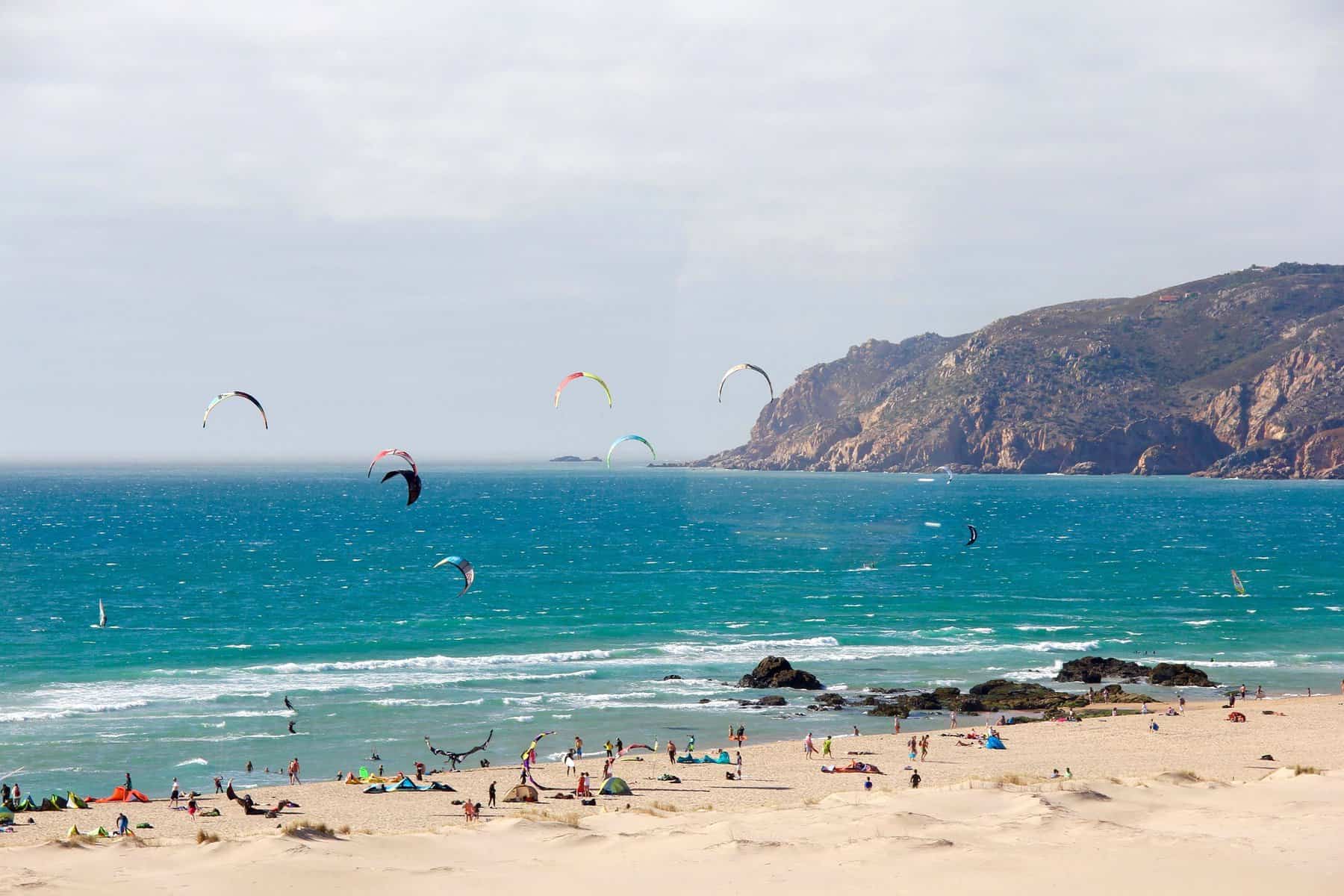
The beach lies near the dune. It is a huge sandy beach, reached either by a long raised wooden walkway or by a somewhat steep descent farther along the road. It’s a wonderful place to spend time on a sunny day and is especially good for anyone visiting only the Lisbon area but still wanting to swim in the ocean—of course, only in summer. The beach is also popular with kitesurfers because of the strong winds.
Click here to find hotels and vacation apartments in Cascais…