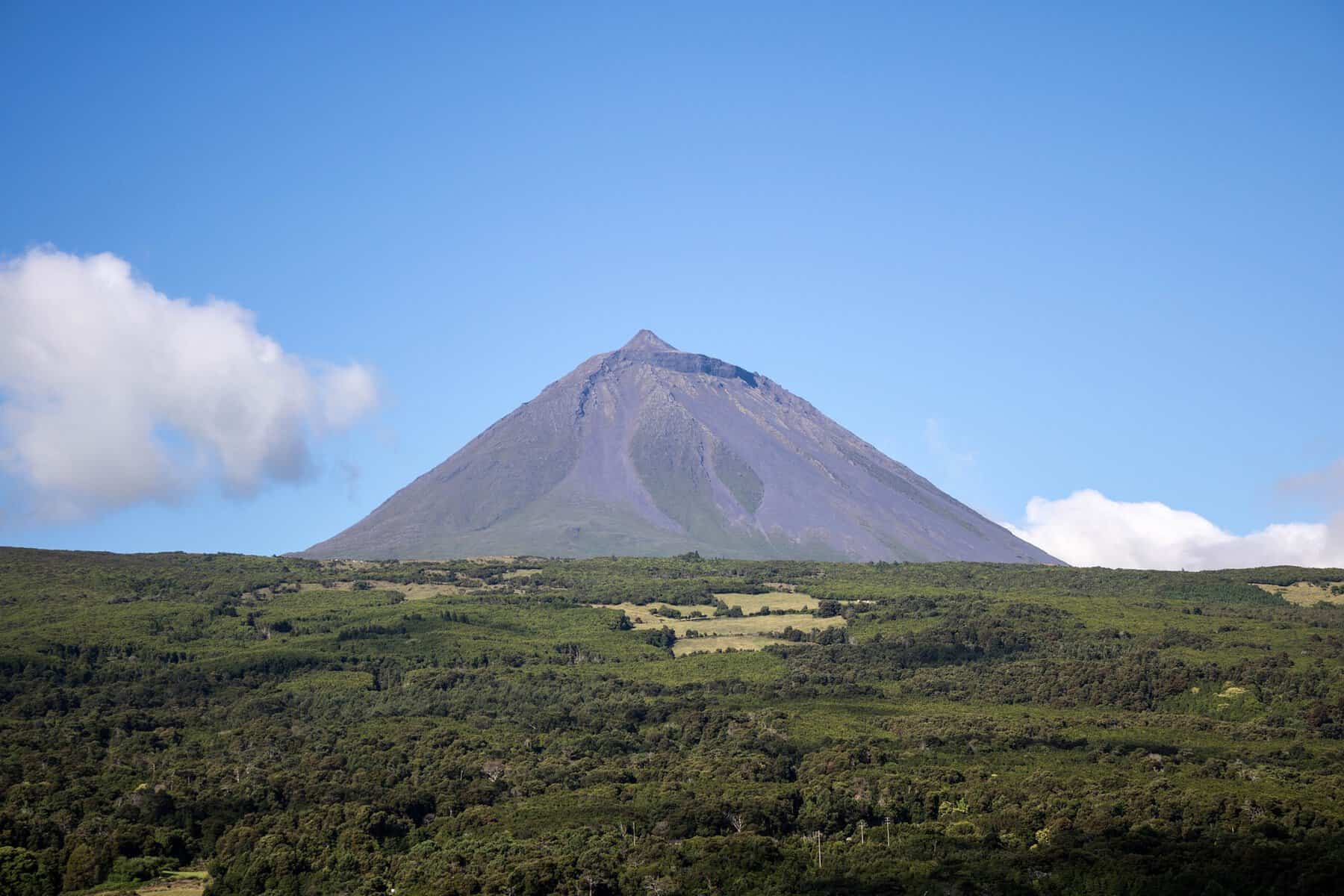
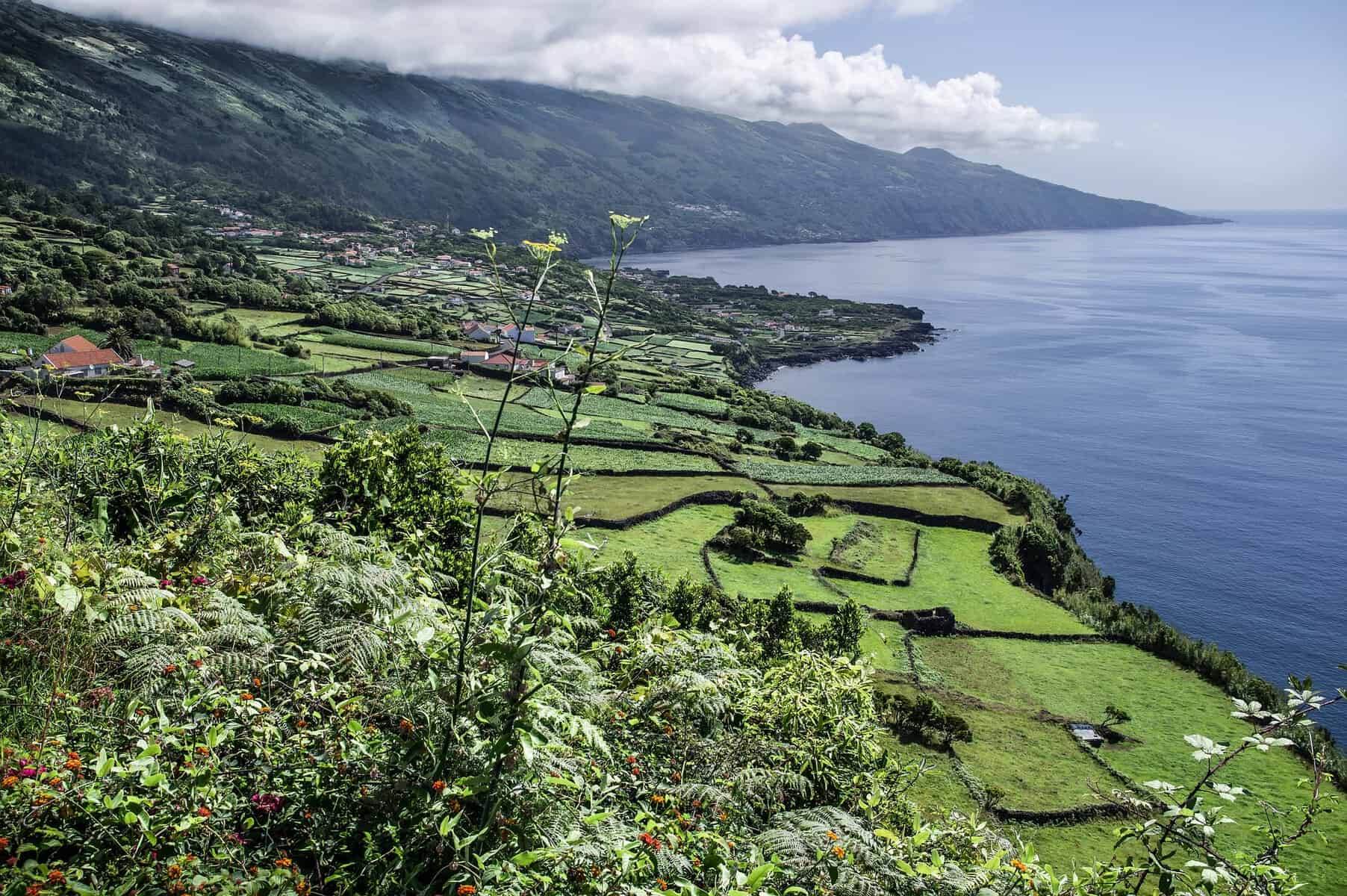
Pico Island | Ilha do Pico lives up to its name — this is the island with the highest peak. It is home not only to the tallest mountain in the Azores, but the highest in all of Portugal. Two things define this small island: the mountain and its historic winemaking tradition, with wine produced from vines grown between walls of basalt stone.
Pico is one of the three “Triangle Islands” in the central group of the Azores, which means there are sweeping views from here toward Faial and São Jorge. Almost everyone who comes to Pico also visits at least one of the other two islands. Ferry connections between them are excellent. That’s why it’s always worth checking flights to the other two islands as well when planning a trip to Pico — especially Faial, which has the larger airport, and then continuing by ferry to Pico.
Most travelers come to Pico Island primarily to climb the highest mountain, and its easy access to the other two islands adds welcome flexibility to any trip, since in the Azores you always need to be ready for changing weather.
How many days do you need on Pico Island?
Two days are enough to experience the island fully, especially if one full day is dedicated to climbing the mountain. It’s also possible to come over from nearby Horta on Faial for a day trip focused on the climb.
As always in the Azores, the weather can be gloomy, so flexibility is especially important if you’re visiting outside the clearer July–August period. One of Pico’s biggest advantages is how close and accessible it is to both Faial Island and São Jorge Island. So if the weather doesn’t allow for a mountain ascent, you can take a ferry to one of the other two islands, then return to Pico a day or two later and try again.
Click here to search for accommodations on Pico Island…
Click here for an amazing whale and dolphin watching cruise on Pico Island…
5 must-see sights and experiences on Pico Island
- Climb Mount Pico | Montanha do Pico
- Lava caves | Gruta das Torres
- The wine culture center in the village of Lajido | Cultura da Vinha da Ilha do Pico
- Whale-watching cruise – departing from Madalena or Lajes
- Whalers Museum in Lajes | Museu dos Baleeiros
How do you get to Pico Island?
The Azores’ three “Triangle Islands” — Pico, São Jorge, and Faial — are known for their extensive ferry network. Because of that, it often makes sense to check flights to nearby Faial rather than limiting your search to Pico, then continue by ferry to the island with the towering peak.
Flights to Pico Island
Pico’s small airport | Aeroporto do Pico is in the north of the island near the wine-growing area of Lajido. The airport (code PIX) is about a 15-minute drive from Madalena and roughly 20 minutes from São Roque, the island’s two main towns, both of which also have ferry ports.
Flights to Pico almost always begin, as with the less populated islands of the Azores in general, with a flight from Lisbon to Ponta Delgada, the capital of São Miguel, or to Terceira, the archipelago’s second-largest island by population. These flights take about two and a half hours.
There are direct flights to Pico from Terceira and São Miguel, operated only by the Azores airline (SATA – Azures Airlines). From Terceira the flight takes about half an hour, and from São Miguel about an hour. If you’re coming in summer — when most travelers hoping to climb the mountain visit — booking as far ahead as possible is essential.
As mentioned, because Pico is so close and easy to reach from São Jorge and especially from Faial, it’s smart to look at flights to one of those islands as well and then continue by ferry to Pico. It can lower costs and certainly offers more flexibility when planning a trip in the Azores.
Ferry to Pico Island
The excellent ferry service between the three Triangle Islands makes getting around remarkably easy. It’s the best and most affordable way to travel between them. On Pico, there are two possible departure points: the port of Madalena in the west and the port of São Roque in the north. All ferries are operated by the Azores ferry company Atlanticoline.
The most frequent route runs between Madalena and Horta on Faial, with a crossing time of about half an hour. Ferries also run several times a day between São Roque and Velas on São Jorge, and that trip takes a little over an hour. As usual in the Azores, weather conditions can sometimes cause delays.
Click here for more information and updated ferry schedules between the Triangle Islands…
Click here for the complete guide to the Azores Islands…
About Pico Island
- Pico has two main towns: Madalena in the west, facing Faial, and São Roque do Pico in the north, directly opposite São Jorge. Both have ferry ports and various boating options.
- From almost anywhere on Pico Island, you can see the other two Triangle Islands — Faial and São Jorge — or at least one of them. Naturally, Pico and its dramatic summit are just as visible from those islands too.
- Driving is the best way to reach the island’s more remote corners. There are no traffic lights on Pico, and driving here feels very relaxed.
- Outside peak season — meaning not July or August — it’s much cheaper to stay on and travel to Pico, but it’s wise to allow more days since rain may force you to change your plans.
- Wine – Wine from the Azores is considered excellent and distinctive, and Pico is the island most famous for it. A combination of weather ideal for grapes and volcanic soil in the flatter land at the foot of the mountain gives the fruit the qualities needed for exceptional wine. Pico has several wineries and tasting venues. On the island itself, the same bottle will often cost about half what it does on the mainland, mainly because of transportation costs.
- Weather on Pico is similar to the other nearby islands: never too hot and never too cold. The challenge comes from strong winds and, above all, from the fact that it’s rainy for much of the year, except for June, July, and August, which also mark the height of tourist season. In any case, as throughout the Azores, the weather can shift within minutes, so it’s always best to be prepared — and not too discouraged by rain, because sunshine can break through very quickly.
Click here to search for accommodations on Pico Island…
Climbing Mount Pico | Montanha do Pico
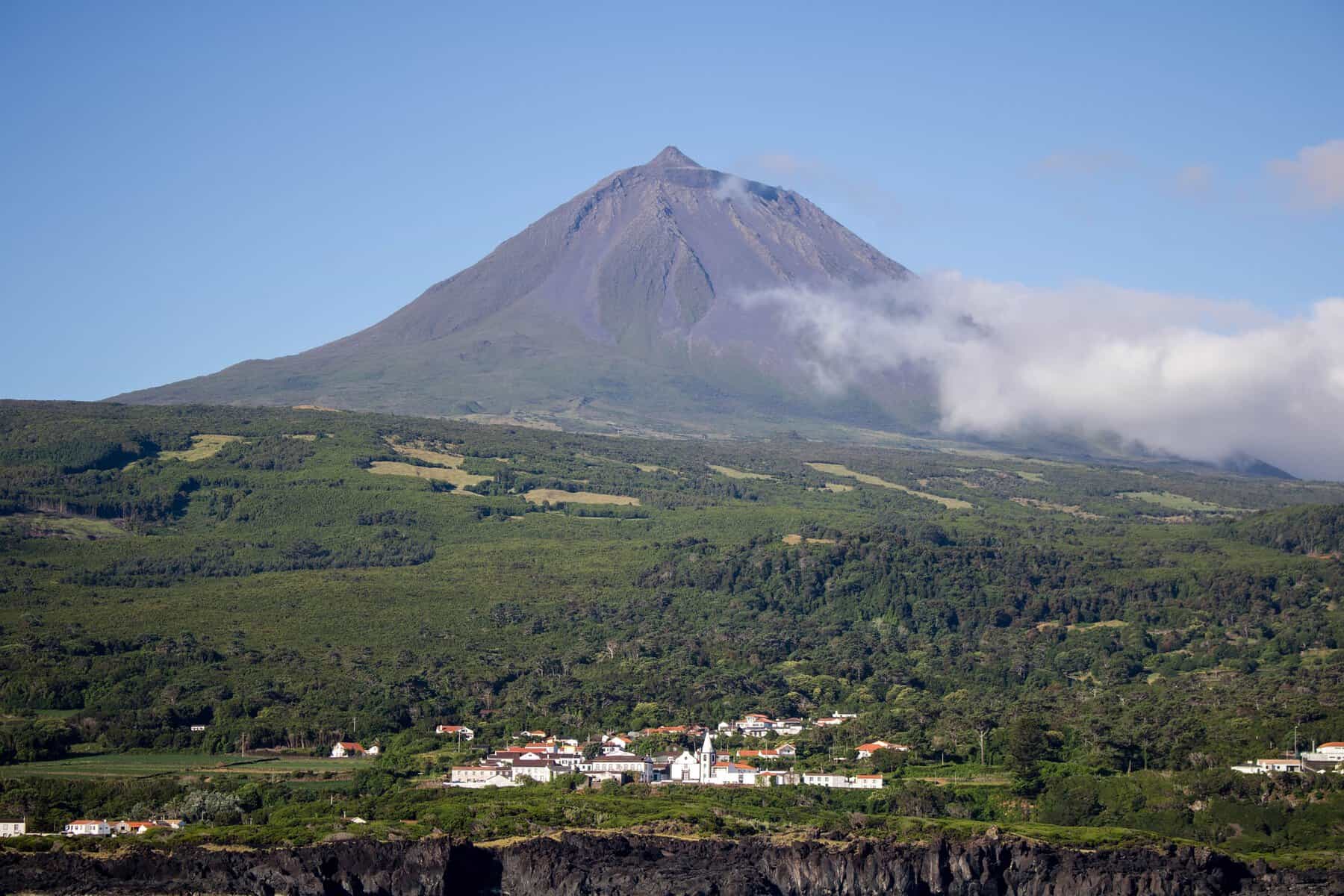
Climbing Pico’s towering volcano is the main reason many travelers come to the island.
As noted, this is the highest mountain in all of Portugal, not just in the Azores. The cone-shaped volcano is visible from afar and can also be seen from other islands in the central Azores. That is, of course, assuming there’s no fog or rain — both of which can appear at any moment here.
Click here for a guided group climb up Mount Pico…
Mountain visitor center | Casa da Montanha
The visitor center, on the western side of the mountain, is easy enough to reach by car from Madalena. It’s a great option for anyone who doesn’t want to — or can’t — hike all the way to the summit but still wants to get as close as possible without too much effort.
The drive takes around 20 minutes. Toward the end, the road turns into a dirt track — or more accurately, a road of black volcanic ash — leading to the visitor center. The drive alone is fascinating, with the dark road winding through green grasses and shrubs beneath the watch of the mountain above.
Once you arrive, you’ll need to climb a few dozen steps from the large parking lot below. In addition to information about the mountain, the unforgettable view is impossible to miss, with a panorama stretching toward Madalena and across the strait to Faial.
Click here to find hotels or apartments in Madalena, the main base for heading up the mountain…
Hiking the mountain
One of Pico’s most popular attractions — arguably the most popular of all — is the climb to the summit. There are two ways to tackle the steep mountain:
- Join a guided group climb
- Climb solo
If you’re not experienced, it’s highly recommended to do the hike with a guide. This isn’t technical mountaineering like you see in the movies, since the mountain is “only” 2,351 meters high. But because of its cone shape, the ascent is steep and far from easy.
Click here for a guided climb up Mount Pico…
In our view, joining a guided group is very much worthwhile. The trail is challenging, and in the Azores the weather can change quickly, so it helps to have a guide who knows how to deal with those conditions. Guided tours also offer the option of renting climbing gear, which saves you from carrying it in your luggage. If you choose to climb on your own, you need to register in advance. If you go with a guide, they take care of that for you.
Click here to register for an independent climb…
A few useful things to know before the climb:
- Time – The route takes about 8 hours round trip, up and down — in other words, a full day.
- Clothing – At the top, it’s cold and almost always very windy, so proper clothing is essential. If you’re climbing at dawn or outside summer, gloves are a good idea too. Hiking poles are also strongly recommended, as they’re genuinely helpful on the narrow trails, along with rain jackets.
- Sunrise ascent – Especially in summer, some hikers set out before dawn while it’s still dark in order to catch sunrise from the summit. During the climb, the night sky can be filled with what feels like a million stars, a reminder that you’re truly in the middle of the ocean, with the altitude making stargazing even better. It’s a wonderful bonus. Still, hiking in the dark is much more dangerous, so we think it should only be done with a guide.
- Higher up the mountain there is another small cone-shaped summit known as Piquinho, surrounded by sulfur vents. In other words, you can actually see steam rising from deep within the earth. The summit also has unusual and interesting formations of hardened lava.
- Views – Yes, the summit views made famous on Instagram and elsewhere are extraordinary. But for much of the year, the mountain is wrapped in fog and rain. It’s wise to keep expectations realistic and be satisfied with the achievement of reaching the top. July is the driest month in the Azores.
Click here for a guided climb up Mount Pico…
Attractions and interesting places on Pico Island
The town of Madalena
This wine town is the largest settlement on Pico Island. It sits on the coast directly opposite Horta, the main town on Faial Island. Madalena serves as the island’s tourism, transportation, and commercial hub, all centered around its port. Beyond that, there are two places here worth highlighting:
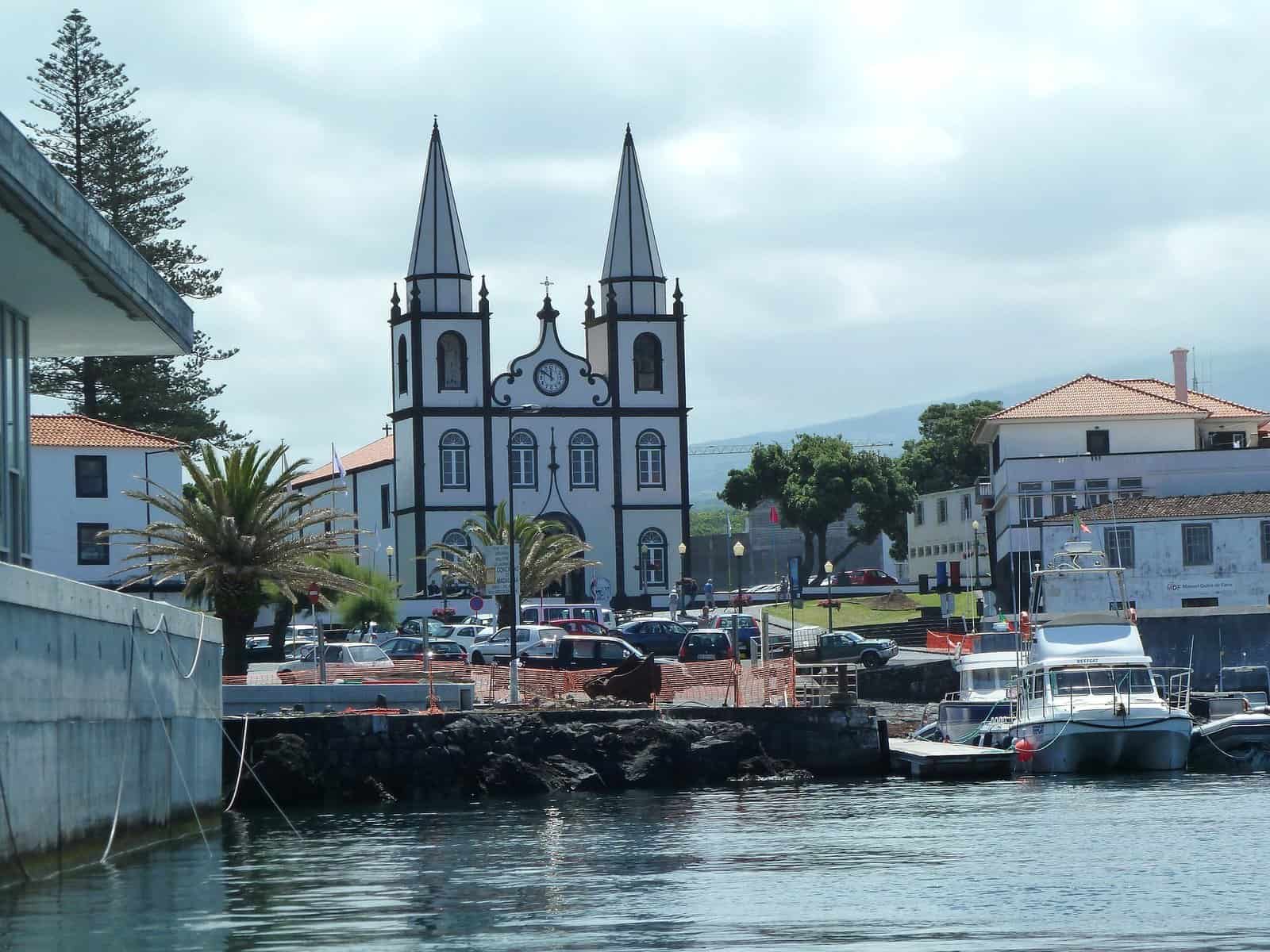
Igreja Matriz de Santa Maria Madalena
This handsome church, with its two white towers, stands right at the mouth of the bay above the ferry dock. Fishermen and sailors traditionally built chapels and churches right by the water to receive a blessing before heading out to sea. That helps explain why the church is relatively large and elegant for such a small island.
Wine Museum | Museu do Vinho da Ilha do Pico
It stands on the edge of town beside vineyards enclosed by basalt-stone walls. Even within town, you’ll spot small vineyards tucked into lava “mazes” that can be seen from the street.
Click here to find a place to stay in Madalena…
The town of São Roque
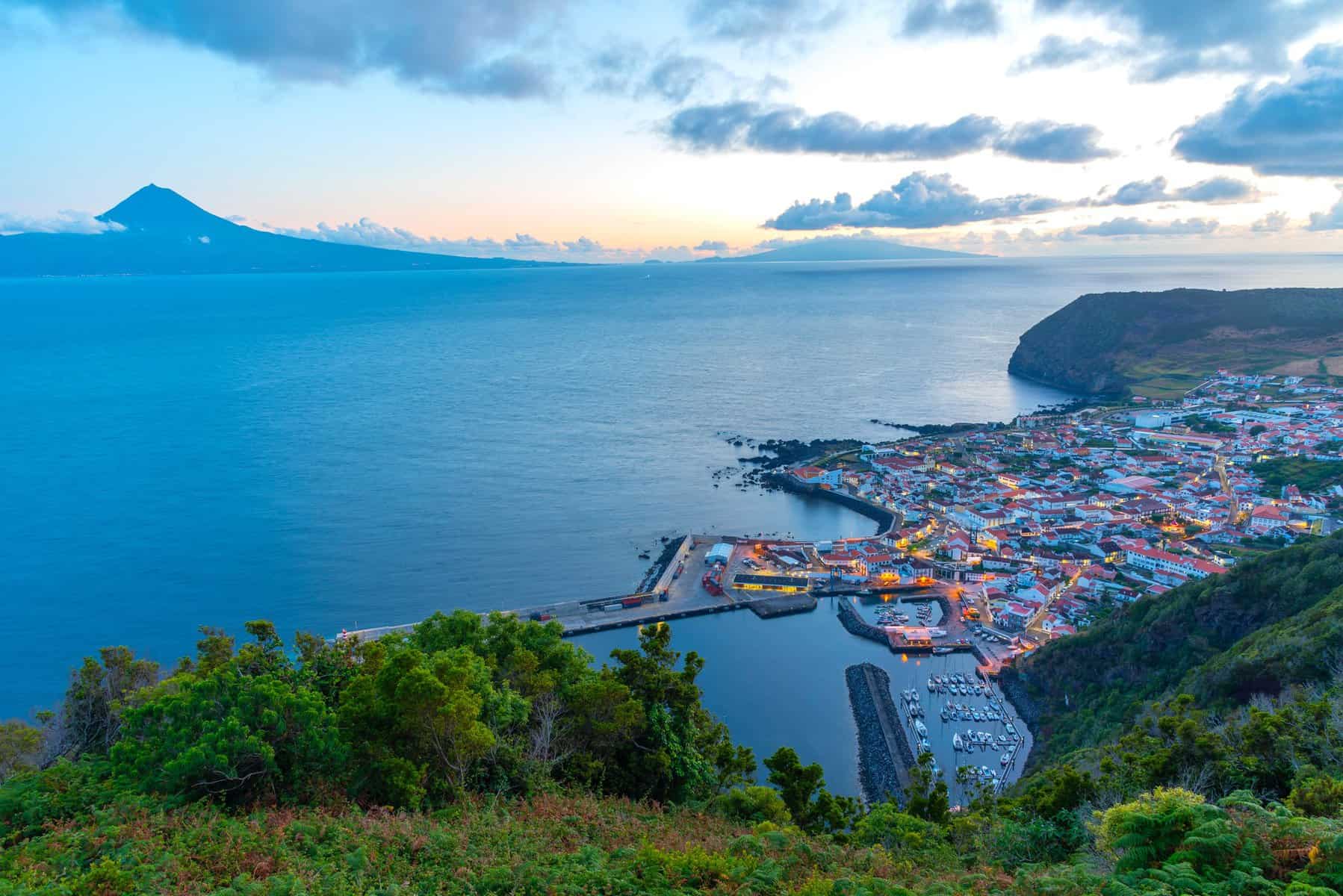
Pronounced Sao Roki. This is the town in the northern part of the island, more or less at its center. It has a large ferry terminal and port, and it faces the town of Velas on São Jorge Island about 15 kilometers across the strait.
São Roque serves mainly as a transport hub and a practical place to stay or stock up during a trip around Pico. Still, it has a few points of interest of its own, especially scenic viewpoints along the coast toward São Jorge, a museum, and natural swimming pools.
Whaling Industry Museum | Museu da Indústria Baleeira
This museum is housed in a factory that closed in 1984 after whaling was outlawed. It offers a slightly different perspective from its counterpart in the south of the island, which focuses on the whalers themselves. Here, you can see the equipment and tools used to process the catch. The museum occupies what was once a whale-processing plant — thankfully no longer in operation. Even so, the history of the whaling industry is closely tied to the history of the Azores, so it remains an important story to tell and preserve.
The pools
To the west of the town center are the Santo António pools | Furnas de Santo António, a combined complex of regular swimming pools and natural sea pools formed within black volcanic rock.
East of São Roque’s harbor there is an area with parking and easy access down to the water at a set of natural pools. The natural pools | Piscina Naturais São Roque were formed in the black rock and offer an experience similar to other natural pools on Portugal’s islands. Just keep in mind that the water stays cool, even in summer.
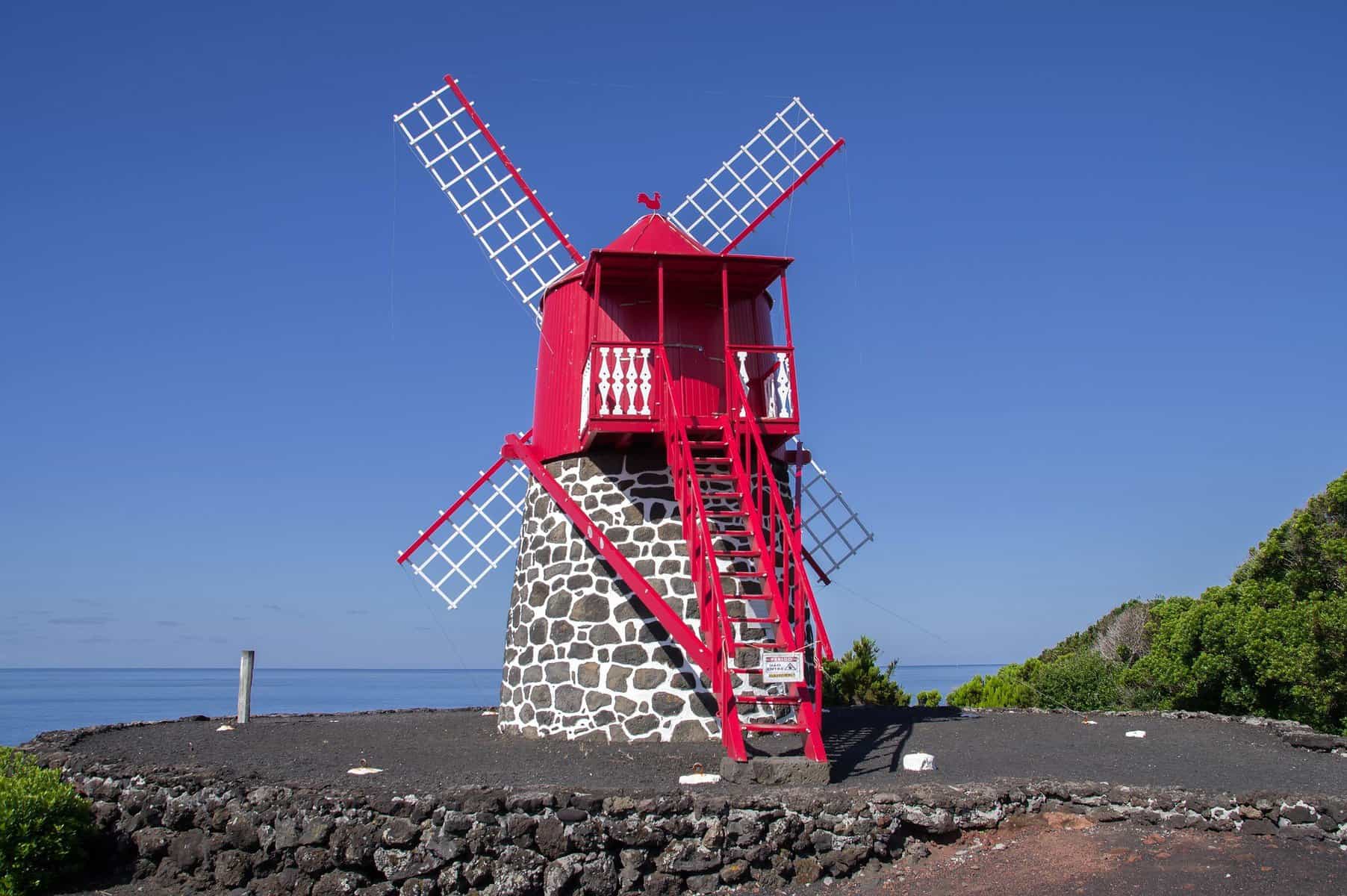
Ponta Rasa Windmill
East of town, on a small spit of land, stands an old red windmill. It’s a very pleasant spot, with parking and a short promenade nearby — perfect for a scenic stop and a few photos.
Click here to find accommodations in São Roque…
Click here for a guided climb up Mount Pico…
Lava cave – Torres | Gruta das Torres
Not far from Madalena lies the longest lava tube in Portugal. It was formed only about 1,500 years ago during a volcanic eruption and stretches for more than five kilometers.
There is a visitor center here, and guided tours leave from it into the tunnel in complete darkness to help protect its fauna. Visitors go roughly 500 meters into the depths of the lava tube. Before entering, you’re given flashlights, so there’s no need to bring your own. The tour lasts about an hour and is also suitable for families with slightly older children.
Click here for more information and tour times for the lava tube…
Lajes – The Whale Town
Whale-watching cruises
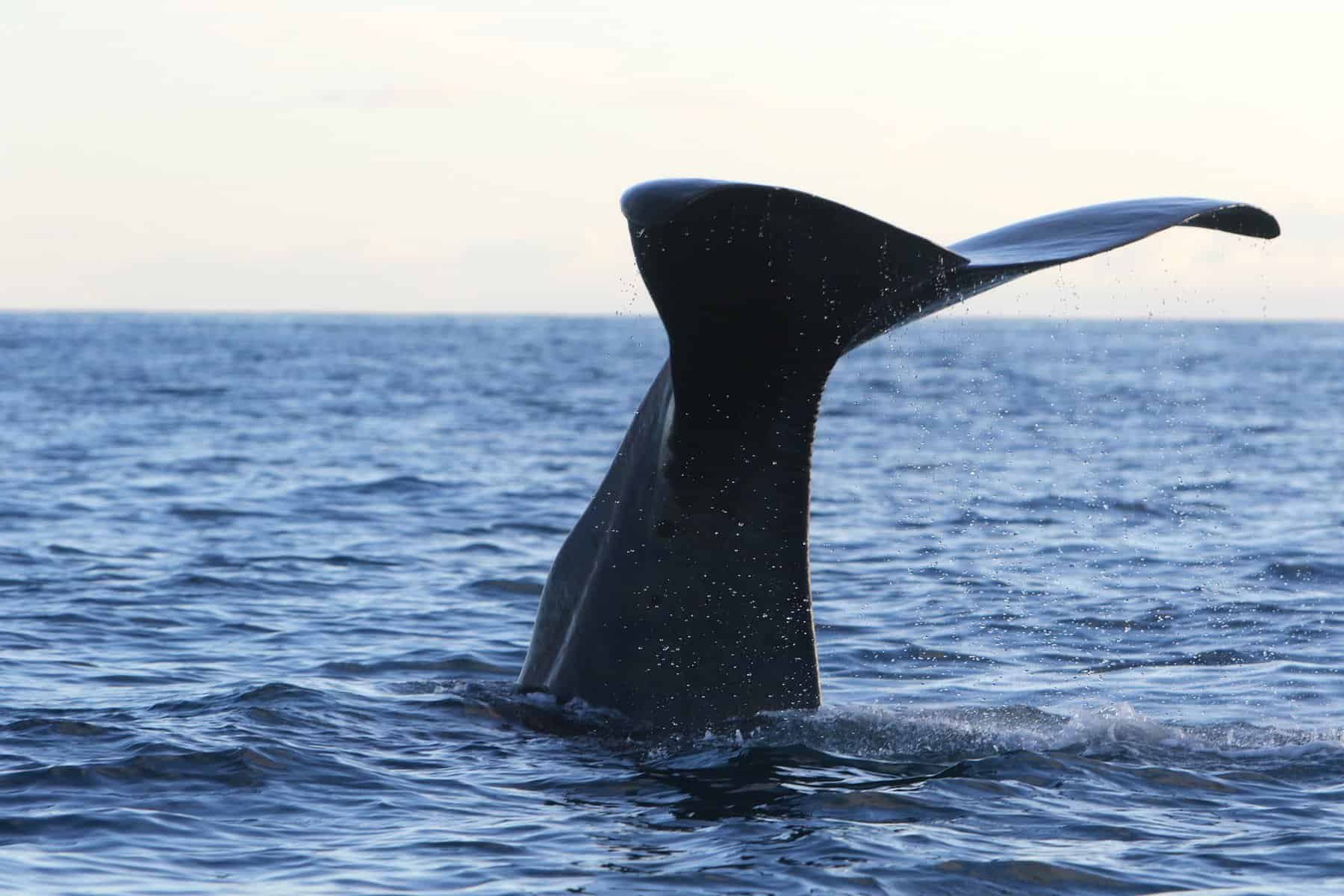
Although the sperm whale (Cachalote) swims in Azorean waters year-round, boat tours from Lajes run only from April through October. That’s also when various whale species migrating through the islands can be seen. Dolphins appear on almost every trip as well.
The outing lasts 3 to 4 hours and is sometimes delayed due to weather conditions. In our view, together with climbing the mountain and touring Pico’s wineries, whale watching ranks at the very top of the island’s experiences and shouldn’t be missed. If weather forces you to skip it, similar tours also depart from other islands in the Azores — but here on Pico, the encounter with the great marine mammal feels especially magical.
Click here for an amazing whale and dolphin watching cruise departing from Lajes…
Whalers Museum | Museu dos Baleeiros
This is the island’s main museum connected to the history of whaling. Whaling thankfully ended in 1984, but its story still matters — especially the story of the whalers themselves, since for centuries many island residents were among them. Somewhat surprisingly, many American whalers were also involved over the generations. The Azores have always served as a bridge between the Old World of Europe and the New World of America, and that connection extended to the once-thriving global whaling industry. The museum is not large, but it can be an excellent stop while waiting for your whale-watching departure.
Lava fields
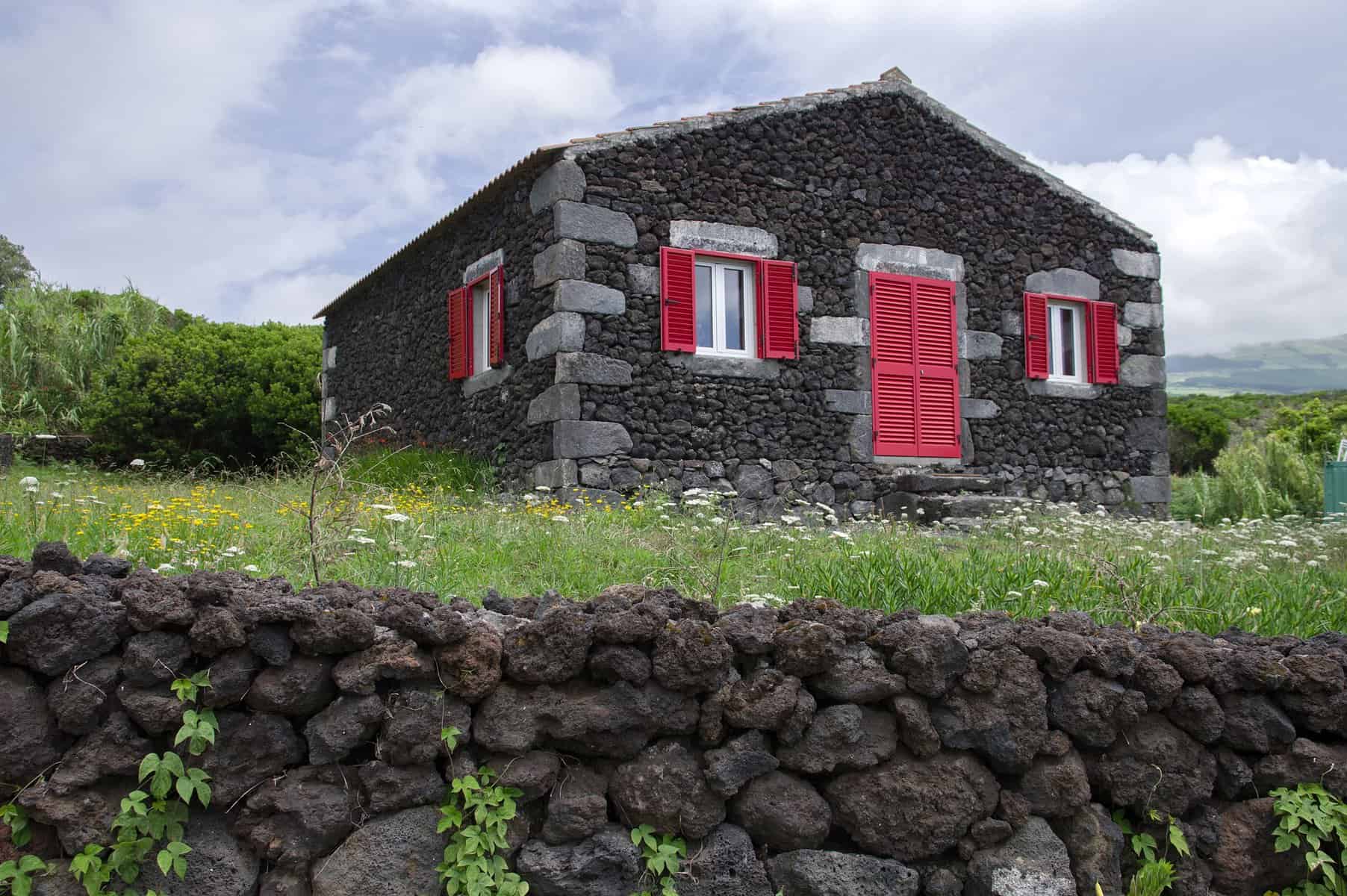
Parts of Pico Island are covered in deep black lava. In some places, you’ll find striking formations frozen in time, especially along the shoreline. Many buildings on the island were also constructed from volcanic stone. That same stone played a crucial role in Pico’s distinctive winemaking method, both in the walls that protect the vines and in the minerals found in the soil that nourishes them.
Along much of the island’s northern coastline, you can see deposits of jet-black lava right at the water’s edge. One place where you can spot these black lava formations is near the tiny village of Arcos.
The vineyards of Lajido
Verdelho wine is the signature wine of Pico Island. The vineyards of Lajido, the village near the island’s airport, are a UNESCO World Heritage Site. They earned that status because of the unique way the vines are cultivated within vineyard “mazes” of basalt walls that shield the plants.
The volcanic soil makes it difficult for trees to grow across large parts of the island. On top of that, the winds and salty sea air made vine growing a challenge. But islanders — and seafaring people in general — tend to struggle without at least a little good wine. So the first settlers persisted, building triangular basalt-stone walls around the vines to protect them. The volcanic ground itself, however, is excellent for viticulture, and over time Pico developed a distinguished wine industry with a reputation that spread far beyond the island.
In the village of Lajido there is a visitor center | Cultura da Vinha da Ilha do Pico that explains the vineyards and winemaking tradition of Pico Island.
Click here for a guided climb up Mount Pico…
The lakes of Pico Island | Lagoas
On the eastern side of the mountain lies a broad plateau where several small lakes are tucked between the hills. These lakes formed in small volcanic craters, and against the green landscape around them, they are simply beautiful. The area is quite isolated, with access roads made of black basalt gravel, which only adds to its distinctive character.
If you’re exploring Pico by car, this peaceful, green, and secluded area is well worth the detour, with lovely views of both the mountain and the sea.
Among the small lakes are:
- Lagoa da Rosada
- Lagoa do Cabeço dos Grotões
- Lagoa do Caiado
Click here to search for accommodations on Pico Island…
Click here for an amazing whale and dolphin watching cruise on Pico Island…