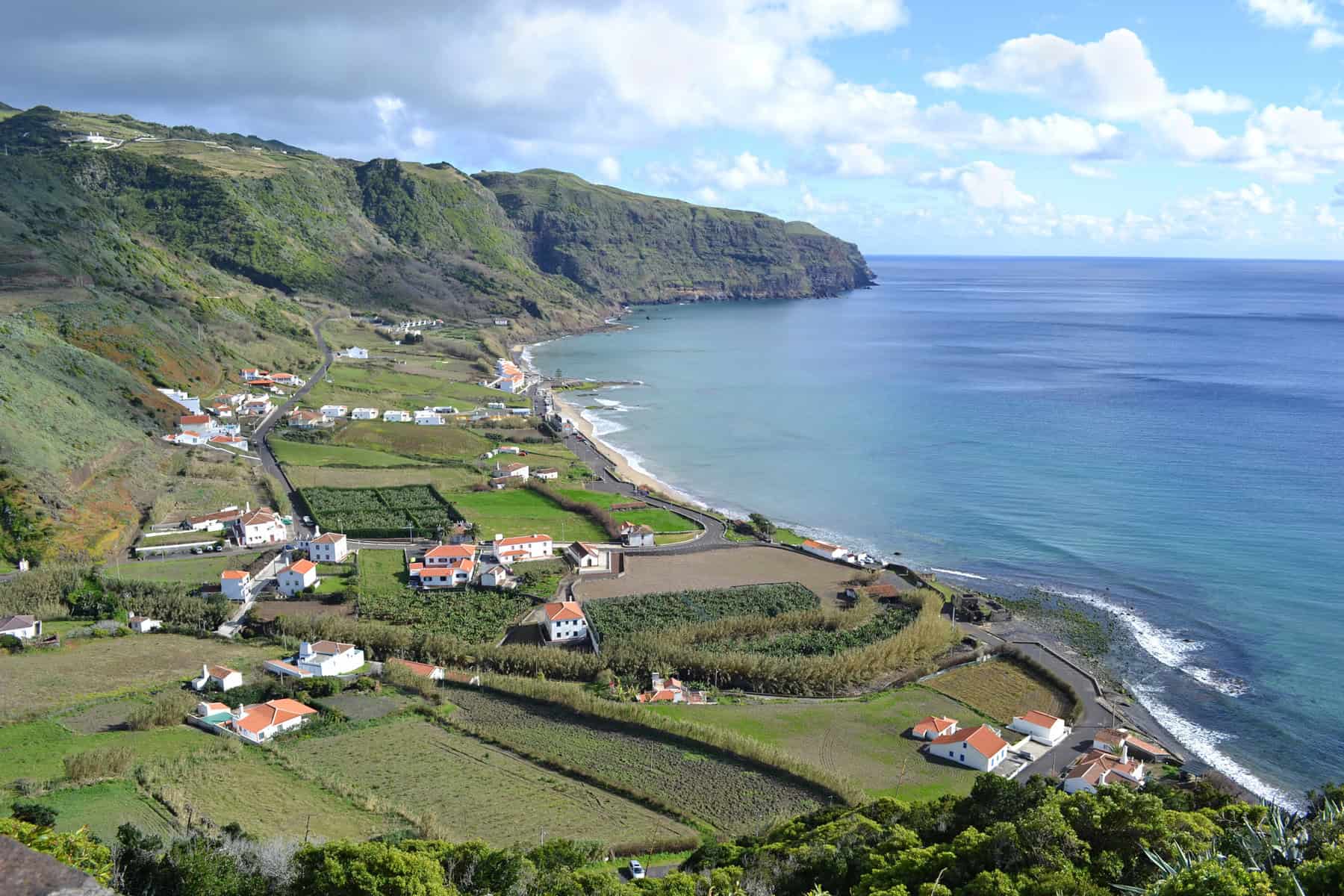
Santa Maria is the first island in the Azores that the Portuguese reached in the early 15th century. Just 17 kilometers long, this small island is the southernmost in the archipelago, which also makes it slightly warmer than its northern neighbors. That is why it is known as the Sunny Island. It lies 55 kilometers south of São Miguel, the largest and main island, and together the two form the eastern group of the Azores. Santa Maria is famous for its two sandy beaches, São Lourenço and Formosa, both framed by dramatic scenery, as well as for its lush walking trails climbing the mountain at its center. Most travelers come here as an extension of a trip to São Miguel, usually to spend a few days relaxing on a sandy beach in slightly sunnier weather.
How many days do you need to visit Santa Maria Island?
One day with a rental car is enough to see most of the sights on tiny Santa Maria. Because of its remote location, though, travelers usually stay for several days, combining sightseeing with a true sea-side break and time on the only sandy beaches in the Azores.
Click here to find hotels and vacation rentals on charming Santa Maria Island…
6 places and attractions worth seeing on Santa Maria Island
- The lighthouse at Ponta do Castelo
- São Lourenço Beach beneath the vineyards climbing the hillside | Praia de São Lourenço
- Peaceful and pleasant Formosa Beach | Praia Formosa
- Aveiro Waterfalls above the unique rock formations | Cascata do Aveiro
- The green Fontinhas park in the island's uplands | Reserva Florestal de Recreio das Fontinhas
- Pico Alto – a hiking or cycling route through the forests at the island's summit
How do you get to Santa Maria Island?
Flights to Santa Maria
For the average traveler, flying is essentially the only practical way to reach Santa Maria Island. There are direct flights to Santa Maria Airport (code SMA) from São Miguel, and several times a week from Lisbon as well. From Ponta Delgada, the capital of São Miguel, there are several daily flights operated by the Azores airline. The flight takes about 20 minutes.
The airport (Aeroporto de Santa Maria), on the western side of the island, is relatively large. In the past it served military purposes and also functioned as a stopover for planes flying between Europe and America. Today, the airport in Vila do Porto, the capital of Santa Maria, serves both local residents and visitors arriving on the island.
Ferry to Santa Maria
Ferries to Santa Maria operate only during the summer months, and even then service is limited. They depart from the port of Ponta Delgada on São Miguel, and the crossing takes 3 hours. For that reason, most visitors choose to fly rather than arrive by ferry.
Click here to find accommodations on Santa Maria Island…
About Santa Maria Island
Santa Maria is the only island in the Azores that can boast a sandy beach. The island's mountainous center is fairly wooded, with narrow zigzag roads climbing toward its highest point at 600 meters. The east and center are green, forested, and usually cloudy, while the west and the coastline are sunnier and covered with lower vegetation. As for food, beyond the usual Portuguese dishes, the standout choices on Santa Maria are fresh fish and seafood from the deep waters surrounding the island.
Geologically speaking, Santa Maria was the first of the Azores to emerge from the depths of the sea. Historically, it was also the first island discovered by the Portuguese in the early 15th century.
Santa Maria was first discovered by Diogo de Silves, who was apparently sailing toward Madeira at the head of a naval expedition financed by Henry the Navigator, the Portuguese prince who began funding voyages of discovery in the early 15th century. For many years, however, the island's official discovery was attributed to Gonçalo Velho Cabral, who arrived here in 1432. He later discovered São Miguel, now the most populated island, and was eventually appointed governor of the Azores by King Afonso V of Portugal.
This isolated island suffered quite a few pirate raids in the early years of settlement. That led to the construction of several forts and lookout points, including the Fort of São Brás in Vila do Porto, beginning in the 17th century.
During World War II, the Americans built a large base on Santa Maria Island thanks to its excellent strategic location. That position helped them counter the threat posed by German submarines to their ships in the Atlantic Ocean. The base was built alongside the airport, which after the war began serving civilian purposes.
Weather in Santa Maria
The climate on Santa Maria is slightly warmer than on more northerly São Miguel. More importantly, it is sunnier and receives less rainfall than the other Azores islands. Combined with its sandy beaches, this makes it stand out from the rest of the archipelago, which is why it is also known as the Sunny Island or the Yellow Island.
Attractions and interesting places on Santa Maria Island
Vila do Porto
Vila do Porto sits on the island's southwestern coast. The airport is nearby, and it is the largest settlement on this small island. In its older central section, there is one main street leading down to the harbor, which is named after the official discoverer of Santa Maria.
Rua Frei Gonçalo Velho ends at the Fort of São Brás whose roof offers a wonderful view over the harbor and the sea. Many of Santa Maria's historic houses line the street, a reminder that the island has been inhabited for nearly six hundred years. From there, you can continue down to the harbor and marina, where boat tours around the island depart.
Farther up the street stands the large Church of Nossa Senhora da Vitória, with the broad square beside it. Together they form the town center. Vila do Porto is the island's administrative and transportation hub, and also the only place where you will find a wider range of shops and commerce.
Another interesting site near town is the old windmill | Moinho da Carreira, which, set against the sea and green fields, feels especially romantic.
Click here to search for accommodations in Vila do Porto…
Santo Espírito
Santo Espírito is a town/village in the wooded, green hills of the island's southwest. It is fair to say that the Purificação Church in this small village is one of the most beautiful in all of Portugal, at least when it comes to small churches. Its façade is Baroque, with bricks made from volcanic rock incorporated into the structure in keeping with the island's character. Standing right by the road in the center of the village, it has a charm all its own.
Santa Maria Museum
This small museum in the hilltop village/town of Santo Espírito presents the history of the island's settlers. It depicts life on the islands before the Industrial Revolution, along with the broader history of Santa Maria. The visit is short, so it is well worth stopping in while exploring the mountain area.
Purificação Church | Nossa Senhora da Purificação
This beautiful church stands opposite the museum. Its white Baroque façade combined with basalt stone is another example of the use of local materials on Portugal's islands, while following the same architectural style as the mainland. The bell tower, completing the façade on the right, is especially striking. As mentioned, it is truly a gem in the heart of this small village.
The village Anjos
A tiny fishing town on the north side of the island, with a few natural sea pools and a small beach. Yet this village/town holds an important place in history. Anjos was one of the earliest settlements on Santa Maria, and its church is the oldest on the island. Christopher Columbus stopped here in 1493 on his way back to Europe from the discovery of America and anchored right here in Anjos. The church itself is also linked to Columbus, since, following sailors' custom, he came ashore and stopped to pray there before returning to his ship to continue the voyage.
Anjos Church – | Nossa Senhora dos Anjos
The church was built as early as the 15th century, although most of the current structure dates from the 17th century. Beyond the fact that Christopher Columbus prayed here, be sure to notice the decorative tiles inside, which depict birds and exotic animals.
Christopher Columbus Statue | Cristóvão Colombo
The statue stands opposite the church. Columbus passed through here in 1493 on his return voyage to Europe after the first discoveries in America. It commemorates this important moment in the history of the Iberian Peninsula and of the world more broadly.
Santana Cave | Furna de Santana
Also known as Anjos Cave, it lies a little west of Anjos. This is a cave several dozen meters long inside volcanic rock worn away by the sea. A miracle is also associated with the cave: during one of the pirate raids on the island in the early centuries of settlement, residents hid here and escaped capture and sale into slavery. The cave lies along one of the island's longer hiking routes, so it can be combined with part or all of a walk on the trail.
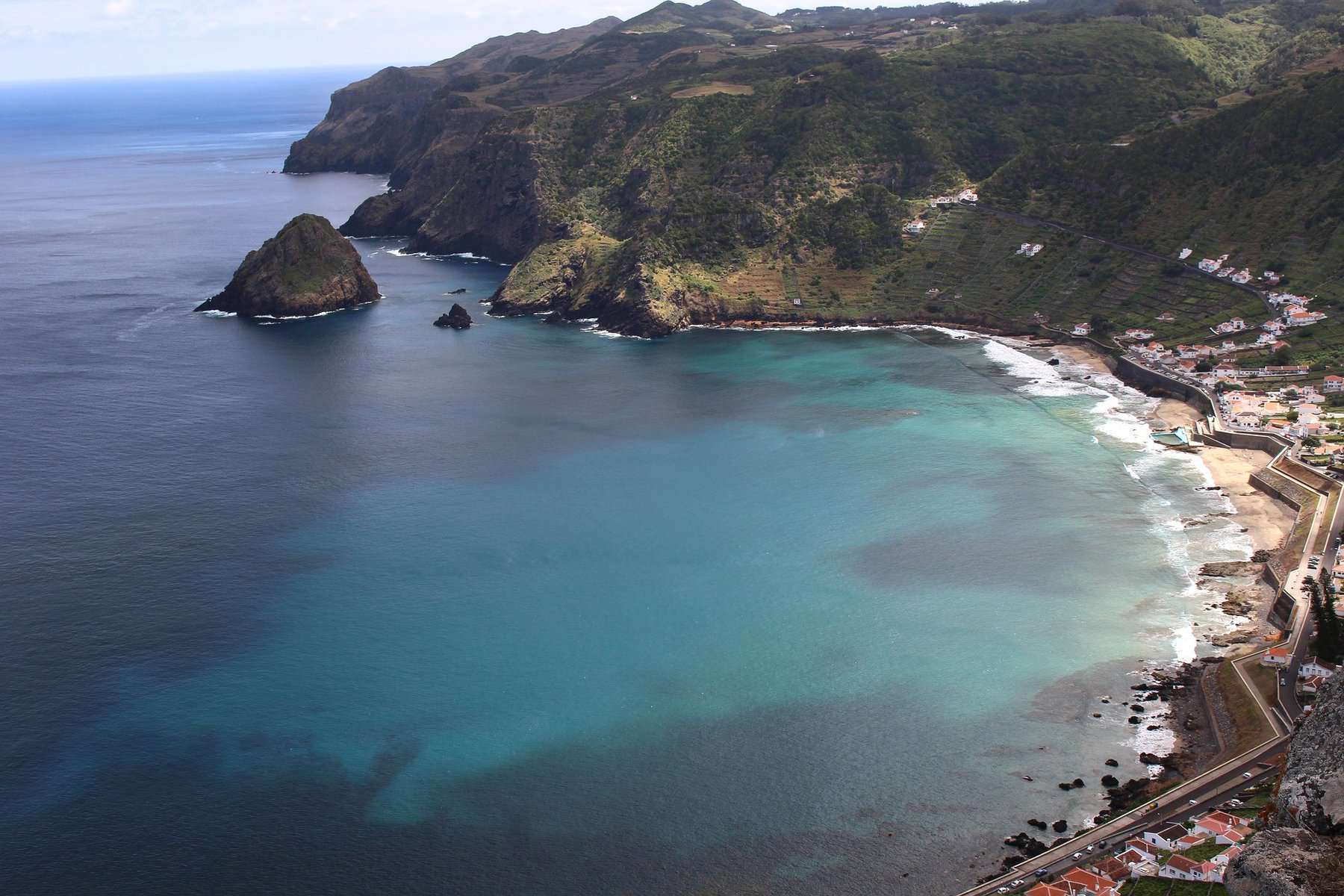
São Lourenço Beach | Praia de São Lourenço
The beach is actually half of a crater, with the other half submerged in the sea. That gives it such a distinctive shape, as if the hillside above it had been sharply sliced away down to the shore.
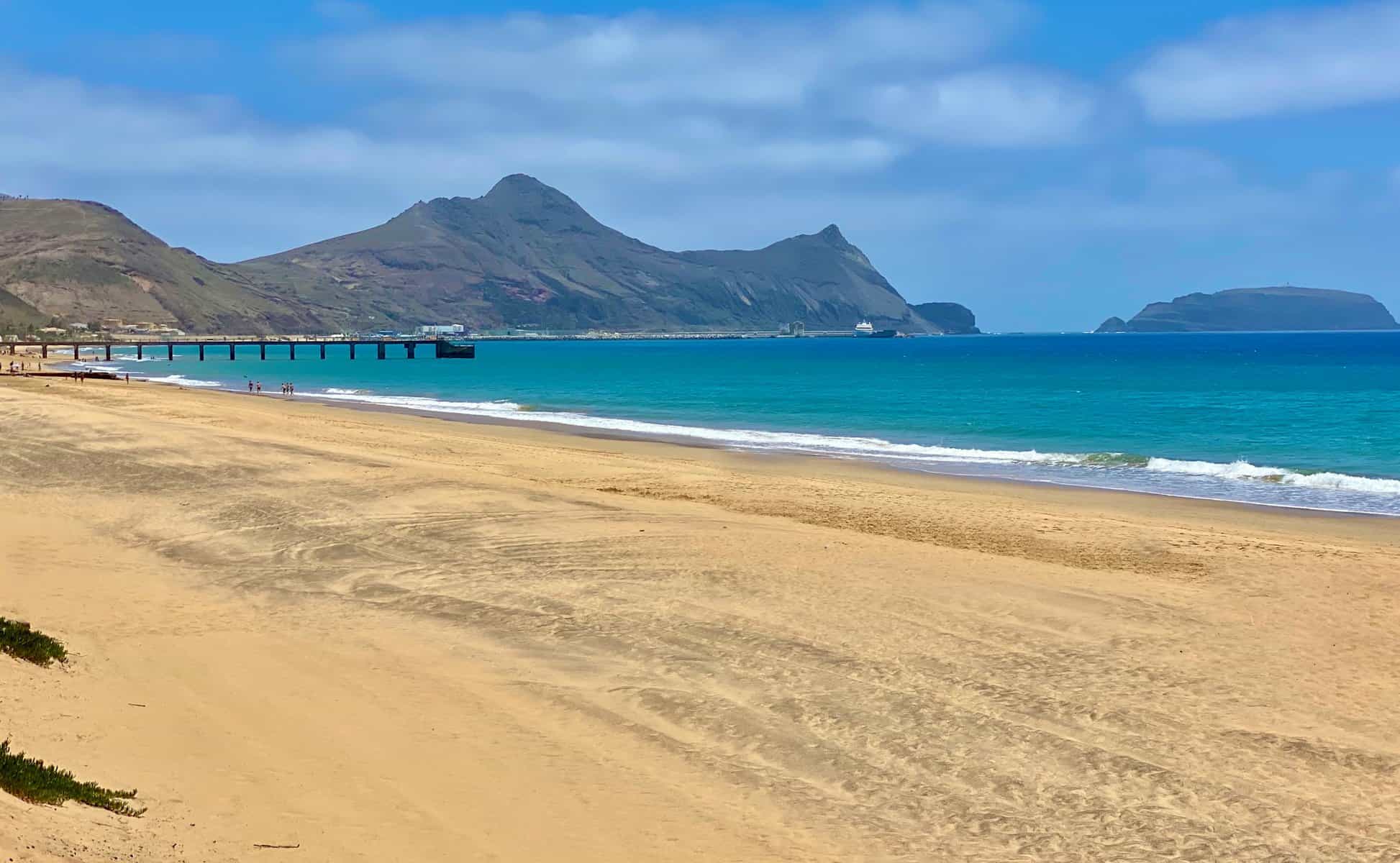
As mentioned, Santa Maria is the southernmost island and therefore the warmest in the Azores archipelago. São Lourenço is one of the only beaches in the Azores that truly matches the image most of us have in mind when we think of a sandy beach on a remote island.
Another thing that makes this beach special is the vineyards growing on terraces that climb almost to the top of the hill above it. All of this gives the place an especially enchanting feel. Many travelers come to Santa Maria specifically to spend time on this beach.
Click here to find hotels and vacation rentals on warm Santa Maria Island…
Aveiro Waterfalls | Cascata do Aveiro
On the western side of the island, not far from São Lourenço Beach, are the tallest waterfalls in all of Portugal. The falls drop from a height of 110 meters over distinctive basalt rock formations. There is almost always some flow, though the powerful white rush appears only after rain. Even so, the towering rock face alone makes this stop worthwhile. Reaching the base of the falls involves walking, climbing, and descending stairs.
Click here for diving in the deep waters of Santa Maria Island…
Formosa Beach
As noted, Santa Maria is the only island in the Azores with sandy beaches that are pleasant for swimming. Formosa Beach is the island's second most famous beach after São Lourenço, though many would say it is better for swimming. It lies in the south of the island, not far from Vila do Porto. The beach is very enjoyable, but keep in mind that the Atlantic has tides, so it is better not to settle right at the waterline.
It is very worthwhile to stop at, or make your way up to, the stunning viewpoint above the beach. Macela Beach Viewpoint | Miradouro da Praia – Macela offers a beautiful view not only of the beach itself, but also of the surrounding green mountains and, of course, the sea. There is also a small picnic area here with a wonderful setting.
Maré de Agosto Festival at Formosa Beach
A music festival held every year at the end of August on Formosa Beach for 3 to 4 days. What makes it so special is that it takes place on a remote, sparsely populated island, and that is part of its charm. If you happen to be on Santa Maria at that time, it is not to be missed.
Click here for the festival website…
Pico Alto Summit
The highest peak on the island, at just under 600 meters. On a clear day, it is worth heading to the top for sweeping views over the eastern side of Santa Maria, dotted with fields. The roads up the mountain are beautiful in their own right, winding upward in sharp bends. There are also several hiking trails leading to the summit and descending in both directions.
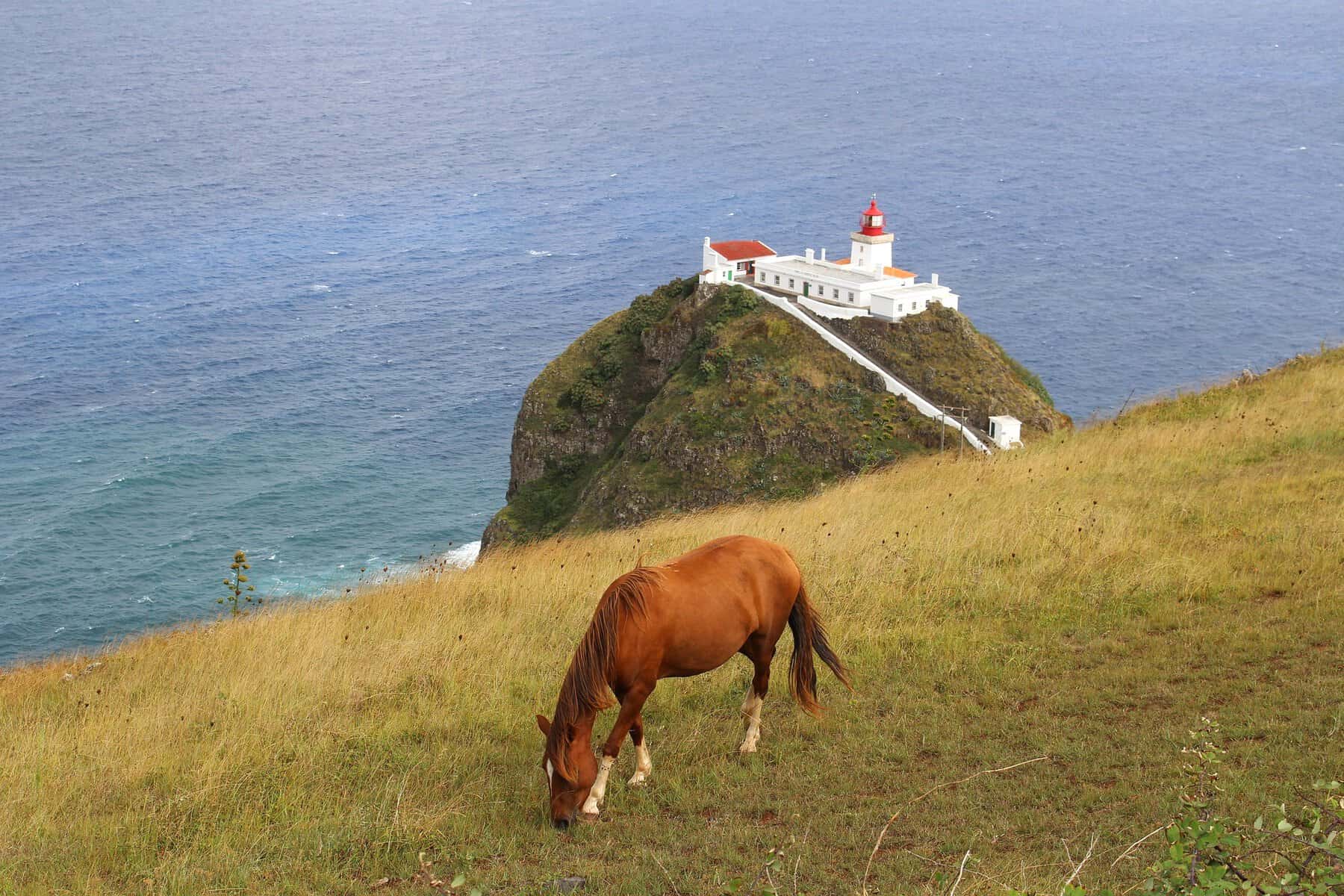
The lighthouse at Ponta do Castelo
At the island's southeastern tip stands the lighthouse, and both the site itself and the road leading to it offer beautiful viewpoints. The place is also known as the ‘Whale Watch Viewpoint' | Miradouro Vigia da Baleia. And indeed, despite the height above the water, you can sometimes spot the great marine mammals and even hear them spraying water in jets from their blowholes. This is one of the most romantic places in the Azores as a whole, and anyone arriving at sunrise will find a scene that feels lifted from a quieter, more peaceful time.
Fontinhas Park | Reserva Florestal de Recreio das Fontinhas
This park, a little west of Santo Espírito, is a wonderful and well-kept place to wander among the greenery of the island's center. As is often the case on Santa Maria, you may well find that the place is almost entirely yours. That sense of quiet is part of the appeal, especially for anyone used to the noise and crowding of city life.
The park is filled with conifer trees, ferns, and greenery in every direction. The misty backdrop, really clouds covering the island's summit, makes the plants' vivid green stand out even more. Santa Maria has a striking contrast between its generally sunny coastline and the mountain interior, which, although not especially high, is almost always cloudy and feels cool and overcast.
Click here to search for accommodations on Santa Maria Island…
The spring at the quarry | Poço da Pedreira
A small but intriguing spot in the uplands, not far from São Lourenço Beach, in the town/village of Santa Barbara. Here you will find a tall reddish rock wall with a spring formed at its base. Santa Maria was the first Azores island reached by the Portuguese in 1427, so it has been inhabited for nearly 600 years. In the past, stone was quarried from the rocks near the settlement, and this beautiful reddish rock clearly drew the settlers in. Once the quarry was abandoned, a small lake formed below it, surrounded by green vegetation. It is well worth stopping for a few minutes to take in the beauty.
Cai-Agua Waterfalls | Cascata Cai-Agua
Not far from the red quarry, also in the Santa Barbara area, is a rock waterfall site. The falls are not especially powerful, but they spread across a wide area and can be fairly lively after rain. While the quarry is very easy to reach from the road, getting to the waterfalls requires walking down a small unmarked path.
The “Azorean Desert” | Barreiro da Faneca
Barreiro da Faneca is an area in the north of the island, not far from Anjos, with barren clay soil. This exposed landscape looks like a little desert set amid the green vegetation. Santa Maria is the geologically oldest island in the Azores, and this is a unique example in the entire archipelago of exposed barren soil worn out of the rock over thousands of years. In some ways, the area recalls Paúl da Serra Plateau | on Madeira Island, only much smaller.
Click here to find hotels and vacation rentals on warm Santa Maria Island…
Click here for our complete guide to the Azores…
Click here for diving in the deep sea waters around Santa Maria Island…