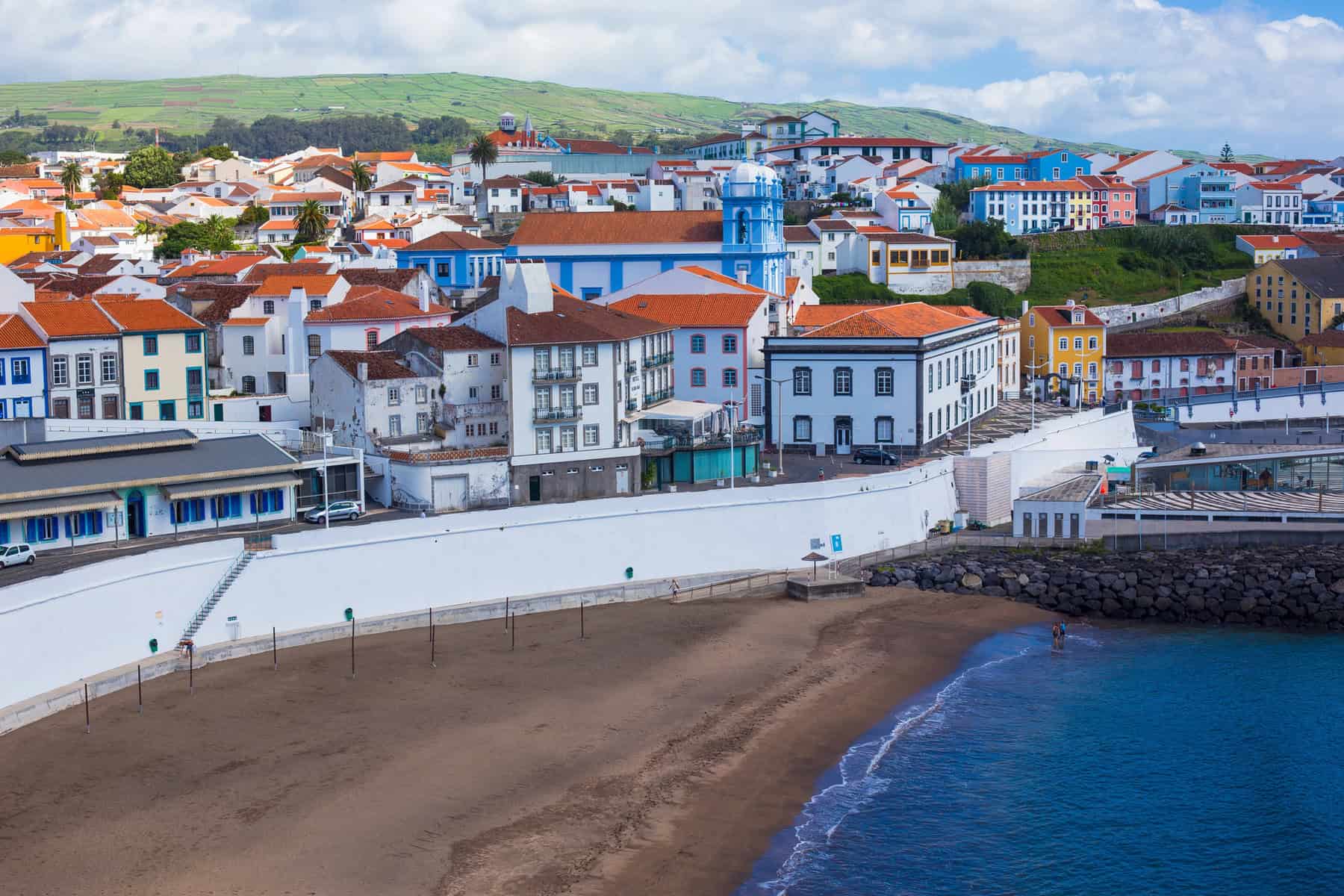
Terceira is the most populated and developed of the five islands in the Azores’ Central Group. It also serves as the archipelago’s second most important air gateway. Much of the island is covered in green pastures and farmland, along with ancient forests that grew over the old volcanic mountains that shaped it. Terceira’s capital, Angra do Heroísmo, was once the most important city in the entire Azorean archipelago during the Age of Discovery. Ships laden with gold returning from the colonies in the Americas to Spain and Portugal stopped here on their way home. That wealth left its mark in grand public buildings and in the narrow cobbled streets lined with charming old colorful houses. Angra is Terceira’s main attraction, thanks to its exceptional beauty. If you can, it is highly recommended to plan your visit for late June, when the Azores’ biggest annual event takes place here: Sanjoaninas, a lively mix of carnival, bull runs, and flower displays that lifts the whole city to another level for ten unforgettable days.
How many days do you need to explore Terceira?
Two days on Terceira are enough to see most of the main sights. Since the island has onward flights to nearly all of the other Azorean islands, it fits easily into almost any Azores itinerary.
Click here to search for accommodations on the central island of Terceira…
8 must-see places and things to do on Terceira
- Walk through the historic center of the capital, Angra do Heroísmo
- Monte Brasil – views over Angra and the ocean
- The King Pedro IV Memorial in Angra | Memória a D. Pedro IV
- Sanjoaninas Festival in Angra – every June
- Serra do Cume viewpoint – overlooking Terceira’s patchwork fields
- The volcanic crater of Algar | Algar do Carvão
- Mistérios Negros hiking trail (high difficulty) | Trilho Mistérios Negros
- Biscoitos Wine Museum | Museu do Vinho
Click here for a guided tour of the remarkable volcanic cave at Algar…
How do you get to Terceira?
Terceira is the Azores’ second most important gateway after São Miguel. That means it is always worth checking flights there too, and you may sometimes save money. This is especially true if you plan to explore the other islands in the archipelago’s Central Group.
Flights to Terceira
Terceira is home to the Azores’ second-largest airport after the one on São Miguel. Located in the town of Lajes in the island’s northeast, it is called Aerogare Civil das Lajes. As the second most populated island and the archipelago’s second most important air entry point, Terceira receives many flights from both Lisbon and Porto. Most are still operated by the Azores airline and by TAP, Portugal’s national carrier. There are also low-cost flights, including routes from various cities in Western Europe. These routes are expanded during the summer, Terceira’s main tourist season. Flights from mainland Portugal to Terceira take about two hours and forty minutes. The island’s airport code is TER, and the drive from the airport to the capital, Angra do Heroísmo, takes about 20 minutes. Praia da Vitória, the port town on the island’s eastern side, is just 5 minutes away by car.
Inter-island flights to Terceira:
Terceira has inter-island flights from most of the other islands, especially from Horta on Faial and Ponta Delgada on São Miguel. There are several direct flights a day to and from both.
Ferry to Terceira
Terceira is the largest island in the Azores’ Central Group, an area known for its relatively good ferry service. Most ferry routes, however, connect the nearby Triangle Islands – Pico, Faial, and São Jorge. There are ferries to Terceira as well, but service is limited and sailing times are long, so most travelers do not choose this option. That is mainly because flights are quicker, easier, and relatively affordable, both from the mainland and from almost every other island in the Azores. Still, if you do want to arrive by ferry, there are two routes:
The purple line | Linha Lilás of the Central Islands ferries begins in Horta on Faial, continues through Madalena on Pico, stops in Calheta on São Jorge, and after another three hours at sea reaches Angra do Heroísmo.
The white line | Linha Branca connects Praia da Vitória, Terceira’s eastern port town, with the small and isolated northern island of Graciosa. The crossing takes three and a half hours, after which the ferry continues on to the other Central Group islands.
Cruise to Terceira
Some cruises stop at Terceira. They dock at the deep-water harbor in the eastern town of Praia da Vitória.
Click here to search for hotels and vacation rentals on Terceira, the second-largest island…
Renting a car in Terciera
Renting a car is the most effective way to tour the Island. While the main towns are walkable, the island’s highlights—like the Algar do Carvão volcanic chimney and the Serra do Cume viewpoints—are best reached by private vehicle. Public transport is limited and often fails to reach these remote natural wonders.
Driving provides the flexibility to adjust your plans based on the island’s shifting weather. The roads are well-maintained and traffic is light, making for a relaxed experience. To ensure availability, book your vehicle early, as the local fleet is small and automatic cars are limited.
Click here for deals and options for renting a car in Portugal…
Good to know about Terceira
- The island is called Terceira, which means “third” in Portuguese, because it was the third island to be discovered after Santa Maria and São Miguel.
- The island was discovered during the Age of Discovery launched by Henry the Navigator in the early 15th century. In 1450, he appointed his Flemish envoy Jácome de Bruges to oversee settlement on Terceira. Jácome brought settlers from Flanders along with Portuguese colonists, mainly from northern Portugal. The island quickly became important, and Jews also arrived during that period, helping develop trade with the mainland.
- De Bruges disappeared in 1472, and soon afterward the Portuguese crown “divided” the island between two captains, apparently to avoid conflict. That is why Terceira still has two centers, or more accurately, two ports: Angra and Praia.
- Terceira is an active volcanic island. Its highest point is the dormant volcano Serra de Santa Bárbara, which rises to 1,020 meters. It is also home to the wonderful viewpoint over the island’s patchwork fields.
- Terceira is more of a lived-in island than a tourist island. It has plenty of nature and greenery, but it feels more rural and less wild. Thanks to its size and flatter terrain, more people were able to settle here, and about 55,000 residents live on the island year-round. That is roughly a third of São Miguel’s population, but still far more than on any of the other islands.
- Its capital, Angra do Heroísmo, is the second-largest city in the Azores and the island’s main attraction.
- The climate on Terceira is similar to the rest of the islands, with plenty of rainfall. The best time to visit is summer, from mid-June to mid-September.
- Because of its size, Terceira has better transportation infrastructure than most of the other islands, and its connections with both the mainland and the other islands are excellent. In other words, there are plenty of flights to and from the island.
Click here for an efficient guided tour of Terceira’s main attractions and highlights…
The island’s capital – Angra do Heroísmo
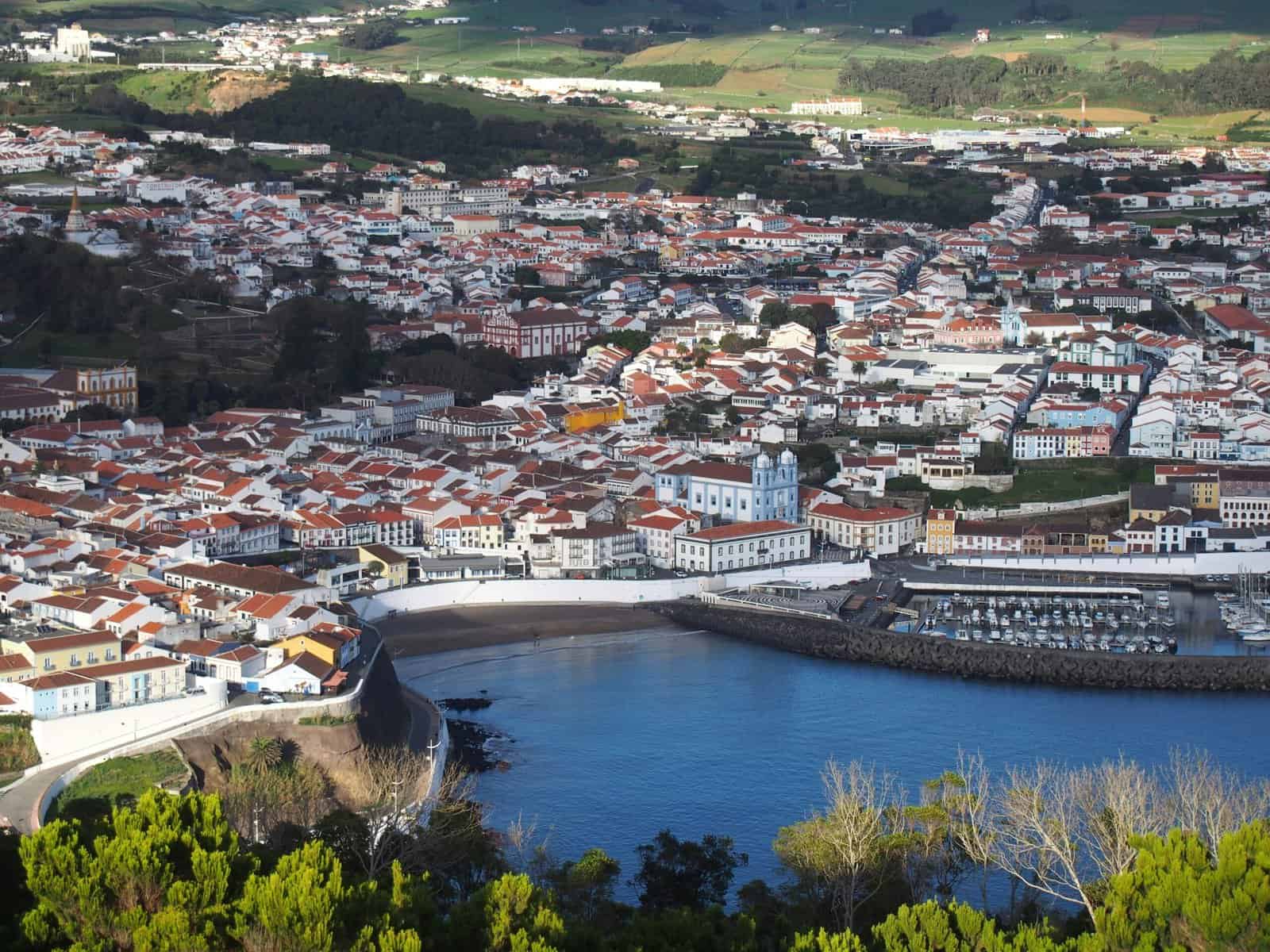
Terceira’s largest city has a population of 35,000. By Azorean standards, that makes it a major city. It is second only to Ponta Delgada, the largest city on São Miguel, though for most of history it was Angra that served as the archipelago’s leading city. Angra was founded in 1534 and became the first city in the Azores. It also served as the capital of the entire archipelago and, for three centuries, was an important stop on voyages returning from the Americas to Portugal and Spain. Much of the city’s wealth from that era is still visible in the buildings that make up its historic center, which is why it was recognized as a UNESCO World Heritage Site.
Today, it is the most beautiful city in the Azores. The riches brought back by sailors on their way to Europe with gold and treasure helped the city flourish and funded the construction of large, elegant public buildings. The streets, almost always edged with paved sidewalks, rise gently uphill, lined on both sides with pastel-colored houses trimmed around the windows and doors. That is why the city’s main attraction is simply wandering its beautiful streets, while also taking in the lovely viewpoints tucked between them and the sweeping views from Monte Brasil.
Main sights in Angra:
The pale blue Church of Mercy | Igreja da Misericórdia
The Igreja da Misericórdia above the harbor stands out from almost every viewpoint over Angra thanks to its soft blue color. You reach the church directly from the marina and harbor by way of the old city gate | Portas da Cidade, with its two symmetrical staircases. At the top, in the heart of the square with its traditional paving, stands a statue of Portugal’s most famous explorer – Vasco da Gama | Vasco da Gama – the trailblazer who opened the sea route to India and the Far East.
The current church stands on the site of a hospital and church established during the earliest settlement in the late 15th century. Its location, right by the harbor exit, made it possible to care quickly for sailors arriving sick from difficult ocean voyages. The beautiful building seen today was inaugurated in 1746. Its most striking feature is the pair of symmetrical bell towers on the façade. Inside are several impressive wood carvings and large oil paintings depicting historic events and scenes from scripture.
Click here to find accommodations in the wonderful city of Angra…
Angra Cathedral | Sé Catedral de Angra
This is the largest church in the entire Azores. Construction began in 1568. It is also known as Igreja do Santíssimo Salvador da Sé. The orange-crimson building stands out in the center of Angra and is another of the large, handsome landmarks that reflect the city’s importance as a port of call from the 16th century onward. Ships from the Portuguese and Spanish colonies in the Americas and the Far East once docked here.
The small entrance square in front of the cathedral is especially impressive, naturally paved in black and white stone, with cross motifs, stars, and the year 1534 marking the moment the pope made Angra a bishopric, a move that helped spur the cathedral’s construction. Inside, high stone arches support the central nave, creating a spacious interior. There are also several paintings and distinctive wood carvings on display. The cathedral was badly damaged by an earthquake and fire in the early 1980s, and many of its artworks were lost forever. Still, the building was restored, a large organ was added, and it remains an active center of local island life.
Click here to search for accommodations in beautiful Angra…
Town Hall Square and Rua Direita | Praça Velha – Rua Direita
Even though it is small, the paved square above Rua Direita, framed by charming houses and stone sidewalks, brings together everything you hope to find in the central square of a classic Portuguese town. At its heart is a beautifully paved open space in fine Portuguese style, surrounded by attractive buildings including City Hall. There is also a café here, and just above the square begin the Duke’s Gardens, with the Angra Museum at their lower edge.
Any walk through Angra’s historic center will naturally pass through this square, so there is no need to plan around it. Most people arrive via Rua Direita, the main street, whose gorgeous houses make it an attraction in their own right. If you are staying overnight in Angra, it is well worth coming back in the evening, when the square is lit up and feels especially lovely.
Parallel to Rua Direita runs Rua de São João, another beautiful street lined with elegant buildings, balconies, and decorative window surrounds. Both streets are known for their restaurants and cafés and make excellent stops for lunch.
Click here to find hotels and vacation rentals in Terceira’s capital, Angra…
Angra Museum | MAH – Museu de Angra do Heroísmo
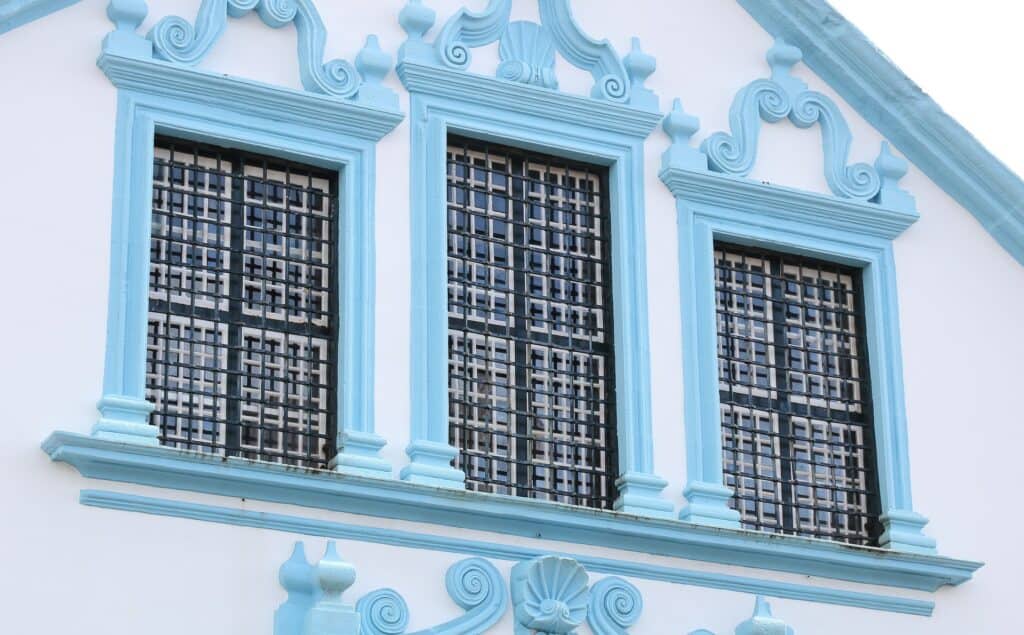
A fairly large museum in the center of town, it tells the story of the Azores as a whole, not just Terceira and Angra. The museum is housed in the old 15th-century Convent of São Francisco and includes paintings, maps, sculptures, weapons, and more. The convent building itself is an impressive historic landmark.
Across the gardens, parallel to the museum building, stands the Palace of the Captains General | Palácio dos Capitães Generais , one of Angra’s key buildings. It is still used for administrative purposes today, and its scale reflects the importance of Angra as a major stop on routes to and from the colonies.
Click here for more information about the museum…
Duke of Terceira Garden | Jardim Duque da Terceira
These central gardens were created in the late 19th century on farmland that once belonged to the São Francisco Convent, now home to the museum. They are not large, but what makes them special is how quickly they begin climbing uphill. The ascent follows paths and striking stairways made of basalt stone, creating a surprising attraction inside a public garden.
A pleasant route after visiting the museum starts in the gardens and climbs up the steps to the King Pedro IV Memorial, where you will find a lovely viewpoint over the city and harbor.
King Pedro IV Memorial | Memória a D. Pedro IV
Also known as Alto da Memória | Alto da Memória, the monument is essentially the high point of the gardens that spread out below it. It stands a few minutes uphill from the museum, though you can also drive there from the city center in about five minutes. Beyond the monument itself, which somewhat resembles a temple from the Far East, the terrace around it offers excellent views over both the harbor and the city.
The obelisk was erected here in 1856 to commemorate King Pedro IV’s visit to Angra in 1832 during the Portuguese Civil War, when the people of the Azores backed Pedro IV against his brother Miguel I. The monument was placed where the first fortress built to protect Angra once stood, dating back to the earliest settlement in the mid-15th century. Its cornerstone was brought from the harbor pier where Pedro IV came ashore from his ship.
Click here to search for accommodations in Angra do Heroísmo, Terceira’s beautiful capital…
São Sebastião Fortress
The fortress at the mouth of the harbor served for centuries as Angra’s front line of defense. Like other towns in the Azores, the city often suffered pirate raids. The fortress was built to protect against them and, of course, against invasions by the fleets of rival powers targeting the island and its harbor. It was constructed in the 16th century above the harbor pier known as Porto Pipas | Porto Pipas – the anchorage that mattered most as a stopover for ships carrying gold and treasure from the Americas back to Europe. That made it crucial to create a fortified line protecting the harbor.
Built according to the Italian fortification model of the period, the fortress was named after the Portuguese king reigning when construction ended – King Sebastião (1554 – 1578). The defensive idea behind it was to create a counterpart on the eastern side of the harbor, facing the fortifications on Monte Brasil opposite.
Today, the fortress houses a Pousada hotel (Pousada), the Portuguese category for hotels set in heritage and historic buildings.
The sandy beach | Prainha
The sandy beach next to the marina is the only public beach in Angra. As is well known, the Azores do not have many sandy beaches, since these are volcanic islands with rocky coastlines. So right here in the heart of Angra, it is a rather special chance to spend time by the water. Because the beach lies in the sheltered bay protected by Monte Brasil, it is very calm and especially popular with families. It functions as a public beach and offers all the necessary facilities. Naturally, most visitors come here only in the summer months and when the skies are clear.
Monte Brasil
Monte Brasil is a dormant volcano extending like a tongue of land from the west above Angra’s harbor. This rounded mountain offers a whole range of beautiful viewpoints over the city and the island in general. The road up is very narrow, and there are also dirt tracks leading down to and up through its various parts.
The best-known and highest viewpoint is Pico das Cruzinhas, where you will also find the painted map on blue tiles depicting Angra and its surroundings. You can stop there, or along the way, and then continue on foot down the trails for a deeper visit. Of course, it is also perfectly fine to simply enjoy the lovely viewpoints along the road itself.
Because this is a volcano, there is a crater at its center, so there are viewpoints on both sides of it. The better-known ones look toward Angra, while the others, which are a bit harder to reach, face the water. There is also a small park and picnic areas on the mountain.
Click here for more articles and guides about the Azores…
Relvão Park | Parque Municipal do Relvão
Between Monte Brasil and Angra there is a small park on the narrow strip of land. At its far side stands the fortress | Fortaleza de São João Baptista, which once protected the city and its important harbor, where Spanish ships loaded with gold docked on their way home. The gold was stored inside the fortress until the voyage continued. Even today, the fortress is still used by the Portuguese Navy.
The area now functions as an urban park, with children’s facilities, picnic areas, and benches overlooking the sea. In fact, the narrow road leading up to Monte Brasil runs along the park. Once you pass through it, you enter the narrow arched gate that forms part of the fortress walls and continue on to the climb up Monte Brasil.
Click here to find accommodations in Terceira’s capital, Angra…
Sanjoaninas Festival – the biggest annual event in the Azores
Every year in late June, Angra turns into something like a Disney-style celebration. Sanjoaninas, the biggest annual event in the Azores, is a blend of carnival, fairground fun, flower displays, and bull runs. During the festival’s ten days, the city fills with countless colorful events and activities, and Angra feels joyful from one end to the other. Beyond the festive decorations and the sense that the whole city is dressed for the occasion, two of the festival’s main highlights are the street parades and the bull runs.
The festival grew out of two occasions: the start of summer on June 21 and the feast day of Saint John the Baptist | São João Batista on June 24, from which the festival also takes its name. It has been celebrated on the island since the 16th century, and today it remains just as important to locals, who see it as a celebration of the islanders’ distinct culture developed over the past 500 years.
It is worth noting that the festival is celebrated all across the island, though Angra hosts the largest parades and events.
A few things you should not miss during the festival are:
- The urban bull run, similar in spirit to the iconic San Fermín run in Pamplona, Spain.
- Flower carpets in the streets.
- Costume parades and music in Angra’s historic center
- The fireworks display after dark in Angra
It is very important to book flights and hotels several months ahead if you want to stay in Angra during the festival, since it draws huge numbers of visitors and is truly worth planning around for an unforgettable experience and a fantastic atmosphere.
Click here to book accommodations in Angra do Heroísmo…
Click here for an efficient guided tour of Terceira’s main attractions and highlights…
Interesting attractions and sights on Terceira
Algar do Carvão – Ancient volcanic chimney with lush interiors
A volcanic crater in the heart of the island, this is Terceira’s most important and distinctive natural site. All of the Azores are volcanic islands, and each one has its own geological wonder. Here at Algar do Carvão, right in the middle of the island, you can actually go inside a volcano. It is one of the very few places in the world where you can walk within a volcanic crater. The site includes a route through lava caves leading down to the volcanic cone from which lava once erupted when the mountain was active.
The site is well organized, and the route is lit and clearly marked. The highlight comes after descending to the bottom, when you see the inside of the ancient volcanic chimney, now overtaken, like the surrounding landscape, by the green shrubs and trees so characteristic of the Azores.
Click here for a guided tour of the volcanic cave with hotel pickup and drop-off…
Sulfur fumaroles and boiling water | Furnas do Enxofre
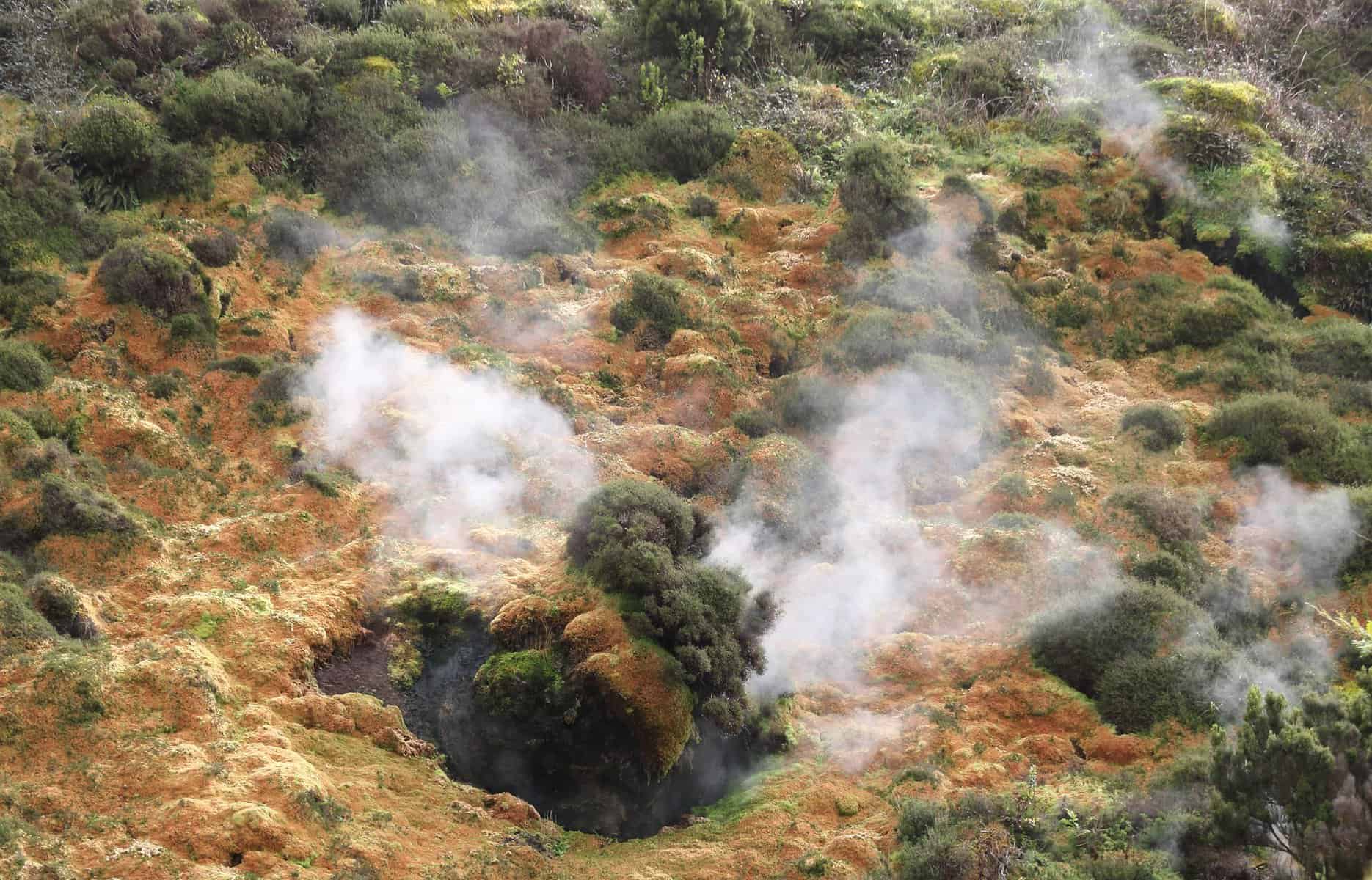
The smoking sulfur springs are located near Algar do Carvão. You can drive there on a dirt road up to the parking area above the site. From the lot, a somewhat challenging trail loops around the sulfur vents. Part of the trail is bordered by wooden railings, allowing a close-up, almost live view of the island’s geological activity. It is a fascinating and memorable place – not as large or powerful as the geysers in Yellowstone National Park in the USA, but definitely unusual and intriguing.
Click here to search for hotels and vacation rentals on Terceira…
Mistérios Negros hiking trail | Trilho Mistérios Negros
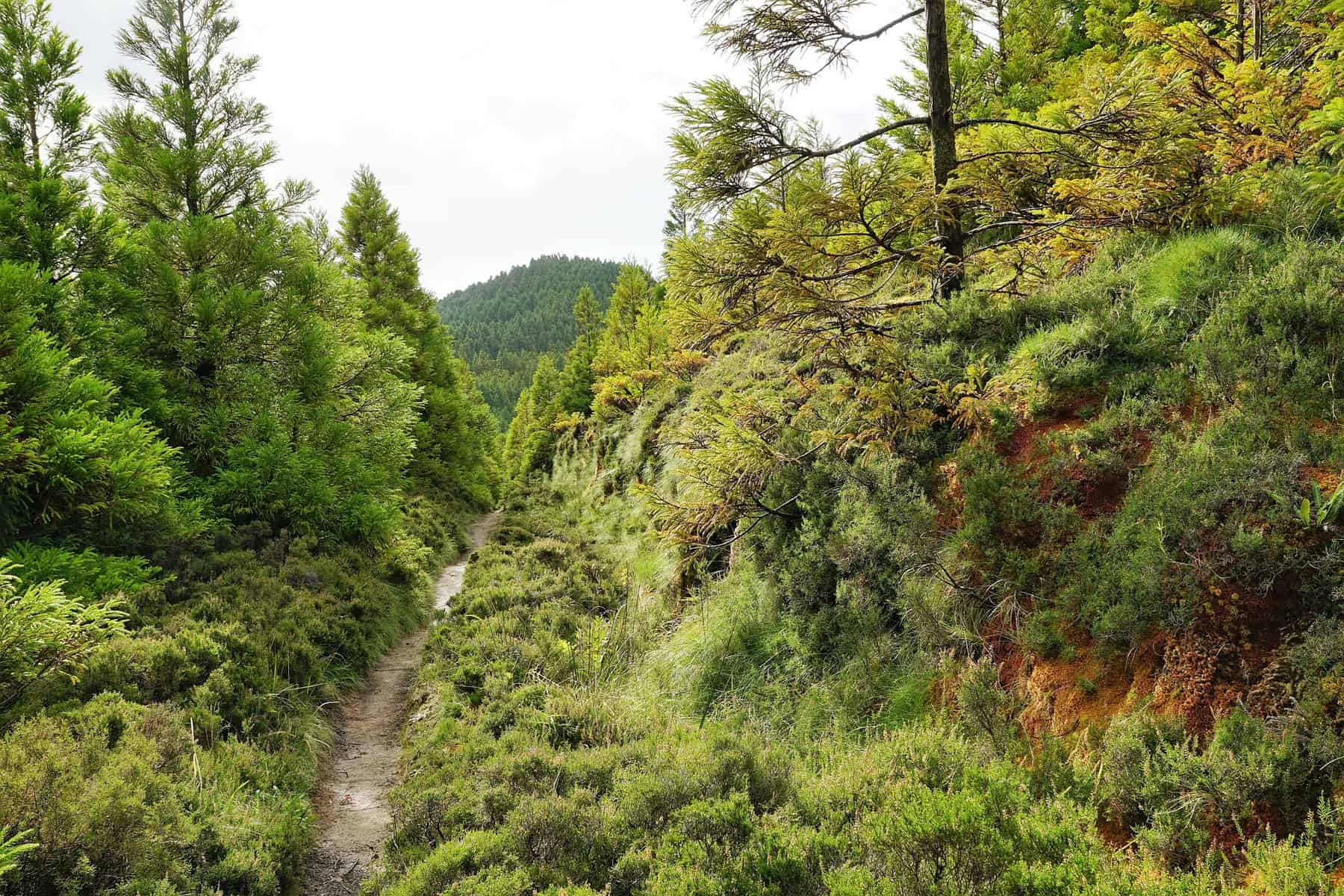
This is one of the most famous hiking trails in the entire Azores. While many trails on the other islands run along coastlines, cliffs, or high mountain slopes, Mistérios Negros takes you through a dense forest that feels strikingly similar to the far north of Europe. It is hard to imagine such a landscape on an island in the middle of the ocean. The combination of heavy rainfall and higher elevation keeps the forest cool and allows conifers and evergreen shrubs typical of northern regions to thrive here.
The trail, on the Santa Bárbara ridge, is circular and rated difficult, so it will not suit everyone. It is also often rainy here, so proper clothing is important. The route begins near Lagoa do Negro | Lagoa do Negro and ends nearby at Gruta do Natal | Gruta do Natal. It takes about 3 hours to complete and covers roughly 5 kilometers.
Shortly after the start, you reach an area of black ground with almost no vegetation. It was formed by an 18th-century volcanic eruption and gave the trail its name, which loosely translates as the “Black Mysteries Trail.”
The town of Praia da Vitória
Terceira’s second urban center and, above all, the island’s transportation hub. Located on the eastern side of the island, Praia is home to its deep-water harbor and also Terceira Airport, which sits about a five-minute drive north of the town center.
There are not too many major sights in town itself, and it feels more practical than touristy. Its main attraction is Praia Grande | Praia Grande, the largest sandy beach in the entire archipelago.
On either side of Praia da Vitória’s marina are two relatively large swimming beaches. The western beach, which connects directly to the town center, is the main one, and on summer days it fills with locals coming to enjoy a little sunshine.
Another spot above town is the Facho viewpoint | Miradouro do Facho. This lookout is crowned by a large statue that serves as something of a tribute to the King Pedro IV Memorial in Angra. A statue of the Virgin Mary was placed at the top of the monument in the late 1990s, after construction was completed. You can reach the viewpoint on foot via a steep zigzag stairway or, like most visitors, by car. The views over the town and harbor are excellent.
Click here for places to stay in Praia and near Terceira Airport…
Serra do Cume viewpoint – over Terceira’s patchwork fields
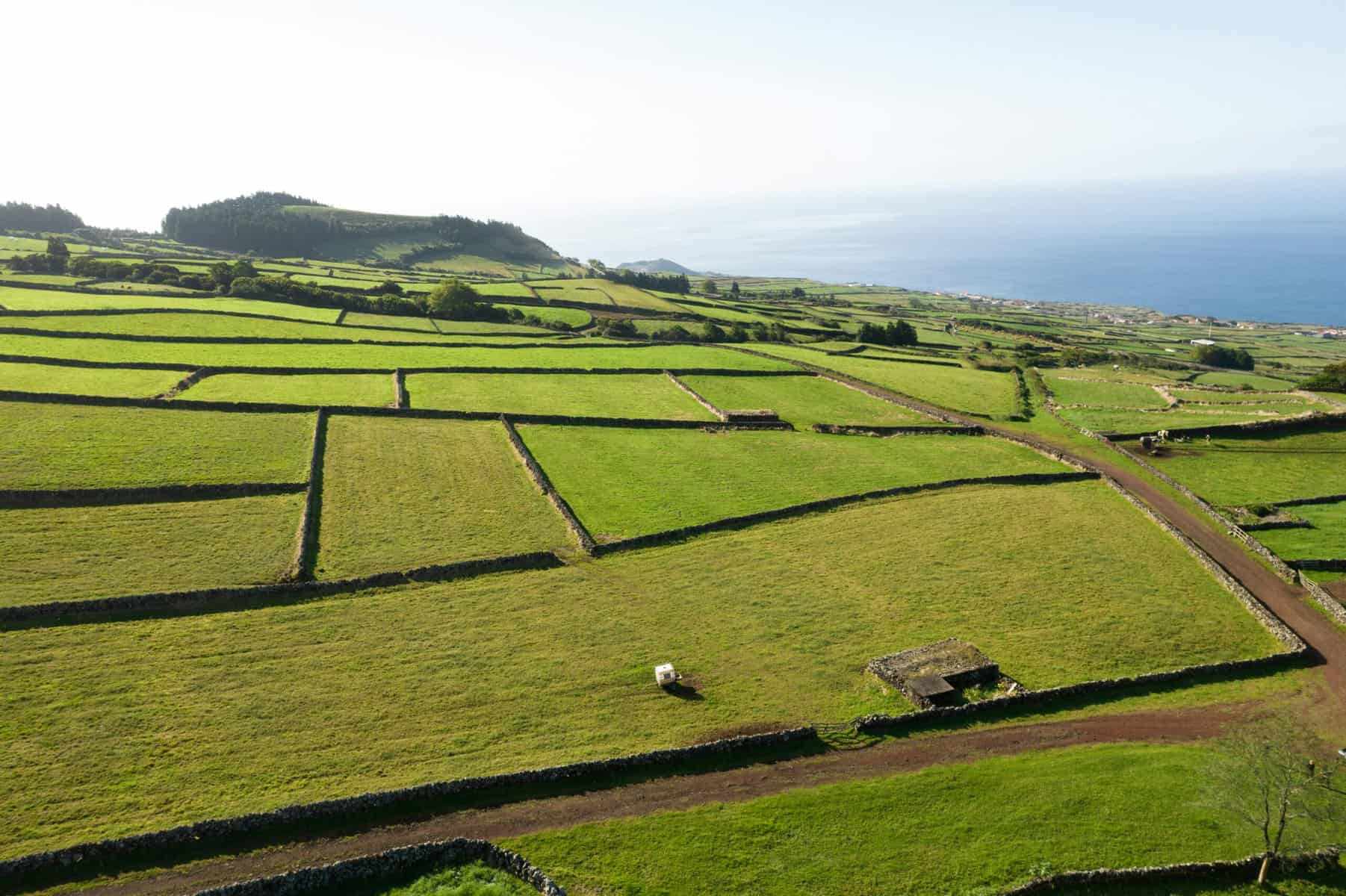
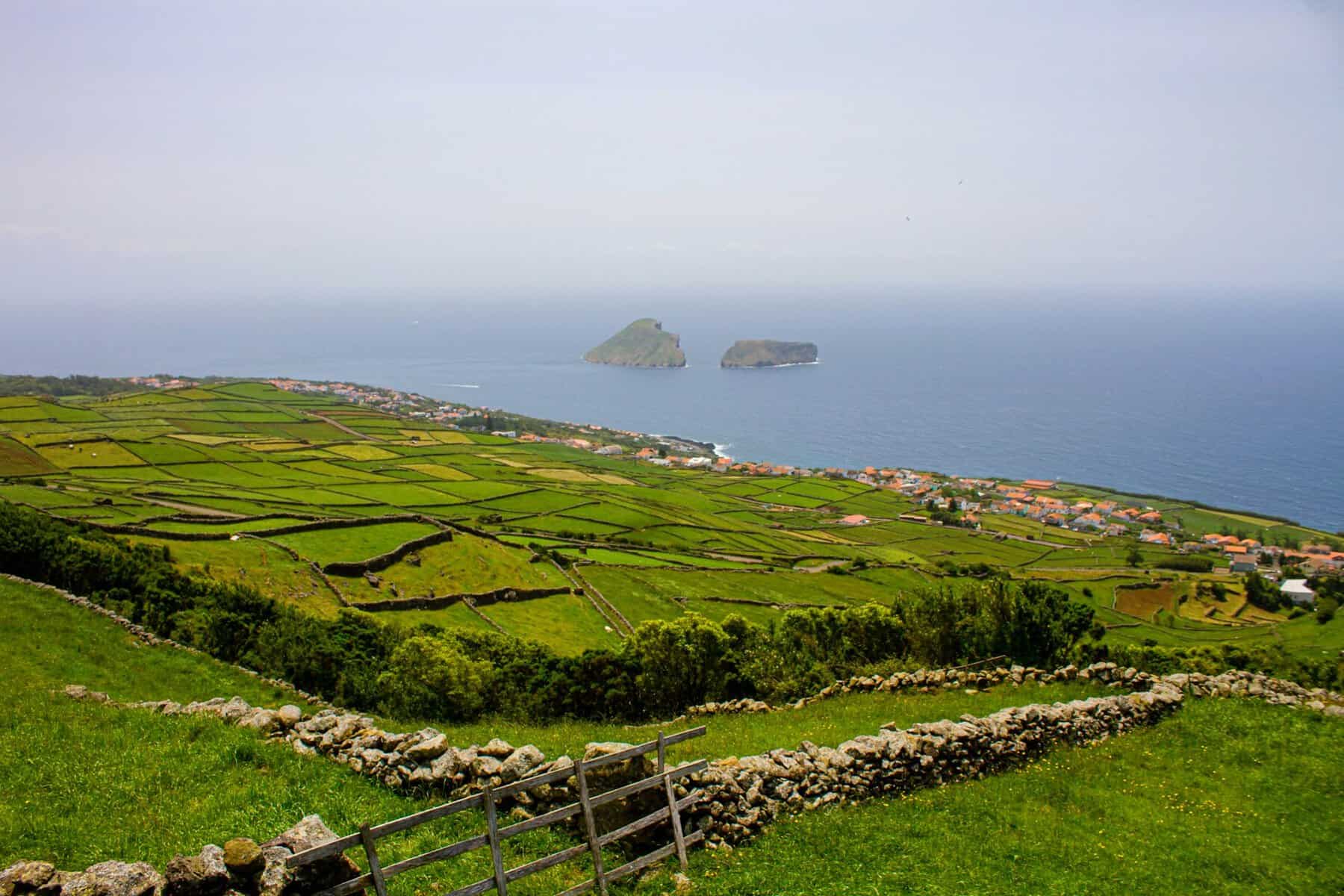
Serra do Cume viewpoint is in the eastern part of the island, not far from the town of Praia da Vitória. It looks west over the green patchwork of fields that has become one of Terceira’s defining images. Cattle have been raised on Terceira since the earliest settlement, supplying both the colonists and the sailors who stopped here on their way to the Americas or back to Europe. Cattle grazing requires moving herds whenever the grass is exhausted, so the pastureland was divided with basalt stone walls, always leaving a small opening through which the herd could be guided. To this day, the cattle are moved from one enclosed plot to another whenever the grass runs out. It grows back quickly thanks to the rain and the ideal conditions for green pasture on Terceira and across the Azores. Once it has regrown, the cows are moved back again.
From the viewpoint, which is easy to reach by car, you can look down over the pastureland and geometric fields from above. There is also a projecting observation deck with panoramic views. This is the place to see and photograph the island’s fields divided into neat green squares.
Click here to find hotels and vacation rentals on Terceira…
The natural pools of Biscoitos | Piscinas Naturais Biscoitos
As in Madeira, the Azores may be islands, but they are not really about the classic image of golden sandy beaches and sunshine. The reason lies in their volcanic nature: these islands are the peaks of dramatic mountains rising from the ocean floor. So here on Terceira as well, most locals and visitors make do with shallow sea pools formed over time by the erosion and breaking of rock along the coast. The village of Biscoitos has several of these natural pools.
The village name Biscoitos means “cookies” in Portuguese, referring to the lava stones shaped like little biscuits scattered along the shoreline, including around the natural pools. Biscoitos is also known for its wine production. The wine is made from grapes grown in vineyards planted within hundreds of small plots built from flat lava stones, designed to protect the vines from strong winds heavy with sea salt. From above, the village appears divided into hundreds, if not thousands, of tiny plots where the vines grow. It is a method developed by the people of the Azores over centuries to produce wine even in the islands’ challenging weather conditions.
Click here for an efficient guided tour of Terceira’s main attractions and highlights…
Biscoitos Wine Museum
The wine museum above the village presents the history and production process of Verdelho wine | Verdelho, a white grape variety usually associated with Madeira, though it is also grown in the Azores, especially on Pico, and here as well on larger Terceira. The museum explains how wine production developed on Terceira, from vines grown in the curraletas | Curraletas – stone enclosures that shield the plants from the wind and sea salt – to the tools used in production and the wooden barrels in which the wine was aged. Terceira’s museum is similar to the wine center in Lajido on the nearby island of Pico.
You can also buy local wine in the museum shop, and be sure not to miss the wonderful views from the gallery outside the museum.
Click here to search for hotels and vacation rentals on Terceira, the second-largest island…
Guilherme Moniz caldera
This is a volcanic crater worn down over time, with a broad diameter of 2.5 kilometers. It lies just north of Angra and is one of the largest craters in the Azores. To its north are Terceira’s best-known volcanic sites: Algar and the sulfur fumaroles.
In fact, if you drive from Angra to Algar along the eastern road, you pass through the crater itself, which today contains pastureland, forest, and plenty of hydrangeas
(Hydrangea). There are also several easy to moderate hiking trails inside the crater.
Viewpoint of Serra de Santa Bárbara
In the western part of the island, above a solitary crater covered in vegetation, there is a viewpoint that can be reached by car. It is one of the most beautiful viewpoints in all of the Azores (and that is saying something in this volcanic wonderland in the middle of the Atlantic). The only slight drawback is the antennas at the top, which are a bit distracting. The road to the viewpoint is also lined with blue hydrangea bushes.
From here, most people continue downhill toward the village of Santa Bárbara. The road to the village runs between the green patchwork fields that slowly descend toward the endless ocean. This part of Terceira is sparsely populated and especially peaceful.
Terceira Golf Club | Clube de Golfe da Ilha Terceira
Terceira’s golf club is about a 15-minute drive north of Angra. The course lies in the heart of a large agricultural area at the foot of the Biscoito nature reserve and not far from the volcanic crater of Algar. The course combines immaculate landscaping with breathtaking views in every direction. What makes Terceira’s golf course unique is the way its holes stretch across several ridges bordered by rows of tall conifer trees. Between them bloom many of the hydrangeas so typical of the Azores. Naturally, the high season is summer, and in August a small international tournament is usually held here.