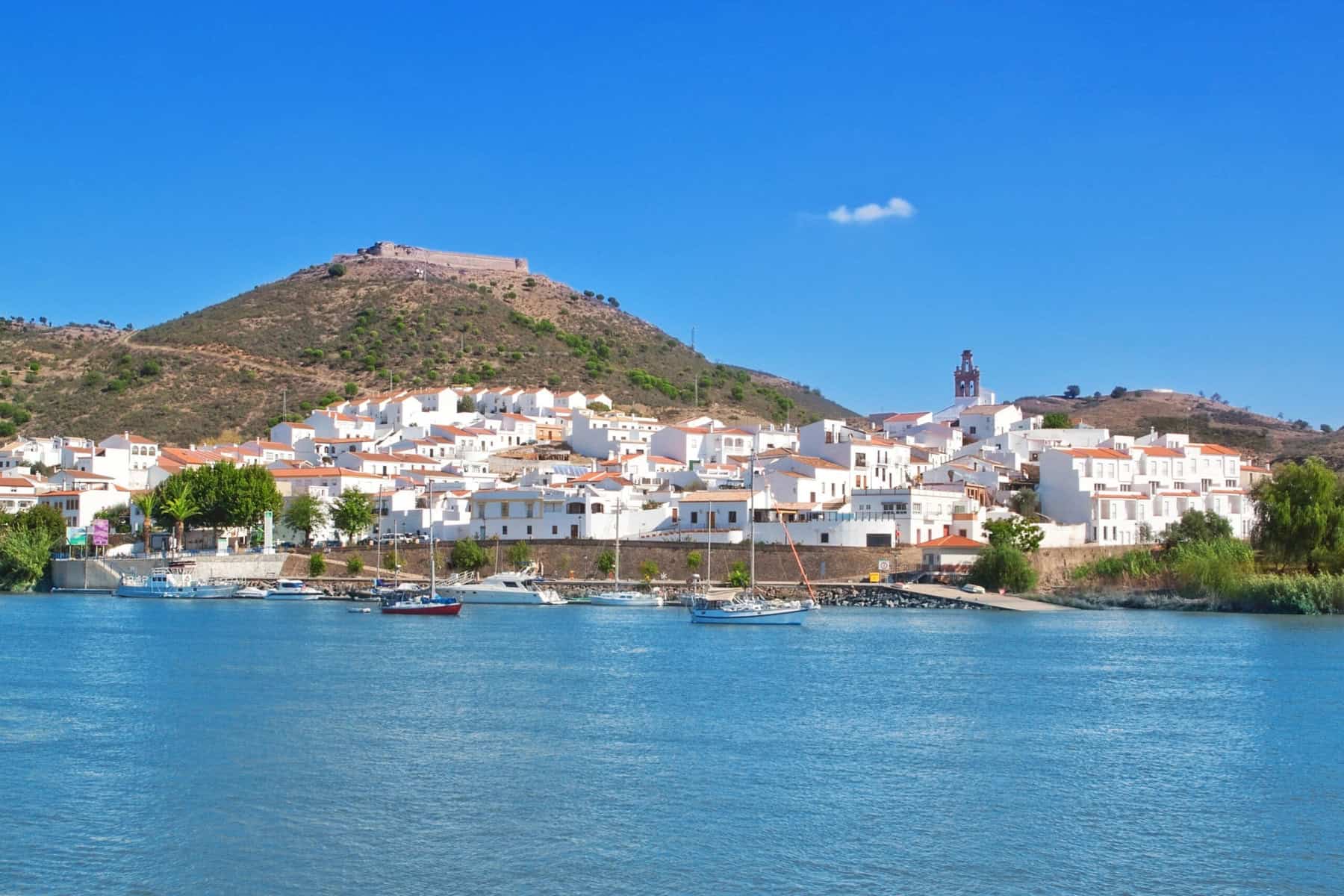
Alcoutim is a small town in northeastern Algarve, right on the Spanish border. It sits on the banks of the Guadiana River, which forms the natural boundary with neighboring Spain. Across the water lies the Spanish town of Sanlúcar de Guadiana, almost like Alcoutim’s mirror image, and most visits here also include a stroll on the other side. Small ferry boats make the crossing to Spain in just five minutes. Once there, many visitors choose to ride the world’s only zip line that crosses between two countries and return to Portugal that way. Peaceful Alcoutim tends to attract travelers who are already staying along the Algarve coast, usually as a day trip. Getting here, whether by boat or by car, is a scenic experience in its own right.
How much time do you need in Alcoutim?
Half a day in Alcoutim is enough to see the main sights, enjoy the attractions, and stop for lunch. If you’re drawn to quiet places, though, it’s easy to stay longer and spend the night. While you’re here, you can go cycling, take nature walks (especially lovely in spring), and enjoy boating or swimming in the river in summer.
Click here to search for accommodations in and around Alcoutim…
5 must-see sights and things to do in Alcoutim
- Alcoutim Castle and Museum | Castelo de Alcoutim
- Zip line across the river between two countries | Limite Zero
- Republic square and the Smuggler Statue on the riverbank | Praça da República
- Cross the river to the Spanish town of Sanlúcar | Sanlúcar de Guadiana
- The Lavajo Megalithic Site, a prehistoric site near town | Menires de Lavajo
How do you get to Alcoutim?
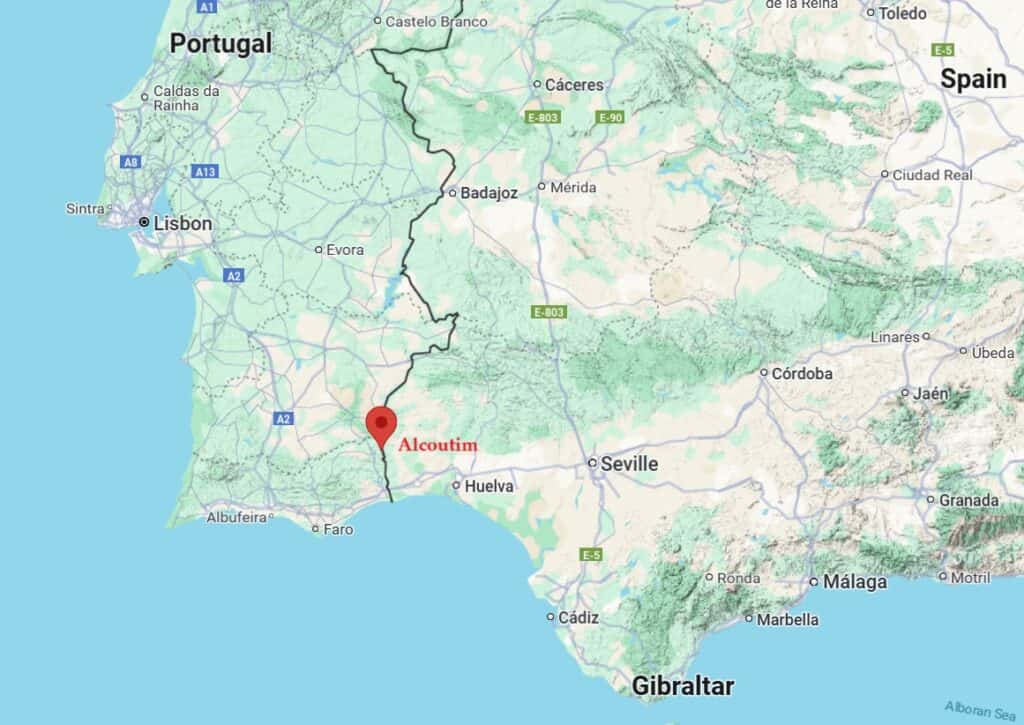
The easiest way to reach Alcoutim is by car as part of a trip through the villages and inland sights of the upper Algarve. It’s an easy day trip from central and eastern Algarve, with a relatively short drive from either direction. Faro is a little over an hour away, and Vila Real de Santo António is just under 40 minutes away. Some even come here from the coastal vacation towns Albufeira, Portimao and even Lagos, mainly for the zipline and also for the nice scenery on the way. The route is especially beautiful, highlighting the contrast between the Algarve’s coastline and its rural hills.
Boat trip to Alcoutim
From the town of Vila Real de Santo António, boat trips head up the Guadiana River to Alcoutim. Traveling upriver anywhere in the world is always slower, and here on the Algarve-Andalusia border, the ride is calm and unhurried. That slower pace also gives you a great chance to take in the surrounding landscape. Along the way, you’ll usually spot plenty of water birds and lush riverside vegetation.
Ferry to the Spanish side
The ferry service to the Spanish town on the opposite side of the river departs from the dock on the waterfront. The fare for the short crossing is low, and the ferry ride itself takes just five minutes. At times, you may have to wait until more passengers arrive before the captain decides to leave. On certain days in summer, a floating bridge is set up, making it easy to cross between the two towns.
Click here to search for accommodations in and around Alcoutim…
About Alcoutim
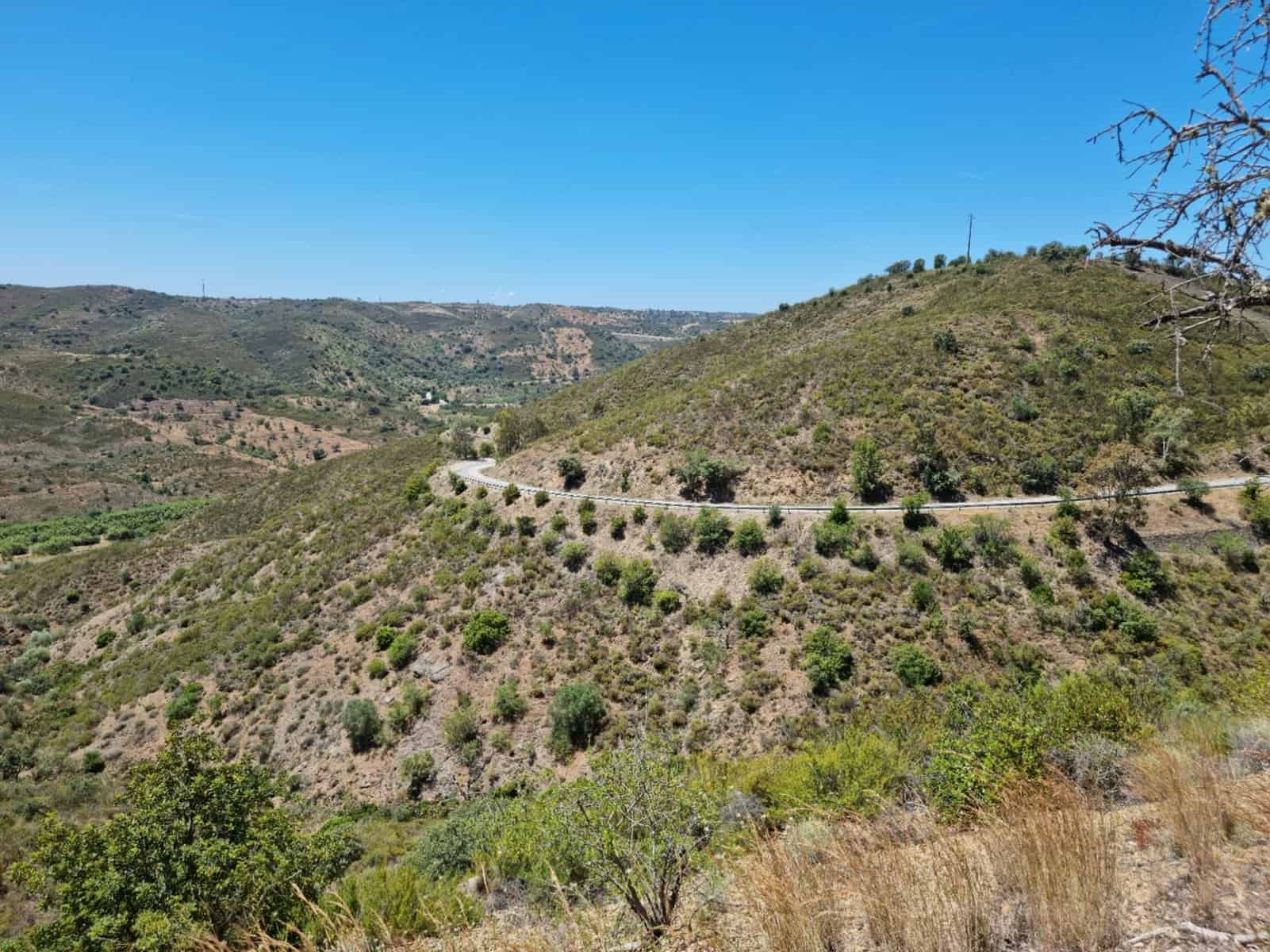
Alcoutim is a town of 3,000 residents in northeastern Algarve, right on the Spanish border. As you leave the coast behind and drive inland, it begins to feel as though you’re stepping back in time to an older Algarve. The peaceful mood starts on the road in, and once you arrive, the first thing you notice is the silence. With no highways nearby and very few towns around, the air is filled instead with birdsong and the rustle of leaves, sounds that many modern city dwellers rarely hear anymore. You can enjoy that calm on a day trip, but it’s just as easy to settle in for a few days, especially in spring, when the area around Alcoutim is green and in bloom.
Click here to check out our accommodation guide to the Algarve…
Alcoutim lies upstream on the Guadiana River, which separates Spain and Portugal, just before the river narrows and becomes steeper. Its strategic location meant that the Phoenicians, followed by the Greeks and of course the Romans, all established settlements here. Even earlier, there was prehistoric habitation in the area, documented at the Menires de Lavajo site. It’s another example of the many prehistoric remains found across the Iberian Peninsula, especially in nearby Alentejo. During the Muslim period, Alcoutim had an Arab presence until the Christian reconquest in 1240.
The defining historical event in Alcoutim was the signing of a peace treaty between the Kingdom of Portugal and the Kingdom of Spain about a century later. In 1371, King Ferdinand I of Portugal and Henry II of Castile signed a peace agreement here. After years of conflict between the two kingdoms, the two rulers met on a flower-decorated boat in the middle of the river and signed the treaty. By the 17th century, as Alcoutim lost political and strategic importance, the town took on a new role as a center for smuggling.
Click here for our list of 12 top-rated resorts in the Algarve…
Smuggling – Alcoutim lies in the least densely populated part of Portugal and, as mentioned, right on the Spanish border. Smuggling between the Kingdom of Spain and the Kingdom of Portugal was already taking place here centuries ago. The tradition endured over generations, and during the turbulent 20th century, demand for smuggling became even greater, especially during the Spanish Civil War and the long periods when both countries lived under dictatorship. Smugglers took advantage of Alcoutim’s remote location and distance from centers of power, carrying out their work efficiently and discreetly. Even today, Alcoutim is known throughout Portugal for smuggling, even though both countries have long been members of the European Union and movement between them is free. The town has a statue commemorating that tradition, as well as an annual event called the Smugglers Festival.
Weather – Alcoutim has a Mediterranean climate with hot summers and mild winters. You can visit year-round and have a different experience in each season. Spring and fall bring ideal temperatures for walking along the river and through the hills. Summer, by contrast, tends to be quite dry, with high temperatures much like nearby Alentejo. Still, it’s the best time for swimming in the river, and the town also hosts a few events. Winter is cooler, but never especially cold.
Click here to search for accommodations in and around Alcoutim…
Attractions and interesting sights in Alcoutim
The zip line (boarding is on the Spanish side of the river) | Limite Zero
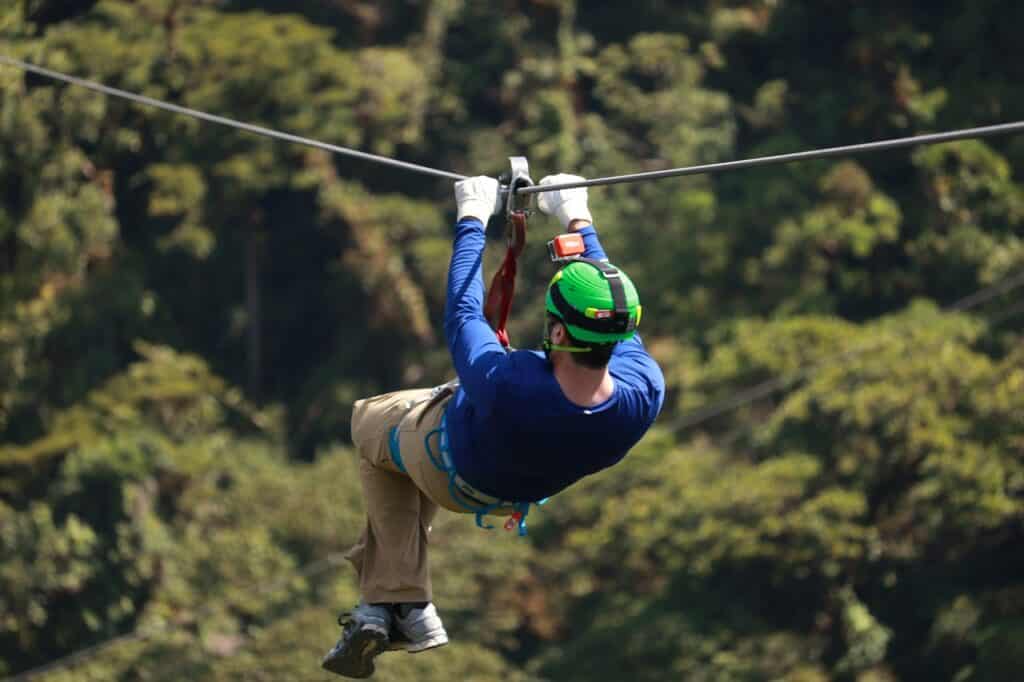
This is Alcoutim’s main attraction, beyond the historic sites and the beautiful scenery along the way. At nearly 800 meters long, it is the only zip line in the world that crosses an international border. You board it on the Spanish side of the Guadiana River, in the town of Sanlúcar. That means you first cross the river by ferry, then zip back to Portugal. Or of course, the other way around if you’re arriving from the Spanish side.
The attraction is closed during the winter months. In season, it’s a very good idea to book ahead, especially if you’re visiting Alcoutim on a weekend.
Kayaking and boating on the Guadiana River
Especially in summer, though not only then, there are several ways to enjoy the river, particularly by kayak. In this stretch of the Guadiana, the water flows gently and the river is broad, making for a pleasant outing that isn’t too demanding. The Spanish side actually offers more options for water sports.
Click here to check out our accommodation guide to the Algarve…
Alcoutim Castle | Castelo de Alcoutim
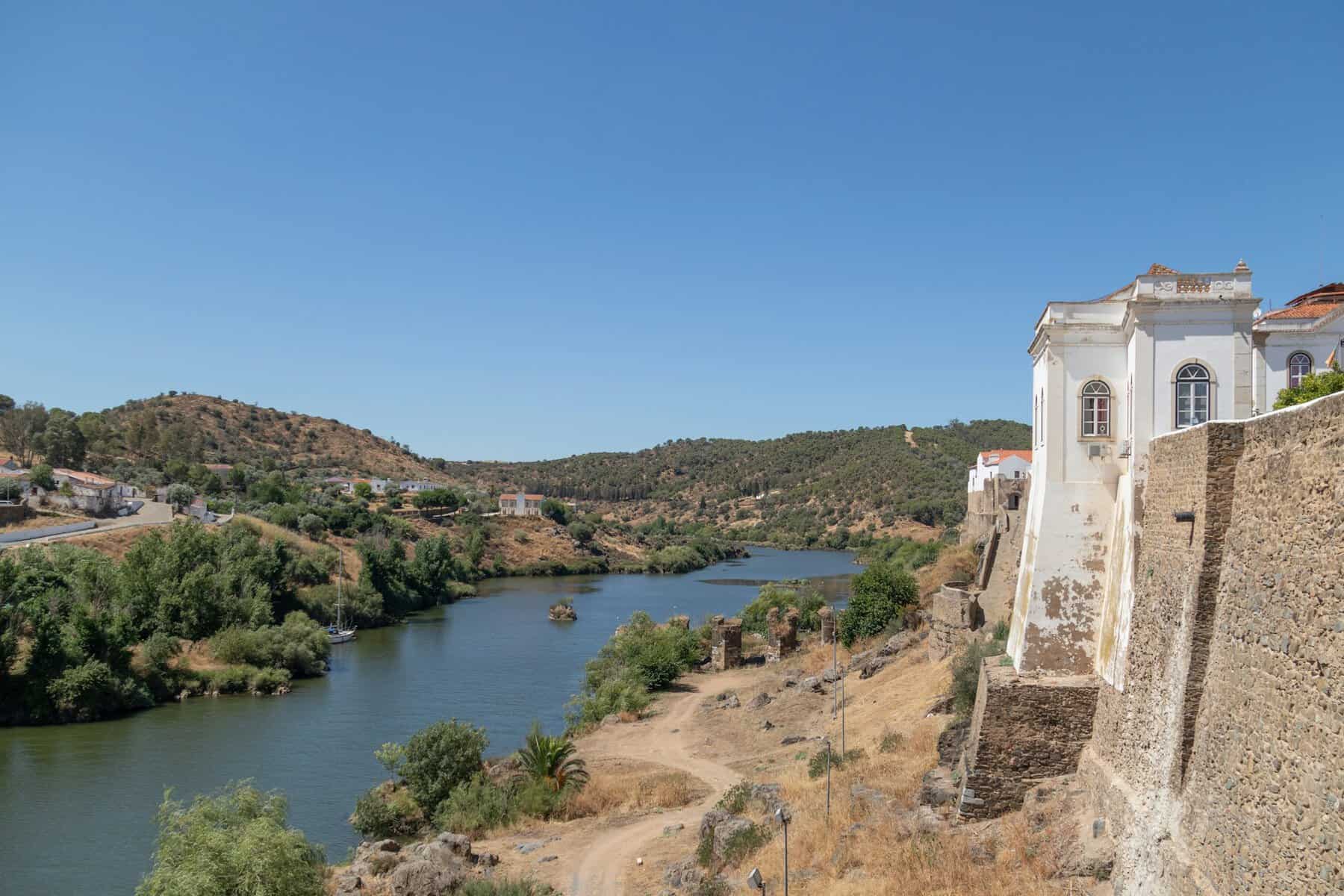
Alcoutim Castle was built on the foundations of a Muslim fortress as part of the defensive line between the Kingdom of Portugal and the Kingdom of Castile and León. Climb up to the 14th-century castle walls and you’ll be rewarded with wonderful views of the village and the surrounding landscape. From above, you can once again see the Spanish town on the river’s eastern bank and the castle rising above it, another reminder of how closely the two towns mirror one another.
There is also a small archaeological museum within the castle complex, where you can learn more about the history of the town and surrounding area. Part of the museum display includes archaeological excavations that have been specially revealed and illuminated. The highlight is a collection of board games from the Muslim period discovered during the digs, including a rare mancala board. From a historical and archaeological perspective, the Muslim finds in Alcoutim are especially remarkable, since Portugal, unlike neighboring Spain, has relatively few surviving remains from the Muslim rule of the Iberian Peninsula.
Click here for more information and the museum’s opening hours…
Click here to search for accommodations in and around Alcoutim…
Conceição Church | Nossa Senhora da Conceição
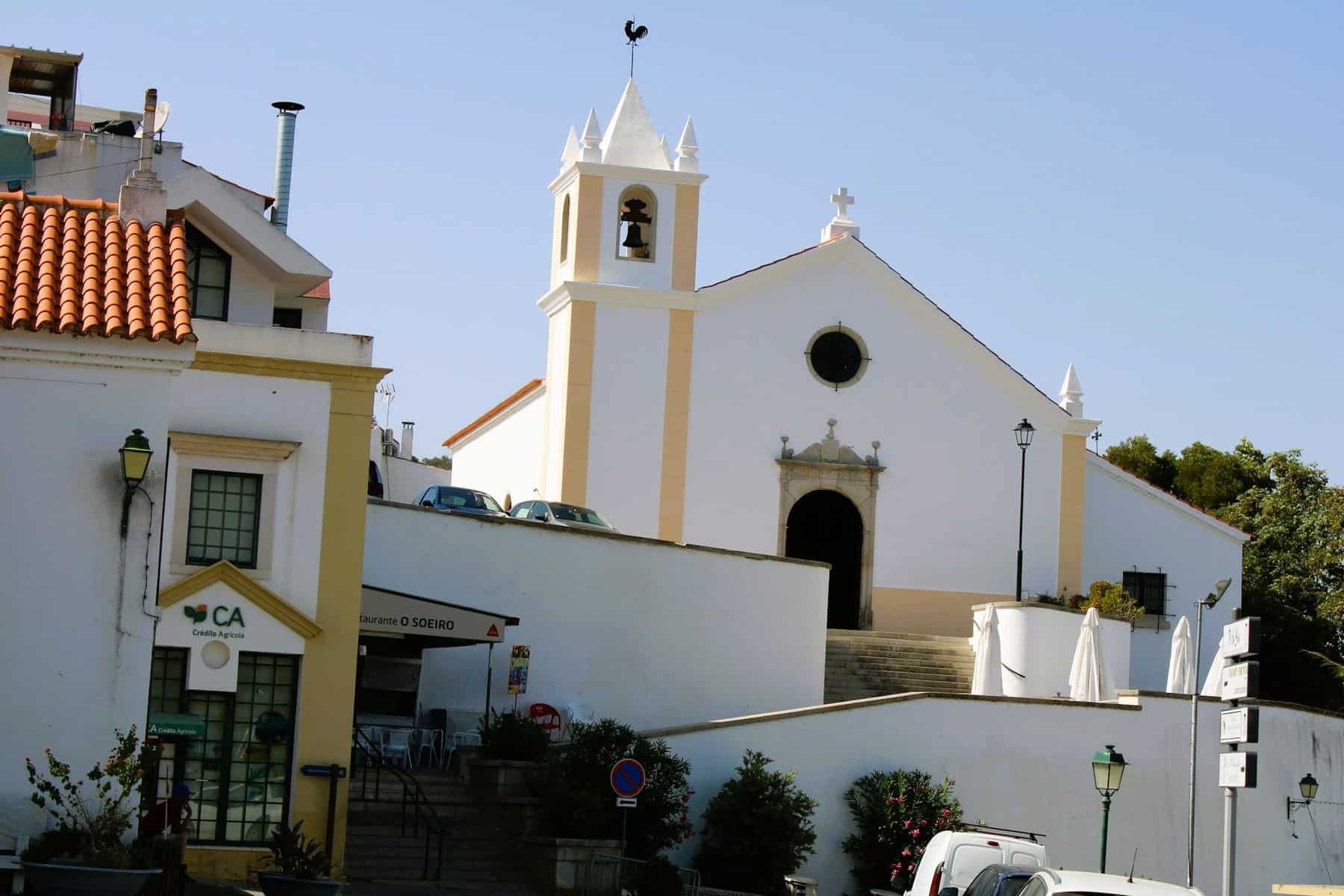
Conceição Church, in the upper part of the village, was built in the 16th century. You can walk up to it after visiting the castle, following Alcoutim’s narrow streets, where time seems to have stood still. The church stands above street level, and its façade is the only element that survives from its earliest phase. Most of what you see today dates from the 18th century, including its Baroque features. From the square in front of the church, there are lovely views over the town and surrounding area.
Republic square | Praça da República
This small square near the river is the heart of the town. It opens toward the waterfront, where you’ll find restaurants that are perfect for lingering over a meal on a sunny day while watching the boats drift by. The square itself also has several cafés and restaurants, and next to it stands the Igreja Matriz, which offers another lovely viewpoint over the river.
Smuggler Statue | Estátua do Contrabandista
This white statue stands on the riverbank near the ferry dock. It symbolizes the many years when a large share of Alcoutim’s residents made their living by smuggling goods to and from neighboring Spain. Smuggling intensified during periods of war or dictatorship and peaked during the Spanish Civil War of 1936-1939. There are also guided tours in town that follow the smugglers’ story, which remains a major part of Alcoutim’s history.
Click here to search for accommodations in Alcoutim and the surrounding area…
The river beach | Praia Fluvial do Pego Fundo
This “beach” is not on the main river but on the tributary that joins it above Alcoutim. As in many inland towns across Spain and Portugal, the local authorities created an artificial bathing beach on the riverbank. There are umbrellas, a small bar, and even a beach volleyball court on the sand. The result is a beach far from the sea, with shallow water and, instead of an endless horizon, a backdrop of tall green reeds. On hot summer days, the water is wonderful for swimming, though it’s also a pleasant place for a picnic or simply sitting on the sand at other times of year.
Click here to search for accommodations in and around Alcoutim…
Events and festivals in Alcoutim
Alcoutim Festival | Festa de Alcoutim
This is the town’s biggest annual event. The festival takes place every September (usually on the second weekend of the month) and lasts for three days. During festival weekend, many visitors come to town to enjoy performances by well-known Portuguese singers and soak up the lively atmosphere. Each evening brings music and dancing that continue until dawn. By day, too, the town feels festive, with crowds filling the streets. Everyone looks forward to the evening, when the celebrations truly begin. Alongside the concerts and dancing, there is also a large fireworks display during the festival. If you’re in the Algarve at that time, it’s well worth coming. Be sure to book accommodations well in advance for festival days.
Click here to search for accommodations in and around Alcoutim…
Smugglers Festival | Festival do Contrabando
The Smugglers Festival takes place on the last weekend of March. During the event, Alcoutim pays tribute to its history as a smuggling hub along the Guadiana River. The festival includes reenactments, cultural activities, music, and entertainment.
Places of interest and attractions around Alcoutim
The Spanish town across the river | Sanlúcar de Guadiana
Keep in mind that the time in the Spanish town is one hour later, meaning Portugal time +1.
The easiest way to get there is with a quick boat ride across the river. By car, surprisingly enough, it takes more than an hour. That’s what happens when you need to cross a river in a remote area where building bridges isn’t worthwhile. As mentioned, Sanlúcar is Alcoutim’s mirror image, with white houses and cobbled streets climbing up the hillside. It is, however, somewhat tidier and less neglected than the Portuguese side. There are historical reasons for that: Portugal developed later than Spain, and in the more marginal parts of both countries, the difference is noticeable.
Attractions in Sanlúcar
First of all, Sanlúcar is where you board the zip line, so many people cross over just for that. It also has its own castle overlooking the river from the top of the hill. The castle, Castillo de San Marcos, dates back to the 14th century and is the town’s main sight. It was restored in the early 2000s and appears largely intact. Because of its elevation, it offers some of the best views in the area.
At the Sanlúcar dock, there are several options for active outings on the river, including kayaking. Just as from Alcoutim, you can also head out from here on hiking and cycling trips in the surrounding countryside, best in late winter and spring, when temperatures are pleasant and everything is in bloom.
Click here to search for accommodations in Alcoutim or the Spanish town of Sanlúcar…
The Lavajo Megalithic Site | Menires de Lavajo
This archaeological site lies near the village of Afonso Vicente, about a 15-minute drive from the town of Alcoutim. The small prehistoric complex includes two enormous standing stones set side by side. They date to 3500-2800 BCE. Like similar sites near Évora in Alentejo and elsewhere in the southern Iberian Peninsula, these megaliths most likely marked sacred spaces. The taller stone here at Lavajo reaches 3.14 meters and is among the largest megalithic stones in Portugal. Originally there were three stones at the site, but one of them, which was broken, was moved to the archaeological museum in Alcoutim.
River Museum | Museu do Rio
In the village of Guerreiros do Rio, a little more than a 10-minute drive south of Alcoutim, there is a small museum dedicated to the Guadiana River and the culture that developed around it. The museum covers several themes: traditional fishing, river transport, and of course the smuggling that took place along the Guadiana between Spain and Portugal in both directions. Naturally, the museum stands right on the riverbank, and some of the boat trips departing from southern Algarve stop here.
Click here to find accommodations in and around Alcoutim…