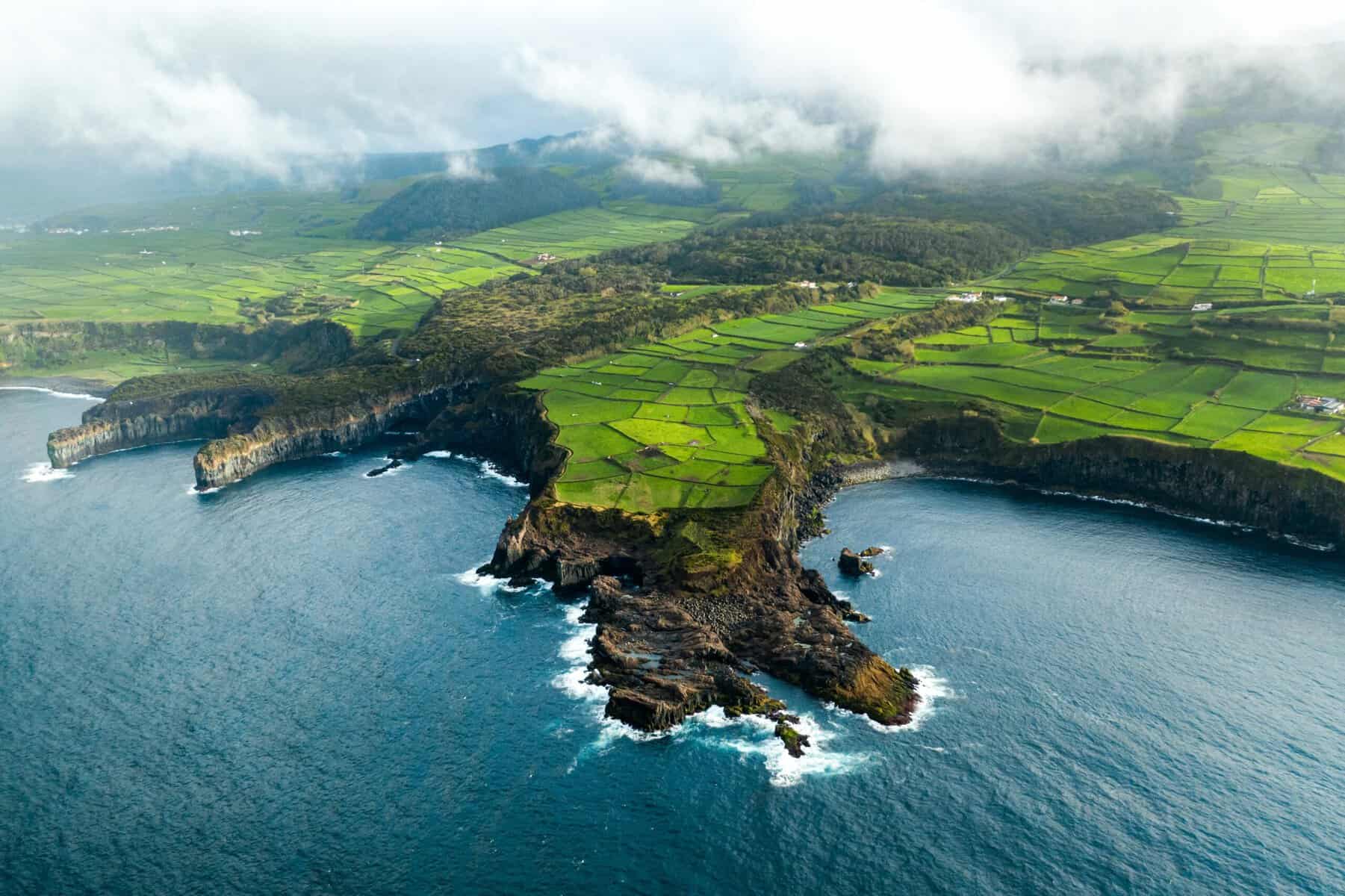
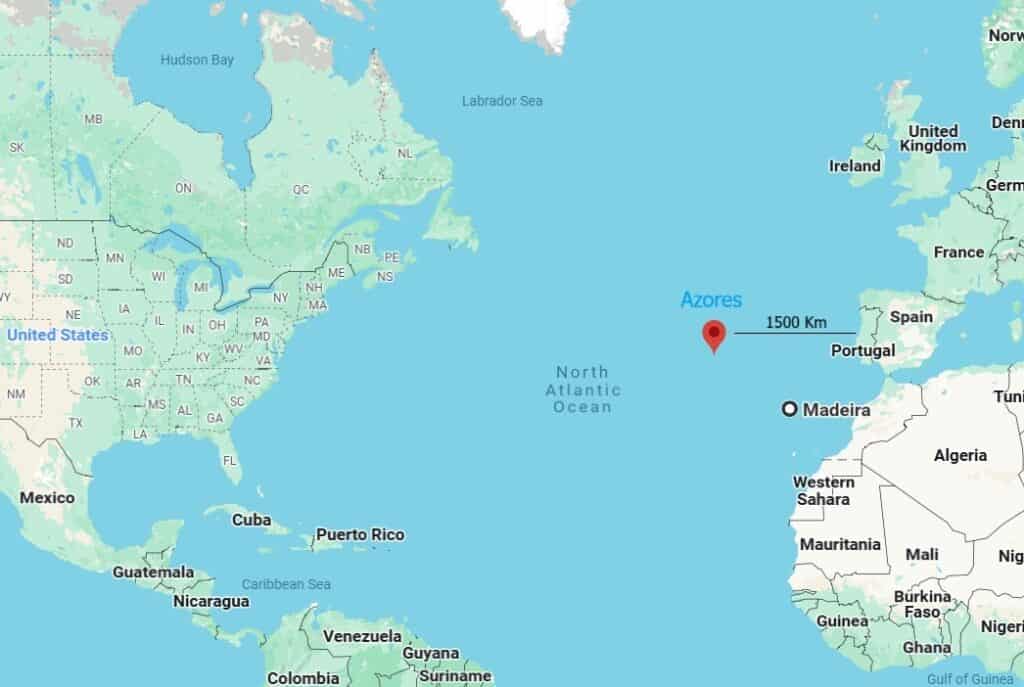
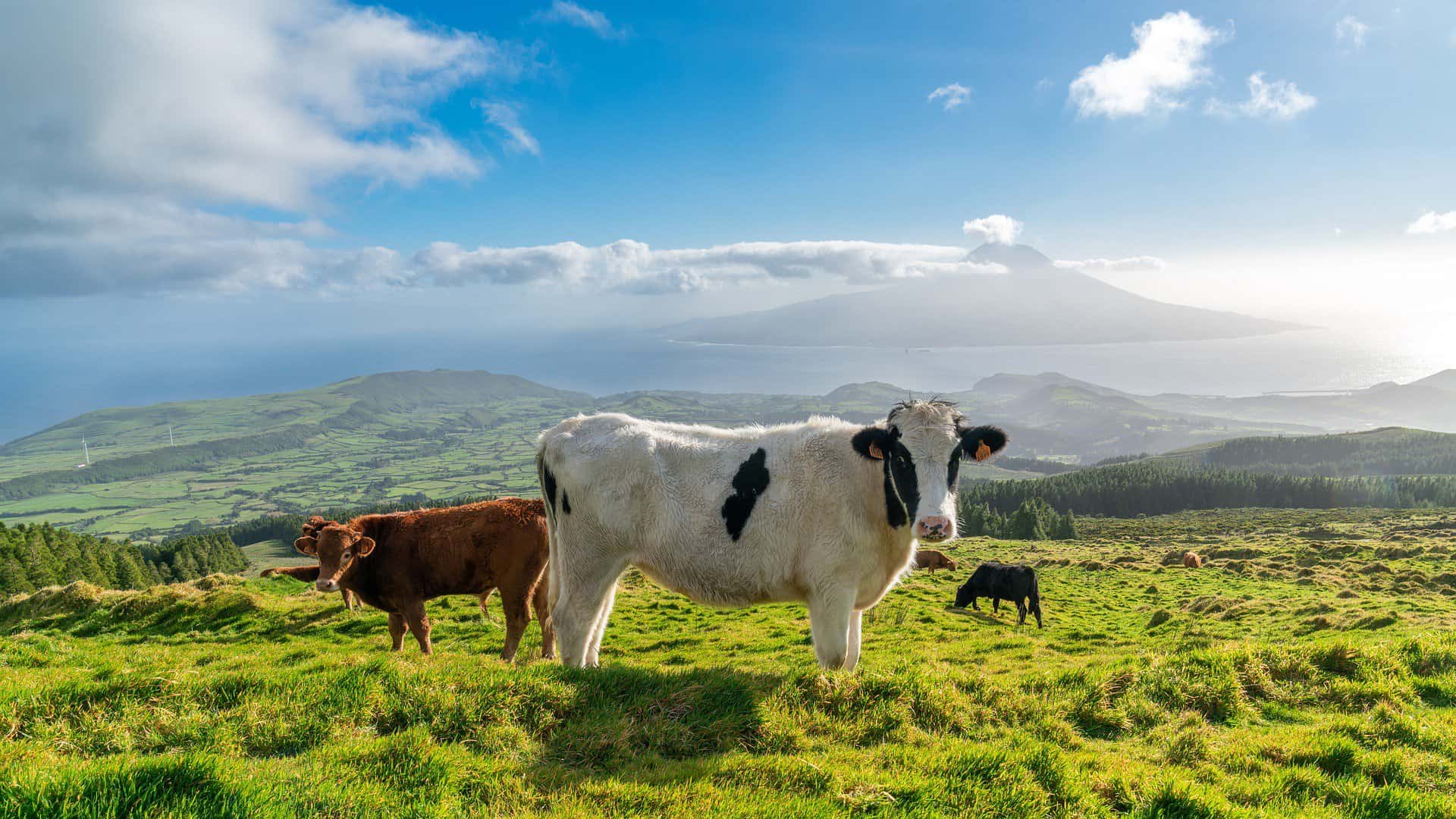
The Azores lie 1,600 km from mainland Portugal, in the heart of the Atlantic Ocean. The archipelago is made up of nine islands spread across 650 kilometers. These volcanic islands share many characteristics, with lush, refreshing scenery found throughout. In the surrounding Atlantic waters, whales, dolphins, and of course countless fish swim freely. One of the Azores’ most fascinating experiences is a boat trip in search of these marine mammals. Surprisingly, the local cuisine is not centered mainly on fish, but rather on beef and dairy products. Since the Age of Discovery and up to the present day, Azoreans have raised thousands of cows on the islands’ green, damp grasslands. On many hiking routes across these remote islands, you’re more likely to come across grazing cows than other people.
How much time do you need for a trip to the Azores?
In most cases, a trip to the Azores means visiting only the largest island, São Miguel, which requires at least 4 days. Most other Azores itineraries also begin on São Miguel, then continue on to one or two more islands. For that, you’ll need at least another two to three days. So if you’re planning to visit more than one island, it’s worth setting aside at least a week. A deeper, more comprehensive trip through the Azores will take at least 10 days.
The season in the Azores
Summer is the season for the Azores, and July is the very best month to visit. Aside from the large and main island of São Miguel, which stays active year-round, the rest of the Azores are almost entirely emptied of tourists between October and May. The reason is simple: summer is the only time when you can really explore the islands and enjoy their raw, enchanting landscapes. Temperatures are not especially cold, but for most of the year the islands see plenty of rain, wind, and fog. For example, it’s impossible to climb Mount Pico – the highest mountain in Portugal when it is completely wrapped in fog. Only at the height of summer, when the skies clear, is it truly worth making the ascent.
Check out our guide to the best time to visit Portugal…
How do you get to the Azores?
Almost everyone reaches the Azores by commercial flight. Each of the nine islands has its own airport, but the three main gateways into the archipelago are:
- The large island of São Miguel | Ilha de São Miguel
- The second-largest island, Terceira | Ilha Terceira
- Faial Island | Ilha do Faial
These three islands are home to the Azores’ main airports. Flights land here from mainland Portugal, other European countries, and even the United States and Canada. Above all, São Miguel Airport stands out as the main gateway to the Azores.
A trip to the Azores is also often an extension of a trip through mainland Portugal. After spending a few days in Portugal itself, travelers board a flight in Lisbon to the Azores and continue their journey in this peaceful, wonderful corner of the country.
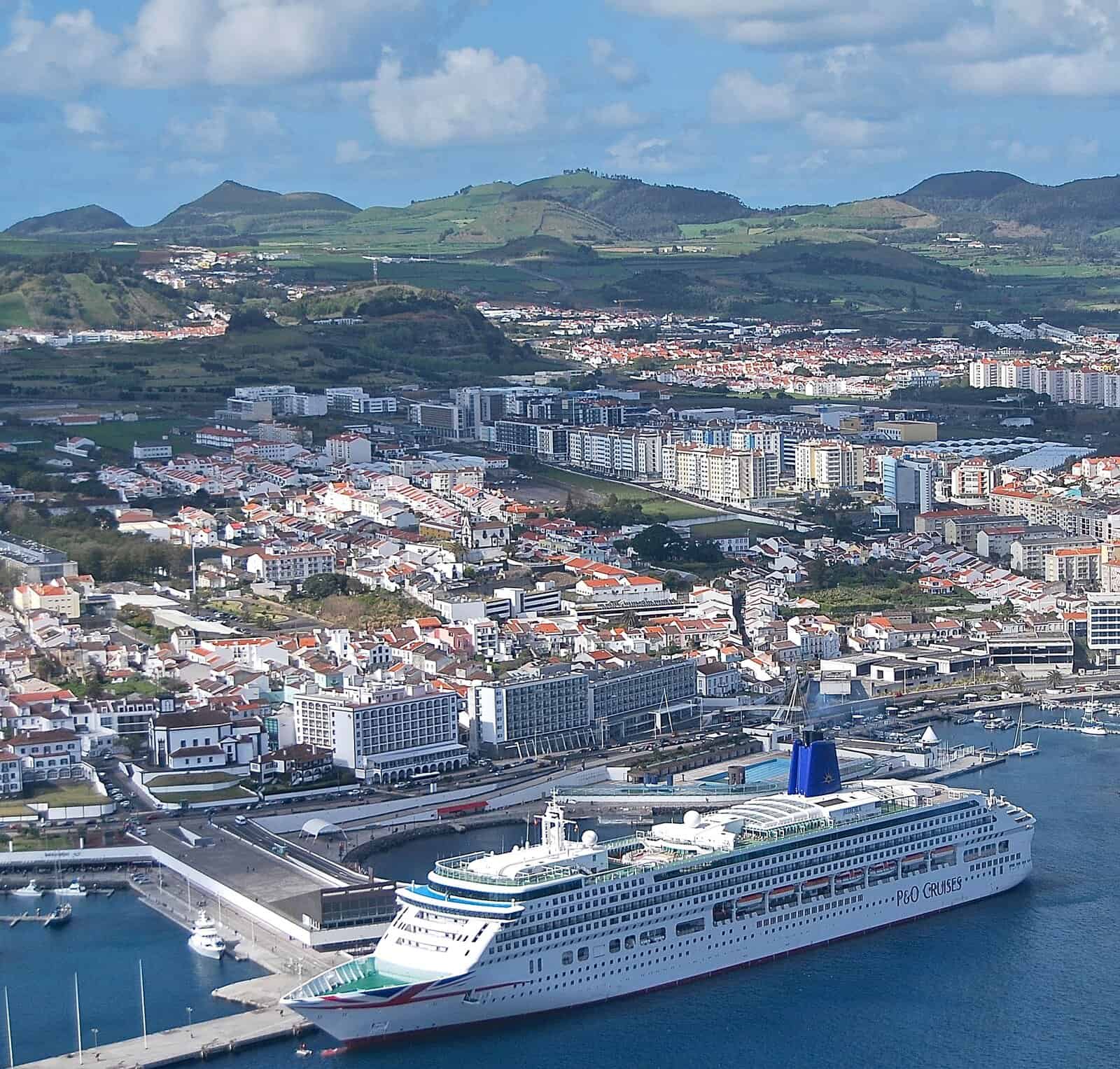
A fair number of cruise ships also call in the Azores. These almost always dock only in São Miguel, and some also stop at the second-largest island, Terceira.
Many yachts and boats crossing the Atlantic between America and Europe stop to rest and resupply, mainly in Horta, the capital of Faial Island. That is why Faial is known as the cosmopolitan island: for centuries, sailors from around the world have met here while stopping to rest.
How to Travel Between the Azores Islands?
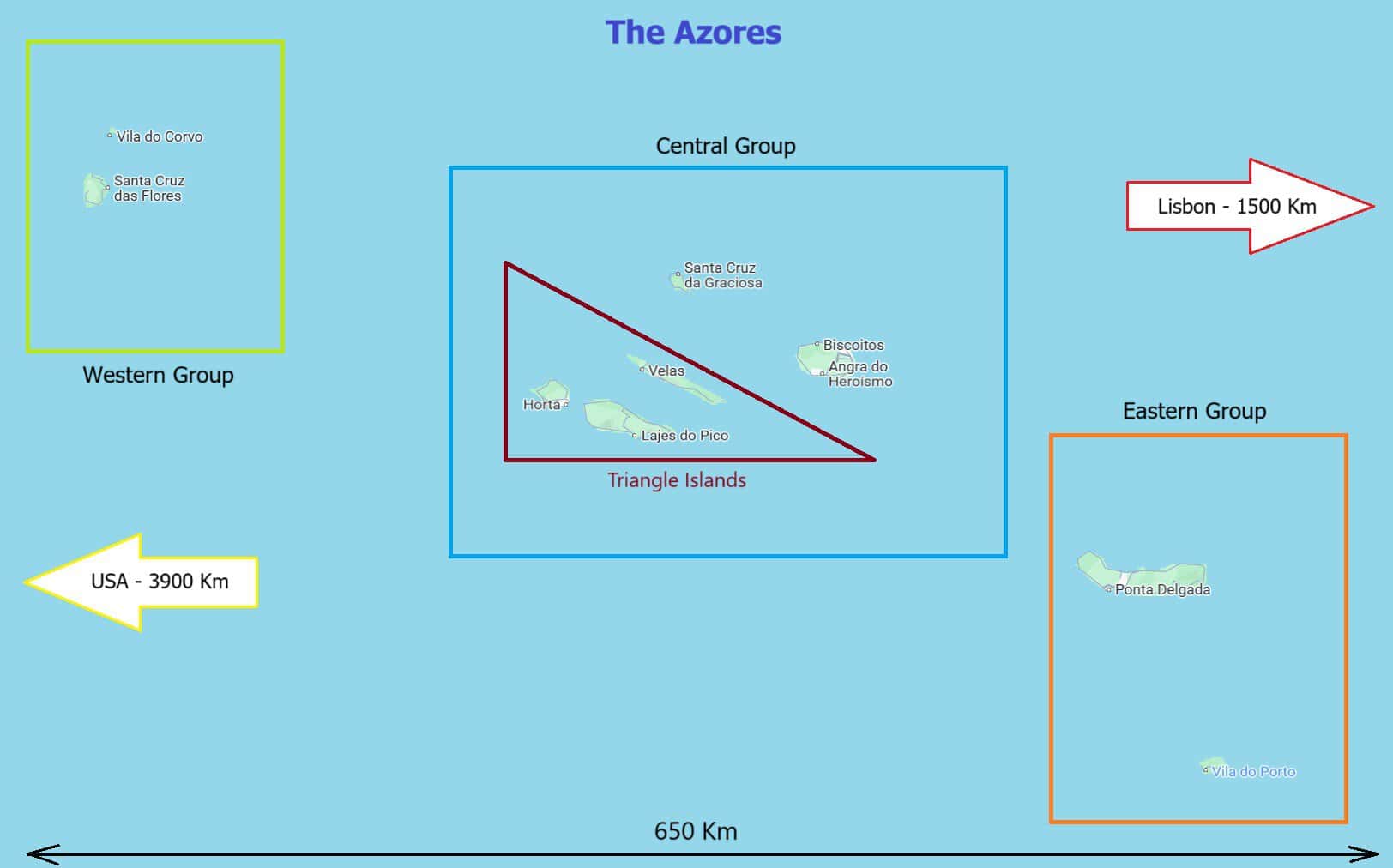
The islands are divided into three groups: eastern, central, and western. As mentioned, the large island of São Miguel is the main gateway to the Azores, while Terceira and Faial also have slightly larger airports that receive flights from mainland Portugal and other destinations in Europe. But inter-island flights are operated by the Azores airline, “Azores Airlines” | SATA – Azores Airlines. These flights use small aircraft, so it is very important to book in advance, especially in summer, because seats are limited.
Ferries – There is ferry service between some of the islands, but it is less popular. The main ferry network in the Azores runs between the Triangle Islands of Pico, Faial, and São Jorge. Service between them is efficient and frequent. Another popular ferry route operates between the remote western islands of Flores and Corvo. Other routes, such as from Terceira to the Triangle Islands, are long and less favored by tourists.
Itinerary in the Azores
Almost every trip to the Azores—especially a first one—begins on the large and main island of São Miguel. The general rule is that if you have less than a week in the Azores and it’s your first time here, you should visit only São Miguel. The other islands can wait for your next trip. A São Miguel-only itinerary takes 4 to 5 days, so it really makes sense to save something for next time, or extend your stay by two or three days and add another island—for example, Pico Island, where travelers come to climb the mountain.
Most itineraries in the Azores are usually built around the archipelago’s internal island groups. Still, many travelers also choose to fly to just one additional island and leave it at that. The three island groups within the Azores archipelago are:
- The eastern group – São Miguel and Santa Maria
- The central group – Terceira, Faial, Pico, São Jorge, Graciosa
- The western group – Flores and Corvo
Here are some of the most popular Azores itineraries:
- São Miguel only
- São Miguel – Pico
- São Miguel – Faial – Pico
- Terceira – Faial – Pico
- São Miguel – Pico – Faial – Flores – Corvo
- São Miguel – Flores – Corvo
In the central group, Faial, Pico, and São Jorge lie very close to one another, and you can see the neighboring islands from each one. They are known as the Triangle Islands, and ferry service between them is excellent. Usually, once travelers make it to one of them, they visit at least one more.
The remote western group consists of the small islands of Flores and Corvo. Geologically, they already belong to the American continent. Tiny, barely inhabited Corvo is almost always visited as a day trip from Flores. You can reach it by ferry, flight, or boat. Usually, anyone making the trip to Flores also sets aside an extra day for Corvo.
Most itineraries to the other Azores islands begin with landing on São Miguel and then flying onward to the additional island.
Explore our itineraries for 7 to 10 days in Portugal…
Tips for planning a trip to the Azores
Plan ahead – The season in the Azores is short, the planes flying between the islands are small, and the number of hotels is limited. Any trip that includes islands other than the larger São Miguel and Terceira needs to be planned in advance, otherwise there may be no seats left on the flights.
Flights – While there are flights to the Azores on both low-cost carriers and major airlines, flights between the islands themselves operate only on the Azores airline. The aircraft are small and there are not many seats, so plan carefully and book well ahead of time.
Clothing – On a day out in the Azores, it can feel as though all four seasons pass in a single day. Even if you wake up to sunshine, rain can begin half an hour later, and wind seems like a resource that never runs out here. That’s why every day trip in the Azores calls for at least a long-sleeved top, and ideally a packable rain jacket.
Flexibility – Sometimes you reach a site like the Ribeira waterfalls on Flores Island and find the whole place wrapped in fog. Or you arrive on Pico Island and it’s raining, so climbing the mountain is off the table. Yes, planning ahead is essential, but it is just as important to leave room for changes in your schedule. If there are attractions you absolutely do not want to miss, prepare two or three possible time slots for them in advance. For example, if you come to climb Mount Pico and the weather turns bad, you can quickly take the ferry to Horta on Faial and explore there instead. Then if the forecast clears for the next day, it’s easy to return to Pico.
Weather cameras – Because of the islands’ changeable weather, cameras have been installed near popular attractions throughout the archipelago. On cloudy days, it’s worth checking them before setting out, to see whether there is rain or fog. Click here to access the Azores weather camera website…
Peak season – In July, chances are good that the weather will be dry and clear in most places, which makes it the easiest month for planning a broad Azores itinerary. But it is also the most in-demand month, and everything will be more expensive.
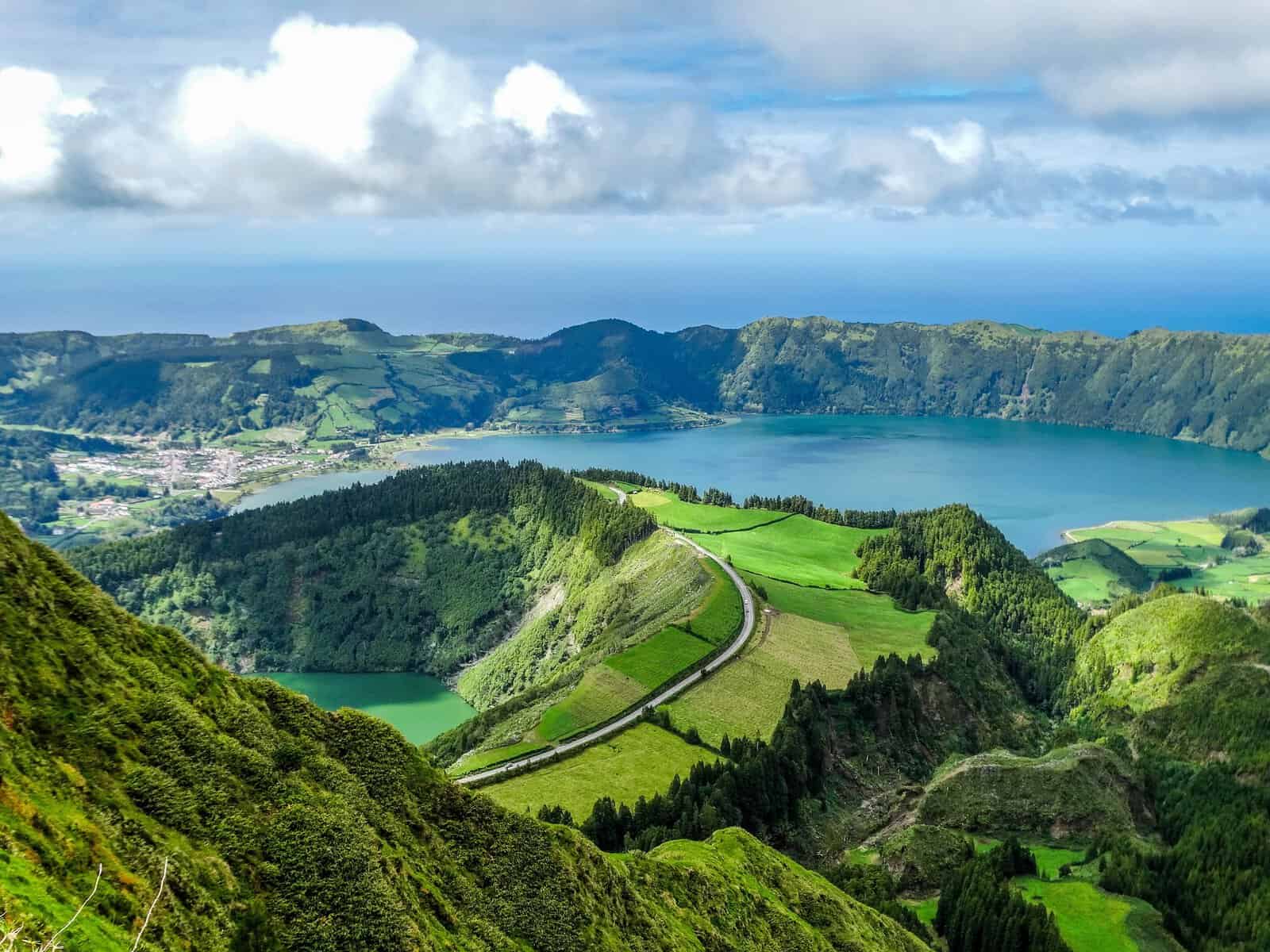
Hiking trails – One of the main highlights of a trip to the Azores is its hiking trails: routes that run through untouched landscapes, with the vast ocean appearing from every direction. The mild weather also adds to the pleasure of walking here. There are trails on every island, but some of the most popular include the route around the Sete Cidades lakes on São Miguel, the Topo Mountains trail on São Jorge Island, the Mistérios Negros trail on Terceira, and of course the route up Mount Pico.
Prices – While renting a car and taking domestic flights in the Azores can be expensive, especially in season, food and drinks in most island restaurants are reasonably priced and of excellent quality.
Lack of swimming beaches – Like Madeira, the Azores are volcanic islands, essentially the peaks of underwater mountains rising above the sea. The islands have very few sandy beaches. Most of the Azores coastline is made up of sheer cliffs with jagged volcanic rocks below. So although these are islands we naturally associate with beach, sea, and sunshine, that side of the experience is much less present here. The main reason to come is the extraordinary scenery and the feeling of being completely cut off from the rest of the world.
Information about each of the Azores islands
1. The main island of São Miguel and its capital, Ponta Delgada – the gateway to the Azores
São Miguel is the most populated and largest island in the Azores archipelago. Its capital, Ponta Delgada, is the largest sea and air port in the island group. Although all nine Azores islands have an airport, this one is the main gateway to the archipelago, with many flights from Lisbon and Porto, as well as flights from major European cities and even the United States.
The island’s attractions can be divided into the east, west, and north of the island, along with Ponta Delgada itself. It is customary to spend a minimum of 3 to 4 days here. Beyond the main sights, São Miguel’s roads are lined with dozens of viewpoints over the ocean, the cliffs, and the surrounding landscapes—it would hardly be an exaggeration to say that every single one is worth a stop.
The paved streets of Ponta Delgada and its handsome buildings reflect the wealth that reached the island when the Azores served as an essential stopover between Europe and the New World to the west.
On São Miguel, the easiest and most convenient option is to rent a car at the airport and explore at your own pace.
Click here for the full guide to São Miguel…
Selected top attractions and must-see sights on São Miguel:
- Ponta Delgada, the capital and largest city
- Sete Cidades – the famous lakes in the volcanic crater
- The tea plantations in the north of the island | Chá Gorreana
- The hot springs in Furnas
- The hot springs and thermal center at Caldeira Velha
- “Peace Viewpoint” and “Dawn Viewpoint” in the east of the island, usually visited at sunrise | Miradouro da Ponta da Madrugada
2. Santa Maria Island – The Sunny Island
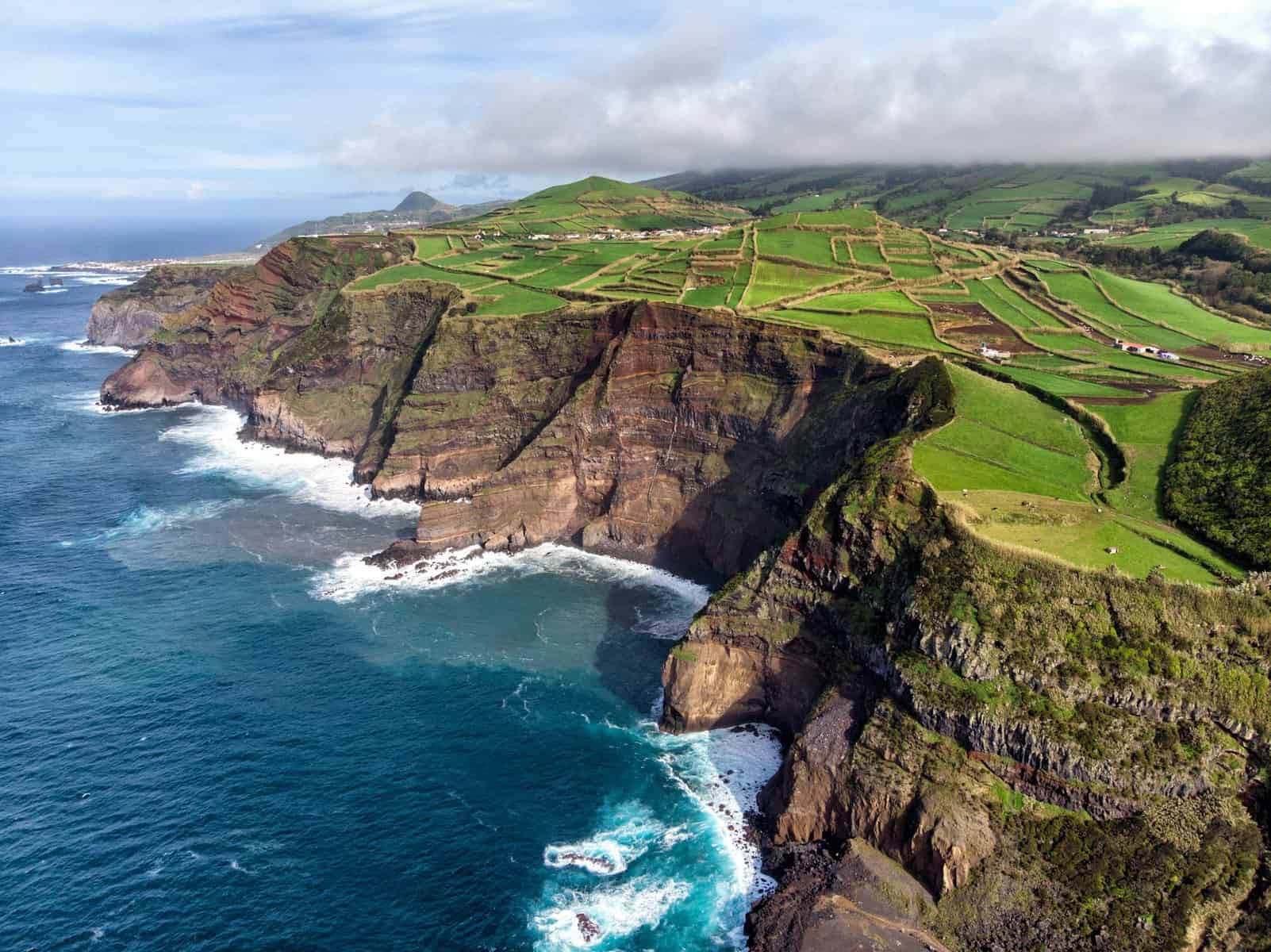
Santa Maria | Santa Maria was the first island to be discovered in the early 15th century. The island lies about 55 kilometers south of the large and main island of São Miguel. Santa Maria is known for its two sandy beaches, São Lourenço Beach and Formosa Beach, both set below steep volcanic craters. The island is also known for several wonderful hiking trails that pass through groves and lush vegetation climbing toward the mountain at its center. Because it is the southernmost of the Azores, temperatures here are slightly warmer. Thanks to its sandy beaches, especially in summer, it lends itself to a peaceful beach vacation.
Most visitors reach Santa Maria mainly by flight from São Miguel. It is important to remember that Santa Maria is a very small island, just 17 km long. It is barely populated and scarcely visited, so a stay here really suits travelers looking for a peaceful place that feels completely removed from the world. The island can be explored in two days, and there is a noticeable contrast between the east and center, which are wooded and usually cloudier, and the west, where the beaches are located and where conditions tend to be sunnier.
Click here for more detailed information about Santa Maria Island…
Selected top attractions and must-see sights on Santa Maria Island:
- Vila do Porto, the island’s main town and home to the airport
- The lighthouse at Ponta do Castelo
- São Lourenço Beach, beneath vineyards climbing the hillside | Praia de São Lourenço
- The peaceful, pleasant Formosa Beach | Praia Formosa
- The lush Fontinhas forest park | Reserva Florestal de Recreio das Fontinhas
- Pico Alto – hiking or biking through the forests at the island’s summit
- Aveiro Falls above the distinctive rock formation | Cascata do Aveiro
3. Terceira – the second-largest island in the Azores
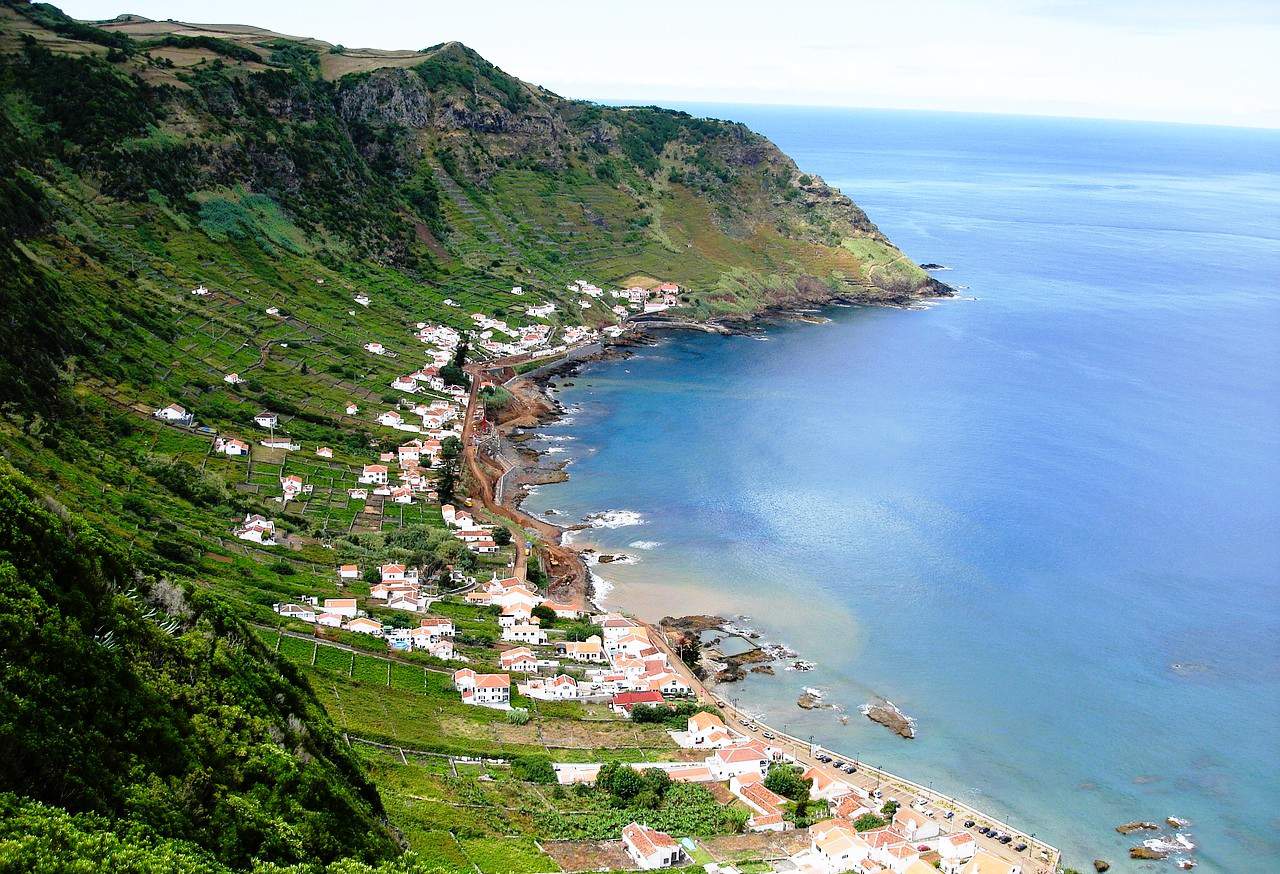
Terceira | Terceira is the most populated and developed of the five islands in the central group. It is also the second most important air gateway into the archipelago. There are many flights to Terceira from both Lisbon and Porto. Much of the island is dotted with green pastures and fields, as well as ancient forests that grew over old volcanoes. The capital of Terceira, Angra do Heroísmo, was the most important city in the entire Azores archipelago during the Age of Discovery. Ships loaded with gold returning from the colonies in the Americas to Spain and Portugal docked here on their way back. That wealth gave rise to grand public buildings, while the narrow cobbled streets are lined with charming old colorful houses.
Terceira is more of a lived-in island than a tourist-focused one. It has plenty of nature and greenery, but feels more rural and less wild. Its capital, Angra do Heroísmo, is the second-largest city in the Azores and the island’s main attraction.
If you can, it is highly recommended to plan your visit to Terceira for late June, when the biggest annual event in the Azores takes place here: the Sanjoaninas festival | Sanjoaninas, a lively blend of carnival, bull-running, and flower displays that lifts the whole city several notches for ten days.
Click here for more detailed information about Terceira Island and its capital, Angra…
Selected top attractions and must-see sights on Terceira Island:
- Angra do Heroísmo – the island’s capital
- Monte Brasil – views over Angra and the ocean
- Serra do Cume viewpoint – overlooking Terceira’s patchwork fields | Miradouro da Serra do Cume
- Algar do Carvão volcano
- Mistérios Negros hiking trail (high difficulty) | Trilho Mistérios Negros
- The wine museum in Biscoitos | Museu do Vinho
- Sanjoaninas festival in Angra – every June
4. Faial Island and its capital – Horta, the sailors’ capital
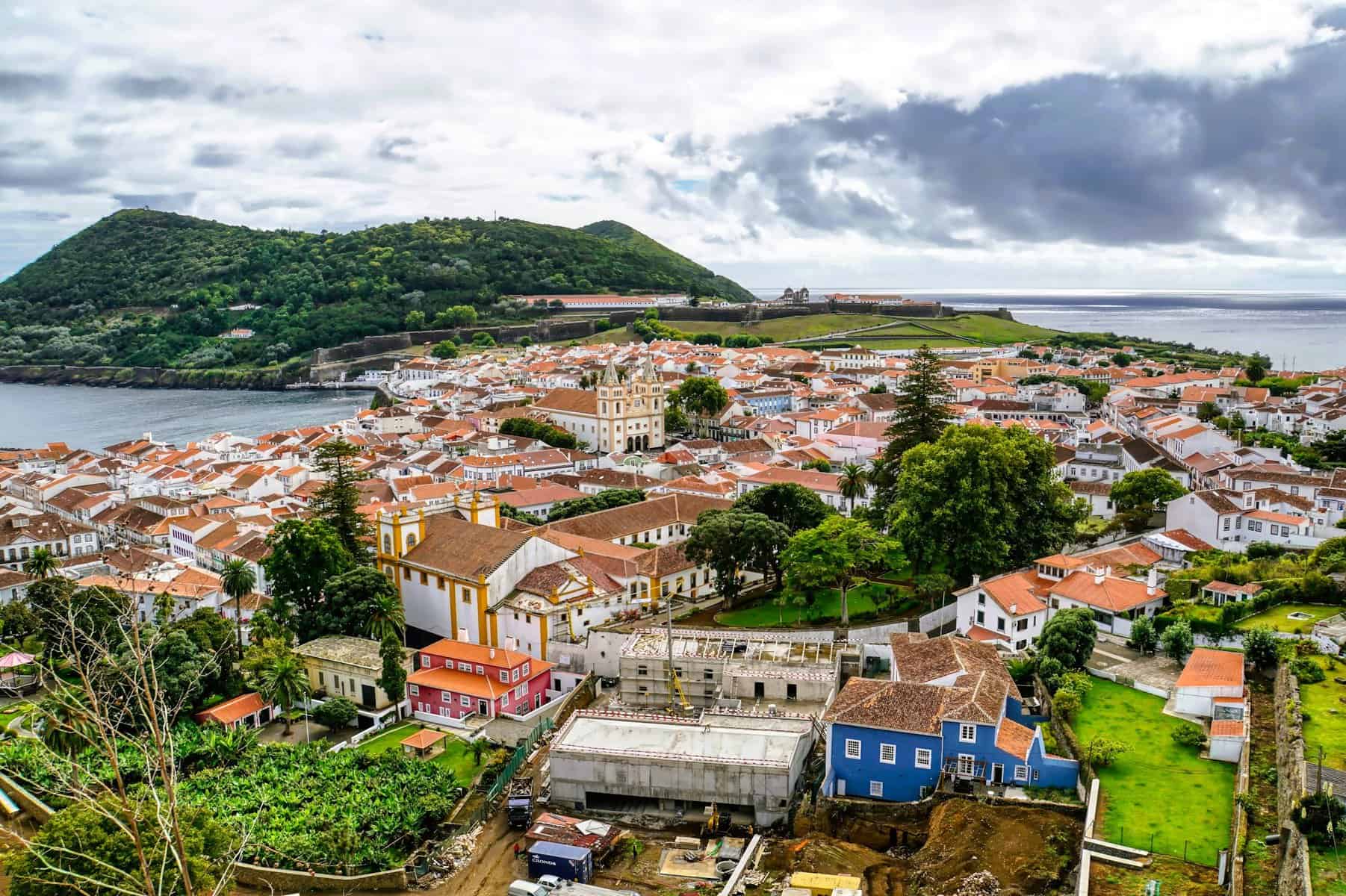
Faial Island | Faial lies in the Triangle Islands of the central group within the Azores archipelago, opposite Pico and close to São Jorge. It is the main one of the three, with a larger airport that also receives flights from the mainland.
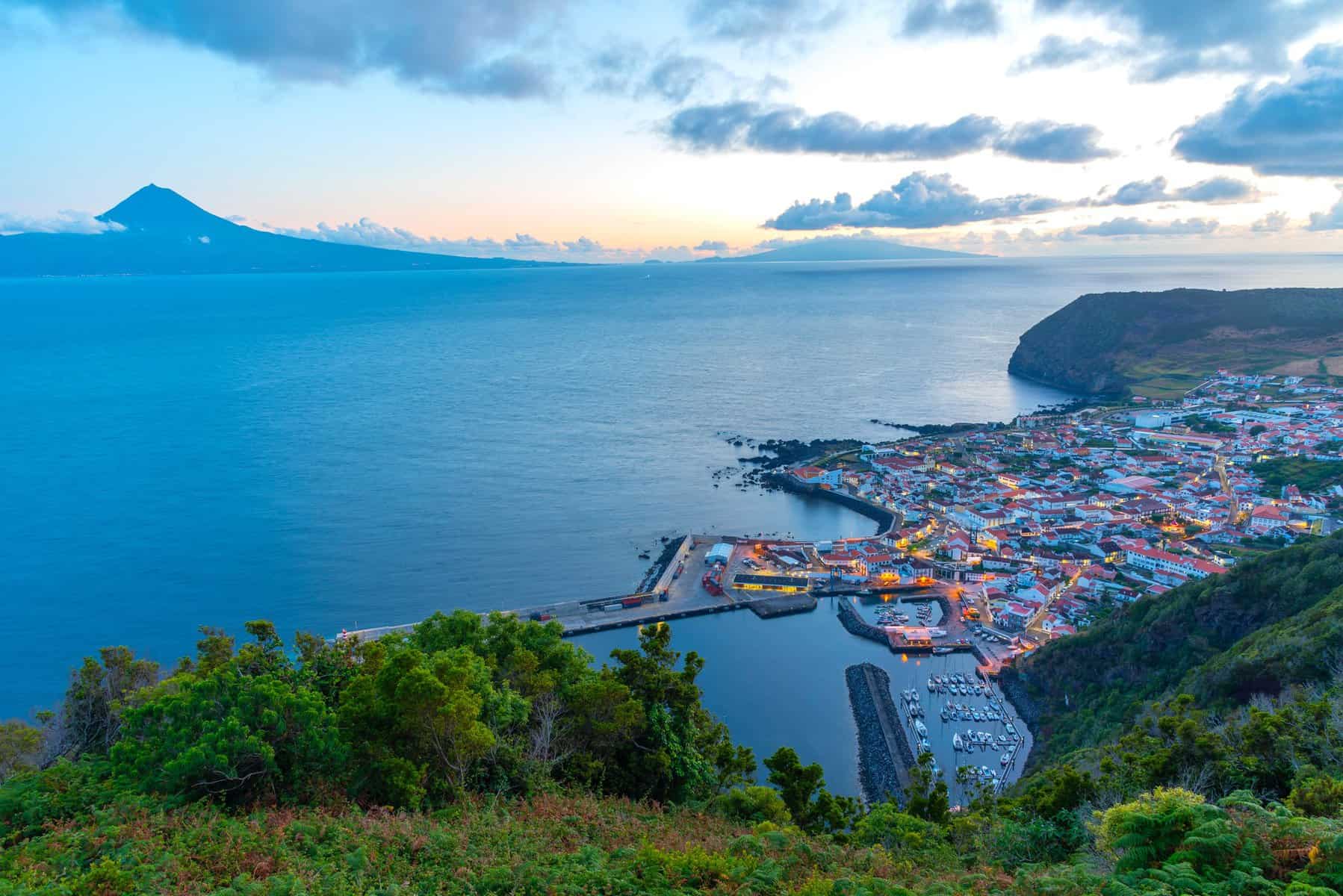
Faial’s capital, Horta, is world-famous among sailors. The city has a relatively large harbor by Azores standards, renowned internationally as a docking point for yachts and boats crossing the Atlantic. In some ways it recalls Ponta Delgada on the main island of São Miguel, only much smaller, of course.
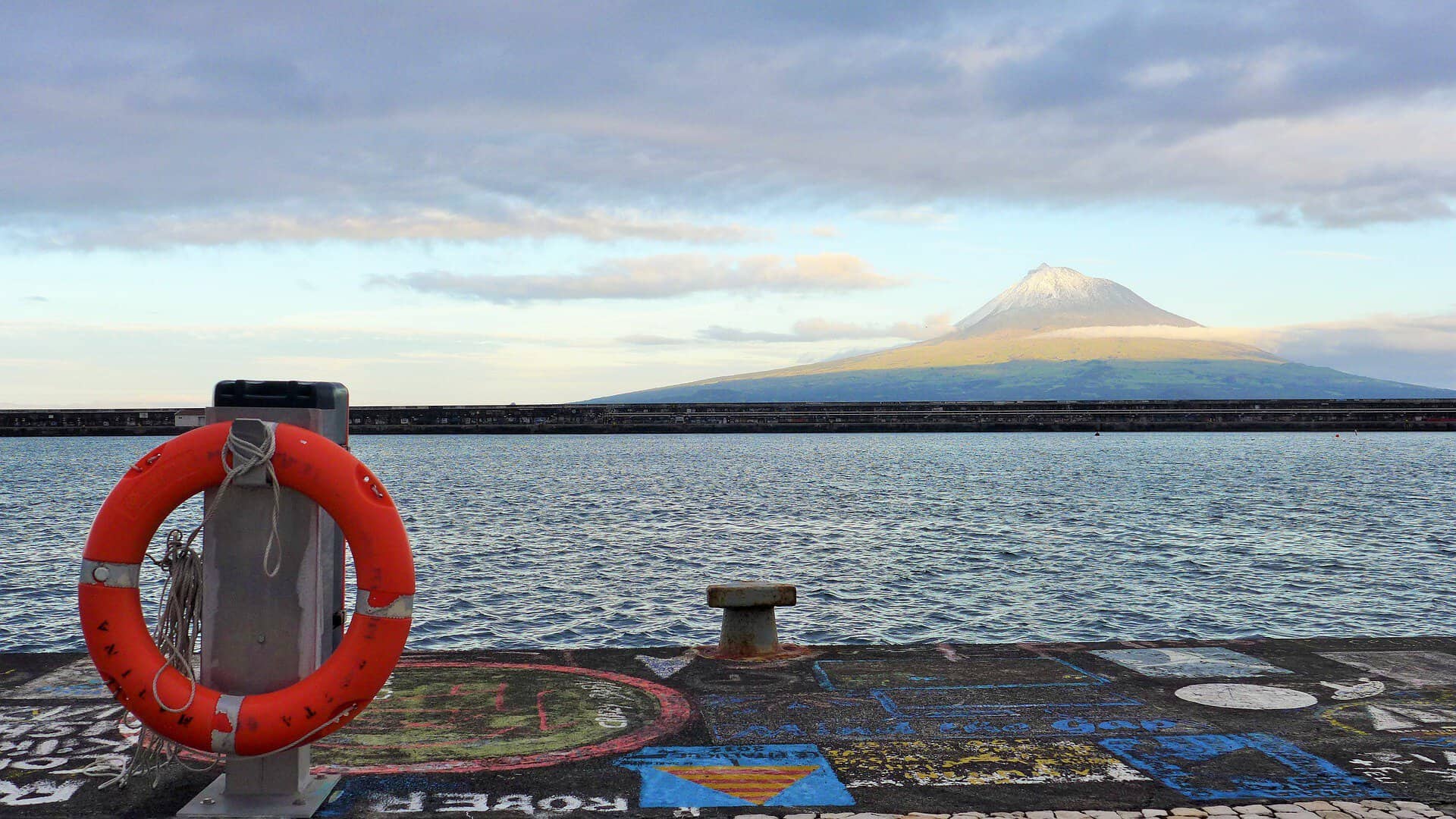
Faial—especially Horta and its surroundings—offers the best views of Mount Pico on the neighboring island. Lying just a few kilometers west of Pico Island, Faial is the perfect place to admire the highest mountain in all of Portugal.
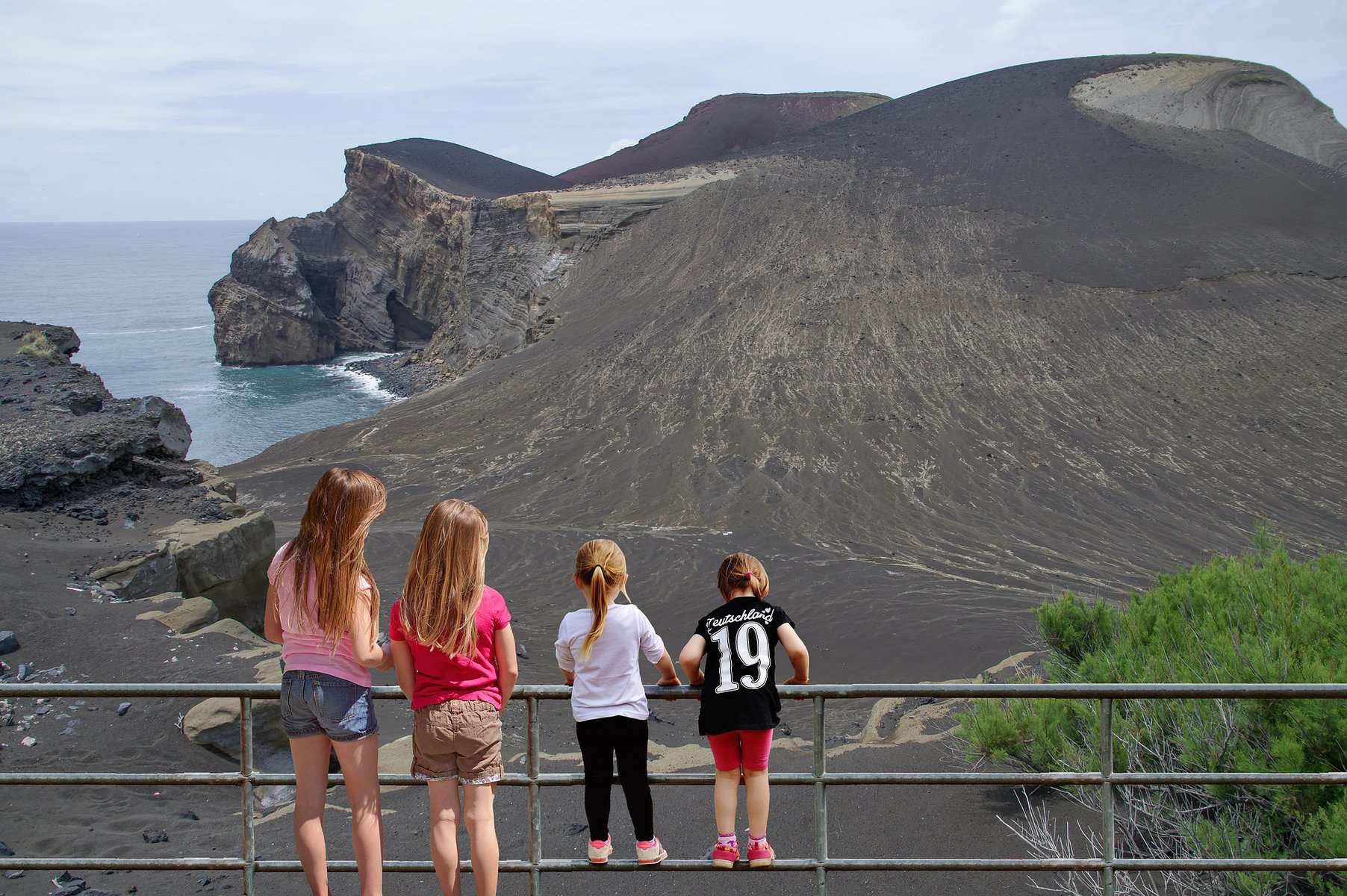
Two other elements stand out on Faial Island. One is the Hydrangea flowers, which bloom across the Azores but are especially striking here. The other is the volcanic area around the Capelinhos volcano at the island’s western tip, where the most recent eruption in the Azores took place in 1957. Part of the area remains completely scorched and has been preserved as a kind of open-air exhibit. A visit to Faial suits travelers looking for a cosmopolitan touch within the deep calm of the Azores, and those planning a more in-depth trip rather than stopping only at central São Miguel.
Click here for more detailed information about Faial Island…
Selected top attractions and must-see sights on Faial Island:
- Gin and tonic at Peter Café
- The boat and sailor paintings on the dock at Horta Marina
- Our Lady of Conceição viewpoint | Miradouro Senhora da Conceição
- The large volcanic crater – Cabeço Gordo
- Capelinhos – the volcanic center at the site of the island’s most recent eruption in the west | Vulcão dos Capelinhos
- Blue hydrangea bloom (especially in June–July)
5. Pico Island – climbing the tall cone-shaped volcano
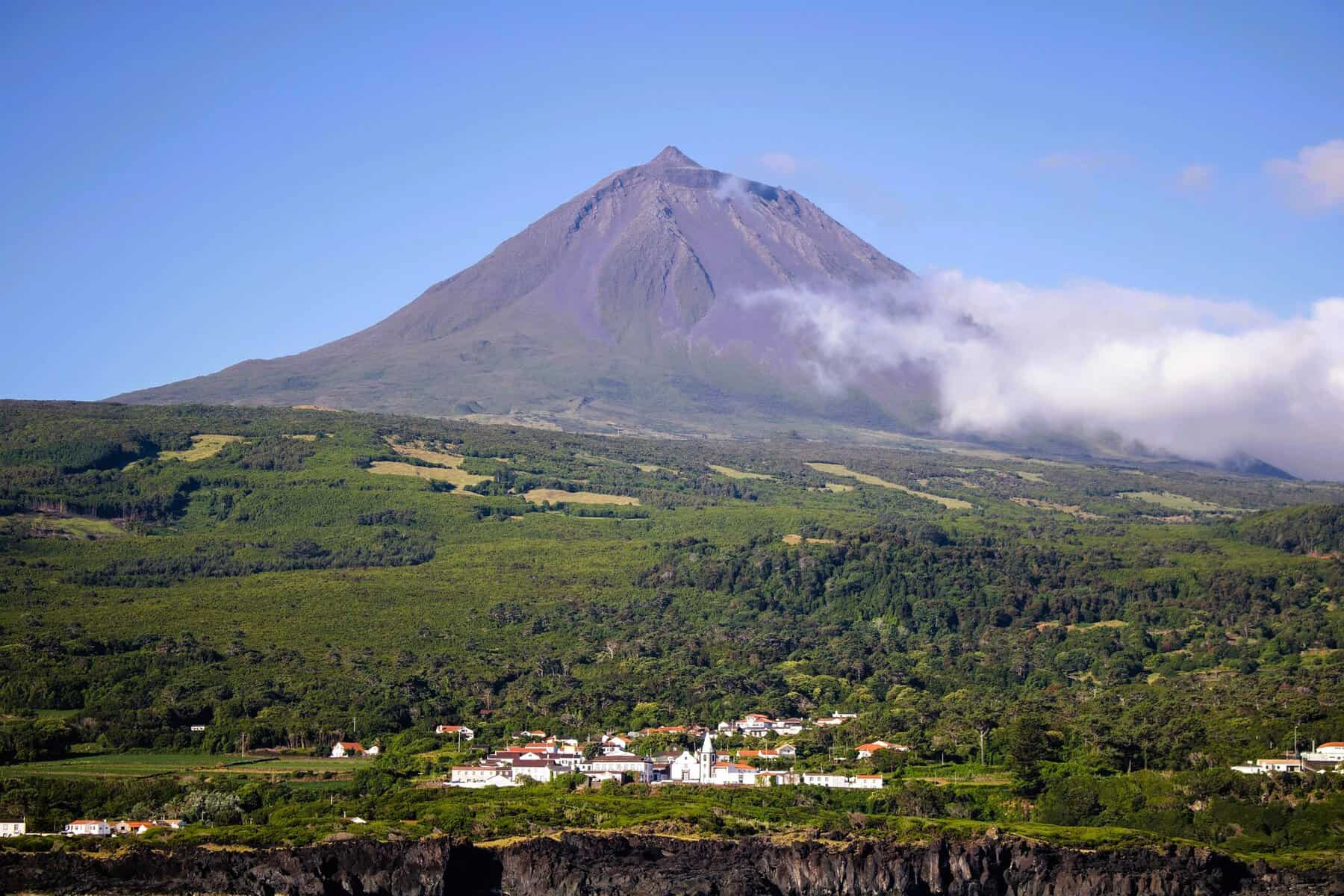
On Pico Island | Ilha do Pico stands the highest mountain not only in the Azores, but in all of Portugal. Climbing the island’s towering volcano is the main reason tourists come to Pico Island. The island also has a distinctive wine industry, with grapes grown on vines planted between basalt stones that protect them from the wind and salt in the air. Pico is one of the Azores’ three Triangle Islands in the central group of the archipelago, so it looks out over Faial and São Jorge. Almost everyone who comes to Pico also visits at least one of the other two islands.
Although climbing the mountain takes a full day, the Azores’ fast-changing weather means it is always wise to allow one or two extra days. At worst, you can hop over to Faial for a day trip and return by ferry once conditions are right for the ascent.
Another attraction on Pico is the whaling museum in the village of Lajes, and of course whale-watching tours in search of the largest mammal on earth also depart in season from the island’s ports.
Click here for more detailed information about Pico Island…
Selected top attractions and must-see sights on Pico Island:
- Climbing Mount Pico | Montanha do Pico
- Gruta das Torres lava caves
- The wine center in the village of Lajido | Cultura da Vinha da Ilha do Pico
- Whale-watching tours – departing from Madalena or Lajes
- The whalers’ museum in Lajes | Museu dos Baleeiros – Lajes
6. São Jorge Island – The Island of Fajãs
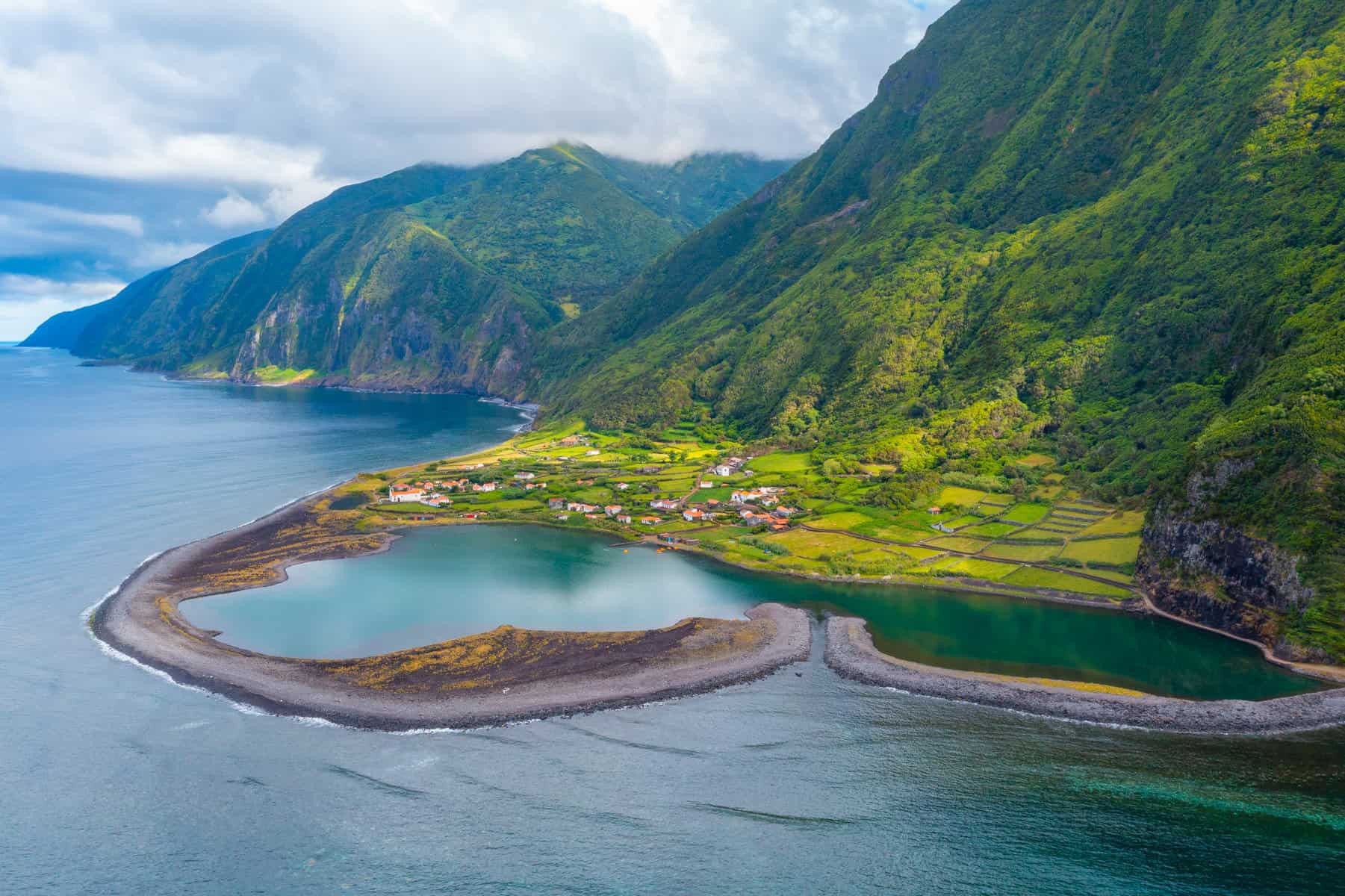
São Jorge | São Jorge belongs to the Azores’ central group. It is shaped like a long strip stretching for 55 kilometers. São Jorge is famous throughout Portugal for its cheeses. The island’s other standout feature is its fajãs—small flat tongues of land trapped between the sea and green-covered cliffs. This is a wonderful island for travelers seeking absolute peace, nature, and scenery, especially with that unmistakable feeling of being at the edge of the world. São Jorge is usually included in longer, more in-depth Azores itineraries, as it is less accessible and less visited than the main islands.
São Jorge is one of the most forested islands in the archipelago, with many hiking trails. Some are challenging, while others pass through damp grassy meadows where cows graze contentedly. The island’s northern side is made up almost entirely of cliffs dropping sharply into the sea, so settlement is concentrated mainly in the south, especially in the capital, Velas. From the southern side, there are also superb views toward the high mountain on neighboring Pico Island. The island has a little over 8,000 residents. São Jorge is very rainy, so apart from the months between May and August, it is almost always gloomy. Even in summer there is still rain, just much less of it. You should never head out for a day of exploring São Jorge without a rain jacket. Even if it looks sunny, the weather can shift in minutes, and there is almost always wind as well.
Click here for more detailed information about São Jorge Island…
Selected top attractions and must-see sights on São Jorge Island:
- Velas, the island’s capital
- Fajã da Caldeira, the site most closely associated with the island (accessible only on foot)
- The basalt pools at Simão Dias | Piscina Natural Simão Dias
- Hiking route to the summit of Pico da Esperança
- A boat trip along the island’s coast with chances to spot dolphins and whales
- Tasting the famous local cheese | Queijo São Jorge
7. Graciosa Island – Peaceful and Authentic Charm
Graciosa | Graciosa lies north of Terceira and has only a handful of settlements. The largest of them is Santa Cruz, its capital, where the airport is also located. Graciosa is a very agricultural island, with many fields and grazing lands, while the ocean appears on every side. Only travelers who truly want to go deeper and visit all of the Azores, as well as those with an interest in volcanic activity, tend to make it to Graciosa Island. In the south of the island, you’ll find its main attraction: the crater of a dormant volcano covered in thick green vegetation, with a unique volcanic cave at its center that can be entered. In general, Graciosa remains very isolated, quiet, and largely untouched by tourism, which also makes it appealing to travelers in search of complete tranquility.
Flights to Graciosa depart mainly from the two larger Azores airports in Ponta Delgada and on Terceira Island.
In Graciosa, as on the other Azores islands, donkeys were once the residents’ main “vehicles.” Over the centuries, Graciosa developed its own distinct breed of relatively small donkeys. As the years passed, the islands relied less and less on pack animals, and their numbers dwindled. On Graciosa, efforts were made to preserve this local donkey, which led to the creation of a donkey farm on the western side of the island. A visit there can be quite amusing.
Click here for more detailed information about Graciosa Island…
Selected top attractions and must-see sights on Graciosa Island:
- Furna do Enxofre, the cave inside the island’s volcanic crater
- Ponta da Barca – the lighthouse and views toward Whale Islet
- A stroll through the center of Santa Cruz town | Santa Cruz da Graciosa
- Ajuda viewpoint and church | Nossa Senhora da Ajuda
- The windmills of Vila da Praia
- The miniature donkey farm | Criadores do Burro Anão da Ilha da Graciosa
8. Flores Island – The Island of Waterfalls
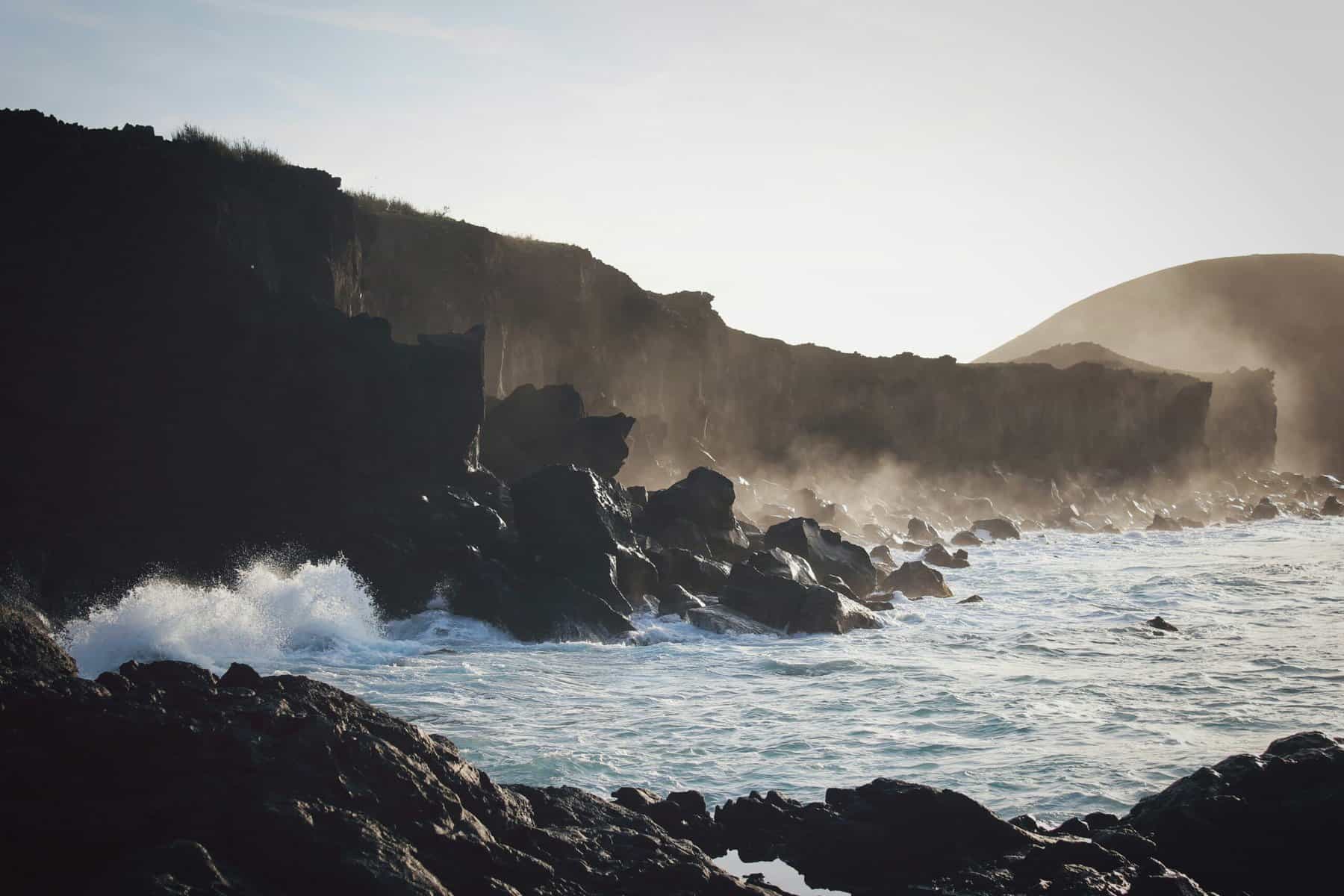
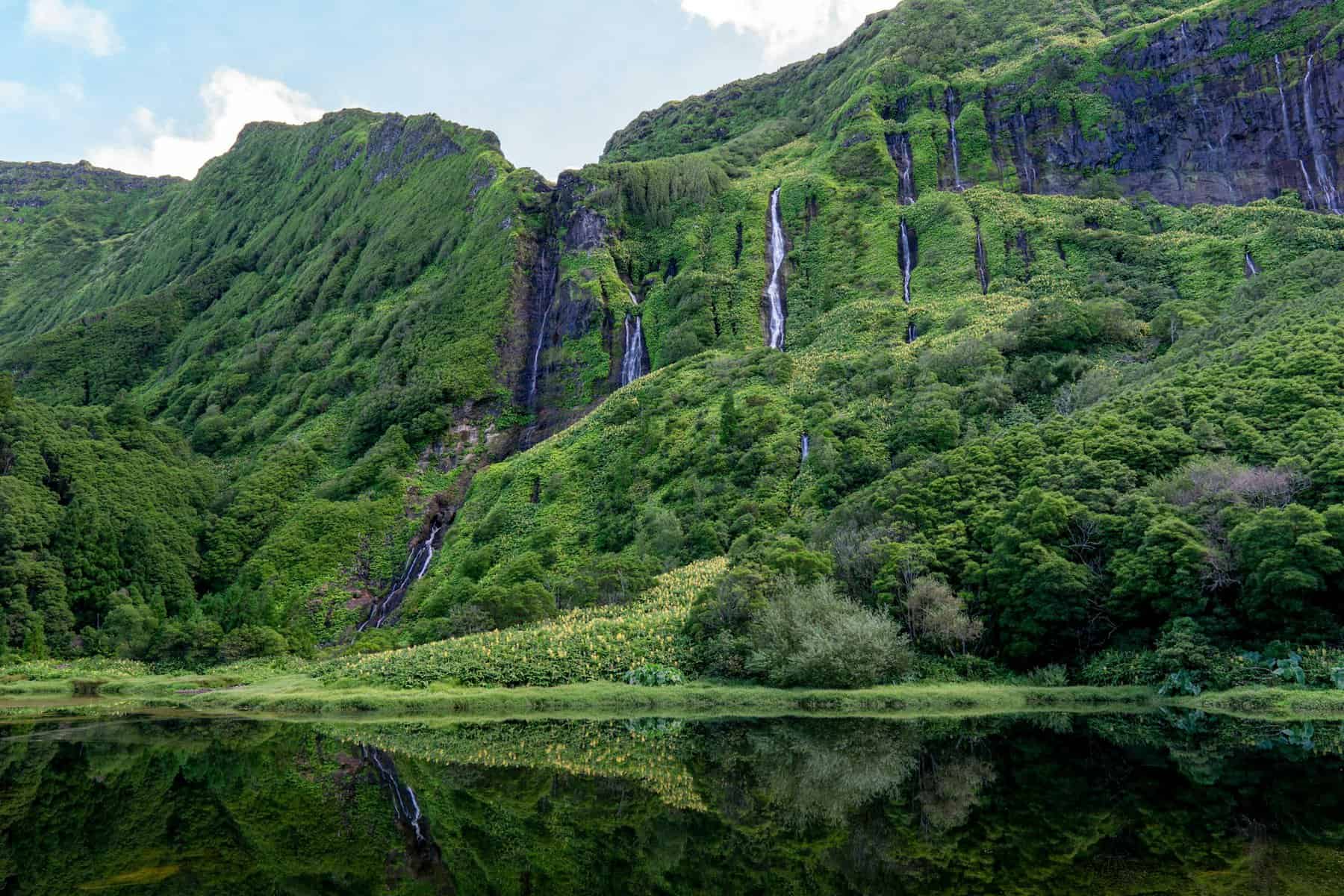
Flores | Flores – pronounced “Flor-esh” by the Portuguese – is the westernmost island in the Azores archipelago. If there is one place that explains why the Azores are called the “Hawaii of Europe,” Flores is without question the closest match to the original, just with cooler weather. It is an island overflowing with natural beauty, where dramatic rock formations, cliffs, volcanic craters, abundant greenery, and above all marvelous waterfalls come together.
Anyone who reaches Flores almost always continues on a day trip to Corvo, the island a little more than twenty kilometers to the north. Flores and neighboring Corvo tend to attract more “advanced” Azores travelers, since they are so remote and untouched—but that remoteness is exactly what makes them so appealing. Those who make it here often feel like some of the only people on the islands, as there are few flights and very limited transport options. On these two far-flung islands, you are often more likely to meet grazing cows than other people.
There are flights to Flores from the large island of São Miguel, from Terceira Island, and from Faial Island — all operated by the Azores airline.
Click here for more detailed information about Flores Island…
Selected top attractions and must-see sights on Flores Island:
- Ribeira waterfalls flowing through thick greenery | Cascata da Ribeira Grande
- The lakes above the Ribeira waterfalls | Lagoa Negra and Lagoa Comprida
- Bordões Rock | Rocha dos Bordoes
- The natural pools of Santa Cruz | Piscinas naturais de Santa Cruz das Flores
9. Corvo Island – The Tiny Island next to Flores
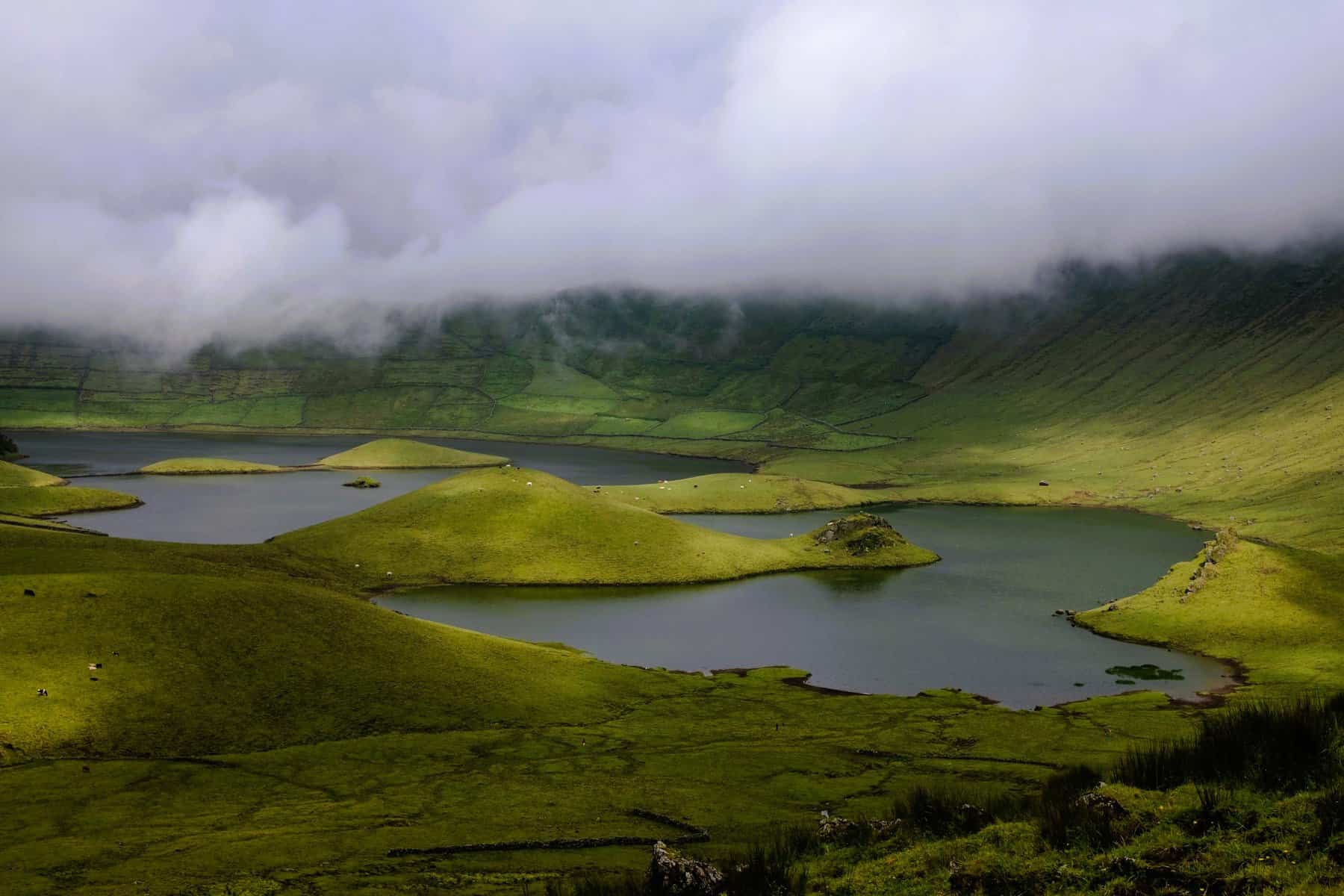
Corvo is the smallest of all the Azores islands, and also the northernmost. The island has one main attraction that truly makes the journey worthwhile: the large green crater at its center. To reach it, you climb the mountain called Caldeirão | Caldeirão (crater, or more precisely caldera in Portuguese), and from the top you get the extraordinary view over the crater. You can hike up on foot, or do as most tourists do and take one of the taxis waiting right where you arrive from the plane, boat, or ferry.
Like Flores, Corvo was discovered by the Portuguese in 1452, about twenty years after an expedition funded by Prince Henry the Navigator (Infante Dom Henrique, o Navegador) discovered the easternmost Azores islands. The island was named Corvo because of the cormorant, a bird commonly found here. Although corvo means raven in Portuguese, like “crow” in English, the intended reference was to the cormorant, the striking seabird known in Portuguese as the “sea crow.”
Corvo, which lies 24 kilometers from Flores, is usually visited as a day trip from the larger island of Flores. Corvo has only one settlement—Vila do Corvo—with about 350 permanent residents. It is the least accessible island in the Azores archipelago. That comes with advantages too, since it is so isolated and very few tourists are ever here at one time. The downside is that in season there are not many seats on flights to the island, so this is not the kind of place you visit spontaneously—you need to plan ahead.
Corvo can be reached by a very short flight from Flores, by ferry, or by boat. At the end of the day, visitors almost always return to sleep on Flores, as Corvo has hardly any accommodation options.
Click here for more detailed information about Corvo Island…
Click here for our complete guide to São Miguel Island…
Click here for information about Portugal’s main travel regions…