Before you start the engine and hit the road in Portugal, there are a few important things to know: local traffic laws, parking rules (colors and signs), restricted access and low-emission zones in cities, electronic toll roads (Via Verde / Easytoll), winter and mountain driving (Serra da Estrela), gas stations, rental car insurance, and more. The guide below will help you drive in Portugal safely, legally, and without unnecessary fines.
Click here for the complete guide to renting a car in Portugal…
Basic driving rules in Portugal
- Seat belts are mandatory for all passengers, front and back.
- Drive on the right and pass on the left.
- No right turn on red.
- Cell phone use – hands-free only; holding your phone while driving can result in a fine.
- Lights – required from sunset to sunrise, and during the day when visibility is poor (heavy rain, fog, etc.).
- Emergency equipment required in a rental car: a warning triangle and reflective vest. Make sure both are provided in the vehicle.
Click here for a selection of possible Portugal itineraries…
Speed cameras and fines
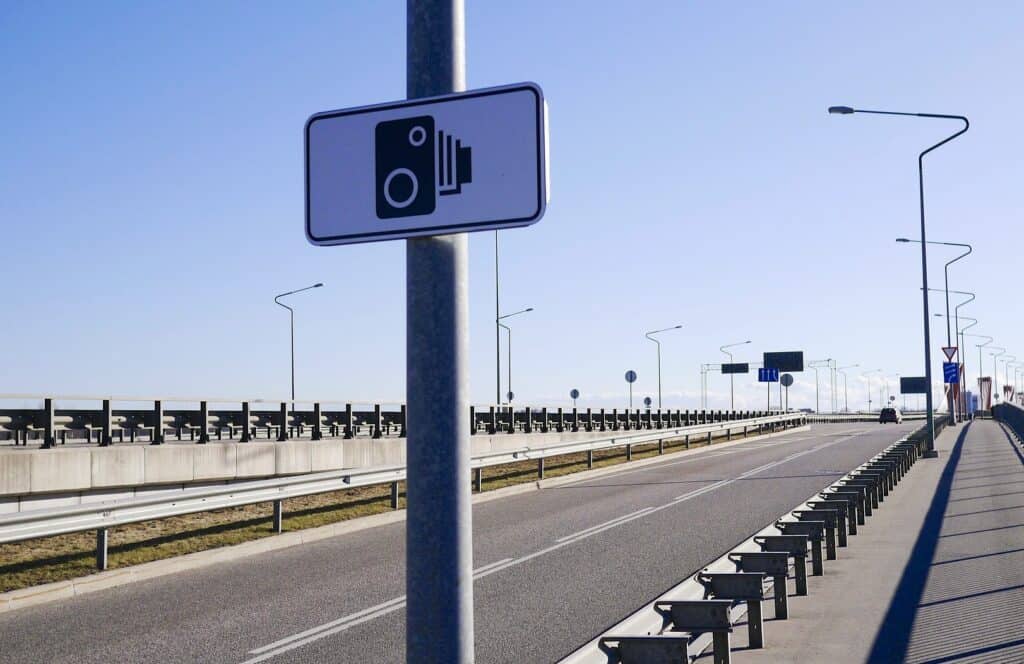
In Portugal, speed enforcement is widespread, both on the road and within cities, with patrols and cameras in regular use. Stick to the posted speed limits and pay close attention to signs for restricted-access and low-emission zones. Fines may arrive later through the rental company.
Speed limits in Portugal
- Urban areas: 50 km/h
- Regional/secondary roads: 90 km/h
- Main roads: 100 km/h
- Highways (Autoestradas): 120 km/h (may be lower in bad weather)
Parking in Portugal – colors, signs, and everything in between
- Blue markings – paid parking (meter/app). Check the local sign for hours and rates.
- White markings – free parking, though sometimes reserved for residents only (always check local signage).
- Yellow markings – no parking, loading/unloading only, or reserved for authorized vehicles.
- Parking garages in city centers are often a better option than searching for street parking.
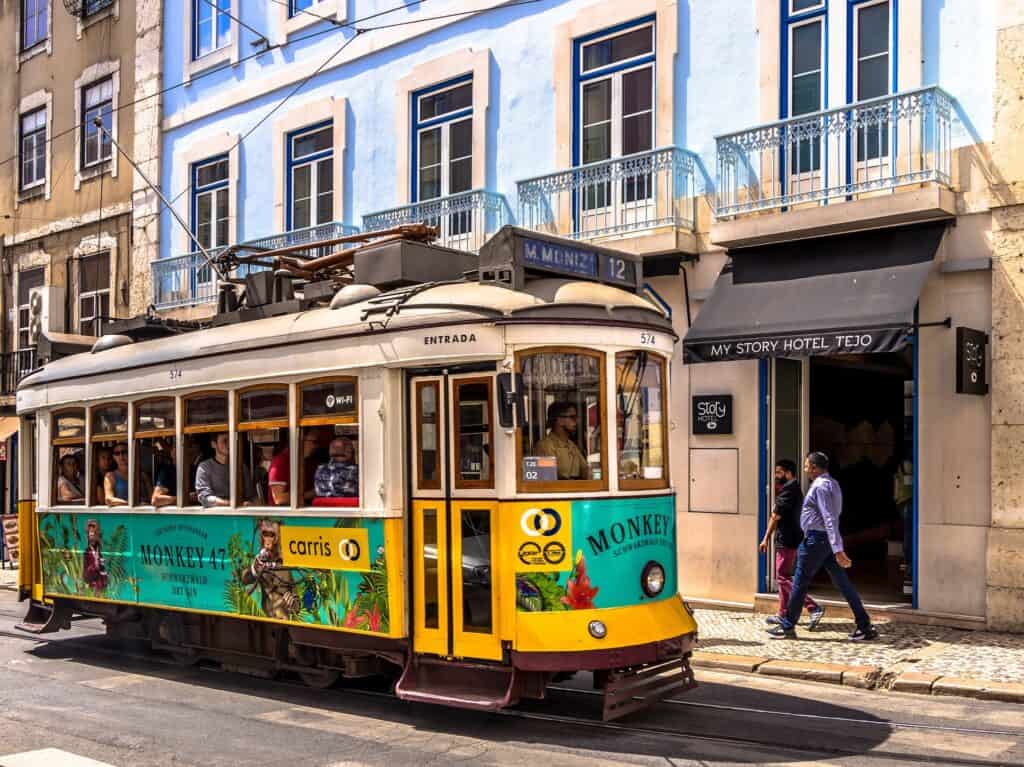
As in many European city centers, vehicle access to the heart of central districts in Portugal is restricted in certain areas | Zona de Acesso Condicionado. In central Lisbon, parts of Baixa and the historic Alfama district are off-limits to unauthorized vehicles. The same applies in Porto, especially in Ribeira and the historic center.
Even so, driving through the main city centers is generally not recommended. It is much easier to park in a garage on the outskirts and continue on foot or by public transportation.
Popular parking apps in Portugal:
Restricted access and low-emission zones (ZER/LEZ) in cities
Lisbon has Zone(s) de Emissões Reduzidas – ZER (Low Emission Zones) with restrictions based on Euro emissions standards and certain hours. There are also limited-access areas in historic centers, where streets are narrow and often one-way. Check the signs carefully, avoid entering without permission, and consider parking on the outskirts before continuing by public transportation or on foot.
- How can you avoid a fine? Use updated maps for navigation, park outside the restricted ring, and check with your hotel to see whether they can register your license plate.
- Porto/Coimbra/Aveiro – some areas also have restrictions or controlled-access streets.
Detailed information about Lisbon's ZER
How to Pump Gas in Portugal?
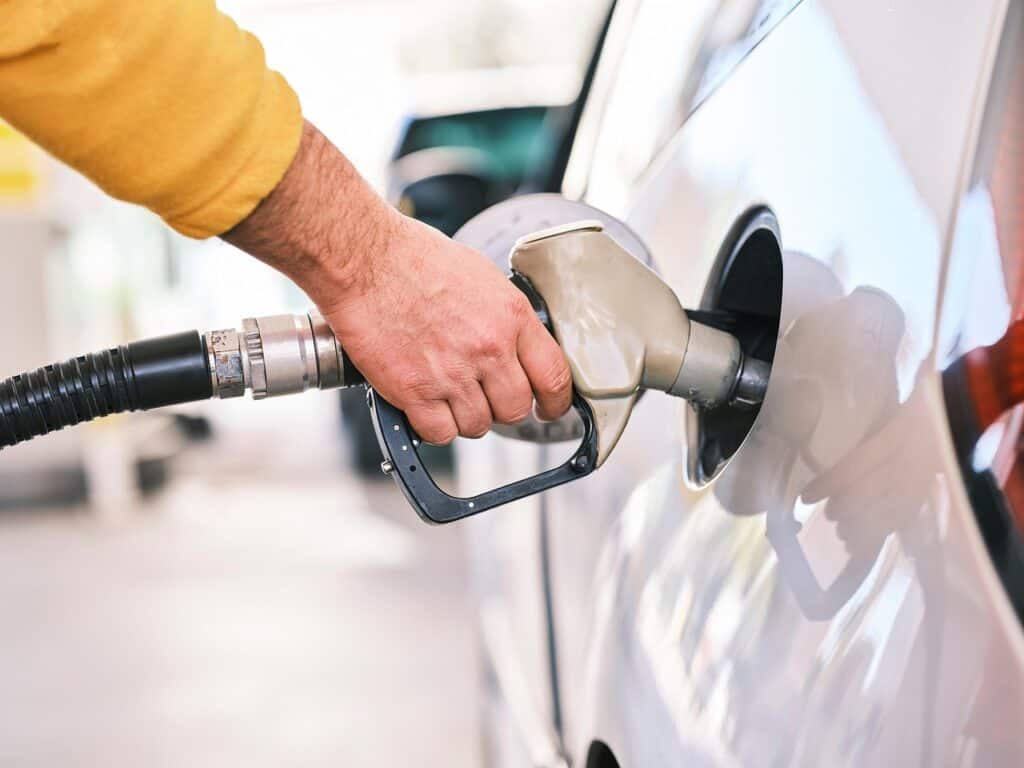
- Gasolina 95/98 | gasoline and Gasóleo | diesel. Check the cap or sticker on your rental car.
- Both self-service and full-service stations are available, and international credit cards are accepted at most stations.
- In rural areas, plan ahead around opening hours, as some stations close at night.
Electric charging in Portugal
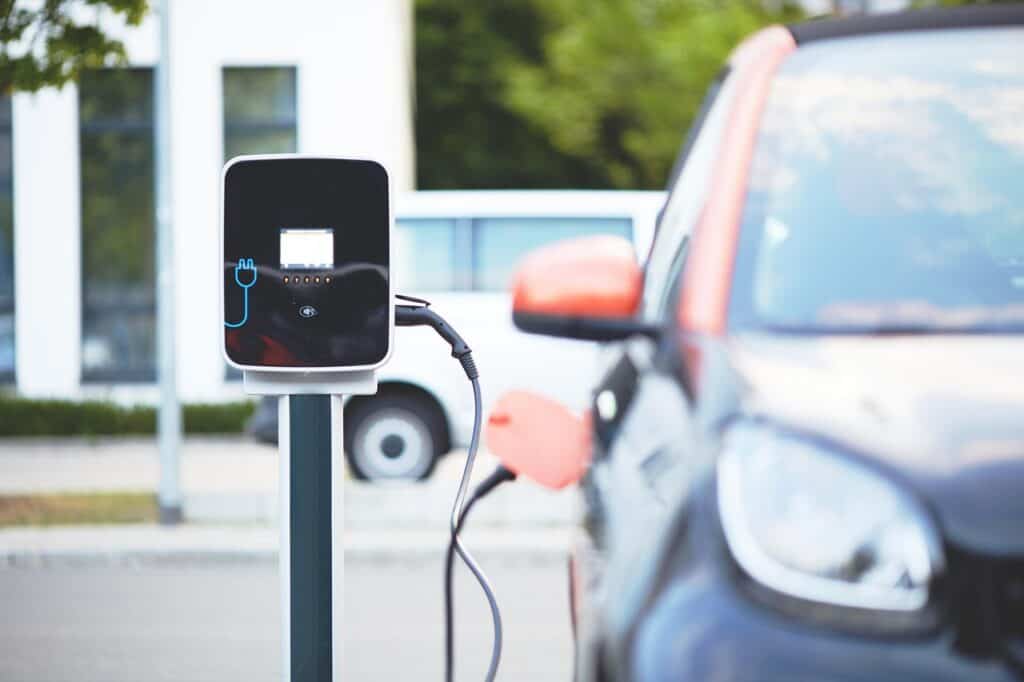
Portugal has an advanced nationwide charging network called MOBI.E, available throughout the country and offering public charging at both standard and fast chargers. Charging points can be found at gas stations, city parking garages, shopping centers, and many hotels.
Charging is done with an RFID card or dedicated apps, mainly MOBI.E, Via Verde Electric, or PlugShare. Rental cars usually come with a ready-to-use charging card or the option to activate charging through an app. Rates vary between standard and fast charging.
If you are heading beyond the cities, it is important to plan your route in advance and check charging points along highways such as the A1, A2, and A22, where fast chargers from Ionity and Galp are available.
When renting an electric vehicle, it is wise to choose hotels with overnight charging and avoid letting the battery run too low in rural areas, where infrastructure is less dense. With a little planning, driving an EV in Portugal can be convenient, eco-friendly, and cost-effective, though it is less suited to a completely spontaneous road trip.
On Madeira, charging infrastructure is limited, mainly through MOBI.E and mostly around the capital, Funchal. In the Azores, electric charging is available mainly on the largest island, São Miguel, but remains quite limited there as well. For that reason, fuel-powered cars are still the better choice on the islands.
Driving in winter and in the mountains
Portugal is not northern Italy, Switzerland, or Austria, but it does have mountainous areas. In particular, snow and ice are possible in winter in the Serra da Estrela mountains in central Portugal. Make sure your tires are suitable and be prepared to use snow chains if required by the local police. Keep an eye on the forecast and on any seasonal road closures.
Portugal's climate is generally mild, but the north gets plenty of rain. Winter is not the main travel season in northern Portugal, but if you are visiting then, make sure the tires on your rental car are in good condition and as new as possible, since the roads are wet most of the time.
Click here for the complete guide to renting a car in Portugal…
Toll roads – Via Verde / Easytoll
Many of Portugal's highways are toll roads. On some of them, tolls are electronic only (Ex-SCUT), with no cash payment booths. For visitors, the easiest options are Via Verde Visitors (a temporary transponder) or Easytoll (credit card and license plate registration).
- Via Verde Visitors: a temporary loaned transponder that identifies the vehicle at every toll gate.
- Easytoll: register your credit card at a service point, and charges are applied automatically based on your license plate.
- If you are entering with a car from a Spanish rental company, some Spanish transponders may also work (check in advance).
That said, rental cars in Portugal usually already come with a toll transponder—just confirm it at the counter. This service usually includes the following:
- In most cases, a Via Verde transponder—an electronic device mounted on the windshield that identifies the vehicle at every toll point.
- When you drive through a toll road, the system recognizes the car automatically, so there is no need to stop or pay cash.
- The rental company receives the charges first and then bills your credit card.
- There is usually a small daily service fee for the transponder (for example, €1.50–€2.50 per day, often with a daily cap or monthly maximum).
Child car seats
- In Portugal, every child under age 12 or shorter than 135 cm (4 ft 5 in) must use an appropriate child seat or booster.
- Children above that threshold (age/height) may use a regular seat belt, though it is still best to make sure the fit is right for their actual height and weight.
- Most car rental companies provide child seats for a daily fee, usually ranging from €3 to €6 per day. It is very important to reserve in advance rather than waiting until the counter. During the busy season especially, you may find there are no child seats left.
Click here for the complete guide to renting a car in Portugal…
Check out our guide to traveling to Portugal with kids…
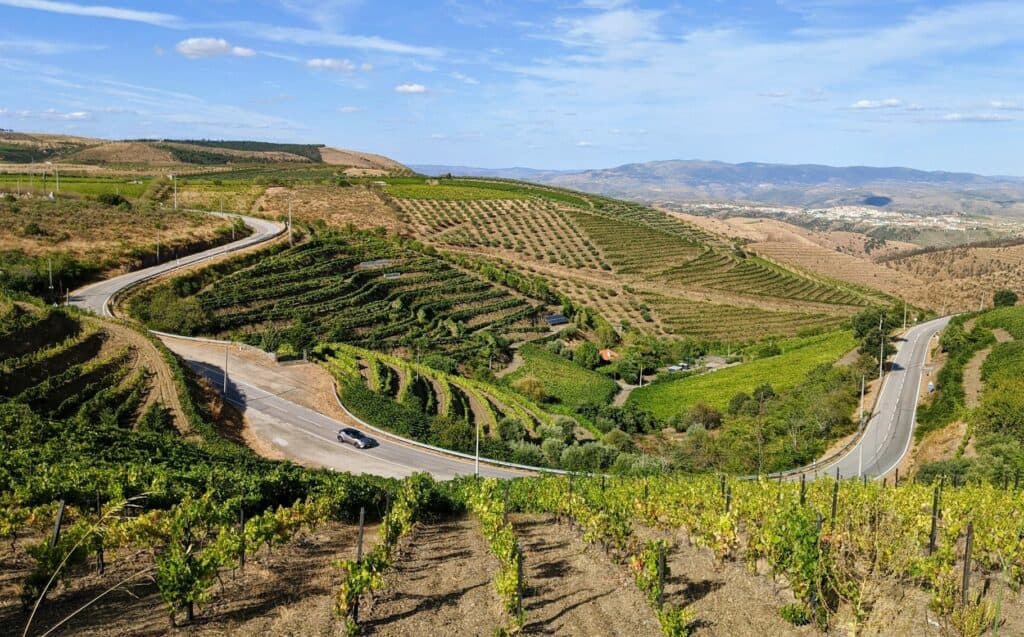
Driving on Portugal's rural roads
Outside the highways, Portugal's rural and regional road network includes N roads (National) and EN roads, along with semi-express IC/IP routes. A few things are worth knowing about rural driving in Portugal:
- Roads are narrow and winding – many are single-lane with no shoulder, especially in mountainous areas.
- Slow local traffic – tractors, farm vehicles, and even animals on the road are common.
- Routes pass through villages and small towns – often right through the center, with traffic lights and pedestrian crossings.
- Few gas stations – fill up ahead of time, as the distance between stations can be significant.
- Slow and careful driving is essential – because of sharp curves, descents, unlit stretches, and limited visibility.
- The scenery and authenticity make it well worth the drive – these routes offer rewarding landscapes and a glimpse of the real Portugal, but they do require patience and planning.
- On Portugal's islands, especially the Azores and above all Madeira, the roads are narrow, beautiful, and surrounded by dramatic scenery. Driving fast is not only risky, it also misses the point—the real joy is taking in those wild landscapes along the way.
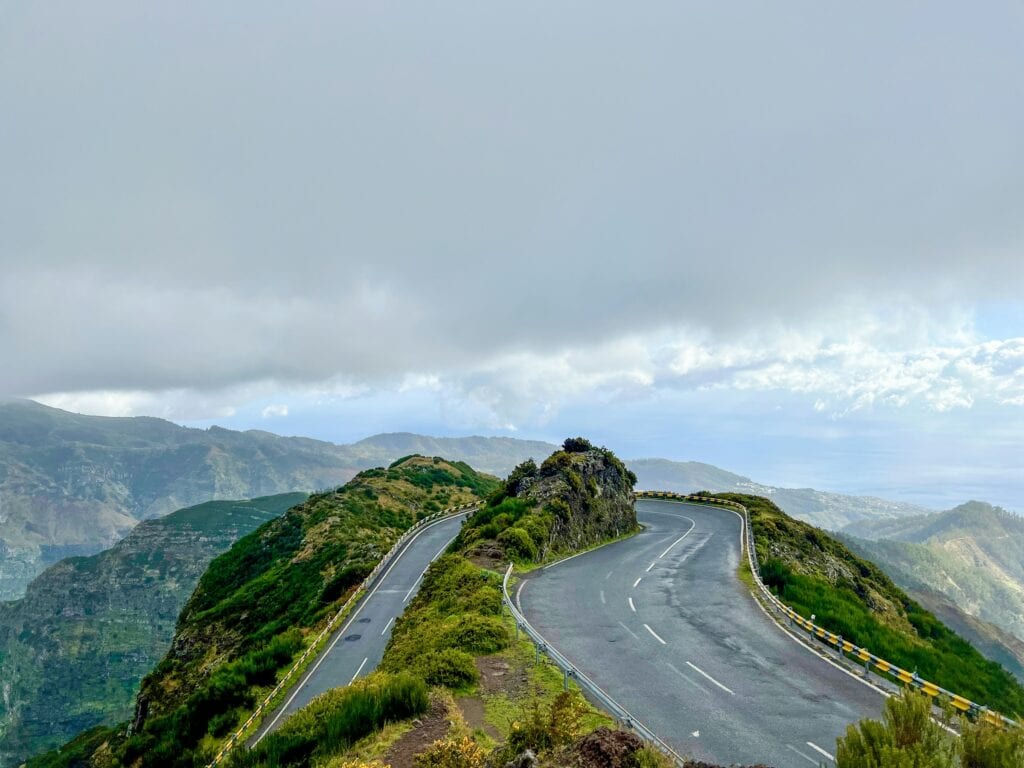
N2, Portugal's Route 66 | Estrada Nacional 2
The N2 is a historic road that crosses Portugal from north to south—from Chaves on the northern border with Spain all the way to Faro in the Algarve, at Portugal's southern tip. The road stretches for 739 km (459 miles) through the country's rural heartland. It is a winding country road that passes vineyards, rivers, mountain ridges, and many traditional towns, so it is meant less for speed than for an authentic, scenic driving experience.
For most of its length, the road is single carriageway, toll-free, with narrow shoulders and especially sharp bends in the northern mountain sections. Along the route, there are viewpoints, wine tastings, and cultural stops, which is why it is often called the “Route 66 of Portugal.”
A journey along the N2 suits travelers who want to discover Portugal slowly and in depth—not via the highways, but through its rural heart.
Practical tips for a safe and pleasant drive
- Choosing the right car – in cities, a small car or automatic is often best, since historic center streets can be very narrow. If you plan to cover a lot of ground and travel with luggage, choose something more spacious. Portugal is not huge, but distances can still add up.
- Do not count on street parking – parking garages in central Lisbon and Porto save time, stress, and potential fines.
- Check the excess waiver policy and whether windows and tires are covered.
- Navigation – make sure you have mobile data or offline maps, and adjust the app settings to avoid toll roads or restricted zones if needed.
- Keep your documents within easy reach – driver's license (and international permit if required), passport, and rental agreement.
Recommended rental companies
Well-known international names operating in Portugal, along with a few strong local companies:
- Avis
- Hertz
- Europcar
- Sixt
- Guerin / Drive on Holidays / Bravacar
Check what is included in the price: insurance, fuel policy, unlimited mileage, cross-border travel to Spain, and more.
Click here for the Portugal car rental guide…
Frequently asked questions
Do I need an international driving permit?
It is definitely recommended to carry an international permit alongside your regular driver's license, as some companies require it.
Do Waze and Google Maps work in Portugal?
Yes. Just make sure you have a SIM or eSIM with data. In cities with LEZ zones or restricted streets, double-check your route.
Click here for the Portugal communications and eSIM guide…
What should I do in case of an accident?
Stop in a safe place, turn on your hazard lights, place the warning triangle, photograph the damage, fill out the accident report in the vehicle, and notify the rental company right away. National emergency number: 112.
Where is the best place to pick up the car?
Airport pickup is usually the most convenient, but sometimes downtown locations are cheaper, depending on opening hours and extra fees.
Need help with bookings?
We would be happy to help with car rentals, hotels, insurance, and planning a custom itinerary.
Click here for help planning your Portugal trip and making bookings…
Click here for a selection of possible Portugal itineraries…